
The Art of Auto Interiors
About this episode
The conversation digs into what makes auto interiors feel finished, from quick duct-tape fixes on a worn classic to full custom builds with leather, trim matching, and careful seat fitment. The hosts compare OEM, aftermarket, and donor parts, explain why interiors are usually the last step in a build, and share stories from Chargers, Chevelles, Camaros, Willys, and even a BMW. Along the way, they highlight how materials, craftsmanship, and theme all shape the final result.
duct tape daddies
"And I got a few other cars that are duct tape daddies, bro They're just like that. Let's hang it up. You know dial it in with a little duct tape"
“Duct tape daddies” is a joke for people who cover up interior issues with quick fixes. The hosts are basically saying some cars get patched to keep driving, while others get fully upgraded interiors.
“Duct tape daddies” is a humorous way to describe owners who temporarily cover or patch interior problems with whatever materials they can find. The segment contrasts this approach with higher-budget interior builds, emphasizing that there’s room for both “get it usable” and “make it perfect” styles.
gaffer state
"Let's hang it up. You know dial it in with a little duct tape Gaffer state whatever you can find had Mexican blankets had Walmart seat covers"
Gaffer tape is a strong tape used in theater and film. Here it’s mentioned as a handy option for quick, temporary interior fixes or holding things in place.
Gaffer tape (the transcript reads like “gaffer state”) is a cloth-backed tape commonly used in film and stage work, prized because it holds well and removes cleanly. In the context of interior patching, it’s mentioned as a practical material people use to secure covers or temporary fixes.
Walmart seat covers
"Gaffer state whatever you can find had Mexican blankets had Walmart seat covers We get it sometimes you just got to cover it up, you know, and there's a there's room for both, right?"
Seat covers are covers you put over your car seats to protect them or make them look better. The host is using a budget example to contrast with custom interior upgrades.
Seat covers are aftermarket coverings placed over seats to protect upholstery or improve appearance. The host uses “Walmart seat covers” as an example of low-cost, practical interior solutions versus expensive custom trim work.
custom interior
"So then you get a custom interior and it's a whole different process, right? Because you can just go get replacement parts for your for your ride"
A custom interior means the inside of the car is redone with your chosen materials and style, not just repaired to look stock. The host is saying it’s a bigger project than buying replacement parts.
A custom interior is a non-stock interior build where materials, trim, and sometimes seat designs are tailored to the owner’s taste or the car’s intended use. The host frames it as a different “adventure” than simply replacing worn pieces, because it often involves sourcing specific trim and parts for the build.
replacement parts
"Because you can just go get replacement parts for your for your ride Hopefully depending on the ride, right?"
Replacement parts are the pieces you buy to fix or refresh the inside of the car. The idea is that some cars have easier-to-find parts, so the project can be simpler than a fully custom build.
Replacement parts are components swapped in to restore the interior—such as trim pieces, seat components, or upholstery-related items. The host points out that when you’re not going fully custom, you can often source these parts more directly for your specific car.
OE
"Hopefully depending on the ride, right? If it's a popular one you can get just same old OE, right?"
OE (original equipment) parts are the same type of components the car manufacturer used when the vehicle was built. The host contrasts OE replacements with custom interior work, implying that popular cars may have readily available OEM-style parts.
race seats
"Maybe upgrade the seats or something cool for race seats, but Yeah, when you go custom, it's a completely different different adventure."
Race seats are seats made to keep you more secure when the car is turning hard. The host is saying some people upgrade their interior with race seats instead of keeping the original ones.
Race seats are performance-oriented seats designed to hold the driver more firmly during hard cornering. The host mentions upgrading to race seats as one possible interior upgrade path, implying a more track-focused setup than stock seating.

BMW M3
"So we're gonna walk through we've got Pat Russell PJ from PJ's trim shop. These guys rocked out my BMW M3 several years back Downtown job, man, but we got PJ here to kind of help."
The BMW M3 is a sporty BMW that enthusiasts usually buy for driving feel. Here, it’s brought up because the shop did interior work on one, showing how interiors can be part of building a “complete” car.
The BMW M3 is a performance-focused version of the 3 Series, known for its driver-oriented handling and enthusiast appeal. In this episode, it’s specifically mentioned as a car PJ’s trim shop worked on, tying the discussion to how interior work can match a high-end build.
tears
"Yeah, man, I gotta tell you dude So tears typically one of the last things you do But it's the thing that really is the icing on the cake if you will"
This sounds like the host is talking about the final finishing step of an interior job. The main idea is that the last details are what really make the car feel “done.”
The transcript appears to say “tears,” but in context it’s almost certainly referring to “tiers” or “trim” as the last step in an interior build. The host’s point is that the final interior finishing step is what makes the car feel complete.

71 Dodge Charger
"I got a 71 Dodge Charger different body style, right? I always wanted that classic Gen 2 body style like you see on the generally"
A Dodge Charger is a famous American muscle car. “71” means the 1971 model year, and it has a particular body style that looks different from other Charger years.
The Dodge Charger is a classic American muscle car, and the “71” refers to the 1971 model year. In this story, the speaker specifically wanted a Charger with the 1971-era body style, which is known for its distinctive look compared with earlier years.
hot rod
"I roll up and at the time I bought a $600 72 seabring just to drive around and beat around in maybe fix up as a hot rod"
A hot rod is a car built or modified for driving enjoyment, often with an emphasis on making an older car faster or more fun than stock. The speaker describes buying the 1972 Sebring as something they might fix up as a hot rod before moving on to the Charger.
distributor
"He's like shook my hand came back the next day with some tools take it on it for 34 hours Had old distributor put new fuel in it got the old manual pump re-hosed I fired that thing up drove it home"
The distributor is part of the ignition system that helps the engine spark at the right moments. If it’s working (or reused), it can be one of the things that lets an older car start and run again.
A distributor is an ignition component that routes high voltage to the correct spark plug at the right time. The speaker says they used an “old distributor” and then got the car running, which is a key detail in how older engines can be revived with basic ignition and fuel work.
manual pump
"Had old distributor put new fuel in it got the old manual pump re-hosed I fired that thing up drove it home and that thing man"
A manual pump refers to a hand-operated fuel pump used to prime or supply fuel to the engine. In older cars (or cars with fuel delivery issues), a manual pump can help get fuel to the carburetor/injection system so the engine will start.
front seat those two front buckets
"I used probably five rows of duct tape on that that front seat those two front buckets But I was pushing a 1970 Dodge Charger three different colors"
“Bucket” seats are individual, contoured seats designed to hold you in place better than a bench seat. The speaker mentions duct tape on the two front bucket seats, which highlights interior restoration work on a classic Charger.
restoring that car
"I got some seat covers on what I did I went through the slow process of restoring that car"
Restoring a car means bringing it back toward its original condition (or a desired standard) by repairing worn parts and refreshing the interior and mechanical systems. The speaker describes a slow restoration process after getting the Charger running and adding seat covers.
PJ trim shop
"It is two guys garage podcast. He's Kevin bird. I am Willie B. We have a boy Pat check out his PJ trim shop"
“PJ trim shop” sounds like the name of the business doing the interior and trim work. It helps set the context that they’re talking about customizing the inside of cars.
“PJ trim shop” appears to be the name/identity of the shop where the guest works on automotive trim and interior work. For listeners, it signals that the episode is focused on the craft of interior/trim customization rather than general car repair.
interiors
"well, I I started doing interiors and I just I like doing it a lot better than the oil increase on them orders"
Here, “interiors” means the inside of the car—like the seats and the trim pieces. It’s not just cleaning; it’s custom work that has to fit and look right.
In this context, “interiors” means the cabin work—upholstery, trim, and materials that cover seats and surfaces. It’s a specialized craft because fitment, stitching, and material choices strongly affect how the finished car looks and feels.
smell of leather
"I gotta be honest with you and I was you know the smell of leather and the creativity That sort of thing just kind of got me hooked and you know working on cool cars."
They’re talking about leather seats and trim. Leather is a nicer-looking material, and it needs the right care so it stays looking good.
“Smell of leather” is a reference to leather upholstery, which is a premium interior material used for seats and trim. Leather is valued for its look and feel, but it also requires careful handling and finishing to avoid premature wear or discoloration.

Chevrolet Chevelle
"I mean, you know working on cool cars. I mean, you know 70 Chevelle's and 69 Camaro's and you know 32 Ford's just you know"
A 1970 Chevelle is a classic muscle car from Chevrolet. People often restore or customize them, so the inside—like the seats and trim—matters a lot.
The Chevrolet Chevelle is a classic American muscle car, and the “70” refers to the 1970 model year. In an interior-focused conversation, it’s notable because these cars are often restored or customized, making their upholstery and trim a big part of the build.

Chevrolet Camaro
"I mean, you know working on cool cars. I mean, you know 70 Chevelle's and 69 Camaro's and you know 32 Ford's just you know"
A 1969 Camaro is a classic muscle car from Chevrolet. Since lots of people restore them, the interior is often upgraded or redone to match the original look—or to personalize it.
The Chevrolet Camaro is another iconic American muscle car, and “69” points to the 1969 model year. Like the Chevelle, it’s a popular platform for restoration and customization, so interior work (upholstery, trim, and fitment) is a key part of making it look right.

32 Ford's
"I mean, you know working on cool cars. I mean, you know 70 Chevelle's and 69 Camaro's and you know 32 Ford's just you know"
A 1932 Ford is a famous old car that people love to hot-rod and restore. When you customize one, the inside—like the seats and trim—usually gets redone too.
“32 Ford’s” refers to the 1932 Ford, a highly popular hot-rod and classic-car base. In the context of interior work, early Fords are frequently customized, so upholstery and interior trim are part of the overall “build” identity.
sleeper car
"“we did it was a sleeper car and we did it all in full leather”"
A sleeper car is a car that doesn’t look fast, but is. In this conversation, they’re also talking about keeping the interior subtle so it still feels “factory,” even though it’s been customized.
A sleeper car is a vehicle that looks understated or stock, but has performance upgrades hidden underneath. In the context of this episode, the “sleeper” idea is extended to the interior—making it look factory/period-correct while still being highly customized.
vinyl
"“How did you get the vinyl to dull down like that? And I said it's leather”"
Vinyl is a man-made material used for car seats and panels. They’re saying they used vinyl (or a vinyl-based approach) to make it look like real leather, especially in how it reflects light.
Vinyl is a synthetic material commonly used in car interiors because it’s durable and can be made to look like leather. The speaker is describing a technique to make the surface look “duller” or more leather-like, so people assume it’s real leather.
dash
"“whether it's dash or there are other areas like that that that are common”"
The dash is the dashboard area in front of you. People customize it with different materials or finishes to change the look without changing the whole car.
The dash is the dashboard area in front of the driver, including the instrument cluster and surrounding trim. Interior customizers often change dash materials, finishes, or accents to update the look while keeping the overall factory layout.
upgraded Gages
"“like you could have, you know upgraded Gages put in custom plates for the consoles”"
Gauges are the dials you see on the dashboard, like speed and engine info. Swapping or upgrading them is a way to make the interior feel more custom.
“Gages” (gauges) are the instrument cluster dials—like speed, RPM, and temperature—behind or within the dashboard. Upgrading gauges is a common interior customization because it can improve readability and add a more premium, custom look.
console
"“custom plates for the consoles where it doesn't look like Factory but it's still the factory console”"
The console is the center area of the car where controls and storage are. They’re talking about customizing the console trim so it looks custom but still matches the original layout.
The console is the center area between the seats (or the main center stack area) that often houses controls, storage, and sometimes the shifter/armrest. Custom console plates and trim can change the look while keeping the underlying factory structure.
window switches
"“you have maybe some custom window switches in there or you relocate door handles”"
Window switches are the buttons you use to control the power windows. Changing them is a subtle way to make the interior feel more custom.
Window switches are the controls for the power windows, typically mounted on the door panel. Custom window switches can be used to refresh the interior’s look while keeping the rest of the door trim close to stock.
door handles
"“custom window switches in there or you relocate door handles”"
Door handles are the controls on the doors. They’re saying you can change where they sit or what they look like to subtly update the interior style.
Door handles are the exterior/interior latch controls on the doors, and in custom builds they can be relocated or replaced to change ergonomics and styling. The speaker mentions relocating door handles as one of the “subtle” ways to make the cabin look custom without going fully non-stock.
diamond tech
"“Some of the cool patterns they had back in the day the diamond tech stuff”"
“Diamond tech” refers to a diamond-pattern upholstery style—typically seen in seat inserts or panels—where stitching forms repeating diamond shapes. The speaker is pointing out that certain pattern styles from the 1960s are desirable for restorations because they look authentic to the era.
B pillars
"Some of the you know the B pillars inside. How do you find? Or fix or repair?"
The B-pillar is the post in the middle of the car between the front and back doors. Interior shops often have to remove or rework trim pieces that are attached to it.
The B-pillar is the vertical support between the front and rear doors on a car. In interior repair, it matters because trim, plastics, and sometimes wiring/airbag components are mounted around it.
original equipment parts
"Anything that came with the car originally the original equipment parts are just They fit they work if they have something that's there and it's it's it's easily"
Original equipment parts are the same style of parts the car came with from the factory. Using them can make repairs look right and fit correctly.
Original equipment parts (often called OEM parts) are components made to the factory specifications for a specific vehicle. In restoration, using OEM parts helps ensure the fit, finish, and compatibility match what the car had when it was new.
sandblast
"I've had guys bring me stuff that when we sandblast the seat springs. There's nothing left"
Sandblasting is an abrasive cleaning process that uses high-pressure media to strip old material from a surface. In upholstery/interior restoration, it can be used on metal components like seat springs, but the host notes that sometimes the parts are too far gone after stripping.
seat springs
"when we sandblast the seat springs. There's nothing left You know that is not easily restoreable at that point."
Seat springs are the metal parts under the seat cushion that help support you. If they’re broken or rusted through, the seat won’t feel right even if the fabric looks good.
Seat springs are the metal suspension components inside many older seats that provide cushioning support. When they’re rusted or heavily degraded, upholstery can’t be properly restored because the seat structure won’t hold shape.
aftermarket options
"Let's look at some aftermarket options unless there's You know a donor car or something that we can pick up, but yeah, I've seen some stuff that's"
Aftermarket options are parts made by other companies instead of the original maker. They’re often used when the factory parts aren’t available or can’t be reused.
Aftermarket options are replacement parts made by companies other than the original manufacturer. When OEM pieces are missing or damaged beyond repair, aftermarket parts can be used to restore function and appearance—though fit and quality can vary.
donor car
"Let's look at some aftermarket options unless there's You know a donor car or something that we can pick up, but yeah, I've seen some stuff that's"
A donor car is another car you take parts from to fix the one you’re restoring. It’s especially useful when the original part is too damaged to save.
A donor car is a second vehicle used as a parts source for a restoration project. If an interior component can’t be repaired, a donor car can provide matching original parts to keep the restoration authentic.
build sheet
"They had the the build sheet in the backseat of some of those old Mopars under the spring"
A build sheet is a factory document showing how the car was ordered and built. Restorers use it to figure out what the original interior should have looked like.
A build sheet is factory paperwork that lists how a vehicle was assembled—options, trim, and other configuration details. In classic-car interiors, it’s sometimes found in hidden locations (like under seats), making it a valuable clue for correct restoration.
padding
"Cotton, you know as padding in the seats as filler when they had gaps in foam there was a lot of"
Padding is the cushioning material inside a seat. It’s what makes the seat feel comfortable and helps fill space so the upholstery sits right.
In upholstery, padding refers to the cushioning layers inside seats—often a mix of foam and other materials—to fill gaps and shape the seat. The hosts discuss how older interiors used extra filler materials when foam didn’t fully cover the structure.
burlap
"there was a lot of Burlap used to keep the foam from falling through the springs You know and a lot of that you know the mice used to get into some of that stuff and cause some unpleasant smells"
Burlap is a rough fabric that used to be used inside car seats. It helped hold the padding in place and, in some older cars, it can still be there after many decades.
In older car seats, burlap was sometimes used as a backing or barrier to help keep foam from sagging through the spring structure. It’s also known for being durable over decades, which is why some 50-year-old interiors can still have original burlap in place.
pleather
"Durability or anything else right types of leather pleather You name it."
Pleather means fake leather made from synthetic materials. It can look similar, but the discussion suggests real leather is usually the better choice for a high-end interior.
Pleather is a slang term for faux leather (synthetic leather-like upholstery). The hosts bring it up while discussing interior material choices for high-end cars, implying it’s generally less desirable than real leather.
suede
"Leather is really the only option on something like that. Maybe a little Elk and terrorists with some suede in there but depending on the vehicle"
Suede is a soft, fuzzy type of leather. In this conversation, it’s mentioned as a possible secondary material used with leather for a more upscale look.
Suede is a type of leather with a soft, napped surface (often from the underside of the hide). The hosts mention it as an occasional accent material alongside leather in higher-end interiors.
hounds tooth
"You don't have the eras when you look at some of the materials that are out there Hounds tooth you were saying is one of them"
Houndstooth is a recognizable patterned fabric—usually a black-and-white or dark-and-light check look. The hosts mention it as one of the interior materials you might see in cars.
Houndstooth (spelled “hounds tooth” in the transcript) is a distinctive woven pattern often used in upholstery and trim. The hosts reference it as one of the materials people might consider, implying it’s part of the broader discussion of interior fabric choices.
genuine leather
"Any of the synthetics kind of close or do you go all the way genuine? [955.2s] I usually go all the way genuine now if there's a weight issue..."
Genuine leather means it’s made from real animal hide, not a synthetic material. People like it because it feels more “authentic,” and it can age in a nice way.
Genuine leather is real hide-based leather used for interior surfaces. In car interiors, it’s prized for its traditional look and feel, and it can develop a patina over time.
ultra leather
"like say if you have a weight issue like an aircraft or a [965.0s] Say a race car and you want a luxurious feel you could use something like ultra leather [970.6s] It's a very durable very lightweight alternative to leather"
“Ultra leather” is a man-made leather-like material meant to be tough and light. It won’t smell like real leather, but it can be easier to use in cars where weight matters.
“Ultra leather” here refers to a lightweight, durable leather alternative used in performance or weight-sensitive builds. The trade-off mentioned is that it doesn’t provide the same smell as real leather.
fiberglass car
"That was my first [1046.7s] Leather full leather interior in a street ride. It was a fiberglass car [1051.2s] And it was very nicely done when it came in so it was not very hard to work with this the gaps were were nice"
A fiberglass car has a body made from fiberglass instead of metal. That can change how parts are attached, and it can affect how easy the interior materials are to fit.
A fiberglass car uses fiberglass body construction instead of traditional steel panels. For interior work, fiberglass shells often mean different mounting points and “fitment” considerations, but they can also be lighter and easier to shape.

Jeep Willys
".... What what kind of car was it again? It was a 41 Willys Did have a big blower out the hood? It did have a..."
The Jeep Wrangler is a type of SUV made for off-road driving. The podcast mention sounds like they were talking about an older Jeep (a 1941 Willys) that had a special performance setup, including a blower on the engine. They’re describing what the car was and what made it stand out.
The Jeep Wrangler is a rugged off-road SUV built for durability and trail capability, with a design that’s well-suited to modifications. In the podcast context, the mention of a “41 Willys” with a big blower out the hood points to an older Jeep-style platform being discussed for its performance setup. That kind of detail is typically brought up when talking about engine swaps, forced induction, or distinctive build characteristics.
big blower
"Did have a big blower out the hood? It did have a big blower Big big block with a blower out of the hood all chromed out had flames down and it was it was"
A “blower” is basically a forced-air device that helps the engine breathe better. In this case, it’s mounted so you can see it sticking out under the hood, which is why it stands out at shows.
A “blower” is a supercharger—an engine-mounted forced-induction device that compresses air before it enters the engine. Putting it “out the hood” is a show-car modification that makes the forced-induction hardware highly visible.
big block
"Big big block with a blower out of the hood all chromed out had flames down and it was it was It was a Mercedes beige on the bottom of the blue on top"
“Big block” usually means a larger, stronger V8 engine. People use the term when they’re building a powerful car, especially for show and drag-style setups.
“Big block” refers to a large-displacement V8 engine family (common in American muscle-era builds). In hot rods and show cars, big-blocks are often paired with forced induction like a blower to boost power.
Mercedes beige
"It was a Mercedes beige on the bottom of the blue on top and it was the cars in California now. It's But that was that was the car for me where it can't even fire up without"
They’re describing a specific beige color they used, referencing Mercedes-Benz. It’s basically a way of saying what shade it was.
“Mercedes beige” is a color reference tied to Mercedes-Benz paint/trim naming conventions. It suggests the interior/exterior color scheme was chosen to match a Mercedes-style beige tone.
Pimp my Ride
"That's not PJ's training. That's PJ's pimp my ride All right, and this is two guys garage podcast."
They mention “Pimp my Ride” as a joke reference. It’s basically about wild, unusual customizations people ask for in cars.
“Pimp my Ride” is referenced as a pop-culture comparison for over-the-top interior requests. It frames the segment’s theme: weird customer ideas for what to install inside a car.
performance-based kind of car
"So I'm on mine, right? What's my theme? I'm in a real, you know performance-based kind of car But you know it's still got a vintage feel to it."
They mean the car is built with driving/track use in mind. So the interior is chosen to support that—like using racing-style seats and harnesses.
The speaker is framing the build as performance-oriented, meaning the interior choices are influenced by driving dynamics and motorsport use rather than just comfort. That’s why they’re talking about race seats and harnesses instead of purely cosmetic upgrades.
belt loops right over your shoulders harnesses
"So I have two More race type seats, you know with the belt Loops right over your shoulders harnesses. Yeah, yeah, but you know to to stick one in that car. It just doesn't match"
They’re talking about a racing-style seatbelt system. Instead of one belt across your body, it uses straps that sit over your shoulders to hold you in place more firmly.
The speaker is describing a racing harness setup where the shoulder belts route over the shoulders and are secured with belt loops. This is typically part of a multi-point restraint system used for motorsport-style seating, not a standard seatbelt arrangement.
reformed it and shaped it so it matched the rear seats
"So PJ actually took kind of a relatively inexpensive seat Stripped it all down Reformed it and shaped it so it matched the rear seats Right and so now the rear seats upgraded as well with just the material with the stitching all that stuff"
They’re describing custom work to make the front seats look like they belong with the rear seats. It’s about matching the shape and materials so the whole interior looks like one designed set.
This describes custom seat reupholstery and reshaping so the front seats visually match the rear seats. In interior builds, matching seat contours and materials is a key part of making the car look cohesive rather than like mismatched aftermarket parts.
door cards
"But it's got you know the race harness and everything in it. It just looked awesome, you know, and then I went with some Yeah, like the door cards, right Not to get all crazy, but just add some pop and flair"
Door cards are the panels you see on the inside of the doors. People customize them with different materials and designs to make the cabin look nicer and more coordinated.
Door cards are the interior trim panels on the inside of a car’s doors. They often get customized with new materials, stitching, and designs to improve the look and tie the interior theme together.
sub frames
"You know custom carpet because I've moved the floor pans around right putting in sub frames and all that stuff So man, it all looks like it probably should have come out way from the factory"
Sub frames are extra metal supports that help mount seats securely to the car. They’re especially important when you install racing seats so everything sits in the right place and feels solid.
Sub frames are structural mounting frames used to attach seats (and sometimes other interior components) to the vehicle. When installing racing seats or harness setups, sub frames help position the seats correctly and provide the right strength and mounting geometry.
floor pans
"You know custom carpet because I've moved the floor pans around right putting in sub frames and all that stuff So man, it all looks like it probably should have come out way from the factory"
Floor pans are the metal panels that make up the car’s floor. If you move them, you’re changing the shape of the cabin so seats and carpeting can be fitted the way you want.
Floor pans are the sheet-metal panels that form the car’s floor structure. Moving or modifying floor pans is a major interior fabrication step because it affects how the seat mounts, carpet, and overall cabin layout fit.

Dodge Challenger
"700 horsepower 800 horsepower say Dodge Challenger 800 0 what thousand horsepower anyway, go ahead"
The Dodge Challenger is a muscle car, meaning it’s designed to be fast and powerful. People often talk about it in terms of horsepower because some versions can make very high power. The podcast reference sounds like they’re discussing big-number performance levels.
The Dodge Challenger is a modern muscle car line built around high-power engines and a long hood/short deck layout that emphasizes straight-line performance. It comes up in horsepower-focused conversations because it’s commonly associated with very powerful trims and builds. The podcast’s “700 horsepower…800 horsepower” style mention points to performance bragging or a discussion of extreme output figures.
armrest
"“if you can build an armrest for a door panel Using rapid technology instead of standing there with a rasp file carving some wood up”"
An armrest is the padded part you rest your arm on, usually on the inside of the door. When people customize interiors, armrests are one of the parts they often remake so everything looks and feels right.
An armrest is a padded support built into a door panel or center console to give the driver and passengers a comfortable place to rest an arm. In interior builds, armrests are often custom-shaped and integrated with trim and mounting points, so they can be a key part of the overall fit-and-finish.
rapid technology
"“Using rapid technology instead of standing there with a rasp file carving some wood up I mean, that's a hey more power to you man.”"
They’re talking about newer, faster ways to make parts. Instead of carving wood by hand, you can use modern tools to build the shape quicker and more accurately.
“Rapid technology” here refers to fast, modern fabrication methods (often things like rapid prototyping/3D printing) used to create interior parts. The point is that you can produce components like an armrest for a door panel without hand-carving from scratch.
rasp file
"“Using rapid technology instead of standing there with a rasp file carving some wood up I mean, that's a hey more power to you man.”"
A rasp file is a rough hand tool used to shape material by scraping off small amounts. They’re basically saying older methods took longer and were more hands-on than newer tech.
A rasp file is a hand tool with a rough, aggressive surface used to shape wood or other materials by removing material quickly. The hosts contrast it with faster fabrication methods, implying a more traditional, labor-intensive approach to interior trim work.
headliner
"“when you're doing a headliner in a Camaro You wouldn't think you pull out on Sunbizer and there's a giant one-pound bag of weed up there”"
The headliner is the material on the inside ceiling of the car. When upholsterers remove it to do repairs, they sometimes find things that were hidden above it.
The headliner is the interior fabric or panel that covers the roof of the car. Upholstery jobs often require removing it to access wiring, insulation, or mounting points, which is why the hosts talk about finding odd items after pulling it down.
Sunbizer
"“You wouldn't think you pull out on Sunbizer and there's a giant one-pound bag of weed up there, but Perks of the job, right?”"
They likely mean the sun visor—the flap that you pull down to block the sun. It’s part of the roof area, so it often has to come off or be moved when you’re working on the headliner.
“Sunbizer” appears to be a transcription error for “sun visor,” the panel that swings down to block sunlight. Removing or working around sun visors is common during headliner and roof-trim repairs because they’re mounted to the roof structure.

Chrysler 300
"“Chrysler 300 the fishbowl dash, you know, it looks like it I get a fishbowl Crazy cool interior. We have things like that man.”"
The Chrysler 300 is a big American sedan. The “fishbowl dash” is a dashboard design that looks really distinctive, so it stands out when you’re talking about interior repairs and custom work.
The Chrysler 300 is a full-size sedan known for bold, statement-making interior design. In this segment, the hosts specifically call out the “fishbowl dash,” which is a distinctive dashboard style that makes the cabin feel more dramatic and unique than typical interiors.
wiring
"I don't get into doing any of the gauges or the electrical [1687.3s] I try and stay as minimal electrical. I'll do some things, you know, maybe wiring up some courtesy lights or some amplifiers"
Here, “wiring” means the electrical connections for things like lights, audio, or the radio. The speaker is saying they try not to add too much because it can get complicated.
In this context, “wiring” refers to adding or routing electrical circuits for accessories like courtesy lights, amplifiers, and radios. Interior builds often try to minimize wiring complexity to reduce troubleshooting and keep the install clean.
planning ahead
"You mentioned earlier about you know getting with your interior guy long before you need the interior guy, right? [1724.2s] So you can start at least communicating a little bit kind of planning ahead"
“Planning ahead” means talking to the interior shop early instead of waiting until the car is already apart. It helps the job go smoother and avoids having to redo things later.
“Planning ahead” here means coordinating with the interior shop before the car is fully disassembled, so parts, wiring, and fitment details are handled in the right order. This reduces rework and helps ensure the interior can be installed as the final step.
mocked up
"But interior to me is the last thing you do man when everything's done being torn apart [1798.0s] Put back together torn apart put back together, you know mocked up"
“Mocked up” means you put the parts together temporarily to make sure they fit right. It helps avoid mistakes before you do the final install.
“Mocked up” means assembling parts temporarily (often without final fastening or finishing) to verify fit, alignment, and clearances. In an interior job, it’s used to confirm everything lines up before the final install and trim work.
heat cycles
"You ran through a couple regimens and heat cycles. You know, it's all good"
“Heat cycles” means running the car through warm-up and cool-down a few times after work is done. It helps make sure things set correctly and stay in place.
“Heat cycles” are controlled warm-up and cool-down runs used to confirm materials and systems behave correctly after installation. For interiors, this often relates to adhesives, trim, or components that need to settle and cure properly.
bracketry
"Let's do a professional mount where we got bracketry underneath the support the seats in case there's a you know [1831.9s] God forbid an accident that you know, we don't want to see anybody"
Bracketry is the metal hardware that connects the seat to the car. Good brackets help the seat stay firmly attached and handle crash forces instead of pulling out.
Bracketry refers to the custom metal mounting pieces used to attach seats to the vehicle. Proper bracketry spreads the seat loads into stronger points and helps ensure the seat stays secure under hard braking or a crash.
professional mount
"Let's do a professional mount where we got bracketry underneath the support the seats in case there's a you know [1831.9s] God forbid an accident that you know, we don't want to see anybody [1836.5s] You know getting hurt"
A professional mount means the seat is installed the right way with proper mounting parts. That’s important because seats have to stay attached during sudden stops or accidents.
A professional mount means the seats are installed with proper, engineered mounting hardware rather than improvised fasteners. In an interior build, this matters because seat mounting is a safety-critical attachment point, not just a cosmetic fitment.
full custom
"This range I would say full custom you're looking at eight-week build maybe 12 weeks depending on what you're doing."
“Full custom” means the interior isn’t just a standard kit. It’s made to fit what that specific car owner wants, so it takes more time and planning.
“Full custom” interior work means the shop is building or reworking the cabin to match the customer’s specific goals, rather than installing a generic kit. That usually involves more labor, more materials, and more coordination with other specialists.
anodized
"I mean, maybe things got to send out to get anodized. You know different things go on and in different interiors"
Anodized parts are metal pieces that have been treated to make them tougher and more resistant to wear. It can also let the part come in different colors, which is useful for custom interior trim.
Anodizing is an electrochemical process that creates a durable, corrosion-resistant oxide layer on aluminum and some other metals. In custom interiors, anodized parts are often used for trim or hardware because they can be made in different colors and hold up well.

Ford Mustang
"it could be a one-week job if it's a you know an original interior say we're just doing a Ford Mustang, you know, you could be looking at a you know a week job to do a Ford Mustang complete with"
The Ford Mustang is a very common car people customize. That means there are lots of seat and interior options available, so interior shops can build something that looks original or something more personal.
The Ford Mustang is a popular American sports coupe/pony car that’s frequently used as a base for custom interior builds. Because it has a large aftermarket and lots of trim/seat options, shops can do everything from stock-style replacements to more personalized seat and upholstery work.
original equipment replacement
"Ford Mustang complete with You know all original, you know equipment replacement"
“Original equipment replacement” means replacing parts with ones meant to match the factory setup. So the interior ends up looking and feeling closer to how it came from the factory.
“Original equipment replacement” means using parts intended to match the factory components, so the interior looks and functions like it did when the car was new. In seat work, that often translates to OEM-style upholstery, frames, and foam so the result feels stock.
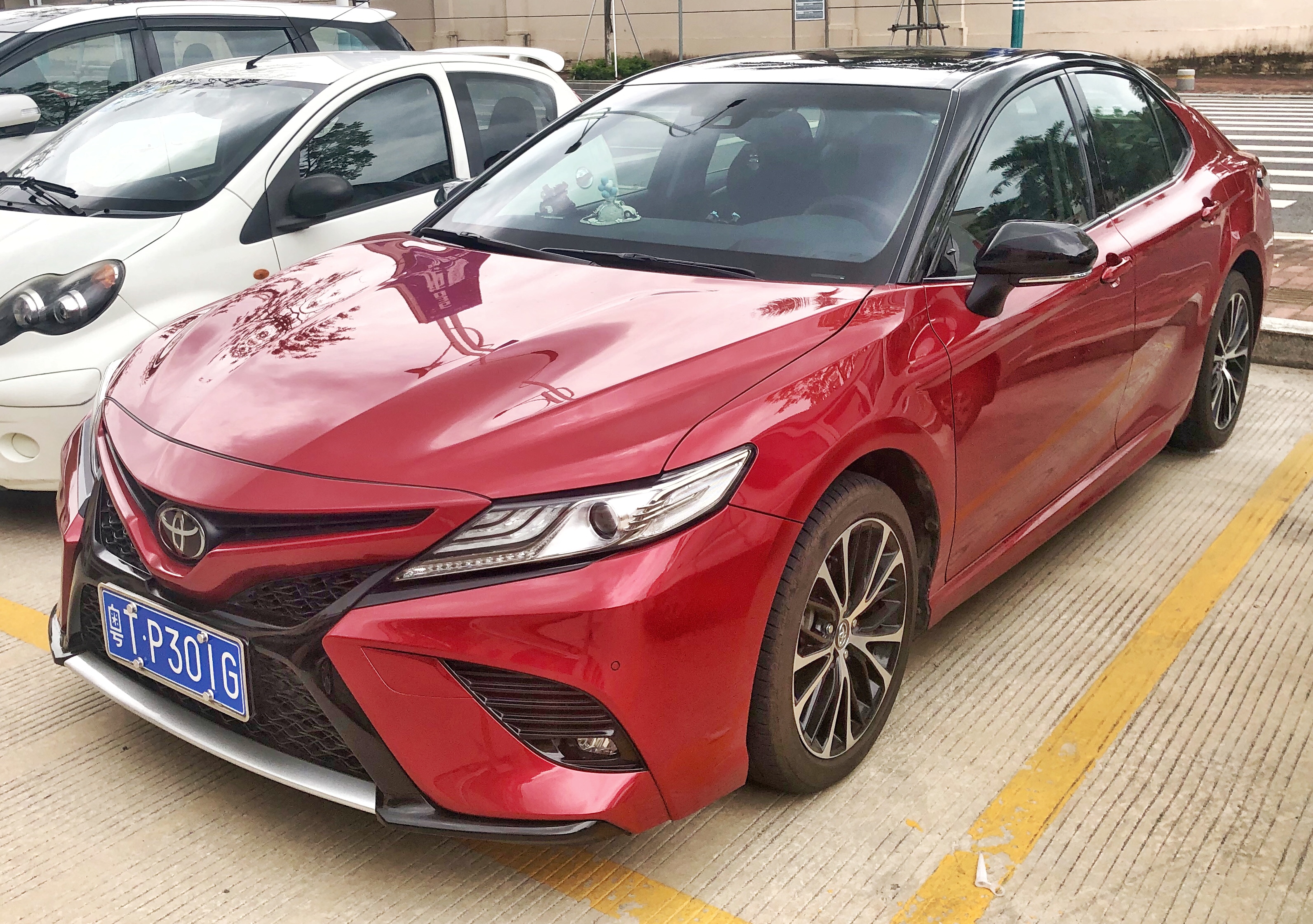
Toyota Camry
"...ou know seats in other vehicles could be a Toyota Camry I mean we did a poison dart years ago where we pu..."
The Toyota Camry is a regular everyday car that’s meant for comfortable driving and reliability. In the podcast, it sounds like they were talking about seats or interior parts from a Camry. They may have been using it as an example of what could fit or work in another project.
The Toyota Camry is a mainstream midsize sedan known for practical everyday use and broad availability of parts and service. The podcast mention suggests it came up as an example of a vehicle interior or seating setup being compared or swapped during a project. That kind of reference is common when builders are sourcing comfortable, usable components for a different build.
mid-back
"You ever done a mid-back with a milk crate? Never mind. I was just asking."
“Mid-back” describes a seat with a backrest that comes up to the middle of your back—more supportive than a low-back, but not as tall as some racing-style seats. They’re using it to talk about different seat options for a custom interior.
“Mid-back” refers to a seat design where the backrest is taller than a low-back bucket but not as tall as a full-back racing seat. The speaker uses it as an example of seat style/fitment when discussing interior seat choices.
milk crate
"You ever done a mid-back with a milk crate? Never mind. I was just asking."
A “milk crate” is a household container, not a real car seat. The comment is basically a joke about an improvised, not-ideal seating setup.
Using a “milk crate” as a seat is an informal, improvised setup rather than a purpose-built automotive seat. The speaker mentions it as a humorous reference while discussing seat styles and fitment for an interior build.
Request an Explanation
Heard something you'd like explained? We'll add it to this episode.
Sign in to request explanations for terms you heard.
Want to learn more?
Browse our glossary for plain-English explanations of automotive terms, jargon, and concepts.
Help improve this episode
See something that's not quite right? Our annotations are AI-generated and can sometimes miss the mark. Click the flag icon on any annotation to suggest a correction.