
Project #Trigger – The Adventure Continues
About this episode
Terry from Vorsalock Motorsports joins Two Guys Garage to catch up on his 2015 Mustang “Trigger,” an LS-swapped, aero-heavy time-attack build that keeps evolving. The conversation centers on his track-tested, step-by-step approach to tuning and how he can isolate changes—unlike most racers who must adjust multiple variables at once. Terry recounts a tough year: crash repairs, class changes that forced more horsepower, and lessons learned after sensor and drivability issues. He details the upgraded 744whp LS setup, traction control, and auto-blip braking tweaks that help manage massive power.
Terry
"You guys you guys have heard Terry on with us before Terry from Vorsalock Motorsports ... Vorsalock Motorsports Kevin, you know Terry for a long time, right?"
Terry is the person they brought on from a performance shop. They’re saying he’s really knowledgeable about how to improve cars and make them go faster in a practical way.
Terry is the guest from Vorsalock Motorsports. In this segment, the hosts describe him as a technical resource for making cars faster, especially through engineering-focused, step-by-step development.
Vorsalock Motorsports
"Vorsalock Motorsports Kevin, you know Terry for a long time, right? ... And I gotta tell you he's such a wealth and resource of knowledge ... Vorsalock Motorsports Kevin, you know Terry for a long time, right?"
Vorsalock Motorsports is a performance shop/company. The hosts say they sell and support parts that help cars handle better and go faster.
Vorsalock Motorsports is presented as a performance-focused company that supports “top fast cars” with chassis and handling parts. The hosts mention it specifically in the context of suspension components and tuning information for cars like Camaros, Corvettes, Mustangs, and BMWs.
ABS systems
"if you're trying to tick up your lap times if you're trying to get a little faster around a corner if you need to know how to do [26.0s] You know ABS systems on cars that shouldn't have ABS systems"
ABS is a safety system that helps your brakes not lock up. When you brake hard, it pulses the braking force so the wheels keep rolling and you can still steer.
ABS systems (anti-lock braking systems) prevent wheel lockup during hard braking by modulating brake pressure. That helps maintain steering control and reduces the chance of skidding, especially on low-grip surfaces.
lap times
"if you're trying to tick up your lap times if you're trying to get a little faster around a corner if you need to know how to do"
Lap time is how long it takes to drive one full lap on a track. Faster lap times usually mean the car is braking, turning, and accelerating better.
Lap times are the measured time it takes to complete one circuit around a track. In performance driving, improving lap times is a practical way to quantify faster acceleration, better braking, and improved cornering consistency.

Chevrolet Corvette
"...g you need for all the top fast cars Camaro's and Corvettes and Mustangs and and BMWs and you name it so if y..."
The Corvette is a sports car made by Chevrolet. It’s designed to be fast, and many owners upgrade it with performance parts. That’s why it comes up when people talk about racing or building quick cars.
The Chevrolet Corvette is a high-performance sports car known for its strong performance potential and large enthusiast aftermarket. The podcast mentions it alongside other popular performance cars, which highlights how common it is for shops to stock parts and support builds. It’s often discussed because it’s a frequent choice for track and power upgrades.
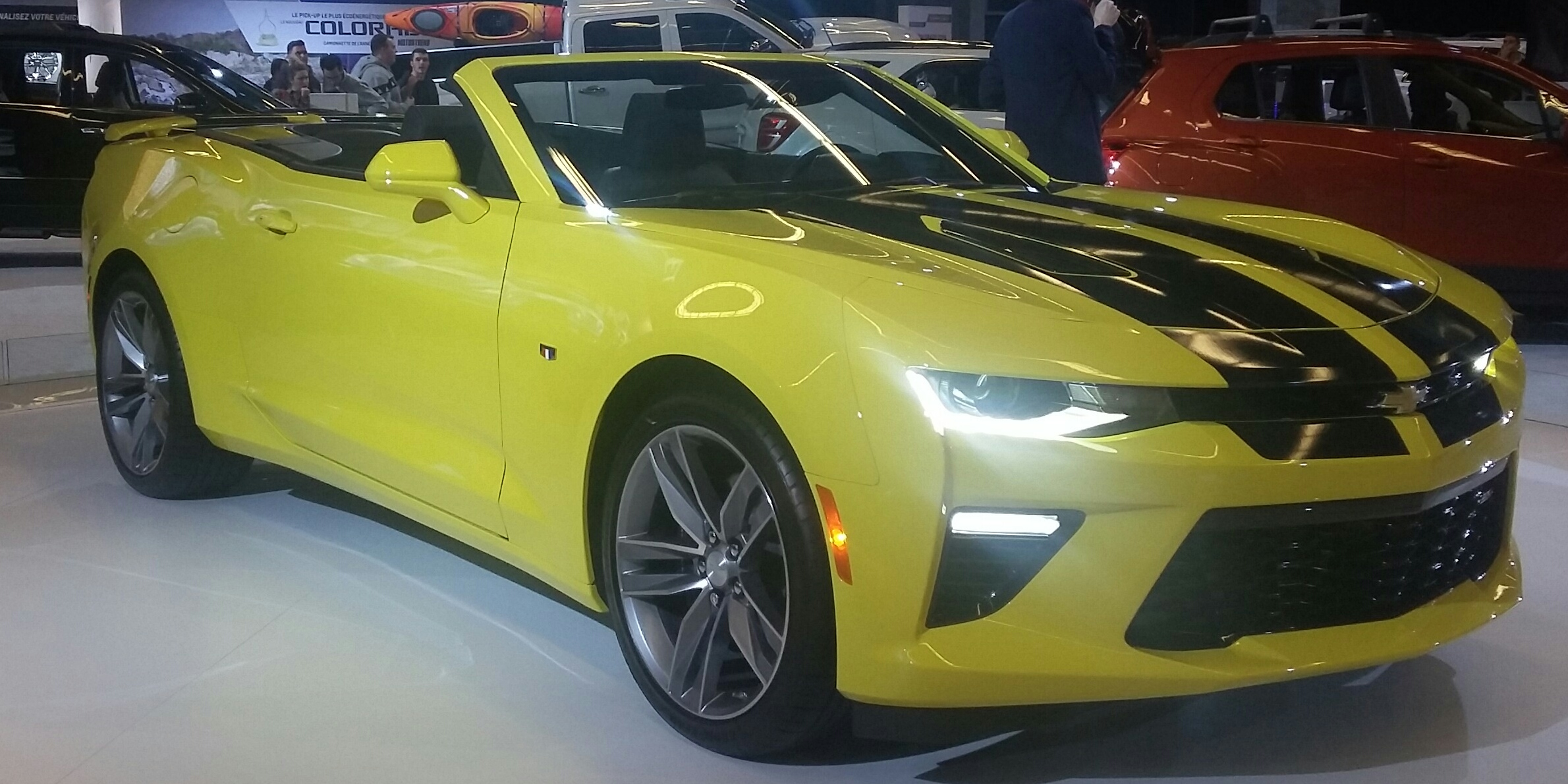
Chevrolet Camaro
"And he has this this amazing company Vorsalock Motorsports with everything you need for all the top fast cars Camaro's and Corvettes and Mustangs and and BMWs and you name it so if you have a fast car you got to check them out because they've got springs and dampers and"
The Camaro is a sports car made by Chevrolet. People talk about it a lot because it can be built for fast driving and racing, and there are many performance parts available. It’s the kind of car a shop might support if you want to make it quicker.
The Chevrolet Camaro is a performance-focused American sports coupe that’s commonly discussed in the context of speed parts, track builds, and aftermarket support. In the podcast context, it’s mentioned as one of the “top fast cars” that a motorsports shop would support with parts and services. That makes it a natural topic when talking about building or maintaining high-performance vehicles.
springs and dampers
"so if you have a fast car you got to check them out because they've got springs and dampers and [80.0s] Sway bars and camber plates and you name it all the tricks stuff"
Springs and dampers are what keep the car from bouncing. They help the tires stay planted so the car handles better and feels more controlled.
Springs and dampers are the core of a car’s suspension: springs support the vehicle and control ride height, while dampers (shock absorbers) control how quickly the suspension moves. Together they strongly affect grip, ride quality, and how consistently the car can hold tires in the right contact patch.
sway bars
"because they've got springs and dampers and [80.0s] Sway bars and camber plates and you name it all the tricks stuff"
Sway bars help keep the car from leaning too much in corners. That can make the car feel more stable and predictable when you turn.
Sway bars (anti-roll bars) reduce body roll during cornering by transferring load between the left and right suspension. Stiffer or better-matched sway bars can improve turn-in feel and reduce understeer/oversteer tendencies, depending on the setup.
camber plates
"Sway bars and camber plates and you name it all the tricks stuff"
Camber plates let you adjust the wheel angle. That helps the tire sit better in corners so you can get more grip where it matters.
Camber plates are adjustable mounts (typically for strut suspensions) that let you change the camber angle of the wheels. More negative camber can improve tire contact during cornering, which is especially useful for track driving.
LS swap
"on on his trigger 2015 Mustang project with an LS swap and lots of aero like"
An LS swap is when you put a GM LS V8 engine into a car that didn’t originally have it. People do it because the LS engines are powerful and there are lots of parts and know-how to make them work.
An LS swap means installing an LS-series GM V8 engine into a different vehicle than it originally came in. LS engines are popular for swaps because they’re compact, make strong power with aftermarket support, and are relatively straightforward to integrate with modern wiring and engine management.
aero
"Which is kind of what we're going to catch up today on on his trigger [106.3s] 2015 Mustang project with an LS swap and lots of aero like"
Aero means aerodynamic parts that change how air flows around the car. On a track car, it often helps the car stick to the road and feel more stable at speed.
Aero (aerodynamics) refers to body and airflow-shaping parts that manage downforce and drag. On track-focused cars, aero can improve stability and grip by pushing the tires harder onto the road at speed.
time attack
"Yeah, he's not afraid anything man. He's he's going all in time attack and you name it It is a definitely a bastard child."
Time attack is a track event where you’re trying to beat the clock with your car. Instead of racing side-by-side, you focus on making the car faster lap after lap.
Time attack is a motorsport format where the goal is to set the fastest lap time on a track, usually with a single car competing against the clock. It emphasizes repeatable traction and tuning changes that improve lap time rather than racing wheel-to-wheel.
seat time
"Everybody's so Greedy with right because you put in the seat time you put in the the money at the track, right the tires all that stuff"
Seat time just means how long the driver spends actually driving the car on the track. The more you do it, the more you learn what the car is doing and how to get faster.
Seat time is the amount of time a driver spends actively driving and learning the car on track. More seat time usually means better consistency, faster adaptation to the car’s behavior, and more useful data for tuning decisions.
tires
"Everybody's so Greedy with right because you put in the seat time you put in the the money at the track, right the tires all that stuff"
On a track, tires matter a lot because they provide the grip that lets the car corner and accelerate. The right tires (and how they’re warmed up) can make a big difference in lap times.
In track contexts, tires are a performance component that directly affects grip, heat management, and lap-time consistency. Time-attack setups often depend heavily on choosing the right tire and running pressures/temperatures correctly.
track
"Uh, like I said before we do about 30 events 30 days at the track a year and that you know every time I go to the track"
Here, “track” means a race course where people drive for timed laps. Cars get worked harder there than on the street, so problems show up faster.
In this context, “track” means a closed racing circuit where they run timed laps and driving events. It’s different from normal street driving because the car is stressed repeatedly at higher speeds and under sustained loads.
three-hour round trip
"It's a three-hour round trip. Um, and it costs money and time and uh, my wife luckily is into the sport"
They’re saying they drive a long distance just to get to the track. Doing that often means more time and more wear on the car.
A “three-hour round trip” highlights how frequent track days create real-world operating costs and time demands beyond just the racing itself. For a project car, that kind of repeated travel can also add wear and increase the chance of mechanical issues showing up.
concrete walls
"But when there's concrete walls right next to the track, uh, it took out the left side of the car"
Those are hard, fixed barriers right next to the track. If a car hits them, it can seriously damage the car and force repairs before you can race again.
Trackside concrete barriers are fixed crash walls placed very close to the racing surface. When a car hits them, the impact can quickly damage body panels, suspension components, and alignment, turning a minor incident into major repairs.
horsepower
"over the winter we decided to upgrade the horsepower and you know, let's go from 11 to 1 and 650 wheel"
Horsepower is basically how strong the engine is. More horsepower usually means the car can accelerate harder and pull better.
Horsepower is a measure of engine power output—how much work the engine can do over time. When the hosts say they upgraded horsepower, they’re talking about increasing the engine’s ability to accelerate the car and make more speed under load.
hot rodder
"Did you just repair it or did you do the well while I'm here? I might as well That's the curse. That's the curse of a hot rodder"
A hot rodder is a car enthusiast who likes modifying cars to make them faster or more fun. The joke is that once you start working on a car, you often discover more problems and end up doing more work than planned.
A hot rodder is an enthusiast who modifies cars for more power, better performance, or a more aggressive setup. The “curse” joke here points to a common pattern: once you start fixing or upgrading one thing, you end up finding more work to do.
borcelag motorsports
"we have our boy terry on check out borcelag motorsports"
Borcelag Motorsports is the racing team or shop mentioned in the episode. They’re likely involved in preparing and supporting cars for track events.
Borcelag Motorsports is referenced as the group/organization connected to the guest. In racing contexts, a motorsports shop or team typically handles car preparation, setup, and competition support.
compression
"We got some new pistons on order to go from 11 and a half to one compression and 93 octane ... So let's go to 14 to 1 and it kind of crept up to 14 7 to 1 and e85"
Compression ratio is how tightly the engine squeezes the fuel-air mixture before it ignites. More compression can make more power, but you need higher-octane fuel to prevent knocking.
Compression ratio is how much the engine compresses the air-fuel mixture before ignition. Raising it (here, from about 11.5:1 toward ~14:1) can improve efficiency and power, but it also increases knock risk—so fuel choice (octane/ethanol blends) matters.
93 octane
"We got some new pistons on order to go from 11 and a half to one compression and 93 octane"
Octane is basically how resistant the fuel is to engine knocking. Higher-octane fuel helps engines run safely when compression is increased.
Octane rating is a measure of a fuel’s resistance to knock (uncontrolled combustion) in high-compression engines. The speaker references 93 octane as the fuel baseline while they plan compression changes.
E85
"So let's go to 14 to 1 and it kind of crept up to 14 7 to 1 and e85"
E85 is a fuel blend with a lot of ethanol. It can help an engine make more power because it resists knocking better than regular gasoline.
E85 is a fuel blend containing about 85% ethanol. Ethanol generally has higher knock resistance than gasoline, which allows higher compression and more aggressive tuning for power.
744 to the wheels
"So they're making 744 to the wheels in a that's a good number at the at the wheels"
“To the wheels” is the power the car actually delivers to the road, measured on a dyno. It’s usually lower than engine horsepower because some power is lost inside the drivetrain.
“To the wheels” means wheel horsepower—power measured at the drivetrain output (after losses through the engine accessories, transmission, and differential). It’s often the number people quote from a chassis dyno.
7.4 liter ls
"Yeah, so again a 7.4 liter ls built by hpr with good heads and a wild crazy twin throttle body intake"
This is a big V8 based on GM’s LS engine family, built at about 7.4 liters. Bigger displacement plus the right parts can make a lot of power.
A “7.4 liter LS” refers to a large-displacement LS-family V8 (GM’s LS engine architecture) built for high power. The LS platform is popular in performance builds because it’s modular, widely supported, and responds well to cylinder head and intake upgrades.
twin throttle body intake
"Yeah, so again a 7.4 liter ls built by hpr with good heads and a wild crazy twin throttle body intake"
A twin throttle body setup uses two air-control valves instead of one. That can help the engine breathe better and respond more sharply when you press the gas.
A twin throttle body intake uses two throttle plates (one per side/runner group) to control airflow more precisely than a single throttle body. On performance builds, it can improve throttle response and airflow distribution for higher power.
custom fabrication
"A lot of custom fabrication went into that"
Custom fabrication means they made special parts just for this project. It’s usually needed when off-the-shelf parts don’t fit the exact power goals or layout.
Custom fabrication means parts are made or modified specifically for this build—often brackets, intake/exhaust components, mounts, or other one-off hardware. It’s common when chasing packaging and airflow targets in a high-output engine swap or race setup.
unlimited class
"We were getting kicked out of a certain class to a more unlimited class. So we were"
An “unlimited class” is a competition category where the rules are looser. That affects how people build their cars and how they try to win.
An “unlimited class” is a racing/competition category with fewer restrictions on modifications. The speaker says they were moved out of a certain class into this one, which changes what competitors can do and how they chase power.
twin turbo
"So some of the guys in those classes will be twin turbo 1200 wheel"
Twin turbo means the engine uses two turbochargers to cram more air in. More air can mean much more power, especially in racing.
Twin turbo refers to using two turbochargers to force more air into the engine. In competition contexts, it’s often used to reach very high power levels, which pressures naturally aspirated builds to make more power through displacement/compression/cam/intake changes.
runs out of fuel
"90 na and it can do that until it runs out of fuel. It never gets hot"
This means the engine can’t get enough fuel to keep making power. Even if the engine is capable, the fuel system can become the limiting factor.
“Runs out of fuel” describes a power limit caused by insufficient fuel delivery (fuel pump, injectors, or fuel system capacity) rather than engine mechanical limits. In high-power NA builds, fuel starvation can cap how long the engine can sustain full power.
titanium valves
"It's all titanium valves and you know crazy ported heads and but it makes power everywhere"
Some engines use valves made from titanium instead of steel. Titanium is lighter, which can help the engine spin faster safely when you’re building for high performance.
Titanium valves are engine valves made from titanium instead of the more common steel. Titanium is lighter, which can help the valve train handle higher engine speeds with less stress, supporting aggressive performance builds.
ported heads
"It's all titanium valves and you know crazy ported heads and but it makes power everywhere"
Ported heads mean the engine’s head passages are modified to let air flow better. That helps the engine make more power and feel stronger as you rev it.
Ported heads are cylinder heads that have had the intake/exhaust passages reshaped and enlarged for better airflow. Better airflow usually improves power and how strongly the engine pulls across the rev range.
power band
"It pulls hard from like 3,500 to 8500 big power band"
The power band is the engine speed (RPM) range where it produces strong power and torque. When someone says it pulls from 3,500 to 8,500, they’re describing where the car feels most forceful.
auto blipping rev
"Um, and with the traction control and we got a an auto blipping rev"
Auto blipping is when the car automatically raises the engine RPM during a downshift so everything matches up. It makes downshifts smoother and helps avoid jerky drivetrain behavior.
Auto blipping (rev-matching) is when the car automatically raises engine RPM during downshifts so the drivetrain speed matches. This reduces driveline shock and makes aggressive shifting smoother, especially in cars with high torque.
rev match
"And I was used to, you know, blipping the throttle and trying to rev match"
Rev matching is when you adjust the engine speed to match the lower gear before you fully engage it. It helps the car shift smoothly instead of jolting.
Rev matching is the technique of adjusting engine RPM to match the transmission’s target gear speed during downshifts. Proper rev matching reduces drivetrain shock and helps maintain traction and stability under braking and corner entry.
wide open throttle
"You were 30 wide open throttle when you drove into that wall."
Wide open throttle means the gas pedal is fully down. It tells the engine to request maximum airflow and power.
Wide open throttle (WOT) means the throttle plate is fully opened, commanding maximum airflow and typically maximum power potential. The speaker references data showing the car was at WOT when it hit the wall, which is important for diagnosing driver input vs. vehicle behavior.
pedal extend off
"So he tweaked that so now I don't have to we took the pedal extend off and now I just break and put the clutch in it"
Pedal extend off means the car stops using a modified throttle response mapping. Turning it off can make the throttle feel more straightforward and predictable.
Pedal extend off refers to disabling a throttle-pedal mapping/extension feature that changes how pedal movement translates into throttle opening. Turning it off can make throttle response more direct and reduce unintended high-throttle behavior.
sequential
"It's kind of like a sequential but without the cost of a sequential"
Sequential shifting means you go up or down one gear at a time, like a staircase. It’s different from an H-pattern where you can select gears more freely.
A sequential transmission shifts in order (up or down one gear at a time) rather than using an H-pattern. The speaker compares their setup to sequential behavior but notes it’s achieved without the cost of a true sequential gearbox.
magnum excel drama
"It's just a magnum excel drama. So um, so that was working really well"
This sounds like the name of a specific aftermarket part or tuning setup for shifting, but the transcript text is unclear. If you share the surrounding lines or the episode’s full transcript, it may be possible to identify the exact product.
This appears to be a mis-transcription of a specific aftermarket shifting/ECU hardware or software name. Because the exact product name isn’t clear from the audio text, it can’t be reliably identified as a known component.
MAP sensor
"I had this vacuum tea that went to the the map sensor and it kind of melted and it was given an erratic Map sensor reading."
A MAP sensor measures how much pressure the engine is pulling in. If it starts giving wrong readings, the engine computer can’t meter fuel and timing correctly.
A MAP sensor (Manifold Absolute Pressure sensor) measures the pressure in the intake manifold. It’s used by the engine computer to calculate load and fuel/ignition strategy; if it reads erratically, the tune can behave unpredictably.
vacuum tee
"I had this vacuum tea that went to the the map sensor and it kind of melted and it was given an erratic Map sensor reading."
A vacuum tee is a connector that splits a vacuum/pressure line into multiple paths. If it fails or melts, it can mess up sensor readings and cause tuning/driveability issues.
A vacuum tee is a small fitting used to split or combine vacuum/pressure lines. In this case, the vacuum tee connected to the MAP sensor melted, causing erratic sensor readings and highlighting how fragile plumbing details can be in high-heat setups.
remote oil pressure sensor
"but you do use a remote oil pressure sensor because the it can get weird vibrations"
A remote oil pressure sensor measures oil pressure using a sensor mounted somewhere else and connected by a line. The idea is to get a more stable, trustworthy reading despite vibration.
A remote oil pressure sensor is mounted away from the engine and connected via lines to measure oil pressure at a different location. The speaker notes it’s preferred because vibrations and installation details can make other remote sensors behave oddly.
EFI
"Plannum on top of a carb style intake but but it's efi It gives the car better drivability because it's not a one big massive throttle body"
EFI means the car uses electronics to control fuel delivery instead of a carburetor. That usually helps the engine run more smoothly and predictably.
EFI (electronic fuel injection) uses sensors and an ECU to precisely control how much fuel is sprayed into the engine. Compared with carburetors, EFI can improve consistency and allow more advanced tuning for throttle response and drivability.
carb style intake
"Plannum on top of a carb style intake but but it's efi It gives the car better drivability because it's not a one big massive throttle body"
They’re using an intake shape that looks like the kind used on older carbureted engines. Even though it looks old-school, it’s being used with modern fuel injection.
A carb-style intake refers to an intake manifold design that resembles older carbureted setups (often with plenum and runner geometry meant for carb airflow). In this case, they’re using that layout while running EFI, which can affect how throttle and airflow behave.
manifold pressure
"And you're not when you crack it it doesn't hit a lot of manifold pressure So we have 22 smaller throttle bodies that equal the more than the big one we had"
Manifold pressure is basically how much “air pressure” is in the intake system. If it jumps too quickly when you touch the throttle, the car can lurch or spin the tires.
Manifold pressure is the pressure inside the intake manifold that reflects how much air the engine is ingesting. When you crack the throttle, a large single throttle can cause a big spike in manifold pressure, which can make the car feel abrupt or harder to control.
traction control
"And the car is infinitely more drivable and I can come out of corners and we have traction control that kind of covers up any kind of You know aggressive driving and so can you explain what you you just kind of map over that like it's yeah"
Traction control helps stop the wheels from spinning when you accelerate too hard. It can reduce power so the car stays pointed where you want it.
Traction control is an electronic system that detects wheel slip and intervenes—often by reducing engine torque—to help maintain grip. In aggressive driving, it can mask drivability issues by preventing the tires from breaking loose too easily.
road course driving
"So when you're driving a road course or something like that when you lean into it You obviously don't overpower the track you want to use all the power"
A road course is a track with lots of corners and repeated acceleration and braking. On that kind of driving, how the car responds to the gas pedal matters a lot.
Road course driving refers to using a circuit with repeated braking, cornering, and acceleration zones, where throttle application needs to be precise. The speaker contrasts single-throttle abruptness with a setup that delivers power in a more controllable way when you lean into the throttle.
brake traction
"Lean into it too hard and and brake traction or get out of control really fast But you found a way to slow it down"
They mean the tires lose grip. If the car gets too much power too quickly, it can start sliding or spinning before the car’s traction system can help.
“Brake traction” here is used to describe losing grip under braking or rapid torque changes—essentially traction breaking loose. The idea is that a single throttle body can make the car spin or get out of control faster than the traction control system can react.
vacuum in the intake manifold
"Because you're starting to get vacuum in the intake manifold at wide open throttle. That's never good Because you want you know the most pressure the most air going in"
Vacuum here means the intake isn’t getting enough air pressure. If you’re asking for full power but the intake is still “underfilled,” the engine won’t respond the way you expect.
Vacuum in the intake manifold means the pressure inside the manifold is below atmospheric pressure, which usually indicates the engine isn’t getting the airflow it wants. The speaker’s point is that with certain throttle/airflow setups, you can end up with vacuum even at high demand, which is undesirable for making consistent power and response.
progressive throttle
"You know it's like on or off like it's it's tricky. Are you doing progressive throttle? [764.4s] Well, and that's something we were trying to make work"
Progressive throttle is how the car turns your gas pedal movement into engine response. Instead of the engine reacting instantly like a switch, it ramps up more smoothly as you press the pedal.
Progressive throttle means the throttle opening doesn’t behave like a simple on/off switch; instead, it’s mapped so small pedal inputs produce a controlled, gradual change in airflow. In performance tuning, this matters for drivability because it affects how smoothly the engine responds at low speed and during transitions.
two independent throttle bodies
"Well, and that's something we were trying to make work [767.6s] To get two independent throttle bodies [769.7s] We'd really like that to be the case to where we have in first and second gear only one throttle body works"
Instead of one throttle valve controlling all the airflow, the engine uses two separate throttle valves. That can help the car respond more smoothly, especially at low speeds or during tricky driving.
Two independent throttle bodies means the engine has two separate throttle plates/actuators that can open independently rather than one shared throttle. This can improve low-speed response and tuning flexibility by letting the system meter airflow differently across gears or driving conditions.
low speed autocross
"That's just one of the many things on our list to do [783.4s] To make it easier to drive for like low speed autocross is the ls vest I did last year and it was it was really hard to drive"
Low speed autocross is racing-style driving on a course with lots of tight turns, usually at relatively low speeds. Because you’re constantly adjusting the gas, throttle behavior matters a lot.
Low speed autocross refers to tight, slow cornering where throttle control and drivability are critical. In that environment, throttle mapping and intake airflow distribution can make the difference between a car that’s easy to modulate and one that feels jerky or hard to drive.
112 millimeter throttle body
"So we're the the two smaller throttle bodies equal more posterior than the big one we had we had a [796.4s] 112 millimeter throttle body now. We have two gm 90s"
The throttle body is the valve that controls how much air the engine gets. “112 millimeter” describes its size, and that size can affect both top-end airflow and how smoothly the car feels when you’re driving slowly.
A 112 mm throttle body is the diameter of the throttle inlet/plate area used to control how much air enters the engine. Larger throttle bodies can support more airflow at higher RPM, but they can also make low-speed response harder if the airflow control isn’t tuned well.
90 millimeter ls three ls seven throttle bodies
"So you have two gm ac delco 90 millimeter ls three ls seven throttle bodies [815.7s] And they just work in tandem and it it it kind of unlocked a lot of horsepower on top"
LS3 and LS7 are GM V8 engine types. The throttle bodies are the air-control valves, and using 90 mm versions (instead of a single bigger one) can help the engine breathe and respond better when you’re tuning for both low-speed control and power.
“LS3” and “LS7” refer to GM V8 engine families, and the throttle bodies are sized and designed to match those applications. Using 90 mm throttle bodies (instead of a single larger one) can improve how airflow is metered at different throttle openings, which helps drivability and can free up power when tuned correctly.
plenum
"So this there was a lot of fabrication. We remade this plenum twice. It was a lot of work [840.8s] It's just something that we hadn't seen anybody else do you picked up 30 just with that"
The plenum is like a small chamber in the intake that helps distribute air to the rest of the engine. Its shape and volume can change how the engine breathes, so it’s a big deal when you’re building a custom intake.
A plenum is the air distribution chamber in an intake system that feeds the runners/throttle path. Changing the plenum design can strongly affect airflow dynamics, which is why remaking it multiple times can yield meaningful drivability and power changes.
long runner
"Yeah, just the intake and it was we went from a long runner, you know the typical plastic one-piece manifolds [851.1s] Two-piece in case of msd, which is a great manifold."
A “long runner” means the intake tubes are longer. That can help the engine pull harder at lower and mid RPMs, while other designs may favor higher RPM power.
A long-runner intake uses longer intake passages (runners) between the plenum and the intake ports. Longer runners tend to favor low-to-mid RPM torque due to intake tuning effects, while shorter runners often support higher-RPM breathing—so switching runner length can change the powerband.
two-piece manifold
"Yeah, just the intake and it was we went from a long runner, you know the typical plastic one-piece manifolds [851.1s] Two-piece in case of msd, which is a great manifold. It makes really good power makes peak power at like 6200"
A two-piece manifold means the intake manifold is made in two parts. That can help with fitment and tuning in a custom setup, and it can still make good power if the airflow paths are designed well.
A two-piece manifold is an intake manifold design split into two sections rather than one continuous casting. That can make packaging, airflow shaping, and fabrication easier—especially in custom builds—while still supporting strong power if the runner and plenum geometry are right.
Cid carburetor style intake
"It makes really good power makes peak power at like 6200 [857.4s] when we went to the big [860.1s] Cid carburetor style intake"
A carburetor-style intake is an intake design that’s meant to feel more like the old carburetor era. It can change how the engine responds and how air flows into the cylinders.
A “carburetor style intake” refers to an intake layout that resembles older carbureted setups, often with a plenum and airflow path meant to mimic how a carb meters air/fuel. These designs can change throttle response and how the engine fills its cylinders compared with modern one-piece or tuned-runner intakes.
shorter runner
"It moved the peak power up because it was a shorter runner bigger port but a shorter runner intake and"
The intake runner is the tube that air travels through to reach the engine. Shorter runners usually help the engine breathe better at higher RPMs, so peak power happens later in the rev range.
Intake runners are the tubes that carry air from the plenum to the intake ports. Shorter runners tend to favor higher engine speeds by moving the engine’s air-tuning (resonance) to a higher RPM range, which can raise peak power RPM.
bigger port
"bigger port but a shorter runner intake and That's that made a huge deal and peak power now is at 7300"
The intake port is the channel air goes through in the engine head. Making it bigger can let more air through, but it can also change how the engine responds at lower speeds.
An intake port is the passage in the cylinder head that air flows through before entering the combustion chamber. Increasing port size can improve airflow at certain RPMs, but it can also change airflow velocity and affect drivability if not matched to the rest of the intake system.
peak power
"That's that made a huge deal and peak power now is at 7300 So it picked up 1100 rpm at peak and we picked up a bunch of area under the curve as well"
Peak power is the highest horsepower the engine makes, and it happens at a particular RPM. If it “moves up,” the engine feels strongest at higher revs.
Peak power is the maximum horsepower an engine produces at a specific RPM. When the speaker says peak power moved up, they mean the engine’s strongest output occurs at a higher rev range due to intake geometry changes.
area under the curve
"So it picked up 1100 rpm at peak and we picked up a bunch of area under the curve as well So it was it was something that eric canning hbr wanted to try"
On a dyno chart, the curve shows how much power the engine makes across RPMs. “Area under the curve” means the engine makes more useful power over a wider range, not just at the very top.
“Area under the curve” refers to the total horsepower (or torque) output across the RPM range on a dyno graph. More area usually means the engine delivers stronger pull over a broader band, not just at one peak RPM.
single throttle body
"The dark horse was the same thing two throttle bodies Just more airflow, but you don't lose the the drivability of one big single throttle body"
A single throttle body means one air-control valve. The idea is that it can keep the car’s response smooth and predictable, even if a twin setup might flow more air.
A single throttle body uses one throttle plate to control airflow into the intake system. The speaker contrasts it with twin throttle bodies, noting that the single setup can preserve drivability characteristics even if it doesn’t maximize airflow as aggressively.
drivability
"Just more airflow, but you don't lose the the drivability of one big single throttle body So ours was a packaging nightmare."
Drivability is how smooth and controllable the car feels when you drive it normally—how it responds when you press the gas and how it behaves across different speeds.
Drivability is how easy and predictable the car feels in real-world driving—throttle response, smoothness, and how well it transitions between RPMs. The speaker emphasizes that a twin throttle body can increase airflow without sacrificing the everyday feel of a single-throttle setup.
packaging nightmare
"So ours was a packaging nightmare. Yeah, and you and you also"
Packaging is about fitting parts into the engine bay. A “packaging nightmare” means the design is hard to fit neatly, so you end up making compromises to make everything work together.
In performance engine work, “packaging” refers to fitting components under the hood while meeting airflow, cooling, and service constraints. A “packaging nightmare” means the chosen intake/throttle layout is difficult to physically fit and integrate without compromises.
twin air filters
"You're reducing the airflow through each air filter, right? So once you do twin air filters, right? The velocity goes down right the drag through each filter goes way down"
Two air filters means the intake air gets filtered through two separate filter elements. That can change how easily air moves into the engine, affecting both power and how the car feels when you press the gas.
Using two air filters instead of one changes how intake airflow is routed and filtered. The speaker notes that this affects airflow velocity and pressure losses (“drag”) across each filter, which can influence both power and throttle response.
velocity goes down
"The velocity goes down right the drag through each filter goes way down So you're picking up a lot of stuff and that drivability"
Air speed in the intake matters for how the engine fills with air. If the air velocity drops, it can reduce resistance, but it can also change how the engine responds across RPM.
Air velocity in the intake affects how the engine breathes, including throttle response and how well the intake system supports cylinder filling. Lower velocity can reduce certain losses through the intake tract, but it can also change the engine’s torque curve shape.
drag through each filter
"The velocity goes down right the drag through each filter goes way down So you're picking up a lot of stuff and that drivability"
Filters can slow airflow down a bit. Less “drag” means the engine gets air more easily, which can help power and throttle response.
“Drag” here means pressure loss as air passes through the filter media and housing. Lower restriction lets more air reach the engine, which can improve power and help maintain drivability when airflow demands are high.
MSD
"And and the 24 season we're like, you know, let's just go to an msd and make it simple And we did and it was really drivable"
MSD is a company that makes performance ignition electronics. Here, they’re using an MSD solution to simplify the setup and make the car easier to drive.
MSD is a brand name commonly associated with ignition components (like ignition boxes and related performance electronics). In this context, the speaker says they switched to an MSD setup to simplify the system and keep the car more drivable.
Hoosiers
"Meanwhile, we're doing arrow and changing, you know Going to Hoosiers and removing weight from the car"
Hoosiers are racing tires. They’re often used because they grip harder and behave more predictably on track than many street tires.
Hoosiers is shorthand for Hoosier Racing Tires, a brand commonly used for track and drag racing. In this context, switching to Hoosier tires is about improving grip and consistency so the car can put down more power without spinning or losing traction.
splitter
"I had a wheel break off. I've had you know a splitter kept coming off because we changed one thing"
A splitter is an aerodynamic front (or sometimes rear) extension that helps manage airflow under and around the car. On high-power track cars, splitters are often mounted aggressively for downforce, but they can break or come loose if the car’s setup or loads change.
coolant pressure sensor
"We had a coolant pressure sensor [1098.7s] That's bad and it was tied to a lot of things and those things quit working"
This sensor tells the car how much pressure is in the cooling system. If it’s wrong or fails, the car may not know the engine is staying cool and may limit power to protect the engine.
A coolant pressure sensor measures the pressure of the engine’s cooling system. If it fails, the car may not trust the cooling data and can trigger protective strategies that reduce power or cause related systems to stop working.
artificial rev limit
"And we had a an artificial rev limit that it would only run between four and 6000 and that didn't work [1108.7s] So I did one event where it was just I'm limping around the track"
This is a computer-controlled limit that stops the engine from revving past a certain RPM. It’s like a safety cutoff, and it can make the car feel weak or unresponsive.
An artificial rev limit is an ECU-imposed RPM ceiling that prevents the engine from revving higher than a set range. On track, it can feel like the car is “stuck” because the engine won’t respond normally above that RPM.
2g braking
"We had to have the centers of the rear wheels redesigned because it was just [1151.8s] at 2g braking and cornering and"
“2g” is a measure of how hard the car is being pushed. “2g braking” means you’re braking very hard—about twice the force you feel from gravity—so parts like wheels take a big stress load.
“2g braking” means the braking force is about twice the acceleration due to gravity (2×1g). It’s a way to quantify how hard the car is slowing, which directly loads suspension, wheels, and tires.
after every event
"I didn't catch it and I'm I'm religious about after every event every race car all the wheels come off [1164.4s] We wash them and then we inspect the inside of the spokes"
This refers to a post-session inspection routine used in motorsport: removing wheels after each event to check for damage that might not be visible at a glance. It’s a preventative process to catch cracks before they grow into failures.
wheel failure
"But I'm going to say it again because I've never had a wheel failure in 38 years of doing track events [1168.9s] It's a real boring thing"
Wheel failure means a wheel cracks or breaks. That’s dangerous on track, so the key is catching cracks early with careful inspections.
Wheel failure is when a wheel component cracks or breaks under load, which can be catastrophic at speed. The speaker emphasizes preventing it through disciplined inspection—especially after curb hits and high-g cornering/braking.
pit lane
"And I had to park it on pit lane and go swap wheels and it was embarrassing [1194.4s] So things happen, you know, every wheel brand has could have been worse."
“Pit lane” is the area next to the race track where cars pull in for service. If something goes wrong—like a wheel problem—you want to get there fast so the car can be fixed safely.
“Pit lane” is the service road beside the track where teams stop to change tires, refuel, or perform repairs. When a wheel issue happens, getting to pit lane quickly is critical for safety and for minimizing time on track with a compromised wheel.
carbon
"Oh, I could have flipped the car. I drove over the wheel and tore up some more carbon [1205.0s] But yeah, it's everything happens for a reason and I needed to learn a lesson about"
“Carbon” usually means carbon-fiber parts on performance cars. They’re strong and light, but they can crack or get torn up if you hit something hard.
“Carbon” here refers to carbon-fiber body or aerodynamic components, which are common on track-focused cars. Carbon parts can be expensive and can get damaged by impacts—like driving over a wheel—so the speaker is emphasizing the cost and consequences of such failures.
forged
"Every time when you're pushing the levels every wheel is a consumable [1217.8s] Doesn't matter who makes it or if it's forged or not forged or three piece or one piece"
“Forged” means the wheel is made by pressing and shaping metal under a lot of force. People bring it up because it can make the wheel stronger and better able to handle hard driving.
In wheel talk, “forged” refers to wheels made by forming metal under high pressure, which can improve strength and durability compared with some cast methods. It’s one of the manufacturing routes enthusiasts use to judge how a wheel may handle impacts and track abuse.
three piece
"Doesn't matter who makes it or if it's forged or not forged or three piece or one piece [1221.7s] That if you get a crack and you miss it, it's gonna it's gonna catch you and this one"
A “three piece” wheel is made from several parts that bolt or assemble together instead of being one solid piece. Wheel people talk about it because it can change how the wheel is built and serviced.
A “three piece” wheel is built from multiple sections (typically a center and two rims) that are assembled together. Track drivers often discuss this because it can affect how the wheel repairs, how it’s constructed, and how it behaves under stress.
crack
"That if you get a crack and you miss it, it's gonna it's gonna catch you and this one [1226.2s] We've looked at it and analyze them like half of this crack area is black because it was a little crack"
A “crack” is a split or damage in the wheel material. On track, cracks can spread quickly, so you can’t ignore them—especially if you notice signs of cracking during inspection.
A “crack” in a wheel is a serious structural defect that can grow under repeated loading. The speaker describes inspecting a crack area and notes discoloration (“black”) as evidence of prior cracking, reinforcing that damaged wheels must be addressed immediately.
downforce
"Every car grip. Yep. And when you start adding downforce and grip like all of a sudden you've changed the design parameters of that wheel"
Downforce is the “push down” effect that makes the car stick to the ground when you’re going fast. It helps the tires grip better, but it also means parts like wheels have to handle higher forces.
Downforce is the downward aerodynamic force that presses a car’s tires onto the road at speed. More downforce usually increases grip, but it also changes what the wheels and tires must withstand.
corner weights
"Some companies are the one that data from you know, what's the car way? What are your corner weights? Do you have downforce? What tire are you on?"
Corner weights are how much weight each tire is carrying individually. Knowing them helps you understand how hard each wheel and tire is being worked.
Corner weights are the weight measured at each wheel (front-left, front-right, rear-left, rear-right). They matter because suspension geometry, tire loading, and wheel strength requirements depend on how much load each corner sees.
tire are you on
"What are your corner weights? Do you have downforce? What tire are you on? How fast do you run?"
This refers to the specific tire model/type being used, because different tires produce different grip levels and operating loads. Higher grip and more downforce can increase stress on wheels and other components.
load rating
"So everything used to all be built to the same 1600 pound load rating uh across the board"
A load rating is the maximum “how much weight/force” a wheel is designed to handle. If you push beyond that, the wheel can crack over time.
A load rating is the maximum load a wheel is designed to safely carry under specified conditions. If a car’s setup (grip, downforce, corner weights) exceeds the wheel’s intended load, fatigue and cracking risk rises.
finite element analysis
"They did some finite element analysis and said we're going to take this Scoop out and add some weight there. So that's what you got to do"
Finite element analysis is a computer “stress test” for a part. It helps engineers figure out where a wheel will bend or crack so they can reinforce the right areas.
Finite element analysis (FEA) is a computer simulation that breaks a part into many small elements to predict stress, deformation, and failure points. It’s used to redesign wheel sections (like adding strength where needed) before cutting metal.
cycles
"You design it for your particular loads, which right if you look at, you know, we're getting nerdy here But an s in curve, right? So that's how many cycles you can get for a given load on a part"
Cycles are repeated “hits” or loading events the part goes through. More severe loading usually means the part reaches failure sooner.
In fatigue discussions, cycles are repeated loading events a component experiences over time. The number of cycles a part can survive depends on the load level—light loads can last far longer before cracks start.
S in curve
"But an s in curve, right? So that's how many cycles you can get for a given load on a part"
They’re talking about a fatigue chart that shows how long a part lasts under repeated stress. Higher stress usually means fewer safe cycles before cracking.
The speaker is referencing an S-N curve (stress–life curve), which relates the stress level on a part to how many cycles it can endure before fatigue failure. It’s a key concept for designing wheels that won’t crack under repeated high loads.
aluminum
"If you have really light loads aluminum could last you for almost ever maybe ever But once you start loading it up, you're gonna start creating a crack"
Aluminum is a common wheel material because it can be strong while staying relatively light. In fatigue terms, its durability depends heavily on how much load it sees—higher loads can trigger cracking sooner.
inspection
"Um, so you either got a like terry said you got to make sure you're inspecting Um, or you know, you should be inspecting no matter what but you need to know right with your supplier"
Inspection means checking parts for early damage. If you’re pushing the car hard, you want to catch cracks before they become dangerous.
Inspection here means checking wheels for early signs of fatigue damage (like cracks) before they fail. When wheels are pushed beyond typical ratings, regular inspection becomes more important.
brake pads
"Um, but inspection is huge because these are throwaway items like brake pads"
Brake pads are the friction material that slows the car down, and they wear out. The point is that some parts are meant to be replaced when you drive them hard.
Brake pads are a wear item designed to be replaced periodically. The speaker compares wheels to other components that can be “throwaway” under aggressive use, emphasizing that inspection and replacement planning matter.
wheels are consumables
"And you don't think about it. You're like a wheel lasts forever consumables. Yeah, right wheels are consumables"
They’re saying wheels aren’t “set it and forget it.” If you drive hard or hit bumps/curbs, wheels can get damaged or worn out and you may have to replace them eventually.
The hosts are using “consumables” to describe wheels/tires as parts that wear out and need replacement over time. In motorsport and aggressive driving, wheels can also be damaged by impacts, curb strikes, and repeated hard use, so they’re treated as replaceable items rather than permanent components.
rolling the dice
"Yeah, people that buy use wheels are just rolling the dice because you just don't know what that wheel's been through"
They mean you can’t always tell if a used wheel has been damaged before, so buying it is a gamble.
“Rolling the dice” here means buying used wheels without knowing their full history—especially whether they’ve been bent, cracked, or structurally weakened. The idea is that prior abuse can be hidden, so the buyer is taking an unknown risk.
airborne
"It hasn't been off track. How many times has it been airborne as it the answer to all those questions are yes"
They’re talking about situations where the car gets off the ground. That can put a lot of stress on the wheels and can cause hidden damage.
“Airborne” refers to wheels/vehicles leaving the ground, which can happen during jumps or off-track impacts. That kind of load can stress wheel structures and suspension components, increasing the chance of cracks or bends that may not be obvious at first glance.
endurance racing
"I've written several articles for them did some endurance racing in the last 12 months with the team and Learned a lot of lessons with them and and shared that as well."
Endurance racing is like a long-distance race for cars. Instead of just going fast for a short time, you have to keep the car running well for hours and drive consistently.
Endurance racing is motorsport focused on lasting a long time—often hours—rather than just a short sprint. It emphasizes reliability, consistent lap times, and efficient driving because the car has to keep working under stress for the whole event.
race cars
"We have, you know, five different race cars. We're working on any given time"
Race cars are cars built or modified to compete in racing. They’re set up to handle hard driving and track conditions, not just normal street use.
Race cars are purpose-built or heavily modified vehicles designed to compete in motorsport. They typically prioritize things like cooling, braking capacity, tire management, and chassis setup over everyday comfort.
lap after lap
"I mean, dude to be putting that much down on the ls lap after lap Right the durability you're riding the edge."
“Lap after lap” means going around the track again and again. It matters because the car has to stay strong and consistent, not just be fast for one try.
“Lap after lap” refers to repeatedly completing full circuits at speed without falling off. In performance terms, it highlights consistency and thermal/mechanical durability—how well the car holds up over many repeated high-load cycles.
ls
"I mean, dude to be putting that much down on the ls lap after lap"
“LS” usually means a GM V8 engine family that a lot of people swap into cars. It’s popular because it has strong aftermarket support and can make a lot of power.
“LS” is shorthand for GM’s LS-series V8 engines, a popular platform for swaps and high-power builds. Enthusiasts often reference “LS” when discussing engine architecture, aftermarket support, and tuning potential.
durability
"Right the durability you're riding the edge. You're you're making so much power"
Durability means how well the car can handle hard use over and over without breaking. On track, it’s about surviving heat and stress during long runs.
Durability is how long a race car can withstand repeated stress without failing. When someone says “durability” in a track context, they’re usually talking about components surviving heat, load, and wear under sustained performance.
spring rate
"I run the shock and I run this spring rate and I run this bar and great You did what everybody else did"
Spring rate is how stiff the suspension spring is. Stiffer springs can reduce how much the car leans or squats, but they can also make the ride harsher and change how well the tires stay planted.
Spring rate is how stiff a coil spring is, usually expressed as force per unit of compression. Higher spring rate generally reduces body motion but can change ride compliance and tire contact during cornering and braking.
Request an Explanation
Heard something you'd like explained? We'll add it to this episode.
Sign in to request explanations for terms you heard.
Want to learn more?
Browse our glossary for plain-English explanations of automotive terms, jargon, and concepts.
Help improve this episode
See something that's not quite right? Our annotations are AI-generated and can sometimes miss the mark. Click the flag icon on any annotation to suggest a correction.