
About this episode
Detroit gets framed as “the Mecca” of V8 culture, but the conversation quickly zooms into how modern muscle builds demand more than “a tuner and a dyno.” Glenn from Rains Precision Motorsports (RPM) explains third-generation restomods, EFI tuning, and dyno-heavy workflows—then walks through extreme swap and drag-and-drive projects. From LS/Whipple and Hellcat-style stock-power claims to 10-speed packaging, E85 strategy, and why “metal fatigue” eventually wins, the episode ties power, drivability, and durability together.
carburetor
"Used to be a Timelyte and a flathead screwdriver [140.4s] to tune on a carburetor, man. [141.7s] You're good to go."
A carburetor is an older-style way of mixing fuel and air before it goes into the engine. People used to “tune” it with simple tools to make the engine run right.
A carburetor is a fuel-mixing device used on many older engines. It blends fuel and air before it enters the cylinders, and it’s tuned to get the right air-fuel mixture for starting, cruising, and power.
plugs
"A set of plugs, you had it dialed. [146.5s] And nowadays, it's vastly different."
“Plugs” here refers to spark plugs, which ignite the air-fuel mixture in gasoline engines. Tuning and correct plug condition can affect starting, idle quality, and how efficiently the engine burns fuel.
tune
"When you think about all the capabilities of the tune [151.4s] and just the cars that are now being offered,"
To “tune” an engine means adjusting how it runs—like how much fuel it uses and when it sparks. The goal is to make it idle, drive, and accelerate the way you want.
In this context, “tune” means calibrating the engine’s fuel/air and ignition behavior to match the hardware and driving goals. Older carbureted setups were tuned mechanically, while modern setups typically rely more on electronic engine calibration.
put it in something with older lines
"and put it in something with older lines, something [169.6s] that you're passionate about, something"
They’re talking about keeping an older car’s look, but replacing the engine and drivetrain with newer stuff. That way you get the classic style plus more modern performance and reliability.
This describes an engine/powertrain swap into an older vehicle—keeping the classic body while updating the mechanicals. It’s a common hot-rod approach because it can combine vintage styling with modern drivability and performance.
Gen 3 Hemi
"your charger with a Gen 3 Hemi. [184.6s] That's what makes it great is that constant quest"
“Gen 3 Hemi” is a modern Dodge/Chrysler V8 engine. It’s popular for swaps because it’s powerful, efficient for its size, and there are lots of parts to support it.
“Gen 3 Hemi” refers to Chrysler’s third-generation HEMI V8 family. It’s known for modern efficiency and strong aftermarket support, which is why it’s a common choice when swapping modern V8 power into older Mopar cars.

Dodge Charger
"Mustangs with a Coyote in it, or, you know, your charger with a Gen 3 Hemi. That's what makes it great is ..."
The Charger is a performance car from Dodge that’s bigger than a typical sports car. The podcast mentions a “Gen 3 Hemi,” which is a V8 engine used to make it faster. It’s often discussed because it can be both practical and powerful.
The Dodge Charger is a larger, performance-oriented sedan/coupe-style muscle car known for strong V8 options. The podcast specifically mentions a “Gen 3 Hemi,” highlighting how that engine generation is valued for making the Charger quick and capable. It comes up in muscle-car discussions because it blends everyday usability with high-performance powertrains.
tuning modern muscle
"Guys, when it comes to tuning modern muscle, when it comes to fab work, when it comes to restoring some of these old cars and trucks, and you're going to spend a lot of money."
“Tuning modern muscle” means adjusting a newer muscle car to make it faster or drive better. They’re using it to describe the kind of work customers bring to the shop.
“Tuning modern muscle” refers to modifying newer performance-oriented cars to improve how they drive and how much power they make. In this context, it’s part of the broader discussion about what kinds of jobs these shops handle.
Glenn Reigns
"He's Kevin Byrne, I'm Willie B. We have a boy, Glenn Reigns on. Check out Reigns Precision Motorsports."
Glenn Reigns is the person they bring on as their guest. They say he’s part of a family that’s owned a shop for three generations, so he has a lot of experience in this kind of work.
Glenn Reigns is the guest in this segment and is described as a third-generation shop owner. That background is used to establish credibility for the shop’s restoration and tuning work.
Reigns Precision Motorsports
"We have a boy, Glenn Reigns on. Check out Reigns Precision Motorsports."
Reigns Precision Motorsports is the name of the shop the guest runs. The episode frames it as a place that does performance work and restorations.
Reigns Precision Motorsports is the name of the shop being discussed. It’s presented as a performance and restoration-focused facility, tied to the guest’s third-generation background.
sleeved LS
"So it's a sleeved LS, 427 cubic inch Whipple, Gen 6 3-liter."
This is an LS V8 engine that’s been modified inside the cylinders. The sleeves help the engine handle more stress and power than stock.
A “sleeved” LS refers to an LS-series V8 engine that has had cylinder sleeves installed. Sleeving is often done to restore or strengthen the cylinder walls for higher boost or power levels.
Whipple
"So it's a sleeved LS, 427 cubic inch Whipple, Gen 6 3-liter."
Whipple is a brand of superchargers, commonly used for high-power street and drag builds. In this context, it indicates the engine is using a Whipple forced-induction setup to dramatically increase power.
402 cubic inch
"So it's a sleeved LS, 427 cubic inch Whipple, Gen 6 3-liter."
That number is the engine’s size—how much space the cylinders have. Bigger displacement usually helps the engine make more power, especially with forced induction.
“427 cubic inch” is the engine displacement, meaning the total volume of all cylinders. Larger displacement generally supports more airflow and torque, which matters a lot when paired with a supercharger like a Whipple.
Gen 6 3-liter
"So it's a sleeved LS, 427 cubic inch Whipple, Gen 6 3-liter."
This describes the supercharger’s version and size. A larger blower (like 3-liter) can move more air, which usually means more power if the rest of the engine is built to match.
“Gen 6” refers to Whipple’s generation of supercharger design, and “3-liter” refers to the supercharger’s displacement/size. Together, they help describe how much boost potential the blower has.
Dodge 8HP95
"that's paired with a later model Dodge 8HP95, so like a track-hawk style transmission behind it"
That’s a specific 8-speed automatic transmission model. The builder is using it because it can handle big power and gives better gear ratios for performance driving.
The Dodge 8HP95 is an 8-speed automatic transmission (the “8HP95” is a ZF-family designation used in many performance applications). It’s being used here as the transmission behind the supercharged LS to handle the power and provide the right gearing for a track-focused setup.
track-hawk style transmission
"so like a track-hawk style transmission behind it that it's adapted to."
He’s comparing the transmission setup to what you’d find in a high-performance Dodge Trackhawk. The idea is that it’s built for aggressive driving rather than just normal commuting.
“Track-hawk style” is shorthand for the transmission and drivetrain approach used in high-performance Dodge Trackhawk models. The point is that the transmission choice is aimed at durability and gearing suited to hard driving.
transfer case
"205 transfer case, 14-bolt, single torque arm, rear, 300 and axles, front sedanus 60 with high-steer conversion"
A transfer case is the part that sends power to the front and rear wheels on 4WD cars. When you swap engines or transmissions, you often have to match the transfer case so the drivetrain still works correctly.
A transfer case splits power between the front and rear axles in a four-wheel-drive vehicle. In swaps like this, the transfer case choice is critical because it determines how the drivetrain works with the new transmission and axles.
14 bolt
"205 transfer case, 14-bolt, single torque arm, rear, 300 and axles"
“14-bolt” is a way of describing a heavy-duty rear axle setup. Builders like it because it’s built to survive higher power and harder use.
“14-bolt” typically refers to a specific rear axle differential/carrier design used on many GM trucks and off-road platforms. It’s often chosen because it’s strong and can handle higher torque than lighter axle setups.
single torque arm
"205 transfer case, 14-bolt, single torque arm, rear, 300 and axles"
This is a rear suspension setup that helps keep the axle located correctly when you accelerate or brake. It’s often used on stronger builds where the drivetrain puts a lot of twisting force into the rear end.
A single torque arm is a rear suspension linkage design that controls axle movement under acceleration and braking. It’s commonly used on off-road and high-torque builds because it can manage driveline forces more predictably than some simpler setups.
high-steer conversion
"front sedanus 60 with high-steer conversion over top of it"
This is a steering modification that moves the steering parts higher up. It helps with clearance and makes steering work better on a lifted or off-road front end.
A high-steer conversion relocates the steering linkage higher on the front axle to improve clearance and steering geometry for off-road use. It’s often paired with lifted suspensions and custom front axle setups.
four wheel drive
"but it's also, I cut out a lot of the stuff that made the 72 so rough to drive with four-wheel drive stuff."
Four-wheel drive powers all four wheels. The speaker is saying they removed some 4WD parts because the original system made the car feel unpleasant to drive.
Four-wheel drive (4WD) sends power to both the front and rear axles. In this build, the speaker says they cut out some 4WD-related components because the original setup made the “72” rough to drive.
hydro boost
"It's got Dodge 3500 front brakes, discs on it, hydro boost."
Hydro-boost is a brake assist that uses hydraulic pressure to make braking easier. It helps you get a strong brake pedal without relying on engine vacuum.
Hydro-boost is a brake power-assist system that uses hydraulic pressure (often from the power steering pump) to assist the brake pedal. It’s frequently used on swaps or heavy-duty builds because it can provide strong pedal feel even when vacuum boost is limited.
Dodge 3500 front brakes
"It's got Dodge 3500 front brakes, discs on it, hydro boost."
They’re using brake parts from a Dodge 3500. The goal is better stopping power to handle a faster, harder-driving build.
This indicates the builder is using front brake components from a Dodge 3500 application. The point is usually improved braking hardware (calipers/rotors) to match the vehicle’s higher speed and torque demands.

3500 Dodge 3500
"stuff. It's got Dodge 3500 front brakes, discs on it, hydro boost."
“3500” refers to a Dodge 3500 truck. The podcast is describing brake parts and how the truck uses hydro boost to help the brakes work better. This is the kind of upgrade that can make a heavy truck stop more confidently.
“3500” in this context refers to a Dodge 3500 truck, and the podcast is talking about a braking setup upgrade. They mention using Dodge 3500 front brakes with discs and hydro boost, which suggests a focus on improving stopping power and pedal feel. This kind of detail matters because brake hardware and hydraulic assist strongly affect how a heavy truck drives and stops.
eight-speed
"[421.2s] The idea behind going with the eight-speed [423.1s] was giving me the ability to have the crucibility, having"
“Eight-speed” means the truck’s transmission has eight different gear ratios. That helps the engine work in the right RPM range more often, which can make it feel quicker and smoother.
An “eight-speed” transmission means the gearbox has eight forward gear ratios. More gears let the engine stay closer to its ideal RPM range, which can improve acceleration and keep the truck efficient at highway speeds.
drag strip
"[432.4s] It should be an honest to goodness, [433.9s] like high, nine-second, low, 10-second truck at the drag [437.9s] strip, even being as heavy as it is."
A drag strip is a track made for straight-line races where cars are timed over a short distance. It’s mainly about how fast the car can accelerate.
A drag strip is a straight, marked race track designed for timed acceleration runs. Vehicles are typically optimized for launch and short-run power delivery rather than cornering or long-distance cruising.

Ford Flex
"strip, even being as heavy as it is. But it's on flex so I can run E85 or .91, whichever, so it'll be c..."
The Ford Flex is a larger family-sized vehicle with a distinctive, boxy shape. The podcast says it can run E85 or another fuel blend, meaning it’s set up to use different types of fuel. That’s why it comes up in a conversation about fuel options.
The Ford Flex is a full-size, boxy crossover-style vehicle that’s heavier than many performance cars but can still be built for flexible fuel use. The podcast mentions running E85 (and another fuel option) on the Flex, which points to how some builds are set up to take advantage of different gasoline blends. It’s discussed because it’s an unusual platform for fuel flexibility compared to typical performance cars.
flex fuel
"[441.0s] But it's on flex so I can run E85 or .91, [445.5s] whichever, so it'll be crucible cross country"
Flex-fuel means the truck can use different fuel blends. It can sense what fuel you put in and adjust the engine so it runs correctly.
Flex-fuel means the vehicle can run more than one fuel type—most commonly gasoline and ethanol blends like E85. The engine management system uses sensors to detect the fuel composition and adjust fueling and timing accordingly.
E85 or .91
"[441.0s] But it's on flex so I can run E85 or .91, [445.5s] whichever, so it'll be crucible cross country"
The “.91” is likely another ethanol-heavy fuel blend. The point is the truck can run different ethanol mixes depending on what’s available.
The “.91” appears to be a transcription of another ethanol blend percentage (likely around E90/E91). The key idea is that the truck is set up to run multiple ethanol-heavy fuels, not just one specific blend.
eight foot bed
"[451.3s] It's a full eight-foot bed, so I can load it with the stuff [454.3s] that we need to every day."
An “eight-foot bed” means the truck’s cargo area is about eight feet long. That gives you more space for hauling stuff day to day.
An “eight-foot bed” refers to the length of the pickup truck’s cargo box. A longer bed increases how much you can carry and how easily you can load bulky tools or parts.
thousand horsepower
"[458.0s] Yeah, Kevin, you notice that 1,200 horsepower [460.1s] drive around on a daily. [461.9s] That's how a thin-air boys up here do it."
Horsepower is how strong the engine is. “1,200 horsepower” is an enormous amount, and at that point the truck’s ability to put power to the ground becomes a big challenge.
Horsepower is a measure of engine power output, and “1,200 horsepower” indicates an extremely high-power build. At that level, the limiting factors often become traction, cooling, and drivetrain durability rather than just raw engine output.
RPM
"[483.4s] Let's talk a little bit about RPM, dude."
RPM means how many times the engine spins in one minute. When RPM is higher, the engine is usually working harder, but it doesn’t automatically mean the car is faster—gears and tuning matter too.
RPM stands for revolutions per minute, and it’s a measure of how fast an engine spins. Higher RPM usually means the engine is working harder, but what matters is how RPM relates to power and the car’s gearing.
restomods
"[488.2s] And a lot of times people think performance shops, [490.8s] they don't think full-on rest-o-mods, [492.6s] but you guys do that."
A restomod is an older classic car that gets restored, but with modern upgrades. It tries to keep the classic style while making it drive and feel better than it did when it was new.
A restomod is a classic car that’s restored but also modernized with updated mechanicals and/or electronics. The idea is to keep the original look and character while improving drivability, reliability, and performance compared to the old setup.
full-service shot
"[501.7s] But was this something that you always drift up, [505.9s] had a full-service shot where you can get it painted, [508.8s] you get the interior done, you get the drivetrain done,"
They’re describing a shop that does the whole job for you, not just one part of it. Here, that includes things like paint, interior work, and mechanical upgrades.
This refers to a shop offering end-to-end services—handling multiple stages of a build or restoration rather than only one specialty. In this segment, it’s framed as the ability to manage paint, interior, and mechanical work as a complete package.
paint
"[505.9s] had a full-service shot where you can get it painted, [508.8s] you get the interior done, you get the drivetrain done,"
Paint here isn’t just for looks—it also helps protect the car’s surfaces. Good paint work usually includes careful prep before the color and clear coat go on.
In a restoration or restomod context, paint is more than cosmetic—it’s part of the overall build quality and protection. A proper paint job can also involve prep work like surface correction and corrosion protection before coating.
drivetrain
"[508.8s] you get the interior done, you get the drivetrain done, [511.6s] the suspension brakes, all the aesthetics."
The drivetrain is the power path from the engine to the wheels. It includes the parts that help the car actually put power to the ground.
The drivetrain is the set of components that transfer power from the engine to the wheels. It typically includes the transmission, driveshaft(s), differential, and related parts that make the car move.
interior done
"[508.8s] you get the interior done, you get the drivetrain done, [511.6s] the suspension brakes, all the aesthetics."
Interior work means updating the cabin—like seats and trim—so it looks and feels better. On a restomod, it’s usually done alongside mechanical upgrades for a complete transformation.
Interior work in a restomod typically means replacing or redoing seats, trim, and sometimes electronics to bring the cabin up to modern comfort and fit/finish. It’s often treated as part of the same “from the ground up” build philosophy as mechanical upgrades.
suspension
"[511.6s] the suspension brakes, all the aesthetics."
Suspension is what helps the car ride smoothly and handle bumps. It also helps the tires stay planted when you turn or brake.
Suspension is the system that connects the wheels to the car’s body and controls ride quality and handling. It affects how the tires stay in contact with the road during bumps, braking, and cornering.
mini tubs
"If you want interior done, you may have to take it somewhere else. You want more fab worker, you know, a mini tub or whatever you gonna have to take it somewhere else."
A "mini tub" is a modification to the back of a car so you can fit wider tires. It usually involves reshaping the inner fender area to make more room for the wheels.
A "mini tub" is a body modification where the rear wheel wells are widened by moving the inner fender/tub inward or outward to create more tire clearance. It’s commonly used on muscle cars and Broncos when builders want wider rear wheels and tires for better grip and stance.
rest those
"We're talking old school muscle cars, you know, full on rest those and things like that. So what are some of the cars that you guys have been building?"
They’re talking about taking an older car and updating it with modern parts, so it drives better than it did originally. It keeps the classic look, but improves the performance and usability.
The phrase appears to refer to "restomods"—a style of build where a classic car is modernized with newer performance parts and drivability upgrades while keeping the original look. In other words, it’s not a pure restoration back to factory specs; it’s a blend of old styling and modern engineering.
10-speed auto
"We took a Coyote with a 10 speed auto, [801.7s] with an Atlas transfer case, with Hydra Boost,"
A “10-speed auto” is an automatic gearbox with 10 gear ratios. It helps the engine stay in the right power band more often, which can make the car feel smoother and more responsive.
A “10-speed auto” is a 10-gear automatic transmission, meaning it can keep the engine closer to its ideal RPM range across different speeds. More gears can help with both acceleration and drivability, especially in off-road or heavy-load setups.
Hydra Boost
"with an Atlas transfer case, with Hydra Boost,"
Hydra Boost is a brake-assist setup that uses hydraulic help to make braking stronger and more consistent. It’s often used on modified trucks/SUVs where the brakes need extra support.
Hydra Boost typically refers to a hydraulic-assist braking system used in some off-road and high-load builds. The idea is to provide stronger brake assist and more consistent pedal feel when the vehicle’s setup (tires, weight, powertrain) demands it.
Coyote
"all the communication capabilities of late model Coyote. [811.9s] And it was one of the very first Gen 4X Coyotes"
“Coyote” is Ford’s modern V8 engine. People like it for swaps because it makes good power and there are lots of parts and support to make it work in older cars.
“Coyote” is Ford’s performance V8 engine family known for modern power delivery and strong aftermarket support. In swaps, it’s popular because the electronics and tuning ecosystem make it possible to integrate the engine into older chassis with the right harness and control strategy.

76 Bronco
"but we utilized a 10 speed [819.4s] with a lot of stuff in a 76 Bronco custom console."
A 1976 Bronco is a classic Ford SUV from the 1970s. People often modify them with newer engines and gearboxes so they feel more modern to drive.
A 1976 Ford Bronco is an early-generation classic SUV that’s often customized with modern engines and electronics. In this segment, it’s specifically being built around a late-model Ford Coyote V8 and a modern 10-speed transmission, which is a common restomod approach for making classics drive like newer trucks.
fitment
"We had to chop, shorten, widen, [864.8s] inner fender wells, the fitment and the aesthetics,"
“Fitment” in car builds means how well parts physically fit together—clearances, mounting points, and whether components can be installed without interference. Here it’s tied to chopping/shortening/widening the inner fender wells to make the electronics and engine bay packaging work.
inner fender wells
"We had to chop, shorten, widen, [864.8s] inner fender wells, the fitment and the aesthetics,"
Inner fender wells are the inner parts of the wheel area. Builders sometimes reshape them to make room for a swapped engine, exhaust, or wiring so everything fits and still looks good.
Inner fender wells are the inner wheel-arch structures that shape the space around the tires and also provide mounting and routing paths for components. Modifying them is common in engine/transmission swaps when you need more clearance for the drivetrain, exhaust, or wiring while keeping the body lines clean.
Ford Performance harness
"the fitment and the aesthetics, [868.8s] the Ford Performance harness is very short. [872.0s] They don't allow you to get the PCM"
A wiring harness is the set of wires that connects all the engine sensors and computers. If the harness is too short, you can’t route everything the way you want, which makes the swap harder.
A “harness” is the bundled wiring that connects sensors, modules, and actuators. The “Ford Performance harness” being described as very short highlights a common swap challenge: the wiring length and routing can force compromises in fitment, mounting, and how components like the PCM are positioned.
PCM
"They don't allow you to get the PCM [874.9s] and a few of the things hidden,"
The PCM is the car’s main computer for the engine and drivetrain. If there isn’t enough room to mount it and wire it properly, the swap becomes much harder.
PCM (Powertrain Control Module) is the main computer that controls engine and transmission functions. The speaker mentions packaging constraints around the PCM, which matters because the PCM must be mounted and connected correctly for the engine to run and for sensors/actuators to communicate.
rest though mods
"Modern muscle is the way all these rest though mods and car builds are going."
A restomod is an old car that’s been updated with newer technology. The goal is to keep the classic style, but make it drive more like a modern car.
“Restomod” (here transcribed as “rest though mods”) is the idea of taking a classic car and modernizing key systems—like suspension, brakes, steering, and sometimes the powertrain—so it drives and feels like a newer vehicle while keeping the original look. It’s a common trend in the modern muscle and custom shop world.
turnkey
"And we're talking about, hey man, turn key. Even if you're not into some of the old aesthetics,"
“Turn-key” means you can buy it and use it right away. The hosts are saying modern muscle is available in a ready-to-go form, even if you don’t like the older look.
A “turn-key” car is ready to use with minimal setup—typically meaning it’s already sorted, street-legal, and not requiring the buyer to do major initial work. The hosts use it to describe modern muscle cars available on showroom floors.

Challenger Hellcats
"...see a lot of muscle cars, but you do see a lot of Hellcats, Mustangs and a lot of Camaros and Corvettes."
The Challenger is a muscle car from Dodge that’s built for strong acceleration. The podcast mentions Hellcats, which are high-performance versions of the Challenger. It comes up a lot because many people choose it when they want a powerful muscle car.
The Dodge Challenger is a muscle car known for its powerful V8 lineup and long hood/short deck design. The podcast mentions seeing many Challengers in high-performance trims like Hellcats, alongside other muscle cars, which highlights how common they are in enthusiast circles. It’s discussed because it’s a frequent choice for buyers who want big power and a classic muscle-car look.

Mustangs
"but you do see a lot of Hellcats, Mustangs and a lot of Camaros and Corvettes."
The Mustang is a popular Ford sports car. The hosts are saying you see a lot of them at tracks today.
The Ford Mustang is a long-running American performance coupe/convertible line that’s frequently used as a track and drag platform. Here, the hosts list Mustangs as a common modern muscle presence at race tracks.

Chevrolet Corvette
"and a lot of Camaros and Corvettes. We'll talk about that next,"
The Corvette is a high-performance Chevrolet sports car. The hosts are saying it’s one of the common muscle cars you’ll see at tracks now.
The Chevrolet Corvette is a performance sports car known for its mid-to-front engine layouts across generations and its strong track reputation. In this segment, it’s included in the list of modern muscle cars you see at race tracks.
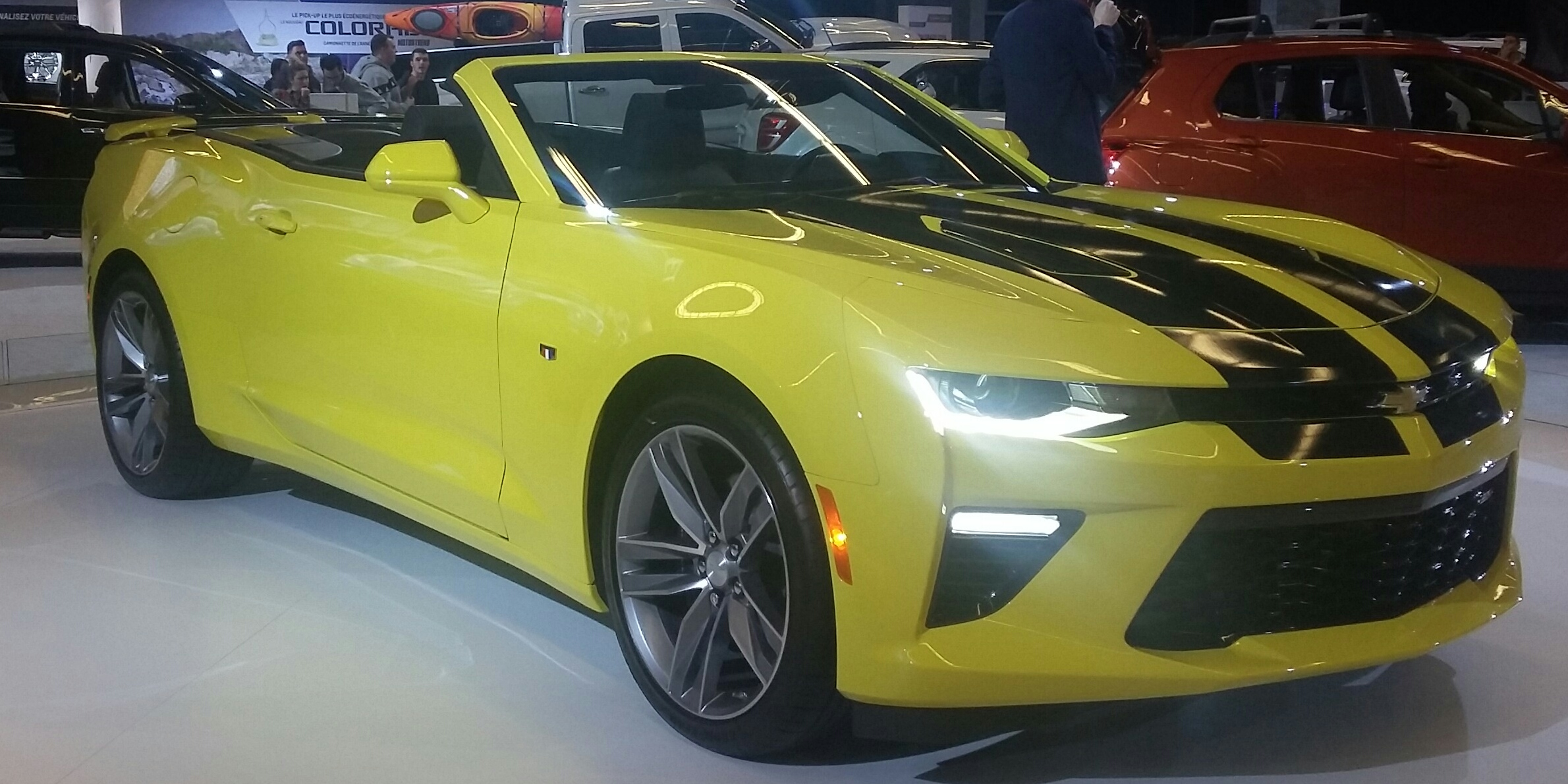
Camaros
"and a lot of Camaros and Corvettes. We'll talk about that next,"
The Camaro is a Chevrolet muscle car. The hosts are listing it as one of the cars you commonly see at the track today.
The Chevrolet Camaro is another major American muscle/performance model line, often showing up in modern track and street builds. The hosts mention Camaros alongside Mustangs and Hellcats to describe what’s common at events now.
bang for buck
"[1276.8s] we do a lot of GM Ford and Mopar, [1278.7s] but you start individually cherry picking the things [1281.4s] that you can make the most power, bang for buck. [1284.1s] What are those things, Glenn?"
“Bang for buck” means spending money in a way that gets you the most improvement for the least cost. Here, they’re talking about picking upgrades that are worth it.
“Bang for buck” is the idea of getting the biggest performance improvement per dollar spent. In tuning and parts selection, it usually means choosing modifications that deliver large gains without unnecessary cost.
Hellcats
"[1287.3s] Yeah, I'm taking notes. [1290.0s] Hellcats are definitely one of those. [1293.0s] I mean, we have packages ranging everywhere"
“Hellcats” refers to Dodge’s supercharged V8 muscle cars. The hosts are saying these cars are a good base for making a lot of power with upgrades.
“Hellcats” is the enthusiast nickname for Dodge’s high-output Charger and Challenger models powered by the supercharged 6.2L HEMI V8. In this segment, they’re used as an example of a platform that can be pushed hard for big power gains.
100% stock engine and transmission
"[1293.0s] I mean, we have packages ranging everywhere [1294.8s] from my 850 pack all the way up to my 1150 pack. [1299.0s] And all of those utilize initially [1302.3s] a 100% stock engine and transmission."
They’re saying the car’s engine and transmission are still the factory versions. The claim is that you can still make huge power without tearing into the engine or gearbox.
“100% stock engine and transmission” means the car’s powertrain is left in factory form—no internal engine or gearbox upgrades. The point here is that they’re claiming large performance gains without changing the core engine/transmission hardware.
thousand wheel
"[1302.3s] a 100% stock engine and transmission. [1305.3s] And the fact that we can make a thousand wheel [1308.3s] out of a 100% unopened engine and unopened transmission"
They mean the car can make about 1,000 horsepower at the wheels, measured on a dyno. It’s a real, measurable number that reflects what actually reaches the tires.
“Thousand wheel” refers to making roughly 1,000 horsepower at the wheels (wheel horsepower), measured on a dyno. It’s a common way enthusiasts compare real-world output because it accounts for drivetrain losses between the engine and the tires.
nine second pass
"[1312.0s] and you could take it out and run an easily [1316.5s] a nine second pass at this altitude, of course, [1320.0s] is mind boggling."
A “nine second pass” is drag-racing shorthand for running the quarter-mile in the 9-second range. It’s a big performance milestone that usually requires serious power and grip.
A “nine second pass” means the car runs the quarter-mile in under 10 seconds—specifically in the 9-second range—at a drag strip. It’s a shorthand performance benchmark that correlates with very high power and traction.
this altitude
"[1312.0s] and you could take it out and run an easily [1316.5s] a nine second pass at this altitude, of course, [1320.0s] is mind boggling."
At higher altitude, the air is thinner, so engines often make less power. They’re pointing out their results still hold even at that elevation.
“Altitude” matters because air density drops with elevation, which can reduce engine power—especially for naturally aspirated engines. The hosts mention it to emphasize that their claimed performance is achieved even under less favorable air conditions.
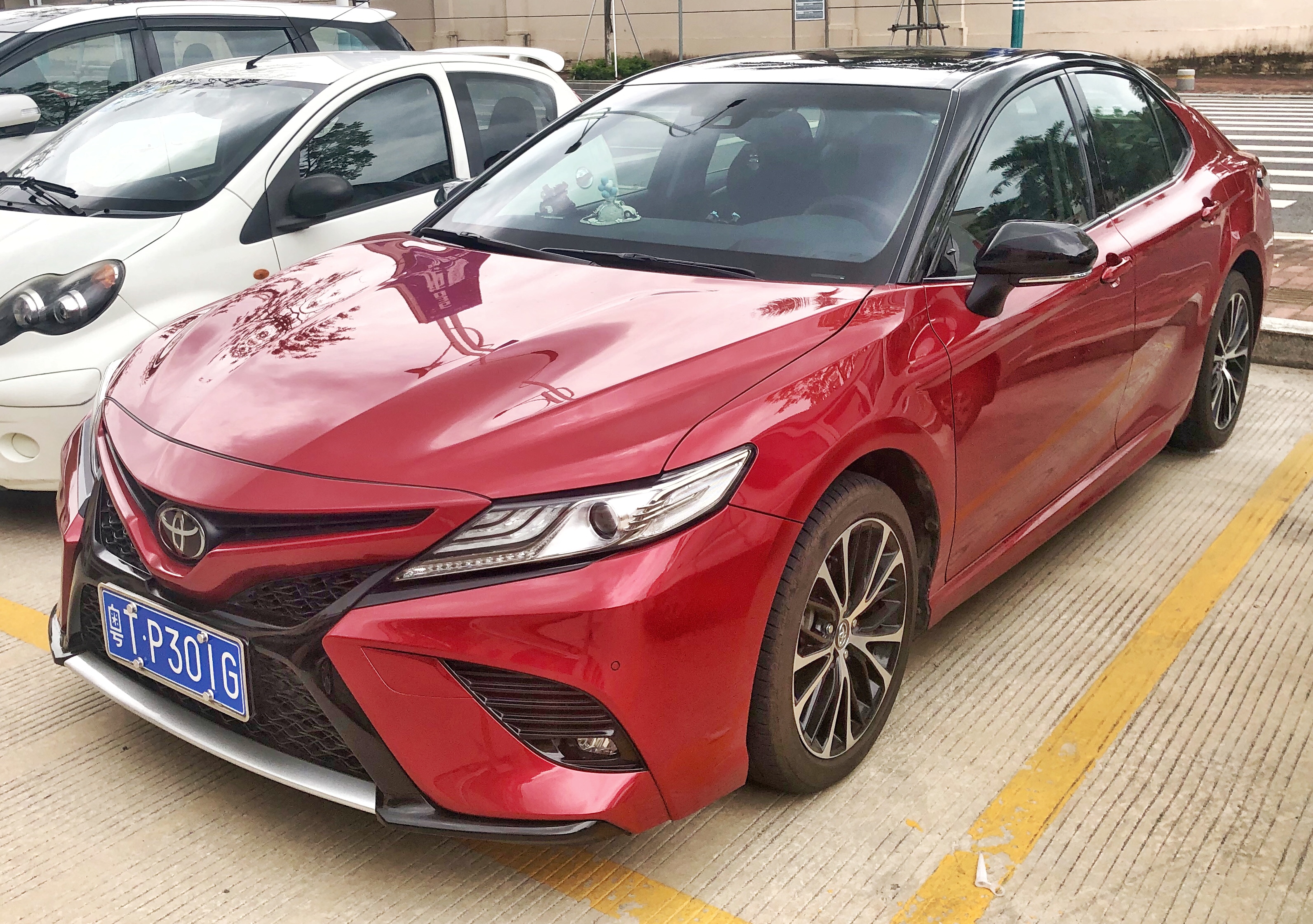
Toyota Camry
"And now you run into a 13 second car, [1335.2s] that's the Toyota Camry. [1337.1s] That's a six cylinder, yeah, brother."
The Toyota Camry is a common everyday sedan. Here, the hosts are basically saying it’s a lot slower than the fast car they were talking about, using a “13-second” reference.
The Toyota Camry is a mainstream midsize sedan known for comfort and everyday usability, not drag-strip times. In this segment, they’re using it as an example of a slower “13 second” car compared to something much faster.
six-cylinder
"That's a six cylinder, yeah, brother. [1338.4s] Yeah, you know what I mean?"
A “six cylinder” means the engine has six cylinders that burn fuel to make power. More cylinders often helps the engine run smoother and can help it make power more evenly.
A “six cylinder” engine has six combustion cylinders, typically arranged inline or in a V configuration. More cylinders can help smooth out power delivery and allow the engine to make power efficiently, which is why the hosts mention it when comparing performance.
power band
"And the fact that every time they shift, [1378.0s] they stay in their power band so well, [1380.4s] you can wing those little motors"
The “power band” is the part of the RPM range where the engine feels strongest. If the transmission keeps the engine there while shifting, the car stays fast instead of slowing down between gears.
The “power band” is the RPM range where an engine produces its strongest combination of torque and horsepower. The hosts are describing how modern transmissions can shift in a way that keeps the engine within that range, so performance doesn’t fall off between gears.

demons
"You mentioned you do a ton of Hellcats and demons and things like that."
“Demons” are Dodge’s high-performance cars built for drag racing. The conversation is using them as examples of the kind of modern power the shop deals with.
“Demons” refers to the Dodge Demon models, which are known for extreme factory drag-racing hardware and a purpose-built approach to making big power. Here, it’s part of the shop’s workload, setting up a discussion about modern engine swaps into older cars.
Hellcats
"You mentioned you do a ton of Hellcats and demons and things like that."
“Hellcats” refers to Dodge’s super-powerful muscle cars. They’re famous for big V8 power, and the shop here is saying they work on a lot of them.
“Hellcats” is shorthand for the Dodge Charger/Challenger Hellcat models, which are known for their high-output HEMI V8 engines and drag-race-ready performance. In this segment, the host is talking about working on these cars and how modern powertrains are being swapped into other builds.
LS
"Are you seeing a lot of people taking these modern drivetrains, be it an LS, like your truck back there in the background,"
“LS” is a common name for a GM V8 engine family that’s popular to swap into other cars. People like it because it’s powerful and there are lots of parts and support for it.
“LS” refers to the GM LS-series V8 engine family, which became popular for swaps because it’s compact, makes strong power, and has a huge aftermarket. In this segment, it’s mentioned as a modern drivetrain that people are installing into other “wild” builds.
turbo
"or added a turbo to it, or something like that?"
A turbocharger is a device that helps the engine make more power by forcing extra air in. More air lets you burn more fuel, so the engine can produce more horsepower.
A “turbo” is a turbocharger, a forced-induction device that uses exhaust energy to spin a compressor and push more air into the engine. Adding a turbo is a common way to turn a relatively normal engine into a much higher-output setup, which is why it fits the segment’s theme of modern drivetrains in unusual cars.
Dodge Challenger
"we've got a 73 Challenger at the shop right now, he's getting one of my Ford 6-4s that's cammed"
A Dodge Challenger is a classic muscle car. A 1973 one is especially popular to modify because there are lots of parts and shops that know how to build them.
The Dodge Challenger is a classic American muscle car, and a 1973 example is known for its long-hood, short-deck proportions and huge aftermarket support. In this segment, the host is talking about a 1973 Challenger being built for extreme power and drivability work.
cammed
"he's getting one of my Ford 6-4s that's cammed at an eight speed"
“Cammed” means the engine has a different camshaft than stock. That can make the engine feel stronger, especially at higher engine speeds, but it usually needs tuning to work right.
A “cammed” engine has an aftermarket camshaft with different timing/lift than stock. That typically changes how the engine makes power—often shifting it toward higher RPM—so it pairs with supporting mods like fueling and tuning.
Gen 2 Coyote
"We've got a Gen 2 Coyote with a three liter Whipple and a TR6060 and a Cobra replica right now"
The “Coyote” is Ford’s V8 engine. “Gen 2” means the newer version, and people like it because it’s strong and takes upgrades well.
The “Gen 2 Coyote” refers to Ford’s second-generation Coyote V8 engine family, which is popular for high-performance builds because it responds well to forced induction and tuning. In this segment, it’s paired with a supercharger and a performance transmission to target very high output.
TR6060
"and a TR6060 and a Cobra replica right now"
TR6060 is a performance manual gearbox. It’s often used in upgraded builds because it can handle stronger engines better than basic transmissions.
The TR6060 is a six-speed manual transmission used in performance Ford applications. It’s commonly chosen for swaps and high-power builds because it’s designed to handle more torque than many stock transmissions.

Cobra replica
"and a TR6060 and a Cobra replica right now that's 1,100 horsepower and 1,800 pounds."
A Cobra replica is a car built to look like the famous Shelby Cobra. Here, it’s not stock—it’s being built with a modern Ford V8 and a supercharger to make huge power.
A “Cobra replica” is a kit car or restomod-style build that recreates the look and driving feel of the classic Shelby Cobra. In this segment, the replica is being set up with a modern Ford Coyote V8 and forced induction for extreme power.
1,100 horsepower
"Cobra replica right now that's 1,100 horsepower and 1,800 pounds."
Horsepower is how much power the engine can make. 1,100 hp is way beyond what most cars can do, so the car needs special tuning to put it to the ground safely.
Horsepower is a measure of an engine’s power output, and 1,100 hp is an extremely high number for a street-oriented build. At that level, drivability depends heavily on traction control, boost management, and how the power is ramped in different gears.
3,800 pounds
"that's 1,100 horsepower and 1,800 pounds. So... That's that red one."
1,800 pounds is light for a car. Lighter cars accelerate and handle more sharply, which helps when you’re running huge power.
1,800 pounds is very low curb weight, which makes a car feel quick and responsive even with a relatively small footprint. Low weight also helps traction and braking feel more immediate, which matters a lot when you’re dealing with triple-digit horsepower.
Haltech
"So now we're using Haltech with an electronic bypass control and limiting boost in first and second gear"
Haltech is a performance computer for the engine. It helps the tuner control things like fuel and boost so the car makes power safely and consistently.
Haltech is an aftermarket engine management brand used to control fuel, ignition, and boost more precisely than many stock ECUs. In this segment, it’s being used to manage boost and power delivery for a high-output supercharged build.
electronic bypass control
"we're using Haltech with an electronic bypass control and limiting boost in first and second gear"
Electronic bypass control is a way to manage how much boost the supercharger makes. By controlling it electronically, the car can avoid overwhelming the tires in the early gears.
Electronic bypass control is a supercharger/boost control strategy that uses an electronically actuated valve to route air and manage boost pressure. It helps prevent excessive boost during low-gear traction-limited situations.
limiting boost
"and limiting boost in first and second gear and rolling power on in third"
Limiting boost means the car doesn’t let the supercharger push quite as hard at first. That helps the tires grip and makes the launch more controllable.
Limiting boost means the ECU restricts the maximum supercharger pressure the engine can run. This is often done in first and second gear to reduce wheelspin and drivetrain shock while still allowing full power later.
rolling power on
"and limiting boost in first and second gear and rolling power on in third, but still giving them what they want"
Rolling power on means you add throttle gradually instead of flooring it instantly. On a very powerful car, that helps keep it stable and easier to control.
Rolling power on describes a controlled, progressive increase in throttle (and therefore torque) rather than an abrupt hit. On high-boost cars, that smooth ramp helps traction and reduces the chance of upsetting the car during gear changes.

Chevrolet Chevelle
"...p of the list. For Chevy, it was always Camaro or Chevelle, right? But now, people are finding..."
The Chevelle is a classic muscle car made by Chevrolet. It’s known for being a popular choice in the muscle-car era, and people still talk about it today. In the podcast, it’s mentioned as one of the main classic Chevys people associate with performance.
The Chevrolet Chevelle is a classic American muscle car that’s historically known for its styling and performance options. The podcast notes that for Chevy, it used to be “Camaro or Chevelle,” which reflects how widely the Chevelle was recognized in muscle-car circles. It also comes up because many owners are now finding and restoring these cars, keeping them relevant in modern discussions.

Ford Maverick
"I saw Ford Maverick the other day, I swear to God, [1553.5s] I looked at it and I was like, that looks pretty good. [1555.8s] Never in my life would I ever say a Ford Maverick looked good,"
The Ford Maverick is a small pickup truck from Ford. The hosts are pointing out that people are starting to appreciate it and even consider it as a base for projects instead of only chasing the usual classics.
The Ford Maverick is a compact pickup that became popular for being relatively affordable and easy to live with. In this segment, it’s used as an example of how modern enthusiasts are willing to like—and potentially modify—non-traditional “ugly” or overlooked cars.
powertrains
"So people are stuffing cool powertrains [1562.1s] in just about anything nowadays"
A powertrain is the parts that actually move the car, like the engine or electric motor and the stuff that sends power to the wheels. The point here is that people are swapping in stronger or more interesting drivetrain setups into cars that weren’t meant for them.
A powertrain is the vehicle’s main set of mechanical components that make it move—typically the engine (or motor), transmission, driveshaft, and final drive. When the host says people are “stuffing cool powertrains in just about anything,” they mean swapping in a different engine/motor and drivetrain setup than the car originally came with.
wild platforms
"because more people are getting creative [1570.8s] with wild platforms and being able to back it up"
A platform is basically the base the car is built on. “Wild platforms” means people are choosing weird or unexpected cars to start their projects with, instead of only using the obvious choices.
In car culture, a “platform” is the underlying base—chassis/architecture and major mechanical layout—something you build a project on. “Wild platforms” here means using unusual or unexpected donor cars as the foundation for performance builds, rather than sticking to the usual enthusiast favorites.
chassis
"“...when you can throw a chassis under it, when you can throw right the power under it...”"
In car talk, “chassis” means the vehicle’s structural foundation—its frame/body structure that supports the engine, suspension, and drivetrain. The host is using it to describe swapping or upgrading the underlying platform so the car can better handle power and mods.
305s
"“...Camaro RS, had a 305 in it, thing was, took off like a herd of turtles...”"
“305” is the engine size (a 5.0-liter V8) that was common in some older GM cars. In this story, it’s the reason the car felt slower than it could have been.
A “305” refers to the 5.0-liter (305 cubic-inch) V8 engine used in many GM cars, including certain Chevrolet Camaros. It’s often described as relatively mild compared with larger-displacement V8s, which is why the host says it “took off” poorly.
supercharger
"[1649.4s] with a supercharger on there, [1651.0s] and all of a sudden that car's cool."
A supercharger is a device bolted to the engine that squeezes more air into it. More air lets the engine make more power, so the car feels much faster.
A supercharger is an engine-mounted forced-induction device that compresses incoming air before it enters the cylinders. Because more air (and oxygen) can be burned, it can significantly increase power compared with the same engine without boost.
funny car race
"[1655.6s] I still own one, that's the one that's caged, [1658.0s] that's in the shop next to yours. [1660.0s] It's got that funny car cage in it,"
A “funny car cage” is a reinforced safety frame inside the car. It’s built to protect the driver in drag racing crashes and hard launches.
A “funny car cage” is a purpose-built roll cage designed for drag racing’s “funny car” class, typically using heavy-duty tubing to protect the driver during high-speed impacts. It’s part of a safety structure that also helps the chassis survive extreme loads.
300 horsepower
"[1667.7s] I did a smaller cube version of it, [1670.6s] and it made just over 2,300 horsepower."
Horsepower is a number that tells you how much power the engine can produce. Higher horsepower usually means the car can accelerate harder.
Horsepower is a measure of engine output power. In this context, the speaker is using it to describe how much boosted power the car made on a previous build, and what they expect after further work.
drag and drive
"[1673.1s] So it should make like 2,500 and be a force [1677.8s] to be reckoned with, do drag and drive with it,"
“Drag and drive” means a car that can do well in drag racing but still be driven like a normal car. You’re not building a trailer-only race car.
“Drag and drive” refers to a car setup intended to run strong in drag racing while still being streetable or usable for driving afterward. It’s a balance between race-focused power and real-world drivability.
roll racing
"[1727.4s] and it was one of the baddest roll racing cars [1730.2s] out here in Colorado."
Roll racing is racing after you’re already moving, not starting from a standstill. Since you’re rolling, tire grip and how well the car puts power down are really important.
Roll racing is drag racing from a moving start, usually from a set speed in second or third gear rather than from a dead stop. Because the cars are already rolling, traction and drivetrain durability under load matter as much as peak horsepower.
Hellcats
"[1742.6s] there's some nasty looking Hellcats, [1744.4s] some nasty looking cars in your shop."
A Hellcat is a Dodge muscle car known for a supercharged V8 and big power. The host is mentioning them as part of the lineup of heavily modified cars they see.
“Hellcat” refers to the Dodge Charger/Challenger Hellcat family, known for very high-output supercharged V8s. In this segment, Hellcats are grouped with other “nasty looking” cars, suggesting they’re being built to extreme power levels in the shop.
wheel horsepower
"[1759.2s] the average is 1,000 wheel. [1761.3s] That's insane. [1762.4s] And that's wheel."
Wheel horsepower is how much power the car actually delivers to the tires. It’s measured after the drivetrain takes its cut, so “1,000 at the wheel” means the car is making truly massive power.
Wheel horsepower is the engine’s power measured at the tires (after losses through the drivetrain). It’s typically lower than advertised “crank” horsepower, so “1,000 wheel” indicates an extremely high-output build.

1,600 wheel horsepower Durango
"and no one could touch a 1,600 wheel horsepower Durango that we built."
They’re talking about a Dodge Durango that makes about 1,600 horsepower at the wheels. That’s not stock—it's heavily modified to be extremely fast, like a drag car.
The Dodge Durango is a large SUV, and this one is being discussed in terms of extreme output measured at the wheels. “1,600 wheel horsepower” implies a highly modified drivetrain setup aimed at drag-strip-style acceleration rather than stock SUV performance.
step change
"Well, you got a step change, right? With, we talked about with kind of the modern platforms, right, you could throw..."
A “step change” means the project gets a lot harder once you cross a certain power level. Here, they’re saying the cheap-ish upgrades stop working and you have to do bigger, more expensive work.
A “step change” describes a sudden jump in difficulty, cost, or requirements when moving to a new performance tier. In this context, it means that going from ~800–1,000 horsepower to higher numbers forces more extensive modifications beyond simple bolt-ons.
blower
"you could throw, I don't know, what 10, 15 grand on it with a blower and get into that 800 to 1,000 fairly reasonably."
A blower is a device that forces more air into the engine. More air usually means more power, but it can also require stronger engine parts as you push higher horsepower.
A blower is a forced-induction device (typically a supercharger) that compresses incoming air to increase engine power. Adding a blower can significantly raise output, but it also stresses engine internals and cooling systems as power targets climb.
800 to 1,000
"you could throw, I don't know, what 10, 15 grand on it with a blower and get into that 800 to 1,000 fairly reasonably."
They’re talking about a horsepower range (about 800 to 1,000). Up to that point, it’s often easier to build a fast car; past it, the upgrades get much more involved.
“800 to 1,000” refers to a horsepower range that the hosts treat as a threshold where builds become more attainable with common forced-induction upgrades. The implication is that beyond this range, reliability and supporting hardware become the limiting factors.
exponentially
"when you want to break that 800 to 1,000? It goes up exponentially after about that number right there."
They’re saying that once you’re past a certain horsepower level, getting even more power gets dramatically more expensive. It’s not a straight-line increase—each step up costs a lot more.
The hosts describe horsepower and cost scaling as “exponential” after a certain point, meaning each additional increment of power requires disproportionately more money and engineering. This is a common reality in high-output builds where engine strength, cooling, fuel, and traction all become limiting.
three-liter
"the Whipple systems, if you do a three liter that's there, you know, quote unquote, warranty kit, your 600 wheel without touching anything."
In this context, “three liter” is the size of the supercharger. A larger supercharger can push more boost, which helps you make more power—but it also raises the stress on fuel and engine tuning.
“Three liter” here refers to the supercharger’s displacement/size (commonly described by liters) in a Whipple kit. Bigger displacement generally means more boost potential, which is why the host ties it to reaching roughly “600 wheel” power levels with minimal other changes.
warranty kit
"if you do a three liter that's there, you know, quote unquote, warranty kit, your 600 wheel without touching anything."
A “warranty kit” is a performance upgrade bundle that’s sold with some kind of coverage or guarantee if you install it the way the manufacturer intended. They’re saying you can reach a certain power level without extra changes because the kit is designed for it.
A “warranty kit” is an aftermarket performance package sold with an expectation of coverage if installed as specified. The host is implying that certain supercharger/fueling setups are engineered to hit a target power level while staying within the kit’s validated limits.
dual port direct injection
"especially with the dual port, you know, direct injection with port injection systems."
This means the engine can spray fuel in two places: directly into the cylinders and also into the intake ports. That helps the engine manage fuel more precisely, especially when you’re making more power.
“Dual port direct injection” describes an injection strategy where fuel is delivered both directly into the combustion chamber (direct injection) and into the intake ports (port injection). Using both can improve drivability and fuel control across different loads, which matters when pushing boost and ethanol blends.
port injection systems
"direct injection with port injection systems. Now, if you start stepping up beyond that 800, 1,000, E85,"
Port injection systems spray fuel into the intake passages before it goes into the engine. When you add boost or switch fuels, the port injectors may need upgrades or careful tuning to keep the engine safe.
“Port injection systems” are fuel injectors that spray gasoline into the intake ports before the air enters the cylinders. In boosted and ethanol-blend applications, port injection capacity and calibration can become limiting, so the host is discussing when you need to move beyond basic kits.
fuel systems
"then you start stepping into fuel systems, engine components beyond that."
Fuel systems are the parts that deliver fuel to the engine. When you make more power or use E85, the engine needs more fuel than stock parts can reliably provide.
“Fuel systems” here refers to the hardware that supplies and meters fuel under high demand—things like pumps, injectors, regulators, and lines. As power targets rise (especially with E85), fuel systems can become the limiting factor, forcing upgrades beyond a basic supercharger kit.
Request an Explanation
Heard something you'd like explained? We'll add it to this episode.
Sign in to request explanations for terms you heard.
Want to learn more?
Browse our glossary for plain-English explanations of automotive terms, jargon, and concepts.
Help improve this episode
See something that's not quite right? Our annotations are AI-generated and can sometimes miss the mark. Click the flag icon on any annotation to suggest a correction.