A carburetor is an older-style way of mixing fuel and air before it goes into the engine. People used to “tune” it with simple tools to make the engine run right.
“Plugs” here refers to spark plugs, which ignite the air-fuel mixture in gasoline engines. Tuning and correct plug condition can affect starting, idle quality, and how efficiently the engine burns fuel.
To “tune” an engine means adjusting how it runs—like how much fuel it uses and when it sparks. The goal is to make it idle, drive, and accelerate the way you want.
Concept
put it in something with older lines
They’re talking about keeping an older car’s look, but replacing the engine and drivetrain with newer stuff. That way you get the classic style plus more modern performance and reliability.
“Gen 3 Hemi” is a modern Dodge/Chrysler V8 engine. It’s popular for swaps because it’s powerful, efficient for its size, and there are lots of parts to support it.
The Charger is a performance car from Dodge that’s bigger than a typical sports car. The podcast mentions a “Gen 3 Hemi,” which is a V8 engine used to make it faster. It’s often discussed because it can be both practical and powerful.
Topic
tuning modern muscle
“Tuning modern muscle” means adjusting a newer muscle car to make it faster or drive better. They’re using it to describe the kind of work customers bring to the shop.
Glenn Reigns is the person they bring on as their guest. They say he’s part of a family that’s owned a shop for three generations, so he has a lot of experience in this kind of work.
Whipple is a brand of superchargers, commonly used for high-power street and drag builds. In this context, it indicates the engine is using a Whipple forced-induction setup to dramatically increase power.
That number is the engine’s size—how much space the cylinders have. Bigger displacement usually helps the engine make more power, especially with forced induction.
This describes the supercharger’s version and size. A larger blower (like 3-liter) can move more air, which usually means more power if the rest of the engine is built to match.
That’s a specific 8-speed automatic transmission model. The builder is using it because it can handle big power and gives better gear ratios for performance driving.
He’s comparing the transmission setup to what you’d find in a high-performance Dodge Trackhawk. The idea is that it’s built for aggressive driving rather than just normal commuting.
A transfer case is the part that sends power to the front and rear wheels on 4WD cars. When you swap engines or transmissions, you often have to match the transfer case so the drivetrain still works correctly.
This is a rear suspension setup that helps keep the axle located correctly when you accelerate or brake. It’s often used on stronger builds where the drivetrain puts a lot of twisting force into the rear end.
Term
high-steer conversion
This is a steering modification that moves the steering parts higher up. It helps with clearance and makes steering work better on a lifted or off-road front end.
Four-wheel drive powers all four wheels. The speaker is saying they removed some 4WD parts because the original system made the car feel unpleasant to drive.
Hydro-boost is a brake assist that uses hydraulic pressure to make braking easier. It helps you get a strong brake pedal without relying on engine vacuum.
“3500” refers to a Dodge 3500 truck. The podcast is describing brake parts and how the truck uses hydro boost to help the brakes work better. This is the kind of upgrade that can make a heavy truck stop more confidently.
“Eight-speed” means the truck’s transmission has eight different gear ratios. That helps the engine work in the right RPM range more often, which can make it feel quicker and smoother.
The Ford Flex is a larger family-sized vehicle with a distinctive, boxy shape. The podcast says it can run E85 or another fuel blend, meaning it’s set up to use different types of fuel. That’s why it comes up in a conversation about fuel options.
Horsepower is how strong the engine is. “1,200 horsepower” is an enormous amount, and at that point the truck’s ability to put power to the ground becomes a big challenge.
RPM means how many times the engine spins in one minute. When RPM is higher, the engine is usually working harder, but it doesn’t automatically mean the car is faster—gears and tuning matter too.
A restomod is an older classic car that gets restored, but with modern upgrades. It tries to keep the classic style while making it drive and feel better than it did when it was new.
Topic
full-service shot
They’re describing a shop that does the whole job for you, not just one part of it. Here, that includes things like paint, interior work, and mechanical upgrades.
Paint here isn’t just for looks—it also helps protect the car’s surfaces. Good paint work usually includes careful prep before the color and clear coat go on.
The drivetrain is the power path from the engine to the wheels. It includes the parts that help the car actually put power to the ground.
Concept
interior done
Interior work means updating the cabin—like seats and trim—so it looks and feels better. On a restomod, it’s usually done alongside mechanical upgrades for a complete transformation.
A "mini tub" is a modification to the back of a car so you can fit wider tires. It usually involves reshaping the inner fender area to make more room for the wheels.
Concept
rest those
They’re talking about taking an older car and updating it with modern parts, so it drives better than it did originally. It keeps the classic look, but improves the performance and usability.
A “10-speed auto” is an automatic gearbox with 10 gear ratios. It helps the engine stay in the right power band more often, which can make the car feel smoother and more responsive.
Term
Hydra Boost
Hydra Boost is a brake-assist setup that uses hydraulic help to make braking stronger and more consistent. It’s often used on modified trucks/SUVs where the brakes need extra support.
“Coyote” is Ford’s modern V8 engine. People like it for swaps because it makes good power and there are lots of parts and support to make it work in older cars.
“Fitment” in car builds means how well parts physically fit together—clearances, mounting points, and whether components can be installed without interference. Here it’s tied to chopping/shortening/widening the inner fender wells to make the electronics and engine bay packaging work.
Inner fender wells are the inner parts of the wheel area. Builders sometimes reshape them to make room for a swapped engine, exhaust, or wiring so everything fits and still looks good.
A wiring harness is the set of wires that connects all the engine sensors and computers. If the harness is too short, you can’t route everything the way you want, which makes the swap harder.
The PCM is the car’s main computer for the engine and drivetrain. If there isn’t enough room to mount it and wire it properly, the swap becomes much harder.
Concept
rest though mods
A restomod is an old car that’s been updated with newer technology. The goal is to keep the classic style, but make it drive more like a modern car.
“Turn-key” means you can buy it and use it right away. The hosts are saying modern muscle is available in a ready-to-go form, even if you don’t like the older look.
The Challenger is a muscle car from Dodge that’s built for strong acceleration. The podcast mentions Hellcats, which are high-performance versions of the Challenger. It comes up a lot because many people choose it when they want a powerful muscle car.
“Bang for buck” means spending money in a way that gets you the most improvement for the least cost. Here, they’re talking about picking upgrades that are worth it.
Car
Hellcats
“Hellcats” refers to Dodge’s supercharged V8 muscle cars. The hosts are saying these cars are a good base for making a lot of power with upgrades.
They’re saying the car’s engine and transmission are still the factory versions. The claim is that you can still make huge power without tearing into the engine or gearbox.
They mean the car can make about 1,000 horsepower at the wheels, measured on a dyno. It’s a real, measurable number that reflects what actually reaches the tires.
A “nine second pass” is drag-racing shorthand for running the quarter-mile in the 9-second range. It’s a big performance milestone that usually requires serious power and grip.
Term
this altitude
At higher altitude, the air is thinner, so engines often make less power. They’re pointing out their results still hold even at that elevation.
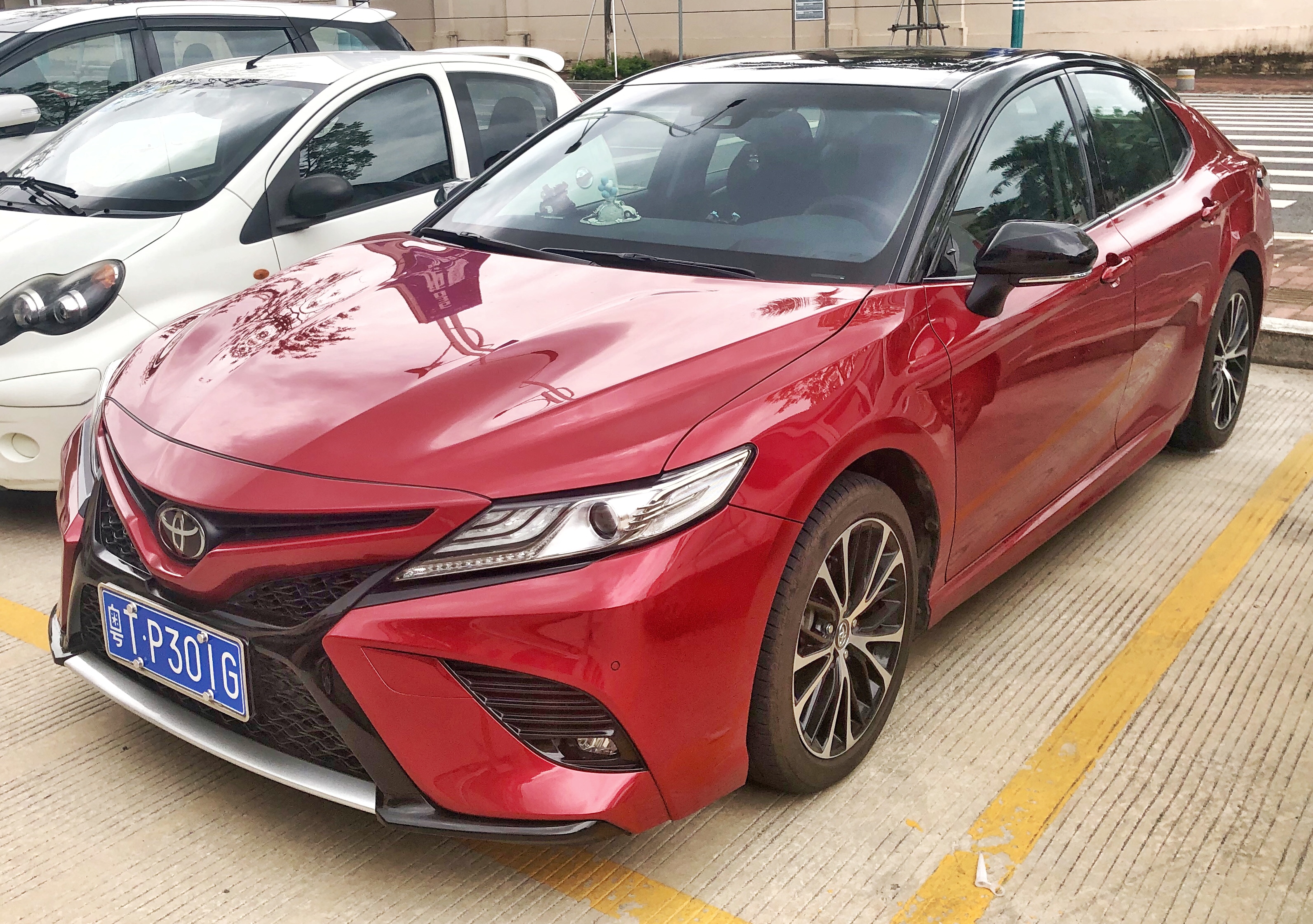
The Toyota Camry is a common everyday sedan. Here, the hosts are basically saying it’s a lot slower than the fast car they were talking about, using a “13-second” reference.
A “six cylinder” means the engine has six cylinders that burn fuel to make power. More cylinders often helps the engine run smoother and can help it make power more evenly.
The “power band” is the part of the RPM range where the engine feels strongest. If the transmission keeps the engine there while shifting, the car stays fast instead of slowing down between gears.
“Demons” are Dodge’s high-performance cars built for drag racing. The conversation is using them as examples of the kind of modern power the shop deals with.
Car
Hellcats
“Hellcats” refers to Dodge’s super-powerful muscle cars. They’re famous for big V8 power, and the shop here is saying they work on a lot of them.
“LS” is a common name for a GM V8 engine family that’s popular to swap into other cars. People like it because it’s powerful and there are lots of parts and support for it.
A turbocharger is a device that helps the engine make more power by forcing extra air in. More air lets you burn more fuel, so the engine can produce more horsepower.
A Dodge Challenger is a classic muscle car. A 1973 one is especially popular to modify because there are lots of parts and shops that know how to build them.
“Cammed” means the engine has a different camshaft than stock. That can make the engine feel stronger, especially at higher engine speeds, but it usually needs tuning to work right.
Car
Gen 2 Coyote
The “Coyote” is Ford’s V8 engine. “Gen 2” means the newer version, and people like it because it’s strong and takes upgrades well.
TR6060 is a performance manual gearbox. It’s often used in upgraded builds because it can handle stronger engines better than basic transmissions.
Car
Cobra replica
A Cobra replica is a car built to look like the famous Shelby Cobra. Here, it’s not stock—it’s being built with a modern Ford V8 and a supercharger to make huge power.
Horsepower is how much power the engine can make. 1,100 hp is way beyond what most cars can do, so the car needs special tuning to put it to the ground safely.
Haltech is a performance computer for the engine. It helps the tuner control things like fuel and boost so the car makes power safely and consistently.
Electronic bypass control is a way to manage how much boost the supercharger makes. By controlling it electronically, the car can avoid overwhelming the tires in the early gears.
Limiting boost means the car doesn’t let the supercharger push quite as hard at first. That helps the tires grip and makes the launch more controllable.
Rolling power on means you add throttle gradually instead of flooring it instantly. On a very powerful car, that helps keep it stable and easier to control.
The Chevelle is a classic muscle car made by Chevrolet. It’s known for being a popular choice in the muscle-car era, and people still talk about it today. In the podcast, it’s mentioned as one of the main classic Chevys people associate with performance.
The Ford Maverick is a small pickup truck from Ford. The hosts are pointing out that people are starting to appreciate it and even consider it as a base for projects instead of only chasing the usual classics.
A powertrain is the parts that actually move the car, like the engine or electric motor and the stuff that sends power to the wheels. The point here is that people are swapping in stronger or more interesting drivetrain setups into cars that weren’t meant for them.
A platform is basically the base the car is built on. “Wild platforms” means people are choosing weird or unexpected cars to start their projects with, instead of only using the obvious choices.
In car talk, “chassis” means the vehicle’s structural foundation—its frame/body structure that supports the engine, suspension, and drivetrain. The host is using it to describe swapping or upgrading the underlying platform so the car can better handle power and mods.
“305” is the engine size (a 5.0-liter V8) that was common in some older GM cars. In this story, it’s the reason the car felt slower than it could have been.
A supercharger is a device bolted to the engine that squeezes more air into it. More air lets the engine make more power, so the car feels much faster.
Roll racing is racing after you’re already moving, not starting from a standstill. Since you’re rolling, tire grip and how well the car puts power down are really important.
A Hellcat is a Dodge muscle car known for a supercharged V8 and big power. The host is mentioning them as part of the lineup of heavily modified cars they see.
Wheel horsepower is how much power the car actually delivers to the tires. It’s measured after the drivetrain takes its cut, so “1,000 at the wheel” means the car is making truly massive power.
They’re talking about a Dodge Durango that makes about 1,600 horsepower at the wheels. That’s not stock—it's heavily modified to be extremely fast, like a drag car.
A “step change” means the project gets a lot harder once you cross a certain power level. Here, they’re saying the cheap-ish upgrades stop working and you have to do bigger, more expensive work.
A blower is a device that forces more air into the engine. More air usually means more power, but it can also require stronger engine parts as you push higher horsepower.
Term
800 to 1,000
They’re talking about a horsepower range (about 800 to 1,000). Up to that point, it’s often easier to build a fast car; past it, the upgrades get much more involved.
Concept
exponentially
They’re saying that once you’re past a certain horsepower level, getting even more power gets dramatically more expensive. It’s not a straight-line increase—each step up costs a lot more.
In this context, “three liter” is the size of the supercharger. A larger supercharger can push more boost, which helps you make more power—but it also raises the stress on fuel and engine tuning.
A “warranty kit” is a performance upgrade bundle that’s sold with some kind of coverage or guarantee if you install it the way the manufacturer intended. They’re saying you can reach a certain power level without extra changes because the kit is designed for it.
This means the engine can spray fuel in two places: directly into the cylinders and also into the intake ports. That helps the engine manage fuel more precisely, especially when you’re making more power.
Port injection systems spray fuel into the intake passages before it goes into the engine. When you add boost or switch fuels, the port injectors may need upgrades or careful tuning to keep the engine safe.
Fuel systems are the parts that deliver fuel to the engine. When you make more power or use E85, the engine needs more fuel than stock parts can reliably provide.
LIVE
It is the two guys who are out to podcast.
He's Kevin Byrd.
I'm Willie B. Today, I'm excited.
We're talking to a personal friend of mine.
And I got to tell you, I kind of stumbled upon this guy
via social media and all the algorithms that Instagram
would throw at you.
I'm always looking and clicking on car things.
See, I always cross up with weird people.
That's my algorithm, apparently.
Yeah, man.
We don't talk about that.
But you know how it is, man.
You see stuff on social media, and you're like, oh, yeah.
Next thing you know, you'll see two more offerings
of something similar.
But I tend to watch a lot of racing,
click on a lot of that type stuff.
And that's where I came across a very unique shop.
And it just so happened, it was close to me,
which is, for me, as a car enthusiast,
you go to different cities.
Bro, you are in the epicenter of all things cars.
Detroit is the Mecca.
It's the juggernaut of all things, V8, and the big three,
and the Henry Ford.
And we'll go out and race at midnight for the company.
It's wild.
That bravado is in Detroit.
Some cities have great car scenes.
Other cities, eh, the car scene's only OK.
I happen to be in Denver.
Denver has a fantastic car scene.
And what was wild is when I stumbled across the shop
on social media, rarely do shops attack all aspects of car
building, especially with modern muscle
and the ease of tuning.
A lot of times nowadays, what do you
see in modern muscle car shops?
It's normally a tuner and a dyno.
It's rare to find people that do paint and glass and fab work.
And they're building cars, as well as putting blowers on
and tuning them and stuff.
It's a rare combination in a tough world to be in, I'm sure.
Yeah, and I think the cars have just gotten so much more
complex in every which way.
The kind of parts that we're doing, the power adders
that we're putting on, the electronics that are in them,
and then just the basics of, yeah, like you said, paint, body,
fabricating things, modifying things.
Understanding all of that under one roof,
that's a pretty tough challenge.
Yeah, man.
Used to be a Timelyte and a flathead screwdriver
to tune on a carburetor, man.
You're good to go.
A set of plugs, you had it dialed.
And nowadays, it's vastly different.
When you think about all the capabilities of the tune
and just the cars that are now being offered,
a lot of us, the epicenter of all things hot riding,
sort of centers around being able to take a modern drivetrain
and put it in something with older lines, something
that you're passionate about, something
that you had in the garage, or your old school
truck with modern drivetrain, or your old school
Camaro with an LS in it, or your, you know,
Mustangs with a Coyote in it, or, you know,
your charger with a Gen 3 Hemi.
That's what makes it great is that constant quest
to improve it.
And rarely can you find shops that can do that with older
platforms.
Yeah, that's one thing to have a car scene,
but you need car support, right?
At least most people do.
And some aspect are many as are all of them.
You want to build a cool car, you want to own a cool car,
you want to keep it operating, you want to modify it.
Man, you need somebody around that knows pretty much
all that stuff.
Yeah, man.
So without further ado, let me bring my boy Glenn on.
Glenn is the man of Rains Precision Motorsports,
RPM in Denver, Rains Precision Motorsports.
Dude, I got to tell you, Glenn, I found you on social media.
I was so inspired by what you guys are doing.
I actually brought you on my radio show.
The more I talk to you, the more I'm like, man,
these guys are doing really fascinating, cool things.
Welcome to the podcast.
We only got a second before we got to go to break,
but what made you get into the world of owning a performance
shop?
Because it's not a lot of, that's walking a plank, man.
And sometimes you fall off of it,
and sometimes you make it to the other side.
Yeah.
Fortunately enough, my father did it.
I'm the third generation at doing this.
So I was born and bred into it.
I don't think I had really a whole lot of choice.
Honestly, it was my passion.
So here we are.
Yeah, man.
Well, that passion has led you to an amazing facility, which
we're going to talk about next.
Guys, when it comes to tuning modern muscle, when it comes
to fab work, when it comes to restoring some of these old
cars and trucks, and you're going to spend a lot of money.
And you want a shop that you could trust?
Let's break down what it is like to own one of these shops
to see what comes through their doors.
And to get some of a price point as to where this world is at
nowadays.
This is going to be interesting, man.
It's Two Guys Garage Podcast.
He's Kevin Byrne, I'm Willie B. We're back after the break.
It is the Two Guys Garage Podcast.
He's Kevin Byrne, I'm Willie B. We have a boy, Glenn Reigns on.
Check out Reigns Precision Motorsports.
He's third generation shop owner, restoration guru.
If you guys were able to see what we're able to see,
you would see this 1971 blue and white two-tone C20 pickup
truck behind him.
During the break, we were just asking, what's that?
And man, break down real fast what you ran through us
in about 40 seconds.
Listen to this.
So it's a sleeved LS, 427 cubic inch Whipple,
Gen 6 3-liter.
It's like 11, 1200 horsepower setup
that's paired with a later model Dodge 8HP95,
so like a track-hawk style transmission behind it
that it's adapted to.
205 transfer case, 14-bolt, single torque arm, rear,
300 and axles, front sedanus 60 with high-steer conversion
over top of it, but it's also, I cut out a lot of the stuff
that made the 72 so rough to drive with four-wheel drive
stuff.
It's got Dodge 3500 front brakes, discs on it,
hydro boost.
When I get time to finish it, it'll
be wicked cool late model performance with the lines
that we all love so much.
So look, it's almost like it was from the factory,
almost exactly like it was.
Almost, yeah.
Couple bolt-ons, couple bolt-ons,
and it's practically new.
Some chrome covers and lug nuts.
Yeah, those things.
So is that going to be a street truck or off-road setup?
What kind of tire combo are you going to put on there?
I designed it to be my daily driver, just a very, very
basic setup in the world of today.
The idea behind going with the eight-speed
was giving me the ability to have the crucibility, having
enough power to do what I want to do,
tell if I want to drop the hammer.
It should be an honest to goodness,
like high, nine-second, low, 10-second truck at the drag
strip, even being as heavy as it is.
But it's on flex so I can run E85 or .91,
whichever, so it'll be crucible cross country
or back and forth to the shop.
It's a full eight-foot bed, so I can load it with the stuff
that we need to every day.
A man's man's truck, so.
Yeah, Kevin, you notice that 1,200 horsepower
drive around on a daily.
That's how a thin-air boys up here do it.
That's right, 1,200 horsepower on a regular flex fuel.
With four tires planted on the ground.
Yes.
Putting it down.
Yeah, if it was a Fast and Furious movie, it would be two.
But reality as it is, it's four wheels.
Let's talk a little bit about RPM, dude.
You have built an amazing facility.
And a lot of times people think performance shops,
they don't think full-on rest-o-mods,
but you guys do that.
You guys build cars from the ground up.
You guys do every aspect of the cars.
Is this something you mentioned you got the bug
from your dad?
But was this something that you always drift up,
had a full-service shot where you can get it painted,
you get the interior done, you get the drivetrain done,
the suspension brakes, all the aesthetics.
And they just come in, ride a check, and pick up their car.
Yeah, it actually came from necessity.
After owning a shop for many years,
I started just doing it out of my garage.
Started out of a little two-car garage in Southwest Denver,
not far from my father's house.
And I just started doing side work for people
who needed their cars fixed.
And then a bunch of people heard that I do
muscle car stuff and a lot of it.
And they were like, hey, this guy does performance,
and he's really good.
And then as I continued to get more and
of the customers through the door,
I started realizing parts of it that I enjoy.
And the parts of it that I don't,
which is waiting for other people to do stuff for me
that I didn't at the time do in my garage.
And that part became frustrating.
So as I moved through it, it was like,
I need to be the one tuning these
as EFI tuning became more.
So I trained myself how to tune and learn
from some of the best in the industry.
I still learn from a lot of those guys even to this day,
but we tuned more cars than any of the tuners
in the state combined.
We're on the dyno with two to three cars
every single day, all day, constantly.
So then it was like, oh, well, we need to fab more.
Well, I took on so much fab work
that I couldn't do it anymore.
So I hired a fabricator who is in all aspects
better than me at doing everything that I used to do,
which is awesome, finding a teammate
that was better than what I could ever do
is amazing, he's phenomenal.
And we just started to grow each individual aspect
that I couldn't keep up with the demand.
I just started hiring people who were as good,
if not better than what I am.
And it's what it turned into.
Well, hiring the best people is a philosophy
that a lot of businesses are always challenged with.
There's always ego factors typically come into play.
There's always pay that comes into play.
But when you have that team and it's a symbiotic team
and everybody's firing on all cylinders,
man, you can kick out some amazing things.
Everybody knows their role, their lane.
Everybody's knocking down these big projects
and you were turning out some major big time builds.
That is, again, a unique, Kevin knows this.
Kevin sees so many shops that are one,
they have one aspect covered.
It's a, you want power adders, you want to upgrade,
you want to go faster, take it to this shop.
However, if you want your suspension dialed,
if you want it tuned,
we may have to take it somewhere else.
If you want interior done,
you may have to take it somewhere else.
You want more fab worker, you know,
a mini tub or whatever you gonna have to take it somewhere else.
You have, you know, you've accomplished a lot
of building this team and taking on
all these different applications.
Cause, you know, explain your shop and this, you know,
let's get into it a little bit because with these builds,
you guys have all seen TV shows.
These cars are, let's be honest,
they're $100,000 to start out with for the most part.
We're talking old school muscle cars, you know,
full on rest those and things like that.
So what are some of the cars that you guys
have been building?
You're seeing a surgeon or the staples, the, you know,
I was in your shop the other day.
It's on amazing Bronco.
Well, how many, how many employees you got?
Now that you've kind of grown.
10 employees.
10. Wow.
I mean, that's, it seems like from a lot of buddies
that have, you know, head shops, run shops, right?
As soon as you get more than like three or four or five,
it gets really tough to have enough time
to coordinate all those guys, right?
So 10 starting to really break the mold.
Yeah.
I think we've far exceeded what I ever expected from it.
To be completely honest, I never said to myself,
yeah, in a few years I'm gonna have 10 employees
that it just never crossed my mind
as we started getting into things that were bigger,
better, you know, required more manpower.
It was either I have to work 80, 90, 100 hours a week,
or I have to put some of them in a position
that I trust to take that part of it over.
And managing that's been, you know, its own difficulties.
But at the end of the day, letting them do their thing
and learn and getting them to the next level
sure has proven to be very beneficial.
That Bronco, that was one of the most challenging builds
we've ever done in massive amount of aspects
because there's a lot of things moving
with Ford Performance right now.
We took a Coyote with a 10 speed auto,
with an Atlas transfer case, with Hydra Boost,
with a bunch of really cool stuff, Mustang shifter,
all the communication capabilities of late model Coyote.
And it was one of the very first Gen 4X Coyotes
ever put into anything, but we utilized a 10 speed
with a lot of stuff in a 76 Bronco custom console.
The video is one of the longest, most complex videos
my media guy's ever done.
From what he told me it should be the longest video
that RPM has ever done.
It'll be up on RPM Denver
and all that on Instagram and everything soon.
So it's pretty well documented build.
So there'll be a ton more of them coming out here shortly.
I can't wait for you guys to see this.
What's most of the challenge then?
The electronics and getting that all to work
or what were some of the big hurdles on that?
Spatial challenges were difficult.
We had to chop, shorten, widen,
inner fender wells, the fitment and the aesthetics,
the Ford Performance harness is very short.
They don't allow you to get the PCM
and a few of the things hidden,
like you could go inside with it,
you have very short amount of space.
So we built a lot of stuff to where we incorporated
beauty plates under the hood to try to hide
and make it aesthetically pleasing as well as
keep it covered from the elements, heat,
all the aspects of enjoying something that will last
as long as a new car would and hopefully longer.
The big thing that I push is driveability
and enjoyability with these cars.
If we have the ability for us to put something together
that people want new age stuff because of all the headaches
of all the older car, carburetion and all that.
Brake, suspension, steering, it all sucked.
It all terrible.
It was horrible as a kid.
I learned from, in my opinion,
one of the greatest there ever was,
my father was absolutely a guru
and he ran circles around everybody
who claimed to be the best and I learned from him
and it still sucked.
It was like, this is miserable.
I don't want to do stuff like this
and the more technology comes out
and gives us the ability to do cool stuff,
the more I want to incorporate the stuff that works
and works for a long time.
This Bronco, not that he's done it in case the guys listen,
but you could drive down the highway
at 100 miles an hour on this thing.
It's not like 37s or something and it's smooth as silk, bro.
It's like a brand new car.
There's no, it steers like a car.
It's just got amazing suspension.
Everything about it is modern,
but it's in the skies of a 76 Bronco.
Kind of a dark silver, kind of a wind tester gray,
if you will.
It's just a great looking build.
And again, something that they have done from the ground up
there's all kinds of builds when you enter their shop.
Modern muscle is the way all these rest though mods
and car builds are going.
And we're kind of up against the wall on a break,
but let's talk a little bit about modern muscle
about running a shop, but what is it cost wise
for a build like that, dude?
What is it from the ground up,
you guys have had this car, how long
and what's it cost for something?
For a shop of 10 people, from the ground up,
what's it cost for a basically a new old 76 Bronco?
So average starts around 150 grand.
Yeah, man.
That's literally start.
Right.
Now you start to fill your basket of stuff.
Yeah, then you decide how exotic you go
and how wild you want to push the envelope.
And we push that one pretty hard
and the customer basically gave me the old,
you know, the sky's the limit.
Like go, I want the baddest thing you can build
and let's do it and do it right.
And the end result always speaks for that.
Those are the best customers, right?
That give you the freedom and the challenge
to push yourself right on your team.
A thousand percent.
I love pushing something that we've done before
to the next level.
Like it's amazing.
However, I want it better.
And I'm like, I can go for better.
Let's try better.
I like better.
Better sounds good.
All right, let's take a break up against the wall.
It is Reigns Precision Motorsports coming up, man.
What is modern muscle all about?
Modern muscle, it is, God, we've waited our whole lives.
Guys, Gen Xers, I think we've waited our whole lives
for this era to be able to take some of this
modern muscle offering and shove it
and stuff it in whatever we think is cool
from our era when we were a 16.
We're talking about that next.
And we're talking about, hey man, turn key.
Even if you're not into some of the old aesthetics,
this modern muscle available in showroom floors is legit.
When you go to race track now,
you don't see a lot of muscle cars,
but you do see a lot of Hellcats, Mustangs
and a lot of Camaros and Corvettes.
We'll talk about that next,
two guys garage podcast.
Kevin Bird, Willie B, we're back after the break.
It is the two guys garage podcast.
He's Kevin Bird, I'm Willie B.
Today we're talking to Glenn Reigns,
Reigns Precision Motorsports.
As I like to call him RPM out of Denver, Colorado.
And I gotta tell you, I stumble across these guys online.
I'm always, you know, I'm throwing hard emojis
at anything that's smoking them tires.
Big blocks of my thing, man.
Power riders, I just love it all.
But yeah, seriously, I'm on social media,
see these guys and they're just throwing out
great content, cool videos.
And I'm like, wow, this is a really cool shop.
So the more I dug in, I was stunned to find out
they were kind of close to me in another part of Denver,
which is something that I was surprised by
because just knowing a lot of shops in Denver,
you know, this is one of those few shops
you stumble upon that really is,
they've expanded over the years over the last 10.
They're huge in their footprints.
It's like walking into a campus.
So I would say congratulations on that part of it.
But also, man, I bet you pop a lot of ibuprofen,
headaches galore with that big of a facility
and just all the moving components.
He sponsors a lot of car stuff out here.
He's always around the car scene.
And that is to be respected as well.
Let's talk modern muscle, man.
You and I grew up, you know, close to the same time,
Kevin, the same guys.
We are living in the era that, man,
I don't know how you felt about Kelly LeBrock
when you saw Weird Science
and they built that girl on the computer,
but every one of us is trying to do that same thing.
It's kind of the same feeling, but with cars.
Yeah, man.
Modern muscle has given us the opportunity to really,
man, have a blast and just do some amazing things
with all this power that's available.
Now it's about planting that power, right?
Well, think about the start point on modern muscle.
You know, you take something old school
and like we talked about, it was all junk.
So to get up to today's standards,
you're just, there's so many miles of background work
just to get to where one of these things
come off a showroom, you know,
or a nice used price off a Facebook market or whatever.
So yeah, you've got a platform that's already ready
to start doing some crazy mods.
So what a great start point to go have fun with.
Yeah, yeah, technology in general.
New or later model cars,
the ability that you have right from the rip,
the strength, especially of certain platforms.
I mean, one of our big specialties is out of the big three,
we do a lot of GM Ford and Mopar,
but you start individually cherry picking the things
that you can make the most power, bang for buck.
What are those things, Glenn?
What are those?
What do you say?
Yeah, I'm taking notes.
Hellcats are definitely one of those.
I mean, we have packages ranging everywhere
from my 850 pack all the way up to my 1150 pack.
And all of those utilize initially
a 100% stock engine and transmission.
And the fact that we can make a thousand wheel
out of a 100% unopened engine and unopened transmission
and you could take it out and run an easily
a nine second pass at this altitude, of course,
is mind boggling.
We grew up in our era where, man,
if you ran into a 11, 12, 13 second street car,
that was a fast car, very fast car.
And now you run into a 13 second car,
that's the Toyota Camry.
That's a six cylinder, yeah, brother.
Yeah, you know what I mean?
And so technology has granted us some pretty awesome stuff
from Muscle for sure.
Yeah, no doubt those Mopars, man.
You mentioned the Hellcats, but yeah,
I didn't hear anything about Coyotes.
Coyotes work and they work well.
We do tons and tons.
For a little baby engine, they do make a lot of horsepower.
For a little tiny baby, like for a two pound,
four ounce baby Jesus, they do a lot of miracles.
Yeah, with a little bit of boost,
they are absolutely a different animal,
especially the later model 10 speed cars,
because you base them on the efficiency of the RPM
where they make all the power.
And the fact that every time they shift,
they stay in their power band so well,
you can wing those little motors
and you keep them in an area
where they make such good power,
the longevity and the speed,
they're phenomenal cars to work with, so.
Yeah, man, it's too bad their owners are always crying
because they're the tougher part,
an aspect of the build.
Well, it's hard not to cry when you're in a ditch,
you know what I mean?
So, Avin, tell us a little bit about what you're seeing,
because you, indeed, you tackle it all.
You mentioned you do a ton of Hellcats
and demons and things like that.
Are you seeing a lot of people
taking these modern drivetrains,
be it an LS, like your truck back there in the background,
having a big old three liter Whipple on it,
or added a turbo to it, or something like that?
Are you seeing these modern drivetrains
get thrown into wild, cool, crazy cars
that you would never see back when we were growing up,
get restored and redone?
Absolutely, yeah, some of the cars that we're doing
weren't the most sought after even when we started
and you'll take an early, ugly Mustang
or a mid-year, something where if someone wasn't that into it,
it'll get a Coyote.
Or you'll see these guys with like,
we've got a 73 Challenger at the shop right now,
he's getting one of my Ford 6-4s that's cammed
at an eight speed and we do a swap
on a GM Ford or Mopar every single day,
no matter what we're working on them.
We've got a Gen 2 Coyote with a three liter Whipple
and a TR6060 and a Cobra replica right now
that's 1,100 horsepower and 1,800 pounds.
So...
That's that red one.
Yeah, that is a stupid, imagine that you guys, 1,800 pounds.
That's what you want on a short wheelbase and yeah.
Yeah, just loony tunes and it's on me
to try to keep this controllable for these guys too.
So now we're using Haltech with an electronic bypass control
and limiting boost in first and second gear
and rolling power on in third,
but still giving them what they want,
which is all this massive amount of power on the top end.
Yeah, man, that's a riot with wheels.
That's gotta be a wild car to drive, man, for sure.
It's terrifying to even think about the end result,
but the customer I think is gonna giggle
every single time he shifts the car.
So that's gonna be...
As would I.
All right, so tell me a little bit about,
where you see it going.
I don't see any slowing down.
I love the fact that people are pulling out cars
that necessarily weren't the top of the list.
For Chevy, it was always Camaro or Chevelle, right?
But now, people are finding...
I saw Ford Maverick the other day, I swear to God,
I looked at it and I was like, that looks pretty good.
Never in my life would I ever say a Ford Maverick looked good,
but it did.
So people are stuffing cool powertrains
in just about anything nowadays
and that's what I love about where this is going
and where this hobby is kind of taking us
because more people are getting creative
with wild platforms and being able to back it up
with performance, cause all this technology
and modern drivetrain.
Yeah, the Maverick is the perfect explanation
of that quote unquote ugly car
that you looked at right off the rip
and you're like, man, I would never...
But when you have the ability to make the power you can
with the stuff of today, all of a sudden it becomes
one of those where you're like, yeah,
well, I can take a Coyote in that
and it's not such a bad car anymore.
Right, yeah.
All of a sudden it stands up a little bit.
Yeah, and Maverick might not be the pinnacle
of cool looking cars, but there's a lot of cars
that I argue had something to them,
but they were always anemic and wheezy.
So they just never got any cred.
And now when you can throw a chassis under it,
when you can throw right the power under it
and aftermarket goodies, now all of a sudden
you can take cars that from a style perspective
were pretty coolish or add something to it,
stance-wise, fender-wise or whatever,
that then elevates it.
Now you're creating a whole new kind of a genre of cool cars.
Well, Gen 3 Camaro, that's a perfect...
Gen 3 Camaro, I had one 89, Camaro RS,
had a 305 in it, thing was,
took off like a herd of turtles,
but nowadays you can stuff it out less in there
with a supercharger on there,
and all of a sudden that car's cool.
Yeah, yeah, that's one of the cars I cut my teeth on.
I still own one, that's the one that's caged,
that's in the shop next to yours.
It's got that funny car cage in it,
and we're chassis-ing it right now.
It should, the engine, is right now in progress.
I did a smaller cube version of it,
and it made just over 2,300 horsepower.
So it should make like 2,500 and be a force
to be reckoned with, do drag and drive with it,
and really, really excited about that.
Man, you can take just about anything
and put that much power out of it into it,
and yeah, it's a force, and get in my face.
Yeah, true story.
It is now officially cool as hell.
Yeah, yeah.
Correct.
1,000 horsepower makes anything cool.
Yeah.
True story.
Speaking of that, what is the horsepower
remember the days, it wasn't that long ago
that 500 horsepower was king of the hill,
and then all of a sudden it became 700.
I was rolling around in that Corvette of mine.
883 was the first setup in it,
and then I got 1206 on the rear tire,
and it was one of the baddest roll racing cars
out here in Colorado.
But as that horsepower number becomes common point,
where's it planing out?
Where do you see most people at?
Cause there's some nasty looking Camaros,
there's some nasty looking Hellcats,
some nasty looking cars in your shop.
Where is the average Joe planing out on power nowadays?
I mean, if you look, I think there's currently like 60,
64 cars in progress at the shop right now,
the average is 1,000 wheel.
That's insane.
And that's wheel.
Kevin, 1,000 at the wheel, the 60 cars.
It's the new 500 is what it really is.
Well, it's almost, yeah, we've almost gone beyond,
like everybody says I got 1,000 and you're like,
ah, whatever, you know, because somebody's got 1,500,
you know, somebody's got 1,800, like it's.
Yeah, I don't know if you, if you had a chance
to see the new video that dropped yesterday,
but we just took six or eight cars to that slush festival
and we were the fastest cars on the property
and no one could touch a 1,600 wheel horsepower Durango
that we built.
We outran a 2,500 horsepower sheepie Lambo to the eighth.
Wow.
So, like, I mean, huge, but just a random family,
you know, wagon out there, just decimating people.
And this thing drives around on the street.
It's full interior, 6,200 pounds.
And that's, you know, for the most part,
a very attainable build for a lot of people out there.
Well, you got a step change, right?
With, we talked about with kind of the modern platforms,
right, you could throw, I don't know,
what 10, 15 grand on it with a blower
and get into that 800 to 1,000 fairly reasonably.
And then it's a step change because now you gotta
really start changing internals
and doing more exotic type stuff.
So what's that next sort of horsepower and price point
when you want to break that 800 to 1,000?
It goes up exponentially after about that number right there.
If you figure your average coyote,
the Whipple systems, if you do a three liter
that's there, you know, quote unquote, warranty kit,
your 600 wheel without touching anything.
And that's, you know,
not even fuel system adjustments at that point,
especially with the dual port, you know,
direct injection with port injection systems.
Now, if you start stepping up beyond that 800, 1,000, E85,
you know, more of an ethanol content base fuel,
then you start stepping into fuel systems,
engine components beyond that.
After 1,000 with the coyotes,
it starts to get really sketchy.
Tuning is absolutely critical.
Sometimes they don't even last at 1,000.
You've got real quick problems coming up on you.
It's not if it fails, it's just when.
Metal fatigue is metal fatigue, it's gonna happen.
You just have to stay ahead of it.
Same thing with the LSs.
I mean, there's guys out there with earlier LSs
pushing 800 to 1,000 fuel systems, same thing, critical.
You start stepping into like a ZL1.
I don't know if you saw that F1X car that's sitting there.
That car makes 1,100 wheel,
and I told the owner straight 100%.
It's not if this fails, it's when
that 1,100 wheel, it's gonna happen.
You just have to make sure people are aware, you know,
that informed consent thing is real.
Like, it's not if it comes, it's just when.
It's managing expectations, my friend.
Well, I mean, everybody thinks, yeah,
we tune and we're gonna snatch up all the margins
that the OEs leave just hanging there.
It's like, well, they don't even hang them there.
I mean, they went to pass whatever, 150,000 mile abuse.
So when you go beyond the power that they gave you,
you're 100,000 mile abuse or 70,000 or 60
or even less like the more you push it.
So, you know, but we get it, it's the trade-offs.
Yeah, but they're not leaving anything on there.
They're just saying, hey, if I push it any harder
than we delivered it to you,
you're not gonna get the 150K that we promised.
Yeah, absolutely.
And the big thing is, is that the manufacturers
go through a rigorous horsepower expectation and test.
That 700 wasn't their glory run.
It's not like they put it on the dyno
and ran one cold run at 700 and they're like,
oh, you're good.
They ran that car at max power
for an unbelievable long amount of time
and they have to finish that test at that power
for it to be claimed to be that.
That's not like a one rip on the dyno.
They abuse those cars at that level
for a severe amount of times.
If you take into consideration Hellcat,
like we run it on the dyno,
it makes anywhere between 550 and 600 wheel.
And when we're finishing our 1,050 pack,
we make 1,000 to 1,050 wheel with it.
We're literally exactly double of what those cars make
from the factory with all stock components.
So we took exactly what was there
and what it was capable of and doubled it.
And you're like, hey, this is a if, when thing,
not an if thing.
Yeah, yeah.
No doubt, limits are limits.
All right, man, we're speaking limits.
We're up against ours.
Tell everybody how to find you,
reach you, get ahold of you and follow you.
Pretty simple.
We're on Instagram, RPM, Denver,
Reigns Precision Motorsports on YouTube.
Well, Reigns Precision Motorsports
is the name of the shop.
Info at rpmdenver.net, if you wanna start a build.
If you search us on Google, it's easy to find us.
3037483043 is a phone number.
We're based out of Littleton currently.
We're looking for proposed larger locations,
but we'll cross that bridge when we get there.
Yeah, they grew out of a city block complex.
They're going for something bigger.
They're going for the whole city.
Yeah.
And why not?
Hey, make sure you check them out.
Check out our show, Aaron Weekends,
Undiscovery Turbo.
Check your local listings,
also available on Discovery Plus and Max.
Thanks to our producer,
Scoop, senior producer, Justin Carter,
executive producer, Bob Ecker.
I'm gonna be, he's Kevin Byrd,
my friends, this is the Two Guys Garage podcast.
Yeah, and check out our website at Two Guys Garage,
our socials everywhere at Two Guys Garage.
And Two Guys Garage podcast,
it's copyright 2026,
Brenton Productions Incorporated,
all rights reserved.
All right, guys, hopefully you had some fun with this.
Man, another shop out there with all the right people,
skills, knowledge, hustle.
Just ask him the coolest charger he's ever seen.
He's worked on a lot of Hellcats.
Just ask him the coolest charger he's ever seen.
Go ahead, Kev, I'm just waiting.
Just waiting, just go ahead and ask him.
Glenn, what's the coolest charger you've ever seen?
Hey, Glenn, have you ever seen like a really cool charger?
Yeah, yeah.
Hands down, the coolest charger I have ever seen
is the one that's in my shop right now.
I've never seen that car in person,
and when Willie dropped it off,
it gave me the epitome of a heart on.
It's like, I can't wait to make this.
Well, I can't wait to see a thing on the road, man.
So anything you can do to help get that thing
just over the finish line,
so that thing can do some nasty burnouts,
and me and Willie can hook up somewhere
with our two perspective rides and go terrorize.
It's awesome.
That won't be a problem.
That thing's going to be so cool.
It's going to blow your skirt up, I promise.
So wait.
All right, guys.
Hope you had some fun with us.
We'll catch you on the next Two Guys Garage Podcast.
Take care.
Two Guys Garage Podcast is a production of Britain Productions.
For more episodes, visit iHeartRadio,
Apple Podcast, Spotify,
or wherever you listen to your favorite shows.
About this episode
Detroit gets framed as “the Mecca” of V8 culture, but the conversation quickly zooms into how modern muscle builds demand more than “a tuner and a dyno.” Glenn from Rains Precision Motorsports (RPM) explains third-generation restomods, EFI tuning, and dyno-heavy workflows—then walks through extreme swap and drag-and-drive projects. From LS/Whipple and Hellcat-style stock-power claims to 10-speed packaging, E85 strategy, and why “metal fatigue” eventually wins, the episode ties power, drivability, and durability together.
Kevin and Willie are joined by Glenn Rains of Rains Precision Motorsports (RPM) to discuss the reality of four-figure horsepower. Glenn breaks down the brutal realities, headaches, and triumphs of running a 10-employee, full-service modern muscle shop. He talks about doubling factory Hellcat numbers, the critical nature of EFI tuning, and why he gives customers an honest talk about "informed consent" when pushing stock internals to the absolute edge for their builds.