
Steering a Steady Course
About this episode
Kevin Bird and Willie B kick off with talk of summer hot rods, cruising, and a “cruising for a cause” trip to a Lincoln Tech car show in Denver to support a listener battling acute pancreatitis and cancer. They debate which car to bring—Roadrunners, Chargers, and a freshly finished tiny right-hand-drive 1973 JDM Mini that’s comically cramped. The conversation then shifts to Trevor from iDidit, explaining how his background in wiring and electrical problem-solving led him into modern steering column tech, including plug-and-play upgrades that add comfort and features to older builds.
burnouts
"[7.3s] Fantastic man. The weather is just getting better and better the hot rods out ripping around doing burnouts the kids loving [13.3s] I mean, what's not to love how about you? Yeah, bro?"
A burnout is when you spin the tires on purpose to make them smoke and heat up. People do it at car events to show off, but it can also wear tires quickly.
Burnouts are when a driver spins the drive wheels while the car is held in place (or moving very slowly) to heat up the tires and sometimes clear debris. It’s a common “show” behavior at car meets, especially with hot rods.
cruising for a cause
"[16.7s] I'm get ready to a cruising for a cause, you know [19.4s] I like to do these cruises out in Denver, Colorado and I like to put together, you know some sort of cruise for a meeting"
They’re talking about a car event where people drive together to raise money for a good cause. It’s basically a charity cruise connected to a car show.
The hosts are talking about organizing car cruises tied to charity fundraising. In this segment, it’s framed as bringing cars together to support someone’s medical battle and raise money at a car show.
Denver, Colorado
"[19.4s] I like to do these cruises out in Denver, Colorado and I like to put together, you know some sort of cruise for a meeting [25.6s] We're going we have our big Lincoln Tech car show kind of, you know, it's a big car show fires up the season"
Denver, Colorado is a real city in the U.S. The host is saying they like to plan car cruises there.
Denver is the capital city of Colorado in the U.S., and it’s referenced as the location where the host likes to organize car cruises. The mention helps listeners understand the local context of the events being discussed.

Plymouth Roadrunner
"Such chop decisions [95.7s] I got a roadrunner a charger [99.7s] And let's see what else to have license actually two chargers a roadrunner"
The Plymouth Road Runner is a classic American muscle car that’s well-known among car fans. In this episode, it’s one of the cars the host might bring to the event.
The Plymouth Road Runner is a legendary 1960s American muscle car, best known for its no-nonsense performance image and Mopar heritage. The host mentions it as another option for a cruise, putting it in the same “classic muscle” category as the Charger.

Dodge Charger
"Such chop decisions [95.7s] I got a roadrunner a charger [99.7s] And let's see what else to have license actually two chargers a roadrunner"
A Dodge Charger is a famous American car, especially known for being powerful and having a classic muscle-car look. Here, it’s just one of the cars the host is deciding whether to bring to a cruise.
The Dodge Charger is a classic American muscle car known for its big V8-era styling and straight-line attitude. In this segment, it’s one of the speaker’s candidate cars for a cruise, alongside other Mopar models.
JDM
"[110.8s] JDM Mini Cooper, bro. Let me tell you that car is there a cool"
JDM means “Japanese Domestic Market.” It’s basically the version of a car that was made for sale in Japan, and it may have different features than the same model sold in other countries.
JDM stands for “Japanese Domestic Market.” It means the car was built and sold for Japan, and those versions can have different specs, options, or tuning than cars sold in the U.S. or Europe.

Mini Cooper
"I got a Mini Cooper. That's the size of a matchbox car. I swear to God"
A Mini Cooper is a famous British small car. Here, they’re specifically talking about the early 1970s Mini, which is known for being surprisingly tiny—almost like a toy compared to most modern cars.
The Mini Cooper is a classic British small car known for its compact size and iconic packaging. In this segment, the host is talking about the original early-1970s Mini Cooper, which is famous for being extremely tiny and light compared with modern cars.
ten inch rims
"It is the smallest car I've ever witnessed is on ten inch rims. It's the yeah original mini."
Rims are the wheel’s outer metal part. Ten-inch rims means the wheels are very small, which can make the car feel extra tiny and change how it rides compared with modern larger wheels.
“Rims” are the wheel’s metal part, and “ten inch rims” means the wheel diameter is about 10 inches. Smaller wheels like this are common on older, compact cars and can make the car feel even more toy-like while also affecting ride comfort and steering feel.
right-hand drive
"It this goofiest right-hand drive tiniest car in the world and it's funny because we have our buddy Trevor on"
Right-hand drive means the steering wheel is on the right side of the car. If you’re used to cars with the steering wheel on the left, it can feel awkward—especially in a tiny car like a classic Mini.
Right-hand drive means the steering wheel is on the right side of the car, which is common in the UK and many other countries. It changes how the driver sits and how controls feel, and it can make a small car like the Mini feel even more “goofy” or cramped to someone used to left-hand-drive cars.
pedal box
"It's just like if you ever driven a viper an early viper remember how the pedal box was so Constricted this one is to the the break in the clutch are separated by a steering column"
The pedal box is basically the “pedal area” inside the car. If it’s tight or poorly laid out, your feet can feel cramped and it’s harder to drive smoothly.
The pedal box is the structural area where the accelerator, brake, and (on manual cars) clutch pedals are mounted and positioned. Its geometry strongly affects how easy it is to drive—especially for people with larger feet or for heel-toe driving.
steering column
"Constricted this one is to the the break in the clutch are separated by a steering column You know and it's just a weird little column anyway And the pedals are about an inch by an inch, so it's really weird"
The steering column is the part that connects the steering wheel to the steering system. Here, the host is saying it takes up space near the pedals, so the driver’s foot area feels cramped.
A steering column is the shaft and housing that connects the steering wheel to the steering mechanism. In this segment, the host points out that the steering column affects pedal spacing, making the footwell feel unusually tight.
push-button start
"You know if you want push-button start they can give it to you all kinds of cool stuff We're gonna take a break man and dive into it with I did it."
Push-button start lets you start the car by pressing a button instead of turning a key. The host is saying you can add that kind of modern convenience to an older car.
Push-button start is an ignition system where the driver starts the engine by pressing a button, usually with a key fob present. It’s a common modern convenience feature that can be added to older cars via aftermarket electronics.
aftermarket world
"We have Trevor on the company as I did it and if you know anything about If you know anything about just the aftermarket world This this company stands out in all things steering columns"
The aftermarket is the “after the factory” parts market—things you buy to upgrade or modify a car. Here, it means steering-column upgrades and tech you can add to older vehicles.
The aftermarket world refers to parts and services sold outside the original vehicle manufacturer—often including upgrades, retrofits, and customization. In this context, it’s about steering-column products and modern features being installed into older cars.
Michigan
"[360.2s] Hey guys, I'm in to come see Michigan right now. Oh, you know too far from a man kev up there in Detroit [365.7s] That's right. That's right. It's just a little jot down there man cool little town"
Michigan is a state in the U.S. It’s famous for cars and car culture, so it makes sense for a big car show to be there.
Michigan is a U.S. state in the Great Lakes region and a core part of American automotive history. Many car events and enthusiast communities are concentrated there because of the long-standing presence of major automakers.
Detroit
"[360.2s] Hey guys, I'm in to come see Michigan right now. Oh, you know too far from a man kev up there in Detroit [365.7s] That's right. That's right. It's just a little jot down there man cool little town"
Detroit is a big city in Michigan. It’s well known for cars and car manufacturing history.
Detroit is a major U.S. city in Michigan and historically the center of American automaking. In car conversations, it often signals proximity to big automotive culture and events.
billet
"[388.1s] We have a car show every year. I think one of the things that differentiates us. We make our own trophies [393.0s] We make these billet a little aluminum trophies that people are"
Billet means the part is cut and shaped from a solid chunk of metal. It’s often used for car parts you can see because it can be made very clean and precise.
Billet refers to parts machined from a solid block of metal (often aluminum or steel) rather than cast or stamped. In the car world, billet pieces are commonly used for visible components because they can be precisely shaped and finished.

Buick Grand National
"So I I probably built my first, you know [492.2s] I bought like a Grand National when I was probably like 21 22"
The Grand National is a famous Buick muscle car that’s known for being fast, especially because it uses a turbo V8. Here, the host mentions it as the first quick car he bought before getting deeper into performance builds.
The Buick Grand National is a late-1970s/early-1980s turbocharged muscle car line known for its strong V8 performance and drag-strip reputation. In this story, it’s the speaker’s first “quick” car purchase, setting the stage for his later turbo and wiring work.
twin turbo v8
"and then I had a buddy of mine [503.0s] Mike Sitar had a twin turbo v8 that he had built. This is like"
A twin-turbo V8 is a V8 engine that uses two turbochargers to make more power. It’s more complicated than one turbo, so it usually takes more tuning and setup to make it work well.
A twin-turbo V8 uses two turbochargers—one feeding each bank of cylinders—to increase airflow and boost power. Compared with a single turbo, it can help with throttle response and power delivery, but it also adds complexity in plumbing, tuning, and engine management.
EFI
"and it had ended up being like a twin turbo big block with EFI and [526.4s] You know with EFI you've got lots of wiring and so that was kind of my my Crash course on how to wire cars"
EFI means the engine uses electronic fuel injection, controlled by a computer. It helps the engine run better across different driving conditions, but it also needs wiring and sensors to be set up correctly.
EFI (electronic fuel injection) is a fuel-delivery system controlled by an engine computer rather than carburetors. It enables more precise fuel metering across different engine loads and speeds, but it also requires significant wiring and sensor integration for reliable operation.
wiring cars
"so that was kind of my my [530.6s] Crash course on how to wire cars and [533.1s] Over the years. I just kept wiring cars making a better and friends would have me wire their cars"
In performance builds, “wiring cars” refers to integrating the engine management and electrical systems—running power/ground circuits, connecting sensors, and making sure the ECU communicates correctly. It’s a specialized skill because small wiring mistakes can cause drivability issues, sensor faults, or even damage.
race cars
"So like a you know a decade and a half later [554.9s] I started people start paying me to wire the race cars or or custom cars whatever rest of mods and"
Race cars are purpose-built or heavily modified vehicles optimized for track use, where reliability, repeatable performance, and electrical integration matter. In this context, the speaker is describing being paid to wire race cars and custom builds, implying engine management and systems reliability under stress.
plug-and-play
"Yeah, for sure. It's things are getting more complicated... we try to make things as simple as possible as plug-and-play as possible"
“Plug-and-play” means you can install something by connecting it like a simple plug, without a lot of custom wiring or fabrication. It’s meant to be quicker and less error-prone than older, more DIY-style installs.
“Plug-and-play” means a system or wiring harness is designed to connect with minimal modification—so it’s ready to use once installed. In automotive electrical work, it usually implies standardized connectors and predictable fitment so you don’t have to re-engineer the wiring.
wiring harness
"It's really there's been a lot of changes since I've been there just with the advancement of our electrical packages and that wiring stuff"
A wiring harness is like the car’s electrical “bundle of cables” that connects all the electronics together. It helps everything talk to each other and work reliably without messy, one-off wiring.
A wiring harness is the bundled set of wires and connectors that routes power and signals to all the electrical components in a vehicle. When the speaker talks about “advancement of our electrical packages and that wiring stuff,” they’re referring to how modern harnesses are more capable and integrated than older setups.
restoration
"Well, it may be one of the last things that people think about in a restoration"
A restoration is when someone works to bring an older car back—either to look original again or to be improved while keeping it true to the car. The point here is that steering-related upgrades can get ignored even though they matter.
In automotive context, “restoration” means bringing an older vehicle back to a desired condition—often closer to original specs or a modernized equivalent. The speaker frames steering-column work as something that may be overlooked during restoration compared to more visible upgrades.
tilt
"So you can get the tilt, right? You can get the push button [772.0s] Whatever kind of features that you want in there"
Tilt lets you change the angle of the steering wheel. That way you can set it so your arms and hands feel comfortable and you can steer more naturally.
Steering-column tilt is an adjustment that changes the steering wheel’s angle relative to the driver. It helps drivers find a better reach and hand position, which can reduce fatigue and improve control.
crushable columns
"especially on the older cars that didn't have the crushable columns [779.0s] So you can add a safety aspect to it"
A crushable steering column is built to give way in a crash instead of staying rigid. That can help protect you by reducing how much force reaches your body.
A crushable (collapsible) steering column is designed to deform in a crash to help reduce the force transmitted to the driver. Newer cars often use this as a safety requirement, while older cars may not have it.
bolt-on
"I always think while I'm in there, they have so many bolt-on units [787.3s] But if your car has an awkward seating position"
A bolt-on part is made to install with bolts and the existing mounting points. It usually means less cutting and welding than a custom fabrication job.
A bolt-on part is designed to attach using existing mounting points and hardware, rather than requiring major fabrication. In steering-column swaps, bolt-on compatibility is a big factor in how straightforward the retrofit will be.
electronic power
"And then you know the second block will get into some of the the electronic power and assistant stuff [861.9s] Which is mind-blowing so walk us through some of the stuff"
Electronic power here means the steering can be helped by an electric system. That can make steering easier and can also change the feel of the steering depending on the car’s settings.
Electronic power in steering-column discussions usually refers to electronically assisted steering systems, where an electric motor helps move the steering. This can change how the steering feels and how the system is controlled compared with purely hydraulic setups.
assistant stuff
"the second block will get into some of the the electronic power and assistant stuff [861.9s] Which is mind-blowing so walk us through some of the stuff"
“Assistant” means safety or convenience features that help you drive. In cars, these can be built into the steering/control system, but what they do depends on the specific setup.
“Assistant” refers to driver-assistance features integrated into modern steering and control systems. These can include functions that help with steering stability or other safety behaviors, depending on the vehicle and hardware.
universal columns
"I did it started out kind of in the hot rod industry and so where we started was really in the what we now call universal columns that are kind of generic there, you know a tilt column with"
Universal steering columns are aftermarket steering columns made to work in lots of different cars. Instead of being built for one specific model, they’re designed to be adapted.
Universal steering columns are aftermarket steering-column assemblies designed to fit a wide range of vehicles with minimal vehicle-specific engineering. They’re often sold as a generic base that can be adapted to different cars.
output shaft
"a tilt column with kind of a Standard output shaft but you can get them in a variety of links with no mounts on them"
The output shaft is the connection that carries your steering wheel movement to the steering mechanism. If it doesn’t match the car’s setup, the column won’t fit or work correctly.
The steering column’s output shaft is the part that transmits steering input from the wheel to the rest of the steering system. Its shape and spline/connection style matter for compatibility with different vehicles and steering boxes.
retrofit columns
"Then we have our retrofit columns that are Engineers specific to the application and so we engineer those to kind of bolt directly in Using the factory mounts with no modifications."
Retrofit columns are steering columns made to fit a particular car more directly. They’re designed so you can install them with minimal changes to the vehicle.
Retrofit columns are steering columns engineered for a specific vehicle application so they can be installed with little or no modification. The goal is compatibility with the factory mounting points and steering linkage.
plug-as-play
"No or very little modifications the vehicle to get it to work Try to make it as plug-as-play as possible"
Plug-and-play means the part is designed to install easily, with fewer custom modifications. You’re meant to connect it and have it work rather than build everything from scratch.
“Plug-and-play” describes an installation approach where the parts connect with minimal wiring, cutting, or fabrication. In this context, it means the steering column can be installed to work with the vehicle’s existing mounts and systems.
electric power steering system
"But they're engineered to work with it electric power steering system"
Electric power steering uses a motor to help you turn the wheel. When you retrofit parts, the steering column has to be set up to work with that electric assist system.
An electric power steering system uses an electric motor to assist steering effort, rather than relying on hydraulic pressure. Retrofitting a column to work with it usually requires matching the steering assist/control interface and mechanical output.
racing line
"And then the kind of last segment we've really kind of been working develop is our racing line where we have a lot of lightweight aluminum or racing columns"
A racing line is a version of the product made for track use. It’s usually lighter and may include extra safety features for competition rules.
A “racing line” refers to a product lineup of steering columns built for motorsport use, typically prioritizing weight savings and durability. The speaker also mentions safety features tailored to racing classes.
lightweight aluminum
"where we have a lot of lightweight aluminum or racing columns so Very lightweight"
Lightweight aluminum means the part is made from a lighter metal. Using lighter materials can help the steering feel more responsive, especially in performance driving.
Lightweight aluminum refers to using aluminum alloy materials to reduce steering-column mass. Lower mass can improve responsiveness and reduce rotational inertia, which matters more in performance and racing setups.
key tag
"You can program to act react as you walk towards the vehicle with the key tag in your pocket And then the kind of disables the ignition unless you're sitting in the seat"
It’s a small electronic key you carry. When you get close to the car, it talks to the car and helps the car decide whether you’re allowed to start it.
A key tag is a small electronic fob/transponder that communicates with the car as you approach. It lets the car decide whether to allow functions like ignition and access without inserting a traditional key.
restomod
"Well, that's what you want out of your rest of mod first world problems. Heck. Yeah, man That's awesome."
A restomod is an old car that gets updated with newer tech. It keeps the classic style, but adds modern features so it’s nicer and easier to live with.
A restomod is a classic car that’s modernized with updated technology—often including electronics, drivability improvements, and comfort features—while keeping the original look. The hosts are using it to describe adding modern convenience tech to older cars.
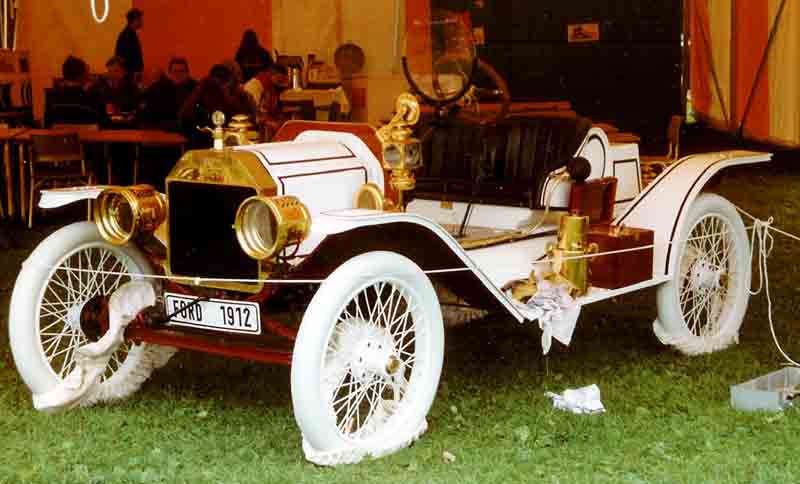
Ford Model T
"...an. I mean, I guess you could have that flex on a Model T. It just be But you know at the same time how coo..."
The Ford Model T is a very old car made in the early days of automobiles. It’s famous because it was one of the first cars that many people could afford. The podcast mentions it as a contrast to newer or more modern classic cars.
The Ford Model T is an early, mass-produced car that helped make automobiles affordable and widespread. It’s frequently referenced in discussions about classic cars because it represents a major turning point in automotive history. In the podcast, it’s used as a humorous “flex” example—showing how different eras of cars can be compared by novelty and recognition.
cruise control
"wipers dimmers Cruise control all those things we have all those options as well. We can add them to an existing column"
Cruise control is a feature that holds a steady speed for you. You set the speed once, and the car tries to keep it there.
Cruise control is a driver-assistance feature that maintains a set speed automatically. In this segment, they’re discussing adding it to the steering column so it can be integrated into classic builds.
clean sheet build
"they can order completely custom if it's something we've never built before we can do a clean sheet build Figure out what the application is"
A clean sheet build means they start from zero and design it fresh. Instead of adapting an old part, they make a new custom setup to match your exact needs.
A clean sheet build means designing and fabricating from scratch rather than modifying an existing component. Here, it refers to creating a custom steering column system when the customer’s requirements are unlike anything they’ve built before.
firewall
"they want to smooth the firewall and that means the columns got to get short Shortened we can take an existing column make it a couple inches shorter."
The firewall is the wall between the engine area and the inside of the car. If you reshape it for a cleaner look, you may need to adjust parts like the steering column to fit.
The firewall is the barrier between the engine bay and the cabin. Modifying how it looks (like smoothing it) can require changes to the steering column length/position so everything fits correctly and clears other components.
show cars
"You know, there's a lot of high-end show cars that get get our columns They they come to us because we're willing to do all those things now"
Show cars are cars built to look great at car shows. People often customize details so the car looks exactly the way they want.
Show cars are vehicles built or modified primarily for display at events, where fit, finish, and custom details matter as much as driving performance. The hosts mention high-end show cars as customers who want custom steering columns integrated with a specific look.
turn signal stock
"It's it's a it's on the colic on the turn signal stock is what what we offer ... So it's kind of like a if you think about 80s vehicle."
The turn signal stock is the lever/stalk you move to signal left or right. It’s usually mounted on the steering column, and some setups combine multiple controls in that same area.
A turn signal stock is the stalk on the steering column that you move to activate the left or right turn signals. In many vehicles it also integrates other column-mounted controls, so aftermarket column parts can relocate or rework these functions.
wiper relay
"we have a few different wiper options whether we have a kind of 11 touch button and we have a two-speed wiper relay, I guess we call it and"
A wiper relay is an electrical part that helps control the windshield wipers. It can be responsible for different speeds and for turning the wipers on reliably.
A wiper relay is an electrical switch that controls how the windshield wipers operate. It’s commonly used to manage different wiper speeds and to route power safely to the wiper motor.
cruise wipers
"it's an 84 to 87 a square body that had cruise wipers and dimmer on the on the column"
“Cruise wipers” means the wiper controls are tied into the same kind of column-mounted setup as cruise control. So instead of separate buttons everywhere, the truck uses the column switches to manage both.
“Cruise wipers” here refers to wiper control functions integrated with cruise-control-style column switching. The point is that some older trucks combined multiple driver functions on the steering column stalks rather than using separate modules.
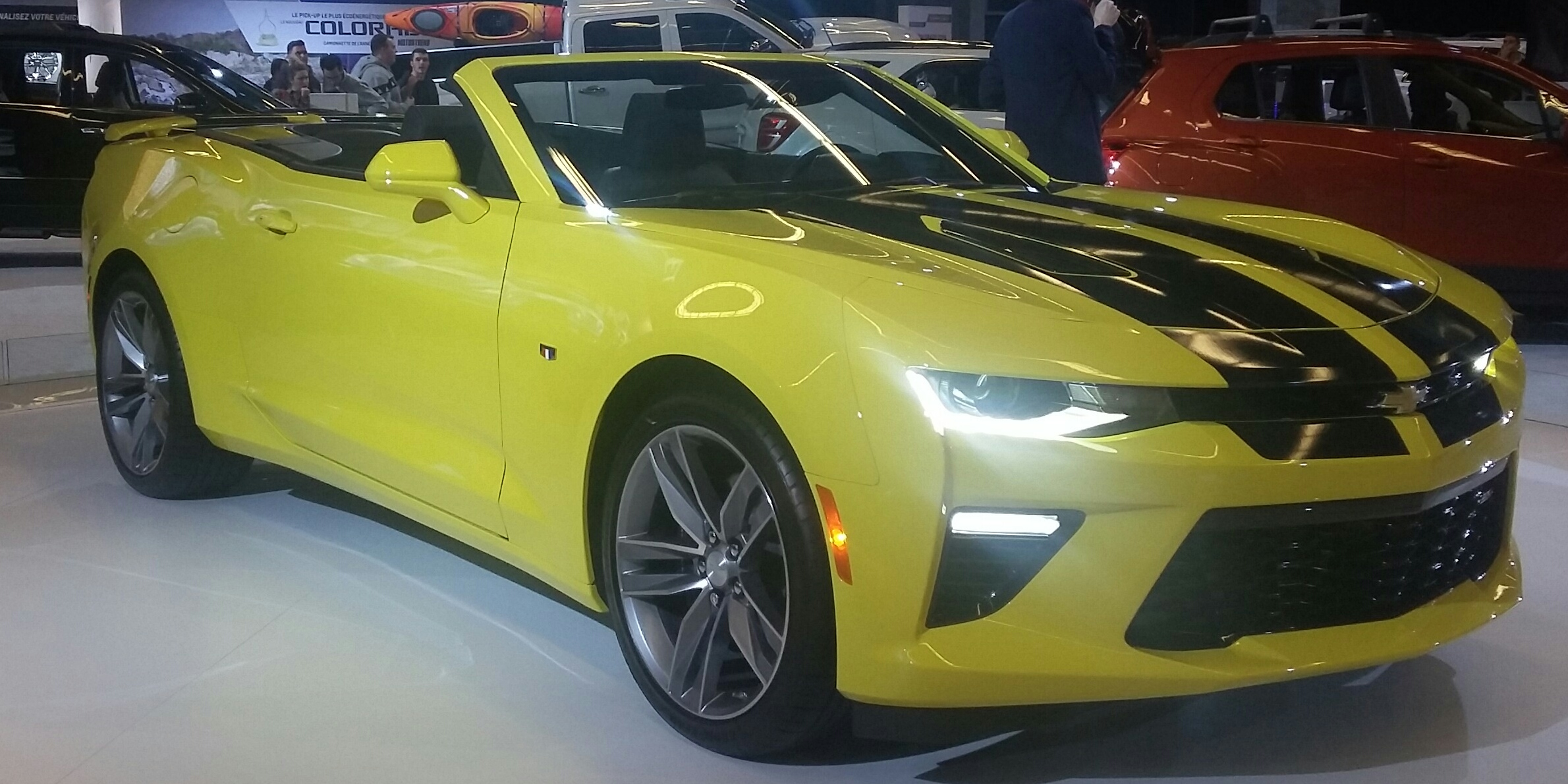
Chevrolet Camaro
"But what have you seen the big explosion and isn't Fox body mustangs? Is it the gen 3 Camaro's? Is it the OBS pickup trucks that you're seeing the big demand for we'll talk about that and some of these newer electronic"
The Chevrolet Camaro is a sports car made by Chevrolet that’s designed to feel fast and exciting to drive. “Gen 3” means one particular generation of Camaro models. The podcast brings it up because people often compare which Camaro generations are most in demand.
The Chevrolet Camaro is a performance-focused sports coupe from Chevrolet, closely tied to the muscle-car era and later generations. The podcast’s reference to “gen 3” points to a specific Camaro generation that many enthusiasts track for parts, value, and collectability. It’s mentioned alongside other classics because demand can shift by generation and condition.
drive by wire
"Modern cars what what's going on modern cars to drive by wire stuff? Well, he's got answers for that."
“Drive-by-wire” means the car turns your steering input into signals electronically instead of using a purely mechanical connection. It’s a big reason modern cars can add advanced steering and safety features.
“Drive-by-wire” describes steering (and sometimes other controls) where inputs are converted into electronic signals rather than being mechanically linked. In modern cars, this enables features like advanced driver-assistance and easier integration with electronic steering systems.

Fox bodies
"[1251.8s] You still see, you know newer applications. They're a big demand for Fox bodies. Jen three Camaro's is still muscle cars"
“Fox bodies” is a nickname for a generation of the Ford Mustang. People love them for customizing because there are lots of parts available and they’re a great base for upgrades.
“Fox bodies” refers to the Ford Mustang built on the Fox-body platform (mid-1970s to early-1990s). Enthusiasts like them because they’re relatively simple to modify and have a huge aftermarket, which makes them popular for restomods and big builds.

square body
"[1283.5s] But trucks just keeps getting bigger and bigger and bigger, you know, the the GM's and now now they're starting to do forward trucks [1282.2s] ...it was square body now they're going back and they're doing their earlier GM trucks, you know, the late 60s type stuff [1297.0s] I saw a square body at Barrett Jackson..."
“Square body” is a nickname for a boxy-era Chevy/GMC pickup truck. People build and collect them a lot because they’re popular, parts are available, and they have a classic look.
“Square body” is a common enthusiast nickname for certain Chevrolet/GMC C/K pickup trucks from the late-1970s to mid-1980s, known for their boxy styling. They’re a major target for restomods and custom builds because the platform is well-supported and has a strong collector following.
Barrett Jackson
"[1297.0s] I saw a square body at Barrett Jackson with like 26 miles on that road across the oxen block [1302.4s] The thing went for like a hundred grand"
Barrett-Jackson is a famous car auction where collectors bid on classic cars and trucks. It’s the kind of place where rare or especially clean builds can sell for huge money.
Barrett-Jackson is a major collector-car auction company and event series in the U.S. It’s known for drawing high-end classic cars and trucks, where unusual builds and low-mileage examples can sell for very large sums.

Broncos
"[1310.7s] You know, square bodies are going for a 100000 Broncos have been there forever. Yeah [1314.9s] The old Jimmy's and the K5 Blazers"
They’re talking about Ford Broncos, a classic SUV that people love to collect and modify. Clean, low-mileage Broncos often sell for a lot because they’re in high demand.
“Broncos” refers to Ford’s Bronco off-road SUV line, which has become a major collector and customization target. In the classic market, certain generations and low-mileage examples can command strong prices, especially when they’re clean and well-sorted.

Chevrolet K5 Blazers
"[1314.9s] The old Jimmy's and the K5 Blazers [1318.4s] They've gone through the roof and and man, that was that's again probably a market that you saw several years ago"
“K5 Blazers” are classic Chevrolet full-size SUVs. People like them because they’re great for off-road builds and there are lots of parts and support for customizing.
“K5 Blazers” refers to the Chevrolet K5 Blazer, a full-size SUV from the 1960s–1970s era. It’s popular with enthusiasts because it’s a classic off-road platform with a strong parts ecosystem and a big following in the collector market.
bolt-in application
"[1343.4s] But we've we're now coming up with our own version [1345.8s] But just to kind of address that so there's a direct fit bolt-in application that nobody has to do any modifications [1351.0s] Put it in there..."
A “bolt-in” part is made to fit and install using the existing holes and brackets. That usually means less cutting and less custom fabrication.
A “bolt-in application” means a part is designed to install using existing mounting points with minimal or no cutting/welding. In restomods, this matters because it reduces labor time and avoids permanent modifications to the original truck or car.
rag joints
"Right, you've got you joints or rag joints that could get super tired and worn out and sloppy or tight binding and You guys have all the double D and you know fit that stuff to make all that Basically brand-new or essentially upgraded for some of the factory rag joints"
A rag joint is a flexible connector in the steering system that helps smooth out vibration. Over many years it can get worn and loose, which makes the steering feel vague or even cause stiffness. Replacing it can make the steering feel tighter and more predictable.
A rag joint is a flexible coupling between the steering column and the steering gearbox. It uses rubber/fabric to absorb vibration, but over decades it can wear out, causing sloppy steering or binding. That’s why replacing worn rag joints can noticeably improve steering feel and response.
u-joint
"You can tighten it up. You can you can replace a rag joint with it with a u-joint or we have some Kind of next step, which is a kind of a vibration reducing joint, which is still a u-joint type type Mechanical joint, but it's got a"
A u-joint is a connector that lets two rotating parts turn even if they aren’t perfectly lined up. In steering, it can replace a worn flexible coupling to make steering more direct. The tradeoff is that it may pass through more vibration.
A u-joint (universal joint) is a mechanical coupling that allows rotation between misaligned shafts. In steering conversions, it can replace a rag joint to improve steering precision. However, a solid u-joint can transmit more vibration than a rubber-isolated coupling.
vibration reducing joint
"Kind of next step, which is a kind of a vibration reducing joint, which is still a u-joint type type Mechanical joint, but it's got a It's kind of a vulcanized rubber piece between two pieces of metal"
This is a steering connector designed to cut down on vibration. It uses a rubber section between metal pieces, so you get better steering feel than a worn flexible joint, but without as much shaking as a totally solid connection. It’s meant to balance comfort and precision.
A vibration reducing joint is a steering coupling that uses a rubber (or rubber-like) element between metal parts to damp vibration. It’s described here as a “middle-of-the-road” option versus a rag joint (more isolation) and a solid u-joint (more vibration). The goal is improved steering feedback without the harshness of a fully rigid connection.
vulcanized rubber piece
"Mechanical joint, but it's got a It's kind of a vulcanized rubber piece between two pieces of metal So it takes a little bit of vibration out you'll get more feedback than you would with a rag joint"
Vulcanized rubber is rubber that’s been processed to be stronger and last longer. In this steering part, that rubber insert helps absorb vibration so the steering doesn’t feel overly shaky. It’s basically the “cushion” inside the connector.
Vulcanized rubber is rubber that’s chemically cured (cross-linked) to make it tougher and more stable than raw rubber. In a steering coupling, a vulcanized rubber insert helps damp vibration while maintaining durability under repeated movement. That’s part of why these joints can improve steering feel compared with older, degraded couplers.
electric power steering applications
"Yeah, but any upgrade is better Especially when you're dealing with some components like that tell us a little bit about what's going on with you lecture electric power steering applications you guys are really dive into now and this this I think is where"
Electric power steering uses a motor to help you turn the wheel. When people install or work on electric steering systems, they often have to adapt parts in the steering column area. That’s what they mean by “applications” in this context.
Electric power steering (EPS) uses an electric motor to assist the driver’s steering effort instead of relying solely on hydraulic pressure. “Applications” here refers to how steering-column couplings and related components need to be adapted when converting to or working on EPS setups. That can change what parts you choose and how you package them.
three wires
"we develop our column to work [1518.4s] directly with their power units and so just with like, you know, three wires to hook up a power ground in a ignition wire"
They’re saying the install is simple because it only needs a few connections: power, a ground, and a wire that turns on with the ignition. That’s what makes the system activate when you turn the key.
The hosts describe a simplified wiring approach for the steering-assist system: power, ground, and an ignition feed. This matters because it determines how the unit turns on with the key and how it gets electrical power safely.
steering box
"You install this unit between your steering column and the steering box and you've got power steering once you you know [1533.9s] You just you bump the key turn the ignition on and you have power steering"
The steering box is the mechanical part that turns your steering wheel motion into the movement that actually steers the car. They’re installing the assist unit right before this part so it can help you turn.
The steering box is the gear mechanism that converts steering wheel rotation into movement of the steering linkage. The segment describes placing the assist unit between the steering column and the steering box to enable power assist.
hydraulic power steering
"I mean most even like a hydraulic power steering you can't even when a car is idling sure you can turn the wheel and it's it is power [1571.9s] Assist but with the electric power steering you can have a hundred percent assist at zero"
Hydraulic power steering uses pressurized fluid to help turn the wheel. The pump and fluid behavior can mean the help isn’t as strong when the engine is idling compared with electric systems.
Hydraulic power steering uses fluid pressure (from a pump) to reduce the effort needed to turn the wheels. The hosts contrast it with electric power steering by noting that hydraulic assist can be less effective at idle or at very low speeds.

Dodge Custom
"...f those big wheels from the 50s I got a 58 a half Dodge custom Royal D 500 The steering wheel and that thing is ..."
The Dodge Custom 880 is a classic Dodge car from the 1950s. It’s the kind of older car people collect because it has a recognizable vintage look. In the podcast, it’s mentioned in connection with a particular example and its standout features.
The Dodge Custom 880 is a mid-century Dodge model known for its classic styling and role as a popular “full-size” car in the 1950s. The podcast context points to a specific example with distinctive 1950s features (like large wheels and interior/trim details), which is typical of how collectors describe these cars. It’s discussed because these cars can be highly desirable when they’re well-kept, correctly restored, or have standout visual details.
manual steering wheel
"[1707.6s] Yeah, I think a lot of times they're putting us maybe they're putting a smaller steering wheel on there than what they had before [1712.5s] And they lose a lot of levers that they would have had with the the big, you know, 18 inch, you know manual steering wheel"
With manual steering, the car doesn’t help you turn the wheel. You have to use more strength, so older cars often used bigger wheels to give you leverage.
A manual steering setup means there’s no power-assist system helping you turn the wheel, so steering effort is higher. That’s why the wheel is often larger on older cars—more leverage to reduce the force you need.
E-pass unit
"[1730.6s] Or you can just add an e-pass unit under the dash or the in the engine bay [1734.9s] And like I said three wires hook it up and and that's it and then you can adjust the game pretty simple"
The E-pass unit sounds like an aftermarket gadget that adds power-assist steering help. Instead of installing a whole hydraulic system, you wire in the unit and then adjust how much help it gives.
An E-pass unit (as mentioned here) appears to be an aftermarket electronic module that adds steering assist without a full factory-style power steering conversion. The host describes it as wiring into the car with minimal installation and then adjusting the assist level.
Parking lot mode
"Yeah, you could almost have yeah the Parking lot mode where you just crank it up to really let you and then if you wanted to do a track day"
“Parking lot mode” is a driving setting that makes steering easier when you’re moving slowly, like in a parking lot. It’s meant to reduce effort for tight turns, and then you can switch it back for a more “connected” feel.
“Parking lot mode” is a steering-assist setting used by some modern cars to make low-speed turning easier. The idea is to increase assist (and sometimes change steering feel) so you can maneuver in tight spaces, then dial it back for more natural feedback at higher speeds.
track day
"Parking lot mode where you just crank it up to really let you and then if you wanted to do a track day"
A track day is an event where drivers take their cars onto a closed circuit for practice and fun, rather than commuting or street driving. It’s often used to test handling and steering feel at higher speeds than you’d see in normal driving.

57 Chevy
"But it's so funny watching my wife try to back in the 57 Chevy with no power steering."
“57 Chevy” means a 1957 Chevrolet. In this story, it’s being driven without power steering, so turning the wheel while parking takes a lot more strength.
The “57 Chevy” refers to the Chevrolet Bel Air from the 1957 model year. It’s especially notable here because the host mentions backing it up with “no power steering,” which makes low-speed maneuvering much harder than in modern cars.
flying cars
"China is going all in on flying cars Like you'd be able to walk into a dealership next year and buy a flying car in china"
“Flying cars” are vehicles that are supposed to drive like cars and also fly like small aircraft. The host is talking about the idea of buying one through dealerships, which is still far from normal today.
“Flying cars” refers to vehicles designed to operate both on roads and in the air, typically using aircraft-style propulsion and control. The host is discussing a claim about China moving toward consumer availability, which is a big leap from today’s mostly experimental or niche aviation tech.

Pontiac Firebird
"[1966.3s] I think 83 firebird [1967.6s] Oh [1969.8s] I was like, is he a fox buddy guy? [1972.6s] Brissia jen three camaro firebird guy"
A Pontiac Firebird is a classic muscle car from the U.S. The “83” means the 1983 version. Trevor says it was his first car and that it needed work, especially inside, before he fixed it up.
The Pontiac Firebird is a classic American muscle car, and the “83” refers to the 1983 model year. In this story it’s Trevor’s first car, and it’s described as having significant interior wear (“interiors roached out”) before he repainted and worked on it.

Ford Fairmont
"[1994.0s] I think my next hot rod car was a ford fairmont [1998.5s] Um, and that was when I built it back back and I went to a twin turbo big block in that one [2004.3s] um [2005.1s] And then I I bought the great. No, I take it back."
The Ford Fairmont is a regular Ford model that people sometimes modify into a hot rod. Trevor says he rebuilt his and added a twin-turbo big engine setup to make it much faster.
The Ford Fairmont is a mid-size American car that became a popular base for “hot rod” builds. In this segment, Trevor says he built his Fairmont and added a twin-turbo big-block setup, which is a major powertrain upgrade compared with the factory configuration.
big block
"[1998.5s] Um, and that was when I built it back back and I went to a twin turbo big block in that one [2004.3s] um [2005.1s] And then I I bought the great. No, I take it back."
A “big block” is a large V8 engine. It’s a popular choice for hot rods because it has a lot of engine size and can handle upgrades like turbocharging.
“Big block” refers to a family of large-displacement V8 engines commonly associated with classic American muscle cars. Pairing a big block with forced induction (like twin turbos) is a common hot-rod recipe because the engine’s size and airflow potential can support much higher power levels.
wide vans
"[2032.8s] And and now all these young punks that have twin turbos on everything. You're like, yeah, whatever been there done that [2037.5s] It's before youtube before youtube and before wide vans were uh cost effective, you know [2042.3s] It was a completely different time, right, you know, um, you know, you get together with there's there's only"
This sounds like the speaker is talking about “wide tires” and the popular look/performance setup that comes with them. Wider tires can help the car grip the road better, but they need the right wheels and fitment.
“Wide vans” appears to refer to wide tires/stance setups (the transcript context is about what was and wasn’t common “before” certain tech became cost-effective). In car culture, wider tires increase grip and can improve traction, but they also require compatible wheels, suspension clearance, and alignment.
Request an Explanation
Heard something you'd like explained? We'll add it to this episode.
Sign in to request explanations for terms you heard.
Want to learn more?
Browse our glossary for plain-English explanations of automotive terms, jargon, and concepts.
Help improve this episode
See something that's not quite right? Our annotations are AI-generated and can sometimes miss the mark. Click the flag icon on any annotation to suggest a correction.