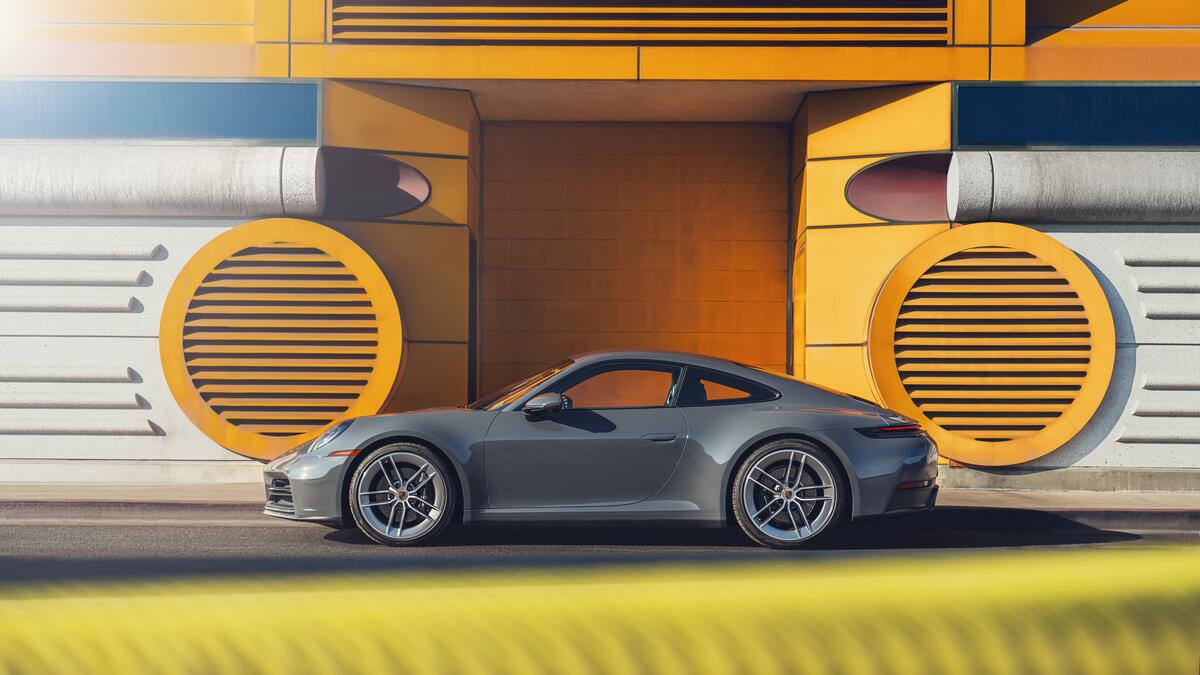
They’re talking about road trips: why they’re fun in a car, how to plan one, and what problems can happen. They also compare road trips for work versus road trips for fun.
Car
Chrysler Viper
The Chrysler Viper is a very fast, loud, old-school sports car. People pick it for road trips when they want the drive itself to be the main event.
The Ford Mondeo is a regular, everyday kind of car (more practical than sporty). The joke is that even a normal car gets pushed to extremes when you’re doing a crazy road trip.
The Geneva Motor Show is a big car event where companies show off new vehicles. The host brings it up because they used to plan a drive there every year.
The Jura Mountains are a hilly, scenic area in Europe. The speaker is saying they took a more interesting route through the mountains instead of just driving on the highway.
Concept
road trip vs long car journey
They’re basically saying not all long drives are the same. If you’re going somewhere for an activity (like skiing), you want the car to be comfortable and easy to live with; if you’re doing a road trip for the experience, you might accept a little more discomfort.
The Range Rover Sport is a luxury SUV. Here it’s mentioned as the kind of car you’d pick when the trip is mainly about getting to a destination comfortably (like skiing), not about enjoying the drive itself.
The Range Rover is a large luxury SUV made by Land Rover. It’s built to drive well on rough roads and in bad weather, not just smooth city streets. That’s why it’s a good choice for trips like going to the mountains.
The DeLorean DMC-12 is a sports car with unusual doors that open upward. It’s famous for its unique look and for being a collectible car. The podcast mentions it because people often talk about how it handles on long drives.
A drivetrain is the “power path” that takes engine power and sends it to the wheels. They’re saying the Toyota version is dependable, so it helps the car get you there on schedule.
The Nürburgring is a famous German motorsport circuit complex, often used as a benchmark for car performance and driver skill. Mentioning it implies the DeLorean was driven in a high-stakes, enthusiast-focused environment.
Wind noise is the annoying sound you hear when air gets through gaps around doors or windows. If the seals are old or damaged, the car can get much louder on the highway.
Seals are the rubber strips that help keep rain and wind out of the car. If they’re old, they don’t seal well anymore, so you can get leaks or extra noise.
A GT car is meant for long, comfortable trips—more about cruising than racing. The speaker is saying the DeLorean was intended to be a “road-trip” kind of car, not a hardcore track toy.
Cars can vibrate differently at different speeds. At some speeds, the vibrations line up in a way that feels smoother—at other speeds, they can feel worse.
“Happy speed” is the highway speed where a car feels most comfortable and calm. The speaker is saying the DeLorean has a particular speed range where it feels especially smooth and stable.
“Revs” means how fast the engine is spinning. Higher revs usually mean more noise and vibration, so the speaker is using RPM to describe the car’s smooth cruising point.
The “French auto route” is basically France’s main highway system. The speaker is using it as an example of what the car is like during long, steady highway cruising.
A weather warning is an official notice that the weather is bad enough to be dangerous. In this story, it meant the trip got stopped because driving wasn’t possible.
A misfire is when the engine doesn’t “catch” properly in one or more cylinders. Here, rainwater gets into the engine area and causes problems with the spark plugs, so the engine starts to run poorly.
Spark plugs are what create the spark that lights the fuel in the engine. If they get wet, the spark can be unreliable, and the engine can start running rough or fail.
They likely mean the Autobahn, Germany’s highway where speeds can be very high. They’re saying the car was cruising fast for a long stretch when it started running badly.
Some cars use suction from the engine (vacuum) to help the brakes work. If the engine stalls, that help disappears, so braking becomes harder and less effective.
An “aircon delete” means the car’s air-conditioning system has been taken out or turned off. That can save hassle or weight, but it also means you can’t cool the cabin.
This hose is the part inside the fuel tank that helps feed fuel to the fuel pump. If it gets loose or changes shape, the pump can’t pull fuel reliably, and the engine may start cutting out.
The fuel pump is what moves fuel from the tank to the engine. If it doesn’t get enough fuel, the engine can start running rough or stop firing correctly.
Vaporization here means the fuel gets so hot it starts turning into vapor. Vapor doesn’t feed the engine the same way liquid fuel does, so the engine can run badly.
Fuel return is how extra fuel gets sent back to the gas tank instead of being wasted. That back-and-forth can keep the tank hot, which can make fuel delivery problems worse.
The McLaren 600LT is a high-performance McLaren supercar. In this episode, they’re talking about a version that didn’t have comfort features like air conditioning, so the trip was much more miserable than you’d expect.
This is a famous mountain pass road in Austria. Driving over it means lots of climbing and descending, which can make the trip feel more epic (and more tiring).
Term
AC
AC means air conditioning. Without it, the cabin can get extremely hot, especially in summer, making the drive a lot harder.
“Senna seats” are special racing-style seats (often very thin and firm) meant to save weight and hold you in place. They can be uncomfortable, especially if you’re doing a long, hot trip.
Renault Sport Spider is the name used for a Renault roadster launch they were working on. The important part of the story is that the speaker had to drive for the event, which turned into a long road trip.
Big trucks can throw up a lot of water when the road is wet. That spray can block your view, so driving can feel more stressful even if you’re not doing anything wrong.
The handbrake is the brake you use to keep a car from rolling when it’s parked. In the story, it’s mentioned because someone released it before an accident.
“Pinned” here means the car was pushed to a very high speed for a long time. It’s a way of saying they weren’t just cruising—they were really going for it.
A Porsche 968 is a classic Porsche sports car. In this story, the host is using it as the road-trip weapon—driving it hard on the way to the Nürburgring.
Smoke usually means something is wrong under the hood—often a leak or a problem that’s causing fluid to burn. The host thinks the smoke stopped because the source of burning fluid ran out.
The host is talking about choosing a car that’s not perfectly smooth or trouble-free on purpose. The goal is to make the trip feel more like an adventure than a stress-free commute.
Term
five hours driving a day
It’s basically a rule of thumb for how long to drive before taking a break. The point is to avoid getting too tired and to keep the trip enjoyable.
A racetrack is a special driving course made for racing. If there’s one at the end of the trip, it usually means the drive is leading up to some car-focused driving fun.
Concept
hibernating over the winter
They mean the car is parked for the winter instead of being driven. Later, they’ll take it out again and make sure it’s ready to go.
Car
1977 350 SL
A 1977 Mercedes-Benz 350 SL is a classic luxury roadster. The “350” refers to the engine size, and the discussion here is mostly about what kind of transmission it has, since that changes how dependable and easy it is to drive.
A V8 is an engine with eight cylinders. It’s known for smooth, strong power, but it can also be more expensive to run and maintain than smaller engines.
A four-speed transmission is an automatic gearbox with four forward gears. In this story, they’re suggesting that this specific four-speed version isn’t as good as the other option.
A three-speed transmission is an older-style automatic gearbox with three forward gears. They’re saying this one tends to be more dependable than the four-speed version.
They’re talking about how the manual gearbox feels when you change gears. They didn’t like it because it sounded like the shifts felt mushy or not very precise.
“Trim” means the finishing details like the upholstery and exterior accents. They’re saying the specific color/trim combo they found looks great and ages well.
“MB text” refers to the Mercedes-Benz lettering/badging on the car’s interior or exterior trim. The hosts are evaluating how that specific material/finish “wears,” including whether surrounding leather and fabric develop sagging or looseness over time.
“Lift off” just means taking your foot off the gas pedal. If the engine keeps pulling or revving after you lift, it can be a sign something in the throttle control isn’t behaving.
Brakes are what slow the car down. The worry here is that if something changes under the hood, the brakes might not work as strongly, so you’d have to press harder.
“Locking the steering” means the steering suddenly gets very hard to turn or feels like it won’t respond. That can happen if the car loses the systems that help steer.
“Conk out” means the engine suddenly stops running. If that happens while you’re driving, some helpful systems for braking and steering may not work as well.
The intake is how air gets from outside into the engine. The speaker took off parts of that air path to get access to the mechanism they needed to check.
Throttle linkage is the set of moving parts that connects your gas pedal to the engine’s air control. If it’s loose, stuck, or broken, the car may not respond correctly.
Cruise control is what lets the car hold a steady speed by itself. Instead of you pressing the gas all the time, the car uses a system to keep the speed the same.
The throttle controls how much air (and therefore power) the engine gets. “Wide open” means it’s stuck at the maximum setting, so the car can lurch forward.
Gaffer tape is a heavy-duty tape people use for quick, temporary fixes. In this story, it’s being used to hold or secure something so the same malfunction doesn’t happen again.
A “known failure point” means there’s a part of a car that tends to break more often than others. If you know that, you can pack the right spare parts and tools for a road trip.
A service station is a place along the road where you can refuel and often buy basic supplies. In this context, they’re saying that the oil you can find there may not match what their car needs.
They’re describing an organized driving event—basically a planned route—starting in Paris and going to Dothel. It’s the reason they’re talking about the trip and the car.
Concept
car on the ferry
They’re saying they put the car onto a ship (a ferry) to cross water. That adds extra steps and timing to the trip, which can be stressful—especially with an older car.
Concept
Loading
They say “loading” while talking about how to handle the car for the trip. It likely means something like how you set up or approach the drive, but the exact definition isn’t clear in this short section.
Concept
completely utterly irretrievably lost
They mean they were totally lost and couldn’t figure out how to get back on track. It’s the kind of situation where you can’t easily find your way to the next stop.
Concept
roof of the car up
They’re talking about putting the convertible roof up. If you can’t figure out how to do it (or it’s not safe), you leave it down.
A tonneau cover is a lid/cover that sits over the back bed of a pickup truck. It helps keep stuff dry and out of sight.
Car
Caterham Superlite R
Caterham makes small, lightweight sports cars that are built to feel very connected to the road. Here, the host is saying their Caterham made that Nürburgring trip feel great from start to finish.
The Porsche 911 is one of the most famous sports cars ever made. The point here is that the group included a 911 as one of the cars they drove to the track.
The Ferrari F355 is a high-performance sports car made by Ferrari. It’s designed with the engine in the middle so it drives in a sporty, responsive way. The podcast mentions it because it was owned by someone the hosts knew and it left a strong impression.
They’re basically saying driving feels freeing because you’re in control. When you drive, your actions directly affect where you go and how you get there.
LIVE
Welcome back to the intercooler podcast everybody episode 312 of the intercooler podcast. That's
the podcast powered by car finance specialist JBR capital. This week, I want this to be
a fun one. I want this to be light and enjoyable and entertaining.
Well, after last week's last week's was a little bit morose, wasn't it? This week,
we're talking about the joy of road trips, which if you love cars, it's perhaps the most
fun that you can have with a car. Andrew, you've done plenty of fun road trips. I'm
sure you'll tell us about some of them. We are joined again by jazz mettinger, who if
you don't know who jazz is, we introduced him a couple of episodes ago, episode 310.
And in that episode, we explain exactly who jazz is and what his background is.
But in brief, jazz is sort of becoming a core part of the TI team. And the plan for now is to
bring jazz in occasionally into this podcast as a third voice,
just to sort of freshen things up a little bit. And jazz, as far as I can tell,
you're sort of Mr. Roadtrip. I have been doing them since I was about 18 months old.
Oh, that wasn't really driving. No, no, not at that point. That came a little bit later.
But it's sort of something I've grown up with. And I think there's a, I don't know, I think you
go through sort of areas of your attitudes to road trips from your childhood through to your,
let's say middle age, I'm just about able to say that about myself now.
Yeah, we can talk about that a bit more, but I love them.
So we're going to talk about some of the road trips that we've been on.
What are the sensations? What is it about a road trip that makes them such fun, so enjoyable?
Maybe we'll share some advice for anyone who's planning a road trip.
Maybe we'll talk about how they can go wrong and what happens when road trips do go wrong.
Okay. I just want to try and define a road trip or set out how it is different to a long car journey.
Yeah. And are we drawing a distinction between road trips done for work and road trips done
for pleasure? I'm glad you mentioned that. I don't know what the answer is there, but
a lot of the road trips that I've done have been for work. And I think that explains why I haven't
done that many of my own back. Yeah. I've done, I've certainly done many more for work than for
pleasure, but I've done quite a few for pleasure. And to me, they are distinctly different animals.
And actually, they can be equally enjoyable, but for very different reasons.
Well, allow me to explain. So if it's a road trip for work and it's a proper road trip,
you're usually going in interesting stuff to interesting places. And at the back of your mind,
you've always got that knowledge that whatever you do, however much of your fun you have doing it,
you've got to get a story out of it. And that's the product, that's the reason you're going in.
Little hooks for stories, thinking about the way it's going to end, thinking about the way it's
going to begin. And you are always, even on the nuttiest road trips I did, and goodness me,
I did some bonkers road trips. Always at the back of it is this is work. When it's not work,
and the majority of the trips that I used to do, which weren't for work, were basically to go from
home to a circuit somewhere, usually in Europe, with a bunch of mates. And that's just completely
different. And it's lovely because you're not having to think about work. And you're with people
that you absolutely choose to be with rather than whoever happens to be employed by the same
publishing company. The cars may or may not be as interesting, but you know that every evening
you're all going to be in the bar having a couple of beers, having a good laugh. And
to me, there is a quality about having a recreational road trip with your mates,
which you just don't get doing it for work. They tend to be less mad because,
funnily enough, it's quite difficult to persuade normal sane people that you need to drive a Chrysler
Viper from Dover to Italy in six hours or do 12,000 miles in a week in a Mondeo or all these
sorts of other crazy, crazy things. But so I guess the personal ones don't have that component
to them. But when I look back and I actually think at the time that I've actually been
happiest indulging my passion for cars, it's usually been on those road trips when I've
been with mates rather than for work. The only exception, and this is a very particular thing
for me, the thing I probably love doing most is a road trip all by myself.
Ah, okay. That's interesting.
I love, I used to do this every year when the Geneva Motor Show was a thing.
I used to always arrange to drive there and to scale my own. And I wake up one in the morning
in Wales, and I'd usually be in Geneva by mid afternoon, having gone the interesting route
over the Jura Mountains, not just sat on the motorway. And I just love the headspace. I love
that being alone, particularly if you're in an interesting car. I love the way that journey
evolves and changes. I also love the getting up really early in the morning because there's
something which feels to me quite intrepid about that. And I love the knowledge that you've done
this road trip and you've got to go and do a bit of work and then you get to do it all over again.
So I want to draw a distinction between a road trip and a long car journey, at least as it
pertains to the kind of car that you want to be in, right? So I think back to a trip I did
gosh, 10 years ago, more with three of my best mates in the world. And we took a then brand
new Range Rover Sport to Myhofen in the Austrian Alps ski resort. And that was a long car. Okay,
we called it a road trip. It felt like a road trip. But actually, I would now describe that
as a long car journey because the trip is for skiing. That's why you're going. You therefore
want a car that is going to be comfortable, reliable, roomy, safe. These are the sort of
attributes that you're looking for in a car for a long car journey. Yeah, the car is part of the
supporting cast. Yeah, it's not the purpose. That's right. Yeah. A road trip, you want something
slightly different. And what I want to try and get you to to discuss with me now is what is the
right amount of discomfort for a good road trip? Okay, because the car ought not to be
enormously comfortable and easy to drive and reliable, perfectly reliable and whatever else.
Agreed? I have a lot to say on this front. I think when it comes to a long car journey,
as a DeLorean owner, well, as a DeLorean owner that has been all around Europe in it,
I think that the sort of drive that Andrew was describing in terms of getting to Geneva quickly,
that's probably the time for a good, relatively modern car that can dispatch the distance at
speed. Similar to the Meyerhoffen thing with a bunch of mates, right? The car has a job to do,
and it is to deliver you from A to B swiftly. And that's an expected frame of time. And the
difference with the road trip is that there maybe isn't quite that same criticality on your arrival
time. And this is where the whole point of a road trip is that it's going to create memories.
And those memories, when I think back to the ones I have, are always when things go wrong. If
you bring up 10 years later and say, you know what, remember when, and that only happens if you're
in a crap car. Okay, because I don't think you own any crap cars. Well, I mean, one of them appears
in Richard Porter's book. Oh, the DeLorean? Yeah. Yeah, but come on, it's a DeLorean. I mean, okay,
so you have you have a lot of or a 410. Yes. That to me is a sort of perfect example of a road trip
car because it's good enough at the boring bits that have, you know, we have to acknowledge
that there are boring bits in every road trip. Every decent road trip basically involves being
somewhere far, far away, and you can't really get to far, far away. Well, you can, you can take the
little roads. But ultimately, I've, I now subscribe to the point of view that if you're going to go
on a road trip, you do whatever you need to do to get to the interesting bits and then enjoy them,
rather than compromise that because we're all time limited. And the Aurora, I think, is perfect
for that because it's good enough at the boring bits and then certainly more than exciting enough.
Is that is that why you have it? That's how I use it most strangely enough. I use it for those long
drives to Europe more than I do sort of blasting around at home. It is very good at that. But it's
in its own way less memorable than the old stuff. Because it's not it's not going to put you in
situations that are as memorable. You may you may have more invigorating moments behind the wheel
when you get to the good stuff. And it's very good at delivering you on time, because it's
got a Toyota drivetrain that probably won't blow up. But it's, yeah, the pre 1985 era of car has
delivered the best memories for me. Very interesting. So talk us through a, a DeLorean road trip,
I'd love to know. Well, I've been a few places in it. So I've been up to the Isle of Skye in it.
I've been down to the Austrian Alps in it. I've been to the French Alps, well,
Austrian Alps in summer, French Alps in winter. I've been to the Nurburgring in it as well.
And it has had problems at times. Now, some of these problems are of our own making.
And again, this is the other thing about a road trip is that, and I kind of feel like this is
where the older car you need to lean into the older car if you're going to have one. And that sort
of means putting your phone away and not having Google Maps. Yeah. And actually taking out the
paper maps means those one time I was driving down to Cannes actually for the film festival.
This is probably about 10 years ago. And I went down with a friend of mine. And we spent, we said,
you know what, we're going to spend three or four days to get down there. And we're not going to
do any of the auto routes or last resorts. And we're going to, we won't even know where we're
going to stay and we'll plan it the next day. And then we'll just sort of randomly drive through
the west part of France, which is definitely not the normal route you take. So, you know,
we're all set. We've got this big, it's like a map of a whole of France. And it's enormous when
you fold it out. It's one of these things that you could like wallpaper your house in.
Get off the channel. And we think, you know what, we'll just stop at the petrol station on the left.
And if anyone knows that petrol station immediately on the left, yeah, don't ever stop there.
Because if you stop there, you don't come back onto the road you just left. You've got to go for
bloody miles. And if you don't have Google Maps, you go wrong. And where you come out of that
petrol station, literally we were three minutes into France and we were already horrifically lost.
Driving off into the countryside with this map pulled out across the entire windscreen,
you know. And again, if we'd been using Google Maps, I wouldn't have that joyous memory to look
back on, you know. And how does that car stand up to a properly long drive in, I guess, sometimes
challenging conditions? Better than you would think. Assuming that, I mean, look, my story
published a couple of weeks ago in the intercooler was about how I went about buying that car.
I bought it drunk on eBay, and it had lived half its life in a bog. And it took quite a number
of years to get it to the point where it was... And you're going to do subsequent stories about,
because one of the last lines of the story is, I don't think you actually do give the figure,
but how much you spent, you spent on the car getting it from where it was to where it is,
and you're going to do more about the experiences to come for it. But if you're just sort of sitting
there, I don't know, and you're in a rain... Does it leak? Is there terrible wind noise? Have you
got ceiling issues? If I think of I owned a DeLorean, I'd be thinking about things like that.
I'd be thinking about, you know, those mad doors and, you know, 45-year-old seals in it, and
whether you're going to get to the point where what just sounded like a brilliant idea just turned
out in reality to be an utter nightmare. So, again, depending on which snapshot of the car's life
we were to look at, you would have variously bad or good answer to some of these questions.
In principle, it's actually a very good GT car. That's what it was designed to be,
more than it was a sports car at the time. So 80, 85 miles an hour or even 90, that's sort of where
the car is at its happiest. You know, every car has its happy speed, where there's something to do
with the resonant frequencies of motion that just settle down. And for the DeLorean, that's about
3,400 revs in fifth, which correlates to about 85, 90 miles an hour. And it's not wandering
over the road. Now, now it's dead straight. For many years it wasn't, but it's not that noisy.
It's pretty smooth. The ride settles down at that speed as well, and it's very comfortable. So on
the French auto route, for example, you're on the left side of the car, i.e. the correct side of the
car to be, you know, driving on that side of the road. And it's wonderful at dispatching
distance like that. Does it leak now? So the trip up to the Isle of Skye, unfortunately,
corresponded with an orange slash red weather warning in Scotland, where basically like the
whole country, this was about two years ago. And it was so bad that they were stopped, they were
starting to say literally the whole of the west side of Scotland, you just can't drive because
most of it you've got mudslides, you've got the stuff coming down the roads are like a foot underwater.
Sounds like a DeLorean is the perfect thing to be in. Absolutely cracking. So the car is parked
outside, obviously, we didn't have anywhere to put it, we're staying at random air,
B and Bs and things. And so it was just under this torrential rain for three days. And it's
weatherproof to a point, but to a Scottish level kind of tornado rainstorm, which is what this
was, it was struggling. And so we'd come back out to the car in the morning and there'd be like,
you know, you could have basically poured like a pint of water into each of the seats and that
would have approximated the amount of water inside the car. And but you know, and the other thing
as well, because it's got the open louvres at the back and then a slightly open engine cover
beneath that, when the water gets into the engine bay, you start to get moisture in the spark plugs
and you start getting misfires. But the car just about got us out the day before like Scotland
got closed. Essentially, we got out and you know, the roads are flooded and it just about got out.
But when I did get home, I had to take the whole interior out, take the seats out, take the gear
stick up and there was a swimming pool in the underneath the leather gaiter that there was
literally like eight inches of water in there. So weatherproof to a point, but not that degree
of Scotland. So has that car on any of these trips properly let you down or given you a
fright at any point? Absolutely. Yeah. Naturally. I think one of the good ones was actually on the
way back from the Austrian Alps to the Nurburgring. It was on the it was on the auto barn. So again,
and it was a pair of fairly feisty out of Stuttgart type auto barns, wherever the average speed is
100 miles an hour. And again, the car's quite happy at that speed until it starts missing
really badly, not just on one, but like on all six. So it's like and then and it gets more and more
and I'm thinking, oh, this is bad. And it's also just as we're coming into the joining area between
two auto barns merging, and there's no hard shoulder. And the car's starting to splutter
and then starting to cut out completely. And when the engine cuts out, you lose your brakes,
because they're all vacuum operated and the rest of it. And I realized that I was going to have to
try and bring the car to a halt in the safest place possible. Unfortunately, the safest place
possible was literally the triangle between these two auto barns merging. So I skidded the car into
this, but it's 35 degrees as well. We're absolutely roasting in there. It's a Sardin can at the best
of times. No air conditioning. No air conditioning. There is air conditioning from factory. I did
aircon delete online because it never worked very well on it. I did wait. So I removed it
unwisely as it turned out. So yeah, basically had to pull the car to a halt in the Chevrons
in the middle of this auto barn. And then with my partner, basically try and judge the four lanes
of traffic to run across like Frogger. Yeah, to literally frogger ourselves across an auto barn
to get over the barriers and into some shrubbery where we could just bake in the sun there for a
bit. Whilst I then had to work out what the hell happens next. What the hell did happen next?
Well, I tried to work out what the problem was. And what I figured the problem was is that sometimes
the fuel pickup hose, you've got the fuel pump, and then there's like a rubbery pickup hose that
goes down into the bottom of the tank off that and legend has it that when driven in very hot
temperatures, the pickup hole, the pickup hose starts to get a bit floppy, basically, and it
can't hold its shape. And that what it basically means is that it can't actually Hoover the fuel
up into the fuel pump and thus the engine, which is why I was missing on all six, because suddenly
it was just having huge fuel starvation. And in theory, if you leave the car, then the fuel tank
can cool down because all the fuel return that's coming back into the tank as well is not vaporization
as such. No, it's the problem is all of the fuel in the tank is getting so hot. Yeah, because
everything's basically just cycling around and around and around in there that you the pickup
hose fails. Yeah. And you can't get fuel to the engine. So in theory, you leave the car for long
enough. And maybe it'll start working again. And in the end, off about half an hour, I thought,
maybe this is the problem. Let's go but let's do Frogger again back to the car.
Jump into the car. And I managed to hop hop the car. It worked. It started and I managed to sort
of hop the car up to a service station, not service station, a lay by, and, you know, off the
side of the auto barn, where a stag do of German drunken men turned up shirtless. And I wouldn't
leave us alone in there because they thought they had the answer to our problems. And unfortunately,
they didn't. Yeah. But I mean, funnily enough, gave it a couple of hours and then the car cooled
down enough and that enabled us to get to our hotel that night. So lucky in that case. So
yeah, I mean, I asked that point about how much discomfort is the right amount of discomfort
for a proper memorable road trip because one of the fondest memories I have, and this was very
much a work trip rather than a me trip. And I've mentioned it before, but when the McLaren 600LT
was brand new, I was tasked by a magazine to drive one from the launch in Budapest back to London
in two days, which is terrible. Well, it's I mean, it's more it's more than a thousand miles and we
took in the gross Glockner pass and we did a few other things. So I think it's 13, 1400 miles in
two days. You poor lamb. But this was a very particular 600LT. Oh, I know. Yes, I know about
this one. This is roasting hot summer, unbelievably hot. And this car had no AC. It was it you and
anyone else me and the photographer, right? It had no stereo. And it had those Senna seats,
they call them those very, very thinly padded carbon seats that
they're not comfortable. I do not. I mean, I am unbelievably uncomfortable in this. I'm glad
that you know, because you and I are not exactly the same shape. Yeah, I know. I don't don't like
those seats at all. But it was uncomfortable. It was hot. There's nothing to listen to.
But it makes for a more memorable trip.
Yeah, I can remember.
I think sometimes just I think you probably got a bit of this. And in a masochist,
I couldn't remember how I spoken about this podcast before. So on the podcast, so I went
to go on it, but I can remember having to drive a catering from the Dartford factory
to the south of France for the Renault Sport Spider launch.
And usual auto car last minute dot com. I had to do it. I had to do a day's work,
then could drive to Dartford, then get drive from Dartford to the south of France
to report in time for breakfast the following morning. So no time for anything,
you know, conventional like sleep. And it was it was a 1.6 something or other. It was a little
small engine catering. And I drove it down all the way through France in the middle of this
unbelievable rainstorm. And the catering actually, I think like the door, it actually
stood up to it really well. There wasn't anything like the leaking that I thought there was. But
after a bit, it does get overwhelmed just like the door. And it started coming in not where you
would expect, because I'd expected coming into where the roof meets the top of the windscreen.
It didn't. It came between the windscreen and the bodywork where the windscreen mounts to the body.
And I was constantly just being flicked by drops of water, being driven into the car at whatever
speed I was doing. And every time you pass a lorry, you know, the lorry with the massive
bow ways come crashing over the car. And I can remember sitting there doing this at 3,
3.30 in the morning, quite damp, quite scared. And thinking to myself, despite all that,
I'm having quite a good time. And I'm just sitting there, obviously no music or anything
like that at all. I'm just sitting there, there's a little car going meh through the night.
And there was something just quite sort of intrepid and fun about it. And like,
I find myself sort of imagining what the lorry drivers thought when they saw this tiny little
insect come past them. And they must be all thinking he must be absolutely bloody miserable
in there. He must just be looking for the first exit. And anything anywhere which will enable
somebody I wasn't I was just having a really good time has I don't know if either if you
felt the same thing. But the type of tarmac that surfaced on the auto routes, especially in
northern France, just sprayed that kicks up when it gets wet is far more than you would
have on a UK motorway. So if you're in a very long sports car, and you're going past a lorry,
you cannot see anything. And it's the way those motorways are designed, because I think they
have less of a crown. So the water doesn't run off. So it just sits there. And it's clearly
not a sort of porous surface. But yeah, I just I enjoy those moments.
Well, they're adventurous. Exactly. And we all crave that, don't we?
That's the key thing a road trip should be to some extent adventurous. But is it important to
is the driving everything? Or is it about where you're driving to and with whom you're driving?
Jess, what are the other key components of a good one?
So maybe this is the appropriate time for me to talk about my
the three areas of road trips that I've experienced. The first one is as a kid in the back of a
Rover SD one, three, three, three kids across the back seat, driving down to South France.
What engine? 2,600 s. The facelift, the facelift 2,600 s straight straight six.
Yeah, on an x plate. Yeah, there was we did have a 2,600 before that that was pre facelift that
my brother burnt a hole in the seat with a cigarette lighter. Blamed it on me.
Let the handbrake off crashed into the gaze post. All the standard kids don't remember that to this
very day. No, of course not. But you know, that that first sort of era of road trip experience is
I don't think you enjoy them very much. You're just hot and bothered. That's true.
Yeah. And you're fighting in the backseat of the car and it's are we there yet?
And I don't know. I don't know what at what point you start to enjoy them. But maybe it's
when you start driving. And then there's the road trip era of my 20s,
which was mostly around, we have to get to the Alps, we're going to get there as
fast as possible, we'll leave London at 7pm, and we'll arrive in the Alps at 7am.
And we'll have two of us drivers in the car, maybe a couple of passengers will alternate
the driving and we will simply drive on the auto routes as fast as this Audi estate will go.
And there's a real pleasure in doing 150 miles an hour in a
very first generation Audi S6 and racing a Ferrari 400i at the same time. Wow.
Yeah. In the middle of the night to be racing a 400i, both of you are pretty much pinned I think
about 150 for mile upon mile. The 400i was doing 150. Yeah, we were both flat out.
Limey, healthy one. Yeah, must have been probably a manual. Maybe. I don't think many of them get
driven like that anymore. But you know, that was sort of the second area, which was the
enjoyment. It's a hurry, isn't it? Well, it's a hurry, but there's also the
sense of I'm out of the country, therefore I can do what I want and it'll be okay.
That sort of goes through the head. It probably isn't correct at all. No, categorically not.
But there is that sense there. There is that sense. I can remember just very briefly.
I drove a Porsche 968 to the Nurburgring because I was going to go and doorstep the McLaren team
and see if I get a run around the F1, which I duly did, but that's not part of the story.
On the way back, I was driving this 968 quite fast down on an auto route or main auto barn.
And I do not mean by a Bobby Ewing 350 SL or 450 SL. That era R107 Mercedes Benz appears behind
me traveling really fast. So I thought, okay, fine. I was probably doing, I don't know, 110.
So I start doing 120. He's doing 120. And then I start noticing the smoke coming out of the thing.
Of his or yours?
Oh, his. And I was fine. And we were probably doing 130, 135, but so he was absolutely nailed.
And my last memory of it was looking in the mirror and suddenly seeing there was no more smoke.
And I thought to myself, hmm, as the car shot, he slammed on the brakes and headed for the
hard shoulder. And I can only presume that there was no more oil left to burn in the engine.
And that was it.
Did you feel responsible?
Not at all. No, I just thought, I thought fair play to him, actually. At least he had a go.
What's the third era?
Yes. So the third era is sort of where I feel like I am now, which is where you
intentionally choose a car that's going to create problems or discomfort as you put it.
And then you sort of aim for a maximum of five hours driving a day. You avoid all
auto routes where possible. And what five or six hours driving a day means is that you can
leave to relax time in the morning, nine o'clock, have a nice breakfast and a coffee and the sun's
coming up wherever you are. You can do three hours driving, have some a lovely long lunch
somewhere, pick where you're going to have lunch somewhere that's middle of nowhere,
another three hours afterwards. And you've got to where you are in time to have a lovely evening
and a lovely dinner. And along the way, you can stop, you can take pictures, there's no pressure,
you can break down and it's not stressful.
I wish I was that sensible.
That sounds lovely. That sounds like my era now.
I wish I was that sensible. I still want to get up at half past three in the morning.
I do. And I want to be...
Oh, no, no, no.
So the perfect road trip for me is with people, but not with anyone.
So with a bunch of mates, but they're all in different cars and I'm alone in the car.
And you're covering mad distances and with any luck, there's a racetrack at the end of it.
I'm still kind of in that space.
That's great.
And I fear I may never come out of it.
Because I just love that early morning when everybody else is fast asleep and you're thinking
yourself, why would you be sleeping when you can be having this much fun?
It's pathetic, I know, but I just love it.
I don't think it's pathetic. I just think it's a different experience.
Yeah. Yeah.
I like the sound of the more leisurely approach now.
I think partly because, you know, life is busy right now, work is busy to young kids,
very, very busy, always flat out.
And so just the idea of, you know, Mrs. Proser and I in an interesting car
and a beautiful part of the world and just meandering.
Oh, I don't say I wouldn't want to do that.
Yeah.
I mean, the idea of, take my catering and as long as whoever I was with,
so presumably the Mrs. didn't want to drive it,
because I've no interest in being in the passenger seat of any of these.
I've no interest in being in the passenger seat on any road trip,
which is one of the reasons I want to be on my own.
And just gently bimbling along.
In fact, we did do that in a catering.
It was one of the reasons I asked her to marry me,
because she did a fortnight in France in a catering that I'd built.
And she was perfectly sanguine about the entire thing.
And I thought, well, if you can put up with that, you can possibly,
probably maybe even put up with me.
And that was well over 30 years ago.
So, yeah, I do like those sorts of trips,
but give me a choice of one of those and something truly intrepid,
where you get to the end of the day and you really feel you've achieved something.
I'll do that every time.
So, Andrew mentioned the Bobby Ewing, the R107SL.
Yes.
I know you've written about this for us.
I have, I have indeed.
So, again, this was, my partner wanted something that was a bit more interesting as a car.
Oh, sorry, did I explain to you what a Bobby Ewing was,
despite the fact that you've already got one?
Or have one?
Yes, yes.
I'm so sorry.
It's all right.
I might not have known the reference.
Have you still got it?
She does.
Yeah, yeah.
Okay.
We're going to go, it's been hibernating over the winter,
so we're collecting it in a couple of weeks.
Again, with R107s, there's a lot of them out there.
They made a lot.
They were very successful.
They were very well-built cars, and so a lot of them survived.
Now, that survival rate means there's a lot of tatty ones around now.
But in theory, a great road trip car, isn't it?
It's Bob-on.
Yeah.
It's absolutely.
Bobby-on, Bobby-on.
It's Bobby-on.
And so, yeah, so, you know, she saw one of these.
She really liked it.
I did my research and I was like, okay,
I think we just have to buy the best we possibly can, right?
I need to know what engine it's got, isn't it?
It's a 1977 350 SL, so it's the first V8.
And it's got the, there's two different types of auto that they have.
I think the four-speed is a bit iffy.
This one's got the three-speed, which is a bit more reliable.
And-
Do they ever do a manual one of those?
They did, yeah, but they didn't make very many of them.
And the Mercedes manual shifts of that era were a bit porridgey.
Yeah.
So you don't really want one.
Also, they say, obviously, they say I haven't actually driven one myself.
But so, yeah, so we basically, we found one that was, and again,
color and trim was very important.
And this one popped up in thistle green over kind of tan with the MB text
that actually wears really well and doesn't go baggy like the leather
with the sort of the fabric in between the MB text bits.
Anyway, gorgeous car, 45,000 miles, two owners from New.
And I went and looked at it and it was a banging car, like, great.
Okay, so this is a car we can go and do things in.
So that's the first thing.
But it's obviously still an almost 50-year-old car.
And the first trip we went on in it was going to be down to the Austrian Alps,
which are absolutely beautiful.
And we had the car looked at before we went, you know, to make sure it was serviceable.
And we tried to get the chap who looked at it to sort out the cruise control
because we're going to be getting a long way.
And he said he couldn't fix it, but he'd fiddled with it.
I'll come back to why I'm mentioning that shortly.
Fast forward to somewhere in the middle of Germany in the countryside,
nice little railroad.
We've got someone dawdling in front of us.
So I'm like, okay, I'll dispatch him.
I've got 200, you know, V8 horses to call upon.
So we roar past him and it does make a good roar.
You know, it's a proper woofley car.
And so we roar past and I lift off as we're approaching a corner
and realize that it's still roaring.
It was still going and I've got my foot nowhere near the throttle.
So my immediate thought is sticky throttle linkage
because I've had that a couple of times in the DeLorean.
So I give a throttle a blip, you know, once, twice,
just see if I can blip it and then it will just relax.
No, we're still roaring on with what I guess is probably
half to three quarters open throttle.
That makes sense.
We're not wide, we're not stuck wide open,
but we're stuck maybe half or three quarters open.
And at this point, I'm starting to think, okay,
this is not the sort of road where we can just
continue accelerating indefinitely.
Something needs to happen here.
And I think, well, what do you do in this situation?
And all these thoughts go through your head very quickly.
Do you put it into neutral?
And then I think now that's a terrible idea
because the revs are just going to go sky high
and that's not going to end well.
How effective are the brakes here?
Can I simply break the car down to speed?
And I quickly come to the realization
that's the only thing I can do,
but I have no idea whether I'll be able
to bring the car down to a stop.
You didn't think about switching it off
because you worried about locking the steering.
Yes, and losing the brakes.
Would you lose the brakes?
Or would you just have to massively increase the pressure?
Well, from my experience in DeLorean,
where I've had the car conk out at speed,
the loss of vacuum on the brakes is sufficient to
mean you wouldn't be able to stop the car safely.
So I figured the same would be the case here.
Yeah, you're right.
I could have gone to neutral and turned it off,
but I figured I'd lose the brakes,
and then that would just turn into a missile at that point.
So, yes, so instead I sort of rest on the brakes
and I realized that I can just about keep the speed level.
If I press the brakes pretty hard,
I can keep the speed level.
Until the smoke starts to appear.
And the smoke is starting to appear.
And I realized that I'm going to start running out of options
pretty quickly in the first place
where I can get the car off the road.
I have to just swerve into it
and just jump on them as hard as I can
and hope that's enough to bring the car down to speed.
So I see a little turning off into some little country lane
on the right-hand side across the road.
So I swerve into it.
Literally, I don't think I've ever pushed a brake pedal as hard.
And as soon as I'm down to sort of five miles an hour,
it's neutral and off.
And the car goes, you know,
and sort of skids to a halt.
And then I'm like, well, what the hell happened here?
My partner was quite distressed.
And we were quite lucky that I was at the wheel, I think.
I don't think she would have enjoyed that experience.
And so I opened up the bonnet, took off the intake,
air intake, huge filter, metal filter,
everything that comes off,
and started digging around with the throttle linkage
and realized what had happened
is that the cruise control is a mechanical
or a vacuum-operated mechanical affair
in this generation of R107.
And there's a little, as part of the linkage,
you've got one of these balls that has,
I mean, it's going to be easier in the video to describe this.
You've got a ball, and then you've got something else
that is the opposite shape that links onto it.
And a circlip goes around it.
There's a technical word for this.
I don't know if either of you can help me here.
No.
No.
Okay.
So anyway, that linkage base...
Well, a ball and socket effect, isn't it?
It's kind of a ball and socket.
Yeah, and a circlip or a little thing
would normally go through a little hole
that's in the top of that that holds it on.
Anyway, that had never been put on.
So I suspect the guy had been diddling with the cruise control,
hadn't properly fitted it correctly.
This linkage had dropped down,
and it had simply jammed the actual throttle wide open.
So this is why even...
Blipping it might have fixed it,
it might have been lucky,
but in the end, it hadn't been.
So once I realized what it was,
I'm like, okay, I can gaffer tape the hell out of this.
Fortunately, some of the stuff I'd taken with me,
we can maybe talk about what you need to take on a road trip.
And really, took a load of gaffer tape,
and we've wrapped the hell out of that.
And I was confident that it wouldn't happen again.
It happened again.
My partner was less confident,
so I got the gaffer tape,
and gaffer taped two of her fingers together,
and said, if you can get those fingers apart,
then we have a problem, and she couldn't.
So yeah, after that, the car behaved.
But that was an alarming episode.
That's a good point.
So what should you be taking?
What should be in the boot?
Let's assume it's a slightly older car.
What needs to be in the boot?
Tape, obviously.
Tools.
Now, again, and it depends a little bit
on whether your car has a known failure point.
So some people with DeLorean's take a fuel pump with them,
because fuel pumps are one of the things
that will conk out, and they'll break you down.
So some people always just go everywhere with fuel pumps.
And they're not difficult to replace?
No.
I don't, because I figure I'm going to be lucky.
Good, well, yeah.
I mean, personally, I take extra,
extra make sure I have water for the car as well as me.
It's not necessarily always cool,
because I'm not that organised,
but just water will get you out of the scrape.
So I make sure I've got some water for the car.
I make sure I've got gaff.
I make sure I've got the basic tools I need.
The right oil, because sometimes you can't just stick
whatever you find in a service station in these cars.
Yeah, again, it depends if you've got a car
that drinks oil, then that's something you need to pre-empt.
And after that, I sort of play it a bit fast and loose, really.
And what else should be in the car for the occupants of the car?
Haribo.
Which ones?
Polka, obviously, which you can't buy in the UK.
First thing, usually I stop at that petrol station
you'd be talking about and then take the long way back
onto the auto, because I can't abide driving in Europe
without Haribo by my side.
Are tankfastics not the best Haribo?
No, not tankfastics.
No, no, no, no, no, no.
You and I will find ourselves in Europe
at some point.
Sometimes soon, I shall introduce you to the Polka Haribo.
But otherwise, as little as possible.
Yeah, okay.
Yeah. Can I tell a story?
Yeah, go on.
Probably the most scared I've been,
despite the fact, it's not like you having a sudden moment.
This is like a sort of a prolonged scare.
I was in 1986, so I was 20.
My father had a vintage Bentley, which had been his pride and joy,
and it was until the end of his days, actually.
And he had decided that we were going to do a car rally from Paris to Dothel.
He lived in Jersey, and the idea was that I would meet him there,
and we'd pop across to Brittany with the car on the ferry.
He had a little cottage there, and then we'd drive together to Paris,
do the event, and blah, and whatever.
And on the day we were due to leave, he went,
I'm really sorry, I've got to go to London for a meeting.
So I'm going to go to London, and I go fly from London to Paris,
and I'll see you there.
And I said, well, how's the Bentley going to go there?
He said, well, you're going to be taking it.
Right. So I'm 20 years old.
Wow.
This is the mid-1980s.
So this is long before anybody had thought of a mobile telephone.
And I thought, all right.
And I got the car on to the ferry, got to France,
spent the night in the little cottage, and then woke up.
It was a Friday because the event started on Saturday morning.
And it was, I don't know, 150 miles to Paris.
Cars go to gold.
Those things, if they're properly looked after,
they basically never go wrong.
I've got a mate who drove one from Peking to Paris
and had to replace it in a tube.
And that was it.
In a tube.
And in a tube.
Yeah, that was it.
That's era.
Loading is what we're talking about.
Oh, yeah. Well, this is a 1930 car.
Yeah.
So quite a bit different, quite complicated to drive.
But if you kind of know how to operate them, they're kind of OK.
And so he said, so we're staying in the Soffertel Hotel.
And the good news is, all you have to do is drive into Paris,
look for the science for the periphery,
make sure you go around it clockwise.
And you can see, when you see the Soffertel,
then just come off at the junction there.
And Bodger Angles are like, oh, fair enough.
So I get in this thing and I drive it to Paris,
which in itself was quite an undertaking for a 20-year-old.
And I'm driving in, I'm driving in.
And, you know, you can't drive a car like that
and look at the map at the same time.
You literally, it's just not possible.
But I see the periphery ignored sign.
I thought, oh, blimey, I'll turn it off there.
And I drive along for a bit.
And then I can see down there, because it's on the elevator section,
a Soffertel hotel.
And there's an exit right there.
And the exit leads basically to the entrance to this hotel.
So I turn to this hotel and I think, oh, for that.
Just doddle.
And I've done it.
He's going to be so proud of me.
And I walk up to the desk and they go,
don't know what you're talking about.
No sign of any reservation here and we're completely full.
Right.
Was it the right Soffertel?
Funny you should ask.
They said, there is another one.
Tell you what, why don't we ring them up?
Okay.
And we'll see if they got the reservation.
Surprise, surprise.
He'd booked the wrong Soffertel.
And I thought, well.
Oh, you had the right one.
It was, he had booked the wrong one.
Yeah.
I'm not sure he would have quite characterized it
by like that, but whatever, whichever Soffertel I was at
wasn't the one we were staying in.
And so I had to get from that Soffertel to the other Soffertel.
During the time I was figuring this all out,
two things had happened.
It had got dark and started to rain.
Oh, God.
And the Russia, three things.
And the Russia had started to build.
So there I was 20 years old with a vintage Bentley
in the middle of Paris.
It's Friday evening.
It's dark.
It's raining.
And within a hundred yards of leaving the Soffertel,
I am completely utterly irretrievably lost.
How's your French?
Oh, yeah.
I'll probably mention that, did I?
I got an, I did a French A level.
I got an F.
They said I'd gone backwards from O level.
I failed my French A level.
That is absolutely literally true.
And I found myself literally no idea.
I must have had the address of the hotel
because I would just drive the car along the street.
And if I saw a bar, I would just park the car on the pavement
with the rush hour going all around me,
rush into a bar and just go help.
And occasionally I'd find someone who could and someone who could.
And I guess over a prolonged period of time,
which probably felt like about three days to me.
It's probably only a couple of hours.
But I inched my way around Paris
and then found my way to the Soffertel
where I discovered it had no car park.
And they gave me some directions to a public underground,
one of those big public underground car parks you get in Paris.
And I even managed to get lost trying to find that.
But I can remember the feeling of relief when I finally got,
I couldn't get the roof of the car up.
I forgot to mention that.
I was going to ask that.
Yeah, but it did have one, but I had no idea how to put it up.
And frankly, I had better things to be thinking about.
And also I wouldn't have been able to see a thing
if I'd put the roof up.
So I didn't do that.
And I eventually got this thing into this car park
and it had a tonneau cover.
So I put that on and I grabbed my belongings out of it
and I walked back to the hotel, absolutely drenched.
And I dumped my stuff at reception,
made sure that absolutely we did have a room there
and made my way straight to the bar, ordered beer,
at which stage my father walked through the door.
And he said, how are you?
And I was about to go, and he said, well, I'm just going to go...
And basically he ignored the entire thing.
Car, okay.
I was nicely securely safe, but I am absolutely fine, right?
Well, but this is what we're going to do tomorrow.
And I just had one of the most formative experiences of my life
and he couldn't have been less interested.
All he wanted to know was that his car was there,
it was one piece and it was, so that was fine.
It's clearly been all right.
And the lad had probably had an interesting time doing it,
but all good character-forming stuff.
And yeah, good God, it's 40 years ago.
Did that put 40 years ago?
You need to go and do it again.
No, thanks.
Did that change the way you felt about old cars?
Did it change the way you felt about going abroad?
Did it, you know...
No, because the one thing that never went wrong
was the car, the car was completely fine throughout,
because they always are, they never go wrong.
The car was the least of my trouble.
I was worried about, I know I was stupidly worried about it getting nicked,
although how anybody would even figure out how to start it,
let alone manage pedals around the wrong way, I have no idea.
So I was worried about people sort of driving into it and...
Yeah, but no, it didn't actually,
because I think I came out of it thinking,
shit, if I can do that, I can do anything.
I don't think I will ever have a more intense, concerning,
frankly traumatic experience in a car without actually crashing it.
And I think to this day, I'd say that's probably the case.
I don't think I've ever been more worried, upset, concerned, stressed in a car since.
I hope not to.
Blimey.
That's a proper adventure road trip, though.
That was a proper adventure, it was completely unintended.
Yeah, but it's not, you know, we've been talking about road trips that you planned.
Yeah, I mean, that's maybe a bit too much.
My plan was to sit next to my father,
or the very worst, drive the car and be told exactly what to do and where to go,
but I hit him, didn't happen that way.
Yeah, okay, too much discomfort there.
So fundamentally, the thing that I love about road trips, if I can boil it down,
is actually not the cars or the driving or really where we're going.
It's probably the company, but also it's just the sense that
that is all I have to do that day.
All I have to do that day is drive.
And I feel that more strongly now than ever,
because in this modern world that we live in,
we're all being stretched and pulled in so many different directions during a given working day.
There are so many demands of your time,
and your phone is constantly pinging away at you with things that you have to see to,
tasks that you have to do,
and you can't just relax and focus on a single thing for a full day.
But on a road trip, you can.
That's all you're doing.
That's all you're doing that day.
And there's no sense of guilt about it.
That's just all you have to do that day.
And I just think that feeling, that sensation is just wonderful.
I was going to say is, I think the,
if I think back, what have you been saying?
I've been thinking about what's the kind of happiest I've been on a road trip.
And I remember one particular one where we were going to go and do
a couple of days at the Nürburgring and one at Spa on the way back.
And I had my Caterham Superlite R, which was like the forerunner to the R400.
My brother had a 911.
My old much-missed mate, Merrick Cox, had an F-355.
Another motory journalist called Gavin Conway,
an old and dear friend of mine, had an Alfa or some description.
And a bloke called Chris Taylor had something else.
Can't quite remember what.
And I can just remember we drove out.
We took the fairly scenic route,
but we were stopping quite often and comparing notes and having a laugh
and maybe waiting people to catch up or something.
And then just getting to the Nürburgring.
Everyone safe.
Everyone had a great time.
Just being in the bar with your mates, having a couple of beers,
knowing the experience you've had, anticipating the experience that's still to come.
For a bunch of petrol heads, it just didn't get any better than that.
And there were no remarkable stories came out of that trip at all.
It was just my brother, so family and friends and wonderful cars,
united, everyone brought together through the simple love of driving,
be it on road or on track.
And to me, that's what it's all about.
That's great.
I was just going to say, I think there's something about the freedom
of being at the wheel and knowing that your destination is simply an extension
of the things that you do with your hands and feet.
As opposed to flying with EasyJet or Ryanair,
where your destination has got nothing to do with anything you can do with your hands and feet.
You're livestock on a plane, aren't you?
You're really just self-loading freight.
That's what we're known as in the airline industry.
Charming.
Not customers.
No, it's self-loading freight.
That's true, isn't it?
That's hilarious.
And I think just being the architect of your own destiny,
I mean, it sounds a bit grand that,
but that's fundamentally what you're doing when you drive somewhere,
as opposed to using other forms of transport.
That's part of the pleasure.
That's part of the reward.
Oh, wonderful.
Road trips.
I can't wait, hopefully, a summer of road trips.
So I've got one planned with friends in August.
Not very far away, but we don't get to do this stuff very often.
So I just can't wait.
Too bloody busy.
Too blit, too busy.
Too bloody, yeah.
Okay, let's wrap that one up there.
Thank you, everyone.
Thank you to both of you for your stories.
But to all of you watching, all of you listening,
thank you ever so much for doing so.
If you're watching on YouTube, please subscribe to our YouTube channel.
If you're just listening to this via a podcast app,
just follow the show on the app.
It means you don't miss an episode, but it really helps us.
So keep doing that.
And in return, we'll be back with another podcast next week.
See you then.
About this episode
The hosts dig into what separates a true road trip from a plain long drive, arguing that the best memories usually come from discomfort, detours, and the occasional breakdown. They swap stories about older cars doing improbable distances, from a DeLorean and a Caterham to a Mercedes R107 and a vintage Bentley. Along the way, they compare old-school navigation, motorway speed, and the appeal of being free to just drive, even when the trip turns chaotic.
Dan Prosser and Andrew Frankel are joined by Gez Medinger to discuss what a road trip should be, what their best experiences have been, and what’s happened when things have gone terribly wrong.
Use coupon code pod20 at checkout to get 20% off an annual subscription to The Intercooler's online car magazine for the first year! Listen to this podcast ad-free, and enjoy a subscriber-only midweek podcast too. With a 30-day free trial, you can try it risk-free – https://www.the-intercooler.com/subscribe/