
The best (and worst) road trips ever #312
About this episode
The hosts dig into what separates a true road trip from a plain long drive, arguing that the best memories usually come from discomfort, detours, and the occasional breakdown. They swap stories about older cars doing improbable distances, from a DeLorean and a Caterham to a Mercedes R107 and a vintage Bentley. Along the way, they compare old-school navigation, motorway speed, and the appeal of being free to just drive, even when the trip turns chaotic.
Dan Prosser and Andrew Frankel are joined by Gez Medinger to discuss what a road trip should be, what their best experiences have been, and what’s happened when things have gone terribly wrong.
Use coupon code pod20 at checkout to get 20% off an annual subscription to The Intercooler's online car magazine for the first year! Listen to this podcast ad-free, and enjoy a subscriber-only midweek podcast too. With a 30-day free trial, you can try it risk-free – https://www.the-intercooler.com/subscribe/
Find out more about JBR Capital here – https://www.jbrcapital.com
Use coupon code Ti10 to get 10% off your Supernatural Car Care order – https://supernaturalcarcare.com/
Hosted on Acast. See acast.com/privacy for more information.
road trips
"This week, we're talking about the joy of road trips... Maybe we'll share some advice for anyone who's planning a road trip. ... are we drawing a distinction between road trips done for work and road trips done for pleasure?"
They’re talking about road trips: why they’re fun in a car, how to plan one, and what problems can happen. They also compare road trips for work versus road trips for fun.
The hosts are discussing road trips as a car hobby activity—what makes them enjoyable, how to plan them, and what can go wrong. They also set up a distinction between road trips taken for work versus for pleasure.
Chrysler Viper
"They tend to be less mad because, funnily enough, it's quite difficult to persuade normal sane people that you need to drive a Chrysler Viper from Dover to Italy in six hours or do 12,000 miles in a week in a Mondeo or all these sorts of other crazy, crazy things."
The Chrysler Viper is a very fast, loud, old-school sports car. People pick it for road trips when they want the drive itself to be the main event.
The Chrysler Viper is a high-performance sports car known for its big V10 engine and raw, driver-focused feel. It’s the kind of car people choose for dramatic road-trip stories because it’s exciting to drive and stands out wherever it goes.

Mondeo
"it's quite difficult to persuade normal sane people that you need to drive a Chrysler Viper from Dover to Italy in six hours or do 12,000 miles in a week in a Mondeo or all these sorts of other crazy, crazy things."
The Ford Mondeo is a regular, everyday kind of car (more practical than sporty). The joke is that even a normal car gets pushed to extremes when you’re doing a crazy road trip.
The Ford Mondeo is a mainstream European mid-size sedan/estate that’s typically chosen for practicality rather than excitement. Mentioning it alongside extreme mileage highlights the contrast between “normal” cars and the kind of ambitious road-trip plans enthusiasts attempt.
Geneva Motor Show
"I love, I used to do this every year when the Geneva Motor Show was a thing. I used to always arrange to drive there..."
The Geneva Motor Show is a big car event where companies show off new vehicles. The host brings it up because they used to plan a drive there every year.
The Geneva Motor Show is a major international auto show where manufacturers reveal new cars and technologies. The speaker uses it as a yearly road-trip destination, framing the trip around driving to an event rather than the event itself.
Jura Mountains
"...having gone the interesting route over the Jura Mountains, not just sat on the motorway."
The Jura Mountains are a hilly, scenic area in Europe. The speaker is saying they took a more interesting route through the mountains instead of just driving on the highway.
The Jura Mountains are a mountain range in the region between France and Switzerland. Mentioning them highlights the speaker’s choice to route the drive over scenic roads rather than staying on the motorway.
road trip vs long car journey
"So I want to draw a distinction between a road trip and a long car journey... You therefore want a car that is going to be comfortable, reliable, roomy, safe."
They’re basically saying not all long drives are the same. If you’re going somewhere for an activity (like skiing), you want the car to be comfortable and easy to live with; if you’re doing a road trip for the experience, you might accept a little more discomfort.
The speaker draws a distinction between a “road trip” and a “long car journey” based on purpose and priorities. A long journey (like skiing) shifts the focus toward comfort, reliability, space, and safety, while a road trip can tolerate more driver-focused tradeoffs and a bit of discomfort.

Range Rover Sport
"And we took a then brand new Range Rover Sport to Myhofen in the Austrian Alps ski resort. And that was a long car."
The Range Rover Sport is a luxury SUV. Here it’s mentioned as the kind of car you’d pick when the trip is mainly about getting to a destination comfortably (like skiing), not about enjoying the drive itself.
The Land Rover Range Rover Sport is a luxury SUV built for comfort and long-distance travel. In this segment it’s used as an example of a car chosen for a skiing trip—more about practicality than pure driving excitement.

Land Rover Range Rover
"...mates in the world. And we took a then brand new Range Rover Sport to Myhofen in the Austrian Alps ski resort...."
The Range Rover is a large luxury SUV made by Land Rover. It’s built to drive well on rough roads and in bad weather, not just smooth city streets. That’s why it’s a good choice for trips like going to the mountains.
The Land Rover Range Rover is a luxury SUV known for strong off-road ability and a comfortable, high-end interior. It often comes up in stories about long trips and challenging terrain because it’s designed to handle rough conditions while still feeling refined. In the podcast context, it’s mentioned alongside a Range Rover Sport trip to the Austrian Alps, highlighting its capability for real-world travel.

Delorean DMC-12
"... think when it comes to a long car journey, as a DeLorean owner, well, as a DeLorean owner that has been al..."
The DeLorean DMC-12 is a sports car with unusual doors that open upward. It’s famous for its unique look and for being a collectible car. The podcast mentions it because people often talk about how it handles on long drives.
The DeLorean DMC-12 is a distinctive sports car best known for its gullwing doors and stainless-steel body panels. It’s often discussed because it has a strong “cult classic” reputation and is remembered as much for its story as for its driving experience. In the podcast context, it’s brought up in relation to long road trips and what it’s like to own one.
Toyota drivetrain
"And it's very good at delivering you on time, because it's got a Toyota drivetrain that probably won't blow up."
A drivetrain is the “power path” that takes engine power and sends it to the wheels. They’re saying the Toyota version is dependable, so it helps the car get you there on schedule.
A drivetrain is the set of components that transfers power from the engine to the wheels (typically including the transmission and driveshaft/axles). The speaker attributes the car’s on-time reliability to a Toyota drivetrain, implying it’s durable and less likely to fail than less-proven setups.
Nürburgring
"I've been to the French Alps, well, Austrian Alps in summer, French Alps in winter. I've been to the Nurburgring in it as well."
The Nürburgring is a famous German motorsport circuit complex, often used as a benchmark for car performance and driver skill. Mentioning it implies the DeLorean was driven in a high-stakes, enthusiast-focused environment.
Google Maps
"...putting your phone away and not having Google Maps. Yeah. And actually taking out the paper maps..."
Google Maps is an app that tells you where to turn while you drive. The point here is that using it would have prevented the “getting lost” adventure.
Google Maps is a real-time navigation app that provides turn-by-turn directions and reroutes when you miss a turn. The speaker contrasts it with paper maps to explain how getting lost can become part of the memory.
paper maps
"And actually taking out the paper maps means those one time I was driving down to Cannes... Driving off into the countryside with this map pulled out across the entire windscreen."
Paper maps are the old-school way to navigate without a phone. In this story, they’re part of why the trip became an adventure.
Paper maps are non-digital navigation tools that require you to interpret routes manually and plan ahead. The speaker uses them to highlight how older-car road trips can be more about the journey than perfect directions.
wind noise
"...and you're in a rain... Does it leak? Is there terrible wind noise? Have you got ceiling issues?"
Wind noise is the annoying sound you hear when air gets through gaps around doors or windows. If the seals are old or damaged, the car can get much louder on the highway.
Wind noise is the loud sound created by airflow around the car’s body—often through gaps in doors, windows, seals, or weather stripping. On older cars, worn seals can make wind noise much worse, especially at highway speeds.
seals
"...those mad doors and, you know, 45-year-old seals in it, and whether you're going to get to the point where what just sounded like a brilliant idea just turned out in reality to be an utter nightmare."
Seals are the rubber strips that help keep rain and wind out of the car. If they’re old, they don’t seal well anymore, so you can get leaks or extra noise.
In this context, “seals” refers to the rubber or weather-stripping around doors, windows, and other openings that keep water and wind out. The speaker specifically calls out “45-year-old seals,” implying age-related hardening or shrinkage can lead to leaks and noise.
GT car
"In principle, it's actually a very good GT car. That's what it was designed to be, more than it was a sports car at the time."
A GT car is meant for long, comfortable trips—more about cruising than racing. The speaker is saying the DeLorean was intended to be a “road-trip” kind of car, not a hardcore track toy.
A GT car (grand tourer) is designed for comfortable long-distance driving, typically prioritizing ride quality and cruising ability over outright track performance. The host says the DeLorean was designed to be a GT car “more than it was a sports car,” framing expectations for how it should behave on road trips.
resonant frequencies of motion
"You know, every car has its happy speed, where there's something to do with the resonant frequencies of motion that just settle down."
Cars can vibrate differently at different speeds. At some speeds, the vibrations line up in a way that feels smoother—at other speeds, they can feel worse.
“Resonant frequencies of motion” refers to the specific speeds or operating conditions where vibrations from the engine, drivetrain, suspension, or body line up and amplify. The host uses this idea to explain why a car feels especially smooth at a certain “happy speed.”
happy speed
"So 80, 85 miles an hour or even 90, that's sort of where the car is at its happiest... And for the DeLorean, that's about 3,400 revs in fifth, which correlates to about 85, 90 miles an hour."
“Happy speed” is the highway speed where a car feels most comfortable and calm. The speaker is saying the DeLorean has a particular speed range where it feels especially smooth and stable.
“Happy speed” is the speed range where a car’s vibrations, noise, and stability feel most settled—often due to how the engine and drivetrain are operating. Here, the host ties it to a particular engine speed in fifth gear and says the car feels dead straight and not noisy at that point.
revs
"And for the DeLorean, that's about 3,400 revs in fifth, which correlates to about 85, 90 miles an hour."
“Revs” means how fast the engine is spinning. Higher revs usually mean more noise and vibration, so the speaker is using RPM to describe the car’s smooth cruising point.
“Revs” is shorthand for engine speed, measured in RPM (revolutions per minute). The host uses it to pinpoint where the DeLorean feels best—at roughly 3,400 RPM in fifth gear.
French auto route
"So on the French auto route, for example, you're on the left side of the car, i.e. the correct side of the car to be, you know, driving on that side of the road."
The “French auto route” is basically France’s main highway system. The speaker is using it as an example of what the car is like during long, steady highway cruising.
The “French auto route” refers to France’s high-speed motorway network (autobahn-style roads). The host mentions it to describe how the DeLorean behaves on long-distance highway driving.
weather warning
"So the trip up to the Isle of Skye, unfortunately, corresponded with an orange slash red weather warning in Scotland, where basically like the whole country, this was about two years ago. And it was so bad that they were stopped..."
A weather warning is an official notice that the weather is bad enough to be dangerous. In this story, it meant the trip got stopped because driving wasn’t possible.
A weather warning is an official alert that severe weather conditions are expected and may make travel unsafe. The host uses it to explain why the road trip to the Isle of Skye was disrupted—roads were effectively closed due to conditions.
misfires
"when the water gets into the engine bay, you start to get moisture in the spark plugs and you start getting misfires."
A misfire is when the engine doesn’t “catch” properly in one or more cylinders. Here, rainwater gets into the engine area and causes problems with the spark plugs, so the engine starts to run poorly.
A misfire is when an engine cylinder fails to ignite its air-fuel mixture at the right time. In this segment, water entering the engine bay leads to moisture on the spark plugs, which can cause misfires and rough running.
engine bay
"when the water gets into the engine bay, you start to get moisture in the spark plugs and you start getting misfires."
The engine bay is the space under the hood where the engine lives. If water gets in there, it can cause problems with how the engine ignites and runs.
The engine bay is the compartment under the hood where the engine and related components sit. Water intrusion into the engine bay can lead to electrical/ignition issues like moisture on spark plugs and subsequent misfires.
spark plugs
"when the water gets into the engine bay, you start to get moisture in the spark plugs and you start getting misfires."
Spark plugs are what create the spark that lights the fuel in the engine. If they get wet, the spark can be unreliable, and the engine can start running rough or fail.
Spark plugs are the small ignition components that create the spark to ignite the fuel-air mixture in each cylinder. If moisture gets on or around them (for example from heavy rain), they can misfire and cause the engine to stumble or cut out.
auto barn
"It was on the it was on the auto barn. So again, and it was a pair of fairly feisty out of Stuttgart type auto barns, wherever the average speed is 100 miles an hour."
They likely mean the Autobahn, Germany’s highway where speeds can be very high. They’re saying the car was cruising fast for a long stretch when it started running badly.
“Auto barn” appears to be a mishearing of “Autobahn,” Germany’s high-speed highway system. The key point is that they’re describing sustained fast cruising (around 100 mph) where a misfire can become dangerous quickly.
vacuum operated
"And when the engine cuts out, you lose your brakes, because they're all vacuum operated and the rest of it."
Some cars use suction from the engine (vacuum) to help the brakes work. If the engine stalls, that help disappears, so braking becomes harder and less effective.
“Vacuum operated” refers to systems that use engine vacuum pressure to power functions like the brake booster. If the engine cuts out, vacuum pressure drops, and the brakes can become much harder to use.
engine cuts out
"and then starting to cut out completely. And when the engine cuts out, you lose your brakes, because they're all vacuum operated"
“Engine cuts out” means the car’s engine suddenly stops. That’s especially scary at speed, because it can also affect braking assistance.
When an engine “cuts out,” it stops running unexpectedly, usually due to fuel/ignition or electrical faults. In this story, the cut-out happens during a high-speed merge, creating a critical safety issue because the brake assist depends on engine vacuum.
air conditioning
"It's a Sardin can at the best of times. No air conditioning. No air conditioning. There is air conditioning from factory."
Air conditioning is what keeps the car’s cabin cool. Without it, the inside can get extremely hot, which can be miserable and tiring.
Air conditioning (A/C) is a climate system that cools and dehumidifies the cabin. In hot conditions, losing A/C can make the car’s interior much harder to tolerate, especially during long stops or delays.
aircon delete
"There is air conditioning from factory. I did aircon delete online because it never worked very well on it."
An “aircon delete” means the car’s air-conditioning system has been taken out or turned off. That can save hassle or weight, but it also means you can’t cool the cabin.
An “aircon delete” is when the factory air-conditioning system is removed or disabled, often to reduce weight, simplify the setup, or because it’s unreliable. It can also remove the car’s ability to cool the cabin during heat-soak situations.
fuel pickup hose
"And what I figured the problem was is that sometimes the fuel pickup hose, you've got the fuel pump, and then there's like a rubbery pickup hose that goes down into the bottom of the tank..."
This hose is the part inside the fuel tank that helps feed fuel to the fuel pump. If it gets loose or changes shape, the pump can’t pull fuel reliably, and the engine may start cutting out.
The fuel pickup hose is the line that carries fuel from inside the tank to the fuel pump. If it becomes distorted or loses its ability to stay positioned correctly, the pump may not draw enough fuel, causing misfires or “missing” under driving.
fuel pump
"And what I figured the problem was is that sometimes the fuel pickup hose, you've got the fuel pump, and then there's like a rubbery pickup hose..."
The fuel pump is what moves fuel from the tank to the engine. If it doesn’t get enough fuel, the engine can start running rough or stop firing correctly.
The fuel pump pressurizes and delivers fuel from the tank to the engine’s fuel system. If the pump can’t get enough fuel (for example, due to a failing pickup hose), the engine can experience fuel starvation and run poorly or misfire.
fuel starvation
"...and it can't actually Hoover the fuel up into the fuel pump and thus the engine, which is why I was missing on all six, because suddenly it was just having huge fuel starvation."
Fuel starvation means the engine isn’t getting enough fuel. When that happens, it can misfire and feel like it’s cutting out.
Fuel starvation is when the engine doesn’t receive enough fuel to match its demand. Common causes include a pickup hose issue, vapor/heat-related problems, or a failing fuel supply component, leading to misfires and loss of power.
vaporization
"...because all the fuel return that's coming back into the tank as well is not vaporization as such."
Vaporization here means the fuel gets so hot it starts turning into vapor. Vapor doesn’t feed the engine the same way liquid fuel does, so the engine can run badly.
In this context, vaporization refers to fuel turning into vapor due to high heat. Vapor in the fuel supply can reduce effective fuel delivery to the pump and engine, contributing to drivability issues after heat soak.
fuel return
"And in theory, if you leave the car, then the fuel tank can cool down because all the fuel return that's coming back into the tank as well is not vaporization as such."
Fuel return is how extra fuel gets sent back to the gas tank instead of being wasted. That back-and-forth can keep the tank hot, which can make fuel delivery problems worse.
Fuel return is the part of the fuel system that sends excess fuel back to the tank. This returning fuel can affect tank temperature and vapor behavior, which is why heat-soak can worsen pickup issues until the car cools down.

Mclaren 600LT
"...one of the fondest memories I have... when the McLaren 600LT was brand new, I was tasked by a magazine to drive one from the launch in Budapest back to London..."
The McLaren 600LT is a high-performance McLaren supercar. In this episode, they’re talking about a version that didn’t have comfort features like air conditioning, so the trip was much more miserable than you’d expect.
The McLaren 600LT is a track-focused supercar from McLaren, known for its lightweight construction and performance-oriented setup. In this story, the key detail is that the specific 600LT used for the trip lacked comfort features like AC and a stereo, making the drive harsher.
gross Glockner pass
"...we did a few other things. So I think it's 13, 1400 miles in two days. You poor lamb. But this was a very particular 600LT... more than a thousand miles and we took in the gross Glockner pass..."
This is a famous mountain pass road in Austria. Driving over it means lots of climbing and descending, which can make the trip feel more epic (and more tiring).
The “Grossglockner” (spelled here as “gross Glockner”) refers to the Grossglockner Pass in Austria, a famous high mountain road. Taking it adds elevation changes and sustained climbs/descents, which can make a long road trip more memorable—and more demanding.
AC
"...This is roasting hot summer... And this car had no AC."
AC means air conditioning. Without it, the cabin can get extremely hot, especially in summer, making the drive a lot harder.
AC here means air conditioning, the system that cools the cabin. The speaker emphasizes that this McLaren 600LT had no AC, which is why the car became unbearably hot during the road trip.
Senna seats
"...And it had those Senna seats, they call them those very, very thinly padded carbon seats that they're not comfortable."
“Senna seats” are special racing-style seats (often very thin and firm) meant to save weight and hold you in place. They can be uncomfortable, especially if you’re doing a long, hot trip.
“Senna seats” refers to a specific style of McLaren seat inspired by Ayrton Senna’s racing ergonomics. They’re typically very thinly padded carbon-fiber seats designed to reduce weight and improve support, but they can feel harsh and uncomfortable on long drives.

Renault Sport
"...having to drive a catering from the Dartford factory to the south of France for the Renault Sport Spider launch."
Renault Sport Spider is the name used for a Renault roadster launch they were working on. The important part of the story is that the speaker had to drive for the event, which turned into a long road trip.
The Renault Sport Spider refers to a Renault Sport-branded roadster project/event referenced in the story. Here it’s used as the context for a road trip assignment—driving a catering vehicle to support the launch rather than discussing the car’s technical details.
windshield mounts
"It started coming in not where you would expect, because I'd expected coming into where the roof meets the top of the windscreen. It didn't. It came between the windscreen and the bodywork where the windscreen mounts to the body."
That’s the area where the windshield is bolted or sealed to the car. If the seal around that connection isn’t perfect, rainwater can sneak in.
This refers to where the windshield is attached to the car’s body structure. In heavy rain, water can find gaps around the mounting points and leak into the cabin if seals or fitment aren’t holding up.
tarmac
"But the type of tarmac that surfaced on the auto routes, especially in northern France, just sprayed that kicks up when it gets wet is far more than you would have on a UK motorway."
Tarmac is just the road surface (asphalt). On wet roads, the surface texture can make more water spray up, which can make it harder to see.
Tarmac is the common term for asphalt road surface. Different asphalt textures and drainage characteristics can change how much spray you get when it’s wet, which affects visibility behind or near large vehicles.
road spray/visibility loss behind lorries
"So if you're in a very long sports car, and you're going past a lorry, you cannot see anything. And it's the way those motorways are designed, because I think they have less of a crown. So the water doesn't run off. So it just sits there."
Big trucks can throw up a lot of water when the road is wet. That spray can block your view, so driving can feel more stressful even if you’re not doing anything wrong.
When large trucks pass, their tires and airflow can push a sheet of water outward, creating heavy spray. On wet highways with certain pavement drainage, that spray can severely reduce visibility—especially in low, sports-style cars.
motorways are designed with less of a crown
"And it's the way those motorways are designed, because I think they have less of a crown. So the water doesn't run off. So it just sits there."
Roads are often shaped so water runs off to the sides. If the road is flatter (less “crown”), water stays on top longer, which can make more spray.
A “crown” is the slight upward slope of a road from the center toward the edges. Less crown means the road doesn’t shed water as quickly, so water can pool and increase spray when traffic passes.

Rover SD1
"...The first one is as a kid in the back of a Rover SD one, three, three, three kids across the back seat, driving down to South France."
A Rover SD1 is an older British car. The hosts mention it because it was the car they rode in on a childhood road trip.
The Rover SD1 is a classic British executive saloon from the 1970s/early 1980s. In the segment, it’s the car the host rode in as a kid, setting the scene for an early road-trip memory.
handbrake
"...my brother burnt a hole in the seat with a cigarette lighter. Blamed it on me. Let the handbrake off crashed into the gaze post."
The handbrake is the brake you use to keep a car from rolling when it’s parked. In the story, it’s mentioned because someone released it before an accident.
The handbrake (parking brake) is a secondary braking system used to hold the car stationary. The story mentions letting it off before a crash, using it as part of the “kids in the back seat” anecdote.

Audi S6
"...we will simply drive on the auto routes as fast as this Audi estate will go. ...in a very first generation Audi S6..."
The Audi S6 is a sportier, faster version of the Audi A6. In this story, it’s the car they used to drive very quickly on long highway stretches.
The Audi S6 is a performance-focused version of the A6, typically with a stronger engine and sportier tuning than the standard model. Here it’s described as a “first generation” Audi S6 estate used for fast road trips, including high-speed driving on autoroutes.
auto routes
"...we will simply drive on the auto routes as fast as this Audi estate will go."
“Auto routes” just means big, fast highways where you can keep going for a long time. The point here is they used those roads to drive very quickly.
“Auto routes” refers to major high-speed highway systems (often meaning controlled-access roads designed for fast travel). In the context of the episode, it’s where they planned to drive quickly for long stretches.

Ferrari 400i
"...racing a Ferrari 400i at the same time. Wow."
The Ferrari 400i is an older Ferrari supercar/grand tourer. They bring it up because they were racing one during a very fast night drive.
The Ferrari 400i is a grand touring Ferrari from the late 1970s/early 1980s, known for combining high-end performance with long-distance comfort. The hosts mention racing it to emphasize the extreme, high-speed nature of their road-trip era.
pinned
"...In the middle of the night to be racing a 400i, both of you are pretty much pinned I think about 150 for mile upon mile."
“Pinned” here means the car was pushed to a very high speed for a long time. It’s a way of saying they weren’t just cruising—they were really going for it.
In driving slang, “pinned” means the car is being held at a very high speed (often with the accelerator fully pressed). It’s used here to convey that both cars were running at extreme pace for long stretches.
flat out
"...both of you are pretty much pinned I think about 150 for mile upon mile. ...we were both flat out."
“Flat out” means going as fast as the car will go. They’re describing a race where both cars were basically at their limit.
“Flat out” means driving at full throttle or at the maximum pace the car is capable of in that moment. The hosts use it to describe being “pinned” and racing continuously at very high speed.
Nurburgring
"I drove a Porsche 968 to the Nurburgring because I was going to go and doorstep the McLaren team..."
The Nürburgring is a well-known race track in Germany. People go there because it’s famous for being tough and exciting.
The Nürburgring (often called “the Ring”) is a famous German motorsport circuit with multiple track layouts. It’s known for being challenging and for attracting enthusiasts who want to drive or experience high-performance cars in a real track environment.

Porsche 968
"I can remember just very briefly. I drove a Porsche 968 to the Nurburgring because I was going to go and doorstep the McLaren team..."
A Porsche 968 is a classic Porsche sports car. In this story, the host is using it as the road-trip weapon—driving it hard on the way to the Nürburgring.
The Porsche 968 is a front-engine, rear-wheel-drive sports coupe from Porsche’s 968-era lineup. It’s known for being a relatively driver-focused alternative to more extreme 911s, with a naturally aspirated inline-four and a reputation for being fun at speed.
smoke coming out of the thing
"So I start doing 120. He's doing 120. And then I start noticing the smoke coming out of the thing..."
Smoke usually means something is wrong under the hood—often a leak or a problem that’s causing fluid to burn. The host thinks the smoke stopped because the source of burning fluid ran out.
Smoke from a car usually indicates a serious problem—commonly oil burning, overheating-related issues, or other fluid leaks igniting. In the story, the host later connects it to the possibility that the car ran out of oil to burn.
hard shoulder
"And I thought to myself, hmm, as the car shot, he slammed on the brakes and headed for the hard shoulder."
The hard shoulder is the emergency lane on the side of the road. It’s where you pull over if something goes wrong while driving.
The “hard shoulder” is the paved emergency lane on the side of a highway. Drivers use it when they need to pull over due to a breakdown or safety issue, and it’s where the host says the other driver headed after the smoke incident.
oil left to burn in the engine
"And I thought to myself, hmm, as the car shot, he slammed on the brakes and headed for the hard shoulder. And I can only presume that there was no more oil left to burn in the engine."
The host is guessing the smoke was caused by oil leaking and then burning. Once the leak stopped feeding the fire, the smoke went away.
This is a description of an engine-related failure mode where oil leaks into places it shouldn’t and then burns, producing smoke. The host’s inference is that the smoke ended once there was no more oil available to burn.
intentionally choose a car that's going to create problems or discomfort
"Yes. So the third era is sort of where I feel like I am now, which is where you intentionally choose a car that's going to create problems or discomfort as you put it."
The host is talking about choosing a car that’s not perfectly smooth or trouble-free on purpose. The goal is to make the trip feel more like an adventure than a stress-free commute.
This describes a road-trip philosophy where the driver picks a car that’s less “easy” or more challenging on purpose. The idea is that constraints (comfort, reliability, quirks) change the trip’s character and can make it feel more engaging or memorable.
five hours driving a day
"And then you sort of aim for a maximum of five hours driving a day. You avoid all auto routes where possible."
It’s basically a rule of thumb for how long to drive before taking a break. The point is to avoid getting too tired and to keep the trip enjoyable.
This is a practical driving-planning guideline rather than a technical term. It reflects how trip pacing affects fatigue, decision-making, and the ability to enjoy stops instead of pushing continuous highway time.
racetrack
"And you're covering mad distances and with any luck, there's a racetrack at the end of it."
A racetrack is a special driving course made for racing. If there’s one at the end of the trip, it usually means the drive is leading up to some car-focused driving fun.
A racetrack is a purpose-built circuit used for motorsport events and track days. Mentioning a racetrack at the end of a road trip signals the trip is partly about driving performance and track-focused fun, not just sightseeing.
hibernating over the winter
"We're going to go, it's been hibernating over the winter, so we're collecting it in a couple of weeks."
They mean the car is parked for the winter instead of being driven. Later, they’ll take it out again and make sure it’s ready to go.
“Hibernating over the winter” is a common enthusiast phrase for storing a car during cold months instead of driving it regularly. It usually implies the car is parked for an extended period and then brought back into use later, often after checking fluids, battery condition, and basic systems.

1977 350 SL
"I need to know what engine it's got, isn't it? It's a 1977 350 SL, so it's the first V8. And it's got the, there's two different types of auto that they have."
A 1977 Mercedes-Benz 350 SL is a classic luxury roadster. The “350” refers to the engine size, and the discussion here is mostly about what kind of transmission it has, since that changes how dependable and easy it is to drive.
The Mercedes-Benz 350 SL (from 1977) is part of the R107 SL-series, a classic luxury roadster/coupe. In this context, the hosts are discussing which drivetrain it has—specifically the V8 and the automatic gearbox choice—because it affects how reliable and enjoyable the car is to own.
V8
"It's a 1977 350 SL, so it's the first V8. And it's got the, there's two different types of auto that they have."
A V8 is an engine with eight cylinders. It’s known for smooth, strong power, but it can also be more expensive to run and maintain than smaller engines.
A V8 is an engine with eight cylinders arranged in a “V” shape. More cylinders generally means smoother power delivery than smaller engines, but it can also mean higher fuel use and potentially more maintenance depending on the specific design and condition.
four-speed
"And it's got the, there's two different types of auto that they have. I think the four-speed is a bit iffy. This one's got the three-speed, which is a bit more reliable."
A four-speed transmission is an automatic gearbox with four forward gears. In this story, they’re suggesting that this specific four-speed version isn’t as good as the other option.
A four-speed automatic (or four-speed transmission) has four forward gear ratios. The hosts are saying this particular four-speed setup is “iffy,” implying it may be less dependable or less desirable than the alternative they found.
three-speed
"This one's got the three-speed, which is a bit more reliable. And- Do they ever do a manual one of those?"
A three-speed transmission is an older-style automatic gearbox with three forward gears. They’re saying this one tends to be more dependable than the four-speed version.
A three-speed transmission has three forward gear ratios, which can feel simpler and sometimes be more robust in older designs. Here, the hosts prefer the three-speed because they believe it’s “a bit more reliable” than the four-speed option.
manual shifts
"And the Mercedes manual shifts of that era were a bit porridgey. Yeah. So you don't really want one."
They’re talking about how the manual gearbox feels when you change gears. They didn’t like it because it sounded like the shifts felt mushy or not very precise.
“Manual shifts” here refers to a manual transmission’s gear-changing feel and action. The hosts criticize the Mercedes manual shifting of that era as “porridgey,” meaning it likely felt vague, soft, or not crisp compared to what they wanted.
color and trim
"But so, yeah, so we basically, we found one that was, and again, color and trim was very important. And this one popped up in thistle green over kind of tan with the MB text that actually wears really well and doesn't go baggy like the leather with the sort of the fabric in between the MB text bits."
“Trim” means the finishing details like the upholstery and exterior accents. They’re saying the specific color/trim combo they found looks great and ages well.
“Trim” is the interior and exterior finishing details—materials, surfaces, and accents—that affect both appearance and how the car ages. The hosts mention leather and fabric between the MB text areas, implying wear patterns and how well the materials hold up over time.
MB text
"And this one popped up in thistle green over kind of tan with the MB text that actually wears really well and doesn't go baggy like the leather with the sort of the fabric in between the MB text bits."
“MB text” refers to the Mercedes-Benz lettering/badging on the car’s interior or exterior trim. The hosts are evaluating how that specific material/finish “wears,” including whether surrounding leather and fabric develop sagging or looseness over time.
lift off
"So we roar past and I lift off as we're approaching a corner and realize that it's still roaring."
“Lift off” just means taking your foot off the gas pedal. If the engine keeps pulling or revving after you lift, it can be a sign something in the throttle control isn’t behaving.
“Lift off” means releasing the accelerator pedal. In performance driving, what happens right after you lift can reveal issues like a throttle that won’t close properly, because the engine may keep revving even though the driver has backed off.
throttle a blip
"So I give a throttle a blip, you know, once, twice, just see if I can blip it and then it will just relax. No, we're still roaring on..."
A throttle blip is a quick tap of the gas. The idea is to see if the throttle will “unstick” and behave normally again.
A “throttle blip” is a quick, brief increase in throttle opening—typically by momentarily pressing the accelerator. Drivers sometimes try it to see if a sticking throttle will free up or return to normal response.
neutral
"Do you put it into neutral? And then I think now that's a terrible idea because the revs are just going to go sky high and that's not going to end well."
Neutral means the engine isn’t driving the wheels. That can make it harder to slow down smoothly because the engine can’t help slow the car.
Putting a car in neutral disconnects the engine from the drive wheels, so the engine can spin without directly slowing the car. In many situations—especially when you need maximum deceleration—neutral can reduce engine braking and change how braking systems behave.
brakes
"How effective are the brakes here? Can I simply break the car down to speed? ... because you worried about locking the steering. Yes, and losing the brakes."
Brakes are what slow the car down. The worry here is that if something changes under the hood, the brakes might not work as strongly, so you’d have to press harder.
Brakes are the system that slows the car by creating friction at the wheels. The segment specifically discusses how effective braking can be when the car’s engine state changes, which is why the hosts talk about losing brakes and needing more pedal pressure.
locking the steering
"You didn't think about switching it off because you worried about locking the steering. Yes, and losing the brakes."
“Locking the steering” means the steering suddenly gets very hard to turn or feels like it won’t respond. That can happen if the car loses the systems that help steer.
“Locking the steering” refers to the steering becoming hard or impossible to control, often due to a loss of power assist. Many cars use engine-driven or power-assisted steering; if the engine stalls or power assist is lost, steering effort can spike and control can feel compromised.
increase the pressure
"Would you lose the brakes? Or would you just have to massively increase the pressure? Well, from my experience in DeLorean,"
They mean you’d have to press the brake pedal harder. If the car’s brake help isn’t working, more force is needed to slow down.
This refers to pressing the brake pedal harder. If brake assist is reduced (for example, after vacuum loss), the driver often must apply significantly more pedal force to generate the same braking effect.
conk out
"Well, from my experience in DeLorean, where I've had the car conk out at speed, the loss of vacuum on the brakes is sufficient to"
“Conk out” means the engine suddenly stops running. If that happens while you’re driving, some helpful systems for braking and steering may not work as well.
“Conk out” means the engine stalls and shuts off unexpectedly. When that happens at speed, systems that depend on the engine running—like vacuum-assisted brake boosting and power steering—can degrade quickly.
intake air intake
"...opened up the bonnet, took off the intake, air intake, huge filter, metal filter, everything that comes off..."
The intake is how air gets from outside into the engine. The speaker took off parts of that air path to get access to the mechanism they needed to check.
The intake air path brings outside air into the engine, typically through an air filter and ducting. The host mentions removing the intake components to access the area where the cruise-control linkage interacts with throttle control.
throttle linkage
"...started digging around with the throttle linkage and realized what had happened..."
Throttle linkage is the set of moving parts that connects your gas pedal to the engine’s air control. If it’s loose, stuck, or broken, the car may not respond correctly.
Throttle linkage is the mechanical connection between the accelerator pedal (or cruise-control actuator) and the throttle body/valves that control airflow. If a linkage is misadjusted or damaged, the throttle response and cruise behavior can be wrong.
cruise control
"...realized what had happened is that the cruise control is a mechanical or a vacuum-operated mechanical affair in this generation of R107."
Cruise control is what lets the car hold a steady speed by itself. Instead of you pressing the gas all the time, the car uses a system to keep the speed the same.
Cruise control is a system that automatically maintains a set speed without you holding the accelerator. In this case, the host describes it as mechanical/vacuum-operated, meaning it uses physical linkages and/or vacuum pressure rather than modern electronic control.
circlip
"Yeah, and a circlip or a little thing [2121.9s] would normally go through a little hole [2123.3s] that's in the top of that that holds it on."
A circlip is a tiny metal ring that acts like a clip to keep a mechanical part from sliding out. It sits in a groove or hole so the part stays put.
A circlip is a small retaining ring used to hold a part in place on a shaft or in a bore. In this context, it would normally pass through a hole to keep the linkage/assembly from coming loose.
throttle wide open
"This linkage had dropped down, [2131.6s] and it had simply jammed the actual throttle wide open. [2135.5s] So this is why even..."
The throttle controls how much air (and therefore power) the engine gets. “Wide open” means it’s stuck at the maximum setting, so the car can lurch forward.
“Throttle wide open” means the throttle plate is fully opened, allowing maximum airflow to the engine. When linkage or controls jam in that position, the engine can respond with sudden, uncontrolled acceleration.
gaffer tape
"So once I realized what it was, [2142.5s] I'm like, okay, I can gaffer tape the hell out of this. [2144.9s] Fortunately, some of the stuff I'd taken with me,"
Gaffer tape is a heavy-duty tape people use for quick, temporary fixes. In this story, it’s being used to hold or secure something so the same malfunction doesn’t happen again.
Gaffer tape is a strong, cloth-backed tape often used for temporary fixes because it adheres well and can be removed without leaving much residue. Here it’s being used as an improvised mechanical safeguard to prevent the problem from recurring.
boot
"So what should you be taking? What should be in the boot? Let's assume it's a slightly older car."
“Boot” just means the trunk area in the back of the car. They’re talking about what you should keep there in case something goes wrong on a trip.
“Boot” is the British term for the trunk/storage area at the back of a car. In the context of road trips, they’re asking what items you should keep in that space for emergencies.
known failure point
"Now, again, and it depends a little bit on whether your car has a known failure point. So some people with DeLorean's take a fuel pump with them,"
A “known failure point” means there’s a part of a car that tends to break more often than others. If you know that, you can pack the right spare parts and tools for a road trip.
A “known failure point” is a specific component or system that a particular car model is prone to failing. The idea is to tailor your road-trip spares and tools to the most likely problems rather than packing randomly.
service station
"because sometimes you can't just stick whatever you find in a service station in these cars."
A service station is a place along the road where you can refuel and often buy basic supplies. In this context, they’re saying that the oil you can find there may not match what their car needs.
car rally from Paris to Dothel
"And he had decided that we were going to do a car rally from Paris to Dothel. He lived in Jersey, and the idea was that I would meet him there, and we'd pop across to Brittany with the car on the ferry."
They’re describing an organized driving event—basically a planned route—starting in Paris and going to Dothel. It’s the reason they’re talking about the trip and the car.
A “car rally” here is an organized driving event where participants travel a route and complete the challenge as a team or individual. The Paris-to-Dothel plan sets up the road-trip context and explains why the car’s ability to handle distance and logistics mattered.
car on the ferry
"and we'd pop across to Brittany with the car on the ferry. He had a little cottage there, and then we'd drive together to Paris, do the event, and blah, and whatever."
They’re saying they put the car onto a ship (a ferry) to cross water. That adds extra steps and timing to the trip, which can be stressful—especially with an older car.
Transporting a car “on the ferry” is a common road-trip logistics step when crossing water between regions. It affects planning (timing, loading/unloading, and securing the vehicle) and can add stress if the car is older or less reliable.
Loading
"That's era. Loading is what we're talking about. Oh, yeah. Well, this is a 1930 car."
They say “loading” while talking about how to handle the car for the trip. It likely means something like how you set up or approach the drive, but the exact definition isn’t clear in this short section.
In this context, “loading” sounds like the hosts are talking about how the car is set up or handled for the trip—likely route/entry instructions or how the car is “loaded” for driving. Because the surrounding lines jump quickly, the exact meaning isn’t fully clear from the excerpt alone.
completely utterly irretrievably lost
"And within a hundred yards of leaving the Soffertel, I am completely utterly irretrievably lost."
They mean they were totally lost and couldn’t figure out how to get back on track. It’s the kind of situation where you can’t easily find your way to the next stop.
This phrase describes being unable to navigate back to the intended route—effectively a total loss of orientation. In road-trip terms, it’s the moment where navigation, timing, and route planning break down, often leading to delays and missed reservations.
roof of the car up
"I couldn't get the roof of the car up. I forgot to mention that... And also I wouldn't have been able to see a thing if I'd put the roof up."
They’re talking about putting the convertible roof up. If you can’t figure out how to do it (or it’s not safe), you leave it down.
This refers to raising the convertible roof (or roof panel) on an open-top car. Whether the roof can be operated depends on the car’s design and whether it’s safe to move at that moment.
tonneau cover
"...and it had a tonneau cover. So I put that on and I grabbed my belongings out of it and I walked back to the hotel, absolutely drenched."
A tonneau cover is a lid/cover that sits over the back bed of a pickup truck. It helps keep stuff dry and out of sight.
A tonneau cover is a cover that goes over the open bed of a pickup truck to protect cargo from weather and theft. It can be removable or retractable, and it changes how you access the bed.

Caterham Superlite R
"And I had my Caterham Superlite R, which was like the forerunner to the R400. My brother had a 911."
Caterham makes small, lightweight sports cars that are built to feel very connected to the road. Here, the host is saying their Caterham made that Nürburgring trip feel great from start to finish.
The Caterham Superlite R is a lightweight, track-focused British sports car known for its simple, driver-focused setup. In the context of this road trip, it’s being used as an example of a car that made the trip feel especially fun and involving.
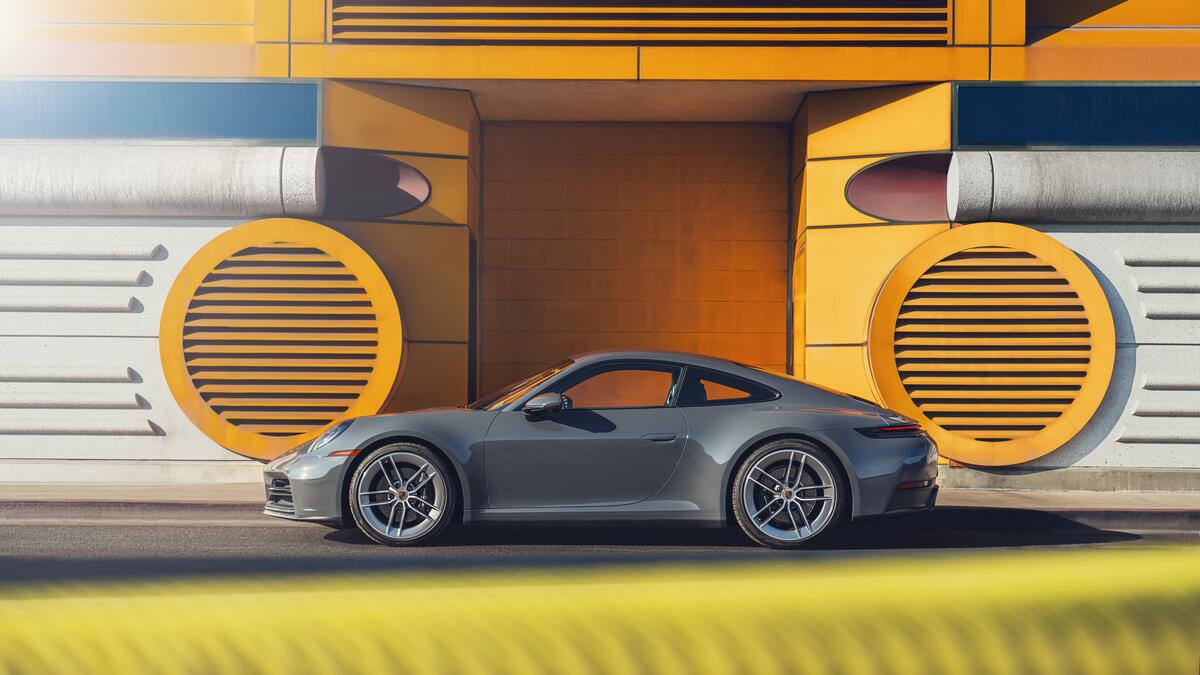
911
"My brother had a 911. My old much-missed mate, Merrick Cox, had an F-355."
The Porsche 911 is one of the most famous sports cars ever made. The point here is that the group included a 911 as one of the cars they drove to the track.
Porsche 911 is the iconic rear-engine sports car line from Porsche. In this segment, it’s mentioned as part of the group’s lineup heading to the Nürburgring, highlighting how different cars can all be “road-trip fun” when the destination is a great driving circuit.

Ferrari F355
"My brother had a 911. My old much-missed mate, Merrick Cox, had an F-355. Another motory journalist called Gavin Conway,"
The Ferrari F355 is a high-performance sports car made by Ferrari. It’s designed with the engine in the middle so it drives in a sporty, responsive way. The podcast mentions it because it was owned by someone the hosts knew and it left a strong impression.
The Ferrari F355 is a mid-engine sports car from Ferrari’s lineup, known for its performance and distinctive styling. It’s a significant model for enthusiasts because it’s often remembered as a high point of analog-era Ferrari driving. In the podcast context, it’s mentioned through personal ownership stories from automotive journalists, which is why it comes up as a memorable car.
on road or on track
"[2854.3s] united, everyone brought together through the simple love of driving, [2858.6s] be it on road or on track."
They’re comparing regular street driving with driving on a race track. Both are about driving, but the rules and environment are very different.
“On road” refers to normal public-road driving, while “on track” means driving on a closed circuit designed for performance and safety. The hosts are contrasting everyday driving with track driving as two different environments for the same hobby: driving.
freedom of being at the wheel
"[2862.7s] I was just going to say, I think there's something about the freedom [2865.1s] of being at the wheel and knowing that your destination is simply an extension [2869.5s] of the things that you do with your hands and feet."
They’re basically saying driving feels freeing because you’re in control. When you drive, your actions directly affect where you go and how you get there.
The hosts are describing the driving experience as something that feels personal and self-directed. It’s the idea that controlling the car—through steering, pedals, and route choices—creates a sense of freedom that other transport modes don’t.
Request an Explanation
Heard something you'd like explained? We'll add it to this episode.
Sign in to request explanations for terms you heard.
Want to learn more?
Browse our glossary for plain-English explanations of automotive terms, jargon, and concepts.
Help improve this episode
See something that's not quite right? Our annotations are AI-generated and can sometimes miss the mark. Click the flag icon on any annotation to suggest a correction.