
The Best Ferrari For Every Budget! Cars and Friends!
About this episode
Hosts set out to “pick the best Ferrari for every price point,” then work through how Ferrari values and tiers have shifted upward—plus what you can realistically buy around $50k and $100k. The conversation spotlights the Ferrari Mondial 3.2 Coupe for belt-service practicality, compares 308/328 vs 348 maintenance, and weighs 360/599/612 choices as budgets rise. Along the way, they debate collector value, manual desirability, and even non-Ferrari “Ferrari DNA” alternatives.

Chevrolet C8
"... book is the car you get. For Seattle, I picked a C8. I've never had the chance to experience one, and..."

Chrysler Pacifica
"I've never had the chance to experience one, and I wanted a car that was more than just the typical Chrysler Pacifica that I get on events."
The Chrysler Pacifica is a minivan. In this segment it’s just the “normal” car the host usually gets, contrasted with something more exciting.
The Chrysler Pacifica is a minivan, and it’s being used here as a baseline “typical” rental/event car. Mentioning it highlights the contrast between a family-oriented minivan and a performance-focused sports car like the Corvette.

Ferrari Mondial 3.2 Coupe
"For 50 grand, there are actually some Ferraris that you can buy. There are some good ones. The one I picked is really specific, though. I picked the Ferrari Mondial 3.2 Coupe. The Mondial is famously offering both coupe and convertibles."
The Ferrari Mondial 3.2 is an older Ferrari with a 3.2-liter V8 engine. It’s considered a “budget” Ferrari because it’s one of the more affordable ways to own a real Ferrari, and it was sold as both a coupe and a convertible.
The Ferrari Mondial 3.2 is a late-1980s/early-1990s Ferrari that uses a 3.2-liter V8. It’s a notable “budget Ferrari” pick because it came in both coupe and convertible forms, and it’s often more attainable than many other Ferrari models from the same era.
convertibles
"The Mondial is famously offering both coupe and convertibles. The convertible is the car... You wanted to have everything."
A convertible is a car where the roof can be opened up. That means you can drive with the top down, like an open-air sports car.
A convertible is a car with a roof that can be lowered or removed, turning it into an open-air vehicle. In this segment, the host is pointing out that the Ferrari Mondial was sold in both coupe and convertible body styles.
trunk
"You wanted a trunk in the front. You wanted to seat four people. You wanted it to be a convertible, a trunk in the back, and the engine, which is everything."
A trunk is the storage space in the car for luggage. Here, the host is talking about having storage both in the front and the back.
A trunk is the enclosed storage compartment at the rear of a car, but in this segment the host also mentions a “trunk in the front,” implying front luggage space. The point is packaging: where the car stores cargo relative to the engine.
Ferrari Mondial 3.2
"but the 3.2, I picked for a very specific reason. That is, the Mondial 8 and the 3.2, to do the belt service, which you have to do on these, the engine can stay in the car. Oh, no way. For the T, the engine has to be removed because it was rotated 90 degrees."
The Ferrari Mondial 3.2 is a V8 Ferrari model. The host likes it because some important belt maintenance can be done while the engine stays in the car, which makes the job less of a hassle.
The Ferrari Mondial 3.2 is a V8 Mondial variant where the host argues it’s the best choice if you want to do timing-belt service without removing the engine. The key point here is maintenance practicality: the engine can stay in the car for the belt work, unlike the T variant mentioned next.

Ferrari Mondial 8
"The side profile on the coupe, I think, is excellent, but the 3.2, I picked for a very specific reason. That is, the Mondial 8 and the 3.2, to do the belt service, which you have to do on these, the engine can stay in the car."
The Ferrari Mondial 8 is a Ferrari with a V8 engine placed in the middle of the car. Here, the host is talking about how it’s set up so some maintenance work can be done without pulling the engine out.
The Ferrari Mondial 8 is a mid-engine V8-era Ferrari that’s known for packaging a usable 2+2 layout with a convertible or coupe body style. In this segment, it’s brought up specifically in the context of maintenance access—how the engine can remain in the car for certain service work.
belt service
"That is, the Mondial 8 and the 3.2, to do the belt service, which you have to do on these, the engine can stay in the car."
“Belt service” means replacing or checking the belts that help control engine timing. It’s important because if the belt wears out or slips, the engine can run poorly or even be damaged.
“Belt service” refers to scheduled replacement/inspection of a timing belt (or related belts) to keep the engine’s valve timing correct. On some engines, doing this work is easier if the engine can remain in the car; on others, access requires removing the engine.

Ferrari Mondial T
"Oh, no way. For the T, the engine has to be removed because it was rotated 90 degrees. That's not very well known."
The Ferrari Mondial T is a different Mondial version. In this segment, the host explains that its engine layout makes certain belt maintenance require pulling the engine out, unlike some other Mondials.
The Ferrari Mondial T is discussed as a contrast to the Mondial 8 and 3.2 in terms of maintenance. The host says the engine has to be removed because it was rotated 90 degrees, which makes belt service more involved.
gated manual
"You get a gated manual, the V8 behind you, you get the wedge shape."
A gated manual is a stick shift where the shifter moves through specific slots (gates) for each gear. It helps you select the right gear more precisely and usually feels more “mechanical” than other manuals.
A gated manual transmission uses a shift lever that moves through a defined “gate” pattern, so the lever physically routes you into the correct gear positions. It’s different from a shifter that feels more free-form, and it’s often associated with classic sports-car feel.
wedge shape
"You get a gated manual, the V8 behind you, you get the wedge shape. It's cool."
A wedge shape means the car looks like it’s shaped like a low, pointed wedge—front lower, tapering back. It’s a common look for older performance cars because it helps with airflow.
The “wedge shape” refers to a low, pointed body form where the front is lower and the car tapers toward the rear. It’s a styling term that also often correlates with aerodynamic intent on performance cars.
mid-engine
"Only mid-engine? Well, it was in the 400. Well, the 400... Front engine. But the mid-engine cars, that is correct."
Mid-engine means the engine sits between the front and rear axles, behind you. Putting the weight in the middle usually helps the car feel more balanced and easier to handle.
A mid-engine layout places the engine behind the driver but ahead of the rear axle, helping balance weight distribution. That balance typically improves handling response compared with front- or rear-engine layouts.

Ferrari 308
"But as soon as they got to 348, which of course the T powertrain was then in, engines... Yeah, that's... Well, the 308, the 38 GT4, 308, the 328, this, you don't have to take the engine out."
The Ferrari 308 is a famous older Ferrari V8 sports car with the engine behind the driver. The key point here is that, unlike some later models, you may not need to pull the engine just to do a timing belt service.
The Ferrari 308 is a classic 1970s–1980s V8 sports car known for its mid-engine layout and driver-focused handling. In this segment, it’s mentioned as one of the earlier Ferraris where routine belt service can be done without removing the engine.

Ferrari 328
"Well, the 308, the 38 GT4, 308, the 328, this, you don't have to take the engine out. Interesting."
The Ferrari 328 is another classic mid-engine V8 Ferrari from the 1980s. In this discussion, it’s grouped with the 308 as a car where you don’t necessarily have to remove the engine for belt service.
The Ferrari 328 is a late-1970s/1980s mid-engine V8 Ferrari that followed the 308 line. Here it’s used as an example of an “earlier” Ferrari where timing-belt service can be performed without removing the engine.
T powertrain
"But as soon as they got to 348, which of course the T powertrain was then in, engines"
“T powertrain” is shorthand for a turbo setup—meaning the car uses forced induction (a turbo) to make more power. That kind of engine layout can change how maintenance is done.
“T powertrain” here refers to Ferrari’s “T” designation used on certain models to indicate a turbocharged powertrain. In other words, it’s a shorthand for the forced-induction setup that changes the engine layout and maintenance considerations.
Cab
"Mondial. It was a T, and it was a cab. That's right."
Here “cab” means the car is a convertible. That means the roof can open so you can drive with the top down.
In this context, “cab” is shorthand for a cabriolet (convertible) body style. A cabriolet has a power or manual roof that can open, changing the car’s structure and driving feel versus a fixed-roof coupe.
308 GT4
"Mine's pretty similar to Kennan's, and it's a 308 GT4. I really like the 308 GT4. It has been a sleeper for so long."
The Ferrari 308 GT4 is an older Ferrari with a V8 engine and a more livable layout than many supercars. The point here is that it can actually be driven on normal roads without constantly scraping the bottom.
The Ferrari 308 GT4 is a V8-powered grand tourer from Ferrari’s late-1960s/early-1970s era, known for being more practical than many classic exotics. In this segment, the hosts highlight it as a “usable” Ferrari with real-world street drivability, including enough ground clearance to avoid scraping constantly.
ground clearance
"It's a Ferrari that's really usable. It has actual ground clearance. You can drive it around the streets of San Francisco without bottoming out on everything."
Ground clearance is how much space there is between the bottom of the car and the road. More ground clearance means you’re less likely to scrape the bottom when roads are bumpy or when you hit speed bumps.
Ground clearance is the distance between the lowest part of the car and the road. Higher ground clearance helps prevent the car’s underbody from scraping on speed bumps, uneven pavement, and steep driveways—especially important for low-slung sports cars.
bottoming out
"You can drive it around the streets of San Francisco without bottoming out on everything. It's Bertone wedge shape."
Bottoming out is when the car squats so much that something on the bottom hits the road. It can feel terrible and can even cause damage, so it’s something low cars try to avoid.
Bottoming out happens when the car’s suspension compresses so far that the underbody or bump stops contact the road. It’s a common risk for low-clearance cars and can lead to damage and a harsh ride.
Bertone
"It's Bertone wedge shape. The only Bertone Ferrari. Yes."
Bertone is an Italian design company that helped shape the car’s body style. When people mention Bertone on a Ferrari, they usually mean it has a distinctive, less-common look.
Bertone (the Italian coachbuilder/car designer) is credited here for the Ferrari’s wedge-shaped body styling. In enthusiast circles, Bertone-bodied Ferraris are often treated as special because the design differs from more common Ferrari coachwork.
back seat
"And just it still has a little backseat, if I'm not mistaken. It does, yeah."
A backseat is the seat for passengers in the rear. They’re pointing out that this Ferrari isn’t just a two-seater—it has some rear seating too.
A backseat is the rear seating area, and in this context it’s being used to emphasize the Ferrari 308 GT4’s practicality. Many classic sports cars are strictly two-seaters, so the presence of a usable rear seat matters for everyday usability.
usable Ferrari
"So it fulfills that usable Ferrari. That seat was..."
A “usable Ferrari” is basically a Ferrari you can enjoy and drive, not just park and protect. The host is talking about making Ferrari ownership more practical.
“Usable Ferrari” is the idea of owning a Ferrari you can actually drive and live with, rather than treating it like a fragile collectible. The host frames it as a practical way to enter the Ferrari world without needing a pristine, show-condition car.
Ferrari universe
"At $50,000, you're really... You're kind of stretching into the Ferrari universe. And there's something cool about having one that's more worn, durable."
“Ferrari universe” just means the Ferrari price/ownership world. The host is saying $50,000 is getting close to where you can start looking at Ferraris, even if they’re not pristine.
“Ferrari universe” is a casual way to describe the price-and-ownership tier associated with Ferrari. Here it’s used to explain that $50,000 is pushing into the realm where you might find a Ferrari, but likely not a perfect one.

Alfa Romeo GTV
"I've played around with the idea of selling my 74 Alpha GTV and going into one of these. Because my GTV is pretty well restored at this point."
An Alfa Romeo GTV is a classic Italian sports car meant for comfortable driving. Here, the host mentions their 1974-era one as a comparison to what they’d switch to from a Ferrari.
The Alfa Romeo GTV is a classic Italian grand tourer, and the “74” points to a 1974-era example. In this segment, it’s used as the speaker’s current car reference point before considering a Ferrari for everyday use.
newly upholstered seats
"And I do cringe as my 50 pound cattle dog jumps on my newly upholstered seats. Something like this way."
New upholstery means the seats were re-covered or refreshed. The host is saying they’re worried about damaging the freshly redone seats when their dog jumps in.
New upholstery refers to replacing the seat coverings (often foam and fabric/leather) to restore comfort and appearance. The host mentions it to highlight the tension between keeping a car nice and actually using it with pets.

Ferrari 400i
"...e with me on it might remember my first car was a 400i. Which is a similar era."
The Ferrari 400i is an older Ferrari grand tourer, meaning it was made for comfortable driving over longer distances. It’s from the early 1980s and is known as a different kind of Ferrari than the most track-focused ones. The speaker brings it up because it was their first car.
The Ferrari 400i is a grand touring Ferrari from the early 1980s, known for being a more practical, long-distance-focused model compared with some of the brand’s more extreme sports cars. It’s significant because it’s part of Ferrari’s lineup during a period when the company offered different styles of performance. The podcast mentions it as the speaker’s first car and notes it’s from a similar era to another car being discussed.
engine swapped
"And it was very much a beta. It was engine swapped. So I have a affinity towards this era of Ferrari."
An engine swap is when someone takes out the original engine and puts in a different one. It can make the car feel different to drive, and it may affect how “original” the car is.
An engine swap means replacing the original engine with a different one. In a classic car context, it can change how the car drives and how original (and sometimes valuable) it is.
gauge cluster
"There's one that comes to our cars in coffee and I freak out. Will you pull up the gauge cluster? Yep. I was just going to talk about the gauge cluster."
A gauge cluster is the set of dials and indicators you see in front of you while driving—like speed and engine revs. The hosts are talking about how this one looks and how the controls are built into it.
The gauge cluster is the driver-facing panel behind the steering wheel that groups key instruments like speed, RPM, and fuel/temperature. In this segment, the hosts are focusing on the physical design details of that cluster, not just the information it displays.
aluminum surround
"For those that are listening, it has an aluminum surround. And Ryan, if you go a little bit wider to the wider angle of it, it has this curvature"
An aluminum surround is the metal trim piece that frames the gauges. It’s basically part of the dashboard design that makes the instrument area look more high-end.
An aluminum surround is a metal trim frame around the gauge cluster. Using aluminum (instead of plastic or painted trim) is often associated with a more premium, motorsport-inspired look and feel.
toggle switches
"it has this curvature where the controls are actually integrated into the surround of the gauges. And they're all toggle switches and levers."
Toggle switches are the kind of switches you flip between two positions. The hosts are saying the controls around the gauges are done with these simple, physical switches.
Toggle switches are small on/off or mode-selection switches that move between positions. In an automotive context, they’re often used for functions like lighting, driving modes, or auxiliary controls, especially in cars with a more analog, driver-focused layout.
levers
"And they're all toggle switches and levers. So cool."
Levers are physical handles you move to control something. Here, the hosts are describing a tactile, analog-style control setup around the gauges.
Levers are physical control arms that move through positions to operate a function. When used around a gauge cluster, they typically indicate analog-style, tactile controls rather than touchscreens or fully digital interfaces.
dino
"And it says Dino. There's just so many cool little Easter eggs around this car."
“Dino” is a Ferrari name used for certain V6 engines and the cars that used them. When you see it on a Ferrari, it usually points to a specific Dino-era model and engine family.
“Dino” is Ferrari’s name for a line of smaller-displacement V6 engines and the cars built around them. It’s strongly associated with mid-60s Ferraris like the 246 Dino and later Dino-badged models.
carbureted V8
"The reasons I would choose over Mondial, carbureted V8, which does give you more visceral sound and feeling."
A “carbureted V8” is an engine that uses a carburetor to deliver fuel into the air. Older carbureted engines can feel more raw and mechanical, and they often sound different than newer fuel-injected engines.
A carbureted V8 uses a carburetor to mix fuel and air before it enters the engine. Compared with later fuel-injection setups, carburetion often gives a more immediate, mechanical throttle response and a distinct sound/feel—something the hosts associate with the Mondial choice.

Lancia Stratos
"There's a lot of Stratos in this car. Yes, there is. That reminds me a lot of that. And the Stratos shared its engine with the 246 Dino."
The Lancia Stratos is a famous rally car from the 1970s. The big connection here is that it used a Ferrari-derived V6, so the hosts are saying this Ferrari has similar DNA to the Stratos.
The Lancia Stratos is a legendary rally car known for its distinctive design and for being powered by a Ferrari-derived V6. In this segment, the hosts say the Ferrari they’re discussing has “a lot of Stratos in this car,” and they connect that to shared engine and parts from the 246 Dino era.

Ferrari 246 Dino
"And the Stratos shared its engine with the 246 Dino. Yeah."
The Ferrari 246 Dino is an older Ferrari from the 1960s that’s known for using a Dino V6. The hosts are saying it shares parts/engineering with other famous cars from the same era.
The Ferrari 246 Dino is a mid-1960s V6-powered Ferrari, and it’s notable for sharing engineering roots with other Dino-era cars. In this segment, the hosts connect it to the Stratos’ engine-sharing history and parts commonality.
Ferrari 308 Dino
"Not the 308 Dino, but still of the era, a lot of the same parts."
The Ferrari 308 Dino is another Dino-era Ferrari model that came after the earlier 246. The point in this segment is that the Stratos link isn’t to the 308 Dino specifically.
The Ferrari 308 Dino is a later Dino-badged Ferrari that also uses a V8, and it’s part of the broader Dino family. Here, the speaker clarifies that the Stratos connection is not specifically to the 308 Dino, but to the earlier Dino-era engineering.

Rolls-Royce Phantom
"...ches. It makes me feel like I'm in an old like F4 Phantom or something that has like a lot of analog stuff ..."
The Rolls-Royce Phantom is a luxury car, usually a large sedan. It’s designed to be very comfortable and quiet, with lots of premium details inside. The speaker mentions it because it makes them feel like they’re in an older, analog-style experience.
The Rolls-Royce Phantom is a flagship luxury sedan known for its comfort, quiet ride, and high-end interior. It’s often discussed because it’s built to feel extremely refined and “effortless” compared with typical cars. The podcast mentions it in a way that connects the car’s analog feel and atmosphere to the speaker’s memory or impression.

Ford Mustang
"Yeah. The, the Mustang blue cologne was vile. All right."
The Ford Mustang is a popular American sports car. People talk about it a lot because it has a strong, performance-focused reputation and a lot of different versions. Here, it’s mentioned because of the “Mustang” name being used in something else.
The Ford Mustang is a long-running American muscle car known for its styling and performance options. It’s frequently referenced in pop culture and car conversations because it’s widely recognized and has many different versions over the years. In this episode, it’s mentioned in a humorous context tied to “Mustang” as a name.

Alfa Romeo Julia
"I'm going to pick Ferrari derived. So we have the Alfa Romeo, Julia, Quadrofolklio. For 50,000, you can get the best one."
carbon sharing brakes
"You can get the one with the carbon sharing brakes. You can get a great color."
This is talking about carbon-ceramic brakes. They’re made from a special ceramic material that can handle high heat better than normal brake rotors, so they’re less likely to lose stopping power during repeated hard stops.
“Carbon sharing brakes” is a shorthand for carbon-ceramic brake components, which use carbon-fiber ceramic material. They’re known for strong heat resistance and fade resistance compared with traditional iron rotors, especially under repeated hard braking.
Ferrari DNA
"It's the VA with two cylinders chopped off and blah, which they're not wrong, but it is not a Ferrari, but it has Ferrari DNA somewhere in it."
“Ferrari DNA” is a way people talk about a car feeling like it has Ferrari influence. In this segment, the host is saying that influence doesn’t make the car a real Ferrari.
“Ferrari DNA” is a fan-style phrase meaning the car has design or engineering influence associated with Ferrari—such as development input, shared heritage, or performance-focused philosophy. The host uses it to separate “influence” from “ownership of the Ferrari brand,” emphasizing that the car is still not a Ferrari.
FCA product
"This is an FCA product underneath. This is, it's not, it's not a Ferrari."
“FCA” is the name of a big car company group that owned several brands. Saying it’s an “FCA product” is basically saying it comes from that corporate family, not that it’s automatically a Ferrari.
“FCA” refers to Fiat Chrysler Automobiles, the corporate group that historically owned multiple European performance brands. Calling it an “FCA product” is a way of saying the car comes from that group’s engineering and manufacturing ecosystem, not that it’s a Ferrari-branded car.
V8
"The mid engine two seater V eightness really comes out in this V six powered front engine four door sedan."
A V8 is an engine with eight cylinders arranged in a V shape. More cylinders generally means more power potential, and it often sounds and feels great in performance cars.
A V8 is an engine with eight cylinders arranged in a “V” shape. The V8’s firing order and compact packaging are part of why many performance cars feel smooth yet powerful.
V6
"...in this V six powered front engine four door sedan."
A V6 is an engine with six cylinders in a V shape. They’re saying this four-door uses a V6 instead of the V8 feel they associate with the 458.
A V6 is an engine with six cylinders arranged in a V configuration. In this segment, the hosts contrast it with the V8 character of the 458, noting the sedan uses a V6.
front engine
"...this V six powered front engine four door sedan."
“Front engine” means the engine is up front. That layout changes how the car’s weight is balanced, which can change how it drives.
A front-engine layout places the engine at the front of the car. Compared with mid-engine designs, it changes weight distribution and packaging, which can affect handling feel.
moonshot
"...the Julia was a moonshot for Alpha as a brand trying to launch it globally."
A “moonshot” is a very ambitious plan with a lot of risk. They’re saying the project was a big, bold attempt to break into the global market.
A “moonshot” is a high-risk, ambitious project aimed at achieving something unusually difficult. Here, the hosts describe the “Julia” as a bold attempt by Alpha (as a brand) to launch globally.
Enzo
"And Ken and if you don't, don't forget that Enzo started his racing career with Alfa Romeo. So you can't have one."
Enzo Ferrari was the founder of Ferrari. The point here is that before Ferrari existed, he was involved in racing with Alfa Romeo.
Enzo Ferrari is the founder of Ferrari and a major figure in motorsport history. The hosts mention his early racing career starting with Alfa Romeo, which is a common enthusiast detail because it predates Ferrari as a brand.
carbon ceramic brakes
"With a car that isn't a Ferrari. That has airbags, that has air conditioning, that has carbon ceramic brakes that I can drive to Trader Joe's."
These are high-end brake rotors made from a special ceramic material instead of regular metal. They usually work better when you’re driving hard because they don’t overheat as easily, but they cost a lot more if you need new ones.
Carbon-ceramic brakes use a ceramic composite (often carbon fiber reinforced) instead of traditional cast iron rotors. They can resist fade better under hard driving and typically weigh less, but they’re expensive to replace and can be sensitive to damage from improper use.
prancing horse
"If you ever put a prancing horse on this. A prancing horse. If you ever put a Ferrari logo on this car, we would kill you."
The prancing horse is the Ferrari logo. The hosts are joking that if you put that logo on a non-Ferrari, it’s basically pretending the car is something it isn’t.
The “prancing horse” is the Ferrari shield’s signature emblem, associated with the brand’s identity and racing heritage. The hosts use it to make a point about brand authenticity—how putting a Ferrari logo on a non-Ferrari car is considered inappropriate.
rainbow underglow
"When you put rainbow underglow on anything, you lose me. That's it."
Underglow is the colored light that shines from under a car. “Rainbow underglow” means it changes colors or uses multiple colors, and the host says they don’t like it.
“Underglow” refers to lighting installed underneath a car to make the ground glow. The host specifically calls out “rainbow underglow,” which is a colorful, multi-color style that’s often associated with aftermarket customization.
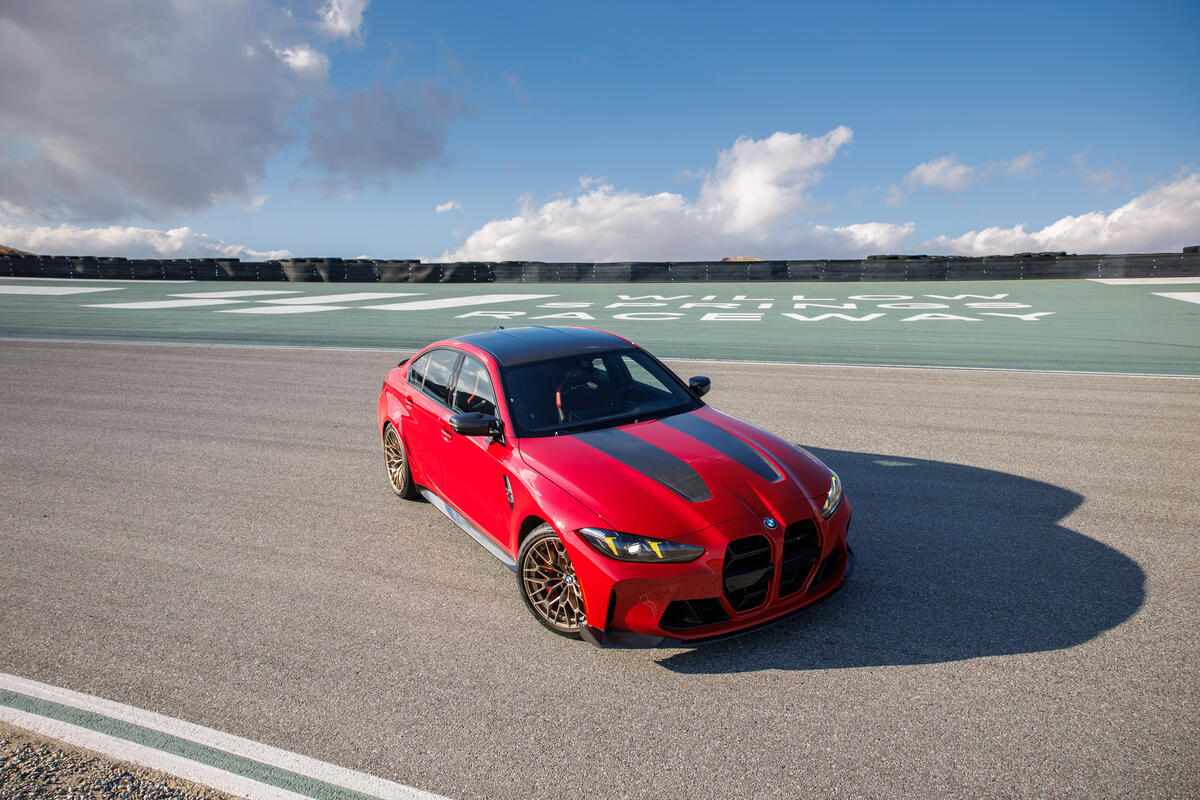
BMW M3
"Yeah, you can still get a fun, cool, interesting Ferrari or an Alfa Romeo, evidently. 870.9s Might as well get a M3 while you're at it. All right."
The BMW M3 is a high-performance BMW made by BMW’s M division. In this segment, it’s mentioned as another fun car you could buy instead of spending more on a Ferrari.
The BMW M3 is BMW’s performance-focused “M” model line, famous for being a capable, track-capable sports sedan/coupe depending on generation. The host name-drops it as an alternative purchase at a certain budget level, grouping it with other enthusiast cars like Ferraris and Alfa Romeos.

Ferrari 612 Scaglietti
"And I feel the Ferrari 612 Scaliatti is one of those cars. And there are a couple of reasons why. One, obviously 12 cylinders."
The Ferrari 612 Scaglietti is a Ferrari with a big V12 engine, which is a big deal because V12s are rare and expensive. It’s also a 2+2, so it has two seats in the back for occasional rides, not just a two-seat sports car.
The Ferrari 612 Scaglietti is a front-engine, V12 grand tourer from Ferrari, built around a 12-cylinder engine character that many enthusiasts consider the brand’s “core” sound and feel. In this segment, the host highlights its V12 layout and also notes it’s a 2+2, meaning it has rear seats for occasional passengers.
12-cylinder
"One, obviously 12 cylinders. To own a 12 cylinder, to own a Ferrari is a dream for most of us."
“12 cylinders” means the engine has twelve separate power units inside it. Engines with more cylinders often run smoother and sound more special, which is part of why people get excited about V12 Ferraris.
“12 cylinders” refers to an engine with twelve combustion chambers, typically arranged as a V12 or flat-12. More cylinders generally allow smoother operation and a distinctive sound, which is why a V12 is often treated as a luxury-performance hallmark.
2 plus 2
"Now granted, the 612 is 2 plus 2. Not everybody likes the way it looks."
“2+2” means the car has seats for four people, but the back seats are usually tighter and meant for shorter trips. It’s a way to have some rear seating in a sports/grand touring car.
A “2+2” is a car seating layout with two front seats and two smaller rear seats. It’s a common grand-touring compromise: you get occasional rear-seat usability without turning the car into a full four-seat sedan.
modular
"I happen to think in darker colors, it's a very elegant looking car with the correct wheels on it, which the modular is not bad."
“Modular” here sounds like the host is comparing the 612’s look to another Ferrari’s design. The exact meaning isn’t clear from this snippet alone, so it may refer to a particular styling or configuration.
In this context, “modular” appears to be a styling/trim comparison rather than a specific mechanical system. Without more transcript, it’s unclear which exact Ferrari variant or design feature the host is contrasting against the 612’s look.
V12
"But I think, you know, you can still get these cars for sub 100 grand, around 100 grand. And you get the V12 experience, carry all capability, four people, like a genuine American size adults that you can put in the car."
A V12 is an engine with 12 cylinders. The “V” shape helps it run smoothly, and in many Ferraris it’s a big reason the car feels special and sounds great.
A V12 is an engine with 12 cylinders arranged in a “V” shape (two banks of six). In Ferraris, a V12 is a big part of the brand’s classic character—smooth, high-revving, and typically very strong at higher speeds.
700 mile car
"And you can put bags in the trunk. And this is legitimate 200 mile car. Yeah."
When someone says “200 mile car,” they mean it can get to about 200 mph. It’s a quick way to say the car is genuinely fast at high speeds.
“200 mile car” is shorthand for a car that can reach around 200 mph (or roughly that speed). It’s used to emphasize top-end capability—these Ferraris are not just quick, they’re built for high-speed cruising and overtaking.
manual convert
"And on top of all of this, you can manual convert them. The factory manual cars do exist. They're a quarter of a million dollars or more."
“Manual convert” means changing the car so it uses a manual transmission instead of an automatic. The host is saying you can do it, but factory manual cars are rarer and usually cost more.
“Manual convert” here means converting an automatic (or non-manual) Ferrari into a factory-style manual setup. The speaker contrasts this with cars that were built as manuals from the factory, implying the conversion is possible but not the same as original equipment.
factory manual cars
"And you can manual convert them. The factory manual cars do exist. They're a quarter of a million dollars or more."
“Factory manual cars” are cars that were built with a manual transmission from the factory. Since fewer were made that way, they tend to cost more.
“Factory manual cars” are Ferraris that left the factory with a manual transmission rather than being converted later. Because they’re rarer, they often command a much higher price than similar cars with automatic transmissions.
gentleman's Ferrari
"But for this kind of money, if you can put the manual, go click, clack in a V12 understated Ferrari, a gentleman's Ferrari. I think that is part of, because Ferrari doesn't just make the mid-engine sports cars."
A “gentleman’s Ferrari” is a fancy way of saying a Ferrari that’s more comfortable and grown-up than a hardcore sports car. It’s meant to be usable for everyday driving while still being very quick.
A “gentleman’s Ferrari” is a nickname for a more refined, grand-touring style Ferrari—comfortable, practical enough for real life, and still fast. The host is framing it as the opposite of Ferrari’s more common image as purely mid-engine, track-focused sports cars.
Ferrari 612
"And I think the 612 in this price category is incredibly appealing. I've never been a hater of the way the 612 looks. A lot of people are. ...It just looks like a timeless coupe."
The Ferrari 612 is a Ferrari grand tourer—basically a comfortable, stylish Ferrari meant for longer drives. Here, the hosts are talking about whether its design still looks good today.
The Ferrari 612 is a grand touring (GT) model from Ferrari known for its elegant, long-hood “timeless coupe” look and for being a more usable, four-seat style Ferrari than the brand’s more track-focused cars. In this segment, the hosts debate whether the 612’s design has aged well compared with newer Ferraris.

Ferrari 599
"I would agree with you, except that the 599 looks so much better. See, I actually don't agree. I think the 599 looks cool, but the quad lamps on the rear, just the longer design. ...It's like they're hanging on to the essence of design of the 550 and the 575."
The Ferrari 599 is another Ferrari grand touring car—more modern than the 612. In this discussion, the hosts are comparing how the 599 looks and how its mechanical design relates to older Ferrari models.
The Ferrari 599 is a later-generation Ferrari grand tourer that the hosts compare directly against the 612. They also connect it to Ferrari’s design evolution, saying it keeps “essence” from earlier cars while modernizing, and they mention that it has a 575 drivetrain underneath.

Ferrari 550
"It's like they're hanging on to the essence of design of the 550 and the 575. They didn't let go, but they try to modernize it. But that's exactly what happened, because this is a 575 drivetrain underneath."
The Ferrari 550 is an older Ferrari that the hosts use as a style reference point. They’re saying newer Ferraris like the 599 still feel connected to that earlier design identity.
The Ferrari 550 is referenced as a design “essence” source that Ferrari later models supposedly kept while updating. In this segment, it’s used as a benchmark for classic Ferrari styling that the 599 is said to echo.

Ferrari 575
"They didn't let go, but they try to modernize it. But that's exactly what happened, because this is a 575 drivetrain underneath. So you hit on exactly what they were doing, because it has 599 touches to the interior."
The Ferrari 575 is an older Ferrari that the hosts say the 599 is built on mechanically. They’re basically pointing out that the newer car keeps older Ferrari hardware under a more modern look.
The Ferrari 575 is mentioned as the mechanical basis behind the 599, with the host saying the 599 has a “575 drivetrain underneath.” That implies shared core powertrain architecture, even while the 599’s body and interior are updated.
drivetrain
"They didn't let go, but they try to modernize it. But that's exactly what happened, because this is a 575 drivetrain underneath. So you hit on exactly what they were doing, because it has 599 touches to the interior."
Your drivetrain is everything that transfers engine power to the wheels. In this case, the host is saying the 599’s main mechanical layout is based on the 575.
A drivetrain is the set of components that deliver power from the engine to the wheels, typically including the transmission and final drive. Here, the host uses it to say the 599 uses the 575’s underlying powertrain hardware.
Ferrari 575 GTZ
"Yeah. 575 GTZ. Yeah. Look at that thing."
The Ferrari 575 GTZ is a Ferrari that was restyled by Zagato. It’s basically a special-looking version of a 575, and the hosts here are saying they don’t like how it looks.
The Ferrari 575 GTZ is a Zagato-bodied Ferrari based on the 575M platform, known for its distinctive, coachbuilt design. The hosts are critiquing its styling, using it as an example of a Zagato-modified Ferrari that they think looks awkward.
re-bodied
"And so what we're looking at is a 599, almost re-bodied to look like a 612."
“Re-bodied” means the car’s outer body has been changed—like swapping panels or reshaping the shell. Here, they’re saying the 599 has been modified so it looks like a different Ferrari.
“Re-bodied” means the car’s original body panels have been replaced or reshaped—often as part of a coachbuilt or aftermarket conversion. In this segment, it’s used to describe a Ferrari 599 that has been modified to visually resemble a Ferrari 612.

Ferrari 375 MM
"Actually, it reminds me of a 375 MM, but... But yeah, 100 grand, 612."
The Ferrari 375 MM is an old, famous Ferrari race car from the 1950s. In this conversation it’s used as a reference point, like “this looks like that,” before they talk about newer Ferraris for around $100k.
The Ferrari 375 MM is a legendary mid-1950s Ferrari race car (the “MM” refers to Mille Miglia) that’s famous for its racing heritage and collectible status. Here it’s mentioned as a visual or design comparison—“it reminds me of a 375 MM”—before the discussion returns to modern budget Ferraris.

Ferrari 360
"It's the 360. I have to pick this for the 100K. When I bought mine, I did not pay 100. ... Pull up a 360. The 360 Modena is one of, in my opinion, the most timeless of the early 2000s Ferraris."
The Ferrari 360 is a classic early-2000s Ferrari with a V8 and a layout that puts the engine behind the driver for sharper handling. Here they’re saying it’s the best Ferrari you can buy around $100k, especially the 360 Modena.
The Ferrari 360 is a mid-engine V8 Ferrari that became a modern entry point for enthusiasts in the early 2000s. In this segment, the host frames the 360 as the best choice for a roughly $100k budget, and then specifically calls out the 360 Modena as especially “timeless.”
400 horsepower
"People are realizing that this size of a car with this level of power, it's a 400 horsepower V8 and an all-aluminum chassis, it's really good to drive."
This is the engine’s basic spec: it’s a V8 (eight cylinders in a V shape) making around 400 horsepower. More horsepower generally means stronger acceleration and a more exciting drive.
A “400 horsepower V8” describes an engine that’s rated at about 400 hp and uses eight cylinders arranged in a V shape. In a Ferrari context, this kind of power and engine layout is part of what gives the car its punchy acceleration and high-rev behavior.
aluminum chassis
"People are realizing that this size of a car with this level of power, it's a 400 horsepower V8 and an all-aluminum chassis, it's really good to drive."
This means the main body structure is built mostly from aluminum. Aluminum is lighter than steel, which can help the car feel quicker and more responsive.
An all-aluminum chassis means the car’s main structure is made largely from aluminum instead of steel. Aluminum can reduce weight and change how the car feels and responds, especially in a performance car like a Ferrari.
revs to 8,500, 9,000 RPM
"The revs to 8,500, 9,000 RPM, just absolutely free."
RPM is how fast the engine is turning. If it can rev up near 9,000 RPM, it usually means the engine is designed to spin fast and feel exciting as you drive.
“RPM” (revolutions per minute) is how fast the engine spins. Saying the Ferrari 360 can rev to around 8,500–9,000 RPM highlights its high-revving nature, which is a big part of the car’s character.
dry sump
"It does take 45. The dry sump takes forever to warm up."
A dry sump is a special way of storing and circulating engine oil. It can help the engine keep good oil pressure when you’re driving hard, and in this case the host says it takes a long time to warm up.
A dry sump is an oiling system where oil is stored in a separate tank rather than only in the engine’s oil pan. This helps with oil control during hard driving and can support high-rev operation, but it can also mean the oil takes longer to reach operating temperature.
quarts of oil
"How many quarts of oil? It's like 11 quarts of oil."
Quarts of oil is just how much oil the engine system holds. More oil can take longer to heat up, which is why the warm-up time comes up in this conversation.
“Quarts of oil” refers to the volume of engine oil the system holds. Mentioning the oil quantity matters here because the host is talking about a dry-sump setup, which can have a larger total oil capacity and therefore takes longer to warm.

Dodge Challenger
"There's a lot of appreciation, especially for the Challenger dolly, which is starting to rise these."
The Dodge Challenger is a well-known American muscle car. Here it’s mentioned because its value is going up, like other enthusiast cars.
The Dodge Challenger is a classic American muscle car, and in this segment it’s referenced as “the Challenger dolly” in the context of rising prices and value appreciation. The takeaway is that certain Challenger variants are also seeing strong market demand.
appreciation
"There's a lot of appreciation, especially for the Challenger dolly, which is starting to rise these."
“Appreciation” means the car is becoming worth more money over time. The host is saying some of these cars are gaining value.
Appreciation here means the car’s market value increasing over time. The host ties it to specific models, implying that demand and scarcity are pushing prices upward.
factory-gated cars
"The factory-gated cars are in another stratosphere now also. It's rising the tide of the 360."
“Factory-gated cars” are cars where the manufacturer tightly controls who can buy them. Because access is limited, they often end up more expensive.
“Factory-gated cars” refers to limited-production vehicles that are controlled through the manufacturer’s allocation or approval process rather than being broadly available to the public. The host uses it to suggest these cars command higher demand and pricing.

Porsche 911 GT3 (991)
"The prices are starting to rise into a place where I could trade into what I really want, which is a 991 GT3. But I want to own both of those."
The Porsche 911 GT3 (991) is a performance-focused version of the 911. The host is saying it’s the kind of car they’d want to move into, because it delivers a very special driving feel.
The Porsche 911 GT3 (991) is a track-focused 911 variant built around high-performance naturally aspirated engineering and driver-focused dynamics. Here, it’s positioned as the “really want” replacement target, implying it offers a different kind of driving experience than the Ferrari 360.
fully aluminum body
"But interestingly, the first fully aluminum body Ferrari at the modern era, and 612 was the second. Oh, really?"
A fully aluminum body means the car’s body structure is made primarily from aluminum rather than steel. This can reduce mass and alter stiffness and vibration characteristics, which can affect ride quality and handling response.

Subaru 360
"They're both built in the same way. But I mean, 360s are great. I mean, you probably feel this way too..."
The Subaru 360 is a very small car made by Subaru. It was designed to be compact and efficient, and it’s known for representing an older style of small cars. The speaker brings it up as a good example of that kind of design.
The Subaru 360 is a small, early kei-class car from Subaru’s history, known for being compact and lightweight. It’s often discussed by collectors and enthusiasts because it represents a specific era of Japanese small-car design. In the podcast, it’s mentioned as “great,” with the speaker comparing it to something else built in a similar way.
Schumacher era
"But I mean, 360s are great. I mean, you probably feel this way too. Schumacher era."
“Schumacher era” means the time when Michael Schumacher was dominating racing. The host is using it as a nostalgia reference for that period.
“Schumacher era” refers to the time period associated with Michael Schumacher’s peak Formula 1 success. In car-enthusiast talk, it often signals a nostalgic connection to that motorsport generation and its influence on public interest and collector demand.
Ferrari 360 Spider
"The 360 special for me, because the first model kit I ever built was a 360 Spider. And painting it, putting it together, I will never, I could close my eyes and draw every angle and shade of the headlight..."
The Ferrari 360 Spider is a Ferrari from the early 2000s with a V8 engine and a convertible roof. It’s a supercar that a lot of people remember as the first “real” Ferrari they got excited about.
The Ferrari 360 Spider is a late-1990s/early-2000s Ferrari with a V8 and a removable roof (a convertible “Spider” style). It’s a key “modern supercar” reference point because it’s the kind of mainstream, design-forward Ferrari that many enthusiasts first fixate on.
purist
"355 was also... Yeah. Purist is the word you're looking for. Purist."
A “purist” is someone who thinks there’s a “correct” way to do something and prefers the original or most traditional version. In car discussions, it usually means they like the older/classic feel more than newer updates.
A “purist” is an enthusiast who prefers a car (or a style of car) that stays close to what they consider the “real” or “authentic” version of that concept. In Ferrari talk, it often means favoring the earlier, more traditional design/character over newer changes.

Porsche 987 Cayman
"I went from a 987 Cayman, which is a really good starter sports car. It teaches you how to deal with a low car, how to deal with something that has a different"
The Porsche 987 Cayman is a mid-engine sports car, meaning the engine is behind you rather than in front. The host is saying it taught them how to drive a low, mid-engine car, and that experience helped when moving to the Ferrari 360.
The Porsche 987 Cayman is a mid-engine Porsche (engine behind the driver) that’s commonly used as a stepping stone to more exotic cars. Here, the host says going from a 987 Cayman helped them learn how to handle a low car and a different driving feel than front-engine/front-drive cars—skills they then say translated well into the Ferrari 360.
front drive car
"It teaches you how to deal with a low car, how to deal with something that has a different driving dynamic than a front engine made or front drive car in a good way."
“Front drive” usually means front-wheel drive, where the front wheels do the work of moving the car. The host is saying that switching from that to a mid-engine car changes how the car feels to drive.
“Front drive” here refers to front-wheel drive (FWD), where power is sent to the front wheels. The host is using it as a contrast point for how a mid-engine car’s handling and traction characteristics can feel different.
clapped one
"I can pick up I-75. Yeah, a clapped one, yes. Maybe I could find, you can't get a 599 for $100,000 anymore."
“Clapped one” just means a car that’s beat up—like it’s not in good shape or hasn’t been cared for. They’re implying it would be a risky buy.
“Clapped one” is slang for a car that’s been poorly maintained or is in rough condition. In this context, it’s describing a used Ferrari being considered as a cheaper option.

Ferrari 456 stick
"Maybe I could find, you can't get a 599 for $100,000 anymore. You might be able to get a 456 stick for that. What do we think about 348s though?"
The Ferrari 456 is a V12 Ferrari meant for long-distance driving. “Stick” means it has a manual gearbox, and they’re saying that specific version could be cheaper than other Ferraris at the same time.
The Ferrari 456 is a V12 grand tourer, and “stick” here refers to a manual-transmission version rather than an automatic. The hosts are suggesting that a manual 456 might be attainable around $100,000, depending on the market.

Ferrari 348
"What do we think about 348s though? Pull up 348s. So 348s now unbelievably are now in and around 80 to 100 grand for a good one."
The Ferrari 348 is an older Ferrari V8. In this segment, they’re basically saying it’s one of the more realistic Ferraris to buy for around $100,000 if you find a good one.
The Ferrari 348 is an older Ferrari V8 sports car, and it’s being discussed as a “budget” entry point relative to newer models. The hosts specifically talk about current market pricing—saying good examples are roughly in the $80,000–$100,000 range.
Ferrari A38 Ferrari
"I love them. I probably, it's some of the best steering I've felt in a 38 Ferrari. Yeah."
valve guide problems
"They do have issues, valve guide problems, not particularly fast."
Valve guide problems mean the parts that help the engine valves move smoothly can wear out. When that happens, the engine may start using more oil or run less cleanly.
“Valve guide problems” refers to wear or issues in the valve guides—small components that help keep the engine’s intake and exhaust valves aligned as they move. When valve guides wear, it can lead to poor sealing and increased oil consumption or other drivability issues.
transaxle
"And my favorite detail of the 348 is the transaxle just like hanging at the back."
A transaxle is the car’s transmission plus the final-drive parts, built as one unit. On this Ferrari, it’s positioned in a way that you can see it from the back, which contributes to the car’s overall layout.
A transaxle is a combined gearbox and final-drive unit mounted together, often used in mid-engine cars to help balance weight and improve packaging. Here, the host calls out the transaxle’s visible placement “hanging at the back,” which is a distinctive layout feature of the 348.
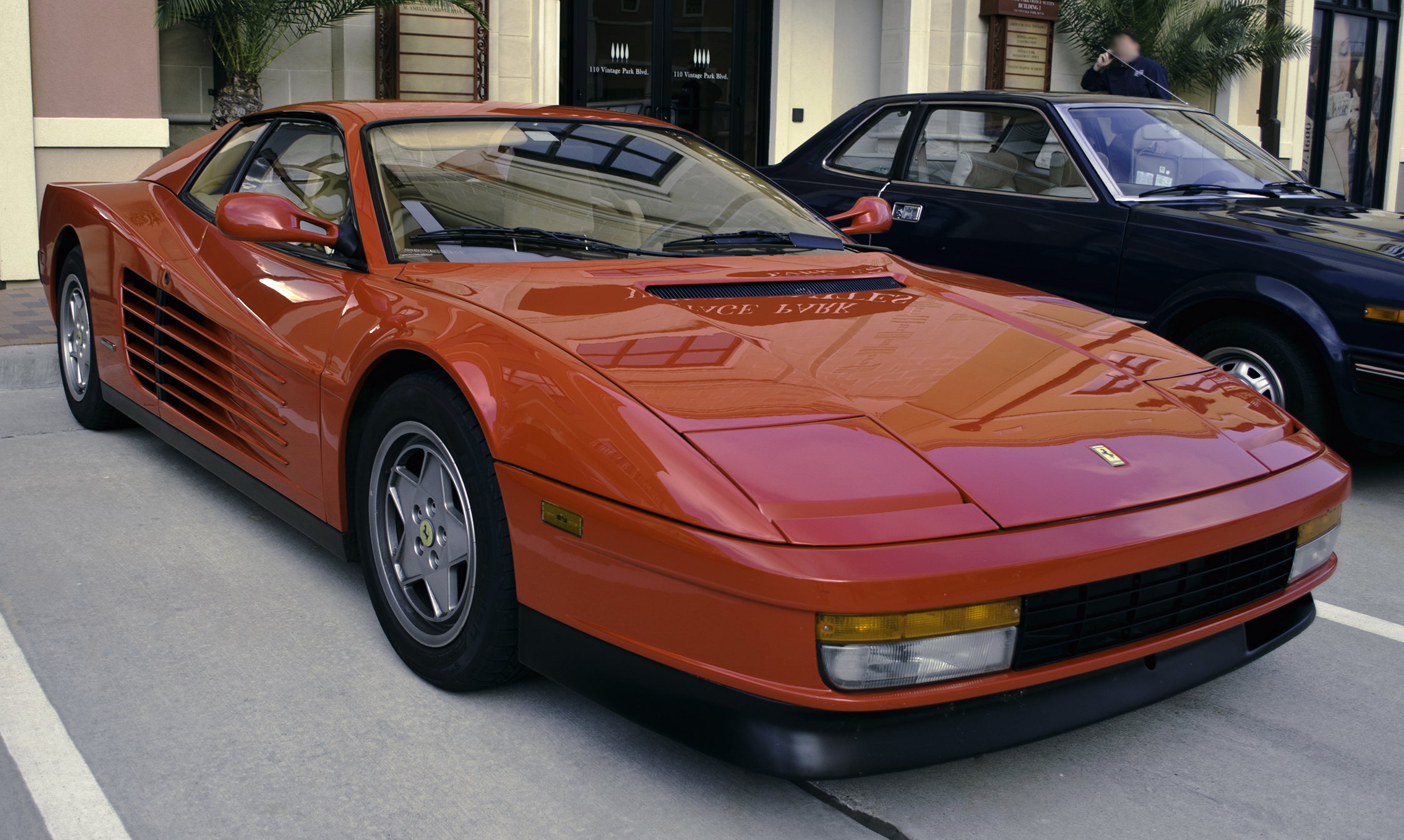
Ferrari Testarossa
"That to me is the 348 because I see a lot of Testerosa here. Of course."
The Ferrari Testarossa is a very recognizable older Ferrari from the 1980s. Here, it’s mentioned because the speaker thinks the Ferrari 348 shares some of that classic look.
The Ferrari Testarossa is a famous 1980s Ferrari that’s strongly associated with its distinctive styling and “icon” status. In this segment, the hosts say the Ferrari 348 looks like it has some of the Testarossa’s design DNA, which helps explain why people find the 348 visually appealing even though the 355 is the more modern step.

Ferrari 355
"And I see the 355, which is the better car, better looking car in every way. The biggest problem with the 348 is that the 355 exists. ...Nowadays, 355 spider is becoming a $150,000 car."
The Ferrari 355 is a later Ferrari V8 supercar that many enthusiasts consider more attractive and more desirable than earlier models. In this discussion, it’s also described as getting more expensive, making it harder to buy on a smaller budget.
The Ferrari 355 is a mid-1990s V8 supercar that’s often viewed as a step up from earlier 1980s/early-1990s Ferraris in both design and overall desirability. Here, the hosts argue it’s the “better car” and that its value has risen enough that it’s increasingly priced above the 348.
delta
"But the problem that I think, but the thing now I've always argued is that once the delta becomes large enough between the two, then it makes a lot of sense."
“Delta” just means “the difference.” Here, they’re talking about how big the gap is between the Ferrari 348 and the Ferrari 355, and when that gap becomes big enough to justify choosing the cheaper one.
In this context, “delta” means the difference between two values—here, the gap between the Ferrari 348 and the Ferrari 355 (likely in desirability and/or market price). The speaker’s point is that once the gap becomes large enough, the cheaper option starts to make more sense for buyers.
reserve
"where we can't bid on cars that have a reserve. So it has to be no reserve."
A reserve is the lowest price the seller will accept at an auction. If the bidding doesn’t hit that number, the seller usually doesn’t have to sell the car.
In auction terms, a reserve is the minimum price the seller is willing to accept. If bids don’t reach that threshold, the car typically won’t be sold, even if there are bids on it.
unfair advantage
"But, you know, even then that would have been, you know, not kosher and we don't want to have an unfair advantage."
They’re talking about keeping things fair. The idea is that if you have extra information or a special role, you shouldn’t be able to benefit from it compared to other bidders.
“Unfair advantage” here refers to rules meant to keep auction bidding fair—e.g., not using inside knowledge or special access to influence outcomes. In enthusiast buying, it often comes up when someone has a role in selling or has information that other bidders don’t.
Ferrari market
"I wish I bought it back then because this was in November of 2025... So not that long ago, but that's a lifetime in the Ferrari market considering how much is changed."
When they say “Ferrari market,” they mean how much Ferraris are selling for and how much people want them. They’re saying it can change a lot even over a year or so.
“Ferrari market” here means the pricing and demand environment for Ferrari cars specifically, which can move quickly based on trends, availability, and buyer interest. The hosts are pointing out that prices and attention can change dramatically over a short period.
nitrous
"This car had a nitrous. Yeah. Right above it is a nitrous."
“Nitrous” usually means adding nitrous oxide to the engine. It helps the engine make extra power for a short time, like a temporary boost button.
“Nitrous” refers to nitrous oxide (N2O) injection, which adds oxygen to the engine so more fuel can be burned for a temporary power boost. It’s commonly used for short bursts rather than as a permanent power source.
F1 pump
"It was used to measure the pressure of the F1 pump, which is a odd decision. Yeah. Allegedly is how we attempt to say that."
“F1 pump” sounds like a specific pump tied to how the car’s systems work. The key idea in the clip is that the pressure was being measured, even though it wasn’t being used for nitrous power.
“F1 pump” here likely refers to a pump used in the Ferrari 360’s fuel/engine management setup, with “F1” pointing to the car’s F1-style automated manual transmission system. The speaker is describing using a nitrous-related pressure measurement to monitor that pump’s pressure.
2B style exhaust
"I would do the, the 2B style exhaust. 2B exhaust."
“2B style exhaust” sounds like a particular exhaust setup name. It likely refers to a certain pipe/muffler arrangement that changes the car’s sound and how freely the exhaust flows.
“2B style exhaust” appears to be a specific exhaust configuration or naming convention used by the speaker/community. Without more context in the segment, it likely refers to a particular layout (for example, muffler/resonator arrangement and routing) that changes sound and flow compared with stock.
Request an Explanation
Heard something you'd like explained? We'll add it to this episode.
Sign in to request explanations for terms you heard.
Want to learn more?
Browse our glossary for plain-English explanations of automotive terms, jargon, and concepts.
Help improve this episode
See something that's not quite right? Our annotations are AI-generated and can sometimes miss the mark. Click the flag icon on any annotation to suggest a correction.