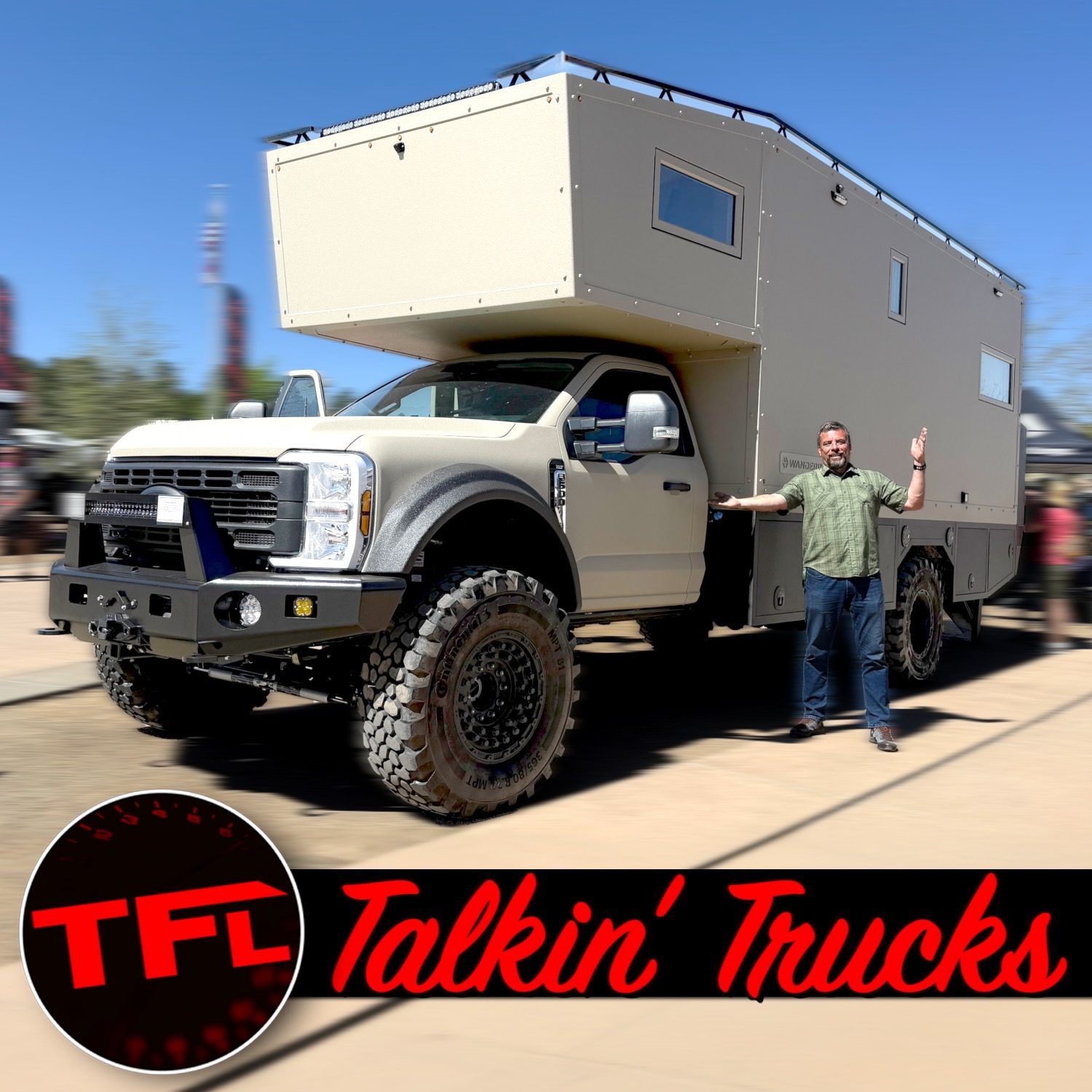
The BIGGEST And BADDEST Trucks At Overland Expo West 2026! | Ep. 331
About this episode
Overland Expo in Flagstaff, Arizona sets the stage as the hosts hunt down the “biggest and baddest” rigs—starting with “this forward-controlled Jeep which is absolutely epic.” They compare a 1964 M677 conversion and spotlight wide-body trends driven by bigger tires and more wheel offset. The tour jumps between classic pop-up camper builds, lifted SUVs, and modular overlanding setups with Starlink, heaters, and solar. Along the way, they debate hydrogen fuel-cell tech, show off 40-inch tire suspension engineering, and connect it all back to the overlanding community.
( https://www.alltfl.com/ ) Check out our new spot to find ALL our content! In this episode of TFL Talkin' Trucks, Andre and Nathan take you live to the pine forests of Flagstaff, Arizona, for full-scale coverage of Overland Expo West 2026! Sitting at 7,100 feet above sea level, the crew braves the high altitude and blistering sun to hunt down the most unique, custom, and outright wild truck builds at the show. From massive wide-body rigs to clever micro-campers, they break down the biggest design trends hitting the overlanding space this year.
( http://www.patreon.com/tflcar ) Visit our Patreon page to support the TFL team!
Advertising Inquiries: https://redcircle.com/brands
Privacy & Opt-Out: https://redcircle.com/privacy
Ford-controlled
"This is a 1964 M677 and this is basically a Ford-controlled Jeep that was kind of converted."
“Ford-controlled” means the builder used Ford parts to run or control key parts of the vehicle. People do this on custom trucks so repairs are easier and the vehicle drives better.
“Ford-controlled” here likely means the vehicle’s drivetrain or control systems (like engine management, transmission, or other components) were adapted using Ford parts. In custom builds, swapping in a different manufacturer’s components is often done to improve parts availability or drivability.
350
"Kind of converted? It's got a 350. Oh, it's a Chevy."
“350” is shorthand for an engine size (about 350 cubic inches). It’s a common V8 swap in trucks because parts and upgrades are widely available.
“350” almost certainly refers to a 350 cubic-inch V8 engine, commonly associated with Chevrolet small-block V8s in truck and off-road builds. These engines are popular because they’re compact, make decent power, and have huge aftermarket support.
wide body stance
"Yeah, but I think this Tacoma reminds me of something because it's basically one of the trends we're seeing already at the show is kind of this wide body stance because the tires are getting bigger and the wheels are getting a little bit more offset."
A wide body stance means the truck looks wider than normal. Usually that’s because it has bigger tires and wheels, and sometimes extra fender coverage so the tires fit properly.
A wide body stance is a styling approach where the truck sits visually wider than stock, usually by fitting larger tires and wheels and sometimes adding fender flares or bodywork. The goal is both aesthetics and clearance—more tire width can improve off-road traction and allow more aggressive wheel/tire setups.
wheel offset
"the trends we're seeing already at the show is kind of this wide body stance because the tires are getting bigger and the wheels are getting a little bit more offset. We're going to see some real wide body ones a little bit later where they're full of"
Wheel offset is how the wheel is positioned relative to the truck—whether it sits more tucked in or sticks out. Changing it can make the truck look wider, but you have to make sure the tires still clear everything.
Wheel offset is the distance between the wheel’s mounting surface and its centerline, which determines how far the wheel sits inward or outward in the wheel well. More offset toward the outside (often called “more negative offset”) helps create a wider stance, but it can also affect clearance with suspension components and fenders.
overlanding
"Which it makes sense. You're overlanding. You're going to camp."
Overlanding means traveling and camping in more remote places, kind of like a road trip that’s also an adventure. People bring gear so they can set up camp and handle rough roads.
Overlanding is a style of long-distance, self-reliant travel where you camp and move through remote areas rather than sticking to highways and established lodging. It usually involves carrying gear for cooking, sleeping, and recovery, and often favors trucks/SUVs with strong off-road capability.

Ford F-350 Super Duty
"So this area is a four-wheel campers area featuring different sizes from F-250, 350 superduties to smaller trucks."
The Ford F-350 Super Duty is a larger, stronger version of a heavy-duty Ford truck. It’s popular for towing and for adventure trips where you need a truck that can handle rough conditions.
The Ford F-350 Super Duty is another heavy-duty pickup in Ford’s Super Duty lineup, typically chosen when you need extra towing capacity and payload. In overlanding contexts, F-350s are often used as platforms for camping setups and off-road suspension modifications.

Ford F-250 Super Duty
"So this area is a four-wheel campers area featuring different sizes from F-250, 350 superduties to smaller trucks."
The Ford F-250 Super Duty is a big, heavy-duty Ford pickup. People like it for towing and for off-road trips because it’s built to handle tougher roads.
The Ford F-250 Super Duty is a heavy-duty pickup built for towing and rough-duty work, and it’s a common base for overland and off-road builds. At events like Overland Expo, you’ll often see these trucks set up with camping gear and suspension upgrades to handle dirt roads and trails.

Chevy Colorado ZR2
"This Chevy Colorado ZR2 has a flatbed. I think this, we saw this before. Was this here a couple of years ago?"
The Chevy Colorado ZR2 is a Colorado trim made for off-road driving. Here, they’re showing a modified setup with a flatbed and talking about the truck’s suspension.
The Chevrolet Colorado ZR2 is a midsize off-road-focused truck known for factory upgrades aimed at trail use. In this segment, the host points out a flatbed and highlights the suspension system, showing how the ZR2 can be configured for overland-style rigs.
flatbed
"This Chevy Colorado ZR2 has a flatbed. I think this, we saw this before. Was this here a couple of years ago?"
A flatbed is a truck bed that’s open and flat on top. It’s useful for hauling gear and building custom setups for camping or work.
A flatbed is a truck bed with a flat, open deck instead of a traditional enclosed cargo box. It’s popular for overland and work builds because it’s easy to mount gear, storage, and recovery equipment securely.
suspension system
"But I mean, it's showing off the suspension system here. But it's really cool."
The suspension system is the part of the truck that helps it ride over bumps and rough ground. Better suspension helps the tires stay planted when the road gets uneven.
The suspension system is what connects the wheels to the truck’s body and controls how the vehicle absorbs bumps and maintains tire contact. Off-road builds often emphasize suspension tuning and components so the truck can handle uneven terrain without losing traction.
off-roading
"You drop the box and you're off-roading. And be very kind of..."
Off-roading means driving on dirt, rocks, or trails instead of regular paved roads. It usually needs better traction and clearance than everyday driving.
Off-roading is driving on unpaved or rough terrain where normal road tires and suspension setups may struggle. It typically requires more traction management and clearance than street driving.
Starlink dish
"Well, for example, here's a four-wheel camper project M and it's got, I think that's a Starlink dish going inside of it. Somebody's living here."
A Starlink dish is a small satellite internet antenna. People add it to camper or overland setups so they can get internet even when there’s no cell service.
A Starlink dish is the satellite antenna used to receive internet service from SpaceX’s Starlink network. On overland builds, it’s commonly added so occupants can stay online for navigation, communication, and remote work while away from cell coverage.
four-wheel camper
"Well, for example, here's a four-wheel camper project M and it's got, I think that's a Starlink dish going inside of it. Somebody's living here."
A “four-wheel camper” is a camping setup meant to go with a 4x4-style vehicle. Here, it’s basically a mobile living space for sleeping and staying out on trips.
A “four-wheel camper” refers to a camper setup intended to be carried and used with a vehicle that can handle rough terrain, typically implying 4x4 capability. In this context, it’s part of a build that supports camping/overnighting rather than just hauling cargo.

K5 Blazer
"On the K5 Blazer. Yes. The older ones like this."
The K5 Blazer is a classic Chevrolet SUV from the earlier Blazer generations. They’re saying the camper setup they’re looking at reminds them of what could be done on a K5 Blazer.
The K5 Blazer is the full-size, body-on-frame Chevrolet Blazer generation from the late 1960s through the 1970s. In this segment, they’re connecting the camper idea to the K5 Blazer’s classic “older ones like this” look.

OBS Ford Power Stroke
"There's a basically OBS Ford kind of original body style power stroke, dude, from the late nineties. Slightly modified."
“OBS” is a nickname for a specific older Ford truck look from the late 1990s. “Power Stroke” is Ford’s diesel engine, and they’re saying this one is from that era and has been modified a bit.
“OBS” refers to the late-1990s Ford truck body style, and the Power Stroke is Ford’s diesel engine family used in Super Duty and related trucks. Here they’re describing an OBS-style Ford truck from the late 1990s with a Power Stroke, slightly modified for the show.

Lexus Gx
"Something interesting I see right there is a Lexus GX, which is a really popular vehicle [504.1s] these days, an SUV. [505.7s] Yep. [506.3s] It's a midsize. [507.7s] This one's definitely lifted."
The Lexus GX is a midsize SUV from Lexus that’s built to handle rough roads better than most. Here, they’re looking at one that’s been lifted and fitted with tougher-looking bumpers for off-roading.
The Lexus GX is a midsize luxury SUV known for its body-on-frame construction and off-road focus. In this segment, the hosts point out a lifted GX with off-road-oriented bodywork like front and rear bumpers.
lifted
"It's a midsize. [507.7s] This one's definitely lifted. [509.3s] But it's way lifted, dude. [511.1s] And also, let's take a look here."
A “lifted” vehicle sits higher than stock. That gives it more clearance for rocks and ruts, and in this case they’re saying the lift is extreme.
A “lifted” SUV has been raised higher off the ground, usually with suspension changes, to increase ground clearance and improve off-road capability. In this segment, the hosts emphasize that the GX is “way lifted,” meaning it’s been modified for serious trail use rather than just a mild look.
toe
"[511.1s] And also, let's take a look here. [513.1s] It's got bumpers, front and rear, toe, all the side panels, all this stuff. [517.4s] Dude, they're actually kind of hard to get to begin with."
Toe is part of wheel alignment—whether your tires point slightly toward each other or slightly away. Getting it right helps the truck track straight and can prevent uneven tire wear.
Toe is a wheel alignment setting that describes whether the tires point slightly inward or outward relative to each other. Correct toe helps tire wear and steering stability, and off-road builds often require re-alignment after suspension changes.
twin-turbo V6
"Lexus GX. [520.9s] Because they're a twin-turbo V6. [522.4s] Yeah. [522.9s] They're basically the same size, approximately, as a Land Cruiser 250 series or a 4Runner."
A twin-turbo V6 is a V6 engine that uses two turbochargers. Turbos cram extra air into the engine so it can make more power.
A twin-turbo V6 uses two turbochargers to force more air into a V6 engine, which helps it make more power than a naturally aspirated V6. In practice, it can also improve low-to-midrange response compared with a single-turbo setup, depending on the turbo design.
38s
"And it's rolling on 38s, dude. 38s."
“38s” is probably shorthand for very large tires—about 38 inches tall. Bigger tires help the truck clear obstacles, but they can make the truck feel different and may cost more to run.
In this context, “38s” likely refers to 38-inch tires, which are common on overland and big-truck builds. Bigger tires increase ground clearance and can improve obstacle capability, but they also affect gearing, ride comfort, and fuel economy.
solar batteries
"But they also have the ability to stay up-grid for a while, which is the whole over at their point. They have solar batteries."
Solar batteries store electricity made by solar panels. They let the truck run things like lights and appliances even when you’re not plugged into power.
“Solar batteries” are energy-storage batteries charged by solar panels, used to power onboard systems when you’re not connected to shore power or a generator. In overland builds, they typically run lights, water pumps, refrigeration, and other comfort/utility loads.
stay up-grid
"But they also have the ability to stay up-grid for a while, which is the whole over at their point. They have solar batteries."
“Stay up-grid” means the truck can run on its own without plugging into outside power. Solar and battery power are what make that possible.
“Stay up-grid” is an off-grid living idea: the vehicle can operate independently without being connected to the electrical grid. In practice, it usually means onboard power generation/storage (like solar batteries) plus efficient power management for appliances and systems.
inverters
"They have inverters. They have alternators that run all this stuff from the engine."
An inverter is a device that lets your truck’s battery power run normal electronics. It basically changes the electricity into the kind your gadgets need.
An inverter converts electrical power from one form to another—typically turning DC battery power into AC power for running household-style electronics. In overland builds, inverters let you power devices like chargers, lights, or small appliances from the truck’s electrical system.
alternators
"They have inverters. They have alternators that run all this stuff from the engine. But this is really unique, and part of the reason why is what you're going to see right"
An alternator is what makes electricity when the engine is running. It helps power the truck’s electronics and can charge batteries for the camper gear.
An alternator is the engine-driven generator that produces electricity while the vehicle is running. In these truck/camper setups, the alternator helps supply power to the truck’s electrical loads (often including charging and running accessories).
GXV Wild
"It's a GXV Wild, and it's got a deck on the back of it, dude. Yeah, this whole thing opens up. So this is unique in itself."
The GXV Wild is a truck used for overlanding, and in this example it has a camper setup on the back. The rear area can open up to create extra living space, like a balcony, while still being able to be closed for sleeping.
The GXV Wild is an overland truck platform that’s being shown here with a rear-mounted camper/deck setup. The key idea is that it’s built to support a “box camper” style layout while still allowing the rear platform to open up into a usable balcony/space.
box camper on the back of a ramp truck
"So basically, think of a box camper on the back of a ramp truck, heavy duty. But it's got a platform that opens up, so it turns into a balcony, basically."
It’s a camper box mounted at the back of a truck, usually on a platform that can move. The goal is to make the back into living space while still being able to open it up and pack it away.
This describes a common overland/expedition layout: a camper “box” mounted to the rear of a truck, often on a ramp-style platform. The important engineering point is that the rear structure needs to support living space while also moving (opening/closing) for access and storage.
reinforced
"And if you look, you can clearly see how this has been reinforced based on this chunk of steel that's going all the way around. That way, when you lose the rear, you're not actually losing the structural integrity."
“Reinforced” means the build has extra strength added. They’re using heavy steel framing so the structure stays solid even when the rear section is opened up.
In this context, “reinforced” means the truck/camper structure has added strength—here, a steel section running around the structure. That reinforcement helps maintain structural integrity even when parts of the rear platform are opened or removed.

Ford Maverick
"...ucks. Although, we did bump into your friend, Mr. Maverick. Yes."
The Ford Maverick is a small pickup truck. It’s meant for people who want the benefits of a truck but in a smaller, easier-to-drive size.
The Ford Maverick is a compact pickup truck that’s typically discussed as a smaller, more efficient alternative to larger trucks. In the episode, it’s mentioned in a quick, playful way (“Mr. Maverick”), likely as part of a lineup or event where different vehicles were being shown. That makes it a relevant mention even without deep technical detail.

Nissan Frontier
"And also, we were with Nissan the last couple of days, and they also have the ultimate build, which is a Frontier."
The Nissan Frontier is a mid-size pickup truck. They’re saying Nissan brought a top overland-style build based on the Frontier.
The Nissan Frontier is a mid-size pickup known for being simpler and more trail-friendly than many full-size trucks. The hosts mention Nissan’s “ultimate build” being a Frontier, tying it to overland-style customization and expedition use.

Ram 3500
"But, dude, what do you think about this? So this particular Ram 3500 chassis camper is a two-door."
The Ram 3500 is a big, heavy-duty truck made to tow and carry a lot. Here, they’re showing how people turn that truck into a camper for off-road trips.
The Ram 3500 is a heavy-duty pickup from Ram (part of Stellantis) built for towing and payload. In this segment, they’re specifically talking about a Ram 3500 chassis camper, which highlights how the truck’s heavy-duty platform can be adapted for overlanding.
wheelbase
"you know, you don't overland in four-door vehicles. And I think his point might be because shorter wheelbase is better for off-roading."
Wheelbase is how long the truck is between its front and rear wheels. For off-roading, a shorter wheelbase can make it easier to turn and fit through rough, tight spots.
Wheelbase is the distance between the front and rear axles. In off-roading, a shorter wheelbase can help with maneuverability and turning in tight terrain, which is why someone might argue for shorter trucks for overlanding.
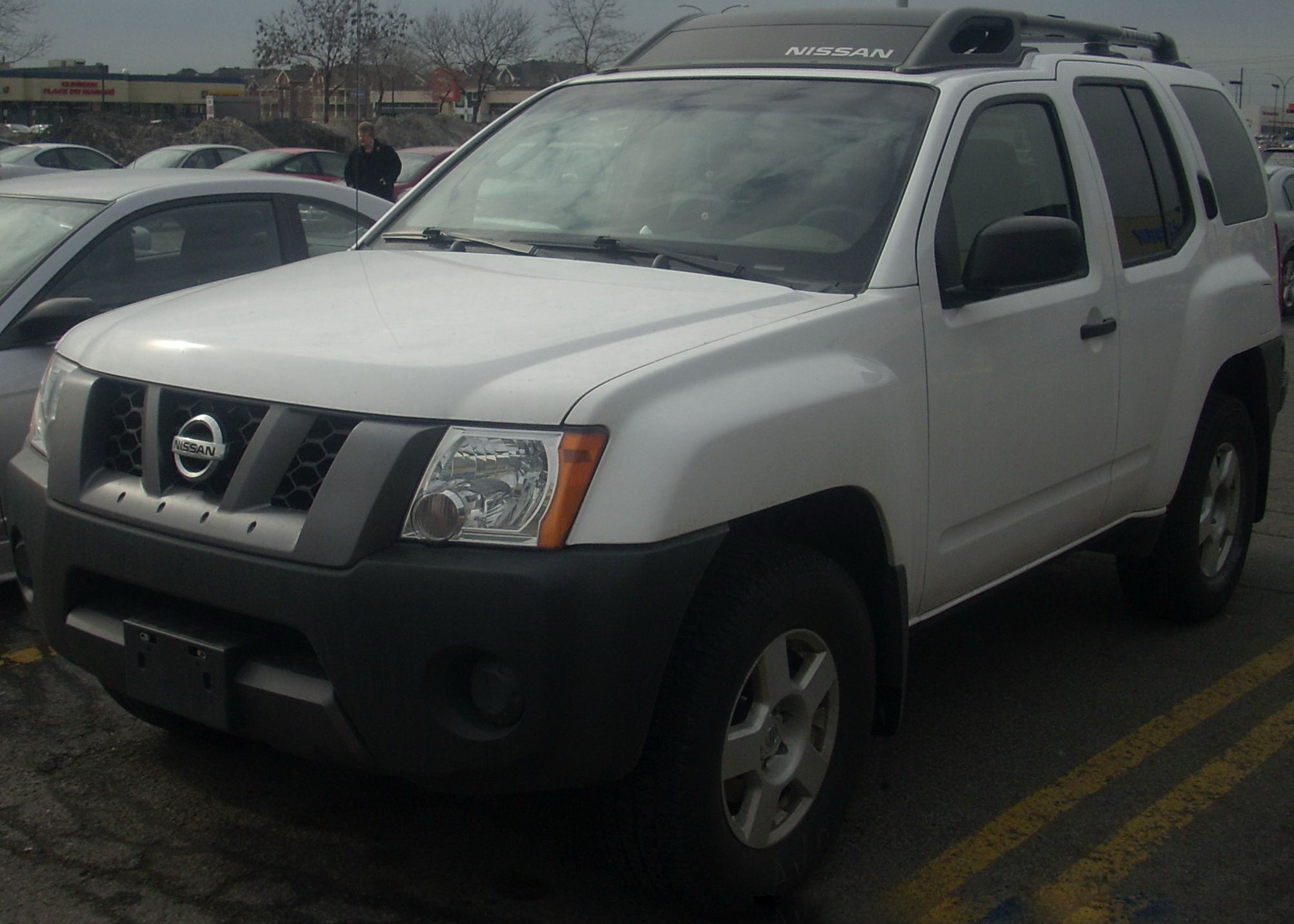
Nissan XTerra
"because they took a Frontier, and they turned it into a previous body XTERRA here. Wasn't this at SEMA?"
The Nissan Xterra is an SUV built for off-roading. In this segment, they’re talking about a custom truck that’s been modified to look like an older Xterra, with styling cues meant to resemble a newer one.
The Nissan Xterra is a rugged, body-on-frame SUV known for off-road capability and a simple, truck-like layout. Here, the hosts discuss a build that uses a Nissan Frontier as a base and reshapes it into a “previous body” Xterra look, aiming for a modern Xterra-style front end.
SEMA
"Wasn't this at SEMA? Yeah, we've seen this a couple of times."
SEMA is a big car-truck show in the U.S. where people bring custom builds and new ideas. The hosts are saying this kind of project is something you’d see there.
SEMA is the Specialty Equipment Market Association show, a major U.S. event where custom cars and trucks are displayed. When the hosts reference seeing the build “at SEMA,” they’re pointing to the show as a place where one-off fabrication and concept-style off-road builds get attention.
Rover Moonlander
"Oh, Moonlander, that was the one that Alex was testing. Yeah. Yeah, so the Moonlander X is basically built in Denver, Colorado, and really cool."
The Rover Moonlander is an overland vehicle meant for long trips and rough places. They say it’s built in Denver and you can choose different options depending on how you want to use it.
The Rover Moonlander is a purpose-built overland/expedition vehicle line, designed for remote travel rather than daily commuting. The hosts mention the Moonlander X and note it’s built in Denver, Colorado, and can be optioned in different ways—key details for anyone comparing expedition builds.
aluminum design
"This is super cool. [986.2s] And it looks like it's all aluminum design. [988.0s] Yeah. [988.4s] Once again, lightweight, right?"
They’re saying it’s made with aluminum parts. Aluminum is lighter than steel, so it can help the truck feel easier to drive and carry.
An “aluminum design” means the structure or major components are made from aluminum instead of steel. Aluminum is commonly used to reduce weight, which can improve handling and make the vehicle easier to package for overland use.
pop-up camper
"So it's a pop-up camper on top of an original mini-club, man. [1011.1s] Overland campers, Flagstaff, Arizona."
A pop-up camper is a tent-like camper that folds down while you drive and pops up when you park. It’s meant to be easier to travel with than a full-size hard camper.
A pop-up camper is a lightweight camper that can fold down for travel and then expand upward when you arrive. On overland rigs, it’s popular because it keeps the vehicle more manageable on the road while still providing sleeping space at camp.
Overland campers
"So it's a pop-up camper on top of an original mini-club, man. [1011.1s] Overland campers, Flagstaff, Arizona. [1012.8s] There you go."
They’re talking about a camper maker called “Overland campers.” It’s the company behind the pop-up camper setup they’re showing.
“Overland campers” refers to a camper brand/company discussed in the context of an overland setup. The hosts connect it to a specific pop-up camper build shown at Overland Expo.
left-hand drive
"I love the fact that it's left-hand drive because it's really hard to find those here."
Left-hand drive means the steering wheel is on the left side of the car. It’s the common setup in many countries, so it can stand out when you’re surrounded by different configurations.
Left-hand drive means the steering wheel is on the left side of the vehicle. In many regions (like the U.S.), left-hand drive is standard, while right-hand drive is more common in others, so it can be a notable detail at events with lots of imported or region-specific vehicles.
Unimog
"Oh, wait, wait, wait. Unimog. Unimog original? One of the first ones?"
Unimog is a type of off-road truck made by Mercedes-Benz. People use them for tough jobs and adventures because they’re designed to handle rough ground.
Unimog is a Mercedes-Benz–branded line of heavy-duty off-road trucks known for extreme versatility. They’re built for work and expedition use, with a layout and drivetrain that handle rough terrain and specialized setups.

Ford Falcon
"Slightly modified. This one is here for Falcon Tire, it appears. Yeah, but holy cow."
The Ford Falcon is a car model that’s being shown in a modified form. In the podcast, it sounds like it’s been changed a bit for a specific purpose, likely related to tires or performance.
The Ford Falcon mentioned here appears to be a specific modified vehicle used for a tire-related setup or event (“Falcon Tire”). The podcast calls it “slightly modified,” implying it’s been adjusted for performance or fitment rather than being completely rebuilt. It’s brought up as a standout example because it looks and stands out strongly in the lineup.

4Runner
"No, a 4Runner. Okay. So that 4Runner was incredible, unstoppable, but it was also really noisy."
The Toyota 4Runner is a rugged SUV meant for off-road driving. Here, the hosts explain that a modified air intake can make it much louder than you’d expect.
The Toyota 4Runner is a body-on-frame SUV built for off-road use, and it’s known for being durable and hard to stop. In this segment, the hosts focus on why this specific 4Runner setup can be unusually loud—pointing to an intake modification that changes the sound you hear.
raised air intake
"And there's a very good reason it has to do with that. Oh, the little raised air intake, shall I say? Yes. Yes. Desert air intake, I think."
A raised air intake moves where the engine takes in air to a higher spot. That can help in dusty environments, and it can also make the intake sound different.
A raised air intake is an intake setup that brings the engine’s air inlet higher than normal. That helps it breathe cleaner air in dusty or sandy conditions and can also change the intake sound, which is why the hosts connect it to the noisy/whistling behavior.
blow off valve
"And the blow off valve. So the best part is aside from the fact that I kept looking for some kid who slammed his car and I was getting angry because I didn't know, my wife was sitting there at one point"
A blow-off valve is a turbo-related part that releases extra pressure when you let off the gas. That release can make the distinctive “whoosh” or popping sounds.
A blow-off valve is a pressure-release valve used on turbocharged engines. When you lift off the throttle, it vents excess boost pressure to prevent compressor surge, and that venting can create the “whistle” and “pops” people associate with modified turbo setups.
hydrogen fuel cell
"The point is that hydrogen is a proven product and the byproduct can be pretty clean. [1239.6s] The other side of it is this isn't a hydrogen fuel cell. [1243.2s] Yeah. [1243.5s] So this works with internal combustion."
A hydrogen fuel cell makes electricity from hydrogen. In a car, that electricity runs the motor, and it generally produces water instead of typical engine exhaust.
A hydrogen fuel cell is an electrochemical device that turns hydrogen into electricity. In a fuel-cell vehicle, the electricity powers the electric drive system, and the main “byproduct” is typically water rather than exhaust from burning fuel.
internal combustion
"So this works with internal combustion. [1246.4s] Am I correct? [1247.4s] No. [1247.7s] No."
Internal combustion means the car makes power by burning fuel inside an engine. The discussion here is saying a fuel-cell hydrogen truck isn’t doing that—it makes electricity instead.
Internal combustion is the process where fuel is burned inside an engine cylinder to create power. The hosts are contrasting that with a hydrogen fuel cell setup, where hydrogen is used to generate electricity rather than being burned in an engine.
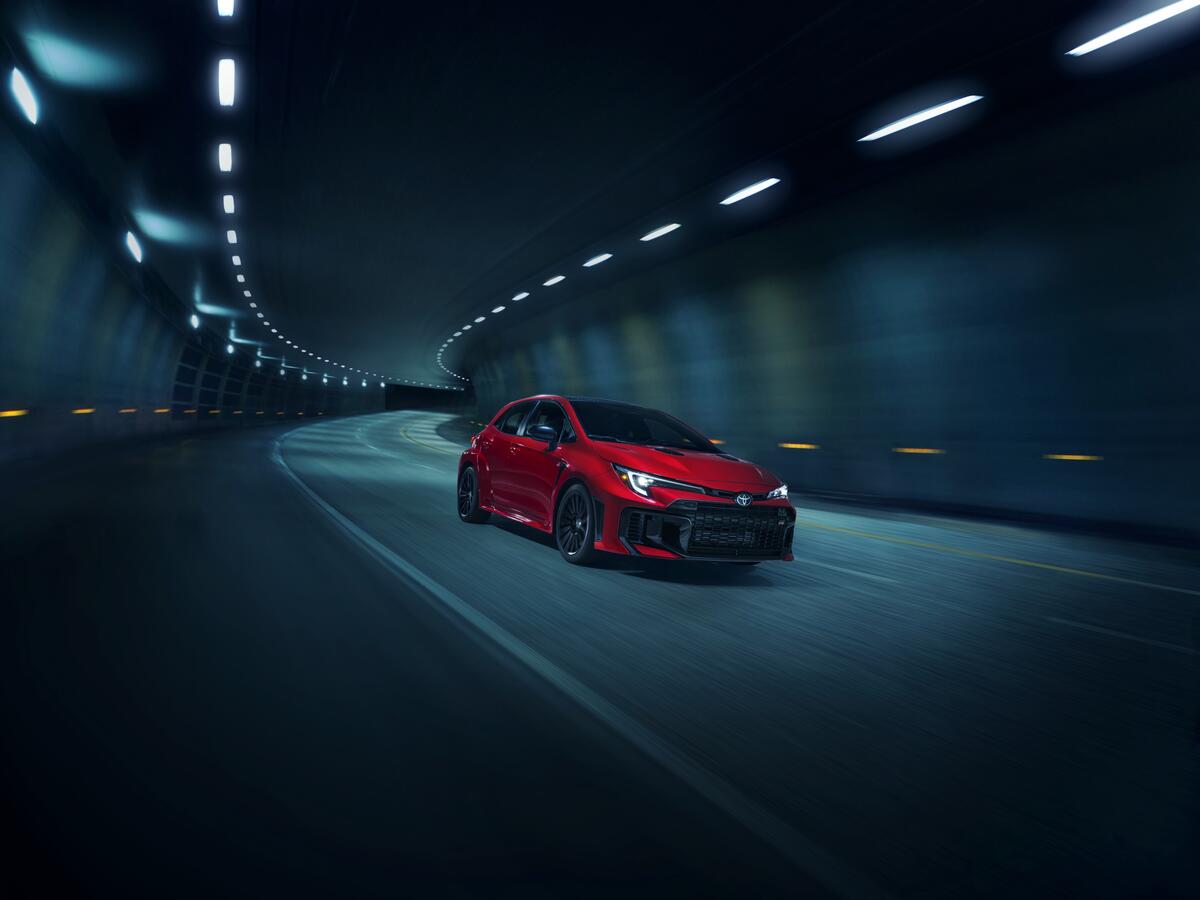
Toyota Corolla Gr
"So they're burning it. You're thinking about the Corolla GR burning hydrogen. Which is burning it."
The Toyota GR Corolla is a sporty version of a small hatchback. The podcast mentions it in a humorous way about hydrogen, but the GR Corolla is generally known as a performance car.
The Toyota GR Corolla is a performance-focused compact hatchback from Toyota’s GR line, built for driving enthusiasts. In the podcast, it’s mentioned in a playful way about “burning hydrogen,” which is likely a humorous or speculative comment rather than a literal description of the car’s power source. The key point is that it’s being referenced as a GR Corolla in a discussion that’s more about the theme of unusual builds or concepts.
pumping the cylinders
"But it's still using hydrogen and pumping the cylinders. This one is, so this is a technically electric vehicle."
In a normal gas engine, cylinders get filled and fired to make power. The host is saying hydrogen can be involved, but not in the same “engine cylinders” way.
“Pumping the cylinders” is a reference to how traditional engines work, where cylinders are filled and ignited to make power. The speaker contrasts that with a hydrogen-electric approach, implying hydrogen is being used in a different way than a conventional internal-combustion engine.
technically electric vehicle
"This one is, so this is a technically electric vehicle. This is fully electric vehicle, but it's using refuelable hydrogen containers on board as its fuel source to generate."
It’s “electric” because it drives with electric motors. But instead of only charging from a plug, it carries hydrogen onboard to help make the electricity it needs.
The phrase points to a vehicle that uses electric drive motors, but its energy source is unusual. In this case, the vehicle is fully electric in how it drives, while hydrogen is carried onboard to help generate electricity.
refuelable hydrogen containers
"This is fully electric vehicle, but it's using refuelable hydrogen containers on board as its fuel source to generate."
These are hydrogen tanks you can refill. The vehicle stores hydrogen in them so it can use it to make electricity while you drive.
Refuelable hydrogen containers are onboard tanks designed to store hydrogen at high pressure for later use. In hydrogen-electric setups, that stored hydrogen is used to produce electricity for the electric motors.
over 500 horsepower
"Because it has over 500 horsepower. A 547 combined horsepower from this power system."
Horsepower is a way to describe how strong the vehicle’s power is. “Over 500” means it’s very powerful for acceleration and pulling.
Horsepower is a measure of how much power the vehicle can produce. When the host says “over 500 horsepower,” they’re describing the output capability of the vehicle’s electric power system.
combined horsepower
"A 547 combined horsepower from this power system. Dual electric motors."
Combined horsepower means the total power the vehicle can make when all its motors work together. It’s a single number that represents the whole system.
Combined horsepower is the total power rating from the vehicle’s power sources, often adding output from multiple electric motors. It’s commonly used on electric vehicles to represent the overall system output rather than a single motor’s rating.
Dual electric motors
"A 547 combined horsepower from this power system. Dual electric motors. But you know what else?"
Dual electric motors means two electric motors help drive the truck. That can help it put power down better and respond more precisely.
Dual electric motors means there are two separate electric motor units, typically one for each axle. This can improve traction and allow more precise torque control between the left and right sides or front and rear.
suspension components
"If you look underneath. Look at these suspension components. They're high end."
Suspension components are the parts that help the wheels move smoothly over bumps. Better parts usually mean a more controlled ride and handling.
Suspension components are the parts that connect the wheels to the chassis and control how the vehicle rides and handles bumps. The host is highlighting that the underpinnings look high-end, suggesting careful engineering rather than a quick demo build.
billet
"They're like billet almost. I mean, they're really well made."
Billet means the part is made by cutting it out of a solid piece of metal. It’s often used for high-quality, precision parts.
Billet refers to parts machined from a solid block of metal, rather than cast or stamped. In automotive contexts, “billet” often signals tighter tolerances and a more premium, custom-built look.
entire chassis
"They weren't just phoning it in. They actually did the entire chassis like in a very, very clean way."
The chassis is the main frame/structure that everything else mounts to. If they built the whole chassis, it means the truck was designed as a complete system.
The chassis is the vehicle’s main structural foundation that suspension, drivetrain, and body components attach to. Saying they “did the entire chassis” implies the build is engineered as a complete platform, not just a drivetrain swap.
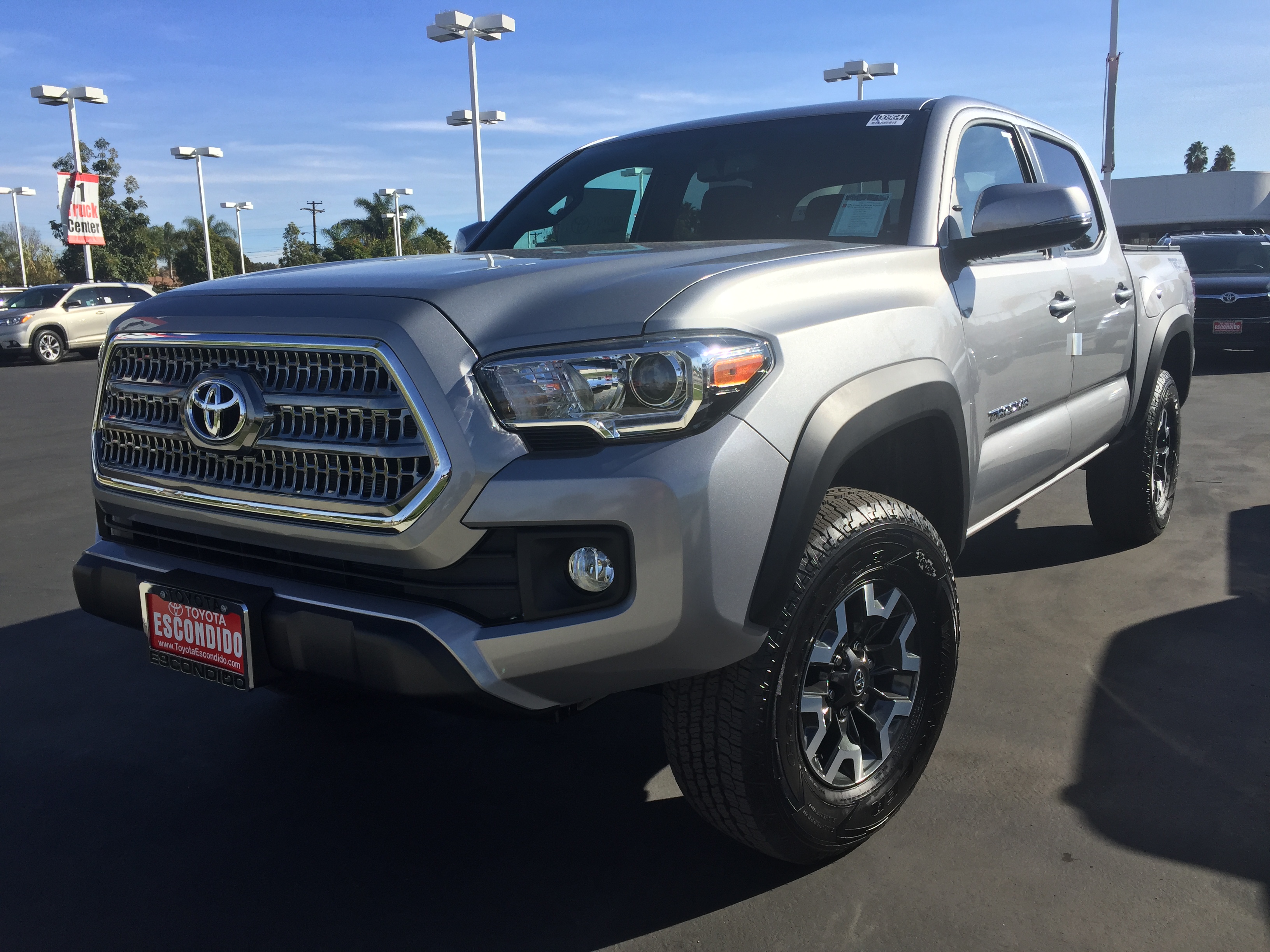
Toyota Tacoma
"There's a new Tacoma and it's got a lot of gear on it. Look, it's tastefully lifted, not insanely lifted."
The Toyota Tacoma is a common midsize truck people use for camping and off-roading. Here, they’re talking about a new one that’s been set up with extra gear and a lift so it can handle rougher roads.
The Toyota Tacoma is a midsize pickup known for being a popular base for overland and off-road builds. In this segment, the hosts point out a new Tacoma that’s been equipped with gear and has a tasteful lift, which is typical of Expo-style customization.
fusion forged
"And it's got fusion wheels from Black Rhino, fusion forged. Those are becoming more and more popular."
“Fusion forged” describes how the wheel is made. It’s meant to produce a wheel that’s strong but not overly heavy, which is useful for off-road driving.
“Fusion forged” refers to a wheel manufacturing approach that combines forging with other processes to create a strong, lightweight wheel. Enthusiasts often look for forged-style wheels because they can offer better strength-to-weight than many cast wheels.
Black Rhino
"And it's got fusion wheels from Black Rhino, fusion forged. Those are becoming more and more popular."
Black Rhino is an aftermarket wheel brand known for off-road-focused designs. In this segment, the hosts mention “fusion forged” wheels from Black Rhino, highlighting how wheel choice is a big part of the look and stance on overland builds.

Honda Passport Trail Sport
"Yeah, so what we're looking at is a Honda Passport Trail Sport, [1484.4s] but this one is done up just a little bit extra, right?"
This is a Honda Passport SUV, and the Trail Sport version is meant to handle dirt roads better than a normal SUV. Here, they’re talking about a special Trail Sport setup with Honda’s performance/off-road parts and a higher stance.
The Honda Passport is Honda’s midsize SUV, and the Trail Sport trim is aimed at off-road capability. In this segment, they’re pointing out a Trail Sport build with extra HPD (Honda Performance Development) off-road parts, including larger wheels/tires and increased ride height.
HPD components
"Yes, so it has a lot of HPD components. [1489.9s] A lot of these are available, [1491.5s] and some of them may become available in the future."
HPD is Honda’s performance/off-road parts program. When they say “HPD components,” they mean upgrades made to improve how the vehicle performs, especially for rough roads.
HPD components refer to parts developed by Honda Performance Development, Honda’s in-house motorsports and performance engineering arm. On an SUV build, HPD typically means off-road-oriented upgrades like suspension, wheels, and other hardware designed to improve capability beyond stock.
275, 65, R18
"So the tire size is 275, 65, R18, so it's an 18-inch wheel. [1498.4s] Once again, a little bit more bronze hue to it."
That number is the tire size. It tells you how wide the tire is, how tall the sidewall is, and that it fits an 18-inch wheel—often chosen to help with off-road clearance.
“275/65R18” is a tire size code: 275 is the tire’s width in millimeters, 65 is the sidewall height as a percentage of the width, and R18 means it’s built for an 18-inch wheel. Bigger or taller tire setups like this are commonly used to improve ground clearance and off-road traction.
lifts the vehicle
"Yes, and it also lifts the vehicle even more over the original version, [1506.8s] which means that with HPD and everything else that they've been doing so far,"
“Lifts the vehicle” means the SUV sits higher than stock. That usually helps when driving off-road because there’s more clearance underneath.
When they say it “lifts the vehicle,” they mean a suspension lift that increases ride height compared with the original setup. More lift generally helps off-road by improving ground clearance and reducing the chance of scraping the underbody.
LA Auto Show
"This is the same one from the LA Auto Show, basically?"
The LA Auto Show is a big event where car companies show new vehicles and concepts. They’re using it as a reference point for when this Passport was first shown.
The LA Auto Show is a major North American auto show in Los Angeles where automakers reveal new models and concepts. The hosts are referencing it to explain where this Passport setup was previously displayed.
higher suspension
"We debuted at SEMA and made a few changes for overlanding. So it has a slightly higher stance, a little bit higher suspension, and then slightly larger tire?"
Higher suspension means the SUV sits a little taller. That usually helps it clear bumps and obstacles when you’re driving on rough roads or trails.
Higher suspension means the vehicle’s ride height is increased, usually by changing suspension components or using a lift kit. The goal is more ground clearance so the tires and underbody are less likely to hit obstacles during off-road driving.
larger tire
"So it has a slightly higher stance, a little bit higher suspension, and then slightly larger tire? From factory use. Yes."
Larger tires are bigger than stock. They can help the vehicle clear obstacles and ride over rough ground more easily.
Larger tires increase the tire’s overall diameter, which can improve ground clearance and help the vehicle roll over obstacles more easily. They can also change gearing feel and steering/ride characteristics, so it’s typically done as part of an overlanding or off-road setup.
Sunset orange
"And by the way, this color, we had one on loan, right? Yeah. Just a regular trail sport. Sunset orange. Yeah, and it was the most popular vehicle for like a couple months."
Sunset orange is the name of the vehicle’s paint color. They’re bringing it up because it’s one of the most popular colors for this model.
Sunset orange is a specific paint color name used for the vehicle, not just a generic description. The hosts mention it because it’s tied to sales popularity—both the color and the trim level are discussed as top performers.
trim mix
"Right, the trail sport is... Currently, the two trail sport trims are making up about 80% of the trim mix, right?"
“Trim mix” just means which versions of the truck people are buying most. If one trim is 80% of the trim mix, that’s the one most shoppers are choosing.
“Trim mix” is the breakdown of how many customers choose each vehicle trim level (like base vs higher-end packages) over a given period. When they say the “Trail Sport” trims make up most of the trim mix, they mean those versions are dominating sales.
winch built in
"Look. Oh, winch built in? Yeah, look how it is so beautifully integrated."
A built-in winch is a powered rope-pulling tool mounted on the truck. It helps you pull yourself (or someone else) out when you get stuck off-road.
A “winch built in” means the truck is equipped with a power winch integrated into the front (often with a dedicated mounting and wiring). It’s meant for recovery—pulling a stuck vehicle out of mud, sand, or ruts—without needing an aftermarket install.
HRC
"And I love this, dude. The big HRC logo. I mean, Honda's been an off-road racing for how many decades?"
HRC is Honda’s racing team/brand. Seeing the HRC logo usually means the truck is drawing on Honda’s motorsports experience.
HRC is Honda’s racing division (Honda Racing Corporation), known for developing performance parts and technologies for motorsports. When they mention the “big HRC logo,” they’re pointing to Honda branding that signals off-road/racing heritage and performance-oriented engineering.
frame
"And the rumor is that they're going to go for something that might actually have a frame. [1618.0s] Well, but there's also, I mean, people want them to redesign the ridgeline a little bit"
“Frame” means the truck has a separate, sturdy skeleton underneath it. That kind of setup is often better for off-roading because it can handle bumps and twisting more easily.
A “frame” refers to a body-on-frame construction where the vehicle’s structure is built around a separate ladder-like chassis. That layout is common on traditional off-road trucks because it can better tolerate impacts and twisting forces from rough trails, compared with unibody designs.
ground clearance
"But dude, one of my complaints about the standard trail sport was not enough ground clearance. [1631.5s] And this concept solves that problem. [1633.9s] Well, it addresses it for sure."
Ground clearance is how much space there is between the bottom of the truck and the ground. More clearance helps you drive over bumps and rough terrain without getting stuck or damaging the underside.
Ground clearance is the distance between the lowest part of a vehicle and the ground. More ground clearance helps prevent scraping the undercarriage on rocks, ruts, and uneven trails, but raising a truck can hurt aerodynamics and fuel efficiency and may complicate meeting regulations.
fuel efficiency
"You can't do that and maintain fuel efficiency, and you're going to have a hard time getting [1646.3s] through certain federal requirements."
Fuel efficiency is how far the truck can go on a gallon (or a tank) of gas. If you lift the truck a lot, it can become less aerodynamic, so it may use more fuel.
Fuel efficiency is how much distance a vehicle can travel for a given amount of fuel, usually expressed as miles per gallon (MPG) or liters per 100 km. The hosts argue that raising ground clearance too much can worsen aerodynamics and increase drag, reducing fuel efficiency.
federal requirements
"You can't do that and maintain fuel efficiency, and you're going to have a hard time getting [1646.3s] through certain federal requirements."
Federal requirements are official rules vehicles have to follow to be allowed on the road. The hosts are saying that changing the truck’s height a lot could make it harder to meet those rules.
Federal requirements are government rules that vehicles must meet to be sold legally, which can include safety and emissions standards. The segment suggests that making a truck much taller (to gain ground clearance) could make compliance harder or require additional engineering changes.
payload
"I'm curious about how much this weighs because we know the payload on these things. [1836.2s] Not great."
Payload is how much weight the truck can carry safely. If you load it up for overlanding, the truck can sag, so you may need upgrades to keep it at the right height.
Payload is the maximum weight a vehicle can carry in addition to its own weight, including passengers, cargo, and gear. When payload is low, heavy overland setups can push the truck down and reduce ride height, which is why the hosts mention needing suspension changes.
springs
"So you might need to do springs or something like that to get a little bit more height out [1842.3s] of this Tacoma."
Springs are what help the truck stay up and absorb bumps. If you add lots of gear, upgraded springs can help the truck sit higher and ride better on rough roads.
Springs are part of a vehicle’s suspension that support the truck’s weight and control how it rides over bumps. For overlanding, people often upgrade springs to increase ride height and better handle added weight from gear and camping equipment.
X Overland
"So if you, if you love watching, you know, really great programming, X Overland is here. [1857.7s] You know, they do all kinds of adventures all over the world."
They mention X Overland as a group that organizes trips and adventures. It’s part of the expo info for visitors.
X Overland is mentioned as an overlanding group that runs adventures and events. The hosts are using it to set up what visitors can expect at the expo.
leave no trace
"where they're going to be able to educate you in various pavilions throughout the area. [1870.4s] Yeah. Everything from how to leave no trace, medical stuff that you can do on the road."
“Leave no trace” is about enjoying the outdoors without damaging it. They’re saying there will be a session teaching people how to do that while traveling.
“Leave no trace” is an outdoor ethics approach focused on minimizing environmental impact while camping and traveling. The hosts mention it as one of the educational pavilions for expo visitors.

Ineos Grenadier Trailmaster
"And I think that truck over there, there's an Ineos Grenadier Trailmaster. [1890.8s] We found. [1891.5s] It belongs to Scott Brady. [1894.6s] Right. [1899.3s] Very expensive trucks. [1900.1s] We recently, we actually have one on loan right now."
The Ineos Grenadier Trailmaster is an off-road truck made for long trips in rough places. It’s designed more for adventure and camping than everyday driving, and it tends to cost a lot.
The Ineos Grenadier Trailmaster is a special overlanding-focused variant of the Ineos Grenadier, built for off-road travel and remote camping use. It’s notable because Ineos positions it as a rugged, purpose-built truck for expedition-style driving rather than a typical mall-off-roader.
Grenadier Gathering in Moab
"And actually, I recently visited Moab with a Grenadier Gathering. [1919.1s] It was amazing, dude. [1920.8s] The community, about 160 vehicles showed up, which is a humongous number. [1925.3s] For them it is."
They’re talking about a meet-up in Moab for people who drive the Ineos Grenadier. A lot of trucks showed up—around 160—so it sounds like a big community event.
The hosts describe a Grenadier Gathering event in Moab, Utah, where a large group of Ineos Grenadier owners and enthusiasts meet. They highlight the turnout (about 160 vehicles) as evidence of a growing overlanding community around the model.
carbon fiber panel
"But this case, it looks like they have a carbon fiber panel that pops out about three or four inches. Yeah."
Carbon fiber is a very light material used for some car parts. Here, they’re describing a carbon fiber panel that extends out to cover the extra-wide tires. The point is to help prevent rocks and debris from getting kicked up behind the truck.
A carbon fiber panel is a lightweight body piece made from carbon fiber composite. In this context, it sounds like a removable or pop-out panel used to extend coverage over the widened tires. That helps keep debris from being thrown rearward while maintaining the wide-body look.
steering geometry
"No, but when you do that, it changes your steering geometry. [1994.9s] It changes all of that."
Steering geometry is how your wheels are “aimed” and how they move when you turn the steering wheel. If you change something on the truck (like tires or suspension), it can change how the truck turns and whether tires rub.
Steering geometry is the set of angles and relationships that determine how the wheels point and how they behave as you turn. Changes to it can affect turning feel, tire wear, and how easily the truck can rub or bind in tight spaces.

Ford Expedition
"Well, how can we not? This is AEV, American Expedition Vehicle. They're known for their prospector build..."
The Ford Expedition is a large SUV meant for road trips and carrying a lot of people or gear. In this context, it’s being discussed as a modified “expedition” style build for rougher travel.
The Ford Expedition is a full-size SUV built for family hauling and long-distance trips, often with strong towing and off-road potential depending on configuration. In the podcast, it’s tied to AEV’s “prospector build,” which suggests a heavily modified Expedition intended for expedition-style travel. That’s significant because it shows how the Expedition can be transformed into a more rugged adventure vehicle.
AEV
"Well, how can we not? This is AEV, American Expedition Vehicle. They're known for their prospector builds, right?"
AEV is a company that makes off-road parts and builds for adventure trucks. Here, they’re being talked about as a maker of expedition-style setups for popular truck brands.
AEV (American Expedition Vehicles) is an aftermarket off-road company known for building expedition-ready trucks and Jeeps. In this segment, they’re highlighted for their “prospector” style builds and for designing components around specific truck platforms.

Ram Chassis
"They're known for their prospector builds, right? On Ram Chassis."
“Ram Chassis” means the underlying Ram truck frame/platform that other companies build on. If you start with the right base, it’s easier to add off-road parts safely and effectively.
“Ram Chassis” refers to the base truck platform from Ram that AEV builds on for expedition-style “prospector” conversions. Using the chassis as the foundation matters because the suspension, mounting points, and drivetrain packaging determine what off-road components can be fitted.
Chevy Colorado Bison
"If you look at the Chevy Colorado Bison, that is, those are their companies. Components."
The Chevy Colorado Bison is an off-road-focused Colorado variant that’s used here as an example of AEV’s platform-specific component design. The point is that AEV doesn’t just sell generic parts—they tailor components for that specific truck setup.
Ford Super Duty
"But this is Ford Super Duty. And this is their new FXL package on 40s."
Ford Super Duty is Ford’s bigger, heavy-duty truck line. In this segment, it’s the truck AEV is modifying for an off-road/expedition setup.
The Ford Super Duty is Ford’s heavy-duty truck line (built for towing, hauling, and serious off-road use). Here it’s the platform AEV is working on, which is important because heavy-duty trucks have different frame strength, suspension geometry, and wheel/tire fitment than lighter pickups.
FXL package
"But this is Ford Super Duty. And this is their new FXL package on 40s."
An “FXL package” is a set of off-road upgrades sold together by AEV. It’s meant to make the truck work with bigger tires and improved clearance as one coordinated system.
An “FXL package” is AEV’s bundled off-road upgrade kit for the Ford Super Duty, typically combining suspension and fitment changes to support larger tires. The “package” wording matters because it implies coordinated components designed to work together rather than random individual parts.
40s
"And this is their new FXL package on 40s."
“40s” means tires that are about 40 inches tall. Larger tires help the truck handle rough terrain, but they usually require extra modifications so everything fits and drives correctly.
“40s” is enthusiast shorthand for 40-inch tires, a common off-road sizing reference. Bigger tires increase ground clearance and obstacle capability, but they also require supporting suspension/fitment changes to avoid rubbing and to maintain drivability.
B.F. Goodrich
"So what happened was, B.F. Goodrich built these, these 40s, something that actually would last a little while."
B.F. Goodrich is a tire company. In this segment, they’re talking about the brand’s off-road tires made for big “40-inch” tire setups.
B.F. Goodrich is a tire brand known for off-road and all-terrain tires. Here, the hosts mention the brand building “40s” tires designed to last longer and handle off-road use.
balance
"Well, it's hard to balance these tires, right? It's very difficult to."
Tire balancing is making sure the tire and wheel spin smoothly without shaking. With big off-road tires, it can be harder to get them perfectly smooth.
Balancing tires means correcting uneven weight distribution so the wheel/tire assembly spins smoothly. With very large off-road tires, balancing can be harder, and poor balance can cause vibration and faster wear.
off-road capability
"These are supposed to last. And they have off-road capability. And just as importantly, there's Dave."
“Off-road capability” means how good the tires are for rough trails. It’s about the tread and sidewalls helping the tire grip and survive on dirt and rocks.
“Off-road capability” describes how well a tire can perform on dirt, rocks, mud, and uneven terrain. It usually comes down to tread design, sidewall strength, and how the tire behaves when aired down.
high-sear kit
"So we developed, you know, they wanted our springs and our spring technology, so we went ahead and designed that with a new high-sear kit. So you can actually run 40s and go down the road like a normal."
This is a suspension upgrade kit meant to let the truck fit bigger tires. The goal is to keep it driving normally while still giving the suspension room to move.
A “high-sear kit” is an aftermarket suspension package aimed at running larger tires while keeping the truck usable on-road. In this context, it’s tied to spring technology and is designed to maintain clearance and suspension travel without rubbing.
full travel
"And to show that it doesn't rub, which is, you can get full travel with no rubbing. Very interesting."
“Full travel” means the suspension can move through its entire designed range of motion. The speaker emphasizes that the setup allows maximum suspension movement “with no rubbing,” which is crucial when running very large tires.
flexing out the axles
"So if we take a closer look, this is kind of on this display flexing out the axles. And yeah, there is some space here, dude."
“Flexing out the axles” refers to articulating the suspension so each wheel moves relative to the chassis, often demonstrated on a ramp or rig. It’s used to show off-road clearance and whether components interfere during extreme suspension movement.
new knuckles
"It's a new high-sear kit, so it raises all this up, new knuckles both sides, and then a new Bilstein 8100 that's tuned specifically for the heavier tire with this different spring."
Knuckles are steering/suspension components that connect the steering linkage and wheel hub to the suspension. In a lift kit context, “new knuckles” often help correct geometry and maintain proper alignment and clearance when the truck is raised and fitted with larger tires.
Bilstein 8100
"a new Bilstein 8100 that's tuned specifically for the heavier tire with this different spring. So it's, once again, it's a whole system."
Bilstein 8100 are off-road shocks (the parts that dampen the suspension). This setup is matched to the bigger tires so the truck rides and moves correctly instead of bouncing or rubbing.
Bilstein 8100 is a specific line of off-road shock absorbers designed for lift kits and larger tires. Here, it’s described as being “tuned specifically” for the heavier tire and paired with the matching spring, which is important because shocks and springs work together to control ride height and suspension movement.
aftermarket stuff
"by the time the rear hits, everything's in sequence, whereas most aftermarket stuff will be rocking."
“Aftermarket stuff” means non-factory parts. Here, they’re saying some other spring options don’t control the truck’s movement as smoothly.
“Aftermarket” refers to parts made by companies other than the vehicle’s original manufacturer. In this context, the host is contrasting AEB springs with other aftermarket suspension options that may cause more unsynchronized movement (“rocking”).
wheel well
"On the wheel well, basically. That's exactly, and in the wheel well."
The wheel well is the area in the truck body where the tire sits. The shape matters because it has to leave room for the tire to move and not hit the body.
The “wheel well” is the body opening/arch area around the tire. The speaker ties the squared-off design to packaging constraints in the wheel well—how the body shape has to accommodate tire clearance and suspension travel.
maximum articulation
"That way, they weren't punching into the headlight when they were at full lock and maximum articulation."
“Articulation” is how much the suspension can flex when one wheel goes over a bump and the other doesn’t. “Maximum articulation” is the most it can flex before parts start hitting the truck.
“Articulation” is how much a vehicle’s suspension can move independently as one wheel goes up while the other goes down. “Maximum articulation” is the peak suspension travel, which is crucial for keeping tires in contact and avoiding body/suspension damage on uneven terrain.
full lock
"That way, they weren't punching into the headlight when they were at full lock and maximum articulation."
“Full lock” means you turned the steering wheel as far as it can go. On rough trails, that’s important because it shows how much the truck can turn without hitting its own lights or body parts.
“Full lock” means the steering is turned all the way to one side. Off-road, that matters because it determines how close the tires and suspension components get to the body and lights at the same time.
Request an Explanation
Heard something you'd like explained? We'll add it to this episode.
Sign in to request explanations for terms you heard.
Want to learn more?
Browse our glossary for plain-English explanations of automotive terms, jargon, and concepts.
Help improve this episode
See something that's not quite right? Our annotations are AI-generated and can sometimes miss the mark. Click the flag icon on any annotation to suggest a correction.