
The Camaro Chronicles
About this episode
Camaros take center stage as the hosts trade ownership stories across generations—from a “67 RS SS” to a boosted “Gen 3 Camaro” that ran SCCA—and get into what they like (and can’t fit) about different eras. The conversation then shifts to Camaro Central’s parts-and-build help, including sourcing hard-to-find headlight motors and an updated kit. Along the way, they compare Camaro vs Firebird value and handling, and explain how they restore older cars to teach younger enthusiasts.

Dodge Charger
"...veral I have owned several Camaros outside of the charger I think the Camaro is what I have owned more"
The Charger is a car made by Dodge that’s built for performance, not just commuting. It’s known for having powerful engines and a bold, sporty look. If it’s mentioned next to other muscle cars, it’s usually because the speaker has experience owning it.
The Dodge Charger is a performance-oriented sedan/coupe that’s known for strong power and a long-running presence in American muscle-car culture. It’s often mentioned alongside other muscle cars because owners compare how they feel, how they look, and how easy they are to keep running. In this podcast context, it appears as part of the speaker’s ownership history.
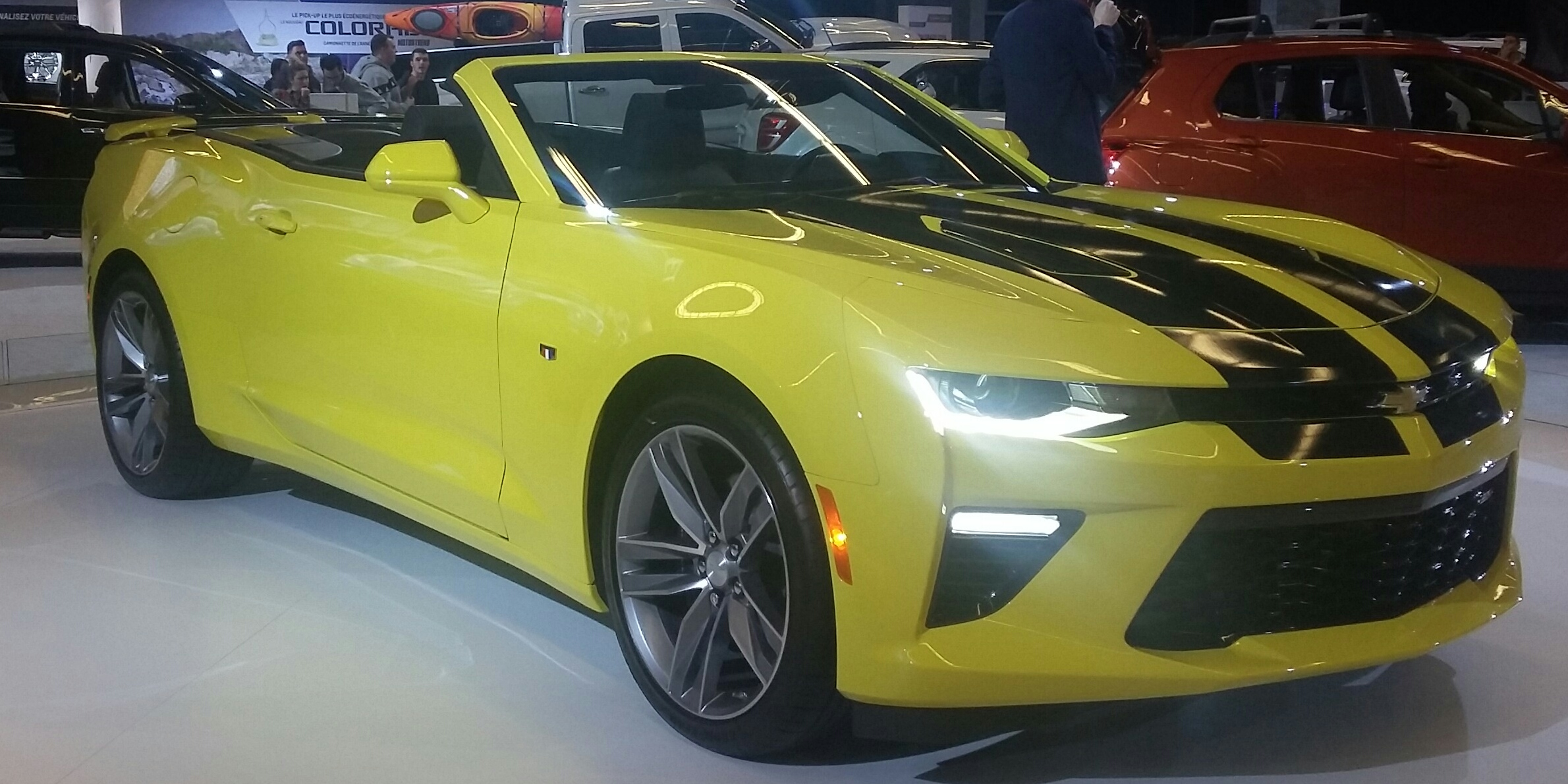
1989 Camaro convertible
"I had an 89 Camaro convertible... That was so sick so dope... It couldn't pull a greasy string out of a cat's butt cuz I had a 305 and it was super slow"
This is a 1989 Camaro from Chevrolet, and it’s the convertible version (you can drive with the top down). The host says it had a 305 engine, and that’s why they felt it wasn’t very quick.
A 1989 Chevrolet Camaro convertible is a late-1980s version of the Camaro, built with the option to remove the roof for open-air driving. The host specifically mentions it had a 305 V8, which helps explain why they describe it as slow but still visually “sharp.”
305
"It couldn't pull a greasy string out of a cat's butt cuz I had a 305 and it was super slow But it was sharp look good."
“305” is the size of the engine in cubic inches. In this case, the host is saying that particular 305-powered Camaro wasn’t very fast.
“305” refers to the Chevrolet 305 V8 engine displacement (305 cubic inches). It’s a common small-block V8 size from that era, and in the context of this segment it’s used to explain why the 1989 Camaro felt underpowered.
supercharged
"I had a boosted supercharged Gen 3 Camaro at 92..."
Supercharged means the engine has a device that pushes extra air into it to make more power. It’s a common way to turn a car into a faster, more aggressive build.
A supercharged engine uses a belt-driven compressor to force more air into the cylinders, which can significantly increase power. Here it’s paired with “boosted,” implying the host’s Gen 3 Camaro was modified for higher output than stock.
SCCA
"Gen 3 Camaro at 92 that was an SCCA car for a number of years"
SCCA is a big U.S. group that organizes amateur racing events. If a car is an “SCCA car,” it means it was used in those kinds of competitions, not just normal commuting.
SCCA stands for the Sports Car Club of America, a major U.S. organization that runs amateur road racing and autocross events. Saying the Camaro was an “SCCA car” implies it was driven in organized competition, often with safety and handling upgrades.
Merlin
"70 and a half split bumper with big 55 Merlin in it"
“Merlin” here sounds like a nickname for the engine setup in that Camaro. The host is basically saying it had a big, serious power setup.
“Merlin” is likely a nickname for an engine build the host is referencing (commonly used by enthusiasts to describe a big V8 swap or a particular high-output setup). In this segment, it’s used as shorthand for the car’s “big” powerplant rather than a standard factory engine name.
small blocks
"Just gutted everything out of it swapped every part built engine after engine, you know small blocks But just you know, I get a new set of heads."
“Small blocks” means a type of V8 engine (often Chevy’s 350-family). People like them because they’re common and there are lots of performance parts available.
“Small blocks” usually refers to Chevrolet’s small-block V8 engine family (commonly the 350 and related variants). They’re popular for swaps and builds because they’re compact, plentiful, and have a huge aftermarket for performance parts.
heads
"But just you know, I get a new set of heads. I'd be porting and polishing. I'd build a new motor just it was always my little experiment"
Cylinder heads are the top castings of an engine that contain the intake and exhaust ports and the valves. Upgrading or reworking heads (like porting and polishing) is a common way to improve airflow, which can increase power when paired with other engine changes.
porting and polishing
"But just you know, I get a new set of heads. I'd be porting and polishing. I'd build a new motor just it was always my little experiment"
Porting and polishing means modifying the engine’s air passages so air can move through more easily. That can help the engine make more power.
Porting and polishing is an engine-building technique where the intake/exhaust passages in the cylinder heads (and sometimes manifolds) are reshaped and smoothed to improve airflow. Better airflow can raise power and throttle response, especially on performance builds.
redneck science project
"My redneck science project man, just how much noise how much power how much cool smells could it do? "
That phrase just means he was experimenting with his car himself—trying different upgrades to see what happens. It’s like a DIY science project, but with a car.
“Redneck science project” is a colloquial way to describe hands-on, experimental DIY car building—trying parts and setups to see what changes in power, sound, and feel. It frames the Camaro as a personal testbed rather than a purely stock vehicle.
327
"327 four-speed and it looked like Mad Max like it was kind of primered ...All over Merritt Island, Florida and there was a little small general 327 sevens could grab some rpms They always sounded good."
The “327” is the engine size—an older Chevy V8 that enthusiasts love. It’s known for sounding good and feeling lively, especially in classic muscle cars.
“327” here is shorthand for the Chevrolet small-block V8 displacement (327 cubic inches), a famous engine family used in classic Camaros and other GM muscle cars. It’s known for revving freely and for being a popular swap/restoration target.
four-speed
"68 RSSS 327 four-speed and it looked like Mad Max like it was kind of primered ...But it didn't matter didn't have any carpet But it had seats and it had a four-speed her shifter sticking out"
“Four-speed” means the car has a manual gearbox with four gears you shift yourself. It usually makes the driving more hands-on and fun, especially in older muscle cars.
A “four-speed” refers to a manual transmission with four forward gears. In the context of a Camaro with a 327, it typically means a more driver-focused setup than an automatic, and it’s often associated with classic muscle-car driving feel.
Merritt Island, Florida
"And so it'd be him and his first-gen and me and my third-gen. We were everywhere. Yeah, just romped All over Merritt Island, Florida and there was a little small general 327 sevens could grab some rpms"
Merritt Island, Florida is a specific location the hosts mention as where they drove their Camaros. It’s relevant only as a personal backdrop for the story, not as a technical driving benchmark.
Camaro central
"Well, look when we come back man, our buddy that runs Camaro central not only is this place the the go-to When you need parts builds we're talking motors engines parts pieces swaps knowledge."
Camaro Central sounds like a shop/community that specializes in Camaro parts and builds. The host is saying it’s a place you’d go when you need Camaro-specific help.
“Camaro central” is presented as a Camaro-focused parts and knowledge hub, run by a CEO named Ben. The episode frames it as a go-to resource for sourcing parts, builds, and swap know-how.
Ben
"It is the two guys ride podcast he's Kevin bird on will he be we got our boy Ben on from Camaro central Man find up chat with you Ben. It's it's wild because he's the CEO of Camaro central."
Ben is the guest from Camaro Central, described as the CEO. He’s positioned as the person who can explain why Camaro ownership and parts sourcing are so specialized.
2.2 liter charger
"What is it about the Camaro and your opinion Ben and I don't mean just one generation. It's one of the few offerings badging of cars that It's hard to pick like people can people can yell at the 2.2 liter charger and make fun of it"
This is a mention of a Dodge Charger with a 2.2-liter engine. The point is that people sometimes make fun of certain Charger versions, and the host is saying the Camaro doesn’t get the same easy criticism.
The “2.2 liter Charger” is a reference to a Dodge Charger variant with a 2.2L engine, brought up as an example of a car people might mock. It’s used in the episode to contrast how the Camaro’s appeal is harder to dismiss than some other muscle-car badge/engine combos.
Cordova
"They could yell at the Cordova that was called a charger to make fun of it ...You could make fun of the you know, the Cobra Mustang or the you know, whatever 76 Mustang offering"
The host mentions “Cordova” as another car people joke about. It’s part of the comparison about which cars get criticized and which don’t.
“Cordova” is mentioned as a model people might confuse or mock when discussing the Charger. In this context, it’s being used as another example of how other badge/lineups get criticized compared to the Camaro.

Cordoba Cordova
"...charger and make fun of it They could yell at the Cordova that was called a charger to make fun of it You c..."
The Cordoba is a classic American car that people sometimes mention when talking about other muscle cars. In this podcast, it sounds like it’s being used as a comparison or a name people might mix up. The key point is that it’s part of the same general muscle-car conversation.
The Cordoba (often associated with the Plymouth nameplate in enthusiast talk) is a classic American car that’s frequently brought up in muscle-car comparisons and jokes. In the podcast context, it’s mentioned alongside the Charger as something people might confuse or use as a comparison point. That kind of reference usually reflects how these cars are remembered and talked about in the community.

Ford Mustang
"... it You could make fun of the you know, the Cobra Mustang or the you know, whatever 76 Mustang offering The..."
The Mustang is a sports car made by Ford, known for its classic look and performance. There have been many versions over the years, including special editions. People bring it up a lot because it’s popular and there are lots of parts and knowledge available for it.
The Ford Mustang is a long-running American sports car that’s been offered in many special editions and generations. It’s significant because it’s one of the most recognizable “muscle” and pony cars, with a huge parts and enthusiast ecosystem. The podcast reference to different Mustang offerings suggests discussion around specific eras and how they’re viewed by owners.
pony cars
"It's really is a pony cars back in the day, man. My god Yeah, but I think I think the idea is is you know, yeah"
A “pony car” is a type of American sports car that’s meant to be exciting but not ultra-expensive. The Camaro and Mustang are the classic examples people think of.
“Pony car” is a U.S. category for affordable, stylish performance coupes that focus on looks plus a V8 (or strong engine) and rear-wheel-drive. The Camaro and Mustang are the archetypal pony cars, and the hosts are framing the Camaro’s role in that rivalry.
wire spoke hubcaps
"That car will give you that. It had wire spoke hubcaps. [479.8s] It has had wire spoke hubcaps"
These are hubcaps/wheel covers designed to look like classic wire-spoke wheels. They’re mentioned because they help make the car look more old-school and distinctive.
“Wire spoke hubcaps” are a wheel-cover style that imitates the look of wire-spoke wheels. The host mentions them on the 1979 Camaro Berlinetta to describe its period-correct, classic appearance.
Corinthian leather
"Those cars are nice man. They're like the luxurious [509.3s] Corinthian leather"
“Corinthian leather” is a fancy-sounding name for high-quality leather upholstery. They’re using it to say the car’s interior is more upscale and comfortable.
“Corinthian leather” is a marketing term used by automakers to describe a premium leather upholstery. Here, it’s used to emphasize that the 1979 Camaro Berlinetta is more luxurious/comfortable than you might expect from a classic pony car.
9-11
"[595.8s] and I got the opportunity to come on board and [600.7s] 2001 right after 9-11 I was building houses for wrong prep. You all know wrong prep. Oh, yeah. Yeah [607.9s] So I work for his a construction company in Vegas."
“9-11” is shorthand for the September 11, 2001 attacks in the U.S. The speaker is using it to explain what was happening in their life around that time.
“9-11” refers to the September 11, 2001 terrorist attacks, which caused major disruptions to travel, the economy, and everyday life. In the segment, it’s used as a time marker for when the speaker’s career path shifted.

Porsche 911
"and I got the opportunity to come on board and 2001 right after 9-11 I was building houses for wrong prep. You all know wrong prep. Oh, yeah. Yeah So I work for his a construction company in Vegas. So this is 2001"
The Porsche 911 is a sports car made by Porsche that’s known for its unique engineering and driving feel. It has a design that’s recognizable even across many model years. The podcast mention sounds like it’s part of someone’s personal experience with the car.
The Porsche 911 is a long-standing German sports car famous for its rear-engine layout and distinctive design that has evolved over decades. It’s often discussed because it’s a benchmark for handling and driving feel, and because ownership stories can highlight how it fits into everyday life versus pure track use. In the podcast context, it’s tied to a personal timeline and work period rather than a technical deep dive.
suspension packages
"Is it packages like people can get suspension packages do people buy engines do they buy interior parts?"
A suspension package is a set of parts that upgrades how the car rides and handles. It can include things like springs and shocks. Shops sell them as a bundle because the parts are meant to work together on the same kind of car.
A suspension package is a bundled set of suspension upgrades—often including springs, shocks/struts, sway bars, and sometimes control arms—sold together for a specific car. The goal is usually to improve handling, ride quality, or stance compared with stock. In restoration or upgrade shops, packages are popular because they’re designed to fit a particular generation and setup.
drive line
"We sell everything but drive line like I do do like your M20 21s 22s"
Driveline is the set of parts that send power from the transmission to the wheels. It’s more than just the engine or the gearbox. The hosts are saying they sell most restoration parts, but not the power-transfer parts.
“Driveline” is the drivetrain hardware that transfers power from the transmission to the wheels, typically including the driveshaft and related components. It’s a specialized term because it covers more than just the engine or transmission. When a shop says it sells “everything but driveline,” it’s clarifying that they focus on other restoration categories while leaving the power-transfer parts to other suppliers.
transmission original rebuild
"I sell that kind of transmission original rebuild that you can't buy from a trim make a"
A transmission rebuild means taking the gearbox apart, replacing worn parts, and putting it back together so it works like it should. “Original rebuild” suggests they’re trying to keep it close to how it was from the factory. That’s often important for classic restorations.
An “original rebuild” refers to rebuilding a transmission to restore it back to factory-spec operation, rather than swapping in a completely different unit. This is common in classic-car restoration because it preserves originality and can match the car’s intended drivability. The phrase also implies the shop deals with specific transmission models and their internal wear items.
overdrive
"Any of the companies that they go sell overdrive"
Overdrive is a gear that helps the engine spin slower when you’re cruising. That can make highway driving feel smoother and sometimes more efficient. The hosts are talking about transmission options that include this kind of gearing.
Overdrive is a gearing setup (or gear ratio) that lets the engine run at lower RPM for a given speed, improving cruising efficiency. In older cars, overdrive can be a specific transmission feature or an add-on gearset. Mentioning it here signals the shop deals with transmissions/gearboxes where gearing choices affect how the car drives.

Chevelle
"We will sell you everything to restore a Camaro Chevelle or Nova"
The Chevelle is another classic muscle car from Chevrolet. Like most classic cars, different years use different parts, so you can’t just buy “any” part and expect it to fit. That’s why the shop focuses on the right match for your specific car.
The Chevrolet Chevelle is another classic American muscle car, and the hosts group it with Camaros as part of the restoration parts they sell. Like the Camaro, the Chevelle has multiple generations, so the exact year and trim determine which parts are compatible. This is why parts shops often ask for identifying details rather than generic requests.

Nova
"We will sell you everything to restore a Camaro Chevelle or Nova"
The Nova is another classic Chevrolet muscle car. Different Novas from different years can require different parts, so the shop has to match the part to your exact car. That’s what they’re talking about when they discuss selling restoration parts.
The Chevrolet Nova is a classic American muscle car, and it’s mentioned here as part of the restoration inventory the shop supports. Because Novas span many years and configurations, the shop’s ability to source the correct parts is tied to knowing the exact car details. That’s consistent with their emphasis on identifying the right components for the right generation.
six generations of Camaro
"And we do with some use original engines. We got six generations of Camaro"
A “generation” is a big redesign era for a car model. When the hosts say there are six generations of Camaro, they mean there are multiple different versions across the years. Parts that fit one generation might not fit another, so the shop has to know which one you have.
“Generations” is how enthusiasts and parts catalogs group cars by major redesign eras. Saying there are “six generations of Camaro” highlights that the shop’s inventory and expertise must cover multiple distinct platforms. That’s why parts compatibility and correct identification (year/variant) are central to restoration work.
third gens
"but of course the third gens are now kind of turn in the corner."
“Third gens” means the third major redesign era of that car model. Enthusiasts use it to avoid saying the full year range. Since parts can differ by generation, it matters for restoration and upgrades.
“Third gens” is shorthand for the third generation of a model—in this case, the Camaro—used by enthusiasts to quickly refer to a specific redesign era. Generation-specific differences can affect everything from engine/transmission fitment to body panels and interior pieces. That’s why the hosts talk about which generations are trending with buyers.
Fox bodies
"You got a whole bunch of Exers that are kind of getting back into them along with the Fox bodies"
“Fox bodies” is a nickname for a specific Mustang generation built on the Fox platform. People use the term because those Mustangs share similar design and parts. The hosts are saying interest is rising in that Mustang era too.
“Fox bodies” refers to the Ford Mustang built on the Fox platform (the 1979–1993 Mustang generation). It’s a named enthusiast category because the platform has distinct mechanical and body characteristics. Mentioning Fox bodies alongside Camaro generations shows the hosts are discussing broader classic/modern-classic trends in American muscle cars.
fourth gen
"The fourth gen which we kind of agreed wasn't our favorite, but I'm sure there's some folks out there that might be into"
“Fourth gen” means the fourth major redesign era of that car. Different generations can feel and fit differently, so parts and preferences can vary. The hosts are saying they didn’t like that generation as much.
“Fourth gen” is shorthand for the fourth generation of a model, again pointing to a specific redesign era with its own parts compatibility and driving characteristics. The hosts say it “wasn’t our favorite,” which suggests generation-specific differences influence how enthusiasts evaluate the car. In a parts context, that kind of opinion often affects what buyers are looking for.
restoration
"For sure. It's a great. Don't get me wrong. It's just it's not restoration. It's Performance oriented so all the companies that want to sell performance stuff go after fourth gen"
Here, “restoration” means fixing up an older car so it looks and feels right again, like it’s been brought back to its original condition. They’re contrasting that with modifying cars mainly to make them faster.
In this context, “restoration” means returning an older Camaro to a preserved, correct, or like-new condition—often focusing on bodywork and period-appropriate details. The hosts contrast it with “performance oriented” aftermarket upgrades aimed at newer generations.
big block car
"Real rallies for a big block car. I just had the body completely redone"
A “big block” means the car has a large V8 engine with more displacement than the smaller engines. People associate it with stronger power and classic muscle-car performance.
A “big block car” refers to a vehicle equipped with a large-displacement V8 engine (the classic American “big block” category). In this segment, it’s used to describe the kind of Camaro people seek for serious performance and rally-style use.

Pontiac Firebird
"What do you what do you think the future is a trans and we got to talk about that man trans and Pontiac Firebird It's like the stepbrother for a reason like if Pontiac had to put that big ugly nose on the front of that car"
The Pontiac Firebird is another classic muscle car from the same general time period as the Camaro. The hosts are saying it’s similar in spirit, but the front-end styling makes it look different.
The Pontiac Firebird is a classic American muscle car that shares the same general era and market space as the Chevrolet Camaro. In this segment, it’s framed as a “stepbrother” because Pontiac’s styling cues (especially the front end) make it distinct even when the platform/intent overlaps.
headlight motors and headlight mechanisms
"I believe why is it that the headlight motors and headlight mechanisms a Tend to fail and be a really hard to find and or replace"
They’re talking about the parts that make the headlights move and operate. On older cars, those motor/mechanism parts can wear out, and replacement parts can be hard to find.
“Headlight motors and headlight mechanisms” refers to the actuators and linkage that move the headlights (commonly on cars with powered headlight systems). The hosts are pointing out that these specific components can fail with age and can be difficult to source or replace.
circuit breaker
"But if you go originally, you know, it's two motors for a limit So it's three relays a circuit breaker and a nest of worry"
A circuit breaker is an electrical safety switch. If too much current flows, it trips to prevent damage.
A “circuit breaker” is a protective electrical device that interrupts power if current draw becomes too high. The hosts mention it as part of the more complex original wiring approach for the headlight system.
headlight switch
"We've got a new updated motor kit for you. That's literally you just hook it to the headlight switch you pull the knob"
The “headlight switch” is the driver-controlled electrical control that sends power to the headlight system. In this segment, it’s the trigger for an aftermarket “motor kit” so the headlights can run when the knob is pulled.
motor kit
"We've got a new updated motor kit for you. That's literally you just hook it to the headlight switch you pull the knob"
A motor kit is a set of replacement/upgrade parts for a motorized system. This one is meant to make the headlight motors easier to install and operate.
A “motor kit” is an aftermarket package that replaces or upgrades the motorized components of a system. Here it’s specifically an updated kit for the headlight motors, designed to be simpler to hook up to the headlight switch.
modulator box
"It comes a little modulator box. It's all made by Detroit speed and engineering."
A modulator box is a small electronic controller that helps manage the power going to the headlight motors. It’s used so the system works correctly when you turn the headlights on.
A “modulator box” is an electronic control module that manages how power is delivered to the headlight motors. The hosts imply it’s part of the updated kit that makes the system simpler to wire and operate reliably.
Detroit speed and engineering
"It comes a little modulator box. It's all made by Detroit speed and engineering. Y'all know DSZ"
Detroit Speed and Engineering is a company that makes aftermarket parts for classic cars. In this segment, they made the electronics for the upgraded headlight motor kit.
Detroit Speed and Engineering is an aftermarket parts company known for engineering upgrades for classic muscle cars. Here, they’re credited with manufacturing the headlight motor kit’s modulator box and related components.
DSZ
"It comes a little modulator box. It's all made by Detroit speed and engineering. Y'all know DSZ Even your quality"
“DSZ” is the shorthand the hosts are using for Detroit Speed and Engineering. They’re basically saying it’s a reputable aftermarket brand making the kit.
“DSZ” is referenced as the shorthand/brand identity for Detroit Speed and Engineering. The hosts use it to emphasize that the kit’s parts are from a known aftermarket supplier rather than an unknown source.
relays
"No problem, but real simple to wire in you don't have any relays none of those"
A relay is like an electrically controlled switch. It helps the car use a small signal to control something bigger (like power for lights or accessories) without stressing the original switch.
Relays are electrically operated switches that let a low-power signal control a higher-power circuit. In automotive wiring, using relays can prevent overloading the factory switch and can make upgrades safer and more reliable.
Limit switches
"No problem, but real simple to wire in you don't have any relays none of those Limit switches."
A limit switch is a sensor that tells the system “we’re at the end of the movement.” It’s used to stop or control motion so parts don’t go too far.
Limit switches are sensors that detect when a moving mechanism reaches a specific position (an end-stop). In wiring/controls talk, they’re often used to prevent over-travel or to trigger actions only when something is fully in or out.
suspension upgrades
"We got a ton like your suspension upgrades"
Suspension upgrades are modifications to the parts that connect the wheels to the car. Better suspension helps the tires stay planted and makes the car feel more controlled.
Suspension upgrades are changes to components like shocks/struts, springs, bushings, and control arms to improve ride control and handling. The goal is usually to reduce unwanted body motion and keep the tires working effectively during hard driving.
autocross
"We can do autocross and you do drag"
Autocross is a timed driving event on a course marked with cones. You’re testing how well the car turns and grips, usually at lower speeds than a track race.
Autocross is a motorsport where drivers navigate a course of cones at relatively low speeds but with lots of steering input and rapid direction changes. It’s a common way to test suspension, tires, and alignment because small setup changes show up quickly in handling.
drag
"We can do autocross and you do drag"
Drag racing is racing in a straight line to see which car accelerates the quickest. It’s mostly about getting traction and launching well.
Drag racing is acceleration-focused racing where cars run down a straight strip to achieve the fastest time or highest speed over a short distance. It emphasizes traction, gearing, and power delivery more than cornering.
QA1
"We've teamed up with QA one all of them speed take DSC"
QA1 is a company that makes performance suspension parts. People use their parts to make the car handle better, especially for racing or autocross.
QA1 is an aftermarket brand known for suspension components, especially for performance and racing applications. When mentioned alongside autocross/drag, it typically points to upgrading suspension parts to improve handling and control under load.
first-second-gen
"I was a first-second-gen guy, but somehow ended up with a third gen"
They’re talking about Camaro generations—earlier ones versus later ones. Different generations have different designs, so some owners prefer the earlier style and feel.
“First-second-gen” is shorthand for the first and second generations of the Chevrolet Camaro. People use generation labels because each era has different engineering choices, parts availability, and common modification strategies.
Mustang Fox Body
"... can get the youth involved by offering stuff for Fox body Mustangs third gen Camaro's like you really can s..."
The Mustang is a sports car made by Ford, and the podcast is talking about older Mustang generations like the Fox-body and third-gen. The reason it comes up is that it can be a good way to introduce new people to car culture. People often choose these versions because parts and support are easier to find.
The Mustang is Ford’s iconic pony car, and the podcast reference specifically points to the Fox-body era and third-generation models as a way to get younger enthusiasts involved. It’s significant because those generations have strong aftermarket support and a large community of owners who modify and maintain them. In this context, the Mustang is discussed as an entry point for new fans.
converting these far birds into a Camaro
"now it's now it's not like you you have no idea how many Front bumper assemblies the whole nose is that people would bring in to me because they're converting these far birds Into a Camaro I made a ton of money off of selling those original far bird stuff"
They’re talking about modifying a car so it becomes a different car—like using parts to make a Firebird look and fit like a Camaro. That kind of project changes what parts people want and can drive up prices for original pieces.
This describes a common classic-car hobby practice: swapping body parts and/or chassis components so one model (here, a Pontiac Firebird) ends up looking/being configured like another (a Chevrolet Camaro). It matters because it creates demand for specific OEM parts and can affect market values for the donor car’s original components.
Front bumper assemblies
"now it's now it's not like you you have no idea how many Front bumper assemblies the whole nose is that people would bring in to me because they're converting these far birds Into a Camaro"
A “front bumper assembly” is the whole bumper setup on the front of the car, not just the plastic cover. If people are swapping body parts between cars, they often need these exact bumper pieces to make everything line up.
“Front bumper assemblies” are the complete front-end bumper packages (bumper cover plus the supporting brackets/structure and related components). In swap projects—like Firebird-to-Camaro conversions—these assemblies become high-demand because the whole “nose” needs to match the target car’s fitment.

Delorean DMC-12
"Dude John DeLorean made a better car. They wanted that thing to ride..."
The DeLorean DMC-12 is a sports car that stands out because it has a very unusual look, including stainless-steel body panels. It’s remembered for being different from most other cars. The podcast mention is about how someone felt it should ride and why people wanted it.
The DeLorean DMC-12 is a distinctive sports car best known for its stainless-steel body panels and its place in pop culture. It’s often discussed because it’s unusual in design and has a strong identity compared to more traditional sports cars. In the podcast context, the speaker is referencing DeLorean’s creator and what they thought about the car’s ride and appeal.

Lotus Esprit
"... other Berlinetta of a Camaro. No, that one's the Esprit Like I just sold a 77 a spree no spoiler flat hoo..."
The Lotus Esprit is a sports car made by Lotus, designed to be fun to drive. It has a distinctive shape that helps it stand out from many other sports cars. The podcast mention suggests the speaker is comparing or identifying specific Esprit details and versions.
The Lotus Esprit is a British sports car known for its distinctive styling and performance-oriented design. It’s often mentioned in enthusiast conversations because it’s a recognizable alternative to more mainstream sports cars, and it has a dedicated following. In the podcast context, it’s grouped with other cars as part of a discussion about specific models and features like spoilers.
coil springs
"Different Lee Springs. They're completely different front suspension like your coil springs different part numbers"
Coil springs are the metal springs in the suspension that help the car ride over bumps. If one car has different coil springs, it can sit lower and feel firmer or softer.
Coil springs are the suspension springs that support the car’s weight and help control ride height and how the suspension moves over bumps. The host says the Firebird uses different coil springs than the Camaro, which would explain why it can sit lower and ride differently.
tie rods
"Internet or tie rods drag link odd alarm none of that's the same... Steering box is the same, but everything else is 100% different."
Tie rods are steering parts that connect the steering mechanism to the wheels. If the tie rods are different, the steering can feel different and the wheel alignment can behave differently.
Tie rods are steering linkage rods that connect the steering rack/center link area to the steering arms, helping synchronize left and right wheel movement. Different tie-rod parts between two cars can affect steering response and alignment behavior.
steering box
"Steering box is the same, but everything else is 100% different. I'm telling you they built that a Pontiac firebird to be a"
The steering box is the main steering mechanism that turns your steering wheel input into movement that the linkage uses to steer the car. In this segment, they’re saying the core box is similar, but the linkages around it aren’t.
The steering box is the steering gear assembly that converts steering wheel rotation into movement for the rest of the steering linkage. The host notes the steering box is the same between Camaro and Firebird, but other steering components differ.
torque
"Pontiac firebird to be a better handling merit a better ride more torque not necessarily more power"
Torque is the engine’s pulling force. It’s what helps the car accelerate hard, especially when you’re not revving extremely high.
Torque is the engine’s twisting force that tends to move the car strongly from low speeds and under load. The host contrasts “more torque” with “more power,” implying the Firebird was tuned/built to feel stronger in real driving rather than just chasing peak horsepower.
main bearing
"You know like a 400 motor man that thing will rip a tree out of the ground, you know but if you rev it too high you're gonna spin a main bearing like"
Main bearings are internal engine parts that let the crankshaft spin. If the engine is pushed too hard (like revving too high), those bearings can overheat or lose lubrication and get damaged.
Main bearings support the crankshaft in the engine block and allow it to spin smoothly. The host warns that if you rev too high, you can spin a main bearing—meaning the bearing overheats or loses lubrication and fails.

Dodge Ram
"...crazy right now Like those are I will say the the Ram airs super duties I got 70, you know one through ..."
The Ram is a large pickup truck made by Dodge. Some versions are built for heavier towing and work, not just everyday driving. If someone mentions the “super duty” style, they’re usually talking about the strongest, most capable truck versions.
The Dodge Ram is a full-size pickup truck line built for hauling and towing, with heavier-duty versions designed for serious work. It comes up in the podcast because the speaker references Ram “super duties,” which are typically the more capable, heavy-duty configurations. The mention suggests discussion about truck capability and ownership experience.
time capsule
"Yeah, absolutely, you know, that's a 67 time capsule is what I like to call that thing like a Original plug wires original and clamps on the heater hoses."
A “time capsule” car is one that’s been kept very close to how it was when it left the factory. The idea is that it still has lots of original parts rather than being heavily restored.
“Time capsule” is collector slang for a car that’s essentially preserved in its original, un-restored state. The hosts back it up by listing original components like plug wires, heater hoses, and other factory-style parts.
plug wires
"time capsule is what I like to call that thing like a Original plug wires original and clamps on the heater hoses. It had original broke nose bumper"
Plug wires are the cables that send electricity to the spark plugs so the engine can start and run. If they’re original on a classic car, it can mean the car hasn’t been heavily modified.
Plug wires are the ignition-cable set that delivers high voltage from the ignition system to the spark plugs. In a “time capsule” context, having original plug wires is a sign the car may have been kept largely stock and untouched.
heater hoses
"Original plug wires original and clamps on the heater hoses. It had original broke nose bumper Ran into a barn and broke his nose"
Heater hoses carry hot coolant through the car’s heating system. If they’re still the original hoses, that suggests the car may have been preserved instead of rebuilt.
Heater hoses route engine coolant to the heater core, which warms the cabin. Mentioning “original…heater hoses” is another clue the car’s under-hood systems may be largely original rather than replaced.
Request an Explanation
Heard something you'd like explained? We'll add it to this episode.
Sign in to request explanations for terms you heard.
Want to learn more?
Browse our glossary for plain-English explanations of automotive terms, jargon, and concepts.
Help improve this episode
See something that's not quite right? Our annotations are AI-generated and can sometimes miss the mark. Click the flag icon on any annotation to suggest a correction.