
Annotations will appear as you listen
0:00
43:24

Car
Porsche 911

Car
Ford Taurus

Car
Jeep Wrangler

Car
Ford Bronco
Car
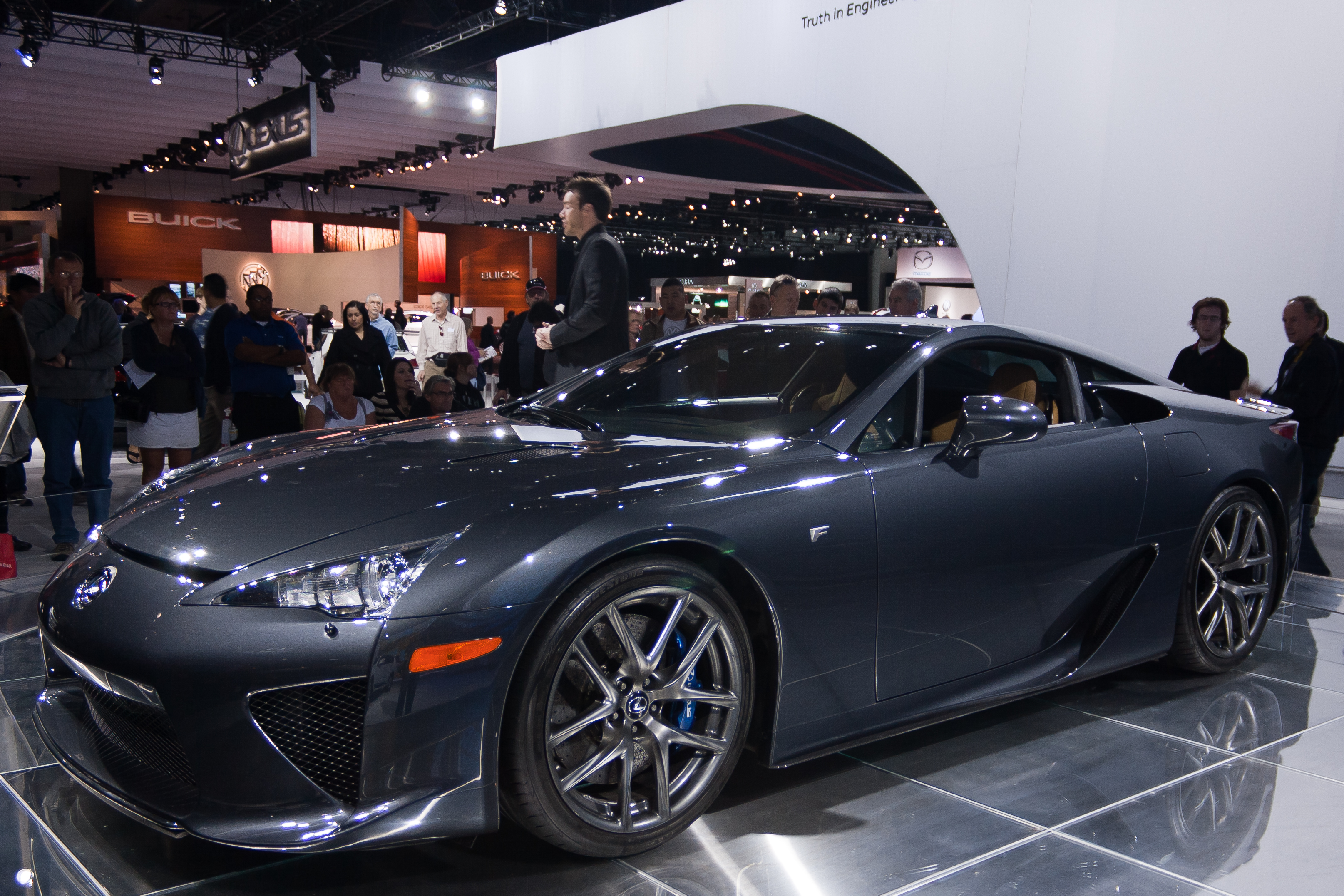
Lexus Lfa
Car
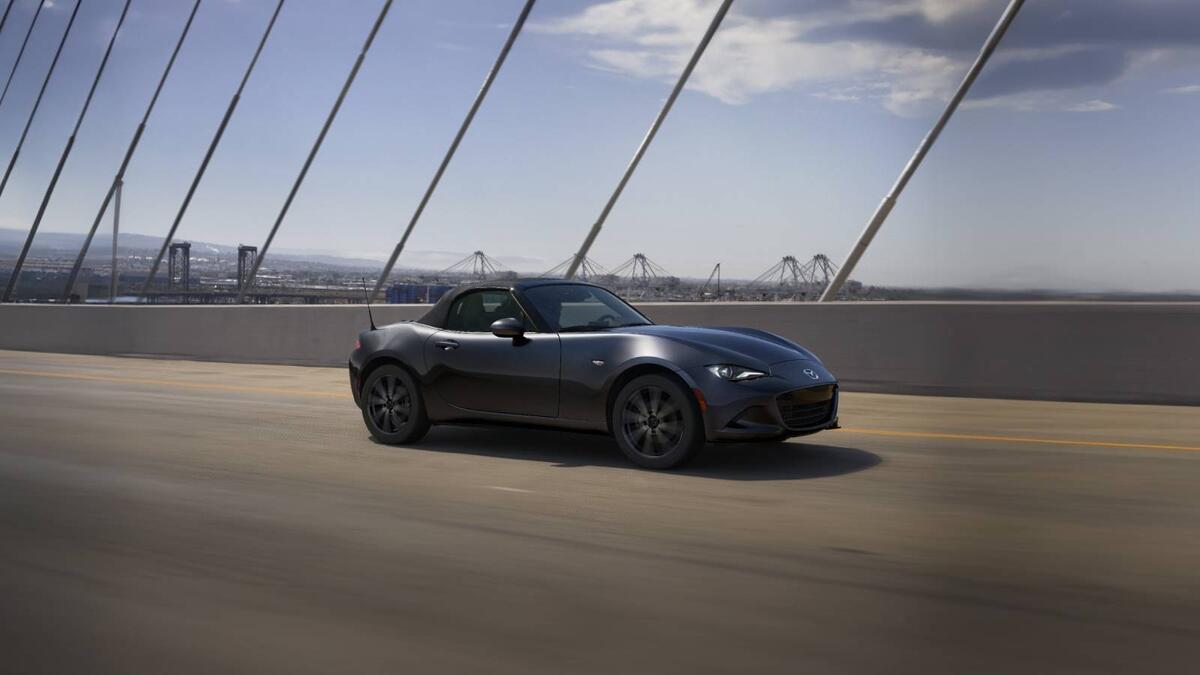
Mazda Miatas

Car
Ferrari F12

Car
Toyota Camry

Car
Honda Civic

Car
Dodge Ram

Car
Ford Mustang

Car
Ford F150S

Car
Toyota 4 Runners

Car
Mclaren F1


Car
Subaru Impreza

Car
Nissan 300Zx

Car
Ford Thunderbird
LIVE
Welcome to The Accelerator, a podcast for insurance agents and brokers who know there's
more to life than bundling home and auto.
Yeah, we're talking collector cars, better sales strategies, and ideas to grow your business
without boring you to death.
This isn't just another industry podcast.
It's the one you're actually going to want to listen to.
Welcome back to The Accelerator.
The podcast from Hagerty has made four agents where we help insurance agents recognize opportunity,
build stronger client relationships, and grow their business through the enthusiast market.
I'm John Gessner.
And I'm Brian Colley.
Thanks for your continued support to listen.
We really appreciate it.
And today, we have no guests.
That's right.
You're stuck with John and I, which means one of two things.
Either this episode gets very insightful or eventually HR gets involved.
Yeah, there's really no safety net for us today, which is a little intimidating.
There's no expert guest to steer the ship back on course if we drift into a 14-minute
conversation about why every dad eventually wants an old pickup truck.
I mean, that's real phenomenon, by the way.
And there's an age where a guy suddenly sees a square body Chevy and he goes,
you know what?
Maybe that's who I am now.
That's right.
And really, that's pretty much what today's episode is all about.
So we want to do something a little different and just talk directly to our audience,
to the agents we do business with, and about what we're seeing every day,
the kinds of clients that are already sitting in your book and maybe some of the things you
haven't really fully identified or thought of yet.
That's right.
Because one thing that we've learned after talking with literally thousands and thousands
of agents across the country is this.
Enthusiast clients are hiding in plain sight.
Oh, 100%.
Yeah, and it's because they don't always show up wearing a racing jacket or carrying a
bare Jackson catalog.
Yeah, no, it's more like they say, yeah, that one stays in my garage or that's my baby,
or it has a name like Black Panther, or that's just my weekend car.
I would never drive it in the rainy day.
Yeah, or it could just be the guy or gal whose entire mood changes when you ask about the vehicle.
Yes, that.
Suddenly the insurance conversation does not become a boring conversation that everyone
dreads.
It becomes a personal sharing story.
Yeah, and that's going to be the foundation of today's conversation.
We want to unpack what makes the enthusiast market different, why it matters to agents,
and why Hagerty exists in the first place.
Yeah, because a lot of people think just Hagerty is about classic cars,
like muscle cars from the 60s.
And that's right, but it's more than that.
Yeah, when you actually get to spend time in this space, you realize it's much bigger.
It's identity, it's passion, it's lifestyle, it's relationships, and it's changing.
It's a massive business opportunity to grow for agents who know how to recognize it.
That's right, and that's what Brian and I are here to do.
We're going to be structuring this episode all around a framework we talk a lot about
internally and also with our agent partners.
Recognize, place, grow.
Recognize the type of cars and the clients we're talking about, place the risk correctly,
and grow the relationship and get everything else.
That's right, and we're going to riff as we do.
Again, with that no expert guess to help rein us in.
And we're going to just talk about that today, some stories, some observations,
probably a few questionable opinions about cars.
Several questionable opinions about cars.
But hopefully, we'll also give agents a better understanding of why enthusiast clients are
some of the most interesting and valuable relationships that they can build.
And honestly, even if you've never written a single collector car policy,
I think this conversation still matters.
In fact, I know it does, because I talked to a few agents that have called me
after listening to this episode, who have nothing to do with personal lines,
and they still really understand how this matters to people.
That's exactly right, Brian.
The conversation will still matter, because the broader lesson here
is really about understanding people better.
And the agents who do that will not be replaced by AI.
In fact, to be more impactful for them.
All right, BK, let's get into it.
I want to start the whole conversation with this one question.
What would you say in all your conversations and meetings with agents out there,
what is the biggest misconception that folks still have about the enthusiast market today?
Yeah, John, it's a good one.
I think I was literally just presenting at a conference last week,
and this story comes to mind.
I got a question from the audience, does Hagerty ensure 2025 Porsche 911s,
and would those be considered collectible cars, or are they more just daily drivers?
The agent had asked that question because he'd placed it with a non-standard company,
and anyone who can afford a Porsche should not be with a non-standard company
unless they have a driving problem.
And so he just didn't think that that would be a collectible car.
But 2025 Porsche 911s are absolutely collectible cars.
They are definitely going to appreciate, and they're already kind of an instant collector car.
And after talking to him after kind of like backstage,
he actually told me that that client has 130 other cars.
That is just a mind-blowing thing.
So the misconception that Hagerty can only do old cars continues
to be probably our biggest thing.
I know we talk a lot about it, but every single time I talk to agents,
it's a mind blow that we can do newer types of vehicles
that they wouldn't necessarily think are collectible.
Wow, yeah, no big deal, 130 cars.
But that's not all that uncommon, believe it or not.
And Brian, you just illustrated a great point,
and one of the biggest opportunities out there for agents is that
the definition of a classic or a collector or enthusiast vehicle
has changed a lot faster than the insurance industry did.
Yeah, I think that's a good point, John.
Let's just talk about the industry for a second.
I think for a long time, Hagerty had a hard time figuring out like,
how big is this industry?
We did some research, and we actually purchased some of the registration data,
and we've done some of our own research.
We're very comfortable saying the market is about 45 million cars,
and that's obviously different by decade.
The cool thing about it is the newer vehicles from the 90s and 2000s
make up the vast majority of the market,
and there's a huge opportunity in that space
not to take anything away from the 60s, 70s, or 80s.
Those markets are much smaller, but we know, for a fact,
go to our investor relations page as a public company can look it up.
We have filed those things, 45 million vehicles, or more,
because every year there's more vehicles becoming eligible
for enthusiast type of vehicles.
We're talking two doors from the 90s.
We're talking two doors from the 2000s.
Pretty much any type of vehicle that you lost it after growing up in high school
is likely an enthusiast car.
And, Les John, did you lost after like a four-door Ford Taurus or something?
I maybe had some girls I was interested in that were driving four-door Tauruses,
but the car never really did it for me.
I was a Jeep guy.
My first car was a 1995 Jeep Wrangler.
Oh, that's cool.
It was like a cherry red, black soft top, rarely had the doors on.
For me, and my age, I'm 41, that is the type of car now that I want to have.
That car that I had in high school that I was obsessed with growing up,
that I have not had in my life for 20 years,
that's the type of car that I'm interested in.
That just speaks right to what you were just chatting about,
that modern enthusiast, more modern collector vehicle, the mid-90s Jeep Wranglers.
That's a hot one.
Also, things like Broncos, the overlanding scene is really growing.
We mentioned those square body Chevy's and other types of trucks, bands, SUVs,
especially really any type of those vehicles from the 80s, 90s, early 2000s to today.
Yeah, so you brought up some of the vehicles from the 90s and 2000s.
I just want to share a couple of them.
Some recent sales and valuations have increased significantly.
So we're talking about Land Rovers from the 90s.
The value of those now in a number one condition are close to 70,000.
That's 158% appreciation in the market.
Same thing with the 80s for Broncos and obviously 70s for Broncos.
And you could maybe even say the 90s, OJ editions, they're a little bit less expensive,
but now we're talking those are 75,000 to 100,000.
I mean, you could go to Gateway Bronco and get one for 400,000.
We're talking about 160% appreciation of those.
And then we have the Lexus LFA, which is a really cool car.
If you're listening, please go Google it if you don't know what it looks like.
You would see that car in the parking lot and say, that's a cool car.
But I don't think anyone would ever predict that that car is 1000000 dollars
with an 85% appreciation over the last five years.
So these types of vehicles, you'd see them.
You might think, oh, that's a cool old car.
You don't realize the kind of value and money that they're getting right now.
That's right.
And that's a really important point.
And we talk a lot about value and our valuation expertise,
because it really matters to get the value right so that when claim time comes,
there's room in that policy to get the vehicle fixed correctly.
And it doesn't end up in a total loss situation when the customer
desperately wants that car to be restored and continue to be driven.
And we also talk about value a lot because values change over time,
as Brian just illustrated.
Something that does continue to be a misconception,
I just want to take a moment to pause on though,
is that these vehicles do not need to be six figure classics anymore.
Brian mentioned a couple that are in that $60,000 to $80,000 range,
but just because it's a collector vehicle does not mean it's expensive.
There are a lot of vehicles out there that people have deep emotional attachments to,
or maybe it's their first entry into the enthusiast auto space that are
$10,000, $15,000, $20,000, $30,000 vehicles.
And that should not be a barrier for being placed on a guaranteed value
or agreed value policy with Agri.
Because that car means something to that owner, they're passionate about it.
And if you were to compare that with what they might get,
you know, an actual cash value situation or a stated value situation,
they're going to want that full agreed value.
So even if it's not a $100,000 car,
still makes sense to think about it, understand how it's being used
to find that correct placement.
Yeah, John, I'd say that's actually misconception number two,
that Agri only does really expensive cars.
And so two of my really good friends own Miata's from the 90s.
They both happened to be red.
One of them inherited it.
He's been working on it all winter.
He spray painted it with a spray paint can,
like, you know, a rattle can himself this winter,
but he cares so much about this car.
And actually it looks amazing for a spray paint, a rattle can paint job,
you know, a couple hundred bucks.
I'm actually pretty envious and jealous, but he loves that car.
I've driven in with them.
It's amazing.
The car's not worth that much.
It's worth, you know, I don't know, $10,000, $15,000, loves it to death.
He'd be super sad if he got an accident
and an ACV policy would have paid him, you know, $3,000.
My other friend, same thing, he drives it around
and he's left the license plate on it.
I think the story is it's like a family car
and I think it belonged to like his aunt or something like that.
But anyway, I have to tease them
because his license plate says TC Babe.
He's driving it around as a middle-aged, you know, man,
it's kind of funny.
That's great.
We had a car, quick tangent.
See, this is why we need guests on the show.
We had a car that was a family vehicle and it was a 1991 GMC Jimi.
Great car.
It had like 22,000 miles on it.
It was a total just like garage queen, like summer cottage car.
And the license plate on that was PLOP, P-L-O-P.
That was the name that was given to my wife's grandmother
when the kids couldn't say Holly, her name.
They ended up, PLOP is what came out.
So it kind of became a running family joke.
And yeah, when we purchased the car and took the car over,
he left the license plate on there
because it was part of that vehicle history and that vehicle story.
Those are the types of signals that you can look for and listen for
when people talk about these vehicles.
A 91 GMC Jimi, and if you saw a picture of it,
you would never think that that's a collectible vehicle.
That vehicle has meaning, but it does.
It had meaning that ran deep.
So there are some behavioral signals outside of the year
make model of the vehicle that you can look for.
So things like, it's in good condition.
Well, I guess we just got to prove the exception of that role
with the spray paint, the GMC Jimi that had a little rust
and some flaking paint, but it's typically well kept,
probably parked in the garage, somewhat low mileage.
There's that emotional attachment to it,
like we've been chatting about.
Maybe there's some customization.
Could be taken in the form of a custom paint job
that you do yourself in your garage.
Are they taken it to car shows?
Do they have more vehicles in the household than drivers?
Are you being told that it's special in some way?
These are all just behavioral signals that you can use
to better understand your customers, their passions,
and figuring out where to put these risks.
So, John, I know we're not talking about the high end,
but I have to share a story as an example
of a vehicle hiding in plain sight.
Yeah.
So here's the scenario.
You find out a client has a 2016 Ferrari F12.
That screams, oh yeah, that probably is a collector car
that belongs with hierarchy.
But you also realize that they have a 2015 Mercedes-Benz
SLS AMG Black Edition.
You might let that one slide.
You're like, I don't know, on Mercedes.
If you're not familiar with Mercedes, is that an SUV?
What's an SLS?
And so anyway, the reason why I'm sharing this
is I think most people would pick out the Ferrari.
Probably most people would not pick out the Mercedes
as being collectible vehicles.
They both are.
In fact, if you go back and look at auction records
over the last 35 years, Ferrari has usually been
the most expensive car sold publicly,
more than half the time.
But Mercedes comes very close.
However, I think three years ago, maybe it was four years ago,
Mercedes actually set the world record
for the most expensive public sale.
And just think about it for a second, audience.
I'll tell you the Ferrari public sales
around 50-ish million dollars.
What do you think the Mercedes sold for?
The answer is about just short of 150 million.
So don't go sleeping on Mercedes.
Just because it looks like it could be a type of Mercedes
you don't know, ask more questions
like John was just talking about.
How do they use it?
Do they take it to the grocery store?
People are not taking $150 million car
to the grocery store very often.
That's right.
I would hope not.
Yeah, and that's right.
And there are other marks that you may also kind of breeze
right over because it doesn't sound like Ferrari or Lamborghini
or even Mercedes or BMW.
Those are vehicles that are commonly associated
with people that love cars and love to drive.
But even things like Toyota, Acura, Honda, Mazda,
we mentioned the Miata, those are other marks
that have deep enthusiast ties with models
that enthusiasts absolutely love.
So again, think beyond the year make model.
Take some time to look at the entire account.
Ask your customer or prospect some questions
and really try to understand how they use their vehicles.
John, so you're talking about stuff.
This is great, Segway.
Not only is the collector car market doing really good,
$45 million.
It's growing every year.
Our spring auctions this year just for reference
to the last few years, $170 million in sales
in the spring auctions.
Last year, $195 million.
This year, $255 million.
So the auction market's doing really well.
But what you're talking about, the types of vehicles
you just described, are also really appealing
to younger people.
And so if you look at our coding data at Hagerty,
for a long time, baby boomers were definitely
the by far and away coding the most vehicles.
However, over the last few years,
Gen X has actually surpassed them.
And the millennials continues to be a solid third place
with Gen Z right there.
And so what we're seeing is a lot of these types of vehicles,
even with changes in the economy during COVID,
stuff like that, still appealing to a different type
of audience.
And so the boomers continue to be really good.
They continue to buy and sell vehicles.
However, over the next few years,
they will start to get to that age
where they're probably going to slow down a little bit.
It's really good news for us that Gen X
and millennials are very interested in this market
and they continue to show more and more interest
in these types of vehicles.
However, like John just said, different types of vehicles.
That's right.
So that's all well and good, right?
You're probably thinking, okay, I get it.
There are a lot of vehicles out there.
I might not be recognizing them all the time.
Why does it matter?
And I think this really boils down to the fact
that the car isn't always the risk.
The mismatch in coverage usually is
because those relationships that you have
with your customers are so valuable.
And sometimes they rest on a knife's edge,
especially in today's just increasingly competitive
insurance market and the changing landscape
and dynamics that are happening there,
like with the rise of direct insurance
and things like that.
So why does it really matter?
Well, first off, these auto enthusiasts
are great insurance customers.
They're typically financially stable,
careful drivers with good driving records.
They're emotionally invested in their assets
and getting proper coverage.
So they care about the insurance solution.
They're relationship-oriented
and they are engaged households overall.
They typically have a good network.
They go to car shows.
They're involved in groups online and or in person.
When you take that in summation,
they're just great insurance customers to have.
And by getting this passion asset placement done correctly,
just opens up the door for more in that account
and that household.
You also set yourself up for referral opportunities.
Yeah, John, I think it's really, really important to talk
about what that difference looks like.
And you've set it up really well.
I think one of our surveys showed that the average household
has like five cars.
So we've got a couple of classic cars,
similar daily drivers.
So the opportunity is not just that one or two.
Enthusiast or collector car,
it's the entire house for you, like you described.
I think it's really important, too,
to talk about the type of coverages
and how you'd position yourself.
And so think about like you versus a standard market,
an ACV policy.
How do you go about positioning Hagerty
and yourself without sounding salesy?
And I think there's just questions around,
I think oftentimes I asked agents,
how often do you come across auto policies
where there are more cars than drivers?
That's probably a really indication without talking to anyone.
If they have four cars on their policy
and there's only a husband and wife,
most likely those other two cars are something for fun.
They don't have an extra Toyota Camry
or extra Honda Civic just for fun.
Maybe they do,
but most likely it's something they really care about.
And I think if you see that as a first trigger,
it sets you up for some of the conversations
that really we've been talking about.
That's right.
And I think just a good framing for this to set the stage
is if you think about a standard auto policy
is built around transportation.
It's a utility to get people from A to B.
Enthusiast coverage is built around passion.
It's something that they love.
It's used and treated in a very specific way.
So we'll talk about some differences
in that standard coverage versus the enthusiast specialty coverage.
And we've already mentioned the agreed value
or at Hagerty what we call guaranteed value,
which protects the vehicle value for what it's really worth
with that agreed upon value at the time that the policy is issued.
And if there's a covered total loss,
that's what gets paid out guarantee.
There's no depreciation.
There's no checking market values or anything like that.
What's in the agreed value or guaranteed value is what's paid out.
That is very different than what we see on stated value
and actual cash value policies, right, Brian?
You're the insurance expert.
Can you break that down just a little bit for us?
Yeah, absolutely.
So I think there's three different types of policies out there in the market.
There's actual cash value,
which is pretty much what everyone has in their standard cars.
And when you give you total loss in that situation,
what happens is the vehicle is looked at
with other vehicles that are out in the market
and they try to establish what the value of the vehicle looks like,
but they use comparables.
And so there's not really comparable.
It's exactly like your car, right?
So we're going to have maybe more mileage on them,
maybe a little bit less mileage,
maybe some differences in condition.
The insurance company is going to try their best to come up with a value,
but most likely your vehicle is going to be compared
against vehicles that are not similar.
They're not exactly what you're talking about.
So most of the time, the value comes back much less.
And we have some case studies we could talk about if we have enough time.
Stated value is you state the value amount.
Both parties agree to it.
However, that is where the depreciation starts.
So if we state it at 40,000,
again, that's the maximum you will get,
but you can be depreciated just like actual cash value.
So in some ways,
stated value can actually be worse than actual cash value
because if you have 40,000 stated and then total loss happens,
you go out into the market and it's established at $30,000 value,
then you get 30,000.
But let's just say, for example,
no, actually these vehicles have gone up and it's 50,000.
Doesn't matter.
You get 40,000.
So that's not good.
And then there's guaranteed value that Hagerty has
where we're guaranteeing the amount.
There's no depreciation.
There's no haggling.
You set the value with Hagerty
and that's what you get in the event of a total loss.
And we do things that renewal to help.
We have valuation tracking, make things like that.
But it's really up to us and you as the agency
to make sure that those values are stay in line.
We have some value guards and some of our private client.
I don't think we'll get into that in this episode,
but it's really important.
And that's why our net promoter score
in the event of a claim goes up.
It's very rare for a company to have a net promoter score
increase after a claim.
And I love the fact we have that.
That's right.
I love that too because the claim is the insurance promise.
We make a contract.
We make it a promise and an agreement up front
when the policy is issued.
And that claim event is the promise being fulfilled.
And for the fact that our customer satisfaction scores increase
shows how good we are delivering on our promises.
Yeah, John.
And I think it's really important to frame up
how you talk about some of these coverages of the client.
I think this is pretty obvious,
but you need to figure out what is their pain points
and what are their passion items first.
So you need to ask questions around like,
if something happened to your car, what would you expect?
If something happened to this vehicle, would you ever want it back?
I think a lot of people maybe take for granted
that let's just use my 2020 Dodge Ram.
If it got into a total loss, I wouldn't want that back.
However, for most clients, we're in like 38 to 40% range.
At least when I was running our claims team,
want their vehicles back, they actually purchased them back.
So that's a very important question to ask around.
Would you ever want the vehicle back in the event of a total loss?
I think it might surprise you.
A lot of people would say yes.
Like for my personal 97 Trans Am family car,
I definitely want it back in the event of a total loss.
And then I think asking questions around, you know,
their parts or their tools or the things that you have
in your garage for this vehicle,
because there's a lot of expensive things around that.
There's a lot more questions,
but those three questions would help guide you.
Because what is everyone's objection when they're buying insurance?
They're usually like, it's too expensive.
A lot of times, Hagerty is a lot less expensive than the standard market
and our policies are 12 months versus six.
So that trips people up.
But we're not striving to be the cheapest insurance out there.
That's definitely not ours.
So then when you get the pushback around,
well, I don't know, that's kind of expensive.
Then you can follow up with simple things around like, well,
you know, again, these are the three things we state their concerns.
You care about what's in the event of a total loss,
what is the value you're getting.
You care about how you're getting to keep the vehicle.
You care about putting OEM specialized parts on the vehicle.
So which one of those don't you want?
And they're going to say, oh, I want all of them.
And then all of a sudden price doesn't become as big of a problem.
Yeah, that's great, Brian.
That's a really good example.
And, you know, that's part of the benefit
that agents get working with Hagerty.
Because you, most of our agent partners out there
are doing much more than working in the collector enthusiast auto space.
You got a lot.
You're running a business.
You're trying to hit your numbers.
You're offering customers a whole range
of different insurance products and solutions.
You're taking good care of them once they become customers.
So there's a lot on your plate.
There's a lot to know and understand.
And so being experts in the collector vehicle space
is probably not on the top of your to-do list.
But that's where partnering with a company like Hagerty can really help
and where we can provide that knowledgeable expert support
that can assist with valuation,
helping get to what is the proper value for this.
Our claim specialists, you want to talk about our claims and our MDU team?
Just as a way to provide you some confidence and just that understanding
and belief that if something were to go wrong,
you know that Hagerty's got your back.
Yeah, absolutely, John.
So I think our claims team really is where the rubber meets the road.
I can guarantee you we're the only company that only does collector cars
and enthusiast vehicles out there, which is really huge.
So that gives us an advantage because we see these vehicles every day.
We know exactly how to repair them.
So we've actually built a team called Material Damage Experts
that really have worked in shops.
So we have people that have restored vehicles
and gone out to SEMA in one award.
We have people that have worked with Ferrari
at Ferrari dealerships repairing vehicles.
So when we get a vehicle claim, we know exactly what to do with it.
We know where to go.
We can help the client figure out if they have a shop
that they want to go to, buds automotive outstanding.
A lot of times they don't,
especially if maybe they have inherited the vehicle.
They're not really sure.
And if you take it to a normal body shop,
if you'd show up at the Ford dealership with your 65 Mustang,
they're going to kind of laugh you out of the buildings.
They don't know how to fix that.
And then they don't know how to find parts, especially for older cars.
The non-standard digit VIN pre-81,
you can't just enter that into a system
and then it shows up all the parts like a normal car.
So really depending on the type of vehicle you have,
parts can also be a problem.
We have parts finding services.
We have experts on our staff.
I mean, it is really, really important to differentiate that.
A lot of the other companies, in fact,
all the other companies are doing hundreds and
of Ford Tourists, F-150s, Toyota 4 Runners, all good cars.
And then they get something like an 85 Mustang.
What do you do with that?
In fact, when I was running our claims team,
it's kind of funny.
Sometimes we'll run into other people's cars.
So we would have a 2010 Ford Tourist.
And we'd be almost the opposite, like, oh, a new car.
That's interesting.
So it's almost like flipped, you know what I mean?
And then the other big difference is OEM parts when they're available
or light kind and quality parts.
So we're not going out and getting aftermarket parts,
usually from China or some other companies out there
that maybe don't fit really well and it hurts the value of the vehicle.
We will do whatever it takes to try to get the vehicle back to the way it was.
So if OEM parts are available, those happen.
If it's light kind and quality,
those are parts from like a junkyard, still like the same part from,
you know, an 85 Mustang, we'll get those.
If the only option out there is aftermarket,
then that is the option.
But we've also done things like fabricating parts for really rare cars
and things like that.
Just stuff that you would never hear from a normal insurance company.
When vehicles that are on the higher end get damaged,
think McLaren F1, we send them back to the factory.
KonaSeg, we have those over in Sweden.
Ferrari, back to Italy.
Not all the time.
We're talking very small percentage of cars.
Can't get fixed in the United States.
But when they cannot get fixed in the United States,
we will send them back overseas.
That's great.
Thanks for that deep dive of our claims team and that claims experience.
That's a big differentiator for you when you're working with these enthusiast clients.
And to sum it up, we've got that great claims experience.
We've got the valuation expertise,
keeping our finger on the pulse of the market
and knowing the true and most current value of over 40,000 makes and models
and the collected enthusiast vehicle space.
We work with you on consultative underwriting
for those risks that don't quite fit or check the traditional underwriting boxes.
But I will say the majority of quotes that are done online and by our agent partners
are issued online automatically with no manual underwriting review.
And quotes can be done in like 10 minutes.
So it's a relatively quick and easy process, which is another common misconception.
So John, I think hopefully we've convinced the audience that the market's big enough
that these vehicles are wars going after.
Literally, they could probably pull up a client.
They think would maybe have one of these vehicles.
I bet you that's what's going through people's head.
Let's talk a little bit about how to connect with clients and how to connect with collectors.
This is where Hager, you can really assist you and be part of your business
and almost be like an additional part of your staff.
So there's three ways I would recommend connecting with these types of clients.
And there's broad spectrum here, events and auctions.
You have access at the point of passion.
So auctions happen all over the country, but they're not in every single city.
So this one maybe is a little bit harder to get to.
But think of Barrett Jackson, think of Meekum,
think of some of the other auctions like Leek and several of the others.
But if you do go to an auction, it's really a target rich environment.
People are buying vehicles.
It's literally like walking into a dealership or contacting with a mortgage lender.
Like you're getting people buying vehicles, so they have a need.
They're really excited.
If they buy a vehicle, they're really, really excited.
There's also concor events across the country.
Again, not in every city, but that's a higher end type of show.
And those are really a high intent audience.
They're actively looking at cars, they're selling, they're ensuring them.
So I'd say that is one aspect.
Another one is really getting your hands dirty.
And doing an experiential engagement, such as track days and drives.
So the part I like about this is that's kind of passive marketing.
You're not there to sell.
You're becoming one of them.
And so you're driving on the track with several other people.
Maybe it's your first time driving the track.
Don't get intimidated.
Harry puts on several extreme experience events across the country,
not in every city.
But usually after the driver's meeting, where the driver instructor scares everyone,
people are really scared to go on the race track and drive a Ferrari or drive a Lamborghini.
But I'd highly recommend looking at the extreme experience.
Several other events like that that Harry hosts.
So you're out on the track and then you can call up your client like,
oh, that's cool.
I just drove a Ferrari yesterday.
And if they have a Ferrari, you guys instantly have a bond.
And the last one, which I think is pretty easy,
because it's pretty much everywhere, are local car clubs and local events.
So there, great example on part of the Porsche Club of Northern Michigan.
I was in an event in the fall.
I was just there with my wife.
I was trying not to engage with anyone.
So I was trying not to wear any Hagerty logos,
but I didn't realize the back of my hat had a very small Hagerty logo on it.
I had like five people come up to me, talk to me about insurance.
And literally this will happen to you if you go to these types of things.
You're embedded into the local community and you looked at it as a peer.
And so when you talk to your peers, like my lawn tractor was broke last night.
Guess what?
I talked to my neighbor.
Hey, what kind of tractor do you have?
That's exactly the type of conversation that we're talking about here.
And Hagerty works with over 500 car clubs across the country.
So if you need help with that, we can help there.
And then we can do some partnered type of events.
This isn't for everybody, but we love to do some things like this.
So for centers of influence, we have several different ways we can connect and do it jointly.
We have a Picasso or Porsche presentation where we bring in and talk about
versus cars and how there's connections there.
We do collector cars as an asset class.
That's more for financial planners.
And if you work with either of those types of COI assets, love to partner on that with you.
Also, we can do client facing events such as whiskey watches and wheels.
State of the market.
We have a really deep presentation around that.
I've done that at several museums across the country.
Really, really good engagement.
And then like John said, we're here for you.
We know that you're doing other things.
You don't have to be an expert.
So just join us.
We can do join travel.
We can do private tours.
We can do all kinds of local stuff with you guys.
So use Hagerty as an expertise resource.
That's right.
And going back to cars and coffee and just this opportunity to present yourself as a kind of
a peer or someone that participates in the hobby or integrating with the community.
People are not typically just casually mentioning their insurance company at a car and coffee
unless the experience actually meant something.
People love to have a guy.
Oh, I have a guy for this.
I have a guy for that.
You can be the guy or gal because people love sharing that.
If they have some kind of a specialized person that is a go-to resource for them,
they've had great experiences with.
I've got a great insurance agent.
She really knows cars.
Let me text you her info.
People do talk like that, but it's got to be meaningful.
There's got to have been a great experience.
The one thing Brian and I would add to your list is something even a little easier that
anyone can do from almost anywhere that they are.
And that is sharing the Hagerty media.
Hagerty has a massive media arm that is tapped directly into the automotive enthusiast space
where we're publishing videos and short form content and long form content
that celebrates all the different areas of the enthusiast automotive community.
From valuation trends to car profiles to member stories about people and their cars
and their passion for driving.
And those are free and available on Hagerty.com slash media.
We also share them out a lot in our agent newsletters and things like that.
Dropping those in an email, texting those to some of your clients that you know are into cars,
posting those on your social media.
Those are all signals to your car loving clients and those in your orbit
that you know cars, you get cars, and you're a great person to talk to about their insurance needs.
Yeah, John, I think as we come in for a little bit of a landing here,
because we could probably keep talking for another couple of hours on this topic.
But I think agents who really get it, meaning they're part of the client's world,
they're looked at as a trusted divisor.
I loved your thought around being the go-to guy or saying,
hey, I've got a great insurance agent.
She really knows cars.
You know, they become hobby enablers.
You don't have to be an expert.
Really in a world of commoditized personal lines where everyone's trying to get the cheapest price,
you really kind of stand out.
You know, you've got direct competition coming at you.
You've got billions and billions of dollars of advertising from big companies.
You know, the race to the bottom is just like,
how can everyone just commoditize where you can stand out and be different?
Like John was just describing,
can you imagine getting a text from your insurance agent with a picture of a car
saying, hey, I just thought of you like stuff like that.
I think as AI takes over, it can do almost anything for anyone.
People that do things differently like that can never be replaced.
And it's probably more important to add value now as a consultant more than ever.
That's right, Bryant.
That's a great summary there.
And that's just going to help you not just in the, again, the single line for this one enthusiast vehicle,
or maybe they have two or they have three.
What that's going to do is just open up the door into the household,
into the account to have more honest, direct conversations.
Because you've kind of proven that you get them.
They trust you with their most passionate asset.
And so they're going to be more open to having conversations about all their other
insurance needs, other vehicles, their home, potentially they have additional properties.
They may have a business.
We actually heard from our great friend, Jeremy Benjamin, on our last episode about
that cross-sell between commercial alliance clients and personal alliance clients.
And that collector vehicle was really the bridge between those two.
So it really opens up a lot more insurance and business opportunity for you beyond just these
single lines.
So, John, should we do a fun lightning round?
Oh, I love fun lightning rounds.
All right.
So we're going to do something called you might be an enthusiast if.
So you might be an enthusiast if your garage fridge matters more than your kitchen fridge.
That's right.
You might be an enthusiast if you can't remember your kid's social security number,
but you've memorized your van.
You definitely were an enthusiast if your car battery has a maintainer
or some sort of schedule to start it up once in a while.
And you might be an enthusiast if you park 40 feet away from every other car.
And lastly, you're definitely an enthusiast if you own a car-specific sweatshirt, hoodie, or hat.
Says the guy wearing a car-specific vest today.
Last one because why not?
I'm going to put, Brian, I'm going to put you on the spot.
I'm going to play Alex Trebek here for the Woodhaggerty Quoted Lightning Rounds.
So I'm going to read off the scenario.
You know, obviously we don't know everything about the customer situation
from these one little sentences, but give me your best guess here.
So we've got a 1993 Ford F-150 SVT Lightning Truck.
It's owned by a 37-year-old in Bentonville, Arkansas, and driven occasionally to meet up
with friends or go to work when it's not in the owner's garage being restored and modified.
Definitely quoted.
Correct.
What about a 2007, so newer even than the 90s, a 2007 Subaru Impreza WRX STI,
it's a four-door hatchback, was recently purchased as an extra car for a family of four.
The insurers have primary vehicles for all household drivers.
I mean, it goes against my two-door rule, but absolutely quoted.
All right, now here's one that can't be right.
So it's a red 1995 Nissan 300ZX.
Okay, it is a two-door coupe.
It's got 90,000 miles on the odometer.
It's a 26-year-old insurer's second car, and they park it in their driveway here in Michigan.
The insurer calls it their fun car, but insists they don't go to any car shows.
I mean, absolutely.
Quoted.
Nissan, that's another great example.
We were talking about earlier, Acura, Honda, Toyota, Nissan.
Don't sleep on the Nissan's.
What about a white 1956 Ford Thunderbird?
It's been in the insurer's family for 40 years.
The Thunderbird is currently under restoration in the insurer's garage,
where they're working to bring it back to its full glory.
I love this one because it's quoted for sure, because a lot of people think,
just because it's being restored and not being driven, they shouldn't put insurance on it.
I've had so many claims, people, guys, like put insurance on this stuff.
If the lightning strikes or flood happens or something,
there's so much money into these.
Yes, just because it's under restoration, quote it.
That's right.
All right, and one trick question.
Oh, wait, I shouldn't call it a trick question if it's a trick question.
We're going to do it anyways.
A 2000 Toyota Camry owned by the insured since new.
The insured has a truck provided by their employer that's used as a primary vehicle
and only drives a Camry for personal use on the weekends.
I love this one.
I love this one.
This Camry is 26 years old, folks.
A 2000 vehicle is 26 years old.
The old, quote unquote, definition of classics was 25 years old.
That definition, like we've talked about in depth on this podcast, is a myth.
But absolutely, quote it.
And it goes against my fun story of like they have an extra Camry.
This one is an extra Camry.
All right.
Well, Brian, I had to say you did really well there.
I think the Toyota Camry is probably the trickiest one,
because while it is 26 years old, an extra vehicle, is that really an enthusiast car?
I mean, each their own, John, I would quote it.
I mean, I had a collection of Camrys when I was in claims that flooded and the guy owned 26 of them.
So you just never know.
Wow.
That's right.
You don't know.
And that's where asking those extra questions really comes in handy.
And for me, one of the cues was the insured has owned it since new.
So obviously, it means something to this person, because they have transportation provided through
their work, but they are hanging on to this 2000 Toyota Camry.
Brian, well done.
Thank you for participating in the Woodhaggerty, quote it, lightning round.
Thanks, John.
I thought this was fun.
My main takeaway for everyone, there are millions of people out there that just don't own vehicles.
They love driving.
They own their vehicles for whatever reason, but it appeals to them.
And agents who understand this are in a completely different universe and in a position
to build stronger relationships and grow their business in a world that is increasingly AI
and really commoditized focused.
Well, I can't top that.
So what I'll do is I'll say thank you very much for listening.
We appreciate you tuning into the Accelerator Podcast, and we will talk to you again soon.
Until next time, never stop driving.
Original notes
Bryant Kolle and John Gessner go solo to break down one of the biggest missed opportunities in an agent's existing book: the enthusiast client hiding in plain sight. From 2025 Porsche 911s to 90s Miatas, they unpack the real size of the collector car market and how agents can recognize the right risks, place them with confidence, and grow these relationships beyond a monoline policy.
Here’s what we’ll cover in this episode:
(00:27) Why enthusiast clients are hiding in plain sight
(02:30) The Recognize, Place, Grow Framework explained
(04:21) The biggest misconceptions agents have about Hagerty
(06:06) How big is the collector car market really?
(08:15) Surprising valuations on vehicles from the 90s and 2000s
(09:24) Why value accuracy matters so much at claim time
(13:47) Behavioral signals that reveal an enthusiast client
(18:27) Why enthusiast clients are great insurance customers
(21:03) Guaranteed value versus stated value versus actual cash value
(26:36) How Hagerty's claims team is built differently
(30:50) Three ways to connect with collectors and grow your book
Explore more with Hagerty:
The collector clients sitting in your book
The Bull Market List reflects the changing Hagerty appetite
The RADwood Effect: 80s and 90s Car Culture
Understanding collector car claims
Send your questions and feedback to Bryant and John at [email protected]
The Accelerator by Hagerty
Hagerty
0:00
43:24