The average transaction price is what people actually pay for cars after all the deals and discounts. It helps show how much cars are really costing buyers.
When we say EV sales stalled, it means that people are not buying electric cars as much as before. This could be due to various reasons like higher prices or not enough interest.
A full-size pickup truck is a big truck that can carry heavy loads and is often used for work or towing things. They're very popular in many areas, especially for people who need to haul stuff.
Tariff costs are extra taxes on goods that come from other countries. When these costs go up, it can make cars more expensive to make and sell.
Concept
$70,000 pickup trucks
This refers to the high prices of pickup trucks, which are often marketed at around $70,000. It shows how expensive trucks have become and how it affects people's ability to buy them.
Concept
$100,000 plus SUVs
This refers to SUVs that cost over $100,000, showing how some SUVs have become very expensive and are marketed as luxury vehicles.
Dealer markup is when a car dealer raises the price of a car above what the manufacturer suggests it should cost. This usually happens when there aren't many cars available, and many people want to buy them.
Market adjustments are price changes that car dealers make based on how many cars are available and how many people want to buy them. If lots of people want a car but there aren't many available, the dealer might raise the price.
Gross profit is the money a business makes from selling its products after subtracting the costs to make or buy those products. For car dealerships, it's the profit from selling cars before other costs are considered.
Inventory management is how businesses keep track of their products. For car dealerships, it means having the right number of cars available without having too many that don't sell.
Mazda is a car company from Japan that makes a variety of vehicles, including sporty cars. They are known for their unique designs and good driving experience.
Profit margin shows how much money a company keeps from selling a car after paying for everything it took to make it. A higher profit margin means the company makes more money.
The Nissan Versa is a small, affordable car that is good on gas. It's a popular choice for people who want a reliable vehicle without spending too much money.
Day supply of inventory means how long it would take to sell all the cars a dealership has. If there are too many cars, they might lower the prices to sell them faster.
The Porsche 718 Cayman GT4 is a really fast and sporty car that people love to drive. It's designed to be fun on the road and can also handle well on race tracks. Many car fans talk about it because it combines luxury with exciting performance.
The Autobahn is a type of highway in Germany where there are no speed limits on certain sections. This means drivers can go as fast as they want, making it a popular place for car lovers to test their vehicles.
The Nürburgring is a well-known race track in Germany that is famous for being very challenging. Many car companies use it to test their cars because of its tough turns and hills.
Ford is a well-known car company from America that makes many types of vehicles, including trucks and cars. They have been around for a long time and are very popular.
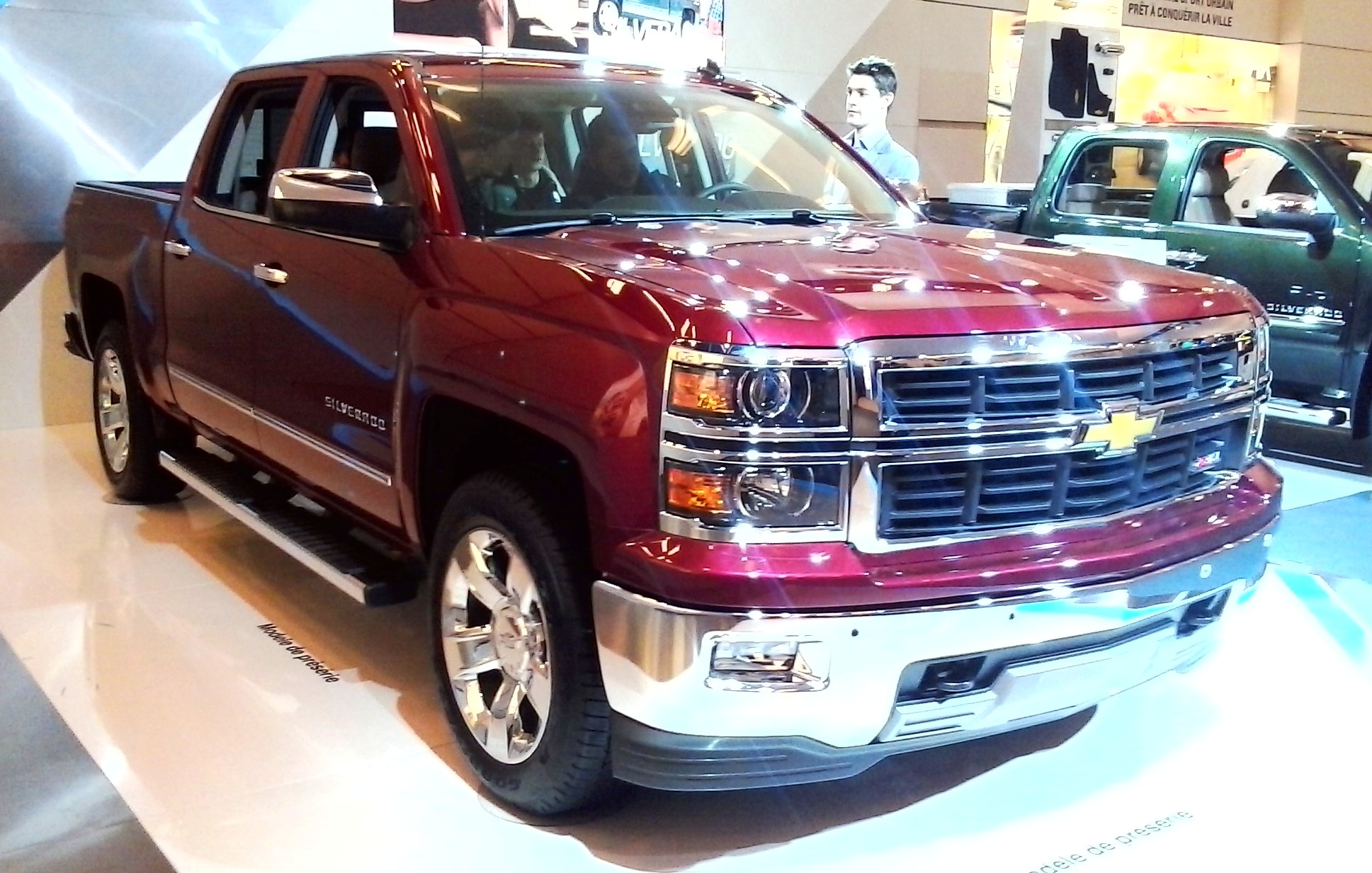
The Chevrolet Silverado is a big truck that many people use for work or to carry things around. It's known for being tough and reliable. Sometimes, people talk about it because there are issues with making enough of them to meet demand.
LIVE
Ever see an idea so clearly in your head but struggle to make it real?
We've all been there.
With Wix, you can build a website for your business just the way you pictured it.
Get the best of both worlds with AI and drag and drop tools all in one place.
Stay in your creative flow and use AI when you want, how you want.
Create a website your way.
Try it out at Wix.com.
Weight Watchers now offers access to affordable GLP once.
It works for members like...
I'm Hailey and I've lost 100 pounds.
Weight Watchers has everything I need.
From weight loss medications to nutrition support and help with my side effects, it's all in one place.
Weight Watchers handles the insurance for you and offers affordable cash pay options.
With our program, our members are losing more weight with expert nutrition and side effects support.
I'm Mike and I've lost 135 pounds.
Weight Watchers prescribing GLP1 medications.
It's been life-changing.
I'm Sharia and I lost 80 pounds on Weight Watchers.
I realized that it would take more than a prescription to lose weight and feel good on a GLP1.
Better results, expert support, lose more weight, make it last.
I can't imagine doing a GLP1 without Weight Watchers.
Get started for as low as $25 at WeightWatchers.com slash GLP1.
For over 60 years, we've helped millions of members find what works for them.
Now, it's your turn.
Weight Watchers, watch it work.
Happy holidays!
Want to give your host a gift?
Consider subscribing, rating and reviewing the show this holiday season.
It really helps the show grow.
From all of us at Believe, have a merry Christmas everyone and a happy holiday.
It's noon here in Ventner City, New Jersey and our nation's capital, Washington, DC.
And this is Car Edge Live for Thursday, November 13th with your hosts, me, Ray, here in Ventner City and Zach.
Well, sitting in a dealership somewhere in Washington, DC, perhaps threatening to...
I doubt it.
But in case he was threatening to buy a car, we're all here to help him.
That is our mission at Car Edge.
Quite the intro this morning, folks.
Grateful you're here with us, not in a dealership in the office, but the green screens work in overtime.
Friendly reminder, we are doing dual streams here on YouTube.
If you want the vertical orientation, you go ahead and click on the one that has the little phone emoji on it.
If you want the landscape orientation, you got to click on the one that does not have the phone emoji.
Again, one for mobile, one not for mobile.
It's back on the Car Edge Live channel.
Dad, today's show is brought to you by caredge.com.
Six freaking years ago, y'all, my dad and I started building this little thing we call Car Edge, all in service of helping you get a great deal when you buy a car.
We have a promotion on yawning.
For a limited time, we have $150 off our car buying service.
Every single day, dozens of people are signing up and working with our team of concierge experts.
You can learn more about their qualifications, their decades of experience in the car industry, and how they can help you have a great car buying experience, as well as get a free consultation.
And Car Edge Pro is 15% off.
This is the tool set we use to get you the best deal.
Now, dad, the big story this morning is the car market in the United States of America is B-R-O-K-E-N.
And I've got a lot of data that helps reinforce this argument.
Go for it, dad.
Is that my brother Ken?
Nope.
Bro Ken.
Bro Ken.
Bro Ken.
Not your bro Ken.
It's broken.
We've got two different pieces of data that I think are going to frame this, dad, and really I think are quite damning for what's going on in the auto industry.
First things first, KVB report.
New vehicle average transaction price actually went down in October.
EV sales stalled and incentives dropped.
Here's case number one for why the car market is broken.
The average transaction price went down month over month to a measly $49,766.
Now, what's damning in this report is twofold.
One is, did you know that the average MSRP for a full-size pickup truck has now passed $70,000?
So the average transaction price for a new car is almost 50, but you want a pickup truck, which is this pickup truck country, 70,000 big ones.
That's data point number one for the car market being broken.
That is a sign that most people need to get their head examined, at least to me.
Whether you're the manufacturer or the ultimate customer, the question needs to be asked.
Why does anyone need to spend $70,000 on a pickup truck to be able to get from point A to point B when there are any number of other vehicles out there that can do the same?
And in some cases, you could be looking at vehicles that can do the same and for that same $70,000 by, I don't know, two and three-quarter vehicles as opposed to one vehicle.
So data point number one, $70,351.
Keep that in mind, folks.
Average MSRP for full-size pickup trucks sold last month.
Now, the next thing that tells me that the car market is broken is we look at the average transaction price, which is the blue line here,
compared to the average incentive spent as a percentage of the average transaction price.
The simplest way to understand this would be that if this was, it's currently 6.5%.
Imagine it was 10% and the average transaction price for a new car was $100,000.
That means that manufacturers would be spending $10,000, 10% of $100,000, $10,000 to incentivize the sale of their vehicles.
Well, the current math that is the average transaction price for a new car is $49,766 and manufacturers on average are spending 6.5% of that amount to subsidize,
to incentivize the sale of their vehicles.
The thing that tells me this is broken is look at the sharpness with which this orange line has gone down.
The percentage or the incentive as a percentage of the average transaction price has dropped down precipitously.
That line is plummeting.
That doesn't make any sense.
How can sales are slowing?
I've got inventory data we're going to look at in a minute.
Sales are slowing, but incentives are plummeting?
Like what? That's broken.
Well, here's what's broken.
Manufacturers only have so much money to spread around.
Which to be clear, 6.5% is $3,234 rounded up $3,235 per $49,766 vehicle sold is what they're spending in incentives now.
But my point is, if you are using some of the money that you have to spread around to eat and offset some of the tariff costs that you now have,
then that takes away from the money that you would normally be using to incentivize the sale of the vehicle.
Apparently, you can't do both to the same extent that you had been.
Before the pandemic, incentives would be 10.5%, 11.5%.
So, incentives made up more than 10% of the transaction price.
So, if a vehicle was $50,000 back then, that would have been $5,000 in incentives to sell it as opposed to today, it's $3,235.
That's a significant difference.
And some of that is being eaten up by the extra costs involved in the tariffs today.
So, what means that it's broken is the fact that the prices are as high as they are and there's significant enough sales that for the manufacturers,
they can remain somewhat profitable, not as profitable as they had been.
And the chasm between those who can buy things and those who can't has never been greater.
And I believe as part of that study, there is a quote in there that, yeah, everything seems hunky-dory for well-healed buyers.
But what about the rest of us?
Yeah, for sure, Dad.
For sure.
We go off that tangent every single show.
I want to focus just on the data.
And there's more data on the inventory side of things that actually paints a pretty compelling case that what you just said is wrong, that this is not sustainable for the manufacturers.
And I want to pull this information up right now.
Look at this.
We have the latest new car inventory data, literally just came out a couple of minutes ago from Cox Automotive.
New vehicle inventory rising ahead of holiday sales season.
We are up to 2.97 million vehicles in dealer inventory and 88 days supply of inventory.
You jump back just one month.
So we're looking now at last month's information.
Now is 2.87 million vehicles in inventory and 84 days supply.
We're going to, like we always do, break down every manufacturer and where they sit on the inventory spectrum.
That being said, the trend is very clear.
These manufacturers have more of their vehicles sitting on dealer lots, not selling, taking longer to sell.
That is not sustainable for the auto industry.
The longer vehicles sit, the more pressure these dealers have to liquidate that inventory and get rid of it.
This is a very treacherous moment, I think, especially as we head into, I mean, there's 900,000 2025 new vehicles still out there for sale right now.
I mean, there's prior model year inventory galore as the 26s are rolling out.
Like, there's a lot of pressure, I think, at this very moment that kind of breaks the argument that you were just saying, which is this is good enough for the manufacturers.
Maybe it was last month, maybe it was a couple months ago, but I think a few more months sustained like this.
And they're looking in the mirror saying, holy hell, where did our shoppers go? Where did our customers go?
But they know where their shoppers have gone. They know where their customers have gone.
They know that they've continually raised the price of their vehicles significantly over the past five years.
And in many cases, the prices have been raised at a higher level than the rate of inflation.
So they know that they're appealing to a much smaller customer base.
Their hope is that that much smaller customer base can sustain them.
I don't know that it can.
No, there's nothing about hope. There's nothing opinion here. The data is the data.
It has no opinion. It is objective. And what is the data telling you?
Why would inventory be going up in days supply be going up?
That tells you that those customers are not buying. I mean, there's not hope here.
There's numbers. This is quantitative, not qualitative.
Well, I understand it's quantitative, but trust me, at the management level, it's hope.
Okay? Because they've built all these things. They've raised all these prices.
They've made the vehicles less affordable. They have sold the American public on the concept of $70,000 pickup trucks and $100,000 plus SUVs.
Okay? They're the ones that have marketed these things to create whatever interest there is in them.
But what more sign do you need that the market's broken, Dad?
Because to your point, the manufacturers are not increasing their incentives right now because they feel their hands are tied because they're trying to offset tariff costs.
At the same exact time, inventory is not getting smaller. Inventory is getting larger.
What happens when inventory builds? The amount of interest expense that dealers have to pay to hold that inventory goes up.
We've watched this time and time again. Actually, guys, we watched it work in the opposite way.
What was it five years ago now?
Remember, every single large publicly traded car dealership group was making tens of millions of dollars more per quarter because they were making money from their floor plan expense
because the manufacturer was subsidizing it, but the dealers were selling the inventory so quickly?
We have seen this market work in really volatile ways at one end of the spectrum.
I think the data points to where you're heading to the other end of this spectrum, which is the cars got too expensive.
The manufacturers can't increase the incentives enough to subsidize the sale of those vehicles because their hands are tied due to tariff.
Inventory builds by your market. Pressure on from the manufacturer to the dealer.
The person that has the power in this negotiation is you, the consumer.
The market is broken. It is clearly broken to me.
I'll accept your premise that the market is broken.
Thank you.
I'll accept your premise to a certain degree that it's a buyer's market, but it's a buyer's market for a very small percentage of the population.
Let's look at the inventory levels by Brandon a second here.
But the manufacturers, knowing what they've done, producing what it is that they're producing, there is no way they can address the affordability issue on a $70,000 pickup truck.
I don't care how much they lower the price of the damn thing.
So the issue for me is that they all got too greedy too quickly.
Oh, go figure, giant corporations who are trying to make billions upon billions of dollars would ever try and take advantage of a situation if it were to occur.
So they all got too greedy too quickly.
They have shrunk their customer base who they can sell to.
And even though it might be a buyer's market for those people, those who are looking at a $70,000 pickup truck with an average six and a half percent of that transaction price taken up by incentives.
So that's what about five grand, okay?
And if they get discounted.
So maybe they're buying them for 60 grand, it is still out of reach for the vast majority of people.
And it is becoming even more out of reach at this point in time for those well-heeled buyers who are still perhaps in the market.
At a certain point, everyone has to look at this and go, I'm not spending that kind of, even though I make enough money, I'm not spending that kind of money for a pickup truck.
I'm not spending that kind of, I'm not spending 50 grand for a non pickup truck.
It is, so yes, I'll buy the premise that it's a buyer's market and the market could be broken.
But I can't picture these manufacturers reversing course to the degree that it would bring back more customers and more buyers and bring back more people into the market.
They have accepted the fact that they are going to sell fewer cars to fewer people, but those that they sell, they're going to make a significant enough profit on that they can maintain their position in the industry.
That's what I think is going on.
To the numbers we go, brands facing rising supply, I love this, and shifting demand.
The demand isn't shifting, okay? They've been playing to the same small group of Americans for the last four or five years.
There's two ways, market day supply, which is the number we're going to look at here in a second, is how many days it would take to sell all available inventory based on current sales rates.
There's two ways for that number to be influenced.
Either you increase the amount of vehicles for sale or you increase or decrease how quickly those vehicles are selling supply demand.
That's all we're looking at when we look at this.
This heading is funny because it's brands facing rising supply.
Okay, they were honest about that one. Supplies increasing and shifting demand.
They're not being honest about that one.
Rising supply, decreasing demand is what that should really say.
Looking at mainstream brands, recent inventory trends reveal that some manufacturers may be edging toward overstocked territory as consumer demand shifts.
Cadillac. This is interesting, Dad. Cadillac's day supply increased 15% from a month earlier signaling a potentially risky buildup if sales don't keep up.
So Cadillac's a luxury brand, well-heeled buyers.
They're seeing a 15% increase in their inventory relative to demand month over month.
Jeep's situation is even more pronounced, a 24% jump in days supplying a 13% increase in inventory driven by models like the Cherokee Compass and Wrangler,
putting the brand at the high watermark for 2025 and close to having more vehicles than the market might absorb.
Okay, so let's just focus here on Cadillac and Jeep.
You had your manager of a dealership, you see your day supply of inventory increased by 15% or what was it, 24% respectively?
What does that do? How does that change your mindset as the operator of that business?
How do you think about your dealership when month over month you've had a 15% or 24% increase in your day supply of inventory?
Alright people, serious question time. Did you know that driving high is considered driving under the influence?
That's right, driving under the influence of marijuana is against the law in every state.
That means even in states where marijuana is legal, that means driving high could get you a DUI.
And if you think law enforcement officers can't tell when you're driving high, well, you're wrong.
If you're high, they can tell, your friends can tell, your co-workers can tell, even your parents can tell, everyone can tell.
So what makes you think that law enforcement officers don't know when you're driving high?
You'd be wrong, they can tell too.
Driving under the influence of marijuana can slow your response time and change how you perceive time and speed.
So even if you think you're fine to drive when you're high, you're not.
Because the bottom line is, if you feel different, you drive different and driving high is driving under the influence.
So remember, drive high, get a DUI.
Paid for by NHTSA.
Wix is the website builder that just keeps on giving.
It's giving...
I just built my whole site in under an hour.
It's giving...
I actually made that?
Whoa, it's giving...
Our sales are through the roof.
So whether you need help expressing yourself or just need something to make your life easier, Wix has you covered.
Try it out at wix.com.
Hi, I'm Andy Staples from Andy and Ari on 3.
And another five star quarterback just entered the transfer portal.
That's what college football is now a nonstop adventure.
And we cover it every day at Andy and Ari on 3, whether it's the transfer portal, the college football playoff, the coaching carousel, you name it.
And guess what?
It doesn't stop even when the season ends.
So join us every day, Monday through Friday, new episodes drop at 3pm wherever you get your podcasts.
Well, there's two things that I would think of.
I would look at my inventory levels and I would try and come up with a plan that will move my inventory sooner rather than later.
I would also look at the average number of days it takes to move these vehicles that are growing in inventory.
At a certain point, I am going to say if I'm managing a store that sells jeeps, I don't want any more of your jeeps.
Sorry, I know you've allocated another 45 jeeps.
I'll take 15.
Well, what about the other 30?
Not interested in the other 30.
If I'm managing a Cadillac store, the same thing.
I'm going to look at my daily sales rate and I'm going to figure out how many days it's going to take me to sell what I have in stock.
And I am going to turn down inventory as necessary in order to bring that turn rate to where it's turning more quickly as opposed to more slowly.
So how do you impact those things?
How do you get your inventory to turn more quickly?
Typically, it's via pricing, okay?
We saw it during the pandemic.
When there were 900,000 vehicles available, new vehicles available for sale on a monthly basis, that meant that there was a limited supply and an excessive amount of demand.
And dealers were doing additional dealer markups, market adjustments, anywhere from $1,000 to $20,000 or more.
So we're now looking at a situation where the demand is much less or lower than the supply.
So if your supply is greater than the people who want to buy it, well, what do you do?
You have to lower the price.
Now, the manufacturers have shown that because of tariffs, they can only afford to help to a certain degree and that degree isn't quite as high as it had been.
That means at the dealership level, if I'm running it, if my average new car gross profit today is $2,000, suddenly, in order to start moving the vehicles more quickly,
that average might have to drop to $1,500 or $1,000 or even $500 because the cost of carrying all that inventory is staggering and negatively impacts net profit when everything is all said and done.
So you've got to turn it more quickly.
The one way to turn things more quickly is to lower the price and give the appearance of at least having lowered the price.
And in many cases, you're going to have to follow through and lower the price.
And if you have somebody that is literally in the financial position to actually move forward, you don't have to let that person leave until you figure out how to sell them at the end of the vehicle.
More data. For low volume brands, Porsche's inventory level increased 12%, a substantial increase that could lead to excess supply of demand softens.
Even Mazda and Mercedes-Benz with slower sales are accumulating more vehicles on their lots, which may force them to rethink their strategies if these trends continue.
Automakers are walking a fine line and raising inventories could quickly shift from strategic flexibility to a liability if stock outpaces sales momentum.
Here's our chart. We look at it every single month and you can see some really big numbers on the screen.
Again, the industry average is it takes 88 days to sell all new vehicles in dealer inventory.
Lincoln dealers, they have 155 days supply Jeep, 146 Ram, 138 Mini, 134 Audi, 133.
Guys, the industry wants this number to be somewhere between 60 maximum 90 days supply.
Lexus and Toyota down there at 38 and 41 respectively is honestly too low.
They wish they had more vehicles to sell Honda right now, Subaru right now, Chevrolet, Infiniti, Porsche and BMW.
Those are the brands that are in the sweet spot.
The rest, they are struggling to match supply and demand.
Many of them over supplying their dealers, putting pressure on them, ultimately forcing them to liquidate and sell down their inventory at a lower price so that they don't pay more and more in floor plan costs.
This is buyers market 101.
We tie it back to what we looked at earlier, fewer incentives, still sky high average transaction prices.
This is a big storm brewing for all the reasons you mentioned that because cost infrastructure tariffs have increased the cost for the manufacturer.
I mean, this is just, this is no good.
I don't know any other way to say it, that month over month the situation for car dealers and new vehicles got materially worse.
And I would imagine national dealer councils for each brand that are to the right of the nation's day supply of 88 are begging their people at the manufacturers level.
You have to improve your incentives.
You have to give us more tools in our toolbox to be able to sell these vehicles.
And, you know, we know historically that the fourth quarter is typically the time when we see the, the greatest incentive amounts offered in order to hit those fourth quarter objectives and those yearly objectives.
We know that we've witnessed it.
I lived through it for 43 years.
Could we be seeing because of the effective tariffs?
Could we be seeing for the first time in a really, really long time where the amount of incentives in the fourth quarter will not be the highest that we've seen for the year?
And, and it just from looking at the data and it just seems that that could be where we're headed.
Now, I would imagine there is going to be the proverbial poop ton of leverage put on the manufacturers to help the dealers out.
Whether or not they can, I don't know.
Well, that Justin has already compiled for November, for example, incentives.
There are 29 offers right now for 0% financing.
So I actually disagree with you.
I don't think that the pressure is so great that we're not going to see big incentives.
We already are on brands where there is a real cute pain point to move the metal.
And these manufacturers, they make a lot of money.
A lot, a lot.
And so even if they are experiencing the tariff costs and things like that, like they, they have one job and that is to sell inventory, to make sure that they are growing their market share and selling their vehicles.
And so I, I kind of disagree with you.
I don't think the writing's on the wall for incentives.
I think the writing's on the wall for profit margin.
And I think these manufacturers know that and then they're going to have to get through it.
And the way they're going to get through it is by offering more 0% financing, more cash incentives, things like that to try and move the metal.
I don't, I, I, I...
You can't not sell a car, dad.
You can't not sell a car.
It has to get sold eventually.
The only way that works that supply and demand is you lower the price.
The only way it works.
We saw, we saw an eroded their profit margin globally, 99% why?
Because they had to do so much spending on incentives.
I, I, I get that.
But hands are tied.
But, but my, my suspicion is at the moment that there's going to be more pressure placed on the dealers to absorb the discounts than on the manufacturers to absorb that their dealer bodies going to scream,
we want more in the way of incentives.
But I don't know that the, that the manufacturers will acquiesce to that pressure from their dealer body.
I think they're going to look at their dealer body and they're going to go for most of the brands, not all the brands, but for most of the brands are going to go, listen, you've had pretty much a great five years.
You know, when, when the average net profit for dealerships was usually somewhere between one and a half and 2%.
It's this chart, dad.
It's this chart.
Sorry to cut you off, but it's this chart.
You had a great five years.
The profit per new vehicle sold went from $1,500 up to $4,600.
And now we're back down to $1,800.
You're saying, okay, get ready for that number to go back down to $1,500 or maybe even lower because we're not going to give you incentives to sell these cars.
You're going to have to take shorter and shorter car deals to get that off.
I think it's going to be both.
Sorry to cut you off, but I think it's going to be both.
And that's, that's, no matter how you slice this, what does it say?
Buyer's market leverages in the customer's hand.
I get that.
My reasoning for thinking that it might not be both is because to a certain degree, there's a limited amount of cash that the, that the manufacturers have, that they're willing to put towards incentives at the moment.
I think they're going to ask their dealers to eat it as opposed to the manufacturers eating it.
For sure.
I will continue.
Either way, it's good for the customer.
Exactly.
Doesn't really matter.
Like we're getting into the semantics of it because, well, this is what we do professionally.
But you know what?
At the end of the day, if you've timed your shopping experience to be November or December of 2025, you're looking like a genius right now.
You really are.
You're looking really freaking smart because the market didn't have this dynamic to it six months ago.
Yeah, you're looking like a genius if you're well healed.
If you don't have to always caveat it with that, there are still opportunities out there.
Look at Nissan.
Nissan's struggling mightily.
You want to go pick up a Versa for under 25 grand and get a great deal?
You can't.
Why do people not buy Nissan's?
I don't know.
We could have that conversation for the umpteenth time.
Again, there are vehicles that have a high day supply of inventory that are cheap out there.
Then there are also the Cadillac example who saw their inventory increase by 15% or their day supply increase by 15% or Jeep by 24%.
We know the story there.
The story there is because they jacked up the prices.
But I don't think you can paint with such a broad brush here.
Look at Nissan.
Also, pops move your mic a little to your right.
There you go.
We can see your face again.
Anyway.
All right, Dad, should we come to the chat here?
I was going to say, seeing my face just proves that I've got the perfect face for radio.
I mean...
Oh, Matthew, Dad.
Thank you, Matthew.
We appreciate it.
Zach, sent you the Rennlist write up on the Porsche 718 Euro trip for you and Ray to enjoy seven countries.
The Pyrenees and Dora, 175 miles an hour on the Autobahn in the Nürburgring.
What a car.
I want to be Matthew one day.
Just for one day.
I want to be Matthew.
I don't want to be Matthew.
I just want to hang out with Matthew.
Well, for those of you that are unfamiliar, Matthew is a valued member of our community.
Recently took European delivery of his new Porsche 718.
Incredible to hear what you've been up to.
Love that.
I'll have to check my email from Pat.
Do you think the major manufacturers will readjust their output to lower it to meet current demand?
Yeah.
Well, that would sort of be the intelligent thing to do.
I mean, what's Ford talking about with the lightning that they're just going to stop producing it all together,
even though they've, you know, for the time being postponed production?
Well, are there certain models that they might do away with?
The thing that I find troubling is they, at some point, the manufacturers have to remarket
their vehicles and make something less than $70,000 pickup trucks,
the desirable vehicle for people to buy.
They're the ones that have created this market through the psychology of advertising that they've used.
And they can use those same tools to convince the vast majority of people out there
that you could be just as happy, if not happier, driving around in a much less expensive vehicle
and make it cool that people would want it.
And honestly, I don't see them doing that.
Yeah, Pops, I don't think that was the point.
The point is, will they pull the lever of constricting production of their vehicles to try and match supply with demand?
That's unrelated to marketing.
That's unrelated to model mix.
That's just a obvious lever, and we've already seen them do it.
We've seen Nissan, for example, globally shut down a whole manufacturing plant.
They sold seven facilities, seven manufacturing facilities.
So take models out of it.
Yes, the short answer is, if sales don't pick up, what do we expect to see?
We'll see more headlines over the next couple of months of manufacturers saying,
oh, our parts supplier couldn't get us the parts, so we got to shut down the plant for two months.
Was it actually the parts supplier?
Probably not, but that's going to be a story.
So I think that to me is in that question from that community member,
and quite frankly, what we've already seen happen over the past few years.
When demand starts to wane and supply builds, we see all these convenient excuses for why plants need to get shut down.
Well, and they're not convenient excuses.
They're the reality of the situation.
To a certain degree, they know what they're doing.
They do, and then to a certain degree, they don't have a clue as to what they're doing,
because when you look at the losses associated with their commitment towards battery electric vehicles
and that swift move into battery electric vehicles, we saw that it was like this blotting.
All I'm saying is that they were just going forward with, and so they have to make adjustments.
All I'm saying, Dad, is that I'm calling BS when we get the report two weeks from now
that Chevrolet is saying because of a parts supplier missing something in the supply chain,
we're going to have to shut down production of the Silverado at two of our plants for two weeks.
That's all I'm saying. It has nothing to do with battery electric vehicles.
I'm just saying there's convenience.
Now, I understand what you're saying for why these things happen,
and then that's when we ultimately see the union fight back and say,
what the hell is going on here?
Or what we'll see, and we've seen this happen many times over now, they'll get rid of over time shifts.
We've seen pullbacks on over time shifts.
That's another lever that the manufacturers can pull to stop running these plants at their highest capacity.
I bet you we see both of those things happen over the next few months,
especially if November sales data is weak.
Now, speaking of weak, we are not.
If we can help you, we're quite strong.
CarEdge.com slash concierge, click the link in the top of the description here on YouTube.
Get an expert car buyer on your side.
Please, folks, if you haven't already get a free consultation with our team and meet our team,
see how many vehicles they've helped our community purchase.
For example, here, Brian has 112 deals closed,
likes to work on new cars, leasing, and really loves educating customers.
He saved an aggregate that $433,000 for CarEdge community members
in his 23 years of car buying experience automotive industry experience.
You can even see the recent deals Brian has been able to help community members secure.
So please, folks, get your free consultation,
learn more about our team back at CarEdge.com slash concierge.
We're back tomorrow, Pops, for a Friday show.
Sound good deal?
Yeah, I think that Friday has some questions and perhaps some answers.
And then today at 1.10, I have a date with some good folks in Rochester, New York
that we're going to film a segment that they're going to be using for their station up there.
Awesome.
Well, thanks for doing that.
And if you're in Rochester, tune in to see my dad on your local news.
Pops, enjoy the afternoon and we'll do it again tomorrow.
Absolutely.
Thank you, everybody, for being here today.
And we look forward to seeing you back here tomorrow from, well, both Fentner and Washington, DC.
You just need Wix. Try it now for free at Wix.com.
I'm Mike and I've lost 135 pounds.
Weight Watchers prescribing GLP1 medications.
It's been life-changing.
I'm Sharia and I lost 80 pounds on Weight Watchers.
I realized that it would take more than a prescription to lose weight and feel good on a GLP1.
I can't imagine doing a GLP1 without Weight Watchers.
Millions of members find what works for them.
Now it's your turn.
Weight Watchers, watch it work.
From behind the scenes stories, you won't hear anywhere else.
From track-tested reviews to legendary car collections, this is where passion meets performance.
Subscribe to CarCast Now on Apple Podcasts, Spotify, or wherever you get your podcasts.
Happy Holidays!
About this episode
The discussion centers on the current state of the American car market, which hosts alarming trends such as decreasing average transaction prices and stalled EV sales. Hosts Ray and Zach analyze data indicating a significant rise in vehicle inventory and the implications of reduced manufacturer incentives. They debate whether the market is truly broken, with concerns about affordability and the sustainability of high vehicle prices. The episode highlights the shifting dynamics of supply and demand, the impact of tariffs, and the potential for a buyer's market as dealers face pressure to move inventory.
Today on CarEdge Live, Ray and Zach discuss the latest news from the car market. Tune in to learn more! Hosted by Simplecast, an AdsWizz company. See https://pcm.adswizz.com
for information about our collection and use of personal data for
advertising.