
They mean there are lots of brand-new cars sitting at dealerships that nobody has bought yet. When that happens, dealers usually have to offer better deals to move the cars.
They’re saying the unsold cars aren’t just the newest ones—some are from 2025 or earlier. Those older “new” cars usually get bigger discounts to clear them out.
Liquidating inventory means getting rid of the cars that aren’t selling, usually by cutting the price. It’s how dealers turn cars sitting on lots into money they can use elsewhere.
Dealers have to keep the right number of cars in stock. If they order too many and they don’t sell fast, the cars sit there and the dealer’s money gets stuck.
The Tesla Model Y is an electric SUV that runs on a battery instead of gasoline. The podcast is talking about how sellers track how many of these cars are selling each day. That helps them decide how many to keep in stock.
“Daily sales rate by model” is how many units of each specific model sell per day. Dealerships use it to decide how many of each model to stock so they don’t end up with too many slow-moving cars.
Aged inventory is cars that have been sitting on the lot for a while. The longer they sit, the harder they can be to sell without lowering the price.
Concept
accruing interest
They’re saying the dealer’s cost of holding the cars might not be getting worse over time. If the money isn’t costing much to keep tied up, dealers may feel less pressure to sell quickly.
Concept
replenish their stock with 2026s
They’re talking about swapping out older unsold cars for newer 2026 models. The idea is that dealers could move faster by bringing in the newer cars instead of holding the older ones.
The Ford Bronco Sport is a small Ford SUV. The hosts are talking about how many of them dealers still have left over from older model years. When cars sit that long, it often means you may have more room to negotiate the price.
They’re pointing out that some cars have been sitting at dealers for a very long time—over a year in some cases. When cars don’t sell quickly, dealers often lower prices or offer incentives to move them. That’s why the hosts think buyers may find better deals.
A “buyer’s market” means there are more cars available than people want right now. When that happens, sellers often have to compete more, so prices and incentives can get better for shoppers. The hosts are saying this is happening in many places.
The Ford Bronco is an SUV designed for off-road driving, like rough roads and trails. People talk about it a lot when they’re trying to figure out whether prices are good and if dealers are willing to negotiate. That’s what “buyer’s market” usually means in this context.
“Days supply” is basically how long dealers would need to sell off the cars they currently have. If it’s a big number, it usually means there are a lot of unsold cars, and dealers may be more willing to deal. If it’s a small number, cars tend to sell quickly.
An incentive is a reason to act—usually money-related. They’re basically asking why Ford or the dealer wouldn’t offer deals to sell the cars that aren’t moving.
The engine compartment is the space under the hood. The hosts are joking about animals getting into that area, but the real point is that cars that sit for a while can attract pests. It’s a reminder to check the car carefully before buying.
If a dealer has too many cars that aren’t selling, they may be more willing to cut the price. That can give you leverage to negotiate. The hosts are basically saying the market situation can work in your favor, but you should still inspect carefully.
The Toyota RAV4 is a popular compact SUV. The hosts are using it as an example of a model that’s selling better, so dealers have less unsold inventory compared with other SUVs.
In car-market discussions, “forms” (forums) usually means online owner and enthusiast message boards where people share experiences, complaints, and reliability impressions. The hosts ask what’s being said about the Bronco Sport on forums as a proxy for real-world sentiment.
A recall is when a car maker has to fix a problem on certain vehicles. If a model has a lot of recalls, some buyers may hesitate, which can hurt sales.
A value rating is a score that estimates how expensive a car will be to own and how well it keeps its resale value. In this segment, the Bronco Sport’s score is low, which suggests it may not hold value well.
Depreciation is how much your car is worth less over time. If fewer people want a model, it usually loses value faster, which can make ownership more expensive.
Trim levels are the different versions of a car you can buy, like more basic vs more equipped. The hosts are checking which versions are showing up as cheaper on the market.
Invoice price is basically what the dealer pays the car company for the car. If a dealer is selling near invoice, there may be less discount room left to negotiate.
An electric vehicle powertrain is the EV’s “power system,” like the battery and electric motor working together. The hosts are pointing out that EVs are part of the unsold inventory problem too.
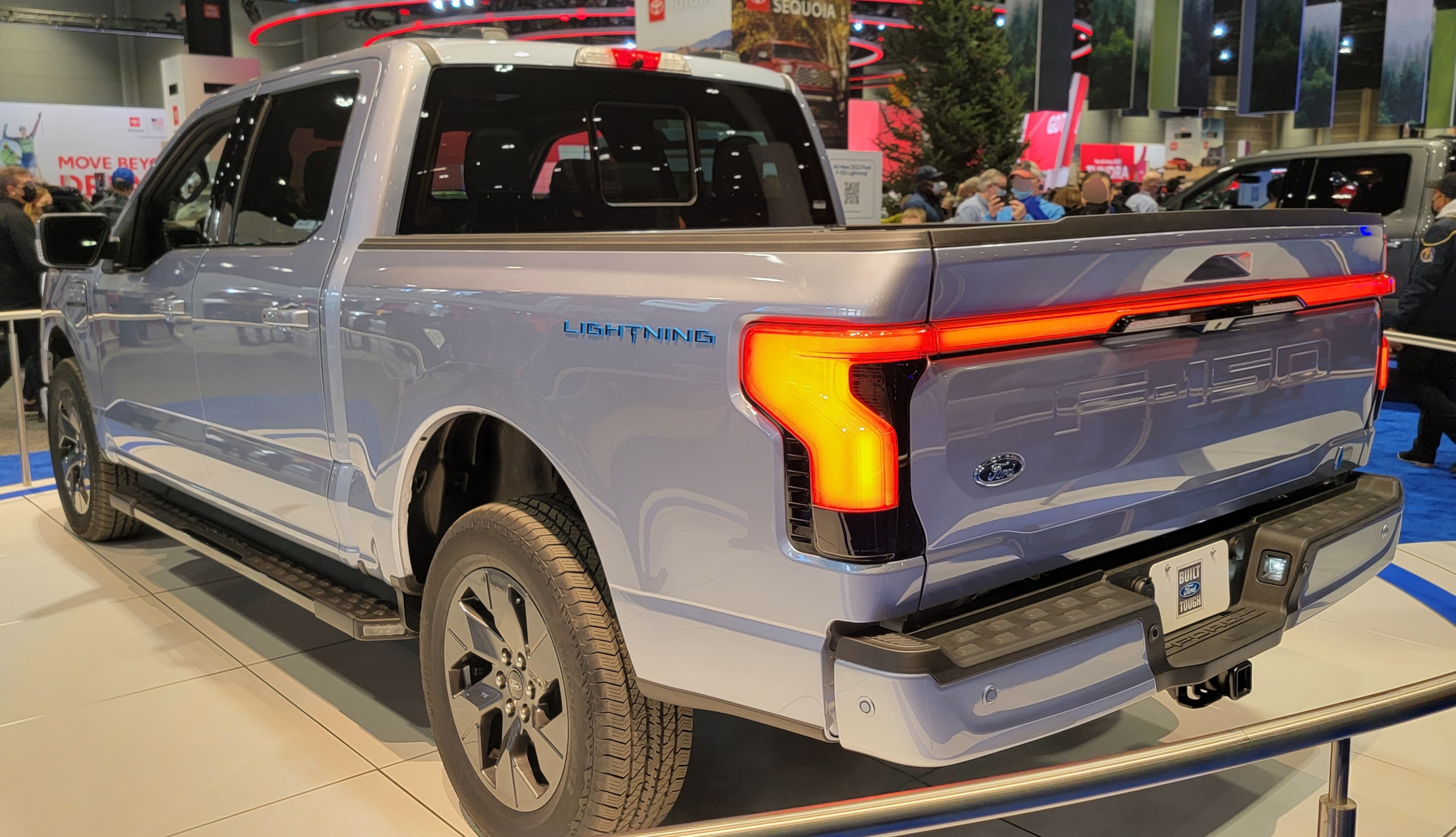
The Ford F-150 Lightning is a pickup truck that uses electricity instead of gasoline. If a dealer has one sitting unsold for a long time—especially if it’s being discontinued—they may offer discounts or incentives to sell it. That’s what the question is getting at.
The Ford F-150 Lightning Flash is an electric version of the F-150 pickup. The hosts are saying some dealers have had these trucks sitting for a long time, so they’re discounting heavily to get them sold.
Negotiation power refers to how much leverage a buyer or seller has to influence the final price. In this market, long dealer inventory holding times give buyers leverage because dealers are motivated to reduce stock and stop it from aging.
The Ford F-150 is a large pickup truck used for everyday driving and work. If a version is being discontinued and a dealer has cars sitting for a long time, the dealer may offer incentives to move them. That’s the basic reason negotiation can get easier.
Dealer discounting is when the selling price is reduced below MSRP (or below typical market pricing) to attract buyers. The segment notes the dealer is already discounting by nearly $13,000, illustrating how deep discounts may be required to move aged inventory.
This is basically saying: if people aren’t buying, the deal isn’t good enough yet. So the price usually has to come down further to get buyers to say yes.
This is when dealerships have too many brand-new cars that customers aren’t buying. If cars sit too long, the dealer usually has to lower prices or offer deals to get them sold.
Inventory turn is basically how quickly a dealer sells the cars they have on the lot. Faster selling usually means less discounting and less cash stuck in unsold vehicles.
The segment breaks down Jeep’s unsold 2025 inventory and shows that the Grand Cherokee accounts for a large share of the backlog. That matters because it indicates which specific Jeep model is most affected by demand softness and pricing pressure.
They’re also pointing out that the four-door Wrangler is part of the unsold Jeep cars sitting on lots. Different versions can sell at different speeds.
A price point is the price range where people decide whether a car is worth it. If cars aren’t selling, dealers may lower the price to reach a range that buyers will accept.
Flat-spotted tires happen when a tire sits in one spot for a long time and gets a worn flat area. It can make the car feel rough until the tire is replaced or the issue is fixed.
A dead battery means the car’s battery has lost charge, usually because the car sat too long. Before you buy, it’s worth checking that it starts reliably and that the battery isn’t already worn out.
A lot porter is the staff member who moves cars around on the dealership lot. The point here is that moving cars can sometimes lead to small damages that add up.
Bodywork and paintwork refer to repairs to the car’s exterior panels and finish after damage. The hosts argue that even small lot-related incidents can add thousands in repair costs, which then affect the car’s true value and pricing.
They’re using a map to find areas where lots of cars have been sitting longer. The idea is that those locations usually have more competition, so you may be able to negotiate a better deal.
Market day supply is basically “how long these cars would sit before they sell.” If the number is high, it usually means the dealer needs to discount more to move them.
This is a vivid way to describe vehicles that have been sitting on dealer lots for a long time. Long lot time can correlate with higher chances of discounting, and it can also reflect mismatches between pricing/specs and what buyers want.
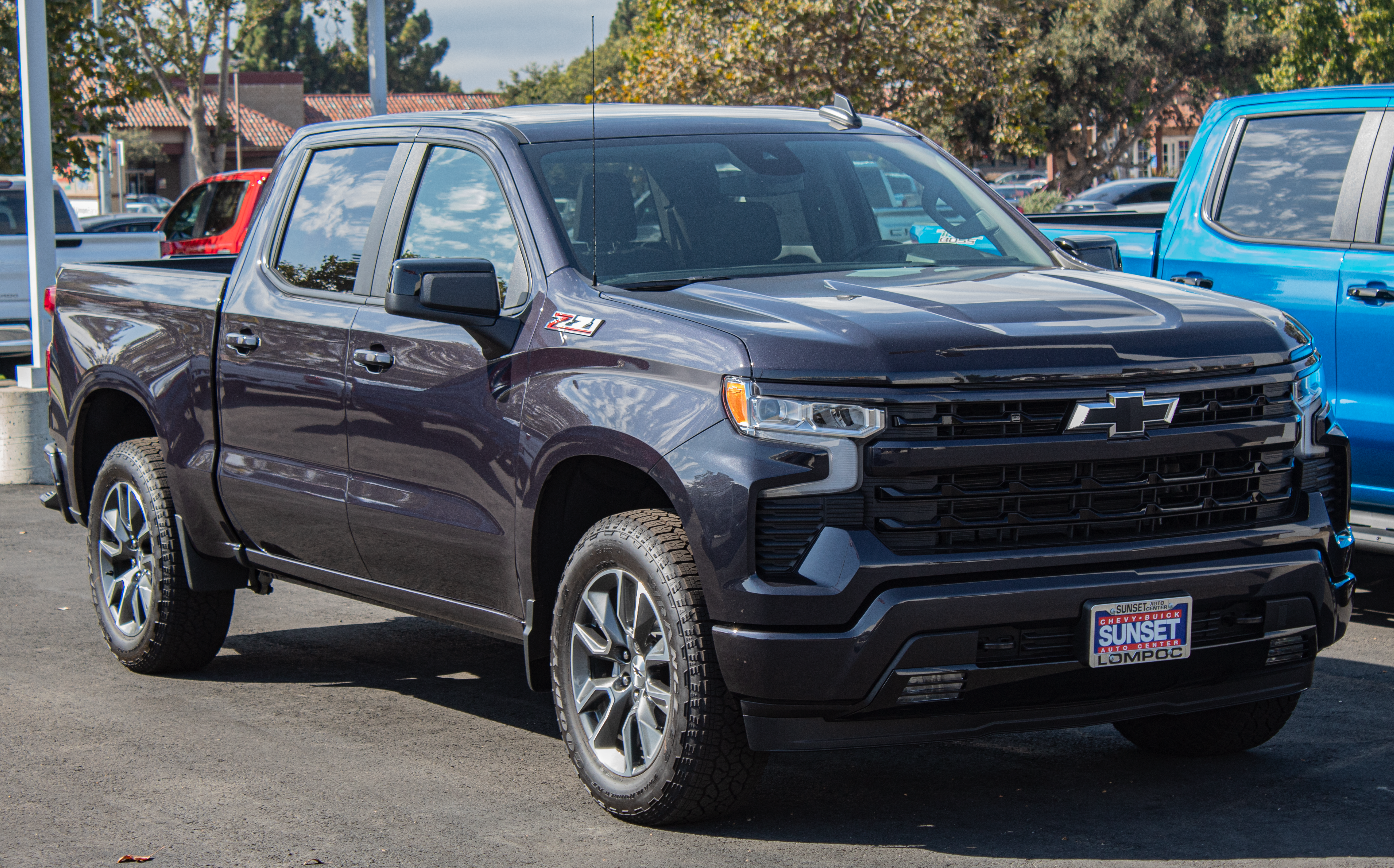
The Chevrolet Silverado 1500 is a popular full-size pickup. They’re saying a lot of these trucks are sitting unsold, which often means dealerships may be more willing to negotiate.
The Nissan Versa is a lower-priced Nissan. The hosts are surprised that so many are still unsold, and they explain that sales can vary by region.
Term
pickup truck tax
They’re talking about extra money you might have to pay for a pickup in some places. That extra cost can change how many people want to buy pickups there.
The Honda CR-V is a very common SUV. In the story, someone is looking at a used 2019 CR-V with 73,000 miles, and the hosts compare it to buying a new cheaper car instead.
Concept
dealer discount vs margin
They’re saying that “big discount” doesn’t always mean the dealer is making less or more money in a simple way. The real profit depends on what the dealer paid and what extra incentives they get.
Advertising assistance is money from the manufacturer to help the dealer advertise the cars. It’s another way dealers can earn money besides the sticker price and discount.
Floor plan assistance is help for dealers to cover the financing costs of keeping cars on the lot. If cars sit too long, that cost adds up, so this support matters.
“Triple net” here means the dealer’s profit isn’t just from the price they sell the car for. It can depend on several different behind-the-scenes payments and financing helps.
If cars don’t sell, the dealer still has to pay for them while they sit there. The hosts are saying manufacturer support can help pay the extra cost of keeping inventory.
Nissan is the car brand being discussed. The point is that Nissan may be offering incentives to dealers to help them sell cars that aren’t moving.
Concept
front-end profit vs F&I profit
The hosts describe a common dealership reality: the front-end (the car sale itself) may be low or even negative margin, while the F&I department can generate profit through financing and add-ons. This helps explain why dealers can offer aggressive discounts on the vehicle price.
The finance office is where the dealer handles your loan and tries to sell extra stuff. Even if the car deal isn’t profitable, they can still make money through financing and add-ons.
A pre-purchase inspection (PPI) is an independent check of a vehicle before you buy it, typically done by a mechanic who isn’t affiliated with the seller. For cars that have been sitting, a PPI helps uncover storage-related problems like battery health, brake rotor corrosion, and lubrication/fluids condition.
A weak battery is a common storage issue for cars that sit for months or longer. Even if the battery isn’t completely dead, reduced capacity can cause hard starts and may trigger warning lights or prevent systems from initializing properly.
When a car sits, the brake rotors can get surface rust. Sometimes it goes away after driving, but if it’s bad it can cause braking problems or extra work.
Cars need oil to protect the engine parts. If a car sits for a long time, the oil may not be in the best condition, and the engine may not be protected the way it should be.
They’re saying the warranty might not start counting down until the car is actually sold to you. That means you could still have full warranty coverage even though the car sat on a lot.
If new cars sit unsold for a long time, they can develop problems just from sitting. That’s why you may need to inspect them carefully even though they’re “new.”
“Retail delivery” is the point at which the dealer reports the vehicle’s sale to the manufacturer, triggering the warranty in effect for the end customer. Until that reporting happens, coverage may be handled differently (or not apply) for issues that arise while the car is sitting.
Even if a new car is technically still under warranty, some coverage may not kick in until you actually buy it. That matters for problems caused by the car sitting on the lot for a long time.
The FTC is a U.S. government agency that helps protect consumers. Here they’re talking about making car ads more transparent so shoppers understand what they’ll actually pay.
Toyota is pitching the Grand Highlander as a bigger family SUV that can actually fit adults in the back seat. It’s meant for people who need a real third row.
Toyota mentions the Sienna because it’s a minivan built for families. They’re pointing out that it can come with entertainment screens for the back seats.
LIVE
Did you know Fast-Growing Trees is America's largest and most trusted online nursery with
thousands of trees and plants and over 2 million happy customers?
Whether you're planting fruit trees, adding privacy, brightening things up with flowers
or bringing in house plants, Fast-Growing Trees has it all.
Even better, they can help you find options that are right for your climate, your space,
and lifestyle.
Click order grow.
Every plant arrives healthy with the alive and thrive guarantee, straight to your door.
So, if you're ready to get planting, this is the moment.
Right now, they have great deals on spring planting essentials.
Up to half off on select plants.
And listeners to our show get 20% off their first purchase when using the code WWO at
checkout.
That's an additional 20% off.
Better plants and better growing at FastGrowingTrees.com using the code WWO at checkout.
FastGrowingTrees.com code WWO.
Now is the perfect time to plant.
Let's grow together.
Use WWO to save today.
Offer is valid for a limited time.
Terms and conditions apply.
Go to growingfasttrees.com for details.
It's noon here in Ventner City, New Jersey and our nation's capital, Washington, D.C.
And this is Carage Live for Wednesday, April 22 with your host, me, Ray here in my condo
in Ventner City and Zach hanging out somewhere in Washington, D.C.
How are you today?
Hits him.
Doing pretty good, Pops.
Happy, what is it?
Wednesday, April 22, like you just said.
Grateful to be here with everyone.
We're going to be talking about, Dad, how the car market is flooded with unsold new
cars before we jump into today's show.
First things first, it is noontime, so we must remind everyone that today's show is
brought to you by CarEdge.com.
Save up to, I promise, updates coming soon, Dad, save up to $2,487 on your next car.
No.
Save more on average.
Save on average.
Yes, it's not up to.
It could be thousands more, damn it.
All right, I'm working on it.
I'm working on it.
All right, you can save a bunch of money.
Working with our team at CarEdge.
Check out the website and learn more.
Dad, today's show, you know what we're talking about?
We're talking about unsold new cars and we're coming here to the CarEdge car search.
There are still 227,866 unsold 2025 or older new cars out there, and it is April 22nd,
2026.
Dad, when will these dealers be forced to liquidate all this lingering new unsold 2025
inventory?
And as a friendly reminder, Ford is leading the league when it comes to these unsold new
cars you can see here.
Ford has almost 90,000 unsold 2025s still out there on dealer lots right now, pops.
What's the deal with this?
When do these dealers finally feel enough pressure and enough pain to sell out and liquidate
these unsold new cars?
Apparently never.
Seriously, it seems that way.
Ford has 90,000 unsold 2025s.
What's crazy?
Well, you know, when I was in the business, everything was about inventory control, inventory
management.
You needed to know what your daily sales rate was by model so that you could match your
inventory to your daily sales rate so you weren't sitting on all this aged inventory.
I don't know what some of these new car managers are doing at dealerships today.
Maybe the dealers have been forced to pay off all those remaining 2025s.
They've got cash invested in them, they're not accruing any more interest.
And I don't know, rather than turn them into cash to replenish their stock with 2026s
that might sell sooner, apparently they see no need to do that.
I don't get it.
It goes counter to everything that I learned about inventory management and retail automotive.
I want to hone in on some specific rates and models that, so we're going to stick here with
Ford for a second because they do disproportionately have so many unsold new cars.
So let's look at the Broncos Sport, Dad.
The Broncos Sport, there are 20,000 2025 or older Broncos Sports out there right now.
And if I sort by oldest, oh God, I'm nervous to do this.
Yeah, there are still some 2024s out there, folks, that these dealers, oh God, even some
23s, but let's disregard the 23s.
There's 24s.
There are new 2024s that have been sitting on dealer lots.
You can see it here, 935 days, 933 days, 919 days.
I'm going to the map view, Dad, just for the Broncos Sport for a second here.
Where in the good old United States of America is it a buyer's market for the Ford Broncos Sport
everywhere?
Yeah, apparently everywhere, yes.
In South Dakota, there are 323 new Ford Broncos Sports for sale.
There's an 832 market days supply.
Nebraska, 745 days supply.
Nevada, 573 days supply.
Just clicking in Nebraska for a second here.
I mean, look at this, Dad.
Every single dot you're seeing on the screen are cars for sale raked by how old they are
on the dealer's lot.
If you're in Lincoln, Nebraska right now, there's a dealer here.
Let's see, that has 20 of these just sitting there.
Click on one.
I'm curious as to whether or not they have any miles or anything.
No, 14 miles on it, Dad.
Well, that's like brand new.
I mean, that's like a brand old brand new car.
So we're just looking at the Ford Broncos Sport for a second.
I'm going to juxtapose this with a different manufacturer here in a second.
But help me rationalize this before we do look at a different manufacturer.
What are you doing if it becomes April 23rd and you're still sitting on a 2025 Ford Broncos
Sport? And again, there are 20,000 of these.
The map shows a very clear picture.
It's a buyer's market everywhere.
It means one thing and one thing only.
They're not lowering the prices enough.
Well, yeah.
So the question has to become why.
Seriously, what incentive does Ford have not to get rid of these things?
What incentive does the dealer have not to get rid of them?
None.
There is none.
These are not like a fine wine.
Okay, these don't get better with age.
They get worse with age.
There's a rather strong likelihood being a Ford that will turn to vinegar before anything else.
So it is beyond me what dealers are thinking when they don't manage their inventory.
It is the management of that inventory on the new car side of things that allows a new car
department to either be profitable or not.
And you can't be sitting, that one dealership, can't be sitting on 2020, 2025s and think that
that's okay.
You know, we're through the first quarter of 2026.
We're 22 days into the second quarter of 2026.
The likelihood of things going wrong with any of those vehicles goes up exponentially every day.
I don't know if they have rodents or not in Nebraska, but I'm pretty sure they do.
And I know it gets cold in Nebraska.
So I'm pretty sure there could be some rodent condominiums that are built in the engine
compartments of some of these vehicles.
It's beyond me.
We are going to spend some time talking about if you are in the market for the best deal,
some of the precautions you need when looking at these unsold new cars.
That being said, Dad, I do want to hone in briefly here.
This is disproportionately a Ford problem.
Can you see that on your screen, Dad?
Yes, Ford has 88,317 of the unsold 2025 or older new cars in the market right now.
Jeep has 20,352 Chevrolet has 18,281, Nissan has 11,821, Kia 9000, Hyundai 8000, Mercedes Benz
6400, Audi 6100.
So this is disproportionately that Ford has flooded the market with unsold new cars.
And then when you look at the breakdown of the actual models, it is disproportionately the Bronco
Sport. So if you are looking for affordable transportation from point A to point B and you
can look past all of the potential deficiencies related to Ford and you can say, you know what,
I'm in the Ford Bronco Sport right now has got to be the most negotiable new car in the United
States of America. And just to juxtapose this and show you this, let's come here, let's look at a
brand that has a little bit more, I don't know, what's the word, velocity in terms of their sales.
That would obviously be Toyota. And instead of looking at the Bronco Sport, we'll look at
the RAV4. This time when I go to the map view, I anticipate, yeah, there you go, I'm seeing
some different colors. And the colors that I'm seeing here, Dad, are red. And the reason I'm
seeing red is because it's not a buyer's market for the Toyota RAV4. So it just shows you so
quickly here how juxtaposed things can be between two different brands, whether it be Ford or it
be Toyota, it's two totally different markets out there. Because one has a bunch of unsold new cars
and the other does not. So why is it that the Bronco Sport isn't selling? Are there issues
known or unknown issues? What types of things are being said about the Bronco Sport on forms?
How many recalls have there been on Bronco? I mean, what is the rationale? Because
every one of those that I saw were listed under $40,000. And if you were to say to me,
what's the max when it comes to affordability for most people? I would say it's $40,000.
For a lot of people, it would be $30,000. But they seem to be falling from the
mid-30s to the upper 30s. So why aren't they selling? What is going on? If you went to the
Car Edge research and typed in Ford Bronco, what would it say about the vehicle? What kind of
grade would it get? What amount of depreciation could be associated with those type of vehicles?
Because obviously, there's got to be something wrong with the vehicles. If they're not selling,
and at one time, they were quasi-hot at one time. I was about to say it's no longer that time.
Ford Bronco Sport from Car Edge gets a C minus grade when it comes to its value rating. You
can see that right there. It ranks 133rd in overall value, anticipates spending $50,292 over
five years owning this vehicle. A lot of that is depreciation and decent amount of insurance,
fuel costs, interest payments, and then maintenance as well. We do give our assessment air for the
Ford Bronco. But Dad, I am going to come back just for a second here. Some of these Ford Bronco
Sports are quite affordable. Some of them are even under $30,000. It does make me scratch my head
a little bit. We can come here. I'll pull it up on the screen. We can look at the different trim
levels that are even sitting out there. Disproportionately, it's the big bend trim. Let's take a
quick peek here at the big bend and we'll look at the ones closest to me. These are $30,000,
some odd $1,000, mid-30s $1,000 Ford Bronco Sports in there, just obviously not selling.
Invoice price to the dealer on this is $35,846. MSRP is $36,765. Let's click through to the
dealer website. Are there any incentives? Yeah, I'm clicking through to the dealer website,
so let's take a peek at it here. I mean, they're offering a $3,000 discount and that's it.
There's no interest rate incentives. There's no customer rebate incentives. There's...
I don't see anything. Wow. I don't know. It's not going up in value. If I was the
general manager of that dealership, I'm having a conversation every day with the
car manager. What is it that we're going to do to relieve ourselves of these age new cars that we
have? What type of bonus plan can we put in place for the salespeople that will encourage them
to show those vehicles to everyone? What do we have to do? Because the concept of doing nothing
is not a viable plan. We'll just wait. No, you can't afford to just... It takes up valuable
real estate. Each one of those spots that a car sits in is worth money. You need to be turning
those vehicles quickly, so I don't get it. Now, another thing that's happening right now with
unsold new cars that have flooded the market would be electric vehicle powertrain new cars.
Now, it's interesting. We're only talking 19,000 last year over 2025, but what's fascinating about
this is so many of them are again Ford's with the Mustang Mach-E, but that before lightning,
this vehicle's been discontinued. What is the incentive for a dealer here that's been sitting
on a Ford F-150 Lightning Flash for 252 days? Again, you can see the negotiation power on this
one, Dad. It doesn't get much greener than that. You have all the leverage in the world. The dealer
is already discounting by almost $13,000. Is it just the reality that they have to lower the price
more to sell some of these unsold new cars? Well, it all reminds you of what the area Vice
President Fropensky used to say to us. If the customer hasn't said yes yet, you haven't lowered
the price enough yet. It's just that simple. The only thing holding a customer back typically,
if they're interested in something, is the price of the damn thing.
Igor is saying 20,000 off will do it. Is that ultimately what's going to end up happening here,
Dad? Because again, what we're looking at, over 200,000 left over unsold 2025 still,
there's like 225,000. The prices just have to go lower, right? It's just more leverage for car
shoppers. Either that or they want to hold on to it and hope to set a Guinness world record
of how long you can hold on to a new vehicle without selling.
They do not sell it at Barrett Jackson someday. Well, okay. In order to get top dollar for it,
probably have to wait 20, 25 years. I would ask anybody that's in the car business,
that watches this, that might view this, what would you do if you were a new car manager,
if you were a general manager, if you were a dealer principal and you saw a buildup of
remaining 2025s, what do you think the course of action should be?
And if somehow you come up with the concept is just wait, maybe you shouldn't be a GM,
a new car manager, a dealer principal. I don't know. I just know how important it is
to turn your inventory. I mean, any store selling anything, one of the areas of conversation is,
how many times a year can you turn your inventory?
Very sure.
Let's go places. Let's look at another brand. Let's do another analysis here, this time Jeep.
Jeep was in second place with the most amount of unsold new cars right now. 2025 or older
unsold new cars. And you can see there are 20,352 of them up at the top below the car edge.
Logo, you can see disproportionately of those 20,000, it's Grand Cherokee stat.
Grand Cherokees make up more than 8,000 and an additional almost 5,000. Almost 13,000.
It is 13,000 of Jeep's unsold new 2025s right now are Grand Cherokees, the Wrangler four-door
getting in on the phone as well. So let's come here to the Grand Cherokee pops. And let's do
the same conversation. Now the price point here, and you can see the trim breakdown. So it's primarily
the limited some of the altitudes, but you can see here the price initially is significantly higher
than what we had seen from the Broncos sport. So the Broncos sport wasn't selling at the 30 to
$40,000 price point. You can see immediately here the Grand Cherokee limited that they're asking
$54,000 for it. I'm curious. Yeah, you can see right there the dealer discount. The dealer's
advertising an $8,440 discount. That's well in excess of 10% off of MSRP, but still not enough.
Well, if I'm not mistaken, didn't Jeep lower the MSRP for 2026 on the Grand Cherokee?
So how much more of an incentive are you going to need in order to move the remaining 2025s?
I just know from experience that between rodents, flat-spotted tires, dead batteries,
a lot of damage that occurs when the lot porter moves the car or when he accidentally
sideswipes that vehicle that's been sitting there for 300 days. And so now you have another $7,800
in bodywork or paintwork that you have to add to the cost of the car. I just know all the issues
that befall these things. And it is the extra money tied up in these vehicles. It becomes
astronomical, overwhelming. So you can't let them age like this. And since they have already aged
like this, since there is a flood of unsold new cars out there, that's the buying opportunity for
car-edge customers. Again, I want to show here, Dad, let's look at the map view of this. So we've
got Jeep Grand Cherokee up to 2025 new. Drum roll, please. Yeah, there you go. It's all green on the
screen again. The green means, Dad, that there's a high market day supply of this particular vehicle.
And you can see here, Dad, Florida, there are over 2,200 Jeep Grand Cherokees for sale right now,
2025s. Or older, 474 market day supply. New York, there are 4,000 of them in New York with a 438
day supply. If I click into New York here, I can then hone in on, Dad, where there are pockets,
where there are the oldest, longest sitting available inventory out there. And you can see
here, there are certain areas where there's some red on the map. So that's where there's a little
bit more competition. But pretty much everywhere in New York, whether you're in New York City,
or let's come all the way out over here, we're near Buffalo or Rochester. Let's zoom in on this dealer
again. 33, Dad. This dealer in Rochester, New York has 33, 2025 or older Jeep Grand Cherokees.
And you can see here, 169 days on the market, 200 days on the market, 183.
Like this map tool and this capability should help all car shoppers hone in on where there are
pockets of unsold new cars. And then go make an offer. Because if you're a dealer and you get a
real honest and goodness potential customer on one of these cars, you have to listen to them.
It is an important tool for the dealer. Seriously, think about it. If you're a dealer,
and you can hone in on the map and see all that stuff that's available right around the corner
from you, okay, and the stuff is just sitting there collecting dust turning green from pollen.
You know, what are you doing? If you're the smart dealer, and apparently there don't seem to be
very many of them when it comes to these. But if you're a smart dealer, you're advertising a much
lower price than your and meaning it, okay, when you advertise that price, you're advertising a
transparent price so that you can get rid of it. It just, it makes no sense to me.
One more example here, because again, the market is flooded with these unsold
new cars. Again, 227,866 up to 2025 new cars out there. Dad will come down here to the makes
again. So this time you want to go Chevy or Nissan? Oh, Chevy there. They're America's favorite mass
market brand. All right, so let's see here. Chevy has 18,000 unsold new cars out there right now.
Disproportionately, it looks like it's Express Cargo Vans and then Silverados. It was the Silverado
1500 and the Silverado 3,500. So no huge standouts here in terms of Chevrolet. Let's take a quick
peek at Nissan as well, because Nissan's obviously one of those brands that has more affordable price
points. Let's see what Nissan inventory is sitting out there. You've got 1,100 Altamas. 1,200.
Discontinued? 1,200 Moranos, 1,200 Centras and there you go. It's the Versa. That frustrates
me. Why are there 4,000 unsold Versas? Look at the price point on these things. The Versa should
be selling. Why is no one buying a $20,000 car? Please map. Give me some. There you go. All
right, thank you. The Versa is selling in many places. It's a few areas like California and Texas
here where the Versa situation is a little bit different. You want a Versa honed in on Ford
or if it looks like Dallas in the Ford. If you buy a Versa in Texas, you have to pay a huge,
I didn't buy a pickup truck tax. Look at this. This one dealer has 53 Versas.
Oh, he should be getting ready to slit his wrists. Don't say that. Hey, come on. Don't say that.
Sorry, but I mean, you should be very upset. That is what we say here at Carriage. But then,
53, 2025 are all their new Nissan Versas. This is crazy, man.
Yes, yes, it is. They're asking $17,000 for it.
My God, I mean, we should buy them and resell them, make some money.
I mean, you would just think that, I mean, for people who, you know, we talk about it on a daily
basis. And, you know, every news organization that interviews us, every podcast, we always end
up talking about affordability. And everybody screams, well, there's just no affordable cars
out there. For somebody that's looking at, and I'll give you a perfect example. I got an email
from a friend of mine today, who's looking at a 73,000 mile 2019 Honda CRV Touring fully loaded.
That's low miles for the year. Dealer has recently reduced the price to $23,995.
So you're talking about buying a seven-year-old car with 73,000 miles. Or you could go to that
dealer in Texas and buy a brand new Versa for $17,000 in change. Why wouldn't you do that?
Can we just hone in for a second, Ted? This one dealer in Dallas has 53 left over Nissan Versas.
That is talking about flooded with unsold new cars. Imagine we were to go drive past that
dealership slot. 53 of them. That's crazy. So the pressure that they must be feeling, I mean,
this is, let's put it into perspective here, a $21,000 car with a $3,600 dealer discount.
What's that percentage? Help me do the math really quickly. What's that? Like 17%, 16%?
I was going to say 15% off the top of my head, but...
I checked. Any new car that has an MSRP of $21,000 does not have 15% margin built into it. It's
not like when the dealer sells... So to explain this, Ted, we did a short on this recently.
There's the invoice price, which is the price that the dealer pays for the vehicle. But there's
all sorts of other under the line money that the dealer makes, whether it be holdback,
advertising assistance, floor plan assistance. This is a triple net deal beyond triple net.
Explain what triple net is, because there's just no dealers making money on this, and they've got
53 of them. Well, you've actually utilized the floor plan assistance money to pay for the extra
interest on that vehicle for its sitting. If you've advertised it at all, you've used your
marketing allowance money. Maybe that car had 5% margin built into it. Is there some type of
cash incentive that Nissan gave to their dealers for the... I don't know. Could that be a couple
thousand dollars? Maybe, but... There's just no chance that they're selling this car and making...
They're not making money on it. The only hope would be is that whoever buys it, whenever they buy it,
and it could be stair step money, but the real hope is that whoever buys it whenever they buy it
is going to finance it. The finance and insurance department is going to knock their socks off and
make money there, but you're not making money on the front end. I think that's a huge point
for our community today. Those of you that are interested in the reality, which is that the
car market is flooded with unsold new cars. It's not just expensive ones. When we looked at the
data from March New Car Sales, it was disproportionately that luxury car sales actually fell significantly
compared to all car sales. But it's actually happening here in the most affordable segment.
And if I may, Dad, back on the map, I love this freaking map. That one dealer has 53
Nissan Versus for sale. The dealer up the road, you can see on this highway. What's this highway?
Whatever this highway is, has 18 of them. The dealer up in Irving has 25 of them. The dealer
in Lewisville, let me come up here, has 15 of them. It's only this one here in Richardson
and this one here in Bedford that have three and four respectively. The Dallas Fort Worth market
is flooded in sub $20,000 new cars. That should be the headline in all the Dallas Nightly News
tonight for people looking for affordable transportation. Are you in a pickup truck?
No. Are you getting the absolute best deals? The dealer making any money? No. The dealer's
desperate to get rid of these cars because it's just taken up a lot of space.
But apparently, there's some type of pickup truck tax you have to pay if you don't buy it.
I don't know. I don't know how it works in Texas. But apparently, there's something going on where
people are afraid to look at small cars. I don't know. Apparently. Here's another one, Dad,
at a different dealership. And then I'll get off this high horse. But I do think this is just so
fascinating. You can see here, Dad, you've got a $4,250 dealer discount on a $22,000 car.
And let's click through. Let's view this on the dealer website really quickly. Let's see. Did
I do any games? I mean, literally, look at this. Get huge savings on 2025 Nissan models now. So I
mean, they're pushing. Everyone's pushing. Everyone wants to get rid of the unsold new cars.
They're out there, folks. Well, if you're a new car dealer and you don't want to push,
and apparently, there's plenty that forgot that part. They didn't go to birthing classes where
you have to remind your spouse to push. Apparently, they skip that portion. And so they're not
pushing, but they should be. Because I can't emphasize this enough. They just break sitting
there. Cars are built to be run. They are built to be driven. Everything the lubricants need to
be going through the engine. So this doesn't help the vehicle by having it sit there.
So let's transition. No way from the numbers for a minute here, Dad. Let's just do advice.
What is your advice for someone who's out there and contemplating an unsold new car,
one of these aged, unsold new cars? What are you doing? Are you doing a pre-purchase inspection?
That's better than the car differently. Give us your advice.
If you're looking at one of these aged cars, and you can go to our website and see how long it's
been sitting there, and so if it's been sitting there 200, 300, 400, 900 days, by all means,
get a pre-purchase inspection done. Get an independent set of eyes. Take it to another
Nissan dealer. Take it to an independent mechanic. But get somebody to look at it because there are
so many things that go wrong when cars just sit. It's absolutely amazing, all the things that go
wrong when a car just sits. And the battery could be weak. It could need batteries. You could have
rust on the rotors. The engine isn't lubricated the way it should be because it hasn't been
driven or run in a while. The fluids can just evaporate over time. So, yes, a pre-purchase
inspection is a must. A long test drive to check out the tires. But absolutely, in my mind,
you have to treat it as a pre-owned car and get an independent inspection done.
Now, one of the benefits, though, to be very clear of buying these unsold new cars,
unlike a used car, is that the factory warranty hasn't started yet. The factory warranty starts
when the title transitions on its in-service state. And so, yeah, I'm so glad this question
just came in right here. Isn't the car under warranty? It is. This is one of the huge benefits
of buying a new car versus a used car, even though you're saying treat it like a used car in terms
of the inspection you do if you're looking for one of these unsold 227,000 new cars.
And here's the thing, yes, it's still under warranty. But it's not under warranty for the dealer.
So, if there's things it needs because it's sat so long, it's not going to be covered by the
warranty the dealer has to pay for it. Once the dealer sells it and reports the retail delivery
to the manufacturer, then the warranty is in effect. And any of these issues that might crop up
could be a warranty issue. And at that point, the factory might pay for it. But,
yeah, for the ultimate retail consumer, yes, the warranty starts today you buy it.
All right, folks, we're going to call it a show for today. If we can help you out with anything,
caredge.com, six years ago, me and my dad started providing this car buying service, car research
tools and so much more. We work for you, y'all, not the dealer. Check it out back at caredge.com.
Pops, we're back with more Car Edge Live tomorrow. If you enjoyed today's show, subscribe to the
channel. We appreciate it. Share some comments and your thoughts in the chat as well. Dad,
let's do it all again tomorrow. How's that sound? That's my plan. I'm planning on being back. Plus,
I have a podcast to do with some good folks in Arizona at four o'clock my time today,
talking about the FTC and what it is the FTC is trying to do to improve the transparency
and advertised prices for automobiles. Stay tuned. We'll share more when my dad's podcast comes out.
All right, Pops, catch you later. Yeah, love you, handsome. Love you too.
Dear crew, it's Toyota with an adult-sized third row. Everyone's welcome in the Grand Highlander,
from sports fans to eco buffs and movie fans. Sink back in the Sienna with an available rear
seat entertainment system. Slip into the RAV4 with available all-wheel drive and let's go.
Toyota, find yours at Toyota.com. Toyota, let's go places. If you like the show,
please take a moment to rate, review and subscribe. It really does help the show to grow.
Thank you for listening.
About this episode
Ray and Zach dig into CarEdge data showing a massive backlog of unsold new cars—227,866 units from 2025 or older—nearly everywhere, with Ford taking the biggest share (especially Bronco Sport). They compare “buyer’s market” map days-supply numbers against brands like Toyota, where inventory moves faster. The discussion questions why dealers aren’t liquidating aged stock, highlights model-specific value grades (Bronco Sport gets a C-minus), and notes limited incentives. They also cover EV inventory, then shift to shopper advice: treat these cars like used inventory with independent pre-purchase inspections, while clarifying warranty timing.
Today on CarEdge Live, Ray and Zach discuss the latest data on unsold new cars. Tune in to learn more! Hosted by Simplecast, an AdsWizz company. See https://pcm.adswizz.com
for information about our collection and use of personal data for
advertising.