
The Car Market Is FLOODED With UNSOLD NEW CARS | Episode 1056
About this episode
Ray and Zach dig into CarEdge data showing a massive backlog of unsold new cars—227,866 units from 2025 or older—nearly everywhere, with Ford taking the biggest share (especially Bronco Sport). They compare “buyer’s market” map days-supply numbers against brands like Toyota, where inventory moves faster. The discussion questions why dealers aren’t liquidating aged stock, highlights model-specific value grades (Bronco Sport gets a C-minus), and notes limited incentives. They also cover EV inventory, then shift to shopper advice: treat these cars like used inventory with independent pre-purchase inspections, while clarifying warranty timing.
unsold new cars
"We're going to be talking about, Dad, how the car market is flooded with unsold new cars before we jump into today's show. ... There are still 227,866 unsold 2025 or older new cars out there, and it is April 22nd, 2026."
They mean there are lots of brand-new cars sitting at dealerships that nobody has bought yet. When that happens, dealers usually have to offer better deals to move the cars.
The hosts are talking about a backlog of unsold inventory—new cars that dealers have on their lots but haven’t been sold yet. When that inventory stays high, it often pressures automakers and dealers to offer bigger discounts, incentives, and more negotiation room.
CarEdge.com
"First things first, it is noontime, so we must remind everyone that today's show is brought to you by CarEdge.com. ... We're coming here to the CarEdge car search."
CarEdge.com is the website the hosts mention for finding cars and looking up inventory and deals.
CarEdge.com is referenced as the sponsor and as the place the hosts use for a “car search” tied to the unsold-inventory discussion. Listeners may want to treat it as a source for current listings, pricing, and inventory data.
unsold 2025 or older new cars
"There are still 227,866 unsold 2025 or older new cars out there, and it is April 22nd, 2026."
They’re saying the unsold cars aren’t just the newest ones—some are from 2025 or earlier. Those older “new” cars usually get bigger discounts to clear them out.
The hosts specify that the unsold inventory includes model years 2025 and older. Older unsold new cars often face steeper incentives because they’re harder to sell as newer model years arrive.
liquidate inventory
"Dad, when will these dealers be forced to liquidate all this lingering new unsold 2025 inventory? ... When do these dealers finally feel enough pressure and enough pain to sell out and liquidate these unsold new cars?"
Liquidating inventory means getting rid of the cars that aren’t selling, usually by cutting the price. It’s how dealers turn cars sitting on lots into money they can use elsewhere.
To “liquidate inventory” means to sell off remaining stock quickly, often by discounting heavily, to convert cars into cash. In dealership terms, liquidation is typically the end-stage response when cars aren’t moving and capital is tied up.
inventory management
"Well, you know, when I was in the business, everything was about inventory control, inventory management. You needed to know what your daily sales rate was by model so that you could match your inventory to your daily sales rate so you weren't sitting on all this aged inventory."
Dealers have to keep the right number of cars in stock. If they order too many and they don’t sell fast, the cars sit there and the dealer’s money gets stuck.
Inventory management in dealerships is the practice of aligning how many cars a store has on hand with how quickly they sell. The goal is to avoid building up aged, slow-moving stock that ties up cash and can require discounting later.

Tesla By Model
"...You needed to know what your daily sales rate was by model so that you could match your inventory to your d..."
The Tesla Model Y is an electric SUV that runs on a battery instead of gasoline. The podcast is talking about how sellers track how many of these cars are selling each day. That helps them decide how many to keep in stock.
The Tesla Model Y is an all-electric compact SUV known for its role in the EV market and for being a high-volume model. It’s mentioned in the context of tracking daily sales by model so inventory can be matched to real demand. That makes it relevant to discussions about dealership stocking and how quickly cars move.
daily sales rate by model
"You needed to know what your daily sales rate was by model so that you could match your inventory to your daily sales rate so you weren't sitting on all this aged inventory."
“Daily sales rate by model” is how many units of each specific model sell per day. Dealerships use it to decide how many of each model to stock so they don’t end up with too many slow-moving cars.
aged inventory
"You needed to know what your daily sales rate was by model so that you could match your inventory to your daily sales rate so you weren't sitting on all this aged inventory."
Aged inventory is cars that have been sitting on the lot for a while. The longer they sit, the harder they can be to sell without lowering the price.
“Aged inventory” is unsold stock that has been sitting for a long time, often becoming harder to sell as it gets closer to the next model year. Dealers may need to offer incentives or price cuts to move aged units.
accruing interest
"Maybe the dealers have been forced to pay off all those remaining 2025s. They've got cash invested in them, they're not accruing any more interest."
They’re saying the dealer’s cost of holding the cars might not be getting worse over time. If the money isn’t costing much to keep tied up, dealers may feel less pressure to sell quickly.
The segment suggests dealers may not be “accruing interest” on the money tied up in remaining 2025 vehicles, reducing the urgency to sell. In practice, dealers’ financing costs and floorplan arrangements can affect how painful it is to hold inventory.
replenish their stock with 2026s
"And I don't know, rather than turn them into cash to replenish their stock with 2026s that might sell sooner, apparently they see no need to do that."
They’re talking about swapping out older unsold cars for newer 2026 models. The idea is that dealers could move faster by bringing in the newer cars instead of holding the older ones.
“Replenish their stock with 2026s” means replacing older unsold units with newer model-year inventory. The discussion implies dealers might be delaying that switch despite the potential for 2026 cars to sell sooner.

Ford Broncos Sport
"So let's look at the Broncos Sport, Dad... there are still some 2024s out there... You can see it here, 935 days, 933 days, 919 days... Where in the good old United States of America is it a buyer's market for the Ford Broncos Sport"
The Ford Bronco Sport is a small Ford SUV. The hosts are talking about how many of them dealers still have left over from older model years. When cars sit that long, it often means you may have more room to negotiate the price.
The Ford Bronco Sport is Ford’s compact SUV built on a smaller platform than the full-size Bronco. In this segment, the hosts are using Bronco Sport inventory data to show how long certain model-year examples are sitting unsold on dealer lots. That “sitting time” is a key indicator of how competitive pricing may be in different regions.
dealer lot inventory sitting for hundreds of days
"You can see it here, 935 days, 933 days, 919 days. I'm going to the map view, Dad, just for the Broncos Sport for a second here."
They’re pointing out that some cars have been sitting at dealers for a very long time—over a year in some cases. When cars don’t sell quickly, dealers often lower prices or offer incentives to move them. That’s why the hosts think buyers may find better deals.
The segment highlights specific examples of Bronco Sport units sitting for extremely long periods (e.g., around 900+ days). Long lot time usually indicates weak demand for that model-year/spec in that area, which can correlate with discounting and incentive offers. It’s a practical way to identify where pricing pressure is likely strongest.
buyer's market
"Where in the good old United States of America is it a buyer's market for the Ford Broncos Sport everywhere?"
A “buyer’s market” means there are more cars available than people want right now. When that happens, sellers often have to compete more, so prices and incentives can get better for shoppers. The hosts are saying this is happening in many places.
A “buyer’s market” describes a situation where inventory is plentiful and demand is weaker, giving shoppers more leverage. In auto retail, this often shows up as higher days-supply, more discounts, and more negotiating room on out-the-door price. The hosts are using regional inventory data to argue that buyers can find better deals.

Ford Broncos
"... States of America is it a buyer's market for the Ford Broncos Sport everywhere?"
The Ford Bronco is an SUV designed for off-road driving, like rough roads and trails. People talk about it a lot when they’re trying to figure out whether prices are good and if dealers are willing to negotiate. That’s what “buyer’s market” usually means in this context.
The Ford Bronco is a rugged, off-road-focused SUV built for drivers who want capability beyond normal commuting. It’s often discussed in the context of pricing and shopping strategy because demand can vary by trim and model year, affecting whether buyers have more leverage. That’s why it comes up in questions about whether it’s a “buyer’s market.”
market days supply
"There's 24s... There's 24s... There's 832 market days supply. Nebraska, 745 days supply. Nevada, 573 days supply."
“Days supply” is basically how long dealers would need to sell off the cars they currently have. If it’s a big number, it usually means there are a lot of unsold cars, and dealers may be more willing to deal. If it’s a small number, cars tend to sell quickly.
“Market days supply” is an inventory metric that estimates how long it would take to sell the current stock of a vehicle at the current sales pace. Higher days-supply numbers generally mean more unsold cars sitting on lots, which can lead to stronger incentives or negotiation leverage. It’s commonly used to compare demand and inventory balance across regions.
incentive
"Seriously, what incentive does Ford have not to get rid of these things? What incentive does the dealer have not to get rid of them? None. There is none."
An incentive is a reason to act—usually money-related. They’re basically asking why Ford or the dealer wouldn’t offer deals to sell the cars that aren’t moving.
Here, “incentive” refers to financial or marketing reasons that would motivate Ford or dealers to reduce prices and sell the remaining vehicles. The hosts argue that if there’s no incentive to clear inventory, prices may stay higher than the market would suggest.
engine compartments
"...there could be some rodent condominiums that are built in the engine compartments of some of these vehicles."
The engine compartment is the space under the hood. The hosts are joking about animals getting into that area, but the real point is that cars that sit for a while can attract pests. It’s a reminder to check the car carefully before buying.
The engine compartment is the area under the hood where the engine and many related components sit. The hosts mention rodents potentially building nests there, which is a storage-related risk for vehicles that sit for long periods. This is relevant because unsold new cars may have been on lots or in storage long enough for pests to become an issue.
inventory/overstock leading to negotiation leverage
"...if you are in the market for the best deal, some of the precautions you need when looking at these unsold new cars... the Bronco Sport... has got to be the most negotiable new car..."
If a dealer has too many cars that aren’t selling, they may be more willing to cut the price. That can give you leverage to negotiate. The hosts are basically saying the market situation can work in your favor, but you should still inspect carefully.
The segment links dealer inventory levels to pricing power: when a manufacturer has many unsold new cars, dealers may be more willing to negotiate to reduce stock. This is why the hosts emphasize “best deal” and “precautions” when shopping unsold new vehicles. The underlying idea is that supply pressure can outweigh typical pricing norms.

Toyota RAV4
"the RAV4. This time when I go to the map view, I anticipate, yeah, there you go, I'm seeing some different colors. And the colors that I'm seeing here, Dad, are red."
The Toyota RAV4 is a popular compact SUV. The hosts are using it as an example of a model that’s selling better, so dealers have less unsold inventory compared with other SUVs.
The Toyota RAV4 is a compact SUV that the hosts use as a reference point for how different brands can have very different inventory and pricing conditions. In this segment, they’re implying that the RAV4 is in a healthier demand position than the other vehicle being discussed.
forms
"So why is it that the Bronco Sport isn't selling? Are there issues known or unknown issues? What types of things are being said about the Bronco Sport on forms?"
In car-market discussions, “forms” (forums) usually means online owner and enthusiast message boards where people share experiences, complaints, and reliability impressions. The hosts ask what’s being said about the Bronco Sport on forums as a proxy for real-world sentiment.
recalls
"How many recalls have there been on Bronco? I mean, what is the rationale? Because every one of those that I saw were listed under $40,000."
A recall is when a car maker has to fix a problem on certain vehicles. If a model has a lot of recalls, some buyers may hesitate, which can hurt sales.
Recalls are manufacturer-initiated (or regulator-mandated) safety or compliance fixes for vehicles with identified issues. The hosts connect recall frequency to consumer confidence and sales performance, asking how many recalls the Bronco has had and why.
value rating
"Ford Bronco Sport from Car Edge gets a C minus grade when it comes to its value rating. You can see that right there."
A value rating is a score that estimates how expensive a car will be to own and how well it keeps its resale value. In this segment, the Bronco Sport’s score is low, which suggests it may not hold value well.
A “value rating” is an evaluation of how well a vehicle holds value relative to others, typically incorporating expected depreciation and ownership costs. Here, the hosts use Car Edge’s grade to argue the Bronco Sport’s value outlook is weak.
depreciation
"It ranks 133rd in overall value, anticipates spending $50,292 over five years owning this vehicle. A lot of that is depreciation and decent amount of insurance, fuel costs, interest payments, and then maintenance as well."
Depreciation is how much your car is worth less over time. If fewer people want a model, it usually loses value faster, which can make ownership more expensive.
Depreciation is how much a vehicle’s value drops over time, often driven by demand, incentives, and perceived reliability. The hosts cite Car Edge’s estimate of total ownership cost where a “lot of that is depreciation,” linking weaker sales to worse value retention.
trim levels
"We can come here. I'll pull it up on the screen. We can look at the different trim levels that are even sitting out there. Disproportionately, it's the big bend trim."
Trim levels are the different versions of a car you can buy, like more basic vs more equipped. The hosts are checking which versions are showing up as cheaper on the market.
Trim levels are different versions of the same model with varying equipment and pricing. The hosts say they’ll look at different Bronco Sport trim levels and highlight that a particular trim (“Big Bend”) is disproportionately represented among the more affordable listings.
Invoice price
"Invoice price to the dealer on this is $35,846. MSRP is $36,765. Let's click through to the"
Invoice price is basically what the dealer pays the car company for the car. If a dealer is selling near invoice, there may be less discount room left to negotiate.
Invoice price is the amount a dealer pays the manufacturer for a vehicle before dealer markup. Comparing invoice price to MSRP helps shoppers understand how much room there is for discounts and negotiation.
MSRP
"Invoice price to the dealer on this is $35,846. MSRP is $36,765. Let's click through to the"
MSRP is the price the manufacturer says the car should cost. When dealers are struggling to sell, they often drop below MSRP to attract buyers.
MSRP (Manufacturer’s Suggested Retail Price) is the sticker price set by the automaker. In a slow market, dealers may discount below MSRP, and the gap between MSRP and the selling price is a key indicator of negotiation leverage.
electric vehicle powertrain
"Now, another thing that's happening right now with unsold new cars that have flooded the market would be electric vehicle powertrain new cars."
An electric vehicle powertrain is the EV’s “power system,” like the battery and electric motor working together. The hosts are pointing out that EVs are part of the unsold inventory problem too.
An electric vehicle powertrain is the system that generates and delivers power in an EV, typically including the electric motor(s), battery, inverter, and related control electronics. The hosts use the phrase to frame how EV inventory is behaving differently than gas vehicles in the current market.
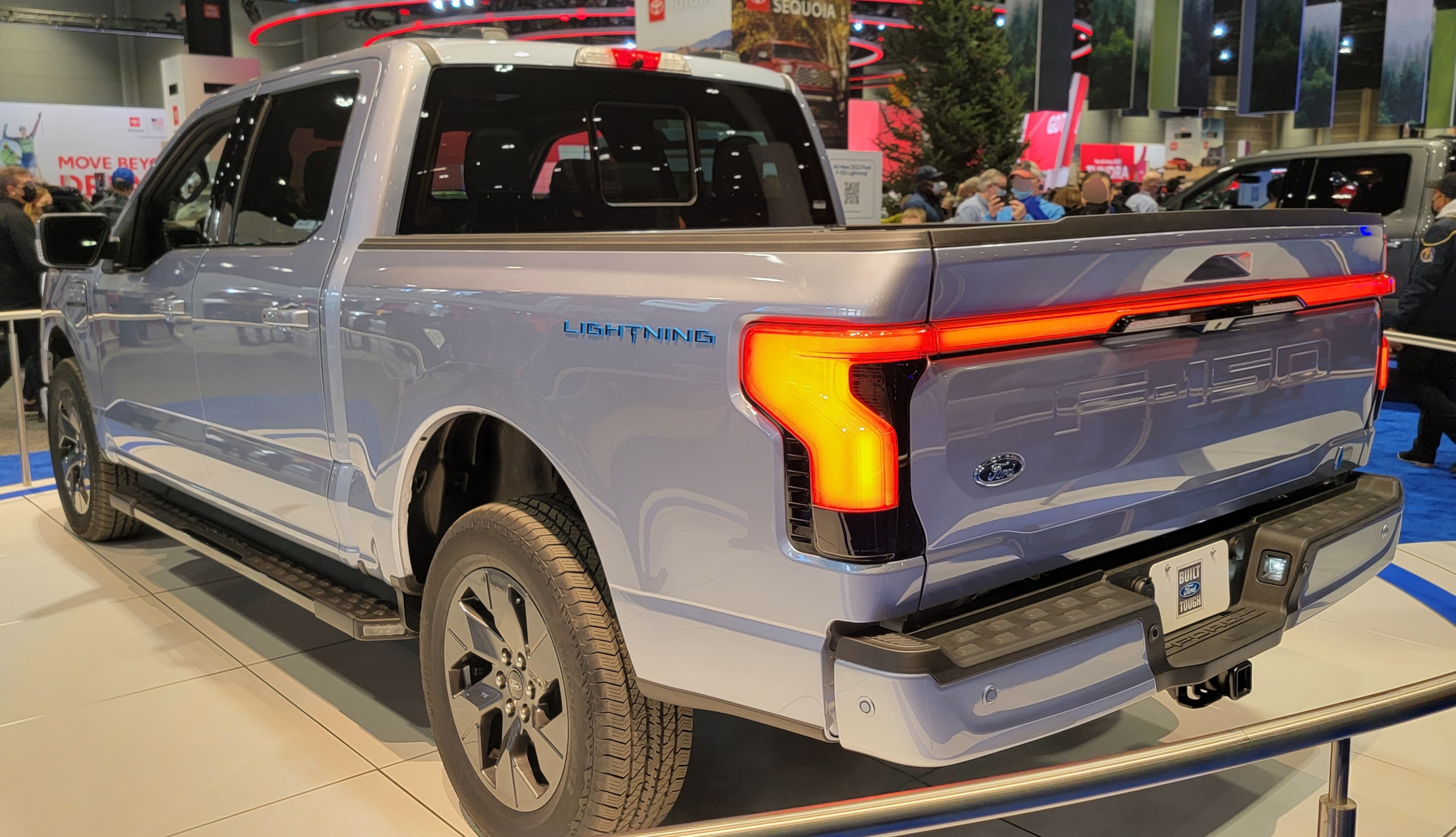
Ford F-150 Lightning
"...n Ford's with the Mustang Mach-E, but that before lightning, this vehicle's been discontinued. What is the i..."
The Ford F-150 Lightning is a pickup truck that uses electricity instead of gasoline. If a dealer has one sitting unsold for a long time—especially if it’s being discontinued—they may offer discounts or incentives to sell it. That’s what the question is getting at.
The Ford F-150 Lightning is an all-electric version of the F-150 pickup, combining the practicality of a truck with battery-electric power. The podcast context points to it being discontinued and asks what incentives a dealer might offer when inventory sits for a long time. That’s a common way to gauge negotiation leverage in the EV truck segment.

Ford Mustang
"so many of them are again Ford's with the Mustang Mach-E, but that before lightning, this vehicle's been discontinued."
The Ford Mustang Mach-E is Ford’s electric SUV. The hosts are using it to explain why some EVs may be harder to sell and may require bigger discounts.
The Ford Mustang Mach-E is an all-electric crossover that competes in the EV market. The hosts mention it in the context of Ford EVs and how dealer inventory and incentives are affected when models are discontinued or phased out.
negotiation power
"Again, you can see the negotiation power on this one, Dad. It doesn't get much greener than that. You have all the leverage in the world."
Negotiation power refers to how much leverage a buyer or seller has to influence the final price. In this market, long dealer inventory holding times give buyers leverage because dealers are motivated to reduce stock and stop it from aging.
Ford F150
"this vehicle's been discontinued. What is the incentive for a dealer here that's been sitting on a Ford F-150 Lightning Flash for 252 days? Again, you can see the negotiation power on this one, Dad. It doesn't get much greener than that. You have all the leverage in the world. The dealer"
The Ford F-150 is a large pickup truck used for everyday driving and work. If a version is being discontinued and a dealer has cars sitting for a long time, the dealer may offer incentives to move them. That’s the basic reason negotiation can get easier.
The Ford F-150 is a full-size pickup truck and one of the most common vehicles on the road, which makes it a frequent topic for pricing, incentives, and dealer inventory. In the podcast context, the discussion centers on how a discontinued model and long sitting inventory can increase negotiation power. That’s why it’s relevant when asking about incentives for dealers holding stock.
dealer discounting
"The dealer is already discounting by almost $13,000. Is it just the reality that they have to lower the price more to sell some of these unsold new cars?"
Dealer discounting is when the selling price is reduced below MSRP (or below typical market pricing) to attract buyers. The segment notes the dealer is already discounting by nearly $13,000, illustrating how deep discounts may be required to move aged inventory.
price not lowered enough yet
"If the customer hasn't said yes yet, you haven't lowered the price enough yet. It's just that simple."
This is basically saying: if people aren’t buying, the deal isn’t good enough yet. So the price usually has to come down further to get buyers to say yes.
This is a sales principle: if a customer hasn’t agreed to buy, the price (or overall deal) likely isn’t attractive enough yet. In a flooded inventory environment, it implies dealers may need to keep reducing price until demand responds.
unsold new car inventory buildup
"Because again, what we're looking at, over 200,000 left over unsold 2025 still, ... The prices just have to go lower, right? It's just more leverage for car shoppers."
This is when dealerships have too many brand-new cars that customers aren’t buying. If cars sit too long, the dealer usually has to lower prices or offer deals to get them sold.
The hosts are talking about a large backlog of unsold new vehicles sitting on dealer lots. When inventory builds up, dealers typically have to adjust pricing and incentives to move cars, because holding costs and financing pressure increase over time.
inventory turn
"I just know how important it is to turn your inventory. I mean, any store selling anything, one of the areas of conversation is, how many times a year can you turn your inventory?"
Inventory turn is basically how quickly a dealer sells the cars they have on the lot. Faster selling usually means less discounting and less cash stuck in unsold vehicles.
“Inventory turn” is how many times a dealership sells through its stock over a period (often measured annually). Higher turns generally mean less money tied up in unsold cars and less risk of having to discount heavily later.

Jeep Grand Cherokee
"you can see disproportionately of those 20,000, it's Grand Cherokee stat. Grand Cherokees make up more than 8,000 and an additional almost 5,000."
The segment breaks down Jeep’s unsold 2025 inventory and shows that the Grand Cherokee accounts for a large share of the backlog. That matters because it indicates which specific Jeep model is most affected by demand softness and pricing pressure.

Jeep Wrangler
"the Wrangler four-door getting in on the phone as well. So let's come here to the Grand Cherokee pops."
They’re also pointing out that the four-door Wrangler is part of the unsold Jeep cars sitting on lots. Different versions can sell at different speeds.
The hosts note that the Wrangler (specifically the four-door version) is also contributing to Jeep’s unsold new-car inventory. Mentioning the body style is relevant because demand can differ between two-door and four-door variants.
price point
"Now the price point here, and you can see the trim breakdown. So it's primarily the limited..."
A price point is the price range where people decide whether a car is worth it. If cars aren’t selling, dealers may lower the price to reach a range that buyers will accept.
“Price point” refers to a specific price range where buyers either start to buy or stop buying. In a market with lots of unsold inventory, dealers often test lower price points to find the level that clears stock.
flat-spotted tires
"I just know from experience that between rodents, flat-spotted tires, dead batteries, a lot of damage that occurs when the lot porter moves the car..."
Flat-spotted tires happen when a tire sits in one spot for a long time and gets a worn flat area. It can make the car feel rough until the tire is replaced or the issue is fixed.
Flat-spotted tires are tires that develop a temporary or permanent “flat” area from sitting in one position for too long. On used or long-lot-inventory vehicles, this can contribute to ride complaints and may require replacement or extra inspection.
dead batteries
"I just know from experience that between rodents, flat-spotted tires, dead batteries, a lot of damage that occurs..."
A dead battery means the car’s battery has lost charge, usually because the car sat too long. Before you buy, it’s worth checking that it starts reliably and that the battery isn’t already worn out.
Dead batteries are a common issue for vehicles that sit for long periods on dealership lots. If a battery has been drained repeatedly, it can lead to starting problems and may require replacement before sale.
lot porter
"a lot of damage that occurs when the lot porter moves the car or when he accidentally sideswipes that vehicle that's been sitting there for 300 days."
A lot porter is the staff member who moves cars around on the dealership lot. The point here is that moving cars can sometimes lead to small damages that add up.
A lot porter is the person who moves vehicles around the dealership lot, often for staging, cleaning, or test drives. The hosts mention lot-porter mishaps as a source of additional damage that can affect the final cost of the car.
bodywork or paintwork
"And so now you have another $7,800 in bodywork or paintwork that you have to add to the cost of the car."
Bodywork and paintwork refer to repairs to the car’s exterior panels and finish after damage. The hosts argue that even small lot-related incidents can add thousands in repair costs, which then affect the car’s true value and pricing.
map tool for inventory pockets
"Again, I want to show here, Dad, let's look at the map view of this... And you can see here, Dad, Florida, there are over 2,200 Jeep Grand Cherokees for sale right now..."
They’re using a map to find areas where lots of cars have been sitting longer. The idea is that those locations usually have more competition, so you may be able to negotiate a better deal.
The hosts describe using a map-based inventory tool to find “pockets” of older, longer-sitting vehicles across regions. This is a practical strategy for locating where discounts are likely to be strongest due to higher supply and slower sales.
market day supply
"The green means, Dad, that there's a high market day supply of this particular vehicle. And you can see here, Dad, Florida, there are over 2,200 Jeep Grand Cherokees for sale right now, 2025s."
Market day supply is basically “how long these cars would sit before they sell.” If the number is high, it usually means the dealer needs to discount more to move them.
“Market day supply” is an inventory metric that estimates how long it would take to sell the current stock at the current sales pace. Higher market-day supply generally signals weaker demand and often leads to better buyer incentives.
unsold inventory sitting on lots collecting dust turning green from pollen
"and you can hone in on the map and see all that stuff that's available right around the corner from you, okay, and the stuff is just sitting there collecting dust turning green from pollen."
This is a vivid way to describe vehicles that have been sitting on dealer lots for a long time. Long lot time can correlate with higher chances of discounting, and it can also reflect mismatches between pricing/specs and what buyers want.
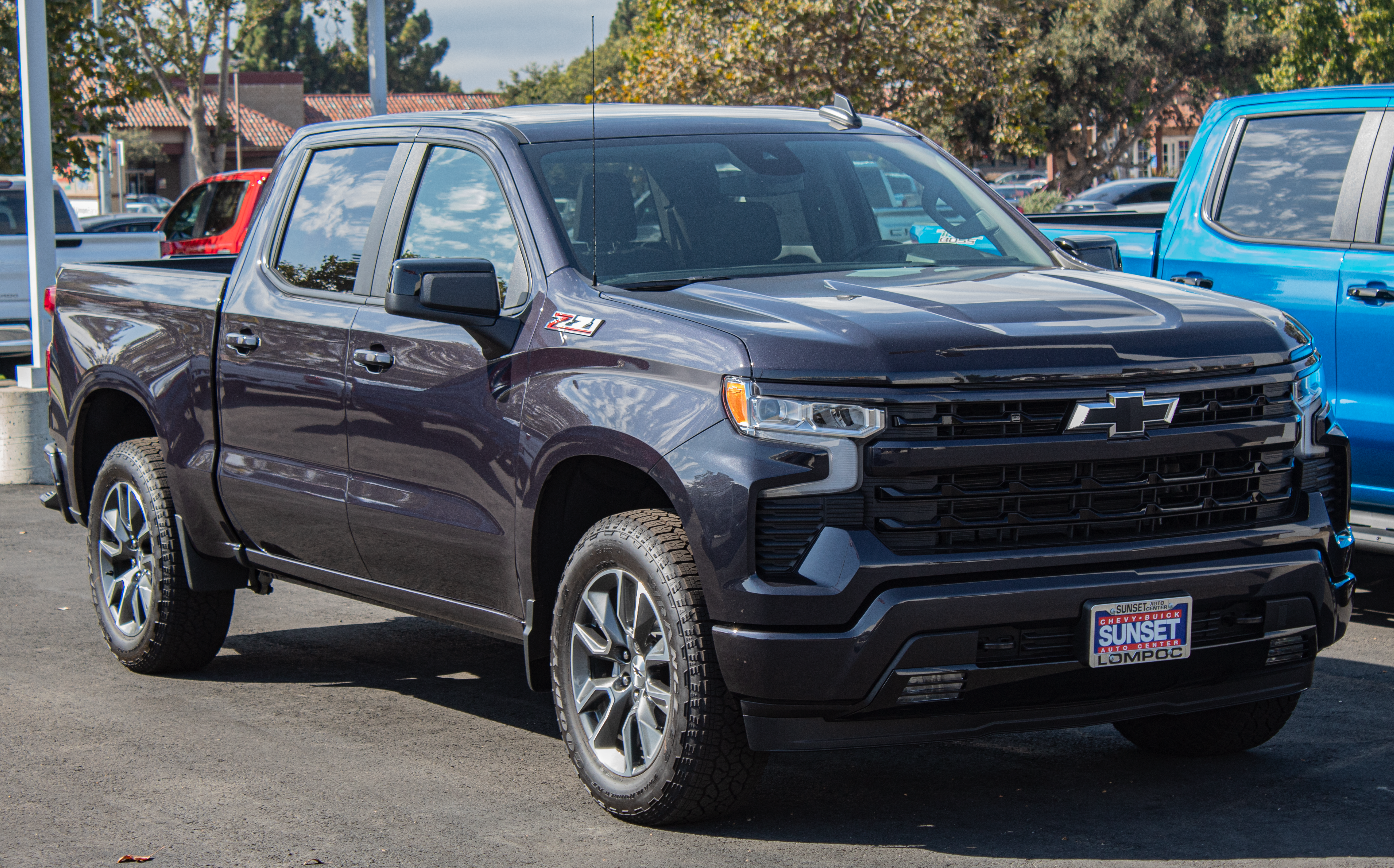
Chevrolet Silverado
"Disproportionately, it looks like it's Express Cargo Vans and then Silverados. It was the Silverado 1500 and the Silverado 3,500."
The Chevrolet Silverado 1500 is a popular full-size pickup. They’re saying a lot of these trucks are sitting unsold, which often means dealerships may be more willing to negotiate.
The Chevrolet Silverado 1500 is the half-ton version of the Silverado pickup line. The segment suggests that Silverado 1500 inventory is a significant portion of Chevrolet’s unsold new-car stock, which can influence pricing and availability.

Chevrolet Express
"Chevy has 18,000 unsold new cars out there right now. Disproportionately, it looks like it's Express Cargo Vans and then Silverados."
The Chevrolet Express Cargo Van is a work-van style vehicle. The hosts are saying a lot of these are sitting unsold, which can lead to better deals.
The Chevrolet Express Cargo Van is a commercial-focused van, and the hosts say it’s one of the main models showing up as unsold inventory. That matters because commercial vehicles often have different buyer demand patterns than passenger cars.

Versa
"It's the Versa. That frustrates me. Why are there 4,000 unsold Versas? Look at the price point on these things. The Versa should be selling."
The Nissan Versa is a lower-priced Nissan. The hosts are surprised that so many are still unsold, and they explain that sales can vary by region.
The Nissan Versa is the budget-friendly model the hosts focus on, saying there are thousands of unsold units. They question why a low-cost car around the $20,000 price point isn’t selling faster, and they note regional differences (California and Texas) where the situation varies.
pickup truck tax
"If you buy a Versa in Texas, you have to pay a huge, I didn't buy a pickup truck tax. Look at this. This one dealer has 53 Versas."
They’re talking about extra money you might have to pay for a pickup in some places. That extra cost can change how many people want to buy pickups there.
“Pickup truck tax” here refers to an additional cost applied when buying a vehicle in a certain location—likely a local fee or tax that makes pickups more expensive. The hosts use it to explain why demand (and inventory) can differ by state or city.

Honda Crv
"I got an email from a friend of mine today, who's looking at a 73,000 mile 2019 Honda CRV Touring fully loaded. That's low miles for the year. Dealer has recently reduced the price to $23,995."
The Honda CR-V is a very common SUV. In the story, someone is looking at a used 2019 CR-V with 73,000 miles, and the hosts compare it to buying a new cheaper car instead.
The Honda CR-V is a popular compact SUV, and the “Touring fully loaded” trim typically means more features than base models. Here it’s used to compare used-car pricing (a 2019 with 73,000 miles) versus buying a new Nissan Versa for less money.
dealer discount vs margin
"...this is, let's put it into perspective here, a $21,000 car with a $3,600 dealer discount. What's that percentage?... Any new car that has an MSRP of $21,000 does not have 15% margin built into it."
They’re saying that “big discount” doesn’t always mean the dealer is making less or more money in a simple way. The real profit depends on what the dealer paid and what extra incentives they get.
The hosts discuss how a large dealer discount (like $3,600 off) doesn’t automatically translate to a high profit margin. They explain that the car’s MSRP and the underlying economics (invoice price and incentive structure) determine whether a discount is feasible and how much money is actually left for the dealer.
floor plan assistance
"...whether it be holdback, advertising assistance, floor plan assistance. This is a triple net deal beyond triple net."
Floor plan assistance is help for dealers to cover the financing costs of keeping cars on the lot. If cars sit too long, that cost adds up, so this support matters.
Floor plan assistance is support from the manufacturer to help dealers pay the interest and costs of financing their vehicle inventory. The hosts later connect this to the idea that dealers may be using these funds to cover the cost of cars sitting unsold.
holdback
"...all sorts of other under the line money that the dealer makes, whether it be holdback, advertising assistance, floor plan assistance."
Holdback is money the manufacturer gives the dealer behind the scenes. It can help the dealer profit even if the car is sold for a lower price.
Holdback is a manufacturer-to-dealer payment that’s typically calculated as a percentage of the vehicle’s price and paid after the sale. It’s one of the “under the line” income streams that can help dealers make money even when the sale price is heavily discounted.
advertising assistance
"...whether it be holdback, advertising assistance, floor plan assistance. This is a triple net deal beyond triple net."
Advertising assistance is money from the manufacturer to help the dealer advertise the cars. It’s another way dealers can earn money besides the sticker price and discount.
Advertising assistance is manufacturer funding that helps dealers pay for marketing and promotions. In dealer deal math, it’s part of the additional revenue streams beyond the vehicle’s sale price.
triple net deal
"...This is a triple net deal beyond triple net. Explain what triple net is, because there's just no dealers making money on this..."
“Triple net” here means the dealer’s profit isn’t just from the price they sell the car for. It can depend on several different behind-the-scenes payments and financing helps.
A “triple net” deal is a way of describing how dealer profitability can depend on multiple layers of manufacturer payments and financing support, not just the sale price. In this segment, the hosts emphasize that the deal structure can be complex enough that dealers may not have much margin from the base transaction alone.
cars sitting on the lot (inventory carrying cost)
"Well, you've actually utilized the floor plan assistance money to pay for the extra interest on that vehicle for its sitting. If you've advertised it at all, you've used your"
If cars don’t sell, the dealer still has to pay for them while they sit there. The hosts are saying manufacturer support can help pay the extra cost of keeping inventory.
When vehicles sit unsold, dealers incur ongoing costs—especially financing interest and inventory-related expenses. The hosts connect manufacturer assistance (like floor plan support) to covering the extra interest caused by cars staying on the lot.
Nissan
"Is there some type of cash incentive that Nissan gave to their dealers for the..."
Nissan is the car brand being discussed. The point is that Nissan may be offering incentives to dealers to help them sell cars that aren’t moving.
Nissan is the automaker referenced as providing dealer incentives. In slow inventory conditions, brands like Nissan may use manufacturer-to-dealer incentives to help move specific models.
front-end profit vs F&I profit
"They're not making money on it. The only hope would be is that whoever buys it... is going to finance it. The finance and insurance department is going to knock their socks off and make money there."
The hosts describe a common dealership reality: the front-end (the car sale itself) may be low or even negative margin, while the F&I department can generate profit through financing and add-ons. This helps explain why dealers can offer aggressive discounts on the vehicle price.
finance and insurance department
"The finance and insurance department is going to knock their socks off and make money there, but you're not making money on the front end."
The finance office is where the dealer handles your loan and tries to sell extra stuff. Even if the car deal isn’t profitable, they can still make money through financing and add-ons.
The finance and insurance (F&I) department is where dealers make additional profit after the vehicle sale. It often involves arranging financing and selling add-ons like warranties or other products, which can be more profitable than the car itself.
March New Car Sales
"When we looked at the data from March New Car Sales, it was disproportionately that luxury car sales actually fell significantly compared to all car sales."
This is the monthly report that shows how many new cars were sold in March. The hosts use it to show the slowdown isn’t only happening to luxury cars.
“March New Car Sales” refers to monthly industry sales data used to track how many new vehicles are sold. Hosts use it to argue that luxury sales fell while the problem is broader than just expensive cars.

2025 Nissan models
"Get huge savings on 2025 Nissan models now. So I mean, they're pushing. Everyone's pushing. Everyone wants to get rid of the unsold new cars."
They’re discussing 2025 Nissan cars that dealers still have in stock. Because they haven’t sold yet, the dealer may offer big discounts to move them.
The hosts are talking about Nissan vehicles from the 2025 model year that are sitting unsold at dealers. When a specific model year is heavily discounted, it often means inventory has been on lots longer than expected.
pre-purchase inspection
"What is your advice for someone who's out there and contemplating an unsold new car... Are you doing a pre-purchase inspection? ... get a pre-purchase inspection done. Get an independent set of eyes."
A pre-purchase inspection (PPI) is an independent check of a vehicle before you buy it, typically done by a mechanic who isn’t affiliated with the seller. For cars that have been sitting, a PPI helps uncover storage-related problems like battery health, brake rotor corrosion, and lubrication/fluids condition.
battery could be weak
"And the battery could be weak. It could need batteries. You could have rust on the rotors."
A weak battery is a common storage issue for cars that sit for months or longer. Even if the battery isn’t completely dead, reduced capacity can cause hard starts and may trigger warning lights or prevent systems from initializing properly.
rust on the rotors
"It could need batteries. You could have rust on the rotors. The engine isn't lubricated the way it should be because it hasn't been driven or run in a while."
When a car sits, the brake rotors can get surface rust. Sometimes it goes away after driving, but if it’s bad it can cause braking problems or extra work.
Rust on brake rotors can happen when a car sits, because moisture and air exposure allow surface corrosion to form. Light rust may clean off with driving, but heavy corrosion can lead to vibration, noise, or the need for brake service.
engine isn't lubricated
"The engine isn't lubricated the way it should be because it hasn't been driven or run in a while. The fluids can just evaporate over time."
Cars need oil to protect the engine parts. If a car sits for a long time, the oil may not be in the best condition, and the engine may not be protected the way it should be.
The hosts are pointing out that engines rely on proper lubrication to protect internal components. When a car sits, oil circulation and protective film formation can be less ideal, and some fluids can degrade over time.
factory warranty hasn't started yet
"Now, one of the benefits, though, to be very clear of buying these unsold new cars, unlike a used car, is that the factory warranty hasn't started yet. The factory warranty starts"
They’re saying the warranty might not start counting down until the car is actually sold to you. That means you could still have full warranty coverage even though the car sat on a lot.
The discussion highlights that some new-car warranties may not begin until the vehicle is sold or otherwise activated, rather than when it’s built. That can make an “unsold new” car more attractive than a used one, because coverage may still be fresh.
unsold 227,000 new cars
"...treat it like a used car in terms of the inspection you do if you're looking for one of these unsold 227,000 new cars."
If new cars sit unsold for a long time, they can develop problems just from sitting. That’s why you may need to inspect them carefully even though they’re “new.”
The segment ties the “flood” of unsold new cars to real ownership implications: cars that sit for long periods can develop issues that may not be covered the same way as typical warranty scenarios. This is a reminder that inventory age can affect inspection priorities even for new vehicles.
retail delivery
"Once the dealer sells it and reports the retail delivery to the manufacturer, then the warranty is in effect."
“Retail delivery” is the point at which the dealer reports the vehicle’s sale to the manufacturer, triggering the warranty in effect for the end customer. Until that reporting happens, coverage may be handled differently (or not apply) for issues that arise while the car is sitting.
warranty starts today you buy it
"Once the dealer sells it and reports the retail delivery to the manufacturer, then the warranty is in effect. And any of these issues that might crop up could be a warranty issue."
Even if a new car is technically still under warranty, some coverage may not kick in until you actually buy it. That matters for problems caused by the car sitting on the lot for a long time.
The hosts explain how warranty coverage timing can differ between the dealer and the factory. In practice, a car can be “under warranty” in general, but specific coverage may not apply until the vehicle is sold and the retail delivery is reported to the manufacturer.
FTC
"...I have a podcast to do with some good folks in Arizona at four o'clock my time today, talking about the FTC and what it is the FTC is trying to do to improve the transparency and advertised prices for automobiles."
The FTC is a U.S. government agency that helps protect consumers. Here they’re talking about making car ads more transparent so shoppers understand what they’ll actually pay.
The FTC (Federal Trade Commission) is referenced in the context of improving transparency in advertised automobile prices. For car shoppers, this matters because pricing can be confusing when ads don’t clearly reflect the final out-the-door cost.

Toyota Grand Highlander
"Dear crew, it's Toyota with an adult-sized third row. Everyone's welcome in the Grand Highlander, from sports fans to eco buffs and movie fans."
Toyota is pitching the Grand Highlander as a bigger family SUV that can actually fit adults in the back seat. It’s meant for people who need a real third row.
The Toyota Grand Highlander is positioned here as a family-focused SUV with an “adult-sized third row,” meaning it’s marketed for real third-row space rather than a token seat. It’s part of Toyota’s larger three-row crossover lineup aimed at buyers who need more seating capacity.

Sienna
"Everyone's welcome in the Grand Highlander... Sink back in the Sienna with an available rear seat entertainment system."
Toyota mentions the Sienna because it’s a minivan built for families. They’re pointing out that it can come with entertainment screens for the back seats.
The Toyota Sienna is referenced as a minivan with an available rear seat entertainment system. This highlights how Toyota differentiates the Sienna for family buyers by focusing on comfort and in-cabin tech for passengers.
Request an Explanation
Heard something you'd like explained? We'll add it to this episode.
Sign in to request explanations for terms you heard.
Want to learn more?
Browse our glossary for plain-English explanations of automotive terms, jargon, and concepts.
Help improve this episode
See something that's not quite right? Our annotations are AI-generated and can sometimes miss the mark. Click the flag icon on any annotation to suggest a correction.