Refrigerant is the special fluid that makes the car’s AC work. If there isn’t enough of it, the AC won’t cool well, and that usually means there’s a small leak.
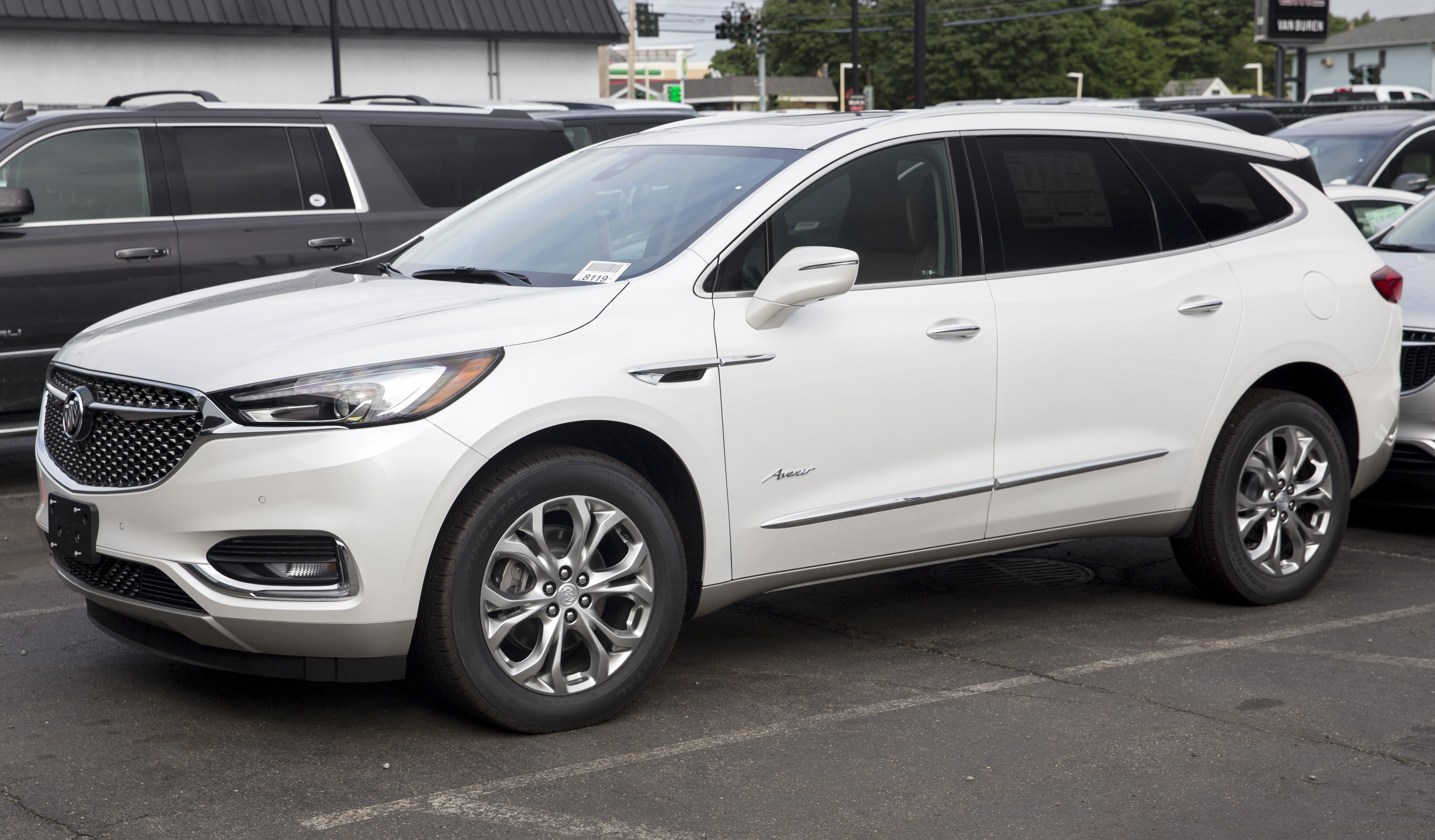
The Buick Enclave Avenir is a larger family SUV with three rows of seats. Here, the owner is talking about a water leak that happens in heavy rain and seems to get into the cabin near the dashboard area.
The “A-frame” is a structural part of the car’s front area. If water is leaking from there, it can mean rain is getting into a specific spot near the front and then finding its way toward the cabin.
The instrument cluster is the dashboard screen and gauges behind the steering wheel. If water is dripping near it, it can potentially damage the electronics that display your speed and warnings.
A sunglass holder is the small overhead storage compartment near the roof. If water is dripping near it, the leak may be coming from the roof area and traveling into the cabin.
They talk through figuring out where the water is coming from—especially whether it’s related to the sunroof drains. They use clues like which side of the car is getting wet to decide what to check.
“Water doctor” is the name of a local company the host recommends for fixing leaks. They focus on water problems, like water getting into the car from the sunroof area.
Your sunroof has small tubes that carry rainwater away. If those tubes get clogged or come loose, water can end up inside the car instead of draining outside.
“Vortex” is likely what they’re calling a GM 5.3-liter V8 engine. Different engines manage fuel differently, so it affects how features like cylinder shutoff work.
Automatic fuel management is a system that can save gas by turning off part of the engine when you don’t need full power. Some people disable it because they want the engine to behave the same all the time.
OBD is the car’s built-in diagnostic system. It’s how mechanics (and some devices) connect to the car’s computer to check or change certain settings.
Term
act of fuel management
“Fuel management” usually means the engine can turn off some cylinders to save gas. The speaker is saying that on their GM, that system can fail and cause major engine problems.
Lifters are parts inside the engine that help open and close the valves correctly. The speaker says theirs failed (“collapsed”), which can ruin other parts and lead to a very expensive repair.
They mean the engine can shut off half its cylinders so it runs like a smaller engine. The speaker says that feature can eventually cause serious damage.
The camshaft is the part that tells the engine when to open and close the valves. They’re saying a failure in the lifters can damage the cam, turning a small issue into a big one.
Cylinder deactivation is when a car turns off some cylinders to save gas when you’re not asking for much power. It can help efficiency, but it also adds extra systems that can sometimes cause expensive problems. The idea here is that turning it off can prevent those costs.
The GMC Yukon is a big SUV that’s usually powered by a V8 and is meant for hauling and everyday driving. Here, the host says their Yukon had a major failure after high mileage, which is why they’re talking about ways to avoid costly engine issues. It’s an example of how expensive repairs can be on a large SUV.
Planned obsolescence is the belief that something is designed to break or wear out sooner than it should. In cars, people say it when major repairs seem to happen around the same mileage for many owners. The host is arguing that their vehicle’s expensive failures fit that pattern.
The Ford Ranger is a pickup truck, meaning it has a truck bed for carrying things. An alignment question usually means the wheels may not be pointing straight, which can affect steering and tire wear. That’s why people talk about alignment on trucks like the Ranger.
Toe-in means the front wheels are angled slightly inward toward the car. It’s a common alignment adjustment that can change how the car tracks and how the tires wear.
Caster is an alignment angle related to how the steering “axis” tilts. Changing it can make the car track straighter and feel more stable, but some cars don’t allow easy adjustment.
Cupping tires means the tread wears unevenly in a wavy pattern. It can cause vibration and usually points to an alignment or suspension problem.
Term
racked pinion steering
Rack-and-pinion is the common steering design where turning the wheel moves a bar that steers the tires. If alignment is off, the car can feel hard to keep straight.
An eccentric is like a special bolt/adjuster that can rotate to change an angle. If it’s on the upper arm, it’s often what lets a shop adjust alignment settings.
Term
rack continion
Rack-and-pinion is a steering system that turns the steering wheel into side-to-side movement to steer the car. Alignment settings can make it feel more stable or more twitchy.
Term
tracks straighter down the highway
This is about how easily the car stays going straight. Proper alignment helps the steering feel calmer so you don’t have to constantly correct it.
Changing one alignment setting can accidentally change another. So shops often have to go back and re-check the angles until everything matches the target specs.
A straight axle is a solid axle connecting the left and right wheels, common on many older vehicles. Compared with independent front suspensions, it often limits how easily you can adjust alignment angles without modifying or bending components.
Independent front suspension is a suspension system where the left and right front wheels don’t have to move together. It can help the car handle better, but it’s harder to set up correctly.
Caster is an angle related to how the steering axis is tilted. It affects how stable the car feels going straight and how easily the steering returns toward center.
Term
Vegas steering box
A steering box is the part that turns the steering wheel into turning the front wheels. Different steering setups can change how you dial in alignment angles like caster.
Rack-and-pinion is a steering system where a gear turns a bar (the rack) to steer the car. It can make the steering feel quicker, so alignment settings matter a lot.
Boost is extra pressure from a turbo or supercharger that helps the engine make more power. More boost can change how the car feels under acceleration, which can affect steering feel.
Tire dry rotting is when the rubber on a tire gets old and cracks. It can happen even if you haven’t driven the car much, and it can make the tire less safe.
Tire life expectancy is how long tires are expected to stay safe. The key idea is that tires can wear out from age and weather even if you don’t drive a lot.
Exposure to the elements means the tire is getting hit by weather and sun. Outdoor storage speeds up aging and cracking compared with keeping the car in a garage.
Tread depth tells you how much grip is left on the tire. When it gets too shallow, the tire can’t handle wet roads as well and you may need to replace it.
A vacuum pump makes suction that other parts of the car rely on. If it fails, the car may throw warning lights and some systems (including brake assist) can act up.
Metal shavings are tiny bits of metal from a failing part. If they get into the system, they can clog or damage other parts and cause multiple problems at once.
VVT solenoids help control when the engine’s valves open. If they go bad or get clogged with junk, the engine can run rough and the check-engine light can come on.
LIVE
With a four barol car with a dueling shaft.
Good afternoon, and welcome to the car show on fifty five k r c D talk station. I'm Dane Donovan
taking your car questions. The number to call five one
three seven four nine fifty five hundred. That number again,
five one three seven four nine fifty five hundred. What
a gorgeous Saturday afternoon. And yes, I do apologize I
was not here last week, but I'm here in studio taking your car questions. And uh, man, what a glorious day.
My my oldest son is golfing today and uh he wanted to He wanted to go hit some golf balls before he went out to his tournament. And uh, all
the all my buddies are like, hey, are you golf today?
I said, no, No, I'm no, I'm you know, you know, toting around him and in his golf uh tournament. So
but I enjoyed. He does a good job. So uh
makes me proud as a father. And those are things
that are important, you know, and making sure that we take care of our kids. And uh, he's a good kid.
He does he does a great job. And and uh,
I mean all my kids are but you know he uh, he's kind of a spitting image of me. And uh,
you know, one day I think I I think I mentioned this one. But you know, one day I woke
up and he uh, I woke him up for school and he goes, hey, Dad, I forgot to switch my laundry.
Can you switch my laundry? And I'm like, he's fourteen
years old. I said, when when did you start doing
your own laundry? This is great? So but uh yeah,
so Aiden, h wish you the best. I hope you
do well in your tournament. He's out there right now,
you know, smacking the ball around, so he I hope you do well, buddy. So all right again the number
to call five one three seven nine fifty five hundred.
That number again, five one, three seven fifty five hundred again in studio. Gorgeous day, love to hear from you.
And any car question again, it doesn't have to be too complex. It could be, you know, simple question about
maintenance or you know again, I was on the news earlier this week and at you know, per the the start of the show, you know, we talked about the cool it for a cost and uh we are giving away uh you know, free on fifty fifty dollars worth of free on you know, believe it or not, probably in about I don't know, about three or four weeks.
You know, we're gonna hit the nineties. I mean I
already I checked the weather earlier. I mean next week
it's gonna be eighty six. And you know, before you
know it that that that AC, sir, that AC is not gonna be a cut it and uh again we're running a promotion again. It's it's cool for the costs. Uh.
And I was on the news earlier this week talking about it and basically, you know, you come in, we will.
Uh.
It doesn't you don't have you know, it supports our local veterans. It's the Barracks Project. That's what it. That's
what it cares. You do not have to be a
veteran in order to you know, take care of this or get you know, get this service right. Anybody can
come in if you if your AC is not working.
The first step in our process is to make sure that the your car has the proper level of free on. Okay,
and nine out of ten times it's usually just low. Now, unfortunately,
it's not supposed to be low because you know, free on doesn't just evaporate. Usually you have a small leak. Okay,
So what we're gonna what we have to do is bring the car in charge it up and again we normally typically charge you know, at least fifty dollars uh for that free on if it's low. And that that
that charged the entire AC servants itself were donating ten percent of the proceeds to the Barracks Project, which is a local charity for again for veterans. So my grandfather,
Don Donovan, who started Donovan Tyre back in nineteen fifty eight, was a a marine fought in World War Two and uh, you know stop uh you know, he fought in e regimas to Tena Saipan. I mean he was uh, he
he was. He was a bad dude. And when he
came back to Cincinnati, Mary, my grandmother, and uh was working for Firestone at the time, and and and they and they had him opening up different stores, and they moved him to Louisville, Kentucky. And he told my grandmother
that if they ever moved me back to Cincinnati, I'm gonna start my own store. And lo and behold they did.
He came back started his own store again. The original
store was in again nineteen fifty eight. It was on
Montgomery Road and almost to the corner of Ridge and Montgomery.
And it's it's a great story. I mean, he was
he was sold TV's appliances or whatnot in the front and in the back they changed tires and there was no garages. They literally would all you know, rain, snow,
sleet or shine whatever. They were jacking these cars up
and changing tires outside all seasons and and and ironically they worked. It was it was a different time, right,
but they they worked Monday through Saturday, nine am to nine pm, every Saturday. I'm sorry, Monday through Saturday, every day,
nine am to nine pm. So obviously things have changed
a bit. We're eight to six, right, it's a little
bit different. But it was a great story. And he
was a great man, and he did a great job and had eight kids and my oldest uncle, my father.
You know, they took over the business second generation, and then you know, Denny's oldest son and I'm the oldest and we took it over as well, and you know, our grandfather coming back. We really wanted to support the
veterans and really wanted to support the community as well.
We continue to do that. You know, in the fall,
we do give the girls a break. We help with
a local charity, Karen Wellington Foundation for families who are going through cancer. As you know, my son as well
went through cancer. And it's you know, when it's really
important and and you think, you know, you think that you hear it a lot, and sometimes it can just become you know, almost numbing because you hear it so often.
But man, I tell you what, when my son was going through it, the people that stepped up and helped out my wife and I, it was it was man, it was so it was such a blessing. And we're
so blessed and honored that people stepped up and we're able to help us out. So and and and again
we want to do that uh at Donovan's to support anybody that we possibly can. And again last year we
gave away a free car again Karen Wellington. We give
money to them. And then this is this is a
new program. This is the first year that we've done
it again. It's cool for the cause. If you're air conditioning,
if you're listening to me right now, you start your car up right now, turn the air condition on if it feels like because it's it's pretty, it's it's it's not too bad today, but turn it on if if if, if it's keeping up great, if it's not bringing into any of our Donovan's locations. And uh again you're it's a.
It's a it's a double win, right, you get your AC taken care of and then we donate ten percent of the proceeds to the Barracks Project for our local veterans.
So it's great, it's a it's a great thing, great costs.
So all right again, then number to call five one three seven four nine fifty five hundred. That number gin
five one three seven four nine fifty five hundred. Coming up,
we have Joe, Brian and Opie. You're listening to the
Car Show on fifty five KRCD talk station. This is
fifty five krc and iHeartRadio station.
Do you have a truck, camper, r V or trailer that needs body repair? If so called Frank's Heavy Truck
Collisiony Repair located just All five seventy five or Route sixty three.
It's convenient to both Cincinnati and Daton.
With over thirty years of experience, including insurance work and fleetwork.
Frank's knows the most important things are quality, worker customer satisfaction.
Frank's Heavy Truck collisiony Repair prides themselves in doing the job.
Right and getting your vehicle back on the road.
Call five one, three eight two nine ninety thirty eight two nine ninety thirty.
The one place for Sean Hannity weekdays at three oh six fifty five KRC the talk station.
You're listening to the car show and fifty five KR see the talk station. I'm your hosting Donovan from Donovan's
Auto entire Center, taking your car questions again. The number
to call five one, three seven four nine fifty five hundred.
I do I I I was supposed to talk about this in the first segment real quick. I had a
customer that was a long time customer. She's and we
have the greatest customers. We really do it Donovan's and
I really do appreciate everybody's support and they trust us.
And and again, we have a lot of great customers that have been coming with us, are coming to us for years. But I had a conversation with a young
lady who's been coming to us for a very long time she goes, you know, Dane. When I was looking
to buy a house, a friend of mine was recommending that I moved to Anderson Township, which is a great neighborhood.
But I didn't want to be so far away from Donovan Tire. So I bought a house in Silverton so
that I could be closer to Donovan's. And uh, I'm like,
and she she again, We've had many, many conversations, and I'm like, hey, you know, I appreciate that. I said,
I'm going to talk about that on the first segment.
But yeah, she she didn't want to move to Anderson and again, she's probably been a customer for thirty years, and she was like, hey, I I don't. I don't
want to move all the way out there because I want to be closer to Donovan. So she made where
she lived, uh, you know, a choice because of where we are. So I'm like, man, that's a great story
and those are those are stories that are compelling. And
I told her I really appreciate it. It so and
so yeah, that's the customer base that we we have built.
And and then that's what we that That to me is what this is all about. Yes, we want to
work on cars. But you know, for people to instill
their trust in us at Donovan's and know that when they bring their car and that we're going to treat them right and take care of them. That's what that's
all about. And that's why I'm here every Saturday to
take care of your car questions and answer them so I could try to help you out and get your car back out on the road, so you know, you can get your you can get to work, you can get your family, uh safely to wherever they need to be.
So my wife's an hour away at my son's golf outing, so you know, I want to make sure you know we can get our families and and wives and sisters and and uh and parents to their safe destination. So
all right, let's go to the phones. We have Joe.
Hey, Joe, welcome to the car show.
How can I help h Dane, Thanks for taking in my car.
No, no problem. I have a twenty eighteen Buick Enclave Avenir.
I've had it since it's been brand new, and I just started noticing, probably in the past couple of months with the rain that I'm getting a leak on. I
don't know if it's called the A frame on the driver's side and it goes down to the shield. I'm
getting a leak there. And then the other day with
that torrential downpour, I saw a drip coming from the top towards the instrument cluster by the sunglass holder up there by all the uh buttons. Just this, you know,
a couple of drops. I've cleaned the track. I've tried
to if I pour water down the in the top of it, I see it drain out the bottom. But
I don't know if maybe there's a crack in the drain pipe. Baby, I don't know. So I'm looking for
some guidance.
Sure, absolutely So where are you located at. Are you
here in Cincinnati?
Yes, sir, I'm in Westchester.
Okay, so probably so do you have a drain on each a frame? Yes? Okay, and then you're getting water
on both sides? No, just the driver's side, just the
driver's side, okay. So there's a local gentleman. In fact,
he does a tremendous amount of work with me. In fact,
I asked him to come onto the show. I'm like, hey,
you know, his name's Jerry. He works. The name of
his business is the water doctor. He's locally, he's mobile. Okay,
he is the best guy in the city that can take care of that issue. I don't think you have
a sunroof issue. I think you have a sunroof drain issue.
And it's just not like it's supposed to do now.
A lot of times, the the material that they use for the drain sometimes it'll over time, it'll shrink, it'll be it'll get disconnected, or there's some type of blocking.
So if you're not seeing the drain on the passenger side, I think it just can't handle the water and that's why it's leaking into the car. So he is the
best guy in the city. I and you know he
uh again, James Jerry does a phenomenal job. I would
recommend calling the water doctor, so just google water doctor Cincinnati.
He's mobile. However, he doesn't come to your house or business.
He will typically recommend a local repair shop. Whether it's me,
whether it's you know, a dealership that's close by. You
call him, he'll set it up and it's and it's he's the best in the business. And it's very it's
very you know when I say inexpensive in the sense of if I do it. I'm pulling the headliner down,
and it's you know, he's an expert, you know what I mean. So to put it in perspective, like you know,
if you go to your general doctor and like, hey, my knees bother me. You know I need a knee replacement,
you don't go to your general doctor. You go to
a knee specialist. This guy is a water specialist. He
does a phenomenal job. But water doctor. His name's Jerry Uh.
He will find a local area, whether you bring it to a Donovan's or whatnot, he'll find it and you know, find the closest location and he'll take care of you.
He does a great job. But he'll clean those drains
and he guarantees everything that he does lifetime guarantee. So
call him and he'll get you taken care of. All right,
appreciate it, so thanks show you take care.
All right.
Let's go back to the phones. We have Brian. Hey, Brian,
welcome to the car Show. How can I help?
How you doing? Dane?
Yeah?
Am I out of Cleveland. I listened to you all
the time on iHeartRadio.
I appreciate that. Thank you.
Let's see I have a seven Tahobe. It's got the
five point three vortex in it, and it has the automatic fuel management on it. Come across that you could
disable that fuel management by plugging you know, a little device in your.
OBD correct, Yes, sir.
Doing research on you know, the internet. I now I'm
getting ads anywhere from like forty three dollars up to like two hundred dollars. You know for one of those devices.
What should I be looking out for whatever? When I
purchased one. I believe that should be a you know,
sounds like a good thing to get.
Yeah. Absolutely. My wife drives a gmcu con six point
three later, and you know she has that act of fuel management, and what happens is the lifters collapse and then you're having to replacement, big, big job. I mean
it's like five six thousand dollars what I see? Yeah, yeah,
to fix it. I'm not I'll be honest with you.
I'm not too hip to exactly which company is the best to go with. Are you having any type of
any issues or oil consumption issues or anything like that.
No, No, not at all. Well good seventy five thousand.
We got it from South Carolina. It was a sleep
vehicle for things in like brand new condition.
You said, one hundred and seventy five thousand.
Yeah, okay, all right.
You know, I'll be honest with you. I don't know
of a particular company that I would recommend I but they they do. You plug it into your OBD two
connector and it, you know, deactivates that fuel management. I
would recommend that on any of these GM vehicles that that system is. I hate to brag on them, but
that system is just horrible.
I first got it. I first got it like ten
years ago, and oh, this is cool, you know, dropped down to four cylinder. Then I started to look into them.
It's like, yeah, until your valves collapse and you rip up your cam and yep, you know you got to get a new engine.
Yeah yeah, So I to be honest with you, I would probably have to do more research on that. I
think any of them, in my opinion, would would still what would suffice? But I think anybody that's listening should
be doing it. If they have, you know, a V
eight GM engine, they need to be doing it. And again,
they have them pretty cheap, I think, you know, in all honesty, I think they they all do the same thing.
I don't know that seventy dollars apposed to two hundred dollars is necessarily going to make any changes other than the fact that if you can just deactivate that cylinder deactivation, it will save you thousands, thousands of dollars.
That's what I've been looking at. Yeah, yeah, I just
want to throw a big difference between like the seventy dollars one and the two hundred dollars one.
And you know, yeah, you know, I'm I. You know,
I always tend to lean to the more expensive stuff because I kind of believe that in life you get what you pay for for the most time, except for if you buy a land Rover. If you buy a
land Rover, you do not get what you pay for. Okay,
those things are a menace. They are man, those things
are money pits. So but uh yeah, I would lean
towards the more expensive ones. But I I unfortunately can't
speak about what company is the best on those, but I'll do some more research.
But definitely it's a real good idea, though.
A asolutely one hundred percent. I would be anybody that's
listening that has a VAGM engine should be getting one.
Otherwise you'd be going down eight cylinders and also no cylinders.
Correct, Like I said, it's it's my I my wife's vehicle, her Yukon. When I bought it, it had one hundred
thousand miles on it, and fifteen thousand miles later they collapsed and I had to do it, so really yeah, and then I and then I got one. So it's
planned obsolescence, right, one hundred thousand miles. These things just
start eating up our money.
So that's good. I guess I've been lucky so far.
Better get yep.
I think anyone will be fine. I think more you know,
the ones that cost a little bit more might be a little bit better quality. And uh but uh yeah, but.
Absolutely unplugged it every time you get out of the vehicle or.
Nope, you plug it into the obd.
It, you know, if you don't use it for a while.
I mean you can just because there's a battery drain on it.
Yeah, but I mean if you're driving, if it's a daily driver, I wouldn't unplug it. I'd keep it in there,
and but you don't. Yeah, you don't have to unplug it.
Okay, all right, sounds good, Thank you very much. All right.
You take care of a great weekend, all right. Taking
your phone calls and number to call five one three seven four nine fifty five hundred. Coming up, we have
Opie and Margo. You're listening to the car show on
fifty five KRCD talk station. It's Stain Donovan from Donovan's
Auto entire Center. This may were launching cooler for a cost,
supporting the Barracks Project and their work helping veterans transition back to civilian life right here in Cincinnati. Here's how
you can help. Come in for an AC service of
Donovan's and we'll include up to fifty dollars in complimentary free on Plus, Donovans will donate ten percent of that service to support our veterans, so you'll stay cool and help someone rebuild their future. Donovan's Auto entire Center the
honest choice for audi repair since nineteen fifty eight. Book
your appointment today at donovantire dot com.
It's Glenn Beck weekday mornings at nine oh six on fifty five KRC the talk station.
Taking your car questions. The number to call five one
three seven four nine fifty five hundred. I'm Dane Donovan
from Donovan's Auto Entire Center. You can find your nearest
location at donovantire dot com. And uh, man, I mean
I enjoy the show. You really do appreciate all the
phone calls. And I want to get back to uh,
get back to the phones. We've got, OPI, OPI welcome
to the car show. How can I help?
Oh, it's a beautiful day in the neighborhood.
Yes it is, yes, sir, And I.
Heard you doing your rant on cancer. Cancer sucks.
Man.
My wife's a two time cancer survivor breast cancer and then the under her breast cancer graded dur in tests.
But hopefully we got it all cleared out and everything's all good.
Well man, I I send you my prayers. Brother, it's
uh yeah, it sucks.
Yeah.
Well, the thing is, I ain't got the tools to work on that.
Yeah no I don't either. Nope. Yeah, you know, we
gotta we gotta think our we gotta thank our doctors and our nurses for that. And I tell you what
my son's cancer was.
I hope someday we put them out of a job.
AI is gonna fix that, right? Uh shoot, well, how
can I help?
I gott alignment? I got alignment question for you here,
uh oh three ranger for we'll drive take it over to uh t.
D and you know who that is.
And I've always taken it and taken all my lines.
And then because they got good alignment racks. Intact, my
buddy installs all their racks. He probably installed your racks.
Took you use k.
O I uh now we hunter.
Okay, I want to say, yeah, my buddy Ray puts in the racks for all the tire discountersho ay, right, So they always use top of the line stuff. And
I've never had any trouble went over this ranger. And
then of course they charged me extra twenty bucks because they said it was lifted its factory truck.
And all you did was set to toe in.
And they put give me the print out and it's like two point three degrees of cast on one side and two and a half degrees of caster on the other side. The toe in was a way out of
whack and it was cupping tires, and so they did that and I rotated tires fixed that problem. But going
up and it's got racked pinion steering, so we're racked pinion steering always. I like to run about three and
a half four degrees of castor in and the dude told me we can't set the caster. I'm like, wa wa, whoa, whoa,
it's got an eccentric on the upper arm and you gotta get in here and knock all that loose. And
so what's your opinion on that? And I argued with me.
My wife said I should have been a lawyer because I love to arguing. I'm good at it, except I
except I never want to argument with her.
Uh So, okay, So you said the right side was at two point three, the left side was at two point.
Five something like that.
Okay, but you said you wanted to move. You wanted
it to be at three.
The spec is three and a half three and a half, okay.
And I like them on racking on on rack continion.
I like them run them about three and three quarter four because then that makes them tracks straighter down the highway.
Because this things it's twitchy, is crazy going up at sixty five miles an hour. Man, you can't keep this
thing going straight. It's twitchy as all get out.
So so you know some of these some of these vehicles, and I know that you mentioned this, but some of these vehicles you can't adjust cast her. But on your vehicle,
your particular the a arm it is, well it says it sounds like you said you're great at it. Well,
let me ask you something. Did they give you a
reason why they didn't adjust it?
He told me he couldn't adjust it.
I mean because they didn't want to, because they want to.
Try, because he charged me an extra twenty bus because it was lifted and all he did was screwing, screwing a couple of tirod ins. Now I could have done
that in the driveway with a tape measure and a piece of string.
I mean yeah, I mean, did they indicate to you that they tried to do it at all or not?
He flat out and told me that we can't adjust it.
And I went out and pointed it out him. There's
an eccentric center.
It's now, we can't do that.
Yeah, it sounds like it's because they don't want to do that. I mean, if there's an if there's an
adjustment there, there needs they need to. Unfortunately, that's what
you're paying for, right, you know. And again what some
of these vehicles don't have camera adjustments, some of them don't have caster adjustments. But if you showed him that
there isn't a caster, there's there a castra adjustment, all n a arm, then yes, they unfortunately that you've got an etc.
You got the front bolt in the back bolt, and and you got an eccentric on it. And when you
crank at around that also that set not only your camera but also your castor. And then you got you
got to mess with it in order to get the caster and camera set right. And then of course every
time you change that, then it changes his toe, and then you got to go back and do it, and it takes you an hour and a half instep fifteen minutes.
Right, that's what they want to do. They want to
just set the toe and let it go and go on to the next one. Sounds like it, okay, But hey,
when I started into this business, we had chims and oh man, it's a lot easier nowadays to adjust camber and cast on these things.
But let me tell you, let me tell you what I work on. I built hot rocks, and it's all
early Ford to straight axle with wishbones. The only thing
that you can set is the toe in and we do it with chalk in a tap measure set the toe in and use an angle finder on the wheel, and then you take a jack and a chain and you bend the axle, and then you've been to set the camp to set the camber, and then you bend the wishbone to set the castor really, oh, it takes It takes a whole day to It takes a whole day to set up a front end on it. You say,
a thirty two forward, thirty two thirty four forward, well model eating thirty two forward with a straight axle and wishbones.
It takes all day to set up front end on one of them because you're heating and beating and bending and all kinds of fun stuff.
So they yeah, but.
See, I don't have the technology. I don't have the
technology to set up this independent front suspension because this is like too high tech to me. If this is
a straight axle, I's been a Saturday afternoon and you get a twelve pack of beer. Mean, my buddies, we
get it lined up, but you know, I don't know how to do this, so that's why I pay them guys.
Exactly. No, if there's your opinion, No, I mean typically though,
I mean usually you want castor as even as possible.
Now again, if intolerance is three and a half, then it needs and if there is an adjustment, then they need to adjust it. I mean that's well.
Yeah, like I said, hot rods, I set them up and you know this is straight actual with a Vegas steering box, and I usually set them up. You know,
you're talking about twenty five hundred pound car. I usually
set them up at about three and a half anywhere between three and three and a half degrees of castor on those that I'm making tracks straight. But you got
a steering box. But when you got rack and pinion,
you got to you gotta put a little bit more cast in because you've got so much boost. They get twitching.
You got run three and a half four degrees.
And they talk was nuts that unfortunately. Yeah, probably because
they just don't have the I'm not picking on them, but you know they might just not have.
The right trouble with them other than on this one.
So no, I just want your opinion.
No go back and argue with them.
Yeah.
See Obi, take care, buddy, take care, love you. He's
a great guy. He calls all the time. So all
right again, taking your phone calls and number to call five one three seven four nine fifty five Hunter coming up.
We have Margo and Jeff. You're listening to the car show
on fifty five kr see D talk station.
Do you have a truck, camper, r V or trailer that needs body repair? If so called Frank's Heavy Truck
Collision Repair located just All five seventy five or Route sixty three.
It's convenient to both Cincinnati and Date.
But over thirty years of experience, including an insurance work and fleetwork, Frank's does the most important things are quality work and customer satisfaction. Frank's Heavy Truck Collision Repair prides
themselves in doing the job right and get in your vehicle back on the road. Call five one three ninety
thirty eight to nine ninety thirty.
This is fifty five KRC, an iHeartRadio station.
Taking your car questions again. The number to call five one,
three seventy four nine fifty five hundred. We are wrapping
up the show here, so I want to get to these phone I want to get to these callers. Margot,
who's been patiently waiting. Margo, Welcome to the car show.
How can I help?
Thank you for taking my call?
Absolutely thank you so much for waiting. I really do appreciate.
I want to try to help everybody out as best I can, and sometimes I can be a little bit long winded, so I do apologize, but thank you patiently waiting.
So how can I help?
Oh, not a problem, Thank you. I have a twenty
twenty Toyota Corolla and I got it in the summer of twenty nineteen, and my mileage is just a little bit over forty one thousand. My question is when does
tire dry rotting become an issue.
Well, typically, the industry standard, as far as tires go, are is six years. Tires have a life expectancy of
six years, whether or not you've reached the mileage or not. Now,
if the car is garage kept and it's in the garage and you know it's not necessarily exposed to the elements all the time, do you park the car in the garage or is it outside all the time?
Failure?
No, I always park it in the garage.
Okay, okay, good, good, So I mean dry rot doesn't necessarily it's usually when these these vehicles are sitting outside, they're exposed to the elements. Twenty four to seven, right,
that's really where we need to focus on dry rot per se. Now again, industry standard, the tire manufacturers will
typically say, hey, listen, any tire that's six years or older should be replaced. Now, I don't necessarily agree with it.
That's their recommendation. We're not saying that, you know, uh,
we don't have to replace them. The what you'll run into, though,
is a lot of your tire man or your tire repair centers won't repair them. So if you have a
slow leak in one or a bolt or a screw or something like that, a lot of times they won't repair them because they're six years or older. So I
mean typically on dry rot, I mean, are you noticing any type of small hairline cracks in the tread or in the side of the tire at all?
No, okay, there's a little bit between like the tread, but not the side of the tire.
Okay, okay, yeah, you know, I think making sure that they're properly inflated it's and that you know you've got it in the garage, that's great. I think you should
and would recommend whether you bring it to me or to your repair shop, maybe just have them inspected and checked, you know, have the tread checked. I don't know that
you necessarily need to do anything at the current moment. Now,
I will tell you again, if if if you develop a slow leak or or something like that, and you take it to a repair shop and they're like, hey, we won't fix this. It's it's it's you know, older
than six years. That's that's pretty much the industry standards.
So most manufacturers or most repair shops won't fix them after six years. But if you have some you know,
hairline cracks in the tread, I don't think that you need to be concerned. I really don't. Just make sure
that they're properly inflated. Are you taking any big long
road trips or anything like that, or are you just driving it locally, just.
Locally, okay, Which my next question then is what is the tread number?
That's the danger zone.
So, so a brand new tire, I'm gonna get. So
a brand new tire, the tread depth is at ten normally at ten thirty seconds. Okay. You can get a
little tread depth gauge. You can buy them on You
can probably buy one an Amazon for a buck or two and it'll have like you know, a green, yellow, or red as far as but at ten thirty seconds, that's a brand new tire. At two thirty seconds is
when they should be replaced. Now you have what's called
a war bar. Every tire is manufactured with a war bar.
Now you will see those in the siphons of the tire.
You will see them. You'll see you can probably google
it because every tire is a little bit different. But
when your tread depth gets to that wear bar, that's when they need to be replaced. Now. You know, my
dad always hated the expression is using a penny And if you can put a penny upside down and you can see link the top of Lincoln Lincoln's head, the tread depth needs to be you know, the tire needs to be replaced, right. But the problem is is a
lot of times people might check the outer side of the tire and not the inside of the tire, right, So you want to make sure what I would recommend as well. It's like maybe in your driveway, you know,
turn the wheel all the way to the left or all the way to the right and make sure that you're checking it eveling, cause again you per the conversation I just had with the gentleman with the alignment issue.
You know, if your car's not properly aligned, the inside might be absolutely just bald and wore out and the outside might look great. So you want to make sure
that you're checking that tires across the board, on the inside of the tire and on the outside of the tire.
But there is a wear bar on every tire, and if that tread gets down to that wear bar, that's where it needs to be replaced. But again, you want
to make sure. It's gonna involve kind of you know,
you're getting on the ground and just making sure that you check the inside of the tire and the outside of the tread, just to make sure that they're wearing evenly and that the tread is you know, but uh, I mean, I have a I have a new vehicle, has twenty two thousand miles on, twenty two thousand miles on it, and my back tires are gone. They're down
in the ware bar at twenty two thousand miles.
So wow, you missed some major driving.
No, No, I just you know, they just wore out really really quickly.
Which I have had my tires recently measured and they said that the two of the back ones with five.
Okay, so they're they're roughly half I mean not I mean they're a little bit more than half worn, right because at ten thirty seconds, so I mean, you probably have about thirty percent left more on those tires. So
I would just make sure again that they're properly inflated.
You're driving around the city, you know, maybe if you're you're driving it across you know, the United States, driving to California, probably I probably put some tires on it, but I don't think that you need to be concerned at this point that you need to take any action and just make sure that they're properly inflated. And again,
properly inflated is thirty five psi. Okay, that's pretty standard
on every vehicle. Okay, thank you so much, very welcome.
You have a great weekend. All right, let's go back
to the phones we have Jeff. Hey, Jeff, welcome to
the car show. How can I help?
Hey? I know you're running short on time, but this
make me crazy. There's four read calls on it, going
to class action lawsuit on it. So I heard I
changed the oil. I heard this ticking if they're looking
at the engine that was on the right hand side.
It's right at the top. And I heard this ticking
and ticking hand side, Well what is that? And my
buddy said, Lord is this brand of oil? So I
change oil and it went away. But as soon as
I pulled out the driveway by brace went out and and come to find out, it was the vacuum pump.
So when the vacuum pump went out, the engine light came on, and I had it uh diagnosed their little test it out of his own hand, O'Reilly, and it said the two BBT's and two UH camshaft sensors the exhaust and UH and take in exhaust. So I replaced
all of those and it still has this uh the engine light doesn't go out. And then when I and
it's got this rough little idol. But when I stopped,
the ottom doesn't worked all the time. But why would
the why would the engine light come on right when the brakes went out?
Is it the break vacuum pump that you're talking about?
Yeah, yep, yeah.
So the problem is the engine the engine. Yeah, the
engine doesn't create enough vacuum, so they have what's called a break vacuum pump. So when that break vacuum pump broke.
A lot of times on those break vacuum pumps, you know they're they're they're ran by the cams, so when they break, metal shavings get into the system, and those metal shavings could have potentially got into those those VVT sylenoids which caused all of your issues. So it's it's
a very common problem on those things. Those VVT syllnoids
go bad all the time. But potentially that break vacuum
pump when it failed, those metal shavings from the break vacuum pump obviously got in, got through the filter, and they got into the syllnoids and could potentially caused all of those It was kind of a you know, domino effect because that break vacuum pump is again it's operated by the CAM and so a lot of times if they go bad, it'll it'll wipe out the CAM or or those metal shavings from the break vacuum pump can cause that as well. Probably have to see it, but
that's why that was why you had those issues. That
domino effect of so either either it wiped out the break vacuum pumped or wiped out those cams, and those metal shavings got into the system, and most likely that's why you're having all issues.
So all right, I gotta go. Everybody have a great weekend.
I really do appreciate the phone calls. I'll be back
next Saturday to answer all of your car questions again.
I'm your host, Dane Donovan from Donovan's Auto entire Center.
Find your nearest location at donovantire dot com. Everybody, have
a great weekend. You're listening to the car show on
fifty five KRC, the talk station
About this episode
Listeners call in with real-world car problems and the hosts work through them like a radio shop floor. The show kicks off with AC service talk—low “free on” usually points to a small leak—and a community promotion that donates 10% of proceeds to local veterans. Later, a 2018 Buick Enclave Avenir water leak gets traced to a likely sunroof drain issue, while another caller discusses disabling GM cylinder deactivation via an OBD-II device. The tire and alignment segments add practical safety and setup guidance.
Dane Donovan takes your car questions and shares a special promotion at Donovan's Auto Center. He talks about a customer's loyalty and how it's a testament to the business's commitment to customer satisfaction. Dane also discusses a caller's issue with a leaky sunroof drain and recommends a local expert, Jerry, who specializes in water-related car problems. Additionally, he answers questions about tire dry rot and engine issues, offering advice on when to replace tires and how to diagnose engine problems.