The Car Show with Dane Donovan - 5/9/2026
About this episode
Listeners call in with real-world car problems and the hosts work through them like a radio shop floor. The show kicks off with AC service talk—low “free on” usually points to a small leak—and a community promotion that donates 10% of proceeds to local veterans. Later, a 2018 Buick Enclave Avenir water leak gets traced to a likely sunroof drain issue, while another caller discusses disabling GM cylinder deactivation via an OBD-II device. The tire and alignment segments add practical safety and setup guidance.
Dane Donovan takes your car questions and shares a special promotion at Donovan's Auto Center. He talks about a customer's loyalty and how it's a testament to the business's commitment to customer satisfaction. Dane also discusses a caller's issue with a leaky sunroof drain and recommends a local expert, Jerry, who specializes in water-related car problems. Additionally, he answers questions about tire dry rot and engine issues, offering advice on when to replace tires and how to diagnose engine problems.
See omnystudio.com/listener for privacy information.
AC
"And you know, before you [175.9s] know it that that that AC, sir, that AC is not gonna be a cut it and uh again we're running a promotion again. [188.8s] And I was on the news earlier this week talking about it and basically, you know, you come in, we will."
AC means the car’s air conditioning. It’s what cools the air inside the cabin.
AC is short for air conditioning, the system that cools the cabin. In cars, it relies on refrigerant circulating through components to remove heat from inside the vehicle.
refrigerant
"The first step in our process is to make sure that the your car has the proper level of free on. Okay, [222.8s] and nine out of ten times it's usually just low. Now, unfortunately, [229.2s] it's not supposed to be low because you know, free on doesn't just evaporate. Usually you have a small leak."
Refrigerant is the special fluid that makes the car’s AC work. If there isn’t enough of it, the AC won’t cool well, and that usually means there’s a small leak.
Refrigerant is the fluid inside the car’s air-conditioning system that absorbs heat and then releases it outside. If the refrigerant level is low, the AC often won’t cool properly, and the usual cause is a small leak rather than “evaporation.”
Freon
"The first step in our process is to make sure that the your car has the proper level of free on. Okay, [222.8s] and nine out of ten times it's usually just low. Now, unfortunately, [229.2s] it's not supposed to be low because you know, free on doesn't just evaporate. Usually you have a small leak."
“Freon” is what people often call the AC refrigerant. If the level is low, it usually means there’s a leak somewhere in the system.
“Freon” is a common name people use for the refrigerant used in older AC systems. The key idea here is that refrigerant shouldn’t just disappear—if the level is low, it typically points to a leak that needs to be found and fixed (not just topped off).
charging the AC system
"So what we're gonna what we have to do is bring the car in charge it up and again we normally typically charge you know, at least fifty dollars uh for that free on if it's low."
Charging the AC means adding the refrigerant back to the right amount. If it was low, it’s often because there’s a leak that should be addressed.
Charging the AC system means adding refrigerant to bring the system back to the correct operating level. It’s usually done after checking for leaks, because low refrigerant commonly indicates a leak rather than normal consumption.
Donovan Tyre
"So my grandfather, [263.8s] Don Donovan, who started Donovan Tyre back in nineteen fifty eight, was a a marine fought in World War Two and uh, you know stop uh you know, he fought in e regimas to Tena Saipan."
Donovan Tyre is the name of the shop the host’s family started. It’s mentioned as part of their family history.
Donovan Tyre is the family business mentioned by the host, tied to the story of how the shop started and expanded. It’s part of the episode’s local-business background rather than a technical automotive topic.
Firestone
"And when he [285.2s] came back to Cincinnati, Mary, my grandmother, and uh was working for Firestone at the time, and and and they and they had him opening up different stores, and they moved him to Louisville, Kentucky."
Firestone is a well-known tire company mentioned in the family story. Here it’s just part of the background.
Firestone is referenced as the employer where the host’s grandmother worked during the family’s move. It’s a brand/company name used for historical context in the story.
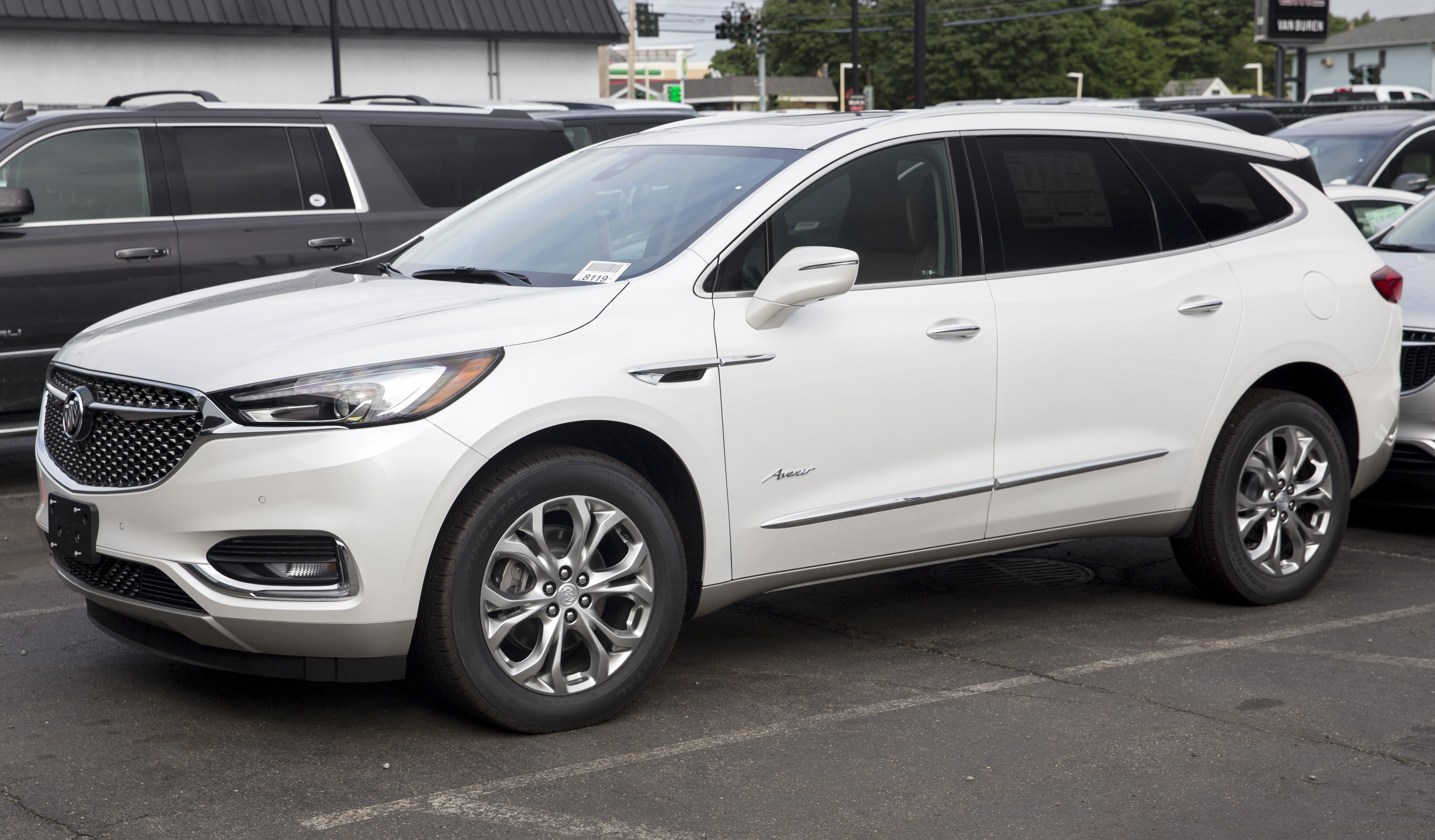
Buick Enclave Avenir
"Hey, Joe, welcome to the car show. How can I help h Dane, Thanks for taking in my car. No, no problem. I have a twenty eighteen Buick Enclave Avenir."
The Buick Enclave Avenir is a larger family SUV with three rows of seats. Here, the owner is talking about a water leak that happens in heavy rain and seems to get into the cabin near the dashboard area.
The Buick Enclave Avenir is a full-size three-row SUV from Buick, positioned as a more upscale trim level. In this segment, the owner is describing a water leak issue that shows up during rain and appears to affect areas near the windshield/roofline and the cabin electronics area.
A-frame
"I've had it since it's been brand new, and I just started noticing, probably in the past couple of months with the rain that I'm getting a leak on. I don't know if it's called the A frame on the driver's side and it goes down to the shield."
The “A-frame” is a structural part of the car’s front area. If water is leaking from there, it can mean rain is getting into a specific spot near the front and then finding its way toward the cabin.
In automotive body terminology, the “A-frame” usually refers to the structural area shaped like an “A” around the front suspension/upper body supports. When someone says a leak is coming from the A-frame area, they’re pointing to a specific body/underbody region where water can enter and then travel into other parts of the vehicle.
instrument cluster
"And then the other day with that torrential downpour, I saw a drip coming from the top towards the instrument cluster by the sunglass holder up there by all the uh buttons. Just this, you know, a couple of drops."
The instrument cluster is the dashboard screen and gauges behind the steering wheel. If water is dripping near it, it can potentially damage the electronics that display your speed and warnings.
The instrument cluster is the panel behind the steering wheel that displays key driving information like speed and warning lights. A leak that reaches the instrument cluster area is concerning because it can affect electrical components and cause warning lights or failures.
sunglass holder
"I saw a drip coming from the top towards the instrument cluster by the sunglass holder up there by all the uh buttons. Just this, you know, a couple of drops."
A sunglass holder is the small overhead storage compartment near the roof. If water is dripping near it, the leak may be coming from the roof area and traveling into the cabin.
A sunglass holder is a built-in storage compartment in the headliner near the overhead console. Because it’s part of the roof/cabin interface, leaks that show up near it often indicate water intrusion from the roofline, windshield seal, or nearby trim/ducting paths.
diagnosing a sunroof leak
"So I'm looking for some guidance... I don't think you have a sunroof issue. I think you have a sunroof drain issue... So if you're not seeing the drain on the passenger side, I think it just can't handle the water and that's why it's leaking into the car."
They talk through figuring out where the water is coming from—especially whether it’s related to the sunroof drains. They use clues like which side of the car is getting wet to decide what to check.
The hosts discuss troubleshooting a suspected water leak, narrowing it down from a generic drain concern to a sunroof drain problem. They also cover how the leak path (driver vs passenger side) can guide what to inspect.
water doctor
"In fact, I asked him to come onto the show. I'm like, hey, you know, his name's Jerry. He works. The name of his business is the water doctor. He's locally, he's mobile."
“Water doctor” is the name of a local company the host recommends for fixing leaks. They focus on water problems, like water getting into the car from the sunroof area.
“Water doctor” is the name of a local, mobile service the host recommends for diagnosing and fixing water-leak problems. The key point is that they specialize in water intrusion issues like sunroof drainage.
sunroof drain issue
"I don't think you have a sunroof issue. I think you have a sunroof drain issue. And it's just not like it's supposed to do now."
Your sunroof has small tubes that carry rainwater away. If those tubes get clogged or come loose, water can end up inside the car instead of draining outside.
A sunroof drain issue means the channels that route rainwater away from the cabin aren’t working correctly. When the drain clogs, disconnects, or shrinks over time, water can overflow and leak into the car interior.
headliner
"And it's very it's very you know when I say inexpensive in the sense of if I do it. I'm pulling the headliner down,"
The headliner is the material on the inside of the roof. If there’s a leak from the sunroof, a shop may need to pull it down to reach the drain area.
The headliner is the interior fabric or panel on the roof. Sunroof leaks are often diagnosed and repaired by removing or pulling down the headliner so the technician can access the drain paths and seals.
vortex
"Let's see I have a seven Tahobe. It's got the five point three vortex in it, and it has the automatic fuel management on it."
“Vortex” is likely what they’re calling a GM 5.3-liter V8 engine. Different engines manage fuel differently, so it affects how features like cylinder shutoff work.
“Vortex” here appears to be the speaker’s way of referring to a V8 engine family (the common “5.3L Vortec” naming used by GM). That matters because cylinder-disabling and fuel-management behavior depends on the specific engine architecture.
automatic fuel management
"It's got the five point three vortex in it, and it has the automatic fuel management on it. Come across that you could disable that fuel management by plugging you know, a little device in your. OBD correct, Yes, sir."
Automatic fuel management is a system that can save gas by turning off part of the engine when you don’t need full power. Some people disable it because they want the engine to behave the same all the time.
Automatic fuel management is an engine-control feature that can reduce fuel use by shutting off some cylinders under light-load conditions. It’s designed to improve efficiency, but some drivers prefer disabling it for smoother operation or consistent power delivery.
OBD
"Come across that you could disable that fuel management by plugging you know, a little device in your. OBD correct, Yes, sir. Doing research on you know, the internet."
OBD is the car’s built-in diagnostic system. It’s how mechanics (and some devices) connect to the car’s computer to check or change certain settings.
OBD (On-Board Diagnostics) is the vehicle’s built-in computer system that monitors engine and emissions components. Many aftermarket “disable” devices plug into the OBD port to read or alter certain engine-management settings.
act of fuel management
"My wife drives a gmcu con six point three later, and you know she has that act of fuel management, and what happens is the lifters collapse"
“Fuel management” usually means the engine can turn off some cylinders to save gas. The speaker is saying that on their GM, that system can fail and cause major engine problems.
“Fuel management” here refers to cylinder deactivation: the engine temporarily shuts off some cylinders to improve fuel economy. The speaker claims that on their GM V8, this system can cause lifters to collapse, leading to severe engine damage.
lifters
"and you know she has that act of fuel management, and what happens is the lifters collapse and then you're having to replacement, big, big job."
Lifters are parts inside the engine that help open and close the valves correctly. The speaker says theirs failed (“collapsed”), which can ruin other parts and lead to a very expensive repair.
Valve lifters (often hydraulic lifters) sit in the valvetrain and help transfer camshaft motion to the valves. The speaker says the lifters “collapse,” which can prevent proper valve operation and can cascade into cam and engine damage.
dropped down to four cylinder
"I first got it like ten years ago, and oh, this is cool, you know, dropped down to four cylinder."
They mean the engine can shut off half its cylinders so it runs like a smaller engine. The speaker says that feature can eventually cause serious damage.
“Dropped down to four cylinder” describes cylinder deactivation, where a V8 runs as a V4 under light load. The speaker says it feels cool at first, but later they believe the system leads to lifter/valvetrain failure.
cam
"until your valves collapse and you rip up your cam and yep, you know you got to get a new engine."
The camshaft is the part that tells the engine when to open and close the valves. They’re saying a failure in the lifters can damage the cam, turning a small issue into a big one.
The camshaft controls valve timing by pushing on the valvetrain components. The speaker claims that when the lifters collapse, it can “rip up your cam,” which can require major repairs or an engine replacement.
cylinder deactivation
"I don't know that seventy dollars apposed to two hundred dollars is necessarily going to make any changes other than the fact that if you can just deactivate that cylinder deactivation, it will save you thousands, thousands of dollars."
Cylinder deactivation is when a car turns off some cylinders to save gas when you’re not asking for much power. It can help efficiency, but it also adds extra systems that can sometimes cause expensive problems. The idea here is that turning it off can prevent those costs.
Cylinder deactivation is a fuel-saving system that temporarily shuts off some engine cylinders under light-load driving. The goal is to reduce fuel use, but it can add complexity and potential failure points. In this segment, the hosts discuss disabling it to avoid costly issues.

GMC Yukon
"Correct, Like I said, it's it's my I my wife's vehicle, her Yukon. When I bought it, it had one hundred thousand miles on it, and fifteen thousand miles later they collapsed and I had to do it, so really yeah, and then I and then I got one."
The GMC Yukon is a big SUV that’s usually powered by a V8 and is meant for hauling and everyday driving. Here, the host says their Yukon had a major failure after high mileage, which is why they’re talking about ways to avoid costly engine issues. It’s an example of how expensive repairs can be on a large SUV.
The GMC Yukon is a full-size SUV built on a truck-based platform, typically known for strong towing capability and V8 power in many trims. In this segment, the host ties their Yukon’s experience to expensive engine-related failures and the discussion around cylinder deactivation. That makes it relevant to the episode’s reliability/cost theme.
planned obsolescence
"planned obsolescence, right, one hundred thousand miles. These things just start eating up our money."
Planned obsolescence is the belief that something is designed to break or wear out sooner than it should. In cars, people say it when major repairs seem to happen around the same mileage for many owners. The host is arguing that their vehicle’s expensive failures fit that pattern.
Planned obsolescence is the idea that products are designed to wear out or fail after a certain period, pushing owners toward replacement. In automotive discussions, it often comes up when expensive components seem to fail around predictable mileage/time. The host uses it to describe repeated costly failures around the 100,000-mile mark.

Ford Ranger
"... got alignment question for you here, uh oh three ranger for we'll drive take it over to uh t. D and you k..."
The Ford Ranger is a pickup truck, meaning it has a truck bed for carrying things. An alignment question usually means the wheels may not be pointing straight, which can affect steering and tire wear. That’s why people talk about alignment on trucks like the Ranger.
The Ford Ranger is a midsize pickup truck known for being practical and widely used for everyday driving and light-duty work. It often comes up in maintenance discussions because alignment, steering feel, and suspension wear can be noticeable on trucks that see rough roads or frequent hauling. In the podcast context, the mention of an “alignment question” suggests the Ranger’s suspension/alignment setup was part of the topic.
toe in
"And all you did was set to toe in. And they put give me the print out and it's like two point three degrees of cast on one side and two and a half degrees of caster on the other side."
Toe-in means the front wheels are angled slightly inward toward the car. It’s a common alignment adjustment that can change how the car tracks and how the tires wear.
Toe-in is an alignment setting where the front wheels point slightly toward each other. It affects straight-line stability and tire wear, so mechanics often adjust it as part of a wheel alignment.
caster
"it's like two point three degrees of cast on one side and two and a half degrees of caster on the other side. ... I like to run about three and a half four degrees of castor in and the dude told me we can't set the caster."
Caster is an alignment angle related to how the steering “axis” tilts. Changing it can make the car track straighter and feel more stable, but some cars don’t allow easy adjustment.
Caster is the fore-aft tilt angle of the steering axis. More positive caster generally improves straight-line stability and steering feel, but it’s not always adjustable on every suspension design.
cupping tires
"The toe in was a way out of whack and it was cupping tires, and so they did that and I rotated tires fixed that problem."
Cupping tires means the tread wears unevenly in a wavy pattern. It can cause vibration and usually points to an alignment or suspension problem.
Tire cupping is an uneven wear pattern where the tread develops a series of high and low spots, often felt as vibration. It’s commonly linked to alignment issues (like toe) and/or suspension wear.
racked pinion steering
"But going up and it's got racked pinion steering, so we're racked pinion steering always. I like to run about three and a half four degrees of castor in and the dude told me we can't set the caster."
Rack-and-pinion is the common steering design where turning the wheel moves a bar that steers the tires. If alignment is off, the car can feel hard to keep straight.
The speaker is describing rack-and-pinion steering (translating steering wheel input through a rack). They also connect it to alignment behavior—how the car tracks straight and how stable it feels at highway speeds.
eccentric on the upper arm
"I'm like, wa wa, whoa, whoa, it's got an eccentric on the upper arm and you gotta get in here and knock all that loose."
An eccentric is like a special bolt/adjuster that can rotate to change an angle. If it’s on the upper arm, it’s often what lets a shop adjust alignment settings.
An eccentric adjustment is a cam-like fastener that changes an alignment angle when rotated. On some suspensions, the upper control arm uses an eccentric to allow caster (or related angles) adjustment.
rack continion
"And I like them on racking on on rack continion. I like them run them about three and three quarter four because then that makes them tracks straighter down the highway."
Rack-and-pinion is a steering system that turns the steering wheel into side-to-side movement to steer the car. Alignment settings can make it feel more stable or more twitchy.
This appears to refer to a rack-and-pinion steering setup. Rack-and-pinion converts steering wheel rotation into linear movement to steer the wheels, and it’s often discussed alongside alignment because caster/toe changes how the car feels at speed.
tracks straighter down the highway
"I like them run them about three and three quarter four because then that makes them tracks straighter down the highway. Because this things it's twitchy, is crazy going up at sixty five miles an hour."
This is about how easily the car stays going straight. Proper alignment helps the steering feel calmer so you don’t have to constantly correct it.
“Tracks straighter” is a practical description of how alignment angles (especially toe and caster) influence straight-line stability. When settings are closer to spec, the steering tends to require less correction to hold a lane.
alignment angle interaction
"And then of course every time you change that, then it changes his toe, and then you got to go back and do it, and it takes you an hour and a half instep fifteen minutes."
Changing one alignment setting can accidentally change another. So shops often have to go back and re-check the angles until everything matches the target specs.
The segment describes how alignment settings aren’t independent: adjusting camber/caster can change toe, requiring re-checking and re-adjusting. That’s why a proper alignment can take multiple iterations rather than a single adjustment pass.
straight axle
"I built hot rocks, and it's all early Ford to straight axle with wishbones. ... with a straight axle and wishbones."
A straight axle is a solid axle connecting the left and right wheels, common on many older vehicles. Compared with independent front suspensions, it often limits how easily you can adjust alignment angles without modifying or bending components.
wishbones
"I built hot rocks, and it's all early Ford to straight axle with wishbones. The only thing that you can set is the toe in ..."
Wishbones are the arms that hold the wheel in the right position. They help determine the wheel angles, which is why they matter for alignment.
Wishbones (upper/lower control arms) locate the wheel and set suspension geometry. In older straight-axle setups, the wishbones can be part of how camber and caster are achieved, but the process may be more manual than on modern cars.
independent front suspension
"See, I don't have the technology. I don't have the technology to set up this independent front suspension because this is like too high tech to me."
Independent front suspension is a suspension system where the left and right front wheels don’t have to move together. It can help the car handle better, but it’s harder to set up correctly.
Independent front suspension means each front wheel can move up and down somewhat separately, instead of being tied together. That can improve ride quality and steering control, but it’s more complex to set up and align than simpler setups.
castor
"I mean usually you want castor as even as possible. Now again, if intolerance is three and a half, then it needs and if there is an adjustment, then they need to adjust it."
Caster is an angle related to how the steering axis is tilted. It affects how stable the car feels going straight and how easily the steering returns toward center.
Caster (spelled “castor” in the transcript) is the fore-aft tilt angle of the steering axis. More caster generally helps straight-line stability and steering “self-centering,” which is why hot-rod builders talk about setting it to a specific range.
Vegas steering box
"Yeah, like I said, hot rods, I set them up and you know this is straight actual with a Vegas steering box, and I usually set them up."
A steering box is the part that turns the steering wheel into turning the front wheels. Different steering setups can change how you dial in alignment angles like caster.
A steering box is a gear-driven steering mechanism (common on older hot rods) that converts the steering wheel’s rotation into the motion needed to turn the wheels. The transcript’s “Vegas steering box” appears to be a specific steering-box brand/model, and it’s mentioned here as part of a setup that influences how much caster the builder targets.
rack and pinion
"But when you got rack and pinion, you got to you gotta put a little bit more cast in because you've got so much boost. They get twitching."
Rack-and-pinion is a steering system where a gear turns a bar (the rack) to steer the car. It can make the steering feel quicker, so alignment settings matter a lot.
Rack-and-pinion steering uses a toothed rack that moves left/right with a pinion gear to turn the wheels. Compared with older steering boxes, it can feel more responsive, so builders sometimes adjust alignment settings like caster to reduce twitchiness.
boost
"But when you got rack and pinion, you got to you gotta put a little bit more cast in because you've got so much boost. They get twitching."
Boost is extra pressure from a turbo or supercharger that helps the engine make more power. More boost can change how the car feels under acceleration, which can affect steering feel.
Boost is the increased air pressure produced by a turbocharger or supercharger, allowing more air (and fuel) to enter the engine for more power. In this context, the speaker links higher boost to steering behavior (twitchiness), implying the car’s setup needs to account for the extra torque/weight transfer effects.
tire dry rotting
"I have a twenty twenty Toyota Corolla and I got it in the summer of twenty nineteen, and my mileage is just a little bit over forty one thousand. My question is when does tire dry rotting become an issue."
Tire dry rotting is when the rubber on a tire gets old and cracks. It can happen even if you haven’t driven the car much, and it can make the tire less safe.
Tire dry rotting is the cracking and deterioration of a tire’s rubber caused by age and exposure to heat, sunlight (UV), and weather. Even if tread depth looks fine, dry rot can reduce grip and increase the risk of a blowout.

Toyota Corolla
"Oh, not a problem, Thank you. I have a twenty twenty Toyota Corolla and I got it in the summer of twenty nineteen, and my mileage is just a little bit over forty one thousand."
The Toyota Corolla is a common, everyday car. Here it’s just the car the caller owns while asking about how old tires can become unsafe.
The Toyota Corolla is a mainstream compact car known for being practical and long-lived when maintained. In this call, it’s relevant because the question is about tire aging (dry rot) rather than a Corolla-specific mechanical issue.
tire life expectancy
"Well, typically, the industry standard, as far as tires go, are is six years. Tires have a life expectancy of six years, whether or not you've reached the mileage or not."
Tire life expectancy is how long tires are expected to stay safe. The key idea is that tires can wear out from age and weather even if you don’t drive a lot.
Tire life expectancy is an estimate of how long tires remain safe and effective based on age and conditions, not just tread wear. The host mentions an industry standard of about six years, meaning tires can need replacement even if mileage is low.
exposure to the elements
"if the car is garage kept and it's in the garage and you know it's not necessarily exposed to the elements all the time... So I mean dry rot doesn't necessarily it's usually when these these vehicles are sitting outside, they're exposed to the elements."
Exposure to the elements means the tire is getting hit by weather and sun. Outdoor storage speeds up aging and cracking compared with keeping the car in a garage.
Exposure to the elements refers to how weather, sunlight, and temperature swings accelerate tire aging. Tires stored outdoors get more UV and moisture cycling, which increases the chance of dry rot compared with tires kept in a garage.
slow leak
"So if you have a slow leak in one or a bolt or a screw or something like that, a lot of times they won't repair them because they're six years or older."
A slow leak is when a tire loses air gradually over time. You might not notice right away, but the tire can get underinflated and wear out faster.
A slow leak is gradual air loss from a tire, often caused by a puncture, a partially leaking valve stem, or a damaged area. Because it’s not an immediate flat, drivers may not notice until pressure drops enough to affect handling and increase wear.
tread depth
"Which my next question then is what is the tread number? ... a brand new tire, the tread depth is at ten normally at ten thirty seconds. ... At two thirty seconds is when they should be replaced."
Tread depth tells you how much grip is left on the tire. When it gets too shallow, the tire can’t handle wet roads as well and you may need to replace it.
Tread depth is the measurement of how much rubber is left in the tire’s grooves, usually given in 32nds of an inch. Lower tread depth reduces water-shedding ability, increasing the risk of hydroplaning, and it’s also used as a replacement guideline.
wear bar
"when your tread depth gets to that wear bar, that's when they need to be replaced."
A wear bar is a built-in “replace me” marker in the tire. If the tread is worn down to that line, the tire is basically at the end of its useful life.
A wear bar is a built-in indicator in the tire tread that shows when the tire has worn down to the minimum safe level. When the tread reaches the wear bar, the tire should be replaced because performance and wet traction are significantly reduced.
alignment issue
"per the conversation I just had with the gentleman with the alignment issue... the inside might be absolutely just bald and wore out and the outside might look great."
Alignment is basically how straight (and angled) your wheels are set. If it’s wrong, your tires can wear unevenly, even if one side looks okay.
Wheel alignment refers to how the tires’ angles are set relative to the road. If alignment is off, tires can wear unevenly—for example, the inside may become bald while the outside still looks fine.
properly inflated
"I would just make sure again that they're properly inflated... So you want to make sure that they're properly inflated."
Properly inflated means the tire pressure is at the right level. If it’s too low or too high, the tire wears out faster and doesn’t grip as well.
Proper tire inflation means the tire is filled to the manufacturer’s recommended pressure for correct contact patch shape and rolling behavior. Underinflation or overinflation can cause faster or uneven wear and can affect braking and fuel economy.
psi
"properly inflated is thirty five psi. Okay, that's pretty standard on every vehicle."
psi is the unit used to measure tire air pressure. The right psi helps the tire wear evenly and grip the road correctly.
psi is a unit of pressure (pounds per square inch) used for tire inflation. Tire placards and manuals specify a target psi so the tire maintains the right shape and wear characteristics.
vacuum pump
"But as soon as I pulled out the driveway by brace went out and and come to find out, it was the vacuum pump. So when the vacuum pump went out, the engine light came on..."
A vacuum pump makes suction that other parts of the car rely on. If it fails, the car may throw warning lights and some systems (including brake assist) can act up.
A vacuum pump creates suction (vacuum) for systems that need it to operate correctly. In many engines, vacuum is used for emissions controls and also for brake assist, so a failing vacuum pump can trigger warning lights and driveability issues.
metal shavings
"A lot of times on those break vacuum pumps, you know they're they're they're ran by the cams, so when they break, metal shavings get into the system, and those metal shavings could have potentially got into those those VVT sylenoids..."
Metal shavings are tiny bits of metal from a failing part. If they get into the system, they can clog or damage other parts and cause multiple problems at once.
Metal shavings are debris created when a mechanical component wears or fails internally. In oil- or vacuum-related control systems, that debris can travel through filters and contaminate solenoids or timing components, leading to a chain of faults.
VVT solenoids
"Those VVT syllnoids go bad all the time. But potentially that break vacuum pump when it failed, those metal shavings from the break vacuum pump obviously got in, got through the filter, and they got into the syllnoids..."
VVT solenoids help control when the engine’s valves open. If they go bad or get clogged with junk, the engine can run rough and the check-engine light can come on.
VVT solenoids are electronically controlled valves that help vary valve timing (VVT) by directing oil pressure to the cam timing mechanism. When they fail—or get contaminated with debris—they can cause rough running and trigger engine lights.
Request an Explanation
Heard something you'd like explained? We'll add it to this episode.
Sign in to request explanations for terms you heard.
Want to learn more?
Browse our glossary for plain-English explanations of automotive terms, jargon, and concepts.
Help improve this episode
See something that's not quite right? Our annotations are AI-generated and can sometimes miss the mark. Click the flag icon on any annotation to suggest a correction.