Formula 1 has gone through different engine eras. The “turbo era” means the cars used turbochargers to make more power, and that technology influenced a lot of how fast cars are built today.
A turbocharger is a device that helps an engine make more power. It uses the engine’s exhaust to force extra air into the cylinders, so the engine can burn more fuel and feel stronger.
Engineering is basically using science and math to build and improve real-world things. In cars, it can mean designing parts so they work safely, efficiently, and reliably.
The Gumball Rally is like a flashy, TV-friendly road trip where cars drive long distances and people film the whole thing. Here, they’re saying they made a TV series for it.
The Nürburgring 24 is a race where cars run for 24 hours on the Nürburgring track. It’s famous because it’s tough on cars and teams, so doing well there is a big deal.
The Ford Mustang Mach-E is Ford’s electric vehicle that uses the Mustang name. The story here is that it started out as something built mainly to meet rules, but then Ford leaned into the Mustang branding to sell better.
A “compliance vehicle” is built primarily to satisfy regulatory requirements rather than to be a fully optimized product for customers. The segment suggests that once Ford wanted to sell it under the Mustang name, they had to rethink engineering and branding decisions to make it fit customer expectations.
A “sub 10 minute lap” refers to completing a Nürburgring lap in under 10 minutes, which is a benchmark for very high performance and driver skill. The segment uses it as a measure of how extreme the attempt is, especially in a car not typically known for track times.
The DeLorean is a famous sports car, known especially for its unusual look. Here, they’re talking about Jess’s story about how he got one and why it’s so interesting.
Concept
hour cars story
They’re talking about a longer story format on the Intercooler site/app. It’s meant to go deeper than a quick overview—like how someone ended up with a particular car.
Topic
Nürburgring piece
They mention an earlier episode/entry about the Nürburgring. It’s basically a previous story Jess wrote before this one about the DeLorean.
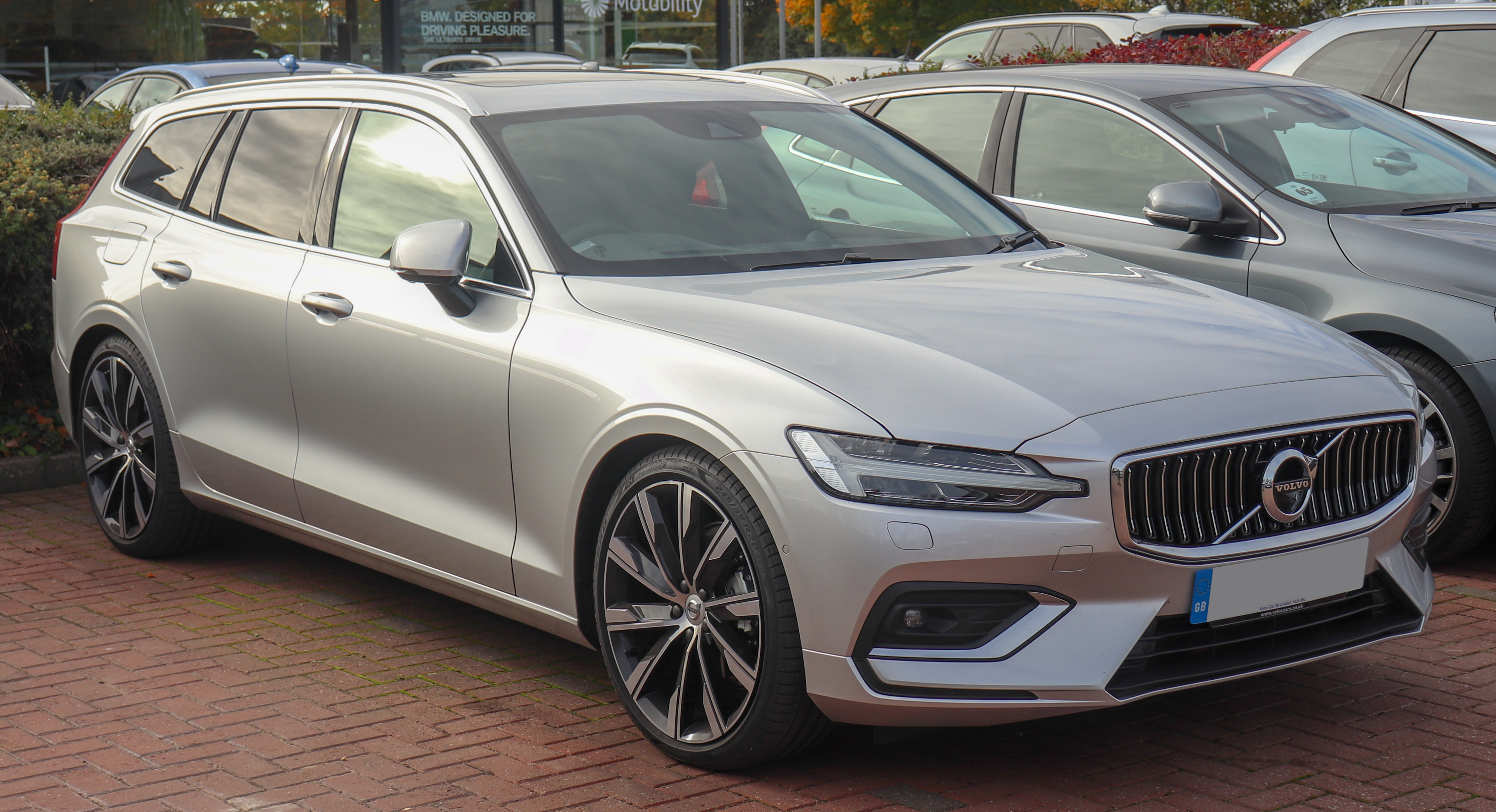
The Volvo V60 Polestar is a performance-oriented version of the V60 wagon, tuned by Polestar. In the episode, it’s Jess’s “sensible everyday car,” which sets up the contrast with his more exotic collection.
The Lotus Elise is a small, lightweight sports car built to handle really well. “Series one” usually means an early version, which can feel more old-school and special.
The Mazda MX-5 (Miata) is a modern reference point for small, lightweight, fun roadster design. Here it’s used as a comparison to help listeners visualize the proportions and vibe of the much older Elva Courier.
This part of the episode is basically the story of how The Intercooler got started and how it’s grown. They talk about the behind-the-scenes process rather than reviewing a specific car.
They’re talking about changing how car content is made and shared. Instead of waiting for monthly or quarterly magazines, they’re trying to publish in a more modern, faster way while keeping it technical and accurate.
This describes a cross-functional approach to automotive storytelling: using not just journalists, but also people who design, test, and engineer cars. It’s meant to improve technical accuracy and explain complex mechanical topics in clearer terms.
The Alpine A110 is a well-known sports car. The host mentions its chief engineer to emphasize that the publication is getting real technical experts, not just writers repeating what they’ve heard.
This is a commentary on how car culture can become driven by image, marketing, and online “perception” rather than measurable engineering reality. The hosts contrast that with their goal of grounding coverage in actual mechanical understanding.
They’re talking about the old-school magazine model—big, fancy issues that come out only every few months. They’re saying their content comes out more often.
Company
ICTI
They’re talking about a car magazine or website called ICTI. The point is that it covers a lot of different kinds of car stories, not just one niche.
Toyota is mentioned as the company whose people came to help Porsche’s factory run better. It’s basically a story about experts sharing how to organize production more efficiently.
They’re talking about how the way a factory is set up affects how well it runs. If storage or equipment placement makes work awkward, the whole process slows down.
A fuel filler cap is what you open to put fuel in the car. The hosts are talking about why some cars have the fuel door on the left and others on the right, and how it’s not just random.
The hosts are using the Peugeot 305 as an example of a car where the door handle design changed. The point is that even small parts like door handles can be redesigned to open the other way for practical reasons.
This is a review style where they keep a car for a while and drive it regularly. It helps show what it’s really like to live with, instead of just judging it from a short test drive.
A long-term test means you drive and live with a car for a long time instead of just reviewing it briefly. That helps reveal what it’s really like day to day—comfort, issues that show up later, and how it holds up. They’re saying you can learn a lot even from cars that aren’t brand new.
They’re talking about a Porsche 911 from the “997” generation. The GT3 RS is a special, more track-oriented version of that 911. They’re using it to explain how long-term ownership lets you notice details you wouldn’t catch right away.
The Bentley Arnage is a full-size luxury sedan from Bentley, typically associated with big V8/V6-era powertrains and a very traditional grand-touring feel. Here it’s mentioned as the host’s current long-term test vehicle, contrasting with the more performance-focused Porsche GT3 RS. That contrast sets up their point about evaluating “texture and dimension” rather than only new-car specs.
They’re talking about how the show works best when it’s interactive. Listeners aren’t just watching—they’re part of the conversation, and their questions help steer what gets discussed.
It’s a special part of the show where listeners ask questions. The best questions often end up being more interesting than the answers, and subscribers get access to it.
Automotive journalism refers to media work focused on cars and the industry—reviews, reporting, and analysis. The hosts use it to explain their background and how they ended up working together.
Before it was called The Intercooler, the show/community was branded as “Drive Nation.” They’re telling the story of how the name and format changed over time.
The hosts explain that lockdown prevented their planned weekly in-person recording, forcing them to start recording remotely. This is a production-process topic, not a car-tech topic, but it’s part of the show’s origin story.
In an internal combustion engine, the combustion chamber is the “burning room” where fuel and air get ignited. How that space is shaped can change how well the engine runs and how clean it burns.
When you start a new brand, you can’t just choose a cool name—you have to make sure it’s legally available and that you can actually claim the website and social media usernames. If someone else already has them, you may need to pick a different name.
Titanium is a strong, lightweight metal. In cars, it’s sometimes used for performance or weight-saving parts, because it can be both tough and light.
Brand
Alphas
They’re saying that “TI” has been used by some car makers as part of a model name. That kind of suffix usually signals something about the car’s version or performance.
Organic growth is when people find you naturally—like through recommendations or searching—rather than you paying to advertise. The host is saying their listeners come because they genuinely like the show.
Retention is a measure of whether people stick around. The host is saying that if you sign up for a year, most people renew for another year.
Topic
market positioning
Market positioning is basically figuring out what your show is “about” in the eyes of listeners. The host is talking about how they decided what audience they wanted and whether that plan shifted.
They’re saying their site is built for phones/tablets first, they publish every day, and they don’t rely on ads. That affects what kind of stories they focus on and how they present them.
They’re talking about a car/racing magazine called “Motorsport” that the host worked on. It’s the kind of publication that covers racing and performance, so it shapes how they choose stories and writers.
Company
TI
“TI” is used as shorthand for the podcast/publication “The Intercooler.” The speaker describes their editorial strategy—finding experts and backing story ideas—so listeners understand how the show builds its contributor team.
They’re talking about how they choose what stories to publish. The idea is: if the team is excited about a topic, there’s a good chance other people will be too.
They’re describing how they assemble the writers/experts who contribute to the show. The goal is to have knowledgeable people and a variety of perspectives, not just the same type of voice.
JLR is short for Jaguar Land Rover, the company behind brands like Jaguar and Land Rover. The host is saying Joanna worked there as an engineer before writing about cars.
Evo is a car magazine that focuses a lot on driving and performance. The speaker is using it as an example of big magazines young writers can work for.
A young writer program is a way to mentor and hire newer writers so they can learn and grow. The host is saying it helped bring in more diverse talent into car media.
Concept
poached
To “poach” someone means another company hires them away. The host is saying that if writers get recruited elsewhere, it means the program is doing a good job finding and developing good people.
This is a structured discussion prompt: each host answers with a major regret from the last five years and what they got right that “kicked the intercooler” (i.e., helped the show succeed). It frames the episode as a retrospective on decisions and outcomes.
A plug-in SUV is a bigger family-style car that you can charge at home or at a public charger. The speaker is saying those are the kinds of cars people are buying, so writing about them reaches more readers.
Alfa Romeo is an Italian automaker with a reputation for stylish design and performance heritage. Here, the name is mentioned as part of a list of brands that may have strayed from their original identity.
Maserati is an Italian luxury sports-car maker associated with performance and distinctive styling. The speaker uses it as an example of a company that once had clear objectives but may have forgotten them.
An “engine of growth” just means the main reason a business or project gets bigger. Here, they’re talking about whether growth comes from ads, people sharing it, or other channels.
They’re talking about Formula One, which is the highest level of professional open-wheel racing. It’s a big part of motorsport history and technology, so it’s a natural topic for a car-focused media outlet.
Brand
Carle Magazine
They mention a magazine they grew up reading. The point is that their interest in cars and writing was shaped by that publication.
“Digital delivery” here refers to publishing content online in a way that enables direct audience interaction, like comment sections. For car media, this changes the relationship between readers and writers by turning passive consumption into an ongoing conversation.
The Aston Martin DB7 is a classic Aston Martin model. The point here is that it has a connection to Jaguar, so learning where it came from makes the story more interesting than just reading magazine summaries.
Car
Jaguar
Jaguar is the other car brand involved in the DB7’s origin story. The host is saying that understanding the Jaguar-to-Aston Martin connection helps you appreciate how the car ended up the way it is.
Ian Callum is mentioned as the person who helped transform the car from its Jaguar beginnings into an Aston Martin. In automotive storytelling, having a key designer/engineer involved can add credibility because they can explain decisions and tradeoffs firsthand.
This is a special, more hardcore Ferrari based on the 599. It’s a rare V12 car, and the hosts are highlighting that they got to cover multiple legendary V12 Ferraris in one place.
This is a special Ferrari with a big V12 engine and a more track-focused setup. The hosts are highlighting that they managed to cover a rare combination of top-tier V12 Ferraris.
The F12 TDF is a rare Ferrari that’s tuned to feel more like a track car than a typical grand tourer. The hosts are basically saying they were able to document a very special set of V12 Ferraris.
This is one of the most famous Mercedes race cars ever made. In the episode, they’re talking about a super-rare 1956 prototype version that almost no one gets to drive.
The Mercedes-Benz 300 SEL 6.3 is an older luxury sedan with a big V8 engine. It was built to be both comfortable and fast for its time. People bring it up when they’re talking about classic cars that blended power with everyday usability.
Stuttgart is a key German city for car companies, especially Mercedes. The point here is that the host got special access to a historic Mercedes because of that manufacturer connection.
Le Mans is a famous endurance race, and the “disaster” refers to a serious tragedy there. The host is saying that event changed what Mercedes could do in the following season, which is why this prototype became so rare.
The Ferrari 296 GTB is a high-end Ferrari sports car. The hosts mention it because it was one of the most-read review stories, likely because it was compared directly with other exciting cars.
A group test is when reviewers drive and evaluate a few cars in the same session so you can compare them fairly. A twin test is similar, but usually focuses on two cars.
The McLaren 750S is a very fast, very expensive supercar. In this episode, it’s brought up because it was compared directly against the Ferrari 296 GTB in a popular review.
BMW’s M3 touring is the wagon version of the M3. The episode mentions it because it was tested against similar BMW performance models in a comparison-style review.
The BMW 3 Series is a mid-size sedan designed for everyday driving but with sporty handling. The M340i is a stronger, faster version of the 3 Series that’s meant to be more performance-oriented than the base models. It comes up a lot because it’s a popular reference point for what a sporty daily car can be.
Car
M340i
The BMW M340i is a strong, sporty 3 Series model that’s meant to be quicker than the regular versions but not as extreme as the M3. Here it’s mentioned because it was part of a comparison against the M3 touring.
The Alpina B3 is a BMW-based performance car that’s tuned by Alpina to feel more luxurious while still being quick. In this episode, it’s included as a key rival in a group test.
The BMW i4 M50 is an electric BMW that’s tuned to be sporty. The hosts say the article about it was a surprise hit with readers.
Concept
AI
AI (artificial intelligence) is discussed as a potential disruptor to car journalism—especially for tasks like summarizing reviews, generating content, or automating parts of the writing process. The hosts frame it as a risk that depends on how it’s used and integrated into media.
They’re talking about AI writing articles. The idea is that AI can make text sound good, but it usually can’t create brand-new insights the way a human reviewer can.
A key point is that AI lacks real-world physical interaction—specifically the ability to drive a car and evaluate it firsthand. That limitation is presented as why AI reviews may miss the “feel” and nuance of an actual test drive.
This is a style of car writing that tries to describe what it’s like to drive or experience a car. Instead of only repeating numbers, it focuses on the vibe—how it feels, sounds, and makes you react.
The speaker is talking about using AI to write car reviews automatically. The worry is that the results become bland and repetitive—more like a summary of facts than a real test you’d enjoy reading.
“Hybridized” means a vehicle uses a hybrid powertrain, typically combining an internal combustion engine with an electric motor and battery. This can change how the car behaves, how it’s engineered, and how it feels compared to a purely gas car.
Downsized engines are smaller gas engines that try to feel powerful anyway. They often use boost (like turbocharging), which can change the driving feel and add complexity.
ADAS are driver-assist features that help you avoid crashes or stay in your lane. Some people like them, but others feel they take away from the driver’s involvement.
HMI is how the car’s controls and screens work—basically the interface between you and the vehicle. If it’s too complicated, it can make the car feel harder to use and less enjoyable.
“Peak car” is a way of asking whether car culture is getting less exciting over time. The discussion is basically: are we already past the high point, or is the good stuff still coming?
They’re talking about people choosing older cars—especially from the 1990s and 2000s—because they feel more fun and more “real” than what’s common today. It’s not just about owning a car; it’s about having something you want to use and talk about with others.
They’re talking about car meetups—events where people bring their cars or just show up to hang out with other car fans. The point is that these meetups have become much more popular over the last decade.
Topic
late April Bista scramble
They mention a specific car event in late April called the “Bista scramble.” The takeaway is that tickets sell out extremely fast, showing how popular these car gatherings have become.
They’re saying newer cars can feel less fun or less personal—maybe because they’re heavier and more complicated. So people start looking for older cars and for communities where the experience is more about people than just the machine.
They’re giving a quick history of how long The Intercooler has been around in different formats. It helps listeners understand where the show has come from and where it’s going next.
They’re saying this episode is a one-off, and the usual show format will come back after this. It’s basically a heads-up about what to expect next.
LIVE
Welcome back to the intercooler podcast everybody episode 310 of the intercooler podcast the
podcast powered by car finance specialist JBR capital. Andrew, this is a very, very different
one for us. I'm not very comfortable about this. I've been a bit apprehensive about doing
this because I think you too, Andrew, because we don't really like talking about ourselves
too much. But people have asked us to do it. We also want ti to be open and inclusive. We want
all of you watching all of you listening to feel a part of the intercooler and what we're doing.
So that's what this is all about, right? If you're watching you've already spotted a third
character in the room. Jez, Jez Meddinger, welcome to the podcast. Thank you for having me. Now
app subscribers, website subscribers will probably be familiar with that name. Jez is one of our
sort of newish writers. But more than that, Jez is becoming a core part of the ti team.
And we'll explain a little bit more about why and how later. But Jez, what do people need to
know about you? We're going to start this episode by just introducing you. And then we're going to
talk about ti. The reason you're here is really to quiz me and Andrew about the origins of the
intercooler, the way things operate, what our plans and ambitions are for the future and all
the mistakes we've made, all the mistakes we've made. Okay, we might have to do two episodes if
we're going to include those. But we need to introduce you first, Jez. So who are you? What's
your background? Well, I'll try and do this relatively quickly. So I mean, I guess the story
with cars starts at a very young age, like it probably does with all of us. So, you know,
before I could really even talk, I was already fascinated by Skellex trick sets,
by the turbo era of F1, by top trumps, by my dad's car magazines, which had a stash of up in
the loft. And I guess cars were just always part of my world growing up. And I went to
university, I did a degree in engineering, and I sort of thought, you know, a career in automotive
design or communications or something like that would be on the cards. But in the end,
turned out engineering is just maths. And I wasn't that much of a fan of it. So instead, I
went out to the Alps and started filming extreme sports out there, set up a production company,
came back to the UK, and out of the extreme sports, we sort of started moving towards
automotive stuff. So as a company, we produced and directed the six part series for the Gumball
Rally in 2006, which went out on channel four, and then started working for a lot of brands. So
Ford, Nissan, Porsche, doing a lot of motor sports stuff. So I've been out to the Nurburgring 24,
which is a one hell of an event and unlike anything else. Obviously, Lamar, Spa, filmed at
Formula One, Shanghai, Bahrain, and Barcelona all over the place as well. And a lot of that was
involved around telling stories around different angles of mostly for brands, but very much focused
on trying to get to the heart of what those brands meant and the way they wanted to express themselves.
And then ultimately, got to the point where I spent a year in Detroit working sort of embedded
with the Ford team out there as they developed their first all electric vehicle, which was the
slightly controversial Ford Mustang Mach-E. And that was a fascinating insight about how they
managed the brand communications around this Mustang that wasn't. And because it started off
as a compliance vehicle, and then they went, oh, maybe if we call it Mustang, it'll sell more.
But then they suddenly had to re-engineer it because you couldn't just stick the Mustang badge
on a compliance, you know, back to the electric vehicles. So yeah, it's been an interesting
and sort of long and sort of varied career to get to this point.
Jess actually is a accomplished podcaster himself. But Andrew, can you explain why we've,
why we wanted Jess to become a core part of the team?
Yeah, basically, because you tried to do a sub 10 minute lap of the Nurburgring in his Delorean.
He is that lunatic.
I mean, that's all the qualification news as far as I'm concerned. Now you got in touch with us,
Jess, didn't you? And you pitched us a story about doing a sub 10 or trying to do a sub.
Did you, I can't remember. Did you, did you actually do it in the end?
No, I don't, I think in the right hands, it would be possible to do a sub 10 in the Delorean.
It's just those hands weren't mine.
Oh, okay. So by now, ladies and gentlemen, you'll know that Jess has a Delorean, which
makes a very, it's fairly qualifiable by itself. And that you tried to go out and you wrote this
brilliant story. I advise anybody who is watching this or listening to this to go on
to the intercooler website or app and have a read about this insane attempt.
By the way, just to jump in, it says, if we plan this, because this morning, the same day
this episode will go out, Jess has written his first hour cars story about the Delorean.
So you've written the Nurburgring piece, you've now written an hour cars piece,
explaining how and why you acquired the car.
The genius financial manmass behind it all. And yeah, and so you'll be doing more for that.
So it's, I find it very difficult because I'm British and repressed sort of trying to
blow smoke up someone who's particularly in the room with me, but Jess is a superb writer,
massively creative. And yeah, we will be continuing to do stuff with you for the foreseeable.
And I'm very happy about it.
How's the mind?
So do you think people now know enough about you, Jess?
No, hang on, let's go a bit deeper.
Okay. You're a die-hard car enthusiast. You've turned up today in your sensible
everyday car, which is a Volvo V60 Polestar. So an interesting car, an unusual choice,
but you've got a few others. You've got the Delorean. What else have you got?
I've got a couple of Lotus's. So I have a last of the line of VORO, which is the GT410 Sports
that's been gently tweaked, put out a little bit more power. I've got an early series one
Lotus Elise. I have a 1960 Elva Courier race car, which if you think of what a British Mazda
MX-5 might have looked like if it was designed in the late 50s, that's kind of the best way of
imagining what that car is. Most people probably won't have heard of it, but it's a brilliant
little thing. And I'm into motorbikes as well for my sins.
Yeah, we won't hold that against you. But actually, you've got some interesting motorbikes.
You are going to be writing about some bikes for us. And we'll, I'm interested to see what
the feedback is on those stories. But I think you can tell, can't you, that he's a die-hard
petrolhead. He's one of us. He does race his Elva. So I think that's probably enough about Jez.
Why are you here though? What's the real reason?
Well, I'm here because I want to know everything about how TI came into the world and what the
birthing troubles were and the growing pains to get to this point and where we are now.
Before we start, that's that part of the show. I just want to say,
TI is a work in progress, right? Both creatively, from a business sense.
We are still working very, very hard on it. And we're not going to stop. This isn't supposed
to be like a victory parade. Look at us. Aren't we wonderful? We're not there yet, but we're
hopefully on our way. Okay, you crack on then, Jez. What do you want to know?
Well, let's start with the kind of the standard thing just to summarize
what TI is, because it's not just a podcast. Is it, Dan?
It's not just a podcast. Yeah, I think most people, a lot of people, when they hear or
say the intercooler, they think podcasts, it's probably, it's one of the most visible things
that we do. Actually, in terms of the time Andrew and I spend working at TI, it's a smaller part of
it. Our magazine, both in the amount of time that we put into it, but also how the business is
structured. And it's the thing that we are deeply proud of. It's unlike any other car magazine in
the world. It really is. So we have a bespoke website, an app. It's totally ad free. So we have
this very, very modern delivery, right? It's where in your pocket all the time, you can read our
stuff wherever, whenever, you can also listen to our articles. So if you're not able to read,
because you're in the car or whatever, or you don't want to read, you can listen.
We also publish our articles daily. So every day of the working week, there's a new
paywalled story. And no one else does it like that. You know, Andrew likes to say that we
provide the quality of journalism that you'd find in a monthly or quarterly magazine,
but we do it every day. So it is the most modern form of publishing that there is. And the idea
behind it was to innovate within car media. Because I didn't see a great deal of that going on. And I
saw in other verticals, other other categories, there were publishers, big and small, doing
something similar. And I thought, that is going to work in cars. And I just need to make sure that
it's me, us that does it. And so five years ago, that's why we're doing this now, because we launched
TI as a magazine, almost exactly five years ago today. So now's a perfect time to just sort of
Andrew. Hello, editorially. Where does TI sit? So what does what are you trying to achieve? And
what's the voice of TI compared to the other print magazines that people might be familiar with?
Where do you see TI slotting between those or near those or adjacent to those?
I would say we are off to one side, the side where the real I was about to say geeks are such a
majority of work. I am a geek, and I'm proud to be a geek. But okay, people who really
not only care about cars, and I'm not talking about the perception of cars or the image of cars,
but cars themselves, where people who just want to know more, who want more detail, and want to
hear it from people who are real authorities, it's one of the things that we do, which hardly
anybody else does to any extent, we don't just employ journalists, we employ designers and
drivers and engineers to do our stuff. So you're hearing straight from the horses now,
anyone who goes on to the website and reads anything written by David Tuig, who was the man
who was, for instance, the chief engineer of the Alpine A110. His insights into how cars work,
how the car industry works, all those sorts of things, and his ability to make really quite
complex of mechanical engineering seem as simple as one, two, three is absolutely extraordinary.
He's not even a journalist, and there are lots of people like that who do stuff like that for us.
So yes, we just wanted to, my feeling is that we live increasingly, we are being forced increasingly
to live in a world where perception is somehow more important than reality, and people live in
these sort of slightly virtual existences, and we just wanted to make it real.
We just want to return reality to the people who just genuinely love cars. So we try to do
things which we love talking about, but to do them better, to do them in more depth.
We also don't have, almost all car magazines are kind of either because they're in a stable
of other publications, and they must fit into a certain shaped hole within that, within that
stable, or because that's just what they're known for. We can do anything. We don't even have to
write about cars, and we quite often don't write about cars. I mean, I've done stories about
climbing mountains, and well, you're going to be doing stories about riding motorcycles,
and we did a story on the Sherman tank. So I mean, the qualification I've always
thought of as what makes a story interesting for TI is, is it an interesting story? We will
always be at least 80% car based. But every time we do one of these stories, we'll sit under a tab
on our website and app called Universe. Everybody always, the comments always, nobody ever says,
what's this doing here? People always piling and go, oh, more of these, please. And we know
there's a balance of striking. We'd never make it all about that. So it's, yeah, it's what Dan says,
it's making the highest quality journalism, mainly motoring journalism, from the greatest
bunch of authorities writing about cars literally anywhere in the world. And we've said that so
many times and nobody's ever challenged it. And you get all that, but you get it every day.
You don't have to wait a month or three months for the next glossy, expensive quarterly to flop
onto your mat. Literally wake up seven o'clock every morning, bang, there's another one. And,
that was the idea which we had, as Dan says, five years ago. And we decided to do it without any
ads for anybody who subscribes to us because we feel that they get in the way and people are
paying us money, shouldn't have to put up with that. Lots of people thought and said, well,
nice idea guys, but it was never going to work. Five years later, we're still here. And we're
in good shape. We are in good shape. And we have lots and lots of plans. We always have lots of
plans. We've never been particularly brilliant at putting them into into action, but that's
going to change too. And we're going to really push on now. I just want to add to that. So
ICTI is the most sort of broadly defined car publication that there is. The breadth of this.
Andrew mentioned the universe stories that we we produce and they're excellent. I love them. But
even just within cars, I think we are the most broadly defined title out there. We'll publish
stuff that others just won't. And I think it's that variety that keeps it interesting, I hope.
We should also give a shout out to our writers. So Andrew has already mentioned that we believe
we have the best team of automotive writers working anywhere in the world today. And it's
the key thing is it's not just me and him and one or two others. We have a big team of people who
produce brilliant work for us. Many of the best automotive writers in the world. About 18 of them.
Yeah. So we've got the likes of Andrew English and Steve Sutcliffe and Colin Goodwin and Henry
Catchpole and Ben Oliver. And I'll miss many more. But these are top, top draw journalists,
as well as the engineers, the drivers, the designers Ian Callum, David Tuig, Karin Chandoch,
Julian Thompson, Joe Fidalgo. You know, we've got some brilliant, brilliant people in there.
And that's the thing that I'm proud of. I want a story from each of you. Could you nominate a
story each that you are most proud that TI has run? And this isn't necessarily a story that you've
written yourselves, but one where she puts out and you went, yes, I'm so pleased and proud that we
have this platform to be able to put this story out there that does something that nobody else
would ever have done. Yeah. So I didn't mention Mel Nichols, I should have done. But Mel wrote a
brilliant piece for us about the Japanese consultants who came from Toyota to Germany
to tell Porsche how to structure their factory to make it operate properly. And we'd all heard
those sort of tales, the rumors from, you know, what was this, the 1980s, Andrew?
Yeah, 1990s. OK. And we knew that some people from Japan came over and told Porsche what to do.
I'd never read any of the detail. I'd never heard any of the detail about that.
And Mel dug it all out. And he told this brilliant story. And with the real specifics,
I think the Toyota guys told Porsche to take a circular saw to their racking
to make it half the height, because you couldn't operate efficiently with very
tall racking. Weirdly specific stuff like that. I loved it. It was brilliant. It felt to me like
a very, very TI story. I'm going to nominate a story by another of our writers, Richard Porter.
Anybody who's listened to the Smith and Sniff podcast will know who Richard Porter is. Anybody
who's read Evo will know exactly who Richard is. Or Watch Top Gear. Or Watch Top Gear,
because Richard is the boat who wrote most of the scripts for Top Gear.
He does. He does a monthly column for us called Geek Out. And he did one on why
fuel filler caps are on the side of the car that they are. Because if we all know, some of them
are on the left, some of them are on the right. And you would think that that's just like a sort
of random thing. And it was where it happened to fit in the packet. Not a bit of it. It goes back.
It turns out to be a deeply political story. And he goes into it in such depth and explains it with
such clarity and such great humor. I mean, where else would you ever read a story about
why your fill is on the left or why your fill is on the right? And that to me is just a fabulously
TI story. Because it is, even though it is just about where you put your, you know, your fuel
nozzle into, it's just strangely weirdly, just a really interesting tale. He's just done one for
us about door handles and why they're designed the way they are. He made particular mention of
Peugeot 305, which had the early part of its life. The door handles open one way. And for some
reason, they changed exactly the same door handle, but they basically turned it upside down. So it
opened the other way. And I love that sort of stuff. I think we should also mention now that
anybody who thinks we're just a bunch of weirdos, we do all the mainstream stuff as well. If there's
an important car to be driven, we will go out there and we will drive it. We do lots of twin
tests and triple tests and group tests of all sorts of things. Another thing that we do, I'm
doing it at the moment, but I'm not blowing my own trumpet here, but it's just an idea that we had,
so we're doing it, is we do these things called months in the life of, where we'll go and drive
a car for a month. So it's not a long term test, but it allows you to get under the skin of a car
in the way that you can't do it during a conventional road test. And it also means that we
don't, there don't have to be new cars, you know, all long term tests, always new cars.
But I've done one on a 997 era of GT3 RS. I'm driving a Bentley Arnage at the moment.
And so it's just about texture and dimension. And, you know, we are really interested in any
story, which we've often said, you know, come to TI, you will read stories which you won't read
anywhere else. And we're really proud of that, as well as obviously doing all the important
stuff too. Let me just jump in there. We're saying, I mean, God, there's a lot of trumpet
blowing going on here. But people ask us to do it. We're proud of it. We are proud. But
most of you listening to this are not currently TI subscribers and we want you to be. And so to
that end, we will encourage you all to subscribe with a discount and you can use coupon code
pod20 at checkout to get 20% off the first year. That brings the cost of a monthly subscription
down to £6.40 a month. Nothing really. That's a pint of beer. It's a posh Starbucks.
It is. Yeah, it's a lot less than a gallon of fuel. Or it's a lot of really good car journalism.
And if you become a subscriber now, you can go and read the entire archive,
1500 words, couple of 1500 articles, couple of million words. You also get a 30 day free trial.
There'll be a link in the description or just go to the dash intercooler.com. Find the subscribe
page and use coupon code pod20 at checkout. I actually just want to mention another component
of TI that we're very proud of. And we have no input on this at all. That's the comments
underneath our articles. Jess, you get stuck into the comments. I love that. Tell us what you make
of them and how our comment section compares from your point of view to others that are other.
I mean, I was completely shocked the first time I read a TI story and went to the comments and
went, Oh my God, these people have brains and they can write. And what they're saying is insightful
and challenging and interesting. And so engaging with those comments is actually one of the things
I look forward to the most when I have a story published on TI, the first thing I do at eight
o'clock in the morning, there's already a few comments there. And I'm desperate to go and see
what people think because I love that challenge to my perspective. If you know what I mean. And I
really appreciate having an audience that's that engaged. And that's part of the community,
right? This is how we form the community around TI, which feels like an alive place to be. It's
not just one directional where we just spit things at them, it comes back. And I think that's one
of the great things about it. I think that is, I mean, and that is so important to us. From the
start, you know, I always thought that if we don't build a community where people feel genuinely
involved, and it is not a proper two way street where we are listening to them reading what they
have to say in the same way that you listen to us and we will be there. If we hadn't been able to
do that, I would have considered the entire project a failure. And as you say, the people who do it,
even when they're disagreeing with you, and we welcome that they do it in such an informed
and constructive way, there's never any unpleasantness. And you know, we do things like if you
subscribe to the intercooler, you know, there's a podcast, which most people listen to this podcast
will have never heard, but it goes out every week, because it only goes out to subscribers. And
actually, they provide most of that content. And you go and listen to any of the we've done
a year's worth of them now. And for anybody subscribed, you can go and listen to any one of
them. They're called ask the intercooler. They're called ask the intercooler. And frankly, the
questions are very often more interesting than our answers. And we get these immensely long
considered questions, which sometimes start heading in one direction and then do a volt
fast and go in the other. And at the end of it, there's just a really important. So have you
said all of that? What do you think about that? Oh, and one of the things that we do is Dan always
sees the questions and I never do. So, you know, if you want to if you want to see me
wriggle, if you want me to see me put on the spot once a week, that's that's the form to do it,
because I don't know what's coming. But it's just a way of, you know, frankly, at least half of the
content of that podcast is not done by us. It's done by by our subscribers. And it's that sense of
community. We have one of the things we thought when we started it was what if we went out of
questions? Are we going to have to write some of our own? Are we going to have to pretend to be
We've never ever done it. We've never had to do it. People get so stuck in and so interested
that there's always more questions that need answering than there are.
What was I saying? Yeah, but then we have time to answer them in.
Which doesn't mean that if you're listening to this and you thought it might be a good idea to
ask a question, there's no point because it will never get read out because it probably will.
And I would encourage anybody who listening to this who's thinking about
subscribing to us, go and listen to if you ask the intercoolers. And that will give you probably
better than anything else a real insight into the community that you will be joining if you're
kind enough to to support us. And the other thing I would say is everybody who supports us to do
that also supports us to do this. And we know the podcast is very popular and it's great that you
love it. But we couldn't do it without our subscribers, because these things aren't free.
And yeah, so a very, very real way you can help this podcast continue
is to go and check out TI and if you like what you see, give us a little bit of your money.
Yeah, and as another benefit, you can listen to this podcast completely ad free.
Carry on, Jezz. Well, look, we've done a lot of smoke blowing at the start here.
And now I'm now going to go back five years, six years, seven years. I don't know. You tell me in
time, tell me about the very moment or the seed of the idea for TI, how it, if you remember where
it happened, how it happened and what it was that made you start this training motion.
Certainly, Dan and I can't agree on this. Yeah, I mean, I remember exactly when it was.
Andrew says it was somewhere else. And it's a different time.
And also it's when I throw another one in there. How did you know each other before? I know it's
a small world, automotive journalism, but I don't think you'd work together for the same publication.
So just put that into context as well, please. Well, we were both doing freelance work for
auto car at the time, 2017, 2018. So we've done a few jobs together. I always wanted to do my own
thing somehow. You know, I've worked, I've been on staff on some big titles and done freelance
work for big titles. That's great. I wanted my own thing. I wanted to try and build a business.
I wanted to be, you know, controlled my own destiny a little bit more. I just didn't know
what it quite looked like. But I had this idea that you could possibly incubate a new media brand
on Instagram. And if all you did in the early days was just publish really good quality stuff
directly to Instagram and not try and build an audience that you can send to a website,
not initially, but just produce stuff natively, as they would say. And the way we did it was
we, every day we wrote a little piece of short form journalism presented in a really nice way.
And we were consistent about it for years. Every single day we would do something.
That's a big time commitment. 350 words. Yeah, it's one.
But just the time, not the time commitment necessarily writing it, but just conceiving it
and just keeping it on the boil and not losing track. And that was the key thing,
doing it every day, doing it every day for years. While at the same time, both of us holding down,
yeah, you know, because no one was telling us to do that. So there was no money to be made out
of it. There's no living to be had from it. But at the start of the point where you
started doing that, did you have a vision for what you wanted that to turn into?
Not really. I think we both knew that it was worth trying. And we knew that
there was potential for it to go somewhere. Daniel, Dan used to talk about incubating the
brand on Instagram, which I think is a very good way of expressing it. I think that at the back
of our minds, we always hoped that if we did it and we did it well enough and built sufficient
following, one day someone might come along and go, well, that's interesting. Why don't we try
and turn this into a business? And then one day I was doing the race of remembrance
up on Anglesey in November, where it's always freezing and it's always wet. And I think I was
if we ever wanted to have a conversation, get a bit of advice, whatever, he'd be more than happy
to chuck in his 5p worth. And it kind of blossomed from there. He is the man who became our investor
and our business brain and remains so to this day. He is far and away, frankly, the best thing
that's happened to TI and without him, none of this would have been possible. And just to sort of
put it in a point of time, the first properly serious meeting that we had
was in my garden, socially distanced, sitting on deck chairs about 100 yards away from each other,
right in the in the height of COVID. So that would have been, I guess,
early, well, almost exactly six years ago. And then a year later, up pops the website and the app,
and we've been doing it ever since. Yeah, so we launched the Instagram thing,
it's called Drive Nation back then, we launched the Instagram thing in July 2018.
We did that for a couple of years. We added a podcast in March 2020, just before lockdown.
So we recorded the first episode of this podcast in Andrew's living room.
And was it called the intercooler at that point? No, it was still Drive Nation.
And then the plan was for me to drive to Andrew's house once a week and record it there. But of
course, lockdown meant we couldn't. So we almost immediately had to start doing it remotely.
And then it was in April 2021, that we launched as an app, as a magazine.
And that was really that feels like the birth of TI when we launched that app in April 2021.
Are you going to ask us why we changed the name? I am. Excellent.
Yes, why did you change the name? Because our investor who's, it's fair to say on the
business front, rather more candid than down a row, he said, gosh, you do well with Drive Nation,
and we went, well, thanks. But what do you mean? He said, well, how'd you manage to trade trademark?
Well, I'm amazed you're able to trade trademark that name. And we went, what are you talking about?
And he went, well, you've clearly trademarked your name, haven't you?
And of course, we hadn't, it hadn't frankly even occurred to us to do that. And he said, well,
how do you intend ever to sell a business if, you know, it goes well, one stage, you know,
decade down the road, you want to get out, if you haven't trademarked the name. And what happens
when whoever has trademarked the name comes along and goes, Oi, that's our name. And we kind of
thought about it and thought, hmm, we'll be changing the name then. And the process we went through.
Tell me some of the other contenders. Could it be?
I'm not sure I can remember. Oh, no, okay, I can remember one. And I would say, okay,
I'll tell you what I wanted to call it. And I just got outvoted. I wanted to call it the
combustion chamber, because I thought that spoke of cars and internal combustion engines and chambers
where people gather. And I think that Dan and our investor thought that was all together,
two sorts of funny duddy. And I liked it. It sounds like a pub to me, which I quite like.
So that's what I wanted to call it. So if anybody, if any sort of not entirely dissimilar sites
pop up and they're not too distant, calling themselves a combustion chamber,
I shall be displeased about that. But I can't remember any of the other ones. I mean,
there were so many. And sometimes we would think of something, we think, oh, yeah,
that'd be really cool. And then we discovered we couldn't trademark it.
Well, and also it's all well and good coming up with an interesting name.
You need the web domain, you need the social media handles, you need no one else to be using it.
It's very, very tricky, very tricky to come up with something interesting these days.
Well, the website is the-intercooler.com. Was that hyphen intentional or was it enforced?
We've got the intercooler.co.uk as well. But the intercooler.com we couldn't get.
Who's using it? I think someone's just squatting on it, you know, no one's using it.
But that's why we ended up as the intercooler.
Was there this idea that you wanted to create this,
like the idea of chatting around the water cooler? Was that part of the implicit?
Yeah, yeah, the water cooler is a place where people gather, right? And the intercooler
invokes that. But also it contracts really nicely to TI, which is the chemical symbol for titanium,
which is an important metal in our world. But it's also, TI has been used as a model suffix on
some interesting cars. Alphas, BMWs. Yeah, so it just seemed to make sense.
Tell me about that first year between that socially distanced meeting and TI launching,
and what the discussions were you had about what TI should look and feel like, and where,
what else did you consider that you steered away from, or did what you actually start out with,
aim for and start out with five years ago? Has that morphed into what it is today?
I think it's, okay, so we've expanded it. We do much more stuff now. But I think the core offering
is remarkably similar. One of the things that we decided to do, which in retrospect, I think was
an enormous mistake. But at the time, made a lot of sense was, you know, websites were so last week.
So we thought, well, we'll just be an app. Because that's that's where everybody goes. So
we launched TI as as an app. Various problems. But up to and including, we didn't even know
who our subscribers were, because they would contract with Google or with Apple, rather than us.
Every time they did, so we had to pay them money. But we couldn't really tailor the offering,
because we couldn't we didn't know who they were. And that was that was hugely problematic for us.
I also didn't realize, I don't know whether you did down, that I just thought, well, you know,
if we if we got an app, whoever creates the app for you could just go and do your website too.
Apps and websites, I don't know if it's still the same now, certainly five years ago, apps and
websites were as strangers to each other. So you could, and which is what we now have, a website
from which you can spin off an app. If you've got an app, it's basically impossible to create
a website out of it. So when we decide to do a website, we have to go to a completely different
set of individuals, say, do us a website, and then you've got an app, and you've got a website,
and you have two entirely different content management systems, and the two can't talk to
each other. So somebody posts a comment on a story on the app, it doesn't appear on the website,
and vice versa. And so there were just all sorts of things, which maybe we should have foreseen.
But I think what I would stress to everybody is we were doing things which had never been
done before in that space. That's the key thing. Yeah. And so you couldn't, I mean, almost everybody
who starts a business has something to go by. Oh, well, you know, Fred's done that. So let's see
what he did. We had none of that. And although I kind of portray that as a real problem, it's
actually why we did it. We wanted to do something which no one had ever done before. We enjoy being
innovators. We enjoy surprising people. And there are all sorts of things which we've done where
other people in the business have been kind enough to go, oh, God, wish we thought of it,
but we can't really do it now because you guys have. So it is inevitably problematic,
and we did make some fairly enormous mistakes. But I think that's what you get when you're
innovating. You're never going to go from an idea to a finished perfect product in one step.
And we didn't. You have to iterate. Exactly. And the issue Andrew mentioned there of
comments not appearing on the different platforms, we fixed that a couple of years ago
when we launched a new website and a bespoke version of the app. So that all got fixed then.
So it took us a good three years probably to get our back end, that infrastructure in place,
but it's there now. And the key thing is we own it and we can more or less do what we like with it.
So we can continue to improve it. And we are doing that all the time.
Tell me about that first year between the socially distanced meeting and the launch
and the first two or three years after that, what were the biggest challenges that you had?
And did you ever doubt yourselves or did other people ever explicitly doubt you and why you
were doing this? Because that first point when you launch, right? How do you translate those
Instagram subscribers you had as Drive Nation? How do you turn those into TI subscribers?
There's going to be an awkward point where no one's really coming and you're doing all of this
stuff. Just tell me about that period and what it felt like. There were some weird fundamental
things that we couldn't get our heads around or it took too long for us to get our heads around.
We didn't know how many subscribers we had because the app stores, they almost obfuscate
that data. They make it very difficult for you to know. And so for a little while, we had no
idea how well we were doing. The only data point that you have that you can rely on is the amount
of money coming in from the app stores. It took us a while to become properly organized.
Sometimes we would be writing a story to be published the next day because we didn't have
anything. I don't think Andrew and I are naturally the most organized people going,
but we've worked hard at it and normally now we can see good three or four weeks in advance what
we're going to be publishing. So we've got our house in order there. Another thing that we weren't
doing a lot of in those early days because we didn't know what budget we had. We didn't really
know what was coming in. We weren't spending a lot of time going out and photographing cars.
It was stuff that we were perhaps doing anyway or stuff that we'd done in the past.
But now the vast majority of what we do is bespoke specific for TI with original photography.
And we spend a lot more time out there doing this stuff, which is really, really important.
So it's evolved a lot, but really getting through those first 12 months,
it's a muddle and you really are just muddling through and you're just learning as much as you
can. What you cannot expect, I realize this now, what you cannot expect in a startup is to have
all the answers from day one. And so at some point you just have to get the thing out there
and see and learn. Did you have a set of target points that you needed to reach? So you were able
to say, this is working or, oh my God, we're going nowhere. Well, no. And in hindsight, I wish we'd
taken some of that early data. So we built the Instagram thing and the podcast up to a reasonable
level. And we turned actually quite a significant number of those Instagram followers and listeners
into paying subscribers. And it took us a little while to work out how many subscribers we had.
But when we did know, and we could see that it was a good number to start with, I think we should
have then gone all in and said, yes, there's appetite for this, let's go. But we perhaps we
couldn't see it that clearly then, or we didn't have the confidence. And so we sort of continued
in a reasonably cautious way for a little while. But it's only in hindsight that you can see where
we went wrong there. I don't think the biggest problem that we had at the start is the problem
that we continue to have today is recognition. There are many thousands of people that subscribe
to the intercooler. But there are many millions of people who don't. We don't think we'll ever have
millions of subscribers because it's just not that kind of product. But we know that if people
who would subscribe to us knew about us, then they would, as I said, they would subscribe. And
it's it's frustrating. And it's difficult when you go to, I don't know, a bister scramble.
And someone who you've known for years comes up to you and you know that they are absolutely
heartland subscriber, comes up to you and goes, Oh, what do you do? Haven't you seen you for a
while? What are you doing? And you go, Well, we're doing this. Oh, what's that? And they look at
the flags and they see what we've done. And even they haven't heard of us. Because we are run,
you know, we are not, I tell you one thing, we are absolutely not because these things are out
there. We are not a vanity project. We're not the product of a person or a business that is happy to
chuck good money after bad. And to just, you know, spend money and be happy to lose, you know,
huge amounts of money. We're not we're we are we are run as a business, absolutely rightly so.
Because I think that's the only grown up way of going about these things. But what that does mean
is we're just not in a position to have massive marketing campaigns, effective to go out there
and buy an audience. And although that creates problems, one of the great benefits of being
forced into being quite restricted in what you do is that through the organic growth that we
have seen is when people do find us, they find us to the right reason, they don't find us because
we're cheap or because they've seen a billboard, they find us and they subscribe to us because
they think we're good, which means that if you subscribe to us on an annual basis, there's a
96% chance that a year later you'll subscribe again. And those are the sort of retention weights,
which are, I mean, they're just extraordinary. Tell me a little bit about the discussions you
had about what the voice of TI should be and the market positioning of TI should have been at the
start versus this idea of we need to run it as a business. Do you look at the business and say,
well, you've okayed us to this sort of customer auto car does this, what car does that? This is
where we're going to put TI. This is how much of it was this is where we want TI to sit versus
this is where the market opportunity is. Was there any divergence between those two places and
have you had to change course in the time sense? Can I? Well, I mean, I think the first thing to
say is that in terms of the positioning of it, don't forget compared to an auto car or an Evo,
our positioning is completely different simply through the fact that we are a website on an app
and we do stories of a quality that I think that you absolutely hope to read in a magazine and we
love Evo like Evo and we do it every single day. So there's a clear differentiator. I mean,
there's a night and day differentiator there. But also we just cast, we try to do down saying
earlier about the breadth of what we can do even within the automotive world. And we've done stories
about cars that are 100 years old and cars that were launched last week and everything in between
and different sorts of stories. We've done stories about maps, about toolkits, about all sorts of
all sorts of mad stuff, stories you wouldn't read anywhere else. So there's the breadth,
but then you also look at the people who are writing those stories and the quality of those
stories and the depth that is there. So we think that there are frankly, in all dimensions,
we are a completely different product to anything else that's out there. But
it's not really for us to say. But was that intentional? That's what I'm trying to get to.
Yes, absolutely. It was intentional. And it was intentional about what you thought was a good
idea rather than objectively looking to it as a business opportunity. Any of you
have any thoughts on this, Dan? I think it's evolved over time. I don't think we'll
sit here and tell you that we had all the answers five years ago when we knew exactly
where it was going to end up. I think ultimately, we knew that our differentiator was no ads,
digital first, and daily. And we knew that if we could just apply really top tier quality
journalism to that, we would have something. And so I don't think we were that intentional
about our positioning otherwise. But then you learn as you go and you know what stories resonate
with people and you lean into those a little bit more. So we've allowed it to develop over time.
I mean, what was the one thing I would add to that is we could, of course, have spent a huge
amount of money. We didn't have clinicing and finding out what we thought people really wanted,
although you kind of only find out what people who like going to clinics want.
Or we thought, well, we can't afford to do that. We're not sure what the value of that is.
So we could just back ourselves. I was, 500 years ago, I was the editor of a magazine called
Motorsport, and I relaunched it. And for the four or five years, I was the editor of that title
until I couldn't afford to continue to live in salary motoring journalism because
children came along on various other things. So I had to go and become a freelancer.
And my monthly joy was to sit down on my team and just think, well,
what stories would we like to read? Think of a story that you would like to read and then back
yourself to think that, well, if you'd like to read it, there's at least a chance that somebody
else would want to read it too. And I, you know, for all those years, and it's kind of what I do
on TI now, it's such a privilege. You see, I think I'd really like to read something about that.
And then you ring up the best person in the app, the best person in the business and get them to
write it for you. It's, you know, and that's really certainly the approach, the editorial
approach that I took at Motorsport then, which I take with TI now, you back yourself to think
that what interests you probably interest them as well. Well, that leads me to the next question,
which is how did you build your contributor team? How did you find them? Did you already know them
and what makes a good contributor and be a TI contributor?
So we knew these, most of these people anyway, a lot of them are old friends from the business,
particularly, particularly Andrews. I, we knew early on that we wanted to have some different
voices on the team and we wanted experts therefore. So we've already mentioned David too, but he was
one of our original writers. And I wanted him on the team because I'd spent a bit of time with him
when he was at Alpine. And I just knew he was a really cool, interesting guy. And I don't know
if I'd read anything of him before because he wasn't a writer before TI. But I approached him
and he seemed keen. He wasn't working at Alpine anymore. And that fell into place beautifully.
And yeah, I mean, it's just, it's other people that we knew. One of the interesting
moments was when we didn't, it's so easy to default to middle-aged white blokes while
assembling a team like this within car journalism, because frankly, most of us are. And it's pretty
boring. It's just the way the business is. We wanted to try and be a bit more diverse than that
and actually have a woman on the team. And we spent a little while trying to find someone who
could write with real enthusiasm and real knowledge and expertise. And we stumbled upon Joanna Fidalgo
who is, by training, she's an automotive engineer. She was at JLR when we started working with her.
But she's just a massive enthusiast. She's got a whole bonkers fleet of cars and bikes.
And she writes about them and she writes about her escapades, what she gets up to.
And she's one of our most popular writers. She's not a writer by training, but she writes really
well and she's one of our most popular. Can I also just say something about young writers?
Something which was very important to me, because there was basically no one helping
young writers when I started in this business. I was, my career was set, and I said this many
times before, my career was saved by Mel Nichols, the chap who made Car Magazine what it was in the
1970s. And when I joined AutoCar was then the publishing company Haymarket's editorial director.
And my writing was terrible and everybody wanted to fire me. And he was the only person who sat
down and said, yeah, your writing is terrible. But this is why. And perhaps try this. And actually,
rather than just saying you're useless, said, let's try and make things a bit better. And he
did. And I owe everything that I've done since to that moment. But apart from him, there was
nobody else doing that. And it was really important to me that we use whatever public
profile we have to showcase the talents of young people coming through. And there are now,
you know, a small number, but now there's a significant number of writers out there with
big jobs in the industry, working for magazines like AutoCar and Evo and so on and so forth,
who started off on our young writer program. We've got a brilliant young writer at the moment
called Max Taylor, who is incredibly talented and absolutely deserves a proper job in the
industry. We can't offer him that because we're tiny and you know, we have 18 other contributors.
So we might be able to offer him a story a month at most. But the idea is that people see these
stories and go, Blimey, he's a talent. We want to snap him up before anybody else. And these
young writers, the only members of our staff, our staff of our contributor list, who I'm really
happy when they get poached, because it means the program's done its job. Also, I just wanted to
mention Tatti Reed, who lots of people listen to this from now because of her bonkers antics in her
beloved blue tit Land Rover. She's another person who's very young, obviously a woman,
massively, wildly enthusiastic. And you know, she represents a constituency of people that we
just want to communicate with because we don't believe that the only people who are interested
in cars are, you know, white middle-aged blokes. We think they come from everywhere and we want
our contributor list to reflect that as much as it possibly can. And you asked what makes a good
TI contributor specifically. And you know, if people are going to pay for this stuff,
they are diehard enthusiasts, you're not going to get a generalist who's a bit interested in cars
paying money to subscribe to our magazine, it's not going to happen. And so our stories and therefore
our writers have to be massively enthusiastic, huge car enthusiasts, of course, they also have to be
deeply insightful. And so finding people who have those two things specifically is not very
difficult, but you have to be careful about who you choose. And that's why we do have industry
people, I mean, from the automotive industry rather than the publishing industry, because they bring
an insight that traditional journalists on our side might not have. So insight and enthusiasm,
those are the two key things. So I've got a question for each of you. Final one about the
last five years. I want one of you to talk about the biggest regrets you have, something that
you've got wrong that isn't something you mentioned already like the website, and something that you
got absolutely right and fundamentally kicked the intercooler on. Do you want to do the last part
and I'll have to think about the first. So which one I'll do, what we did right? Yes. The single
biggest thing that you got right in the last five years? We didn't compromise.
We haven't compromised. Although the product has evolved and grown, it is still at its core,
something of which I am intensely proud. There have been many times when people have said,
oh, you make much more money if you're covered in advertising. Or if you wrote about crossover
plug-in SUVs more often, because those are the cars that people go out and buy and you communicate
to a much larger audience that way. I couldn't do it. I'd be really bad at it because I've never
been any good at anything that I'm not passionate about. And there aren't many things that I am
passionate about, but cars and writing, I am absolutely passionate about. And so I think
having had the idea and put it into practice, having the courage against the advice of many
people to stick to your guns, stay true to your principles. So many car manufacturers,
we've seen this haven't we, forget the reasons that made them great in the first place. And it
never ever works. If you look at the problems that I don't know that Lotus have had or Alfa
may have had or Maserati have had, we look back and we go, well, all these companies were really
great ones and they had really, really clear objectives and they knew what they were and
they knew who they were for. And they appear to have forgotten. I'm not going to make that
mistake with TI. I mean, this is my last roll of the dice, really career-wise. I'm in the 60s now.
So I'm not going to compromise. I'm not going to become more generalist, more mainstream,
because it's not who I am. And I don't believe it's where TI should be, because
I don't think you make it more distinct and more interesting by making it more like everything
else. When you read books about startups or you study startup culture, they talk about
the business's engine of growth. What is the thing that is going to drive growth within
that business? You can have a viral engine of growth where people just share it with their
friends. It can be paid through advertising. There are various different engines of growth
and we didn't have a clear idea of what our engine of growth was going to be right at the start.
I think we had the audiences, the podcast audience, the Instagram following,
and we knew that there was something there, but we hadn't sat down and really considered
what our long-term engine of growth was going to be. This wasn't apparent to any of us at the time.
It's only in hindsight, but I think if we had had a very, very clear idea of what our engine
of growth was going to be five years ago, maybe things would have moved a bit quicker,
but that's just the case of Livingland. I've got another question that's just come to me.
There must have been disagreements between the pair of you over the last five years.
Yes, I want to call it the combustion chamber. I would like to know if you could talk about
one of the biggest disagreements you had and how you resolved it.
There haven't been many. I mean, I haven't had sight of these questions and I suspect that's
not one of the biggest questions. It's not on my list. No, it's not.
So Dan hasn't had it. I also tend to try quite hard to forget the grim stuff.
Clearly, there have been. I can't think of anything that's really then maybe about to
contradict me. No, we disagree about little things. Is it important that there's a hyphen in
the domain or do we need to work really hard to not have that height? Little things that
don't really have a profound bearing on the direction of the business.
What people have said to us before is you two always agree.
Yes. I think actually, if Dan, you're absolutely right. I think frankly,
particularly on this podcast, it would be better if we didn't agree. If we disagree with each other.
No, I disagree.
Superb. Excellent. Yeah.
No, we rub along well enough.
So you can't give me a single example at one time.
We're just one big happy family. We're like those sort of movie stars who go on those
terrible media rounds and go on about, oh, there'll be a friend for life and we fell in love with
it. No, I do think we're constantly slightly disagreeing about little things,
but we always take a majority view and we see what other people within the business think
and we go with the majority and then it's forgotten and we just move on. But it's never
anything really serious or there are no sort of fallings out that threaten the business as a whole.
I think we also know where our strengths lie. So, Jess, you all know this because you were there.
We recently had a day-long strategy meeting with all the big stakeholders,
basically everybody who's not contributors, but everybody who is responsible for putting
TI together. And if the lady who does our social media says one thing and I go, well,
not sure, maybe we should do something else, I know who should be listened to and if it comes
down to her view versus my view, but they're going to go with her view every time and rightly
said because she knows that well and I don't. Similarly, if it's to do with sort of, I don't
know, the editorial output, you know, the product, then I would hope that I would have
a little bit more sway than some others. So, I think we all know where our areas of expertise are
and although we do run thing on a completely collegiate basis and there's often been
times when I've certainly come up with things and people have gone, well, yeah, nice idea,
but you haven't thought of this and you haven't thought of that or we appreciate it, but that's
not quite the direction we want to go in. And you just have to take it on the gym
and be grown up about it and not take it personally and move on because otherwise,
you know, it's not really a proper business.
Yeah. Okay. So, speeding up to date, I'm going to read a few quotes from these are what
TI subscribers have said about TI and I would like each of you to respond.
Are we back into smoke blowing?
There's a little bit of smoke blowing, but I'd like you to try and give a little bit of
insight into their comments. So, if they say something is good, I'd like you to try and
actually break down how it got to be that way. This stuff doesn't just happen by act.
Does this involve me remembering things?
No, hopefully not. I think it's more general than that. Okay.
So, Peter says, I'm really blown away by the quality passion and originality of TI.
Always loved cars, but never clicked with any magazine or website to consider paying for it.
But you guys hit the sweet spot of what it is all about.
That's just because we're brilliant.
But I guess what I'm trying to lean into here is it's about that positioning space, isn't it?
How have you managed to reach someone who previously wasn't reached by any of the other,
you know, media?
I think it's exactly what we spoke about earlier. I think it's about doing stuff that people don't
read on. You're not going to read anywhere else. I mean, that was one of the, I guess in my head,
and we said, we don't say that much anymore. Maybe we should say it more.
This business of reading stories that you won't read anywhere else.
That's really important to me. They've still got to be interesting stories.
There's still got to be stories which are going to resonate out there.
And people have said in the past, we're just going to run out of things to say,
because the history of cars is finite, but we're not clearly just history-based.
We have a very strong view about everything from Formula One, how it is today backwards.
And it's just a question of being original. And if you employ the finest brains in the business,
it's less difficult to be original than you might imagine.
It's about the people who are writing our stories. They are deeply experienced.
They are the best in the world. And they're massively creative and enthusiastic. That's it,
really. And I think that that comment is Peter, wasn't it? I think that's probably what he's saying
is the team of writers that you've assembled is what's appealing to me. I think that's what he's
feeling, if not quite so. On that specific point, another one of my big mantras, which I was huge
on at the start, and remains so today, although, again, I probably won't say it as much as I should,
to me, the proof of TI working from an editorial output position is when people come to us
for the people who are writing for us as much as anything they may be writing about.
I can remember when I was a kid growing up on Carle Magazine, and they had guys like Russell
Bulgin and Phil Llewellyn and George Bishop and Leonard Setwright and Mel Nichols and Steve
Cropley and Gavin Green, they could be writing about Diddley Winks and Budgerigars. I wouldn't
look at it because they were so good. They couldn't possibly put finger to typewriter and say anything
boring. They wouldn't be able to do it. And that's where I hope we are with TI. It's certainly where
I aspire for TI to be. And I think it is that authenticity and that interest and that knowledge
and that uniqueness that is what's really attractive to people like Peter.
I've got another comment here from TJ Hunter, who says,
I think the marvel of TI is that it no longer feels like I'm on the outside looking in at
the product through magazines. Now, I've got a couple of thoughts on this, but I'd like you to
respond to that. Yeah, so one of the great things about the digital delivery of TI is that you've
got this comment section and people can interact. It's interacting. You're not just sat there
leafing through some pages, and you get to the end of the article, and that's it. What else can you
do? People really interact with us. And that's where the community flourishes. And so it's one
of the most important things about the way we publish stories. Do you think it's also a function
of the different kinds of contributors you have who put you inside those worlds in a way that
perhaps traditional car journalists might not do? Because we report on stuff. It is by nature of
journalism being its second hand stuff. You know, I can tell you how the Aston Martin DB7
started life as a Jaguar and became an Aston Martin. But when you can get Ian Callum, the bloke
who turned it from being a Jaguar into an Aston Martin, to tell you how much more interesting,
how much more insightful, how much more authentic, believable is that story as a result? So that's
what we do. So I want you to give me a little bit of an insight into a day or perhaps a week in the
life of running TI. What are the challenges? What does it involve? What are the headaches of
continuing to put fantastic content out there every single day across multiple forms of media?
For me, I continue to be surprised by this. I don't know why, because I really should have
got used to it by now. But the insatiable appetite for content of TI. And of course, we make life
much worse for ourselves now, because we are now not just a podcast and a website and an app.
We're a YouTube site. We're doing all sorts of things across. We keep on popping up on more and
more social media platforms. So we recently started, we're now very active on Reddit.
I'm doing a lot of stuff on LinkedIn. Sometimes, if you've managed to get a weekend off,
where you're not doing anything with TI on Monday morning, you kind of sit back down and you look
at the schedule and you think, oh my goodness, we've got all this to deliver this week.
And it never goes away. It never calms down. But I love it too, because it keeps you on your toes.
It keeps you active. It keeps you mentally thinking. You never stop thinking in this business.
And I love that. But I wouldn't say, even now, when the business is established and been around
for a while and has a profile, that it is remotely plain sailing. And part of me hopes that it never
is. And part of me would really rather like to have a slightly more peaceful way of going about my
business. Yeah, TI has become a bit of a monster over the years, as we've added more and more
elements to it. You know, audio articles, it's a big time commitment now, you know, you do some of
them for us. I think we're producing 10 to 12 hours of audio a month. Maybe it's more than that.
And anyway, it's a lot. Our daily articles, social media content, we work with partners,
we're doing events, we do live podcasts, videos, videos, it's become a monster. And we're a very,
very small team. People would laugh if they knew how small the team was. And so keeping all of
those plates spinning is very challenging. But also there's a running a business. There's a
load of admin stuff that needs to be done. There's a lot of finance stuff that needs to be done.
It's a it's, it's a monster. It's become a beast. And we we wrestle with it every single day.
But that's that's the way it has to be, you know, that's just the nature of these things. It's
but it, my God, it's it's not boring. Yeah, I think most motoring journalists would tell you,
particularly if they are freelance or running their own show is there is no such thing as the
right amount of work. And however much Dan and I might complain about how much work there is,
and sometimes there's an absolutely ludicrous amount of work that needs to be done, you can't
not do it because you can't not have a story tomorrow. You can't not put out a podcast.
That discipline is it's been the bedrock of TI.
However difficult that is, compared to the alternative, which I'm afraid lots of motoring
journalists find themselves in these days, where you haven't got enough to do. And you don't know
what you're going to do tomorrow, because there's nothing I mean, you know, no one should feel sorry
for us. We do this entirely out of choice. However much we may occasionally complain when
asked direct questions, we absolutely love it. We're going to keep on doing it. And, you know,
certainly speaking as perhaps one of the more senior contributors, the very fact that I'm still
I still have a voice, I'm still doing stuff at my time of life, not not something would
ever have occurred to me when I started out that I would still be doing this at this age. So I'm
incredibly grateful to it. Because apart from anything else, if I look at so many of the
businesses that I worked for, when we started TI, and one of the reasons probably the main reason
apart from the it was a good idea that I did it was I could see my world starting to erode.
You know, I did a list, I won't name them here, but I did a list of six clients
that I had when we started clear, who simply don't exist anymore.
And if I just sat back and waited for stuff to happen to me, rather than being proactive,
I'd be really struggling now. And, you know, I think I think generally in life,
taking control of the situation and making stuff happen and not just trusting to chance is probably
the more sensible route to go. And in TI's case, that certainly worked out so far at least.
Not quite beyond my wildest imaginings for it, because my wildest imaginings
are that I'd be a billionaire by now. And that finally all that hasn't happened.
But that I have kept not just employed, and therefore being able to pay my bills,
but also employed in something that is so interesting, and which has allowed me to
go to so many interesting places and do so many interesting things and meet so many interesting
people, is the professional privilege and joy of my life.
I'd like you both to draw a picture of a snapshot for me of one of the highlights of the last five
years, something that you did in the process of generating food for the angry, hungry dragon that
is the content machine that just stays in your memory banks. And at the time you experienced it,
you thought, yes, this is what it's about. Can you both give me a highlight like that?
I mean, there are so many, but I'll give you this one specifically.
We were the first title in the world to get the three special Front Edge of V12 Ferraris together.
So the 599 GTO, F12 TDF, and the 812 Competizione. First in the world to do that on video and
the written story. And we did, we were able to do that because we've got a network of people
around us who own great cars and who seem to want us to drive them.
And we put the effort in to make that happen. So yeah, very, very proud that we little old TI
beat all those, these huge publishers to the punch on that one. And I don't,
still don't think anyone else has done it. So I'm proud of that one.
For me, it was being invited to go to Stuttgart last year to drive. So the Mercedes 300 SLR,
the Ulinhaut Coupe version of which is the most expensive car ever sold at auction. They only
made 10 of these cars. Nine of them were 955 spec cars and one was the prototype for 1956,
which I don't think any journalist had ever been allowed to drive. And I was invited to Stuttgart
and they wheeled this thing out. And they just, they didn't just let me drive it. They let me drive
it the way I wanted to drive it, which was absolutely as hard and fast as I could possibly
drive it without taking any risks with it. And to be there in this almost literally priceless car,
because there is another Ulinhaut Coupe, there are other normal 300 SLRs. There's only one prototype
for the 1956 season, a season in which Mercedes, because of the Le Mans disaster, never took part
in. There's only one in the world. They've got it. And to have been the only person who
does what I do for a living, to have been allowed to go and drive it,
it makes me more proud than I can say. And to do it first for TI was just wonderful. I'm still lost
in pride and also just privileged and just can't quite believe that I was ever allowed to go and
do something like that. And I think it says hopefully a lot about how TI is perceived by
people who really get it and really understand and where they want their stuff to be seen.
And if anybody else has got anything like that and they want me to come and help you in it,
I can confirm my availability. That's one of those sort of pinch me moments that it's so intense in
the moment that you sort of struggle to process it all. And it's only afterwards that it all sort
of seeps in, isn't it? It does. Yeah. What a thing to go and do. Very lucky boy. And I think we touched
perhaps on one of the answers to the question I'm just going to throw at you now. I know we're
running a little bit long, but there's so much good stuff here. The five top stories
in terms of views on TI over the last five years, what are they down?
Yeah, well, I can give you these are in no particular order, but I can give you a selection of
most read stories. So the Ferrari triple test that I mentioned just now, that's up there as it
absolutely should be. And when you look at this list, you realize there's a very common theme here.
So the stories that do really well are our group tests and twin tests, when we get together two,
three, four really interesting cars at the right time on the right road,
and produce a great story, hopefully. So we were among the first, maybe the first or
not quite the first to do Ferrari 296 GTB versus McLaren 750S to direct competitors. The 750S was
brand new then. That story did really well. We did a BMW M3 touring group test with its
sort of in-house rivals. So the M340i, the model that sits beneath the M3 in the range,
and the Alpina B3, that performed really, really well. And this one just sort of indicates how
the internet can be a bit weird sometimes. Some stories just get picked up and they outperform
your expectations. But Andrew reviewed the BMW i4 M50, and that did spectacularly well for us,
totally out of the blue. I barely remember doing it. Yeah, it's strange, but the internet just does
that sort of thing sometimes. Yeah. Let's talk a little bit about the future. The four car journalism
for TI. Yeah. I'm going to throw out the two letters of doom, AI. Yeah. Is it putting car
journalism at risk, do you think? Yeah, I think it is. I suppose a lot of it depends on how you
perceive it. I don't think it will put TI car journalism at risk, because I think what we do,
and maybe that's a naive view, I hope it's not. But what we do is so original. And AI is quite good
at creating voices. But it can't yet originate stuff. It can't go and drive a car. And if you
write something, we've done this. I have put stories that I've written into AI and said,
is there any chance this could have been written by AI? And so far, they've always come back and
say, no, no chance, whatever. It's not even all this could possibly be written right. So far it's
where I think it is, where I think journalism is massively more vulnerable is in the more
mainstream stuff. And I think it is down to publishers to ensure that none of their stuff
that goes out has in any way been created by AI. And at the moment, I think it is reasonably easy
to do that. But what about the sort of the freelancer sitting on his or her own
and wanting to write a review of something and thinks that AI can do a better job of it than
they could, or they write a story, and then they give it to AI to improve it? Well, yes, I mean,
clearly that's a risk. Some people might say it's a benefit because maybe, you know, better written
words will come as a result. But I still don't see it as being capable of providing exceptional
original content. And that's what we trade in. We trade in exceptional original content.
So I think that there are people in more mainstream media who will be much more vulnerable
to it. And are people ultimately going to pay to read stuff that is computer generated and
still to this day sounds and feels a little bit like it's been computer generated? I don't know.
And it may be a very naive view. Maybe we'll all be out of business in five years time.
And, you know, a myth or whatever it's called is going to be doing it all for us.
But, you know, AI can't drive a car. AI can't assess a car. AI can't come up with a form of
words to express those feelings, which have never been come up with before. All it can do is aggregate
stuff that's already out there. So hopefully we'll be all right for a lot longer than others.
Yeah, I think it's again, this might turn out to be naive, but I think it's an opportunity
because there's going to be so much AI generated stuff out there. We're going to be living in a
low trust environment when it comes to online content. And so titles with high trust, with
named and known and respected human writers, as if you have to put human in front of that word
these days, that's going to become a virtue, an asset. And actually, I think, increasingly,
people are going to want a sense of community and belonging. Absolutely. And that's what we're
delivering. I think also the kind of writing that those writers are encouraged to write on TI is also
it's very, it's not about here are the numbers from the press release, is it? It's the absolute
opposite of that. And I think it's that form of, if you like, dare I say it, what car type journalism
that's more at risk than the TI very human, very emotional, very sensory led writing.
I mean, if you're a publisher of a big magazine, or a big website, which is just producing sort of
consumer reviews, you may discover that it makes more sense for you to just get some notes from
a journalist and then use AI to generate generic tests, because people aren't reading those tests
for their entertainment value. They're just reading them to find out facts. And if all the
journalist is doing is recycling facts, then yeah, I mean, I don't see any reason why AI can't do
that an awful lot quicker and awful lot cheaper than a human being. And you know, that's, you know,
goodness me, our business doesn't need another massive threat heading its way. But there is one.
And I don't know how it'll adapt, but it will have to if it's to survive.
Tell me a little bit about the future for car enthusiasm more generally,
and how TI might be poised to feed into that.
So I think we see it in in sort of our data and the feedback, the insights that we have.
People are increasingly disinterested in modern cars, and not just EVs, but even petrol powered
stuff. Cars are becoming big and heavy and complicated, often hybridized, downsized engines,
ADAS, wildly complicated HMIs, people are just sort of getting turned off by these cars.
You might have one for everyday use, but you're not passionate about it. And so people are looking
at older cars. And that might be up to 2022 or something. But cars that have already been built.
I know Andrew has a view on this idea of peak car. Is it behind us or might it yet be in front
of us? I won't get into that now. But I think people are increasingly turning to slightly
older cars, stuff from the 90s and 2000s, hugely popular at the moment. But people want a reason
to use their cars and maybe go out and meet other people and to use their car. So again,
comes back to community. And TI is poised to offer people exactly that, a sense of community,
but also physical community as people gather. So that I see as TI's core and key opportunity
through into the future. You only have to look at the explosion of interest in car gatherings
over the last 10 years. 10 years ago, they were very niche things to go and do. Now,
they are massively mainstream. I don't know where this will go up before or after the late
April Bista scramble. But I think it's sold out in a day and a half. Maybe it's a matter of hours
it's sold out. Yeah, thousands of tickets gone. Thousands of tickets gone. And the amount of
car meetings are all over the country. What it says to me is that now more than ever,
as modern cars become more remote, heavier, less interesting, people crave real stuff.
They really do. They love cars, but they don't love the cars that are being served at the moment.
And so they flock to places where and it's not just about the cars on show, the cars of the draw,
but actually, I think they just go there to be part of a community of like-minded individuals.
And that's what TI is. It is a community of like-minded individuals where we are,
our currency is real stuff. And I don't think it is a coincidence that TI has survived and
thrived these last five years. It's exactly the same time that people are beginning to realize that
actually, the really, really good stuff isn't the stuff that they're getting at the moment. So we
are very careful about, I mean, because I sit and think all the car of the edge area, I get invited
to almost every car launch. I turn down, I'd better say 9 out of 10. It's not as much more,
the proportion is much higher than that. Because unless I really think they're a real TI car,
I'm not going to go near it. We're never going to review a car because it's new.
What are you most excited about for TI going forwards? It's my last question, by the way.
And how do you think the platform might grow, change or evolve?
What am I most excited about? It's really leaning into this sense of community. And I see a time
where we don't talk about TI as being a podcast or a magazine, but it's a community. It's a club.
And we continue doing all the stuff that we're doing, but we facilitate people gathering.
And I think as the world changes, people will want that more and more. We've got to lean into it.
I think what I'm looking forward to more, most of all, apart from just producing more of this
amazing product, thanks to our contributors, it's just getting the word out because it's not just
because then the business becomes more stable and more likely to continue. It's because I just love
the idea of building the community. I love the idea of people finding TI and thinking,
you know, that chap, was it Peter who's question you related? He said he hadn't liked any other
car media. And just finding TI and thinking to themselves, thank goodness, I found my home.
I found my tribe. This is where I belong. And I love the idea of providing that for people.
And the more people we can provide that for, frankly, the happier I'll be about it.
I'm done. Wow. Well, I could go on. I could go on, but I feel like everyone's probably a bit
frazzled by this point. Yeah. Thanks, everyone, for sticking with us through that one. Thank you,
Jezz, for quizzing us. We did this because it's five years of the magazine, six years of the
podcast, and people have asked us to talk a bit more about us and the background of TI and the
future. So hopefully it was an interesting listen. Normal service will be resumed next week. We're
not going to do this every day, every week. But actually, Jezz, you're going to appear on the podcast
again in a couple of weeks. And if you enjoy it, and if the audience enjoys having Jezz on,
maybe we'll do some more. But it seems like a good time to bring in another voice occasionally,
freshen things up a little bit, and do another five or six years of this. Yeah, here's to it.
Here's to it. So, well, listen, thank you, Jezz, for doing the Paxman on us. Thank you all of you
for watching, all of you for listening. Remember, you can use coupon code POD20 to get your 20%
discount, £6.40 a month. That will bring the cost down to POD20 is the coupon code.
There'll be a link in the description, or just head to the-intercooler.com,
find the subscribe page. Please do do that. It means a lot to us. Thank you to everyone who has
already. And we'll be back again with another episode, a more normal episode of the Intercooler
podcast next week. And we will look forward to seeing you there.
About this episode
Jez Meddinger joins Andrew and Dan for a wide-ranging “history of The Intercooler” deep dive, covering how the brand grew from daily Instagram posts into a no-ads, digital-first magazine/app/podcast with a strong community. They explain TI’s editorial philosophy (real experts, deep technical storytelling, daily publishing), early startup mistakes (app-first missteps, unclear subscriber data, platform infrastructure), and what kept them going. The conversation also highlights standout stories, subscriber engagement via comments and “Ask the Intercooler,” and how AI and modern-car fatigue could shape the future—especially through community and car events.
Dan Prosser and Andrew Frankel, on The Intercooler's fifth anniversary, explain how it came to be and what the future holds for it. They discuss The Intercooler's origins as a simple Instagram account, how it evolved into a podcast and digital magazine, what mistakes were made along the way, and how it will continue to evolve in the coming years.
Use coupon code pod20 at checkout to get 20% off your subscription to The Intercooler's online car magazine for the first year! Listen to this podcast ad-free, and enjoy a subscriber-only midweek podcast too. With a 30-day free trial, you can try it risk-free – https://www.the-intercooler.com/subscribe/