
The difference between efficiency and effectiveness, and how the speed of your decisions affects your financial health
About this episode
A quick purchase can feel efficient, but the conversation keeps circling back to how rushed decisions can become expensive mistakes. A bad used-truck buy leads to a transmission failure and a $12,000 repair, while a hot EV sale and a huge markup show how volatile vehicle pricing can be. The discussion also touches on due diligence, accelerated depreciation, and Ford’s push into smaller, cheaper electric trucks with different repair economics.
Email Lennie at [email protected]
Dodge truck
"Well, case in point, I was talking to one of the guys that's doing the installation. [110.4s] And he said, see that Dodge truck out there? [115.0s] Or Ram truck. [117.5s] I bought that too quickly."
They’re talking about a Dodge pickup truck they bought. The point is that they made the decision too fast, and they’re using the truck as the example.
The speaker references a Dodge truck as an example of a purchase made too quickly. In automotive terms, Dodge is a brand known for pickup trucks and performance-oriented models, so the mention sets up a real-world “decision speed” story using a specific vehicle brand.
Ram truck
"[110.4s] And he said, see that Dodge truck out there? [115.0s] Or Ram truck. [117.5s] I bought that too quickly. [121.0s] I said, well, tell me about it."
They also mention a Ram pickup truck. It’s another example of a truck they bought quickly, and the story is about making decisions too fast.
The speaker also mentions a Ram truck, which is a truck-focused brand within the Stellantis group. Ram is commonly associated with full-size pickups, so the mention reinforces that the “bought too quickly” example is about a real truck purchase rather than something abstract.
check engine light
"The vehicle had a check engine light on. He said, can you turn the check engine light off? And they said, yeah, we can turn it off."
The check engine light is a warning that something in the engine or emissions system isn’t working right. A mechanic can plug in a scanner to find the specific problem code.
The check engine light is the dashboard warning that the car’s engine or emissions control system has detected a fault. When it’s on, the vehicle stores diagnostic trouble codes that can often be read with an OBD-II scanner to identify what’s wrong.
heavily modified
"Well, no, it won't stay off because this vehicle has been heavily modified by somebody who really just was trying to make it faster. Maybe make it a little bit more fuel efficient, more than likely, so that he could pull things..."
“Heavily modified” means the car was changed a lot from how it left the factory. If it’s modified to go faster, it may not run as smoothly or reliably as a stock car.
“Heavily modified” means the vehicle has had significant changes beyond factory settings, often to change power, gearing, or drivability. In this segment, the modifications are described as being aimed at making the vehicle faster (and possibly more capable for pulling), which can also introduce reliability and drivability issues.

Chevrolet Chevelle
"...eople wanted, well, most guys wanted like a Chevy Chevelle SS, maybe a Torino, not me. I wasn't a Ford guy ..."
The Chevrolet Chevelle is an older American car that became popular during the muscle-car era. Some versions were made to be faster and more performance-focused. The podcast mentions it because it was a car many people wanted back then.
The Chevrolet Chevelle is a classic mid-size car associated with the muscle-car era, especially in performance trims like the SS. It’s often discussed because it was a popular platform for enthusiasts who wanted a blend of style and power. In the podcast, it’s referenced as one of the cars “most guys wanted,” showing its place in that historical shopping list.

Ford Torino
"...ost guys wanted like a Chevy Chevelle SS, maybe a Torino, not me. I wasn't a Ford guy back then."
The Ford Torino is an older Ford car from the time when many cars were built for performance. People often talked about it alongside other muscle cars. The podcast mentions it as one of the options some buyers wanted.
The Ford Torino is a classic Ford model that’s commonly remembered from the muscle-car period. It’s brought up in the podcast as an example of a performance-oriented car that some people wanted, even though the speaker says it wasn’t their preference. That context makes it part of a broader conversation about what buyers were considering in that era.

Chevrolet Malibu
"I wasn't a Ford guy back then. But Chevy Malibu, Camaros, like a Z28, there might have been some ..."
The Chevrolet Malibu is a regular, everyday car made by Chevrolet. It’s generally focused on comfort and practicality. The podcast brings it up as part of the mix of cars people were interested in.
The Chevrolet Malibu is a mainstream mid-size sedan that’s typically positioned for comfort and everyday practicality rather than hardcore performance. In the podcast, it’s mentioned alongside sporty models like the Camaro, reflecting how different Chevrolet nameplates appealed to different buyers. That makes it relevant as part of a broader discussion of what people were shopping for.

Dodge Challenger
"...re might have been some Mopar vehicles like Dodge Challengers and Chargers and Super Bs and things like that. ..."
The Dodge Challenger is a performance car made by Dodge. It’s designed to feel powerful and exciting to drive. The podcast mentions it when talking about Mopar cars people wanted.
The Dodge Challenger is a muscle car from Dodge, best known for its bold styling and performance-focused trims. It’s frequently discussed alongside other Mopar models because it represents a major chapter in classic American performance. The podcast brings it up as part of a list of Mopar vehicles people were interested in.
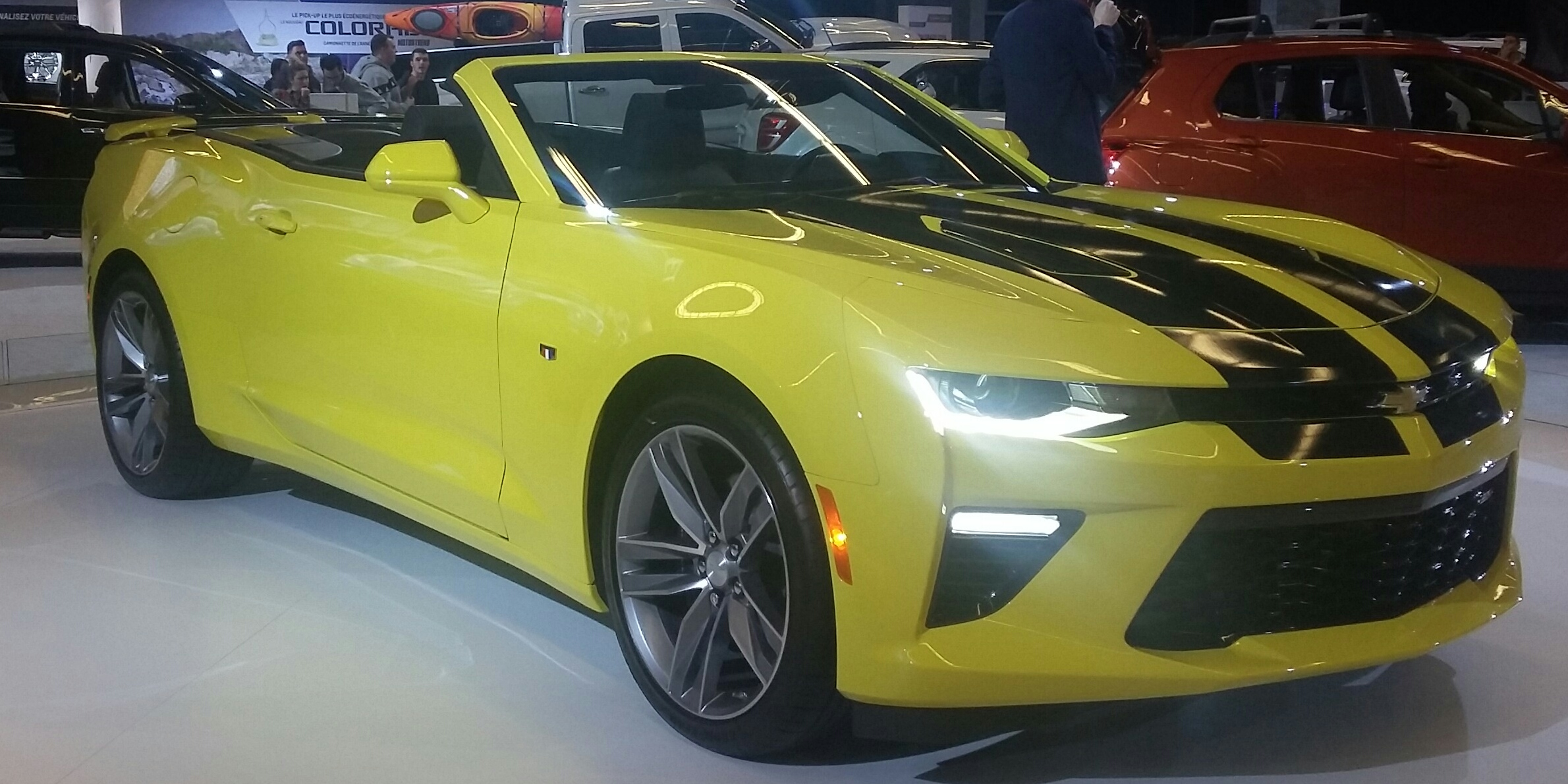
Chevrolet Camaro
"...I wasn't a Ford guy back then. But Chevy Malibu, Camaros, like a Z28, there might have been some Mopar veh..."
The Chevrolet Camaro is a sporty car made by Chevrolet. People talk about it because it can be built for strong acceleration and it has a long history. The podcast mentions it as one of the popular cars from that era.
The Chevrolet Camaro is a sporty American coupe/convertible known for strong performance options and a long-running model history. It often comes up in conversations about classic muscle cars and also in modern discussions about what makes a “driver’s” car. In the podcast context, it’s mentioned alongside other muscle-era nameplates as part of what people wanted back then.
two-wheel drive
"Most of the trucks were regular cabs, long bed and two-wheel drive in this market. Four-wheel drive really wasn't a thing."
Two-wheel drive means the truck only powers two wheels instead of all four. That can make it less capable on snow, mud, or other slippery roads.
Two-wheel drive (2WD) means power is sent to only one axle, typically the rear axle on many pickup trucks. That affects traction and how well the truck can handle slippery surfaces compared with four-wheel drive.
positive traction rear end
"All the farmers wanted positive traction rear end though, so if one wheel started spinning, the other would continue to turn. But that's about it."
A “positive traction rear end” is meant to keep the truck from spinning one wheel uselessly. It helps the other wheel keep pulling when traction is uneven.
“Positive traction rear end” refers to a rear-axle traction system designed to reduce wheelspin by transferring torque to the wheel with grip. In practice, it’s often achieved with a limited-slip differential or similar traction technology, which helps when one wheel starts spinning.
four-wheel drive
"You know, when it was real snowy or rainy or the field was wet, they would just like put chains on while wasting money on four-wheel drive. It just wasn't a big thing."
Four-wheel drive means the car can push all four wheels at the same time. It helps when roads are slippery, but the point here is that the host thinks it was overkill for the situation.
Four-wheel drive (4WD) sends power to all four wheels for better traction on slippery surfaces. In this segment, the host suggests it was being used unnecessarily just because conditions were wet or snowy.
chains
"You know, when it was real snowy or rainy or the field was wet, they would just like put chains on while wasting money on four-wheel drive."
Tire chains are traction devices mounted on tires to improve grip in snow or mud. They’re often used temporarily when conditions are bad, rather than relying on drivetrain features like four-wheel drive.
diesel trucks
"Oh, but now, now these young kids, all they want is these diesel trucks jacked up."
Diesel trucks are trucks powered by diesel engines. They’re often chosen for pulling and hauling, but the point here is that some people buy them for reasons that may not fit what they actually need.
Diesel trucks use diesel engines, which typically produce strong low-end torque and can be popular for towing and hauling. The host frames them as a trend item, implying buyers may be chasing the look or capability without matching their real needs.
jacked up
"Oh, but now, now these young kids, all they want is these diesel trucks jacked up. And really the big trend now is to have the front end jacked up higher than the rear end."
“Jacked up” means the truck sits higher off the ground than normal. That can change how you see the road and how easy it is to drive.
“Jacked up” refers to lifting a truck higher than stock, usually with suspension lift components. In this segment, the host notes a styling trend of raising the front higher than the rear, which changes ride height and visibility.
as is
"Let's see, I think it had bought it from a used car dealer, signed all the paperwork, as is, no warranty. Less than 900 miles later, the transmission goes out."
“As is” means you’re buying the car with the understanding that the seller won’t cover repairs afterward. If something breaks soon after, you may be responsible for the cost.
“As is” is a sales condition meaning the buyer accepts the vehicle in its current condition, with limited or no seller responsibility for future repairs. In the segment, it’s used to explain why the dealer refused help after the transmission failed.
no warranty
"Let's see, I think it had bought it from a used car dealer, signed all the paperwork, as is, no warranty. Less than 900 miles later, the transmission goes out."
A warranty is a promise from the seller/manufacturer to cover certain repairs for a set period. “No warranty” means the buyer likely has to pay out of pocket for failures like the transmission issue described here.
transmission
"Less than 900 miles later, the transmission goes out. Calls the dealer, will you help me?"
The transmission is what helps the car change gears and send power to the wheels. If it breaks, repairs can be very expensive.
The transmission is the drivetrain component that manages how engine power is delivered to the wheels through different gear ratios. A transmission failure is a major, expensive repair, which is why the $12,000 cost matters in the story.
due diligence
"But what should he have done instead of buying that truck when he did? He should have started three or four weeks before that and done his due diligence."
Due diligence means taking time to check a car carefully before you buy it. The goal is to avoid buying something that will cost you a lot to fix right after.
Due diligence in a vehicle purchase means doing careful checks before buying—like verifying condition, maintenance history, and getting an inspection—so you don’t get stuck with expensive surprises. The host contrasts this with buying quickly and then facing a costly failure.
Chrysler Dodge Jeep Ram dealer
"Pull the warranty history from a Chrysler Dodge Jeep Ram dealer. Pull a car fax."
They’re saying to get the car’s warranty records from the brand’s dealership. Those records can show what repairs were covered and done in the past.
The speaker advises pulling warranty history from a Chrysler Dodge Jeep Ram dealer. That’s dealer-specific documentation that can reveal what warranty work was performed and when.
Carfax
"Pull a car fax. Call the previous owner. Get it inspected by a mechanic."
Carfax is a report that summarizes a used car’s history. It can help you see things like accidents or title problems that might not be obvious.
Carfax is a vehicle history report service that compiles records like title events, reported accidents, and service history. It’s commonly used during used-car shopping to spot red flags before purchase.

1968 Ford Thunderbird
"I rebuilt a transmission in a C, well, it's out of a 1968 Ford Thunderbird that I put in my car hauler. It's called a C6 transmission."
The 1968 Ford Thunderbird is a classic Ford. Here, the speaker mentions it because they used its transmission as a replacement part.
The 1968 Ford Thunderbird is a classic personal-luxury car that the speaker used as a donor for a transmission. In this story, it’s notable because the older Thunderbird’s gearbox is being repurposed into a different vehicle.
three-speed automatic
"Three-speed automatic cost me $1,000 to get it rebuilt. And these new modern transmissions that have all kinds of gears like nine speeds and ten speeds,"
A three-speed automatic is an older-style automatic gearbox with three forward gears. The speaker is saying simpler transmissions are often cheaper to rebuild than newer ones.
A three-speed automatic transmission has three forward gear ratios controlled by the transmission’s hydraulic/electronic systems. The speaker contrasts it with modern multi-speed transmissions to argue that complexity can drive repair costs.
extended warranty
"And it's all the more reason when you buy a modern vehicle, buy some type of extended warranty. I'm a big fan now, didn't used to be, but I am now."
An extended warranty is coverage beyond the original factory warranty period, typically for major repairs after the car’s standard warranty expires. The speaker recommends it as protection against costly drivetrain repairs like transmission failures.
ownership cycle
"Consider your ownership cycle. You know, when you buy a brand new vehicle and you buy a five-year, 60,000-mile warranty, an extended service contract,"
Your ownership cycle is how long you plan to keep the car. If you keep it for a long time, longer warranties can matter more; if you sell sooner, they may not be worth it.
An ownership cycle is the time span you expect to keep a vehicle—from purchase to sale or trade-in. It matters because warranty coverage and repair costs only “pay off” if you’ll still be driving the car when issues are likely to happen.
vehicle service contract
"You know, when you buy a brand new vehicle and you buy a five-year, 60,000-mile warranty, an extended service contract, does that really make a lot of sense?"
A vehicle service contract is extra coverage you buy to help pay for repairs. It’s like paying ahead for certain problems, but it only helps if the contract covers what breaks.
A vehicle service contract is a paid agreement that reimburses or pays for certain repairs after the coverage period or for specific components. It’s often sold as an “extended warranty,” but the terms and what’s covered can differ from the factory warranty.
extended service contract
"You know, when you buy a brand new vehicle and you buy a five-year, 60,000-mile warranty, an extended service contract, does that really make a lot of sense?"
An extended service contract is extra repair coverage you buy after the original warranty ends. Whether it’s worth it depends on how long you’ll keep the car and what the contract actually covers.
An extended service contract is an aftermarket agreement that adds coverage beyond the factory warranty window. The key point is that it may cover repairs for expensive systems, but only if the contract terms match the vehicle’s expected “ownership cycle.”
factory warranty
"Because you're going to be covered under the factory warranty for three years or 36,000 miles. And sometimes on the powertrain it'll be five-year, 60."
A factory warranty is the original repair coverage that comes with the car when you buy it. It lasts for a specific time and mileage, and after that you may need other coverage.
A factory warranty is the coverage included by the vehicle manufacturer for a set time and mileage (for example, 3 years/36,000 miles). It typically covers defects and certain repairs, and it’s the baseline that extended coverage is meant to extend.
powertrain
"And sometimes on the powertrain it'll be five-year, 60. So what do you buy a warranty on?"
Powertrain means the main parts that make the car move, like the engine and transmission. Some warranties cover these parts longer than other systems.
The powertrain is the set of components that generate and deliver motion—typically the engine, transmission, driveshafts, and related drivetrain parts. Many warranties cover the powertrain for longer periods than the rest of the vehicle.
bumper-to-bumper
"You can buy a seven-year, 150,000-mile warranty that covers everything bumper to bumper, except the bumpers. Maybe that makes sense, because you're going to be keeping it way beyond the factory warranty period."
“Bumper-to-bumper” means the warranty is meant to cover most parts of the car. But it can still exclude certain items, like the speaker says about the bumpers.
“Bumper-to-bumper” is a warranty marketing phrase meaning broad coverage across most vehicle systems. In practice, it usually still has exclusions (the speaker notes it covers everything except the bumpers).
computer issue
"I've got stuff here that's 25 years old. Just in case somebody rolls in here with a 25-year-old vehicle that has some type of computer issue and we need to solve it."
A “computer issue” means a problem with the car’s electronics—like the modules that control how the car runs. Fixing it often needs the right diagnostic tools.
Modern vehicles rely on electronic control units (ECUs) and other modules to manage systems like engine operation, emissions, and comfort features. When the speaker says “computer issue,” they’re referring to faults in these electronic systems that can require specialized diagnostic tools and parts.
leasing a vehicle
"he said, why would anybody lease a vehicle? And I said, well, because they buy a new vehicle every two or three years anyway. ... Well, you don't own it until you make the last payment to the bank that finances it either."
Leasing means you’re basically renting the car for a few years with monthly payments. You don’t fully own it unless you make a final buyout payment at the end.
Leasing a vehicle is a contract where you pay for the car’s use over a set term, rather than buying it outright. You typically make monthly payments to a lender/lessor and may have options at the end (return the car, buy it, or refinance).

Ford F-150 Lightning
"...llion lesson on their EV experiment with the Ford Lightning truck and the Ford Maki. These were Ford's, I gu..."
The Ford F-150 Lightning is an electric pickup truck. It uses batteries instead of a gasoline engine, but it’s still meant to work like a truck. The podcast mentions it as an example of Ford trying electric trucks.
The Ford F-150 Lightning is an all-electric version of the Ford F-150 pickup, designed to bring EV technology to a mainstream truck buyer. The podcast references it as part of Ford’s “EV experiment,” emphasizing how the company used the F-150 nameplate to push electrification. It’s a key vehicle in the discussion because it connects truck utility with battery-electric power.
EV game
"These were Ford's, I guess, attempt to compete with Tesla and jump into the EV game."
“EV game” just means the competition to make and sell electric cars. It’s about automakers trying to get ahead in the EV market.
“EV game” is a shorthand for competing in the electric-vehicle market—meaning automakers are racing to build EVs, scale production, and win customers. It frames EVs as a competitive industry shift rather than just a single product.

Ford F150
"You know, it's funny how people will jump on things. We got one of the lightnings in, which is the Ford F-150 that was all electric and it was loaded. It was a platinum edition."
The Ford F-150 is a large pickup truck made by Ford. It’s built for hauling and everyday driving, and it can be configured in many ways. In the podcast, it’s mentioned because Ford also made an electric version based on the F-150.
The Ford F-150 is a full-size pickup truck and one of the most common vehicles on the road, often offered in many configurations for work and everyday use. In the podcast, it’s specifically referenced through the all-electric F-150 Lightning, highlighting Ford’s EV effort using the F-150 platform. That makes it a relevant topic because it connects mainstream truck popularity with electrification.
overwind sticker
"$30,000 overwind sticker for it. And I said, what? You know, I knew that they were scarce."
“Over sticker” means the dealer sold the truck for more money than the price printed on the car’s window sticker. This usually happens when the car is hard to get.
“Overwind sticker” refers to charging above the manufacturer’s suggested retail price shown on the window sticker. It’s a markup driven by scarcity—when a specific trim is hard to find, dealers may sell it for more than the listed price.
MSRP
"And so is that a crime to sell a vehicle for that much over MSRP? ... MSRP is a suggestion. That's why they call it the manufacturer's suggested price."
MSRP is the price the manufacturer says the car should cost. The real price you pay can be different—especially when lots of people want the same car.
MSRP (manufacturer’s suggested retail price) is the printed price a carmaker recommends dealers sell a vehicle for. In practice, the actual transaction price can be higher or lower depending on supply, demand, and dealer markup.
market goes up, it goes down
"Boy times change, don't think. The last EV we sold, I think we lost about $15,000 on. So I lost half of what I made on that lightning truck. That's the way the market goes. It goes up, it goes down."
They’re saying car prices aren’t steady—they move with demand. If lots of people want a certain vehicle, prices jump; if interest drops, prices fall and sellers can lose money.
This is describing cyclical pricing in the used/retail vehicle market, where supply and demand can push prices higher or lower. When demand is “hot,” buyers may pay large premiums over sticker; when demand cools, prices can drop and dealers can lose money on inventory.

Mitsubishi Galant
"...u know, because if you're looking at a Mitsubishi Galant at one dealership and the MSRP was $25,000, you'..."
The Mitsubishi Galant is a regular mid-size sedan made by Mitsubishi. In the podcast, it’s mentioned because someone is talking about how the price at a dealership can relate to the listed MSRP. It’s used as an example in a pricing conversation.
The Mitsubishi Galant is a mid-size sedan that’s often discussed in terms of pricing and value, especially when comparing what different dealerships list as MSRP. In the podcast, it’s used in a scenario about a specific dealership’s price versus the listed MSRP, which makes it relevant to a conversation about how pricing can vary. That’s why it appears—it's the example car tied to the MSRP discussion.
pre-delivery inspection
"...when we sold it, it still had plastic all over it and had been dropped off by the truck. And we hadn't even done the pre-delivery inspection on it."
Before you pick up a new car, the dealer does a pre-delivery inspection to make sure everything is set up correctly and the car is in proper working order.
A pre-delivery inspection (PDI) is the checklist a dealer performs after a new car arrives, before it’s handed to the customer. It typically includes verifying fluids, checking for damage, confirming basic operation, and ensuring the vehicle is ready to be sold.
gross vehicle weight rating
"Because of the business tax deduction that you get if you buy a piece of equipment, or like a truck, it has to have a certain GWW in order, or gross vehicle weight rating, in order to be able to write it all off in one year."
GVWR is the maximum total weight a truck is rated to handle. The episode mentions it because tax rules use that weight rating to decide how quickly a business can write the truck off.
Gross vehicle weight rating (GVWR) is the maximum weight a vehicle is designed to carry, including the vehicle itself plus passengers and cargo. In the episode, it’s used as a tax rule threshold to determine whether the truck qualifies for faster write-off timing.
accelerated depreciation
"That's called accelerated depreciation. You know, typically a business will buy a vehicle and they'll appreciate it."
Accelerated depreciation means you can deduct the cost of a vehicle or equipment sooner for taxes instead of spreading it out over many years.
Accelerated depreciation is a tax accounting method that lets businesses deduct the cost of certain assets faster than the normal schedule. Here, it’s tied to buying equipment or a qualifying truck so the deductions can happen in the same tax year.
IRS
"The IRS lets you depreciate it over five years. But under their accelerated depreciation rules, in order to spur economic development, they will let businesses buy a piece of equipment."
The IRS is the U.S. tax agency that sets the rules for how businesses can deduct things like vehicles.
The IRS (Internal Revenue Service) is the U.S. government agency that administers federal taxes and sets the rules for how deductions and depreciation work. The episode references the IRS as the authority that allows depreciation over a set period.
warranty history
"...call the Honda dealer, and have them check that Venn and the warranty history on that particular Venn number. ...they can tell you whether it was a problem vehicle or not."
Warranty history shows what repairs were claimed under the car’s warranty. If a car had lots of warranty work, it can be a clue that something may have been wrong more than once.
Warranty history is a record of warranty claims and service events covered by the manufacturer or dealer. For used cars, patterns in warranty claims can indicate recurring problems or how well the car was supported over time.
VIN
"...check that Venn and the warranty history on that particular Venn number. Then you pull a car fax or an Experian auto check."
A VIN is like a car’s fingerprint—an ID number that uniquely identifies that exact vehicle. Reports use it to look up the car’s history.
VIN (Vehicle Identification Number) is a unique 17-character code assigned to a specific car. Vehicle history reports and dealer checks use the VIN to pull records for the exact vehicle, not just the model.
problem vehicle
"And they can tell you whether it was a problem vehicle or not. And how often it was maintained."
A “problem vehicle” is a car that has had notable issues in the past. The point is to use records to figure out whether the exact car you’re considering had trouble before.
A “problem vehicle” is a used car that has a history of issues significant enough to generate repeated complaints, warranty claims, or other documented trouble. In practice, the host is describing how dealer and warranty records can reveal whether a specific car had recurring faults.
Experian auto check
"Then you pull a car fax or an Experian auto check. Either one of those reports will do."
Experian AutoCheck is another kind of used-car history report. It helps you see important past events for that car before you buy.
Experian AutoCheck is another vehicle history report service similar to Carfax. It aggregates data tied to the car’s VIN to help buyers evaluate past ownership, reported incidents, and other potential risk signals.
salt and rust
"Do you really want a vehicle that lived in Michigan for five years with all the salt and rust and stuff? No."
Salt used on roads in winter can make cars rust faster. If a car lived in a salty area for years, it may have more corrosion underneath.
Road salt is used to melt ice in winter, but it can accelerate corrosion on a vehicle’s underbody and frame. Rust becomes a long-term structural and safety concern, especially on cars that spent years in salted regions.
buyback
"Was it a buyback? A vehicle that was a problem and was purchased or repurchased by the factory."
A buyback is when a car is taken back by the manufacturer because it had serious issues. It’s a warning sign that the car may have ongoing problems.
A buyback refers to a vehicle being repurchased (or repurchased by the factory) after it’s been identified as having serious or persistent problems. This typically happens through manufacturer programs or legal/consumer processes when the car can’t be satisfactorily fixed.
Bring a Trailer
"But I've got the history on Bring a Trailer. And I've checked the vehicle out."
Bring a Trailer is a website where people auction interesting cars online. Listings often include lots of details, which can make it easier to judge what you’re bidding on.
Bring a Trailer (BaT) is an online auction site focused on enthusiast and collectible cars. When a seller posts a car there, the listing often includes detailed photos and documentation, which can help buyers assess condition and history.
Speed is the enemy
"Speed is the enemy. And don't you forget it."
The point is: don’t rush. If you move too fast without checking details (like a car’s history or condition), you’re more likely to make a costly mistake.
This phrase is a reminder that acting quickly—without checking facts—can lead to bad decisions. In car buying, rushing can mean skipping history checks, inspections, or comparing alternatives.

Ford Maverick
"...ctric. It's going to be about the size of a Ford Maverick. And it's going to use a different type of batte..."
The Ford Maverick is a smaller pickup truck compared with the big full-size trucks. It’s meant to be practical for daily driving while still offering pickup utility. The podcast mentions it to describe the general size of another vehicle being discussed.
The Ford Maverick is a compact pickup truck designed to be smaller and easier to live with than full-size trucks. In the podcast context, it’s used as a size reference for an upcoming electric vehicle plan, implying the new EV would be in the Maverick’s general class. That’s why it comes up—people understand the Maverick’s footprint and purpose.
battery chemistry
"And it's going to use a different type of battery chemistry, which is cheaper. The electric motors were developed in-house."
Battery chemistry just means what kind of battery materials are used in the EV. Changing it can make the battery cheaper and can affect how the battery behaves.
Battery chemistry is the specific materials and electrochemical design used inside an EV battery. Different chemistries can change cost, energy density, charging behavior, and how the battery performs or ages over time.
electric motors
"The electric motors were developed in-house. And so they will be less expensive."
Electric motors are what actually move the car in an EV. Saying they were developed in-house means the company made its own motor design instead of buying one.
Electric motors are the power units that turn electrical energy into motion in an EV. When the host says they were developed in-house, it implies Ford is designing its own motor hardware for this truck to help with cost and integration.
vehicle architecture
"Its architecture, the way it's built, is completely different. It has a one-piece cast for the whole front of the vehicle."
Vehicle architecture is the basic design of how the car is put together. A different architecture can change how easy it is to build and fix after damage.
Vehicle architecture is the underlying design of how the EV is structured—where major components mount and how the body and systems are laid out. The hosts emphasize that this truck’s architecture is “completely different,” which usually affects manufacturing cost, repairability, and safety engineering.
one-piece cast
"It has a one-piece cast for the whole front of the vehicle. A different one for the center."
A one-piece cast means a big structural piece is made as one part. That can make the truck easier to build and sometimes easier/cheaper to repair after crashes.
A one-piece cast refers to a large single-piece molded or cast structural section, rather than many smaller parts. Using big cast sections can reduce part count and seams, which can improve manufacturing efficiency and potentially make repairs cheaper when damage is localized.
glued together
"All aluminum, all bolted together or glued together. However, they marry all of those different components."
“Glued together” means some parts are joined with adhesive instead of only bolts or welding. That can affect how repairs work after a crash.
Bonding (gluing) structural parts is a manufacturing approach where adhesives join panels or structural members. In crash repair discussions, it matters because bonded joints can change how damage is evaluated and what repair procedures are required compared with purely bolted or welded construction.
all aluminum
"All aluminum, all bolted together or glued together. However, they marry all of those different components."
“All aluminum” means the truck’s structure uses aluminum instead of steel. Aluminum can help with weight, and it can also affect how repairs are done after an accident.
“All aluminum” means the structure uses aluminum components rather than steel. Aluminum is lighter, which can help EV efficiency, but it also changes how the body is repaired and how crash damage is assessed.
totaled
"The insurance companies are excited about it because they won't have to total as many vehicles. They'll be able to fix them. I mean, when you take a pretty big hit in an EV, it's totaled."
“Totaled” means the insurance company decides it’s not worth repairing the car. The host says EVs can get totaled more easily after big crashes because it can be hard to know how damaged the battery and electronics are.
In insurance terms, “totaled” means the insurer decides the cost to repair the vehicle exceeds a threshold (often a percentage of the vehicle’s value). For EVs, the host argues that insurers may total cars more often after big hits because of uncertainty about battery and electronic damage.
fragile electronic components
"Because they have no idea what it's done to the battery. And to all the other fragile electronic components in the vehicle."
This means the EV has electronics that can be damaged by a crash. Even if the damage isn’t obvious, those parts might be affected, which can make insurers more likely to write the car off.
“Fragile electronic components” refers to sensitive EV electronics—such as control modules and high-voltage management systems—that can be damaged by impact even if the car still appears drivable. The point here is that crash damage assessment is harder when electronics may be affected, which can influence whether insurers total the vehicle.
Request an Explanation
Heard something you'd like explained? We'll add it to this episode.
Sign in to request explanations for terms you heard.
Want to learn more?
Browse our glossary for plain-English explanations of automotive terms, jargon, and concepts.
Help improve this episode
See something that's not quite right? Our annotations are AI-generated and can sometimes miss the mark. Click the flag icon on any annotation to suggest a correction.