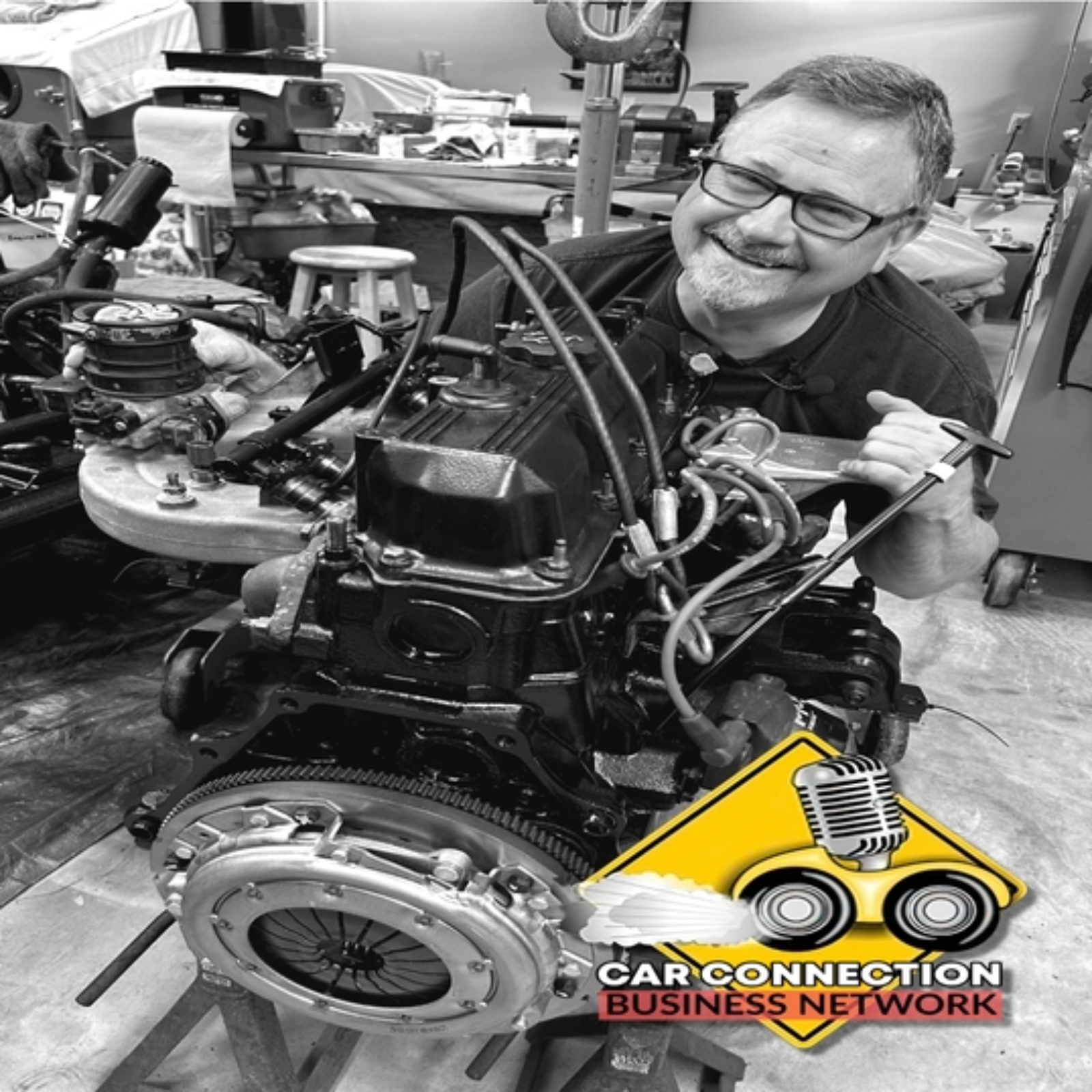
The Forgotten Service That Can Cost You a Transmission | What Does It Actually Do?
About this episode
Niall Motormouth Jenkins tackles the “forgotten service” that can quietly drain your wallet: transmission maintenance. He argues transmissions are big-ticket, pattern-failure items that get neglected because shops sell “lifetime” claims that only last through warranty. The discussion blends education with rants about modern reliability, including examples of major failures on relatively new vehicles. He also shares a CVT service interval (every 50,000 km), explains what transmissions do, and invites listener questions for Q&A Saturday.
The transmission is one of the most complex - and most neglected - components in any vehicle.
In today's episode, we flip the script and ask a simple question:
What does your transmission actually do?
Is it a sealed unit..or is it a fully mechanical hydraulic system packed with gears ,clutches , bands, servos, a valve body, and enough electronics to rival modern tech systems?
Here's the problem: too many drivers treat transmission service like it's optional - or worse, unnecessary.
In this episode, we challenge that mindset and set the stage for Part 2, where we'll break down why proper transmission servicing is critical to long-term reliability and avoiding major repair costs.
If you think your transmission is "lifetime filled" ....this is the one you don't want to miss.
Merchandise available through our online store at ccbusnet.com a Special Thank You to all who have made a purchase and joined our crew to fight for those struggling with addiction get to a Total Freedom Addiction Campus Canada & USA, a New Life awaits them there friends! Motormouth & Skippy. You guys Rock!
More Episodes and ....project Links ate available at Car Connection Business Network .com (ccbusnet.com) you'll find everything on our homepage if you'd like to follow the build & repair work we do, connect with our program partners click their logo to meet them. Thank You for giving them your business. Nile Motormouth Jenkins.
Help our channel and platforms to grow by: Like, Share, Follow, Subscribe, Your Comments, Ring The notification Bell miss nothing, Join our online community. We are both so grateful for your ongoing support means a lot. Skippy & Motormouth
Happy Healthy Motoring Friends, Peace Patience Kindness Always, NMJ
#TranmissionService #CarMaintenance #AutoRepairTruth
transmission services
"as long as the vehicle goes in drive and you have reverse, you guessed it, the transmission, we've forgotten about transmission services, and it has become very lonely"
They’re talking about routine maintenance for your car’s transmission. It usually involves checking or changing the transmission fluid so the parts stay lubricated and cool. If you never do it, the transmission can wear out faster and repairs can get very expensive.
The episode is pointing to transmission service/maintenance—things like fluid checks and fluid changes—as a routine that many owners ignore. Because automatic and some manual transmissions rely on fluid for lubrication and cooling, skipping service can accelerate wear and lead to expensive repairs.
self-sufficient
"I've watched it grow, it's just amazing to see how they have created the campuses to be completely self-sufficient, they even put in a huge veggie garden for the summer..."
They’re saying the program doesn’t rely on outside money. It supports itself by making income on-site.
The speaker describes the campuses as “self-sufficient,” meaning they generate their own resources rather than relying on outside funding. In an automotive context, this is more of an organizational concept than a car-tech one, but it helps explain how the program funds its operations.
Freedom Automotive
"they have an automotive shop at the Darien Center New York campus, it's called Freedom Automotive and some of the fellows that are in the course can get a position there and work in the shop,"
They mention a specific auto shop called Freedom Automotive. It’s where people in the program can work and learn by doing real shop tasks.
“Freedom Automotive” is named as an automotive shop at the Darien Center New York campus. For listeners, this is relevant because it’s the specific place where fellows can work and get hands-on experience in a shop environment.
pre-owned auto store
"Earl and Louise Grand, if you or someone you know is in the market to replace a vehicle or add another vehicle to your driveway, city auto sales and leasing, the Greater Toronto area's premier pre-owned auto store, low mileage quality vehicles at fair prices, Earl and Louise Grand are husband and wife team for over 25 years in the car business, they sell no junk there, I can tell you that 100%, 100%,"
“Pre-owned” just means used cars. The upside is you can often find a better deal, but you should still check the car’s history and make sure it’s in good shape before buying.
A “pre-owned” store focuses on used vehicles rather than brand-new inventory. For buyers, it often means more variety in price points and mileage, but you’ll want to verify vehicle history and condition before committing.
low mileage
"city auto sales and leasing, the Greater Toronto area's premier pre-owned auto store, low mileage quality vehicles at fair prices, Earl and Louise Grand are husband and wife team for over 25 years in the car business, they sell no junk there,"
“Low mileage” means the car has been driven less. That can be a good sign, but you still need to check maintenance history and overall condition.
“Low mileage” refers to a vehicle having fewer miles than average for its age, which can correlate with reduced wear—though it doesn’t guarantee the car was maintained well. Condition, service records, and how the car was driven matter as much as mileage.
in-house financing
"they carry an amazing amount of vehicles under roof and outside on the lot, let them know what you're looking for, they do in-house leasing and financing, that's city auto sales and leasing, GTA's premier pre-owned auto store,"
“In-house financing” means the dealership helps you get a loan to buy the car. Before you sign, it’s smart to compare the interest rate and total cost so you know you’re getting a good deal.
“In-house financing” typically means the dealership works with lenders and may offer financing options through its own finance department. Buyers should compare the dealership’s offered rate and total cost (including fees) against other lenders to avoid overpaying.
in-house leasing
"they carry an amazing amount of vehicles under roof and outside on the lot, let them know what you're looking for, they do in-house leasing and financing, that's city auto sales and leasing, GTA's premier pre-owned auto store,"
“In-house leasing” means the dealership helps set up your lease. Even if it’s easier, you should still look closely at the monthly payment, fees, and what happens at the end of the lease.
“In-house leasing” means the dealership arranges the lease terms directly (or through their own finance/lease channels) rather than sending you to a separate leasing company. This can simplify paperwork, but the exact rates, fees, and lease-end terms still matter a lot.
drive-through
"[1019.3s] that's Niagara Block 5000 Montrose Road Niagara Falls, let's get into the morning, [1025.5s] if you're sliding through that drive-through double check that order, lock that cup down,"
A drive-through is when you pull up to order and pick up food without getting out. It’s a situation where it’s easy to get distracted, so the reminder is to keep your eyes on the road.
A drive-through is a common real-world scenario where distracted driving risk is higher because you’re focused on ordering and pickup. It’s relevant to the episode’s safety reminder about keeping your attention on the road.
cup holder
"[1029.8s] we don't want any spillation going on in the cabin, that just makes a huge mess, I can't tell you [1036.6s] the number of times that has happened and it's like the slow-mo gizmo, you see it going but you [1042.5s] got to keep your eye on the road and the cup is just slowly coming out of the holder heading for"
A cup holder is where you put your drink so it doesn’t tip over. If it isn’t locked in place, the drink can spill and distract you.
A cup holder is the built-in container in a vehicle designed to hold drinks while driving. If a cup isn’t secured, spills can distract the driver and create safety and cleanup issues.
vehicle maintenance
"whether you know a little bit about cars or absolutely nothing, trust me if you can write a grocery list and put a check mark or scratch out the item as it goes in the basket, you can follow your own vehicle maintenance and put a check mark in the box when it's completed"
Vehicle maintenance refers to the ongoing upkeep tasks that keep systems operating within normal parameters—often tracked as a checklist by mileage or time. For listeners, the key takeaway is that maintenance is actionable and can be managed without being a mechanic.
air conditioning
"it's a beautiful little car too and it's convertible with air conditioning that works so we're gonna double check and make sure that air conditioning is working top drawer"
They’re also talking about making sure the car’s A/C actually works. If it doesn’t, it could be something simple or it could be a bigger problem. Either way, it’s better to check sooner than later.
The speaker mentions verifying that the car’s air conditioning works, which is a practical example of a maintenance/inspection item. In older vehicles, A/C performance can indicate issues with refrigerant charge, compressor function, or leaks—problems that can be costly if ignored. Using the example car helps listeners understand the “check it early” mindset.
manufacturer's warranty
"well just remember lifetime is only the manufacturer's warranty, so if it runs out by time or mileage whichever one comes first, that's it"
A manufacturer’s warranty is the official coverage period for repairs. The host is pointing out that “lifetime” claims often mean “until the warranty ends,” not forever. So you may still need maintenance after that point.
The manufacturer’s warranty sets the coverage period and often defines what they mean by “lifetime” for fluids or components. The episode emphasizes that warranty terms are time- and mileage-limited, so maintenance schedules may still apply after the warranty expires. This is important when deciding whether to follow “lifetime” maintenance marketing.
City Auto Sales and Leasing
"brought to us by Earl and Louise Grant at City Auto Sales and Leasing, buy with confidence, be treated with nothing less than honesty integrity"
This is the name of the dealership sponsoring the segment. Sponsors often support the show with a message about buying cars confidently. It doesn’t change the technical advice, but it explains who’s backing the episode.
City Auto Sales and Leasing is mentioned as the sponsor/source of the segment’s “brought to us by” credit. For listeners, this can matter because dealerships often influence how topics like vehicle buying and service are framed. It’s also tied to the “buy with confidence” messaging in the episode.
circle check
"that when you put the key in the ignition that you just drive away, you don't do a circle check, you don't check lights, look at the tires, make sure all the tires are actually inflated"
A circle check is a quick look around your car before you drive. You check things like tires and lights so you don’t get surprised later.
A “circle check” is a quick walk-around inspection before driving. It’s meant to catch obvious issues like flat tires, broken lights, or loose items so you don’t discover problems once you’re already on the road.
mileage plus maintenance equals longevity
"mileage means nothing when there's maintenance, mileage plus maintenance equals longevity, that's the formula, it's so stinking simple"
The idea is simple: driving more miles isn’t the whole story. If you keep up with maintenance, the car can last a long time.
This is a core ownership concept: the car’s lifespan depends on both how much you drive (mileage) and how well you maintain it. Higher mileage isn’t automatically bad if maintenance is kept up, especially for wear items and fluids.
older is better and more reliable
"[1626.5s] they know how to take good care of their customers [1631.4s] because the general consensus was this, older is better and more reliable, [1639.9s] not the message"
This is a reliability philosophy: the idea that older vehicles tend to be more dependable because common issues have been worked out over time and designs are proven. The host contrasts this with claims that newer vehicles are inherently better.
mechanical failures
"[1647.0s] there's so many mechanical failures right now in the lineup from the domestic manufacturers, [1654.5s] it's shameful, it really is"
“Mechanical failures” refers to breakdowns of major systems like cooling, powertrain components, or other hardware that can leave a vehicle undrivable. In the context of this episode, the host argues that newer vehicles are experiencing more frequent failures than expected.
head gasket
"[1675.6s] coolant going into the engine so it's one of two things, either the cylinder heads cracked or it's blown a head gasket in 70,000 miles"
The head gasket is like a seal between the engine’s top and bottom parts. If it blows, coolant can mix where it shouldn’t, and the engine can start overheating or running badly.
A head gasket is the sealing layer between the cylinder head and the engine block. If it fails, coolant can leak into the cylinders (or oil), causing overheating, rough running, and potentially severe engine damage.
parts are back ordered
"what do you do, wait, you know, parts are back ordered, [1776.2s] what do you do for laundry, wait six months"
Sometimes the exact part a car needs isn’t available right away. If it’s back-ordered, the shop has to wait, so the car can’t be repaired until the part shows up.
Back-ordered parts are components that a shop or dealer can’t get immediately because demand is higher than supply. When transmission-related parts are back-ordered, repairs can be delayed for weeks or months, which can turn a fix into a long downtime situation.
cruise control
"I'm on the outside lane, I got my cruise control on, [1918.7s] my engine's running at about 1950, just under 2000 rpm"
Cruise control is the feature that keeps your car at a set speed without you pressing the gas pedal. It’s common on highway drives.
Cruise control maintains a set speed by controlling engine throttle (and, on many modern cars, other systems). Long highway use at steady speed can be easier on some components than stop-and-go driving, but it still loads the drivetrain continuously.
rpm
"my engine's running at about 1950, just under 2000 rpm and I'm getting fantastic fuel economy"
RPM tells you how fast the engine is spinning. Higher RPM usually means the engine is working harder.
RPM (revolutions per minute) indicates how fast the engine is spinning. Engine speed under load (like highway cruising) matters because it influences wear, heat, and how the transmission is holding gears.
preventative maintenance
"and you can own and operate an older automobile and keep the maintenance up, stay ahead of the curve and I can teach you how to do that, we have the system to do that"
Preventative maintenance is doing maintenance before something breaks. The idea is to catch problems early and keep the car running longer.
Preventative maintenance is scheduled work done before a failure occurs, such as fluid changes and inspections. The speaker ties it to extending vehicle life and avoiding expensive repairs by staying ahead of wear.
121,000 kilometers
"get it certified and the transmission's never had a service, 121,000 kilometers, so it's getting"
The host says the transmission hasn’t been serviced even though it has about 121,000 kilometers on it. That matters because the fluid and internal parts need regular upkeep to avoid expensive problems.
The speaker highlights that the transmission has never had a service at 121,000 kilometers. That’s important because CVTs are sensitive to fluid condition and service history, and skipping service can increase the risk of wear and failure.
Nissan CVT transmission
"a service, it's getting back on track because just google how much for a Nissan CVT transmission, just check that out sometime today, just google that and see how what the price tag is,"
A CVT is a type of automatic transmission that changes ratios smoothly instead of using fixed gears. When people talk about the “price tag” for a Nissan CVT, they’re usually talking about how expensive it can be to repair or replace if something goes wrong.
CVT stands for continuously variable transmission, and it uses a different gear strategy than a traditional automatic. The “Nissan CVT transmission” reference matters because CVT service/maintenance and failure costs can be a major expense for owners.
heating and cooling
"do you think it has mechanical components that are bathed in oil that aggregates from heating and cooling, heating and cooling,"
A transmission gets hot as you drive, and it needs cooling to stay healthy. If it runs too hot for too long, the fluid breaks down and parts wear faster.
Transmissions generate heat during operation and rely on fluid circulation and cooling to manage temperatures. Overheating accelerates wear and can degrade fluid, which is why “service” often focuses on maintaining fluid health.
oil
"do you think it has mechanical components that are bathed in oil that aggregates from heating and cooling, heating and cooling,"
Transmission fluid is what keeps the inside parts lubricated and helps the transmission work correctly. Old or dirty fluid can lead to slipping, harsh shifts, and overheating.
Transmission oil (fluid) lubricates moving parts and carries hydraulic pressure in many automatic designs. Fluid condition directly affects shift feel, wear rate, and the transmission’s ability to control temperature.
electronics
"do you think it has like bands, planetary gears, electronics, servos, solenoids, wiring in a computer, a brain,"
Transmissions today use sensors and computers to decide how the car should shift. That means problems can come from worn parts or from the control system too.
Modern transmissions use electronics to monitor conditions and control hydraulic pressure and clutch/band engagement. This is why issues can be both mechanical (wear) and electrical (control/actuation).
planetary gears
"do you think it has like bands, planetary gears, electronics, servos, solenoids, wiring in a computer, a brain,"
Planetary gears are a set of gears that work together to change how the engine’s power gets sent to the wheels. They help the transmission “choose” the right ratio for driving conditions.
Planetary gearsets are compact gear arrangements used to create different gear ratios inside many automatic transmissions. They’re central to how the transmission changes ratio and how power is routed through the drivetrain.
solenoids
"do you think it has like bands, planetary gears, electronics, servos, solenoids, wiring in a computer, a brain,"
Solenoids are like electrically controlled switches for fluid flow inside the transmission. If they don’t work right, the transmission can shift incorrectly.
Solenoids are electronically controlled valves that regulate hydraulic pressure inside the transmission. If solenoids stick or fail, the transmission may shift harshly, slip, or throw diagnostic trouble codes.
premium
"...I had to get some fuel yesterday, I used nothing but premium... for all those... it says right in the fuel door, premium fuel only..."
Premium is the higher-grade gas. Some cars need it, but others are fine on regular—so the fuel door label matters.
“Premium” refers to a higher-octane gasoline grade than “regular” in many markets. The key point is that premium is only necessary if the vehicle’s engine management requires it to avoid knock and protect performance.
fuel economy
"...the higher the octane the better the boom baby in the engine and that means fuel economy..."
Fuel economy is how far you can drive on a certain amount of gas. Premium doesn’t automatically make you get better mileage—your car has to be designed to benefit from it.
Fuel economy is how efficiently a vehicle converts fuel into distance (often expressed as MPG or L/100 km). Whether premium improves fuel economy depends on the engine’s design and calibration; many engines don’t gain efficiency from higher octane unless they require it.
Request an Explanation
Heard something you'd like explained? We'll add it to this episode.
Sign in to request explanations for terms you heard.
Want to learn more?
Browse our glossary for plain-English explanations of automotive terms, jargon, and concepts.
Help improve this episode
See something that's not quite right? Our annotations are AI-generated and can sometimes miss the mark. Click the flag icon on any annotation to suggest a correction.