
About this episode
SwitchCast Season 7 swings from car-community language to privacy, data, and the economics of modern ownership. Hosts define “meritricious,” then play “match the celebrity to the car” and a vanity-plate guessing game. The conversation turns serious with license plate reader access, facial recognition concerns, and how apps monetize location data. From there, they debate mileage vs condition, “spec flexing,” and collector-car market swings—plus diminished value, insurance, and even broker liability—before ending with show disclaimers.
We've talked in the past about what we think of car culture and what we think is good and bad about it, but now we're seeing a trend with "boomer boards" showing up with Porsche, Aston Martin, and Ferrari owners. What can we infer about the car community form this?
Support us on Patreon for bonus, exclusive content + live stream access https://www.patreon.com/switchcast
For more information on SwitchCast & to submit vanity plates, check out our website: https://switchcast.live/
Visit our sponsors:
Follow our socials:
https://www.facebook.com/SwitchcarsInc

Aston Martin Vanquish
"So you take an Aston Martin Vanquish, you know, 0304 and send it to them and another half a million dollars, which is still better than a singer."
The Aston Martin Vanquish is a luxury grand touring car from Aston Martin, famous for its strong V12 engine and upscale feel. Here, they’re talking about taking one and having it upgraded and updated by a specialist shop.
The Aston Martin Vanquish is a flagship grand tourer from Aston Martin, known for its powerful V12 and high-end GT character. In this segment, it’s the base car people send to Callum Design for a costly “modernization” style restomod.
rebuild title
"There was one that sold on cars and bids for like 29 grand recently. I think it was a rebuilt title or had an accident."
A “rebuild title” means the car was previously written off due to major damage, then repaired and put back on the road. It’s a warning sign that the car has a history you should investigate carefully.
A “rebuild title” is a vehicle title status used after a car has been repaired following a major loss (often theft or an accident). It typically signals the car has had significant damage history, which affects buyer confidence and resale value.
six speed manual
"Six speed manual, swap it, they do some body updates, full interior change, suspension, like just, it's they modernize it, they bullet proof that they improve it."
A “six-speed manual” is a car with a stick shift and a clutch, where you choose between six forward gears. They’re saying the build includes changing the drivetrain setup to a manual configuration.
A “six-speed manual” is a gearbox with six forward gears operated by a clutch and gear lever. In this context, the speaker is describing a conversion/swap as part of the Vanquish modernization build.
bullet proof
"it's they modernize it, they bullet proof that they improve it."
“Bulletproof” here is slang for making the car tougher and more reliable. They’re saying the builder strengthens the car’s problem areas during the upgrade.
“Bulletproof” is enthusiast slang meaning the shop addresses known weak points so the car becomes more durable and less likely to fail under stress. In this segment, it’s used to describe the modernization work done to the Vanquish.
Pittsburgh Vintage Grand Prix
"Ian Callum is going to be the, still can't remember what they call it, honoree at Pittsburgh Vintage Grand Prix. Which is like going to be pretty sweet."
The Pittsburgh Vintage Grand Prix is a historic car event in Pittsburgh that brings together classic and enthusiast vehicles. In this segment, it’s the destination for the speaker’s and guests’ cars.

Aston Martin V12 Vantage
"I will be driving Blueberry, the Aston Martin V12 Vantage that I recently acquired."
The Aston Martin V12 Vantage is a Vantage sports car with a V12 engine. In this segment, it’s the specific Aston Martin the speaker says they recently acquired and will drive to an event.
The Aston Martin V12 Vantage is a Vantage variant built around a V12 engine, giving it a more dramatic, higher-performance character than the V8 versions. Here it’s mentioned as the host’s car for the Pittsburgh Vintage Grand Prix.
private sale
"we said about SBX is pointless. They are now a private sale company. So they only do off-market cars, SBX cars, private sales, trusted access to exceptional cars."
A private sale is when a car is sold without a public auction. The deal is arranged more directly between the parties, often with more privacy.
A private sale is a deal arranged outside a public auction format. In car collecting, it usually means the seller and buyer (or their intermediaries) negotiate directly, often to keep pricing and buyer identity more discreet.
off-market
"They are now a private sale company. So they only do off-market cars, SBX cars, private sales, trusted access to exceptional cars."
Off-market means the car isn’t advertised publicly for everyone to bid on. It’s usually found through a broker or special access instead.
Off-market cars are vehicles that aren’t listed publicly for bidding. They’re typically sourced and matched through brokers or platforms, which can appeal to buyers seeking rare inventory without competing in public auctions.
bank two of my engines starved of oil
"It's just parking on a hill. Yeah, it's just grass. It's a golf course. No, it's a park. Yeah, it's like, I mean, the only reason I would do that is so I don't have to park at a 45 degree angle and have bank two of my engines starved of oil when I started up."
“Bank two” means one half of a multi-cylinder engine (like the left or right side on a V-shaped engine). “Starved of oil” means that side might not get enough oil when the car is tilted a lot, which is bad for lubrication.
“Bank two” refers to one side of a multi-bank engine layout (commonly V-configurations), where cylinders are grouped into banks. The idea of being “starved of oil” is about oil pickup/pressure issues during extreme angles, which can briefly reduce lubrication to the affected bank.
car live life a quarter mile at a time
"because you've heard the old saying that car live life a quarter mile at a time. Yeah. So it's not"
That phrase comes from drag racing, where cars are timed over a quarter-mile. The host is using it to say that cars aren’t judged by one simple number—how they were driven and maintained matters more.
“A quarter mile at a time” is a drag-racing reference: performance is often judged by how quickly a car accelerates over a 1/4-mile distance. The host contrasts that with golf’s “number matters” mindset, arguing that for cars, condition depends more on how the car was used and maintained than just the odometer.

Nissan Gtr
"Like my Nissan GTR. I was thinking of like 300,000 mile cars, [1681.8s] which I guess the same thing still applies."
The Nissan GT-R is a fast, high-performance sports car from Nissan. Here it’s mentioned to make the point that a car’s mileage alone doesn’t tell you whether it’s in good shape.
The Nissan GT-R is a Japanese performance car known for its high-output twin-turbo V6 and all-wheel-drive traction. In this segment, it’s used as an example of how “miles” don’t automatically indicate condition—some cars rack up hard use while others stay well cared for.
PPF
"I mean, you could [1694.9s] do the PPF on the front end every five years and you never drive, you know, in the Southwest"
PPF is a clear protective film you put on a car’s paint. It helps protect the front of the car from rock chips and scratches, which is why the host brings it up in the “miles vs condition” argument.
PPF (paint protection film) is a clear protective layer applied to a car’s paint to help prevent chips, scratches, and minor abrasions. In the segment, it’s used to illustrate how careful protection and maintenance can keep a car looking and aging well even at high mileage.
1985 diesel Mercedes
"and like [1713.9s] it's a 300,000 mile new car. And it's a 1985 diesel Mercedes. So that's that's my hot take."
The host is talking about an older Mercedes from 1985 with a diesel engine. The point is that mileage doesn’t automatically mean a car is worn out—how it was maintained matters a lot.
This refers to a 1985 diesel Mercedes-Benz, used here as a “hot take” example that a very high-mileage car can still be made to feel new. The key idea is that maintenance and wear-item replacement can matter more than odometer reading.

BMW E63
"...be be qualified to sign the dash of Mercedes-Benz E63 because we put the cannibal record in that. But i..."
The BMW 6 Series is a luxury car line from BMW. It’s designed to be comfortable for longer drives while still feeling sporty. In the podcast, it’s mentioned as part of a list of cars being discussed.
The BMW 6 Series is a luxury grand touring model line focused on comfort, style, and performance. In the podcast context, it appears in a broader conversation about signing or featuring cars, rather than technical details. It’s mentioned because the 6 Series is a recognizable BMW model that fits the luxury/performance category.

E-Class Mercedesbenz E63
"Yeah, I mean, that's pretty cool. I think I like, I would maybe be qualified to sign the dash of Mercedes-Benz E63 because we put the cannibal record in that. But interesting. You might have thought it would never happen, but Switchcast is endorsing a transport company."
The E-Class is a luxury sedan made by Mercedes-Benz. It’s built to feel comfortable and feature-rich for everyday driving. The podcast mentions it in the context of a specific car being discussed or displayed.
The Mercedes-Benz E-Class is a mid-size luxury sedan line known for balancing comfort with technology and refinement. In the podcast, it’s referenced alongside the idea of being “qualified to sign the dash,” which suggests the conversation is about a specific car or showroom piece rather than performance specs. It comes up because the E-Class is a common, recognizable luxury platform.

Mercedes-Benz E63
"I think I like, I would maybe be qualified to sign the dash of Mercedes-Benz E63 because we put the cannibal record in that. But interesting."
The Mercedes-Benz E63 is a powerful, performance-focused version of the E-Class. In the conversation, it’s connected to a notable record the host claims they set in that car.
The Mercedes-Benz E63 is a high-performance E-Class variant known for its AMG tuning and strong straight-line and track-capable character. The host mentions signing its dash because they “put the cannibal record in that,” tying the car to a specific performance achievement.

Chevrolet Express
"...our personal luxury vehicle, Shaughnessy Overland Express delivers with precision, privacy, and respect. Th..."
The Chevrolet Express is a large van made by Chevrolet. It can be used to carry people or cargo. In the conversation, it sounds like someone is describing it as a comfortable, customized vehicle.
The Chevrolet Express is a full-size van used for transporting people or cargo, depending on configuration. In the podcast context, it’s referenced as a “personal luxury vehicle,” suggesting a custom or outfitted use case rather than a basic work van. It’s discussed because vans like the Express can be turned into comfortable, private transportation.
boomer boards
"There's a Facebook page dedicated to making fun of boomer boards and we naturally associate it with Corvette owners, but it's becoming a trend among Aston Martin owners, Porsche owners, Ferrari owners."
“Boomer boards” is a joking online trend where people make fun of older-style opinions in car communities. The host says it’s becoming more common across different car brands.
“Boomer boards” here refers to a social-media/online-car-culture phenomenon where older-style opinions or attitudes are mocked. The host frames it as a meme trend that’s spreading beyond one group of owners.
build sheets
"Everybody's got their build sheets printed. Well,"
A build sheet is the factory order/spec document that lists how a car was configured—options, trim, and sometimes production details. The host is pointing out a trend where owners print and share these documents, turning them into part of the car-collecting identity.
Sonderwunch
"Porsche people are are real proud of their CXX and Sonderwunch special wishes stuff."
“Sonderwunsch” means a special request. It’s Porsche’s way of letting buyers order unusual custom details on their car.
“Sonderwunsch” (German for “special request”) refers to Porsche’s bespoke customization program where customers can order unique, personalized specifications. The hosts are using it to criticize how “special wishes” can turn into a status game among owners.
Porsche customization status culture (Sonderwunsch/CXX, rare options, "special" ownership)
"Porsche people are are real proud of their CXX and Sonderwunch special wishes stuff. [1976.5s] And it's getting a little bit ridiculous... [2112.3s] company that was hired to do this design and like spec the car out..."
This part is about how Porsche owners talk about customizing their cars and how it can turn into a “who’s more special” thing. The hosts explain why some people get upset when others copy the same rare options.
This segment focuses on how Porsche owners discuss factory customization options and how that can become competitive. The hosts connect “special wishes,” rare interior/exterior details, and paint customization to social status and hurt feelings within the community.
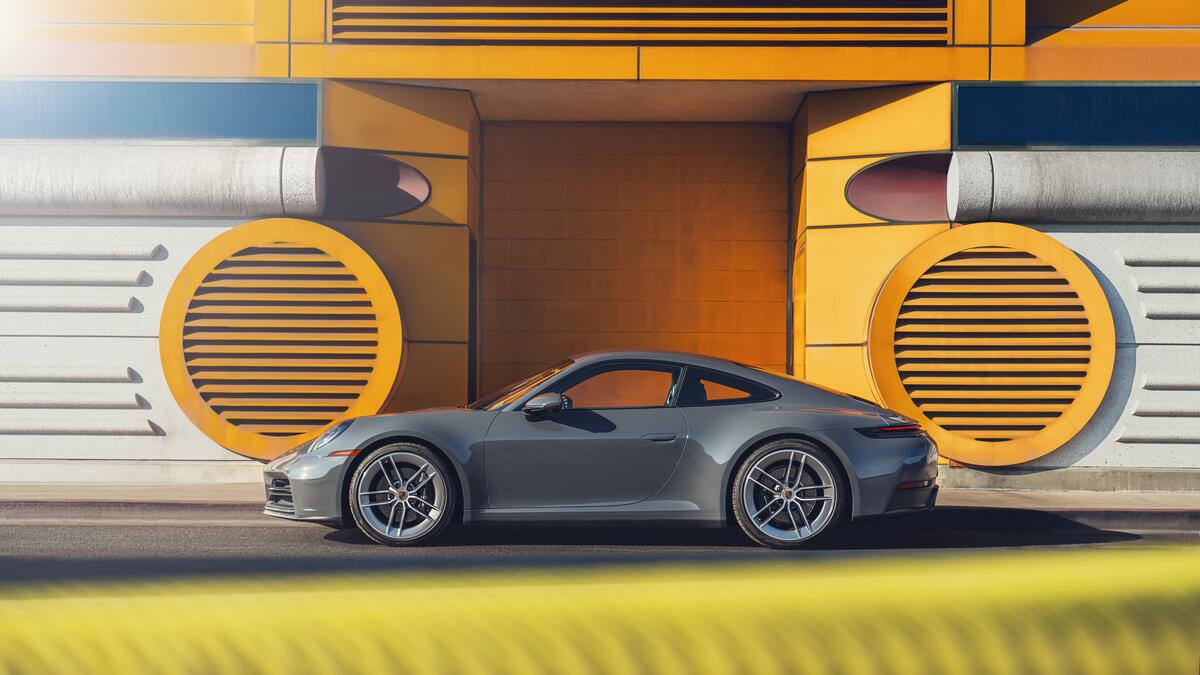
911 Porsche Gt
"...ople I'm so happy I have deviated stitching in my Porsche GT GT GT product. It makes me so happy. It's dumb, b..."
The Porsche 911 is a sports car made by Porsche. It’s known for its recognizable shape and a design that has stayed consistent over many years. In the conversation, it’s mentioned because the speaker is excited about details on their specific 911.
The Porsche 911 is a sports car model line with a long history and a huge enthusiast following, known for its distinctive design and rear-engine layout. In the podcast context, it’s referenced through a personal detail about the car’s interior stitching and a “GT” product, which points to a higher-performance or special trim. It’s discussed because owners often talk about specific build details and how their 911 feels or looks.
stitching
"Love to tell people I'm so [2041.2s] happy I have deviated stitching in my Porsche GT GT GT product. It makes me so happy."
Here, “stitching” means the decorative sewing on the interior materials. The hosts are talking about how even small interior details can make owners feel like their car is unique.
In this context, “stitching” refers to visible interior trim stitching (a customization detail) that can be specified differently on a Porsche. The hosts use it as an example of how small cosmetic options become a point of identity and perceived rarity.
resale value
"I think we've gotten to a point where people are happy to have it because [2052.4s] they can tell somebody else that they have stitching because it's good for resale value or it makes [2062.9s] their car slightly more rare."
Resale value is what you can sell the car for later. The hosts are saying some people choose options because they think it will make the car worth more when they sell it.
Resale value is the price a car is expected to sell for later, and it can be influenced by how desirable options are to future buyers. The hosts argue that some owners care about rare customization mainly because it can help resale value.
Porsche GT3 RS
"And I think that's where people are getting their feelings hurt is [2068.5s] they go, the concept that while I bought a $400,000 GT3 RS, I'm special."
Porsche GT3 RS is a high-performance Porsche 911 meant for track driving. Here, the hosts use it to talk about how people can feel “special” because they bought a very expensive, highly optioned version.
The Porsche GT3 RS is a track-focused 911 variant from Porsche, known for its high-performance aerodynamics and motorsport-derived setup. In this segment, it’s used as an example of how owners can start treating rare options and customization as a status marker.
provenance
"And like, another defense to this car and its provenance, if you want to call it provenance, was that the car was featured in Panorama Magazine."
In car culture, provenance means the documented history of a car—where it came from, who owned it, and what it has been associated with. The host criticizes using provenance as a substitute for the more meaningful story of how the car was driven, maintained, or built.
affirmation clout
"And I'm like, that doesn't make it better. That just reinforces my point of somebody's looking for all this affirmation clout. I don't want to read in a magazine about a car a guy ordered."
The host means “clout” as attention and approval. They’re arguing that some people focus on getting praised (online or in magazines) instead of sharing the real, hands-on story of the car.
“Affirmation clout” is the host’s term for status-seeking attention—using social proof like magazine features and online posts to feel validated. In this segment, it’s used to argue that the car community has shifted away from stories about real ownership and craftsmanship.
Callum Design Vanquish 25
"I want to read about the car that a guy had a vision in his head for custom Aston Martin and he made it happen. He built it, he produced it, he created it. Or even though like you something a journey to attain a choir or find a car is also interesting. Like I really where you and I struggled with the modern Porsche class we recently judged was it was just I bought the thing..."
This is a custom Aston Martin project made by designer Callum. The point is that the interesting part is the creative process and the work that went into building it, not just where it came from or who advertised it.
The Callum Design Vanquish 25 is a custom Aston Martin project by designer Callum, built around the idea of turning an existing platform into a personalized, coachbuilt-style machine. It’s brought up here as an example of a car story that’s about vision and execution—not just marketing provenance.
built not bought
"there's the old saying built not bought. I won that doesn't mean the factory build spec isn't built. Yeah. It means I built this car from a wreck or I rebuilt the engine or I did the mods myself or"
“Built not bought” means the interesting part is doing the work yourself—building or restoring the car—rather than just buying it. The host is saying factory-made versions can still count if there’s a real build story behind them.
“Built not bought” is a car-culture phrase emphasizing that the most meaningful ownership is hands-on—assembling, rebuilding, modifying, or restoring—rather than simply purchasing. The host clarifies that factory-built specs can still be “built,” but the key is the personal effort behind the car’s current form.
spec flexing
"because it seems like it is now just like it's spec flexing. It's Oh, yeah. I've got more deviated stitching than you and social media and car shows are giving this platform to people"
“Spec flexing” means bragging about your car’s setup—like the exact parts and options—mostly to impress other people. The concern here is that it can replace actually enjoying the car.
“Spec flexing” is enthusiast slang for showing off a car’s build details—its specification—like unique parts, colors, and interior/exterior choices. The speaker argues it can shift the focus from enjoying the car to performing for social media.
rare shades
"there's shows, there's events dedicated to it, rare shades and platica and all this stuff like what I love it."
“Rare shades” just means uncommon paint colors. People like them because they make the car stand out and look great in pictures.
“Rare shades” refers to unusual or hard-to-find paint colors. In car culture, these colors are often highlighted because they photograph well and signal a more distinctive build.
mythologize things to enjoy them
"he went on this rant about how you shouldn't mythologize things to enjoy them if you're talking about oh this history... versus the active of having the cocktail or driving the car"
The idea is: if you only enjoy something because of the big story behind it, you might not really enjoy it for what it is. Here, they’re saying the best part of a car should be how it feels to drive—not just the explanation.
This is a philosophy about how people relate to hobbies: the speaker argues that if you need a story or “myth” to make something enjoyable, you may not actually like the thing itself. Applied here, it’s a pushback against turning car specs, history, or explanations into the main attraction instead of the driving experience.
paint to sample
" [2611.1s] and then the black 4.0 well the black 3.8 was a paint to sample color and there's one out there asking $900,000"
“Paint to sample” means the car was painted a custom color you choose, not one of the usual options. Since fewer cars get that exact color, it can make the car more collectible and more expensive.
“Paint to sample” is a factory custom-paint program where a buyer specifies a color (often matched from a swatch or reference) rather than choosing from the standard palette. Because these cars are less common, the specific color can strongly influence collector desirability and resale pricing.
car shows
"I just I don't like car shows anymore car shows serve a wonderful purpose in that you can go see stuff all together"
Car shows are events where people bring cars to be displayed and admired. The host is saying they’ve gotten tired of that format and prefer events where cars are actually raced.
“Car shows” are events where owners display vehicles and socialize around them, often emphasizing appearance and collecting. In this segment, the host argues that car shows can feel repetitive and less engaging than racing-focused events for people who want track action.
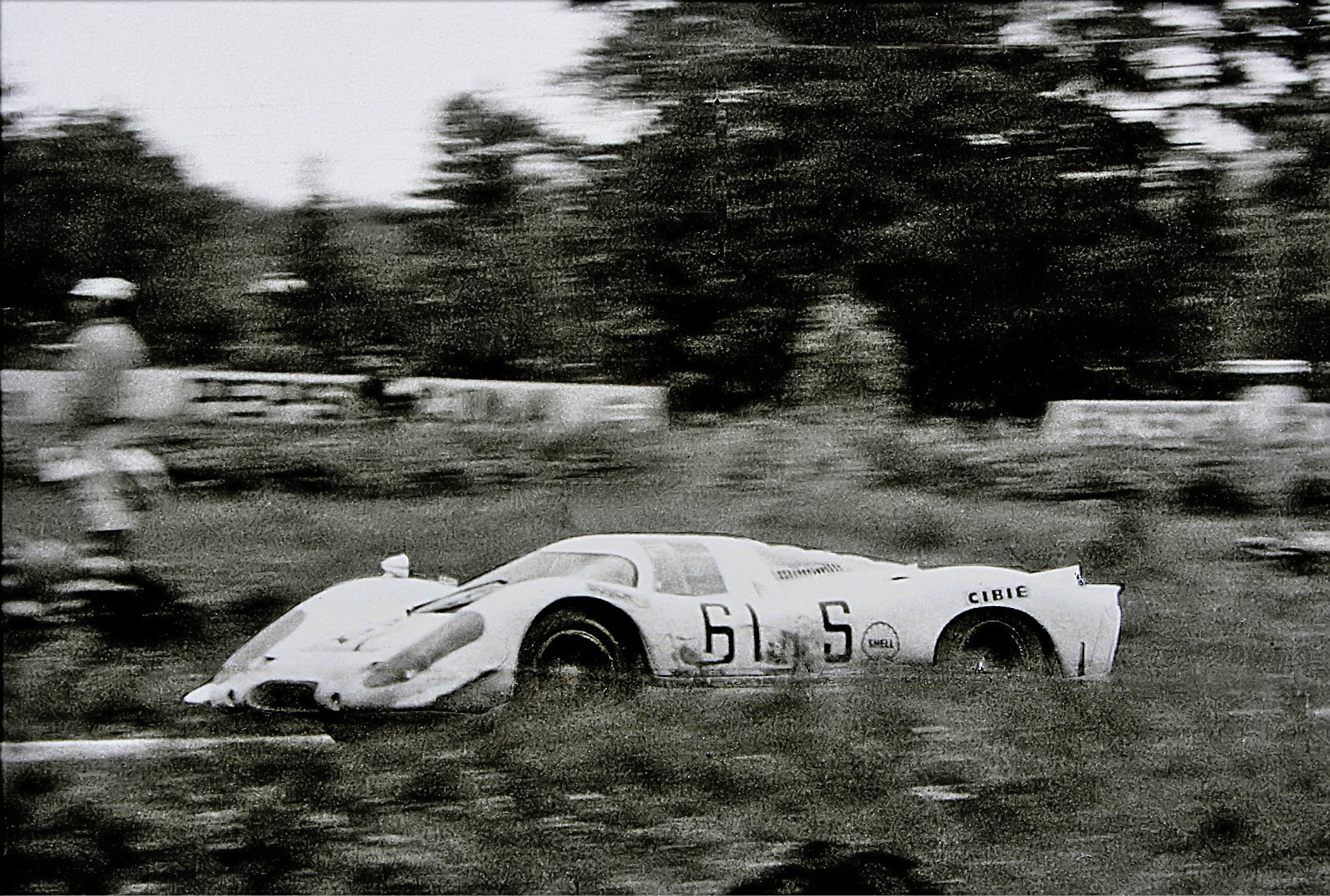
Porsche 917
"I can't even go to look to go anymore because it's like oh another 917 another 910 like it's just"
The Porsche 917 is a historic race car Porsche built for long-distance racing. The host mentions it because car shows keep featuring the same famous cars, and that gets boring for them.
The Porsche 917 is a legendary 1970s endurance-racing prototype known for dominating events like Le Mans. It’s brought up here as an example of the kind of iconic car that shows up repeatedly at car events, making the speaker feel like they’ve “seen it all.”

Corvette
"I expect Corvette guys to do the Corvette Boomer Board stuff everybody does"
The Corvette is a famous American sports car from Chevrolet. The host is using it as an example of how different car communities have different cultures at events.
The Chevrolet Corvette is a long-running American sports car line known for its performance and strong enthusiast following. In this segment, “Corvette guys” is used as a stereotype about how different car communities behave at events.
car event people
"I wrongly expect that Porsche owners will be car event people and my expectations have been let down"
The phrase “car event people” means people who mainly go to car meetups and shows. The host is saying they expected Porsche owners to be like that, but they found a different vibe.
“Car event people” is a community label for enthusiasts who primarily participate in shows and gatherings rather than racing. The host contrasts this with their expectation that Porsche owners would fit that stereotype, and says their experience didn’t match.
Goodwood
"at rallies or at Goodwood or at Mid Ohio or any racetrack there are no boards"
Goodwood is a famous UK venue for car and racing events. The host is saying that at places like this, people are more into actually driving and racing than into showy car-show behavior.
Goodwood refers to the Goodwood estate in the UK, home to major motorsport and car events. The host cites it as an example of a place where the community is more focused on racing than on the “board” culture they’re complaining about.
Mid Ohio
"at rallies or at Goodwood or at Mid Ohio or any racetrack there are no boards"
Mid-Ohio is a well-known racing track in Ohio. The host mentions it to make the point that at tracks, people tend to be more focused on racing than on car-show posturing.
Mid-Ohio is a motorsports venue in Ohio, known for road racing events and track days. Here it’s used as another example of a racing-focused environment where the host doesn’t see the same “car show board” culture.

Lamborghini Huracan
"... being around as a kid and the fact that seeing a Huracan that wasn't a kid car for me but like I guess see..."
The Lamborghini Huracán is a supercar made by Lamborghini. It’s designed to be very fast and visually striking. In the conversation, it’s mentioned because someone saw one and it stood out to them.
The Lamborghini Huracán is a modern-era Lamborghini supercar known for its sharp styling and high-performance V10 character. In the podcast, it’s mentioned in a personal context—seeing one and reacting to it—highlighting how recognizable and exciting it is. It’s a common topic because the Huracán is a major, widely known Lamborghini model.
golf heckler guys
"[2956.4s] you have to work on with your therapist but on Instagram I've been watching a lot of these golf [2962.5s] heckler guys and man these car people are soft the golf hecklers are making fun of people for being [2969.4s] fat skinny old black white rich Jewish tall short female like every offensive thing you could make"
They’re talking about a comedy style where hecklers roast people at golf events. The host is using that as an analogy for how they want car events to be more fun and less mean-spirited online.
The host compares car-community behavior to “golf heckler” comedians who roast people in a crowd. This is used as a comedic model for how they’d like the car community to handle criticism and entertainment.
clout chasing
"[2985.8s] gold it's so my proposal for a cathartic or as Michael Scott would say cathartic solution to the [2994.3s] clout chasing infested car community is this a new type of concor high quality cars so like"
“Clout chasing” means trying to look popular or important to get attention. The host is saying some car-community behavior feels more about getting noticed than actually enjoying cars.
“Clout chasing” refers to seeking attention, status, or influence—often by posting or performing for an audience rather than for genuine interest. Here, it’s used to criticize parts of the car community that treat visibility and exclusivity as the main goal.
concor
"[2994.3s] clout chasing infested car community is this a new type of concor high quality cars so like [3003.5s] top tier Tyler level gatekeeping in terms of automotive exclusivity excellent setting hot in [3009.6s] here food drink entertainment the best bands but that's where the seriousness ends"
“Concor” appears to be a misspoken or mis-transcribed reference to “Concor(d)”—a car-show concept tied to concours-style judging. The segment frames it as a structured, curated environment where cars are evaluated and roasted rather than endlessly flexed online.
gatekeeping
"[3003.5s] top tier Tyler level gatekeeping in terms of automotive exclusivity excellent setting hot in [3009.6s] here food drink entertainment the best bands but that's where the seriousness ends"
In car culture, “gatekeeping” means restricting who is considered “real” or “worthy” to participate—often based on ownership, knowledge, or perceived status. The host uses it to describe a hypothetical system of automotive exclusivity.
race ago
"and they wouldn't pronounce it right I love it then they'd make fun of his race ago he's Indian"
This sounds like a transcription glitch for “race car.” The point is that the host is joking about someone trying to sound more legit by tying their car to racing.
“Race ago” appears to be a mis-transcription of “race car” or “race car ago,” used here as a shorthand for a car’s racing-related background or identity. The host is mocking the person’s bragging and trying to connect it to motorsport credibility.
custom specs
"I wonder if he has Germany for a discount on his custom specs look at this delicious"
“Custom specs” refers to the specific factory options and configuration choices a buyer selects when ordering a car. In this segment, the host criticizes how some owners focus on the process and time spent ordering rather than simply enjoying the result.
spec it out
"if there's nobody to show your boomer board to and you could only just drive your car would you still spec it out the way you did"
“Spec it out” is car-community shorthand for configuring a car with selected options (trim, packages, materials, and other factory choices). The host’s point is that if social media and car shows disappeared, the question would be whether owners would still choose options for the same reasons.
carbon fiber interior trim option
"we have a giant board maybe two that lists the car and it's accomplishments and is printed the stats on the trunk but I've never told anyone that it's a rare or special because it has a carbon fiber interior trim option"
Carbon fiber interior trim is an interior option that uses carbon-fiber composite material for visible trim pieces. It’s a common “spec” upgrade because it can look premium and is associated with performance-oriented branding, even when it doesn’t change how the car drives.
clean vehicle history
"imagine two identical vehicles same year mileage options color and price the only difference one of them had $15,000 in collision repairs which one would you buy the undamaged one of course because a clean vehicle history preserves value"
A clean vehicle history means the car doesn’t show major accidents or damage in its records. That can make it easier to sell for more money later.
A clean vehicle history refers to an accident- and damage-free record (or at least no reported collision/major damage) that can affect how buyers and insurers value the car. In practice, it’s often tied to reports that track prior incidents and repairs.
collision repairs
"imagine two identical vehicles same year mileage options color and price the only difference one of them had $15,000 in collision repairs which one would you buy the undamaged one"
Collision repairs are what a shop does to fix a car after it crashes. Sometimes the car looks fine afterward, but the accident history can still lower what it’s worth.
Collision repairs are the body-and-structure work done after a crash, which can range from cosmetic panel replacement to more involved structural restoration. Even when repairs are done correctly, the fact that repairs occurred can still hurt resale value.
diminished value
"of course because a clean vehicle history preserves value that's what diminished value is the loss in your vehicle's value after an accident even if it's repaired perfectly"
Even if a car is fixed perfectly after a crash, it can still be worth less when you go to sell it. That drop in resale price is called diminished value.
Diminished value is the loss in a vehicle’s market value after an accident, even if the car is repaired to look and function like new. Buyers often discount cars with collision history because they expect hidden issues or reduced long-term worth.
loss of use
"supercarclaims.com can assist owners nationwide in the recovery of diminished value and loss of use due to the negligence of another party"
Loss of use means you’re compensated because you couldn’t use your car for a period of time after a crash. It’s about the disruption, not just the repair bill.
Loss of use is compensation for the inconvenience of not having your vehicle available while it’s being repaired or while a claim is being handled. In accident claims, it’s often treated as a separate category from the repair costs.

Audi S5
"...ey got the money to afford the expensive Mercedes s5 50 nah heck yeah whoo all right i'll tip yep i'm ..."
The Audi S5 is a sportier version of an Audi sedan/coupe model. It’s meant to drive more aggressively than the regular version. In the conversation, it’s brought up as one of the higher-cost cars someone might consider.
The Audi S5 is a performance version of the Audi A5, typically offering a sportier driving experience than the standard model. In the podcast, it’s mentioned in a money/affordability context, implying a discussion about which expensive cars someone might choose. It’s a common topic because it sits in the “sport-luxury” category for buyers who want performance without going full supercar.

Ford Bronco
"... of things it could be a rover it could be like a bronco or something that looks like a rover or i don't k..."
The Ford Bronco is an SUV built for driving on rough roads and off-road trails. It’s known for a rugged look and a focus on capability. People mention it when they’re trying to describe a similar-looking SUV.
The Ford Bronco is a rugged SUV designed for off-road capability and outdoor use. It’s often brought up when people are talking about vehicles that look tough and can handle rough terrain. In a conversation, it may be referenced as a visual or “type” comparison when someone can’t recall a specific model.

Land Rover A Rover
"...d because the rovers don't exist anymore oh not a land rover a rover no no no it's a land rover it's an inios grenadie..."

Inios Grenadier
"it's an inios grenadier what do you mean land rovers don't exist anymore well the what the defender yes it does"
The Inios Grenadier is a newer off-road SUV made to feel tough and basic, like older 4x4s. People compare it to Land Rover because it’s designed for rough trails and durability.
The Inios Grenadier is a modern off-road SUV built around a classic, rugged “go anywhere” concept. It’s often compared to Land Rover-style vehicles because it’s aimed at people who want simple, durable engineering and serious trail capability.

Land Rover Defender
"defender yes it does they brought out a new defender not the classic defender you are failing"
The Land Rover Defender is a famous off-road vehicle from the UK. The host is saying the newer Defender exists, but it’s not the same as the older “classic” Defender.
The Land Rover Defender is the iconic British 4x4, known for its boxy design and off-road focus. In this segment, the host distinguishes the newer Defender from the classic one, which matters because the driving feel, tech, and packaging changed a lot over time.

Honda S2000
"huge wing y u g e huge wing like is this like an s 2000 that's been track modded no no is it just an rs like a gt3 rs it is just a gt3 rs with the most gigantic aftermarket man ever yeah it's gotta be a man's i know the"
The Honda S2000 is a small two-seat sports car. It’s known for feeling sporty and responsive when you rev the engine. In the conversation, it’s being identified because the car’s track-style modifications—like a large wing—match what people associate with the S2000.
The Honda S2000 is a two-seat sports car known for its high-revving engine and driver-focused handling. It’s frequently discussed in enthusiast circles, especially when cars are modified for track use. The podcast context mentions a huge rear wing and compares the look to other track-oriented cars, suggesting it was heavily aftermarket.
aftermarket wing
"just a gt3 rs with the most gigantic aftermarket man ever yeah it's gotta be a man's"
An aftermarket wing is a spoiler you add that wasn’t installed by the factory. Bigger wings usually help the car stick to the road better when you’re going fast, especially on a track.
An aftermarket wing is a non-factory spoiler added to change aerodynamic behavior. On track-oriented cars, a larger wing typically increases downforce, which helps the tires maintain grip at speed.

Ford Fiesta
"next one dug this one from chase macintosh who has sent so many good ones fiesta okay i'm gonna guess that it's not on a ford fiesta"
The Ford Fiesta is a small hatchback. They’re trying to guess which Ford model the plate belongs to, and they rule out the Fiesta.
The Ford Fiesta is a small, mainstream hatchback that’s been popular for being easy to drive and relatively fun. The host is guessing whether the plate corresponds to a Fiesta, but then they say it’s not on a Fiesta.

Ford Focus
"is there's there's no way is it on a ford fiesta no is it on a ford focus no"
The Ford Focus is a compact car that comes in different body styles. They’re guessing which Ford it is, and they rule out the Focus.
The Ford Focus is a compact car that’s been offered as a sedan or hatchback and is known for being a practical, mainstream choice. In this segment, it’s mentioned as another possible match for the plate, but the host says it’s not a Focus either.

Range Rover Sport
"it was like a fiesta um i have no idea yep range over sport that doesn't make any sense which apparently they don't make anymore"
The Range Rover Sport is a more sporty version of the Range Rover SUV. They’re saying that particular version or model isn’t made anymore.
The Range Rover Sport is a performance-leaning variant of Land Rover’s Range Rover lineup, combining SUV practicality with more driver-focused power and handling. The host implies it’s a model that “doesn’t make anymore,” which points to the idea that some trims or generations get discontinued.
methanol
"[3729.3s] is that a chemical i would say you could probably give him a hint of what it that is what is the [3735.3s] chemical methanol methanol methanol what am i using that's not chemical formula what is the compound [3742.2s] oh what what never anyway methanol methanol methanol"
Methanol is a special kind of fuel (an alcohol) that some race cars use. People talk about it because it burns differently than regular gas and can help with cooling in high-power engines.
Methanol is a type of alcohol fuel used in some motorsports and performance setups. It’s often discussed because it can be blended with other fuels and has different combustion characteristics (like cooling effect) compared with gasoline.

Nissan R35 Gtr
"...ol methanol methanol and this is an ohio plate uh r35 gtr no that's a pretty good heavily modified obviousl..."
The Nissan GT-R (R35) is a fast sports car made by Nissan. It uses all-wheel drive to help put power to the road. The conversation mentions it being modified, meaning someone changed it to make it faster or different from the original.
The Nissan GT-R (R35) is a high-performance sports car known for strong acceleration and advanced all-wheel-drive traction. The podcast context mentions it being “heavily modified,” which often changes power and driving feel compared to stock. It’s discussed because the GT-R is a popular platform for enthusiasts who want big performance changes.
Porsche 911 GT2 RS
"[3757.8s] not expect to see this plate on this car it is twin turbo 06 negative although it does have [3763.3s] turbos it is a 991 gt2 rs okay yeah john meth would be kind of like yep kind of bananas"
The Porsche 911 GT2 RS is one of Porsche’s most hardcore 911s, made for serious speed and track use. The host is using it as an example of a very high-performance car in the plate game.
The Porsche 911 GT2 RS is a track-focused 911 variant built for extreme performance, typically with a turbocharged setup and aggressive aero. In the segment, it’s brought up as the car associated with the plate discussion, contrasting it with the GT-R mention.

Ferrari 458 Italia
"[3798.1s] like a hurricane or an eventador or a uh like a 265 or like a modern supercar yeah you were [3809.0s] very close with the hurricane it was a 458 italia dang it yep yep that dude did not register his [3816.5s] car in montana i like that plate i like to brag brag about it"
The Ferrari 458 Italia is a supercar with the engine in the middle and a reputation for being exciting to drive. Here it’s mentioned because the host identifies the exact model behind the plate.
The Ferrari 458 Italia is a mid-engine V8 supercar known for its high-revving character and sharp handling. The host specifically corrects a guess and says the plate was on a 458 Italia.
cars and coffee
"[3816.5s] car in montana i like that plate i like to brag brag about it uh next one i saw at the [3823.6s] Porsche beachwood cars and coffee i really don't know if you'll get this but buster"
“Cars and coffee” is a casual car meetup where people bring cars and hang out, usually in the morning. Here it’s just the place where the host spotted another car.
“Cars and coffee” refers to informal car meetups where enthusiasts gather to show vehicles and talk about them. In this segment it’s used as the setting where the host saw the next interesting car/plate.

Ferrari Testarosa
"[3830.7s] bus but the it's a five is the s tr buster [3840.3s] ferrari testarosa no very um very not correct for this is used uh this this is a nickname [3850.8s] for a character in a very popular car movie which i probably haven't seen you have"
The Ferrari Testarosa is a famous older Ferrari supercar with a very recognizable look. In this segment it’s mentioned as a wrong guess before the host explains what the nickname actually refers to.
The Ferrari Testarosa is a classic 1980s–1990s-era supercar known for its distinctive side strakes and V12 character. The host brings it up as a guess for a plate nickname, then corrects that it’s not the right car.
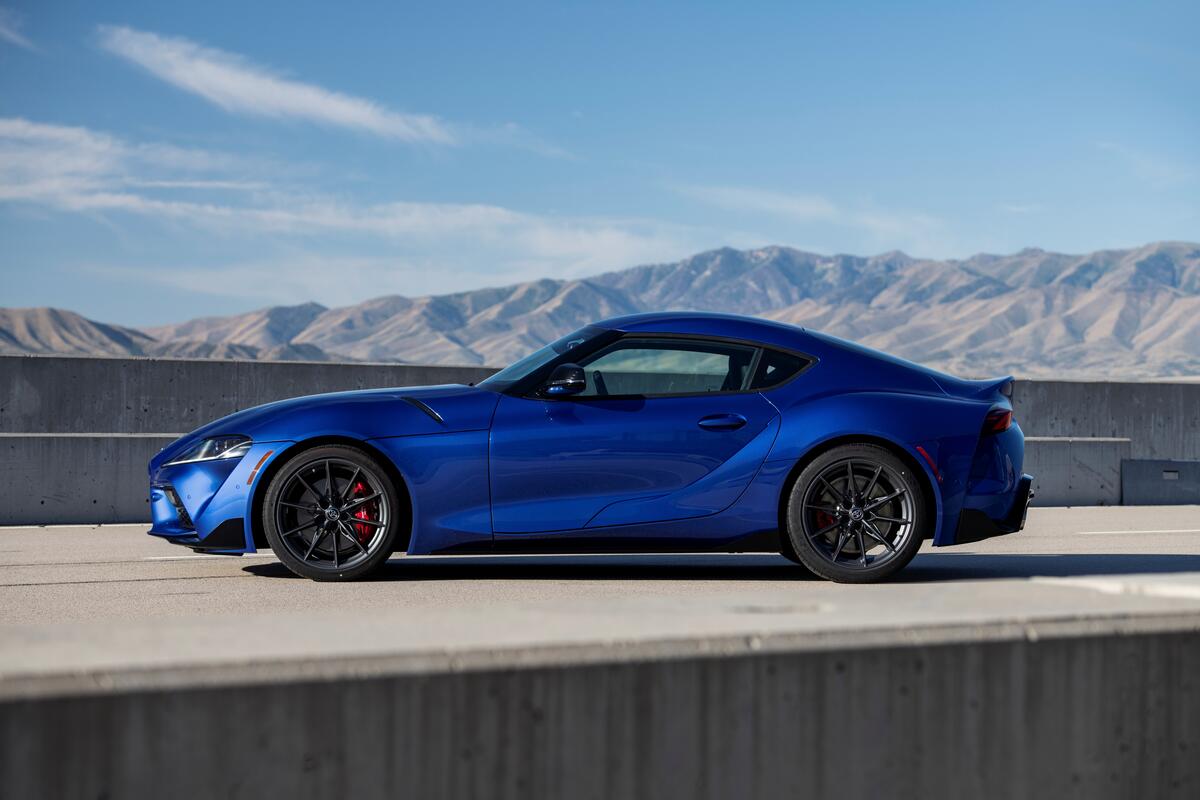
Toyota Supra
"[3865.9s] all right hit me with it this is a 0 for 5 here this is a a late model toyota supra but it is [3872.5s] referencing the fact that brian o'connor is called buster by the other characters in the first [3877.0s] fasten furious movie when did we see fasten furious we watched it in drain i'll drain when we"
The Toyota Supra is a well-known sports car, especially in turbocharged form. In this segment the host connects a license-plate nickname to a late-model Supra from the Fast & Furious character context.
The Toyota Supra is a performance sports car best known to enthusiasts for its turbocharged variants and strong aftermarket support. Here, the host says the “buster” plate clue points to a late-model Toyota Supra tied to a character nickname from the Fast & Furious movie.
brian o'connor
"[3872.5s] referencing the fact that brian o'connor is called buster by the other characters in the first [3877.0s] fasten furious movie when did we see fasten furious we watched it in drain i'll drain when we"
Brian O’Conner is a character from the Fast & Furious movies. The host is saying the plate clue is referencing how other characters call him “Buster.”
Brian O’Conner is a character from the Fast & Furious franchise. In this segment, the host explains that the “buster” nickname is connected to Brian O’Conner being called “Buster” by other characters in the first movie.

Dodge Ram
"...e tail lights okay um go fetch who is this like a dodge ram i know ram isn't a dog no feels like a truck guy ..."
The Dodge Ram is a pickup truck. It’s the kind of vehicle people choose when they want a truck for hauling or just a more rugged, practical style. In the conversation, it’s mentioned as a guess about what the person likes.
The Dodge Ram is a pickup truck line built for work and everyday driving, with a focus on practicality and capability. In the podcast, it’s referenced as a “truck guy” type of vehicle based on the person’s preferences. It comes up because pickups are often used as a contrast to sports cars in discussions about what someone would choose.

Dodge Viper
"...f the jeep pickups no okay what is it the gen one viper sort of a trial nice i don't know why go fetch is..."
The Dodge Viper is a very high-performance sports car. The “gen one” version means the first generation that was produced. People talk about it because it’s a classic, recognizable supercar.
The Dodge Viper is an American supercar known for its raw, aggressive character and big performance focus. The podcast context points to a “gen one” Viper, which refers to the earliest production generation. It’s discussed because early Vipers are especially memorable to collectors and enthusiasts.
cannonball run
"the deputies accused the driver [4047.1s] operating a vehicle intended for a cannonball run note that he was traveling on i-25 north"
A cannonball run is a reckless “drive as fast as possible” road trip challenge over a long distance. The host is using it to describe the alleged intent behind the speeding incident.
A cannonball run is an informal, high-risk long-distance driving challenge where participants try to cover a large route as fast as possible, often with minimal rules. Because it’s essentially about speed and evading normal traffic enforcement, it’s commonly associated with illegal or dangerous driving behavior.
radar jammers
"they also reported based on kind of a loose statement by the sheriff that they had radar jammers which is highly illegal but that's not"
Radar jammers are gadgets that try to mess with police radar so officers can’t accurately measure your speed. The host is saying the claim about having them would be a serious legal issue.
Radar jammers are devices that interfere with police radar by broadcasting signals meant to confuse or block radar detection. They’re treated as highly illegal in many places because they can prevent law enforcement from measuring speed and enforcing traffic laws.
upswing in value
"i want to talk about the reality of what is happening and the pros and cons of this upswing in value and again there's been a general trend upward for the last six years essentially since covid"
An upswing in value means car prices are going up overall. The host is talking about how the market has been rising for years, especially for certain collectible cars.
An upswing in value is a sustained rise in market prices for a category of cars, often driven by demand, scarcity, and investor/speculator interest. In the segment, the host frames the last several years as a period where exotic and collectible cars have been appreciating faster than many buyers expected.
cars are investments
"people like exotic car hacks will be like i told you so cars are investments it's like well maybe maybe but you really could only tell me so if you actually went out and bought up all these cars that have recently doubled or tripled in value"
Saying cars are investments means people buy them hoping they’ll be worth more later. The host argues that while some cars do jump a lot in price, not every buyer actually comes out ahead.
The idea that cars are investments treats collectible vehicles like financial assets whose prices can rise over time. The host pushes back by noting that not everyone benefits from price spikes, even if some cars have doubled or tripled quickly.

Subaru 360
"...nts and just like i mean let's talk about ferrari 360s they went from 150 grand for manual coupe to 300k..."
The Subaru 360 is an older, very small car made by Subaru. It’s called “360” because of its original engine size class. People mention it when they’re talking about classic cars and how their value or reputation has changed over time.
The Subaru 360 is a small, classic kei car from Subaru’s earlier era, known for being compact and lightweight. The podcast context groups it with other classic “Ferrari 360” talk, but the key point is that the Subaru 360 is a very different, much smaller vehicle. It may come up because people like discussing how tiny older cars compare to modern performance and pricing.

Ferrari Challenge Stradale
"challenge stradales we we've unpacked that before they're one sold today with high miles for 600 some odd thousand bucks for a challenge stradale that used to be a 225k car a year ago"
The Ferrari Challenge Stradale is a special, more track-focused version of the Ferrari 360. The host is using it to show how some limited Ferraris can jump in value extremely fast.
The Ferrari Challenge Stradale is a track-focused, limited-production variant of the 360 that’s prized for its performance-oriented setup and rarity. Here it’s used as a concrete example of an exotic model whose market price can nearly triple in less than a year.

Dodge Challenger
"...sell cars in a short-term span so if you bought a challenger dolly at 300k with the intent to flip it and you ..."
The Dodge Challenger is a muscle car, meaning it’s built for strong acceleration and performance. Some people buy them with the idea of reselling later, especially if they think the value will rise. That’s why it might be mentioned in a talk about car deals and flipping.
The Dodge Challenger is a performance-focused muscle car known for powerful engines and a classic, aggressive design. It can come up in discussions about buying and selling because certain models may attract collectors and speculators. The podcast context suggests the conversation is about short-term flipping and pricing behavior.
relative scale gains
"you only win if you win on a relative scale yes so gains are not gains unless they are gains relative to other gains"
They’re saying it’s not enough that your car got more valuable. If everything else you might buy also got more expensive, then you didn’t really come out ahead.
The host’s “relative scale” framing is that you only truly “win” if your gains outpace what else costs you. In a rising market, even if your car is worth more, other cars and living costs may rise too, so your net advantage can be smaller than it looks.
capital gains tax
"yes so gains are not gains unless they are gains relative to other gains which is my entire problem with capital gains tax is it needs to have a baseline at the very least of inflation"
Capital gains tax is what you pay when you sell something for more than you paid. The point here is that if prices rise mostly due to inflation, you can end up paying tax even though your money didn’t really get that much more valuable.
Capital gains tax is a tax on the profit you make when you sell an asset for more than you paid for it. The host argues it can be unfair in a rising market because inflation can inflate prices, so you may be taxed on “gains” that aren’t truly real gains in purchasing power.
inflation baseline
"it needs to have a baseline at the very least of inflation because if you gain 10% on your investment inflation is 5% guess what you get taxed on a 10% gain not a 5% gain"
They’re saying the government should compare your profit to inflation, not just to the price you paid. Otherwise, you might pay tax on money that only increased because everything got more expensive.
The speaker is describing an “inflation baseline” idea: real profit should be measured after accounting for inflation. Without that baseline, a tax system can treat price increases caused by inflation as taxable profit.
Montana LLCs
"and sales tax revenue if people are not titling them in Montana LLCs but back to what you said is if you are shifting out of a certain market then you are winning"
They’re talking about a legal setup some people use to register cars. The discussion is about how that can change which taxes you end up paying when you buy or sell.
The speaker mentions “Montana LLCs” as a workaround some people use to manage how they title or register vehicles, often to reduce certain taxes or fees. The key point in the discussion is how titling structure can affect sales tax outcomes when cars trade at higher values.
collector car world
"if you are shifting out of a certain market then you are winning so if you say I'm exiting the collector car world same as like somebody selling real estate in California moving to Ohio"
They mean the niche market for rare enthusiast cars. The idea is that if you sell out of that niche at the right time, you can come out ahead compared with staying in it.
“Collector car world” refers to the niche market where enthusiasts buy, hold, and trade cars primarily for their rarity, history, and future collectability rather than daily use. The host uses it to explain how exiting one market can feel like a win even if prices are rising overall.
asset value
"so the the massive increases in asset value are not always a good thing and to that end the negatives [4932.0s] the people who suffer in this are mostly enthusiasts and not just for financial reasons one is"
They’re talking about how much the car is worth in the market, like an investment. If that number jumps, it can make owning the car more expensive.
In this context, “asset value” means the market price of a car as an investment-like asset, not just what it’s worth for transportation. When asset values rise quickly, it can ripple into ownership costs and parts pricing.

Acura NSX
"increased holding costs so every time cars go up in value the manufacturers the parts people [4946.0s] whatever they're gonna drive their parts prices up in value Acura just did this oh really they took [4951.4s] their parts for NSX's off the market in December and then re-put them back on the market at higher [4959.3s] price points because they have this new like Acura certificate restoration"
The Acura NSX is a famous Acura sports car that enthusiasts really want. The hosts are saying Acura changed how NSX parts are sold—taking them off and putting them back at higher prices—so the car’s rising popularity can make repairs more expensive.
The Acura NSX is a halo sports car from Acura, known for its premium engineering and long-term enthusiast appeal. In the segment, Acura is described as pulling NSX parts off the market and re-listing them at higher prices using a restoration-related program, which shows how rising values can directly affect parts availability and cost.

Nissan Skyline
"...ing is awesome yes because Nissan's doing it with skylines and like yes a lot of it is very expensive and yo..."
The Nissan Skyline is a performance car made by Nissan. It’s popular with car enthusiasts because it’s known for being fun to drive. The conversation also suggests that parts and upgrades can be expensive.
The Nissan Skyline is a Japanese performance car line known for strong driving dynamics and a big enthusiast following. In the podcast, it’s mentioned in the context of expensive parts and the excitement around Skylines. That kind of talk usually comes up when people are discussing why these cars are so desirable and costly to own or modify.
tariffs
"but you already could well but I'm gonna know they're just more expensive now plug in their years [4987.1s] more expensive um tariffs or something I don't know insurance costs go up because every time you"
Tariffs are taxes on imported products. If car parts are imported, those taxes can make the parts cost more.
Tariffs are taxes imposed on imported goods, which can raise the cost of parts and materials. When tariffs increase, aftermarket and OEM parts can become more expensive, especially for niche or imported components.
agreed value
"more expensive um tariffs or something I don't know insurance costs go up because every time you [4996.6s] have to move your agreed value up the rate adjusts even if you don't move your agreed value one of [5001.9s] my customers said that his one of his cars adjusted and he's paying double on his insurance"
Agreed value is the amount your insurance promises to pay if the car is totaled. If that number goes up, your insurance cost can go up too.
“Agreed value” is an insurance setup where you and the insurer pre-negotiate a fixed payout amount for a covered vehicle. If the agreed value is adjusted upward, premiums can rise even if you don’t change anything else about the car.
paralyzes them from a decision-making perspective
"it paralyzes and this is a non-monetary suffering this is what I am seeing and talking to people [5033.4s] it paralyzes them from a decision-making perspective people can't sell in these [5041.8s] rapidly moving markets because they're afraid that they're going to miss a huge jump in value"
They’re saying when car prices jump fast, owners can get scared to sell because they think they’ll lose out on even bigger gains later. That fear can stop people from making decisions.
The hosts describe a behavioral effect where rapidly rising collector-car prices discourage owners from selling. Even if selling would be rational, fear of missing a future jump can lock people into “hold” behavior, creating a market where transactions slow down.
market is making experts out of idiots
"I coined a phrase that says this market is making experts out of idiots and idiots out of experts"
The host is basically saying that when car prices keep going up, people start thinking they’re smart investors. But some of that “expertise” is really just luck from the market rising.
This is a commentary on how a rising used-car market can distort people’s judgment. When prices climb quickly, buyers and sellers may overestimate their ability to predict outcomes, treating luck and timing as skill.

Ferrari 360 manual
"a guy wanted to sell me his Ferrari 360 manual I said 200k and he's like well one just sold for 260"
A Ferrari 360 is a classic mid-engine Ferrari. “Manual” means it has a stick shift, not an automatic-style gearbox, and that can affect how much people are willing to pay.
The Ferrari 360 is a mid-engine Ferrari from the early 2000s, and the “manual” part matters because it refers to a traditional gated gearbox rather than an automated manual. In collector-market talk, manual cars often command different pricing because they’re rarer and more desirable to some buyers.
hockey stick level growth
"because this just keeps happening over and over and there's never a correction there will be there will be I'm not saying that there is a that this is a bubble per se but when we see hockey stick level growth"
“Hockey stick” growth means things start off slower and then suddenly jump a lot. The point here is that a sudden jump in prices or demand usually can’t keep increasing forever at the same pace.
“Hockey stick” growth describes a situation where growth accelerates sharply after a slower period, producing a curve that looks like a hockey stick. In market discussions, it’s often used to argue that the rate of increase may not be sustainable.
bubble
"there's never a correction there will be there will be I'm not saying that there is a that this is a bubble per se but when we see"
A “bubble” means prices get pushed up too high because people expect them to keep rising. Even if it’s not literally a bubble, the host is warning that extreme price momentum can be risky.
A “bubble” in a car market is when prices rise far beyond what fundamentals would justify, driven more by speculation and momentum than real underlying value. The host says it may not be a bubble “per se,” but the rapid growth pattern raises that concern.
retail and wholesale
"you can buy it again you might have to pay sales tax again or whatever or it might be the spread between retail and wholesale but now like I've been toying with selling my diablo six liter"
Retail is the price you’d pay to buy a car. Wholesale is the lower price a dealer pays to get the car. The difference between them can mean you lose money when you sell, even if the car later becomes worth more.
“Retail” and “wholesale” are pricing tiers in the used-car market: retail is what buyers pay at dealers or private sales, while wholesale is what dealers pay when they acquire inventory. The host uses this spread to explain how selling a collectible car can create a permanent financial gap.
sales tax
"you can buy it again you might have to pay sales tax again or whatever or it might be the spread between retail and wholesale"
Sales tax is extra money you pay when you purchase a car. If you sell a car and later want to buy it back, you may have to pay that tax again, making it harder to undo the earlier sale.
Sales tax is a transaction tax added when you buy a vehicle. In collectible-car circles, it matters because if you sell and later try to buy the same car back, you may have to pay sales tax again, increasing the cost of reversing a decision.

diablo six liter
"or it might be the spread between retail and wholesale but now like I've been toying with selling my diablo six liter but I'm paralyzed to not sell it because basically if they go up in value more I will never get back into one"
The Lamborghini Diablo is a famous supercar from the 1990s. “Six liter” means it has a 6.0-liter engine. The speaker is saying that if the car’s value goes up after you sell it, it can be painful to buy back.
Lamborghini Diablo is a 1990s-era supercar, and the “six liter” refers to its 6.0-liter V12 engine. The host is discussing how selling it can be hard to reverse if values rise, which is especially relevant for collectible, low-volume exotics like the Diablo.
cascade effect
"because what we've seen with the Ferraris is it's caused this like cascade effect so like what if some special diablo hammers for whatever and then that caused because"
A “cascade effect” means one big price change can trigger other price changes around it. If one special Diablo sells for a lot more, other similar Diablos may become more expensive too.
In collector-car markets, a “cascade effect” describes how one event (like a specific car’s price surge) can pull up the prices of similar cars. Here, the host uses it to explain how a “special” Diablo example could lift the whole Diablo market.

suburban
"speaking of cars that don't go up in value I found this amazing suburban on marketplace and it's in a kind of rough shape but the description description is hilarious"
A Suburban is a big family SUV (from Chevrolet) that’s built for lots of space. The host is describing a used one that still runs, but has trouble codes and warning lights that keep coming back.
The Chevrolet Suburban is a full-size SUV known for its large cabin and towing-friendly packaging. In this segment, the host uses a specific Suburban listing to talk about how even “drivable” vehicles can have recurring issues like limp mode and warning lights.
limp mode
"driver door is a bit hard to close and sometimes also goes into limp mode occasionally and the traction control light will come on when it does"
Limp mode is when the car “protects itself” by limiting power because it thinks something is wrong. You can usually drive it, but it won’t perform normally until the problem is fixed.
Limp mode is a protective driving strategy where the car limits engine power to prevent further damage when it detects a fault. It often comes with a check-engine or related warning light, and cycling the ignition may temporarily clear the symptom until the underlying issue returns.
Request an Explanation
Heard something you'd like explained? We'll add it to this episode.
Sign in to request explanations for terms you heard.
Want to learn more?
Browse our glossary for plain-English explanations of automotive terms, jargon, and concepts.
Help improve this episode
See something that's not quite right? Our annotations are AI-generated and can sometimes miss the mark. Click the flag icon on any annotation to suggest a correction.