This Might Be the Wildest Transport Broker Scam We've Seen Yet
About this episode
The conversation jumps from Porsche hot takes to a deep dive into a bizarre transport-broker theft, where a shipped Porsche is allegedly stolen and tracked through a maze of fake carrier identities. From there, the hosts riff on car-show gatekeeping, misleading speed math, Ohio emissions politics, and a Ford recall before ending on rumors of a Camaro comeback. The throughline is equal parts enthusiast debate and skeptical detective work, with plenty of side tangents and sharp one-liners.
A Florida man hired a shady uShip broker to ship his 2026 Porsche to Michigan and nearly lost it to a Miami theft ring before the driver stole it himself to run errands.
Support us on Patreon for bonus, exclusive content + live stream access https://www.patreon.com/switchcast
For more information on SwitchCast & to submit vanity plates, check out our website: https://switchcast.live/
Visit our sponsors:
Follow our socials:
https://www.facebook.com/SwitchcarsInc
cachet
"[224.4s] Yes, kind of, but it obviously doesn't have the Speedster body style or the cachet of the name. [229.5s] It is a GT3SC, they call it, which I think stands for Sport Cabriolet. [234.8s] Sport Carrera, Sport Cabriolet, could be anything."
“Cachet” basically means “cool factor” or prestige. They’re saying the Speedster name has more status than this GT3SC variant.
“Cachet” means prestige or desirability that comes from a name, brand image, or exclusivity. The hosts are contrasting the GT3SC with the Speedster name, implying the Speedster carries more status.
Sport Cabriolet
"[229.5s] It is a GT3SC, they call it, which I think stands for Sport Cabriolet. [234.8s] Sport Carrera, Sport Cabriolet, could be anything. [238.3s] So, it is a, they've got like, I think the fenders from the ST, I think."
“Cabriolet” just means the car is an open-top convertible. “Sport Cabriolet” is Porsche’s way of saying it’s a sportier version of that convertible style.
“Sport Cabriolet” is a Porsche naming convention that indicates a sport-focused convertible body style. A cabriolet is an open-top car (typically with a folding roof), and Porsche uses the term to distinguish it from other roof configurations.
fenders
"[234.8s] Sport Carrera, Sport Cabriolet, could be anything. [238.3s] So, it is a, they've got like, I think the fenders from the ST, I think. [244.0s] "
Fenders are the panels around the wheel area. Swapping fenders can change the car’s look and how the wheels sit in the body.
Fenders are the body panels over the wheels. The hosts suggest the GT3SC uses fenders from another 911 variant (they mention “ST”), which would affect the car’s stance and how the wheel openings look.
buckets
"There's no back seat. It's got buckets. It does have a stick, which I think is a very positive thing, and obviously it's a convertible."
Bucket seats are the sporty-looking seats with deep sides. They help keep you in place when you’re turning hard, instead of letting you slide around.
“Bucket” seats are deep, contoured seats that hold you in place more firmly than a flat bench. They’re common in sports cars because they improve lateral support during spirited driving.
stick
"It's got buckets. It does have a stick, which I think is a very positive thing, and obviously it's a convertible. Is it a touring?"
“Stick” here means the car has a manual transmission. You use a clutch and shift gears yourself instead of relying on an automatic.
In this context, “stick” means a manual transmission. Manual gearboxes let the driver choose gears directly, which many enthusiasts associate with more engagement and control.
convertible
"It does have a stick, which I think is a very positive thing, and obviously it's a convertible. Is it a touring? Yes, there's no wing."
A convertible is a car where you can open the roof so you drive with the top down. It usually needs extra reinforcement so it still feels solid.
A convertible is a car with a roof that can be lowered or removed. The tradeoff is that open-top designs often require extra structure to maintain rigidity, which can affect weight and handling.
GT3
"I felt like the boomers when they announced the Mustang Mach-E, when this came out because I just had such a like visceral reaction to like, why did you call this a GT3? Like, it's obviously not a GT3 because a GT3 should be, and it was in the year of our Lord"
GT3 is a type of race car class. The point is that it’s built to racing rules, so the speaker thinks calling something GT3-like is misleading if it doesn’t match the usual race-car setup.
GT3 refers to the FIA GT3 racing category, which uses production-based cars built to a specific set of rules. The speaker is arguing that a convertible doesn’t fit the typical GT3 concept because GT3 is meant to be a homologated race platform.
homologate
"when this came out because I just had such a like visceral reaction to like, why did you call this a GT3? Like, it's obviously not a GT3 because a GT3 should be, and it was in the year of our Lord 2000 or 1999, when the GT3 was built to homologate race cars. And you do not homologate a race car with a convertible."
“Homologate” means racing officials approve a car for competition. Usually it requires the manufacturer to make enough street versions so the race car isn’t totally made up.
To “homologate” a car means to get it officially approved for racing by meeting rules set by the sanctioning body. Manufacturers typically build a minimum number of road-legal versions so the race car is based on something real you can buy.

Mercedes-Benz Clk Dtm
"So, that's problem number one. CLK DTM. That wasn't a homologation."
The Mercedes-Benz CLK is a luxury car line, usually in a coupe or convertible body style. The podcast mentions the “CLK DTM,” which is a racing-related version. It’s brought up because the speaker is talking about how that racing version was set up.
The Mercedes-Benz CLK is a luxury coupe/convertible line known for comfort and performance options. In the podcast, the speaker mentions “CLK DTM” and “homologation,” which points to a racing-related version or specification. That makes it relevant because it’s often discussed in terms of motorsport connections and how those cars were approved for competition.

Renault Sportspider
"Okay. Renault SportSpider? I think that actually was an Amiat, but was tha..."
The Renault Sport Spider sounds like a roadster name, meaning a small open-top sports car. In the podcast, the speaker isn’t fully sure what it is and thinks it might be similar to a Miata. The mention is mainly about figuring out the correct car identity.
The Renault Sport Spider is a roadster concept/name that the podcast speaker connects to an “Amiat,” likely referring to the Mazda MX-5 Miata. The key point in the conversation is the confusion around what the car actually is and how the name is being used. It’s discussed because the speaker is trying to identify the correct model and clarify the details.
homologation
"[333.8s] is a street version of like the reason this car is called GT3 is to homologate the GT3 race cars. [339.9s] So, that's where I had, it's a very stupid issue."
Homologation is the “rules” side of racing that forces manufacturers to build street-legal versions. It helps ensure the race car is eligible to compete.
Homologation is the regulatory requirement that drives how race cars and their street versions are built. In GT racing, it’s a key reason manufacturers create street-legal versions that resemble the race car’s approved configuration.
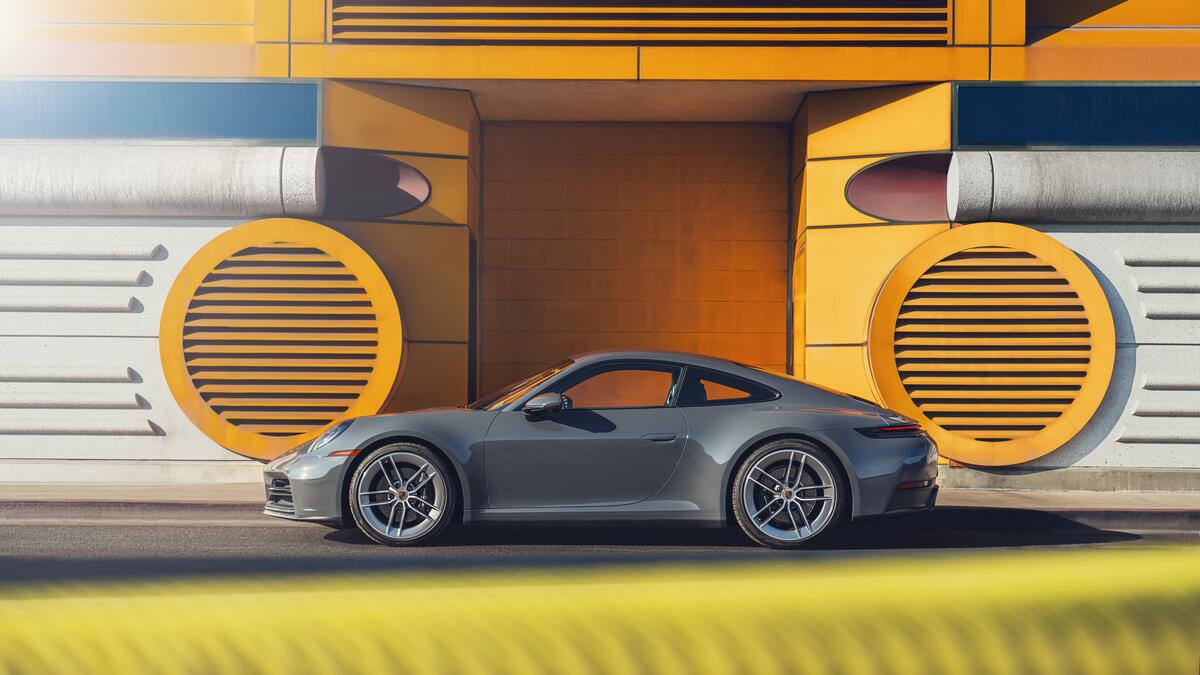
Porsche 911
"This is a ridiculous opinion because the car is cool. But like, it bugs me that they didn't just call it like 9-11 SC. This sounds like Porsche pedantry."
The Porsche 911 is a sports car made by Porsche. It’s famous for its recognizable shape and performance. The podcast mentions it because the speaker is talking about how the model name is handled.
The Porsche 911 is a long-running sports car known for its distinctive rear-engine layout and classic silhouette. It’s often discussed because small naming and model details matter to enthusiasts, and the car’s reputation is built on decades of evolution. In the podcast, it comes up as a “cool” car while the speaker questions the naming convention.
Hagerty
"[358.0s] So, I watched the video that I think Hagerty put up talking with Andreas Brödinger about like, [364.0s] why this car is awesome?"
Hagerty is a car-enthusiast brand that makes videos and articles for collectors. The host is saying they watched a Hagerty video about this car.
Hagerty is an automotive media and collector-car company that produces content for enthusiasts. Here, the speaker references a Hagerty video featuring Andreas Brödinger discussing why the car was built.

Porsche Boxster
"[376.9s] cannon drives, like amazing. [378.4s] Yes, like a Boxster Spider. [380.4s] Why the F does it have center locks?"
They’re comparing the car’s open-top feel to a Porsche Boxster. The idea is that it should be fun and usable like a normal convertible, not just a hardcore track toy.
“Boxster Spider” is being used as a comparison for an open-top driving experience. The speaker is essentially saying the car feels like a Porsche Boxster-style convertible/spider concept, emphasizing usability and top-down enjoyment.
center locks
"[378.4s] Yes, like a Boxster Spider. [380.4s] Why the F does it have center locks? [382.4s] And why does it have buckets?"
Center locks mean the wheel is held on with a locking mechanism in the middle, instead of several lug nuts around the rim. Performance cars use them to make wheel changes faster and more precise.
Center locks are wheel fasteners where the wheel is secured by a single central hub mechanism rather than multiple lug nuts. They’re common on performance and racing cars because they can speed wheel changes and reduce the number of parts involved in mounting.
call tow truck
"[411.3s] you can't... [413.1s] If anything happens to this car, you got to call tow truck. [415.7s] Which I know is what Porsche is now."
They’re saying that if something happens, you might not be able to fix it yourself on the spot. So instead, you’d need to get the car towed to a shop.
“Call tow truck” reflects a serviceability issue: if the car can’t be safely or practically repaired on the roadside (for example, due to wheel/tire access), the owner may be forced to rely on towing. In this segment, it’s used to argue that certain modern designs discourage DIY fixes.
backfired, died
"It just like backfired, died."
They’re describing the engine making a loud pop (“backfired”) and then turning off completely (“died”). That usually means something went wrong with how the engine was firing or getting fuel/air.
“Backfired” and “died” describe two common failure symptoms: an unexpected combustion event (often a misfire or ignition/fuel issue) followed by the engine shutting off. Together, they suggest the car lost the ability to keep running, not just a temporary stumble.
pushed it through the intersection
"And I pushed it, got out. It's light enough. So I got out and I literally just pushed it through the intersection while I'm steering."
They couldn’t get it started, so they moved it by pushing while steering. This is something people do to get a broken car out of traffic, and it can sometimes help depending on how the car is set up.
Pushing a car through an intersection is a practical roadside move when the vehicle won’t start. It’s especially relevant for cars with manual transmissions (or certain driveline setups) where rolling the car can help get the engine turning again, though the speaker doesn’t specify the transmission.
intake
"I'm like, that was probably a backfire through the intake. And you know, the 911 SCs had the issue with that backfire coming through with so much force that it would explode the air box."
The intake is how air gets into the engine. If something “pops” through the intake, it means the noise and pressure are moving into the air path the engine uses.
The intake is the path and components that bring air into the engine for combustion. If a backfire occurs through the intake, it means the pressure and flame are traveling into that airflow system rather than staying inside the cylinders.
air box
"that it would explode the air box. Okay. So you install what they call the air box pop off valve... But when I noticed the air box was like not the top of it was not perfectly aligned."
The air box is part of the intake system that helps route and filter air before it goes into the engine. In this story, it can get damaged if backfires create too much pressure.
The air box is the intake housing that manages airflow and often houses components like filters and ducts before air reaches the engine. In the segment, it’s described as vulnerable to damage when backfire pressure is high enough.
pop off valve
"And it hit the backfire happened with so much force that it blew the pop off valve out of its seat entirely in the air box."
A pop-off valve is a safety valve that opens when pressure gets too high. It helps prevent damage by venting the extra pressure instead of letting something break.
A “pop-off valve” is a pressure-relief valve that vents when pressure gets too high. In an engine bay context, it can be part of an air/boost or intake system and is designed to protect components by releasing excess pressure.
engine bay
"opened the engine bay and was like, I'm staring at like people always do. You know, what's going on here?"
The engine bay is the space under the hood where the engine and its parts are. People open it to quickly check for something obviously wrong.
The engine bay is the compartment under the hood where the engine and related components live. Opening it to inspect something after a loud event is a common first step to identify loose parts, disconnected hoses, or obvious failures.
wing
"So if it's, if it doesn't have a wing, but it's not a touring. So that's a standard one. If they add a wing, what does that become? ... A wing on a convertible like that."
A “wing” here is a spoiler that helps the car stick to the road at speed. They’re arguing whether it looks right on a convertible.
In this context, a “wing” means an aerodynamic spoiler mounted on the car to generate downforce. More downforce helps keep the car stable at speed, but it can look out of place on a convertible, which is why the hosts debate it.
ricers
"Speaking of ricers with big wings, VQ platform, infinities, Nissan's, et cetera, were banned"
“Ricers” is slang for cars that are modified mostly for looks, like loud styling or big add-ons, not real performance. The speaker is using it to describe a certain type of car culture.
“Ricers” is slang for cars modified mainly for appearance (often with flashy styling) rather than for meaningful performance. The host uses it in the context of big wings and the VQ/Nissan/Infinity crowd being banned.

Mitsubishi Eclipse
"There's the Mitsubishi Eclipse from too fast to furious. That was a convertible with the big wing."
They bring up the Mitsubishi Eclipse from “Fast and Furious” as an example of a convertible with a big spoiler. It’s used to make a point about how wings can look silly on convertibles.
The Mitsubishi Eclipse is referenced as a movie car example (“from too fast to furious”) that was portrayed as a convertible with a large wing. The host uses it to illustrate how a big spoiler on a convertible can look exaggerated.
VQ platform
"Speaking of ricers with big wings, VQ platform, infinities, Nissan's, et cetera, were banned"
They’re talking about Nissan’s V6 engine family (the VQ). In car circles, people often associate certain Nissan/Infinity cars with this engine, and the host says those kinds of cars were banned.
“VQ platform” is being used to refer to Nissan’s VQ engine family (often discussed as a “platform” in enthusiast circles). The VQ is a well-known V6 architecture, and the segment implies that cars using it (along with other Nissan/Infinity models) were “banned” in some context.
supercar Saturday
"Cars and coffee, Omaha, but it's their supercar Saturday event. So they had been having a number of issues according to the post with rev battles and other shenanigans..."
“Supercar Saturday” is a special Cars and Coffee day with a supercar-focused theme. The argument here is about whether certain cars should be allowed to attend.
“Supercar Saturday” refers to a themed Cars and Coffee event where attendees are expected to bring higher-end, exotic, or performance-focused cars. In the discussion, the theme is central because organizers are banning certain vehicles/owners to prevent problems.
rev battles
"So they had been having a number of issues according to the post with rev battles and other shenanigans that all came back to VQ owners."
“Rev battles” means drivers competing by revving their engines at each other. It’s basically a loud, confrontational stunt that can cause trouble at events.
“Rev battles” are informal, often unsafe showdowns where drivers rev their engines to provoke each other, usually to demonstrate sound or performance. The segment treats them as part of the behavior that led event organizers to tighten rules.
VQ owners
"...rev battles and other shenanigans that all came back to VQ owners. So they made the announcement that they were totally banning."
“VQ” is Nissan’s engine family name. When they say “VQ owners,” they mean people driving Nissan cars that use that V6 engine, like the 350Z/370Z.
“VQ” refers to Nissan’s VQ-series engines (a well-known family of V6 powerplants used in models like the 350Z/370Z and others). Saying “VQ owners” implies the problematic behavior was associated with people driving cars powered by that engine family.

Nissan Rogue
"Sorry, Ethan, you can't take your Nissan Rogue to supercar Saturday. But, you know, a lot of people were very upset about it."
The Nissan Rogue is a common SUV/crossover. They’re saying even a regular car like this doesn’t fit the event’s “supercar” theme, so it was being banned from that day.
The Nissan Rogue is a mainstream compact crossover SUV. In this segment, it’s used as an example of a vehicle that the event organizers wanted to keep out of their “supercar” themed day.

350Z
"I'm going to get a ratty 350Z and go to supercar Saturday."
The Nissan 350Z is a sporty Nissan coupe that many car fans know. In the story, it’s being used to show how event rules and “who belongs” can be kind of silly.
The Nissan 350Z is a popular enthusiast sports coupe known for its styling and driving feel. Here it’s mentioned as a “ratty” (beat-up) example of a car that would likely be treated differently by gatekeepers at a supercar event.
gatekeeping
"Well, I know you love gatekeeping. So I do. I want to share this. So I was reading reviews... somebody was upset because of the gatekeeping that occurred there."
Gatekeeping here refers to controlling who is allowed to participate in a car event based on rules or perceived status (like only letting certain car types in). The hosts connect it to the idea that people can be turned away even if they’re just trying to enjoy the scene.
classic car show
"This is a classic car show. Good vibes. Good times. The bigger gentleman said, I don't care."
A classic car show is an event where people bring older cars they care about. The speaker is being told their car doesn’t match what the event is “for.”
A “classic car show” is an event focused on older vehicles—often collector cars—where owners display them for judging, community, or fundraising. In this context, the speaker is being told they don’t fit the event’s expected car “type” or crowd.

Pontiac Grand
"...ese are high dollar classic cars. I drive a 2001 Pontiac Grand AMGT. Never seen snow or rain."
The Pontiac Grand Prix is a mid-size car made by Pontiac. Some versions were built to feel more powerful than a basic family car. The podcast mentions it as a classic that can be expensive, and the speaker talks about their own experience with a similar Pontiac from that time.
The Pontiac Grand Prix is a mid-size car that was offered in performance-oriented trims, including the era the podcast speaker mentions. The speaker references driving a 2001 Grand AM GT and notes not seeing snow or rain, which hints at how condition and climate exposure can affect a car’s life. In the podcast, it’s brought up as a “classic” with a higher price in the collector market.

Ford Taurus SHO
"I think when I was in high school, my Ford Taurus SHO lost a class trophy to a Pontiac Grand AMGT..."
The Ford Taurus SHO is a sportier version of the Taurus. It’s basically the “performance” trim, and the hosts are talking about it losing a trophy at a car show.
The Ford Taurus SHO is a performance-oriented variant of the Taurus, with “SHO” historically indicating a sportier, more powerful setup than the standard model. In this segment, it’s mentioned as the car that lost a trophy at a car show.
GT
"...to a Pontiac Grand AMGT, [1038.3s] which GT means nothing for those, [1041.4s] but different wheels, I guess..."
“GT” is a label car makers use to mean “sporty” or “sport trim.” Here, the speaker is basically saying the badge didn’t actually mean much in terms of real performance.
“GT” is a trim designation used by many automakers to indicate a sportier, more performance-leaning version of a model. In this segment, the speaker says “GT means nothing for those,” implying the badge didn’t correspond to meaningful performance differences in that specific context.
NGK spark plugs, Platinum Tip spark plugs
"...and the NGK spark plugs, Platinum Tip spark plugs. [1047.5s] Anyway, I don't know."
NGK makes spark plugs, which are the parts that create the spark to ignite the engine. A “platinum tip” spark plug uses platinum on the tip, which can last longer and keep working reliably.
NGK is a well-known spark-plug brand. “Platinum tip” refers to a spark plug design where the electrode uses platinum, which can improve durability and help the plug maintain consistent ignition over time compared with cheaper metals.

Chevrolet Corvette
"[1089.7s] Yeah, he really just kind of did himself in. [1092.1s] It is the Corvette curmudgeon that didn't buy a Corvette."
A Corvette is a Chevrolet sports car. Here, they’re joking about someone who has strong opinions about Corvettes but didn’t end up buying one.
The Chevrolet Corvette is a long-running American sports car known for its performance and enthusiast following. In this segment, it’s referenced as a car someone didn’t buy, and the speaker contrasts that with the “Corvette curmudgeon” attitude.
double the speed limit
"[1107.7s] I saw a shame post where like police departments post, [1112.7s] you know, somebody they pulled over. [1112.7s] And it was about a driver going double the speed limit,"
This means the driver was going about two times faster than the posted speed limit. The example given is meant to show how dangerously fast that is.
“Double the speed limit” means the driver was traveling at roughly twice the posted maximum speed. It’s used here to illustrate how extreme the speeding was and why it’s likely to be unsafe even if the speaker agrees with the general idea of enforcing speed limits.
excessive 140 on the highways
"[1117.5s] Now, while double the speed limit, I agree, [1119.5s] it's usually likely excessive 140 on the highways, [1124.6s] probably too fast."
They’re saying that 140 mph on highways is far beyond what’s reasonable. At speeds like that, it’s much harder to stop in time if anything changes.
The speaker is describing very high highway speeds—around 140 mph—as “excessive,” emphasizing that at those speeds the risk and stopping distance increase dramatically. It’s part of their argument that the driver was probably going too fast for safety.
feet per second
"And the post referenced feet per second to illustrate how dangerous going 52 in a post of 25 was."
Feet per second is another way to measure speed. It tells you how many feet you move every second, instead of miles per hour.
Feet per second (ft/s) is a speed unit used in physics. It’s often used to describe how fast something is moving in terms of distance traveled per second, which can make safety calculations feel more “real” than miles per hour.
miles per hour
"52 miles per hour is more feet per second than 25 miles per hour. That's just a fact."
Miles per hour (mph) is the speed unit most road signs use. It’s useful for everyday driving, but safety math sometimes uses other units to show the physics more clearly.
Miles per hour (mph) is the common everyday speed unit used for cars and road signs in the U.S. Converting mph to physics units like feet per second helps quantify how speed affects reaction time and stopping distance.
stopping distance
"And that means you travel farther before you can react and you're stopping just as longer. Like we get that. That's the risk we take with increased speed."
When you go faster, it takes longer to slow down and stop. Even if you brake right away, the car needs more road to come to a complete stop.
As speed increases, a car needs more distance to slow down and stop. That’s because the car has more kinetic energy and the driver also has more time before they can react and begin braking.
distance traveled during reaction time
"And given that the average perception plus reaction time [1200.5s] is about a second and a half, [1201.7s] that means if a kid jumps out in front of you at 14 feet per second, [1204.9s] you have already run over them completely"
It’s the idea that while you’re reacting (not yet braking), your car is still moving. So the car may travel a dangerous distance before you even start to slow down.
This concept combines reaction time with vehicle speed to estimate how far the car moves before the driver can respond. In safety discussions, it’s used to show why hazards can’t be “thought through” fast enough once they appear close to the vehicle.
perception plus reaction time
"And given that the average perception plus reaction time [1200.5s] is about a second and a half, [1201.7s] that means if a kid jumps out in front of you at 14 feet per second,"
This is how long it takes you to notice something dangerous and then start doing something about it. Even if the car could react fast, you still have to wait for your reaction time first.
Perception plus reaction time is the delay between noticing a hazard and starting to respond (like braking or steering). It matters because even if your car can stop quickly, you can’t act until your brain and body have processed what you saw.
10 miles an hour
"Okay. [1238.2s] I mean, is it 25? [1239.5s] It's 10 miles an hour. [1240.9s] 10 miles an hour is deadly if we put it in feet per second"
This is a common way to measure how fast a car is going. The speaker’s point is that even at around 10 mph, accidents can be serious because there’s not much time to stop.
“Miles per hour” (mph) is a common speed unit, and the speaker is converting the earlier “feet per second” into a more familiar number. The key takeaway is that even low speeds in parking lots can still be deadly due to the short time to react and the distance traveled.
Carvana
"[1293.9s] I was right about something. [1293.9s] We do love that. [1293.9s] I love it. [1293.9s] I was wrong still about Carvana, but I'm, I'm holding out for now."
Carvana is a company that sells used cars online. People talk about it a lot because the buying process and policies can be different from a traditional dealership.
Carvana is an online used-car retailer known for buying and selling vehicles through a digital shopping process. It’s often discussed in the context of pricing, vehicle condition, and how buyers handle returns or disputes.
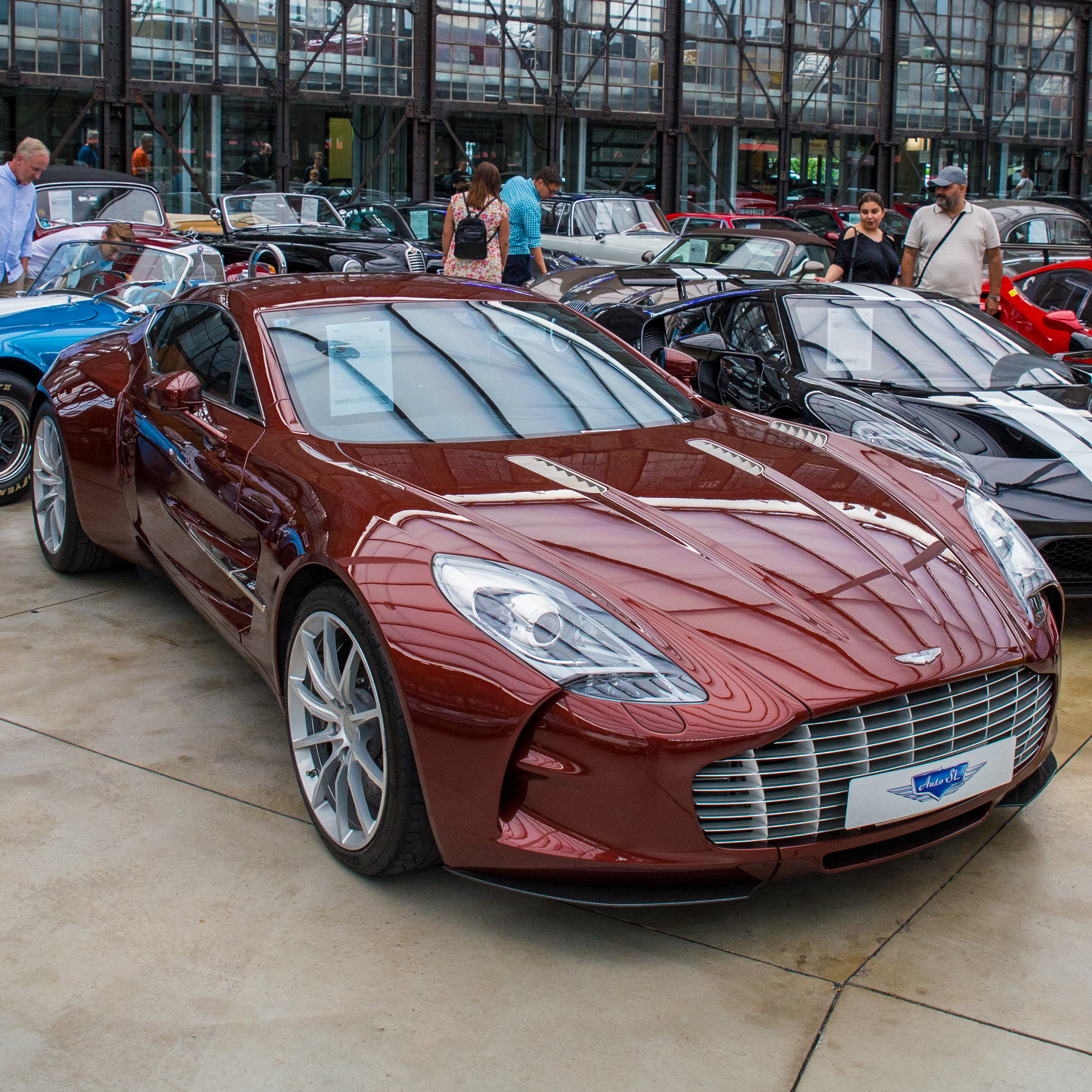
Aston Martin V12 Vantage
"I was right, but it didn't do me any good because it didn't make my move in time. Aston Martin V12 Vantage manuals are officially now the next big thing."
This is an Aston Martin sports car with a big V12 engine. “Manual” means you shift gears yourself, and those versions are usually harder to find and can cost more.
The Aston Martin V12 Vantage is a performance coupe powered by a V12 engine. In this context, “manuals” means the car is equipped with a traditional manual transmission, which tends to be rarer and often more desirable to enthusiasts than automatic versions.
Bring a Trailer
"went off the market and then sold the other day on Bring a Trailer for 315 out of the blue."
Bring a Trailer is a website where car enthusiasts buy and sell cars through auctions. It’s mentioned because that V12 Vantage was sold there.
Bring a Trailer is an online auction platform known for enthusiast cars, where listings can attract fast-moving bidding once interest spikes. In the segment, it’s used as the venue where the V12 Vantage sold.
Marshall Goldman
"almost every car that was on the market, including one at Marshall Goldman that had been on the market for a while at 228 were immediately just all gone."
Marshall Goldman is referenced as a dealer/marketplace seller that had an Aston Martin V12 Vantage listed for months. The hosts discuss how pricing and availability changed quickly after demand surged.
market demand materialized out of nowhere
"The demand just materialized out of nowhere. Last week, I could have bought an S at Marshall Goldman for probably 215 because they had had it for months and they would have discounted it."
They’re saying the interest in these cars suddenly spiked. When lots of buyers want the same car at the same time, the cars sell quickly and prices rise.
The hosts describe a sudden shift in demand that quickly removes cars from listings. This is the classic “market heat” effect: when buyers all decide at once that a specific car is worth it, prices can jump rapidly.
limited
"It's somebody decided they're limited. They're interesting. People will love these. This is going away."
They’re talking about how some cars feel “limited,” meaning not many are available. When that happens, more people want them, so prices can jump.
The speaker is describing a market dynamic where a car becomes scarce or “limited,” which can drive demand and price. In enthusiast circles, limited availability often leads to faster sell-through and higher resale values.
deal pending
"Oh, deal pending already. Oh my goodness. It's only been listed for a few days."
“Deal pending” means the sale is basically in progress, but it’s not fully finalized yet. The car might still be around for a short time, but it’s likely already spoken for.
“Deal pending” means the seller and buyer have likely agreed to terms, but the transaction isn’t fully completed yet. For shoppers, it usually signals the car may still be available briefly, but it’s effectively in the final stages.
condition
"According to my sources, the dealer was not forthright about the condition and that kind of jives with their reviews online. Their description is pretty general."
The hosts are discussing the car’s condition—specifically whether the dealer was transparent about issues. In used-car listings, “condition” can include paintwork, accident damage, repairs, and other history that affects value and safety.
paint work
"Doesn't mention anything about any paint work or damage. I don't blame them for not volunteering that information, but I did message one of their salespeople and did not get a response"
“Paint work” means the car was repainted or refinished. If it’s not mentioned in the listing, it could be a sign the car had damage or repairs that the seller didn’t want to highlight.
“Paint work” refers to any refinishing or repainting done to restore appearance or cover damage. When a listing doesn’t mention paint work, buyers may want to investigate because repainting can indicate prior body damage or repairs.
history
"allegedly on one of the Facebook groups where they posted it, because they posted it on a lot of Facebook groups, everybody commented about the history and the posts keep getting deleted."
They’re talking about the car’s past—like what happened to it before and what repairs or ownership changes it had. The speaker suggests people were sharing that info online, and then the posts got taken down.
“History” here likely means the car’s prior ownership, maintenance, accident/repair records, and other background that affects trust and value. The speaker implies the car’s history was being discussed in Facebook groups, but those posts were later removed.
Route1auto.com
"Right. Route1auto.com. That is the dealer that has it."
They mention Route1auto.com as the place where the dealer has the vehicle listed. The point is that the dealer may not be telling the full story about the car’s past.
Route1auto.com is mentioned as the dealer website where the car in question is supposedly listed. The hosts are implying the dealer may be repeating the same questionable behavior they’ve seen before.
Shaughnessy Overland Express
"Whether you're moving a rare collectible, a high-end sports car or your personal luxury vehicle, Shaughnessy Overland Express delivers with precision, privacy and respect. This isn't just transport, it's white glove care from pickup to delivery."
Shaughnessy Overland Express is a company that ships cars for people. They’re being described as doing careful, private door-to-door transport for expensive vehicles.
Shaughnessy Overland Express is presented as a transport company used for moving high-value vehicles. The hosts describe it as offering “white glove” service—pickup to delivery—with privacy and no middlemen.

Chevrolet Express
"...ur personal luxury vehicle, Shaughnessy Overland Express delivers with precision, privacy and respect. Th..."
The Chevrolet Express is a large van made by Chevrolet. It’s built to carry people or cargo. The podcast mentions it in a context that sounds like describing a particular Express van.
The Chevrolet Express is a full-size van used for people-moving and cargo work, and it’s often chosen for practicality and space. In the podcast, it’s referenced in a context that sounds like a description of a specific vehicle listing or use case. That makes it relevant because Express models are commonly discussed as work or utility vehicles rather than sports cars.
white glove care
"This isn't just transport, it's white glove care from pickup to delivery. For over 14 years, they've earned the trust of collectors, enthusiasts, dealers and owners"
“White glove care” is a phrase for premium, extra-careful service. In this case, it means the company treats your vehicle like a high-priority item during shipping.
“White glove care” is a service style meaning extra attention and professionalism—careful handling, privacy, and a high level of customer experience. Here it’s used to describe vehicle transport from pickup to delivery.
cargo insurance
"Every shipment is protected with up to $3 million in cargo insurance, offering peace of mind for even the most valuable and rare vehicles on the road."
Cargo insurance is the insurance that covers what’s being shipped while it’s on the road. Here, it’s meant to protect expensive cars in case something happens during delivery.
Cargo insurance is insurance that covers the value of goods being shipped while they’re in transit. In this context, it’s used to protect valuable vehicles during transport, with coverage “up to $3 million.”
auto transport brokerage
"In addition to their enclosed fleet, they've also established a trusted auto transport brokerage service, giving you access to a nationwide network of vetted, open and enclosed carriers."
A car transport brokerage is like a coordinator that finds a trucking company to move your car. You’re not usually dealing with the trucker directly at first.
An auto transport brokerage is a middleman service that matches customers who need car shipping with independent carriers (trucking companies). The broker typically handles logistics and vetting, while the actual hauling is done by the carrier.
Switchcast
"We are proud at Switchcast to endorse Shaughnessy Overland Express as the official transporter of Switchcast. Visit soexinc.com and tell them Switchcast sent you."
Switchcast is the company behind this transport brokerage pitch. They’re basically saying, “Use us to find a shipping company,” and they’re also promoting a specific one.
Switchcast is presented as the podcast/brand running the transport brokerage endorsement. In this segment, it’s positioned as the intermediary connecting customers to carriers and endorsing a specific transporter.
enclosed carriers
"...giving you access to a nationwide network of vetted, open and enclosed carriers."
Enclosed carriers are covered trailers that keep your car protected while it’s being shipped. It’s like shipping your car in a “garage on wheels.”
Enclosed carriers are transport trucks that move vehicles inside a covered trailer, helping protect the car from weather and road debris. They’re often used for higher-value cars or when owners want extra protection during transit.
open carriers
"...giving you access to a nationwide network of vetted, open and enclosed carriers."
Open carriers are the more common, uncovered car-hauling trailers. Your car is still strapped down, but it’s exposed to the elements.
Open carriers are transport trucks that haul vehicles in an uncovered trailer. Cars are more exposed to weather and road debris than on enclosed carriers, but open transport is commonly cheaper and widely available.
vetted trucking companies
"...giving you access to a nationwide network of vetted, open and enclosed carriers."
“Vetted” means they’re supposed to check that the trucking company is legitimate and trustworthy. The goal is to lower the chance of problems during shipping.
“Vetted” means the broker claims to screen carriers before assigning them to customers. In auto transport, vetting is meant to reduce risk by checking legitimacy, insurance, and operational history.
Grand Theft Auto
"...called the police. He was arrested and booked and charged for Grand Theft Auto and the car was returned to the owner."
Grand Theft Auto is a serious criminal charge for stealing a car. Here, it’s what the driver was charged with after the Porsche was taken.
Grand Theft Auto is a criminal charge used in many jurisdictions for stealing a vehicle. In this context, it’s the legal charge the trucker faced after allegedly taking the Porsche during transport.

Porsche
"a trucker stole a guy's Porsche out of the trailer to run errands. Okay, so here's what happened."
They’re talking about a Porsche being targeted in a shipping scam. The exact model isn’t named here—just that it’s a Porsche being moved.
The speaker is describing a scam where a Porsche was stolen from a trailer and then where another person tried to ship a Porsche. In this context, “Porsche” is the valuable vehicle being targeted, not a specific model.
UShip
"So he goes on uship.com, which is a site that people go on to find, like typically owner operator carriers for whatever... he assumed that UShip vetted the carriers... which UShip does not purport to do."
UShip is a website where you post what you want shipped and carriers bid or accept the job. The hosts are saying it doesn’t guarantee the carrier is legitimate.
UShip is described as a marketplace where people list shipments and connect with carriers. The key point in the episode is that it’s a platform, not a company that “vets” every carrier the way a traditional broker might.
B&J Transit LLC
"So he books through UShip and he contracts a company called B&J Transit LLC. Now this is where it becomes really, really murky... There are two companies, B&J Transit LLC. One of them is legit, one of them is not."
B&J Transit LLC is the company the victim hired to transport the car. The hosts say there may be a fake or confusingly similar company name involved, which helps the scam work.
B&J Transit LLC is the carrier company the victim contracted to ship the Porsche (and scooters). The episode claims there are two similarly named entities—one legitimate and one not—making the situation “murky.”
flatbed carrier
"Basically, they're a flatbed carrier. They're not a specialized automotive carrier."
A flatbed carrier is a truck with an open, flat trailer. It’s often used for things like equipment or materials, and the hosts are saying this one wasn’t really set up for careful car transport.
A flatbed carrier is a trucking service that uses an open trailer with a flat deck, typically for loads that can be secured with straps/chains and don’t require an enclosed environment. The hosts note this carrier isn’t a specialized automotive shipper, which matters for how vehicles are handled.
operating authority
"One of them is, has an operating authority for like metal coils and a couple other things."
Operating authority is the government permission a trucking business needs to legally haul freight. The hosts are saying one similarly named company had authority for other kinds of cargo, not cars.
Operating authority is the legal permission a trucking company has to operate commercially (typically tied to specific cargo types and routes). The episode contrasts a company with operating authority for certain goods versus one that appears to be a mismatch for automotive shipping.
due diligence
"That's in. Okay. Zero due diligence. All of this stuff is publicly available. Less than five minutes to find out the important stuff."
Due diligence means doing basic checking before you hire someone. The hosts are saying the victim didn’t verify the carrier, even though it would have been quick to do.
Due diligence here means checking a carrier’s legitimacy and operational details before booking shipment. The episode emphasizes that the victim did “zero due diligence,” even though the information needed to verify the company was publicly available.
account had been hacked
"Less than five minutes to find out the important stuff. Their account had been hacked and they had changed the phone number and the email address..."
They’re saying someone got into the account and changed the contact info. That can trick the shipper into dealing with the wrong person during pickup or delivery.
The hosts describe a scenario where the shipper’s account was compromised, and the scammer changed contact details (phone/email) so communications went to the wrong place. In vehicle shipping scams, this can redirect payments or delivery instructions.
DOT and MC number
"who has zero operating authorities and it used to be a real company. They have a DOT and MC number, but they haven't been around since 2015."
These are official ID numbers that trucking companies use to prove they’re legally allowed to operate. If someone doesn’t have them (or they’re fake/expired), it’s a major red flag.
DOT and MC numbers are identifiers used in the U.S. trucking industry. The DOT number is tied to a company’s federal safety/operations registration, while the MC (Motor Carrier) number is tied to operating authority for transporting goods.
rebroker the load
"What they do then, this is what they always do, is they rebroker the load out to somebody else, but they change the delivery address to their desired destination and send it to Atlanta or Miami or New Jersey and then they put it in a container and ship it overseas typically."
It’s when a shipment gets “handed off” to another trucking company. In a scam, the hand-off is used to reroute the delivery so the cargo ends up somewhere else.
Rebrokering a load means taking a shipment contract and passing it along to another carrier. In scams, the rebroker may change key details (like delivery address) to redirect the cargo without the original shipper’s knowledge.
fictitious plate
"The trailer was not even, didn't have the right license plate on it. It was a fictitious plate that went to another trailer and the truck didn't belong to him."
That means the trailer or truck had a fake license plate. It’s a classic trick to make the vehicle harder to identify.
A fictitious plate means a fake license plate used to disguise a vehicle’s identity. In shipping scams, fake or mismatched plates make it harder to trace the truck/trailer involved in the fraud.
bill of lading
"And the bill of lading instead of Michigan was Miami. Now, these should have been immediate flags to say, I am not handing over my keys, but instead he just called the company."
Think of a bill of lading as the paperwork that says where the shipment is supposed to go. If the address on that document doesn’t match what the driver is told, it’s a big warning sign.
A bill of lading is a shipping document that records who is shipping what, from where, to where, and under what terms. It’s used as proof of the shipment’s route and ownership/authorization, so changing it can enable cargo theft or fraud.
dispatcher would only text him
"but instead he just called the company. Wait, no, he didn't call them because they wouldn't talk to him over the phone. The dispatcher would only text him."
A dispatcher is the coordinator for the delivery. If they only communicate by text, it can be harder for a driver to verify instructions and spot fraud.
A dispatcher is the person coordinating pickups and deliveries for a carrier. When communication is restricted to texting (instead of verifiable calls or documented procedures), it can reduce accountability and make it easier for scammers to steer drivers using altered instructions.
DMV
"to get a new license, apparently is his words. And so he's like, well, you know, I can't park my truck and trailer at the DMV, so I'm just going to pull the Porsche out and drive it around."
DMV is where people go for driver’s licenses and vehicle paperwork. Here, it’s where the suspect ended up being arrested.
The DMV (Department of Motor Vehicles) is the government office that handles driver’s licenses and vehicle-related paperwork. The transcript uses it as the location where the suspect was arrested, showing the scam intersected with identity/document steps.
container
"no, your your car was going on a container in Miami. Yeah, like gone. So this guy owns"
A container is a big shipping box used to move things long-distance. Once a car is loaded into one, it’s much harder to stop the theft.
A container is a large, standardized metal box used for shipping goods by truck/rail/ship. Putting a car “on a container” is a major step toward moving it out of the area, which is why it’s treated as effectively “gone” in the story.
East Kentucky Home inspection
"And the company you hired is East Kentucky Home inspection and they haul metal coils. Not Porsches."
The host says the hired company is East Kentucky Home inspection, but they allegedly haul metal coils instead of cars. That mismatch is presented as a warning sign that something doesn’t add up.
East Kentucky Home inspection is mentioned as the company hired for transport, but the host says they haul metal coils—not Porsches. This highlights a mismatch between the cargo and the carrier’s actual business, which can be a red flag for fraud.
Gotrans.com
"I'm launching a new business called Gotrans.com. And it is a network for people like this guy and other car dealers to have access to all the best carriers that actually are fully vetted."
Gotrans.com is a service that tries to connect people shipping cars with trustworthy trucking companies. The pitch is that it helps prevent scams by vetting carriers.
Gotrans.com is presented as a platform/network for matching car dealers and shippers with vetted carriers. The host frames it as a way to reduce scam risk by ensuring carriers are properly insured and screened.
double brokering
"So you will never get a company like B&J Transit. You will not be dealing with international crime mobs. You will not have any double brokering."
Double brokering means your shipment gets passed through multiple “middlemen” instead of being handled by the real truck company. More middlemen usually means more chances for things to go wrong.
Double brokering is when a broker hires another broker instead of directly arranging with a real carrier. Each extra layer increases risk—more parties, less accountability, and more opportunities for fraud or miscommunication.
burnouts and donuts
"...pulling it off the truck to do a whole bunch of burnouts and donuts, put it back on the truck and then delivered it..."
They’re describing reckless driving tricks—spinning the tires (burnouts) and sliding in circles (donuts). If someone does this with a car before delivering it, it can cause damage and wear.
Burnouts and donuts are aggressive driving maneuvers: burnouts spin the tires to generate smoke, while donuts are circular slides around a pivot point. Doing this while a car is in a transporter’s control can damage tires, drivetrain components, and the vehicle’s condition before delivery.
license plate readers
"[2515.7s] So with that, let's move on to plate to sample because [2523.8s] the Lee County Sheriff's Office used license plate readers to assist them in their case [2530.3s] and to catch Alfonso Estrada Avila."
License plate readers are cameras that can automatically read car license plates. Police use them to help find or track vehicles connected to a case.
License plate readers (LPRs) are cameras and software that automatically capture and recognize vehicle license plates. They’re often used by law enforcement to track vehicles of interest across locations.
plate to sample
"[2530.3s] and to catch Alfonso Estrada Avila. So, you know, perfect segue here to the plate to sample game where [2539.8s] people submit crazy vanity plates that they've seen and we read them off and the other person [2545.7s] blindly has to say, oh, do can I figure out that stereotype?"
“Plate to sample” is a fun guessing game. They look at a vanity plate and try to guess what kind of car (and vibe) the owner likely has.
“Plate to sample” is the hosts’ game where listeners/participants submit vanity plates and the other person guesses what stereotype or type of car the plate owner likely drives. It’s a recurring segment structure in this episode.

Nissan Altima
"[2566.6s] Darn right. Okay. Hit me. All right. Just punch me in the face. All right. Starting with this one. [2573.3s] I saw this one in person. Sugarlips. It's a Nissan Altima. No. A Mercedes like GL 55. No."
The Nissan Altima is a common everyday car model. Here, it’s mentioned because the hosts are guessing what kind of car someone drives based on a vanity plate.
The Nissan Altima is a mainstream mid-size sedan (and in some markets, a sporty alternative to compact sedans). In this segment it’s used as a guess for a vanity plate, showing how people try to infer the car type from the plate’s vibe.

Mercedes like GL 55
"[2573.3s] I saw this one in person. Sugarlips. It's a Nissan Altima. No. A Mercedes like GL 55. No. [2587.1s] A Mustang convertible. No, we could be here all night and I don't think you will get this."
Mercedes-Benz makes big SUVs, and the GL 55 is a stronger, higher-power version. In the game, they’re trying to guess which car the plate owner likely drives.
The Mercedes-Benz GL 55 refers to the GL-Class in a high-performance trim often associated with a 5.5-liter V8. It’s being used as another guess for the car behind the vanity plate.

Mustang convertible
"[2580.0s] It's a Nissan Altima. No. A Mercedes like GL 55. No. [2587.1s] A Mustang convertible. No, we could be here all night and I don't think you will get this. [2592.7s] This is a kind of grayish green Subaru Forester."
The Ford Mustang is a popular sports car, and “convertible” means the top can open. They’re guessing the car type based on the plate’s wording and attitude.
The Ford Mustang is a performance-focused sports car line, and a convertible is the open-top body style. Here it’s offered as a guess in the vanity-plate game before the hosts land on the actual car.

Subaru Forester
"[2587.1s] A Mustang convertible. No, we could be here all night and I don't think you will get this. [2592.7s] This is a kind of grayish green Subaru Forester. Okay. And it was driven by an [2599.6s] octogenarian white couple."
The Subaru Forester is an SUV/crossover that’s built for everyday driving and often comes with all-wheel drive. They’re using it as the “correct answer” for the vanity plate guessing game.
The Subaru Forester is a compact crossover SUV known for standard all-wheel drive in many trims. In the segment, the hosts finally identify the car as a grayish-green Forester driven by an older couple.
de-chunking
"What? They'll like, it's called de-chunking or whatever where they like, there's like little cracks in the shape chunks that pop out of the head. Oh, another reason to buy a nine nine six Porsches."
They’re using “de-chunking” as a nickname for a problem where small cracks can show up around parts of the engine. The point is: some versions are said to crack, and others supposedly don’t.
“De-chunking” here sounds like a slang reference to a repair/inspection process related to cracks forming around the cylinder head area. In practice, it’s the kind of issue you’d associate with specific engine casting or heat-related cracking, and it’s being used as a reason to buy a particular Porsche variant.
IMS
"Apparently the mark twos never suffer from that. I don't know why. Mark two ones don't suffer from IMS, but you can get a crack."
IMS is short for a bearing inside the engine. Some Porsche owners worry about it because if the bearing fails, it can cause major engine problems.
IMS refers to the Intermediate Shaft bearing used on some Porsche flat-six engines. It’s a well-known reliability topic because bearing wear or failure can lead to serious engine damage, so people often research which years/variants are more prone.

Lamborghini Huracan
"So this is going to be a Lamborghini, like a Huracan. Nope. Like a 458 maybe Ferrari."
They briefly throw out “Lamborghini Huracan” as a possibility. It’s a popular Lamborghini supercar model, but they later say the actual car is different.
The hosts briefly guess the car could be a Lamborghini Huracan before correcting themselves. The Huracan is a well-known modern Lamborghini supercar, so it’s used here as a reference point for what the scammer might be claiming or what the car could be.
Aston Martin V12 Vantage Coupe
"So this is going to be a Lamborghini, like a Huracan. Nope. Like a 458 maybe Ferrari. Nope. It is an Aston Martin V12 Vantage Coupe six speed manual."
They’re saying the car is an Aston Martin V12 Vantage Coupe with a V12 engine and a manual transmission. That’s the kind of setup many car fans specifically look for.
The segment identifies the mystery car as an Aston Martin V12 Vantage Coupe, a V12-powered grand tourer. They also mention it being a six-speed manual, which is a notable configuration for enthusiasts.

Ferrari 458
"Nope. Like a 458 maybe Ferrari. Nope. It is an Aston Martin V12 Vantage Coupe six speed manual."
They briefly guess it might be a Ferrari 458. That’s a specific Ferrari supercar model, but it turns out not to be the one they’re talking about.
The hosts mention “458” as another guess for the mystery car. The Ferrari 458 is a specific Ferrari model line, commonly referenced when people talk about mid-engine V8 supercars.
AMG
"Oh, this is an AMG badged Mercedes. No, or an AM what do they call like the AMG Trent? Do they have like an AMG that's just like a trim package and not an engine?"
AMG is Mercedes’ performance division. If a Mercedes has an AMG badge, it usually means it’s been tuned to feel and drive more like a sports car.
AMG is Mercedes-Benz’s performance brand/division, known for tuning engines, transmissions, and chassis for higher output and sportier driving feel. In this transcript, “AMG badged” is used as shorthand to identify the car’s performance trim.

Lincoln MKZ
"Sorry, was it not that dug? And my last wagon was my last two wagons were now I have a real AMG. It is a Lincoln MKZ. Oh, God, never."
They finally say the car is a Lincoln MKZ. It’s a regular luxury sedan, not a supercar—so the “big status” vibe doesn’t really fit.
The hosts conclude the car is a Lincoln MKZ, a mainstream luxury sedan. They use it as a contrast to the earlier supercar guesses, emphasizing how the plate/identity doesn’t match the implied “status” narrative.
2.0 H
"it's got pinstriping under the MKZ and the 2.0 H. So I'm guessing they're also geriatric."
They’re pointing out the car’s engine/trim badge details—basically what the model is. “2.0” usually means a 2.0-liter engine.
“2.0 H” appears to be a shorthand for the Lincoln MKZ’s 2.0-liter engine variant (the “H” likely referring to a specific trim/engine designation). It’s being used to describe what’s on the car’s badges/identification.
Carfax
"Did you run this through Carfax to make sure this wasn't Photoshop?"
Carfax is a service that gives you a report on a used car’s history. People use it to check for things like accidents or whether the info looks legit.
Carfax is a vehicle history report service that compiles records from sources like DMV filings, insurance claims, and service events. The speaker brings it up as a way to verify whether a car listing or plate/photo might be fake.
Request an Explanation
Heard something you'd like explained? We'll add it to this episode.
Sign in to request explanations for terms you heard.
Want to learn more?
Browse our glossary for plain-English explanations of automotive terms, jargon, and concepts.
Help improve this episode
See something that's not quite right? Our annotations are AI-generated and can sometimes miss the mark. Click the flag icon on any annotation to suggest a correction.