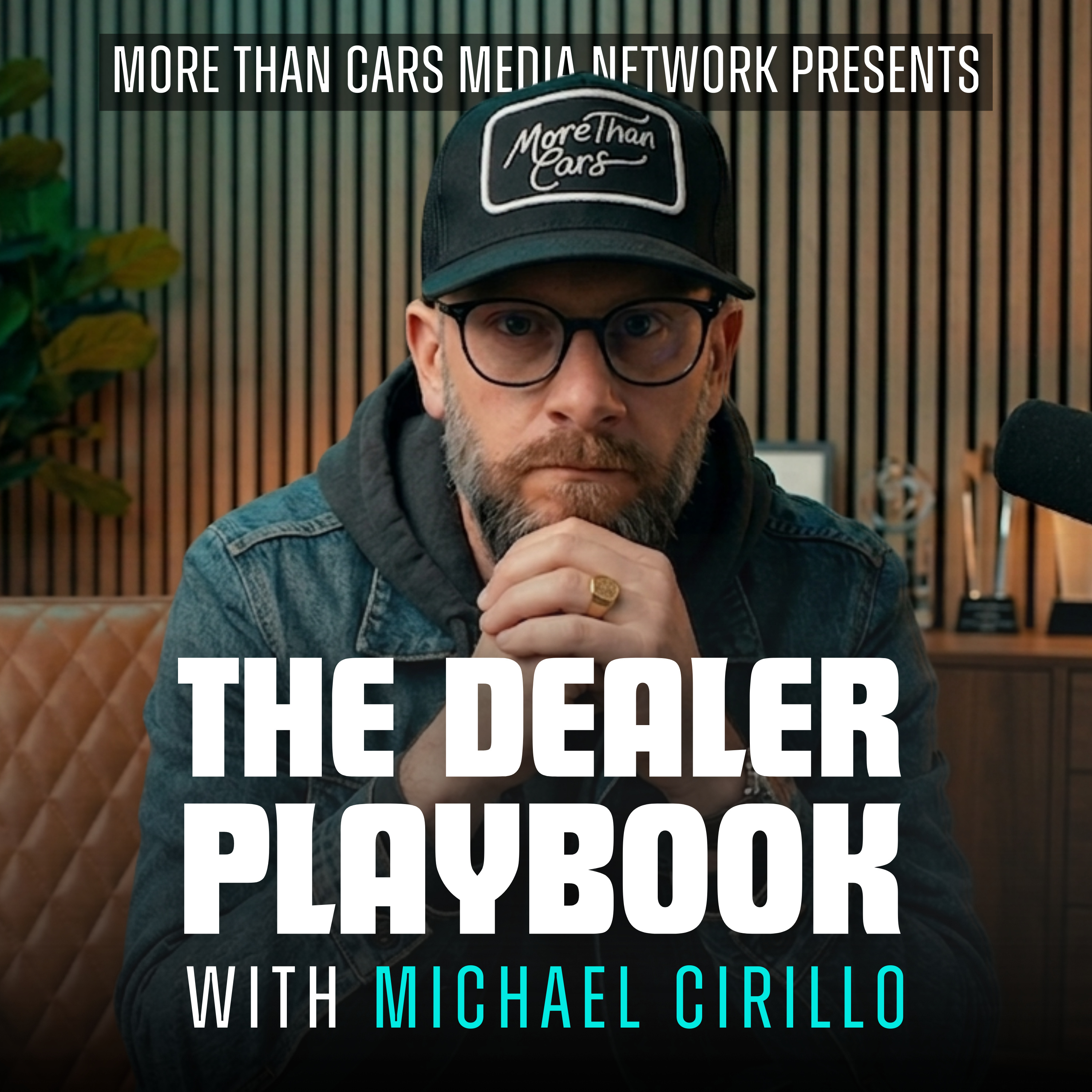
"The Gap Is Widening" — Predicting WHO Wins And Loses In Today's Auto Market | Glenn Lundy, President 800% Elite Auto
About this episode
Glenn Lundy frames dealership leadership as an “investment” mindset: focus time and energy on what creates ROI, and treat team collaboration as prepared, intentional work. He argues dealers must see themselves as “the catalyst” behind change, not just rely on tools or strategies. Turning to market forces, he predicts a “bloodbath” for many small stores as floor-plan costs rise and volume gaps widen versus Carvana and CarMax. Carvana’s expansion is tied to certified pre-owned pricing power.
In today's rapidly changing automotive retail landscape, are you positioning your dealership for unprecedented growth or an inevitable decline? Many long-standing car dealerships are facing a market that’s poised to create a “bloodbath for many,” while simultaneously launching others to unprecedented success. The question isn't 'if' the market will change, but whether you're ready to be the catalyst.
Here’s what you’ll get from this episode:
- Rethink your time: Understand the critical difference between 'spending' and 'investing' time in your dealership operations and personal life to drive higher returns.
- Embrace the catalyst mindset: Discover why you are the biggest factor in your dealership's success or failure, regardless of external circumstances.
- Navigate the coming shift: Get a direct, unvarnished prediction of the market forces that will separate the thriving from the struggling in the next 12-24 months.
- Future-proof your dealership: Learn what foundational shifts are necessary to compete against major players and maintain relevance in a consolidated market.
Glenn Lundy, President and Founder of the 800% Elite Automotive Club, shares his hard-won insights on the foundational principles that truly move the needle in dealership leadership.
Follow The Dealer Playbook so you never miss an episode.
Timestamps
00:00 Intro
01:24 Invest Time Mindset
02:51 Dealership ROI Meetings
04:16 You Are the Catalyst
05:31 Morning Routines and Control
07:48 Why Stories Before Strategies
09:54 Industry Bloodbath Ahead
12:12 Carvana Franchise Strategy
14:17 Fighting for Opportunity
15:47 Connect and Closing
17:09 Podcast Outro
die on the vine
"Some are gonna die on the vine and some are gonna be like unbelievable amounts of growth and success... Is it a acquisition spree or is it just like when you say die on the vine, it's like they just disappeared..."
It’s an expression meaning something fails because it can’t grow or compete. Here, the host is saying some dealerships will shut down if they can’t increase sales volume.
“Die on the vine” is a metaphor meaning a business fails gradually without being able to recover or scale. In the segment, it’s used to describe smaller dealerships that can’t raise sales volume and therefore can’t survive rising costs and competition.
floor plan
"everything's more expensive. Floor plan is more expensive. The building is more expensive."
A floor plan is the financing used by dealerships to pay for inventory (cars) while they’re sitting on the lot. The segment argues that when floor-plan costs rise, smaller dealers get squeezed because they can’t turn inventory quickly enough to cover those expenses.
Carvana
"Give me a bloodbath. They don't get their volume up... You're trying to go against Carvana selling 40, 50 cards a month."
Carvana is a company that sells used cars mostly through an online process. The host mentions it to compare how many cars big players can sell versus smaller dealerships.
Carvana is an online-first used-car retailer that sells vehicles through a digital shopping experience and delivers cars to customers. In the segment, it’s used as a benchmark for how many used cars a dealer can sell per month.
Carmax
"You're trying to go against Carvana selling 40, 50 cards a month. You're trying to go against Carmax 40, 50 cards a month."
CarMax is a big used-car seller with many stores. The point in this conversation is that it can sell a lot more cars per month than small dealerships can.
CarMax is a large used-car retailer known for high-volume sales and a standardized, store-based buying experience. Here it’s referenced alongside Carvana to illustrate that smaller dealers struggle to compete on monthly unit volume.
Tesla
"You're trying to go against Carmax 40, 50 cards a month. You're trying to go against Tesla. You're trying"
Tesla is a car company that sells cars directly to customers rather than through the typical dealer model. The host is using it as an example of a company that can move a lot of units and pressure traditional dealers.
Tesla is an automaker that sells vehicles direct-to-consumer and is often discussed as a disruptor to traditional dealership models. In this segment, it’s grouped with Carvana and CarMax to emphasize competitive pressure from high-volume, non-traditional sales channels.
CDJR
"You brought up Carvana. I saw my first Carvana CDJR store. Oh yeah. Popping up in Dallas."
CDJR is a shorthand for Chrysler, Dodge, Jeep, and Ram. It’s basically a way of saying which car brands are being sold through that dealer setup.
CDJR is an industry shorthand for Chrysler, Dodge, Jeep, and Ram—brands under Stellantis. The host’s mention suggests Carvana is partnering with or operating alongside dealer networks that sell those specific brands.
certified pre-owned
"I think obviously Carvana has multiple different reasons for it, but I think their biggest reason is certified pre-owned... Want a certified pre-owned car because it's basically a brand new car, but it's used."
Certified pre-owned means a used car gets checked and approved under a program, often with extra coverage or a warranty. The big idea is that it lets sellers charge more because the car is treated as more reliable than a regular used car.
Certified pre-owned (CPO) is a program where a used car is inspected and backed by an official warranty or guarantee from the seller/manufacturer. The host’s argument is that CPO status makes used cars feel closer to “new,” allowing higher pricing and more margin than typical used-car sales.
franchise
"You have to own a franchise in order to do a certified pre-owned vehicle. So my belief is they're going to pop up all these different stores and all these different markets."
A franchise is an official permission to sell a brand’s cars under that brand’s rules. The host is saying that certification programs often require that kind of authorized setup.
In auto retail, a franchise is the authorized dealer relationship that lets a business sell and certify vehicles under a brand’s rules. The host claims CPO programs require franchise ownership, so Carvana’s retail expansion is framed as a way to gain the ability to certify more cars.
stock prices
"which you can charge more for a certified pre-owned, which will increase their stock prices, increases their revenue... I didn't buy shares when they went down to like a buck 15 a piece."
Stock price is what investors are willing to pay for a company’s shares. The host is basically saying: if Carvana makes more money, investors may value the company higher.
Stock price is the market value of a company’s shares, influenced by investor expectations about growth and profitability. Here, the host links higher revenue from CPO pricing to higher stock prices, arguing that the strategy could improve Carvana’s market valuation.
Request an Explanation
Heard something you'd like explained? We'll add it to this episode.
Sign in to request explanations for terms you heard.
Want to learn more?
Browse our glossary for plain-English explanations of automotive terms, jargon, and concepts.
Help improve this episode
See something that's not quite right? Our annotations are AI-generated and can sometimes miss the mark. Click the flag icon on any annotation to suggest a correction.