The Most Reliable Porsche You Aren’t Buying
About this episode
Angelo Scuderi, a Porsche service director and longtime friend of the host, breaks down which modern Porsche sports cars make the smartest daily drivers. His top pick is the Cayman, especially the 987.2, for its reliability, lower maintenance costs, and simple, hardtop design. He also makes a strong case for the naturally aspirated 991.1 911, arguing that a base or S model offers plenty of performance without needing more power. The conversation also touches on driving feel, value, and Angelo’s own 1979 930 project car.
Is the Porsche community sleeping on the best daily driver ever made? In this episode of ElevenAfterNine, I’m joined by my "brother from another mother," Angelo Scuderi.
Angelo isn't just a Porsche enthusiast; he’s the Service Director at Porsche of Nashua and a Goldmeister Master Mechanic. He’s the guy I trust with my own cars, and today, he’s dropping some serious truth bombs that might make you rethink your next purchase.
In this episode, we dive into:
- The "Zero-Failure" Engine: Why Angelo has never had to tear down a 4-cylinder 718 motor in all his years at the dealership.
- The Daily Driver Myth: Why the 987.2 Cayman might be the best "bang-for-your-buck" Porsche on the planet.
- 930 Turbo vs. The World: I tell Angelo why his dream 1979 Turbo is a "beautiful piece of crap" (and he explains why I’m wrong).
- Maintenance vs. Oil Changes: The critical distinction every owner needs to understand to save their engine.
- The Death of the Manual: Why the manual transmission is disappearing and what it means for the secondary market.
Whether you're looking for your first Porsche or you're a seasoned Rennlist regular, this conversation is about the real-world usage of these machines—not just the spec sheets.
HELP SPREAD THE WORD I’m focused on creating the best content possible for the "regular" Porsche enthusiast, which means I don't have a ton of time for social media marketing! If you enjoyed this conversation, please:
- Share a link in your local PCA WhatsApp group.
- Drop a post on the forums (Rennlist, Pelican Parts, etc.).
- Subscribe and hit the bell so you don't miss next Tuesday’s episode.
CONNECT WITH ELEVENAFTERNINE
- YouTube Main Channel: ElevenAfterNine
- Instagram: @theElevenAfterNine
- Email: [email protected]
- Website: ElevenAfterNine.com
#Porsche #Cayman #718 #911 #930Turbo #PorscheMaintenance #ElevenAfterNine #CarPodcast #Goldmeister
Hosted on Acast. See acast.com/privacy for more information.
The Most Reliable Porsche You Aren't Buying
"So I reached out to a lot of the fans and the listeners of 11 After 9 and asked, what should I ask my buddy who is the big Porsche guy? ... what should I ask my buddy who is the big Porsche guy?"
They’re talking about which Porsche is the least headache to own. The goal is to find a Porsche that can handle lots of driving every year.
This episode segment is about identifying which Porsche model tends to be the most reliable for high-mileage daily driving. The hosts focus on what to buy (or avoid) when you’re putting 10,000+ miles per year on a used car.
goldmeister
"And so he's been the brain trust that I've relied on for, dude, I don't even know, maybe 20 years, 15 years, long time. And he is the service director at Porsche of Nashua, and he is a goldmeister, master mechanic with Porsche."
“Goldmeister” is a special certification/recognition from Porsche for highly skilled technicians. It’s meant to tell you the mechanic has advanced training and experience.
“Goldmeister” is a Porsche-recognized technician credential/level that indicates advanced training and experience. It’s essentially a badge of proven competence within Porsche’s service network.
master mechanic
"And so he's been the brain trust that I've relied on for, dude, I don't even know, maybe 20 years, 15 years, long time. And he is the service director at Porsche of Nashua, and he is a goldmeister, master mechanic with Porsche."
“Master mechanic” generally refers to a top-tier technician designation, often tied to manufacturer training and demonstrated diagnostic/repair skill. In a Porsche context, it suggests Angelo is qualified to handle complex, brand-specific issues.
Porsche of Nashua
"And so he's been the brain trust that I've relied on for, dude, I don't even know, maybe 20 years, 15 years, long time. And he is the service director at Porsche of Nashua, and he is a goldmeister, master mechanic with Porsche."
This is the Porsche dealership in Nashua where Angelo works. Since he runs the service department, he’s likely to know what problems show up most often in day-to-day ownership.
“Porsche of Nashua” is the dealership where Angelo Scuderi works as a service director. For listeners, this matters because dealer service teams often see common failure patterns and can share real-world reliability insights.
service director
"And so he's been the brain trust that I've relied on for, dude, I don't even know, maybe 20 years, 15 years, long time. And he is the service director at Porsche of Nashua, and he is a goldmeister, master mechanic with Porsche."
A service director runs the dealership’s repair shop. They see patterns in what breaks and what gets fixed, which helps when talking about which cars are dependable.
A service director oversees the dealership’s service operation—staffing, workflow, and quality control. That role often gives someone a broad view of what repairs are most common across different models and years, which is useful when discussing reliability.
10,000 plus miles a year
"...what should I ask my buddy who is the big Porsche guy? ... what should I ask my buddy who is the big Porsche guy? ... which modern Porsche is actually the most reliable for someone putting on 10,000 plus miles a year?"
“10,000 plus miles a year” frames the reliability question around real-world usage, not just occasional weekend driving. High annual mileage increases the importance of long-term durability, maintenance intervals, and wear items.

Porsche Panamera
"...it's like, well, Cayenne, dummy or Panamera, we're filling the blank. All right, let's just go sports car..."
They mention the Porsche Panamera, but they don’t want to compare sedans for this question. They want to focus on sports cars.
“Panamera” is mentioned as another modern Porsche candidate for reliability, but the hosts choose to exclude sedans from the main comparison. That matters because different Porsche platforms (SUV/sedan vs sports car) can have different maintenance and failure tendencies.

Porsche Cayenne
"Now, see, that's the thing, right? Because it's like, well, Cayenne, dummy or Panamera, we're filling the blank. All right, let's just go sports car..."
They bring up the Porsche Cayenne, but then decide to focus on sports cars instead. The point is that reliability can vary by vehicle type.
“Cayenne” is mentioned as a possible answer to the reliability question, but the hosts quickly narrow the discussion to sports cars. This highlights that SUVs and sedans can have different reliability patterns than the mid-engine sports-car lineup.

Porsche Cayman
"Yep. Yep. Cayman. Hands down. Cayman? Cayman. Really? Yeah. ... the reason I say that is because ... Cayman's are cheaper than 9-11's period."
They’re saying the Porsche Cayman is the most dependable Porsche for everyday driving. The idea is that it’s easier to find a good used one without paying 911 money.
The hosts argue that the Porsche Cayman is the most “bulletproof” option for a daily-driver-style ownership plan—turn the key and it starts reliably. They also connect reliability to practical buying: used Cayman examples can be cheaper than 911s, making it easier to choose a well-kept car.
set of snows
"...you can rip one of those, you could rip one of those year round if you wanted to, honestly, with a set of snows, if you really want to go down that road."
They’re talking about winter tires. With the right tires, the car can handle winter weather much better.
“Set of snows” refers to winter tires, which improve traction and braking in cold, wet, or snowy conditions. The host uses this to argue that a Cayman can be a year-round car if you equip it appropriately.
sunroof
"...with a set of snows, if you really want to go down that road. And it would be completely fine. It's got no sunroof."
The host says the Cayman they’re recommending has “no sunroof,” implying a preference for simpler ownership. Removing a sunroof can reduce complexity and potential leak or drainage-related issues over time.
water leaks
"You almost never have to worry about water leaks. You never have to worry about, pretty much, anything that typically goes wrong if people aren't maintaining them."
“Water leaks” refers to moisture intrusion issues—typically from seals, drains, or body joints—that can lead to interior dampness and corrosion over time. The hosts claim you “almost never have to worry” about water leaks in the Cayman they’re discussing, framing it as part of why it’s a reliable, low-hassle choice.
direct injection
"And the only reason I say dot two is because, especially if you're looking like an ass, right, it's direct injected... It's got some of the nicer updates with the headlights..."
Direct injection is how the engine gets fuel into the cylinders. The hosts are saying the Cayman’s direct injection is one of the updates that helps make that generation feel better and more modern.
Direct injection is a fuel-delivery method where fuel is sprayed directly into the combustion chamber instead of into the intake tract. In this segment, the hosts mention direct injection as one reason the 987.2 Cayman is preferable, implying it’s part of the “nicer updates” that improve the driving/ownership experience.
LED taillights
"It's got some of the nicer updates with the headlights are a little bit nicer, the taillights are LED versus just incandescent bulbs... It just looks a little bit more modern..."
LED taillights are the newer type of rear lights that use small electronic lights instead of a hot bulb. The hosts are using it as an example of the Cayman 987.2 feeling more modern.
LED taillights use light-emitting diodes instead of older incandescent bulbs. The hosts point out that the 987.2 Cayman’s taillights are LED, framing it as a modern upgrade that doesn’t require moving up to a newer generation.

Porsche 987
"Do you do you feel like the 987 from 09 to 012? Is it a better driver too for your daily driver-ness? It's just if you like that connected feel, if you like, it's just a smaller feeling car when you're in it."
Porsche 987 is an older Boxster/Cayman generation. Here they’re saying it can be a great daily driver because it feels more intimate and connected, even if it’s not the newest design.
Porsche 987 refers to the Boxster/Cayman generation produced around 2005–2012. The hosts discuss whether the 987 (specifically “from 09 to 012”) is a better daily driver, emphasizing how it feels more “connected” and smaller inside.
daily driver-ness
"Do you do you feel like the 987 from 09 to 012? Is it a better driver too for your daily driver-ness? It's just if you like that connected feel, if you like, it's just a smaller feeling car when you're in it."
“Daily driver-ness” is shorthand for how practical a car is for everyday use—comfort, ease of living with, and how well it fits routine driving. The hosts connect this to the feel of the 987 cabin and how “connected” it feels versus newer, more expensive options.
connected feel
"It's just if you like that connected feel, if you like, it's just a smaller feeling car when you're in it. It seems a 991 versus a 997."
“Connected feel” means the car feels like it’s responding directly to you, not like there’s a delay. They’re saying the 987 gives a more engaging, hands-on driving experience.
“Connected feel” describes how directly the car responds to steering, throttle, and driver inputs—often associated with chassis balance, steering weighting, and overall feedback. The hosts use it to explain why the 987 can feel more engaging despite being an older generation.
bang for the buck
"And do I like the newer ones 100% but I also like to try and find things that are that make sense when it comes to like, like I said, bang for the buck really when it comes down to it. Yeah, well, I mean, that's the thing."
“Bang for the buck” just means getting the most enjoyment or usefulness for the price you pay. They’re talking about which Porsche generation makes the most sense financially.
“Bang for the buck” is a value concept: choosing the car that delivers the most satisfaction and capability relative to its purchase price. Here, the hosts are weighing newer Porsches against older ones by focusing on what feels worth the money.
Porsches are getting really expensive
"I mean, all Porsches are getting really expensive and it seems like by the week they're jumping up in value. And you just picked a 15-year-old car that you'd still daily drive, which obviously speaks to the model and the brand."
They’re talking about how Porsche prices keep climbing. That affects what you can buy and how much risk you take, but it can also mean older Porsches still feel like a smart choice.
This is a market concept: Porsche values have been rising quickly, changing what “good value” means for buyers. The hosts tie it to the idea that even older, 15-year-old Porsches can still be attractive to daily drive because they hold value.

Porsche 911 (991.1)
"991.1. Why that? It's NA. I'm still, I mean, don't get me wrong, I love turbos. I have one."
“991.1” is a specific version of the Porsche 911. They’re saying this one tends to be a good daily-driver pick because it’s naturally aspirated and generally a solid, sensible option for reliability and cost.
“991.1” refers to the first facelift of the Porsche 911 generation (the 991.1). The hosts argue it’s naturally aspirated (NA) and can be a strong choice for daily-driver reliability, balancing performance with ownership cost.
NA
"Why that? It's NA. I'm still, I mean, don't get me wrong, I love turbos."
“NA” means the engine doesn’t use a turbo. The hosts are suggesting that, for everyday reliability and cost, naturally aspirated can be a simpler choice.
“NA” means naturally aspirated—an engine that draws air in without a turbocharger or supercharger. In this discussion, NA is being framed as beneficial for daily-driver reliability and cost versus turbocharged setups.
all-wheel drive
"But then you got to deal with all-wheel drive. You got to deal with extra servicing when it comes to the front diff and everything else."
All-wheel drive means power goes to more than two wheels, which helps grip. The hosts are saying it can also mean more maintenance because there are extra parts involved.
All-wheel drive (AWD) sends power to more than just the rear wheels, improving traction. In this segment, the hosts connect AWD to higher servicing demands and additional components that can affect long-term cost, particularly the front differential.
front diff
"You got to deal with extra servicing when it comes to the front diff and everything else. Because if we're talking used cars here, these are all things that may or may not have been done when you bought it."
The front differential is a part that helps send power to the front wheels. If you have AWD, it’s one more thing that may need service, which can raise your ownership costs.
“Front diff” refers to the front differential, a gearbox that distributes torque to the front wheels in an AWD system. The hosts mention it as a maintenance item that can add cost on used cars, depending on what previous owners have already done.
used cars cost factor
"Because if we're talking used cars here, these are all things that may or may not have been done when you bought it. So you're going to have to do it. And that's going to increase the cost factor."
The hosts are describing how used-car ownership costs can be unpredictable because prior maintenance may have been skipped or deferred. They’re essentially arguing that you should budget for “catch-up” servicing when buying a used Porsche, especially on AWD cars with more components.
S's and four S's
"It really is. It's not, I mean, people get so caught up on the S's and four S's and all these crazy things. And then you just go for a rip in one and actually drive it like it should be driven."
Porsche uses badges like “S” and “4S” to indicate different versions of the 911. “4S” usually means it has all-wheel drive, but the conversation is basically saying the badge isn’t the whole story—driving feel matters more.
In Porsche 911 lineup talk, “S” typically refers to higher-trim variants (like 911 Carrera S), and “4S” refers to the all-wheel-drive version of that trim. The hosts are poking fun at how people get obsessed with these badge differences instead of just driving the car.
horsepower
"It's like 320 horse in that maybe something like that? That was right on 320. Yeah. So why do you need more than that if you can just absolutely rip?"
Horsepower is basically how strong the engine is. More horsepower usually means more acceleration, but the hosts are saying that around 320 hp is already plenty for a fun Porsche 911 experience.
Horsepower is a measure of engine output—how much power the engine can produce. The hosts use an approximate horsepower figure (~320 hp) to argue that you don’t need extreme numbers to have a genuinely exciting drive.
power band
"It's just the power band comes on a little later, right? So it definitely needs the RPMs to be up there."
The “power band” is the part of the RPM range where the engine feels strongest. If the power comes on later, you have to rev it more to get the car to feel right.
The “power band” is the engine speed range where it makes its strongest power and feels most responsive. Angela’s point is that this car’s power arrives later than an “S,” so you need to keep the RPMs higher to stay in that effective range.
RPMs
"So it definitely needs the RPMs to be up there. But once you get the feeling of how it's supposed to be driven, you just find yourself getting into that, that motion of how it should be."
RPMs tell you how fast the engine is spinning. If a car’s power shows up higher in the rev range, you’ll need to keep the RPMs up to make it feel quick.
“RPMs” (engine revolutions per minute) are a key driver of how a performance Porsche feels, especially with turbocharged or cam/valvetrain-specific power delivery. The speaker emphasizes that you must keep RPMs up to access the car’s usable torque and power band.
non-runner
"I mean, would you call it a basket case or would you just call it an absolute non-runner? No, it was just a non-runner."
A “non-runner” is a car that doesn’t run—usually it won’t start or drive. In this story, it wasn’t heavily modified; it just wasn’t cared for and eventually stopped being driven.
A “non-runner” is a car that won’t start or operate under its own power, often due to neglected maintenance, mechanical issues, or electrical problems. Here, the host and Angela contrast “basket case” versus a non-runner, highlighting that the car was original but simply not maintained.
original (unmodified)
"Honestly, if it was kind of like that dream bar and find because it hadn't been abused, it hadn't been modified. I mean, it was, everything about the car was original."
Angela stresses that the car was “everything about the car was original,” meaning it hadn’t been abused or modified. For reliability and long-term ownership, originality matters because modifications can introduce new failure points and complicate diagnosis.
second gear started to grind
"And the previous owner honestly stopped driving it because second gear started to grind and he didn't want to abuse the car anymore."
“Second gear started to grind” indicates a transmission or synchro problem where the gear engagement isn’t smooth. Grinding often points to worn synchronizers, clutch/shift linkage issues, or internal gearbox wear—exactly the kind of drivability problem that can make a Porsche feel unreliable until repaired.
paint correction
"And COVID actually gave me the time to redo the entire exterior. [825.0s] I kind of taught myself how to do like a three point, just like paint correction, you know, nothing crazy."
Paint correction is basically polishing the car’s paint to make it look clearer and smoother. Instead of repainting, you remove small surface imperfections so the paint looks better again.
Paint correction is the process of removing surface defects from a car’s paint—like swirl marks, light scratches, and oxidation—using polishing compounds and pads. It’s different from repainting because it restores the existing clear coat rather than covering it up.
motor out
"So everything. [837.7s] Motor out, completely rebuilt the motor, right? [841.0s] Took it down to the crank to tasteful rebuild."
“Motor out” means the engine is taken out of the car. Mechanics do this when the job is big enough that they need full access to the engine and related parts.
“Motor out” means removing the engine from the car to do deeper work than you could access with the engine in place. It’s commonly done for major rebuilds because it allows full access to components like the crankshaft, transmission mating surfaces, and internal engine parts.
rebuilt the motor
"So everything. [837.7s] Motor out, completely rebuilt the motor, right? [841.0s] Took it down to the crank to tasteful rebuild."
A full engine rebuild replaces or refurbishes worn internal components to restore reliability and performance. When someone says they “completely rebuilt” the motor, it usually implies more than routine maintenance—often including machining, new bearings, and refreshing the rotating assembly.
took it down to the crank
"So everything. [837.7s] Motor out, completely rebuilt the motor, right? [841.0s] Took it down to the crank to tasteful rebuild."
“Down to the crank” means the engine was taken apart to the main rotating shaft inside. That’s usually done when you need to check or fix internal wear, not just replace a simple part.
Taking an engine “down to the crank” means disassembling far enough to remove and inspect the crankshaft and related rotating components. This level of teardown is typical for addressing internal wear, bearing condition, and alignment/machining needs.
low compression motor (turbo setup)
"So when it's, so it's a low compression motor, you know, this was Porsche's go at adding turbocharged. So you have to have a lower compression motor, which means it doesn't have like a lot of get up and go when it's not on boost."
Turbo engines often use lower compression so they can handle the extra pressure from the turbo without pinging/knocking. The downside is that before boost kicks in, the engine may feel a bit slower or less responsive.
Lower compression is a design choice used on many turbocharged engines to reduce the risk of knock (detonation) when cylinder pressures rise under boost. The tradeoff is that off-boost response can feel weaker because the engine isn’t optimized for high naturally aspirated cylinder pressure.
on boost
"So you have to have a lower compression motor, which means it doesn't have like a lot of get up and go when it's not on boost. So around town with, you know, your non assisted steering, you really, it was, it wasn't like a very peppy car. You really had to kind of like push it to try to keep it in that almost on boost thing."
“On boost” means the turbo is actively pushing extra air into the engine. That’s usually when a turbo car feels much faster than it does when you’re just cruising or accelerating gently.
“On boost” means the turbocharger is actively producing boost pressure, so the engine is getting more air (and fuel) than it would naturally aspirated. That’s when turbo cars typically feel their strongest acceleration compared with off-boost driving.
non assisted steering
"So around town with, you know, your non assisted steering, you really, it was, it wasn't like a very peppy car. You really had to kind of like push it to try to keep it in that almost on boost thing."
Non-assisted steering means there’s no power help from a pump or electric motor. At low speeds you have to use more strength to turn the wheel, so it can feel awkward or tiring.
Non-assisted steering means the car relies on manual effort rather than power steering. Older or certain performance cars can feel heavier at low speeds, which can make them seem “hard to turn” in parking-lot driving.
on ramps
"So, so then the brilliance of this car was your on ramps. So where I was living in Massachusetts, you get on the on ramp."
An on-ramp is the lane you use to get onto the highway. It’s where you usually accelerate hard, so it shows how responsive the car feels when you need to merge quickly.
On-ramps are the short acceleration lanes that merge traffic onto a highway. They’re a real-world test of how quickly a car can build speed under load, especially if you’re trying to merge aggressively or keep up with faster traffic.
four speed car
"I had a four speed car, which you do as well. And you'd lay into the gas and that thing, the classic light switch."
A “four-speed” car refers to a transmission with four forward gears. Fewer gears can make acceleration feel more dramatic (bigger jumps between gears) and can also affect highway cruising RPM depending on the gear ratios.
classic light switch
"And you'd lay into the gas and that thing, the classic light switch. Yeah. Oh yeah."
“Light switch” means the car feels like it responds immediately when you hit the gas. Instead of waiting, it pulls right away.
“Light switch” is a slang way to describe instant throttle response—when the car seems to leap forward as soon as you press the gas. It usually points to strong low-end torque or a powertrain that doesn’t feel laggy.
lay into the gas
"And you'd lay into the gas and that thing, the classic light switch. Yeah. Oh yeah."
“Lay into the gas” just means you stomp on the accelerator. It’s how you’d drive when you want the car to accelerate as hard as possible.
“Lay into the gas” means pressing the accelerator firmly and quickly to demand maximum power. In the context of an on-ramp merge, it’s describing how the car accelerates under full-throttle conditions.
revs
"And so you quickly shifted into fourth and then the revs dropped down. And then you get in the middle lane and you're driving a Honda record with heavy steering."
“Revs” means how fast the engine is spinning (RPM). Shifting up usually makes the engine spin slower, so the sound and pull change.
“Revs” is short for engine revolutions per minute (RPM). When the speaker says the revs dropped after shifting into fourth, they’re describing how upshifting reduces engine speed and typically changes acceleration feel and noise.
heavy steering
"And then you get in the middle lane and you're driving a Honda record with heavy steering. I think we're done here."
“Heavy steering” means the wheel feels like it takes more effort to turn. It can be caused by tires, alignment, or how the steering system is tuned.
“Heavy steering” describes steering effort that feels weighty or requires more force than expected. This can come from steering system design, tire size/pressure, alignment, or how the car is set up for road feel.
zero to 60
"I'm not a straight line speed guy. I'm not a zero to 60 guy. I'm a back roads, high RPM..."
“Zero to 60” measures how fast a car goes from stopped to 60 mph. It’s useful for comparing cars, but it doesn’t tell you everything about how fun or engaging a car feels on roads.
“Zero to 60” is shorthand for how quickly a car accelerates from a standstill to 60 mph. It’s a common performance metric, but it doesn’t always reflect real-world driving feel like throttle response, gearing, and how the car behaves at higher RPM.
head studs
"So first and foremost, one of the most like common things on those to fail... head studs. They actually would snap..."
Head studs are strong bolts that hold the engine’s cylinder head in place. If they fail, it can cause major problems, so it’s a big deal when people talk about reliability.
Head studs are the threaded fasteners that clamp the cylinder head to the engine block. The host says that on these engines, head studs were a common failure point when the car sat, and that the materials differed between intake and exhaust sides to handle heat.
expansion rates
"Talk about the, yeah, talk, just explain what the expansion rates like what that means... because the exhaust side is going to be heating up a lot faster and hotter than the intake side..."
When an engine heats up, metal parts expand. Different parts can expand at different rates—so if the materials don’t match the heat they see, the stress can build up and cause failures.
Expansion rates refer to how much metal grows as it heats up. The host explains that the exhaust side gets hotter than the intake side, so Porsche used different stud materials to better match how each side expands, reducing stress that can lead to snapping.
warm up
"Just like everyone tells you, always let it warm up because I think it gets you..."
Warming up means letting the engine get up to temperature before you rev it or drive aggressively. It helps the engine parts heat evenly, which can reduce stress.
“Warm up” is the practice of letting an engine reach operating temperature before driving hard. The host ties it to the idea of controlled thermal expansion—reducing stress on components as the engine transitions from cold to hot.
tolerances are so tight
"They're almost locked solid. They won't even turn on. The tolerances are so tight that they actually have to warm the motor up with the oil to get it to turn over to fire up."
Some engines are built with very small clearances between moving parts. When it’s cold, those parts don’t move as freely, so the engine may not start until it warms up.
The hosts are describing how very tight engine tolerances can make cold starts difficult. When clearances are extremely small, the engine may need heat (often from oil) to expand parts enough to turn over and fire reliably.
turbo charging
"So anyway, the whole thing with the studs was that they would break and was super common on turbos because they specifically did on those because of all the heat with the turbo charging."
A turbo uses exhaust energy to spin a compressor and push extra air into the engine. That extra airflow makes more power, but it also makes the engine run hotter.
Turbocharging forces more air into the engine, which increases power but also raises temperatures and stresses components. The hosts connect that heat to why certain fasteners (like studs) can fail more often on turbo setups.
ARP hardware
"So, you know, I went crazy with ARP hardware. I did ARP studs all the way around."
ARP makes stronger replacement bolts and studs than many stock parts. People use them when they’re trying to prevent fasteners from stretching or failing under high heat and pressure.
ARP is an aftermarket manufacturer known for high-strength fasteners used to improve clamping force and durability. In this context, the host says they went “crazy” with ARP parts to address recurring issues (like stud/bolt failures) under heat and stress.
ARP studs
"I went crazy with ARP hardware. I did ARP studs all the way around. I did ARP rod bolts."
Studs are like extra-strong bolts that hold parts together. If the original studs can’t handle the heat or pressure, stronger studs can help keep everything tight.
Studs are threaded fasteners used to secure major engine components. Upgrading to ARP studs is a common approach when stock studs are prone to failure—especially on turbocharged engines where heat cycling and clamping loads are higher.
ARP rod bolts
"I did ARP studs all the way around. I did ARP rod bolts. I ended up going, I couldn't get new pistons for it."
Connecting rod bolts hold the rods to the crankshaft. Stronger bolts can reduce the risk of failure when the engine is under more stress than stock.
Rod bolts secure the connecting rods to the crankshaft. Upgrading to ARP rod bolts is meant to improve strength and reliability when an engine sees higher loads (like boost, heat, or performance work).
Mali 3.4 conversion
"I ended up going, I couldn't get new pistons for it. And at the time, I didn't have the money to do like a Mali 3.4 conversion on it."
They’re talking about upgrading the engine so it becomes a larger-displacement (3.4-liter) setup. It usually takes a lot of parts and labor, so it can be expensive.
A “3.4 conversion” refers to changing engine displacement to a 3.4-liter configuration, typically via a parts kit and machining work. The host mentions they couldn’t afford doing that conversion at the time, highlighting how expensive and involved displacement upgrades can be.
930
"And then I had the cams sent out and had them reground to 964 spec because one of the biggest problems with the 930 was it was filthy. It threw emissions out the tailpipe and it didn't care."
The “930” is the classic Porsche 911 Turbo generation. The speaker is saying it tended to run very dirty and produce a lot of exhaust emissions compared to what you’d want today.
“930” refers to the Porsche 911 Turbo generation (the classic air-cooled turbo era). The host says one of the biggest problems with the 930 was it was “filthy,” meaning it produced heavy emissions/soot and didn’t care about tailpipe output.
emissions out the tailpipe
"It threw emissions out the tailpipe and it didn't care."
They’re talking about how dirty the exhaust is—what comes out of the tailpipe. The speaker is saying the car wasn’t designed to be clean by modern standards.
This refers to how much exhaust pollution the engine produces and how it shows up at the tailpipe. The host is using it to criticize how the 930-era turbo strategy prioritized other goals over clean emissions.
Merritt Parkway
"And driving home on the Merritt Parkway coming up through Connecticut... The Merritt Parkway has these like little turnoffs..."
The Merritt Parkway is a road in Connecticut with little pull-off areas. The host is describing how traffic behavior there can feel aggressive and stop-and-go. That driving style can make a car seem like it’s burning more fuel and producing more noticeable exhaust.
The Merritt Parkway is a Connecticut parkway known for frequent on/off turnouts and short “stop” areas where drivers can pull over. In the segment, the host describes how people treat the roadway like a race, which creates stop-and-go and high-speed merging conditions. That kind of driving can amplify fuel consumption, exhaust smell, and perceived “dirty” running.
self ventilation with like a closed system
"...through closed windows and like the self ventilation with like a closed system where it's not supposed to let outside air, I almost choked on the smell of gas."
They’re talking about the car’s ventilation mode that tries to keep outside air from coming in. Even with that, the host smelled strong gas and felt like they were choking. That suggests the car had an odor problem that the ventilation couldn’t fully block.
This refers to cabin ventilation/air intake behavior where the system limits outside air and recirculates or uses a closed/controlled airflow mode. In the segment, the host says that with windows up and ventilation set to keep outside air out, they still “almost choked” on gas smell. That points to exhaust/fuel odors getting into the cabin or being drawn in through leaks or system behavior.
emissions-era "too filthy" / won't pass the mission
"So I mean, that's why they stopped coming to the States, right?... when 1980 came around, they were like, okay, these things are just too filthy."
The host is talking about emissions rules in the U.S. that got stricter around 1980. He’s saying some versions of these cars were hard to make clean enough to legally sell. So Porsche had to change the cars they brought over.
The host is describing the regulatory pressure that pushed Porsche to change what it sold in the U.S. when emissions standards tightened around 1980. The idea is that certain turbo 911 configurations were hard to make clean enough to meet U.S. requirements, so Porsche adjusted strategy. This is why the episode frames some cars as “dirty” in real-world driving.
491 option
"...that's the whole reason them 491 option came around and 911 was because they wanted to bring a car that looked like a turbo into the U.S."
The transcript mentions a “491 option,” but it’s not clear exactly what Porsche code or package that refers to. The host’s meaning is that Porsche introduced an option/engine setup around that time to make the car easier to keep clean for the U.S. emissions rules.
“491 option” appears to be a mis-transcription of a Porsche option/engine-related designation tied to the U.S. market strategy. The host’s point is that a specific option package/approach arrived around the same time as the 1980 emissions shift, enabling a cleaner car that still looked like a turbo. Because the exact designation isn’t clear from the transcript, treat this as uncertain.
SC motor
"...they could because they just made it look like a turbo and stuffed the SC motor in it because that one was a lot easier to keep, you know, clean and make it happen."
“SC motor” means the engine from the Porsche 911 SC. The host is saying Porsche used that engine in a car that looked like a turbo so it would be easier to meet emissions rules. So it was more about making it cleaner than matching the turbo engine exactly.
“SC motor” refers to the Porsche 911 SC engine (the “Super Carrera” era). In this segment, the host says Porsche “stuffed the SC motor” into a car that looked like a turbo, because the SC setup was easier to keep clean and compliant. It’s an example of how Porsche used different engines to satisfy emissions requirements while preserving the turbo aesthetic.
turbo car (turbo body on a normally aspirated motor car)
"It was the body of a turbo on a normally aspirated regular motor car. Did it have like turbo brakes too? ... They had everything but the gearbox and the engine. That was it. Everything else is turbo."
This describes a “turbo look/feel” conversion where the body and many systems are turbo-spec, but the original engine configuration is normally aspirated. The key point is that the car can be built with turbo components while still lacking the turbo gearbox and engine, which affects how “true” the car is versus a factory turbo.
turbo brakes
"Did it have like turbo brakes too? Brake suspension. They had everything but the gearbox and the engine."
When someone says “turbo brakes,” they mean the brake setup from a turbo model. It’s usually upgraded to stop harder and resist fade when you drive aggressively.
“Turbo brakes” implies the car uses brake hardware associated with Porsche turbo models. In practice, turbo-spec brakes often mean larger rotors/calipers and higher thermal capacity to handle repeated hard stops.
reworked the engine (making it more lively)
"So you, so you reworked the engine. You made it a little bit more lively. You put in new pans."
They’re describing work done to the engine to make it feel stronger and more responsive. It sounds like part of a bigger upgrade plan, not just one change.
“Reworking the engine” in this context means modifying the engine to improve responsiveness and performance. The host pairs it with other changes (like new “pans” and a turbo swap), suggesting a staged build rather than a single-part upgrade.
ball bearing Garrett turbo
"And then the last thing I did was I ended up switching out the turbo and I did a ball bearing Garrett turbo so that it just, I mean, with that, along with the exhaust..."
A “Garrett turbo” is a turbocharger made by Garrett (a major OEM and aftermarket turbo supplier). A “ball bearing” turbo uses ball bearings in the center housing to reduce friction and improve spool response compared with older journal-bearing designs.
400 horse
"And I said, you know, Max is probably a 400 horse."
“400 horse” means they’re aiming for around 400 horsepower. Whether you actually get there depends on the turbo, exhaust, and tuning.
“400 horse” is shorthand for an estimated horsepower target (about 400 hp). In turbo builds, horsepower expectations depend heavily on the turbo choice, exhaust, engine condition, and how the car is tuned.
custom built the exhaust
"So he custom built the exhaust from it took about a month or two from to put it together, sent it to me so that with the turbo."
Changing the exhaust can help the engine breathe better and can also change how the turbo responds. A custom exhaust is built to match a specific car and performance goal.
An exhaust system upgrade can change how exhaust gases flow, which affects turbo response, sound, and sometimes power. When someone says they “custom built the exhaust,” it often implies tailored piping and fitment for the setup.
spools up
"I mean, it spools up now at probably 2,500, 2,600 RPM. Oh, so that's way more usable."
“Spooling up” is when the turbo starts working and making boost. If it spools up at lower RPM, the car feels quicker and easier to drive without waiting for power.
“Spool up” describes how quickly a turbocharger reaches useful boost after you apply throttle. A lower spool-up RPM (like the 2,500–2,600 range mentioned) usually makes the car feel more responsive in everyday driving.
four cylinder boxers
"Talk to me about four cylinder boxers and Caymans. Do you like them? I think they are a fantastic car."
A “four cylinder boxer” is an engine layout where two banks of cylinders lie flat and move in opposite directions, with pistons that “box” against each other. Porsche’s boxer design is known for low vibration and a low center of gravity, and the hosts are emphasizing that the newer four-cylinder boxer engines have proven durable in service.
2 liter
"Have we ever had to dig into a two liter or a 2.5 liter? And that two five is truly like phenomenal."
“2 liter” means a smaller engine size compared to the 2.5-liter. They’re saying that even the smaller one has been very reliable in their service department.
“2 liter” is another engine displacement reference, used here to compare reliability between smaller and larger boxer variants. The speaker’s point is that even the smaller displacement engines haven’t required major internal work in their dealership experience.
2.5 liter
"Have we ever had to dig into a two liter or a 2.5 liter? And that two five is truly like phenomenal."
The “2.5 liter” refers to engine displacement, a key spec that roughly indicates how much air/fuel the engine can move. Here, the speaker highlights the 2.5L boxer’s durability and assembly quality as part of the reliability argument.
flat six
"It is just, it's just a miniature version of the flat six and it's so rock solid that, I mean, it's insane."
“Flat six” is Porsche shorthand for a six-cylinder boxer engine, with cylinders arranged horizontally in two banks. The hosts describe the four-cylinder boxer as a “miniature” version of the flat six, implying similar engineering principles and smoothness characteristics.

Porsche 718 Cayman
"My mind's blown because listen, so the 718, they're the four cylinder boxers and Caymans came out in 2017 to when? ... a lot of people trashed the dead generation of Boxtrain Cayman because it has a four cylinder motor"
The Porsche 718 Cayman is a mid-engine sports car. Some versions use a four-cylinder “boxer” engine, and the hosts are talking about why people argue about that choice and how the car has evolved over time.
The Porsche 718 Cayman is part of Porsche’s 718 lineup, which uses a mid-engine layout and (in many versions) a four-cylinder “boxer” engine. In this segment, the hosts discuss how the Cayman’s engine choice and later updates affected how people perceive its character and reliability.
boxer four-cylinder engine
"My mind's blown because listen, so the 718, they're the four cylinder boxers and Caymans came out in 2017 to when? ... a lot of people trashed the dead generation of Boxtrain Cayman because it has a four cylinder motor"
A boxer engine is a type of engine where the cylinders are laid out left and right. In this discussion, they’re talking about how the 718’s four-cylinder boxer setup changed how people feel about the car.
A boxer four-cylinder engine uses horizontally opposed pistons that move in and out like a “boxer” stance. In the 718 context, the hosts are discussing how the boxer layout and four-cylinder configuration influenced perceptions of sound and character versus older six-cylinder Porsche engines.
out of warranty
"if you actually drove those and now they're coming up, they're plenty well out of warranty. And if you put a tune in them, forget it."
“Out of warranty” means the factory warranty has ended. After that, you’re more responsible for repair costs, so people often wait until then to do big changes like tuning.
“Out of warranty” means the car is no longer covered by the manufacturer’s warranty period. The hosts connect this to when it makes sense to do riskier modifications like tuning, since warranty coverage for failures is no longer a factor.
variable vein turbo geometry
"And I mean, the 25 even has variable vein turbo geometry. Like it's bizarre how good they put that thing together."
This is a way the turbocharger can adjust itself to work better at different speeds. It helps the engine feel more responsive instead of waiting for boost.
Variable vein turbo geometry (often called a VGT turbo) uses adjustable vanes inside the turbocharger to control exhaust flow. That helps the turbo spool more effectively across different engine speeds, improving responsiveness and efficiency.
water pump
"We've never, truthfully, never taken one apart down to anything other than, you know, a fuel pump here or maybe a water pump. Simple things that are, you know, on the extra parts of the motor that fail on any car."
The water pump moves coolant through the engine so it doesn’t overheat. If it fails, the car can run hot, but it’s generally a normal maintenance/repair item rather than a major engine failure.
A water pump is part of the engine’s cooling system and circulates coolant to keep temperatures under control. The hosts mention only doing work like a water pump (and a fuel pump) when taking these cars apart, implying those are relatively common, non-catastrophic failures.
fuel pump
"We've never, truthfully, never taken one apart down to anything other than, you know, a fuel pump here or maybe a water pump."
The fuel pump is what sends gas to the engine. If it fails, the car may not start or may run poorly, but it’s not the same as a major engine rebuild.
The fuel pump supplies pressurized fuel to the engine. The hosts cite fuel pump work as an example of the kind of repairs they’ve seen when disassembling these cars, contrasting it with deeper internal engine issues.
Porsche 718
"I think I have a base 718 video that's going to be coming out in a couple weeks. And as a stick, it's like a lot of fun to drive."
The Porsche 718 is a Porsche sports car. It can be had with a manual gearbox or Porsche’s dual-clutch automatic (PDK), and the host is saying the manual version is especially fun.
The Porsche 718 is a mid-engine sports car line that commonly comes with turbocharged engines and either a manual or PDK dual-clutch automatic. In this segment, the host is talking about the “base 718” and how the manual version feels engaging to drive.
PDK
"I would imagine a PDK with the, with the variable vein technology on the turbos has got to be a blast. It's, it's a ripper that asks for the PDK."
PDK is Porsche’s fast-shifting automatic. Instead of waiting for one gear to finish before the next starts, it preps the next gear so shifts happen quicker and the car keeps pulling.
PDK is Porsche’s dual-clutch transmission. It shifts quickly and can keep the engine in the right rev range, which helps turbocharged cars maintain boost and feel more immediate.
variable vein technology
"I would imagine a PDK with the, with the variable vein technology on the turbos has got to be a blast. It's, it's a ripper that asks for the PDK."
This is a turbo feature that helps it build boost faster. By changing how the turbo flows air, the car responds quicker when you press the gas.
Variable vein technology (often referring to variable-geometry turbo vanes) adjusts the turbo’s airflow to improve spool-up and boost response. On turbocharged engines, that means less lag and stronger acceleration when you ask for power.
turbocharged car
"...when you start getting into this kind of tech, I mean, it's a PDK on a turbocharged car. I mean, not to go into American cars..."
A turbocharged car uses a turbo to make extra power. When you press the gas, the turbo helps the engine make more boost and pull harder.
A turbocharged car uses a turbocharger to force more air into the engine, allowing more power from a smaller displacement. The host ties turbo behavior to throttle position, boost buildup, and how fast gear changes help keep the car in its power band.
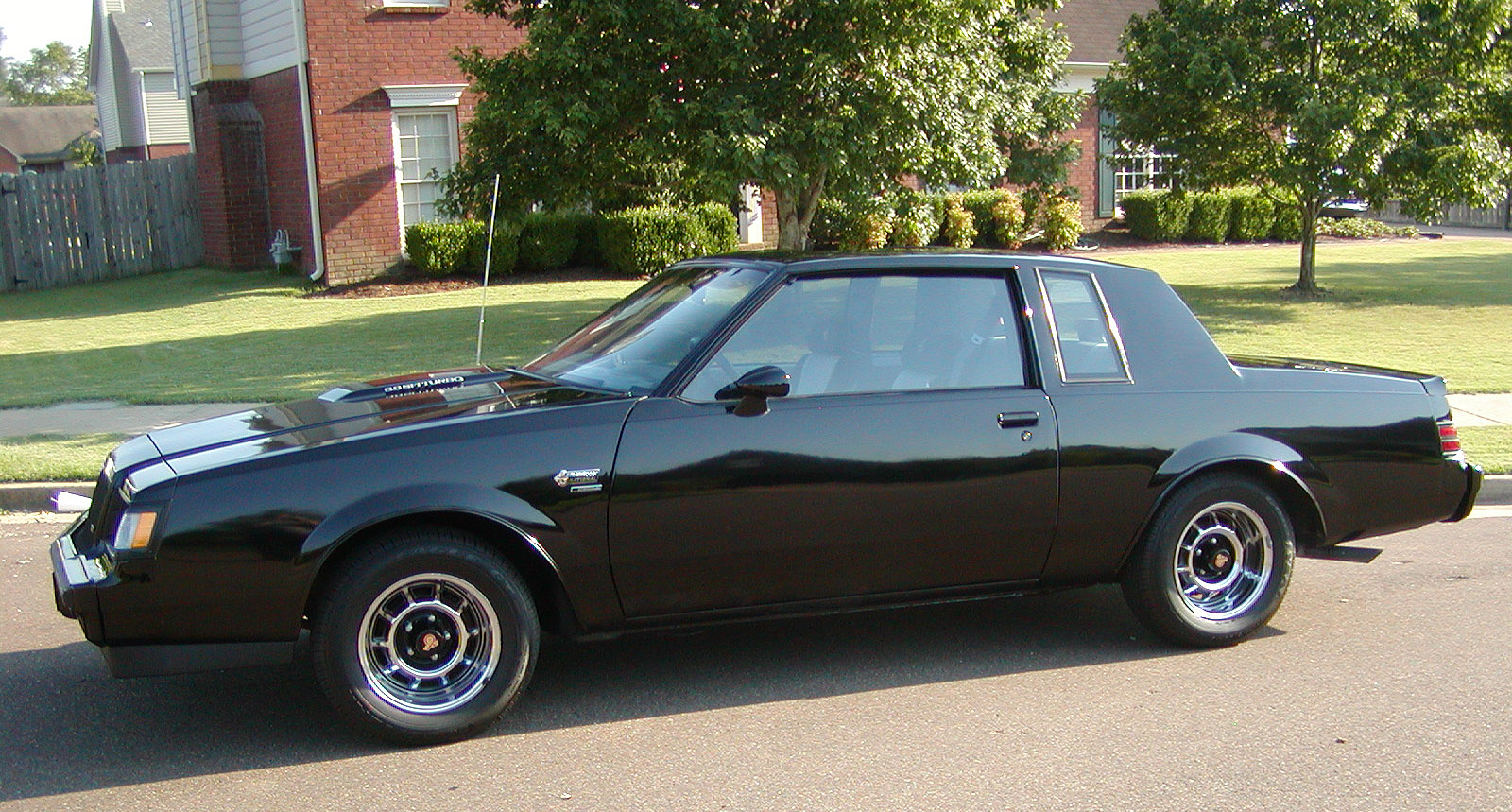
Buick Grand National
"...ars, but everyone always lost their minds because grand nationals with these rocket ships used to rip down the quar..."
The Buick Grand National is a fast American performance car. It became well known because it could accelerate very strongly, especially in short races like a quarter-mile.
The Buick Grand National is a performance-focused muscle car known for strong straight-line acceleration and its reputation among enthusiasts. The podcast reference to “rocket ships” and cars that “rip down” a quarter-mile points to how these models became famous for drag-strip-style performance. It’s discussed in the context of how people reacted when these cars proved extremely quick.
quarter mile
"...everyone always lost their minds because grand nationals with these rocket ships used to rip down the quarter mile, right?"
The quarter mile is a standard drag-racing test distance. People use it to compare how fast cars accelerate in a straight line.
The quarter mile is a common drag-racing distance (about 402 meters) used to compare acceleration performance. It’s often referenced because it highlights how quickly a car builds speed under sustained acceleration.
automatic
"It makes you cry a little inside because you're like, with an automatic, but it did. It did. And that's why they stopped making even an option."
An automatic transmission shifts gears by itself. The car decides when to shift, which can make acceleration feel smoother and sometimes quicker than a manual.
An automatic transmission changes gears for you, using a torque converter and hydraulic/electronic control. In performance discussions, the key point is that automatics can be calibrated for faster, more consistent shifts than many drivers.
manual
"We're done with manuals on all of our cars because you're not a better driver than our automatics with German. We know how to make these things shift. We'll make the car faster if we make it an automatic and you guys can't control it."
A manual is a car where you choose the gears yourself using a clutch pedal and a shifter. Many enthusiasts like it because it feels more connected to how the car drives.
A manual transmission lets the driver select gears with a clutch and shifter. The hosts frame Porsche’s manual availability as part of the brand’s “connectiveness,” and they discuss how Porsche moved away from manuals in some eras and then brought them back for enthusiast models.
hybrid
"I don't believe currently, yeah, GTS forget it with the hybrid that's just not happening. "
A hybrid uses both a gas engine and an electric motor. Because the drivetrain is more complex, it can be harder to offer a manual gearbox on those versions.
A hybrid powertrain combines an internal combustion engine with an electric motor and battery. In practice, hybrids often complicate packaging and calibration for manual transmissions, which can reduce or eliminate manual availability on certain trims.
stick
"But I think right now the only way you can get a stick is if you do a 911 T or GT3, regular GT3 or GT3 Torn. I think those are the only three models currently that you can get as a stick."
“Stick” means a manual gearbox, where you shift gears yourself. They’re talking about how fewer Porsche models are being offered with that option.
“Stick” is shorthand for a manual transmission. The hosts are discussing how manual availability on modern Porsche 911 models is limited and shrinking, with only certain trims still offered with a manual.
TK case
"And they get a TK case. All right."
“TK case” doesn’t clearly match a common Porsche option name. Based on the context, it sounds like they’re talking about how orders or availability are handled, but the exact meaning isn’t certain from the audio text.
“TK case” is unclear in this transcript and may be a mis-transcription or inside shorthand. Given the surrounding discussion is about manual vs PDK availability, it likely refers to a specific allocation/order configuration rather than a widely standardized Porsche term.
secondary buyers of Porsche
"Dude, like this is the problem that it's the secondary buyers of Porsche that, well, I'm going to insult the first line buyers that they're not enthusiast... And it's just drying up. It's no longer available."
They’re talking about how different kinds of Porsche buyers want different things. Some people want the manual for the driving feel, but if more buyers just want the newest and fastest option, the manual gets offered less and less.
This segment is discussing how Porsche buyers can be split into different “tiers” of demand—some prioritize enthusiast driving (manuals, feel, connection), while others prioritize owning the newest, fastest version. The hosts argue that as demand shifts toward PDK and away from manuals, manual availability dries up.
Ferrari
"...we've had a heritage for 70 plus years of having a stick, but we're just going to do away with it because Ferrari did it and it was fine."
Ferrari is the Italian supercar brand being used as an example. The point is that if Ferrari changed something and people still wanted the cars, Porsche might feel pressure to do the same.
Ferrari is referenced as a benchmark for how a supercar brand can change its approach (in this case, moving away from manuals) and still remain successful. The hosts use Ferrari as an example of how Porsche might justify similar decisions based on market acceptance.
touring
"Which all 911 R's is a touring. It's a touring. It's a touring. ...Don't get me wrong, but I don't know if there's this like, I think it's the rarity of it that makes it special to more than anything."
“Touring” usually means a car that’s meant for enjoyable driving over longer trips, not just track days. They’re debating whether the 911 R is special because it’s a great “touring” style car, or mainly because it’s rare.
In Porsche culture, “touring” generally refers to a 911 configuration that balances usability and comfort with performance—often less stripped and less extreme than a pure track car. The hosts debate whether the Porsche 911 R’s “touring” identity is what makes it special, or whether its rarity is the bigger factor.
flipping for over MSRP
"And the fact that they were flipping for so crazily overmarket, way over MSRP. Way over. And then people were flipping them for twice that."
Flipping is when someone buys a hard-to-find car and immediately sells it for a big profit. If lots of people do that, the market price can stay inflated until more cars are available.
“Flipping” is buying a scarce car quickly and reselling it at a much higher price. In limited-allocation Porsche models, this can inflate market values and create a cycle where prices stay high until supply catches up.
crapped the market out
"And it did. It crapped the market out for a long time before it came back. Right."
When Porsche “crapped the market out,” the idea is that increased production or availability flooded demand, pushing prices down. This is a common market dynamic: scarcity drives high prices, and more supply eventually cools them off.
mid engine cars
"So Porsche 718, the four cylinder boxers and Caymans are the unsung heroes of the mid engine cars."
A mid-engine car puts the engine closer to the middle of the vehicle. That usually helps the car handle better because the weight is more balanced.
“Mid-engine” means the engine is placed near the center of the vehicle, typically behind the front seats and ahead of the rear axle. This layout improves weight distribution and often makes the car feel more responsive in corners.

Subaru Wrx
"I remember when the Subaru WRX STI came out and they were pushing 100 horsepower per cylinder"
The Subaru WRX STI is a fast, turbocharged four-cylinder Subaru that’s famous for rally-style performance. The host is comparing “back then” when its power felt extreme to “now” when big power from small engines is more common.
The Subaru WRX STI is a turbocharged performance sedan known for rally-inspired all-wheel-drive and strong power output. Here, it’s used as a historical reference point for when high horsepower numbers felt shocking—especially from a four-cylinder engine.
four-cylinder turbo power becoming commonplace
"And now it's like commonplace. It's like, you want 500 horsepower out of your four cylinder? Go for it."
They’re talking about how today it’s normal to get huge power from a four-cylinder engine. Technology has improved so much that big numbers that used to be rare are now common.
The hosts are describing a shift in the market: modern turbocharged four-cylinders can produce very high power levels, making what used to feel “impossible” more normal. This reflects advances in turbo technology, engine management, and materials/engineering.
pea green
"It was pea green. And I mean everything, the seats, the dash, the door panels, everything was green."
“Pea green” is a very bright green color. The point here is that the whole inside of the car was painted/upholstered that loud green, not just a small trim piece.
“Pea green” describes an extremely bright, light green interior color. In a Porsche context, when the host says the entire interior is pea green, they’re emphasizing a highly customized, loud color scheme rather than a subtle factory-like tone.
builds
"It looked like a cabbage patch kid throwing up. That was probably the silliest thing I think I've ever seen as far as builds."
A “build” is a car that someone has customized. Here, the speaker is saying the customization choices were especially over-the-top.
“Builds” refers to how a car is customized or modified—often including paint, interior, and other aesthetic choices. When the host calls it “silliest… builds,” they’re critiquing the taste level and how extreme the customization is.
unsellable spec
"And the car gets delivered and it's in a completely unsellable spec and then the person flakes on delivery and they don't pick it up. And the dealer is just said, they're holding this thing that they can't possibly turn over."
Sometimes a car is ordered with options that almost nobody wants. If the color/trim/options are too unusual, the dealer can’t easily sell it, so it just sits there.
An “unsellable spec” is a car configured with options and colors that are so niche that it’s hard to find a buyer. Dealers end up stuck with inventory that doesn’t match typical demand, which can lead to discounts or long holding times.
Request an Explanation
Heard something you'd like explained? We'll add it to this episode.
Sign in to request explanations for terms you heard.
Want to learn more?
Browse our glossary for plain-English explanations of automotive terms, jargon, and concepts.
Help improve this episode
See something that's not quite right? Our annotations are AI-generated and can sometimes miss the mark. Click the flag icon on any annotation to suggest a correction.
1 community members have helped improve this episode.