KPIs are important numbers that help a business see how well they are doing. For car repair shops, these numbers could show how fast they fix cars or how happy customers are.
An extended warranty is like extra protection for your car that lasts longer than the usual guarantee, helping pay for repairs if something goes wrong.
A 10,000 mile oil change means you only need to change your car's oil after driving about 10,000 miles, which is much less often than older cars. This helps save time and money on maintenance.
Alignment means adjusting the car's wheels so they point the right way and wear evenly. This helps the car drive straight and keeps the tires from wearing out too fast.
The check engine light is a warning light on your car's dashboard that tells you something might be wrong with the engine or emissions. It helps you know when to get your car checked by a mechanic.
Hyundai is a big car company from South Korea that makes many types of cars, including small cars and big SUVs. They are popular because their cars are affordable and have good features.
It's always great to have you here and we thank you so much. We couldn't do this without your
support and don't forget, you know, we've got a YouTube channel out there and I would not hesitate
to ask you to please subscribe, like because that keeps us going and we appreciate that. Also,
I'm going to be at the TST big event March 28th in Tarleton, New York.
Studio will be there. We'll be doing some recordings and my daughter Tracy will be giving
the keynote. Andrew Fisher, Ken Zanders and Adam Roberts will be there. Go to tstseminars.org
and sign up. Don't forget about our great smartphone app. Boy, do we love this thing. We've
worked on it for so long. It's a super playlist all in one place for your smartphone, the ultimate
professional automotive repair playlist, like I like to call it. Save your favorites, build a
category library, automotive repair podcastnetwork.com, app and we've got QR codes and everything
everywhere. It's so easy to get and have fun with and get all your great content all in one
place. Look, thank you so much to our great sponsors. Take your Napa AutoCare Center to
the next level with the Napa AutoCare Gold Certified Program. Gold certified shops,
well, they stand out. Build trust and enjoy exclusive benefits designed to drive business
growth. Contact your Napa representative today to get started with Gold Certified.
Hey, did you know that Napa Tracks has onsite training plus six days a week support? It all
starts when a local representative meets with you to learn about your business and how you run it.
After all, it's your shop, so it's your choice. Let us prove to you that Tracks is the single best
shop management system in the business. Find Napa Tracks on the web at NAPATRACS.com.
Tom Ham. It's been a bit, Tom. Hi. How are you doing? I'm great, Tom. Tom, I got to tell you
when we get together and chat, just about anything can come up. That's amazing. Yeah.
Yeah. And especially, you love to tease me that I'm in Buffalo and you're down in Florida
and that you know that I have minus 14 windshield today and you're sitting on what kind of town?
Well, the windshield today is down to 55, so temperature's probably up around 60.
We're going through a cold spell here right now, but we'll come out of it soon.
I've got a bunch of violins over here that I'd love to play for you.
Anyway, thank you so much for being here. Tom Ham, a shop owner, auto centric up in Grand Rapids,
Michigan, a great supporter of the show for all over all the years we've been doing this.
Also, the Automotive Management Network, automotivemanagementnetwork.com. We are going
to talk about the labor rate tracker. How long ago did you put this thing up?
A couple years ago. It's on fire. I know we want to talk about what you're seeing from this.
And also, we want to talk about some other really cool stuff, so please stick around for
Tom's perspective, knowing that he's so connected to the industry about
shop profitability, where equipment and or software costs may go. And he has an opinion on
where marketing will be going as far as its level of sophistication.
Will it be harder to acquire really top technicians, as I like to call specialists?
And Tom, I love this. I can't wait to get to it. Super R&R technicians or specialists becoming
the king of the shop. And you know what? I have to agree with you, and I can't wait to hear your
particular take on this. Listen, let's jump into the labor rate tracker, the good stuff that you're
pulling from it. I know you've kind of pulled some surveys together. Please tell us what you're
seeing and hearing. It's steadily going up, which we would expect. It's somewhat of an
increased pace as time goes on. I think we're maybe set to see a little bit of a surge.
Back when a few years, when we broke $100 an hour, it kind of sat right below that. When it got
past that, it went up quickly after that. And now we're closing on $200. We're getting a lot
of shops reporting in the close to $200 range and a few of them over $200. And I think that's
going to be another psychological barrier. Once people are comfortable getting over the
two number, then you'll see it go up quite a bit from there. We try to keep the rates fresh.
One of the common questions we ask, how do you know they're fresh? Well, it is a volunteer system
that we do on one hand, but we do have reminders go out. When you put the rate in, when you register
the rate for your shop, which is private, by the way, we don't broadcast who you are.
Just your town is the only thing we broadcast. But you get a reminder every six months,
hey, please update your rate. So we keep it fresh that way. Again, we just publish city, state,
no shop names, no addresses, nothing like that.
Talk to me about your highest rates that you're seeing, Tom.
Since the inception, the highest rate's always been the Bay Area, San Francisco, that is. That's
always where the highest rate is. That's where you're going to find the shop that's close to $300
or the shops that's over $300. That's where they'll be right in that area of California.
West Coast, in general, is where the higher rates are. California, you know, up the coast there
and so on. In the East, the high spot is Connecticut. For whatever reason, there may be
some taxes or something going on there. I don't know exactly why, but Connecticut's a little bit
higher. But isn't Connecticut a state where a lot of people that work in New York live?
I always thought that. And don't ask me why. I thought the New York people lived in New Jersey
or is it the other way around? I don't know. I thought there were a lot of executives that
lived in Connecticut. And of course, I guess when you think about the West Coast and the Bay Area,
you think about where the income levels are, which is why everything's relative to what
people are willing to pay. What about the lowest rates? Have you got any indications on that?
Yeah, the lowest rates in the plain states, areas of the Midwest and also areas of the South.
When you look at the map, the map is kind of like a heat map type thing. So it shows it really
nicely in the colors. I'm just glancing over it now on another screen. And it shows it in the
colors where you can see kind of the patterns of where the high and the low ones are.
That's a cool feature. I like that, the heat map.
So if I was in a Southern state and kind of in your, not your highest, but your mid-range,
and I was curious to know, listen, I'm talking to people that I know and coaching and I know I
have got some new profit targets and I know I got to control my costs and my margin. But I also
have to figure out is my labor rate in the ballpark. And I'm not saying that it needs to be the
highest or the lowest, but labor rates do drive an awful lot of profitability or at least
cost-covering stuff that has to happen. And there's so many other factors.
And if I had the ability to go on and say, wow, I've got room to move. And what stops
shop owners from making that move if they know this information? Probably just they're afraid.
There's always a fear of increasing any kind of a price with some shop owners. And the reason
I say with some shop owners is because you do run into shop owners that go, okay, and they just,
you know, they'll just double the price on something because they heard a good reason why
they should. And they don't seem to have any. Not a worry in the world.
You know, any internal resistance to that at all. It doesn't work in my mind. Matter of fact,
you know, when I'll talk to people, I find folks that are uncomfortable, your rate could be too
high or too low. But in the situation where it's too low, or it appears to be too low, and they
say, gee, I really can't do that. And I'll tell them, you know, well, just do this, go to your
calendar, $1, $2, $3, whatever, the first of the month, and just do that for a period of time until
you get there. And frankly, nobody notices when that happens. I mean, they hardly notice, the
advisors don't notice, the tech, nobody notices, the customers don't notice. But over a period of
time, you know, it's amazing that the incrementalism is an amazing thing.
This whole dollar thing, I would have to tend to disagree with you, maybe, maybe the chunks are
five, the chunks could be five, depending on how big your gap is.
Well, sure they could.
Right. Okay. I'm just with you.
Well, sure, sure they could.
Imagine going up $12 in a year, because you did it a dollar a month, not really.
We might be talking to a guy in the lowest state, where in his area,
everybody's around $110 an hour, or $95 an hour or something like that, in that market,
that may be appropriate. On the other hand, in San Francisco, maybe it should be 20 a month.
No, I know.
But I'll admit, I try to adjust my message to the audience somewhat.
No, you're right. 100% agree. It's very relative to situations. Now, laboraytracker.com, by the
way, that's where you can go and get all this stuff and sign up for it, right?
Yep, just like it sounds.
Do you have to be a member of Auto Motive Management Network to get that?
You do have to be a member to see if you can get a basic membership,
and that will allow you to see the state averages and so on.
If you're a full member, then you get to see all the data for individual rates for each city,
and types of cars, and types of shops, and that kind of thing, to see the full deal.
I love what you just said, types of shops.
Do you know where the highest rates are coming up from shop types?
Oh, yeah. RVs are always at the top. Franchises, and I think that's just because the franchises
are probably more on top of the finances from a corporate standpoint.
They don't have the outliers with the low, they have to hit certain KPIs.
I call that sophisticated professionalism.
Sure, think about that.
All right.
I'll go with that.
Dealerships and heavy duty.
And heavy duty is coming on absolutely huge.
RV is coming on pretty big too.
I mean, as far as just the amount of business that's out there,
the indies and the fleets, transmission shops are kind of in the middle,
and that the low end are tire stores and collision.
And of course, collision is, you know, that's affected by the insurance thing,
so it kind of artificially lowers it, but that's a game that they play.
And then motorcycle.
So you can kind of see if you have an RV and a motorcycle,
you want to pick the right one to have fun with and the right one to work on.
Yeah.
So I love the discovery or at least the breakdowns that you have.
Now, we just talked about areas, we talked about shops,
and now you also break it down by vehicle type.
Yeah, that's not too terribly unexpected.
Some of it anyway.
You know, Euro shops are at the top.
Asian-only shops come below that.
Your typical independent all-make shop is in the middle.
And then at the bottom is marine and power sports,
which it kind of goes back to the motorcycle thing too.
I think, you know, a lot of people are doing their own work on those.
For whatever reason, the labor rates just have not come up on those
the way they've come up on other ones.
Yeah, same thing.
Make sure you're working on the right thing and having fun with the right thing.
I know you got a four-figure number of shops that participate.
You're asking them every six months to come on board and do an update,
because I love the reason they have to be updated.
I mean, just life goes on.
Has this been a hard sell to the industry?
It seems like you got a lot of participants.
People seem to cut it both ways.
Now, a lot of the shop owners in general like the concept.
Some of the trainers don't, you know, they say,
well, it really doesn't matter what the other shop up the street is.
And I mean, I understand that the point that's being made,
but it's like anything that you do.
The more information you have, the better.
So this is one piece of data.
You don't use this to set your labor rate,
but this is one piece of data that you would use in a labor rate calculation.
You would check A, B, C, D, E, F, and this is maybe G.
This is one of those things that you're going to throw in there
that's going to give you a little bit more education
and be more knowledgeable of what are the rates around here.
You get a general idea.
We mentioned before about what we were talking about and going up.
I've seen shops go down too.
I've seen shops come in, post their rate,
and then a few months later, they lower their rate down.
I think it's partially because they've maybe seen that rate
is just too out of whack in the area that they're in.
And maybe that's one of the reasons, you know,
they're a little light on business.
It goes both ways.
The idea is to just find out what the...
You said ballpark and that's what it is.
It's a ballpark.
It's the same thing, customer will call and they'll say,
can you give me a ballpark on such and such a price?
And a lot of people get really nervous about that.
How do other people don't?
Other people, yeah, I'll give you a ballpark.
It's probably between X and Y.
You know, we can argue that one back and forth all afternoon,
but you know, it's an approach and it's a piece of data.
You know, let's take a look of the states on there.
Seven of the states we've got between 50 and 100 shops,
California over 100.
So we've got some pretty good samples.
Good for you.
I've seen over the years and have played with many of the labor rate designers.
This is the profit I'd like to make on the company.
Here's all my costs and it backs into a labor rate
that if your business stayed the same, even if you increased it,
this is where your labor rate needs to be.
And there's all kinds of great, if you will, spreadsheets out there like that.
The thing I love about the labor rate tracker is if you're deciding
in a strategic plan for your business and where your margins and costs
and labor rates need to be,
labor rate tracker can help you design up.
Is this a good move for my business?
Does it need to wean itself in over time?
I mean, there's a lot of great things by being able to have your tool.
So automotive management network, you can give them a 30 day free trial.
You've all kinds of standard operating procedures.
I love that on the site.
I make the point on there.
These are not AI written.
These are all written by shop owners.
So it's somebody in a real shop going through a real situation
and writing a real SOP related to that situation.
So you go in there, you edit a little bit so it fits your shop
and you got something that's solid and good.
It doesn't have to be, it doesn't sound weird.
A lot of AI stuff, some of it's great.
Some of it sounds weird.
The SOPs that I've seen so far sound a little weird to me.
So this is real stuff.
Those are included management tips, KPI calculators.
We take the big primary ones that you need to know, 20 or 25 of them.
And we give you automatic calculators so you can just plug your numbers in.
It'll spit it out.
You don't have to know any math.
There's about 150 surveys and they're real management surveys
asking people real questions.
I think the one we have on there right now is car age.
Where do you, and this is something that wasn't used too much in the past,
but it's starting to be used more and more, is how old of cars do you work on?
About half the shops don't have an age,
but some of the other shops do have an age.
And then they'll start, I got one shop, I talked to his 15 years.
He doesn't take anything over 15 years.
Because these cars, I mean, they deteriorate.
They accumulate more problems, et cetera, et cetera.
And he just finds that's where you draw the line.
And for instance, that's where things like the Google reviews begin to deteriorate.
The comebacks begin to increase.
So let's find out where that point is.
We did that for our shop and we came in at 23 years.
We put a 23 year limit on it.
And it's not a hard and fast thing.
If we worked on the car before, we got to work on it as long as they own it, right?
If you're a regular customer and you're always a good customer
and you're logical, reasonable, coherent, you can bring me your old car.
But somebody comes in, they're brand new.
We've never seen them before.
Don't know anything about them.
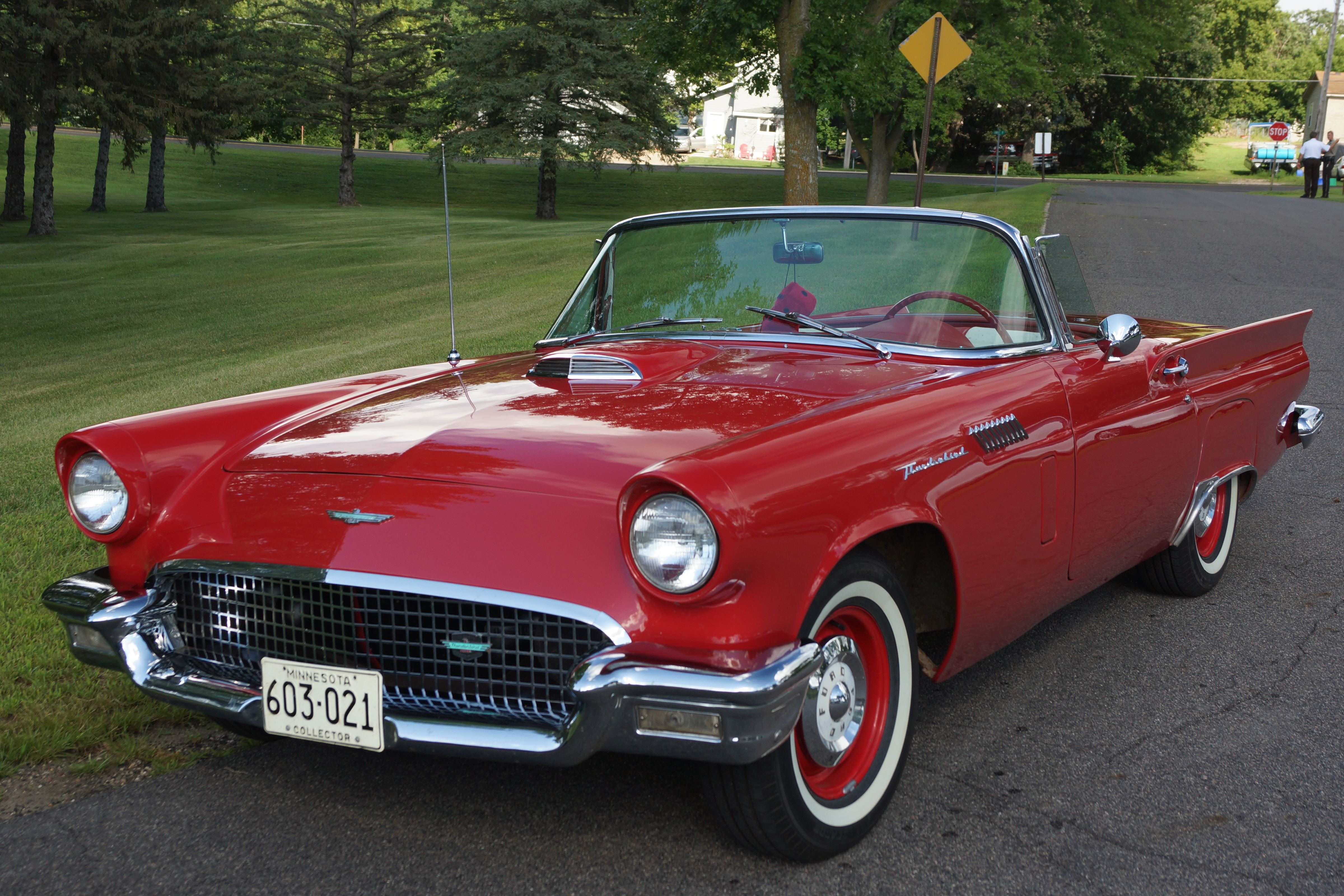
They got a 92 Thunderbird.
It's kind of like, yeah, we really don't want to get involved in that.
You know, it's good, bad, whatever,
but I think overall we'll do okay with it.
I see about half the shops are doing something like that now.
And most of them are right in the 20 to 25 year range,
as we're the most common sponsors.
Got it. Okay.
That's a great takeaway from this episode,
is to stop to think about what's your top limit on the age of a vehicle.
And just think about it as if you were a consumer listening to this information.
One of my cars is 12 years old.
I love it.
It's an Acura.
It just doesn't seem to want to quit.
And it's 80 some thousand miles for a 12 year old car.
It's brand new type, right?
Okay. It's brand new.
And so my thinking is you're getting me thinking, oh my God,
well, this guy, well, my shop keep working on this thing.
If it gets to be older, then.
Well, and obviously, you know,
that number is going to be very different.
The rust belt and, you know, down here in South Florida,
I mean, these things don't, you know,
they just enter Arizona or whatever forever,
but up there in, you know, road salt, that's a big deal.
Well, yeah, you never know.
We may have rust.
Now that you know what it takes to become a Napa Gold,
AutoCare Gold certified shop,
let's talk about the real value,
what you get when you achieve gold.
This isn't just about status.
It's about tangible benefits that grow your business.
Gold certified shops receive premium placement on NapaOnline.com
at no additional cost.
With millions of site visits each year,
your shop will be one of the top options consumers see
when they search locally.
That visibility, it means more cars in your bays.
You'll also get $1,500 annually in marketing funds
for pre-approved, co-branded messaging,
helping you connect with your community
while benefiting from the national reach of Napa branding.
Combine that with preferential referrals
and you've got a powerful marketing advantage.
Gold certified status enhances consumer confidence
with an extended 36 month, 36,000 mile piece of mind warranty
and local labor coverage,
proving you stand behind your work.
You'll also gain access to award-winning Napa Autotech training
for technicians and service advisors,
helping improve efficiency, reduce comebacks,
and support retention.
Additional benefits include Napa credit card financing rebates,
year round peak performance promotions,
Napa tracks shop management software,
SmartSign Pro customer engagement displays,
a team tool rebate to invest in your technician's success
and a $300 annual credit
toward master technician or blue seal ASE certification.
Gold certified membership is designed
to help you recruit, retain,
and deliver the best experience to every customer.
Are you ready to elevate your shop?
Contact your local Napa representative today
to see if you qualify and start your journey to Gold Certified.
Contact your local Napa sales representative today
to see if you qualify and start your journey to Gold Certified.
Let's face it, your shop management system
is the single most important tool in your shop, period.
Napa tracks was built from the ground up
to make your business more profitable and efficient.
We provide an extensive set of tools
to increase and track profitability in real time.
Napa tracks offers the industry's best post-sale support
hands down and we train your people on site.
Yep, on site.
And we offer remote refresher training 10 times a week
and customer support is open six days a week.
Give us a call, visit the website,
or join our Facebook community today to learn more.
We'll prove to you that tracks is the single best
shop management system in the business.
Napa tracks is always customized and tailored for you,
whether you're a one man shop
or a large multi-bay or multi-location company.
After all, it's your shop.
So it's your choice.
Visit us on the web at Napa tracks.
That's N-A-P-A-T-R-A-C-S dot com.
You're so connected to the industry, you have your own shop.
Where do you think the direction of shop profitability is headed?
I think average IRO is going to go up,
going to continue to go up.
The cars are more expensive to fix
and the parts and the procedures
for a lot of different reasons,
but I think it's going to go up and it's going to go up
faster than it has in the past.
Went up quite a bit last year and I think that'll continue.
But Tom, is it because we're going to do a much better
DVI, we're going to really concentrate on certain needs
and not brush over what the customer came in for,
but really dig deep down inside?
We got to spend more time to get that RO up.
Sure. I think the primary reason
is going to be the cost of the repair.
You know, when you're doing a better job with that,
we'll help with that too.
But I'm just talking strictly from doing a water pump in 2025
to doing a water pump in 2026.
I think the cost of parts are going up.
And that just, again, just my crystal ball,
maybe it's full of clouds.
I don't know.
I think car counts are not going to go up very much.
Even though we can attract new customers,
the intervals are really going up now.
And now this, we seem to be living in the world
of the 10,000 mile oil change.
That's the world we're in.
That's, they're going to come in once a year
and get the oil changed.
And they're just not going to come in as often as they used to.
That finally took effect.
I think efficiency and productivity are going up.
And that's just because people,
everybody's becoming better educated
on how to run the business.
Labor rates also, I think, are going to go up fairly quickly.
Part of that is technician cost.
Cost for technician.
I did a recent survey in Michigan,
experienced technician.
I'm not talking the number one tech in the shop.
And I'm not talking about the beginner,
but experienced technician.
Average in Michigan was 99,000 gross pay.
Incentives in there are base.
That's your W2.
It's the package.
Okay.
Yeah.
There's no benefits in there.
That's all other stuff.
Employment analytics, really increasing.
People are understanding what analytics are.
And as they do that, then they're starting to use them
and go back to them and learn even more.
Equipment software.
I had quite a little revelation on this.
And you know, this is the kind of stuff that we know,
but until it actually lands in your lap,
then you really know it.
And it was just, we bought a piece of equipment in 2017,
a piece of diagnostic equipment, small item.
I looked it up.
We actually tracked this stuff.
Now it was $1,165 at the time.
Good product, et cetera, et cetera.
Work fine.
A couple of months ago, tech said,
yeah, this is getting a little out of date.
We need a new one.
And I let them find this stuff now.
And unless it's, I pretty much just buy what they want.
They found what they wanted,
much better than the older one,
just technology improves, et cetera, et cetera.
And it was $169.
Degreased in price of $1,000 from $1,165 to $169 in eight years.
Oh my God.
What do you think, Tom?
The cost of technology, the competition out there
that would have reduced the, yeah, okay.
I knew the answers.
Oh my God.
Okay.
I love this example, but where's ADES going?
I mean, is it going up, staying any idea
where that equipment cost is from just even two or three years ago?
That's still kind of finding its legs, ADES.
And what I find, you talk to shops,
and their opinion of it is all over the spectrum.
Some guys say, yeah, we already have it.
And next shop you talk to, we don't have it.
We don't have any plans to ever get it.
And everybody in between, and then the pricing,
I think that once it kind of finds its legs,
I wouldn't doubt that it does,
just what I explained with this other one.
I think you're going to see the prices go way down in the south.
Yeah, I am so opinionated on ADES.
I've seen so many demos.
I've been in a ton of classes.
I know people that sell the equipment.
I've discussed, you know, ad nauseam with the trainers
who get this, who know this.
I support the reason that we need to get cars back
into a calibrated state if we work on them.
And I'm fine if I take it to the guy down the road,
but the engineers out of Detroit or Japan or whatever,
they're saying, listen, if you do this to the vehicle,
you have to do a recalibration.
And too many of us are not paying attention
to that side of this thing.
And I hope we never have a major lawsuit
that says something wasn't completely fixed on the vehicle.
And if we ever, ever do something, and I hope we don't,
we're going to be selling a lot of ADES calibration equipment,
or we're finally going to just wake up
and go to my friend down the road who has one
and say, you got to fix this.
We've got to convince the client
that this is a required repair on your vehicle.
It's just no longer the $99 alignment.
It's now the $400 alignment.
So anyway, I get that.
And boy, I mean, to me,
having ADES equipment and doing the jobs is like politics.
There's always two sides to every interesting story.
I do think so.
Bottom line is really, it's market driven.
You can take something and say, it's a mandated,
liability-wise, and all these things,
you really ought to do it.
I wouldn't argue with any of that.
Now, and then if you're in an area
where there's one shop that has ADES and 20 shops then,
and they seem to be coming along okay,
they seem to be busy,
and the customers are good with it and everything else,
you can have a hard time getting them over the other side.
So good luck.
I'll keep an eye on it.
I'll do it over the years.
There's a couple of benefits by getting old.
With this new equipment stuff, I wait and watch now.
I mean, I really wait and watch
because I've bought stuff over the years that just,
I bought it and it just didn't work out.
Tom, isn't it something,
you stop and think about what I just said about,
it's a major work on a vehicle,
and now the radar's pointing in kind of a bad angle down the road.
And the car's starting to act a little weird
and the owner gets a sense and a feel for
how the car used to perform before I had this work done.
And I said no to the level of calibration.
And many shop owners say,
I just won't do that job if you don't want to have it calibrated.
But some, there's such a great bunch of shops
and consumers that are saying no to it.
Do you think we're going to feel as a consumer?
My car just doesn't seem to be acting right anymore.
And could it have been the fact that I refuse to get that thing recalibrated?
Duh.
That's a long-term study to see whether customers do actually notice it or not.
I get it.
And it's been my thinking of lately,
the observation, the hearing, the feeling, the knowing,
collecting all of your thoughts about stuff,
no matter if it's my own car as a consumer
or all the things that are going on in our world, Tom.
The observations that we're missing because we're not paying attention to them.
And it's got to be something significant.
One thing that people have ignored since its inception,
I think around 1980, was check engine lights.
So we got 45 years of check engine lights or whatever.
And I just started notice, since I don't do the write-up in the counter,
I maybe notice it a little bit late,
but I see the requests come through for service.
Especially this time of year,
everybody wants their remote start to work
because they don't freeze their butt off in the car.
But guess what?
Check engine lights on.
The remote start don't work.
I mean, they got no cruise control.
Everything quits working and the people go,
why is it not working?
Is your check engine light on?
Yeah, well, come on in.
Bingo.
There's Mr. Observation.
That's not supposed to be...
Ah, don't worry about it.
It still runs.
And that's how our life goes on.
It still works.
It still runs.
We're still fine.
Oh my God.
It's so much fun to talk to you like this.
It really is.
Marketing, are we going to get more sophisticated
with the kind of marketing we need to do as shop owners?
Yeah, that's getting really, really cool.
It's all the application of technology and data and AI
and all that is coming in there.
You can get so sophisticated as marketing.
I think you really got to get with one of the companies
that really is on the ball with this stuff
and is keeping up with it really well
and hook up with them.
As far as a lot of your...
When your internet type marketing comes through.
So that's really getting hot
to get with a really good outfit with that.
Yeah.
The Automotive Repair Marketing Podcast
with Kim and Brian Walker
are on our Automotive Repair Podcast Network.
They cover this stuff too.
They're great people.
And we've done a lot of shows recently,
I would say in the last two months,
and we still have other ones coming up
on the whole AI impact of what it means
and how it works on the marketing side.
Are there some people that say we don't have a shortage?
It depends. A shortage of what?
If you're talking about people who can fix a car,
they have the ability to fix a car.
They have the mechanical abilities.
They can pass a mechanic test,
such as ASE or Michigan.
We have state tests, some other place of state.
But it's debatable whether we have a shortage of those guys.
There's a fair number out there.
The larger shortage, at least what I've noticed more and more,
is the quality of the people.
And you sit here and you watch it.
There's a couple of old guys complaining about the young people.
Well, I guess so.
I guess that's what we'll do.
But a lot of simple, basic qualities of common sense,
common courtesy, punctuality,
the way you interact with others,
all that kind of cultural type stuff.
That's a big part of any employee nowadays.
And it's getting worse because
that problem is getting worse
because often these younger people,
they're really not taught.
They're not taught at home.
They're not taught in school to,
you know, in the simplest sense,
somebody says, what do you mean?
Say please and thank you.
Well, nobody ever taught me that.
Well, that's a problem because you need to say that here.
And there's other stuff we can get off
in all kinds of tangents.
Like some shops think, yeah, well,
half the staff smokes marijuana.
I don't care.
Well, that's okay.
It's not okay at my shop,
but it's okay at your shop.
So it depends on how you approach things like that.
Is that an issue?
You know, in interviews,
that Nix is an interview for me.
I'll cross that out.
Some shops have no problem with it at all.
But there's all these different people issues
that are making employees more difficult to find.
You know, you can train people,
even you can train a lot of the mechanical stuff
and a lot of other skills,
but that stuff is not trainable.
It either is or it isn't.
That's what shops are seeing.
You just said all kinds of powerful stuff, Tom.
Oh yeah, I get a lot of arguments going here.
Yeah, you know, you talked about,
you're looking for solid people.
So describe what solid means.
You said well-rounded.
Well, what's that?
It depends on the owner.
It depends on the culture of the shop.
It depends on the team.
You could have a high ethics and moral team
and what your company is known for,
and then bringing an individual who doesn't fit.
Maybe your interviewing skills weren't quite right.
Maybe they sold you a little bit more than they should have.
And then that helps degrade that team.
So if the soft skills are missing,
but the rest of the team has,
the pleas and the thank you
and the honest approach to everything,
it's going to be difficult to find solid texts in the future
because they haven't,
and again, I always believe in this,
to be able to find some missing link solid text
specialists that are working at marginal shops
and they just can't find their effort to get up
and get out and find a new place.
But some of them do.
Yeah, I think you see that too.
Yeah, and some of them do, Tom,
but they don't have the kind of base of culture
that you want to bring them into your place.
And they either have a huge learning curve
to get into your culture,
your solidity, if you will, and how you approach things.
And that's the job of you to recognize
really good, hidden, great talent going to be
if we get them educated right, him or her educated right,
but we have to work on that soft skills stuff.
Yeah, I use the example the other day.
You'll either get a kick out of this one
or you're looking up after the pocket.
One of the two is I said,
I will buy tickets to a post Malone concert,
but I don't want him working in my shop.
Okay, I understand.
I get it.
Okay.
Anyway, if you don't know post Malone is look up an image
and you'll know what I mean immediately,
but there's stuff out that
and that's just a different culture in our shop.
There's some shops where he would fit in really well,
but he wouldn't fit in in our shop.
I hear you.
All right, well, let's talk about the super tech.
The super are in our tech.
There's a kid we knew that we got him a job
at another shop when he was like 16, 17 years old.
Shop owner was skeptical on hiring him.
I said, I think he's got really good potential talent.
I had to convince the shop owner to hire
and I did a good sales job, got him to hire.
Within the first couple of weeks,
they gave him an engine swap.
He did it in half the book time.
17 year old kid, never done it before.
So you have people like that that just have a talent,
the spatial thing they can see when they look at something
with their mind, how they can see around corners.
And they know exactly the first tool they grab
is always the right one.
And they just really have that ability to R and R stuff.
And that's going to be the guy.
And because of the diagnostic thing,
and whether people like it or not,
the reality is AI is going to be doing a lot of the diagnostics.
And the sophistication and the speed of AI
and the technology that's coming on right now,
everybody will talk about it,
but I don't think that many people
can really put their head around it
or their mind isn't willing to accept the speed
that it's coming on.
When we talk diagnostics, for instance,
we're not very far from an appointment.
Somebody's going to call into the shop.
They're going to be talking to two people.
They're going to be talking to your advisor who you need
because an advisor is a real person with a body,
with a soul and all that kind of thing.
And they talk differently than AI.
So it won't be strictly AI.
You're talking to a service advisor, a real person,
but the AI is the co-pilot.
So the AI is coaching the advisor.
And it might go a little different in this,
but this is a general concept.
They're going to call in.
Here's my situation.
All the data that we have is immediately there.
As soon as they call, it's all up on the screen.
I mean, we know how many miles this car is driven per day.
We know where the car is driven.
We know what speed is driven at.
We know all the history.
All this data is right there.
And the AI is going to help ask questions.
The service advisor is going to get off the phone.
By the time the service advisor ends that phone call,
the parts are going to have multiple parts needed
to do this repair.
We already know what the repair is.
The AI knows.
It says, well, there's a 98.7% chance this is what it needs.
So we might want to at least plan on that.
We can double check it.
Don't get me wrong, but we can double check it.
It needs multiple parts from multiple vendors.
The parts have already been ordered.
It's going to say on the screen that some of the parts
will be here at 11.15.
Some of them will be here at 12.46.
It's going to say, that car is going to arrive.
You probably ought to have Fred the technician do it,
having pulled in Bay 4 at 2.15 this afternoon.
That'll be the most efficient way to do it.
All this thinking that we do now is going to be,
that slows us down, is going to be taken over by that,
and we're just going to have to follow the rules.
We're going to be dealing with subjective stuff.
The AI is going to take over the object of stuff.
Yeah, it's going to design our workflow, our schedules.
Let me go back to something you said about five minutes ago
about being such a great kinesthetic learner,
the super R&R guy, right?
That's why when I was creating my language shift
in the industry, and I was looking,
and I discovered that this DIA guy was really a technology specialist,
and if you think about what AI is going to help that individual do,
they're going to be able to really probably do more
in the same timeframe with AI support.
What I struggled with is, how do we redefine the word mechanic?
That's where I came up with it.
And again, I don't like the word tech,
because every other industry has technicians working for them.
If it's a nail or roofing or HVAC, everybody has technicians.
But then how do we really respect the fact
that people are mechanical,
and so that's why I created the mechanical specialist.
We could call it the super R&R mechanical specialist,
but I love the word specialist hooked to this individual
that's so good with water pumps,
and he could do breaks with his eyes closed, right?
I mean, so there are people born like that.
They just don't know that this high tech industry
that we're in, that they could come and work for us.
I mean, I love to take things apart.
I'm going to go be an aircraft mechanic.
Well, you wait a minute.
You could be a mechanical specialist in the automotive field.
We need you badly.
And again, I think part of our problem
is that we're not going out there
and spreading the damn word enough.
We're just not.
And that's why we're doing this episode.
And that's why I podcast.
Because I mentioned this way too often,
but I would hope that occasionally the shop owners
get up there and get to the local skilled trades career centers
and do some talking and get in front of the parents
and go to my downloads page on my website,
remarkableresults.biz, and download the poster that says,
you know, high tech careers happen here and put it on your counter
and talk about it.
I'm telling you if there are enough people
that come across our doors that need to see that poster
and ask this question, what's this all about?
Some of these low end industries,
like everybody talked about the burger flippers,
you know, how the kids always start, you know,
when you and I were kids, we all worked at gas stations.
And today they all work at fast food places.
As a fast food places, they begin to automate.
And a fast food place that now employs 20 people
is only going to need four
because of all the automation and robotics
and everything that goes on.
And you got 16 kids out there looking for a job.
Can you imagine?
Wait a minute.
Wait, I just had this wild thought.
You go into McDonald's and you ask for, I want a large fry.
And within seconds, the conveyor comes out, you know,
just conveying your thing of fries.
It was never touched by a human being.
It was all, I mean, I just saw some things on robots.
They're trying to get the mouth movements to be,
you know, the rubber skin over the robot's head.
And they're trying to mimic everybody's voice
so that when the robot does talk to you,
it's going to be so damn real.
You're going to wonder, it's scary.
There's a video that we came across
and I think it was in our weekly newsletter
within the last one, two, three weeks,
like anything should be easy to search.
But it was in a Hyundai factory
and the Hyundai factory workers were watching the robot
learn to do stuff.
Okay, that, that's a fascinating video.
That's a fun one.
I sat there in a maze, you know, my wife looks over at me.
She goes, why's your mouth hanging open?
Because when I see something way off the charts,
I'm usually, if you're watching the video,
you'd see my big damn mouth hanging open.
It's so much fun to catch up with you, Tom.
I appreciate this.
Tom Hamm from, I learned a lot.
Thank you for this.
Autocentric and import specialty shopping,
Grand Rapids, Michigan, automotive management network.com.
Go finish it up, baby.
How about some good news?
Turn on the TV, you get bad news, right?
How about some good news?
What's really going on?
Here's a fun one, which I came across.
You got to watch, find some of this stuff.
You're going to get out your whiteboard?
Yeah, we talked about car thefts.
And in 2019, there's 721,000 car thefts.
2021, it was at 932, went up a couple of thousand.
2023 wasn't going up as fast.
I had a million.
2025, 581,000.
It went down 43%.
We dropped over 400,000 car thefts, did not occur
that two year period of time went down that much.
And the way it's at the pace that it's going,
about 3, 4 years from now, car theft should pretty much be gone.
Okay, Mr. Rove, why?
Why?
I think vehicle technology, way harder to steal.
Crime prevention technology, just being able to catch them
and prevent them from happening in the first place
with all kinds of crime stuff.
And I think you probably have a certain number of car thieves
that now reside in other countries.
I think that's maybe part of it too in the last year.
But a lot of that's technology.
A lot of that's AI all coming into that's real world stuff.
It looks like the technology plane really started to go down
the runway fast around 22, 23.
Now it's going to accelerate.
And I think a lot of people are just going to be blown away
by the concepts that are coming.
But that's real world stuff.
If somebody told you three years ago that in two years,
car thefts were going to drop 43%,
you'd say that's kick at me.
Yeah, you're right.
But they did.
Those are the real numbers.
So anyway, that's technology fun with cars.
And a lot more is coming.
That's going to change our whole industry radically.
Our shops five years from now won't look anything
like they do right now.
Well, thank you for putting a bow on this great episode, Tom.
Hey, listen, next time I have you on,
you have to do your Carl Rove invitation again.
I love that.
All right, Tommy, thanks so much, man.
All right. Bye.
Bye.
Bye.
About this episode
Carm Capriotto and Tom Ham dive into the rising labor rates in automotive repair, highlighting data from the Labor Rate Tracker which shows rates nearing $200 per hour, with the highest in the Bay Area and Connecticut. They discuss regional differences, shop types, and vehicle categories influencing rates, emphasizing gradual price increases to maintain profitability. The conversation also touches on challenges in technician recruitment, evolving marketing sophistication, and the importance of data-driven decisions for shop owners. Tom shares insights on how shops can strategically adjust labor rates and the value of ongoing industry data updates.
In this episode, Carm Capriotto speaks with Tom Ham about the rising labor rates shaping the automotive repair industry. Drawing from the Labor Rate Tracker tool on the Automotive Management Network, Tom explains how shops across the country are steadily increasing rates, with many approaching the $200 per hour threshold. Geographic trends reveal higher rates in regions like the San Francisco Bay Area and Connecticut, and Tom recommends gradual monthly increases of $1 to $2 to maintain profitability without alarming customers.
They also discuss shifting business realities, including rising repair order values driven by vehicle complexity, higher parts costs, and increased technician compensation, even as car counts may level off. Many shops are also setting vehicle age limits to improve efficiency and reduce liability.
Looking ahead, Tom highlights how artificial intelligence will enhance diagnostics and workflow, supporting the rise of a highly skilled mechanical specialist working alongside AI. The episode offers a forward looking view of an industry evolving through smarter pricing, cultural alignment, and advanced technology.
https://laborratetracker.com/
Timestamps
(00:00:00) Introduction & Industry Updates
(00:02:30) Tom Ham discusses the "Labor Rate Tracker" and how shops are breaking through psychological pricing barriers as they approach $200 per hour.
(00:05:00) Geographic Heat Maps: A breakdown of where rates are highest (Bay Area, Connecticut) and lowest (Midwest, South), and the use of heat maps to visualize the data.
(00:08:15) The Incremental Increase Strategy: Tom advises shop owners on how to raise labor rates by small amounts (1–2) to overcome the fear of price adjustments.
(00:10:45) Rates by Shop & Vehicle Type: Analysis of which shops command the highest rates (RVs, Diesels) versus the lowest (Collision, Tire Stores), and vehicle makes (Euro vs....