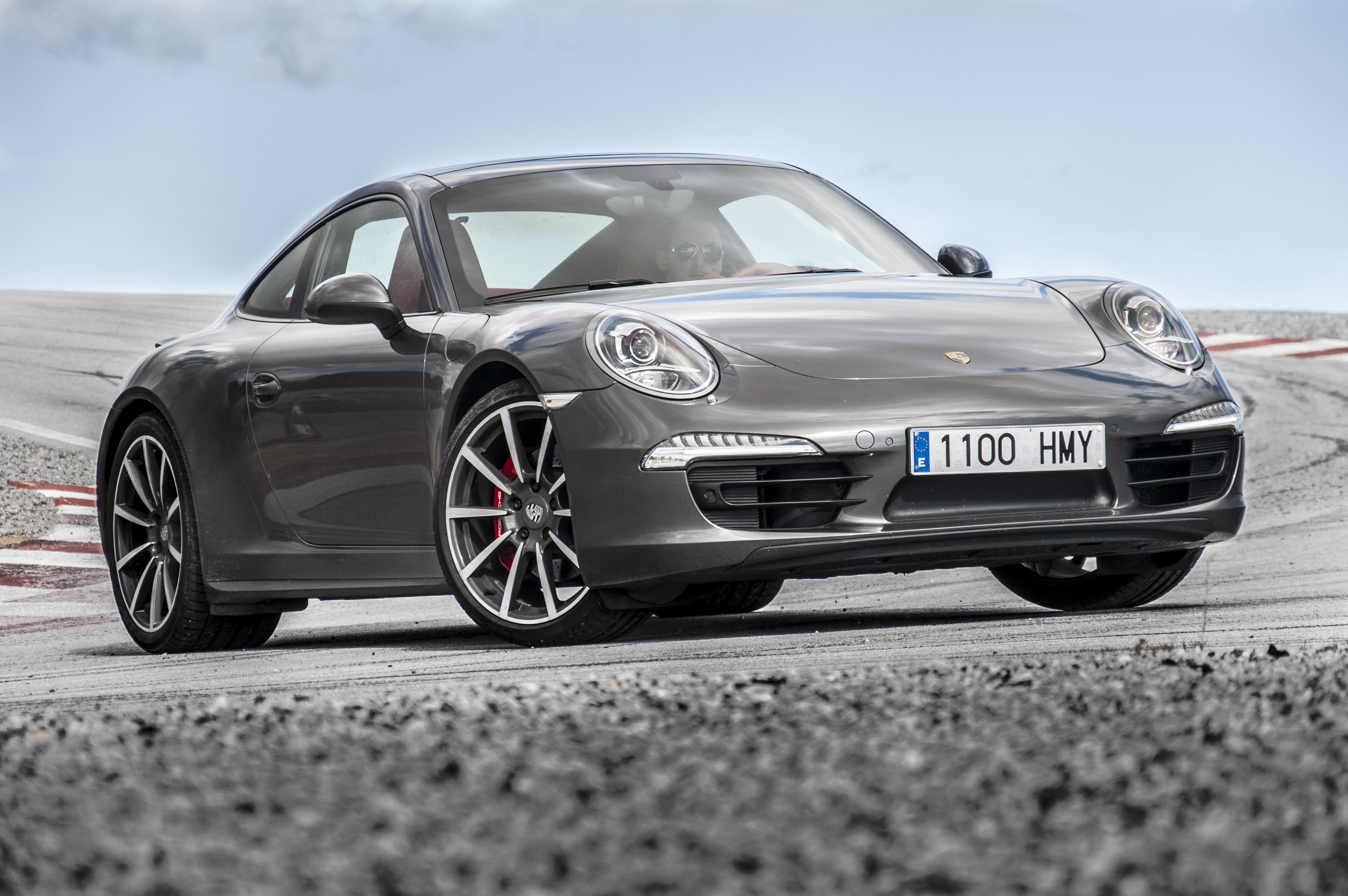
Porsche is a German company that makes sports cars. In this episode, they’re talking about common problems and fixes that come up when you own certain Porsche models.
Charles Navarro is the person being interviewed. He runs LN Engineering, a company that focuses on fixing a specific Porsche engine problem called the IMS bearing issue.
LN Engineering is a company that specializes in Porsche fixes. In this episode, they’re mentioned because they’re known for helping with a particular Porsche engine problem called the IMS bearing issue.
The IMS bearing is a small part inside some Porsche engines. The “IMS bearing issues” means that part can wear out or fail, and if it does, it can cause major engine damage—so people look for fixes or ways to reduce the risk.
In enthusiast talk, calling certain cars “radioactive” is a metaphor for models believed to be especially risky due to known failure patterns. Here, the host says that idea is “simply not true,” setting up a more nuanced, actionable discussion about real risk and prevention.
CNC equipment is a machine that uses a computer to make parts very precisely. The speaker says they were able to use it to build what they were working on.
Term
VW forums
VW forums are websites where Volkswagen owners talk about repairs and upgrades. The speaker says people found their project through those communities.
“Water cool” means the engine uses coolant (a liquid) to keep temperatures under control. The speaker is contrasting that with air-cooled Porsche fans’ preferences.
Pelican Parts Forum is an online Porsche community. The speaker mentions it because that’s where Jake’s username and beliefs were known among Porsche fans.
“No H20” is a username that plays on the idea of water. In this story, it’s used to show one person’s strong opinion that air-cooled Porsches are the “real” ones.
Bruce Anderson is a Porsche expert mentioned in the story. He taught classes and wrote about older air-cooled 911s, and he encouraged the host to get into the newer water-cooled engines.
The Porsche 911 is a famous sports car model. This part is talking about the older “air-cooled” 911s, which are known for a different engine cooling design than later cars.
Term
M96
M96 is a Porsche engine family name. In this segment, it’s the code for the early water-cooled 911 engines (the 996-era), and the hosts debate whether they’re junk or just need the right fixes.
Term
M97
M97 is another Porsche engine family code used after the earlier M96. In this segment, it’s part of the same early water-cooled Porsche engine discussion and the debate about whether they’re truly “junk.”
Here “disposable” means people think the engine isn’t worth fixing and rebuilding. The hosts are saying that belief may be exaggerated or based on incomplete information.
The 986 Boxster is a specific early Boxster model from Porsche. The point being made is that it’s often someone’s first Porsche, and they can be shocked by how much upkeep costs compared with simpler cars.
Deferred maintenance means delaying scheduled car upkeep. The host’s point is that if you don’t plan for it, small issues can snowball into bigger, more expensive repairs.
Valve adjustment is a maintenance job where a mechanic checks and sets the engine’s valve clearances. The host is saying older air-cooled Porsches often needed this more often than later water-cooled designs.
This is about replacing a timing belt on a tight schedule. The host is using it as an example of how older Porsches could require frequent maintenance compared with newer ones.
An “emissions issue” means the car has to meet pollution rules set by regulators. The host is suggesting Porsche may have changed cooling to help the engine meet those requirements.
An air-cooled engine uses air flowing over the engine to keep it from overheating. The hosts say emissions rules made this harder to do, which pushed Porsche toward newer engine designs.
Pressurized oil is oil pumped through the engine at pressure so bearings get a constant lubricating film. The hosts say the early design didn’t get pressurized oil to the bearing area that needed it, which can accelerate wear.
A plain bearing is a simple sliding bearing that depends on a thin layer of oil to keep parts from rubbing directly. The hosts say the engine didn’t feed pressurized oil to that spot, which can make the bearing wear faster.
A ball bearing uses small balls that roll to reduce friction. The hosts are comparing where a plain bearing would have been versus where a ball bearing was used for the intermediate shaft.
A dual-row bearing has two rows of rolling parts instead of one. The hosts say Porsche used this style on the IMS in the 986/996 era, which was meant to improve how the bearing handles loads.
An angular contact bearing is a bearing designed to handle sideways loads and thrust forces. The hosts say Porsche used a special custom version for the IMS that wasn’t a generic off-the-shelf part.
This bearing holds a small shaft inside the engine that helps run the timing. If it fails, the engine timing can get messed up and the engine can be damaged quickly.
Plain bearings are simple bearing surfaces that need an oil layer to keep parts from touching. Without oil, the metal can get extremely hot and stick together.
The oil film is a thin layer of oil that keeps two moving metal parts from touching. If that layer disappears, the parts can overheat and get damaged fast.
Engine oil is the fluid that lubricates moving engine parts. The host is saying the bearing needed oil lubrication, and a seal decision prevented that.
A single row bearing has less internal “capacity” to handle forces than a dual row bearing. The host says that change made the bearing more likely to fail.
“6204” is a standardized bearing model number. The point here is that it’s a common, off-the-shelf style bearing that Porsche used in the intermediate shaft area.
An alternator bearing is a small part that helps the alternator spin smoothly. The host is saying the bearing type isn’t exotic—it’s used in other cars’ alternators too.
Load carrying capacity is how much force a bearing can handle before it starts wearing out too quickly. The host says the newer design could handle less force, so it failed more often.
A class action lawsuit is when lots of people with the same problem team up legally. The host says it helped uncover official failure-rate information.
“Serial numbers” are unique IDs used during manufacturing. The hosts are saying that people try to use serial-number ranges to guess what parts a car has, but it doesn’t always match reality.
A “certificate of authenticity” (COA) is Porsche’s official document intended to verify a car’s identity and build details. In this segment, it’s compared to a “birth certificate” because it can include recorded engine serial numbers—though the hosts say that engine-serial-to-car matching changed for the 986/996 era.
An “engine serial number” is like an engine’s unique ID. The hosts are saying that Porsche used to record it on the paperwork for some cars, but later they stopped matching that ID to the exact car.
“Air cooled cars” are cars where the engine is cooled mainly by air flowing over it, not by a liquid cooling system. Here it’s just the context for how Porsche’s paperwork used to be handled.
The Porsche Boxster S is a Porsche roadster with the engine mounted behind you. The host brings it up because the bearing design inside the engine may have changed around the 2005 timeframe.
The Porsche Cayman (987) is a Porsche coupe with the engine in the middle. The host says that, unlike some other models, this one tends to use the larger bearing design, so it’s more predictable.
They’re talking about a known failure point in some Porsche engines: the bearing in the intermediate shaft. If it fails, it can damage the engine internally and turn a small issue into a big repair.
Sleeving blocks means adding new inner cylinder liners to the engine block. It’s a rebuild step used when the cylinders are worn out or damaged and need to be restored.
RMS usually means the rear main seal—an oil seal at the back of the engine. If it fails, oil can leak, and fixing it can be a bigger job than a simple gasket replacement.
If you see metal particles in the oil filter, it usually means something inside the engine is wearing or breaking down. Here, it’s described as a clue that an IMS bearing may be failing.
“Letting it sit” means not driving the car for a long time. The host’s point is that long storage can cause problems like seal leaks, and it can make known engine issues more likely or more severe.
Seals are the parts that keep oil and other fluids from leaking out. The host is saying that if the car sits unused for too long, those seals can age and start leaking.
Car
996s
“996s” means a Porsche 911 from the 996 generation. The hosts are talking about a specific problem area on those cars and how owners sometimes fix it before selling or before it causes trouble.
IMS is short for a shaft inside the engine. The “IMS issue” is when a bearing in that area wears out or fails, which can cause major (and costly) engine problems.
Pushrod engines are a type of engine design where a camshaft uses rods to open the valves. The speaker is saying that oil changes in the early 2000s affected how these engines behaved.
This means the recipe for engine oil was changed. The host is saying that the new oil formulation was linked to engine problems during testing for a while.
Silicon nitride is a special ceramic material that’s very tough and resists wear. In this story it’s used to explain why some parts could survive extreme conditions better than typical metal parts. The tradeoff mentioned is that it’s expensive.
Vegetable oil is a fuel made from plants. The hosts mention it to show that the engine parts they were testing could work with an unusual fuel, which is a sign the materials were very resistant to wear. It’s more of an experiment than a normal fuel recommendation.
A ceramic component is a part made from a hard, heat-tolerant material instead of metal. The idea is that it may handle heat and wear better than metal parts rubbing together. But the speaker points out that even with ceramic balls, other metal surfaces can still wear out.
A “hybrid” bearing here means it uses a mix of materials instead of being all one type. The speaker says it was chosen because fully ceramic bearings were too expensive. The compromise is meant to improve durability while keeping costs reasonable.
A service interval is the planned schedule for when something should be checked or replaced. Here, the host says one bearing design would need periodic attention, while the other is meant to last without regular replacement. It’s about how often you’d have to do work to keep it safe.
An IMS retrofit kit is an upgrade package meant to improve how the IMS bearing is lubricated and reduce the risk of failure. It typically includes parts that change the bearing’s sealing/lubrication behavior.
The IMS flange is a cover/adapter area on the engine that holds the intermediate-shaft bearing in place. Taking it off gives you access to the bearing so you can change how it gets lubricated.
Pressure-fed oil means the engine sends oil to the bearing using oil pressure, not just by splashing. The speaker is describing an upgrade that delivers clean, pressurized oil to the IMS bearing through a dedicated line.
A spin-on filter adapter is a part that connects an oil filter setup to the engine’s oil plumbing. Here it’s used so filtered oil can be redirected to lubricate the IMS bearing.
An external oil line is a dedicated oil hose that carries oil from one part of the system to another. In this case, it’s used to deliver oil to the IMS bearing.
An oil pressure gauge tells you how strongly the engine is pumping oil. The point here is that the added IMS oil flow is small enough that it shouldn’t noticeably affect the gauge reading.
IMS is a part inside the engine that can have a known weak point. An “IMS solution” is a way to replace or reinforce that bearing area so you don’t have to worry about it failing later.
“Sleeving” refers to adding a sleeve/liner to the bearing bore area so the bearing can be supported more reliably. Here, the shop takes the engine, performs the sleeving and related work, and then the owner can rebuild the engine with the updated bearing setup.
A non-serviceable bearing is one that you can’t easily replace like a normal wear item. If it’s not failing, the host says you shouldn’t automatically tear the engine apart just to replace it.
A grease seal is a seal that helps keep lubricant in and contaminants out of a bearing. Here, the host claims that the grease seal on certain IMS bearings contributes to failure risk by preventing proper lubrication. They recommend removing the grease seal so the bearing can be lubricated properly instead of rebuilding the engine.
A go-no-go tool is a quick “pass or fail” measuring tool. The host says Porsche used one to check whether parts were aligned correctly during manufacturing. If it doesn’t fit the “go” side, it indicates a problem.
The crankshaft is the engine’s main spinning shaft. Pistons push on it, and it turns that motion into the rotation that powers the car. Seals are placed around it to keep oil from leaking.
The rear main seal is a gasket/seal at the back of the engine that keeps oil from leaking where the crankshaft goes through. If it starts to leak, you may get oil where it shouldn’t be, and it can be annoying to fix because you often have to take things apart. Many owners replace it while they’re already doing related work.
A dual mass flywheel is a special clutch-side part that uses two sections to reduce vibration from the engine. It helps make the car feel smoother, but it’s also part of the drivetrain you often have to deal with when doing clutch work. Some people blame it for oil-leak issues, but the speaker disputes that explanation.
PTFE (often called Teflon) is a tough, slippery plastic used for some seals. Here, it’s being used to make the rear main seal last longer. The key point is that you need to install it correctly or it may not seal properly.
The host is saying this rear main seal problem isn’t only on the Porsche 911. They also mention Porsche Boxster/Cayman cars, which are other Porsche sports cars. The key point is that the same kind of oil-seal leak can show up on multiple Porsche models.
The oil pan is where the engine oil collects at the bottom. If something inside the engine is shedding metal, you might find tiny metal bits when you drain or inspect it.
“Oil fed” means the bearing gets lubricated by the engine’s oil. That matters because bearings need a steady oil supply to last. Different IMS bearing designs can be lubricated differently, which can change cost and approach.
Preventative maintenance means fixing or checking things before they break. In this case, it’s about doing the IMS-related work plus other likely trouble spots while the car is already apart. That way you avoid having to repeat the expensive job later.
The clutch is what lets the engine connect to and disconnect from the transmission. If the car is already apart for a big job, mechanics may replace the clutch if it’s worn so you don’t have to do the expensive teardown again later.
The RMS seal is a seal at the back of the engine that helps keep oil from leaking. When the car is already apart for a big job, mechanics often replace it if it’s due or if it’s likely to leak. That can save you from dealing with an oil leak later.
The air oil separator is a small emissions/vent part that keeps oily fumes from getting into the engine’s air intake. If it’s worn out or leaking, the engine can start running “off,” and you may see oil-related symptoms.
These are the hoses that connect the air-oil separator to the rest of the engine’s ventilation system. If the old plastic hoses crack, air can leak in where it shouldn’t, and the engine may add extra fuel to compensate.
A vacuum leak is when air gets sucked into the engine through a crack or bad seal. Because the engine can’t measure that air correctly, it may run rich (using more fuel than it should).
Running lean means the air-fuel mixture has relatively too much air (or too little fuel) compared to what the engine’s sensors and control system target. Many engines respond by increasing injector pulse width to correct the mixture.
This describes a Porsche engine design that uses multiple timing chains to control camshaft timing. Because there are more chain-related parts, wear and maintenance checks can be more involved.
The vario cam solenoid is a valve that helps the engine change cam timing for better performance and efficiency. If related wear parts get bad, the timing can drift out of spec.
A durometric test is a hardness check—basically measuring how “soft” or worn a material has become. The idea is to see if timing-related plastic parts are worn out.
Camshaft deviation is how far the cam timing is off from what the engine computer is asking for. If it’s too far off, it can mean worn timing components and the engine may not run correctly.
ICP is a lab technique that measures how much metal is in your oil. More metal can mean more engine wear, but different tests look for different things.
Micron is a tiny unit used to measure particle size. Oil labs use it to say what size of debris they can detect.
Term
RDE process
RDE is a particular way a lab can test engine oil. The important point is that different test methods can show different kinds of results, so you can’t always compare them directly.
Oil analysis is like a “health report” for your engine oil. A lab checks the used oil for tiny particles and contamination so you can spot wear or problems early.
Bore scoring means the inside of the engine’s cylinder wall is getting scratched or worn. That can hurt engine sealing and can lead to performance and oil-consumption problems.
Bearings are small parts that help the crankshaft move smoothly. If the main or connecting-rod bearings wear out, metal can get into the oil, and oil testing can warn you early.
Car
Porsche
They’re talking about using oil testing on a Porsche to catch engine wear early. The point is that problems can show up in the oil before you feel anything wrong.
Fuel spray refers to how an injector atomizes fuel into a fine mist for efficient combustion. If the spray is poor, fuel may not burn as intended, which can contribute to drivability issues and increased contamination in the oil.
A bore scope is a tiny camera you can insert into the engine cylinder to inspect what’s going on inside. It helps you spot damage or clues like deposits and leaks.
Thermal reactors are older emissions hardware. The host is saying these cars had extra emissions equipment that could make the engine run hotter and create more problems over time.
The host is talking about a known problem on some older Porsche engines where a part that holds the cylinder head in place could fail. It’s an example that older Porsches weren’t automatically trouble-free.
“Right to repair” means independent mechanics should be able to fix cars without being blocked by the manufacturer. The host is saying newer cars are getting harder to work on, so this matters more.
Jiffy Lube is a common quick oil-change shop. The host is using it as an example of the type of place that may struggle if modern cars are too complex to work on.
The Porsche Panamera is Porsche’s performance sedan. In this discussion, it’s used as an example of newer cars where basic tasks like checking oil level can be more complicated.
Dura-Metric is a tool used to help with car service tasks. The host is saying some versions only work on older cars, so newer models may require a shop or different equipment.
Bore spraying is a serious kind of engine-cylinder problem where the cylinder walls get damaged. It’s mentioned as something that can lead to costly repairs.
The Porsche Macan is a sporty Porsche SUV. Here it’s brought up because some owners have reported engine problems, specifically damage inside the engine cylinders.
LIVE
Hey, everyone. Welcome to 11 After 9. I'm Derek. And I have a fantastic podcast for you today. I am
honored to be able to run in some circles with people that kind of make the news when it comes to
Porsche. And you folks retouch me all the time with all kinds of questions, whether it's looking for
new cars, whether it's asking questions about problems with the new cars. And I don't know
everything. In fact, I know very little about anything outside of my mistakes that I've made
in my Porsche ownership history. But what I do know is that when I want to get the answer,
I go to the horse's mouth. And I try to find the people that have come up with the solutions and
that can speak most eloquently when it comes to addressing a lot of the questions that you
out there in the Porsche world have. And so that huge intro is to introduce my friend,
Charles Navarro. And I am honored that he's on the podcast today because Charles is the founder
of LN Engineering, founded back in the early 2000s. And LN is synonymous with the fix
for the IMS bearing issues when it comes to certain Porsche models. Now, that's not all we're
going to be talking about today, but it is going to be something that we're going to get into because
there's a lot of you out there that hear what this IMS issue and that there's a certain generations
of Porsche you have to stay away from because they're radioactive. And that's simply not true.
And we're going to dig into a little bit about what you can do to protect yourself as a buyer,
what you can do to protect yourself as an owner, and actionable things to drive it every day.
And so, Charles, I just really want to say thank you for coming on the 11 After 9 podcast. And it
is really great to have you, man. Well, thanks for having me. Yeah, absolutely. Charles, for
those of you that don't know on the video, he is in the coolest of all places to do this podcast.
He's sitting pretty in his Airstream trailer in the wilds of Maine right now,
and he's up in my neck of the woods, and we're experiencing a heat wave. And so,
he is baking for the benefit of everyone on 11 After 9. So, Charles, thank you for that as well.
Not a problem. Absolutely, dude. So, Charles, maybe we can do this just because there are
people that know your company, but they don't know you. Would you mind just really briefly,
just giving a quick backstory on LN Engineering and why you founded it, and what it is you guys do,
and maybe why it's not only IMS stuff? Yeah. LN Engineering kind of started as a college project.
While I was at Northwestern studying, I ran into another fellow VW nerd, and we started working
on the weekends on our cars together, and a project came up, and that project became
Niki cylinders. They're called cylinders. And before college, I've always liked cars. I've
always liked Porsches, Volkswagen's, but I had never really tinkered or worked on any. And my
initial foray into learning how to work on cars, there was a little Russian repair shop in Evanston,
Illinois, and I would pay them to do the work while they sat there chain-smoking, and I turned
the wrenches, and they just yelled at me, no, that's the wrong, don't do it that way. So,
that's where I got my training on how to work on cars. And then... Just like a Catholic school,
right? Like your first grade nun slapping you on the wrist with the ruler. Yep. Yep. And then,
luckily, my wife, her hometown's only about an hour away. So, on the weekends, we'd go down to
her hometown, and there was a little speed shop, and under the speed shop, kind of took a liking
to what we were doing and helped us and let us use his CNC equipment on the weekends and taught us
more. I was on the online forums. At that time, it wasn't Wren List. It was a long time ago.
It was probably late 2000, early 2001, and one of the VW forums that Jake Rebe heard of what we
were doing, and my business partner actually had met Jake while Jake was stationed in Southern
California as a Marine and in the VW Circle, and he became the first customer for Nicky's cylinders.
And if you fast forward a little bit, my business partner decided that entrepreneurship wasn't for
him, and he left. And I did not know everything. Honestly, I knew very little, and Jake actually
took me under his wings and taught me what I needed to know, and that's kind of where all the IMS
stuff and the M96 stuff and all the water cool stuff came from. Yeah, that Jake, a lot of people
might know back in the Pelican Parts Forum days that his screen name there was no H20.
He believed if a Porsche had water in it, it wasn't a real Porsche.
So, and to get to where we're at for today, that I was at a Porsche show, this was probably 2005,
around that neighborhood, maybe 2006. I don't remember, it was a long time ago.
It was called the Ventura Auto Fest. And a gentleman, Bruce Anderson, and those of you who know
Porsches know that when it came to air-cooled stuff, he was the guru of air-cooled 911s.
He was the guy? Yeah, he wrote the book, taught the classes, wrote for panorama.
He was everywhere. And he came up to me at the show and said, Charles, you have to do something
about these water-cooled Porsches. So, I immediately came home, I bought a Boxster,
I bought a bunch of blown-up engines from the junkyard, which cost nothing at the time,
people. No one wanted, then I'm like, please take them off our hand.
Worth less than scrap. Yep, absolutely. And then my first task was to convince Jake
to touch a water-cooled Porsche. And he liked the challenge that there was no information out there.
Everyone said the engines weren't rebuildable, they were disposable,
that you couldn't fix them. And he likes challenges. When someone says you can't do
something, that's really what peaks his interest. And that's what got us into this whole M96
discussion that we're here today for. Yeah, and for those of you out there that aren't familiar
with what the M96 means, so when the first 911 water-cooled version came out in 1999,
the 996 version, it had the M96 motor. And that was the nomenclature for the first water-cooled
version followed by the M97 after a few years. And so that's what we're going to be talking about,
because those are the engines that are worth out of it as disposable. And honestly, Charles,
I think they're still part of the internet that thinks they are. And they say that it's not if
they junk, it's when, and all these things. And so that's why I really wanted to talk to you.
But just kind of taking a step back, do you think that these motors are junk? Do you think that
these motors were ill-designed? And do you think that they're fundamentally not good motors? Or
is there a heart of gold in there with a couple rough edges that, if addressed, might
lead to a great ownership experience? I'm not so negative on it as other people on the internet
are. There's been plenty of articles like MotoIQs that it's the worst engine ever made,
maybe not that bad, but pretty close. That part of the issue that I see is for a lot of people,
the 996 or a 986 Boxster is their first foray into owning a Porsche. And maybe they came from
a Toyota or a Honda or something else where basically all you really had to do was change
oil, put gas in it, and every once in a while, do some very basic maintenance that I hate to
use this, but it's called the Porsche tax. Either you pay now or you pay later, but you'll always pay
it. That a lot of people who buy the car that they're almost there to the point where you can
afford to buy it. So it could be their first and their first Porsche, but they don't set aside
the funds for deferred maintenance. These Porsches were the first cars that really were built for
the leasing crowd that for low total cost of ownership, how it was marketed with JD Power,
all that stuff that really during the warranty period, that it was the first Porsche you didn't
have to adjust valves once a year or every two years or have to change belts every 12,000 miles.
A lot of stuff that came with owning an air cooled Porsche went out the window, not to mention that
you had all the creature comforts of proper air conditioning, modern electronics, good driving
characteristics, all that stuff that not to say the air cooled cars didn't have that, but the air
cooled cars, there's a lot of work that you have to do on the air cooled cars, but it's different
work where with an M96, with the 986 and then the later cars that we've learned over the years
are certain things that you have to do preventatively before you have a problem, otherwise
the problems cost a lot of money to fix. Yeah, so that's a really interesting point. So in other
words, there's no free lunch and while you might have a motor that is requiring less maintenance
regularly every six months or a year, it doesn't mean that it's a no maintenance motor.
I'm curious, Charles, why did Porsche move from air cooled to water cooled in 9899?
Was it an emissions issue? Was it a power issue that they couldn't get any more power out of an
air cooled block? Was it as you described that the public was just looking for more of a mass
consumerist motor that was not quite as needy when it came to a mechanic working on it all the time?
What do you think about that? For sure emissions, that it was to the point where
an air cooled engine could not meet tightening emissions. Hands down, that was the main reason,
but the secondary reason is that if you know Porsche's history, that Porsche was not so
financially viable in the 90s and they were losing money pretty much on every car they sold
and when the Boxter and then the 996 came out, they actually went, I think they made $20,000
profit on every 9896 Boxter and then it was like $30,000 on every 996, 911.
They went to actually making money on every car they sold and those two platforms basically
saved Porsche. Yes, followed by the Cayenne, which was the savior in terms of revenue.
So that's interesting. So they were able to find ways to save money per unit. Do you think that
that drive to save money per unit might have contributed to some of the perceived issues with
these early motors? I do honestly believe that, that the penny pinchers, the accountants,
had their fingers in this. It has their fingerprint, but part of it was
getting the, be able to build the engines quicker and cheaper and they made a lot of
concessions in how the engines are designed to make them so they can be assembled faster
than an air-cooled engine. Oh, interesting. Okay.
And one of the things that happened and why the IMS bearing issue even exists in the first place,
the way the engine was designed, there was no pressurized oil to support a plain bearing
on one side of the side where there's a ball bearing for the intermediate shaft.
So on the oil pump side of the engine where the intermediate shaft rides in,
that has an oil-fed plain bearing. There just wasn't any way to give pressurized oil internally
inside the engine, so they put a ball bearing. And that maybe was the first poor decision,
but that said, when the 986 and the 996 came out, they had a dual-row bearing and it was
a custom angular contact bearing that you can't buy anywhere. It was custom made for Porsche
and it probably cost quite a bit of money. Without a doubt. Actually, you know what,
Charles, can we do this? Again, I'm a Porsche dumb dumb, you know, and if I am looking at these
cars and I'm hearing this IMS thing, I don't know what an IMS is or what it does. Could you
speak to me as a Porsche kindergartner and just what is an intermediate shaft bearing,
what is an intermediate shaft and why does this bearing when it goes ruin the engine?
So for decades prior, all Porsche engines other than the pushrod ones had an intermediate shaft
and intermediate shaft basically has chains going between the crankshaft and the intermediate shaft
and then out to the camshaft, so it drives the cams, so all the valve train. It's a
normal part of a Porsche engine and prior to the 996 and the 986, it was a nothing
burger. There's nothing to wear, it just worked, but it had pressurized oil going to plane bearings
on either side, so basically the shaft. So this shows up with the timing of the engine,
so the intermediate shaft was in charge of making sure that every time a cylinder went up and down
that the timing between the valves and the drive train was in perfect sync, so you didn't have any
wrong explosions or metal meeting metal. Is that about right?
Correct. Correct. Okay, all right. I'm not joking, dude, you got to dumb it down for me because I am
I am trying to get there desperately. All right, so this is an integral part of the motor,
an intermediate shaft part of the timing of the motor. Now we move into the 996 and they make
concessions on not so much the shaft itself, but how it's lubricated because it has to be
lubricated because it's rotating with bearings, and so if it's rotating with bearings, then you
have to keep those slick because if bearings are dry, then they get hot and then they break, right?
Yeah, pressurized, a plane bearing, the oil rides is hydrodynamic lubrication. Basically,
you have an oil film that separates the two parts that are rotating. If you don't have any oil,
they immediately weld themselves together. They get so hot, metal on metal, and they just
become one unit. Yeah, it takes milliseconds for it without oil to eat itself alive.
Got it. All right, so that tells me why it's really important to have oil there,
and now what you're saying is with the first generation Boxster and the first generation
911, the 996 and 986, the Porsche decided to lubricate or put oil on one side of the motor,
but not the other. Is that what you're saying? That's correct. One side had pressurized oil
fed to a plane bearing, which has no issues on that side. They never wear. The other side has
a ball bearing, but again, no one can answer this for us. We just can speculate that there's a seal.
Yeah, there's a seal on the bearing, and the intermediate shaft is always partially submerged
in oil. And had they left the grease seal off the bearing, so the engine oil could lubricate it,
I'm willing to bet they would have never failed. It probably would have lasted,
and we would not be having this discussion. But to add insult to injury, that Porsche decided
with the 2000 model year and then 2001, which is a transition year for the intermediate shaft,
they went to a single row bearing, and it's a very common 6204 bearing. It's the same bearing
General Motors has used in alternators for a million years. So basically, it's an alternator
bearing they put in there. It was cheap, but it also cut the load carrying capacity by half.
Okay, so again, so I can understand this. So what they decided to do is put these bearings behind
what's essentially a wall, which would be a seal. And if the seal wasn't there, it would be floating
and swimming happily in engine oil and would be lubricated. But they decided to put a seal there,
and so it was blocked off and therefore not lubricated. So strike number one. And then two years
later, they decided to go from a dual row bearing to a single row bearing. And that's essentially
taking the load on two bearings, and now it's on one bearing. And so it generally just has half the
ability to do its job. So it's dry and it's been reduced. Charles, why would they do that?
If they knew that there were were there no issues up until like that point? And so they were just
trying to save more money? I believe so because the failure rate, and this is had there not been
a class action lawsuit, we would have never gotten numbers out of Porsche. Yeah. But for the dual row
bearing, I believe the failure rate was at 1%. For the dual row bearing under warranty. But when
they went to the single row, it jumped to an 8% failure rate. Wow. Okay, so not double, but
exponential. Okay. Yes. Interesting. All right. So in what year was that? Just so we kind of know
the difference between looking at cars 996s and 998s with a dual row versus a single row.
What's the time frame on that? The dual row would have been on the Boxster from 97 through 99.
And the 996 and 99. And then 2000 and 2001, it's a flip of a coin. You really don't know what's
in there. There's no rhyme or reason to why one model will have one and what and another will
have another. There is on the internet Indian serial numbers. Well, up to this serial number,
has this bearing? I mean, after it's this bearing, we've seen more instances where that's wrong
than it's right. Got it. All right. So that there's no real resource for that. And that's
really interesting. And honestly, it's not surprising because I don't know, I'm sure you'll
agree with me. But going back to like the 60s, whenever Porsche switched over from one, we're
going to call it a feature or an engineering change, maybe we'll call it an engineering change.
It's always super murky. It's literally like they just reach into the parts bin and one day
they just ran out of part A up until that point, and then they just grab part B and then they put
it in its place. And it seems like it's never like, okay, as of October, we switched over
completely. It was pretty much like when they ran out of whatever it was before they just started
new. Do you see that? Oh, most definitely. And I've even seen instances, I've seen cars as late
as an O5 with a random dual row bearing in it. Really? It's like, oh, Hans or Franz found an
extra shaft that was dusty in the back. We got to use it. Yeah, they looked under their bench
and they're like, oh, crap, we dropped that a couple of years ago. Dust it off. Yeah. Yeah. So
and the other thing, Porsche with the air cooled cars, when you did like a certificate of authenticity,
a COA on the car, like the birth certificate, it would have an engine serial number
recorded. Sure. And with the 986 and the 996, that went away. They didn't record what serial
number went into what car. Really? Yeah. Gotcha. By the way, I mean, I have to imagine that literally
90% of Porsche mechanics putting these cars together are named Hans and Franz, right? I mean,
we've established that there has to be a rule or Gretchen, you know, for the female builders.
And they all work at shops, it's Wrensport or German auto house.
Yeah, yeah, that's right. Yeah, H-A-U-S. Yes. Yes, house. And yeah, I agree. And they all wear
really clean, beautiful, dungery bibs overalls. Not so sure about that one.
That's just in my mind. Never mind. Yeah. All right. Moving on, Charles. So, all right. So,
they move to what's essentially a lousy version of the bearing that they had. And
do they just use this in perpetuity? Do they revise it again? Because what I really want to do for
the audience is I just want to give them an idea of when the certain bearings were put in these
cars. So, when they're looking at cars, whether they're looking at a 99 or an 02 or an 0506,
you know, what the likelihood is that this is something that they have to consider.
So, Porsche did eventually redesign the intermediate shaft again. And they went to a larger single
row bearing. And it actually has the same load capacity roughly as the original dual row bearing.
But in doing so, the bearing is larger than the whole in the back of the engine. So,
you can't change the bearing as preventative maintenance without taking the engine apart.
So, that's funny. So, I ran into this. One of my purchases back in the day, I had an 05
Boxster S. And I must have been, I think, was it maybe halfway through 05 that they moved to the
larger single row bearing? Honestly, I have absolutely no clue. Because again, with 05,
there is absolutely no rhyme or reason to which bearing is in which engine. Unless it's a 987,
like a Cayman, you know, those always have the bigger bearings. They never have the smaller
bearing. But outside of that, with an 05, whether it's a 911 or a Boxster, it's a toss of the
flip of the coin again. So, the good news is, is that if you do have a redesigned single row
bearing, the chance of it going bad is a lot less than the previous generation single row
bearing, maybe back to 1% thereabouts. And so, generally, yes, you have to take the motor apart
to change that bearing, but there's much less of a chance of this happening. So,
as far as that goes, I feel like really good about knowing now
what cars are affected by this and why they're affected by this. And so, here you are back in
2002-2003. You have what's essentially the hand of Portia God grabs you by the shoulder and says,
figure out these water cooled engines. And so, you go back and along with Jack, figure out
a potential solution to this. And in your mind, what do you have to do to these motors to fix
them when it comes to addressing the IMS? Well, honestly, the first thing that we started fixing,
believe it or not, were the cylinders. That's the core of our business. And a lot of the people
that were coming to us early on, a lot of them were just, they wanted more power. The engines,
actually, they were rebuilding engines just because they wanted more power, not because
they had failed. And then, once we started sleeving blocks and doing that work, then it came to our
attention that there was an intermediate shaft problem. I had friends that worked in the dealership
network. And dealer techs that had been around since the cars were new, they knew of the issue.
But in the general aftermarket, it really was not known because while the cars were still under
warranty, Portia was replacing lots and lots of engines. Cars would go in for an oil change to
come out with a new engine. Oh, really? And yeah. And even my operations manager, he had a Boxster
S, and it went in for an oil change and came back out with a new engine because it had an RMS issue.
Gotcha. So, and we will touch on RMS and we will touch on bore scoring in a minute. But
staying on the topic of IMS, let me ask you this question first. So these cars are now,
at best, 20 years old and at worst, 25, 27 years old. So these cars have been out in the wild for
quite some time. What are the chances of IMS is still going bad? Is it a young engine problem with
low miles? Is it an engine that has a lot of miles that could still happen? And what do you think
the percentages of motors out there that have already had this done somehow addressed,
whether changed or with your solution? So what are the chances of it even being an issue?
It's hard because I don't know the total market sales for IMS bearing replacements. But if I were
to throw out a wild guess as to how many engines have had their bearing replaced, I'd probably say
it's somewhere in the 20 to 30% of vehicles out there that could have the bearing change
have had it done. Gotcha. Yeah. So that said, there is a misnomer on the internet or a
wives tale that if the bearing hasn't failed by now, that it won't fail. And all it takes is a
quick look at Reddit or a rental list. And you'll see people post while my dual row bearing, I
went like I decided, Oh, I'm finally going to do it. I have I need to do my clutch. And they pull
the bearing out. And it's just about ready to fail. And that's considered one of the low
low failure rate. At least with a dual row bearing, it gives you some warning. It doesn't
fail. And right away, you'll see metal in the oil filter, if you're looking.
The single row bearing that replaced it gives no warning. Usually, most of the people, I would say
that have had one of those fail, it either failed pulling up to a stoplight, or turning the car off
to put gas in it. I would say the majority, that's when it fails. Because the motor, it's spinning
and when it shuts off, it's already fused and then it just won't start again.
It's not real. It's what happens with a ball bearing, that the slower you spin a ball bearing,
the worse it is for the bearing. So ball bearings like speed. And that's one of the
reasons when Porsche redesigned the third generation of IMS bearing, they went bigger
the bigger circumference, because they could increase the ball speed.
Got it. And it makes the bearing happier. So are you telling me that it doesn't matter if you
get a low mileage 996 or 986 or 997? The chance of this happening could be the same, whether it's a
low mileage car or a higher mileage car, if it has the original bearings in it?
I'd be confident in saying that if a low mileage car is more likely to have a problem,
IMS or otherwise, than a higher mileage car. And I've had this discussion with other shop owners
and they think the sweet spot for a mileage per year was probably somewhere around 5 to 6,000
miles a year. For what is a happy, if the car had been driven that many miles,
you know, it was maintained and it wasn't sitting. The sitting is the worst thing that you could do
for any Porsche level in any car that I've had people over the years that have been afraid of
or scoring or their IMS bearing and they just let and they don't drive the car and it just sits.
I'm like, you're not doing it in any favors, just letting it sit.
You are preaching to the choir and this is the refrain I hear from every expert,
whether it's an engine expert or whether it's a Porsche guru, it is the same. It is you cannot
let these cars sit. They will grenade if they sit over time and seals will start to leak because
they'll dry up because they're not lubricated. Rotating components in the motor and in the
transmission and in the suspension will dry out and you'll have issues over time.
You're doing a disservice not driving these cars, which is a great excuse to
grab your keys and go for a drive a few times a week. And so I love that because it forces me
to be like, got to drive these cars. But your point is well made. So Charles, when it comes to,
it's so funny, I actually have three people in the last three weeks that have purchased 996s
and all three have proactively brought it to Portia Nashua, which is the dealer by me here in
New Hampshire, to have Angelo and his crew replace the IMS proactively because in their mind,
if they were ever going to sell it, but even for their driving comfort to help them sleep at night,
they just want it done. And I believe they use your solution.
Can you explain to me in the audience what your solution or solutions are to choose from when it
comes to addressing the IMS issue? Yeah. So initially what we first came out with a product
to address this, we first we had to come up with the tools and because there was no part number
from Portia nor tools to service it nor a service interval. So we kind of had to start from scratch
there. And when we were first developing it, we had people tell us you can't change it. You
can't service it. It's impossible. Again, that's what Jake likes to hear that you can't do something.
Yeah. And so for me, it was logical to use a ceramic hybrid ball bearing. And to explain what
that is, it still has steel races, but the balls are centered silicon nitride. And they're very
low wear, low friction, they don't need as much lubrication as a conventional ball bearing.
And the reason I gravitated towards that was in the early 2000s, which this would be another
topic for another day, oils. Oils were reformulated and pushrod engines, not only Porsches and VWs,
but everything. And if it was a pushrod engine, it was nine out of 10 engines would blow up on
the dyno. And it was because of the oil being reformulated, which we didn't realize that it
took a few years to figure out why they were failing. We thought it was a everything had
gone to China or India and it was just crappy parts. And part of it, but it was also the oil
was the issue. And what we came up with then, we had lifters made out of that same centered
silicon nitride material. And you could literally run an engine on vegetable oil.
And the parts, or Jake ran one with Hawaiian Tropic.
And the Sun Tan Lotion?
Sun Tan Lotion. And it worked just fine. So it's a miracle material. The only problem is,
it's very expensive. And back in those days, a lot of the material that centered silicon nitride was
used in military applications. They were used for body armor and also armor for personnel
chariots and tanks. Because it's pretty much indestructible. And so that was our solution.
And again, fast forward to the IMS bearing, we're like, hey, then they make bearings that
are made with balls with the same material that is awesome. Why don't we use that?
I would imagine that they don't... Do they also not retain heat quite as much? They don't heat up
because not only are they slick, but they're a ceramic component where, unlike metal on metal,
they just... Maybe the thermal dispersion is a little bit better.
Yeah. Unfortunately, the races still do wear, so it's not a permanent fix.
Why do you not make the races in this material too, then?
Price. We looked at it, and each bearing would have been $2,000 to $3,000, our cost for one
bearing that was a full ceramic bearing. So the hybrid was a happy medium there.
But this whole time, the first time Jake saw the engine that he's like, this shouldn't have a ball
bearing on this end. Why did they put a ball bearing? And it took us years to develop what we
came up with later, which was the IMS solution, which basically backdated the engine to use and
boil fed plain bearing, like the air cooled engines. Oh, I see. Okay. And that's our permanent
solution, where the ball bearing as a service interval, the plain bearing IMS solution is
permanent. So as long as there's oil in the engine, it's happy. Can I ask a stupid question?
Why, if Porsche designed the original bearings to be walled off with the seals,
why don't you just pull out the seals? Wouldn't the ball bearings then be in the oil of the motor?
Or does the oil not reach there anymore? The oil, so with the retrofit kit, which is the ball
bearing kit that we supply, the bearings have no seals on it. We supply them without seals.
And what's interesting, and what I've been saying this for years, that the people that have the
later cars, like the late 05s, the 06s through the 08, anything with the larger redesigned bearing,
that the first thing you should do when you buy one of those cars, if you have to go in and do a
clutch is remove the IMS flange and pull the grease seal off the bearing, so the engine all
can lubricate it. And we've been broadcasting that since at least 12, 15 years we've been
broadcasting that. As soon as we knew there was an issue with the IMS bearing, it made just
logical sense to do that. Yeah. Yeah. Okay. It's funny. The audience knows that I'm a big fan of
BMW motorcycles and early BMW motorcycles. And the way that they used to oil the engine
is on the early ones, pre-70s, they had something called slingers. And essentially it was like a
little paddle. And every time the motor turned, this little paddle would dip into what essentially was
a pool of oil at the bottom of the motor and just fling oil at the whole motor inside. And that's
how it's lubricated. But kind of essentially that's what you're talking about, taking off the flange
and just letting those ball bearings dip into the engine oil to try to stay lubricated. But your
replacement, they're ceramic now. And so for all of those reasons, it's a double great solution.
But what is the total solution that you're talking about when it's pressure-fed? Is that
like running piping somehow? Yeah. Basically what, when we patented it, basically it's a whole system.
And we use a spin-on filter adapter, which actually we developed, I mean, years and years
before the IMS solution. And it feeds pressurized filtered oil to the IMS solution, the plane
bearing through an external oil line. Oh, cool. All right. So you're saying that where the oil
filter sits, there's some sort of adapter there that as the oil passes through the filter and it's
cleaned, it kind of gets shunted. A part of it gets shunted down a pressurized passageway to feed
the IMS bearing. Correct. Yeah. And it's a very minuscule amount of oil that it actually needs.
It's not even perceivable on the oil pressure, with an oil pressure gauge, the amount of oil that
it drops from the engine for the bearing. Do you find that this solution is pretty bulletproof?
That if you were to do this, that you really don't have to worry about issues anymore?
Yes. And there's lots of people who adopted it early and maybe they had a bore scoring in later
years. And they send us their engine so that we could sleeve it, do all the work so they can rebuild
it. They will send us their IMS solution and we just give it a once over, clean it, and they can
just reuse it on the next engine. Oh, that's cool. Awesome. So is this kind of like a one and done?
Like I have a M97, M96 motor and I put this in, well actually M96, not M97, but if I put this in,
I can sleep better at night knowing that this is no longer something I have to worry about.
Yes. It's one and done that it will outlast everything else on the engine.
That's awesome. Probably not what everyone wants to hear, but that...
For sure. At least it's better than I could say it's for the lifetime of the engine,
but that's not even true because people reuse them on their rebuilds.
I want to talk to the 997 crew out there now. And so we were mainly talking about the early
boxters in the early 911s, the 986s and the 996s that had the M96 motor in it. So when Porsche
moved to the 997 generation 911 and the 987 generation Boxster, they redesigned the IMS
sparing as you talked about and they had a newer updated design motor called the M97 motor. Is
that true? Correct. So you would have had an M9701, which is the designation for a 338
Carrera S engine and actually the base model 997 would have had an M9605 engine, but it still
shares the larger bearing and all the other differences of the updates that came with the
M97 engine. It just has an M9605 designation. Got it. All right. So do you have a solution
for what amounts to these non-replaceable bearings that you described that if you were,
you'd have to take the motor apart to replace the bearings? Is there anything I can do? Because I
have an 05997.1. So I would imagine, and I think it... Honestly, Charles, I think it might be an
early 05 too. So I'm in that zone of I'm assuming that if I have an early 997 motor, it has the
larger single-row bearing that you described, but I would also imagine that it's potentially
non-replaceable. And so is there anything that I can do with my car that's sitting in my garage
right now? I would go... Some people, I would just go in. If it has a serviceable bearing,
go ahead and change it. If it has the larger non-serviceable bearing,
have the grease seal removed off the bearing so it can be lubricated properly. And really,
there's... I wouldn't proactively... There are people contacting and they're so worried about it,
they'll pull... With nothing wrong, they'll pull the engine apart and rebuild it just to change the
IMS bearing on the non-serviceable. And I think that's a total waste of money. You do not need
to do that. Just pull the grease seal off. And honestly, like I had said previously with the
dual-row bearing in the early cars, had Porsche not put a grease seal on it. Same thing with the 06
to 08 non-serviceable, the larger bearing. Had it not had a grease seal, it probably would be a 0%
failure rate instead of a 1% failure rate. The grease seal, I believe, is the cause of the 1%
failure rate. So there you go. So that's pretty huge. And essentially, all that would mean for
those of you out there that would want to have it looked at is you bring it to your shop and they
have to drop the transmission and the clutch to take a look at the IMS and RMS, which is rear
main seal kind of configuration coming off of the motor. And then they could determine if it's a
replaceable seal or a non-replaceable seal, and then do as you describe. And then it's kind of like
a while you're in there type of thing, because then if you're going to put it all back, you could
update your clutch, you can do whatever you want. Even though I've had you chatting now for the better
part of almost 50 minutes, can I talk about the RMS, the rear main seal, which is then a next-door
neighbor to the IMS? And what does that do exactly? And why does it seem like on every
M96, M97 motor, it's leaking? We said how it was described to me.
Well, again, with the rear main seal, there are some myths out there. With the early cars,
there were some engines that were missed machined. And basically, the crankshaft isn't aligned with
a hole in the back of the case. Oh, really? Yes. And they actually have a directive and they made
a tool, a go-no-go tool that basically looks like a hamburger patty, a hamburger forming tool.
And you just basically put it over the end of the crankshaft. If you could push it over the
end of the crankshaft, you're good. If you can't, replace the engine was what the directive was.
No car. Yeah. So again, going back to low mileage cars, I fear low mileage cars because they weren't
driven long enough when they were under warranty to catch these manufacturing errors. And I would
feel so bad for someone who pays a premium for a low mileage M96. And it has one of these engines
that was missed machined and there is no fixing the rear main seal. And there are companies that sell
what amounts to, they call it a rear main seal bearing or that that is not the problem because
the people who push those solutions say that it's the heavy dual mass flywheel. It's the weight of
the flywheel is what causes the leaks, which almost every single engine, if not every engine on the
planet has a heavy dual mass flywheel on it from the manufacturer. And if that was the case,
every car would have a rear main seal issue. Porsche did redesign the rear main seal to a
Teflon, a PTFE seal. And it has a special tool you use to install it. If you don't use the proper
tool, you could get it in crooked or if you're and it not work properly. So you have to use the
proper tool to install the seal. But it has proven to be reliable. And but again, it's a service item
that when you when you go to do the clutch on the flywheel, you just even if it's not leaking,
you replace it. It's not a very expensive part. I think the seal might be 20 bucks for 20 or 30
bucks for the seal. Yeah, it's just the labor again. It's just the labor and you're already there.
And to change the seal is probably maybe five minutes to change the seal. So it's like, why not?
Yeah. And it's funny too, Charles, because it's not just these early water cold 911s and
Boxter Caymans with the RMS. I remember distinctly having to replace my RMS on my 991.1,
because it was weeping. And I was in there for some transmission work. And it was one of those
things where it's like, you might as well do it. So it's as you and that's not something I realized
as kind of a novice owner is that it is a maintenance item that it as any seal, there are
permanent seals because it's made from a material that is supposed to be flexible and therefore
will wear over time. And so it's a really great point to make. Yeah. Yeah. So all right. What
you're telling me is that don't be afraid of the the M96 and M97 motors. Just go in with a cool
head and try to figure out where you land on the years of ownership, depending on what kind of
bearings you have. And if you do have maybe the single row, the early single row bearings
that have a higher failure rate, you know, maybe that's something that you check to see if either
you have an LN solution already put in, or if it's something that you should address in the
short term, if you were to buy a car tomorrow, and it didn't have that early single row bearing
done, is that something you proactively do immediately? Or is it just? Yes. That would be
something and because again, they give no warning whatsoever. The dual row bearing,
the reason why it gives a warning, it had two rows of balls. And usually the first row of balls
would be bouncing around and some might actually fall out of the bearing and you'd find them in
the filter or the pan, but that second row of balls is barely holding the bearing together.
At that point, it sounds like marbles in a coffee can, but it hasn't completely failed.
All right, so there's an auditory, because that was actually going to be a question I had is,
you know, again, I just buy this car, I'm driving it. If I'm not cutting open the oil
filter to look for metal shavings or looking in the oil pan during an oil change to see if
there's any glistening, you know, gold in there, is there anything from a vibration standpoint
or an auditory standpoint that would clue me in that maybe something isn't right? And you're saying
there would be a rattling. There'd be a rattle and I do want to warn if you wait until you hear a sound,
any mechanical sound that sounds like that is just bad. And likely you've probably at that point
put metal through your entire engine and you're going to cause damage somewhere else in the engine.
And that's why replacing the IMS bearing is one of those things that I see often on the internet.
Well, I replaced my bearing, it was perfect. Well, that is what we want to see. That means it
hasn't failed to spread metal through your entire engine. If you wait until the bearing
has started spreading metal throughout the engine, there's a chance that you place the bearing and
you could actually have the engine pop shortly thereafter. And that's a real waste of your money.
How much ballpark, Charles, how much does it cost to address the IMS bearing using your solution?
Buying it from you, how much does your part cost and then generally how much does the whole job
cost? Ballpark. For the ball bearing kits, you're looking about a thousand. For the plane bearing
that's oil fed, you're looking about 2,000. Labor wise, you're looking at for just the
intermediate shaft bearing, 10 to 14 hours of labor usually. But one of the things I want to
caution is that a lot of shops that if you go in and say you want the IMS,
that they will go into your car with blinders on. And like we started and said the cars are at best
20 years old or 25 years old, you need to look happy eyes wide open. And there's lots more
stuff on the engine other than the IMS bearing that can cause problems. And that's where the
preventative maintenance, I see regular people spend 10,000 plus on preventative maintenance
including the IMS bearing because they just go in there and just say every single thing that
can take the engine out that can be changed. As long as the engine is healthy and doesn't have
force boring and there's no metal in the filter, no metal in the pan, just do everything. Because
then you can honestly drive the car probably 56 years without having to do much more than
just do brake pads, brake fluid, oil changes, water blades, basic stuff like any modern car.
Yeah, yeah, yeah, that makes sense. And so it does go to the point of if you have a budget,
don't spend your entire budget on the vehicle. And this is really any Porsche, really any car,
but we'll just talk Porsches. You have to have a kitty, you have to have a 20% kind of buffer
to deal with deferred maintenance. And hopefully you never need it. And that's great. And it
lasts you many years. But to your point, if you get in to replace your IMS bearing, there's a lot
of while you're in theirs. And that might include replacing your clutch, if it's a higher mileage
car, replacing the inexpensive RMS seal because it's sitting there in front of your face,
as well as some other things. Just curious for the audience, if they are going through this,
what are a couple of things outside of what I just described that they might address while they
have the clutch out? Usually what a lot of shops that know better now with these vehicles, with
their age, they'll just drop the whole engine and transmission out of the car as one unit.
Because the engine comes out very easily and quickly. It's much easier and faster to do all
the work with the engine out of the car. So, including that would be the air oil separator,
the AOS, the water pump, do a thermostat. Obviously, by IMS, we've already discussed
the rear main seal, a flywheel, clutch. And to add to that, a lot of people just think the AOS
itself, but there's also AOS vent lines, they're plastic corrugated tubes that go throughout the
engine bay. And those also cause issues because it's old, plastic is 20 years old, 25 years old,
and they crack. And when the plastic components crack, they cause a vacuum leak,
which then the car thinks it's running lean, so it adds more fuel. And that's one of the things
that contributes to forescoring in these engines. So, on top of that, if you have an early car,
so a Boxster, a 97 through 02, or a 996, 99 through 01, you have, they're called five chain engines.
And basically, you have a vario cam solenoid that rides between the, on the fourth chain
and fifth chain. And it has wear pads on it that are basically the guides for the chain.
And that's what operates a variable cam timing in the engine. And those pads wear,
and you can actually check for this with a durometric or a Porsche tester of some sort.
You can check camshaft and deviation scanner. Yeah, you can actually look to see how much
camshaft deviation there is. And if it's over 4%, those pads are worn and need to be replaced.
And usually you'll find chunks of plastic in the oil filter and the oil pan on those model years.
And that's almost always where the plastic is coming from. It's coming.
So you're a proponent then of, you're a proponent of having your oil analyzed.
I am most definitely proponent of that. But some people don't, I do want to clarify that
if you can see it with your eyeballs, oil analysis will not catch it.
The oil analysis is for seeing the particle sizes, 0 to 5 micron. If you use an ICP process,
Blackstone, or if you use speed diagnostics, it's a 0 to 10 micron range. And they use a RDE process.
So compare, and that's one thing I tell people all the time, you can't compare
an oil analysis from Blackstone and oil analysis from speed diagnostics because they're looking
at different ranges of particle sizes. Okay. So, but oil analysis is a great tool. You can see bore
scoring or worn main or rod bearings, especially if you track your Porsche well before you have
any symptoms. If you have an injector issue, and we're seeing lots of injector issues and have been
for the better part of a decade, because of ethanol fuels, we believe making the injectors leak.
Yes. Yeah, I have poor fuel spray, et cetera, et cetera.
I have that in my car. I could see when I did my bore scope that there were some leaky ejectors
because you could see like little telltale signs of the gas had dripped after I shut the car off.
Yeah. And you'll see that with a used oil analysis on cars that have injector issues.
You'll see the fuel dilution amount will be significantly higher than what it should be,
because on a healthy engine, I would say one percent or less if the injectors are all good.
And if you see two percent, three percent on one of these engines, I'm aiming towards that
there's an issue with the injectors. Got it. Over the weekend, I went to a cars and coffee
with my local PCA club and had a wonderful time and got to have some really great chats
with some fantastic enthusiasts. And one of my buddies named David mentioned to me, he said,
you know, Derek, he's like, I listen to your podcasts and I love them, because it's like
guys just talking but with more information. He goes, but sometimes when you start talking about
all of the things with the cars, it makes me want to run away and not buy that car.
And so I took that to heart because I do, you know, number one, we have so much more to talk
about Charles in future episodes, including what can you do preventively if you do find yourself
in situations due to your oil analysis, where you might have some proactive forescoring,
you know, what can you do to mitigate that or at least prolong it? What can you do as far as
in the whole host of other things? But what I do want to kind of step back and mention is that
all of any car in any truck I have my GMC, I joke around that my GMC is a prime example of this.
It's a good truck, but the engine might have problems. You know, any engine has watchouts.
And so the M96, M97 motors might have a couple more watchouts than some of other Porsche motors.
However, with that being said, I think they are good motors when they're addressed and
maintenance properly. At least that's the feedback I get from my mechanics when I talk to them.
And they're great cars. And whether they're less expensive than other generations because
of these perceived issues, or they're just coming into vogue now and the prices are coming up,
this is an opportunity to potentially own a piece of Porsche history and you can drive and
enjoy every day as long as you do the right things. And so I don't want to scare the audience away
with the things we're talking about, but I do want to inform the audience when it comes to
some of the things that they just need to be prepared. Because I think you had mentioned
to me in a previous conversation that some people just think that Porsche, being an engineering
company, makes gold-plated cars and there's never any issues and there's never any problems.
And that's not true. But I think if you go into owning these cars with the right mindset,
you can proactively find if there's any issues and decide if you want to buy that car or not.
Do you think that's fair? I think that's perfectly fair. And I tell people that all the time,
if you go back to the air-cooled cars, you can rattle off a bunch of big issues with the air-cooled
cars, the 2.7 cars with their thermal reactors, the 2.7 and the air-cooled 911s, then you had
the whole Dillivar head-stut issue with the head-stut snapping.
There's, yeah, pick your voice and you will find some issues somewhere. And the 996 and the
996, they're great cars. And like I told you, I'd much rather own one of these cars or even a 997,
going upwards, even expanding to the .2 cars. But I want nothing to do with anything newer than that.
That I'd prefer the older cars all day long.
Yep. From a reliability and a workability standpoint.
Yeah. And like I told you, I look things through treated lenses that with modern cars,
the right to repair is a big issue. And the cars are getting increasingly difficult to work on.
And it's not unusual for the local Jiffy Lube or one of the quick oil changes places to have a
Macan or Panamera or even a new 911 come in, heaven forbid, to have their having their oil
changed. And they have no way to chip the oil level on the car. That's right. That's right.
So it's like the cars have been made increasingly difficult. And the do-it-yourself or tools like
Dura-Metric that they only work up until in some models, the latest is like 2016, 2017,
they won't work on the newer cars. And then looking at some of the newer cars that all
kidding aside, I said it's 10 pounds of shit in the five pound bag. And all I'm seeing is
cubic dollar signs. And once this thing's out of warranty of how expensive this thing is going
to be to own, and it's going to make having to fix a 996 with a failed IMS bearing or bore spraying
child's play compared to one of the upkeep on the new modern cars.
What I love about you, Charles, is you don't mince words and you have an informed opinion. And
that's important because you're not the first person to tell me that post 2017, the ability to
work on these cars, the reliability of these cars sometimes can be a challenge. And also,
even with some Macans, you hear stories about bore scoring, which we can get into in another
episode. And so all of this and more, I mean, God knows, dude, we have lots to talk about
in future episodes. I do want to encourage everyone in the audience who might have questions about
what we talked about today, or would like to through me be able to ask Charles some of the
burning questions that they have, whether it's a model dependent, a year dependent or a situation
dependent, I'd be more than happy to put it on this platform from a podcast because Charles
is literally the guy when it comes to seeing all these cars. Now, the problem is, Charles,
is that you see a lot of the, you see cars with problems, generally, right? Because you're the
guy with the solution. And so that's good and bad. But at least you're informed and you have
the numbers and you can tell me whether this is a real thing or not a real thing. And so
I think for our first episode together, we might end it there. But I just really want to very,
very genuinely thank you for spending an hour with us on 11 after nine, the podcast and
and I can't wait to have you back again. Well, thank you for having me had a good time.
Yeah, man. Absolutely. As long as we keep doing these when you're in your airstream,
I think that's a pretty sweet setup. It makes my background look poor in comparison.
But Charles, thank you again. And for the rest of you, have a wonderful week and we will see you
next Tuesday. Bye now.
About this episode
Charles Navarro of LN Engineering joins Derek to unpack the real story behind Porsche IMS bearing failures and the M96/M97 engines. He explains how emissions rules, cost pressures, and design compromises shaped the first water-cooled Boxster and 996 motors, and why they’re not simply “junk” or doomed. The conversation digs into what the intermediate shaft does, why the bearing became a weak point, and how preventative maintenance and smart buying can make these cars rewarding instead of scary.
Is the Porsche 996 or early 997 a radioactive ticking time bomb, or is the internet completely blowing the IMS bearing issue out of proportion?
Today, we're cutting through the forum noise and going straight to the horse's mouth. I sit down with my friend Charles Navarro, the founder of LN Engineering—the company synonymous with fixing the infamous water-cooled Porsche intermediate shaft issues since the early 2000s.
We break down the actual engineering decisions behind the M96 and M97 engines, the brutal financial reality that nearly bankrupted Porsche in the '90s, and the real mathematical difference between a 1% and an 8% failure rate. Charles shares actionable advice for buyers and owners, explaining why garage queens are at the highest risk, how to properly update a non-serviceable bearing, and why he’d personally rather own an early water-cooled car over anything built post-2017.
If you've been too paralyzed by analysis paralysis to buy your dream 911, Boxster, or Cayman, this episode is exactly what you need to hear.
Stop waiting for life to begin. Get out and drive.