The Secret Process Behind the NASCAR Diecast with Lionel Brands Group
About this episode
Lionel Brands Group leaders and the Dale Jr. Download hosts pull back the curtain on NASCAR diecast: why authenticity and realism come first, how demand is tested before production, and how scarcity (preorders, waves, and ultra-limited variants) protects the collector market. They also walk through the behind-the-scenes workflow—CAD data, 3D-printed prototypes, wireframes, water-slide decals, and specialized windshield printing—plus the long timelines, approvals, and even Lunar New Year staffing impacts.
Kelley Earnhardt Miller welcomes Howard Hitchcock and Richard Barry, the CEO and COO of Lionel Brands Group, to the Business of Motorsports for a conversation that pulls back the curtain on one of NASCAR's most beloved and misunderstood businesses. What most fans see as a toy or a souvenir is actually the product of a 12-to-18-month process involving complex CAD data from OEM tech centers, hand-applied waterslide decals, Chinese factory peak seasons, and approval chains that run through teams, NASCAR, Goodyear, and every single sponsor on the car.
Howard and Richard break down why scarcity is not a bug but a feature, how the collapse of single-sponsor deals reshaped the entire product line, and why getting confetti placement right on a Chase Elliott victory car matters more than most people would ever imagine. They also get personal, talking about what drew Richard to invest in a brand with 126 years of history, why Howard collects presidential china, and how a three-year-old kid getting a diecast signed at a fan event captures everything this hobby is actually about. If you have ever wondered how a win on Sunday becomes a collectible in your hands months later, this is the conversation that explains it all.
Check out Dirty Mo Media on YouTube: https://www.youtube.com/@DirtyMoMedia
Hosted by Simplecast, an AdsWizz company. See pcm.adswizz.com for information about our collection and use of personal data for advertising.
harvesting some of those cars
"But then we've started harvesting some of those cars. You know, MOQ is, so this is MOQ is a speak that most consumers never talk about."
They’re talking about using leftover or previously planned-but-not-made items to create new collectible releases. It’s basically reusing limited production opportunities so more fans can get special versions.
The host describes a "harvesting" approach: using cars that weren’t originally produced to create other collectible releases. In practice, this is a supply-chain and product-planning concept—reallocating limited production outcomes into later diecast assortments.
MOQ
"You know, MOQ is, so this is MOQ is a speak that most consumers never talk about. In our space, they understand what MOQ is, right?"
MOQ means "minimum order quantity." It’s the smallest number of items a company will make at once. If you lower it, you can make smaller batches of special cars instead of only the most common ones.
MOQ stands for "minimum order quantity." It’s the smallest number of units a manufacturer will produce in one run, which matters a lot for niche collectibles like diecast cars. Lowering MOQ means more variations can be produced without needing huge batch sizes.
paint schemes
"There are certain paint schemes that, you know, go beyond what a normal driver would sell. But at the same time, we really try to represent the entire sport, authentically deliver for each OEM, for each car as accurately as we can,"
A paint scheme is the car’s exact look—its colors and sponsor graphics. Some designs are more popular with collectors, so they can sell better.
In motorsports collectibles, a "paint scheme" is the specific livery design—colors, logos, and sponsor graphics—used on a race car. Different paint schemes can be more desirable to collectors, affecting which diecast versions get produced.
OEM
"But at the same time, we really try to represent the entire sport, authentically deliver for each OEM, for each car as accurately as we can, the authentic experience across the board."
OEM means the original company that made the car in the first place. They’re saying they try to make the collectible match the real brand and car as closely as possible.
OEM means "original equipment manufacturer." Here it refers to the automaker (or brand) whose cars the collectible is meant to represent accurately. Using OEM context helps ensure the diecast matches the real car’s identity and presentation.

Ford F-150 Lightning
"...heritage, AMT, MPC in the model kit arena, Johnny Lightning in die cast. Those things are all built on a stro..."
The Ford F-150 Lightning is a pickup truck that runs on electricity instead of gasoline. Like other F-150 trucks, it’s built for hauling and everyday truck use, but it uses a battery and electric motor. It’s often discussed because it’s an electric version of a very popular truck model.
The Ford F-150 Lightning is an all-electric version of the F-150 pickup truck, combining the familiar truck shape and capability with an electric powertrain. It’s significant because it brings battery-electric technology into a segment that’s traditionally powered by gasoline engines, which makes it a frequent topic in discussions about modern automotive trends and related products. It may be mentioned alongside other “heritage” and collectible brands because it’s part of the newer wave of iconic vehicles.
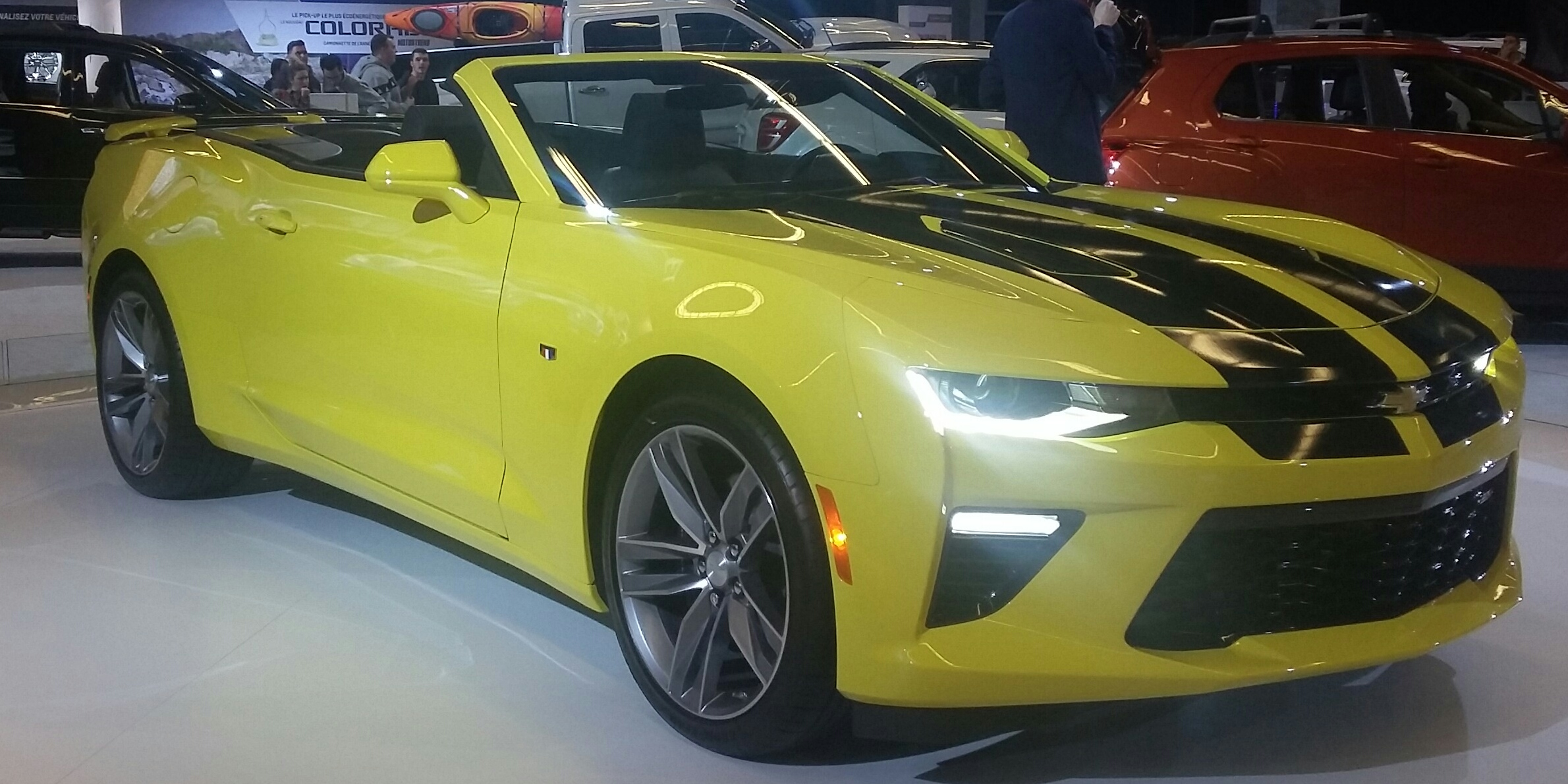
Chevrolet Camaro
"Yes. I can see the Camaros. I can see all the different things that are line..."
The Chevrolet Camaro is a sporty car made by Chevrolet. It’s designed for driving that feels more exciting than a typical family car, and it comes in different versions. People often talk about it because it’s a well-known model with a long history.
The Chevrolet Camaro is a performance-focused American sports coupe/convertible known for its long-running lineup and variety of trims and powertrains. It’s often discussed because it represents a major part of the muscle-car era and continues to be a recognizable name in modern performance. In a podcast, it may come up when talking about how popular car brands show up across different media and collectibles.
cup series
"So the cup series, the now Riley auto parts and the truck series. We're getting CAD data from the tech center and we're getting CAD data from the OEMs, right?"
The NASCAR Cup Series is NASCAR’s main top-tier racing series. They’re talking about making die-cast models for the cars used in that series.
The NASCAR Cup Series is the top-level NASCAR national touring series. Mentioning it here frames which race cars the die-cast company is modeling and sourcing CAD data for.
truck series
"So the cup series, the now Riley auto parts and the truck series. We're getting CAD data from the tech center and we're getting CAD data from the OEMs, right?"
The NASCAR Truck Series is NASCAR racing with pickup trucks. They’re including it because the die-cast models need to match those truck bodies too.
The NASCAR Truck Series is a national series featuring pickup trucks rather than the Cup Series’ cars. It’s relevant because die-cast production has to account for different body shapes and proportions across NASCAR’s series.
CAD data
"We're getting CAD data from the tech center and we're getting CAD data from the OEMs, right? And so those pieces come together."
CAD data is a computer file that describes a car’s shape in 3D. They use it so the die-cast model matches the real car’s design more closely than starting from photos.
CAD (computer-aided design) data is the digital 3D model information used to design a product. In die-cast production, it’s the starting point for turning a real NASCAR car’s geometry into an accurate scaled model.
scale
"We would take a long, not really a tape measure, but a measuring device that would allow us to tell scale. And we would send all those photos to Asia and they would be sculpted."
“Scale” means the model is a smaller version of the real car at a specific ratio. If the scale is wrong, the car won’t look right even if the details are accurate.
In die-cast model making, “scale” is the fixed ratio between the real car’s dimensions and the miniature’s dimensions (e.g., 1:24). Getting scale right is critical for proportions, wheel placement, and how the car’s body lines look.
3D print a body shell
"They 3D print a body shell. And some of the things interpret when you, you go from real CAD data, right?"
3D printing a body shell means using additive manufacturing to create a physical prototype of the die-cast body shape from the digital model. This helps validate proportions and surface details before moving on to final tooling and artwork.
3D
"Our template then wraps onto the wireframe, which allows us to create a 3D, which is what you see on sales sheets or what you see online."
“3D” means a digital model you can view in three dimensions. They use it to show what the finished car will look like with the right graphics before it goes into production.
Here, “3D” refers to a three-dimensional digital model used to visualize the diecast car’s artwork and body details. They create this 3D view so the final product can be reviewed and approved for accuracy before production.
wireframe
"Our template then wraps onto the wireframe, which allows us to create a 3D, which is what you see on sales sheets or what you see online."
A wireframe is a simple 3D outline of a model. It helps the team place the artwork in the right spots before making the final 3D look for the sales sheet or online.
A wireframe is a 3D modeling view that shows only the edges and structure of a shape, like a skeleton. In this process, the template wraps onto the wireframe so the artwork can be positioned correctly in 3D before it becomes a finished sales-sheet image.
water slide decals
"So if you've ever done modeling, which we now have a whole category of models, there are the water slide decals. The kind of slimy little water slide decals."
Water slide decals are stickers that you soak in water first, then slide onto the surface. They’re used to put the detailed graphics on scale model cars.
Water slide decals are thin printed graphics that are applied by soaking them in water so they can slide onto the model surface. This is a common method for adding fine details like sponsor logos and body markings on scale models and diecast cars.
X-Acto knife
"And somebody like the roof when it gets put down is an entire decal that somebody takes an X-Acto knife and traces the flaps."
An X-Acto knife is a small, sharp hobby knife. Here it’s used to carefully cut decal pieces so they match the shape of the car’s panels.
An X-Acto knife is a precision hobby cutting tool used for detailed trimming. In this context, it’s used to carefully cut and trace decal flap lines so the graphics fit the model’s panel gaps.
Tampa printing
"So for the marks on the windshields, that's a process we call Tampa printing. It basically, each station has a different color. So now they have multiple machines that do multiple colors."
“Tampa printing” is a factory method for putting the colored windshield graphics onto diecast cars. Instead of doing all the colors at once, the line uses different machines for different colors, then layers them to make the final look.
In this context, “Tampa printing” is a specialized printing process used to apply windshield markings on NASCAR diecast cars. The key idea is that different colors are produced at different stations/machines, so the black bar and the white name can be printed separately and then combined on the windshield.
PO
"But basically, after we've put the sales sheet out, we've tabulated the orders, we've placed the POs, the cars then get scheduled."
A “PO” is short for purchase order. It’s basically the official paperwork that tells the manufacturer what to make and when to deliver it.
A “PO” (purchase order) is a formal document a buyer sends to a supplier to authorize production and delivery. Here, the host is describing how diecast cars move through the workflow from purchase order to shipping schedule.
motorhead diecast
"So we've just launched actually some motorhead diecast. We've just done some fender castings."
“Diecast” are model cars made with metal, not just plastic. Here, they’re talking about a special line of those collectible race-car models.
“Diecast” refers to model cars made from metal (typically zinc alloy) with detailed paint and parts. In this context, “motorhead diecast” is a branded line of NASCAR-style collectible models aimed at enthusiasts and fans.
fender castings
"So we've just launched actually some motorhead diecast. We've just done some fender castings. The music category is a big category that we're really going after."
A “casting” is a metal part made using a mold. “Fender castings” suggests they’re making the model’s fender shape in metal so the details match the real car.
A “casting” is a part made by pouring molten metal into a mold. “Fender castings” implies they’re producing diecast components or molds related to the car’s fender shape—important for getting the model’s body lines accurate.
diecast as an entry point for young fans
"How do you think diecast, and what is the importance of diecast as an entry point for young fans? I think it plays a huge role. It's, you know, when you see a little kid with a 64 scale car, right, of their driver, whoever their driver is."
They’re saying model cars can be how kids first get interested in racing. Seeing a diecast of their favorite driver can stick with them and lead them to follow the sport more.
“Diecast as an entry point” describes how model cars help new fans connect with racing—especially kids—before they follow the sport more deeply. The segment frames diecast as a memory-triggering product that links a young person to a driver through family passion.
Request an Explanation
Heard something you'd like explained? We'll add it to this episode.
Sign in to request explanations for terms you heard.
Want to learn more?
Browse our glossary for plain-English explanations of automotive terms, jargon, and concepts.
Help improve this episode
See something that's not quite right? Our annotations are AI-generated and can sometimes miss the mark. Click the flag icon on any annotation to suggest a correction.