
The worst starts to an F1 season ever
About this episode
Matt and Tommy riff on the “worst starts to an F1 season ever” theme, using Aston Martin’s 2026 hype-to-reality gap as the through-line. They compare it to McLaren-Honda’s disastrous 2015–2017 hybrid era (Alonso’s slow-speed crash, speed-trap misery, constant DNFs) and BAR’s 1999 money-fueled unreliability with Jacques Villeneuve. The rundown also hits Ferrari’s 2020 SF1000 drop-off after 2019 controversy, BMW Sauber’s 2009 collapse after 2008 promise, Lola’s 1997 sponsor-driven failure to race, and McLaren 2004’s fragile Newey car—ending with whether Aston can “turn it around” like McLaren did late.
Sorry, Aston Martin - but your awful start to the 2026 season got us thinking about some of the other terrible openings other F1 teams have suffered in seasons gone by. So we're here with some of the standout candidates: from more bad luck for Fernando Alonso to some... suspect goings on between Ferrari and the FIA, and plenty more!
Sign up to our Patreon for just $5 a month! You'll get access to every P1 episode ad-free, extended versions of every 2026 race review, early access to tickets & merch, and access to our Discord server where you can chat with us and other F1 fans! Click here to sign up now: http://patreon.com/mattp1tommy
Follow us on socials! You can find us on Twitter, Instagram, Twitch, YouTube and TikTok.
P1 with Matt and Tommy is the world's biggest F1 podcast. Subscribe for new podcasts around every single race throughout the 2026 Formula 1 season!
Hosted on Acast. See acast.com/privacy for more information.
Aston Martin
"Hello, everybody, and welcome back to the P1 Podcast with Matt and Tommy. Now, this is a podcast, of course, completely and utterly dedicated to Aston Martin. They've got our brain boxes going, haven't they, for an idea for this podcast."
Aston Martin is a famous British car company that also competes in Formula 1. When the hosts say the podcast is dedicated to Aston Martin, they mean they’re talking about that team’s F1 story.
Aston Martin is a British performance car and motorsport brand, best known in F1 for its works team and long-running involvement in Formula 1. In a podcast context, mentioning Aston Martin signals the show is focused on the team’s season, drivers, and technical progress.
F1 season
"Yeah, I'll say it. Oh, F1's kind of left content creators hanging in April, haven't they? Oh, this is peak spring slop. Oh, this sort of stuff. Well, yes, there's no races going on."
They’re talking about how the beginning of the Formula 1 season has been rough. It’s more about the overall vibe and situation than a specific car or technical detail.
The hosts are discussing the start of an F1 season and how it’s been unusually bad or frustrating. This kind of segment typically frames early-season performance, news droughts, and fan engagement when there aren’t many races yet.

McLaren Honda 2015
"So, Tommy, why don't we just get straight into it? Hey, are you looking forward to this? ... McLaren Honda 2015 and then in brackets and 2017."
This is about McLaren’s F1 team working with Honda in 2015. The point is that even with big expectations—especially around new hybrid rules—the season didn’t go as well as fans hoped.
“McLaren Honda 2015” refers to the McLaren F1 team’s partnership with Honda during the 2015 season. The hosts connect it to the “hybrid era,” highlighting how expectations were high but results didn’t match the hype.
hybrid era
"But this was coming into, of course, the hybrid era, the hybrid partnership between McLaren and Honda. And I would say this was very hyped, similar to the Aston Martin Honda partnership."
The “hybrid era” means F1 cars started using hybrid technology—like systems that recover energy instead of wasting it. When F1 switched to these rules, teams had to learn a whole new way of building and tuning the cars.
The “hybrid era” in F1 refers to the modern power unit regulations that introduced energy recovery and hybrid components. Teams had to redesign their cars around new systems, and early on, that transition created performance and reliability challenges.
Aston Martin Honda partnership
"And I would say this was very hyped, similar to the Aston Martin Honda partnership. Right, Tommy?"
They’re talking about Aston Martin teaming up with Honda for F1. The hosts are saying that even though fans expected big things from that partnership, the early season performance hasn’t matched the excitement.
This refers to Aston Martin’s collaboration with Honda in F1, framed here as a “hyped” partnership that didn’t deliver early results. In F1, partnerships often involve engine/power-unit development and can take time to translate into on-track performance.
Mercedes
"And they also had Mercedes engine, the best engine for the new Rolls and were like, [226.8s] no, let's go with the Honda."
They’re talking about Mercedes as an engine supplier in Formula 1. In F1, the engine a team uses can make a huge difference in how fast and how reliable the car is.
The hosts mention Mercedes in the context of F1 engines. In F1, engine suppliers can dramatically affect reliability, power, and overall competitiveness for the teams using them.
legendary partnership
"So, yeah, McLaren and Honda, they came together again after their legendary partnership [239.5s] in the late 80s, early 90s with Senna and Prost, and they were winning everything. [244.4s] So hence the hype."
They’re describing an earlier McLaren-Honda combo as “legendary.” When two groups that used to work extremely well team up again, people assume it will be great immediately.
The hosts call the McLaren-Honda collaboration a “legendary partnership,” referencing its earlier dominance. In F1 terms, a successful engine-team pairing can create long-lasting expectations when it reunites.
hype
"So hence the hype. [245.5s] Once again, they come together. ... that's how much he believed in this hype of McLaren and Honda together again ..."
They keep saying “hype,” meaning people were expecting huge results. In racing, expectations can be based on history, but the actual performance still depends on how well the car is built and improved.
“Hype” is used to describe the inflated expectations around McLaren and Honda reuniting and around Alonso’s return. In motorsport, hype often comes from past success, but the real outcome depends on the car’s development and execution.
absolute atrocious year
"... there was so much promise that Fernando Alonso went back to McLaren after the absolute atrocious year and controversial year that he had alongside Lewis Hamilton ..."
They’re saying Alonso had a really bad, messy season before this move. That kind of experience can change how people view the next team and what they expect to happen.
The hosts refer to an “atrocious” and “controversial” season Alonso had alongside Lewis Hamilton. This highlights how driver-team relationships and prior season performance can affect decisions and expectations for the next year.
burnt that bridge
"... alongside Lewis Hamilton, where he [281.8s] burnt that bridge so much with Ron Dennis. [286.5s] And for Alonso to go back to McLaren ..."
This phrase means Alonso had a major falling-out with Ron Dennis. In racing, relationships like that can affect whether a driver trusts a team’s direction and wants to return.
“Burnt that bridge” is a metaphor for a damaged relationship, here tied to Ron Dennis. In F1, team leadership and driver-manager relationships can influence contract decisions and how seriously a driver believes in a project.
pre-season testing
"They did seven laps on the opening day and had constant issues during pre-season testing, including Alonso's very strange... theories..."
Before the season starts, teams do practice runs to make sure the car works. If the car breaks a lot or can’t finish laps during these tests, it usually means the team still has big problems to fix.
Pre-season testing is when F1 teams run cars before the first race to shake down reliability, setup, and race pace. If a car can’t complete laps or keeps failing during testing, it often points to deeper development problems that can carry into the opening rounds.
tinfoil hat sort of theories
"including Alonso's very strange, very covered in tinfoil hat sort of theories, right, Tommy? This pre-season testing accident..."
The transcript references speculative theories around the cause of Alonso’s pre-season accident. While not technical, it’s a reminder that high-profile crashes often spawn rumors, and the reality is usually determined by telemetry, inspection, and official medical/engineering findings.
circuit of Barcelona, Catalonia
"This pre-season testing accident that happened at the circuit of Barcelona, Catalonia. You just have to say that circuit in its full entirety."
Barcelona-Catalunya is one of the main tracks F1 uses for testing before the season starts. If something goes wrong there, it can be a big warning sign for how the season might start.
The Circuit de Barcelona-Catalunya is a key F1 venue used for pre-season testing and early-season evaluations. Because it’s where teams run long practice programs, incidents there (like Alonso’s crash) can strongly shape expectations for the opening races.
electrocuted
"There's talk of him being potentially electrocuted and all sorts of crazy stuff, right? Yeah, all sorts of theories."
“Electrocuted” is mentioned as one of the rumors about the cause of the crash. In motorsport, electrical faults are taken seriously, but determining whether an incident involved an electrical issue requires forensic inspection and evidence from the car’s systems.
slow speed crash
"He had a slow speed crash and it basically put him out of the first two races. He was concussed. Everyone was confused because it was such a slow speed incident."
A slow-speed crash can still be serious in F1 because the driver can be hit by impacts, debris, or awkward vehicle angles. In Alonso’s case, the discussion suggests the incident led to concussion and forced him out early, showing that “low speed” doesn’t always mean “low consequence.”
concussed
"He was concussed. Everyone was confused because it was such a slow speed incident."
A concussion is a type of traumatic brain injury that can occur even in relatively low-speed crashes. In motorsport, it typically triggers strict medical clearance rules, which is why it can immediately remove a driver from upcoming races.

McLaren Honda
"But again, talking about the similarities of McLaren Honda and Aston Martin Honda with Fernando Alonso... And now in the first race, McLaren Honda, of course, not much hope at this point..."
McLaren Honda refers to McLaren’s F1 partnership with Honda power units during the hybrid era. In the transcript, it’s tied to reliability struggles right from the start of the season, highlighting how power-unit and integration issues can show up immediately.

Aston Martin Honda
"...similarities of McLaren Honda and Aston Martin Honda with Fernando Alonso... which sounds very, very similar to Aston Martin..."
Aston Martin Honda means Aston Martin’s F1 team with Honda’s engine system. The hosts are comparing it to McLaren Honda because both seemed to struggle early, especially with reliability.
Aston Martin Honda refers to Aston Martin’s F1 team using Honda power units. The segment links Aston Martin Honda to the same kind of early-season reliability and limited-lap testing story, implying the Honda package and/or its installation was a shared problem across teams.
engine failed
"Magnuson replaced Alonso, but didn't even start the race as his engine failed while driving to the grid."
“Engine failed” means the engine stopped working properly. If it happens before the start, the driver can’t even take the grid.
An “engine failed” is a mechanical breakdown that prevents the car from continuing, often causing the driver to retire or not even start the race. In F1, engine reliability is critical because a failure can happen before the car reaches the grid.
detune the engine
"So they were actually, again, a similar comparison, they had to detune the engine just to basically make sure it didn't blow up."
Detuning is when the team turns the engine down so it makes less power. They do it to reduce the chance of the engine breaking during a race.
“Detuning” means reducing an engine’s output—typically by changing engine mapping, boost targets, or other settings—so it runs more safely. In racing, teams may detune to avoid failures or overheating when reliability is poor.
speed traps
"And, you know, there was the speed traps recorded. The McLaren Hondas were 13 miles an hour slower in the speed traps than the fastest car."
Speed traps are fixed measurement points on the track where cars’ top speed is recorded. They’re used to compare straight-line performance and can highlight whether a team is losing time due to power or aerodynamic drag.
McLaren Hondas
"The McLaren Hondas were 13 miles an hour slower in the speed traps than the fastest car. This is in the first race."
“McLaren Hondas” means McLaren’s Formula 1 cars with Honda engines. The hosts are saying those cars were much slower than the front runners, especially on straight lines.
“McLaren Hondas” refers to McLaren F1 cars running Honda power units during that era. The key point in the segment is that their straight-line speed (as measured by speed traps) was significantly behind the fastest cars.
GP2 engine era
"You know, this was GP2 engine era. That famous quote from Fernando Alonso and they were just laughably slow in a straight line."
They’re talking about a specific period of F1 engine rules. The idea is that the cars’ engines weren’t performing well and weren’t very dependable at the time.
“GP2 engine era” is a reference to the engine regulations and power-unit characteristics used in that period, often discussed as having different performance and reliability traits than other eras. In this context, it’s used to explain why the cars felt weak and unreliable.
China
"I beg China P-12 China P-12 Bahrain P-11. So, you know, not far off the points and then retired the next four races in a row."
China is another F1 race on the calendar. They’re bringing it up to explain the timeline of results before the team started retiring a lot.
China refers to the Chinese Grand Prix, held at the Shanghai International Circuit. The transcript uses it as part of a sequence of qualifying/finishing positions to set up how close the team was to points before reliability issues hit.
Bahrain
"I beg China P-12 China P-12 Bahrain P-11. So, you know, not far off the points and then retired the next four races in a row."
Bahrain is one of the F1 races on the calendar. They’re mentioning it as part of a sequence of races where things went badly.
Bahrain refers to the Bahrain Grand Prix, typically held at the Bahrain International Circuit. The transcript lists race locations to describe a run of poor results and retirements.
Silverstone
"Then he scored a point at Silverstone and then had a generational drive in Hungary. Am I right?"
Silverstone is a well-known F1 race track in the UK. They’re mentioning it because it was one of the few times they managed to score points.
Silverstone is a famous Formula 1 circuit in the UK. The transcript mentions it as the place where the discussed driver/team scored a point, highlighting a rare positive result.
Hungary
"Then he scored a point at Silverstone and then had a generational drive in Hungary. Am I right? He did. He got a fifth place."
Hungary is where the Hungarian Grand Prix is held. The hosts are saying that race was a standout performance compared to the team’s usual struggles.
Hungary refers to the Hungarian Grand Prix, held at the Hungaroring circuit. The transcript describes it as a standout performance (“generational drive”) with a fifth-place finish, contrasting with the rest of the season.
double points finish
"That was their best result of the whole season where they finished fifth and ninth. It was their only double points finish. They had a lot more double retirements than double points finishes."
In F1, points are only awarded to cars that finish high enough. A “double points finish” means both cars from the same team scored points in that race, which is a good sign for the team.
A “double points finish” in Formula 1 means both cars from the same team finish in points-paying positions in the same race. It’s a strong indicator of overall package strength because it isn’t just one car getting lucky or surviving trouble.
double retirements
"It was their only double points finish. They had a lot more double retirements than double points finishes. It seemed to happen quite a lot that season and just, yeah, a handful of points for McLaren."
A retirement is when a car can’t finish the race. “Double retirements” means both cars had to stop early, which is usually a bad reliability sign for the team.
“Double retirements” means both cars from a team failed to finish the race (retired) rather than scoring points. When a season has many double retirements, it usually points to reliability problems or a car that struggles to complete races.
Marussia
"They did beat Marussia, though. They beat Marussia and the constructors. You know, that well-known front-running team."
Marussia was a back-of-the-pack Formula 1 team. Mentioning them highlights how bad the situation was for McLaren if they were only just beating a struggling team.
Marussia (later known as Manor) was a smaller F1 team that often struggled for pace and reliability. The transcript uses it as a benchmark for how low McLaren’s performance had fallen if they only managed to beat Marussia.
Fernando Alonso
"They've got Honda, this partnership that was so dominant in Formula One. Two world champions and that season is remembered for Fernando Alonso sat in a deck chair because his car's broken down..."
Fernando Alonso is one of the top drivers in F1 history. The hosts bring him up to remind listeners of the McLaren/Honda era when things were much better.
Fernando Alonso is a two-time Formula 1 world champion, and the transcript references his era with McLaren as part of why fans expected better results. It’s used as historical context for how the team used to perform.
Jensen Button
"...because his car's broken down or Jensen Button and Alonso going on the podium in Interlagos because it was so laughable that they'd be on the podium."
Jenson Button is a former F1 world champion. The hosts mention him alongside Alonso to set up a story about a chaotic race where the usual expectations didn’t hold.
Jenson Button is a former Formula 1 world champion, and the transcript pairs him with Alonso to describe a specific McLaren period. The joke is that they were on the podium despite being out early, emphasizing how chaotic that race was.
Interlagos
"...or Jensen Button and Alonso going on the podium in Interlagos because it was so laughable that they'd be on the podium."
Interlagos is an F1 track in Brazil. The hosts are referencing a specific race there where the results were surprising.
Interlagos is the nickname for the Autódromo José Carlos Pace circuit in São Paulo, Brazil. The transcript uses it as the location of a memorable, unusual race outcome involving Alonso and Button.
Q1
"They went up there for banter because they both were out the session in Q1. It was that bad that it was just a joke."
Qualifying is split into parts. Q1 is the first part, and if you don’t do well enough there, you don’t get to the later rounds and you’ll start the race from a worse position.
Q1 is the first segment of Formula 1 qualifying. If a team’s cars don’t set fast enough times in Q1, they don’t advance to later qualifying rounds and start the race further back.
did not starts
"And in those 12 times, they failed to finish, including two did not starts. Yeah, it was a disaster, just constant retirements."
“Did not start” means the car couldn’t begin the race at all. Usually something went wrong before the race, so the driver never even got going.
A “did not start” (DNS) in F1 means the car was entered but couldn’t take the grid at the start of the race. It’s often caused by mechanical issues during warm-up or setup, and it’s a major indicator of reliability problems.
Renault engines
"And actually they ended up getting Renault engines the next year and the car was still unreliable and competitive."
They’re talking about Formula One engines from Renault. Even after changing engines, the team still struggled with reliability, so it wasn’t a simple fix.
Renault engines are referenced as a switch that happened after the Honda-linked unreliability period. The hosts note that even with the engine change, the car could still be both unreliable and competitive—showing how engine reliability and overall package development both matter.
Red Bull
"And actually a year after that, Red Bull got the Honda engine and actually winning races."
Red Bull is a Formula One team. The hosts say that once Red Bull had the Honda engine, they turned it into race wins, implying the problem wasn’t just the engine by itself.
Red Bull is mentioned as the team that later got the Honda engine and started winning races. This is used to illustrate how the same engine supplier can look very different depending on the team’s integration, development, and execution.
McLaren fans
"They certainly did, McLaren fans. You can start listening again because we're moving away from that particular team"
McLaren is another major Formula One team. The hosts are saying that this argument about who’s to blame (engines vs teams) was especially relevant to McLaren fans.
McLaren is referenced indirectly through “McLaren fans,” implying the blame and fan narratives around this engine era were tied to McLaren’s results. It’s a reminder that in F1, public perception and team-by-team context can heavily shape who gets blamed.
aura farming
"Yeah, I don't think aura farming existed in 1999, but they were aura farming. Yeah, they kind of talked the talk."
“Aura farming” here is a joke meaning trying to build a good image and hype. The hosts are basically saying the team talked a big game, even if results weren’t there yet.
“Aura farming” is used here as a tongue-in-cheek concept meaning building reputation and attention through messaging, hype, and optics rather than immediate results. In F1 terms, it maps to how teams market ambitions and create narratives to attract sponsors and belief.
British American Tobacco
"Of course, they were owned by British American Tobacco, that kind of era of the 90s where they had so much tobacco money in Formula One"
British American Tobacco is a company that, in that era, owned an F1 team. The hosts are saying that tobacco money helped teams spend big in Formula One.
British American Tobacco (BAT) is mentioned as the owner of the team during that 1990s era. The hosts connect tobacco sponsorship funding to how some teams could spend heavily in Formula One, shaping competitiveness and development pace.
half-and-half split livery
"And of course, I think most people would know this car, even if you know nothing about BAR because they had that half-and-half split livery with the zip down the middle there. Well, actually, half-and-half livery is nowadays."
A livery is the car’s paint and graphics. “Half-and-half” means the design is split into two sides with different colors or patterns, so it’s easy to spot on track.
A “half-and-half split livery” is a paint scheme where the car’s bodywork is divided into two contrasting halves. In racing, livery isn’t just branding—it helps fans and TV viewers quickly identify the team and car, especially in a crowded field.
glass cannon
"However, that was the only thing that it was iconic for because my god was this car unreliable. It was a glass cannon, if you can call it that, because there were moments where it had a bit of pace about it."
A “glass cannon” is a thing that looks powerful, but breaks easily. In racing, it means the car can be fast, but it often can’t finish races.
“Glass cannon” describes something that can be very effective when it works, but is fragile and prone to failure. In motorsport context, it usually means the car might show pace in qualifying or short runs, yet reliability issues cause frequent retirements.
retired
"His results are retired, retired, retired, retired, retired, retired, retired, retired, retired, retired, retired, retired, retired, retired, retired, retired, retired. 15th, 8th, 10th, retired, 9th."
In racing, “retired” means the driver had to stop the race early because something went wrong. If it happens a lot, it usually points to reliability issues.
In F1 results, “retired” means the car could not continue the race and was forced to stop before finishing. Frequent retirements are a major indicator of reliability problems and can erase any speed advantage the team might have had.
first time we finished a race
"Round 12 was the first time we finished a race. Can you imagine just thinking, oh, right, I've got this team. It was meant to be, yeah, it was going to be built around him."
In F1, you usually only score points if you actually finish the race. If a team’s “first finish” happens late, it means they were breaking down or failing to complete races for a long time.
Finishing races is crucial in F1 because points are only awarded to classified finishers. A team that reaches “the first time we finished a race” very late in the season is effectively losing most opportunities for points due to reliability or setup issues.
Grand Prix
"And it takes you till round 12 to finish an actual Grand Prix. And it had its moment, so Jacques Villeneuve could qualify it quite high up on the grid."
In Formula 1, a “Grand Prix” is just a single race weekend and race. Finishing a Grand Prix means the car actually completes the race distance and is classified.
A Grand Prix is an individual Formula 1 race event, typically run over a set number of laps on a specific circuit. When the hosts say it takes until round 12 to “finish an actual Grand Prix,” they’re talking about how many races were completed versus abandoned or failed to finish due to problems.
qualify it quite high up on the grid
"And it had its moment, so Jacques Villeneuve could qualify it quite high up on the grid. Sometimes he was racing, you know, even in the top five or six cars, sometimes even higher."
Qualifying determines the starting order (“grid”) for the race. If a car qualifies high on the grid, it starts near the front, which can help it run in the top positions—until reliability issues cause retirements.
unreliable
"But again, just so unreliable. It was kind of more common then to have lots of engine failures and reliability problems, but this was even more extreme, you know, to not even finish the race."
In F1, “unreliable” usually means the car has frequent mechanical failures—engine, gearbox, or other components—that prevent finishing races. The hosts contrast a season where reliability problems were common with one that was even worse, where cars didn’t even complete the race.
engine failures
"It was kind of more common then to have lots of engine failures and reliability problems, but this was even more extreme, you know, to not even finish the race."
An engine failure means the engine breaks during the race. If that happens, the car usually can’t continue, so the driver can’t finish and score points.
Engine failures are catastrophic mechanical breakdowns that force an F1 car to retire from a race. In reliability-heavy seasons, engine failures can dominate the results because they prevent drivers from completing laps and being classified for points.
classified
"because one of them was just him being classified. So no points all year for him."
“Classified” means the race officials still counted the driver in the official results. It usually happens when the car completed enough of the race, even if it didn’t finish normally.
In F1, a driver can be “classified” if they complete enough of the race distance to be officially recorded in the results, even if they didn’t finish in the usual sense. The transcript notes a race where Villeneuve was classified, which still didn’t translate into points.
broke his leg
"But this is where Michael, of course, broke his leg, wasn't it? Silverstone then came back for the final two races."
If a driver breaks a leg, they can’t race for a while. That can change who drives the car and how the championship fight plays out.
A leg injury is a major factor in F1 because it can sideline a driver and force a replacement for races. The transcript uses Michael Schumacher’s injury as context for how the season’s competitive picture changed.
world champion
"to stop Micka Hacklin being world champion over Michael Schumacher's teammate, Eddie Irvine."
The “world champion” is the driver who wins the Formula 1 Drivers’ Championship based on points accumulated across the season. The hosts are discussing who won the title and how race outcomes and teammate dynamics affected the final result.
conspiracy
"That was another funny conspiracy, wasn't it? That, yeah, his pace mysteriously disappeared for that final race when his teammate needed him."
They’re talking about a rumor-like idea that a driver didn’t try as hard to help the teammate. It’s more about fan speculation than car mechanics.
The hosts mention a “conspiracy” about teammate dynamics—specifically, that a driver’s performance dropped when it would have helped the other driver win the title. While not a technical term, it’s a notable narrative concept in how fans interpret race outcomes.
Ferrari
"And it is to do with Ferrari... But in 2019, they were very, very quick with Ferrari."
Ferrari is a major F1 team with a long racing history. Here, the hosts are talking about how Ferrari went from being extremely fast to suddenly struggling, and they connect that shift to controversy.
Ferrari is one of F1’s most historic constructors, and it’s central to this segment’s discussion about performance swings and rule compliance. The hosts reference Ferrari’s 2019 pace and then a 2020 downturn, framing it as a controversy-related turnaround.
power unit
"Now, yes, this power unit that I just mentioned. Rivals thought it was a little bit naughty for some reason."
In F1, the power unit is basically the car’s engine package. It’s not just one engine—it's the whole hybrid system that makes power and recovers energy.
In modern F1, the “power unit” is the complete hybrid engine system: the internal combustion engine plus the turbocharger and energy-recovery components. Because it’s tightly regulated, small changes in how it’s configured or operated can strongly affect performance and legality.
FIA
"But how was this allowed to be a thing where the FIA and Ferrari were able to come to a private settlement over their power unit?"
The FIA is the organization that makes and enforces the rules in motorsport, including F1. If a team is suspected of breaking rules, the FIA is the one that investigates and decides what happens next.
The FIA (Fédération Internationale de l’Automobile) is the governing body that oversees F1’s rules, technical compliance, and disciplinary actions. In this discussion, the FIA is portrayed as negotiating or settling an issue with Ferrari related to the power unit.
qualified 7th and 11th on debut
"They qualified 7th and 11th on debut. However, you know, Charlotte Clair managed to do some crazy goat things and finish P2."
Qualifying sets where the cars start on the grid for the race. Starting 7th and 11th on their first outing implies they weren’t near the front yet.
In F1, qualifying determines the starting grid position for the race. “On debut” here means the first time the car/driver combination appeared in a race session, and starting 7th and 11th suggests the car wasn’t immediately competitive.
double race in Austria
"However, the next race, which you're not hearing this incorrectly, it was again in Austria. If you weren't watching F1 in 2020, they did a double race in Austria just to try and get more races into a world championship that was so up in the air,"
Because of disruptions in 2020, F1 sometimes ran two races at the same track in a row. It was a way to keep the season going when the schedule was uncertain.
In 2020, Formula 1 held back-to-back Grands Prix at the same venue in Austria to make up for schedule disruptions. This “double-header” approach helped the championship keep running despite uncertainty around travel and public health restrictions.
double DNF
"And yeah, Ferrari double DNF, so did we really need to have that second race in Austria? I don't know."
DNF means the car didn’t finish the race. A “double DNF” means both drivers’ cars failed to finish, which usually costs a lot of points.
DNF means “did not finish,” so a “double DNF” indicates both cars failed to complete the race. In F1, DNFs are especially damaging because they wipe out potential points and can highlight reliability or setup problems.

SF1000
"But it was not the year that Ferrari wanted because this car was called the SF1000,"
The Ferrari SF1000 is the specific F1 race car Ferrari used in 2020. In this segment, the hosts are saying it didn’t perform well early in the season.
The Ferrari SF1000 was Ferrari’s Formula 1 car for the 2020 season. The name reflects the car’s 1000th Formula 1 race for Ferrari, and it became known for a difficult start to the year.
Monza
"And even worse, at Monza, where they had a double DNF, absolute ultimate embarrassment at their home race."
Monza is one of the most iconic F1 tracks in the world. For Ferrari, it’s especially important because it’s often treated like a home race, so bad weekends feel worse.
Monza is the famous Italian Formula 1 venue known for high-speed racing and big braking zones. Because it’s a “home race” for Ferrari, poor results there tend to be treated as especially humiliating.
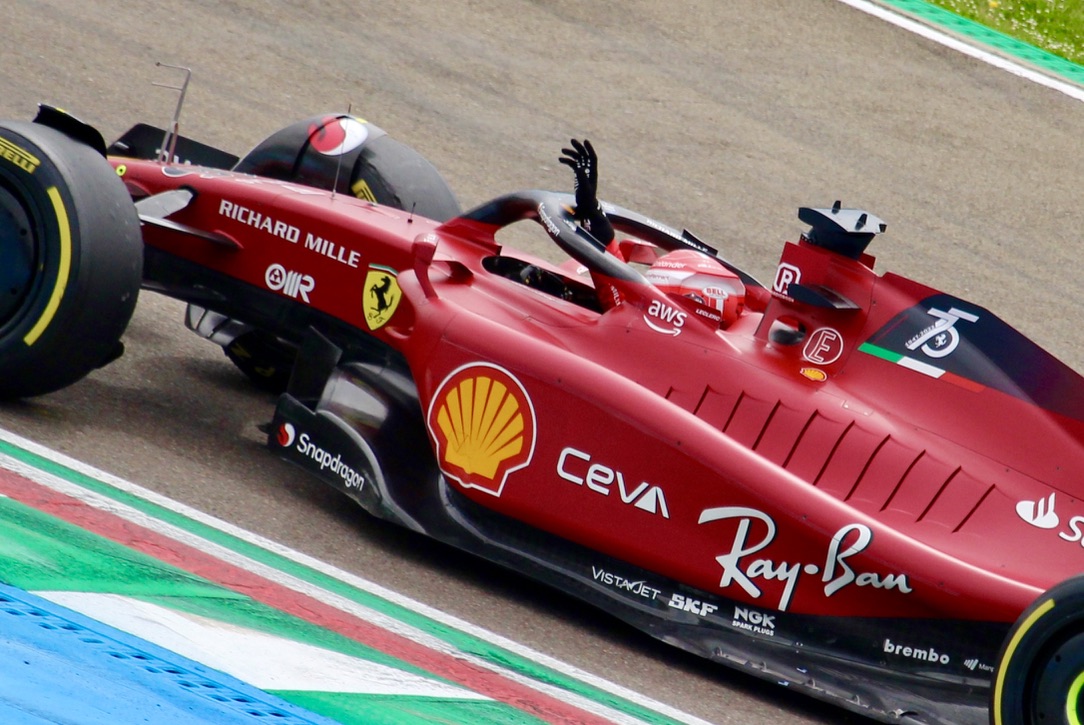
Charles Leclerc
"They sat P6 in the constructors, which is where they went on to finish, which was mainly thanks to Leclerc. I'm looking at the championship standings. Sebastian Vettel finished 13th in the championship with 33 points compared to Charles Leclerc's 98."
Charles Leclerc is one of Ferrari’s drivers. In F1, where the car finishes matters because it earns points for both the driver and the team.
Charles Leclerc is Ferrari’s driver referenced here in the context of points and race results. In F1, a driver’s finishing position directly affects the team’s points in the constructors standings.
constructors
"They sat P6 in the constructors, which is where they went on to finish, which was mainly thanks to Leclerc."
In F1 there’s a championship for drivers and a championship for teams. “Constructors” refers to the team standings, where points from both cars add up.
The constructors’ championship is the F1 points race for teams, based on the combined results of their two cars. When the hosts say Ferrari “sat P6 in the constructors,” they mean Ferrari finished 6th overall in the team standings for the season.
Hockenheim
"but it went off at Hockenheim and that people believe that that's the moment that kind of this whole career unraveled."
Hockenheim is a race track in Germany. The hosts are saying something went wrong there for Vettel, and they believe that moment changed how his career played out afterward.
Hockenheimring is a German circuit that appears here as the race where Vettel’s season (and career trajectory) is believed to have turned. In F1 storytelling, a single high-profile failure can be treated as a turning point for confidence, strategy, and momentum.
worst season since 1980
"Yeah, I mean, it was their worst season that they'd had since 1980, which I think we should shout out because this is one of the most bizarre, bizarre things to happen to Ferrari."
The hosts are stressing that Ferrari had a historically bad year. It means the team’s results were far worse than most seasons they’ve had in a long time.
Saying Ferrari’s season was their worst since 1980 is a way of emphasizing how unusually poor the team’s performance was compared to decades of history. In F1, “worst season” typically reflects low points, poor reliability, and weak race results across the year.
1-2 finish
"[1316.4s] They finished 1-2 for fun, finishing 1-2 in so many races. [1321.8s] And then in 1980, they scored eight points and finished 10th and there was no regulation change."
A “1-2” finish is when one team gets both the first and second spots in the same race. It usually means the team had a big performance advantage that day.
A “1-2” finish means the same team’s cars took first and second place in a race. It’s a strong indicator of dominance because it shows both cars were fast enough to control the race outcome.
drop-offs in performance
"[1329.7s] They had the same two drivers and it is one of the most bizarre kind of unexplained drop-offs [1337.8s] in performance ever, really. [1340.9s] I mean, Jodie Schecter had won the World Championship and then the year after scored two points and just won one fifth place all season."
The segment focuses on a “bizarre” and “unexplained” performance drop—when a team’s results fall sharply from one season to the next. In F1, this can happen due to development missteps, technical issues, driver/strategy changes, or other factors even without major regulation changes.

BMW Sauber
"Right, moving away from Ferrari, we now head to BMW Sauber in 2009."
BMW Sauber is the name of a Formula 1 team that raced in 2009. It’s not a normal car model you’d see on the street—it’s the racing team’s identity for that season.
“BMW Sauber” refers to the BMW-backed Sauber Formula 1 team that competed in the 2009 season. In F1, the team name matters because it reflects the constructor and technical partnership behind the car, not a road car model.
championship contention with only two rounds left
"...Qubits won a race and was essentially still in championship contention with only two rounds left."
This means the title fight wasn’t over yet—there were only two races left, but the championship was still within reach. In F1, the standings can change fast when there are only a couple races remaining.
“Championship contention with only two rounds left” describes a late-season scenario where a driver or team still had a realistic path to the title. In F1, late-season points gaps can swing quickly because races are high-stakes and results directly affect the championship table.
old point scoring back then
"Remember, it was the old point scoring back then, so 12 points bigger than what we know of today."
F1 used to award points differently than it does now. That means a gap in the standings—like 12 points—can represent a different amount of advantage or pressure than it would under today’s rules.
The “old point scoring” refers to Formula 1’s historical points system, which has changed over the years. Because the distribution of points per race was different, a deficit like “12 points” in 2008/2009 doesn’t map cleanly to today’s standings.
midfield car
"He was driving a midfield car a lot of the time and would put it on the podium a lot where it shouldn't be. And as we say in this era, 2008, only a second full season in Formula One."
A “midfield car” is basically a race car that isn’t usually among the very fastest. The drivers can sometimes do great—like getting a podium—but it’s not the car you’d expect to win the championship every year.
In Formula One, a “midfield car” is a car that’s typically not fast enough to consistently fight for wins or the championship. Drivers in these cars can still score podiums, but it usually takes unusual circumstances (strategy, reliability, or competitors’ mistakes) to get there.
world title
"And he's there challenging for the world title in what is a midfield car, basically... And that may well have cost Robert Qubitsa winning the world title in 2008. I've just mentioned 12 points behind with two races left."
The “world title” means winning the championship for the season. Drivers earn points race by race, and the total points decide who wins.
The “world title” refers to winning the Formula One Drivers’ Championship, which is determined by points accumulated across the season. The hosts are framing the discussion around how small point swings—like losing races due to accidents or development choices—can decide the championship.
put the tools down
"BMW were like, no, no, we're not going to do that. Yeah, BMW made one of, in hindsight, one of the worst calls a team has ever done in Formula One. And that was essentially put the tools down in 2008 and focus to 2009..."
It means the team stops working on the current car and starts focusing on next year instead. That can help later, but it can also hurt if the current car still had a chance to score big points.
“Put the tools down” is a team-speak phrase meaning the team stops development work on the current season’s car and shifts resources to the next year’s project. In F1, that can be a high-stakes decision because it trades short-term results for long-term potential.
development
"You have to wonder if they'd continued to develop that car, surely there was more points to be had. So that in itself is the fumble of the century. But not just that, what they then had focused on for 2009 was a car that ended up being not very great at all."
Development is the team improving the car over time with updates. The hosts are saying BMW may have stopped improving the 2008 car too early, which could have cost them points.
In F1, “development” means ongoing upgrades to the car—like aerodynamics, cooling, and performance parts—during the season. The hosts argue that if BMW had continued developing the 2008 car, it likely would have produced more points, even if the team later tried to pivot to 2009.
new era
"There was so much promise around them, the fact that they'd really gone in on this new era."
“The new era” refers to a major regulatory or technical transition in F1 that teams build their cars around. When a team “goes in” on a new era, it usually means they’ve made big design bets—so if the concept doesn’t work as expected, early results can be dramatically worse than planned.
half points
"Heidfeld got a P2 in Malaysia, which was a crazy race where basically they awarded half points because it was rained off and monsoon weather."
Sometimes an F1 race can’t run its full distance because of weather. If that happens early enough, the sport may give fewer points than usual—like “half points”—so the standings move differently than normal.
In some F1 races, if the event is stopped early due to conditions (like heavy rain) and only a portion of the race distance is completed, the championship rules can award reduced “half points.” This changes how teams and drivers score in that round, which can make a normally poor performance look better (or vice versa).
rained off
"Heidfeld got a P2 in Malaysia, which was a crazy race where basically they awarded half points because it was rained off and monsoon weather."
If the weather is too bad, the race may be stopped or shortened for safety. That can completely change how teams race and even how many points everyone gets.
“Rained off” refers to a race being stopped or not run to completion because of extreme weather. In F1, this can trigger safety procedures, red flags, and sometimes a shortened race distance—affecting strategy and the points awarded.
Lola T9730
"1997 with Lola. So the Lola T9730 was meant to race in 1998. But MasterCard, the title sponsor, put pressure on them to race a year early."
The Lola T9730 is a specific F1 race car model. The point here is that it was supposed to show up in 1998, but sponsorship pressure pushed the team to race it a year early.
The Lola T9730 is an F1 car associated with Lola’s 1997-era design, discussed here as being intended to race in 1998. In the late-1990s, teams often had to adjust schedules and development plans based on sponsorship and commercial pressure, which could force earlier-than-planned race debuts.
MasterCard
"So the Lola T9730 was meant to race in 1998. But MasterCard, the title sponsor, put pressure on them to race a year early."
MasterCard was the sponsor paying for naming rights. Sponsors in F1 can push teams to race sooner so the brand gets the exposure they’re paying for.
MasterCard is referenced as the title sponsor for Lola’s F1 effort, with sponsorship commitments influencing the team’s race schedule. In F1, title sponsors can exert real pressure because they want visibility and brand alignment tied to specific seasons and marketing timelines.
field spread
"And this was an era where the field spread was massive. You used to back market teams like Minardi and Tyrell and Arrows qualifying a huge amount of time off the leaders, qualifying a huge amount of time off the leaders, four or five seconds sometimes."
Field spread just means how big the performance gap is between the fastest cars and the slower ones. If the gap is huge, the back-of-the-pack teams are struggling a lot and can’t keep up.
In Formula One, “field spread” describes how far apart the cars are in performance—often measured by qualifying time gaps between the front-runners and the back of the grid. A massive field spread means the slow teams are several seconds off, which usually points to major development or reliability issues.
Minardi
"You used to back market teams like Minardi and Tyrell and Arrows qualifying a huge amount of time off the leaders, qualifying a huge amount of time off the leaders, four or five seconds sometimes."
Minardi is a team name used here to represent the smaller, lower-budget teams. The hosts are saying that in that era, these teams were often way slower than the front-runners.
Minardi is mentioned as an example of a “back market” team—smaller-budget outfits that often qualified far behind the leaders. Referencing Minardi helps listeners understand the era’s competitive imbalance and how difficult it was for underfunded teams to close the gap.
Arrows
"You used to back market teams like Minardi and Tyrell and Arrows qualifying a huge amount of time off the leaders, qualifying a huge amount of time off the leaders, four or five seconds sometimes."
Arrows is another team mentioned as an example of a team that was usually behind the front-runners. It helps explain why the time gaps were so big.
Arrows is mentioned as part of a group of smaller or less competitive teams that qualified far behind the leaders. This reinforces the segment’s theme: the era had a massive performance spread.
Tyrell
"You used to back market teams like Minardi and Tyrell and Arrows qualifying a huge amount of time off the leaders, qualifying a huge amount of time off the leaders, four or five seconds sometimes."
Tyrell is another team name used to show the back-of-the-pack. The point is that teams like this often couldn’t match the leaders’ speed.
Tyrell is listed alongside Minardi and Arrows as an example of teams that were often several seconds off the pace. The mention supports the discussion of how wide the performance gaps were in that period of F1.
Lola
"But Lola were kind of next level in that first race, the Australian Grand Prix in 1997. So slow, they qualified 11.6 seconds off with Sospiri, ... And then Lola withdrew from the next round in Brazil and never raced again."
Lola is a company that makes race cars. Here they’re talking about Lola’s Formula One car in 1997, which was so uncompetitive that it struggled in qualifying and then eventually stopped racing.
Lola is a British racing constructor that built Formula One cars in the 1990s. In this segment, the hosts are specifically talking about Lola’s 1997 Formula One effort at the Australian Grand Prix, where the car was far off the pace and later withdrew and never returned.
Formula 3000 champion
"So slow, they qualified 11.6 seconds off with Sospiri, who was the Formula 3000 champion, which was the equivalent of Formula Two back in the day."
Formula 3000 was a ladder series where drivers proved themselves before reaching Formula One. Even though the driver was a champion there, the F1 car itself was still far behind.
Formula 3000 was a major feeder series for drivers aiming for Formula One, functioning as a step below F1. The hosts call it the “equivalent of Formula Two back in the day,” emphasizing how the driver’s pedigree still didn’t translate into competitive F1 pace for that Lola entry.
un-televised qualifying
"They got their logo on a car, but it didn't race. For qualifying, for un-televised qualifying in 1997. Yeah, they probably didn't get their money's worth, I'll be honest."
They’re talking about qualifying that wasn’t shown on TV. If people can’t watch it, sponsors and teams get less exposure, which can make a bad season feel even worse.
“Un-televised qualifying” refers to qualifying sessions that weren’t broadcast to the public. In the context of a struggling team, it matters because sponsors and teams rely on visibility—if qualifying isn’t televised, it’s harder to justify marketing spend and attract attention.
Brazil
"And then Lola withdrew from the next round in Brazil and never raced again."
They’re saying Lola pulled out of the next race in Brazil and didn’t come back. That’s a big deal because it means the team couldn’t get the car on track.
The hosts say Lola withdrew from the next round in Brazil and never raced again. In F1 terms, a withdrawal like this is a major operational failure—often tied to funding, development, or readiness problems.
107% rule
"We see it now, the 107% rule of people still get kind of put into the race. [2009.0s] You go, oh, they'll be fine."
The 107% rule is a safety-and-competitiveness cutoff for qualifying. If a car is too far off the pace, it may not be allowed to race. Sometimes officials can still allow exceptions, but it’s not guaranteed.
In Formula 1, the 107% rule is a qualifying cutoff: cars must set a lap time within 107% of the fastest qualifier to be allowed to start the race. It’s meant to prevent extremely slow cars from joining the grid, though stewards can sometimes make exceptions.
F3000
"[2013.7s] You can't drive your F3000 car here. [2016.6s] And yeah, they were so slow."
F3000 was a lower-tier racing series that fed drivers and teams toward F1. The point here is that you can’t just bring a car from that level and expect it to compete in F1.
F3000 (Formula 3000) was a feeder series to F1, using less powerful cars than F1 machinery. The comment implies the team tried to use/enter a car that wasn’t up to F1-level performance, which would fail qualifying standards like the 107% rule.
McLaren MP419
"And then we head into an Adrian Newey built 2004 McLaren, the MP419. [2074.3s] And Adrian Newey is known for his extreme designs, isn't he?"
The McLaren MP4-19 was McLaren’s F1 car for 2004. It was designed by Adrian Newey, and the episode is using it to illustrate how a very ambitious design can still struggle if it doesn’t perform reliably in real race conditions.
The McLaren MP4-19 (spoken here as “MP419”) was McLaren’s 2004 Formula 1 car, designed under Adrian Newey’s direction. It’s a notable example of how an aggressive, “extreme” aerodynamic concept can be risky if it doesn’t work consistently across full race distances.
extreme designs
"Adrian Newey is known for his extreme designs, isn't he? [2079.9s] However, when an extreme design is created, it usually means it has extreme outcomes, [2087.3s] like not working fully for full race lengths and so on and so forth."
“Extreme designs” means the engineers try a very bold idea to get an advantage. The downside is that it can be harder to make work perfectly every time, so the car may not be fast for the whole race.
In F1 engineering, “extreme designs” usually means unconventional aerodynamic or mechanical concepts pushed to the limit to gain efficiency and downforce. The tradeoff is that they can be sensitive to setup, tires, track conditions, or reliability—leading to poor race performance even if qualifying looks promising.
Adrian Newey
"Yeah, Adrian Newey has designed many amazing cars, but also sometimes they are fast but fragile. [2103.0s] And this one was fragile and not actually that fast. [2125.2s] And it was just, yeah, until Adrian Newey worked a bit more magic on the car"
Adrian Newey is one of the most famous F1 car designers. The hosts are saying that when his team makes changes, the car can become faster and more reliable.
Adrian Newey is a highly influential Formula 1 technical designer known for designing championship-winning cars across multiple teams. The segment credits him with “magic” on a fragile, unreliable car—highlighting how design changes can quickly affect competitiveness.
missed out on the championship
"Unfortunately for them, they were uncompetitive and incredibly unreliable, [2113.5s] having missed out on the championship with Reichen and just moments before."
They’re saying they almost won the season title but didn’t. In F1, you can lose the championship if you don’t finish races or don’t score enough points.
“Missed out on the championship” means the team/driver narrowly failed to win the overall season title despite competing for it. In F1, that often comes down to points lost through retirements, poor reliability, or failing to convert strong qualifying into race results.
worked a bit more magic on the car
"And it was just, yeah, until Adrian Newey worked a bit more magic on the car [2129.9s] and even then they were still only kind of in the points."
They mean the team made improvements to the car after it wasn’t working well at first. In racing, teams keep tweaking and upgrading during the season to find speed and fix problems.
This is a shorthand for mid-season development—upgrades and setup changes that improve performance after an initially disappointing start. In F1, “magic” usually means engineering fixes to reliability, aerodynamics, cooling, or drivability that unlock pace.
Spa
"and Kimmy Reichenan, being the king of Spa that he was, [2179.8s] ended up winning the race in Spa [2183.4s] and he ordered his deal and ran around Silverstone naked."
Spa is a famous Formula 1 track in Belgium. They’re saying the race at Spa is where the prediction/bet ended up being wrong.
Spa-Francorchamps (often shortened to “Spa”) is a legendary F1 circuit in Belgium known for its long lap, elevation changes, and weather variability. The transcript uses Spa as the race where the outcome flipped—Reichenan won, contradicting the earlier prediction.
DNFs
"although they had eight DNFs in the first seven races. I mean, Lola's the disaster."
DNF stands for “Did Not Finish,” meaning a car retired from the race due to mechanical failure, accidents, or other issues. A high number of DNFs early in a season is a strong indicator of reliability problems and poor overall competitiveness.

Alonso
"a lot of people going, can Alonso win the championship? And, you know, even I think it was Peter Windsor, a really established journalist was like, the championship is going to be fought next year between George Russell and Fernando Alonso."
Fernando Alonso is a top Formula 1 driver, and the hosts mention him as part of the preseason hype about who could win the championship. In F1, driver talent can raise expectations, but the car’s reliability and performance still determine results.

George Russell
"was like, the championship is going to be fought next year between George Russell and Fernando Alonso. And there was so much hype of like, Aston are going to be amazing."
George Russell is a Formula 1 driver. The hosts are saying people expected him (and Alonso) to be the main championship fight, which made Aston’s poor start feel even more surprising.
George Russell is another leading Formula 1 driver mentioned as a likely championship contender. The segment uses him to illustrate how strong the preseason narrative was—yet the team’s car still ended up struggling to finish races.
Racing Point
"and could score podiums and things in Racing Point and Force India and were always punching above their weight."
Racing Point is an F1 team name from the past. The hosts are saying that earlier version of the team could do surprisingly well, and now Aston Martin is expected to be better too.
Racing Point is mentioned as the team that could score podiums and punch above its weight. In F1 history, Racing Point later rebranded to Aston Martin, which is why the hosts connect the “plucky underdog” era to Aston Martin’s current situation.
Force India
"could score podiums and things in Racing Point and Force India and were always punching above their weight."
Force India was an F1 team name before it changed over the years. They’re saying that even in those earlier days, the team could outperform expectations.
Force India is referenced as another earlier incarnation of the same organization that later became Racing Point and then Aston Martin. The hosts are using these names to describe a history of strong results despite limited resources.
turn their season around
"whether they can do what maybe like McLaren did in 2004 and turn their season around."
They mean the team could improve a lot later in the year. In racing, teams sometimes start poorly, then make changes and get better as the season goes on.
“Turn their season around” is the idea that a team can fix problems mid-year—like improving car performance, reliability, and strategy—so results climb as the season progresses. In F1, this often depends on development progress and whether early-season weaknesses can be addressed quickly.
Request an Explanation
Heard something you'd like explained? We'll add it to this episode.
Sign in to request explanations for terms you heard.
Want to learn more?
Browse our glossary for plain-English explanations of automotive terms, jargon, and concepts.
Help improve this episode
See something that's not quite right? Our annotations are AI-generated and can sometimes miss the mark. Click the flag icon on any annotation to suggest a correction.