Nissan is the car company involved in this situation. The discussion is about whether some Nissan dealers charged lease customers too much when they tried to buy out their leases.
This phrase means some dealers may have been charging lease customers extra money that they weren’t supposed to pay. In this story, it’s tied to what people were charged when buying out their leases.
When you lease a car, the contract usually sets a future value for the car at the end of the lease. That number is called the residual value, and it affects how much you’d pay if you want to buy the car later.
When you lease a car and then return it, the company may charge a disposition fee. Think of it as an extra “return paperwork/processing” charge on top of taxes and registration.
A lease agreement is the paperwork that lays out the rules of your lease. It includes things like how long you lease the car, how many miles you can drive, and the buyout price.
A lease is basically a long-term rental agreement. You pay to use the car for a set time, and the contract sets limits like miles, plus an option to buy it later.
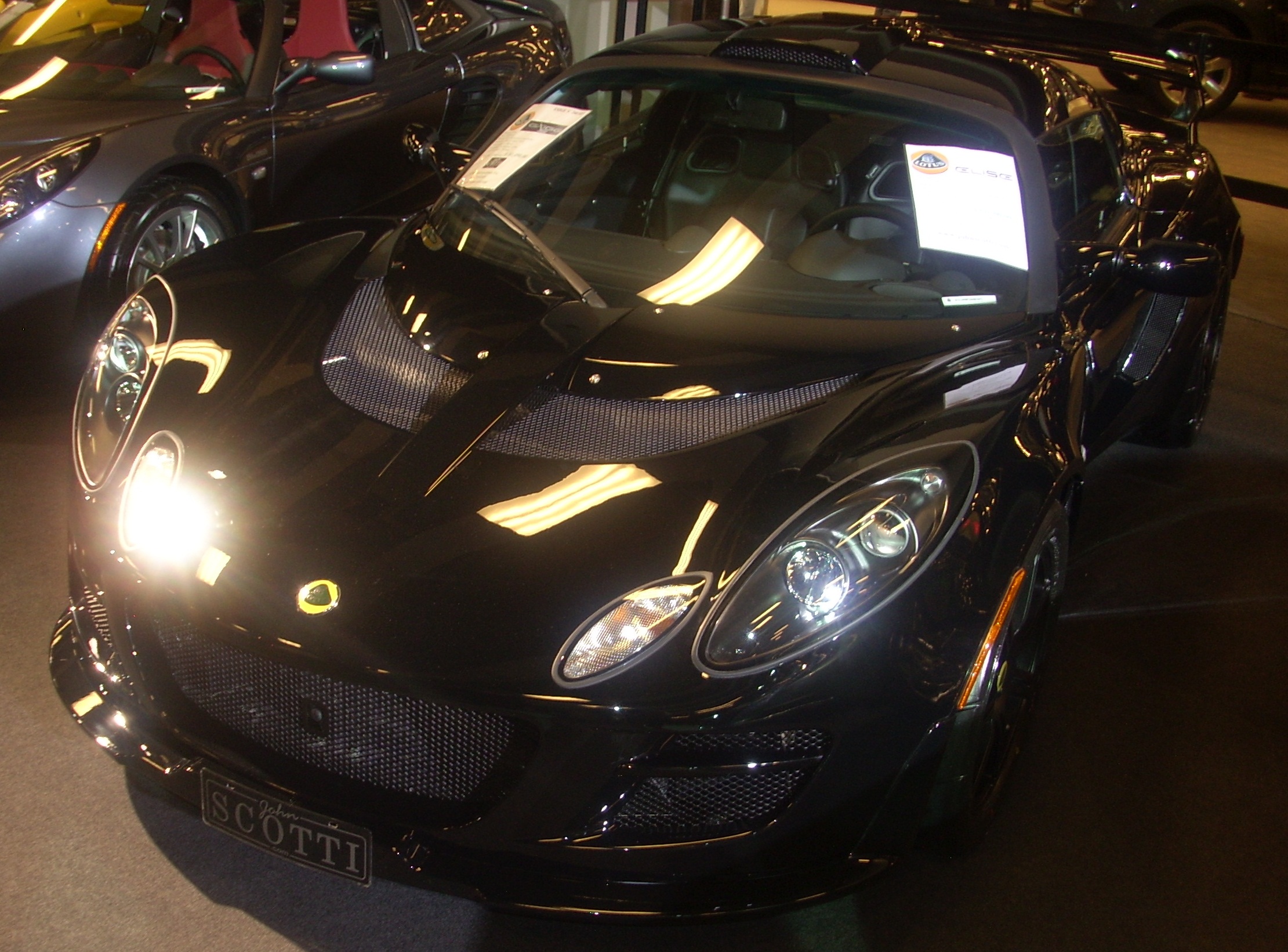
The Lotus Elise is a small two-seat sports car made for driving enjoyment. It’s designed to be light and quick to respond when you steer. People mention it because it focuses more on handling than on being a big, comfortable car.
Leases usually limit how many miles you can drive. If you drive more than the allowance, it can change what you owe at the end, and the allowance also affects the monthly price.
MINI is a car brand (part of BMW Group). It’s mentioned because the speaker is talking about how dealers handle lease buyouts and what fees they can charge.
A processing fee is an extra charge the dealer adds for handling the paperwork. The point here is that it’s one of the few areas where the dealer can make money when the vehicle price is fixed by the lease contract.
These are fees the government charges to register the car. The dealer may collect them, but the money generally goes to the state rather than being dealer profit.
Dealers use “front end” to mean the part of the deal that’s basically the car’s price. If there’s money to be made, it’s usually in how the price and fees are set up.
“Back end” is the part of the deal that’s about how you pay—like financing or other payment options. Dealers often earn money from the payment setup, not just the car’s price.
CPO means “Certified Pre-Owned.” It’s supposed to be a used car that’s been inspected and comes with extra coverage. The segment alleges some dealers charged for CPO items in ways they weren’t supposed to.
An extended warranty is extra protection after the factory warranty ends. The host is saying some dealers added charges for it even when they weren’t supposed to.
A safety recall is when a car maker requires a fix because of a safety problem. The segment alleges some dealers charged customers a lot of money for doing the recall repair.
This means your lease paperwork already lists the exact buyout price. If a dealer tries to charge more than that, it can be unfair or even against what the contract allows.
Fort Lauderdale, Florida is where the host says they heard about the dealer charging issue. It’s an example of the problem happening in other places too.
A title is the legal paperwork that shows who owns the car. When ownership changes or the car is registered, the state may require a new title and charge fees for it.
A lease contract is the paperwork that lists what you have to pay and what the dealer or leasing company is allowed to charge you. The point here is: if a fee isn’t written in the contract, the customer shouldn’t be forced to pay it.
This is a fee a dealer might charge for an official inspection of the car. The host’s argument is that you shouldn’t be charged for it unless it’s actually required and properly documented.
A state inspection is an official check to make sure a car is safe and legal to drive. The host is saying paying for the inspection doesn’t automatically mean you must do every repair unless it’s required by the rules or the contract.
A buyer’s order is the form that shows the final deal details and all the charges. The point being made is that fees listed there can be negotiated rather than assumed to be fixed.
A FOIA request is a way to ask the government for records. In this case, they used it to get complaint information so they could study patterns in dealer behavior.
The FTC is a U.S. agency that helps protect consumers from unfair or misleading business practices. The host mentions it because complaints about dealers were tied to the FTC’s records.
This is a BMW 3 Series sedan with all-wheel drive. The host brings it up because the advertised price jumped after the buyer started the buying process, with extra fees added.
A test drive is when you go drive the car before buying it. Here it matters because the price and fees changed after the buyer already went through that step.
False advertising means the ad doesn’t match what you actually get. Here, the host is saying the dealer’s advertised price and terms didn’t line up with the final deal.
Advertising and price mismatches describe situations where the advertised price or deal terms don’t match what the customer is quoted or charged later. In this segment, it’s presented as a dominant issue type in consumer complaints.
Ceramic coating is a protective product that’s supposed to be applied to the car’s paint. The host’s example says the buyer was charged for it, but it wasn’t actually done.
It means a company advertises a deal to get you to show up, but then the real deal isn’t actually available. With car dealers, the “cheap” price may disappear once you’re ready to buy.
A freedom of information request is a legal process that lets the public ask government agencies for records. In this context, the host says it can reveal dealership-related information (like locations) without necessarily naming specific dealers in the agreement.
Andre Medeiros is a named executive tied to the Nissan finance company mentioned in the segment. The host is saying he was the person who signed/entered the agreement on the company’s side.
Dealer ratings and reviews are scores and comments from customers about how a car dealership behaves. The hosts are using them to help you figure out which dealerships are honest and which ones aren’t.
The FTC is a U.S. consumer-protection agency. The hosts mention it because it can investigate or enforce rules that affect how dealerships market and sell cars.
Add-ons are extra items a dealership tries to tack onto the deal, like add-on packages or extra fees. The point here is that some dealers add them and others don’t.
Washington Honda is a specific Honda dealership. The host is praising it because they say it doesn’t try to add extra charges on top of the price.
LIVE
It's noon here in Ventner City, New Jersey, and our nation's capital, Washington, D.C.,
and this is Car Edge Live for Monday, June 8th with your host, me, Ray, here in my living room
in Ventner City. And well, my damn good-looking son, Zach, and I know some of you folks out there
hate the fact that I call handsome, but I don't care. How are you doing today, handsome?
I'm doing so good, man. I love it. Thank you, Dad. I really appreciate it.
I'm grateful to be back for another episode, another week of Car Edge Live. Today's show,
folks, is brought to you by caredge.com. For those of you that are unfamiliar, my dad and I,
beyond what we do here on YouTube, we have an incredible company and incredible team
with resources back at caredge.com. At caredge.com, we provide a car search. We have Car Edge Pro.
We have dealer invoice pricing. We K-track all the best deals, window stickers. We also offer a
buying service for those of you that are interested in that. We have a research center,
dealer reviews, help with insurance and warranty and so much more. Check it out back at caredge.com.
We appreciate everyone who supports the work that we do to try and make the car buying process better.
Now, the beginning of today's show and what we're going to focus on, excuse me,
is one of the biggest ugly secrets in the car business that just got exposed. Now, Dad,
automotive news has the headline Nissan to audit New York dealers ensure refunds for lease buyout
overcharges. This comes on the heels of the state attorney general from the state of New York.
This is the headline here, which I love. Attorney General James secures refunds
for all New Yorkers cheated by Nissan dealerships lease overcharge schemes. Dad,
help us understand here, what is the big secret? What were these Nissan dealerships doing?
We've got four and a half million dollars come back to consumers. What's the story here?
Well, the story is, and this was particularly from 2020 to 2022, when leases were worth much more
than their residual values because of the new car shortage and the used car shortage,
and people decided that it made more sense to buy out their lease at the end of its lease term,
because traditionally, when it came to leasing, you have three options at the end of the lease.
You can turn it in, give it back to the dealer, you can trade it in, or excuse me, you can just
walk away from it and pay a disposition fee, or you can buy it through most lease companies
at the agreed upon residual value, which is listed on the original lease agreement.
And that is the only thing that you're supposed to be charged for other than state title,
registration fees, and sales taxes if they need to be paid. And Nissan dealers in the state of
New York were inventing charges because, well, they kind of resented the fact they couldn't
make any money on these lease returns. Yeah, so I want to take a step back. I want to take a step
back. Elise, most everyone in our community probably knows what Elise is, but let's explain
Elise is a contract to rent a vehicle for a period of time. And there is a company,
in this case, Nissan Motor Acceptance Corporation, which is the leasing company.
That's the company that you're entering into an agreement with. And that company says that at the
end of that lease term, the lease term is both by time and miles. How many miles you're going to
drive the vehicle up to and how much time is going to pass, typically 36 months, but it could be 24
and it could be 48. And typically, it's what, 10,000 miles a year? Most lease contracts are
written to? 10, 12, 15. So these are the variables that then go into an agreement between Nissan
Motor Acceptance Corporation and you, the customer who wants to drive a car but doesn't necessarily
want to buy it outright. You're renting it. You're signing a lease contract. That contract,
to your point, that has a predetermined residual value. How is the company, put yourself in the
shoes of Nissan Motor Acceptance Corporation for a second? How are you going to determine what the
payment should be for that rental every single month? Well, what they do is they tell you,
here's how much we think the car is going to depreciate based on you driving it for 24 months,
36 months or 48 months and driving it 10,000 miles a year, 12,000 15,000 miles a year.
So sorry if I'm being pedantic, but I want to go deep here to really understand it because you and
a company enter into an agreement with all these stipulations for why the price is what the price
is. And then you have a right in the contract to just buy the car out to your point for that residual
value. That's a great option for a lot of people. Dealers make no money when you do that, Dad. I
mean, you helped people with lease buyouts when you were in the dealership. How does a dealer make
money if a customer comes in? This is like buying a car with a set price. This is buying a car with
a set price. How does a dealer make money when you buy a car with a set price? Explain how,
because I don't think they can. Well, no, they can. Okay, they can arrange the financing. Sure,
so they can arrange the financing if you now need to purchase the vehicle and you're going to finance.
Let's face it, most people that are buying a lease return at the end of their lease,
they're not walking in and paying cash for it, so they need to finance it. But stick with me for
a second, Dad, on the front end of the car deal, the front end of the car deal. They can't make
anything. Boom. That's the point I want to make, because there is a price. It's just the price.
You can't be like, oh, it's the price plus $1,000 because the market's hot. No, there was a contract
with a price. And it says on the lease contract that the charge for the vehicle is X. And X happens
to be the residual value that was based on a percentage of the original MSRP. And if they're
supposed to be any additional charges, they have to be listed on the lease contract. And they're
not because they don't exist. Now, how do dealers make money when they do this? So they can help
arrange financing and they can collect a fee from the lender.
That's separate. I want to make sure everyone understands that. That's separate.
I'm telling you how they legitimately can make money, not illegitimately, but legitimately.
When we used to do it at BMW and MINI, we couldn't make anything other than we could
we could charge our processing fee, which was at that time, it was either $1.99 or $3.99.
And you don't make any money when you charge and collect the state registration fees,
because you have to get a new title for the vehicle. The title to the vehicle was in the
lease company's name. So when you're buying it, it's just going to your name. But there's no profit
to be made on the state fees. So dealers invented fees. They invented, well, we have to do an
inspection for you. You do not. Okay, because you're buying it. You're the one assuming everything,
but dealers would come up with, well, there's $3.99 to do an inspection. Or there's $9.99 for this.
And this was rampant, not just in New York. Well, so that's what I want to get to in a second,
because once we really hammer home how there is no money legally to be made on the front end of a
lease buyout, I appreciate where you're going with the back end. But I just want to keep this as black
and white as possible, dad. If someone comes in to buy out their lease and there is no back end,
and for those of you that are unfamiliar with front end back end, front end is the selling price of
the vehicle, back end is how does the customer choose to finance or purchase it? Imagine you
walked in and you were just with a checkbook and you wanted to pay cash. That's the simplest thing.
So I just want to stay there, dad. I'm passionate about this. There's no money to be made.
There's no money to be made because the price is preset. So then what did dealers do? To your
point, they added on bogus fees. This is from the actual final settlement paperwork that was
done by Nissan Motor Acceptance Corporation. Many investigated dealerships responded to these
incentives by charging consumers $399 for the CPO inspection and extended warranty,
despite Nissan Motor Acceptance Corporation's instructions not to. Some investigated dealerships
went well beyond these charges and imposed CPO certification charges of $2,500 or more.
By just classifying the CPO inspections as repairs, most were nothing of the sort.
Still other customers were charged as much as $3,200 for repairs necessary to implement
the final safety recall. We've got all sorts of things, dad, in this that describe the creative
ways that dealerships found to make money on the front end of a lease vial, which then...
But may I say one thing because you keep harping on, well, how do dealers make money on this?
Well, if your customer comes back at the end of the lease and they want to buy their lease car out
as they are allowed to, as stipulated in the lease agreement, even though you might not be
making any money on that particular transaction, if you do it properly, you will keep that customer
as a customer when it becomes time for them to give... I know you don't want to hear this stuff,
but this is how a dealership has to think. It's not the thought campaign. This is a lost opportunity
for us. This is an opportunity to create a customer for life because we're doing what we're
supposed to do and not looking at not being short-sighted and saying, well, we're not going to
make any money on this. Who wants to do this? Totally, dad. This is 100%. We see IDI being
transparent, being forthright. That's the way that you win business. But the point here is
that unearth this secret. You were just getting at it. Sorry, it took 10 minutes, but I really,
really wanted to hammer home how simple this is, but can become convoluted and complex because
no offense, but you start pulling in the other pieces. Even I'm talking jargon, dad, front and
back end. The point is there's a set price for a lease that you can buy it at and dealers don't
make money, so what do they do? They become creative and they find ways to make money.
Now, you were just saying it five minutes ago. There's no way in hell anyone on earth believes
that it's only Nissan dealerships in the state of New York that do this. This is the secret.
This is the secret of the auto industry. This is happening everywhere in every state or every
brand, and it's not just lease buyouts. The reason lease buyouts have a case here is because they
have a signed contract with the lease company that says there's the predefined one price that you
can pay to buy. This is ludicrous if you think this is just the one action that's out there.
The state of New York, the AG could be going after every brand in New York.
Maybe they are. Maybe they will be.
This is what's getting exposed is this is how car dealerships have found ways to make
to the tune of millions of dollars extra months. Absolutely, absolutely.
And it's BS. No, it is BS. And listen, we know because we did some stories with Jeff Wines here
from Fort Lauderdale, Florida about what was going on down there at Volkswagen dealers in
particular when it came to what they were charging customers, which according to the lease contract,
they shouldn't have been charging. The difference is different states look at it differently.
Some will bring action and try and actually protect the consumers in their states.
Others in some states will turn a blind eye and just say, well, the cost is doing business.
And it shouldn't be. And I get that there's 50 states and every state has their own set of
laws and constitution. But for certain things, it just seems to me that if there was just
one law that oversaw all that to make it easy so that enforcement would become easier,
maybe I don't know. I don't want to make that the story of this, Dad. Yeah, yeah. This is just so
prevalent. Okay, so what was it? 15 dealers got caught initially. And now they're going to look
at the other 45 dealers in the state of New York, Nissan dealers. Only Nissan, yeah. In the state
of New York. And you said, if you think it's only happening on Nissan's, you're crazy. You're right.
Because if it's happening in a Nissan dealership, it's happening in a Toyota dealership. It's happening
at a Subaru dealership. It's happening at Chevy and Ford and all the others. Because
most dealerships are so short-sighted that they can't ever justify doing something for nothing.
Okay, the fact that they might have clocked you upside your head when you entered into that lease
doesn't mean anything to them when you want to buy it out at the end of the lease, in my opinion.
So they want to be compensated for everything. That's making us a little bit less about dealerships
for a second, Dad. What are the things that consumers need to watch out for here? Because I hear
you preaching, which I appreciate. But our audience is not dealers. You're preaching to dealers,
hey, be more long-term oriented. What's your get up on your pulpit for consumers? What are the
things to watch out for here? Because it's difficult when you go back to the dealership
on a lease buyout or as we've proven here, this is not just lease buyouts. It's difficult when the
dealer says, well, no, we have to charge that fee. So what are the things for consumers to do to
watch out for? When a dealership says, we have to say prove it, show me. Where is it written?
Where is the law that stipulates you have to? Okay, call their bluff. That doesn't mean that
they're just going to cave. Okay, well, they'll run it up the flagpole and ask somebody if
perhaps they can wave it this time. But if you're looking at your lease contract,
it stipulates in the lease contract. If you've entered into a lease where you have the option
to buy it at the end, it stipulates what that cost will be. And if there's anything above and
beyond that cost, it has to be listed on the contract. Now, as I said, there's state fees
that have to be paid because you have to register the vehicle. There has to be a new title issued
on the vehicle. So there's certain fees that you can't get away from. But if a dealer says,
no, there has to be a certified inspection fee. Show me where it says that. Let's go line by line
on the lease contract because we can go line by line and you ain't going to find that anywhere.
Okay, show me where it says that I have to repair the car. Now, if it is a state that has a state
inspection that is required because it's a pre-owned car, well, then you can do the state
inspection. But that doesn't mean that the customer has to actually do the repairs,
but you can charge them for the state inspection and you can make them aware of what the repairs
are that need to be done. Now, in some states, they might actually require that you do those
repairs to make it a safety for being on the highway and road worthy. But if it's not stated
in the contract, then hold their feet to the fire and we've seen it happen where some dealerships
will just say, sorry, we can't help you. Either you pay these fees or we can't help you. Now,
we know in the state of Florida, like for instance, in Maryland, BMW and many.
If you are on the bullet, man, I gave you the space, keep going.
You got me going. Leave me alone now. In the state of Maryland with BMW and many,
if you want to buy out your lease, you don't even have to go to the dealer. You can contact BMW
Financial or Mini Financial directly and they can sell it to you directly. You still are going to
have to take care of your state fees for title and registration. Now, having said that, for instance,
in the state of Florida, the leasing company cannot sell you the car because if they sell more,
I think it's more than either three or five cars in a year, then they have to be a licensed dealer.
Well, leasing companies aren't interested in becoming a licensed dealer, which is what forces
customers to have to deal with the dealerships that might not always be on the up and up. So,
I'm sorry. I'll be good now. No, come on. Come on back. Welcome back.
My dad could spend hours getting into the nuances of how complex this is state by state,
but I'm going to leave you with just this, then we'll switch gears. If it's taxable,
it's negotiable. So, it doesn't matter if it's a lease. It doesn't matter if you're purchasing or
paying cash. If it is a taxable fee that's showing up on your buyer's order, it's negotiable. So,
we could spend hours upon hours on this, but I want to cut it there, dad. There is another story
related to this, however. So, we will continue in the same vein, which is this. What 200 consumer
complaints reveal about the compliance gaps dealers keep missing? This is from Car Dealership Guy News.
Now, this I thought was really interesting, dad. The CDG team did a Freedom Information Act request
to the Federal Trade Commission to get 200 entries from them that they could actually
do an analysis on. And here's one of them that they... These are the actual reports that consumers
sent in filed grievances against dealers. Look at this one from 2024. I called about a 2020 BMW
330i X-Drive listed for sale for $26,549. They confirmed it was still available. I went into
test drive. I was ready to purchase the price of the sale. Changed to $38,000. They added in nearly
$12,000 worth of fees that were not optional packages created or removed. This is false
advertising. So, it was really interesting, dad, when the Car Dealership Guy team posted this. You
can see here 79 of the submissions were for used car-related things. Advertising and price
mismatches dominated the issue types of 164. One consumer drove 96 miles to find the price had jumped
more than $10,000, $799 for ceramic coating that was never applied. Florida, out of the 200 that
they got their hands on, had 21 of the filing. The South in general had more than everyone else.
My comment was, this is good journalism. You should re-release this not on a Friday night.
Let's get more eyeballs on these things. So, curious your take on that, dad. FTC,
doing a freedom of information request act, excuse me, to get hands on the actual complaints.
They tell the same story seemingly. Listen, my guess is this is just a guess because
I haven't had any conversations with the FTC, but my guess is you could go back 20, 30,
40, 50, 60 years. It won't matter and get those, get the, file the same request to find out what
the complaints were that were registered by consumers 20 years ago, 30 years ago, 40 years
ago, 50 years ago, and they'll be the exact same as they are today. It is not as if we didn't know
that bait and switch advertising was going on all the time, that advertised prices were not the
price that you could actually buy the vehicles for, because every member of the, of the FTC has
bought a car at some point in their life. Every judge in America has probably bought a car at
some point in their life before they became a judge. Every attorney general in every state has
probably bought a car in a lifetime before they became an attorney general, and they probably
had the same crap pulled on them that, that these people are complaining about. And yet today,
when they are in a position to do something about it, they choose not to. So it's not like
this is suddenly a light has been, been shown. I don't know what's the correct pronunciation
here. Shown on all this nonsense shown on all this. It's, it's, it's been there forever,
and people hate car dealerships and have forever because all this has been going on forever. So
it's time to do the right thing. Now, are there dealerships out there that try to do the right
thing? Yeah, there are. Are there still plenty of dealerships to try and skirt the issue as much
as they can? Every opportunity they get? Absolutely. Are there, are there enforcement agencies out
there that need to do something to choose not to? Absolutely. And that needs to change.
So that's the other piece to this, but CDG, and I will pull back in the state of New York,
we don't have names named. You know, you can do this freedom of information request. Actually,
you don't know what the dealerships are. They give you locations, things like that. You don't
know exactly, you know, who's in trouble. And you can see the same thing here at the state of New
York. Some of these dealerships have been named, but that agreement that we, that we were looking
at before, I'm going to pull it back up on the screen here and show you, this was signed on
January 1st, actually, if I'm not mistaken. And it wasn't signed by all the dealers. There are no
dealers actually named in this agreement. This agreement was signed, yeah, January 1st by Nissan
Motor Acceptance Company, you know, Andre Medeiros, the vice president of operations. He's the
individual entering into this agreement with the attorney general for the state of New York. So
that's one of the big challenges here is like, it's hard to, it's hard to connect back like,
which dealerships are actually doing this stuff? Well, well, we do know in the state of New York,
they did, they did ultimately list the 15 dealers and how much each.
15 up to 60.
No, I get that. I forget what the hell my point was going to be because there was something I
was going to say in regard, oh, my point was going to be the whole thing once again is they admit
no wrongdoing. Okay, NEMAC is admitting no wrongdoing. And, you know, in a sense, they are accepting
responsibility on behalf of their dealers that are the ones that committed the wrongdoing.
And the rationale is that was applied from the attorney general is, well, you as the leasing
company and the lender for people who bought out their leases should have seen this pattern
and should have done something to stop it. So they're at least trying to hold somebody accountable.
But the reality is each and every one of the dealerships needs to be held accountable. And
just one time, one time in my lifetime, I would like to see a dealership that has done things
like this that ends up making restitution or paying a fine, not just make restitution and pay a fine,
but actually someone in authority go on trial, get convicted, and spend some time in jail.
The fact that every time we see one of these things, there's part of the agreement is,
well, nobody admits any guilt or wrongdoing. I'm sorry. You know, all this is happening.
Somebody's guilty and there's wrongdoing. So we hold somebody's feet to the floor, put somebody's
ass in jail, and you'll see how things will dramatically change at the dealership level
if the dealer principle is forced to spend, I don't know, 18 months, 24 months in prison.
Maybe he gets out for good behavior, but I just can't imagine a car guy, I don't know,
getting out for good behavior. You know, my guess is they're going to be lying to the guards all
the time and probably lying to their fellow inmates, trying to set them up for their next
vehicle when they get out of prison. But my point is put somebody away one time, one time in my
lifetime, make somebody really accountable for this stuff other than just writing a big check.
Get back in here. So my dad and I think about this very differently. I'm much more aligned
with positive incentives. So I can appreciate where you're coming from, dad, but I think about it
so differently. Just give people a reason to operate well. My thought is that humans want
to be good inherently. So that's why I bring up the dealer ratings and reviews. Most dealerships
get an A grade for transparency from courage. So it is a few bad apples ruin the bunch. That being
said, this is part of why doing this research and looking and finding A rated dealers and not wasting
your time with F rated dealers or D C rated dealers is so critically important. So
I encourage everyone, you know, as we've talked about today, what happened in the state of New
York with the audit there that's ongoing with Nissan dealerships or what car dealership guy in
their team did with their Freedom of Information Request Act from the FTC. No matter where you go,
what's far as you hear, doing your research on transparent dealers is more important today than
ever before. Finding a Washington Honda, for example, dad, who's one of the good guys because
there are no add-ons. The price you see is the price you get. This information is accessible now.
And so I hear you, you do your thing, you and I think about it very differently. And for that,
I am grateful. Well, you know, I guess that's the boomer in me. You know, that I... And I don't
disagree with you. I think for the most part, inherently people are good, okay? But I think
there are more than a few bad apples that spoil the bunch. And I do believe in my heart of hearts
that nothing will ever change if nobody is ever held responsible. And so, you know, I worked for
a lot of dealer principles in my day. And some dealer principles that I worked for, it was a
punishment system and not a reward system. If you as an employee didn't do what you were supposed
to do, there was punishment, okay? And when there was punishment, more people got with the program
and did what they were supposed to do. When it was a rewards-based system, for whatever reason,
productivity was usually lower and more people just didn't buy in as much as they should have.
And so, I get trying to reward people for positive behavior, but the sad reality is in
most human behavior, it's there's got to be a negative response to ultimately get a positive
response. And so, if somebody ends up in jail, that might elicit the positive response that
ultimately we're all looking for. Let's come here, Dad. Thanks, Joe. We appreciate the kind
of contribution. Does car edge or wood car edge encompass private party transactions of used
vehicles? Or do we just fixate on dealers only or can it translate to private? The information we
talk about here, I think transcends any type of car deal. So, I think it'd be useful across
private party or buying from a dealer. Yeah, you know, if you're asking, can we negotiate with a
private party? That's not a service we offer. Yeah, exactly. And realistically, it's even harder
to hold a private party accountable than it is a dealership. So, I will tell you that because
if a private party lies to you, then you've got to go to court. You've got to sue them.
Let's go here, Dad. We'll end the show on this from C-Dragon. Appreciate it. Just mentioning
car ads suggested during an ongoing negotiation, LOL, you do a great job, the entire tone of
the salesperson change. So, there you go. Feel free to pull out the car edge card when you're
having your next conversation at the dealership. We're back tomorrow with more car edge live.
We appreciate everyone for tuning in, Dad. Enjoy the afternoon. I'm not going to ask you to wear
sunscreen. I know you won't, but it's a real bummer, man. You really, really should.
Um, well, you know, there are some who say that the chemicals in the sunscreen
are worse for you than the... We're not going to let him get that message out to the world.
Wear your sunscreen, folks. There's a lot of research that suggests it's good. We're back tomorrow
with more car edge live. Love you, Dad. Exactly. Love you, too.
If you liked the show, please take a moment to rate, review, and subscribe. It really does
help the show to grow. Thank you for listening.
About this episode
Leasing and dealer pricing get a spotlight as CarEdge Live discusses alleged Nissan lease buyout overcharge schemes tied to 2020–2022 shortages. Hosts explain how residual value sets the buyout price, then argue dealers allegedly add or reclassify fees on top—sometimes charging for CPO inspections, extended warranties, and even recall-related repairs. They connect it to broader “bait and switch” advertised pricing, share consumer examples, and offer tactics: read the lease line-by-line and ask, “Where is it written?”
Today on CarEdge Live, Ray and Zach discuss the latest on what happened in New York. Tune in to learn more! Hosted by Simplecast, an AdsWizz company. See https://pcm.adswizz.com
for information about our collection and use of personal data for
advertising.