It’s a way to shop for insurance by starting with your budget. You enter the price you want, and the site shows you options that can work at that level.
Fail-safe strategies are backup protections built into the engine computer. If the car detects a problem, it can change how the engine runs to help prevent damage.
Idle control is how the engine computer keeps the car from stalling when you’re barely moving. “Advanced” versions help it stay smooth even on rough, difficult terrain.
Flex fuel support means the car can handle more than one type of fuel blend. The engine computer adjusts so it can run correctly without you manually changing settings.
Dirtfish Rally School offers rally driving training and experiences. They’re sponsoring this part of the podcast and inviting listeners to sign up for a course.
Term
limited four wheel drive
This means the car can send power to all four wheels, but not in a fully “unlimited” way. That can change how well it grips on slippery rally roads, especially when you’re exiting turns.
A braking zone is the part of the course where you slow down before a turn. Braking timing and strength matter because it affects how the car turns and grips.
“Stage times” are the measured times a car takes to complete each timed section (“stage”) of a rally. Rally strategy often focuses on matching or beating competitors’ stage times while managing grip limits and risk.
It means leaving a turn as fast as possible. If you exit corners quickly, you spend less time speeding up again and can often set faster overall stage times.
“Loose” here means the road surface isn’t solid and grippy. The tires can slip more easily, so the car may not follow the line you expect.
Term
OTL
“OTL” is rally shorthand for being unable to keep going in the normal competitive flow. It usually means you’ve fallen behind the event’s timing or couldn’t continue as planned.
Concept
super rally
“Super rally” is a rule that lets you keep participating even if you had to stop earlier. Usually you can restart later, but there’s some kind of penalty or special conditions.
Term
toe out of the ditch
“Toe out of the ditch” here is describing a recovery after the car went into a ditch and had to be pulled back out. In rally terms, getting the car unstuck quickly matters because time loss can be significant and the car may also need checks for damage before continuing.
Recce is when the rally team studies the course before the race. They use that information to write notes so the driver and co-driver can call out what’s coming during the stage.
In rally, the co-driver is the person who helps the driver by reading the route notes during the race. They call out what’s coming so the driver can react at the right moment.
Rallying is racing where drivers go through timed sections on roads that are closed for the event. It’s not like a normal racetrack—conditions can change a lot from stage to stage.
They talk about a rally driver training program in Ireland. The idea is to coach young drivers step-by-step so they can reach the highest rally levels.
The World Rally Championship is the biggest rally racing league in the world. It’s where the best rally drivers compete internationally.
LIVE
Insurance isn't one size fits all.
That's why customers have enjoyed Progressive's Name Your Price tool for years now.
With the Name Your Price tool, you tell them what you want to pay, and they'll show you
options that fit your budget.
So whether you're picking out your first policy, or just looking for something that
works better for you and your family, they make it easy to see your options.
Visit Progressive.com, find a rate that works for you with the Name Your Price tool, Progressive
Casualty Insurance Company and Affiliates, price and coverage matched limited by state
law.
This podcast is brought to you in association with Link ECU, the specialist performance
ECU's for Subaru's in rallying.
Link ECU's offer plug-in convenience and advanced tuneability with fully adjustable
fuel and ignition maps.
They're designed to perform in harsh motorsport environments with fail-safe strategies to
protect engine components and proven durability in extreme rally scenarios worldwide.
Advanced idle control allows for smooth operation in tough terrain, and flex fuel support means
you can run pump gas or E85 without manual switching.
With data and diagnostics and customizable strategies, the bottom line is Link ECU's
gives Subaru rally drivers the power, control and confidence needed to push limits while
maintaining reliability and ease of use.
Thank you for listening to Spin the Rally Pod, brought to you by Dirtfish Rally School.
For your chance to experience life behind the wheel of a rally car, head to drive.dirtfish.com
to find the course that's right for you.
What are you waiting for?
We're right here waiting for you.
Hello everybody and welcome back to another episode of Spin the Rally Pod.
This is a special one because it takes someone very dedicated indeed to compete in three rallies
across three continents over three weeks.
Ifa Rafter, our woman and motorsport driver, is joining us today and she is that driver.
Ifa, thanks for joining us again.
Hi, Josie.
Yeah, no, it's great to be back again on the Spin the podcast.
Yeah, it was an incredible few weeks that I've had and very lucky to get the opportunity.
I mean, we're going to dive into all of it.
We're going to get into the nitty gritty into the details, but start with an overview for
some folks who may not know.
Where have you been the last month?
What have you been up to?
We started off and we went over to Wales for a round of the British Rally Championship
and then straight from there we went to the USA for the Olympus Rally for our second round
in the championship and then straight from Seattle on to China where first time ever
there and I competed in a rally there as well.
So three different, sorry, three different continents with three different teams.
It's been incredible and even three different co-drivers in each rally.
So big challenge and yeah, it was nice to get home, but really cool experience.
And not to mention you landed on the top step of the podium in class and two of those three
actually, yeah, two of those three ended up top step Olympus after some timing correction.
You ended up third on the podium in class.
So you've been on three continents, three cars, three teams, three co-drivers and three
podiums.
Yeah, it's good stats, but no, for sure.
Look, you know, each of their own challenges each rally, the first round in the British
Rally Championship, you know, it's still a highly recognized championship, really good
competition. And of course the stages, the gravel stages in Wales are famously known
for like how good they are, fast and technical.
So we really, really enjoyed that, but it gave us a really good starting position and
a strong kind of strong field going into Olympus, which is an important round.
Yeah, look, it's supposed the whole rally didn't go the way we planned it for Olympus,
but looking at stage times, you know, our pace over the weekend was quite strong.
And I think that was, you know, the positives we could take from it.
Of course, there's always room to improve and build on it.
But we came in with a good mindset and a good kind of feel for everything, which is
really, really, you know, positive for us as a team.
And yeah, we could have probably had a good, strong result in it, but that's the way
rallying goes. Sometimes you don't know, it doesn't always go to plan, but still to get
a, you know, finish on the podium there was still strong and good base for the rest of
the championship.
So for anyone who is not caught up with the happenings of Olympus, why don't you walk
us through it?
Yeah, yeah. So Olympus rally, really good recce done, got into the rally, morning loop
stages was going really well.
Good night start to the rally.
There was no kind of, I suppose, no moments, no risks, but it was still a good place to
start off.
And we're looking at our pace compared to the rally two cars and Travis in the same
classes. This is the limited four wheel drive.
We were building on the pace, just unfortunately on a stage later in the day, coming down into
a braking zone for a, we call it an island, I forget what you call it coming down, coming
down, breaking in for a Delta.
We just, I suppose misjudged the braking because it was really fast section up to it.
And of course in the rally three, you know, when I'm trying to put in stage times and
be as close as I can to the rally twos, you know, I'm trying to push and trying to be
able to carry as much speed, of course, out of the corners as well.
But yeah, we just got caught out in the braking zone and being running kind of up the field,
which I'm not so used to.
Normally I'm a bit further back.
The feeling is a clear line.
I just got caught out in a bit of loose and it pulled me out where we got stuck.
Now, fortunately we didn't do any damage, but where we were, we weren't able to get the
car out.
There was water in the middle of the Delta from a drainage pipe.
So the ground was really, really soft.
So every time we tried to drive out, we were just digging deeper.
So we had the shovels out and we were digging, but unfortunately that wasn't working either.
So, yeah, we just went OTL there and then we went under super rally for the rest of
the event.
But we built, built back up the pace again and tried to get on as quick as we could and
trying to get the stage, stage results, sure, what we're able to do.
And, you know, still a strong weekend in that, from that side of it.
But yeah, unfortunately just didn't get the overall result we were hoping for.
Yeah, I mean, that's the less glamorous side of rally, you know, I think a lot of the
time, you know, we see the photos and the videos of the dust cloud and the fancy slides
and, and sometimes you just get 11 wheel stuck in the wrong place and you spend
hours digging.
I mean, for anyone listening, Ifa and Hannah came back to service when they got a, got
a toe out of the, of the ditch.
They came back to service completely covered head to toe in dirt.
So there was evidence, you know, very clear evidence of how hard you guys were working
and sometimes, sometimes that's just how it goes.
But okay, let's, let's go broader picture.
Wales, Washington, China.
What, what are some of the huge, either differences or similarities, maybe like road
conditions.
Tell us a little bit about what it's actually like to be rallying in these three
different places.
Yeah, like I suppose for British Rally Championship in America, I now have the
experience of kind of what both events are like, kind of the championship, how it's
run, I've, you know, you know, people there and that definitely helps having connections.
I suppose it just better comfort, you know, it's a bit comfortable and you know people
and you know, if you need to ask any questions where you can go to.
So, yeah, the, you know, from the British Rally Championship, you know, you get to do
the recce, two pass recce, same as America.
And as I said, I had co-drivers in that I knew for both of them, met them
plenty of times before Hannah for Olympus, you know, really strong relationship in the
case.
So that was kind of, I suppose all familiar, all, you know, good understanding, good
supporting around me for the rallies.
And then I went to China and I had a co-driver I never met.
Um, I didn't know anybody there.
Everyone I met was for the first time, it was a big, big, I suppose, challenge, um,
to kind of settle in.
And of course, English is the first language in UK and America.
And that's always just a given wherever you go and you're up in America, that people
are able to speak English.
And that was probably one of the biggest challenges in China was that a lot of people
actually didn't speak English.
So there was a lot of Google translate for, for nearly everything.
Um, and of course, just, I suppose the standard of rallying, um, in UK and America is very
high, um, you know, the cars, the competition, everything is at a really good standard and
a really good level.
I think, you know, I suppose China is just, it was running a bit differently.
Um, it's probably not up to the same standards.
Yes.
But, uh, yeah, it was definitely a challenge.
It was definitely difficult, a lot harder conditions as well.
We were rallying in, um, I found for my pace notes in China, cause obviously I had a new
co-driver in that I didn't use what I would normally do.
It was a lot very simple.
Like I brought it back to just like a four right and a distance three left 60, which
was very, very like, I suppose not what I would normally do when I have, um, my own
co-driver and I tried to have a bit more detail on that.
But yeah, it was definitely a challenge, but getting to each of those three places within
three weeks is really, really cool.
And I met so many new people over in China as well that I'd ever met.
There's relations there now that like, you know, um, at head hoses, uh, from Norway,
which was really cool to meet her.
Cause I've seen, she's doing quite a lot as well in like the rally cross worlds.
And yeah, it's just these new connections that you can carry forward as always.
But, uh, yeah, different challenges, uh, where you go, but, um, then you look at
Olympus, it was the biggest rally I've ever done, um, in terms of stage
kilometers, it was, you know, it was like a WRC event, which was really, really
cool, um, to do that and to see, you know, how we'd manage trying to keep, you
know, keeping the folks over a long weekend like that after, you know, we
did long recce as well, but trying to maintain that and see, uh, especially coming
back off a rally the weekend before it's just, you know, but all the see time is
so incredible and it's so valuable to try and build that pace.
Absolutely.
I mean, there are very few people that I think can claim truthfully that they
have done what you just did.
Did anyone, I mean, leading up to this stretch, you, it was, it was pretty
funny when we were walking around the service park at Olympus and I said, you
know, how are you feeling about China?
And you said, I literally haven't given it an ounce of thought because I have
to be where I am right now and I can't.
I don't have enough mental, I mean, none of us do.
None of us have enough brain space to, to be thinking about something that is
so all encapsulating on top of something that is already completely taken over.
Was there anyone who gave you any good advice?
Yeah, of course.
It was for China.
There's not many people that I know of that have rallied there.
So, um, you know, it all came up quite quickly.
So of course it was literally only in the couple of weeks beforehand.
And as you said, I had to focus on, uh, first the British rally championship and
America, man, you know, I'm doing the fall American championship.
So I really wanted like, that's where I was putting my folks into to make sure
I had everything right.
So yeah, I didn't, I suppose, get the time to think about China.
Just took it as it came, but someone that I didn't know that had rallied over
there quite a lot was Naimak Shea.
So first person I rang up with him, um, yeah, I asked for, well, I asked him,
you know, do you know these people that I'm getting in contact with, is it
actually real or what's happening here?
Cause this is so random.
Yeah, but, uh, no, he knew the, he knew the team and he knew the guys and the
organizers and, uh, so the organizers were inviting international drivers over
to try and, you know, I suppose get more people over to see what the rallying is
like there and try and create some tourism as well.
But you knew the team, he knew everything that was happening.
So, um, I asked him, you know, what's it, what do I, like, what do I expect
when I come over here and he was like, just go over and enjoy it.
It isn't definitely an experience and it's worth going over to see what it's
like meeting the people.
Um, but he was like, just lower your expectations, um, because he says,
you know, you're really just going over there for an experience.
He said, it's not going to be like anything that you've done in Ireland and
Europe or in America.
It's just going to be completely different.
The cars that use over there are completely different.
Um, yeah, I said everything is just so, so different.
So everything, you know, don't go over with any expectations.
Just go over, have the experience and enjoy it and see what comes from it.
So, um, I took that on.
And that's literally what I did.
I was on the flights over and I was like, I have no idea what I'm in for,
but, uh, yeah, I was lucky to make that flight as well.
Thanks to you.
That was a realization.
Yeah.
Standing at podiums at the end of Olympus and I thought I would play a prank on you.
I, I like, you know, I had a copy of Eva's flight reservation.
I pulled it up on my phone.
It's supposed to be the next day at 1255 in the afternoon on the Monday.
We're still standing at podiums on Sunday evening and I was going to play a joke.
Oh, you feel your flight's not tomorrow.
It's tonight.
And then I zoomed and it was at 1255 AM that night.
So we jetted over to the airport, made it with plenty of time to spare.
Even time for an Irish beer, perhaps on the way, but.
Which is probably what set you up for success.
Yeah, yeah, that was what I done it.
That was it.
Amazing.
Well, you know, I think.
Two of those three events and, you know, geographical areas have such
significant rallying history.
I mean, of course, you know, the British Rally Championship has been going on for
Eons, the Olympus Rally has all sorts of not only American history, but of course
WRC history for China rallying.
I mean, not, not so much, you know, that's, that's newer there.
So it's amazing to have seen you, you know, kind of bridge that gap.
And of course, at home in Ireland, you know, you've got Motorsport Academy,
you've got, you know, John Coyne running countless teams now.
And has, you know, Ireland has specifically made such an investment
in training up young drivers.
Tell us a little bit about, about that, about the difference in terms of,
you know, coming from a geographical region with so much history and so much
investment in rally and Motorsport to somewhere with, that's a little bit newer.
Yeah, of course.
I suppose, you know, Ireland has always had such a strong history of rallying.
You know, over 10 years ago, the amount of world cars that were in Ireland was,
it was incredible.
It was probably outrageous to be honest, but yeah, it's always had a really strong
history, especially time at rallying at the weekend.
We just came from a clearly rally in the lakes, which is probably the second
biggest event in Ireland after Dunnegal.
But yeah, it's phenomenal.
And then in more recent years, John Coyne, you mentioned to set up the Motorsport
Ireland Rally Academy.
And I think anyone involved in motorsport, most forms of motorsport
and especially in rallying can see what that academy is doing across the world.
You know, they have John Armstrong and Josh Merkeline in both an M-Sport rally
on cares, which is incredible at the highest level of rallying.
And to see them come up through the academy and do be now at the top level of rallying
and see what they're achieving and the pace that they're both developing at that
level is incredible.
But as you said, there's, you know, this is, you don't see this in every country
and what they're achieving and what John and the academy are doing is taking up
young drivers, training them through the different ranks, whether it's nutrition,
training, driving, coaching, all aspects and trying to find that driver to bring
into the World Rally Championship, you know, it's so strong.
We see here in Ireland, you know, from 14 years of age, you can start rallying
in the Irish Forest and that class has been like the last few years, that class
is just growing and growing in numbers.
And then, of course, you have the Craig Green Foundation as well that supports
the, that class, that category is called the J1000 category.
So you see them supporting it as well.
So the amount of kind of, I suppose, support, the amount of encouragement
that young drivers now in Ireland are getting is so incredible.
And hopefully we can see that spread as well across the world in different countries.
But yeah, coming from that background, I suppose I started rallying later in life.
So looking at the opportunity now from such a young age and being able to take
on these chances, but it also helps young drivers see, you know, if Josh and
John are at that level, what they're able to do and what, you know, if they put
in the work what they can achieve.
So definitely coming from that is, it's incredible.
There's, yeah, there's a lot of support for rallying in Ireland.
But when you come to, I suppose, America and China, there's probably not the
fundamentals there for young drivers to get into rallying just yet.
And hopefully it's something we can see develop, you know, with the Dartfish
women in motorsport driver program.
I think that's definitely expanding and showing its profile as well.
In the US, it's incredible.
Like, you know, there's plenty of young drive, not drivers, plenty of young
people into motorsports coming to pack expose.
But I think the more we can kind of have that platform for young drivers, young
co-drivers, wannabes that are trying to get into the sports is so important.
But, you know, one thing actually in China was there was a seven-year-old
rally driver and I couldn't get over it.
Driving the stages, competing, competing.
So his dad was driving the road sections and then there's a seven-year-old doing
the rally.
But what was more crazy was that this was a second year.
So at six years of age, he was doing the championship.
And now, well, fast for seven year olds for sure.
But like by safety standards, it probably wouldn't be, you know, with the
seats, probably wouldn't get away with it in America or Europe at this point.
But I still know that opportunity to be, you know, getting that feel for
a car and how it handles that age is quite incredible.
Yeah, what an opportunity.
Unlike anything else.
I mean, imagine where he'll be when he's tall enough to reach the ground.
So, no, it's just trying to get young people into sport.
I suppose, you know, they're just kind of taking over now.
But I do think there is something to be said.
And first of all, you saying that you got into rally later in life.
Let's just be clear.
That's a relative term.
Your own, I mean, you got into it, what, when you were 20, 19?
Well, started driving when I was 20, yeah.
Yeah.
So still young by the rest of the world standards, but I hear you.
Coming into it at 20, I mean, what do you feel like?
What has prepared you to be able to do something like this?
I mean, I know you quite well at this point.
And so I know that something that is inherent to your nature is that,
A, you don't turn down an opportunity and B, you'll do whatever it takes
to make that opportunity happen.
But is there something in your training or in your, you know,
upbringing or whatever that has, that you think has really prepared you
to take on moments like this?
Naturally, since I was very, very young, I was always very competitive.
You can see that at the rallies.
Yeah.
So I'm so competitive and I think sometimes it can be maybe quite hard on myself
when I come back in, but like, I know it's just because I know I can do better.
I know that there's more in it and I want to get that.
I'm always looking for more and looking to be better.
So that side of it is probably, you know, when I came in and I started
at driving at 20, like that was difficult for my mindset because when I
do something, I just want to automatically be really good at it.
But sometimes you have to work at it.
And of course, you're just rallying against other drivers that have, you
know, that have the experience that have done it before.
So coming in, you know, it takes a while to just get the seed time,
get the experience.
And yeah, that took, you know, just built that up over the last few years.
And the mindset has always tried to, you know, if you put in as much work
as you can and be as best prepared as you can, you know, results will come
and it just takes a bit of time.
But yeah, the opportunities, I try and take every single opportunity
that comes up.
That's for sure.
I just find that, you know, if an opportunity comes up, you take it,
you don't know what's going to come from it.
Like going to China, I had no idea what I was in for, what was going to
come of it.
And I still don't, but it was definitely worth taking that, that
chance, I suppose, going over and seeing what it's about.
You know, everything, you know, rallying is such a sport, like you have
to be in the right place at the right time.
And so that means just taking every opportunity that you get.
Not knowing if anything will come from it, but the chance that something
will or something positive might come from it is always worth the chance.
So that's my mindset with everything in, in rallying and it can't be tea time.
So even if it is some random carryout in China, it says you time to be in a
solo, you know, practice.
So that's what it's all about.
It's trying to get as much miles as I can.
Absolutely.
I think, you know, here at Dirtfish, we always say, you know, you can teach
someone how to drive, you can't teach that the personal drive, you know, no
pun intended, but you can't teach the, the, the work ethic and you can't, you
can't beat that into someone's head necessarily.
So we always, you know, we say that we try to attract the, the, the people
that will work their butts off and will catch three international flights over
three weeks and, you know, do whatever it takes, um, because like you said, like
that is the part that sets you apart from everybody else.
Um, so I admire that.
I mean, tell us a little bit about, I'm sure there were a whole bunch of challenges.
I know one of which was that you struggled a little bit eating in China, but
other than that, what, what would you say was like the top one or two challenges
in this, the over these past three weeks?
Probably the traveling and the time, um, what do you call it?
Difference, time zone.
Time difference, time zones.
Yeah.
Uh, so yeah, probably the biggest challenges over the last three weeks, um, the
time, time difference in the time zones, just adjusting to that.
You know, I've come from Maryland or from Europe to US quite a few times now and
they, you know, you can settle into that.
Okay, but I found the first few days when I traveled from US to China over there,
I just didn't know what was going on for the first few days.
That was probably the most difficult cause I came from Ireland to Seattle,
which is eight hours behind.
And then I went to China, which was like 14 hours.
Like it was, I actually don't know, but the times are like, I had went like
nearly two days ahead of myself and I was just so confused on everything for
the first few days.
So that was quite a challenge.
Um, I suppose the food, I, I'm not the best eater and I found the food quite, quite
tricky in China, especially after a week, you know, you're trying to eat right
before the rally, but it's always more difficult during the events.
Um, so yeah, that was quite a little, but look, I'm definitely getting more
used to the traveling and more used to, um, being put into scenarios where I
don't know people and just trying to adjust to that.
Um, which I don't mind is also a great way to kind of get to know more people
and, um, yeah, I made some great people over there as well.
So that definitely helped.
But yeah, that was the main challenges.
Um, adjusting to a new car and a new co-driver is probably pretty tricky in China.
Um, the cars aren't up to the same standard as they're in US and here.
But, uh, again, it was still about seed time and getting that feel for it.
So yeah, first.
Well, you know, we have lots of exciting things going on right now.
Um, Yfa and I actually just got off of a not recorded call where we are
dreaming up, um, our 2026 women in motorsports summit for anyone listening
who has attended our summits in the past.
I do apologize that it has taken this long to get you women in motorsports
summit dates, but that is coming out very imminently, or maybe it will be out
by the time this podcast comes out.
Um, the, the, you know, two sides of the same coin about the summit being pushed
to later in the year this year is that our women in motorsport driver
program has been keeping us very, very busy.
And that is a very good thing because it means that Yfa is contesting the
entire 2026 ARA national championship.
It means that we've got young women that we're trying to get into cars.
It means that we're fundraising.
We have an online auction going on as we speak, as we're recording this
podcast to raise money for the women in motorsport initiative.
Um, but it also means that I have failed to get a date to all of you amazing
supporters for our summit.
So Yfa and I just got off a call where we've been talking about those details.
Um, that is going to come out very soon.
We're very excited about it.
Yfa, I love having you represent women in motorsport all over the world, wherever
you go.
Um, but of course, always want to reiterate, you know, Yfa is not going to
any of these events, you are not showing up in any paddock as anything
different than a driver.
You know, there is nothing.
I always say, you know, the goal of dirtfish women in motorsport is to have
it not have to exist anymore.
You know, we don't need to plaster women in motorsport on the side of the car
when we have a 50 50 equal field.
So Yfa, you are the most brilliant representation of dirtfish women in
motorsport and of just being a kick ass driver and competitor and human being
wherever you go.
So we love having you on the team.
Everyone who's listening can look forward to spending a lot more time with
Yfa, right?
100% for sure.
Um, yeah, no, as I said many times, this opportunity has been so special, but,
uh, be part of the program and have Josie support dirtfish support from the
beginning when you didn't know me so well, but, you know, over the last year,
we've really come a long way and I think, um, yeah, the program has really,
really developed and it's only going to get stronger from here.
And to be part of it from this point has just been an incredible, uh, experience.
Well, that's it from us today on spin the rally pod.
As always, if you want to get involved with dirtfish women in motorsport,
you can always email me at Josie at dirtfish.com.
In any way, we would love to have y'all on board.
Yfa, thank you so much for the time and we'll see you at the next one.
Yeah, 100% cow weight.
Bye.
Yeah.
About this episode
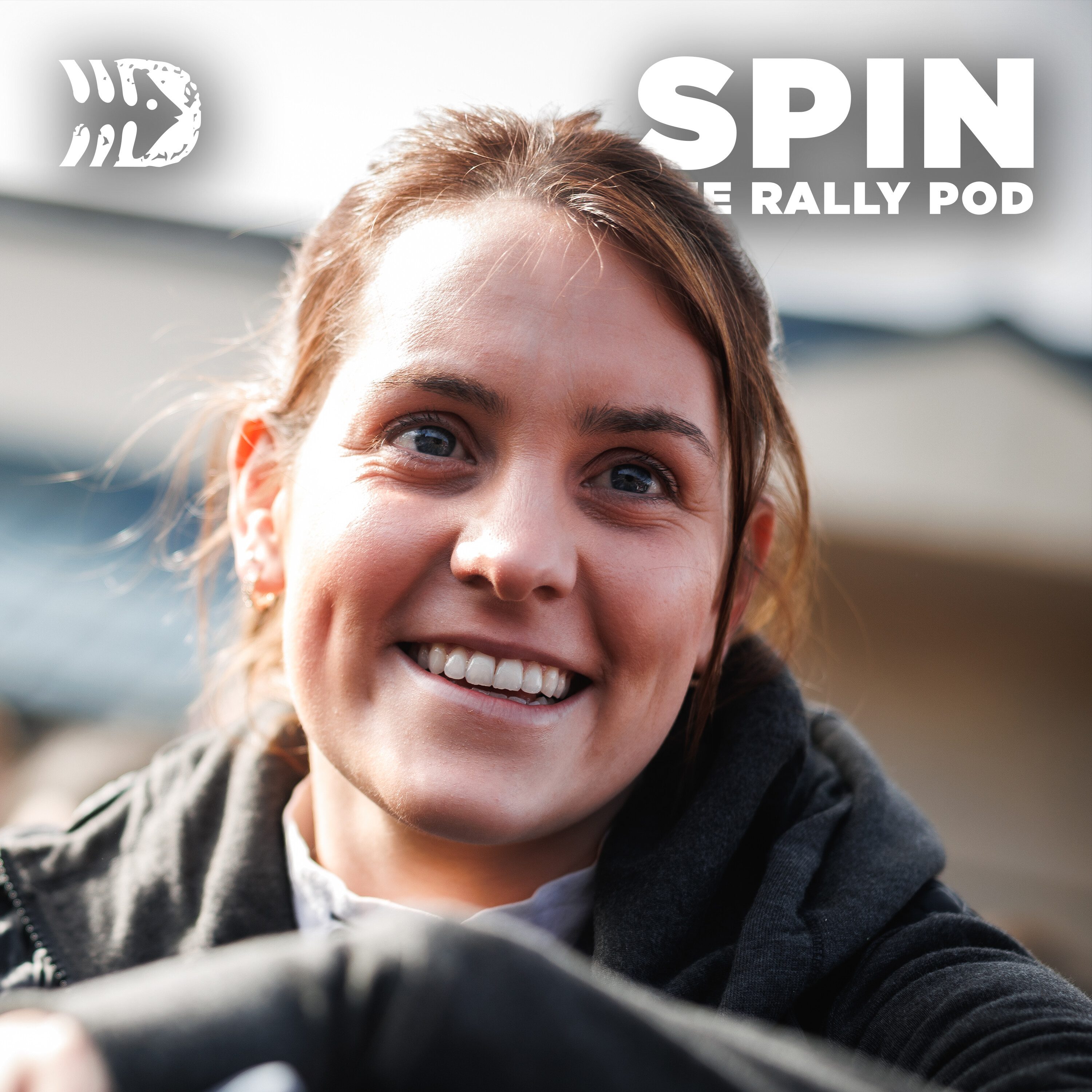
Aoife Raftery reflects on an intense three-week run that took her from Wales to the USA and then China, with podiums, timing corrections, and plenty of travel fatigue along the way. The conversation moves between rally logistics and the realities of adapting to new co-drivers, pace notes, and unfamiliar conditions. There’s also a wider look at driver development, from Motorsport Ireland’s academy to youth categories and women-in-motorsport initiatives.
Not many drivers can claim to have contested three different rallies on three different continents with three different co-drivers in two different cars. But Aoife Raftery is no ordinary driver. The DirtFish Women in Motorsport driver talks to Josie Rimmer about the challenge of the Severn Valley Stages, Olympus Rally and Mile Taiping Lake Rally in China.