Tread depth is how deep the grooves in your tires are. It's important because deeper grooves help your tires grip the road better, especially when it's wet or snowy. If the grooves are too shallow, your tires won't work as well and could be dangerous.
The sidewall is the part of the tire that goes from the tread down to the rim of the wheel. It has important details about the tire and can be damaged, which can make the tire unsafe to use.
The DOT code is a label on tires that tells you when they were made. The last four numbers show the week and year, helping you know if your tires are too old to use safely.
Tire depth is how deep the grooves in your tires are. Deeper grooves help your tires grip the road better, especially when it's wet. If the grooves are too shallow, your tires won't work as well and can be dangerous.
Wheel spin is when the wheels of a car turn quickly but the car doesn't move forward properly, usually because the road is slippery. This can make it hard to control the car.
Hydroplaning is when your car's tires lose grip on the road because of water. This can make it hard to steer or stop, which is dangerous, especially when driving fast.
An all-weather tire is made to handle different weather conditions, including snow and rain, so you can use it all year long. It's not as good in winter as a special snow tire, but it's more convenient because you don't have to switch tires every season.
A winter tire is specially made for driving in cold weather, snow, and ice. It has a different design that helps your car grip the road better when conditions are slippery.
A dedicated snow tire is made just for driving in snow and ice. It works better than regular tires in winter but needs to be taken off when the weather gets warmer.
All-season tires are made to work well in different weather, like rain and light snow. They're a good choice if you want one type of tire for the whole year instead of switching between summer and winter tires.
The three-peak mountain snowflake symbol shows that a tire is good for driving in heavy snow. It's a sign that the tire has been tested and can handle tough winter conditions.
UTQG ratings are numbers that tell you how good a tire is at lasting long, gripping the road, and handling heat. They help you choose the best tire for your needs.
All-wheel drive means that power goes to all four tires of a car, which helps with grip on slippery roads. But it doesn't help you stop faster or turn better than a car with just two wheels powered.
Low rolling resistance tires help cars use less energy, which is important for electric vehicles to go further on a single charge. They are made to roll easily on the road, which can sometimes mean they don't grip as well in certain conditions.
The Tesla Model S is a fancy electric car that can go really fast and travel far on a single charge. It's known for having a lot of high-tech features and a comfortable ride.
Cost per mile helps you understand how much you're really spending on tires. If a tire costs more but lasts longer, it can actually save you money in the long run.
A 100,000 mile tire is a type of tire that is expected to last for about 100,000 miles before needing replacement. They are usually made to be durable but may not perform as well as other tires.
High performing tires are made to give better grip and handling than regular tires. They help the car drive better, especially when going fast or taking sharp turns.
Tire testing is when experts check how well tires work in different situations, like on wet or icy roads. They look at how well the tires grip the road and how long they last.
A treadwear test checks how fast a tire wears out while driving. It helps people know how long their tires will be good for before they need to be replaced.
Ultra-high performance tires are special tires made for fast cars. They help the car handle better and grip the road more tightly, especially when driving fast.
Michelin is a well-known company that makes tires for cars, trucks, and other vehicles. They create different types of tires for different weather conditions, like summer and winter.
Summer tires are made for warm weather and help cars handle better on dry and wet roads. They aren't safe to use in cold weather or snow because they can become hard and slippery.
All-terrain tires can be used on different types of surfaces, like roads and off-road trails. They have special patterns to help with grip on dirt and gravel while still being comfortable to drive on regular roads.
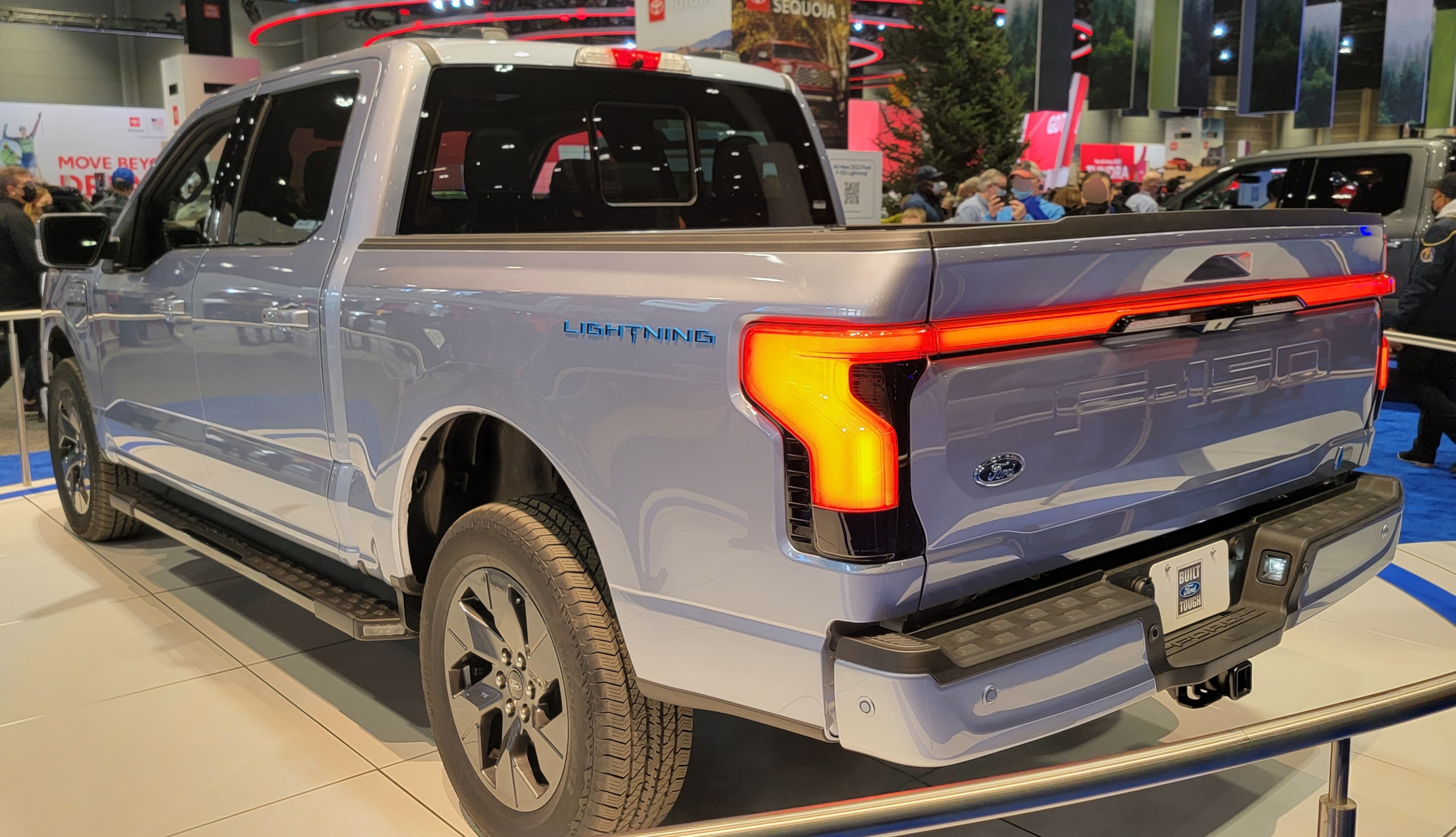
The Ford F-150 is a big truck that many people use for work or towing things. It's popular because it's tough and can handle a lot of different tasks, making it a favorite choice for many drivers.
The Subaru Ascent is a big family SUV that has room for several passengers and their stuff. It's great for driving in different weather conditions because it has special features that help it grip the road better.
The Tesla Model Y is an electric SUV that runs on batteries instead of gas. It's known for being high-tech and having a lot of space inside, which makes it a good choice for families or people who want a roomy car.
The Tesla Model 3 is a smaller electric car that you can charge instead of filling up with gas. It's popular because it can go a long distance on a single charge and has lots of cool features.
LIVE
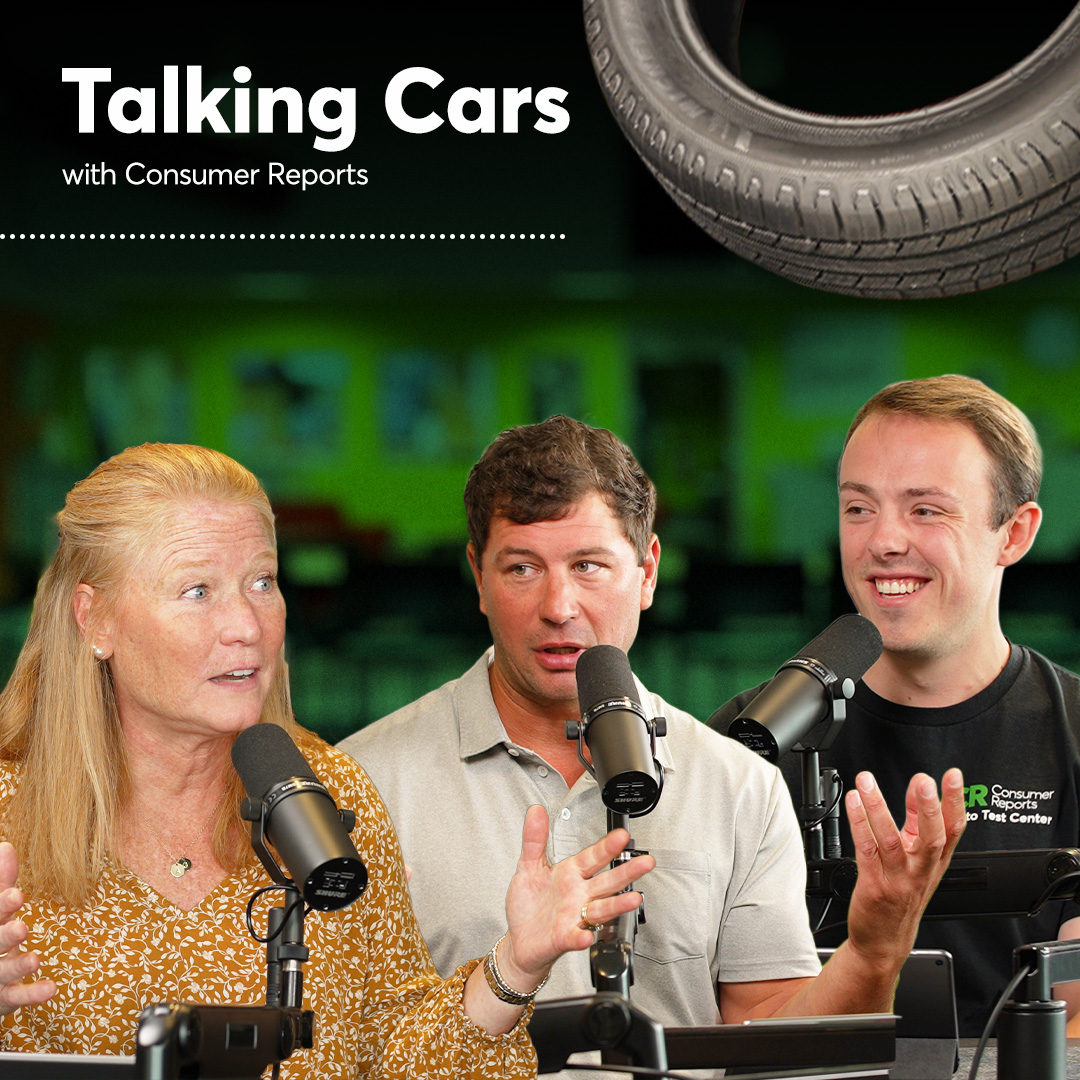
Hi, and welcome to Talking Cars. I'm Jennifer Stockburger.
I'm Ryan Pislakowski. I'm Gordon Jengres.
And as you can see, we are here with our tire experts because in this episode,
we're going to talk tires, tires, tires. It is by no accident the timing of new tire ratings
and talking tires. As for many of us, there's a little bit of a nip in the air. We've had some
cold mornings. And even if you don't live in an area where the seasons change a lot,
you may need new tires. So let's jump right in with how do you know when you need new tires?
And we'll go to you, Ryan, first. How do you know?
Well, hopefully before you slide off the road with a snowstorm.
Exactly.
No, hopefully that doesn't happen. But no, for real, you should be checking your tires monthly
for tread depth, just to condition the tires. The age, you want to make sure you have at least
four 30 seconds. That's when you really should start shopping, what we say. So
four 30 seconds is about the distance between George Washington's head and the top of the
quarter. So you can just to give you an idea, you dip the quarter and upside down and kind of
see where the, and looking across the tread, see where, see where, how much room you have or
don't have between his head and the edge of the quarter. You should be shopping. If you have
less than that, you need to get tires sooner than later. Snow traction, wet grip is severely
hindered at that point. So there's an interesting, we host that street survival
teen driving school and, you know, the kids are in their own cars. These are young drivers in
their own cars. And we just hosted it a few weeks ago. And three of the cars had to be kind of
disqualified from doing the course because of the condition of their tires. Two had big bulges
or bubbles in the sidewall, which getting back to that checking monthly, make sure you don't have
that. And one was just completely bald. Like, we're like, we can't really let you do the course
with this. So thankfully they had alternative cars. Yeah. I mean, getting back to, you know,
inspecting them, I mentioned that age, every tire has a DOT code on it on both sides of the tire,
but one side will have a date that the tire was actually made. It's four digits. So, for example,
I might say oh four, two, five, which means it was made in the fourth week of 2025. If your tires are,
we say if your tires are older than 10 years old, you should absolutely have them replaced,
but you should check your own, your owner's manual in your car, because they might say
less than that. Manufacturers will specify sometimes six to eight years. And old tires are no good.
They might look fine, but they're drier out. They get drier out. The interior can start to deteriorate
and can compromise your safety. Yeah. And I think the aging, as many of us now can or are working
remotely and you're not accumulating as many miles, the aging thing might be a bigger factor.
I also say, Gordon, that, you know, Ryan, you alluded to it. You're sliding off the road.
There are outside of physically inspecting your tire for Twitter, where I think there's day-to-day
stuff that you can notice and you're driving that are a telltale sign of when you need new tires as
well. Yeah, certainly your wet grip is going to go down as the tire, tire depth gets lower. So,
you want, part of doing that inspection, you want to make sure you have that full grip. It's going
to give you the best all, what we call all-weather, you know, winter wet-weather traction. Other
than that, the rubber is going to tend to get harder as it ages, so that tends to lean towards
longer stopping distance. But that kind of stuff's hard to tell until you're in a situation where
you really need it. It's too late. Exactly. You're sliding off the road. I think too, and I say it
here about cars too, that wet morning and you are right where I was headed, like you typically see
it in the wet, which regardless of whether you're in the snow belt or not, you get rain. That morning
when you give it a little gas and all of a sudden you have to spin, wheel spin, or you're at the end
of John Doe's driveway that lives down the road for you and where a puddle accumulates, oh,
your hydroplane that morning, when you don't remember ever hydroplaning that before, like really
be attentive to that stuff. I think the first place most people recognize their tires are starting
to go is either hydroplaning, unfortunately, on the highway or at, you know, at decent speeds,
and just wet grip, because those are reliant on tread depth, so entire age.
So you touched on it, Gordon, this all-weather tire versus winter tire, and we'll talk about that.
Explain the difference between the all-weather and the winter.
Yeah, so an all-weather tire is technically an all-season tire that qualifies for a winter
weather grip criteria. So you can use it all year long, just like a regular all-season tire.
It is kind of, we test them as an all-season tire, but it's not going to have what we call
like extreme winter grip as a dedicated snow tire does. Dedicated snow tires, they're softer,
they're only meant to be run during the winter seasons, taken off in the spring.
But, you know, there's some hassle with changing the tire out, you have to store them somewhere,
so the all-weather can be a good middle ground for some people.
They get rid of the hassle, the inconvenience of the swap.
Yeah, definitely.
Common question to both, who needs a winter tire?
It's kind of funny, over time, over the past, well, my time here, 20 years, I've been helping
friends with tires and had a lot of friends that would, you know, their wives would be
nurses or whatever, or they would go skiing a lot, and I was like, just get winter tires,
right? And even myself, I had, when I had my own car, I had a BMW, I had all summer tires and
winter tires.
Yeah, it's a very European way of thinking.
Yeah, so European thing, sort of, right? So, in the U.S., we liked one tire that does it all.
So, the all-season tire that was, you know, created, and then we've just modified it over
the years. Now, this is like the next, to me, is like the next modification of it, because the
rubber compounds have gotten so advanced and the tread designs, but now that these are all-season
tires where the three-peak mountain snowflake symbol that's on the dedicated winter tire,
like you said, but it also has UTQG ratings, which are the traction temperature and treadwear
rating from the government, which allows you to drive on those tires year-round.
So, winter tires are not intended to be driven on year-round, will melt right off.
And you talked about, Gordon, the winter's better in the all-weather, better than the
typical all-season, but do you see the counter in your rate, like, is the dry and wet not as good as
a typical all-season, or they're comparable? I mean, if you look at the ratings, you'll see
all-weather tires sprinkled anywhere from the first place to the last place, and it depends
on their approach. Now they go about it, right? To answer your question, though, a regular winter
tire on dry roads is not going to perform as well as a regular all-season. The winter tire,
yes. So, always comparing to all-weather. Yeah, no, no, I'm asking both. I'm asking both,
but so people are aware for sure. You can see why it's confusing. The different names kind of
So, short, if you don't have to be out in it, all seasons probably fine. If you want some additional
winter grip, but not the hassle of the changeover, all-weather. If you're out in it, like you said,
a nurse, a teacher, well, maybe not teachers, but a nurse, a first responder, you have to go to work
regardless. This has been evolving though. Going back to what I was saying before, it's kind of,
it's been evolving though, because now I have friends that, like, we can work from home a little
more easily, right? We have those remote abilities. Around here, at least in Connecticut recently,
several years, I mean, the roads are cleared off. We don't have snow like we used to. So,
the roads are cleared off, and when they're cleared off road, you're really better off driving on
an all-season or all-weather tire than you are on a winter tire. So, you get the way that out,
but if you are going to Vermont to go skiing, and you don't, you know, you have to climb up a
mountain to get just a base at a mountain, you're going to want to dedicate the winter tire for
sure. I even think of the ski area, we go enough, you know, the parking lots, they're slushy,
ruddy messes often, because they've gotten snow. And it's not just to get going, it's to stop and
turn, right? Give your, give your speech. No, it's, people think right away, like, I'm stuck,
I want to get out from being stuck, that's fine. But it's also stopping and turning,
because you still have the same four tires. All-wheel drive doesn't help you stop or turn,
really. It's to help tires. Yeah, and winter tires, as long as being snow tires, they're also
great at stopping on ice. So, that's what's really going to help you when you're going down a hill,
into an intersection, and you're going, am I going to stop on this, you know, it's icy,
icy intersection. And it was certainly, you know, areas that didn't used to get ice, now get ice,
you know, the polar vortex or whatever they call it, dips way down into what we would consider
southern states and all of a sudden there in an ice storm. So, it's not, you know, this time of year,
we think of it as winter approaching, but it's really just kind of adverse weather for everybody.
You can't, you don't, you can't know what the future is, right? So, but the all-weathers,
it's a nice compromise, because they cover you pretty well.
And to your point, do it before you are sliding. Do it now. Do it now or shop now.
Check them right now. Yeah, Gordon, very common too. I own an EV. We've heard so many personal
experiences of, you know, they're wearing out quickly. Do EV owners need a specific tire for
their EV? Yeah. So, Ryan and I just finished up some testing this year on this and kind of what
we found was that as long as the tire satisfies the load and speed range that the EV vehicle
requires, then a regular all-season product or UHP tire, whatever the EV owner is trying to get
out of the tire, they can use a regular replacement tire. They don't have to get a EV specific
tire. We found that we tested some EV tires and we mixed in regular tires with them and we found
they ran the normal range of our testing just like any other batch of tires. Right. And what about
range? Yeah, range, same thing. There was some regular all-season tires that did well in range
testing and they weren't marketed as being just for an EV. They're a tire that I would put on a
regular sedan, but it works on the EV as well. The OE tire was the most efficient tire though,
which we kind of suspected. I mean, they had less tread depth from the factory brand new,
which is a way that you can reduce mass on the tire and keep it low rolling resistance.
And they're selling the car with a certain amount of range. They want to give it the most they can,
so they're going to put a low, low rolling resistance tire on it. That tire, however,
suffered a little bit in winter traction, right? Yeah. It didn't have as much tread depth and
the compounding was probably a little different to get that, you know, smooth rolling resistance
and whatnot. But in general, like he said, I mean, it was kind of like you could put anything on
there really. As long as you satisfied a load and your speed rating, you'll be fine. One thing too,
the wear testing for so many reasons, mainly the chargeability and keeping the car's charge
long enough to do the wear testing was not done on an EV. Right. Because you couldn't get
six Model 3s and keep them going for a thousand miles a day like the wear test is.
But it's not the tire designs that are wearing quickly. It's the fat tire on an EV,
which I'm going back to what I started with. Exactly. It's not the tire's fault.
It's not the tire's fault. Right. Yeah. Unfortunately, we couldn't do it to test it that way.
So we did miss out on some aspects of like a little bit of extra load and then the torque,
that stuff. But we still did it to give like a good comparison of just wear rates, basically.
Yeah. It was an interesting test. I think it's so valuable to know that
like any other car owner, if you own an EV, you can shop around. You don't have to go right back
to that original quick one if you don't want. I will add the EV tires that are brand or they're
marketed as EV tires. They are doing things to make them more quiet. They put foam inside of them.
They are doing things, but our testing just didn't show that overly overwhelming change
against a regular all season tire, which I think is the fact that we've already, we've pushed
tires to the limit already. How efficient can we make them? How much grip can we get out of them?
How long can we make them wear? It's like anything. If you love that cocoon quiet of your EV,
you might want to get an EV one with foam in it. Right. So it's not coming through.
And our testing still didn't show much of a difference. So as some EV owners might be
willing to sacrifice a little bit of range to gain a little performance, maybe stopping distance,
winter traction, whatever they prioritize. And a lot of them are all wheel drive,
like, but that doesn't work if you don't have any grip. So very interesting. So
common question. All right, you're shopping for someone you love, care about, what is your best
tire shopping advice? Yeah, I would just get out of front. What we've been talking about here,
get out ahead of it. If you can shop for a tire before you need one, it's going to give you the
best chance to get a good deal. You can check our ratings, see what kind of tire you get or want to
get. If you don't do that, you're going to walk into a tire shop and you're probably going to get
whatever they have in stock, especially if you walk in there and your tires are bald,
you have no traction left. You're stuck with whatever they have. I did a study a long time ago
now about buying tires. And yeah, if you go into our like our local town fair tire and you say,
I mean, tires like today, here's good, better and best. Yeah. And they might not be the best
might be something that's okay, but it's you're kind of shoehorned into that. That's your only
choice. So I did this thing where I would call the places ahead and order tires that we were,
we had highly rated. A week later, they had made an appointment, I brought the car there,
put the tires on. Brilliant. It was, it was great. That's I recommend, like he said,
get ahead of it. Know what you want ahead of time before, you know, the snow starts flying and you
are stranded. So definitely, that's the best thing I could tell people. I should have just
calling me and I'll give you a recommendation. Call Ryan. Here's this one down. We've had good
luck too. I have with the online, you know, tire rack or whatever. I mean, I think Amazon's good
sometimes where you order now and it's there in a couple hours, like on your like, how did that
even happen? It's very similar. You can order tires this afternoon and you'll have them in here.
If you have a great installer or they can give you a recommended installer, I think the online
works too. Yeah. Yeah. And they usually, there's usually deals, rebates, you like pay attention.
And that's the thing, if you shop longer, you can find those rebates. Yeah. Nice thing about some of
the, the brick and mortar stores is some of them say you're putting winter tires on, they'll store
your all seasons for the off season and do free tire change over, et cetera. There's other services
that can be layered on. Nobody's surprised about getting charges for disposal of the tires, your
old tires, getting rid of tires is expensive, unfortunately, mountain balance, all that kind
of stuff. A lot of those places will throw stuff in and they will be competitive. If you, if you
bring up a price from online, a lot of times they'll match that price. Yeah. Say, hey, I can get it
a tire rack for X, Y, Z dollars. Yeah. And Ryan, I want you to add to the, the price thing. You
know, clearly we have expensive tires, but there's a value that you talk about often. Yeah. Yeah. So
sometimes costs per mile or something. Yeah. I mean, a very highly rated tire that might be
expensive, but it wore very, it wore well. It wore long, much longer than everything else.
Even though it seems way more expensive, it's actually, cost per mile is actually lower than
some cheaper tire that wears out quicker. Now, with that though, you also, while you have the
tire for that long duration, you have a high performing tire, a great tire that did well
in our test. So it's kind of a double, double whammy, right? So that's something to keep in mind,
for sure. I've always given advice to one, the seasonality matters. Like I've said to
people, they're like, am I good? I'm like, you're good through the summer, but you definitely want
to change over, come this time of year before winter comes or rain, you know, heavy rains.
But the other thing I've said to people is really think about, when you're talking about 100,000
mile tire or even an 80,000 mile tire, you're going to keep the car that long. Yeah. So I often go,
you don't necessarily need to buy 100,000 mile tire. If your lease ends in a year or you're
planning to unload that car in a year, you can probably come down to a less expensive,
high performing, always high performing, but less expensive, don't need to wear for quite as long.
Right. So you got to do that kind of balancing act with the car you got. There's a lot of used
cars that you see that come with tires that we've never even heard of. And that's just because
they're putting the cheapest tire on there. And it's something to think about if you're only
going to hang on to a car for 10,000 miles. And a tire we've never heard of. So that may
not be a great performer either. So yeah. So they can say new tires in there, you can't.
I will say any new tires better than an old worn out tire though, no matter what it is. I'll always
say that, but it is nice to pay attention to that. Yeah, at least you have depth to bite and resist
tire planning ever. So yeah, getting, I just want to do, because we don't talk tires specifically
all of the time, you guys spend all of your time behind the wheel and doing the testing.
And first of all, Gordon, you're new to this panel. I want you to introduce yourself. He works
year round doing tire testing. So let us know a little bit about you, new to the Talking Cards
table. Yeah. Well, thanks for having me. I work with Ryan every day. So just day to day tire testing.
A lot of time on the track, we do some traveling to get some winter, do some winter testing,
get to drive on an ice rink once a year. So a lot of our job as tire testers too is this
understanding what's happening in the market too. So this things like this is all weather
topic, what's coming, EV tires, are they different? So it's fun in the way that we get to answer some
of these questions, a little bit of like hypothesis testing and just see what is going on and if it's
worth chasing some of these trends. You are, unlike other products in CR where they might have
a market analyst who's talking to the manufacturers, you are your own market analyst. You're talking
to tire manufacturers to your point on what's coming, what's new, what are the trends, what's
the market doing, you guys are the pulse of that certainly for here. Yeah, we've always kept a
pretty good relationship or a close relationship with all the tire manufacturers to understand
their market, their marketing and their product planning and all that kind of stuff.
And how we should be testing and things to look at, we've always been pretty open with what we do
and we're always looking for any information they can give us. But that goes into the market
research stuff where it's like, we want to make sure we're testing the most current stuff that's
not going away, the most appropriate for the categories that we're testing. It's important
to have that dialogue with them. And just quick, overall score, some of the tests are similar
to vehicle tests, wet and dry brake handling. What's different? What do you do differently that
adds into the tires overall score? I'll just give you a rundown. It takes us a year to do this
testing. So we start with least destructive testing first and then we get to more destructive.
It happens to be the winter when we start. So when snow traction goes first, it doesn't ruin the
tires. So we do a snow traction test, which is measured distance from five, 20 miles per hour.
We then do ice braking. We stop on an ice skating rink from 10 miles per hour to zero
with anti-lock brakes and defeated. So it's just a locked wheel test.
Anti-lock brakes don't work well at low, low speeds. So and this still gives us a good read on
the grip the tire has on ice. We do a ride evaluation here. We're looking at steering
feel, ride comfort and noise subjectively. We'll both be in the car together. We do a lap each.
This is all stuff you would think is hard to pick out. But when you drive on 30, 40 sets of tires,
back to back, back to back on the same vehicle, you can pick out these little things. And people,
I've had people come to me and say, oh, I got this new set of tires and they're so much quieter than
probably because the tires, they came off were all feathered and dry. Yeah. So he's like, yeah,
well, I'm no wonder it was metal hanging out of the tire. A lot of times Ryan and I are looking
for things that hit you in the face. Right. A lot of tires are pretty good. They're in the middle
somewhere, but there's a couple of bad ones and a couple of good ones. And we're kind of
the standouts. The standouts. Yeah. And the time I've been doing this, I got to say though,
tires have gotten really good, competitive. They're a lot closer. We used to have ones that would
really like just obnoxiously loud or like super stiff. And now it's like, you're just going to
start really thinking about pulling it apart and how much do you pull it apart for the average
consumer, right? I mean, we do this for a living. So we have a little more calibrated, if you will.
But yeah, so ride a noise evaluation and then spring rolls around and we're doing hydroplaning
resistance, where we're traveling through basically a big puddle at 10 millimeters deep.
And we're trying to follow this curve with a steady throttle and steady steering input.
As you go faster and faster, eventually you're going to hydroplane. Every tire hydroplanes at
some point. So the faster the speed, the better the tire has the better hydroplaning resistance
it has, right? So Gordon's been doing that test now the past few years. And we used to use
instrumentation. Now we, this is subjective because you know when you're just happening.
Well, yeah, you just go tangent. Sometimes creep up on you. Yeah, but others like you just know,
right? I mean, it's just boom. So after that stride, what breaking from 60 miles per hour to zero,
we're testing that satellite V boxes, the measured distance. And then we do drive handling.
So we, in the past, we've been doing avoidance maneuver, which was familiar with everyone.
And then we do a wet handling course on our VDA. So it's basically a wet autocross.
Gordon, two contracted tests that add in to that overall score are.
Yeah. So all of our testing's going on. We send out the tires to a rolling resistance lab. And
this is just a predictor of your gas mileage or EV range. They're running it on a machine. And it
says how much energy does it take to roll that tire down the road? And then we have our treadwear
test. So this is a complicated test, a lot of moving parts. We send out two samples to
an outside lab in Texas. They're run to 16,000 miles for truck and car tires. The ultra-high
performance tires are run to 8,000 miles. And then from that 16,000 miles, we're predicting
how long the tires will last until they're completely worn out.
Yeah, it's a tough one. It's expensive. But no one does it. We're unique for that. No one
does it to the extent we do it, in other words. Right. Like vehicle testing, safety-related stuff
gets more weight in the overall score. And then finally, there's a survey element, a small weight
of survey element. Yeah. So we have a little bit of a fairly new past few years, brand satisfaction,
which is most products, most other products that we test have this rating. So it's basically a
brand's survey that sent out to our subscribers or our members, their rating, their experience
with the, they had with this brand on a category level. So Michelin all season tire will get the
same rating. So that's truck all season, UHPL season, regular all season, they'll all get the
same rating, but their winter tire might have a different rating or summer tire might have a
different rating, their all-terrain tire might have a different rating. And that gets compiled
into our overall score now. From people who bought that more and did you like them? Would you do it
again type of satisfaction? Like cars, again, like cars. Right. The idea is, I mean, we test a brand
new tire, but this gives some insight to how these tires were over the course of their life
while they had, while this person had that tire. So, yeah. So it's a little added data to our
test. Right. Because we don't do long-term testing. Right. Ours is all brand new. Like,
how did people, are they satisfied with this brand over time? It gives a little bit of that element.
And right now you guys have, you're transitioning, you got a ton of tires stacked up there.
The newest ratings are for? The UHP all season, UHP summer, and then performance winter.
Okay. So performance tires, ultra-high performance. So sports car, kind of high-end trim levels.
Maybe you're a sportier SUVs. Yeah. They have WY speed ratings, ZR rated. So,
the numbers seem absurd, but these tires are built for performance. They can handle the weight and
heat build up their performance sporty tires. And what did you test on? We did a Toyota GR86
and then a Subaru BRZ. Oh, fun. Yeah. They're kind of like sister vehicles. We had them, I think,
we had them some years back in our regular program and car vehicle testing program. So,
we were able to, like, steal them and use them. So, they're fun little cars, but I will say,
as I get older, I can't sit in those cars long. They beat you up.
Let's get creaky. Yeah. So, they're kind of hanging in there with the last, the manual transmission
little sports cars. Yeah. That's the only fun part is the manuals, right? And your shop. Oh,
sorry. No, I was going to add to the ratings-wise, though, we're also updated all the brand
satisfaction scores so that all tires have new slightly different overall scores because
the brand satisfaction score changed because of the new survey data. And you're shopping now for
next year, which will be? So, we're testing truck tires again, body on frame truck tires. Yep.
We're actually changing our size to, for years, we did a 17 at 265.77, which was a just common,
still very common, actually, truck size. The wheels that we have actually been here as long as I
have now, almost 20 years. So, it's time to give that, give them up. They're pretty beat up, but
we're going to move to a 20 in size. It's a 275.60 R20, which is a very common size Silverado F150.
And we'll be doing all season truck, all terrain truck and truck winter. This is a couple truck
winter tires, which is not that common for people, but if you're up north, way up there,
they're using those. So, we're going to start going to the gym because this wheel and tire
package is way heavier than the 17s. You won't need the gym. Well, to get started, otherwise,
I'm going to injure myself. So, the trend is, the trend with truck tires has been getting bigger.
Right. You know, it went from 17s to 18s. And then now the 20s seems to be the most popular size.
The 18 never really took off, it seemed like, and then it jumped to the 20. Yeah. But the
all terrain tires are a lot of people like that aggressive look. So, there's a lot of that group
grown a lot. Whether you're doing off-road, I know a lot of people put all terrain in this area
up to plow with, but even without that, people like the look. They like that rugged look. Yeah,
it's the rugged look. And some cars come, you know, jeeps and stuff, they'll come with them on it
already. So, that's what's coming. So, certainly, all of those ratings will be up, updated ratings,
new ratings on the ultra high performance and updated ratings on everything with the owner
satisfaction in it. CR.org, look for all the tire stuff. You guys have been busy. So, we'll
move on to some audience questions, maybe tire related. Before we start, I do want to give a
shout out story for you. I'm in the St. Martin. We have friends who we visited. They have a
beautiful home in St. Martin. I'm in the St. Martin airport. My husband happened to be in line
getting some chicken nuggets. And I went to say something to him and this guy says, hey,
are you on a Talking Cars podcast? That's incredible. So, thank you, Philip, from Canada.
Just a shout out to you for meeting in the St. Martin airport. And I have fans, you guys. You
just don't know. You're famous. I'm famous. So, audience questions, as always, cr.org slash Talking
Cars. We love them. Short emails, videos, texts, whatever works. The first one comes from Chris
in Vienna, Virginia. I purchased a new set of Michelin Cross Climate two tires for my Subaru
Ascent in part due to the strong recommendation of Consumer Reports. Thank you, Chris.
Overall, great tires with the exception of one annoying thing. The tread style of this tire,
it's kind of a chevron shape, causes it to pick up many small rocks in between the tread. At any
time, I think I'm carrying at least a dozen along in my tires. It seems as though the rocks in the
tread would affect braking, cornering, et cetera. Does it meaningfully affect the tire performance?
So, Chris, this is interesting. We have a dirt road back here on the way to the track,
and when we're braking in tires, different tires on the vehicles all the time and going back and
forth. Some tires pick up rocks, some don't. However, once you're at speed, those rocks have
come out. When you slow back down, you're picking those rocks back up again, and you think that
they were there the whole time, and I don't think they were. Just a centrifugal force of the tire
spinning will whip them out of there. The tread squirms as you're driving and turning and whatnot,
so it actually tosses them out. However, wherever he is in that area, those types of rocks happen
to fit in the cross-climate to grooves, and he's getting stuck in there. Performance-wise, no,
but it does bring up a funny point about our ice testing. Yeah, you spend a lot of time, Gordon.
Yeah, so in preparation for ice testing, we don't have the luxury of driving down and throwing
all the rocks out at 60 miles an hour, so I take a pick and pick every last stone out of the tires,
and winter tires with a lot of siping sure do pick up a lot of rocks. Yeah, because it will add
traction to the ice. It'll grab more rock on the ice, it'll slow it down quicker. It's almost
like having a studge in a winter tire, right? So Chris's point, it could if they didn't pitch out,
and I will tell you, I'm going back to my Pirelli days. There were absolutely, and he had to imagine
they're not at every manufacturer test of what we called rock retention. How they would do,
they'd roll these tires over, not, they weren't so worried about the ones that would kick out,
and they actually pay attention to the tread designs to hope they kick out, but there were
versions of tread where they tested where the tires tended to actually go the other way,
embed themselves down in deeper in the tread, and that was always an issue, but I'm sure
they're doing those tests and watching for that deeper retention. I will say sometimes when they
do it, before you get up to speed, that, that almost sounds like a studied tire, no tire almost.
And then you'll hear a ping hit off the fender well or whatever, because it will come out eventually
at the higher speeds. I mean, the lower speeds, yeah, they might stay in there, and it could
potentially affect your performance somewhat. But if you're stomping on the brake, an emergency
maneuver, just that alone, you know, you're gonna, they're gonna roll right, they're gonna come out
as a tread squirm sort of, right? So I think people are surprised that how much it does squirm the
tread itself when it's under load and power. But anyway, great question, Chris. Matt says,
which EV, excuse me, has the best all-wheel drive? I live in snowy Colorado with a Tesla Model Y.
It's okay, but it doesn't do as well as other internal combustion engine vehicles I've owned
from Subaru Toyota Honda. I know weight and tires are a big factor, but I'm curious if the all-wheel
drive system has something to do with it too. I just upgraded the tires to the Michelin Cross
Climates. Oh, there's a trend here. So we will see if that helps with winter. Can we say which EV
has the best all-wheel drive? It's hard to say. As far as accelerating on snow, there's so many
variables, you know, whether it's slushy, packed snow, I would say that I'm biased here, but I
would say that your tire is going to make a bigger difference than the all-wheel drive system
as far as snow traction goes. But that being said, Ryan and I, Ryan kind of alluded to this earlier,
that the all-wheel drive system is going to help you get up to speed, but it's not going to help
you slow down on that snowy or icy road. Right. Yeah, we haven't done testing on EVs in snow,
just see what, I mean, we did some all-wheel drive testing back in the day about ice vehicles, but
in EVs, so we can't say which ones. But in the Model 3, like I know Model Y, Model 3, you know,
in any of the EVs, they have different ways of ramping up power from, because they can do it
individually, depending on the motors and all. It's more complicated than like a Subaru all-wheel
drive system, which is somewhat connected directly to all wheels, right? So the tires are the biggest
important. They're the most important part to your point, Gordon. Do you think, and I think,
because there's so much torque initially with the EVs of driving them a little differently,
I just think sometimes that winter grip you want to just creep up, you know, we'll talk about it
when you're doing snow acceleration. You've got to tickle the throttle to just get the grip,
and then you can increase in speed. I think people might be surprised because they're used to just
hitting that, that accelerator pedal and getting that instant torque. You might need to tickle it
a little more to keep winter grip, even with all-wheel drive. Or try and try using some of the
snow mode. That's what that really just dulls the throttle out. So you're not ripping the tires
right up right away. I'm actually super curious how he makes out with these cross-climate twos,
because in fact, contact us. We had some cars we couldn't find replacement tires for,
and they had some sort of like summer-ish tire on them. These were EVs, and we ended up putting
some cross-climate twos on it, and then we got rid of them before winter, so we never got to see
what it actually would have done. But super curious how that worked out for him. Yeah,
so in a couple months, Matt, go back and let Ryan know how you made out. Just curious.
So great question too. Again, just a told different type of power application and change. So
as always, thank you. Thank you for listening. Thank you for watching. Keep the questions coming.
If you submit a question, and we use it on the show like we did with Matt and Chris today,
you can get a lovely Consumer Reports Autotest T-shirt. Gordon is sporting the swag today.
You can get one of those if you're dying for one. So thank you, and we'll see you next time.
About this episode
Tire experts from Consumer Reports dive deep into tire buying advice, comparing all-season and all-weather tires, and discussing the best times to purchase new tires. They emphasize the importance of checking tread depth and tire age, and share insights on how to recognize when it's time for a replacement. The episode also covers the nuances between winter and all-weather tires, particularly for those living in snowy regions. Additionally, they touch on tire recommendations for electric vehicles and provide practical shopping tips to get the best deals.
Consumer Reports tests dozens of tire models every year across all types of weather and road conditions. Our expert evaluations cover key performance factors like grip, handling, braking, comfort, and tread life. In this episode, we explain everything you need to know before buying new tires—when to replace them, how to choose the best tires, and whether electric vehicles need special tires. You'll learn how climate and driving style affect tire performance, and get insider insight into how our engineers test tires for safety and durability. We'll also answer your top tire questions, from whether small rocks in the tread really matter to how all-wheel drive impacts winter traction.
Join CR at https://CR.org/joinviaYT to access our comprehensive ratings for items you use every day. CR is a mission-driven, independent, nonprofit organization.
SHOW NOTES
-----------------------------------
00:00 - Introduction
00:36 - When to Buy Tires
02:29 - How to Inspect Tires
04:10 - All-Weather vs. All-Season Tires
08:47 - EV Tires
12:19 - Best Tire Shopping Advice
17:36 - How CR Works With Tire Manufacturers
18:31 - How We Test and Rate Tires
23:15 - 2026 Tire Top Picks
24:31 - What Are We Testing Next?
26:54 - Question #1: Do small rocks lodged in tire treads affect performance?
29:52 - Question #2: How do AWD systems affect tire performance?