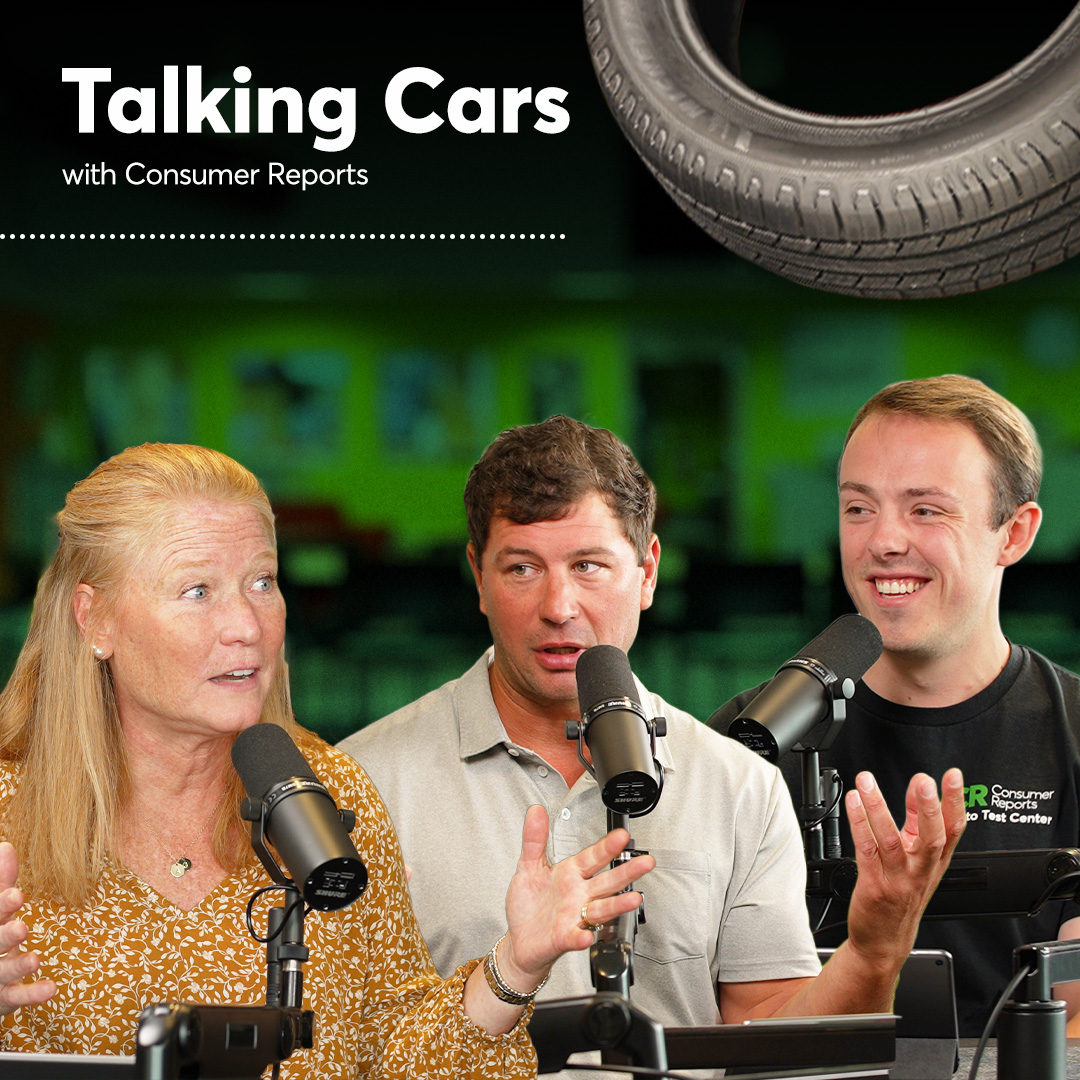
Tire Buying Advice, All-Season vs All-Weather, and the Best Time to Buy New Tires
About this episode
Tire experts from Consumer Reports dive deep into tire buying advice, comparing all-season and all-weather tires, and discussing the best times to purchase new tires. They emphasize the importance of checking tread depth and tire age, and share insights on how to recognize when it's time for a replacement. The episode also covers the nuances between winter and all-weather tires, particularly for those living in snowy regions. Additionally, they touch on tire recommendations for electric vehicles and provide practical shopping tips to get the best deals.
Consumer Reports tests dozens of tire models every year across all types of weather and road conditions. Our expert evaluations cover key performance factors like grip, handling, braking, comfort, and tread life. In this episode, we explain everything you need to know before buying new tires—when to replace them, how to choose the best tires, and whether electric vehicles need special tires. You'll learn how climate and driving style affect tire performance, and get insider insight into how our engineers test tires for safety and durability. We'll also answer your top tire questions, from whether small rocks in the tread really matter to how all-wheel drive impacts winter traction.
Join CR at https://CR.org/joinviaYT to access our comprehensive ratings for items you use every day. CR is a mission-driven, independent, nonprofit organization.
SHOW NOTES
-----------------------------------
00:00 - Introduction
00:36 - When to Buy Tires
02:29 - How to Inspect Tires
04:10 - All-Weather vs. All-Season Tires
08:47 - EV Tires
12:19 - Best Tire Shopping Advice
17:36 - How CR Works With Tire Manufacturers
18:31 - How We Test and Rate Tires
23:15 - 2026 Tire Top Picks
24:31 - What Are We Testing Next?
26:54 - Question #1: Do small rocks lodged in tire treads affect performance?
29:52 - Question #2: How do AWD systems affect tire performance?
----------------------------------
CR Tire Ratings
https://www.consumerreports.org/cars/tires/?EXTKEY=YSOCIAL_YT
Choose the Right Tires for Your Vehicle
https://www.consumerreports.org/cars/tires/buying-guide/?EXTKEY=YSOCIAL_YT
Top Pick Tires: The Best Car, SUV, and Truck Tires
https://www.consumerreports.org/cars/tires/top-pick-tires-best-car-suv-truck-tires-a5778937779/?EXTKEY=YSOCIAL_YT
Best All-Weather Tires
https://www.consumerreports.org/cars/tires/best-all-weather-tires-a8621335540/?EXTKEY=YSOCIAL_YT
Best Tire Brands of 2026
https://www.consumerreports.org/cars/tires/best-tire-brands-a2990346660/?EXTKEY=YSOCIAL_YT
Best Car Tires of 2026
https://www.consumerreports.org/cars/tires/best-car-tires-of-the-year-a1101679070/?EXTKEY=YSOCIAL_YT
Best SUV and Truck Tires if 2026
https://www.consumerreports.org/cars/tires/best-suv-and-truck-tires-a3436694441/?EXTKEY=YSOCIAL_YT
Best All-Season Tires
https://www.consumerreports.org/cars/tires/best-all-season-tires-a9794563815/?EXTKEY=YSOCIAL_YT
Best Winter/Snow Tires
https://www.consumerreports.org/cars/tires/best-winter-snow-tires-a1191260310/?EXTKEY=YSOCIAL_YT
Most and Least Satisfying Tire Retailers
https://www.consumerreports.org/cars/tire-stores/most-and-least-satisfying-tire-retailers-a8618669903/?EXTKEY=YSOCIAL_YT
How to Save Money When Buying Tires
https://www.consumerreports.org/cars/tire-buying-maintenance/how-to-save-money-when-buying-replacement-tires-a6799675738/?EXTKEY=YSOCIAL_YT
How to Read a Tire Sidewall
https://www.consumerreports.org/cars/tires/buying-guide/#how-to-read-a-tire-sidewall-and-what-can-it-tell-me/?EXTKEY=YSOCIAL_YT
When to Replace Your Tires
https://www.consumerreports.org/cars/tires/when-to-replace-your-tires-a3107469842/?EXTKEY=YSOCIAL_YT
Do Electric Vehicles Need Special Tires?
https://www.consumerreports.org/cars/tires/do-electric-vehicles-need-special-tires-a4689725362/?EXTKEY=YSOCIAL_YT
tread depth
"...you should be checking your tires monthly for tread depth, just to condition the tires. The age, you want to make sure you have at least four 30 seconds..."
Tread depth is how deep the grooves in your tires are. It's important because deeper grooves help your tires grip the road better, especially when it's wet or snowy. If the grooves are too shallow, your tires won't work as well and could be dangerous.
Tread depth refers to the measurement of the depth of the grooves in a tire's tread. It is crucial for ensuring proper traction and performance, especially in wet or snowy conditions. Tires with insufficient tread depth can significantly reduce grip and increase stopping distances.
tire sidewall
"...because of the condition of their tires. Two had big bulges or bubbles in the sidewall..."
The sidewall is the part of the tire that goes from the tread down to the rim of the wheel. It has important details about the tire and can be damaged, which can make the tire unsafe to use.
The sidewall of a tire is the part that connects the tread to the wheel rim. It contains important information such as the tire's size, type, and DOT code. Damage to the sidewall can compromise the tire's integrity and safety.
DOT code
"...every tire has a DOT code on it on both sides of the tire, but one side will have a date that the tire was actually made. It's four digits. So, for example, I might say oh four, two, five, which means it was made in the fourth week of 2025."
The DOT code is a label on tires that tells you when they were made. The last four numbers show the week and year, helping you know if your tires are too old to use safely.
The DOT code is a series of numbers and letters stamped on tires that provides information about their manufacturing date and compliance with safety standards. The last four digits indicate the week and year of manufacture, which is crucial for assessing tire age and safety.
tire depth
"...your wet grip is going to go down as the tire, tire depth gets lower. So, you want, part of doing that inspection, you want to make sure you have that full grip..."
Tire depth is how deep the grooves in your tires are. Deeper grooves help your tires grip the road better, especially when it's wet. If the grooves are too shallow, your tires won't work as well and can be dangerous.
Tire depth refers to the measurement of the tread on a tire, which is crucial for maintaining traction and grip on the road. As the tread wears down, the tire's ability to grip the surface diminishes, especially in wet conditions.
wheel spin
"...you give it a little gas and all of a sudden you have to spin, wheel spin, or you're at the end of John Doe's driveway..."
Wheel spin is when the wheels of a car turn quickly but the car doesn't move forward properly, usually because the road is slippery. This can make it hard to control the car.
Wheel spin occurs when the wheels of a vehicle rotate faster than the vehicle is moving forward, often due to loss of traction. This can happen in slippery conditions, such as rain or snow, and can lead to loss of control.
hydroplaning
"...puddle accumulates, oh, your hydroplane that morning, when you don't remember ever hydroplaning that before, like really be attentive to that stuff."
Hydroplaning is when your car's tires lose grip on the road because of water. This can make it hard to steer or stop, which is dangerous, especially when driving fast.
Hydroplaning occurs when a layer of water builds up between the tires of a vehicle and the road surface, causing the tires to lose contact with the road. This can lead to a loss of control and difficulty steering or braking, especially at higher speeds.
all-weather tire
"So you touched on it, Gordon, this all-weather tire versus winter tire, and we'll talk about that. Explain the difference between the all-weather and the winter."
An all-weather tire is made to handle different weather conditions, including snow and rain, so you can use it all year long. It's not as good in winter as a special snow tire, but it's more convenient because you don't have to switch tires every season.
An all-weather tire is designed to perform well in both summer and winter conditions, meeting specific winter grip criteria. It can be used year-round, unlike dedicated winter tires, which are optimized for cold and snowy conditions.
winter tire
"Yeah, so an all-weather tire is technically an all-season tire that qualifies for a winter weather grip criteria. So you can use it all year long, just like a regular all-season tire."
A winter tire is specially made for driving in cold weather, snow, and ice. It has a different design that helps your car grip the road better when conditions are slippery.
Winter tires, also known as snow tires, are specifically designed for cold weather conditions. They feature softer rubber compounds and unique tread patterns that provide better traction on snow and ice compared to all-season or all-weather tires.
dedicated snow tire
"Dedicated snow tires, they're softer, they're only meant to be run during the winter seasons, taken off in the spring."
A dedicated snow tire is made just for driving in snow and ice. It works better than regular tires in winter but needs to be taken off when the weather gets warmer.
Dedicated snow tires are specifically engineered for winter conditions, featuring softer rubber compounds and deeper tread patterns to enhance traction on snow and ice. They are intended for use only during the winter months and should be removed when temperatures rise.
all-season tire
"So, the all-season tire that was, you know, created, and then we've just modified it over the years. Now, this is like the next, to me, is like the next modification of it, because the rubber compounds have gotten so advanced..."
All-season tires are made to work well in different weather, like rain and light snow. They're a good choice if you want one type of tire for the whole year instead of switching between summer and winter tires.
All-season tires are designed to provide a balance of performance in various weather conditions, including dry, wet, and light snow. They are a versatile option for drivers who want a single tire that can handle different driving conditions throughout the year.
three-peak mountain snowflake symbol
"...the three-peak mountain snowflake symbol that's on the dedicated winter tire, like you said, but it also has UTQG ratings..."
The three-peak mountain snowflake symbol shows that a tire is good for driving in heavy snow. It's a sign that the tire has been tested and can handle tough winter conditions.
The three-peak mountain snowflake symbol indicates that a tire meets specific performance criteria in snow conditions, making it suitable for severe winter weather. This symbol is typically found on dedicated winter tires.
UTQG ratings
"...it also has UTQG ratings, which are the traction temperature and treadwear rating from the government, which allows you to drive on those tires year-round."
UTQG ratings are numbers that tell you how good a tire is at lasting long, gripping the road, and handling heat. They help you choose the best tire for your needs.
UTQG stands for Uniform Tire Quality Grading, which is a system developed by the U.S. government to provide consumers with information about tire performance in terms of treadwear, traction, and temperature resistance. These ratings help consumers compare tires based on their expected longevity and performance.
all-wheel drive
"because you still have the same four tires. All-wheel drive doesn't help you stop or turn, really. It's to help tires."
All-wheel drive means that power goes to all four tires of a car, which helps with grip on slippery roads. But it doesn't help you stop faster or turn better than a car with just two wheels powered.
All-wheel drive (AWD) is a drivetrain system that powers all four wheels of a vehicle simultaneously, improving traction and stability. However, it does not enhance braking or cornering capabilities compared to two-wheel drive systems.
EV
"...I own an EV. We've heard so many personal experiences of, you know, they're wearing out quickly."
An EV, or Electric Vehicle, is a car that runs on electricity instead of gas. They are better for the environment and can save money on fuel.
EV stands for Electric Vehicle, which is a type of vehicle that is powered entirely by electricity rather than gasoline or diesel. EVs are known for being environmentally friendly and often have lower operating costs.
UHP tire
"...a regular all-season product or UHP tire, whatever the EV owner is trying to get out of the tire, they can use a regular replacement tire."
UHP tires are special tires made for high-speed driving and better handling. They help cars perform better, especially in sporty situations.
UHP stands for Ultra High Performance, which refers to tires designed for superior handling and grip at high speeds. They are typically used on sports cars and performance vehicles to enhance driving dynamics.
low rolling resistance tire
"...they want to give it the most they can, so they're going to put a low, low rolling resistance tire on it. That tire, however, suffered a little bit in winter traction..."
Low rolling resistance tires help cars use less energy, which is important for electric vehicles to go further on a single charge. They are made to roll easily on the road, which can sometimes mean they don't grip as well in certain conditions.
Low rolling resistance tires are designed to minimize the energy lost as the tire rolls, which improves fuel efficiency or range in electric vehicles. They typically have a smoother tread pattern and less tread depth to reduce weight and drag.

Tesla Model 3S
"...ne on an EV. Right. Because you couldn't get six Model 3s and keep them going for a thousand miles a day li..."
The Tesla Model S is a fancy electric car that can go really fast and travel far on a single charge. It's known for having a lot of high-tech features and a comfortable ride.
The Tesla Model S is a luxury electric sedan that has set benchmarks for performance, range, and technology in the electric vehicle segment. Known for its high speed and long-range capabilities, it has played a significant role in establishing Tesla as a leader in the EV market.
EV tires
"I will add the EV tires that are brand or they're marketed as EV tires. They are doing things to make them more quiet. They put foam inside of them."
EV tires are special tires made for electric cars. They help the car run better and quieter, often using foam inside to reduce noise.
EV tires are specifically designed for electric vehicles to enhance performance and efficiency. They often incorporate features like noise-reducing foam to provide a quieter ride, which is important for the typically silent operation of electric cars.
cost per mile
"...a very highly rated tire that might be expensive, but it wore very, it wore well. It wore long, much longer than everything else. Even though it seems way more expensive, it's actually, cost per mile is actually lower than some cheaper tire that wears out quicker."
Cost per mile helps you understand how much you're really spending on tires. If a tire costs more but lasts longer, it can actually save you money in the long run.
Cost per mile is a metric used to evaluate the overall expense of a tire over its lifespan, factoring in the purchase price and how long the tire lasts. A higher initial cost may be justified if the tire lasts significantly longer, resulting in a lower cost per mile.
100,000 mile tire
"But the other thing I've said to people is really think about, when you're talking about 100,000 mile tire or even an 80,000 mile tire, you're going to keep the car that long."
A 100,000 mile tire is a type of tire that is expected to last for about 100,000 miles before needing replacement. They are usually made to be durable but may not perform as well as other tires.
A 100,000 mile tire is designed to last for approximately 100,000 miles under normal driving conditions. These tires often have a harder rubber compound, which can lead to lower performance in terms of grip and handling compared to tires with shorter mileage warranties.
high performing tires
"If your lease ends in a year or you're planning to unload that car in a year, you can probably come down to a less expensive, high performing, always high performing..."
High performing tires are made to give better grip and handling than regular tires. They help the car drive better, especially when going fast or taking sharp turns.
High performing tires are designed to provide superior handling, grip, and responsiveness compared to standard tires. They often have softer rubber compounds and specialized tread patterns that enhance performance, especially in sporty driving conditions.
tire testing
"...So just day to day tire testing. A lot of time on the track, we do some traveling to get some winter, do some winter testing..."
Tire testing is when experts check how well tires work in different situations, like on wet or icy roads. They look at how well the tires grip the road and how long they last.
Tire testing involves evaluating the performance, durability, and safety of tires under various conditions. This includes testing for grip, wear, and handling characteristics on different surfaces and weather conditions.
braking from 60 miles per hour to zero
"...after that stride, what breaking from 60 miles per hour to zero, we're testing that satellite V boxes, the measured distance..."
This means how fast a car can stop when it's going 60 miles per hour. It's important for knowing how safe a car is when you need to stop quickly.
This refers to the process of measuring how quickly a vehicle can come to a complete stop from a speed of 60 miles per hour. It's an important metric for assessing a car's braking performance and safety.
treadwear test
"...we have our treadwear test. So this is a complicated test, a lot of moving parts. We send out two samples to an outside lab in Texas..."
A treadwear test checks how fast a tire wears out while driving. It helps people know how long their tires will be good for before they need to be replaced.
A treadwear test measures how quickly a tire's tread wears down over time, providing an estimate of its lifespan. This is crucial for consumers to understand how long they can expect their tires to last under normal driving conditions.
ultra-high performance tires
"...the ultra-high performance tires are run to 8,000 miles. And then from that 16,000 miles, we're predicting how long the tires will last..."
Ultra-high performance tires are special tires made for fast cars. They help the car handle better and grip the road more tightly, especially when driving fast.
Ultra-high performance tires are designed for superior handling, grip, and responsiveness, particularly in dry conditions. They are often used on sports cars and performance vehicles to enhance driving dynamics.
Michelin
"...So Michelin all season tire will get the same rating. So that's truck all season, UHPL season, regular all season..."
Michelin is a well-known company that makes tires for cars, trucks, and other vehicles. They create different types of tires for different weather conditions, like summer and winter.
Michelin is a French tire manufacturer known for producing a wide range of tires, including all-season, winter, and performance tires. They are recognized for their innovation in tire technology and commitment to safety and performance.
summer tire
"...winter tire might have a different rating or summer tire might have a different rating..."
Summer tires are made for warm weather and help cars handle better on dry and wet roads. They aren't safe to use in cold weather or snow because they can become hard and slippery.
Summer tires are designed for optimal performance in warm weather conditions, providing superior handling and braking on both dry and wet roads. They are not suitable for winter conditions as they can harden and lose grip in cold temperatures.
all-terrain tire
"...their all-terrain tire might have a different rating. And that gets compiled into our overall score..."
All-terrain tires can be used on different types of surfaces, like roads and off-road trails. They have special patterns to help with grip on dirt and gravel while still being comfortable to drive on regular roads.
All-terrain tires are designed to perform well on a variety of surfaces, including both paved roads and off-road conditions. They typically feature a more aggressive tread pattern to provide traction on loose surfaces like dirt and gravel while maintaining some comfort on highways.
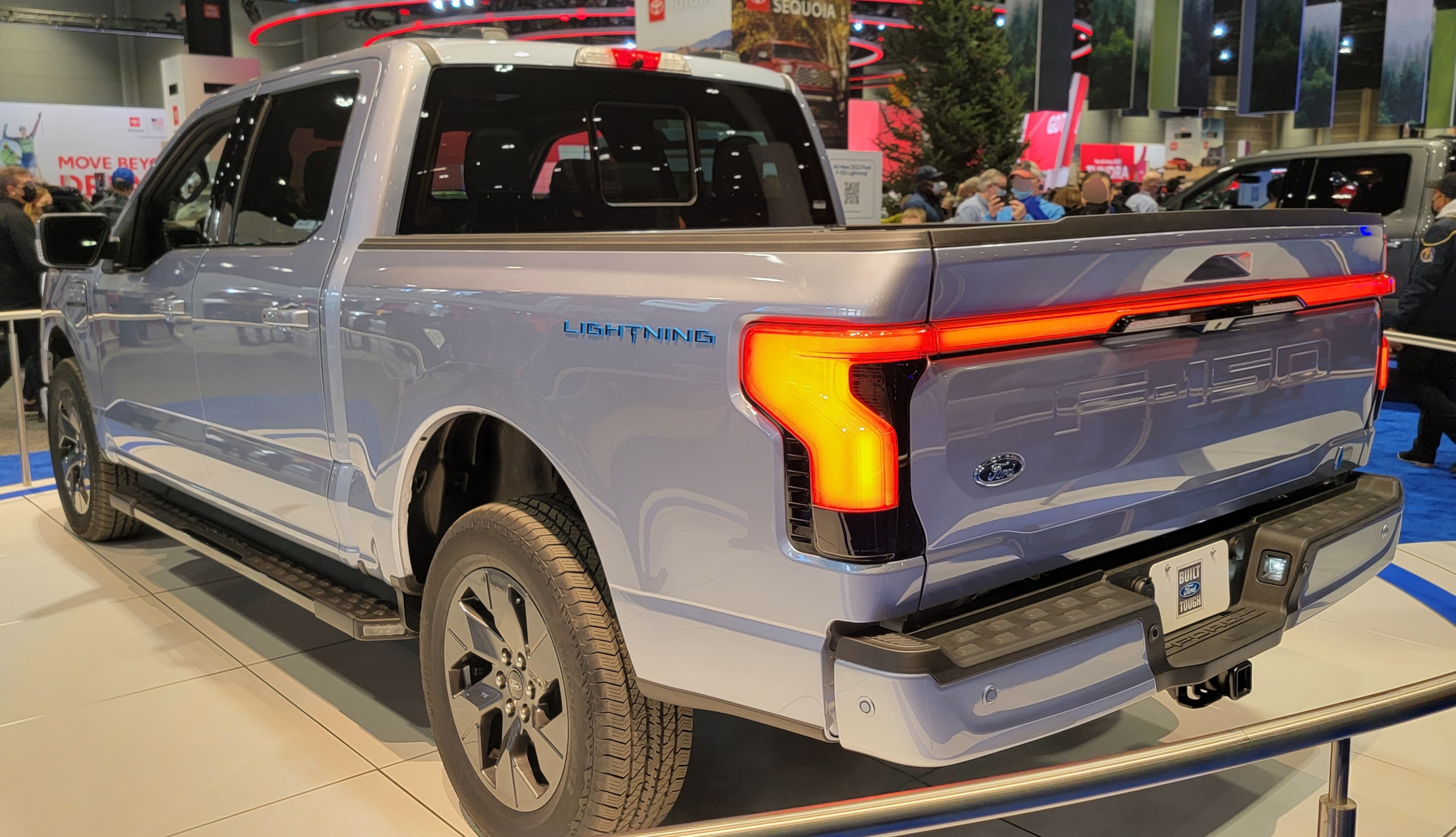
Ford F150
"...275.60 R20, which is a very common size Silverado F150. And we'll be doing all season truck, all terrai..."
The Ford F-150 is a big truck that many people use for work or towing things. It's popular because it's tough and can handle a lot of different tasks, making it a favorite choice for many drivers.
The Ford F-150 is a full-size pickup truck known for its versatility, durability, and strong performance. It has been one of the best-selling vehicles in the United States for decades, making it a significant player in the automotive market, especially among truck enthusiasts and those needing a reliable work vehicle.
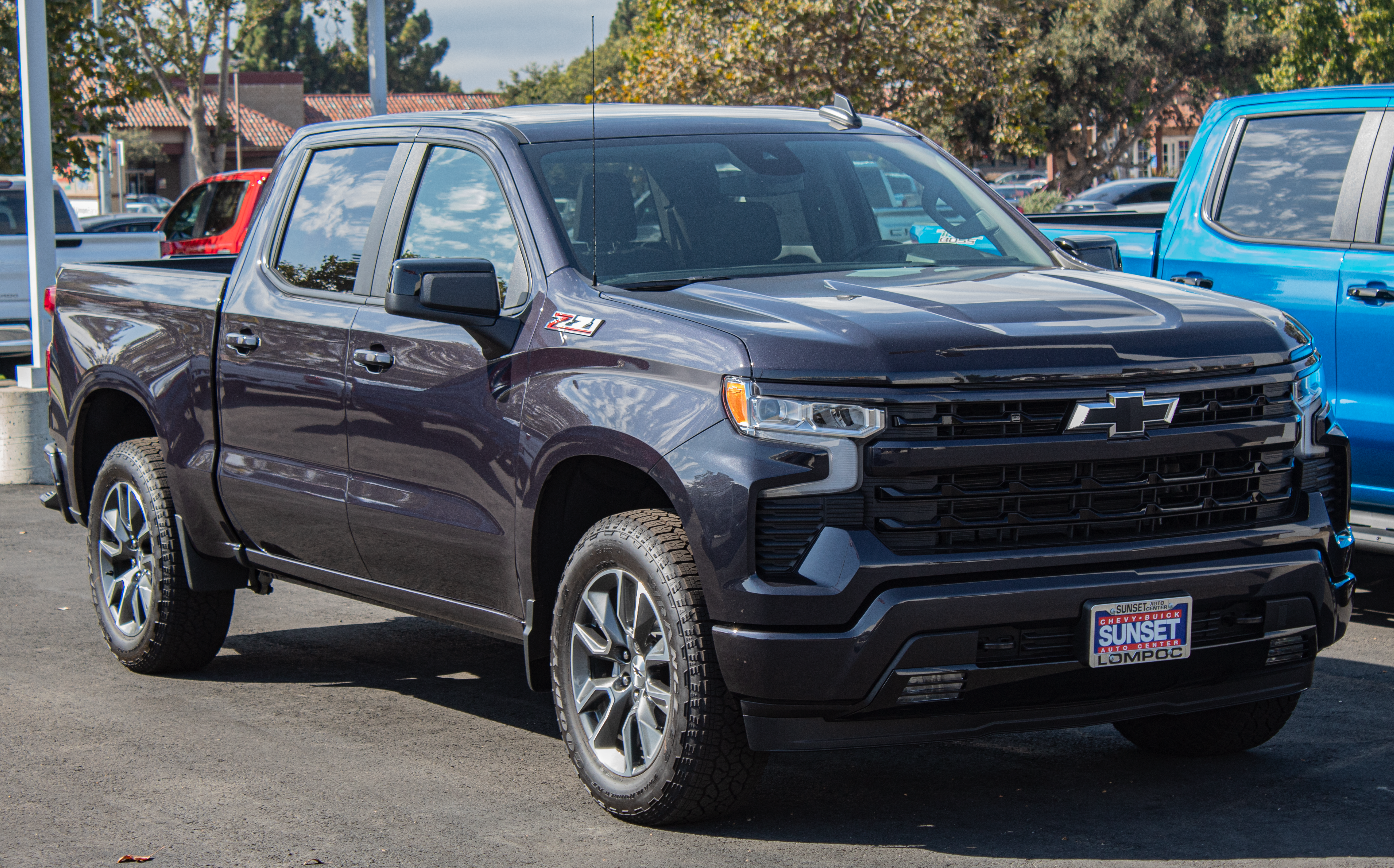
Chevrolet Silverado
"...e. It's a 275.60 R20, which is a very common size Silverado F150. And we'll be doing all season truck, all t..."

Subaru Ascent
"...f Michelin Cross Climate two tires for my Subaru Ascent in part due to the strong recommendation of Consu..."
The Subaru Ascent is a big family SUV that has room for several passengers and their stuff. It's great for driving in different weather conditions because it has special features that help it grip the road better.
The Subaru Ascent is a mid-size SUV designed to accommodate families with its spacious interior and advanced safety features. It stands out for its all-wheel drive capability, making it suitable for various driving conditions, including snowy weather.

Tesla Model
"... all-wheel drive? I live in snowy Colorado with a Tesla Model Y. It's okay, but it doesn't do as well as other..."
The Tesla Model Y is an electric SUV that runs on batteries instead of gas. It's known for being high-tech and having a lot of space inside, which makes it a good choice for families or people who want a roomy car.
The Tesla Model Y is an all-electric compact SUV that offers impressive range, advanced technology, and spacious interior. It has gained popularity for its performance and safety features, making it a strong contender in the growing electric vehicle market.

Tesla Model 3
"...t in EVs, so we can't say which ones. But in the Model 3, like I know Model Y, Model 3, you know, in any ..."
The Tesla Model 3 is a smaller electric car that you can charge instead of filling up with gas. It's popular because it can go a long distance on a single charge and has lots of cool features.
The Tesla Model 3 is a compact electric sedan that has been pivotal in making electric vehicles more accessible to the general public. With its impressive range, performance, and advanced technology, it has quickly become one of the best-selling electric cars worldwide.
Request an Explanation
Heard something you'd like explained? We'll add it to this episode.
Sign in to request explanations for terms you heard.
Want to learn more?
Browse our glossary for plain-English explanations of automotive terms, jargon, and concepts.
Help improve this episode
See something that's not quite right? Our annotations are AI-generated and can sometimes miss the mark. Click the flag icon on any annotation to suggest a correction.