TMCP #647: Mecum Auctions Insider David Morton – Live Auction Energy, Collector Car Trends & The Future of Car Culture
The MuscleCar Place
TMCP #647: Mecum Auctions Insider David Morton – Live Auction Energy, Collector Car Trends & The Future of Car CultureThe MuscleCar Place · May 8, 2026
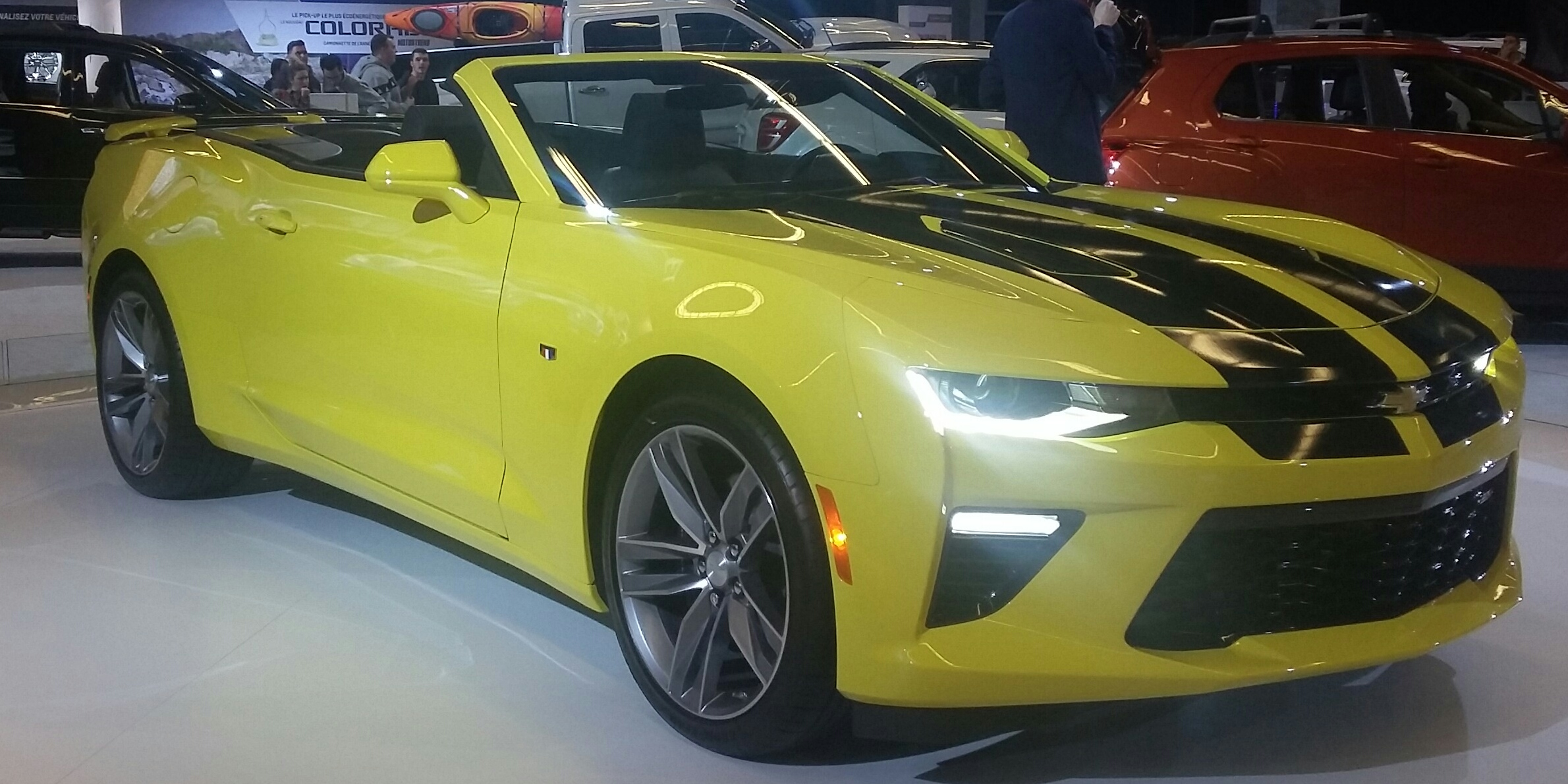
The Chevrolet Camaro is a sports car made by Chevrolet. The “69” version is a famous older model that many collectors look for. People talk about it a lot because it’s a well-known classic.
A Porsche 944 is a classic Porsche sports car. Here, the hosts talk about getting one out of storage and discovering a brake problem before driving it.
The master cylinder is the part that creates hydraulic pressure for the brakes. If the clutch and brakes share it, problems can show up in more than one pedal feel or system.
A caliper is the clamp that squeezes brake pads against the rotor to slow the car. A leaking caliper—especially leaking from the caliper body rather than a line or bleeder—often points to a failed seal or piston seal and can lead to low brake fluid and reduced braking performance.
If only one side of the brake pads wears down (like the inside pad), it usually means the brake isn’t squeezing evenly. That can point to a stuck or failing caliper part.
The outside pad is the brake pad on the outer side of the rotor. If it doesn’t wear while the inside pad wears a lot, the caliper may be stuck or not squeezing evenly.
The Chevrolet Chevelle is an older muscle car made by Chevrolet. People often talk about it because it’s a classic that can be easier to find than some other high-priced cars. In the podcast, it’s mentioned as an option when prices went up.
The Chevrolet Nova is a car made by Chevrolet. It became popular during the muscle-car years, and people sometimes choose it when other cars cost too much. In the podcast, it’s mentioned as a more affordable option.
The Toyota Crown is a Toyota sedan model. In the podcast, it sounds like the Crown is being mentioned in connection with custom modifications and part swapping. That means it may be used as a starting point for a build rather than staying original.
“Faux panel” refers to fake or simulated body trim—often molded or textured to look like a different material. Here, the speaker specifically mentions faux wood-style side trim, which was a common styling cue on some older Jeep-era designs.
They’re talking about what the word “SUV” means and when people started using it. The point is that some older truck-like vehicles existed before the SUV name became popular.
The Ford Bronco is a rugged SUV that became popular for off-roading. Here, they’re pointing out a Bronco they can see nearby and arguing which one they’re looking at.
Term
K5
“K5” is a nickname people use to tell one Bronco variant from another. In the clip, they’re using it like a label to make sure they’re talking about the right truck.
This part is about how collector interest changes. The host says people often end up buying the cars they liked when they were younger, and that can push prices and popularity up.
The Toyota Land Cruiser is a large SUV made by Toyota. It’s built to be tough and reliable, including for long trips and rough conditions. The podcast mentions it as a well-known Toyota model.
Datsun was an older brand name Nissan used in the U.S. at first. The idea was to test the market, and once it worked, Nissan switched over to using the Nissan name.
Nissan is the company that makes the cars being discussed. In this story, they’re explaining why the brand name was “Datsun” first, and then later became “Nissan.”
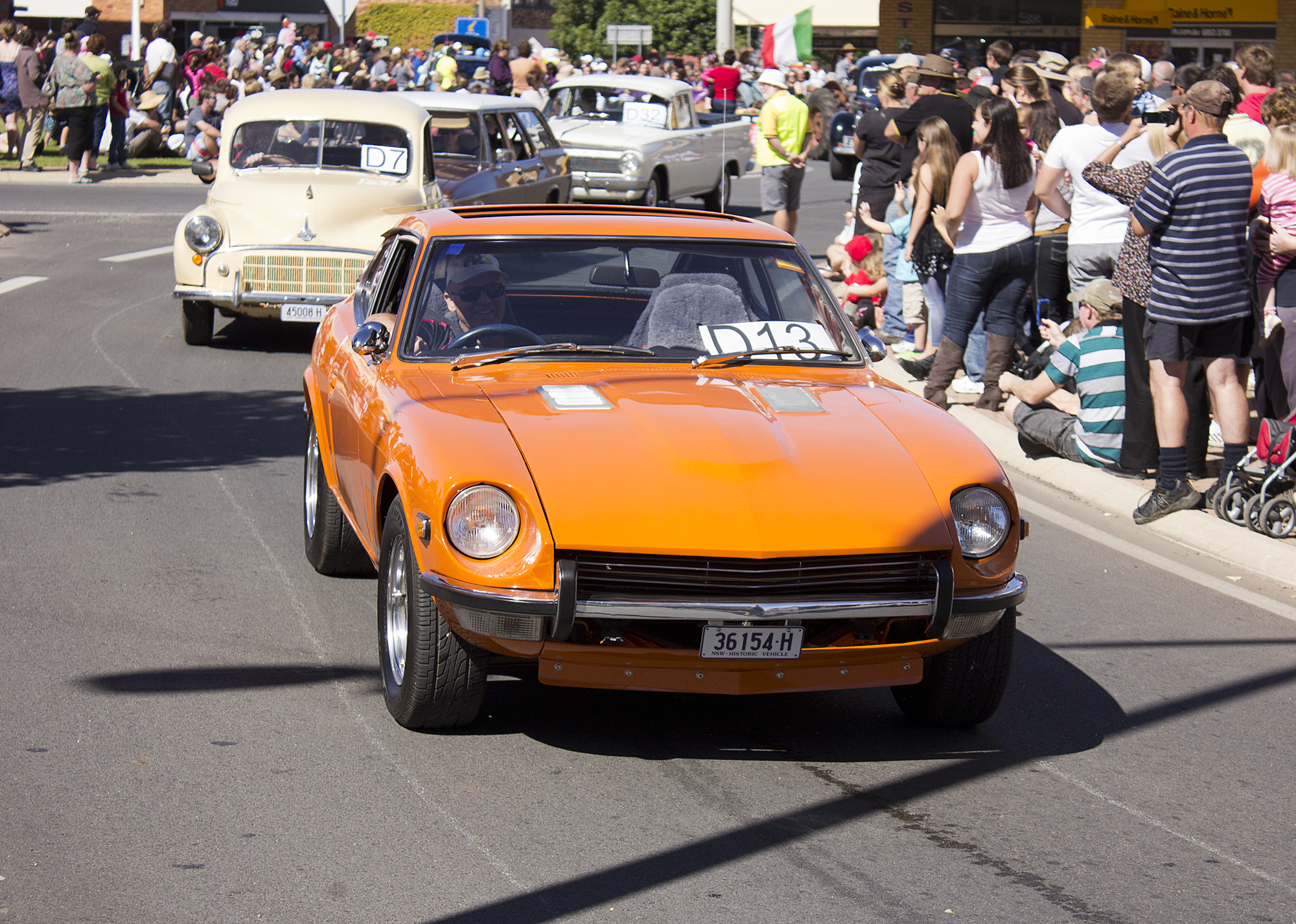
The Datsun 260Z is another member of the Z-car lineup. The host groups it with other Z models to explain why collectors are paying more attention to them.
The Datsun 240Z is a famous Japanese sports car. The host is saying that cars in the Z line—like the 240Z—are becoming more popular with collectors again.
RestoMod is when someone restores an older car but upgrades it with newer tech. The goal is to make it more comfortable and easier to drive than a totally original vintage car.
Concept
restoration of a car with modern technology
The speaker is talking about restoring an old car but upgrading it so it’s easier to drive now. It’s less about keeping it untouched and more about making it practical.
SEMA is a big aftermarket-parts industry event/organization. It helps drive what kinds of upgrades and accessories become popular.
Concept
garage that's big enough to park it
With collector cars, you often need enough space at home to store them safely. If your garage isn’t big enough, it can make owning the car much harder.
The collectability market is where people buy cars because they think they’ll be valuable or special. It’s about what collectors want, not just speed or fuel economy.
Low volume manufacturing means making only a small number of cars. Collectors like that because it feels rare, but it can also mean the car is more “made to look like” something than fully original.
“C1 Corvette” means the very first generation of the Corvette. People use that term to describe the classic early look that newer cars try to copy.
Company
Rivology
Rivology is mentioned as one of the companies making niche cars that might appear at auctions. The point here is whether these kinds of brands are gaining attention from collectors.
A panoramic roof is a big glass roof panel. It lets in more light and makes the cabin feel more open, but some people don’t like it because it changes the car’s original look.
The Ford Mustang is a famous American muscle car, and the 1968 version is a classic. Here, they’re talking about a 1968 Mustang that was modified with a panoramic roof, which makes the car look different and lets more light into the cabin.
Right-hand drive means the steering wheel is on the right side of the car. It’s common in some countries, and when a classic American car is built that way, it can make it feel more “import-style” and may be more interesting to collectors.
They’re talking about Dana Mecum’s Spring Classic, a big multi-day car auction. The point is that it’s huge—thousands of cars—so it’s a good place to see what collectors want.
“Record-breaking sales” means the car sold for more money than similar cars ever have before. When that happens, it usually tells everyone the market is getting hotter.
Concept
escalating in value
They’re talking about prices going up over time. For collector cars, that can happen when more people want the same rare, story-rich car.
This is about how Steve McQueen’s name carries a lot of collector interest. People want the car because it’s tied to his legacy, not just because it’s a nice vehicle.
The Ferrari 250 GTO is a very rare, expensive classic sports car made by Ferrari. It’s from the early 1960s and is known for being a top collector car. The podcast brings it up because the exact model details matter a lot with cars like this.
Wheelbase is the length of the car between the front and rear wheels. Different versions can have a longer or shorter wheelbase, and collectors use that to tell which exact variant they have.
A no-reserve auction means there’s no “minimum price” the seller requires. If someone bids and wins, the car sells—even if the price is lower than expected.
An auction estimate is the pre-sale price range sellers or auction houses publish for what a car “might bring.” This segment argues that Mecum Auctions often avoids estimates for certain cars—especially no-reserve and highly collectible ones—so the market can set the price through bidding.
They mention Kissimmee because it’s where a particular high-end Ferrari sold. The point is that the final price came from bidding, not from a pre-announced target.
Car
Ford Bullitt
The podcast mentions “Ford,” which is the car brand. It’s talking about a specific car named “Bullitt,” and how people see it as something special. The important part here is that it’s a Ford car being discussed for its value and recognition.
NBC Sports Network is a television network referenced here to describe Mecum’s media distribution shift. The point is about how auction coverage moved from a traditional auto channel to a broader sports network.
LIVE
The Muscle Car Place, online podcast, episode number 647.
This week, David Morton from Meekum Auctions is here from the Meekum Indie 2026 auction
and it starts today, May 8th, run through the 16th.
Now, in a world that has transitioned to online automotive auctions, and you know them all
and so do I, they're fun, Meekum has gone all in on doing, get this, real ones, in person,
with real cars you can touch and real humans in the room you can talk to.
I know, it's crazy, and it's growing.
Meekum has been in business for a long time now, but these past 15 years especially have
seen Meekum take a rocket ship to the top.
They're getting focused attention in a world that can barely give you two seconds anymore.
And would you believe that from an entertainment and eyeball standpoint, Meekum has become
a motorsport?
Well, NBC Sports did.
I was actually doing a meeting with someone that was the executive producer for NBC Sports
and their broadcasts not only on Indie car racing, but also for Meekum.
And I was having a conversation with Terry and the conversation switched quickly when
he said that he was more interested in what was going on at Meekum than he was in Indie
car.
This is the Muscle Car Place online podcast brought to you by National Parts Depot.
This is the weekly show dedicated to people worldwide who love American muscle cars.
If you're buying, selling, restoring, even racing them, this is the place for you.
Now, here's your host, Rob Kibbey.
Yes, indeed, I am Rob Kibbey and welcome to the Muscle Car Place podcast.
Well, here we are the second week of May.
May the 4th has already been with you.
Cinco de Mayo was a while ago.
I have no rhyme there.
David Morton from Meekum Auctions is here.
This interview was done in advance, but purposely done to release today, May 8th.
Bernie did this interview actually at the Meekum Houston auction last month.
And our intrepid beat reporter, Bernie, I mean, when he knows that there's a press pass
for free food and a chance to see cars, he'll do it.
He did a great job and it's a fascinating look inside the world of what makes auctions
go and grow.
Look, you know me.
I dig the business of this industry period, every bit of it.
I thoroughly enjoy people that build cars and sell them.
I thoroughly enjoy people that make parts.
I thoroughly enjoy people that have seemed to crack the code on how to invest
and buy and sell cars.
That last part, though, for me, that's the last bastion.
I'm scared of buying and selling cars.
Well, buying is fun.
Selling, I always think, man, they're going to get me.
But that's where auctions and attention come in.
And trying to understand how businesses succeed is to me fun.
And Meekum is, I mean, it's obvious, right?
They're growing, not in spite of an online world, but along parallel to it.
And until this particular interview, I didn't know that from an entertainment
perspective, you know, like from a TV watching perspective, it would garner
the same kind of attention as a live sport would.
So more inside baseball for you, if you really like the world of how media works.
There's nothing you can put on the air live anymore that people will give
their focused attention to beside sports.
They just don't, right?
If you sit down to watch a movie on Netflix, you probably have your phone
in your hand and you probably pause the movie and go take a leak.
Or sometimes you only get 20 minutes in the movie and you just, man, move on.
I don't like this.
That's not how sports work.
Sports do draw you in.
And Meekum has become effectively a motorsport.
Their strategy is very, very intentional.
There's a lot of why and how things work in this interview.
I think you're going to thoroughly love it.
Now, the auction itself is a great place to take cars that you want to get high
visibility on there.
I mean, it's all the stuff, stuff that you would not likely sell in an online
auction because you want more attention.
Got a 69 Camaro, the old one here.
I was perusing earlier.
I found a 65 Chevrolet Z16, like with 17 months.
You know, those butternut yellow colors.
I don't even know what color that is at GM, but I love that color.
There's a time and a place to do an in-person auction and it's not just for
high dollar cars.
It's for low dollar cars or medium dollar cars, anything in between.
So take a listen to it.
Let me know if you would buy or sell at an auction.
Well, I know that you guys do, but let me know why you do.
I'm very, very, very interested in that.
Okay, different topic here in a somewhat shorter show.
It is prom season here in the Midwest.
If you've got high schoolers or had high schoolers, you know what prom is.
And it's different than when I had a prom.
The way that it works now is you have to make a prom puzzle and you do it on this
giant poster board.
And then you have to propose to somebody, even if you know they're going to say yes.
And you have to have your picture taken.
And then that goes on Instagram, TikTok and all the places.
And then, and only then is it official.
Okay, tracking so far.
So you can't just ask somebody and they say, yes, you have to ask that way.
Then you have to buy tickets to the post prom party, which is put on by the school.
Okay, it gets better.
The school puts on these post prom parties to provide a safe place to keep kids
corralled from doing all the things that kids would used to do.
And they lock them inside of a bowling alley till four in the morning.
Now, Dallas is dating a very nice girl from a town fairly near here, but it's a
different high school.
So he went to her prom last weekend.
It was last weekend.
She's coming to his prom here this weekend.
It's almost all the same kids and they're doing almost the exact same thing.
Last weekend, they stayed out till four in the morning at a school prom event.
Then they watched the sun come up and went to bed.
This weekend, they're doing the same thing.
I assume the girls have different dresses, but Dallas has the exact same suit.
My wife just rented him a suit for 10 days.
I think you get a double weekend deal.
I hope we did.
But that's how it works here.
Now, for me, when I went to high school, maybe for you too, part of the charm of
going to prom, A, it was taking somebody you wanted to take.
But B, it was, you should like get your car all juiced up, right?
And in this case, he wanted to take the 944.
We had a pretty long winter here.
So we just got the 944 out of storage a couple of weeks ago.
And when we went to get it at no breaks, none, zero pedal to the floor.
Clutch still worked.
That was good news because the clutch and the brakes used the same master cylinder.
But nonetheless, did a little investigating there.
And the right front caliper was leaking.
And like not the line, not the bleeder, the caliper.
Caliper itself was leaking.
So somewhere in behind the piston, it was leaking.
Got enough brake fluid in it to bleed it.
Got it bled enough to top it off and made the brakes work.
But I mean, it was still leaking.
Obviously it was leaking.
Sometimes it was slow and sometimes it was quick, but it was definitely leaking.
So I went ahead and got it home.
The more I bled it, the slower the leak got.
I need to take it all apart and just figure out what's wrong.
Either something's, a seal is bad or there's dirt in it.
I really don't know.
But the thing is, as you know, once you start taking old car parts apart,
you've got to leave a little time to get them back together because often you
break things or you realize you need more than he thought you would.
I got it safe enough that he could take it to problem last week and he did.
And he brought it home and parked it.
So I'll get it safe enough that he can take it to problem this weekend.
Then we can blow it apart and figure out what's actually wrong.
It's probably not a big deal.
When we did the brakes last time on the front right caliper, only the inside
pad war, so there was already something goofy with that caliper.
Like the outside pad didn't wear at all.
So it was only compressing from one side to us.
Kind of weird.
Figure that out.
Anyway, I guess that wasn't a prom story.
That was more of a getting your car ready for prom story, but I thought
you'd enjoy the tales of the Midwest.
All right.
I said shorter show today.
I have a challenge on my hands here.
I'm headed out for a business trip today.
I'll be home all of next week.
And then I will not be home for more than a few days at a time until August.
And a lot of you live that life now.
I get it.
And you know, it's hard.
Burn, I don't know how we're going to pull off this whole summer either from
all the recordings, keep your interview skills polished up there, burn.
But between business and racing, I will always be gone and really always be
gone until the first week of August.
One of those trips though that I'm taking will be the first week of June to Charlotte.
So burn a little reminder of music here.
The high performance expo 2026 is in Charlotte that first week of June.
Now I have a code that you're supposed to use when you register.
It just tracks that you heard it here that you don't get a deal, but please
use it when you register MCP 26 and no spaces, no, nothing MCP 26, like muscle
car place 26 for me.
I think the big value though, at this convention, once again, will be introduction
to manufacturers and personal connection in a lot of ways.
It's like the value of going to the Mika motion in person.
You just do get a tighter connection when you talk to somebody face to face.
There are a lot of educational panels.
I'm specifically going to the AI chat from the guy from Amazon.
All the vendors will be, if you want to get a job at Hendrick Motorsports,
they're taking a resumes right there.
Go to their website, www.thehpx.com.
There's a real streetcar takeover drag racing thing afterwards at Z max.
That's Friday, Saturday.
That would be super fun.
We're actually going to have a podcast booth there for one day.
Should be pretty fun.
So hope to see you there.
And with that, it is time to get to the Dallas Kibbe Racing Update.
Burn, cue the intro, please.
Excellent intro.
Burn, as announced last week, Lexani tires, line heart tires and rolling
big power tires are all part of the muscle car place network for the whole next year.
And you can buy all three of those tires at simple tire.com.
You'll like the sizes.
You will definitely like the prices.
And I'm thrilled.
We actually have a tire company that sees the value in long term relationships.
That's how podcasts work.
And specifically, they wanted to be part of the Dallas Kibbe Racing Update.
And that means a lot to me.
And for Dallas, what's a good way to put this?
Look, he has a dream and the dream is to drive a race car, right?
And driving a race car for a living and getting paid for it is hard.
It's just hard.
And very few are able to make that work.
There's a lot more going on than just being good at driving a race car.
You know that, I know that, but kids don't know that.
Kids are still in the mode when they just want to be the best race car driver possible.
And you should, you should want to do that.
You should strive to do that.
But there's also the whole business side of it.
I'm learning the business side of it as fast as I can.
But Dallas has learned in how to be a good race car driver as fast as he can.
Last year was about getting good at the craft of racing.
This year is about graduating to the next level.
He's got to finish out his career in legends cars.
It's kind of like lifting only heavy weights.
He's just got a race at all the hard competitions.
He just does.
And as much as you kind of want to just go to your home track and race against six
guys and get a trophy to make yourself feel good, you're not gaining anything there.
You're gaining when you haven't been able to win against those guys.
But once you have, and once you've done it repeatedly, you know better.
That's what we're doing with Dallas.
This summer is only the hard ones.
I do have a schedule here for next month, week.
We're going to run kind of a warm up event to the Charlotte summer shootout.
And it's called the showdown series.
It's in North Carolina.
It runs May 21st through 23rd.
Two tracks, Hickory Motor Speedway and Tri-County Speedway.
I think it'll be a pretty good fit.
It'll be a good warm up for the Charlotte event.
The summer event at Charlotte is the premier series event.
There are three nationals event, but the premier series event is 100
percent at Charlotte Motor Speedway.
That's the pinnacle.
That's where you want to win.
That's where you want to be seen.
That's where you want to test yourself.
That's where he'll be all summer.
But to get warmed up for that, he's got an event in a couple of weeks.
We'll be going for a few days and come back and then start the summer shootout.
Also on June 6th at Orange County Speedway, he's going to run his first late model race.
It's a developmental series.
It's called the Carolina Pro Series.
We're going to do at least one more test prior to going there just to make sure
you can drive the car without wrecking it, right?
The last test actually went fine, went really fine.
And he needs one more test to get more comfortable.
But after that, you got to just get thrown in the pool, right?
There's only one way left to do it.
So that's what's coming up.
I will be given updates as we go.
And I will 100 percent be taking all of my gear on the road.
You'll get every report every week.
Dallas and I will probably, I think we're actually just going to get a second
apartment in Charlotte for the summer just to have a little more permanent stay
and make it so that I don't have to keep bringing my underwear home to wash it.
It'll be life easier.
All right.
That is the Dallas Kibbe Racing Update presented by Lexani tires,
Lionheart tires and RBB tires.
You can buy them all at simple tire.com.
You'll like the sizes and the prices.
Please follow all the Dallas's socials and share them if you would.
It really means a lot.
Burn Q the outro, please.
OK, let's go ahead and roll to our feature interview.
Don't forget, once per month, we do have Mr.
Rick Schmidt from National Parts Depot on to talk all things NPD.
And you can ask him anything you like.
Send in your questions to me, Robert at themusclecarplace.com.
And of course, visit nationalpartsdepot.com to proves for all your
muscle car parts needs because they find they source, they expect the best.
There is a difference and they've got the goods.
Rick is a sponsor that comes up in the auction interview.
David Morton pointed that out.
I think you'll find it interesting why.
Alrighty, up next here is David Morton from Meekum auctions.
And again, I'm fascinated.
David has an interesting David's background.
He doesn't grow up around cars.
He's not from the Meekum family.
His career was in sports management.
And now Meekum may be winning because they're kind of a motorsport
audience destination now.
Enjoy.
The Muscle Car Place weekly podcast interview is brought to you by our
good friends at National Parts Depot.
See them through the link at themusclecarplace.com.
Well, we're in location in one place today, but through the magic of radio
and the magic of tape editing and all those fun things, we're going to start
you in one place and then we're going to end up in another.
But where we are, we're at Meekum auctions.
We start in Houston and we're starting with a friend of ours.
His name is David Morton.
David's been our contact through the three times that we've had to sit down
and been in communication with Meekum and it's going to be fun.
David is the senior communications manager now.
Is that a raise?
Is that a promotion recently?
I think it's a reassignment.
A reassignment is how I would describe that.
It's a you've been here a long time.
Let's get you back to what we hired you to do originally.
Awesome.
Well, thank you for the hospitality and having us in the course.
It's a pleasure.
I'm glad.
Thank you for coming down.
We've had some incredible interviews and gotten some good insights.
I'm not John Kramer now.
Sorry.
No one is John Kramer.
He was the most incredible interview I had done in a long time.
He's made a quarter in John and just let him talk.
And it was great.
So I expect no less from you, David.
OK, so I can talk, but I'm not John Kramer.
OK, I will give you about 10% of what John Kramer offered.
We'll be done in what two hours then, I guess.
So I hope you've got lunch plans.
That's good.
Well, again, welcome.
And just to let you know who we are as a podcast and a group.
We are car guys at the core.
We have shop owners in the audience.
We have base fabricators.
We have buyers and sellers.
We have builders, traders, beg borrowers, the whole gamut.
And they buy cars everywhere and they buy them at auctions as well.
And so that kind of what brings us here to kind of get some behind the scenes of that.
But I want to know first a little bit about David Morton.
OK, some of his background here.
Kind of tell us who you are, where you come from,
maybe how you got into cars to start with.
So it's not the story you really want to hear, probably.
It's a little quirky, if you will.
I was found by Meekam.
I come from a sports management background.
I was actually doing a meeting with someone that was the executive producer
for NBC Sports and their broadcasts, not only on IndyCar Racing, but also for Meekam.
And I was having a conversation with Terry and the conversation
switched quickly when he said that he was more interested in what was going on
at Meekam than he was in IndyCar.
And I say that humbly, if you will, because I live in Indianapolis
and I have a lot of good friends in IndyCar.
But what Terry was saying was basically what's going on in Meekam
is something that's very exciting and that that rocket's about to take off.
And they had just hired a chief executive officer, Dave Majors,
in 2013. That's at this time is around late 2014.
And he said, let me introduce you to Dave.
One conversation led to another.
I was hired as a consultant.
I opened up as my assignment, the open up the market of Harrisburg, Pennsylvania.
This would be in the summer of 2014.
And they came up to me the first day and said, we need to talk.
And having been a consultant for a long time, the words need to talk
mean I probably did something wrong and made an error or disturbed somebody.
And the next words out of the mouth was we want to offer you a job.
And that's how I got hired by Meekam.
So it wasn't based on car knowledge.
It wasn't based on car experience.
It wasn't based on someone knowing somebody.
I didn't know the Meekam family.
I didn't know the business.
It was based on a two month contract of performance.
I think that's very smart on a company's part to look for talent outside of their
field because they can bring those expertise that come from different
experiences and everything translates if you give it the right opportunity.
Marketing is marketing.
And event marketing specifically is putting butts in seats, basically, right?
Creating a buzz.
And that's what I did.
So when we got to Harrisburg, the first day there were 500 and some people
standing outside the dates waiting to go inside the doors at eight o'clock in the morning.
There were four TV stations going live.
And so they saw this firestorm.
It was pent up demand.
There's no question.
It was first time there was an auction in that part of the country and it was pent up demand.
And we know that when now, particularly, and this was the case then a little bit,
but more so now when Meekam comes to town, that's a big deal.
We don't think that.
We're in the trenches.
We're just trying to do our job and try to make something.
We don't realize what's going on around us.
And that was evidence of how big it was a deal for Harrisburg to have Meekam come to town.
Pent up demand because obviously there wasn't an auction format,
but because there were less effective ways to buy and sell what we're doing here.
I think that to some extent, but I think also the whole idea of public auctions is unique.
And we talked a little bit earlier.
People know what, and I hear the word Scottsdale, they think of Barrett Jackson in the auction,
but that's not universally nationwide understood.
And that's sort of over there if you're living in the Northeast.
Being from these coasts, you know, what goes on in Scottsdale is not of any interest us.
We care what's going on in New York.
And so Harrisburg is because of, you know, about Carlisle, Hershey.
There's a lot of buzz about the collector car market there,
but you also have proximity to literally whatever population base that's right there in that area.
Boston may be five hours away, but Metropolitan, New York is three hours away,
and South Jersey is three hours away, and Philly and Baltimore and all those markets
that have tons of high population bases.
All of them we're looking at going, wow, now there's something that Meekam is coming to town
that's a big deal, let's go.
Makes perfect sense.
Well, from then to now, auctions have really come into their own.
They're everywhere.
Everyone has found that model.
They've seen probably Meekam make it go at it.
Yeah, that's easy enough.
We can do that.
We can do that.
And they have, they've gone through, well, bring a trailer comes to mind.
That's a big one in our audience.
It gives the appearance that it's approachable and you can get in and get out at what level that you'd like to.
We've done interviews at SEMA with Hemmings, who've made a big transition and swing into that market as well.
eBay comes to mind as well as one of the originals.
Is there or has there been talk of a year-round auction presence for Meekam or you just do what you do here?
So we describe ourselves being in the live auction business, and that's what we do very well.
And no one does it better, and we can debate that with us, but look at our auctions,
look how frequently we do them.
We were in Glendale, Arizona three weeks ago.
We're going to be in Indianapolis in three weeks.
That's hard to pick up a model and replicate that auction market after auction market.
We've successfully done that.
We're now going to go into Nashville in September this year.
No one's ever been in the Nashville market.
We're going to go to a speedway, a super speedway, and do an auction in a super speedway.
We're going to bring our model into that environment and make it something special.
We're able to do that.
We do it very well.
So no, the answer to your question is no.
We're not going to take something that we do so successfully, and everyone's
with the envy of the industry of and try to do something that someone else does.
We don't need to.
We're going to bring the audience.
We want that live experience.
We want people to come and experience it.
We want you to watch it on television, and we've been on television.
This is our 19th year.
We want you to look at that and go, I want to go do that.
I want to consign a car and be part of that experience.
I want to be part of that as a spectator and just go walk around Kissimmee, Florida,
and see what 4,000 cars look like on one property.
I didn't write down this question, but you brought it up.
So I'm going to circle back around and ask it again anyway.
I think we've talked about it on the podcast before.
What's it take to come into a brand new market?
What kind of footwork and groundwork will get you this year into Nashville?
When did that start?
So what happens behind closed doors from relationships, negotiations for a venue,
the political climate, depending on what that environment looks like from new and
used car dealers, and the environment of selling cars outside of a dealership that
we don't have it.
Do we require a dealer license?
And all the legality, if you will, is a major component.
Equally important to us is the venue, size, access, amenities, a cooperative
marketing partner, and all the things that you look at from a logistic standpoint,
but beyond just logistics is really the understanding, okay, we're not just an event
coming to town, we want to partner with you and align with you, leverage the relationships,
build something that you then are making it something that you're proud to host us
and that we want to work with you on a continual basis.
Nashville is a growing market, it's a younger demo market.
There's a lot of money in the market.
We know there's a lot of music money there, but it's becoming much more than just a
Franklin, Tennessee, being the hub of such and such music performer.
It's becoming a major metropolitan market.
And I think it's also an area where it brings in the entire early south.
So that northern corridor of the south, I think there's an evolution going on to the south
and then its own identity, and it's Charlotte, I would say in Nashville,
on that northern cusp of that south that opens up that whole south corridor
that people are looking at going, wow, there's the new frontier.
So there's been a little thought that into it?
Oh, there's been more than a little thought.
There's not any more than a little thought because we were in Chattanooga for a couple of years,
and we were aligned with an event there and a customer that owned that event.
It was working very diligently to create more of the destination of Chattanooga and using
the festival as a vehicle to market Chattanooga.
I think it was very successful in that regard, but it was a smaller market and the venue was
smaller when we needed to grow and bring something that has unlimited potential.
So the most recent market before Nashville was Glendale, Arizona.
And that was eight years ago.
I mean, I should say that Tulsa, we've been now four or five, but that's a smaller market.
But you look at Glendale, we're in an NFL stadium, and that has unlimited growth potential.
And that's what we're looking for is, can we have major markets like at Glendale, Arizona,
which is the Phoenix DMA, and have that growth of a market that does nothing near there geographically?
Yes, there's what goes on in January in Scottsdale.
But we're now almost $50 million business in Glendale after our eighth year.
So it took us to an Indianapolis for that auction.
It took us probably 15, almost 16 years to get to $100 million.
So that's what we're looking for is growth markets.
Outstanding.
Well, can't wait to see you there.
Houston, where we're at today, I like this venue.
Hey, it's close to me so I can get here and come down and look at some cool stuff.
It seems like it has growth potential.
Plenty of room to spread out.
Environment is good.
Attendance is good.
So you're doing well in this one.
Well, yeah, and this is a market that was almost equal size to Dallas for many years.
But Dallas has popped after COVID.
Dallas popped above $50 million.
This is hovered on 25 to $35 million.
The great thing about this venue, like the Dallas Convention Center,
everything's in one space.
Everything is unobstructed.
You can walk and see all the cars.
You're not going outside to go to tents.
You know, the logistics make it very well.
It's comfortable inside.
And even though it's April in Houston, we all know it can be a little toasty here.
So it's comfortable.
Houston's soon to become the fourth largest and maybe even the third largest city in the country
and soon to be to overtake Chicago as number three city in the country.
So it's continuing to grow.
It's much more international city.
I think people maybe realize and it's a lot, a lot of money here, not just oil and gas.
There's a lot of money here in tech business and people come in from San Antonio and Austin,
particularly we're not in those markets and it's an easy drive to come on down.
Well, you may not know it, but Houston is a old Indian name
that means humidity.
I did not know that, Bernie.
Thank you.
Oh, I think it's lived up to its name.
I really appreciate being indoors and the seats and all that.
So I walked over from the hotel.
So yes, I visited Houston.
Let's talk about the cars here.
What a great docket you've got.
You've got muscles.
You've got exotics.
Oh yeah, there is a couple of pickup trucks here.
Yeah, almost 200.
Almost 200 trucks.
Can you break it down?
And this will be probably Houston specific only.
Trucks are going to be big, obviously.
Is there another category that does really well here that you look forward to?
SUVs.
I know it's stayed in the obvious, but I think a lot of people look at SUVs as a truck,
but we don't.
We separate them and the rest of modding of those is another category.
What's happening in the industry is the restoration of pickup trucks got really,
really hot when people perceive cars getting so expensive.
So when the Chevelles and some other things got a little pricey, then they went to the Nova.
So they go, okay, they're going to go downstairs a little bit.
Then they look, wait a minute.
What about those trucks?
What about those farm trucks?
What about all those things?
And you're not talking about a backseat of a pickup truck.
So the cabin space and the restoration of the interior is a little bit smaller.
Less detail things.
So there's a lot of things that make it very attractive.
A restored pickup truck is pretty cool looking.
Okay, you take a 40s or 50s pickup truck and that's a great body style.
And then you put a cool paint job on it and you put some technology inside of it.
You get a cool pickup truck that you can drive anywhere and have fun.
And the new sub industry of finding a crown vic and swapping them,
putting the crown vic underneath it.
The ingenuity of the technology of the people putting in whatever engine into whatever vehicle,
go for it.
If they can figure it out and go for it because there's a buyer.
Right.
They want something that works.
They'd want to be hassled with it.
It kind of scares me to know that there are people out there thinking of how to Frankenstein
all these things together all the time.
One of our other podcasts, David, focuses on 69 chargers and generally in Dukes of Hazard.
Looking around, you know what a 69 charger goes for in this building.
You can't afford to jump and burn those things anymore.
No.
So they crown vic them.
There's sheet metal available.
So you make a 69 charger to go jump and then you go do it again and do it again.
Because there's, I don't know, probably in the hundreds or a few thousand 69 chargers left.
There's 88 million crown vicks left.
Right.
Well, if you think about it, okay, so growing up, the guys were car guys in high school that
got into cars going on and on and on.
They're always looking to tinker.
Yeah.
Right?
It was always the next thing.
And whether that was to make the car faster or make it look cooler or make it look sound louder,
whatever it was, they're always trying to twist something.
And that evolution of their technology and applying that to, okay, why can't I fill in the blank?
And that's what you're seeing more and more of.
You mentioned SUVs.
Is there a starting threshold of year when you start using the term SUV in an auction environment?
That's a great question.
Yeah.
I don't know that answer.
I would imagine you have probably so.
Yes.
I would consider SUVs.
So you had those old internationals, okay?
And they've been around for decades.
But I think the evolution of the quote new SUV came in with a Jeep and the Jeep Wagonier.
And they started in the faux panel, you know, the faux wood on the sides, right?
In the early late 80s, mid 80s, mid to late age, I should say.
And then this took off from there.
And then you have all the other things.
So, you know, if you say Bronco, some people, okay, Bronco from the late 70s, early 80s,
the old Bronco, quote unquote, old Bronco became super hot when the new Bronco came out.
I like that body style, but I like the old body style better.
I want to get an old Bronco and I'm going to restore it.
And that created a whole cottage industry of people doing old Broncos.
I was going to ask, does Bronco count the old style?
Absolutely.
Is that what you call an SUV?
No, it does.
I was omitting that.
I should have included that.
Absolutely.
With the Wagonier and the Bronco, yes.
And then you get into all the other K5s and all the other things that are,
they were around in the 70s, but we didn't call them SUVs.
We call them trucks.
So I don't know when that phrase, sports utility vehicle for those people that,
for whatever reason, wouldn't know what an SUV stands for.
But most of them are not used for utility other than if, you know,
a contractor or whatever.
And it's not used for sport because they put too much money into it.
So they're preserving it and trying to maintain it more so than,
you know, rip it up and having fun with it.
By the way, I'm not smart enough to ask that question on my own.
There's just a beautiful Bronco sitting over your shoulder there.
So I, it's a K5.
It's a blue one, right?
The red one.
Oh, it's a red one.
Okay.
Okay.
Yeah.
So, so I was thinking K5, there's a light blue one further over.
It was funny because we were doing a TV interview the day and one of the
guys working on the crew said, I'm over here at the K5 Bronco.
I go, no, you can't be at a K5 Bronco.
You may a K5, but now there's not a Bronco.
So there's a lot of great cars, but there's some, in some cases,
even better SUVs and pickup trucks.
This is going to start showing my age.
Everyone can see I'm wearing Coke bottle glasses.
Our hair is a little gray now.
Yes.
We're looking around here and we're seeing cars that,
these aren't classics.
We just drove these a few years ago, 80s, 90s cars.
These are not old classics to me, but they're here and they're getting popular.
So what's happening there is we saw this about four years ago in Monterey.
A gentleman out of South Carolina brought a collection of 240 and 260 Zs.
Okay.
I'm in Houston and this is Toyota land.
Okay.
So I respect that.
But what a lot of people don't realize is that when Datsun came into the country,
there's a company in Japan called Nissan and Nissan did not want to come into the
United States with Nissan brand and potentially fail in the United States,
the biggest market in the world.
So they created the word Datsun and that was the brand until Datsun was successful enough
to be then converted over to Nissan and bring the rest of the empire over with it.
So those cars that would be early 80s, if you will, late 70s, early 80s, the 240,
260, 280 Zs, we had a collection, a little mileage of those that were selling for 140,
160 and that blew open the door.
And I'm like, wait a minute, I've got one of those.
I'm going to get it fixed up.
So now you're seeing more and more of those.
So the way we look at the math is when someone is of age, whatever that age is,
their car of favor is you go back 25 years.
And it's that car that was the Testerosa because you were a Miami vice guy.
You had that car on your wall.
It's that car that you align with.
So as we go going on into our next generation of the company,
and I say generation because Dana and Patty started the company now almost 40 years ago,
the four sons of Dana and Patty are now the next generation of the company.
And what those cars of interest of their childhood and what their generation,
their colleagues, their friends are of interest are not the 50s and 60s and the gen two threes
of Corvettes and things of that nature that were popular when Dana was a child.
And what he was interested in, it's the next generation.
So we have to not only recognize that but cater to that to bring a younger generation in.
So when I saw a young couple coming in this auction this morning,
there's no way they were 30 years old, but they had a bitter,
fascinating pen on buying something.
Are they going to buy a classic?
I didn't ask what they're going to buy.
If they buy a classic all power to them, we'd love it.
But if they're going to look for something that's more traditional in their era,
that's the audience that we're looking for.
Okay, here it comes.
The elephant in the room.
The dangerous question.
Are we aging out of some of the traditional classics that we've seen at auctions and grown
up with and driven forever?
And if so, I've heard yes and no.
Tell you the truth.
I don't know if there's a real answer for that.
Do you believe or do you think there is a demarcation of year models
where that line is setting itself?
I don't think it's a year.
I think it's a quality.
I think it's a provenance issue.
I think it's an issue where people that see something very special, a one of or a very
special trim package to that unit, that's always going to be money for that.
If one of 30 were made, there's only 30 of them made and have being still exist today.
So the provenance of that collectability is driven by the uniqueness of it.
I don't know that it's a year necessarily.
I agree.
I understand what you're saying.
I agree with so that the 50s cars are becoming less popular because that individual that's
now 30 years old looking at that is that's what their grandfather drove.
But could they look at that and now what's now happening with RestoMod, which we really
haven't talked about much yet, is the restoration of that car with a modern technology that,
so therefore that RestoMod alleviates some of the challenges that individual is going to have
technically and the driveability is what they really want to do anyway because they're not
a drencher going to go in the garage.
That's blown up in the doors on all vehicles.
The multi-billion aftermarket SEMA has helped that.
No question.
And is helping define, I believe, and we're in complete agreement on this,
is going to start funneling down which cars are going to be desirable for them because
here's the ones people are making parts for.
Yes.
A 58 Plymouth may or may not make that list.
It's beautiful.
It's big.
It's nostalgic.
Your neighbor's with you to Canada in it if you want to, but it may not be something you
want to do.
And the first thing you do is find a garage that's big enough to park it.
Exactly.
You know, so it becomes that issue.
But I think one of the great things that has happened with COVID, dare I say,
people got back together with people and they realized that cars are safe and you can't
contract COVID from the steel on a car or the fiberglass on a car, right?
That was a gathering spot for people to get back together.
What I admire about our business in many ways is the generational lift that it gets.
There's a gentleman here.
I spoke to this morning and he's with a media contingent.
He brought his son who's interested in cars.
His son's 12 years old.
You're seeing the multi-generations.
And just because dad's a car guy doesn't make the son or daughter car people.
And it doesn't mean that the child that's interested in cars doesn't mean that dad
was that either or mom was that.
Everyone gravitates the interest based on whatever factors.
I didn't have a father or grandfather that introduced me to cars.
Maybe that's one of the reasons why I didn't get into cars.
But I do know that when the guy got to Chevelle, there's a black Chevelle
in the parking lot in high school, everyone took notice of that car.
And we all knew why we took notice to it, right?
And I'm fascinated more by the industry as it evolves
and what brings people into the collectability market.
And that's where I come in from doing my job.
I want to know, is that person that's 35 years old today?
What are they reading?
What are their interest in?
Where are they making their money?
What are they doing in their spare time?
Then that's how you create the marketing path to bring them into it.
That journey, so to speak, to bring them into Mecom.
You're going to dovetail perfectly into this.
Would you like to comment on behalf of Mecom
on what we call the low volume manufacturing craze?
I'm going to call it a craze because it's very early, but it's really taking hold.
There seems to be a niche now for someone to write a six number check
to a company to provide me a muscle car of my dreams
that only looks like the muscle car of my dreams.
And underneath, it's probably a Bugatti standard
with Toyota engineering and it's bulletproof and I can drive it anywhere.
And boy, do I look cool.
We love that.
We love that because not only do people bring those cars to auction,
you could say David Kindig, for example.
Okay, what he does with his Corvette.
And I'm not sure that's the model of what you're referring to,
but it's limited edition.
It's high priced.
It's technology extreme, but it's got that cool look and feel of that C1 Corvette.
Right? That's what he's doing.
We saw that in Glendale with Mustang Brothers.
We see that with Revolution.
What that does is it captures the ingenuity and the evolution of all the things that go on
in the technology world and what we love about the cars.
It also brings a younger demo in.
They want that body style.
They want that cool look.
They want to flash their bank account, if you will, a little bit,
but they want to do it with a car and they could do it with a boat.
They could do it with a condominium and some exotic island.
They can put the money wherever they are.
The fact of doing it with cars, that's what we appreciate.
Do you see a very measurable amount of cars that you see with maybe Factory 5
or Rivology or these other companies?
Is that a big enough bump on your radar?
Not yet.
And I don't know that they necessarily want to.
It's hard.
So when we saw Mustang Brothers and they have a patent on a panoramic roof
that they put in a 68 Mustang, really cool look and it happened in the right-hand drive.
So Neat Car drew a lot of attention, but it's not for everybody.
And that's the thing is that the purest of the world look at that and go,
I don't know, thank you.
It's the younger generation who look at that and say,
yeah, so bring the younger generation and we're all in.
Okay, let's shift gears.
Okay.
We're in Houston.
Yes.
But being in Houston, David means that Houston is over.
We're talking in the past.
We're ghosts.
We're dust in the wind already.
When this show airs, if everything goes right, and I've done my job correctly.
Thanks, boss.
This show will release, I believe, on May the 8th.
And May the 8th is probably something special for you guys, a whole another ball game.
We opened up Dana Meekam's Spring Classic.
So it'll be the 39th original Spring Classic on May 8th.
It's a nine day run with an estimated 3,000 cars.
Nine days.
Yes.
You said state fair a while ago.
Yeah, it's a big event.
It's nine days.
It takes over the state fair grounds in Indianapolis in the central part of the city.
We use a lot of the buildings.
Most of cars are under cover and we continue to look at how much we can continue to grow.
You know, next year, this is our 39th year.
Next year, the company celebrates 40 years and that auction will be 40 years.
So this is the original auction that Patty and Dana had in 1988.
That because of through evolution and its growth, they needed to find a new home.
They needed a stable home.
And so 2008 was the first year in Indianapolis.
It's also the first year the television started with Meekam.
And so Indianapolis is not the home of Meekam.
It's just the first stable place to have a great auction.
The truth of the matter is, is Kissimmee existed before Indianapolis.
Okay.
Yeah. So Kissimmee is now bigger, but we were in Kissimmee before we were in Indianapolis.
How many cars did we do when we were talking in Houston just a few seconds ago?
So we had more than a thousand consignments in Houston.
Okay.
So we had three days and a thousand cars.
We'll do nine days and 3000 cars in Indianapolis.
So your job just got busy?
Well, it's the fun part now because it's a big auction.
I'm always looking for the backstory.
I'm looking for the cool fun thing.
So one of the cars we had in Houston was a 1956 Austin Healy.
And the car had been in storage pretty much the entire time that the owners had it since 1969.
And it's moved around with him from different places,
but it's been in a storage unit for the last 30, almost 40 years.
So that was a car that got some buzz sold on Friday of the auction
for probably more money than he thought he was going to sell.
But now we're looking for those storylines in Indianapolis.
So the big collection is going to the M Group collection.
That's a bunch of exotics and super high value collections.
So a lot of people saw what we did in Consiming with the Bachman collection of 46 Ferraris
and a lot of record-breaking sales.
So, okay, now I'm ready to do it because the market's there.
One of the things is, as a core to Meekum, we talked earlier,
is that we're always classics and muscle cars.
And we continue to evolve into those other areas, exotics being one.
And this has been a focus of particularly Frank Meekum,
the son of Dane and Patty, over the last five or six years
to get more participation and more support
and better consignments in the exotic world.
So would you say, probably fairly, that Indianapolis and Kissimmee,
do they in some way set the, not the right question,
but set the bar for the other auctions that you do?
You have a certain expertise?
Absolutely, Kissimmee does.
Kissimmee does happen for 13 days in early January.
On the heels of that auction, Scottsdale and Arizona Car Week happened.
The reverberating effect of Kissimmee in January,
we're still feeling that, and that's a positive.
But the other auction companies are going, uh-oh,
because that classic muscle car auction company
took a major bite into 46 Ferraris that sold for a gross of $125 million
and sold cars that would triple what their estimates were going into the auction.
Because of the provenance, because of the value, and it was taken.
Answer this one if you want to.
Don't have to.
Yes.
Should the bullet Mustang have gone for more?
I think it should have.
That's me.
I think it's debatable.
I think that you take that car and the gentleman that bought that car
paid $3 million for that.
He's not going to restore it.
He can't drive it.
And it's going to say, to me personally, from a collectability standpoint,
the story of the family that owned it and that sold it,
that story only can be told once.
So that owner now does not have that story.
He can have that story as part of the story, but that's not his story.
But it's still the car that was used in the film.
And will that continue in escalating in value?
The Steve McQueen brand has one of the greatest provenance stories.
It doesn't matter if it's a watch, a car, a motorcycle, whatever.
The mystique of Steve McQueen is as strong as it ever is.
So I don't think it'll lose its luster.
I think there's an equal audience to what you're saying, Bernie,
it should have gone for more.
And some people were surprised at when as much as it did.
Yeah.
And part of my reasoning was what you said, the story and who it is.
But that may not, frankly, translate.
As we've already talked about, the newer generations,
Steve McQueen will become a who eventually sometime in history.
Right.
But you're selling bullets, right?
And still bullets are out there.
There's only one reason there's a bullet.
Legacy is because of Steve McQueen.
Speaking of films.
Yes.
In Indianapolis, there's going to be a car there.
I wrote it down, lot R727.
This is a special car to us because we're movie car guys.
On another show that we do, we dissect these things to pieces.
Every little detail that we can.
It's a 63 Ferrari, 250 GT, California Spider.
I finally got all the words out.
Yes.
It's a long description there.
It checks a lot of the boxes we've talked about.
It's a collectible car.
It's a rare car.
It's rarer than some people think because the real version,
there are actually two versions.
There's a long wheelbase and a short wheelbase of that car.
The car that we reference in the movie is none of those.
It was just an inspiration because we throw it out the window and we kill it.
And it wasn't a Ferrari.
And it wasn't a Ferrari.
And a Ferrari badge on it, but it wasn't a Ferrari.
But everybody's going, ooh, when they see it.
But it's a real rare car.
So congratulations on being able to have the prominence to attract a car like that.
I would think that's, we mentioned Bullet, but I think it's much more than that.
And what's more than that is the collection it comes from.
So this is from the M group collection.
This is 41 cars that are super, super cars.
So there's a Bugatti, there's a Maserati.
There's everything in this collection of a lot of exotics, super cars,
some muscle cars, but mostly super cars.
And we'll say, you know, because the dream is having at least two bidders
wanting that same car because they're going at no reserve.
We don't want it to be just one guy bidding against himself because he's getting a great deal.
But smart business people, wait a minute, I'm not going to let that guy buy
that car for that price.
I need to get in and get on that deal.
I asked you before we went on air here to remember this next answer because it was fantastic.
Okay, I'll try.
My question as written was, quote, do you have an estimate what it might bring?
End of quote.
And you said, what I said was we don't put estimates out there.
Mekam Auctions has avoided putting estimates on cars in most cases,
particularly cars that are at no reserve and special cars because we sold the 250 GTO,
the 62, the white Ferrari in Kissimmee.
We didn't put an estimate on that car.
And the reason we didn't put an estimate on that car and many other cars like it is,
we want the market to allow itself to prognosticate.
We want the Ferrari guys, we want the whatever collectability guys,
we want people to debate on who's right and who's wrong and let that fodder advance itself
and let the then market determine itself finally when it comes to auction.
So if we put a price of let's say 40 million dollars, we would have been close for that
what car would sold it in Kissimmee at 38 and a half million dollars.
But if we said 30 million, we would have capped ourselves and said, oh, well,
didn't someone overpaid at 38 and a half?
So we avoid all that.
We just try to feed it out in the marketplace and let the debaters debate.
Boy, there's an economics lesson there, but let the market decide.
So if you check in a hotel and 80% of the rooms are occupied already,
guess what?
You're probably going to pay a premium rate because the supply equals demand.
Same application here.
Okay, awesome.
This has been fascinating.
Thank you for all the knowledge and everything that's been going on here today.
Does David have a fun car?
Does he want a fun car?
And is there something here he might want to go home with?
So David does like cars.
I wouldn't classify myself necessarily as a hardcore car guy because I would consider myself
more of the marketing guy for the application for Mecom.
But my dream car would be a woody wagon that I could put a surfboard on top of it.
I'm a kid that grew up in the Jersey Shore.
That fascinates me.
The fact that they can put mahogany and make that preserve itself obviously with a whole lot of
care, but that's just a cool car.
They're big, they're beastly, and it just reminds me of the kid being in the Jersey Shore.
Would I like a 66 Mustang that my father bought?
Yeah, I mean that probably brings some nostalgia to that.
I appreciate the industry as a whole.
I appreciate anything that comes with fans, and this comes with fans, right?
People, the passion that drives our business is what makes our business fun.
The builders, the restores, the technology people, the people that work on the lines,
the people that work at the auto parts stores, they're selling those parts from National
Parks Depot online, whatever.
There's not a lot of industries like that.
You know, when you get into a room of car guys, you're going to have your Ford guys,
you're going to have your bow tie guys, you're going to have your, you know, whatever.
There's, you mean, allegiance, but all of those together, there's a passion that drives what
they are about, and there's a reason they became Blue Oval guys because of Grandpa or whatever,
or their dad worked at a plant or whatever it might be, but they also have that love,
and that is to their core, and they're never going to leave that.
The barriers melt away when you look around, and you see a beautiful Packard sitting over there.
Right, I wonder, how can you look at a Dusenberg on a cord or an Auburn and realize those were
handmade.
Yeah.
That's coach work.
That came as a, the suspension and the foundation of the car was one piece, the body was another
piece, and the rest of it was then done by, by hand.
That's art.
The restoration of a car is art.
It's a long way from an SUV.
Right.
When we were selling Bullitt, he started calling it art because you're not going to touch it.
And we just said the same thing about the 250 GTO in Kissimmee.
You're not going to restore that car.
It's art.
It's going to stay as it is, and no one's going to touch it.
Not going to preserve that car.
You're going to maintain that, but you're not going to restore that car.
Well, again, here we are.
We've transformed from Houston, Texas.
We're all the way up in Indianapolis now.
Was this day one or two?
Day one.
This will be day one, May 8th.
Is it too late to register for this auction?
Is it too late to consign?
No.
Is it too late?
No.
Would we recommend it?
No.
Will we take a car?
Yes.
One of the great muscle of Meekam is our marketing.
We're going to get anywhere between 20 and 30 million page views on our website a month.
So if you get your car in 30 plus days in advance of an auction,
you're going to get the value of that consignment on our website.
But if it's a car that's going to stand on its own,
and when you put it out there and people know about it,
and you don't worry about our muscle,
and you have that provenance itself, then consign the car.
So no, it's not too late to consign.
It's definitely not too late to register to bid.
And registering bid can be done at Meekam.com.
And just a point of reference.
We're saying the word Meekam.
M-E-C-U-M, Mary, Mary, M-E-C-U-M is Meekam.com.
All that information is online.
If you register my Meekam account, which is complimentary,
you get the ability to go back and on our website
over about a dozen years of all the cars we've sold.
So you can look on that chronology of the valuations of cars increasing,
the pickup trucks and things,
and see what that truck was going and doing comps
of what you can make that comparison to what you do
and what you have ready to consign.
A lot of people may not can make it to where we're theoretically sitting right now.
How can we watch?
We got a lot of pushback, what would have been in 2014
when Meekam left a traditional auto channel
and went to NBC Sports Network.
We also got a lot of pushback when we left, presumably left Motor Trend,
but we didn't leave Motor Trend.
Motor Trend left Motor Trend.
Motor Trend exists now based on reruns of programming.
There's no new originating programming, right?
So we weren't invited back.
We didn't have an option to continue on.
We own the rights to our own content,
so we weren't going to license it to Motor Trend in perpetuity.
So we then found a new home on ESPN Plus.
And what that is is it's a next evolution to the reality that everything is streaming.
So why not jump in the game?
And so we have the ability now,
so you can watch our auctions live on ESPN Plus.
72 hours later, they're taped as live on our YouTube channel.
We've started a Roku channel and we now have a YouTube TV channel.
So we're offering as many different outlets for people to get the content
because we have a lot of content.
We want to repurpose that content.
So you do have live and you do make your own specials,
the best ofs and that kind of thing.
We don't do the top 10s like we used to, right?
And you're remembering those?
We don't do those, but you may see those repurposed on other channels
or we may get back into that business and producing new ones.
David, it has been a thrill.
Thank you for spending some of your day with us here.
It's a delight.
I can't thank you enough for the hospitality
and just for the environment that you create for us and let the media in
and just let us talk what we all love.
And that's newer, older classics, soon-to-be classics,
and it's best day at work this week for everybody.
Good. Well, I'll extend an invitation this way.
So next April, why don't you tell your listeners to come join you
and we'll do some package, whether the first 50 people
that show up at the door get comp tickets or whatever.
We'll figure out some way to allow them to come experience
what you've tried to articulate in words,
have them come see at first hand,
whether they're from Houston, Austin, San Antonio, wherever.
Come see us. Come join us and enjoy that meekum experience.
David, thank you best of luck in these auctions
and you've got so much on your plate,
so thank you for sharing some time with us.
You're very welcome. It's a pleasure.
It's a pleasure.
Thank you, David. Alrighty, that's it for this week.
Great job, Byrne. Appreciate you doing that.
I will be back next week and back on the Kibbe and Fred and Shoe
next week, of course, between now and then.
Hit me up on Facebook or Instagram anytime.
Be sure to subscribe to us on Apple Podcasts, Spotify, and YouTube.
You can always find every show,
plus all the merch at the homepage of themusclecarplace.com website.
And as always, don't forget to keep chasing your dreams
like you've let me chase mine.
Thanks for listening, everybody. Bye-bye.
They make it all possible. See you soon at the Muscle Car Place.
About this episode
David Morton from Mecum Auctions joins The MuscleCar Place to break down why live auctions still feel like motorsport—real cars, real humans, and a crowd that shows up for the energy. They connect Mecum’s growth to online media, explain how provenance and no-reserve bidding shape prices, and share what’s drawing attention at Houston (pickup trucks, restomods, and shifting buyer tastes). The conversation also looks at how auction culture is evolving to pull in younger collectors.
In this episode of The MuscleCar Place Podcast, guest host Bernie McPartland sits down with Mecum Auctions Senior Communications Manager David Morton during Mecum Houston for a fascinating behind-the-scenes look at one of the fastest-growing forces in the collector car world. What starts as a conversation about auctions quickly evolves into a deeper discussion about why live automotive experiences still matter in today’s digital world. David shares how his background in sports marketing helped shape Mecum’s growth strategy, why the company continues doubling down on live events rather than online-only auctions, and how Mecum has effectively become a motorsport-style entertainment experience that draws massive crowds, television audiences, and passionate enthusiasts nationwide.
The episode also dives into the rapidly changing collector car market, including the explosion of trucks, SUVs, restomods, and 1980s/90s-era vehicles as younger generations enter the hobby. Bernie and David discuss everything from Broncos and K5 Blazers to exotics, custom builds, Steve McQueen movie cars, and the emotional storytelling that continues driving collector enthusiasm. Plus, Rob Kibbe shares a Dallas Kibbe Racing Update covering Dallas’s aggressive summer racing schedule, preparation for the Charlotte Summer Shootout, and the challenge of balancing racing life with getting a Porsche 944 ready for prom season.