
TMCP #647: Mecum Auctions Insider David Morton – Live Auction Energy, Collector Car Trends & The Future of Car Culture
About this episode
David Morton from Mecum Auctions joins The MuscleCar Place to break down why live auctions still feel like motorsport—real cars, real humans, and a crowd that shows up for the energy. They connect Mecum’s growth to online media, explain how provenance and no-reserve bidding shape prices, and share what’s drawing attention at Houston (pickup trucks, restomods, and shifting buyer tastes). The conversation also looks at how auction culture is evolving to pull in younger collectors.
In this episode of The MuscleCar Place Podcast, guest host Bernie McPartland sits down with Mecum Auctions Senior Communications Manager David Morton during Mecum Houston for a fascinating behind-the-scenes look at one of the fastest-growing forces in the collector car world. What starts as a conversation about auctions quickly evolves into a deeper discussion about why live automotive experiences still matter in today’s digital world. David shares how his background in sports marketing helped shape Mecum’s growth strategy, why the company continues doubling down on live events rather than online-only auctions, and how Mecum has effectively become a motorsport-style entertainment experience that draws massive crowds, television audiences, and passionate enthusiasts nationwide.
The episode also dives into the rapidly changing collector car market, including the explosion of trucks, SUVs, restomods, and 1980s/90s-era vehicles as younger generations enter the hobby. Bernie and David discuss everything from Broncos and K5 Blazers to exotics, custom builds, Steve McQueen movie cars, and the emotional storytelling that continues driving collector enthusiasm. Plus, Rob Kibbe shares a Dallas Kibbe Racing Update covering Dallas’s aggressive summer racing schedule, preparation for the Charlotte Summer Shootout, and the challenge of balancing racing life with getting a Porsche 944 ready for prom season.
The post TMCP #647: Mecum Auctions Insider David Morton – Live Auction Energy, Collector Car Trends & The Future of Car Culture first appeared on The Muscle Car Place.
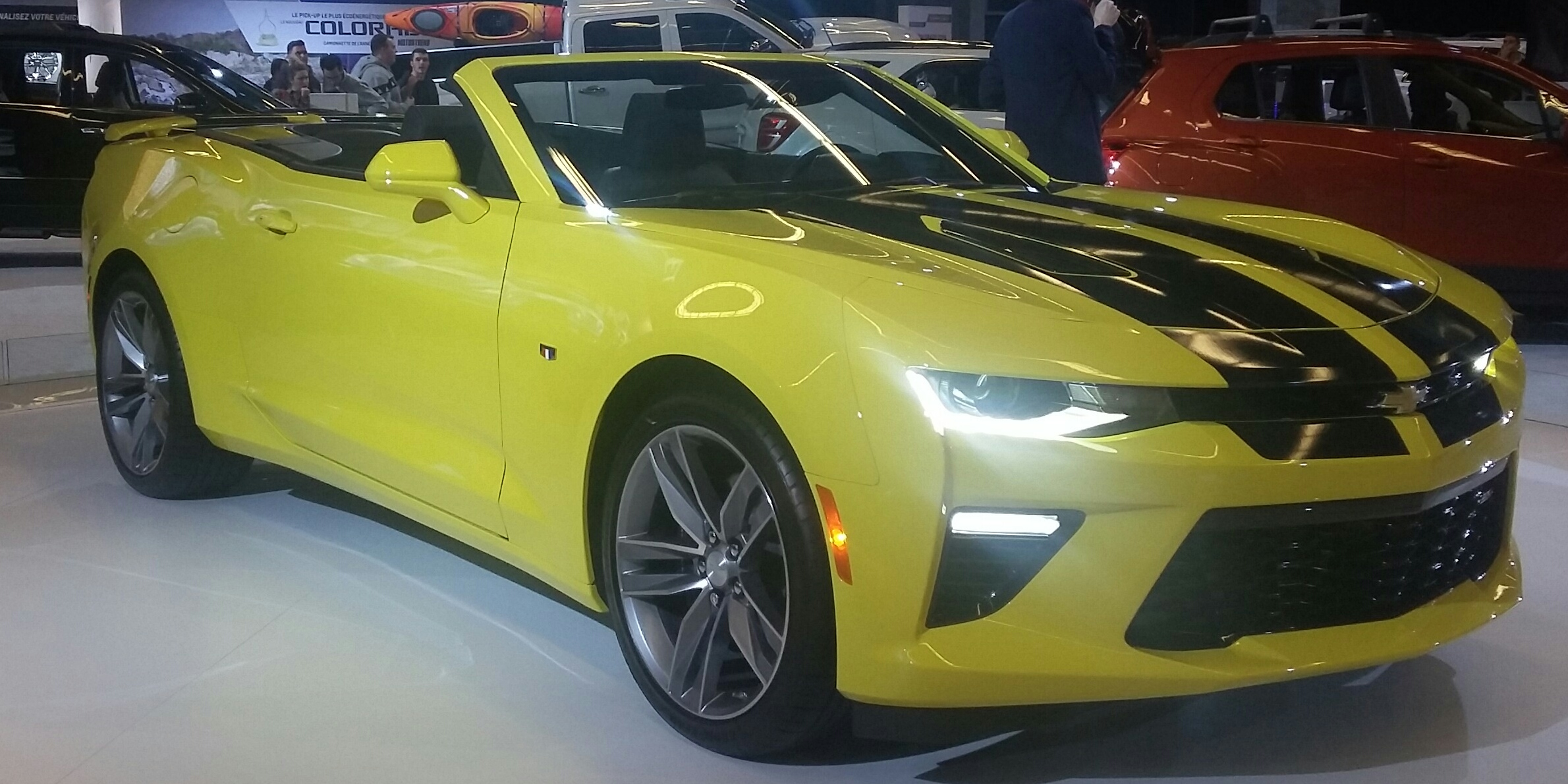
Chevrolet Camaro
"auction because you want more attention. Got a 69 Camaro, the old one here. I was perusing earlier."
The Chevrolet Camaro is a sports car made by Chevrolet. The “69” version is a famous older model that many collectors look for. People talk about it a lot because it’s a well-known classic.
The Chevrolet Camaro is a classic American muscle car known for its sporty styling and V8-powered performance, especially in the late 1960s. A “69 Camaro” is a particularly iconic generation and often comes up in auctions and enthusiast conversations because it’s a high-demand collectible. It’s discussed here in the context of an auction and getting attention with a recognizable classic.

Porsche 944
"And in this case, he wanted to take the 944. We had a pretty long winter here. So we just got the 944 out of storage a couple of weeks ago."
A Porsche 944 is a classic Porsche sports car. Here, the hosts talk about getting one out of storage and discovering a brake problem before driving it.
The Porsche 944 is a front-engine, rear-transaxle sports coupe known for its balanced handling and classic 1980s–1990s Porsche feel. In this segment, it’s used as the example of a car that sat through winter storage and then needed basic brake-system checks before driving.
master cylinder
"Clutch still worked. That was good news because the clutch and the brakes used the same master cylinder. But nonetheless, did a little investigating there."
The master cylinder is the part that creates hydraulic pressure for the brakes. If the clutch and brakes share it, problems can show up in more than one pedal feel or system.
The master cylinder is the hydraulic pump that pressurizes brake fluid (and, on many cars, can also feed the clutch hydraulics). If it shares fluid circuits, a clutch/brake master-cylinder setup can explain why a car might show issues in one system and prompt checks in the other.
right front caliper
"But nonetheless, did a little investigating there. And the right front caliper was leaking. And like not the line, not the bleeder, the caliper."
A caliper is the clamp that squeezes brake pads against the rotor to slow the car. A leaking caliper—especially leaking from the caliper body rather than a line or bleeder—often points to a failed seal or piston seal and can lead to low brake fluid and reduced braking performance.
bleed it
"Got enough brake fluid in it to bleed it. Got it bled enough to top it off and made the brakes work."
Bleeding the brakes means getting air out of the brake lines. Air in the system can make the brake pedal feel soft and make braking less effective.
Bleeding the brakes removes air from the brake hydraulic system. Air compresses, which can make the pedal feel spongy and reduce braking force until the system is properly bled.
brake fluid
"Got enough brake fluid in it to bleed it. Got it bled enough to top it off and made the brakes work."
Brake fluid is the special liquid that helps your brake pedal push the brakes. If it leaks or gets low, the brakes may not work right.
Brake fluid is the hydraulic fluid that transfers force from your brake pedal to the calipers and wheel cylinders. If it’s low or contaminated, the hydraulic pressure can’t build properly, leading to weak or inconsistent braking.
seal
"Either something's, a seal is bad or there's dirt in it. I really don't know."
A seal is a rubber/plastic barrier that keeps fluid from leaking. If a brake seal fails, brake fluid can leak out and the brakes may not work as well.
In a brake system, seals prevent brake fluid from leaking out of hydraulic components like calipers. A bad seal can cause slow or fast fluid loss, which then leads to air entering the system and degraded braking performance.
front right caliper
"When we did the brakes last time on the front right caliper, only the inside pad war, so there was already something goofy with that caliper."
The caliper is the part that squeezes the brake pads to slow the car. If one caliper acts up, you can get uneven wear on the pads.
A brake caliper is the clamp that squeezes the brake pads against the rotor. When the speaker references the front right caliper, they’re pointing to a specific corner of the car where a hydraulic or mechanical issue can cause uneven pad wear.
inside pad war
"When we did the brakes last time on the front right caliper, only the inside pad war, so there was already something goofy with that caliper. Like the outside pad didn't wear at all."
If only one side of the brake pads wears down (like the inside pad), it usually means the brake isn’t squeezing evenly. That can point to a stuck or failing caliper part.
Uneven brake pad wear—like the inside pad wearing much more than the outside—often indicates the caliper isn’t clamping evenly. Common causes include sticking caliper slide pins, a damaged piston seal, or contamination that prevents full pad contact.
outside pad
"Like the outside pad didn't wear at all. So it was only compressing from one side to us."
The outside pad is the brake pad on the outer side of the rotor. If it doesn’t wear while the inside pad wears a lot, the caliper may be stuck or not squeezing evenly.
The outside pad is the pad on the outer face of the rotor, paired with the inside pad on the caliper’s other side. If the outside pad doesn’t wear at all while the inside pad does, it strongly suggests the caliper isn’t moving or clamping correctly.

Chevrolet Chevelle
"...e perceive cars getting so expensive. So when the Chevelles and some other things got a little pricey, then t..."
The Chevrolet Chevelle is an older muscle car made by Chevrolet. People often talk about it because it’s a classic that can be easier to find than some other high-priced cars. In the podcast, it’s mentioned as an option when prices went up.
The Chevrolet Chevelle is a classic American muscle car that was especially popular during the 1960s and early 1970s. The podcast context suggests that as some cars became too pricey, people looked toward Chevelles and other similar models. That makes the Chevelle a common topic when discussing collector pricing and what’s still attainable.

Chevrolet Nova
"...things got a little pricey, then they went to the Nova. So they go, okay, they're going to go downstairs..."
The Chevrolet Nova is a car made by Chevrolet. It became popular during the muscle-car years, and people sometimes choose it when other cars cost too much. In the podcast, it’s mentioned as a more affordable option.
The Chevrolet Nova is a compact-to-intermediate American car that became especially popular in the muscle-car era. In the podcast context, it’s mentioned as prices rose and people “went to the Nova,” implying it’s a more attainable alternative when other cars got too expensive. That makes it relevant to auction and collector discussions focused on value.

Toyota Crown
"And the new sub industry of finding a crown vic and swapping them, putting the crown vic unde..."
The Toyota Crown is a Toyota sedan model. In the podcast, it sounds like the Crown is being mentioned in connection with custom modifications and part swapping. That means it may be used as a starting point for a build rather than staying original.
The Toyota Crown is a long-running Toyota model line that’s known for being a full-size sedan platform. The podcast context references a “Crown Vic” and swapping parts “putting the crown vic under…,” which suggests the Crown name is being used in a discussion about custom swaps and builds. That makes it relevant as a base car people may modify rather than as a stock collector item.
faux panel
"And they started in the faux panel, you know, the faux wood on the sides, right?"
“Faux panel” refers to fake or simulated body trim—often molded or textured to look like a different material. Here, the speaker specifically mentions faux wood-style side trim, which was a common styling cue on some older Jeep-era designs.
sports utility vehicle (SUV)
"So I don't know when that phrase, sports utility vehicle for those people that, for whatever reason, wouldn't know what an SUV stands for."
They’re talking about what the word “SUV” means and when people started using it. The point is that some older truck-like vehicles existed before the SUV name became popular.
“SUV” stands for “sports utility vehicle,” a label that became common later than the vehicles it describes. The speaker is arguing that many earlier vehicles were essentially truck-based, but people didn’t use the SUV term for them yet.

Ford Bronco
"There's just a beautiful Bronco sitting over your shoulder there. So I, it's a K5. It's a blue one, right? The red one."
The Ford Bronco is a rugged SUV that became popular for off-roading. Here, they’re pointing out a Bronco they can see nearby and arguing which one they’re looking at.
The Ford Bronco is a classic American SUV known for off-road capability and a strong collector following. In this segment, the hosts are talking about a specific Bronco on the auction floor and even debating which one it is (blue vs red).
K5
"So I, it's a K5. It's a blue one, right? The red one. Oh, it's a red one."
“K5” is a nickname people use to tell one Bronco variant from another. In the clip, they’re using it like a label to make sure they’re talking about the right truck.
“K5” is a shorthand used by enthusiasts/auction staff to refer to a specific Bronco generation/variant. In this context, the hosts use it to distinguish between multiple Broncos in the same area (blue vs red).
collector car trends
"So what's happening there is we saw this about four years ago in Monterey. A gentleman out of South Carolina brought a collection of 240 and 260 Zs. ...And I'm like, wait a minute, I've got one of those. ...So now you're seeing more and more of those. So the way we look at the math is when someone is of age...their car of favor is you go back 25 years."
This part is about how collector interest changes. The host says people often end up buying the cars they liked when they were younger, and that can push prices and popularity up.
The host is describing how collector interest shifts over time—specifically how certain “not-quite-classic yet” cars become popular after a catalyst. They cite an example from Monterey and then explain a rule-of-thumb for how buyers’ favorite cars tend to be tied to what they liked about 25 years earlier.

Toyota Land
"Okay. I'm in Houston and this is Toyota land. Okay."
The Toyota Land Cruiser is a large SUV made by Toyota. It’s built to be tough and reliable, including for long trips and rough conditions. The podcast mentions it as a well-known Toyota model.
The Toyota Land Cruiser is a full-size SUV known for durability and long-distance capability. It’s often mentioned in enthusiast settings because it’s built to handle tough conditions and tends to have a strong reputation for longevity. In this podcast, it’s referenced simply as “Toyota land,” highlighting the brand and model in a local setting.
Datsun
"But what a lot of people don't realize is that when Datsun came into the country, there's a company in Japan called Nissan and Nissan did not want to come into the United States with Nissan brand and potentially fail in the United States, ...So they created the word Datsun and that was the brand until Datsun was successful enough to be then converted over to Nissan..."
Datsun was an older brand name Nissan used in the U.S. at first. The idea was to test the market, and once it worked, Nissan switched over to using the Nissan name.
Datsun was the brand name Nissan used when it first entered the United States market. The host explains that Nissan created “Datsun” to reduce the risk of introducing the Nissan name in a new market, then later converted successful sales over to the Nissan brand.
Nissan
"there's a company in Japan called Nissan and Nissan did not want to come into the United States with Nissan brand and potentially fail in the United States, ...So they created the word Datsun and that was the brand until Datsun was successful enough to be then converted over to Nissan..."
Nissan is the company that makes the cars being discussed. In this story, they’re explaining why the brand name was “Datsun” first, and then later became “Nissan.”
Nissan is the Japanese automaker behind the Z-car line discussed in this segment. The host ties Nissan’s U.S. entry strategy to the Datsun-to-Nissan brand transition, which helps explain why older Z-cars may show up under the Datsun name in collector circles.
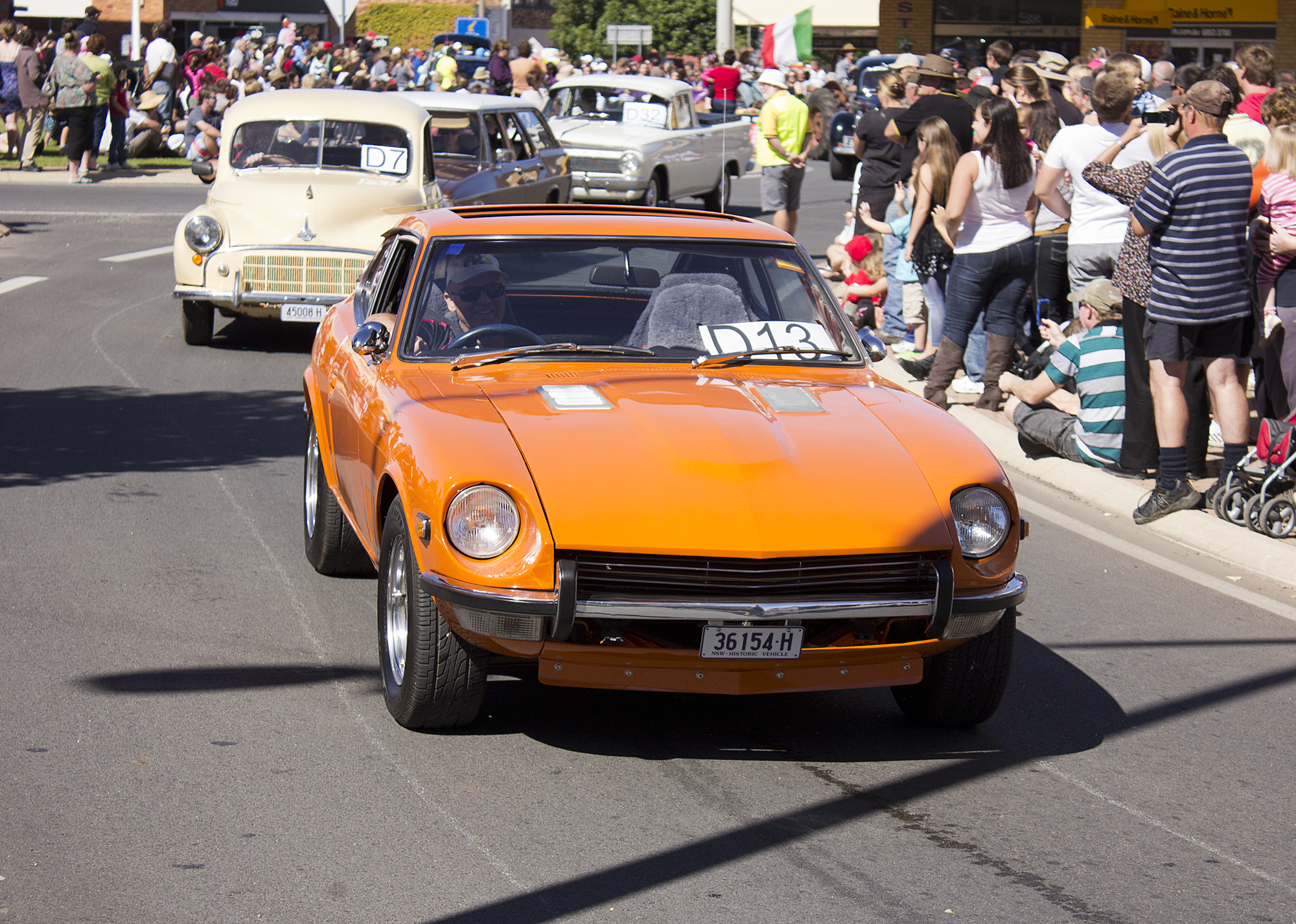
Datsun 260 Z
"So those cars that would be early 80s, if you will, late 70s, early 80s, the 240, 260, 280 Zs, we had a collection, a little mileage of those that were selling for 140, 160 and that blew open the door."
The Datsun 260Z is another member of the Z-car lineup. The host groups it with other Z models to explain why collectors are paying more attention to them.
The Datsun 260 Z is part of the same Z-car family as the 240Z, sharing the basic sports-coupe formula but with later-spec updates. Here it’s mentioned alongside the 240Z and 280Z to illustrate how these early Z-cars are rising in collector value and demand.

Datsun 280 Z
"So those cars that would be early 80s, if you will, late 70s, early 80s, the 240, 260, 280 Zs, we had a collection, a little mileage of those that were selling for 140, 160 and that blew open the door."
The Datsun 280Z is a later Z-car model. The host mentions it with the 240Z and 260Z to explain that Z cars are becoming more desirable to collectors.
The Datsun 280 Z is the next step up in the Z-car lineup, typically associated with later production years and incremental engineering changes. In this segment, it’s used as part of a set (240Z/260Z/280Z) to show how these cars moved from “not classics” to popular auction targets.

Datsun 240 Z
"So those cars that would be early 80s, if you will, late 70s, early 80s, the 240, 260, 280 Zs, we had a collection, a little mileage of those that were selling for 140, 160 and that blew open the door."
The Datsun 240Z is a famous Japanese sports car. The host is saying that cars in the Z line—like the 240Z—are becoming more popular with collectors again.
The Datsun 240 Z (often written as 240Z) is a classic Japanese sports coupe from the late 1960s/early 1970s era that became a huge enthusiast favorite. In this segment, the host is using the 240Z as an example of how early Z-cars from the late 70s/early 80s are now getting collector attention.
provenance
"I think it's a provenance issue. I think it's an issue where people that see something very special, a one of or a very special trim package to that unit, that's always going to be money for that. If one of 30 were made..."
Provenance is the car’s history—who owned it and what records exist. Collectors pay more when they trust that history.
In collector-car talk, provenance means the documented history of a specific car—who owned it, where it’s been, and what records support that story. It matters because it can make a car feel more “proven” and therefore more valuable to buyers.
RestoMod
"But could they look at that and now what's now happening with RestoMod, which we really haven't talked about much yet, is the restoration of that car with a modern technology that, so therefore that RestoMod alleviates some of the challenges..."
RestoMod is when someone restores an older car but upgrades it with newer tech. The goal is to make it more comfortable and easier to drive than a totally original vintage car.
RestoMod is a restomod approach where an older car is restored but updated with modern technology (often drivability, cooling, brakes, and electronics) to make it easier to use. The idea is to keep the original character while improving how it behaves and how reliably it can be driven today.
restoration of a car with modern technology
"is the restoration of that car with a modern technology that, so therefore that RestoMod alleviates some of the challenges that individual is going to have technically and the driveability is what they really want to do anyway..."
The speaker is talking about restoring an old car but upgrading it so it’s easier to drive now. It’s less about keeping it untouched and more about making it practical.
This describes the core motivation behind restomods: updating an older vehicle so it’s more usable in modern conditions. Instead of treating the car as a museum piece, the upgrades aim to reduce technical friction and improve day-to-day driving.
SEMA
"That's blown up in the doors on all vehicles. The multi-billion aftermarket SEMA has helped that. No question."
SEMA is a big aftermarket-parts industry event/organization. It helps drive what kinds of upgrades and accessories become popular.
SEMA refers to the Specialty Equipment Market Association, a major U.S. trade organization and show that showcases aftermarket parts and accessories. When the host says the “aftermarket SEMA” helped, they mean the aftermarket industry’s visibility and product development is pushing trends like restomods and modern upgrades.
garage that's big enough to park it
"Your neighbor's with you to Canada in it if you want to, but it may not be something you want to do. And the first thing you do is find a garage that's big enough to park it."
With collector cars, you often need enough space at home to store them safely. If your garage isn’t big enough, it can make owning the car much harder.
For collector cars—especially large, older American cars—storage space becomes a real constraint. A “big enough” garage affects whether you can own the car comfortably, keep it protected, and work on it without hassle.
COVID
"But I think one of the great things that has happened with COVID, dare I say, people got back together with people and they realized that cars are safe and you can't contract COVID from the steel on a car or the fiberglass on a car, right?"
They’re talking about how COVID affected people getting together. The idea here is that meeting around cars felt safer than other kinds of gatherings.
The speaker is referencing how the pandemic changed social behavior around car culture. The claim is that people saw cars as a safe way to gather because the materials (like steel and fiberglass) don’t “contract” COVID the way people can.
collectability market
"And I'm fascinated more by the industry as it evolves and what brings people into the collectability market. And that's where I come in from doing my job."
The collectability market is where people buy cars because they think they’ll be valuable or special. It’s about what collectors want, not just speed or fuel economy.
The “collectability market” is the part of the automotive world where value is driven by desirability, rarity, and buyer identity—not just how the car performs. It’s influenced by trends like limited production, modern restomods/continuations, and how new buyers discover the hobby.
low volume manufacturing craze
"Would you like to comment on behalf of Mecom on what we call the low volume manufacturing craze? I'm going to call it a craze because it's very early, but it's really taking hold."
Low volume manufacturing means making only a small number of cars. Collectors like that because it feels rare, but it can also mean the car is more “made to look like” something than fully original.
“Low volume manufacturing” refers to producing cars in small numbers, usually to create exclusivity and cater to niche buyers. In the collector market, that scarcity can drive interest, but it can also blur the line between true heritage cars and modern replicas or heavily reworked builds.
limited edition
"And I'm not sure that's the model of what you're referring to, but it's limited edition. It's high priced."
“Limited edition” means only a small number of cars were made. With fewer cars available, collectors may pay more for them.
“Limited edition” means only a small number of units are produced, which can make a car more desirable to collectors. In auction settings, limited production often supports higher pricing because fewer cars exist to satisfy demand.

C1 Corvette
"It's technology extreme, but it's got that cool look and feel of that C1 Corvette. Right? That's what he's doing."
“C1 Corvette” means the very first generation of the Corvette. People use that term to describe the classic early look that newer cars try to copy.
The C1 Corvette refers to the first generation of the Chevrolet Corvette, produced in the early 1950s through 1962. It’s a styling benchmark for many modern builds because its proportions, body lines, and “classic Corvette” look are instantly recognizable.
Rivology
"Do you see a very measurable amount of cars that you see with maybe Factory 5 or Rivology or these other companies?"
Rivology is mentioned as one of the companies making niche cars that might appear at auctions. The point here is whether these kinds of brands are gaining attention from collectors.
Rivology is referenced as one of the companies producing cars that show up at auctions and in collector circles. The context suggests the hosts are tracking whether kit/limited-build brands are becoming a bigger part of the collector market.
Factory 5
"Do you see a very measurable amount of cars that you see with maybe Factory 5 or Rivology or these other companies?"
Factory Five is a company that makes car kits. Enthusiasts buy them to build a car, often with a classic look.
Factory Five is a kit-car company known for selling “turn-key” style vehicles and rolling chassis that enthusiasts can build or complete. In collector-car conversations, brands like this often come up because they produce modern takes on classic sports-car designs.
panoramic roof
"So when we saw Mustang Brothers and they have a patent on a panoramic roof that they put in a 68 Mustang, really cool look and it happened in the right-hand drive."
A panoramic roof is a big glass roof panel. It lets in more light and makes the cabin feel more open, but some people don’t like it because it changes the car’s original look.
A panoramic roof is a large glass roof section that spans much of the roof area, giving a brighter cabin and a more open feel. In collector-car discussions, it’s often a polarizing modification because it can dramatically change the car’s appearance and interior experience.

1968 Mustang
"So when we saw Mustang Brothers and they have a patent on a panoramic roof that they put in a 68 Mustang, really cool look and it happened in the right-hand drive."
The Ford Mustang is a famous American muscle car, and the 1968 version is a classic. Here, they’re talking about a 1968 Mustang that was modified with a panoramic roof, which makes the car look different and lets more light into the cabin.
The Ford Mustang is one of the most iconic American muscle cars, and the 1968 model is especially recognizable for its classic body lines and styling. In this segment, the hosts mention a 1968 Mustang fitted with a panoramic roof, which is a notable customization because it changes the cabin look and visibility compared with the original factory-style roof.
right-hand drive
"So when we saw Mustang Brothers and they have a patent on a panoramic roof that they put in a 68 Mustang, really cool look and it happened in the right-hand drive."
Right-hand drive means the steering wheel is on the right side of the car. It’s common in some countries, and when a classic American car is built that way, it can make it feel more “import-style” and may be more interesting to collectors.
Right-hand drive (RHD) means the steering wheel is on the right side of the vehicle, which is common in countries like the UK, Australia, and Japan. For a U.S.-market classic like a 1968 Mustang, converting or building it as right-hand drive is a major change that can affect drivability, parts sourcing, and collector appeal.
Dana Mecum's Spring Classic
"We opened up Dana Meekam's Spring Classic. So it'll be the 39th original Spring Classic on May 8th. It's a nine day run with an estimated 3,000 cars."
They’re talking about Dana Mecum’s Spring Classic, a big multi-day car auction. The point is that it’s huge—thousands of cars—so it’s a good place to see what collectors want.
This segment discusses Dana Mecum’s Spring Classic, an auction event where large numbers of collector cars are sold over multiple days. The hosts mention the event’s scale (a nine-day run and an estimated 3,000 cars), which frames why auction trends and collector behavior matter.
record-breaking sales
"So a lot of people saw what we did in Consiming with the Bachman collection of 46 Ferraris [2526.5s] and a lot of record-breaking sales."
“Record-breaking sales” means the car sold for more money than similar cars ever have before. When that happens, it usually tells everyone the market is getting hotter.
In collector-car auctions, “record-breaking sales” means a car (or category) sells for a price higher than any previously documented comparable sale. It’s a signal that collector demand has shifted upward, often pulling the broader market with it.
escalating in value
"And will that continue in escalating in value? The Steve McQueen brand has one of the greatest provenance stories."
They’re talking about prices going up over time. For collector cars, that can happen when more people want the same rare, story-rich car.
“Escalating in value” describes a price trend where an asset’s market price keeps rising over time. Collector cars often see this when demand grows faster than supply, especially for cars tied to famous owners, films, or verified provenance.
Steve McQueen brand
"The Steve McQueen brand has one of the greatest provenance stories. It doesn't matter if it's a watch, a car, a motorcycle, whatever."
This is about how Steve McQueen’s name carries a lot of collector interest. People want the car because it’s tied to his legacy, not just because it’s a nice vehicle.
The “Steve McQueen brand” refers to the celebrity’s name and image as a collector-car asset. In auctions, that kind of fame can boost demand because buyers aren’t just purchasing a vehicle—they’re buying a piece of McQueen’s story.
Mecum Auctions lot R727
"In Indianapolis, there's going to be a car there. I wrote it down, lot R727."
An auction “lot” number is like a catalog entry for one specific car. “R727” is how people refer to that exact vehicle in the auction.
Lot numbers like “R727” identify a specific auction entry so bidders can track the exact car being sold. This is a practical detail for following auction results and comparing similar cars.

Ferrari 250
"Every little detail that we can. It's a 63 Ferrari, 250 GT, California Spider. I finally got all the words out."
The Ferrari 250 GTO is a very rare, expensive classic sports car made by Ferrari. It’s from the early 1960s and is known for being a top collector car. The podcast brings it up because the exact model details matter a lot with cars like this.
The Ferrari 250 GTO is a legendary limited-production Ferrari from the early 1960s, widely regarded as one of the most valuable and desirable classic race-derived cars. The podcast context focuses on getting the details right—mentioning a 1963 Ferrari and related model names—because these cars are so specific and historically important. It’s discussed here as part of the high-end collectible conversation.
long wheelbase and short wheelbase
"It's rarer than some people think because the real version, there are actually two versions. There's a long wheelbase and a short wheelbase of that car. The car that we reference in the movie is none of those."
Wheelbase is the length of the car between the front and rear wheels. Different versions can have a longer or shorter wheelbase, and collectors use that to tell which exact variant they have.
A long-wheelbase vs short-wheelbase distinction means the car’s distance between the front and rear axles differs between variants. That can change interior room, ride/handling character, and—most importantly for collectors—how the car is identified and which exact variant it is.
Ferrari badge
"And it wasn't a Ferrari. And a Ferrari badge on it, but it wasn't a Ferrari. But everybody's going, ooh, when they see it."
That’s the Ferrari logo/emblem on the car. Collectors pay attention because the badge can make people assume it’s a real Ferrari even when it isn’t.
A “Ferrari badge” refers to the visible branding/emblem on the car. In collector circles, badge placement and authenticity matter because a car can look like it’s a Ferrari at a glance even if it’s not the real marque/model.
no reserve auction
"because the dream is having at least two bidders wanting that same car because they're going at no reserve. We don't want it to be just one guy bidding against himself because he's getting a great deal."
A no-reserve auction means there’s no “minimum price” the seller requires. If someone bids and wins, the car sells—even if the price is lower than expected.
A no-reserve auction means the car will be sold regardless of the final bid amount—there’s no minimum price the seller must reach. That setup is meant to encourage competitive bidding, including multiple bidders targeting the same car.
auction estimate (what it might bring)
"My question as written was, quote, do you have an estimate what it might bring? End of quote. And you said, what I said was we don't put estimates out there."
An auction estimate is the pre-sale price range sellers or auction houses publish for what a car “might bring.” This segment argues that Mecum Auctions often avoids estimates for certain cars—especially no-reserve and highly collectible ones—so the market can set the price through bidding.
Kissimmee auction market pricing
"We didn't put an estimate on that car. And the reason we didn't put an estimate on that car and many other cars like it is, we want the market to allow itself to prognosticate... what car would sold it in Kissimmee at 38 and a half million dollars."
They mention Kissimmee because it’s where a particular high-end Ferrari sold. The point is that the final price came from bidding, not from a pre-announced target.
The segment references Kissimmee as a specific auction setting where collectible-car prices are discovered through bidding. It’s used to illustrate how published estimates could have “steered” the outcome versus letting the market determine the final sale price.

Ford Bullitt
"Right. When we were selling Bullitt, he started calling it art because you're not goi..."
The podcast mentions “Ford,” which is the car brand. It’s talking about a specific car named “Bullitt,” and how people see it as something special. The important part here is that it’s a Ford car being discussed for its value and recognition.
The podcast mentions “Ford” in the context of selling a car called “Bullitt,” describing it as “art” rather than just a vehicle. Without a specific model, the key takeaway is that Ford is being referenced as the brand behind a notable car being discussed for its cultural and collector value. It’s included because the conversation is about how certain cars become more than transportation.
numbers matching
"You're not going to restore that car. [3014.8s] It's art. [3015.8s] It's going to stay as it is, and no one's going to touch it."
“Numbers matching” means the car still has its original parts that go with its identity. Collectors often pay more for that kind of originality.
Numbers matching refers to keeping the car’s original components (like engine and transmission) that correspond to the vehicle’s documented identity. In auction and collector circles, it’s a key factor because originality can matter more than making the car look “perfect.”
consignment
"you're going to get the value of that consignment on our website. But if it's a car that's going to stand on its own,"
Consignment is when you hand your car to an auction to sell for you. The auction company helps sell it and usually takes a cut of what it sells for.
In an auction context, consignment means the owner gives the car to the auction company to sell on their behalf. The auction house typically markets the car, handles the sale process, and takes a fee or commission from the final price.
register to bid
"It's definitely not too late to register to bid. And registering bid can be done at Meekam.com."
Registering to bid means you sign up so you’re allowed to place bids. If you win, the auction can then handle the paperwork and payment.
Registering to bid is the process of setting up as an eligible bidder before an auction. It usually involves identity verification and agreeing to the auction’s terms so the auctioneer can accept your bids and process payment if you win.
Mecum.com
"And registering bid can be done at Meekam.com. All that information is online."
Mecum.com is Mecum Auctions’ website. It’s where you can sign up to bid and look up information about cars they’ve sold.
Mecum.com is the online platform associated with Mecum Auctions, where bidders can register and where auction listings and sale history are presented. In this segment, it’s referenced as the place to manage bidding and view past results.
comps
"and see what that truck was going and doing comps of what you can make that comparison to what you do"
Comps are similar cars that have sold recently. People use them to guess what your car might be worth in today’s market.
In collector-car pricing, “comps” (comparables) are recent sales of similar cars used to estimate what a vehicle should sell for. Comparing your car to comps helps sellers and buyers judge whether a bid is reasonable based on market activity.
NBC Sports Network
"when Meekam left a traditional auto channel and went to NBC Sports Network."
NBC Sports Network is a television network referenced here to describe Mecum’s media distribution shift. The point is about how auction coverage moved from a traditional auto channel to a broader sports network.
Request an Explanation
Heard something you'd like explained? We'll add it to this episode.
Sign in to request explanations for terms you heard.
Want to learn more?
Browse our glossary for plain-English explanations of automotive terms, jargon, and concepts.
Help improve this episode
See something that's not quite right? Our annotations are AI-generated and can sometimes miss the mark. Click the flag icon on any annotation to suggest a correction.