Tariffs are extra taxes on imported products. If car parts or cars are imported, those taxes can make them cost more, which can push up vehicle prices.
It means building the right number of cars or trucks that people want. If a company doesn’t make enough of the cheaper ones, customers can’t buy them even if they’re interested.
The Ford Maverick is a smaller pickup truck that’s often priced lower than typical trucks. The hosts bring it up because it’s an example of an affordable truck that customers want, but the supply hasn’t kept up.
Toyota Motor North America is Toyota’s office for selling and running the brand’s business in North America. When they talk about what its CEO said, it’s about how Toyota is dealing with local market issues like pricing.
Supply chain localization means making more of the parts locally instead of importing them. That can help when tariffs or trade rules make imported parts cost more.
The Toyota Corolla is one of Toyota’s most common, budget-friendly cars. Here, it’s used as the “cheap baseline” compared to Toyota’s pricier SUVs and trucks.
The Toyota Prius is Toyota’s popular hybrid car. In this discussion, it’s just being used as an example of a cheaper Toyota than the SUVs and trucks they’re talking about.
The Toyota Highlander is a larger SUV than the Corolla or Prius. Here it’s mentioned to show that Toyota’s vehicles get much more expensive higher in the lineup.
The Toyota Grand Highlander is a bigger version of the Highlander. The hosts bring it up to show Toyota’s more expensive offerings are selling at higher prices.
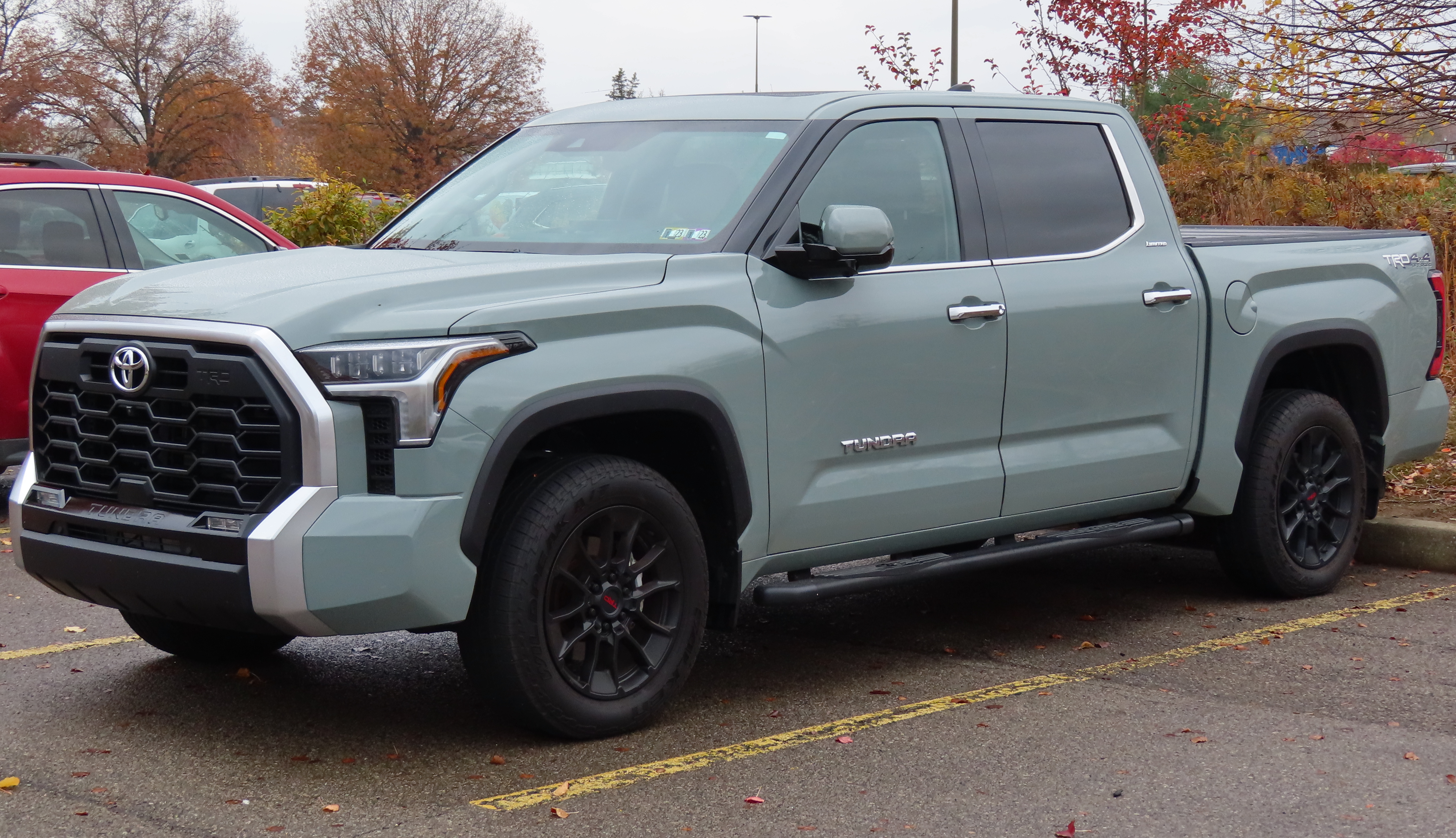
The Toyota Tundra is Toyota’s big pickup truck. They’re using its high price to show that Toyota’s trucks can cost as much as luxury-level vehicles now.
Inventory turnover is a measure of how fast car lots sell their cars. If cars are selling quickly, dealers often don’t have to discount much, because buyers are already snapping them up.
The Lexus RZ is an all-electric Lexus SUV. They mention it only to exclude it from their list, because it’s not directly comparable to the Toyota models they’re focusing on.
The Lexus GX is a more upscale SUV than most Toyota models. They bring it up to say, “we’re excluding Lexus,” so the rest of the list is mostly Toyota vehicles.
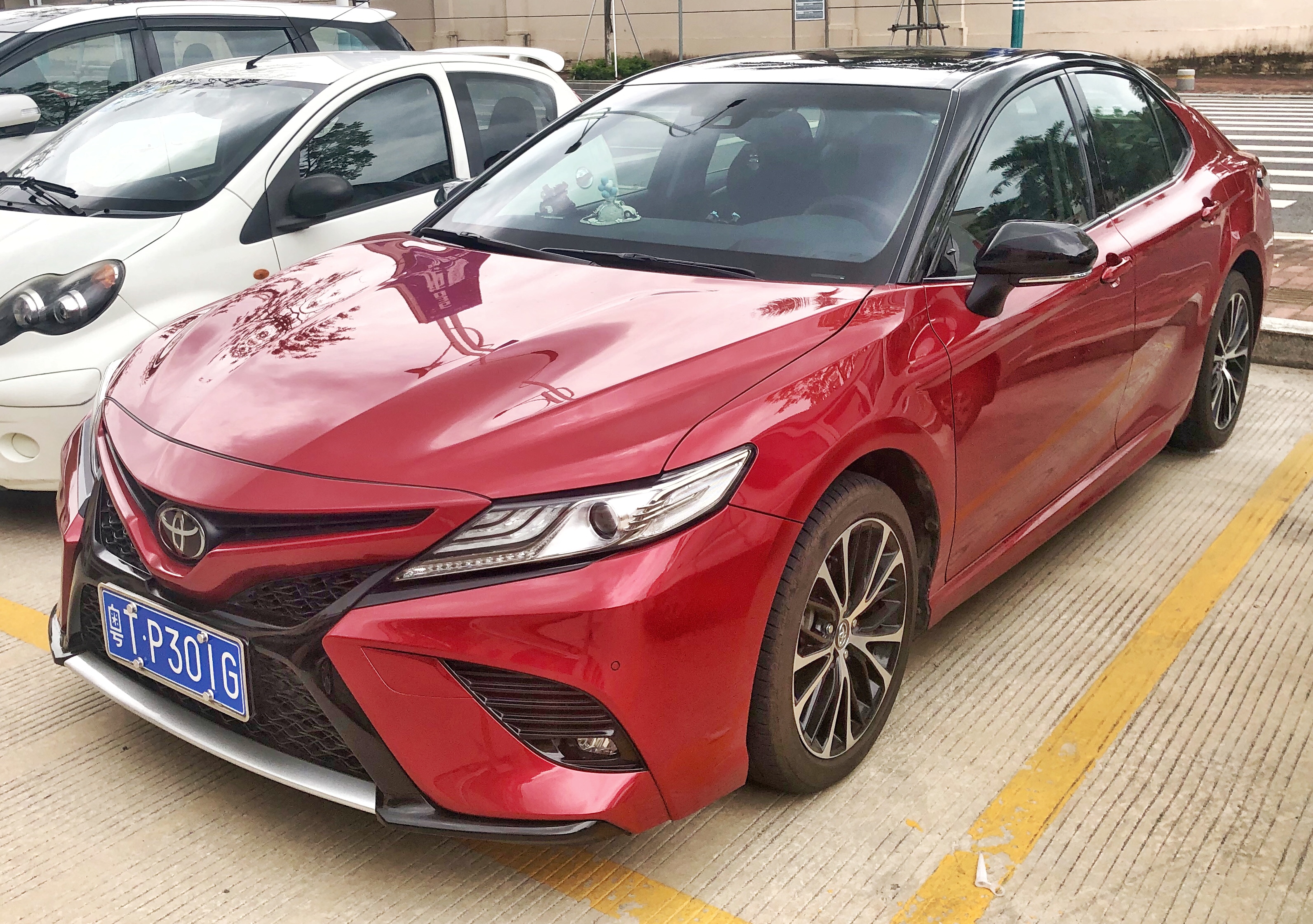
The Toyota Camry is a popular mid-size sedan. In this segment, it’s mentioned because it’s selling quickly and at a relatively high price compared with cheaper Toyota models.
The Toyota Sienna is Toyota’s minivan. They mention it because it’s selling very fast even at around $54,000, which shows how expensive new vehicles have gotten.
The “chicken tax” is a U.S. import tax that can make it harder to bring certain types of trucks into the country. That can limit which small truck models Americans can buy.
Company
Toyota North America's CEO
The speaker is talking about Toyota’s top leader for the U.S. market. The question is basically whether Toyota’s plans match what dealers and customers actually need.
Subaru is another automaker mentioned as someone Toyota might work with. The idea is that partnerships can help companies build or deliver cars more effectively.
Battery electric vehicles are fully electric cars that run on a battery instead of gasoline. The point here is that Toyota’s partnerships aren’t only about fully electric cars—they could also involve other kinds of powertrains.
A hybrid uses two power sources: a gasoline engine and an electric system. The hosts are saying hybrids are still in high demand, and automakers aren’t making enough of them to satisfy everyone.
The Mazda CX-50 hybrid is a Mazda SUV that, at least for now, uses a hybrid system that comes from Toyota. That’s important because the hybrid system is what determines how efficient and smooth the car feels day to day.
The “bridge” idea means hybrids are a middle step on the way to cleaner future power sources. They help people transition now, while the industry figures out the next big shift.
Dealer add-ons are extra charges or add-on items a dealership adds to a car deal. They can make the final price higher than you expected, so it’s worth checking before you buy.
Tariff refunds are money back from the government after a company paid extra taxes on imports. For car companies, refunds can help reduce the financial hit from tariffs.
Concept
COVID shortage
During COVID, there were shortages that made it harder to get enough cars and parts. The host is saying companies learned from that and may keep prices higher longer than you’d expect.
Supply and demand means prices change depending on how many cars are available and how badly people want them. If fewer people are buying, prices usually have to drop to sell the cars.
A model year switchover is when the car changes from the current year to the next year. Dealers may cut prices on the older-year cars to make room for the new ones.
The Porsche Cayman is a sports car from Porsche with the engine placed toward the middle of the car. Here it’s mentioned mainly because the host thinks the older interior and tech were better.
A buyer’s market is when it’s easier for shoppers to get a deal because there aren’t enough buyers chasing the cars that are for sale. That usually means more discounts or lower prices.
On-hand inventory means how many cars are actually sitting at dealerships right now. More cars available can make it easier to negotiate, because dealers compete more.
Leverage here just means who has the upper hand in negotiations. If dealers have leverage, they can resist discounts; if shoppers have leverage, they can negotiate harder.
“Average transaction price” is the typical final price paid for a car after discounts, incentives, and dealer pricing—so it’s closer to what buyers actually pay than the sticker price. When the hosts say it’s “north of $50,000,” they’re pointing to real-world pricing levels across the market. This helps explain why prices can feel high even if inventory changes.
This is a way to estimate how long the current stock of cars would last if sales keep going at the same pace. If it’s high, there are lots of cars sitting around (buyer’s market); if it’s low, cars move fast (seller’s market).
The segment emphasizes that used/new-car pricing and deal strength can vary dramatically by location because inventory and demand differ from state to state. The hosts argue that broad national answers are unreliable, but drilling down to specific regions makes the market dynamics understandable.
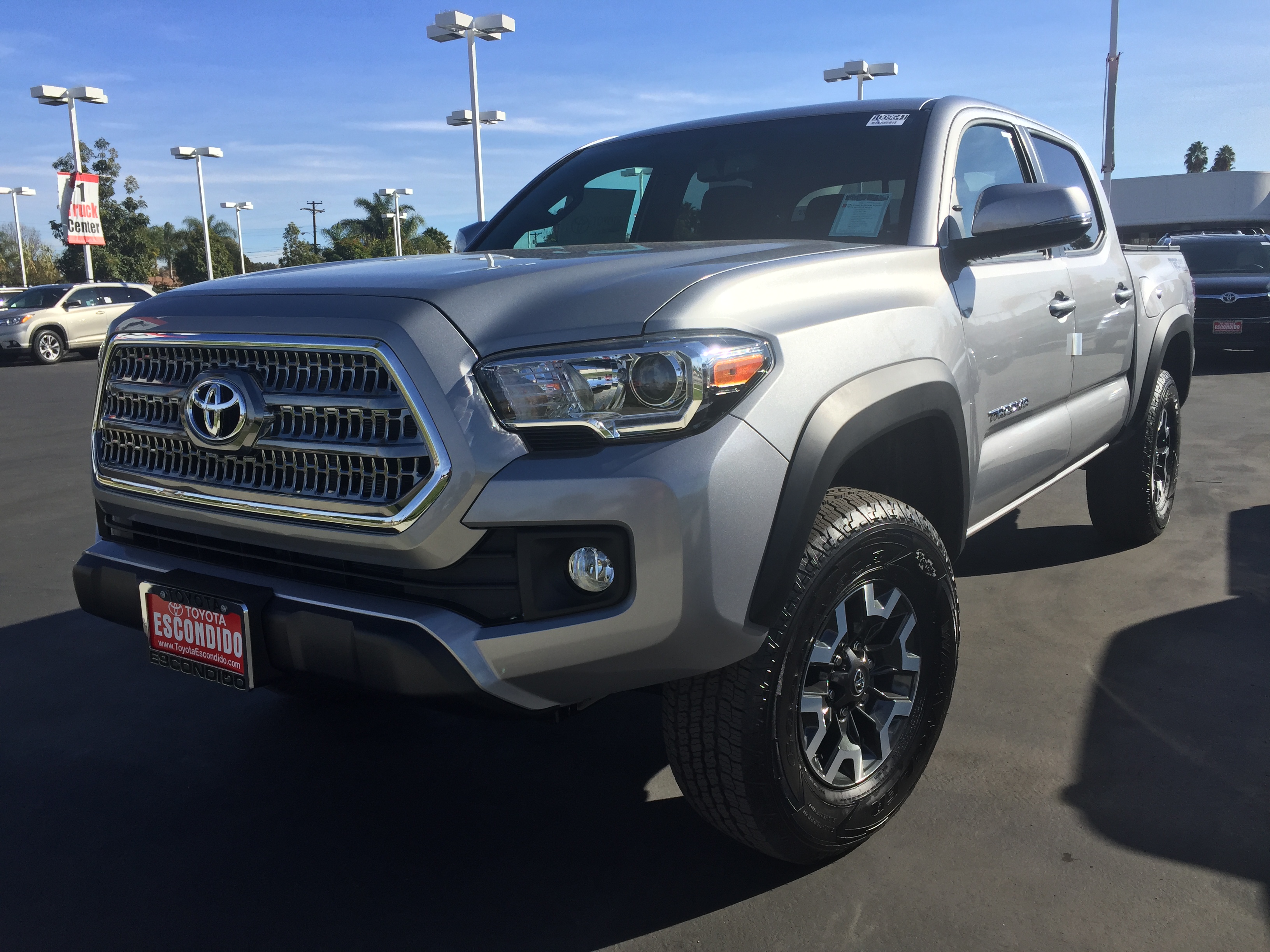
The Toyota Tacoma is a popular pickup truck. In this discussion, it’s singled out as not following the same local supply-and-demand pattern as most other Toyotas.
The Toyota Hilux is a tough pickup truck that’s sold in many countries. Here, they’re talking about whether the version you can buy has good emissions and safety ratings.
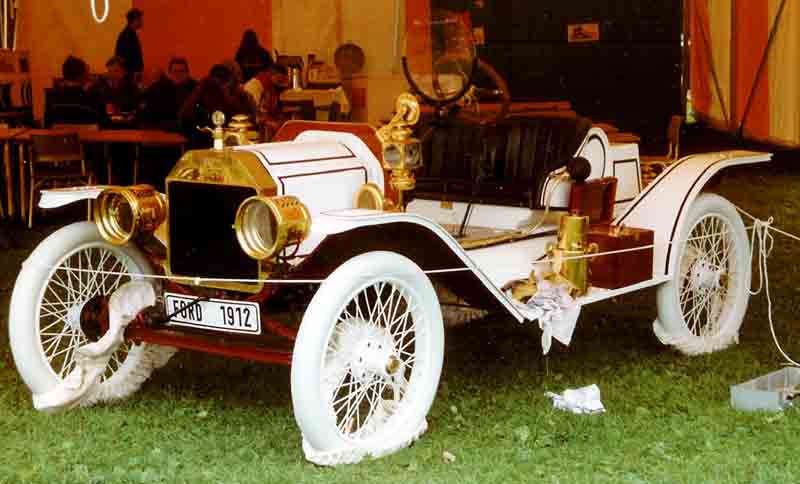
The Ford Model T is an old car from the early days of automobiles. It’s famous because it was made in large numbers and helped make cars more common. The “T” being silent is just a pronunciation detail people often mention.
Sticker price is the listed price on the car’s window sticker. When someone says they got money off sticker, they mean they paid less than that list price.
The Jeep Gladiator Sport S is a pickup truck from Jeep. They’re using it here to talk about a big discount from the listed price, which can happen depending on the buying situation.
Alpine is an audio brand known for aftermarket and factory-fit car stereos. When a listing mentions an “Alpine stereo,” it typically means the vehicle’s sound system uses Alpine components and tuning rather than a generic head unit.
LIVE
It's noon here in Ventner City, New Jersey, in our nation's capital, Washington, D.C.,
and this is Car Edge Live for Wednesday, May 13th with your host, me, Ray, hanging out in
my living room in Ventner, and Zach hanging out with that life ring because, well, you never
know when that could come in handy in Washington, D.C. How are you today, Hanson? What's going on down
there? I'm doing well. Thanks so much, everyone, for tuning in for another episode of Car Edge
Live. Toyota's CEO admits they have a huge problem. The headline in automotive news this morning was
astounding. We're going to dig into it. There's so much to unpack there. But before we do, Dad,
today's show is brought to you by caredge.com. For those of you that are unfamiliar, six years ago,
my dad and I started this whole thing on YouTube and on our website, caredge.com.
We provide car buying services. We have an incredible team of human beings behind the
scenes at Car Edge that will help you buy your next car. I encourage everyone who watches today's
video, if you're going to buy a car in the next, I don't know, couple months, get a free consultation
with our team. Just click on Car Buying Service, scroll down. You can call us. You can live chat
with us, schedule a time to talk to us, or have us call you back. We've got real humans on our end
who are going to call you. You can meet our team of car buying experts as well. My favorite thing
about this, Dad, is click into Steve's profile here, see his years of experience, total savings
since he joined Car Edge, and some of his most recent deals that he has helped customers on.
I encourage everyone to check this out and learn more back at caredge.com. The big story this morning,
Dad. Can I say one thing before the big story? Sure. It seems like it was six years ago that you
came into my living room when I had a different couch. You proclaimed in no uncertain terms,
hey, I'm living here. I'm sleeping on your couch for the summer. Let's get this thing going. Let's
get Car Edge started. Yeah, that seems like almost yesterday, buddy. Six years flies by.
Friendly reminder as well. Thank you, Igor, for this. We have a free community forum,
super vibrant. Thousands of people helping one another buy cars as well, so check that out,
caredge.com slash community. The big story this morning, Dad, something you've been talking about
now for almost half of a decade, the same thing that the CEO of Toyota North America, Ted Ogawa,
is saying as well. Why Toyota's Ted Ogawa, the CEO of Toyota North America, sees affordability as
the auto industry's biggest threat. There's a fantastic interview here with the CEO of Toyota
North America. We're going to break down many aspects of it in just a moment. But before we do,
Dad, that lead, the CEO of Toyota North America acknowledging they and the broader auto industry
have a huge problem, and it is affordability. What did you see when you read through this
article? What stood out to you this interview? Excuse me. I saw that tariffs and the cost of
tariffs have made life difficult for Toyota and every other manufacturer out there,
and nobody does a better job at this moment of matching demand and production the way Toyota
has. Even they, being able to do that, realize that they don't have enough lower priced vehicles.
And what is now passing for affordable vehicles isn't really that affordable,
and they're beginning to understand it. But that doesn't mean they can do anything about it
in any real sense in a timely fashion. I mean, we have heard every other CEO, and he's the North
America CEO for Toyota. We've heard far early. We have heard Espinosa from Nissan. We have heard
Filosa from Stellantis. Everybody has mentioned affordability, but damn it, nobody has done
anything about it. It's a wonderful thing to say, even maybe at some point we should address this,
but I didn't see it. The only thing I saw in there that might make life a little easier for
people is, okay, Toyota said, yeah, we're going to come back out with another small pickup truck,
and that'll be less expensive. That's huge. Yeah, assuming everybody wants another pickup truck.
Look at the Maverick Playbook. Maverick's selling off the shelves. It's an affordable or seemingly
affordable pickup truck. They're not making as many as they should.
I want to say on Toyota here, Deb, I am actually surprised to hear the first words out of your
mouth when we talk about this, to be tariff, because again, the North America CEO of Toyota
talked about tariffs, and he was asked this question directly. Which tariffs have hurt
Toyota Motor North America more, the ones on Japan or the ones on Canada and Mexico? Japan,
this is the answer from the CEO of Toyota North America, Japan represents about 20% of our mix,
and the tariff is 15%, which is manageable, I think. But Canada and Mexico is more of an
issue for us, and including the United States, Mexico, Canada agreement framework,
that is more important to secure the supply chain. We cannot change the supply chain so quickly.
So we have asked our suppliers to more deeply localize parts. It's a major issue, of course,
but Toyota still does produce a significant number of their vehicles domestically back in Japan.
And so it is interesting, Deb, that you're saying that's like the number one challenge that they're
facing are the impact of tariffs. And to be clear here, Toyota is investing significantly. Where
was it? Where Wait for it. Bear with me. But the reason I say it's tariffs
is we know that North America, for the first time in like forever, was lost a lot of money,
was not profitable for Toyota. Yeah, Toyota lost over a billion dollars in North America.
Because of tariffs. There's no other reason for it. I mean, they sold every vehicle that
they produced. Okay, so it is the cost of tariffs that have made North America unprofitable for
that last year. And that's one of their major markets. So that's hard to compensate for,
I would say. I think you're absolutely right. Let's dig in a little bit more on affordability.
And then I want to look at a few other questions that Toyota's North America CEO has asked.
This question, although you said demand is holding, is there a point where you think demand
starts to fall? And are you concerned about getting there? The response from Toyota North
America's CEO is as follows. Yes, the issue is affordability. Right now, the average ticker price
is over $50,000. And that's a huge jump from three or four years ago. Of course, the product is
getting better, but affordability is the number one issue. So we keep some products under $30,000,
such as the Corolla and maybe Prius. But Corolla is a very key product for the entry role. We do
have a full portfolio right now. So each model has its role. We try to keep stabilizing our
production and then give it to the market. So there it is. I mean, straight from the horse's
mouth, the number one challenge they face is affordability. Yes. And the vast majority of the
vehicles they sell are way higher priced than the Corolla or maybe the Prius. You start getting
into the Highlander, the Grand Highlander, their pickup trucks. I mean, we've seen tundras that
are $75,000, $80,000. That's a far cry from affordable. And yes, across the industry,
the average is in excess of $50,000, which has gone up dramatically in the last three or four
years. But what has caused it to go up so dramatically in the last three or four years?
Is the technology that we're using that much more expensive than in the past? Or is it just that the
manufacturers have decided that there is more money to be made for them by producing the higher
priced, higher profit margin vehicles? And I think ultimately the conclusion one must come to
is that it was a choice. And the choice is we're going to produce more of the higher
profit margin, higher priced vehicles because it increases our chances for keeping North America
profitable. It is interesting, Dad. I want to go back to the interview. But before I do, we track
every single month the fastest selling cars in the United States of America. This is a great
indication of vehicles that have no negotiability or lots of negotiability based on how quickly
inventory is turning over. And when you look at this list, 90% of it are Toyotas. Two of those
are Lexus vehicles, the RZ and the GX. So let's exclude those. Toyota Camry is the ninth fastest
selling vehicle in the United States at a $36,568 price point. The number seven fastest selling
vehicle in the United States of Toyota Corolla at a $27,000 price point. Look at this, Deb,
the Sienna is the sixth fastest selling vehicle in the United States of America at almost $54,000.
$54,000 Toyota Minivan is your sixth fastest selling car in the United States. The RAV4
average transaction prices has creeped all the way up to $41,358. The Toyota Corolla Cross is
over $32,000. And then the Highlander is $55,500. And the Grand Highlander, excuse me, at $57,000.
So when you look at this list, Toyota has many expensive vehicles, more expensive than the
average transaction price of new cars. Again, I'm not trying to knock them. They also have the
Corolla and Camry well below. But they had $54,000, $55,000. The RAV4 at $42,000. I mean,
they have significantly increased the prices of their vehicles. And they're thinking about that,
not only how do they continue to maintain profitability through the lens of increasing
revenue, so increasing prices, but also cutting costs. And you can see here, the question was asked
to Toyota North America CEO. In previous conversations, you talked about extending the
product lives of some vehicles as a way to keep costs down. Is there more room to run on that?
And the response was keeping costs down is definitely a challenge we have to face. So
we are meeting with hundreds of our suppliers soon. And the message to them is,
we are in the same boat. So let's challenge cost reduction and work more efficiently
together. I read that as, yeah, they likely are just going to keep extending the lives
of certain vehicles because it is more cost effective for them to do that.
Yeah. And at what point can you just no longer find cost savings? The suppliers' costs have gone
up as well as everybody else's costs. So at what point does the cost savings
cause quality issues? Because if you're going to ask your suppliers to figure out ways
to make each one of the supplied parts that they make for you less expensive,
well, something's got to give. Is it the quality of the worker? Is it the capability of the,
I mean, somewhere, something's got to give. And the suppliers, they're thinking, well,
we've got to make money too, the whole idea behind being a supplier so they can make money.
So at what point is there diminishing returns on trying to find cost savings
to where it impacts everything else? I think quality is a story and I want to touch on it.
But, Dad, I think the bigger story, at least for me, is when you look at the data we looked at,
which is fast to selling cars. So they're selling out and they're at high price points.
And then you look at that question of, are you going to run products longer? Like, why wouldn't
like if you're Toyota, what incentive is there for you to be innovative and release brand new
models? Obviously, with the smaller, less expensive pickup truck, it sounds like they're going to do
that. But why would they change anything that they're currently doing? Like, these vehicles are
selling off the shelves, they can renegotiate with supply. I just, I see an angle there for
Toyota to be fairly less innovative here over the next couple of years because there's no incentive
for them to be innovative. I think most of the manufacturers are looking at extending the life
cycle of all their vehicles. You know, it used to be three to five years. You'd come out with the
vehicle and in three years, two years, there'd be like a mid-cycle refresh. You know, you make
minor changes, you keep it pretty much the same for five years. And then on the sixth year, Bingo,
it's a new redesigned version of it. But maybe it's beginning to make sense to have those life
cycles last 789 years. And would it make sense for the buying public for that to
happen if ultimately it could bring down the cost of some of these vehicles and make them more
affordable? At a certain point, perhaps as consumers, we have to say to ourselves,
I don't need the latest and the greatest. You know what? What was in the vehicle six years ago
worked just fine and will continue to work just fine for me. I don't need to have this new super
duper technology that I don't know, am I actually going to use it or does it actually represent
any value to me? So I think consumers have to have to make themselves aware of the fact that
you're not really settling if you're buying something that's using six-year-old technology
as opposed to something that's using today's technology that might not even provide you
with much of a benefit. So what the hell? Extend the life cycle of these vehicles
so we can have more affordable vehicles. The system at a certain point will collapse
upon itself because it's just catering to that 13% to 15% of the American public that can afford
to buy new cars. And that numbers, as long terms extend, those numbers are going to continue to
contract because those people won't be able to get out of a car sooner. So it's just, at a certain
point, the whole house of cars is just going to collapse. Well, well, yes. Another question
that was asked, and you brought this up earlier, is that compact pickup truck that could change the
game significantly for Toyota and for the auto industry? The question that was posed to the
CEO of Toyota North America is as follows, dealers have been asking for many years for a compact
pickup to return and also suggested a small commercial ban. Are those opportunities for
Toyota? And the response was, there is, of course, some opportunity for us in the commercial area,
but it is new to us. We need to study more. But for the compact truck, definitely we have such
demand. A RAV4-based pickup is an opportunity for us, and the dealers are waiting. Maybe they say
we need to need today or tomorrow, but it takes time. Dad, if Toyota were to come out with a
Maverick competitor built on the RAV4 platform, the best-selling vehicle in the United States of
America and one of the best-selling vehicles globally, that would go crazy. People would be
buying that left and right, and it seems like that's on the come. That is coming soon.
That's like similar to when Ford said, we're going to bring out four models at $40,000 or less
at 2030. By 2030. And well, just figuring normal inflation, they won't be $40,000 or less by
2030. Nobody wants to hear it's on the come. Nobody wants to get excited about the fact that,
yeah, you might have that pickup truck by 2029, 2030. How about the Helox? They already make that
vehicle. I think we saw some when we were in Puerto Rico a couple of years ago. They make small
pickup trucks. That would sell well in this country. Now, I guess they can't import them
because of the chicken tax, but they already make stuff. To say to your dealers, to say to your
customers, be patient. Geez, they can't satisfy the demand that they have now. They are losing a
certain percentage of Toyota customers to other brands because they can't build enough of the
vehicles that their customers want. So how do you say to your customers? How do you say to your
dealer body? Be patient. At a certain point, it would be nice if actions matched words. And I hear
all of these CEOs. I hear their words. I don't really see any of the action. We'll have four
vehicles under $40,000 by 2030. Great. I'm betting that they're not. I bet you, Dad,
there's a thing called polymarket. You can probably find yourself a betting man on that.
Let's do one more piece of this interview that I thought was interesting. How does
polymarket work? No clue. Are there more opportunities to work closely with Subaru
and Mazda? That was a question that was posed to Toyota North America's CEO. And I think it's
really important for everyone to understand Toyota has a significant relationship with Subaru and
Mazda. So if you're in the market to buy a new Toyota and you can't find one, there's more supply
for Subaru and Mazda. So it's somewhere you should potentially look. The response to that question
was, quote, our collaborations aren't really limited to battery electric vehicles, but also
other areas. As you know, we have a joint venture plant with Mazda and Alabama,
so that we need to think about how we can collaborate more than we do right now with
separate lines and vehicles there. I wondered that if challenges that have been posed to Toyota
in terms of their ability to provide affordable vehicles, one, but two, just keep up with demand
could be, I don't know, to a degree alleviated if more and more customers bought Subaru and Mazda
products that are, in some cases, co-created with Toyota. So I'll be curious that Mazda sales
we talked about yesterday were down 17% year over year. Subaru had for many years, month over,
month over, growth, and that has fallen off in 2026 as well. So I'm
a little shocked here because of the relationship that Toyota has and from their CEO saying they're
trying to find new ways to work with Subaru and Mazda. So I'm a little surprised that Subaru and
Mazda sales haven't been as strong as you might have thought. And as we mentioned yesterday,
for instance, in the Mazda CX50 hybrid, that's a Toyota hybrid system. Now, in the future,
it will be a Mazda hybrid system, but until that time, you can't find a more proven hybrid system
than what Toyota has been working on all these years. And I think in that interview, we mentioned
that 55% to 60% of all their sales right now are hybrids, okay, and he feels and senses that
that number will continue to grow. They don't think that number's peaked yet. And I've been
saying this for four or five years. I always thought that hybrids were that bridge to whatever
alternative fuel type of situation is going to be the norm in the future. Whether that be
battery electric or something else, I don't know. But I think we can see based on hybrid sales
increasing for all the manufacturers, that there is still a demand for that. And that demand
doesn't seem, none of the manufacturers seem to be able to produce enough of those hybrid vehicles
to satiate that demand. For sure, for sure. All right, we're going to switch gears off
a Toyota talk before we do. A friendly reminder, folks, I encourage everyone, anyone who's in the
market to buy a Toyota or any vehicle, you can search on Google or chat GPT or any of those
things. Best blank dealership near me and then put car edge after it. Google user location,
and it'll actually link you to our best dealer pages. So for example, here in the Rockville,
Maryland area, we just have one dealer that we've graded within 50 miles. But what's great about
this is then you can see that dealership and see how they're graded. You can see what they do well
and what they do poorly. In this case, this dealership's putting some add-ons on vehicles.
So it's something you need to be aware of. So please, please, please do that as a little hack.
Google search, best blank dealership near me and put car edge at the end, and it'll show up.
Obviously, we want to make sure you're spending time at good dealers, not wasting your time at those
that play. Games from Matthew here. Matthew, thanks for your kind contribution.
Japan tariffs are no big deal because expensive in demand stuff comes from Japan. Genpop
junk comes from Mexico and Canada. Not proud of it, man enough to say it. And just take
there from Matthew. Appreciate your thoughts and contribution. As always, we've got from Scott here.
A million dollar question. Thank you for this, Scott. If tariffs somehow go away, are we really
going to see prices come down? Oh, God, I'm going to get off the screen. Well, you don't have to
get off the screen. I think the short answer is no. I think the long-term answer is perhaps. And the
tariffs go away, and we know that the manufacturers in many cases, and the CEO had mentioned it in
that interview, that they could eat most of it. They could manage most of the cost of the extra
cost of tariffs on the vehicles that were made in Japan. I think the prices will stay elevated
for them to recoup all the losses that all these manufacturers have suffered over the last year.
That doesn't mean that there probably aren't some refunds that these manufacturers are about
to get from the government. Ford booked 1.3 billion in tariff refunds already, so I would think
others, as they get those funds, will book them as well. But it's like everything in life.
What all the manufacturers discovered during COVID when there was a shortage was that if the
dealers could raise the prices above the MSRP as much as they could, and people would buy them,
dealers or manufacturers realized, well, perhaps we're pricing our vehicles too inexpensively.
And they took a short-term approach to this, where they went for short-term profits
at the expense of long-term gains here, which is why every one of these manufacturers is now
talking about an affordability crisis, which they created. But they like the money that they're
making just producing the higher profit margin vehicles. But as I said, I think this is building
my house according to ultimately, not today, not tomorrow. Ultimately, if tariffs go away,
pricing will come down. Maybe the concept of producing more inexpensive, less profitable vehicles
will once again appeal to them because they've cut off too many customers.
I think even more important than tariffs that are supply and demand and look no further than a
brand named Jeep to see that Jeep is the only manufacturer that I know of that has over the
course of a model year switchover slash their MSRP by upwards of $5,000, $10,000. I mean, talk about
a brand who realized that they outpriced their customers from the market. And so there is a
playbook here. If tariffs go away, sure, maybe that's an accelerant towards manufacturers resetting
their prices, but also supply and demand. So if people stop buying cars, like people stop buying
some of those Jeeps, what happens? The prices have to go down. It really, really, really feels
clear to me that that is the ultimate needle mover here. There's no such thing as an unsold new car.
The price just gets lowered and lowered and lowered. Let's come here down from Matthew.
Thank you for the kind contribution Matthew pops. Best part about the 2025 Porsche Cayman is the
2012 interior and tech that debuted on a 991911 tiny screen and buttons flawless. My 2025 BMW
screen from hell turns off remote start with every software update. What a joke. Hey there,
Matthew, in your Porsche, you can't do this to turn the volume up on the radio versus
isn't that the thing in the BMWs? You just like do this and it's like hand magic, something like
that dad? Well, you know, I don't want to talk about hand magic. Let's come here from Sylvie.
Thanks for this or Sylvie, excuse me. Is it a buyer's market? Should better pricing be expected
later in the year? It's May 13th. All right. So it's a little early for us to prognosticate on
what the end of 2026 is going to look like. But dad, I'd say there's some pretty clear signals
that certain brands are certainly in a buyer's market and other brands. So when we talked about
primarily on today's show, not. Overall, I don't believe it's a buyer's market. Overall, I think
prices are still significantly higher than they have been. We haven't seen any major downward
push on average asking prices for new cars. It just hasn't happened. Okay. We know that prices
of new cars continues to go up. Are the manufacturers building as many cars as they had in the past?
Are they oversupplying their dealers to a large degree like they had in the past? I don't think
so. I think inventories are growing to a certain degree, but I don't think they're
that unwieldy yet. The on-hand inventory at the moment is still 2.9 million.
Yeah, we're going to get an update here probably next week on that.
And truth be told, prior to the pandemic, the average number of new cars that was available
on a monthly basis was between three and a half and 4000000 So we're still significantly
below what was normal before the pandemic. So I think the problem is that for those who can afford
to buy, they still are. It's a smaller percentage who feel they can, and it's a larger percentage
who feel they can't. And those are the ones who are hoping that the prices go down.
So you and I think about this differently. The question was, is it a buyer's market,
or will it be a buyer's market later this year? I hate to say this to you, and push back on me
if you feel different. You're allowing me. We're allowing different opinions.
That has nothing to do with the price of cars. It doesn't. Buyer's market, seller's market is
all about leverage. The floor has been raised, and we can talk about all the reasons why the
floor has been raised. Is it fair that the floor has been raised? Do we think it's reasonable?
And I think you and I both agree unequivocally. No, it's crazy that the average transaction price
for a new car now is north of $50,000. But is it a buyer's market? To me, that, I hear that,
at least where my mind goes, is their leverage. And I think that's a much more nuanced answer,
but it's nuanced based on brand and geography. That to me is like, yeah.
But are the popular brands that people are clamoring for?
No, it's not a buyer's market. And even some of the brands that are not popular, so I just
pulled this up as an example. We're looking at Nissan, this is on the Car Edge car search,
Nissan Rogue step, and I went to the map view. And I'm shocked. I would have thought Nissan Rogue,
this chart, would be full green. This chart, when you look at map view, we look at this
occasionally on the show. This shows you where there's a buyer's market and where there's a
seller's market based on day's supply. The number one indicator for buyer's market versus seller's
market is day's supply of inventory. And day's supply of inventory is how long it would take
to sell all available inventory based on current sales rate. And so if that's above 120 days,
that's a strong buyer's market. I thought this map, dad, so to be clear, in Texas for Nissan
Rogues, it is. In California, Connecticut, Florida, New York, it is.
But there are many states, dad. If you're in Ohio, and last time I checked, a lot of people
live in Ohio. If you're in Michigan, a lot of people live in Michigan. If you're in Kentucky,
if you're in Missouri, Oklahoma. I mean, here, even Virginia, there's actually
a relatively short supply of a not that popular Nissan Rogue, meaning, to answer that question
from earlier. Is it a buyer's market? No. Is the price of a Nissan Rogue fair? A different
question in my opinion. But that's like, that shows you how nuanced it is, dad. And do that
chart for any Toyota product with the exception of the Tacoma and the Tundra. And yeah, they're,
it's all red. It's all red because it's not, there's not enough supply and there's too much
demand. So it's super nuanced question based on geography and. Yeah. It is an impossible question
to answer. We built some tools. Yeah. Yeah. That's what I'm saying. It's an impossible
answer to the question to answer broadly, but can be answered when you drill down
to certain locations, areas of the country, regions. But, you know, we interpreted the
question differently. You know, I interpreted based on price, you interpreted based on
which makes sense. Yeah. You get, hey, that's what you get with Car Edge Live. You get two
different opinions, two different perspectives from Lego Joe. Thank you, Lego Joe. This is
incredibly kind. Dad, I'll buy you a present on your birthday because of this. Two things stop
in the Toyota Hilux, in my opinion, emissions and safety ratings. Yeah, maybe. Yeah. Yeah.
Probably the chicken tax. And some economics, that's for sure. And Matthew, we appreciate as
always. Pops, please tell your child the Model T. The T in debuted is silent. Yeah. I was going to
do that all fair. Yeah. What did I say earlier? You said debuted and it's debuted. Debuted.
Yeah. Debuted. Debuted. It's debuted. You know, it's kind of all these opportunities to learn.
It's kind of like the end in Wednesday. Yeah, it's not there. Why is it there?
From no name. Got $19,000 off sticker price on a new Jeep Gladiator Sport S fully loaded
V6 triple-clack premium Alpine stereo. Bless your heart. Is it a buyer's market for a Jeep
Gladiator S? Yeah. Sport S? Yeah. Released in his neck of the woods. His neck of the woods. Yeah,
exactly. Yeah. Grammar Edge. We're going to need some of that. All right, folks. Again, a friendly
reminder. If me and my dad and our incredible team can help you out with anything, check it out.
Back at caredge.com. Click on Car Buying Service and I encourage everyone, start with a free
consultation, chat with us, schedule time to talk to us or have our team call you back,
and meet the incredible folks that are saving customers millions of dollars annually.
Super proud of the work that we do back at caredge.com. Like I said earlier in the show,
if you do a Google search or a chat GPT or this or that, our dealer reviews and the dealer ratings
platform is super helpful. We grade dealers based on how transparent they are. Just search for that,
put Car Edge in the search, and it should pop right up. Obviously, back on the website,
it's under dealer reviews and you can click on it right there. We're back tomorrow with more Car
Edge Live. Dad, greatly enjoyed today's show. Appreciate your time as always and look forward
to doing it again tomorrow. Tomorrow at noon Eastern, right here from Fenton City, New Jersey.
And Washington, DC, where there's a life ring. All right. We're back tomorrow, folks. Love you, Dad.
If you liked the show, please take a moment to rate, review, and subscribe. It really does
help the show to grow. Thank you for listening.
About this episode
Toyota’s CEO and the hosts zero in on affordability as the industry’s biggest threat, tying it to tariffs, cross-border costs, and a shortage of lower-priced inventory. They argue pricing stays high even if tariffs fade, pointing to dealer leverage, real transaction prices, and how “days supply of inventory” reveals seller-favored markets. The discussion also speculates on a RAV4-based compact pickup, hybrid demand outstripping supply, and why stretching model life cycles could help.
Today on CarEdge Live, Ray and Zach discuss the latest news from Toyota's CEO. Tune in to learn more! Hosted by Simplecast, an AdsWizz company. See https://pcm.adswizz.com
for information about our collection and use of personal data for
advertising.