
Uber Drift + Yamaha & JDM Cars - Ep.184
About this episode
The hosts start with a Nissan 240SX-style widebody build—complete with quarter-panel cutting—and then talk weekend plans, including taking both GT-Rs to a Volkswagen event. The conversation pivots to Uber’s Japan drift offering, including bookable pro drifting at Ebisu, and they question how long the promotion will last. From there, they connect Yamaha to JDM tech: tuning-fork branding, five-valve-per-cylinder head design, and engine sounds shaped by acoustic engineering.
In this episode of the Right Hand Drive Guys Podcast, Aaron and Bobby dive into one of the wildest automotive concepts we’ve seen lately — Uber Drift. We break down the idea, the cars involved, whether it’s genius or gimmick, and what it says about how drifting and car culture are becoming more mainstream than ever before.
We also take a deep dive into the surprisingly massive role Yamaha has played in the development of some of our favorite JDM cars and engines. From high-revving performance motors to legendary cylinder head design and engineering partnerships, Yamaha’s fingerprints are all over Japanese automotive history — even if most enthusiasts don’t realize it.
From sideways Ubers to precision Japanese engineering, this episode blends modern car culture with the technical history behind some of the greatest JDM machines ever built.
🎙️ One company helped shape the sound and soul of JDM performance — and most people never noticed.
Find us on Facebook groups - RHDGUYS-JDMBOYS
Socials - @RHDGUYS
Merch - http://RHDGUYS.COM
Want a discount on Nissan parts?
Use code "RHDGUYS" at
Need An ECU? Visit Haltech!
wide body
"And he, he's in the middle of trying to work himself up into like actually cutting his car to put this wide body on."
A widebody means the car gets wider fenders. That usually allows wider wheels and tires, which can help the car grip better and fit bigger setups.
A widebody is an aftermarket body modification that adds wider fenders/quarters to increase the car’s track width. That lets you run wider wheels and tires for better grip and more clearance for suspension travel—common on drift and track builds.
quarter panels
"I've cut up a car before I've cut a quarter panels off cars before."
Quarter panels are the body panels over the rear wheel area (and extending toward the rear of the car). Cutting and reshaping them is a common step when installing a widebody kit, because the fender shape determines tire clearance and the final fitment.
multi directional blade
"I kind of noticed a little bit of that. And I'm like, yeah. I'm like, okay, this is going to be cool. I hope you get a multi directional blade for this one."
They’re talking about a cutting blade that can work in different directions. The idea is to make cleaner cuts so the welding and final bodywork come out better.
A “multi directional blade” here likely refers to a cutting/grinding blade designed to cut in more than one orientation (or with a more versatile cutting profile). In bodywork, the right blade helps you make cleaner cuts before welding and finishing.
Volkswagen
"So garage is empty. I am taking both the GTRs to a Volkswagen event."
Volkswagen is a car brand (VW). They’re the ones running the event they’re going to.
Volkswagen is the German automaker hosting the event referenced in the segment. Mentioning the brand helps listeners understand the crowd and car culture context—likely a VW-focused gathering where other makes (like Nissan GT-Rs) are still welcome.

Nissan Gtrs
"...x. Yeah. So garage is empty. I am taking both the GTRs to a Volkswagen event. What? Yeah. So my buddy, F..."
The Nissan GT-R is a fast sports car made by Nissan. It’s popular with car fans because it can accelerate hard and handle well. In the episode, it’s mentioned because someone is bringing their GT-Rs to an event.
The Nissan GT-R is a performance sports car known for combining everyday drivability with serious speed. It’s often discussed in car communities because it’s engineered to deliver strong acceleration and grip, and it has a big enthusiast following. In the podcast context, it’s mentioned as part of a garage lineup heading to a car event.
Volkswagen's
"It's like invite only. It just happens to be that like, you know, probably 90% of the cars are Volkswagen's, which like, whatever to me, it's for me, it's more really for me, it's more"
They’re saying most of the cars there are Volkswagens. Volkswagen is a German car brand, and in car scenes people often modify them for track driving and drifting.
The speaker says most of the cars at the event are Volkswagens, which is a German brand known for everything from everyday cars to enthusiast favorites. In a drift/JDM context, Volkswagen models often show up as swapped or modified cars built for track use.

Nissan Skylines
"you had echoes in here kind of weird now. Yeah, it actually does. Yeah. Because my big body skylines suck up all the echo, obviously."
A Nissan Skyline is a famous Japanese performance car. People in the JDM and drifting world love them, and this speaker is talking about their own Skylines that are set up for driving hard.
The Nissan Skyline is a legendary Japanese performance car line, especially in the JDM and drifting communities. The speaker mentions their big-body Skylines, implying a modified, track-oriented setup that affects things like cabin acoustics and echo.
drift cars
"Dude, so Uber, I don't know, they're reaching. I'm not sure what is up, but dude, they have fully wrapped drift cars that you can book."
A “drift car” is a car built for drifting, which is when the back end slides sideways while the driver keeps it under control. These cars are typically set up with the right tires and suspension so they can slide repeatedly.
“Drift cars” are cars set up to perform drifting—driving with the rear intentionally sliding while the driver maintains control and angle. In practice, drift cars are usually modified with suspension tuning, tires suited for sustained slides, and power/traction setups that make the rear break loose predictably.
Ebisu
"You can you can book a drift experience with a pro drifter at Ebisu and other places through Uber."
Ebisu is a well-known Japanese motorsport venue (often associated with drift events) where drivers go specifically to practice and compete in drifting. It’s become a reference point in the drift world, so mentioning Ebisu signals a serious, culture-authentic drift experience.
Yamaha
"Japanese manufacturers, specifically mostly Yamaha that have contributed to other things that you just don't even realize... I personally, I'd never seen them before... on them was Yamaha logo."
Yamaha is famous for making musical instruments, but it’s also involved in car-related technology. The hosts explain that Yamaha’s logo and “sound” focus connect to how engines use airflow to make power.
Yamaha is best known for musical instruments, but the company also supplies engineering and technologies that show up in cars. In this segment, the hosts connect Yamaha’s “sound”/airflow focus to how engines make power, and they point out Yamaha-branded parts on JDM cars.
stabilizer bars
"We had saw Kinden got those Nismo like stabilizer bars and they, on them, they have like a Yamaha logo."
Stabilizer bars help keep the car flatter when you turn. They connect the suspension on both sides so the body doesn’t lean as much, and in this segment the hosts point out Yamaha-branded versions on Nismo parts.
Stabilizer bars (also called sway bars) connect the left and right sides of a car’s suspension to reduce body roll during cornering. The hosts specifically mention Nismo stabilizer bars with a Yamaha logo, highlighting Yamaha’s branding on performance suspension components.
tuning forks
"So like, right, because that's that's initially what their industry was, was musical instruments... So that's actually their logo is tuning forks. Yeah."
A tuning fork is a tool that makes a clear sound at a specific pitch. The hosts say Yamaha’s logo uses tuning forks, and they connect that to the idea that engines make power through airflow.
Tuning forks are a specific kind of resonant instrument used to produce a steady pitch, and here they’re referenced as Yamaha’s logo motif. The hosts use it as a metaphor for Yamaha’s focus on sound and vibration, then tie that to airflow and engine power.
air flow
"How do you get sound? The way air flows, right? How does a ninja make power? Big turbos. But by flow. Yeah, air flow."
Airflow is how air gets into the engine. More effective airflow usually means the engine can burn fuel better, which helps it make more power.
Airflow is the movement of air into an engine, which strongly affects how much fuel can be burned and therefore how much power the engine can make. The hosts connect Yamaha’s “sound”/tuning-fork identity to the idea that power comes from how air moves through the engine and turbo system.
Big turbos
"How does a ninja make power? Big turbos. But by flow. Yeah, air flow."
A turbocharger is a device that forces extra air into the engine. More air helps the engine make more power, which is why people talk about “big turbos.”
A turbocharger (often shortened to “turbo”) uses exhaust gas to spin a turbine that forces more air into the engine. The hosts mention “big turbos” in the context of making power “by flow,” emphasizing that airflow is boosted by turbocharging.

Toyota 1JZ
"specifically like the the 1JZ, they had a hand in. That's pretty cool. Had a hand in designing the head."
The Toyota 1JZ is a Toyota engine that became really popular with JDM fans. It’s known for being a great platform to modify, and the episode mentions Yamaha helped with parts of the engine design—especially the head.
The Toyota 1JZ is a well-known inline-six engine from Toyota’s JZ family, famous in the JDM world for its strong aftermarket support and tuning potential. In this segment, the hosts highlight Yamaha’s involvement in designing parts of the engine’s head, which is a big deal for enthusiasts who care about how these engines were engineered.
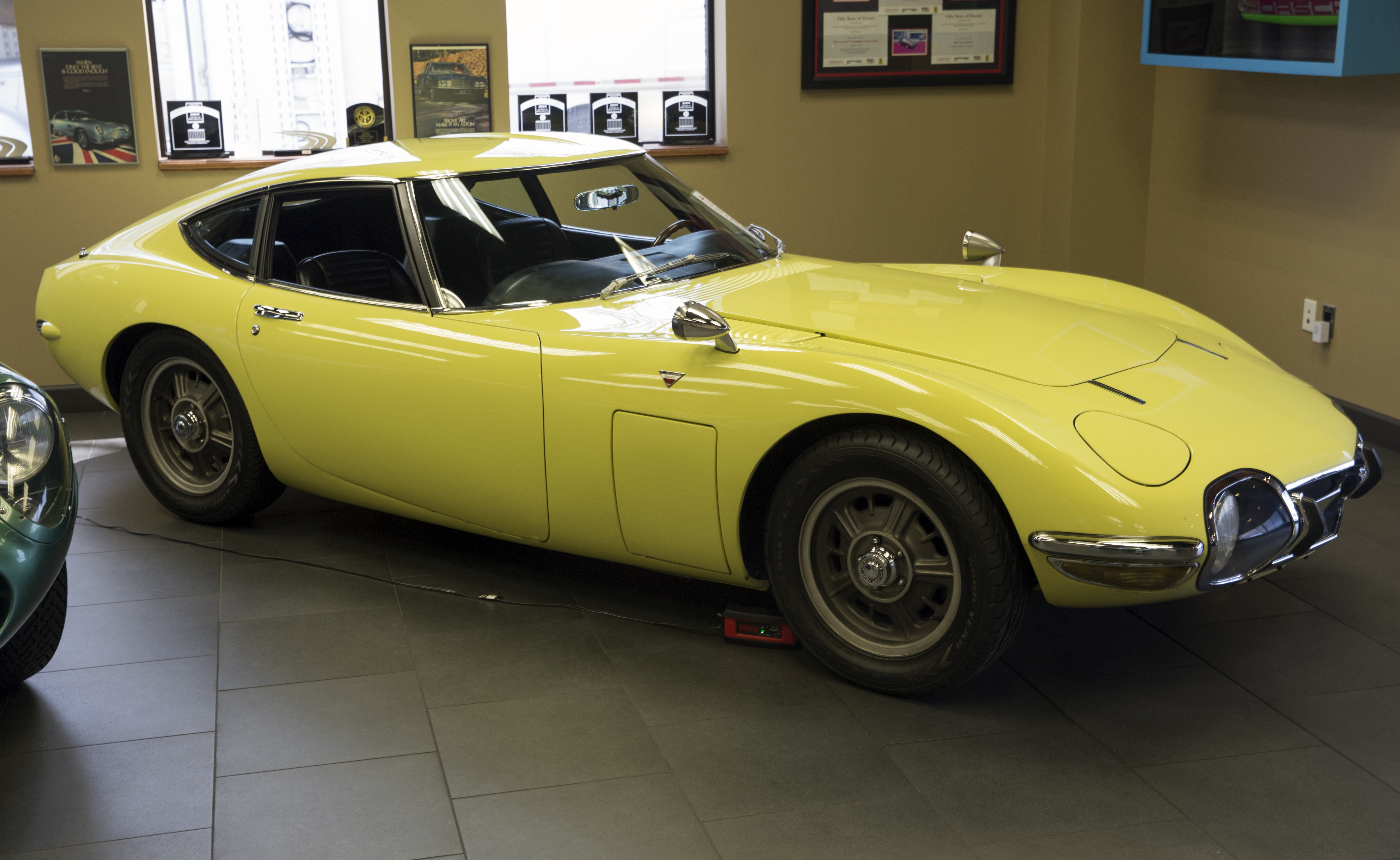
Toyota 2000 Gt
"...r until I started researching this topic, but the Toyota 2000 GT, like their original sports car was like, I don't..."
The Toyota 2000GT is an older sports car made by Toyota, from the late 1960s. It’s famous because it was one of Toyota’s early serious performance cars. People bring it up when they’re learning about Toyota’s history in sports cars.
The Toyota 2000GT is a classic Toyota sports car from the late 1960s, often regarded as one of Toyota’s most iconic early performance models. It’s discussed because it represents Toyota’s serious entry into the sports-car world and is known for its distinctive styling and engineering for its era. In the podcast context, it’s being referenced as an important “original” sports car that people research when learning about Toyota’s performance history.

Toyota AE86
"And the 4AGE, it's like the swap for the AE86, right? Yeah. Like that was designed a lot by Yamaha."
The Toyota AE86 is a famous older Toyota that became a favorite for drifting and modifying. In this segment, they talk about the 4AGE engine being used with the AE86, and they connect that to Yamaha’s engine-head design ideas.
The Toyota AE86 is the legendary Corolla/Levin/Sprinter platform that became a cornerstone of JDM drifting and tuning culture. Here, the hosts mention the 4AGE as the common swap for the AE86, and they connect Yamaha’s cylinder-head technology to why these engines are so revered.

Toyota 4AGE
"And the 4AGE, it's like the swap for the AE86, right? Yeah. Like that was designed a lot by Yamaha."
The Toyota 4AGE is a popular Toyota engine that people often swap into the AE86. This episode also points out Yamaha’s involvement and mentions it has a 20-valve cylinder head, which helps the engine breathe better.
The Toyota 4AGE is a famous Toyota inline-four engine that’s strongly associated with the AE86 swap scene. The hosts specifically discuss Yamaha’s role in developing the 4AGE’s cylinder head and the “20 valve” setup, tying it to Yamaha’s reputation for pushing airflow and valve-train design.
20 valve head
"it specifically, it's like a 20 valve, you know, you hear 20 valve head, right? For a four cylinder."
A “20 valve head” means the engine has 20 valves in the cylinder head. More valves can help the engine breathe better by letting air in and exhaust out more efficiently.
A “20 valve head” means the cylinder head uses 20 valves total. For a four-cylinder engine, that works out to five valves per cylinder, which can improve airflow into and out of the combustion chambers compared with simpler two- or four-valve designs.
five valves per cylinder
"they didn't invent it, but they're the ones that took it to the next level to have five valves per cylinder. Whereas most are, you know, a basic engine would have two and most would have four"
“Five valves per cylinder” means each cylinder has five valves controlling airflow. Having more valves can help the engine move air and exhaust more effectively, which can improve how it runs.
“Five valves per cylinder” is a valve layout where each cylinder has five separate valves—typically a combination of intake and exhaust valves. The hosts argue Yamaha helped popularize this approach by taking it “to the next level,” which matters because valve count and layout directly affect airflow and engine breathing.
beams
"the Altezza was a real popular one that they had because it had the beams. Yes. Oh, I remember that used to be like, you know, whatever, when I was 17 or 18, you know, the Altezza would, but it had to have the beams motor."
“BEAMS” is a name Toyota used for certain performance engines. When people say an Altezza “has the BEAMS,” they mean it’s the version with that specific engine.
“BEAMS” is an engine family name used by Toyota, associated with performance-focused versions that were offered in certain JDM models like the Altezza. Enthusiasts bring it up because it’s tied to a specific swap-friendly setup and a reputation for how the engine behaves and sounds.

Toyota Altezza
"definitely in the 2000s, like the Altezza was a real popular one that they had because it had the beams. Yes. Oh, I remember that used to be like, you know, whatever, when I was 17 or 18, you know, the Altezza would, but it had to have the beams motor."
The Toyota Altezza is a Japanese-market Toyota sedan that got popular with car guys. People often talk about certain versions because they came with a performance engine called “BEAMS.”
The Toyota Altezza is a JDM compact sedan that became popular in the 2000s, especially with enthusiasts who liked swapping engines. In this segment, the key detail is the “beams” engine—an enthusiast term tied to a specific Toyota performance powerplant used in some Altezzas.
Toyota LFA
"So yeah, they obviously, after that, must have kind of, or even 787.2s Yamaha decided this isn't necessarily what we're trying to do. And then other things come along 793.1s for them, like UTVs and just different things, right? Right. So last one on Toyota, the LFA, 801.6s the V10."
The Toyota LFA is a special Toyota supercar famous for its V10 engine. People love it partly because the engine sound is unusually intense and memorable.
The Toyota LFA is a halo supercar known for its naturally aspirated V10 and, in particular, its carefully engineered sound. This segment highlights that the LFA’s sound design is so distinctive that it’s part of why Yamaha was involved in the project.
V10
"So last one on Toyota, the LFA, 801.6s the V10. Dude, Yamaha used Piano and trumpet acoustic engineers to design that."
A V10 is an engine with 10 cylinders arranged in two rows that form a V shape. More cylinders like this can help the engine sound and feel more exciting, especially at higher revs.
A V10 is an engine with ten cylinders arranged in a “V” shape (two banks of five). In cars like the Toyota LFA, a V10 is often chosen because it can rev freely and produce a distinctive, high-energy sound.
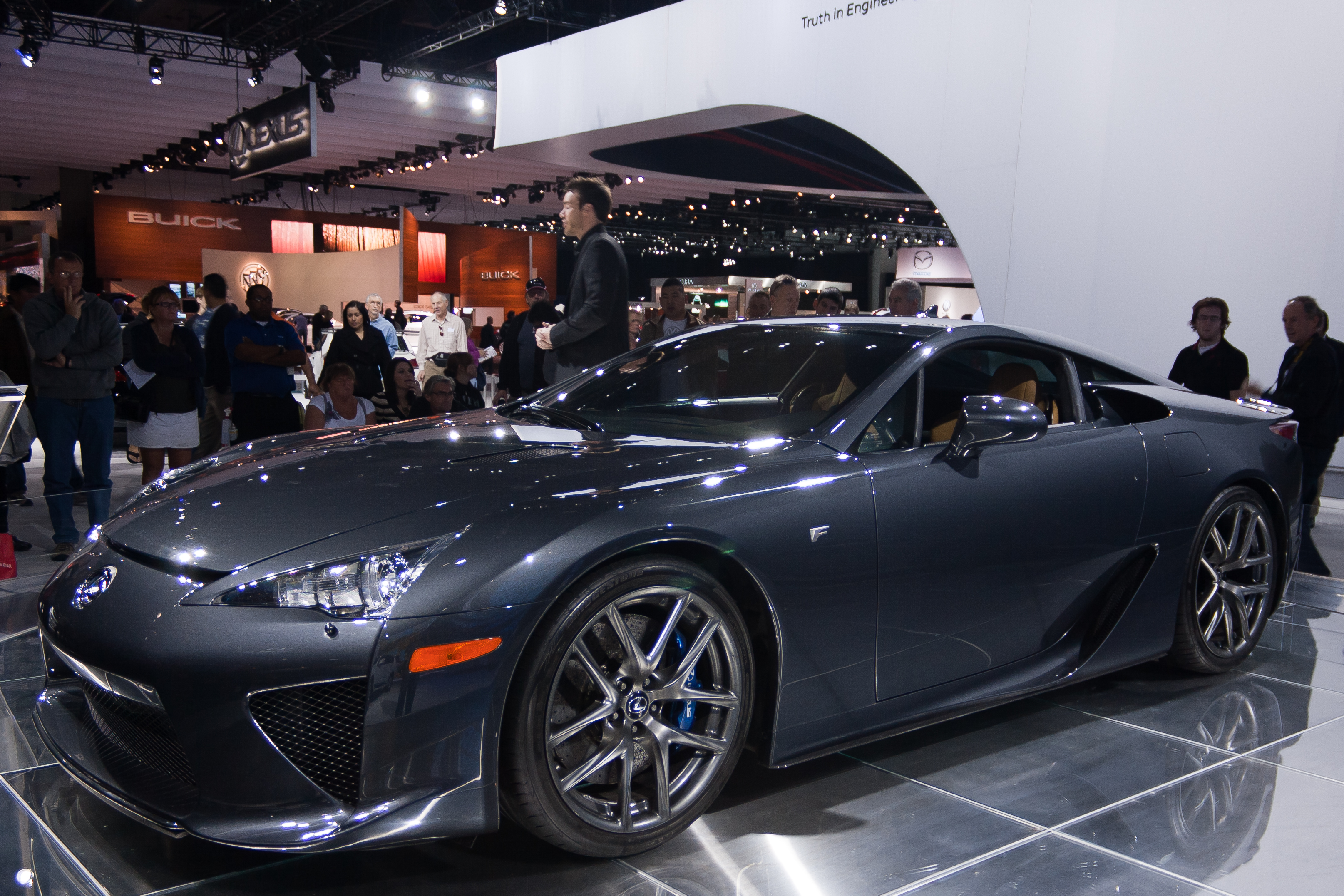
Lexus LFA
"...I'm like, okay, well, like the 1JZ, you know, the LFA, the 3S, you know, the 4AGE, these are all like, ..."
The Lexus LFA is a very expensive, high-performance sports car made by Lexus. It’s known for being fast and for having a special, purpose-built design. People mention it when they’re talking about standout engines and performance cars.
The Lexus LFA is a high-performance supercar produced by Lexus, built to deliver extreme performance and a distinctive driving experience. It’s frequently mentioned alongside famous engines like the 1JZ and 4A-GE because people compare what makes certain powertrains special. In a podcast, it often comes up as a benchmark for how far Toyota/Lexus engineering has gone in a flagship sports car.

Yamaha R1
"And, you know, even with motorcycles, 888.6s right, the, the Yamaha R1 is one of the most unique sounding inline fours that there is. It's, 898.4s it's one of those, you can tell it from any other bike out there, mainly because it has what they call a cross plane crankshaft, and it changes the firing order."
The Yamaha R1 is a fast Yamaha sport bike. The hosts say it sounds unique because of how the engine’s crankshaft is designed, which changes the timing of when each cylinder fires.
The Yamaha R1 is a performance sport motorcycle known for a very distinctive engine sound. This segment explains that its unique character comes from a cross-plane crankshaft, which changes the firing order compared with more typical inline-four crank designs.
cross plane crankshaft
"898.4s it's one of those, you can tell it from any other bike out there, mainly because it has what they call a cross plane crankshaft, and it changes the firing order."
A cross-plane crankshaft is a special way of arranging the engine’s crankshaft. It changes the order the cylinders fire, which changes the sound you hear from the exhaust.
A cross-plane crankshaft is a crankshaft design that alters the spacing of cylinder firing events in an inline engine. By changing the firing order, it creates a more distinctive exhaust note and engine “rhythm,” which is why the Yamaha R1 is described as instantly recognizable.
harmonics
"They reduce like body? The body, the harmonics. Okay. So it's just like, what?"
Harmonics are like the “echo” of vibrations—certain frequencies that make the car shake or resonate. The idea is to reduce those vibrations so the sound and feel are more controlled.
“Harmonics” are specific vibration patterns that occur when a system resonates. Here, the “strut things” are described as reducing body harmonics—meaning they damp certain vibration frequencies so the car’s structure doesn’t amplify unwanted resonance.
Mitsubishi
"[1211.2s] ...why you hear Nissan is struggling, but not Mitsubishi because Mitsubishi can fall back corporately... [1256.9s] it doesn't work that way..."
Mitsubishi is another big Japanese company that makes cars. In this part, they’re comparing how Mitsubishi might be better positioned to get help than Nissan.
Mitsubishi is a Japanese industrial group that includes Mitsubishi Motors, and it’s referenced here in the context of corporate structure and potential financial support. The hosts compare Mitsubishi’s ability to “bail out” versus Nissan’s situation, implying differences in how the groups are set up.
bail you out
"[1233.9s] ...you have a company with some capital that can bail you out. Right. Right. [1246.3s] ...Nissan never would have owned 20 something percent of Mitsubishi."
“Bail you out” means one company gives money or support to another company so it doesn’t go under. They’re wondering whether Nissan and Mitsubishi could do that for each other.
“Bail you out” here is a corporate finance idea: one company provides capital to another to prevent failure or stabilize operations. The hosts discuss whether Nissan and Mitsubishi could support each other through shared corporate capital or ownership structures.
Nismo
"[1262.5s] ...maybe their focus was not on the right thing. Yeah. It was on the cool cars and Nismo and everything. Right. [1270.1s] Which... Nismo did just announce an Australian Amari factory."
Nismo is Nissan’s performance brand—think track and enthusiast versions of Nissan cars. They’re talking about how Nissan leans into that image and how it ties into the company’s plans.
Nismo is Nissan’s in-house performance and motorsport brand, associated with tuning, track-focused parts, and special editions. The hosts connect Nissan’s focus on “cool cars” and Nismo to broader business decisions, then mention Nismo’s recent factory announcement.
Z-Tune front end
"[1300.4s] ...expanding a Amari factory to Australia... during like one of the hardest financial times of the just re-releases the Z-Tune front end. [1312.9s] Gotta do all this..."
Z-Tune is a special Nissan Z-car tuning package. When they say “front end,” they mean the specific front body parts used to create that Z-Tune style.
“Z-Tune” refers to a Nissan Z-car special tuning program associated with Nismo, known for specific body and performance upgrades. Mentioning the “front end” points to the exterior conversion pieces used to give the Z-Tune look and function.
American collection
"“...not really like he the way when I talked to him about it and like picked his brain about the American collection.”"
“American collection” here refers to a curated set of cars owned or assembled for display/availability in the United States. The host is contrasting that with what’s available in Japan, implying differences in market access and how cars are imported or showcased.
burble
"[1492.3s] It's got the burble. [1496.0s] Well, I think got a boxer engine in this friggin 350 excavator dude."
“Burble” is the distinctive popping/crackling sound you sometimes hear from a car’s exhaust. It usually happens when you lift off the throttle or when the engine is running in a certain overrun mode.
“Burble” is the exhaust sound some engines make—typically a series of pops, crackles, or a choppy idle/overrun note. It’s often associated with overrun fuel cut and exhaust tuning, and it can be more noticeable on performance setups.
boxer engine
"[1496.0s] Well, I think got a boxer engine in this friggin 350 excavator dude. [1501.2s] Head gasket outside, dude."
A “boxer engine” is an engine where cylinders sit opposite each other and move in opposite directions. That motion helps the engine feel smoother because the forces cancel out.
A “boxer engine” is an engine layout where opposing cylinders move in and out horizontally, like two boxers sparring. Because the pistons counteract each other, it can help balance the engine and reduce vibration compared with some other layouts.
head gasket
"[1501.2s] Head gasket outside, dude. [1503.2s] Yeah, dude. They got a top off the friggin Annie for you."
The “head gasket” is a critical seal inside the engine that keeps hot combustion gases and coolant separated. If it leaks, the car can overheat or run poorly.
The “head gasket” is the seal between the engine block and the cylinder head. It prevents coolant and combustion gases from mixing, so if it fails you can get overheating, coolant loss, or misfires.

Ford Taurus
"...ah. At that age, you're like, okay, dad. That's a Taurus. What are you talking about? Yeah, for sure. Yeah..."
The Ford Taurus is a regular, mid-size car that was made for everyday driving. It was common enough that many people remember seeing it in their families or neighborhoods. That’s why it can pop up in conversations about older cars and memories.
The Ford Taurus is a mid-size family sedan that became well known as a mainstream, everyday car. It can come up in nostalgia or “what did your family drive?” stories because it was common on roads and in households. In the podcast context, it’s being referenced as a recognizable car from a particular era.
UTV racing
"I mean, they're the only ones, as you know, back when we were UTV racing, they were the, with the, what is it, YFC, whatever that"
UTV racing is off-road racing with side-by-side vehicles. They’re talking about their experience competing in that kind of racing.
UTV racing refers to competition involving utility task vehicles—off-road side-by-sides built for rough terrain. The host uses it as context for why Yamaha’s powersports tech mattered “back when we were UTV racing.”
paddle shifter
"they were the, with the, what is it, YFC, whatever that X, YZ or something? Or YZX? ... But that thing was the only like standard transmission, like paddle shifter type thing."
A paddle shifter is a set of buttons or levers near the steering wheel that lets you change gears quickly. You don’t have to move a gear stick to do it.
A paddle shifter is a driver-controlled mechanism (usually on the steering wheel) that lets you manually command gear changes without using a traditional gear lever. In this segment, the host contrasts paddle shifting with earlier manual shifters on powersports/UTV-style vehicles.
manual shifter
"I think, I think some of them actually had like some of the early models had a manual shifter and they then switched to paddle."
A manual shifter means you change gears using a lever. The driver has to do it themselves, instead of using steering-wheel paddles.
A manual shifter is a conventional gear-selection method where the driver physically selects gears (typically via a lever). The host says some early models used a manual shifter before switching to paddle shifters.
clutches
"they weren't burning up belts and going through clutches and stuff."
A clutch is a mechanical part that connects and disconnects power from the engine to the drivetrain. The host is saying some vehicles were wearing out those parts quickly.
Clutches are friction devices used to engage/disengage power between the engine and transmission. The host groups “belts and clutches” as wear items that some competitors were going through, suggesting the paddle-shifted standard transmission approach reduced that specific failure mode.
belts
"Yeah, they weren't burning up belts and going through clutches and stuff. Yes, exactly."
On many off-road vehicles, a belt system helps transfer power to the wheels. The host is saying some riders were wearing out those belts quickly when driving hard.
In many UTV/ATV applications, “belts” refer to the belt-driven continuously variable transmission (CVT) system. The host claims other competitors were “burning up belts,” implying frequent belt wear under hard use compared with the paddle-shifted setup.
Request an Explanation
Heard something you'd like explained? We'll add it to this episode.
Sign in to request explanations for terms you heard.
Want to learn more?
Browse our glossary for plain-English explanations of automotive terms, jargon, and concepts.
Help improve this episode
See something that's not quite right? Our annotations are AI-generated and can sometimes miss the mark. Click the flag icon on any annotation to suggest a correction.