Dual-motor means the car has two electric motors, usually one for the front wheels and one for the back. This helps the car drive better, especially in different weather conditions.
Platform sharing is when different car brands use the same basic structure for their cars. It helps them save money and time when making new vehicles, even if the outside looks different.
Traction control helps your car keep its grip on the road by stopping the wheels from spinning too fast when you accelerate, especially on slippery roads.
Ground clearance is how high the bottom of a car is from the ground. Higher ground clearance helps a car drive over bumps and rough surfaces more easily.
There's no such thing as a "GMC Prologue." You might be thinking of the Honda Prologue, which uses GM technology. Honda and GM partnered to build electric vehicles together, which is why people sometimes mix up the brands.
The sticker price is the price that the car manufacturer suggests you pay for the vehicle. It includes the basic cost and any extra features you might want.
EPA range is how far a car can go on a full charge or tank of gas, according to tests done by the government. It's a good way to know if a car can meet your driving needs without running out of power.
The Chevrolet Blazer EV is an electric version of the Blazer, which is a type of SUV. It aims to provide good performance while being better for the environment.
An EV, or electric vehicle, is a car that runs on electricity instead of gasoline. They are known for being more environmentally friendly and can save money on fuel.
An active safety package is a set of features in a car that helps keep you safe while driving. It can include things like automatic braking and warnings if you drift out of your lane.
Supercruise is a feature that lets you drive without using your hands on the steering wheel on certain highways. It helps keep the car in its lane and at a safe distance from other cars.
A 19 kilowatt charger is a type of charging station for electric cars that can charge the battery faster than lower-rated chargers. The higher the number, the quicker your car can get power.
An 11 kilowatt charger is a charging station for electric cars that works well for home use. It charges the battery at a good speed, usually enough for overnight charging.
Puddle lights are lights that help you see the ground when you open your car door at night. They make it easier to avoid stepping in puddles or tripping.
Fast charging means you can recharge your electric car's battery much faster than normal. It's useful for long trips when you need to stop and charge quickly.
The Chevrolet Silverado EV Trail Boss is an electric pickup truck that is built for tough jobs and off-road driving. It's part of the Silverado family, which is known for its strength and versatility.
MSRP is the price that the car company suggests you should pay for a new car, but the actual price can be different at the dealership.
Car
Chevrolet Trail Boss
The Chevrolet Trail Boss is a version of the Silverado truck that is built for off-road driving. It has special tires and a higher body to handle rough terrain better.
I'm still waiting to see a situation where that really does actually make a difference.
Unless you're taking it off-road, there may be a few situations off-road where it might be
helpful. But for the most part, no, it's not actually. You kind of have to practice with it,
because it's unnerving and a little difficult to control. Yeah.
It feels like the truck is sliding off a hill. If you've ever been off-roading with like,
you know, silt or mud or snow or ice, and the trail is a little off-camber,
and you feel the vehicle sliding off-road, that's what it feels like when you're driving.
Yeah, pretty much. So it'd be interesting to be it, if you're in that situation where it's sliding,
you put it in phase, turning the other direction, would it balance itself out?
You just keep going, you just keep sliding slowly up the hill, I guess. I hope? Fingers crossed.
Yeah, I don't know. Yeah, I mean, it's more of a gimmick than anything else. Most people are
never going to, it's one of those things, you know, where you show it off to your friends
once or twice, and then you never touch, you never touch that button on the touchscreen
again. Yeah. Like the G-turn makes more sense, and even that's goofy. Yeah. Yeah. You're like,
the G-turn is a lot more fun, too. So on the trail boss, you can get the trail boss
two different ways with either the 20-module battery pack or the 24-module battery pack,
and I had the spec sheet open here, and I closed it. 205 and 170?
Yeah, approximately. That's the thing, yeah. GM doesn't actually list the capacity in kilowatt
hours, but you know, it's, people have figured it out. Someone told me 218 at GM,
but maybe that was a different. The gross capacity is actually somewhere around 225.
Yeah. Why? I've spoken to them numerous times about it, and they've always, they're like,
well, they talk around why they don't tell us the kilowatt hours, but none of the
reasons ever made sense. I'm like, everyone else does it. I have to share this with my readers.
I'm like, well, you know, every battery pack is a little different. I'm like, yeah, but it's
not like different by like 30%. Come on, just give me a number.
So they offer three different battery pack sizes. Yeah. Yeah, they offer three different
battery pack sizes across the Silverado EV lineup, the standard extended and the max.
The standard is a 14-module pack, and the work truck, it gives you 286 miles of range,
or an ALT, it's 283. The trail boss is only available with the extended or max battery packs.
The extended battery pack is rated at 410 miles of range. The max pack is 478 miles of range.
And the starting MSRP for the trail boss is $88,695. The base work truck starts at $54,895.
So it goes from about $55,000. So you can get a Silverado EV work truck with similar range
to the prologue that you're driving for about $5,000 less. And it's got a lot more payload and a lot
more passenger capacity. You can put stuff in the bed. You can put lots of mulch in the bed,
more mulch than you can use as a truck. You can use it as a truck. You can do truck fangs.
Yeah. The trail boss, like I said, is the more off-road oriented one. It loses a bit of
range relative to the ALT because it sits a little bit taller and it's all terrain tires.
It's got recovery hooks, but you might have a hard time. If you were taking it off-road and
you got stuck, you might have a hard time getting it out. You'd have to find,
you'd have to get a really big vehicle to tow it out of a mud pit that you're stuck in.
Because I took this thing to Wayscales yesterday, 8,760 pounds empty.
That's a lot of mass. Yeah, that's over 2,000 pounds more than an F-150 Lightning Platinum.
Jeez. That's the, you know, mud loves mass too. So yeah,
you just see like a dinosaur sliding into the amber. So, you know,
like I said, the one I've got is rated at 478 miles of range. It's been cold this week. We had a couple
of days where the temperature got, you know, actually one morning it was minus two, I think
on Wednesday morning or something this week. It was minus two or one of the days. So it's
been cold. So I've been using the heat and, you know, nice thing is you've got the quote,
unquote remote start button, you know, but unlike the old days, it doesn't actually fire up the engine.
It just powers everything up and turns on the heater and everything. So use the,
use the remote start to defrost it in the morning and get the cabin warmed up.
So it's been averaging about 1.5 miles per kilowatt hour this week. That's pretty good,
to be honest. Yeah. But yeah, I mean, you're sort of preload, you're, you know,
you're warming up the battery when you start it up. So that's one of the nice things about
the sort of remote start is that it gets the, it warms up the battery before you start driving.
So you're using the grid in order to precondition the battery before you start rolling around. So
that's nice. Yeah, except I didn't have it plugged in. Oh, never mind then. So it's just
using the battery. So it's just using the battery. Anyway, if you're doing this,
if you should plug it in. Generally, you know, if you're doing this at home,
you know, you're gonna have it plugged in, you can use the grid powered, you know,
so you're not draining the battery. So that contributed to the relatively more modest
efficiency that I've had this week. Yeah, and that works out to pretty good for a little over
300 miles of range. Yeah. In cold, cold weather. You know, that's that's actually fine.
That's good. And you know, with the size of battery that's in this thing, it will actually
tow unlike other electric trucks. You know, this this thing will tow up to 12 and a half thousand
pounds. And it will actually tow that's pretty significant difference. I don't have a trailer,
I didn't have any to test to tow it with or to tow with it. But when the guys at TFL had one
couple of years ago, when it first came out, they had a Silverado EV work truck,
which has the same battery in there. And they were towing a big box trailer, which is, you know,
not particularly aerodynamic. Which is just a box. Yeah, a box with with a vehicle in the back. So
they were towing, you know, about 9500 pounds. And, you know, they went 232 miles with it,
which is, you know, a lot more than you can do with a lightning or with a cyber truck
towing a similar trailer. It's it's about more more than twice as far as you would get with the same
with the same trailer with those other vehicles. So it actually can tow
pretty significant different distances, just because of the size of the battery. Of course,
you pay for that, you know, and, you know, a big heavy battery and, and, you know, an expensive
truck. Like I said, you know, this thing's almost $89,000 before you add any options to it.
You know, and that does include GM does include the price does include the destination charge
and the pricing. But the the one let's see the one that I have had just a few options that had
a hard folding tonneau cover, which is $1850 for for a tonneau cover $1800 glass roof.
And the game day tailgate package, which, you know, so it's got the fancy multi flex tailgate that
can fold in six different ways. And part of that, it's got a package of speakers built into the
part of the tailgate. So if you're using it for a tailgate party, you can blast the sound out
from from the tailgate. And, and then 250 bucks for floor mats and, and 150 bucks for the roof
sunshade. So driving this thing around, you know, all told, it came to $93,940.
Which is by the way, if the regular public still thinks this vehicle starts at $100,000.
When I had this Silverado, I had a man come up to me and say, did you buy this? I'm like,
no, I'm a blah, blah, blah, you know, I tell him the whole spiel. He's like, yeah,
because these things started $100,000 and then walked away. And I was like,
that's a, yeah, they, GM's kind of sort of dropped the ball about.
Yeah. Yeah. I mean, you can get, like I said, you can get that work truck for $55,000.
And, you know, the LT, which is a little, little better equipped than the work truck,
starts at 63. Of course, actually, those prices are actually going to be slightly higher now because
destination charges have changed since this was published. The Minroni I've got shows the
destination charge that is now out of date. Do you remember, guys, remember what the destination
charge is for full size trucks now? 18? I was going to say close to two, isn't it?
Uh, no, not close to two anymore. When this was published. No, it was at 22.
The Minroni says $2,095. Oh, 21. It's now $2,595. Oh my gosh. Wow. Yeah.
Yeah, they, they raised all. $1,000 more than my first car. Yeah.
It's a destination charge. And this year, they have raised the destination charges on the
full size trucks and SUVs twice since the beginning of the year. They went from $1,995 to $2,095 and then
to $2,595 sometime around September. Wow. So they're hiding part of the tariff costs in the
destination charge. Huh? Guess you gotta do what you gotta do. Yeah. Again, you know, to their
credit, you know, I do give GM credit for the prices that they advertise for their vehicles
includes the destination charge. So you don't get any surprises. That's good. Yeah. They,
they're pretty much the only automaker that does that. Yeah. I mean, that's, that feels, I, the
pushing the prices up via the, the destination is not great, but at least they're saying, hey,
it's cost is right. As opposed to sort of hiding it and you're like, oh, I wonder how much this
is. Oh, dear. Yeah. So, you know, like you, like you said, Perry, the Silverado doesn't have any
smartphone projection. So no Android Auto or Apple CarPlay, it's just got the Google built-in
services. But GM gives you eight years of connectivity for that when you buy their EVs.
So you'll still have navigation and Google Assistant and stuff for at least eight years.
But, you know, it, it works pretty well. You know, and the Supercruise actually works works really well.
On Wednesday night, when I was coming back from Nashville, driving home, you know, it was dark,
the road was kind of wet and slick and it was snowing a bit when we arrived. And I put on
the Supercruise and, you know, it had no problem at all, driving hands-free from the airport back to
the exit from my house off the interstate. So. I was curious to see how it handled since I was
driving, I was driving a Honda Civic without any Supercruise or anything at that point.
Yeah. In that same, in that same weather.
You know, and, and, you know, I mean, the upside to weighing almost 9,000 pounds is it's
somewhat more impervious to crosswinds. True. It's not quite as sensitive to crosswinds.
There's some silver lining for you.
You know, aside from the lack of smartphone projection, the, the only other major complaint
I've got on this thing is I have noticed a little bit of a squeak coming from the, the
headline, you know, the, the top of the roof area in front of me where, I think, where the glass is
joining the steel, you know, going over some bumpier surfaces. There's a little bit of a squeak there,
which is not particularly confidence inspiring. Yeah.
All that mass. Something's gotta.
Yeah, gotta give somewhere. So, you know, other, other than that, you know, it's, it's a,
you know, for a full size truck, you know, it's very roomy. It's, you know, 725 horsepower.
It's stupidly fast. You know, when you enable the wide open watts mode, it does still
scramble a bit. You know, it's got some torque steer. And, you know, I haven't, I've only tried
it once a few days ago in between periods of snow when we had some dry pavement
to work with. And I tried it and, you know, just as when I drove the RST a couple of years ago,
you know, it does tend to crab back and forth a little bit when you're doing full throttle acceleration.
But again, you know, that's not something you're going to use most of the time.
So it's, it's, it's probably arguably too fast for what it is. But, you know, that helps,
that certainly helps in terms of towing capabilities. And, you know, it's, it's comfortable to drive.
It's just big, you know, and, you know, you, you know, you definitely want to work on your
parallel parking skills before you get something like this.
We get the slidey thing. You get the,
I was going to say, can it just like go sideways into the parking spot?
Yeah, sort of.
Yeah.
You still need a lot of space for, I mean, you know, this thing is actually the same. It's not
large, it's not any larger than a gas Silverado. So it's, it's like within an inch or two on all
the major dimensions of a gas Silverado. It's just, it's just electric. And it does, this one
does have the midgate. So, you know, if you need to carry longer stuff, you know, you can put
down that fancy tailgate and flip up the little stopper at the end there and put down the midgate.
And you can carry stuff almost 11 feet long inside.
Which is pretty cool. If you're building like a Cadio or some other cat related
like outdoor thing like me.
Yeah.
Yeah, that's a pretty common use for us. Pick up truck.
I, I, so I bought eight foot long, like one, two by twos. And what I drew,
I put it in the BRZ. And so you can, so if you put them from the driver's side rear corner
out the window of the passenger side and you make sure you wrap your side mirror,
you're totally fine. That'll fit in your car.
And you can also do jousting on the way home.
Yeah, you can joust. I didn't, I did not get on the freeway driving home from,
from that trip to the hardware store. That was the one I'm like,
I should take the side streets.
Yeah, good call.
But you can do it. Or you can buy a giant Silverado.
Yeah. And you could carry the, you know, the BRZ in the back of it.
Yeah, I could put my BRZ in the back. I can fill the BRZ with wood,
put the BRZ in the back.
There you go.
All right, let's move on.
On that note.
This isn't just a game. It's a once in a generation event.
The Harlem Globetrotters 100 year tour. Celebrate 100 years of high flying dunks.
100 years of showstopping moves. And 100 years of changing the game.
Bring the whole family and be part of the legacy.
This game is once in a century. Be there at Motor Center on January 24th.
Go to HarlemGlobetrotters.com for your tickets to the 100 year tour.
League One Volleyball is back. The world's best players together on American soil.
This is volleyball like you've never seen before.
Huge swings, massive blocks, jaw dropping digs.
A sport where every play is a highlight.
League One Volleyball returns January 7th, 2026 with teams in Atlanta, Austin, Houston,
Madison, Nebraska, and Salt Lake.
To buy tickets, visit lobb.com slash iHeart.
If you're the purchasing manager at a manufacturing plant,
you know having a trusted partner makes all the difference.
That's why hands down you count on Granger for auto-reordering.
With on-time restocks, your team will have the cut-resistant gloves they need at the start of
their shift. And you can end your day knowing they've got safety well in hand.
Call 1-800-GRANGER. Click Granger.com or just stop by.
Granger for the ones who get it done.
So Perry and I were both in Nashville this week, actually more precisely in Franklin, Tennessee
with Nissan. Nissan brought a bunch of people down to drive a whole bunch of stuff,
some of which we can talk about, others we can't talk about entirely yet.
One that we can't talk about yet is the 2026 Pathfinder.
We can't talk about driving impressions, but there's one thing I do want to talk about
with the Pathfinder. It's got a mid-cycle update for this year.
And the Pathfinder and the Murano for 2026 are the first vehicles to get an updated
wireless charging system that has support for Qi2. So Qi has been the industry standard for
wireless charging of small devices like phones. And the Qi2 standard that they updated
basically incorporated a few years ago, Apple introduced what they call MagSafe charging
on the iPhone. And they contributed that technology to the Qi standard to make Qi2.
So what that means is it includes a magnet in there. So one of the complaints many of us have had
about wireless charging pads in cars is that, you know, the phones are all the phones are
different sizes and somehow you got to come up with a charging pad that fits all of them. But
if the charging, if your phone is smaller than the charging pad, when you go around
corners and stuff, the phone slides around and then it doesn't charge.
This is how I left my phone in the EV6 GT while drifting.
So it's just gone. And then I didn't realize it. And then an hour later, I'm like, uh-oh.
So and another complaint that, you know, is common with wireless charging pads in cars is
after a few minutes on the charging pad, you get a message popping up on the screen saying,
please remove your phone from the charging pad because it's too warm because it heats up.
And so the Qi2 pad in the Pathfinder and in the Morano basically gives you a little circular island
on the charging pad. And it's got the magnets in there. And so you put your phone on there
and it holds your phone in place and it'll charge now at up to 15 watts. And it's got a fan
built into the pad underneath there. So it draws away the hot air. So it keeps your phone from
overheating. Which is a great option unless you happen to have an Android phone without a
case that will actually stick to the magnet in which case you cannot use the wireless charger
at all because there's no place to put your phone. If you buy a new Google Pixel 10, it's got
support for Qi2. And the newer Samsung phones do as well. Or no, the Samsung don't yet.
The answer is, Perry, buy a new phone for your drive programs. That's what I'm gathering.
Yes. Or at least a new case. A new case would do it. But it was, you know, I imagine there
are plenty of people out there that have older phones that don't have that. And
where the other one charged slowly and occasionally overheated,
I could still use it. And I wasn't able to use this one at all. So that was a bit frustrating for
me. But I know that, you know, you have to look forward. And that's the future and all that
stuff. But it still was annoying. You need to be a better consumer. That's the only reason
we're alive, Perry. Come on. You're not spending enough money, Perry. You're not spending.
Clearly. Clearly. You've got to support the economy. Yes. I need to make more to spend
more. You've got to, you've got to, no, no, debt. Come on. Make more. That's the American way. You're
asking too much. No. Yeah. Clearly. Frank kept those credit card bills in. You'll be fine.
What could go wrong? Yeah, exactly. So I didn't actually get to try out the wireless charging
in the Pathfinder, but I understand that it does work well. Yeah, it worked perfectly. So
it was flawless. So I definitely liked that in the Pathfinder. Then we also got to drive the Nissan
Kashkai. So the Kashkai is a crossover that you cannot buy in North America, at least not currently.
The previous generation Kashkai was sold here for several years as the Rogue Sport.
And the current generation is not sold here. It's sold in Asia and in Europe.
It's based on the same platform as the Rogue, but it's a little bit smaller. But the reason why Nissan
brought over a few Kashkais is because they wanted to give us a preview of what is coming for model
year 2026. Sorry, 2027. 2027. Coming out in 2026 on the Rogue, because the Rogue is being
redesigned for next year. And, you know, one of the one of the challenges for the Rogue today
is they don't offer any sort of hybrid option. And most of the top selling vehicles in this segment,
like the Honda CR-V, Toyota RAV4, the Hyundai Tucson, Kia Sportage, they all offer at
least hybrids and in some cases plug-in hybrids as well. And so they next year Nissan is bringing
their e-power hybrid system, which has been available in Japan and some other markets
for several years. They're bringing it to the US market. And there's third generation of this
system. And it's kind of a unique system. It's a series hybrid. So the engine never drives the
wheels. The engine is completely disconnected from the wheels. It just drives a generator.
And all of the vehicle motion is provided by an electric motor and about a 2.1 kilowatt
hour battery pack. They brought over the Kashkai from Europe with the e-power system.
We both got a chance to drive it. What did you think, Perry? And I think you've driven
the e-power as well, right, Robbie in Japan? I did. I wasn't sure if I could talk about
until just now. Okay. We'll talk. You can talk about it. It's been like months of like,
can I talk about the Kashkai with e-power? It's a unique idea because you're basically,
you're driving an EV, but as you give it more throttle, you still have an engine that's coming
on to add more power to the batteries. And so it's, but you have that smooth power delivery
that you get with an EV. And obviously, you know, with the auto shutoff of engines
right now, it's seamless in that because the engine isn't actually driving anything. It's just
providing power. So if you're just cruising at a relatively smooth speed, the engine can shut off
and it comes on briefly as it needs to, just like you would expect of a hybrid.
But you still get that electric car performance. And they're saying that when the road comes here,
it will be a dual motor. So we'll have all-wheel drive. And they also said that,
you know, at least initially, that will be the exclusive powertrain. So it won't come with a
conventional gas engine driving the wheels, at least initially. So I think for consumers,
though, I don't know if you didn't tell somebody that it's doing it, you know,
that the gas engine's not driving the wheels. I think a lot of people wouldn't even know.
I think they would just think, this car is really smooth.
Yeah. I think that's the big, because we drove, when in Japan, we drove the old E-power system
and then the new P-power system and the cash cars. And it was like, oh, this is really nice.
It just feels like a much nicer driving experience. And yeah, like you said,
average person wouldn't realize that it's, you know, series and it's only electric motors
going. They will think, oh, this is really smooth. It feels premium as a hype. And that's
one of the nice things about, you know, any sort of electric motor powering the wheels is that it
always feels a little bit more premium than what people are used to with the gas car.
Yeah. And it's, you know, in sport mode, it's 205 horsepower, or 203 horsepower, I think,
and about 190 or so in standard mode. And, you know, because it's, you know, all electric drive,
you know, the engine doesn't have to work as hard. And one of the things that they did
with this third gen E-power, they did a bunch of things with the third gen E-power,
when they cut the cost of the system by about 30% compared to the previous version,
because they've done a lot more integration and they're using shared components
with their EVs. So there's a lot of parts from the Leaf and the Aria that are also in the E-power
system, like the power electronics are the same. You get this basically the same motor
and the reducer gear from the motor. So there's a lot of shared componentry. So that helped
them cut the cost pretty substantially. And because the electric motor is providing all
the propulsion, the engine doesn't have to work as hard, even under, like, maximum acceleration.
You know, you do hear the engine a bit, but it's not, it's a lot quieter than if you do the same
thing in a RAV4 hybrid. In a RAV4, you hear that engine. Yeah. This, it's not very obtrusive at
all. Yeah, they did some really cool stuff with packaging, like you said, and using shared
components. They were very proud of it when we were in Japan. And again, I wasn't sure if
I could talk about that until now. Yeah. There were so many crazy, the embargo on that Japan trip
was all over the place. So I'm happy I can talk about it now. It's interesting that it's not a
plug-in, at least initially, because I don't think at least that I can remember there's ever
been a series of hybrid sold, at least in America, that didn't plug in. So it is something
pretty unique. Yeah, no. Not a pure series hybrid. No. I mean, like Volt, Volt, you know,
I know there was some odd circumstances where the engine could drive the wheels,
but you also plugged it in. So that was, you know, different than this. I see.
Just had a generator. Yeah. So, you know, one of the challenges with a series hybrid,
because you're going, you've got an engine that's driving a generator,
that generator is producing alternating current. The battery store is direct current. So you have
to convert that alternating current to direct current for the battery. And then it goes back
through another inverter to back to alternating current for the drive motor. So you're changing
between AC and DC twice in there. And there's some inherent losses associated with that.
And under most conditions, it's pretty small. You know, under most driving conditions, it's
fine. You know, and you're still going to be better off overall. But at higher speeds,
those losses start to build up a bit. And so, you know, vehicles like the Honda hybrid system
is mostly mostly operates as a series hybrid, except at higher speeds at highway speeds, there's
a clutch that engages the engine to drive the wheels directly and blend in with the electric
power. And the Volt was the same way. This one does not do that. There's no clutch,
there's no mechanism at all for the wheels to drive the or for the motor, the engine to drive the
wheels. But what what Nissan has done is for this, this generation, they've actually gone with a
little bit larger battery. So because, you know, typically, you know, the demand as you're
driving down the road, the power demand cycles up and down a little bit. And they did some clever
things with calibration as typically a hybrid is somewhere between one and one and a half kilowatt
hour battery. This on the cash guy, it's 2.1. And on the road, because it's going to be all wheel
drive, it might actually even be a little bit larger than that. But it's still fairly, fairly
small. But it's enough that they don't have to they can make the overall system more efficient
by taking advantage of regenerative more regenerative braking. And that's that's one of the interesting
things about the the power is it does have the e pedal mode. So you basically have one pedal driving
just like in a leaf or an aria, except it doesn't bring it all the way to a stop,
which is a whole it's a whole thing that we've we've been hassling Nissan about this
here about, you know, since the since the aria came out, like, wait, what, you you sort of
you popularize this, this feature. And now you're not doing it. You're not even giving us an option.
So, so yeah, they're, you know, they're, they're estimating that the rogue
with e power, and that's this is going to be all wheel drive, as Perry said,
at launch, all wheel drive only. And then they'll probably add a front drive version at some
point, and also add a gas engine option. But the they estimate that the all wheel drive rogue
with e power is going to get around 40 miles per gallon, which is actually a little bit better
as 40 miles per gallon combined, which is a little bit better than what you currently get
with the RAV four and CRV all wheel drive hybrids, which are about 38 miles per gallon.
So, you know, I think, you know, I'm really excited to drive it, drive the new rogue
with with the system. I think, you know, I think I think people are going to really like this.
Yeah, it would be interesting to see how they market it, since it is something
so different yet. For the average consumer, it drives exactly like everything else that they
have. I mean, not that it doesn't drive us. But there's nothing else they have to do
different. It drives more like an EV. It does. You know, and better than most hybrids.
But there's no, there's nothing that I mean, you still fill it up with gas, you don't have
to plug it in. So for most consumers, it's just like buying any other hybrid.
But a lot more efficient. Yes. So it'll be interesting to see how much
Nissan markets the fact that this is something completely different, or just that it's
it's more efficient, it's quieter, it's smoother, which it is.
And then I can just say it gets better gas mileage.
Really, that's what comes out. The new Nissan, it gets better gas mileage,
and it's smooth like butter. That's it. That's your whole thing. There you go.
If you get too far in the weeds, sometimes people get a little, yeah.
It's like, if you try it, our rogue with the 1.5 liter turbo,
try this one, you'll like it a lot better. Exactly.
It's a lot more efficient. It's quieter.
Yeah, no, I think, I think, I think it'll, I think it'll probably do pretty well.
And then, you know, during the presentation we had before we went out to drive,
Tiago Castro, who's the VP of Infinity Americas, got up to talk a little bit about
Infiniti's future plans. And, you know, one of the things he talked about,
you know, the infinity is going to have four new models over the next four year each over
each year, a new model each year for the next four years,
starting with the QX65, middle of 2026, 2027, they're launching a new hybrid crossover
based on the rogue. We were shown some teaser images, but we were not allowed to take any
pictures of it. We had to cover, you know, get our cameras and everything covered up.
But, you know, that's, they're gonna have a rogue based crossover with e-power.
And that, if anything, is likely to be the first one with e-power to have a larger battery and a
plug. You know, I think, I think if they, if they, if they do that, you know, that's probably where
it'll show up first is in that vehicle before it shows up in a rogue. Yeah. All right, then
we also got to drive the rogue plug-in hybrid, which we briefly talked about a
little bit a couple of weeks ago when they, when they released images of it. And pretty much everybody
is calling this thing the rogue lander because it's basically a Mitsubishi Outlander plug-in hybrid
with Nissan badges on it. Yeah, I mean, they barely hit the design. I mean, it's, it looks
exactly the same. And I think that they're referring to it as a bridge product that will,
you know, hold the space as a plug-in hybrid until they can come out with their own.
But Stopgap bridge, whatever you want to call it, it's interesting.
Yeah, I mean, over dinner, the night before we drove, you know, one of the folks from,
from Nissan was saying, you know, the reason why they're doing this, because the thing is,
this is going to be a short-term play for them. You know, because the rogue e-power is coming
out next year. And this will probably only be for one model a year, maybe two, depending on how the
demand goes for it. But he said, you know, the reason why they're doing it now, instead of just
waiting for the rogue hybrid, is they found that from their research, you know, looking at the,
you know, when people were doing searches for crossovers, they were, you know,
if they just searched for compact crossover, you know, they would see rogue and CRV and RAV4 and all
the others. But if they searched for most fuel efficient crossover, they, you know, they would
get all of the hybrids, and the rogue would immediately not, not even show up, because,
you know, it didn't have, it didn't have any kind of hybrid option. And so they, you know,
they were losing a lot of sales because they didn't have this hybrid option. And by doing this,
by just taking the Outlander plug-in, putting Nissan badges on it, there's no engineering cost
for Nissan, you know, except for however much it costs to make a new mold for the upper grille
with the Nissan logo on it instead of a Mitsubishi logo. And they have, you know, they will at
least show up in those online searches for consumers. And even if they end up, you know,
and a lot of people, you know, search, they search for the most efficient, you know, crossover,
and then they end up buying a gas one anyway, you know, once they figure out, okay, what's
the monthly payment going to be? But at least they'll be in that conversation when people
are searching. And that's the main reason why they're doing this. So have you driven the
Outlander before, either of you? I've driven the Outlander. It's fine. I think it's my sort of,
I know it was huge in Europe. Yeah, it is. Huge in Europe. And then I drove it. And then I was
like, it's fine. It's fine. It's not horrible. It's not, you know, but I remember one of my
British colleagues, this is when I worked at Engadget, was like, how dare you. He was very
angry that I didn't give it like, like, like, like this really, I'm like, it's
didn't rave about it. Yeah, I'm like, well, it's, it's good enough. But this was a couple years
ago. So this is, gosh, probably seven years ago, maybe more. So it's, I haven't, I haven't
driven it since then, because
So you haven't driven the current generation?
I have not driven the current generation.
Okay. And I haven't driven the Mitsubishi version, but the Nissan version is basically the same
thing. Now that I've driven that. And so it's, yeah, I'm, I've assumed that they
would be the same. Yeah. And, and the, yeah, I mean, the driving experience is the same.
And it's fine. You know, it, it, okay, I'm glad that it's, it's evolved. Yeah. From fine to fine.
You know, the thing is, you know, I was looking at looking over specs the other day as I was
writing something up on this. And compared to the current Rogue, so the, the Rogue and the
Outlander, the current generation Rogue and Outlander are on the exact same platform.
They're the same wheelbase. They're the, the Outlander body is like two inches longer than the Rogue
body. And Mitsubishi, for some inexplicable reason, offers a third row seat option in the Outlander.
Quite tight.
Yeah. And I will, I will include a link to the video that Tommy Micah put up the shot with
with Safiyan Bay. They, you know, Tommy tried to climb into the back seat, the third row seat
on this Rogue. You know, and the default setup, there's basically, you know, you have maybe an
inch between the third row and the back of the second row seats. So, you know, if you've got,
you know, small kids with no legs. Like a baby, you can put a baby seat back there. Like
put the baby in the baby seat. But you don't want a baby seat in the third row.
No. You know, because sometimes you need to attend to the kid.
That's why you have other kids. Those, they're on the second row seat. They're the baby
sitters. If you've got four baby seats going, then I suppose that could work out. But,
but then you got other issues. Yeah. In that case, you probably want something a little
bigger than this. Yeah, probably. But, you know, the thing is, if you compare
the weight of the Outlander plug-in hybrid versus the gas Rogue, it's almost a thousand pounds heavier
because you've got a 20 kilowatt hour battery, you got electric motors, that third row seat.
And so it doesn't, it feel, when you're driving it to me, at least, you know, driving it on
some curvy roads, it feels a little softer and mushier than a Rogue does. It doesn't feel
quite as precise in terms of its handling. And, you know, the performance isn't really any better
because you got more power, you got about 240 horsepower, but it's, you know, a thousand
pounds more. You know, so 40, an extra 40 horsepower doesn't really do much to overcome a thousand
pounds of dead weight. And then the, you know, the Mitsubishi hybrid system is another one
that is mostly series hybrid, but has a clutch to bring in the engine that, you know, when you need
it for maximum acceleration. And it, you know, when the engine comes on, it's not, I found it not
as obtrusive as a Toyota hybrid. But strangely, driving in electric mode, there was a wine from
the motors. Did you notice that, Perry? I did hear that. Yeah. And it didn't, it wasn't bad.
But it was there. It was bad. It was, I mean, I liked it better than the fake noise that they
usually put in. So yeah, I'm not a big fan of that. But I thought it was also interesting when
you have an EV mode and you put your foot to the floor, it stays in EV mode, it will not
kick the engine on, which I thought was kind of unusual. But so if you're in EV mode and
suddenly you realize you need to get around somebody, you need to take it out of EV mode to do that.
Yeah. And then, you know, with the 20 kilowatt hour battery, it's got about 38 miles of electric driving
range. But once the battery, once the battery is depleted, and you're in hybrid mode,
the Outlander and Rogue are only rated at 26 miles per gallon as a hybrid, which is actually
pretty poor. That's worse than the gas Rogue. Yeah. Well, because you're still carrying around
that extra thousand of batteries, pounds of batteries. Yeah. So, you know, it's kind of a mixed bag.
You know, it drives fine. But, you know, I think it will fit the fit the need that they have,
though, that, you know, they need to have a hybrid and now they have one. So, yeah. And,
you know, it's temporary. Like I said, also the onboard charger that they use,
the AC charger is really slow. It's only three and a half kilowatts,
which means that even though the battery is only 20 kilowatt hours,
it'll take you about seven and a half hours to fully charge it. So, I mean, if you're,
if you're plugging it in at night, you know, you'll probably be fine. You'll probably have
a full charge every day. But it doesn't, it doesn't charge particularly quick.
You know, whereas other plug-in hybrids will typically charge at six and a half to
seven and a half kilowatts. So, you know, you can fully recharge the battery, you know,
from a 240 volt outlet in about, about three hours, three and a half hours. So,
all right. Any other thoughts on the Rogue Lander plug-in hybrid?
No. Like I said, it'll do what it has to do.
Yeah. All right. Thursday night, Friday morning in Japan, Toyota had an event to finally unveil
their new sports car, including the race version of it, the GT3 race version of it.
And there's been a lot of speculation, you know, back 2022, I think. Toyota showed a concept
for a GT race car. And then at Goodwood Festival Speed last June, they showed
both the sports, the road version and the race versions wrapped in camo.
And there's been a lot of speculation about whether this was going to be a Toyota or whether it was
going to be a Lexus as a replacement for the old LFA. And what they ended up showing was actually
a GR GT, the GR GT3, which is the race car, and an LFA concept. And the LFA concept,
we've actually kind of seen twice now, we saw it at the Japan Mobility Show with an interior.
It was shown first in August at Monterey Car Week with no interior. And now,
we know that the new LFA concept is actually an elect, and it's built on the same architecture
as the GR GT. It's actually electric. And, you know, so Toyota is using the GR branding
for their sports car. So it's not technically a Toyota, it's Toyota Gazoo Racing,
which is a race division. What do you think? It looks amazing.
It's always interesting when a car company comes out with cars like these that are
clearly, I don't know how you turn a profit necessarily on one of them, but you bring it a
lot. You know, you draw attention. I mean, they're the halo car. And halo cars are cool. There's
no question. And I like the fact that it doesn't really look like anything else out there.
Yeah. It's not your typical swoopy sports car that kind of all look about the same.
I mean, it's got its own look. It's cool. I want to drive one.
I like it. And this is saying this is from someone who hasn't been excited about Lexus
vehicle in, I don't know, 10, 15 years. I'm like, okay, fine, for the Lexus brand.
You like the LFA. What about the GR GT? The GR GT, you know, it's great to have a car
that you can land a helicopter on. It does have a very long hood.
Like they even have a cut out. They even have a cut out or sort of where it shows where the engine
begins. And it begins like right at the midpoint of the front wheel. So there's like just a good
mile of like extra hood after that. It just feels, I don't know, I like the, I'm sure it's
going to be tough to see out of because it's just so long. And you do sit very low in this
thing. You know, there's a diagram somewhere. I feel like I wouldn't fit. Yeah, like the diagram
shows like with the helmet on, it looks like the head is like just within like... It's actually
practically in the roof. Yeah. Yeah, I don't think I would fit in this car, to be honest.
Well, don't wear your helmet. I know. Well, that's a problem I have with like
Lamborghinis where I can't like get in the Lamborghini with a helmet. Now I'm driving
around with my head all crooked. So I'm like, well, this is not... I hate it when it happens.
Yeah, when I get my Lamborghini.
But that's beyond first world problems. Yeah, that is first world problem. But it would be the
same if I were in a Miata, to be honest. Even the new ND, I guess not new, even in the current
ND, I would have that as soon as I put a helmet on, I'm off.
I'm only 5'11". And with a helmet, I cannot fit in a Miata RF with the top closed and a helmet
on. Oh gosh, I don't even get me starting the RF. I don't even know if I'll fit in that at all.
That's it. I mean, it looks cool. It's for folks who like a vehicle with the hood that is like half
the size... Let me see. It's almost half the size of the car. It's a pretty long hood.
And you could... Yeah, you could put a lot of things on that hood. So many things.
I do like the idea of landing like a drone on it.
Yeah, like a giant drone. You can just for touching goes, you know, when jets land and then take off,
so they can practice getting on aircraft carriers. So yeah, no, I don't know why the...
I mean, I look at the Lexus and Lexus is pretty long.
Yeah, this is basically designed as a race car first.
Yeah, the Lexus has a long hood, but it has a big like angle at the end. So it feels a
little... It's probably just as long, if not longer, but it feels less. Does that make sense?
Yeah. Toyota needs a replacement for the Lexus RCF GT3. That car is definitely getting old
and the current RC is going away soon. And so they developed this basically from the ground up
as a GT3 race car. So it's got an all aluminum structure. It's got a rear transaxle, eight speed
automatic rear transaxle. There's a four liter twin turbo V8 up front that is behind, completely behind
the front axle. So when you look at it in profile and you see the diagram here, you realize that
basically half of the distance from the base of the windshield to the front of the car,
there's no engine there. That's just for the cooling system, the radiators in the front.
And then the engine is behind the front wheels. And it's a hybrid. So 650 horsepower.
At least that's what they're saying now. And the race version, the GR GT3
is going to debut in the World Endurance Championship and in IMSA and other series
for 2027 season. And then the LFA is basically an electric version of this.
Yeah, like I said, we saw it. It was shown at Monterey as a concept.
Then they showed it at the Tokyo Mobility Show, the Japan Mobility Show, without talking at all
about any powertrain. And now they're saying it's going to be electric.
Cool. I mean, I think the GR GT3 is something like a Kia too. I didn't want a new race car.
That's what it really comes down to. That's really, whenever there's like any GR
anything, a Kia was like, yeah, let's do this. Listen, you can get two. You can probably fit
the GR Corolla on the hood. I just looked at the new one is about two feet longer than a GR86.
There you go. Two feet. Yeah, you could definitely stick a GR Corolla on this hood.
So you stop and then you jump in your little girl. Exactly. It's the getaway, getaway car.
So let's stick with long hoods for a moment.
Do you remember the Jaguar Type 00 concept that was unveiled last year at
Art Basel, I think, in Miami? The Batmobile? Yes.
Jaguar's concept version of Jaguar's new electric GT car. That thing had a long hood,
even though it's electric. And it was somewhat controversial. I think half the controversy is
that people didn't like it, that it was pink or light blue. I made a gray one with Batman standing
behind it. And I think people love that a lot more. So I'm fine with the colors. Yeah, I like.
I thought the blue one looked good in person. Yeah, I think.
That was the first time I'd seen it in person because all the images look like AI.
They don't look real. The fact that we are fine with it.
Yeah, it's quite that. But it's the fact that we're fine with it means nobody will buy it.
Exactly. This is like Batman, the animated series car, which I'm like, oh, cool. And everyone's like,
I mean, I think that it is definitely, it's not the whole thing, just essentially old British men.
Nah. Yeah. The people who've been buying Jaguars.
They're all dying off. Yeah.
The people that were buying Jaguars are dying off. And so Jaguar needs new kinds of customers.
That's true. That's why they're going.
It'll be interesting to see what kind of customer that brings in, though, because it is pretty
different. Yeah. Well, the guy who is overseeing the design of this and all of the other
Jaguar Land Rover products for the last decade plus is a guy named Jerry McGovern.
And Jerry is now, as of this week, unemployed.
Yes. It's somewhat surprising. I mean, I've heard that he can be difficult to work with.
I've heard, yeah. I think that's...
Having met him in person, I could see how that would be.
Yeah. I don't think anyone, let's... I don't know him personally, but I don't think people
were like, oh, boo-hoo, Jerry's gone at the Jaguar.
Yeah. I haven't seen a lot of that, no. I mean, I think there's been a lot of...
I think there's been a lot of good designs that have come out during his tenure,
both from Jaguar and Land Rover, stuff like that.
Definitely. The I-Pace, the F-Type, even the F-Pace,
and then the current generations of Range Rovers, the Defender.
Yeah, Defender is definitely really good designs.
I mean, he's definitely talented. There's no question.
Yeah. But talent doesn't give you a license to be a... Yeah.
Again, I've never worked with a guy. I have talked to him.
I have been at events with him, and he seems pretty prickly.
I don't know what it's like to work with him, but from what I've heard...
Well, if he's prickly...
Maybe he's the...
If he's prickly in person at events like that, that's probably not a good sign,
because there's people that I have talked to that are very pleasant, cordial to talk to.
They're delightful.
I have also been described as toxic to work with, so who knows?
None of us have worked with McGovern, but JLR just got its fourth CEO in six years,
a couple of weeks earlier. A guy named... He came over from Tata.
He's the Chief Financial Officer of Tata Motors, PB Biology,
and two weeks later, McGovern was fired.
Well, you know, you get a new boss.
Somebody did get along with somebody.
Maybe he's cleaning house. Maybe you need to change everything.
Tata probably is like, your job is to go in and clean house,
and right now it's not working.
And I mean, the Defender is beautiful. I love the Defender, but that's...
It's the only thing it's selling?
Yeah, pretty much.
Which is... It doesn't matter how beautiful your cars are if no one's buying.
And it might be beautiful to us, which if we like it, we know it's doomed.
That's just the automotive journalist way.
Everyone should buy this car, and then no one buys it.
Yeah, I mean, we all wanted CTSV wagons with manual transmissions.
And brown.
And brown.
And I think they sold about 500 or so of those, and then GM discontinued it,
because nobody else bought them.
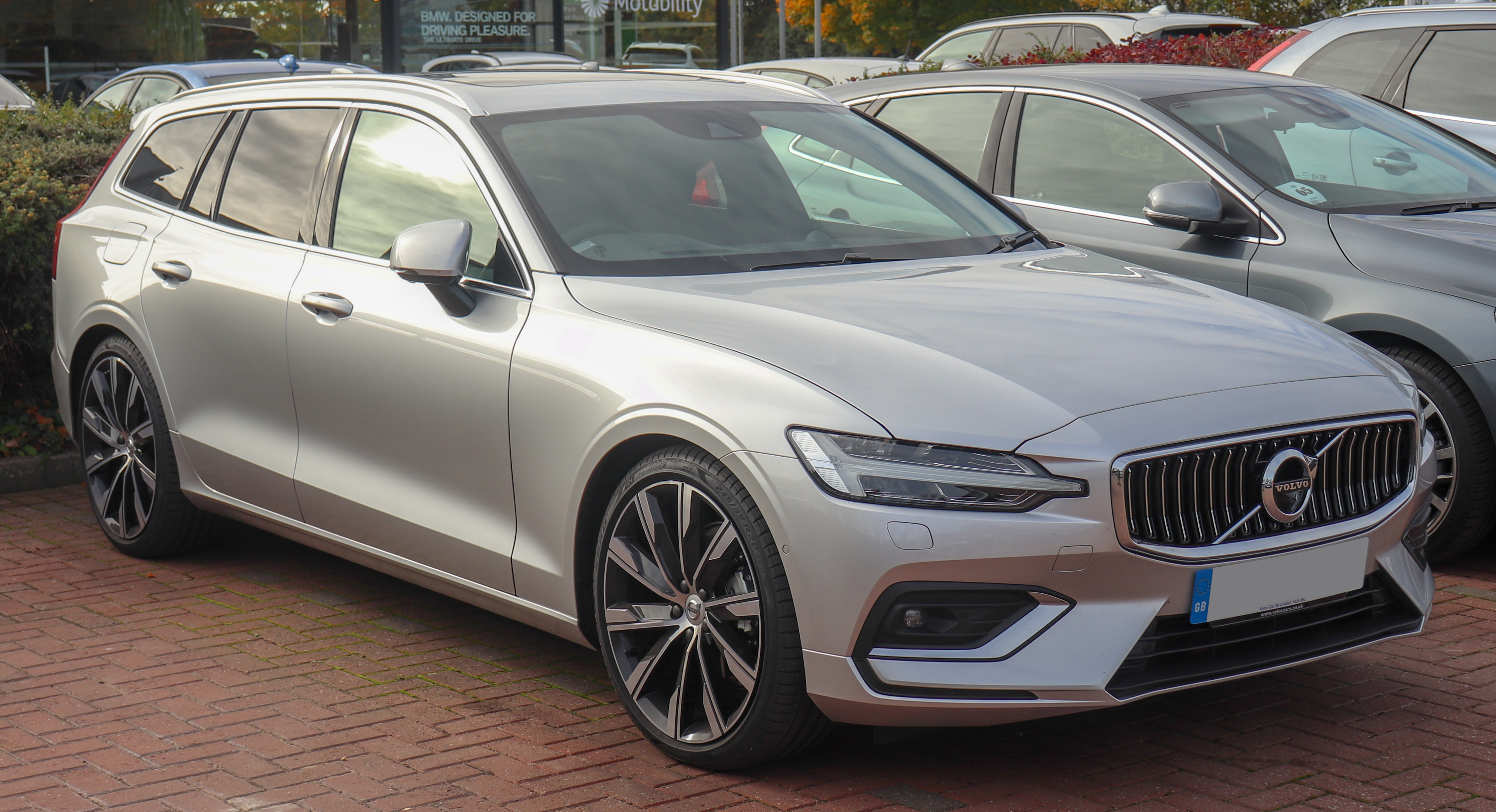
We all loved the V60 and the V90 when Volvo was like,
hey, Ron, I keep doing wagons.
We're like, cool. We all drove them.
We're like, these are rad.
And then no one else bought them.
My cousin got one.
So at least my family is doing the right thing.
One cousin bought that, a V60, and then the other one bought a Honda Odyssey.
And these are both people.
So you're supporting two dying breeds, many vans and wagons.
Yeah, I got good family.
I got good car family vibes.
So speaking of wagons, the Trump administration made an announcement this week
that they're basically rolling back corporate average fuel economy standards to about 2020 levels.
And but what was particularly surprising about that announcement
is apparently Donald Trump has fallen in love with K cars
from his most recent trip to Japan.
And they also want to bring back 70s style station wagons.
That's right.
Okay. So a stopwatch is wrong.
It's correct twice a day.
Twice a day.
Yeah. And of all the things, you're like, well, this isn't enough.
This isn't justify all the horror.
But also, I don't know if Americans, I think outside of like, people have been buying K cars for,
you know, these either automotive enthusiasts or people who are like, oh, I can just buy this
from my farm because, you know, farmers and ranchers love these things because you can
get them for like five, 6,000 bucks.
And then you can do all the, you know, F-150 stuff with it around, you know, just on the
farm. So I don't think the average person wants a K car, to be honest.
I mean, I do. I want one so, so bad.
If there was a market for them here, they'd be here.
I mean, if the car companies, if there was clearly demand for something like that,
then there would have been more of a push to get something like that here.
And, you know, there's a reason that it's all crossovers and SUVs out there because
that's what people are buying.
Well, that's also like a lot of marketing because they marketed crossovers and SUVs
like a moho for years because they get more money.
And then, you know, it's, you know, sort of sideline, yeah, it's propaganda people.
We're buying crossovers and SUVs because of propaganda.
But they're still buying it, whether you like it or not.
Well, then you don't have a choice, especially if you're buying a Ford.
At some point, it's like, well, and then that lie that like, oh, they're more,
they're safer because they're taller, blah, blah, blah.
It's, you know, there's a lot that went into it.
But at the end of the day, how we got here doesn't matter because,
Because we're here.
We're here.
And the K car is not that, which again, I would love a little, the Sakura,
the Nissan Sakura EV.
I love that little EV.
I drove it around Tokyo or Yokohama.
Loved it.
Tiny little car.
Yeah.
I mean, the big guy in a tiny car.
You know, on my most recent trip to Japan, I got to drive the Honda Super 1.
And that's actually technically not a K car because it exceeds the width limit
for a K car.
But, you know, it's based on a K car with wider fenders.
But yeah, I mean, I think, you know, one of the things I said during this announcement was,
we want, we want these tiny little cars to be built and sold here in America.
You know, we have approved them, you know, we cleared the decks for these things.
Which, what exactly does that mean?
I mean, the only thing that was, besides the market potential,
the only thing that was actually preventing K cars from being sold here
was federal motor vehicle safety standards, crash requirements.
Yeah, they're not great on crashes.
Yeah, these cars are only 134 inches long.
That's the maximum that they're allowed to be.
Or as a point of reference, a current Mini Cooper hardtop is 152.6 inches long.
So it's it's about 18 inches longer than a K car.
And a fee at 500 is 143 inches long.
So it's almost it's over nine inches longer,
almost 10 inches longer than a K car.
They're also less than five feet wide.
Yes, that's that's the other thing about K cars.
So as the as it stands, there's no way these things would meet,
you know, crash requirements here.
So if they are, if they're approving these things for sale in the US,
does that mean they're basically just waiving all the occupant protection standards?
Is it like a motorcycle, would it be like a more like if a motorcycle is less than 200 cc,
you can't put it on the freeway?
Will a K car be like, oh, you can only drive it around town?
It's essentially a golf course.
Nobody knows.
Nobody knows.
Right, because we don't have anything like that right now.
Yeah, I mean, it's, I mean, in Europe, you know,
you have these little smaller than K cars, you know,
when I was in Amsterdam, there's quad motorcycles, right,
which are street legal in the city.
But they're limited to, I think 30 or 35 miles an hour.
Right.
And you apparently don't need a driver's license to drive them.
They're like a 12 year olds driving them around.
Exactly.
Because they're about the size, you know, for a 12 year old.
But we don't have anything like that here.
So to have, you know, to have cars that are certain,
you know, designated for certain places that you can drive them or not.
I mean, no one's going to listen to that.
Yeah, that's the.
K cars are marvels.
They are marvels of packaging efficiency.
Yeah.
See, seeing Bank, Bank Talverson sit comfortably in a K car,
you know, and banked is six foot eight inches tall.
Banked is so tall.
He can fit comfortably in both the front and back seats of a K car.
You know, I mean, they are remarkable little vehicles.
And you know, they typically the gas K cars typically go for about 10 to $12,000 in Japan.
And the EVs go for, but I think the Honda N1 E is about 18,000 in Japan.
And this is this is why, you know, I mean, in Japan, in most of the major cities,
they have regulations, you cannot register a car in a place like Tokyo,
unless you can demonstrate that you have some place to park it.
You know, you have to have documentation that you have some place to park it.
And before you can get a license plate for it, you know,
an inspector will go out and actually measure the space and make sure you have space for it.
That rule does not apply to K cars.
And they also get breaks on insurance and taxes.
So, you know, this is why K cars represent more than 50% of the market in Japan.
But here in the U.S., you know, I can, you know, I think, you know,
no matter what the regulators do, I have a hard time seeing insurance companies
even being willing to register to ensure these things in the U.S.
Because someone's gonna take it on a freeway.
It's not for the freeway.
You drive it around town.
But there's I mean, there's also, you know,
one of the reasons for bringing them would be the added fuel efficiency
when at the same time they're just lowering the fuel efficiency requirements.
And so another reason that the car company really isn't all good,
all that's incented to bring it here.
Yeah, less than a liter displacement.
Yes.
A real little K car.
Essentially, you're riding around with a motorcycle engine.
Zero to 60 on a good day.
Honda and Toyota even discontinued the Fit and the Yaris here.
They don't even sell those anymore.
The Fit was so great.
I remember when I asked about that and they're like,
well, when we look at the sales, the CRV is higher and we would rather just,
you know, and then eventually they essentially just said,
we'd rather just push people toward the CRV because we're going to get more.
It's a higher profit margin.
Yeah.
So these are going to have low profit margin.
Very few people like me are going to buy them and that's it.
And then and then same things with the station wagons.
I mean, there's a reason that car companies don't offer station wagons anymore
because nobody bought them.
There's only so many automotive journalists in the world.
I know.
I know.
There's only so many of us.
I don't find them.
There's only so many of us out there.
Like, well, there's those 50 automotive journalists.
That's 50 sold, used in four years.
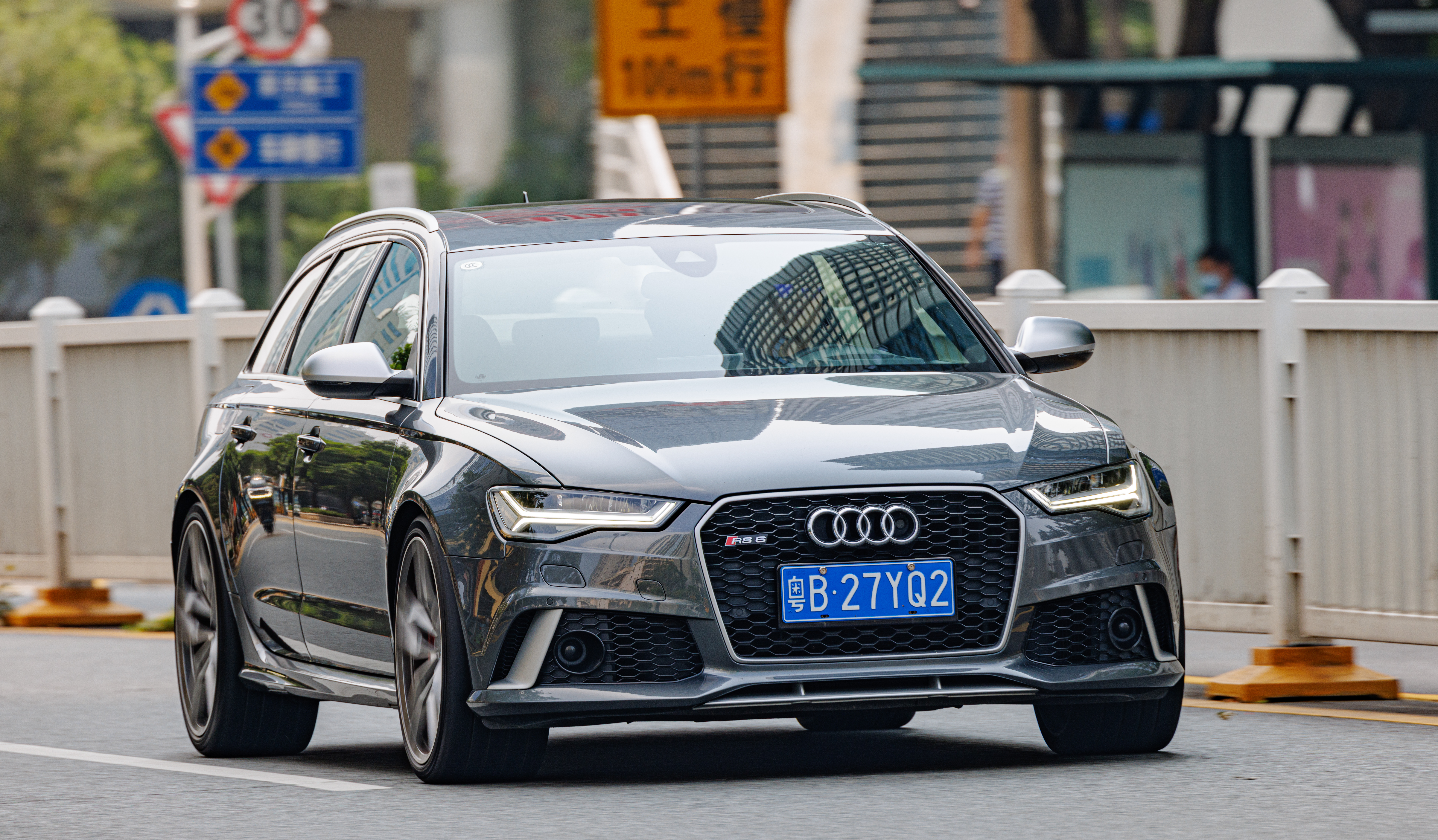
I remember when the last generation Audi RS6 Avant came out
and I was at the Geneva show with Audi to see it.
And I asked if they would be bringing it to America
because, you know, I wanted them to bring it to America.
And he said, well, if I could find 50,000 of my friends,
they would consider it.
That would want to buy the car.
But yeah, Audi journalists don't.
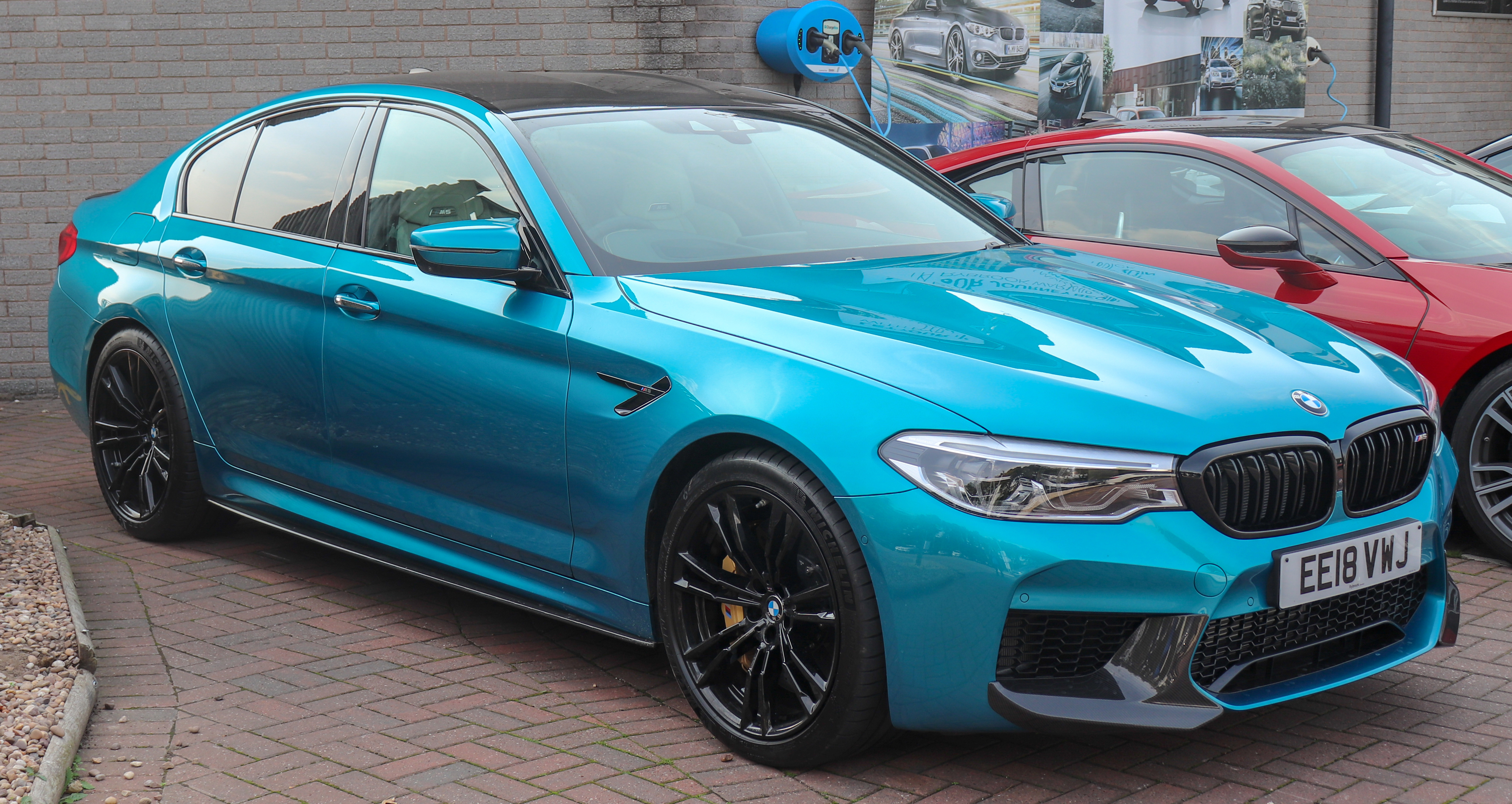
Amazingly, they do offer the current generation RS6 Avant
and BMW sells the M5 Touring here as well.
I wonder how many they sell.
Not probably not very many.
Not many.
That's amazing.
Oh, I love that RS6 Avant though.
That's like, that's one of my dream cars.
Yeah.
That's the best.
See?
Anyway.
But we don't have RS6 Avant money.
That's the problem.
Yeah.
No.
No.
That's also the other issue.
All right.
What else?
Oh, have either of you ever driven a Lotus Esprit?
I don't think so.
I don't think so.
Any Lotus ever.
I drove the Evora a long time ago,
but I have not driven an Esprit.
I was fortunate enough early in my,
at the beginning of my engineering career
to get to spend a bunch of time with the Esprit.
That was with the S4, the Series 4 Esprit.
After it had been, the styling had been updated by Peter Stevens.
But there's a company in the U.K. called,
what the heck was I called again now?
Encore?
Yeah.
Encore.
That is creating a sort of restomod.
I mean, typically a restomod is you take an old body
and you put new hardware under it.
In this case, they are taking a newer set of hardware
and recreating, essentially recreating an older body
to put on top of it.
So they have created what they're calling a reimagined Lotus Esprit Series 1.
So if you remember.
This is just any out-scranted deer.
Yeah.
Well, yeah, it's kind of like that.
It's just a low production any out-scranted deer.
Yeah.
So the first generation, the first, the Series 1 Esprit,
had a cleaner design.
It was done by Giorgetto Giugiaro.
Came out in the 1970s.
And a lot of people prefer that design to the later S3 and S4 Espris.
And so what Encore is doing, they're planning to build 50 of these.
They're using the last generation Esprit V8, which was based on the Series 4,
but with a V8 engine, twin turbo V8 engine,
instead of the turbo four cylinder from the earlier Espris.
They're buying up a bunch of those to use as donor cars.
And they've created a new body that is inspired by the S1 Esprit,
but it's all made out of carbon fiber now.
It has some modern updates to it, but it looks a lot like the Series 1 Esprit.
Putting it on this twin turbo V8 platform, they've upgraded the engine in production form
between the mid 90s and about 2003 or 2004 when they stopped production of the Esprit.
The V8 made about 350 horsepower.
They're rebuilding the engines, getting them up to about 400 horsepower.
And this thing looks fantastic.
I mean, it's even got the pop-up headlights.
It's got the, I have to say, tail lights.
Tail lights keep reminding me of a Dodge Challenger.
Yeah, kind of.
That was the first thing I thought of when I saw them.
Oh, we have the Dodge Challenger.
That's cool.
But then you're right, the interior is gorgeous.
Yeah, the interior is really nice.
And if you want one of these, like I said, they're planning to build about 50 of them.
It weighs just 1,200 kilos, so about under 3,000 pounds with 400 horsepower.
And it will cost you 430,000 pounds, not including the donor car.
So you have to find one first?
Or they'll find one for you.
They'll find a suitable car for you.
So you have a flat windshield?
Yeah.
That was what I always found interesting with the Lotus Esprit was that the windshield was perfect.
I mean, it was, it had slight curve to it.
No, there was some curve to it.
Okay.
It wasn't completely flat.
But I mean, it was for all intents and purposes flat, but not exactly.
So yeah, I mean, this Encore Eswan Esprit, I think this looks fabulous.
If I had half a million dollars, I would definitely consider one of these.
Well, I'd have to pay off my house.
And I'd have to sell my house.
I guess I could pay off my house or buy this.
And then when it breaks down, I'm just, oh, I guess I better fix it on my own.
Or I can get like 50 K cars.
Put them all on churro because now K cars are in the United States.
They've also, they've upgraded the gearbox.
The original gearbox was a five-speed gearbox they got from Renault,
which that was always one of the weak links on the Esprit.
That was best.
Yeah.
Made out of gas.
Second gear in particular.
Yeah.
Second gear was weak in those things.
So whenever you're driving a Esprit.
It was just the most important gear.
That should be the hardiest gear.
And they're like, I said, gear went out.
Yeah, it doesn't need a second.
When you're driving a Esprit, you have to be careful.
Be delicate.
You don't want to jam the thing into gear.
I'll keep that in mind.
Yeah.
And next time you get to driving a Esprit, just remember that.
But yeah, plaid upholstery on the seats and on the door panels.
That doesn't look good.
All right, let's see what else.
Oh, Jason Fenske.
You guys know who Jason Fenske is?
He does the channel Engineering Explained.
Yeah, does a really good job of it too.
He does do a very good job.
Does great work there.
Big fan.
Yeah.
Well, he bought himself a Lucid Air about six months ago.
It's not been a great experience.
Interesting.
I haven't watched the video, but I was reading some of the stuff.
Because some of the comments, like there's reply,
is like, no, but yeah, but it's not working.
It doesn't matter.
It's not working for me.
He's had a lot of issues that are mostly related to software.
It's, yeah, it's been a big disappointment.
That's unfortunate.
Yeah.
Like when he first got it, it said that he needed a software update
and it kept failing the update for like the first six weeks or so.
He could not get the software to update.
And he finally managed to get it updated.
But even then, he's still having all kinds of issues with it.
He's having the infotainment screen go blank on him.
He's got issues with using the phone as a key.
He's got issues with using the key card.
You know, you've got an NFC card with it that you can use as a key.
And when I had the gravity a couple of weeks ago,
I tried using the key card and it didn't work most of the time either.
You know, I ended up having to use the key fob most of the time to unlock it.
You know, sometimes it would lock, sometimes it wouldn't lock.
You know, so he would try to lock the doors and walk away from the car,
you know, go in the store, come back and it was still unlocked.
That's not great.
Yeah, all kinds of problems with this thing.
Which is really unfortunate.
Too bad.
Yeah.
Yeah.
Because they're great cars to drive.
Yeah.
I mean, the opportunities I've had.
But, you know, it's unique to be able to get to live with one for that long.
Yeah.
So I guess you learn all sorts of things.
Software is hard.
That's what it is.
Ask BMW, ask Volvo, pretty much every car company,
but those two in particular.
Software is difficult.
I know that Lucid had hired the guy away from Apple,
but he's no longer there.
So who knows?
I think they did some cool stuff with the latest update,
but that doesn't mean that, you know, new things mean new bugs.
Yeah.
I mean, even.
Again, software is hard.
Yeah, even CarPlay was a thing he's had a lot of trouble with
where it keeps forgetting the phones that are connected to it
or, you know, it will connect to the wrong phone,
you know, regardless of which driver profile you're using,
you know, between him and his wife.
It's, you know, he's had to do a full factory reset on the system,
at least a couple of times now and then have to go back in
and change all the settings.
And, you know, when you when you pick a driver profile,
you know, it saves things like your mirror position,
your seats and everything else to your driver profile.
And he would get in the car with his key, his phone,
and it would, for some reason, decide,
nope, I'm going to give you your wife's driver profile
and set everything for his wife.
And so he'd go in and manually switch it to his driver profile
and it might move the seats but not change the mirrors.
It's just been a nightmare.
Yeah, that's not great.
I'm sure Lucid has already reached out since he's such a.
I would imagine.
They're like, oh, hey, so here's the thing.
Yeah, here's your new Lucid.
This one's better than the other one.
Yeah.
But it still has the same software.
Yes.
It's not the hardware that's been the problem.
It's the software.
Yeah, that's that sucks.
Yeah.
And so there's a new Mazda CX-5 coming for model year 2026.
And Mazda has finally given up on the central rotary controller.
They've got a 15 inch touchscreen.
We should have waited until Nicole was back to talk about this in that case.
Okay, I'll leave it for next week then.
I just want to see her reaction, her excitement.
They're like, what?
The thing's gone?
All right, we'll talk about this one next week then.
That one was pretty annoying, I have to say.
Nicole has it.
I personally didn't have a problem with it.
It's not great.
I don't know.
The turning tank.
Yeah.
All right.
Well, that's it for this week.
Well, actually, there is one more.
Do you guys want to rant about Mercedes-Benz charging you for subscription for features that
are in the car?
I mean, haven't we been down that road before?
Yeah.
I mean, isn't that the Tesla model?
They just build the car with everything in it, all the hardware, and then you just pay for it?
Yeah.
So Mercedes wants you to pay $50 for a front seat massage function,
even though the hardware is already built in the car that you bought.
$50 per month, $50 per month.
I think it's a one-time, it's not clear.
But the thing is, they're charging you $50, and all it's doing is manipulating the lumbar support.
Yeah, which is pretty lame.
It's that fake massage that you get sometimes in the car where it's like, oh, and it just
sort of moves you back and forth every couple minutes.
Right, yeah.
And $200 to use dashcam functionality.
The car, all the CLA's have a front camera.
They have the ability to record, but you cannot actually get that functionality
unless you pay them an extra $200.
I mean, that's the-
So why not just raise the price by that much and call it good?
I mean, so if it's a subscription, it must be a continuous charge, I assume.
Is it or is it just pay once?
Because if it's just a pay once, then you're just paying $200 for a camera, which,
you know, that's-
It's doing other things.
Again, it's a Tesla model where they would build the cars with all the hardware
and then say, hey, do you want to turn this on?
Do you want to turn this on?
Do you want to turn this on?
Because it costs less money in theory and sort of having a bunch of different vehicles on the line.
Just streamline everything.
Yeah, streamline manufacturing.
Yeah, this is just Mercedes doing something.
And to be fair, it does cost money to develop that software.
Yeah, you're adding software in there.
There's a cost associated with that and manufacturers have to figure out a way
to recover those costs, especially if consumers increasingly expect to get
new features over the life of the vehicle.
You know, it's not like in the past where whatever was in the car
when you drove off the lot was what you had for the life of the car.
Now, you know, they've got thanks to Tesla and Rivian and others,
they've gotten used to getting new functions over time,
but that costs money to develop that and maintain that software.
And now, you know, this is really the only way that you can realistically cover those
costs over the life of the vehicle.
I don't know. I think, you know, it's whether it's there or not,
if you want a product you should have to pay for it.
And if they don't, you know, if they want, you know, everybody to pay for it,
they just increase the price of the car and everybody has it.
So I don't know. It's, I understand the principle of not, you know,
it's already there. Why should I, you know, I've already bought the car.
It's already got all the things I need. Why do I have to pay more?
But like you said, it's, you know, and we know that software is important
because, you know, look at what Jason's going through, you know, is.
So I don't know. I don't think it's that big of a stretch for, you know,
especially if you're making these transactions at the time of purchase anyway.
Yeah. Maybe you don't want it. Maybe you want it later. Maybe, you know, whatever.
It's, I don't know, like ADES stuff. And I think, you know, if it's top-end ADES, yeah.
If it's a one-time thing, you know, it's probably not so bad
than compared to if you have to pay a subscription for it.
Yeah. Subscription would be different. I mean, if you're paying, you know,
$20 a month so that you can have a seat massager, you know, that would be, you know.
That's the BMW thing. And they got in big trouble for that.
I don't know, trouble. They got a lot of pushback. That's what I wanted to say.
They decided not to do it because of all the pushbacks.
Yeah. It wasn't even here. It was in Europe and like one market and everyone's like,
they're like, fine. Gosh, okay. We tried it out.
We just, whew. This is, yeah. I mean, they're, I guess they're ADES.
The subscription for the ADES is more expensive than other systems ADES,
which I'm like, it's the Mercedes.
I mean, you have a subscription for Supercars.
Yeah. It's just more expensive than those other ones. But again, it's a Mercedes.
So yeah, it's going to be more expensive, even if it's not as robust.
It still says Mercedes.
You bought a Mercedes. I'm sorry.
I'm not sorry. I mean, I like to say, I'm sorry that you don't realize that a premium car,
everything on it's going to be premium. If you buy a Mercedes, guess what?
It's going to cost you more to get it fixed. Everything costs more.
That's what happens. You buy a German car. It's going to cost you more.
Yeah. Everything's going to cost more. That's why we're like, I'm thinking about buying this.
I'm like, well, you know, do you have the money to have it for upkeep?
Because you might be able to buy it upfront. But you know, when it's 75%
more, 50% more, yeah, cost of ownership is higher than that of, you know, an escape.
All right. The last thing is, I recently, a few days ago, I spoke with Mark André Fourje,
who's the co-founder and CEO of a company in Montreal called Decibel Energy.
A couple of weeks ago, Decibel announced a partnership with Volvo and Polestar
to offer their and to integrate their home energy management system. It's calling it this
because it is more than just a charger. We've seen systems like from Ford and GM to do vehicle to
home capabilities, to use the battery in your car for home power backup and do other stuff.
The Decibel system can do that, but it's all integrated into one box. So it's easier to install,
but it also has more stuff in it. Like one of the things, one of the key things is that
it has DC charging capability built into it. So it's got two cables on it. So you can actually
charge two cars at home at the same time. But if you have a solar system on your house,
you can connect it to this Decibel Aura home charging system. And your solar panels put out DC direct
current, your battery takes direct current. And with most systems, most most home charging systems,
like the Ford and GM ones or anything else, they're all doing AC charging. So if you have
a solar system, it's got to go through an inverter, get converted from DC to AC,
go through the charger. And then when it gets back into the car, into your battery, it's got to be
converted back to DC again. So you've got some losses associated with that. So you're wasting
electricity when you do that. With this system, it goes straight through as DC from your solar
panels through the through the machine, it's got a CCS connector, or you can get it with an
axe connector on it. And it goes straight into your battery as direct current. So it's going to
be a more efficient system. And it can do a bunch of other stuff too. So I talked with Mark Andre.
And after we say goodbye, you can listen to that conversation. And we'll be back next week.
And guess who will be back next week? Nicole. I'm guessing Nicole.
Yeah, Nicole's going to be back from her adventures. So
talk to you all next time. And stay tuned for the conversation with Mark Andre Forge.
Bye. Bye. All right. I'm here talking today with Mark Andre Forge. I hope I got that
pronunciation correctly. The co-founder and CEO of decibel energy.
And welcome, Mark Andre. It's nice to meet you and talk to you.
So a few weeks ago, your company, you're based in Montreal, right?
That is correct. Okay. Hold on. I'm not hearing your voice. Can you just say something?
One, two, three. One, two, three. Oh, okay. There we go. Looks like it muted
automatically for some reason. And Sam, you can call me MA. Mark Andre Forge.
But call me MA. Much easier for everyone. Okay. MA then. So your company is based in
Montreal, I believe. And you are in the home energy business. And you recently made an
announcement in partnership with Volvo and Polestar. So let's talk a little bit about that.
Well, actually, let's start with a little background on decibel and kind of how long
the company's been around and what you're doing, what your focus is on. And then we'll
get into your partnership with Volvo and Polestar. Absolutely. The company was born out
of a series of ideas by people like me that's get around. We work from the energy sector
surprisingly, not the automotive sectors. And we find out that energy for home was too complex,
too expensive, not reliable. And we say, how can we put the customer, the homeowner,
in the middle of the equations? So 10 years ago, we looked at solar energy. Storage was
around the corner. Tesla, with the EV, start to go on. And it says, how can we make something
that's going to make sense out of this? So we're a serial entrepreneur. We say, well,
three years in the process, it will be done, of course. Now we're 10 years later. Product
is in the market right now. Customer happy. I suppose it takes 10 years to make an overnight
success. But that's mostly the genesis of decibel. So you've now started delivering products to
customers. And you've got, I guess, a couple of different things that you're offering.
But the key, as I understand it, with the Volvo Polestar partnership is your Aura
home energy station. And so tell us about this and what makes it different from some of the other
solutions that are in the market for vehicle-to-home integration?
Aura is a home energy station. So it's all about the home and your energy. Surprisingly,
of course, home is the gas stations for electric vehicles most of the time, right?
So of course, you cannot be a home energy station if you are not also providing faster charge at home,
better charge at home. And at the meantime here, using the energy from the car to borrow your home
during a blackout or selling your energy. But it's not only that. This is a true
solar to EV product. We take the energy from the sun, DC energy. Hey, I don't want to start
a new current war between Edison and Tesla, right? I don't want to go there. But the point is solar
energy is DC. Cars, battery, DC energy, grid, AC. So we take the energy in DC from the sun
straight to your car and we keep it in DC. Better efficiency, safer, faster, simply.
The big difference with current product out of the market is also the intelligence.
The Disdevelopment Energy Station just learned from you. You start to learn when you
use your car how much energy you need, how much energy you need for your home. You know
your electrical contract, access to weather forecast, solar forecast, know when the sun shines
and it basically deliver you energy so you can live a life without compromise.
Simply, just that. So it's interesting what you mentioned about DC straight from your solar
to your car. So would it be accurate to describe, you know, this is, you know,
on your website you say never call R a charger. So it's obviously much more than that. But,
you know, for at least that part of the functionality is what is what you're providing
here essentially a DC charger for your home, at least that component of the functionality,
a DC charger for home. That absolutely correct. So ARA is a fast DC charger for your home.
You can reach a miles a minute of charging with the Disable ARA.
But ARA can charge two car at once. We have one DC port and one AC port. So if you have a plug-in
hybrids, for example, that only accept the AC port, the ARA sidekick on the AC port can keep
and manage two cars at once. Both side or bi-directionals, what we're launching obviously
with Polestar and Volvo DC bi-directional, fast DC charging at home, charged with the sun at home,
that's really this part that is truly different from everything in the market right now.
Okay. And it looks like you also offer integration with a home storage battery as well.
So presumably again takes it directly from your solar, if you have that,
to the storage battery without the losses that you get typically of having to go through
power electronics to go from DC to AC and back to DC again.
So it's a more efficient process, whether you're charging your home battery or your vehicle
battery right? Absolutely correct. And there's another little things about the battery also.
As we know, residential storage may be quite expensive. We see people starting to stack
20, 30, even 40 kilowatt hours of battery, that's super expensive, $50,000, $60,000 worth of battery
for blackout purpose. But think about it, Sam, now you got a Volvo EX90 with a 111 kilowatt
hours battery in your driveway for blackout. Therefore, your residential storage may be
much smaller. You may need it only for your solar or the blackout when you're not at home,
reducing the cost, improving the return on investment for every single customer.
Because we don't realize this, but our cars, our EVs, is probably the second most expensive
investment for any family, right? And now you have it in the driveway and you don't use it.
No, it should be powerful even when parked. So your blackout power from the Volvo,
from the Polestar right, smaller battery, blackout where you're not home, or basically to absorb
too much solar when the car is in prison. So one of the things that appears to be different
with the system compared to solutions offered by Ford or General Motors is it's all in one box.
The other solutions, you've got a wall box, a wall charger, a bi-directional charger,
and then a transfer switch and an inverter and a control box. It looks like you've integrated
all of that into a single unit, is that correct? It is correct, but yes, we still have a transfer
switch and islanding devices that are going to be installed by your breaker panel. It's more
convenient, so you can basically put it in the right place. The battery, the DC battery,
is also external to the box, but smaller and we have a partnership with LG. So it's great LG battery
that can be installed with it and you can position it everywhere in your house. Excite this, everything
into a single box, faster installation, easier for everyone. And then obviously an inverter in
here as well so that if you're charging your vehicle at night, don't have solar available,
you're taking power from the grid, or even if you just don't have solar at all, you can still get
so is it taking the AC and still doing DC charging on your vehicle? Of course, absolutely. In the
case of supercharging, this is where the operating system came at play. Orchestrate OS, look at
basically where's the power should come from and where it should go. A good example, I have
excess of solar, I don't need it for my house, price on the market is depressed, don't need to
export right now. It's going to go from DC to solar to your stationary battery. Oh, I need to go to
the movie theater, catching up the kids, the car is super low on charge. I go supercharged,
supercharged in DC, then I'm going to use all the power from the home in DC, convert it
in DC, bypassing the onboard inverter so I can really zoom in at the miles per minute of charge
so I can go and take care of the kids. So what is the maximum charging rate that's possible with the
aura? So right now, this unit of models can go as high as 16 kilowatt hours at DC,
but we measure it at the DC port, not at the entrance. So this is the equivalent of 20 to
22 kilowatt AC. Okay, so that's, I mean, that's much faster than most other home charging solutions.
And then of course, you said it's got two cables on it. So you have an AC and a DC connector.
Is that presumably since you're partnered with Volvo and Polestar right now, you've got CCS
and a J1772 on there? That is correct, but we also support an ECS and the Shadymo for people
having the Mitsubishi Outender. All right, so what would one of these units cost? What was that
aura cost? So the aura unit itself started at $5,000 US, but right now to be honest,
everyone bought it all dressed up. So with solar, with stationary storage and so on. So we're
talking about $20,000 with solar on the roof installation, stationary battery, two charger,
blackout kit. So in average, people are going to spend about $20,000 with installations to have
the aura fully functional at their home. Depending where you live, depending you replace your
generators and so on. So the return investment is between three to seven years for a normal customer.
Is that those prices are those in Canadian dollars or US dollars?
US dollars. Is there's any other dollars available on the market right now?
There's no US dollar. So obviously you've got the partnership with Volvo and Polestar,
but can this unit, if you own a different EV from some other brand, can you also utilize this?
Answer is absolutely yes. We are universally compatible from a charging point of view. Any car
that basically can be charged, we can charge it. And we can afford the supercharge on it.
On the bi-directionality point of view, now we took the decisions to work with manufacturers
to make sure that we preserve the battery warranty, that we make the experience seamless.
So we are launching alongside car manufacturer one after another with this key user experience
one after another for the bi-directionally part. If you buy it today, the decibel definitely
compatible with charge and supercharge with every car on the market, then bi-directionality,
it's just going to go as more manufacturers basically announced their bi-directionality on
their car. Okay. Let's see, what else? So if you have the bi-directional capability on a Volvo
Polestar in a power outage, the Aura unit automatically detects that the power flow has stopped from
the grid and then triggers the transfer switch to start the flow back from your vehicle battery
back into your home? Absolutely. You want a funny story here. About 18 months ago, we started
working with Volvo, with Polestar, about to make everything work flawlessly. From a technical
point of view, it was fast. We go into it and then all of a sudden we start thinking,
what if the outage happened in the middle of the night? The customer is asleep, right?
No one wants to wake up the car for that. So now we start to think and say,
so the Aura can even wake up the car for you, go into bi-directional modes,
you're never going to see it. And then, boom, at the end of the outage, in the middle of the night,
if so, Aura is going to start to think it says, well, I suppose you need your car to go back on
the road. So we're going to go start supercharging to make sure you're going to have enough
energy in your backup. This is all done automatically. If you don't have, for example,
solar installed or stationary battery installed, you're awake. Let's say you have a secondary
house. The power electronic of Aura is always on. It's powered by its own internal battery.
As soon as you're going to connect a car, Aura will figure it out. This is bi-directionals,
engage with the car, and we're going to start to power your residence right away.
It is seamless. I'm going to say it's not. To the point, it is boring. It just works.
So that's the way you would want it. And that's one of the advantages of an EV,
a both an advantage and sometimes a disadvantage of an EV compared to a gas vehicle. A gas pump
never really talks to the vehicle. There's no communication. With an EV, the charger and the
vehicle are always talking to each other to manage charging anyway. So that makes it
relatively straightforward to send a signal from an Aura into the vehicle to say, hey,
wake up. I'm going to need some of your power out for a little while.
And to manage all of that fairly seamlessly, of course, as many EV owners have experienced
when doing public charging, that can sometimes be a downside if the software isn't quite right.
But that's something that hopefully is getting worked out.
So if a customer wanted one of these today, it's available now to customers and they can order
it and get it delivered fairly quickly and then get an electrician to install it all.
So we are doing a rollout right now. We start with California. If people want to order in
California, something that is interesting right now, there's a rebate. There's a discount
up to $14,000 available for people of California that want to install a disabled Aura right now.
So this is basically an incentive that has been done by the state of California that people
in California have available for them. So if you order right now in California,
you may be eligible to that discount. Making the Aura wide affordable, I should say this.
And then we start also a rollout in both Texas, Florida, and we're going to be available in all
the 50 states probably by mid time next year, by the summer of 2026.
So for that maximum rebate, is that for a complete system with solar and the
storage battery and everything? That's the beauty of it. No, it starts with just
the bi-directionality, the supercharging, the blackout and helping the grid with your car,
of course, into it. So it's really an amazing, amazing program for anyone in California right
now that want to go with bi-directionality, that want to engage in the future of warm energy.
It's really reduced the cost. It's mostly risk-free. Okay. So for the maximum speed capability
on this, you would probably want to have this on a 100 amp circuit in your house?
So, yes. The way it is, is intelligence. So, of course, we are North America Electric Code
certified in that. So you install that 100 amps breakers over 200 amps breaker panels. You
don't need to upgrade your breaker panels at 200 amps. It just worked. And the intelligence
in the Aura just going to manage the energy. So make sure we're never going to trip any
circuit in your home and make it absolutely safe all the time. Okay. And then, of course, it looks
like we've got an app to manage all of this remotely. So if you want to schedule when you
want your vehicle to charge, that sort of thing can handle all that fairly easily.
Absolutely. And I can talk about my own experience here with the app. We're so proud of our
app. We have an app store. People can install different indicators and information into it.
And I show it to my own family and so on. And I must say something, Sam, because of the artificial
intelligence that just learned from you, after probably two weeks, no one used the app anymore.
They just plug the car in the RF light out usage and learn and the price of electricity
and just find out the way to provide you the energy at the lowest possible price.
Honestly, we want to manage energy price at home, to be honest. So we, the Aura is quite smart on
this point. Just plug, let it go and it just works. So are you working with utilities to
be able to communicate with whatever the local utility is and find out what their
rate schedules are and then manage the charging optimally to get the lowest rates?
Absolutely. And even in some part of the country right now, we're discussing with the
utilities to have access to real-time energy market. So basically, the Aura will know when
the price of energy is super high, you have access, why not exporting and have the homeowner
make money helping to grid, right? And when the price is very low, why not using this moment
in time and basically bring the energy back home? We are working on different projects with
utilities that will really change the way we're going to interact with utilities in the future.
Yeah. So I mean, recently I was talking with another automaker that has
integrated their system as part of a larger home energy management solution.
So that even when the power is on, even when you don't have an outage,
especially during the day, if you have solar or even if you don't have solar hooked up,
you can use for some period of time, use the battery in the vehicle to power your home,
reducing the load on the rest of the grid so that there's less risk of an outage for
other people in your area, in your neighborhood. Is that something you can do as well?
It is something that is done automatically. Good for the grid, absolutely reducing the
outage, but think about the money saving aspect of it. In some part of the country,
people pay at dinner time up to 80 cents per kilowatt hours. And in low peak periods,
middle of the night, some place 10, 15 cents and down to 5 cents. So most people use their AVs
this way, right? They charge it up to 80, 90 percent, never pull completely full right to
preserve the battery, go to work, get back home. Battery is still at what? 70, 80 percent.
This is a great moment where we're going to use about 10 percent of your battery to help you
cook dinner and prevent you to buy the energy at 70 cents or 85 cents. And then during the
middle of the night, we're going to charge it back then at 10, 15 cents. So just by doing
this automatically, the ARRA makes you save thousands of dollars for years. And again, very
boring, just works. Just do it automatically. And that's something that ARRA can do right now?
That is correct. Okay. Is there anything else that we haven't covered
that either the ARRA system is doing now or interesting things that you might have coming
up in the near future? I think we are at the end-fancy of this transformation of home electrification,
to be honest, right? Everything was built kind of in silos. We have multiple product in our home,
intelligent thermostat, intelligence, EV charger, intelligent breaker panels and so on.
ARRA, we just want to simplify everything. We just want to think that at some point
in time, you just have something that should manage your energy on your VF. You know, Sam,
I'm an electrical engineer. I have a lot of degree. I'm a serial entrepreneur. But at home, I'm just
that. Even myself, I don't want to manage my own energy. Nobody wants to be constantly fiddling
with all that stuff in their house. That's exactly correct. And then the utilities
try to engage with us at the home levels. But there's no CFO at home. There's no
engineers at home, right? And so when they call, no one answer, this is where ARRA is going. And I
think that we're going to see more and more. It's the collaboration between the homeowners
automatically with the utilities altogether is to be just better. Better energy, lower energy costs,
more reliable energy. And that's just really where we're heading with the ARRA product.
Great. Well, I appreciate your taking the time to talk with me today. And this sounds like,
a next generation version of some of the things we started to see in recent years, but a higher
level of integration that can potentially do even more and be simpler in a lot of ways and provide
a lot of advantages. And certainly some efficiency advantages, especially if you have
solar and you're able to not have to be constantly switching back and forth between
AC and DC. I think there's a lot of potential benefits to that to consumers over the long run.
Absolutely. The goal is to make it simple, just provide more affordable energy,
reliable energy to all. If we achieve that, if we can deliver energy so we can live a
life without compromise, then we're going to be in a good place.
All right. Well, thanks so much for your time, MA. I appreciate it. And I hope to
talk to you again soon when you have other things to announce. Absolutely. Thank you. All right.
You've been working hard buying your first home for years, saving, watching the market,
wondering if it's possible. The holidays remind us what home really means,
where traditions start and memories are made. Your first home isn't just a milestone,
it's a space that's truly yours. At Halt Homes, we designed homes for real life,
thoughtfully laid out, honestly priced, built for people ready for what's next.
Your first home should feel like the beginning you've earned. Visit bit.ly.com to see what's possible.
This game is once in a century. Be there at Moda Center on January 24th.
Go to HarlemGlobetrotters.com for your tickets to the 100-year tour.
About this episode
A deep dive into the latest automotive trends, featuring discussions on the Honda Prologue's performance in winter conditions, the Chevrolet Silverado EV Trail Boss's capabilities, and insights from a recent Nissan event showcasing the new Pathfinder and Kashkai. The episode also covers the implications of subscription services for features in luxury vehicles, the future of K cars in the U.S., and an interview with Decibel Energy's CEO about their innovative home energy management system, Aura. The hosts share their experiences and thoughts on the evolving automotive landscape.
Friend of the show Perry Stern is back to talk about the Honda Prologue and some Nissans. Sam drove the Chevrolet Silverado EV Trail Boss.
We discuss driving the third generation of Nissan's e-Power series hybrid in the Qashqai as a preview of the next Rogue as well as the interim Nissan Rogue plug-in hybrid. Nissan has also implemented the first Qi2 wireless charger in the 2026 Pathfinder and Murano. Toyota went high performance this week the debut of the GR GT sports car, the GR GT3 racer and Lexus LFA electric concept. Donald Trump wants to give Americans access to kei cars and 1970s station wagons, but it's doubtful most Americans actually want them. Jaguar Land Rover has ditched long-time design chief Gerry McGovern. Encor has created a magnificent Lotus Esprit S1 restomod and Jason Fenske is disappointed with his Lucid Air. Finally Sam has a conversation with Marc-Andre Forget, the CEO of DCBEL Energy.
You can help out the many people that are food insecure this holiday season by donating to Feeding America and Robbie will write and record a song for you or at your local food bank. There are also dogs in need of assistance and Sam will be joining a crew of volunteers helping to transport them to forever homes in December and you can help by donating to Operation Frodo. Links are below.