Urinating Rosé Wine
About this episode
At Goodwood, the hosts compare EV show moments and real-world comfort and range tradeoffs, from Tesla camp mode draining “about twenty miles” to cabin cooling with “the air con set to sixteen” and “the cooled seats on.” They then zoom in on fast charging, citing an “eight hundred volt car” that hit “three sixty, three seventy” on Ionity and added “two hundred miles of range. In eight minutes.” The discussion also covers ADAS quirks and what they’ll film next in Germany.
Welcome to Charging Status, the EV and automotive podcast hosted by Jim Starling from DefinitelyNotAGuru and Alex Lowe from The Interface Cars.
Each episode covers the latest electric vehicle news, EV ownership experiences, charging infrastructure, new car launches, industry developments, technology trends, road trips, and honest discussions about the future of motoring. Whether you're already driving an EV, considering making the switch, or simply interested in the rapidly changing automotive landscape, Charging Status delivers real-world opinions, expert insight, and engaging conversations from two passionate automotive content creators.
Join Jim and Alex as they discuss the biggest stories affecting EV drivers, explore the challenges and opportunities facing the industry, and share their experiences from behind the wheel of the latest electric and hybrid vehicles.

Tesla Model
"... So yeah, hence I'm working from my drive from my Tesla Model 3. Fair enough. Yeah, I was filming. It's very EV..."
The Tesla Model Y is an electric SUV made by Tesla. It’s designed for everyday driving and uses electricity instead of gasoline. People talk about it a lot because it’s common and because charging is a big part of owning one.
The Tesla Model Y is a compact electric SUV known for its practicality and wide availability. It’s often discussed in EV conversations because it represents a mainstream, everyday way to live with an all-electric vehicle. In a podcast about charging, it’s a natural example of how people use home charging and public charging networks.

Tesla Model 3
"...ah, hence I'm working from my drive from my Tesla Model 3. Fair enough. Yeah, I was filming. It's very EV f..."
The Tesla Model 3 is an electric car made by Tesla. Instead of using gasoline, it runs on a battery you charge at home or at public stations. It comes up often because many people drive one and talk about what charging is like.
The Tesla Model 3 is a compact electric sedan that helped popularize EVs for many mainstream buyers. It’s frequently mentioned because it’s efficient, widely used, and a common reference point for charging experiences. In a charging-focused podcast, it fits naturally when discussing how owners power their cars day to day.
camp mode
"I've been in I've been in camp mode for since seven o'clock this morning. It's ⁓ eight minutes past twelve and it's taken about twenty miles off the battery range."
“Camp mode” is a setting in some Tesla cars that lets you stay comfortable while the car is parked. It uses battery power, so you’ll see the estimated range go down.
“Camp mode” is a Tesla feature that keeps the car’s systems running while you’re parked, typically to maintain cabin comfort and sometimes power accessories. It can draw noticeable energy from the battery, which is why the host mentions range dropping while it’s active.
cooled seats
"And in here I've got the air con set to sixteen and I've got the cooled seats on. Nice."
Cooled seats are seats that actively cool you down, usually by blowing air through the seat. Here they’re using them along with the air conditioning to stay comfortable in the heat.
Cooled seats are power-operated seat ventilation systems that blow air through the seat to help reduce heat. In EVs, they’re often used alongside air conditioning to keep occupants comfortable without relying only on cabin cooling.
aircon
"And in here I've got the air con set to sixteen ... I stood at about three centimeters from an AC unit that was on sixteen degrees for twenty five minutes."
“Air con” is shorthand for the vehicle’s air conditioning system, which cools and dehumidifies the cabin. In EVs, running air conditioning can increase energy use, so it’s relevant when the host is tracking battery range and comfort settings.
Goodwood
"And plus you can charge it cheaply at home, so Exactly, yeah. Yeah. So we went to Goodwood yesterday, didn't we?"
Goodwood is a famous UK venue for car events. In this episode, it’s where they went and where EVs and charging/range concerns were being discussed.
Goodwood refers to the Goodwood estate in the UK, which hosts major automotive events and test-and-display activities. The hosts discuss it as an EV-friendly venue and as a place where charging-range talk and EV logistics come up.
BYD
"but yeah, loads of interest there. The the real standout stand, if you like, though, w was BYD, wasn't it?"
BYD is a big company that makes electric cars and batteries. In this segment, they’re impressed by how huge BYD’s display was and how much attention it drew.
BYD is a major Chinese EV and battery manufacturer known for building both vehicles and battery technology at scale. Here, the hosts focus on the size and impact of BYD’s stand at Goodwood, suggesting strong interest and visibility.

D9 Denzer
"...? Yes, they had Yang Wang, they had the BYD brand Denzer as well. So it was pretty Denzer Z, the Denzer Z ..."
“D9” sounds like a model name from BYD. It’s being mentioned because the podcast is talking about vehicles that were shown or discussed. Without more details, it’s best understood as a specific BYD car model.
“D9” in this context appears to refer to a BYD model name mentioned alongside the BYD brand. It’s likely being discussed as part of a lineup of electric or EV-related vehicles at an event. The podcast is using it to highlight what brands and models were on display.
ten to ninety seven percent charge
"It's bonkers. I think Nort Nort sixty two's one point nine. Jesus. Two hundred and seventeen mile an hour, fifteen hundred PS of power, and I think it's the ten to ninety seven percent charge in nine minutes."
They’re quoting a charging test that starts near 10% battery and ends near 97%. It’s used to compare how fast different EVs charge, especially since charging usually slows down near full.
“Ten to ninety seven percent charge” describes a charging test window: starting at about 10% battery and charging up to about 97%. It’s a common way to compare charging performance because the last part of charging often slows down as the battery fills.

Dodge Charger
"... obviously plugged into a one and a half megawatt charger, which ⁓ obviously we've got three in my street, ..."
The Dodge Charger is a car that’s known for performance and a sporty look. It’s not an electric vehicle in most versions, so it typically uses gasoline. It may be mentioned because the podcast is talking about charging setups around where people live.
The Dodge Charger is a performance-focused sedan/coupe-style muscle car known for strong power and a classic American design. It can come up in EV-charging discussions when someone mentions charging infrastructure in their neighborhood, even if the Charger itself isn’t an EV. The podcast context suggests it’s part of a real-world “what’s plugged in where” conversation.
one and a half megawatt charger
"Wow. If you're obviously plugged into a one and a half megawatt charger, which ⁓ obviously we've got three in my street, but I don't know about yours."
They’re talking about a super-fast charger that can deliver about 1,500 kilowatts of power. With charging that strong, an EV can gain a lot of battery energy very quickly.
A “one and a half megawatt charger” refers to extremely high-power charging equipment, far beyond typical public DC fast chargers. At that power level, the car can add a large amount of energy in minutes, which is why the discussion ties it to rapid charge times.
MG Go
"Just just going back to the MG Go though, the the like the rear quarter on that, with those flared arches, I'm sure they'll tighten it all up with the production one. But if they kept those flared arches, ⁓ suit you, sir. Yeah. That looks very good."
They’re talking about an MG small EV that looks like a fun hatchback. They mention design cues and that it might become a real, production model—possibly with a new name.
MG Go is discussed as a small hatchback-style EV concept, with styling details like flared rear arches. The conversation suggests it could evolve into a production “hot hatch” and possibly be renamed “MG2,” highlighting MG’s shift toward more enthusiast-oriented designs.

Ioniq 3
"and what else was that? ⁓ the ⁓ Ionic three. ⁓ I love the Ionic three. Yeah. ⁓ Jody said something interesting."
They’re talking about the Ioniq 3, which they really like. They also say it has design hints that remind them of the Genesis GV60.
The “Ioniq 3” is discussed as an EV concept the speaker loves, and they compare its styling cues to the Genesis GV60. That makes it relevant because it’s positioned as a compact, design-forward electric crossover/hatch-like package.

Hyundai Genesis
"...hing interesting. She said she said it was a baby Genesis G V sixty, which I definitely saw. Like it ⁓ that..."
Genesis is a higher-end brand from Hyundai. The “G V60” sounds like a specific model name within that lineup. The podcast mentions it because someone is trying to figure out what car they saw.
Genesis is Hyundai’s premium brand, and the “Genesis G V60” reference points to a specific model in that lineup. It’s discussed because it represents Hyundai’s move into more upscale, comfort-oriented vehicles. In the podcast, it sounds like the speaker is identifying what they saw based on the vehicle’s look.

Genesis GV60
"She said she said it was a baby Genesis G V sixty, which I definitely saw. Like it ⁓ that's a shout, actually."
They bring up the Genesis GV60 as a comparison point for another EV. The idea is that the other car looks like it takes some design inspiration from the GV60.
The Genesis GV60 is referenced as a design benchmark for the Ioniq 3, with the speaker saying it has “nods” to the GV60. This matters because it frames the Ioniq 3’s styling as competing in the same compact EV design language space.
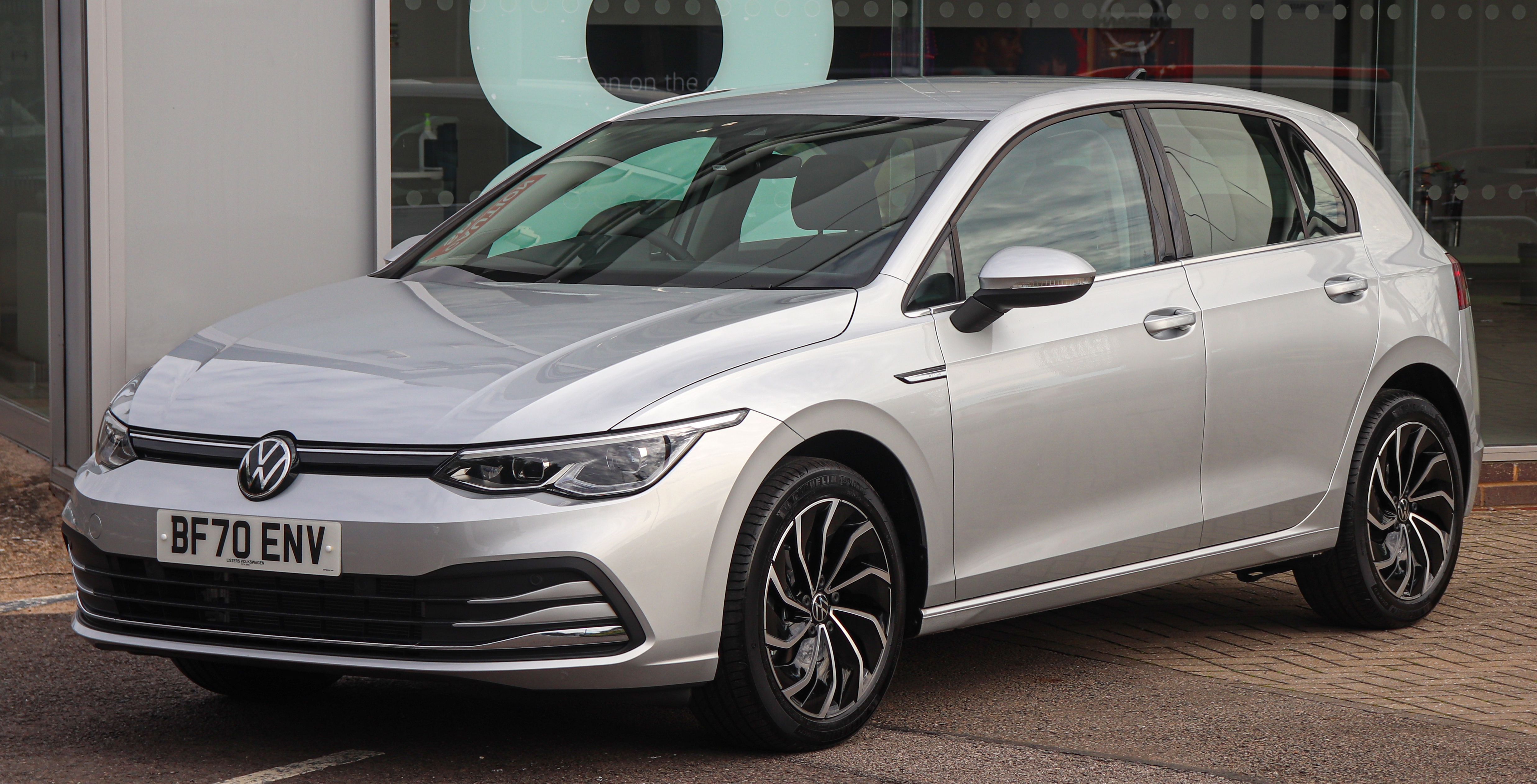
Volkswagen Golf
"...rossover, but I couldn't decide if it was kind of golf sized or a tiny bit smaller. Hmm. When I was read..."
The Volkswagen Golf is a small car, usually a hatchback, made for everyday driving. People use it as a reference point for size because it’s common and easy to compare. In the podcast, it’s likely being used to describe whether another car is bigger or smaller.
The Volkswagen Golf is a compact hatchback that’s known for being practical and easy to live with. It’s often discussed because it’s a benchmark size for “small but not tiny” cars, which is why people compare it to other vehicles by how it feels in the hand. In the podcast, it sounds like the host is trying to place the size of another crossover relative to the Golf.

Raval Cooper Raval
"...'t look at just because of. Did did you ⁓ see the Cooper Raval? ⁓ I did actually. That's a really cool looking t..."
“Raval” here seems to refer to the Cooper Raval. The podcast mentions it because someone thought it looked really cool. It’s mainly being discussed for its appearance rather than charging or performance details.
“Raval” in the transcript appears to be referring to the Cooper Raval, which is a distinctive-looking small car concept or model being shown or discussed. It’s brought up because the speaker found its design especially interesting. In a car podcast, unusual styling often gets attention because it stands out visually.

Renault Twingo
"...there's so many things like the Renault Turbo 3E, Twingo. It was cool it was really cool to see all those ..."
The Renault Twingo is a small car made for city driving. It’s meant to be easy to park and maneuver in tight spaces. The podcast mentions it as one of the compact cars that stood out.
The Renault Twingo is a small city car designed for tight streets and easy parking. It’s often mentioned in car discussions because it’s compact and practical, and it has had different powertrain variations over the years. In the podcast, it’s brought up as part of a lineup of interesting small cars.
eight hundred volt
"…So ⁓ that car is an eight hundred volt car. The one I got is a hundred kilowatt hours at the battery size."
This means the electric car’s battery system runs on a higher voltage. Higher voltage can help the car accept faster charging—if the charger supports it.
An “800-volt” EV uses a higher-voltage electrical system than the more common ~400-volt design. That typically allows higher charging power with lower current, which can reduce charging time when paired with compatible fast chargers.
four hundred kilowatt
"On paper it can charge at nearly four hundred kilowatt, which you kind of take with a pinch of salt sometimes, because you'd think, ⁓ I'll I'll never see that high."
This is the maximum charging speed the car claims it can take from a fast charger. Real charging usually won’t stay at the absolute maximum the whole time.
“Four hundred kilowatt” refers to the maximum charging power the car claims it can accept under ideal conditions. In practice, real-world power often starts high but may taper as the battery fills or if the charger/temperature limits kick in.
kilowatt hours
"The one I got is a hundred kilowatt hours at the battery size."
kWh is how big the car’s battery is—how much energy it can hold. Bigger battery usually means more range, but driving style and weather still matter.
“Kilowatt hours” (kWh) is a measure of battery capacity—how much energy the EV can store. A larger kWh number generally means more potential driving range, though actual range depends on efficiency and conditions.
Ionity charger
"I plugged it into ⁓ an Ionity charger and straight away it hit like three sixty, three seventy."
Ionity is a company that runs fast charging stations. They’re known for chargers that can deliver a lot of power quickly, which helps some electric cars charge faster.
Ionity is a fast-charging network known for high-power DC fast chargers in Europe. The speaker plugs into an Ionity charger and reports very high initial charging power, consistent with an 800-volt vehicle charging at a top rate.
DC fast charging
"I plugged it into ⁓ an Ionity charger and straight away it hit like three sixty, three seventy. We walked quite quickly into the services…"
DC fast charging is the “quick charge” method for EVs. It uses high-power equipment so the battery can fill faster than normal home charging.
DC fast charging is a method that sends direct current to the car at high power, allowing much faster charging than standard AC charging. It’s typically what you use at high-power networks like Ionity.
range
"…the car had added two hundred miles of range. In eight minutes."
Here, “range” means how many miles or kilometers the car can drive before the battery runs low. They’re saying the charge added a lot of that distance quickly.
In EV context, “range” means how far the car can drive on the current battery charge. The speaker describes range gained after charging, using it as a practical measure of charging effectiveness.
fifty kilowatt
"…I had a quick charge the other day on a grid surf, but it was a slow one. like I think a fifty kilowatt. ⁓ And it was still eighty nine P."
This is a slower charging speed than the high-power chargers they were talking about. If it’s only around 50 kW, the car will add energy more slowly.
“Fifty kilowatt” describes a lower fast-charging power level compared with the ~300–400 kW class. Lower kW generally means slower charging, even if the price per session is similar.
Gridsurf
"…I had a quick charge the other day on a grid surf, but it was a slow one. like I think a fifty kilowatt."
They’re mentioning a charging service they used. They’re using it as an example of how a slower charger can still be pricey.
“Grid surf” appears to be the name of a charging provider or app/service the speaker used for a slower, more expensive session. The key point is the comparison between charging speed and cost.
touchscreen
"…when you get to the point where the touch screen needs you to actually assault it in order to register a Yeah."
They’re saying some chargers make you use the charger’s screen to get charging started. They prefer a simpler system where you just pay and go.
The speaker complains that some chargers require interacting with the charger’s touch screen to start or authorize charging. That’s a usability issue compared with simpler tap-to-pay or plug-and-charge flows.
responsive
"No. But still like I don't know, you've you've got like these unnecessary screen presses. And then this screen's about as responsive as a flannel."
They’re complaining about how slow or unresponsive the car’s touchscreen feels. When you press buttons, it doesn’t react quickly or clearly.
In this context, “responsive” is about how quickly and smoothly the car’s screens react to touch inputs. The speaker compares the screen responsiveness to “flannel,” implying noticeable lag or mushy feedback.
ADAS
"There's a few issues with ADAS where it's a bit jittery and a bit panicky. Yeah. ⁓ and sorry, the cruise control as well."
ADAS is the car’s set of safety and driving-assist features, like keeping you in your lane or adjusting speed. The host is saying those helpers can feel jumpy and too aggressive at times.
ADAS stands for Advanced Driver-Assistance Systems—computer-controlled features that help with tasks like lane keeping, adaptive cruise, and collision avoidance. When the speaker says it’s “jittery” and “panicky,” they mean the system’s corrections feel nervous or overly reactive.
cruise control
"There's a few issues with ADAS where it's a bit jittery and a bit panicky. Yeah. ⁓ and sorry, the cruise control as well. But apart from that, like everything surrounding the whole car is just it's just very good."
They’re talking about the car’s speed-control feature. They say it can brake harder than expected, and after you change lanes it doesn’t get back up to speed immediately.
Here, “cruise control” refers to the car’s speed-holding driver-assist function, likely including adaptive behavior. The speaker notes it can slow down very aggressively and then take time to accelerate after a lane change or merging maneuver.
X-Peng
"Not sure where in Germany we're gonna record that. I think we should do it in Lederhosen. Later. ⁓ Possibly with a couple of large frothy jugs. And maybe some beers. ⁓ dear. Yeah, we'll be we're seeing ⁓ some X Peng stuff next week."
They mention XPeng, which is a company that makes electric cars. They’re saying they’ll likely film or talk about XPeng vehicles next week.
“X Peng” refers to XPeng, an EV manufacturer known for producing electric cars and driver-assistance features. The hosts expect to see “X Peng stuff” at an upcoming recording in Germany.
Request an Explanation
Heard something you'd like explained? We'll add it to this episode.
Sign in to request explanations for terms you heard.
Want to learn more?
Browse our glossary for plain-English explanations of automotive terms, jargon, and concepts.
Help improve this episode
See something that's not quite right? Our annotations are AI-generated and can sometimes miss the mark. Click the flag icon on any annotation to suggest a correction.