Jim Loved the Kia EV9 GT
About this episode
The hosts kick off with a busy EV press-trip recap, then zero in on Kia’s lineup. Jim praises the Kia EV9 GT’s GT mode grip and flatter cornering, while also flagging an unresolved concern around its 800-volt ICCU/SU architecture—tempered by Kia’s warranty extension. They also discuss Kia EV4 practicality (no frunk) and why an EV4 GT with simulated gears could be “amazing,” plus quick notes on heat pumps, upcoming reviews, and fast-charging quirks on 800-volt systems.
Alex and Jim are in person to talk about the day spent driving the latest Kia EVs, such as the new Kia EV4 and Kia EV9 GT. Also, the pair chat about recent BYD launch events and what electric vehicles they are reviewing next.
𝗖𝗵𝗮𝗿𝗴𝗶𝗻𝗴 𝗦𝘁𝗮𝘁𝘂𝘀
Spotify - https://open.spotify.com/show/charging-status-podcast
Instagram - https://www.instagram.com/chargingstatus
Bluesky - https://bsky.app/profile/chargingstatuspodcast
A𝗹𝗲𝘅 𝗟𝗼𝘄𝗲
X/Twitter - https://x.com/alexlowe30
Instagram - https://www.instagram.com/alex.theinterface
Bluesky - https://bsky.app/profile/alexlowe30.uk
Website - https://theinterface.uk
𝗝𝗶𝗺 𝗦𝘁𝗮𝗿𝗹𝗶𝗻𝗴 / 𝗗𝗲𝗳𝗶𝗻𝗶𝘁𝗲𝗹𝘆𝗡𝗼𝘁𝗔𝗚𝘂𝗿𝘂
All Jim's links : https://linktr.ee/dnag
Website : https://notaguru.co.uk
frunk
"Does me know you don't have a frunk. Yeah. So it's a bit of a shame."
A frunk is like a trunk at the front of an EV. Since there’s no engine up there, some EVs can store things in that space—so not having one can reduce storage.
A frunk is the front trunk space on many EVs, created because the engine bay is smaller or absent. The host says the EV4 doesn’t have a frunk, which matters for everyday practicality like storage.
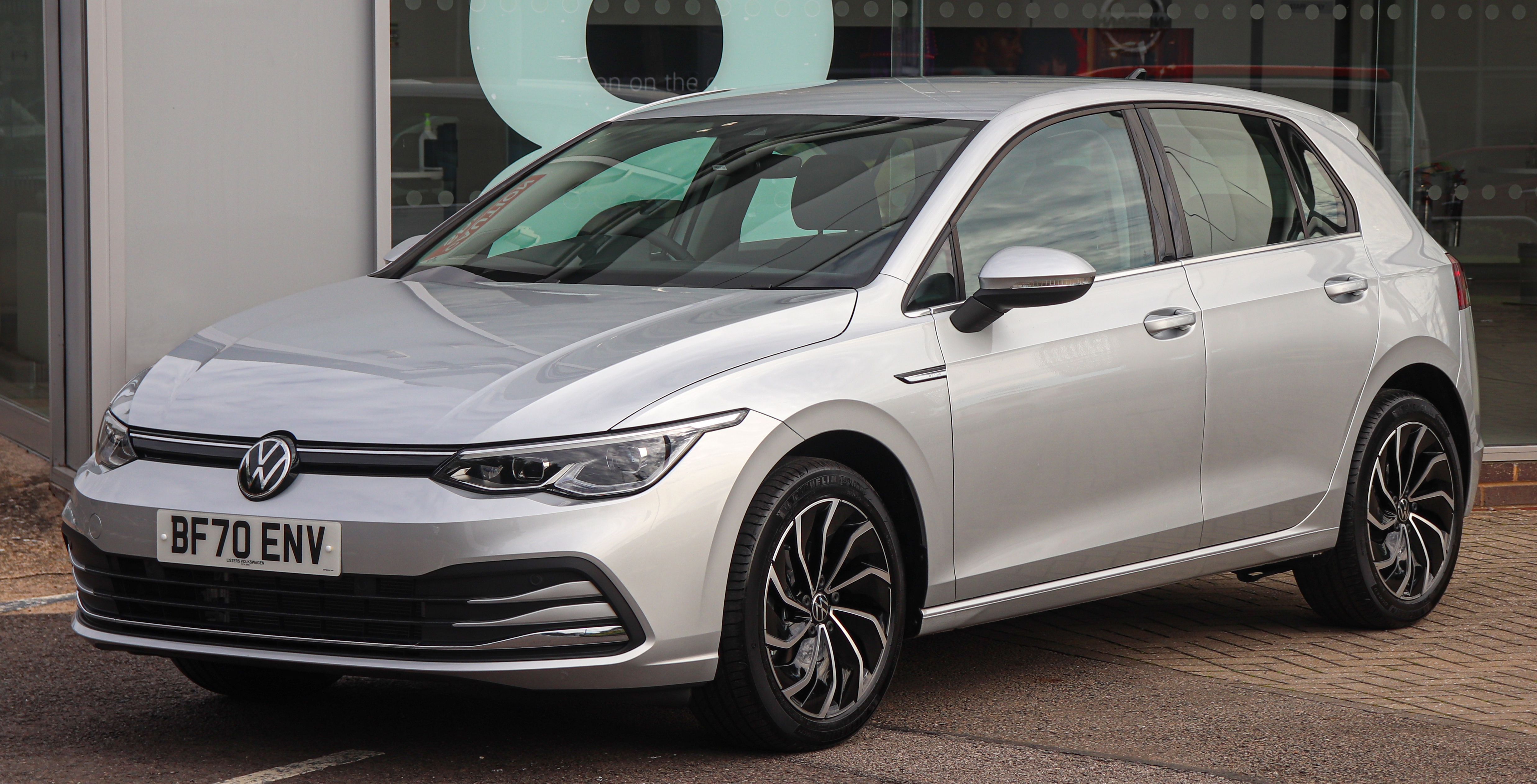
Volkswagen Golf
"...ck, I suppose. Like the equivalent of an electric golf or something. Yeah. But the way it corners, I mea..."
The Volkswagen Golf is a small car (a hatchback) meant for everyday driving. People talk about it when comparing what an electric version might be like because it’s a common, well-known size and style. It’s usually chosen for practicality rather than being a huge car.
The Volkswagen Golf is a compact hatchback that’s known for being practical and easy to live with. In an EV-focused podcast, it may come up as a reference point for what an “electric Golf” would feel like in terms of size and everyday usability. It’s discussed because it’s a familiar platform people compare against when thinking about EV alternatives.
simulated gears
"And when they put a load of power into it and give you the simulated gears, etcetera, I th I think it's gonna be amazing."
Simulated gears are an EV trick that makes it feel like you’re shifting gears. It helps the car respond in a more familiar way, even though an EV usually doesn’t have real gears like a gas car.
Simulated gears are an EV feature that mimics the feel of shifting by changing the motor’s behavior and/or sound/response. The host expects the EV4 GT to use this to make the car feel more engaging and “driver-like,” even though EVs don’t need traditional gearboxes.

Lancia Beta
"...That that might end up being Like an Ionic five N beta for me. speaker-0: I always find really weird lik..."
The Lancia Beta is an older Lancia car model from the past. In the podcast, it’s being mentioned as a name that might be reused or compared to something newer. The key point is that it’s a classic model name with history.
The Lancia Beta is a classic model from Lancia’s past, and the podcast references it in a way that suggests a comparison to a modern electric performance concept. The mention implies the speaker is thinking about how an older nameplate could relate to something like an “EV” or high-performance variant. It’s brought up because it carries brand history and recognition.

Kia Sportage
"...it odd. I've not driven any EVs today. driven the Sportage to a field to film my video. And then all I've ha..."
The Kia Sportage is a small-to-medium SUV meant for normal driving and family use. In the episode, it’s simply the car the host used to get to a location for filming. Some Sportage versions can be electrified, but the main point here is it’s a practical SUV.
The Kia Sportage is a compact SUV that’s typically offered with a range of powertrains, including electrified options depending on market. In the podcast, it’s mentioned as a vehicle the host drove to a field for filming, which highlights its everyday usability. It may also be brought up in an EV context because some versions are electrified.

Kia Stinger
"...y video. And then all I've had a go at is the Kia Stinger GTX. speaker-0: Like I remember watching that car..."
The Kia Stinger is a sporty-looking car with a more performance-oriented design than a typical family sedan. The podcast mentions the GTX, which is a higher trim level. It’s likely being discussed because it’s a more exciting option compared with more basic models.
The Kia Stinger is a sporty fastback-style sedan that was designed to feel more performance-focused than a typical family car. The podcast specifically references the Stinger GTX, which suggests discussion around a higher-trim, more powerful configuration. It’s brought up because it’s a distinctive “enthusiast” model in Kia’s lineup.

Kia EV9 GT
"But then I've also driven the E V nine G T today. Which on paper is probably one of those cars where you think, well, this doesn't need to exist. It's a a massive SEV, you know, it's five meters long, two meters wide."
The Kia EV9 GT is a faster, sportier version of Kia’s big electric SUV. The host says that when you press the GT button, it makes the car feel more grippy and more fun to drive, even though the SUV is very large.
The Kia EV9 GT is an ultra-performance version of the EV9 electric SUV, tuned for sharper driving despite its large size. In this segment, the host highlights how the EV9 GT’s “GT” mode changes the car’s behavior—especially grip and cornering feel—so it doesn’t feel as heavy as you’d expect.
G T button
"but like despite that, you get in this thing and you press that G T button, the bolsters inflate, it grips you like anything."
The “GT” button is a switch that changes the car into a sportier driving mode. The host is saying it makes the SUV feel more planted and fun when you drive it hard.
A “GT” button is a driver-selectable mode that changes the car’s settings for a sportier drive. In this segment, it’s linked to the car’s behavior changes—like how it grips and how the chassis feels in corners.
bolsters inflate
"but like despite that, you get in this thing and you press that G T button, the bolsters inflate, it grips you like anything."
Bolsters are the padded sides of the seat. When they inflate, the seat tightens around you to help hold you in place during cornering.
“Bolsters” are the side supports on a seat. When they “inflate,” the car uses inflatable bladders (usually controlled by the seat’s electronics) to tighten the seat around you for better lateral support during spirited driving.
ICCU
"Th there is still the elephant in the room on the eight hundred volt architecture of that I C C U SU and well, I don't know where where we're at with that, I think"
ICCU is a control unit inside an EV that helps manage charging. The host is saying there’s been a problem area there that may need redesigning.
ICCU is an EV acronym for the integrated charging control unit, which manages how the car interfaces with the charger and controls charging behavior. In this segment, the host calls out concerns tied to the ICCU/SU area, implying a known issue that required engineering attention.
eight hundred volt architecture
"Th there is still the elephant in the room on the eight hundred volt architecture of that I C C U SU and well, I don't know where where we're at with that, I think"
“800-volt architecture” means the EV is built around a higher-voltage electrical system. That can help the car charge faster, but it depends on the rest of the hardware working well too.
An “800-volt architecture” describes the electrical system voltage used in an EV. Higher voltage can enable faster charging and more efficient power delivery, but it also requires compatible components (like inverters and charging hardware) to work correctly.
warranty
"They extended the warranty? This is bad it really. Yeah, but yeah, I don't think there's been any"
A warranty is the guarantee that the company will pay for certain repairs if a problem happens. The host says Kia extended it, so owners are more protected while the issue gets fixed.
Warranty is the manufacturer’s coverage for repairs if something fails within a set time or mileage. Here, the host says Kia extended the warranty as a response to the issue, which affects how much risk owners feel while the underlying problem is addressed.

BYD Atto II
"But yeah, I must stress the Atto II we drove yesterday, it wasn't the EV version because that's already been out on sale for a"
The BYD Atto II is an electric vehicle model in BYD’s lineup, and in this segment the host clarifies they drove a plug-in hybrid version rather than the EV version. That distinction matters because a plug-in hybrid can behave differently in how it drives and how efficiently it uses energy.
plug in hybrid
"Yeah, no problem. Yeah, it was a it was a plug in hybrid. Yeah. What did you think?"
A plug-in hybrid (PHEV) combines an electric motor with a conventional engine and a battery that can be charged from an external power source. In practice, it can drive like an EV for short trips, but it may switch to the engine depending on battery state and driving conditions.

Kia EV4 GT line S
"Yeah, that's the thing with that, ⁓ with the E V four as well. I mean I was in the G T line S, which is quite punchy on the price."
The Kia EV4 GT line S is a trim level of Kia’s EV4 electric model, referenced here mainly in the context of pricing and standard equipment. The discussion ties it to the same heat-pump availability issue—heat pump being limited to higher trims.

Kia K4
"I think there was a car, ⁓ I think, I think with the Kia K4, I drove the air trim and I actually got in there thinking, this is lovely."
The Kia K4 is mentioned as a car the host drove in an “air trim,” where they found the interior and equipment appealing. This is presented as a comparison point for how Kia’s EV trims are equipped.
heat pump
"The the only frustration that I should mention with Kia EVs ⁓ is that still the heat pump is only an option on the top trim level. Now the ⁓ EV nine G T has got it as standard."
A heat pump is an HVAC system component that can move heat rather than only generating it. On EVs, it can improve efficiency in cold weather by using less electrical energy to warm the cabin and sometimes the battery.

Hyundai Genesis
"...erstand because like the Hyundai vehicles and the Genesis vehicles get it as standard. When you pay, what i..."
Genesis is a luxury brand from Hyundai. The podcast is talking about whether certain features are included by default or only if you pay extra. That matters because it changes what you get when you buy the car.
Genesis is Hyundai’s luxury brand, and the podcast mentions Genesis vehicles in the context of features being included “as standard.” That suggests they’re discussing equipment or convenience items that come without extra cost. It’s relevant because EV and charging conversations often include how standard features affect day-to-day ownership.

Renault Twingo
"...ter. No. That's cool. That we'll actually drive a twingo. Yeah. speaker-1: I'm I'm really excited by it. A..."
The Renault Twingo is a very small car made for city driving. It’s easier to park and drive in narrow streets than bigger cars. The episode mentions it because they’re planning to drive it and talk about how it feels.
The Renault Twingo is a small city car designed for easy parking and maneuvering in tight spaces. The podcast context shows excitement about driving one, which fits the Twingo’s role as an approachable, urban-focused vehicle. It’s discussed because it represents a different kind of car experience than larger EVs or SUVs.

Land Flandrove Defender
"...but they just don't interest me. ⁓ there is the ⁓ Flandrove Defender Okta there tomorrow, which is punk. speaker-0: 15..."

Ford Ranger
"...quite a lot to have a look at. Mm. Yeah. The Ford Ranger plug in hybrid's gonna be there as well. speaker-..."
The Ford Ranger is a pickup truck, usually used for hauling things or driving on rougher roads. A plug-in hybrid version can run on electricity for short trips, then switch to fuel when needed. It’s mentioned because it’s bringing electrified power to a truck type people already use for practical jobs.
The Ford Ranger is a midsize pickup truck built for work and off-road capability, with strong towing and payload potential. The podcast mentions the Ranger Plug-in Hybrid, which is relevant because it blends traditional truck use with electric driving for part of the time. It’s discussed as an example of how EV technology is being applied to mainstream trucks.
EV only mode
"...the electric motor has been put in between the gearbox and the engine. And it means that when you're in EV only mode, the gears that you actually change in gear."
“EV only mode” means the car is driving using electricity only. The host points out that even in that mode, the car’s gears still behave in a way that feels unusual—so it’s not as simple as “no gears at all.”
“EV only mode” means the vehicle is running purely on its electric motor(s) without using the internal combustion engine for propulsion. The host notes that, in this setup, the gearbox still has to be engaged/used in a way that’s noticeable to the driver (they’re changing gears even though it’s electric-only), which could have implications for how the system is calibrated and how efficiently it operates.
eight hundred volts
"I mean I'll only need to rapid charge for ten minutes somewhere, and it's on eight hundred volts, so yeah."
“800 volts” means the car uses a high-voltage battery system. High voltage can help the car charge faster at compatible fast chargers.
“800 volts” refers to an EV’s high-voltage electrical architecture. Higher voltage can reduce current for the same power, which helps EVs charge faster and use smaller/thinner cabling for the same charging capability.
rapid charge
"I mean I'll only need to rapid charge for ten minutes somewhere, and it's on eight hundred volts, so yeah."
Rapid charge is the fast way to charge an EV. Instead of charging slowly at home, you use a fast charger so you can add range quickly.
Rapid charging (often called DC fast charging) is a way to add a lot of EV range in a short time by using high-power electricity. It’s different from slower home charging, which takes much longer to refill the battery.
seventy four percent
"Randomly though, plugged it in last night. Yeah. It only charges charged to seventy four percent, which is annoying."
They’re saying the car only charged up to 74%. That percentage is how full the battery is right now.
The speaker is describing the state of charge (SoC) they reached after plugging in—charging to 74% instead of fully charging. SoC is the battery’s current charge level, usually shown as a percentage on the car/app.

Tesla Model Y
"...ws whether I've plugged in the model three or the model Y, but when I've got AN other car, it wants that to..."
The Tesla Model Y is an all-electric SUV, meaning it runs on electricity instead of gasoline. When you plug it in, it charges the battery so you can drive without fuel. The podcast is likely talking about what happens when you connect it to a charger.
The Tesla Model Y is a compact electric SUV designed for everyday family use, with a focus on charging convenience and software features. The podcast context suggests they’re discussing charging behavior and how the car interacts with plugging in. It’s commonly discussed because it’s one of the most popular EVs and people compare charging experiences across Tesla models.
model three
"it seems to like you to have your car. So it knows whether I've plugged in the model three or the model Y, but when I've got AN other car, it wants that to be the ⁓ model Y."
They mention “Model 3” because the charging app seems to think their car is a different Tesla. If the app picks the wrong car, it can mess up charging behavior.
“Model 3” is Tesla’s compact electric sedan, referenced here because the charging app appears to be associating the wrong vehicle profile. That matters because charging limits and schedules can differ between cars.

Volkswagen Tiguan
"...ng. speaker-0: But, that'd it. Yeah. I've got the Tiguan, what's it called? The Tiguan R-Line Black Editio..."
The Volkswagen Tiguan is a compact SUV, meaning it’s a taller car with more space than a hatchback. The R-Line Black Edition is a version with styling and added features. In the episode, it’s mentioned as the specific Tiguan variant the speaker is talking about.
The Volkswagen Tiguan is a compact SUV known for offering practical space and a comfortable ride. The podcast mentions a Tiguan R-Line Black Edition, which indicates a sportier appearance and equipment package. It’s discussed because it’s a common choice in the SUV segment and often comes up when talking about everyday vehicles alongside EVs.
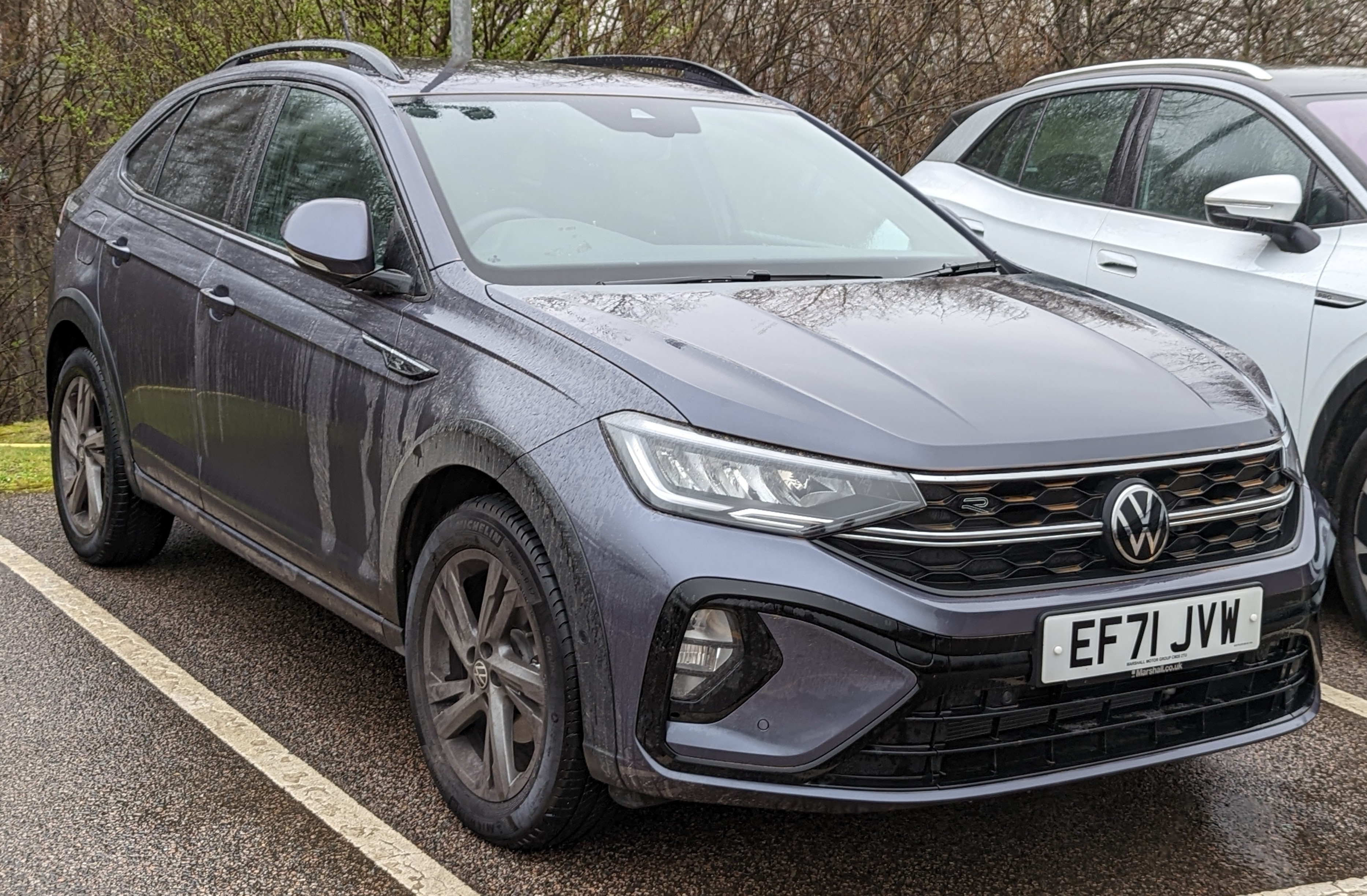
Volkswagen Taigo
"...r-0: Confusing, it? Yeah. Tiguan, Taurag, Tehran, Taigo and something else. speaker-1: Which Mike tells m..."
The Volkswagen Taigo is a small crossover, meaning it’s a car with SUV-like styling but not as big as a full SUV. In the episode, it’s mentioned because the speakers are trying to keep the model names straight. It’s basically a Volkswagen model you’d look at if you want something compact.
The Volkswagen Taigo is a compact crossover based on the smaller Volkswagen platform, positioned between a hatchback and an SUV. The podcast context shows confusion over similar model names, which is common because Taigo, Tiguan, and other names sound alike. It’s discussed as part of sorting out which Volkswagen model is being referenced.
Request an Explanation
Heard something you'd like explained? We'll add it to this episode.
Sign in to request explanations for terms you heard.
Want to learn more?
Browse our glossary for plain-English explanations of automotive terms, jargon, and concepts.
Help improve this episode
See something that's not quite right? Our annotations are AI-generated and can sometimes miss the mark. Click the flag icon on any annotation to suggest a correction.
1 community members have helped improve this episode.