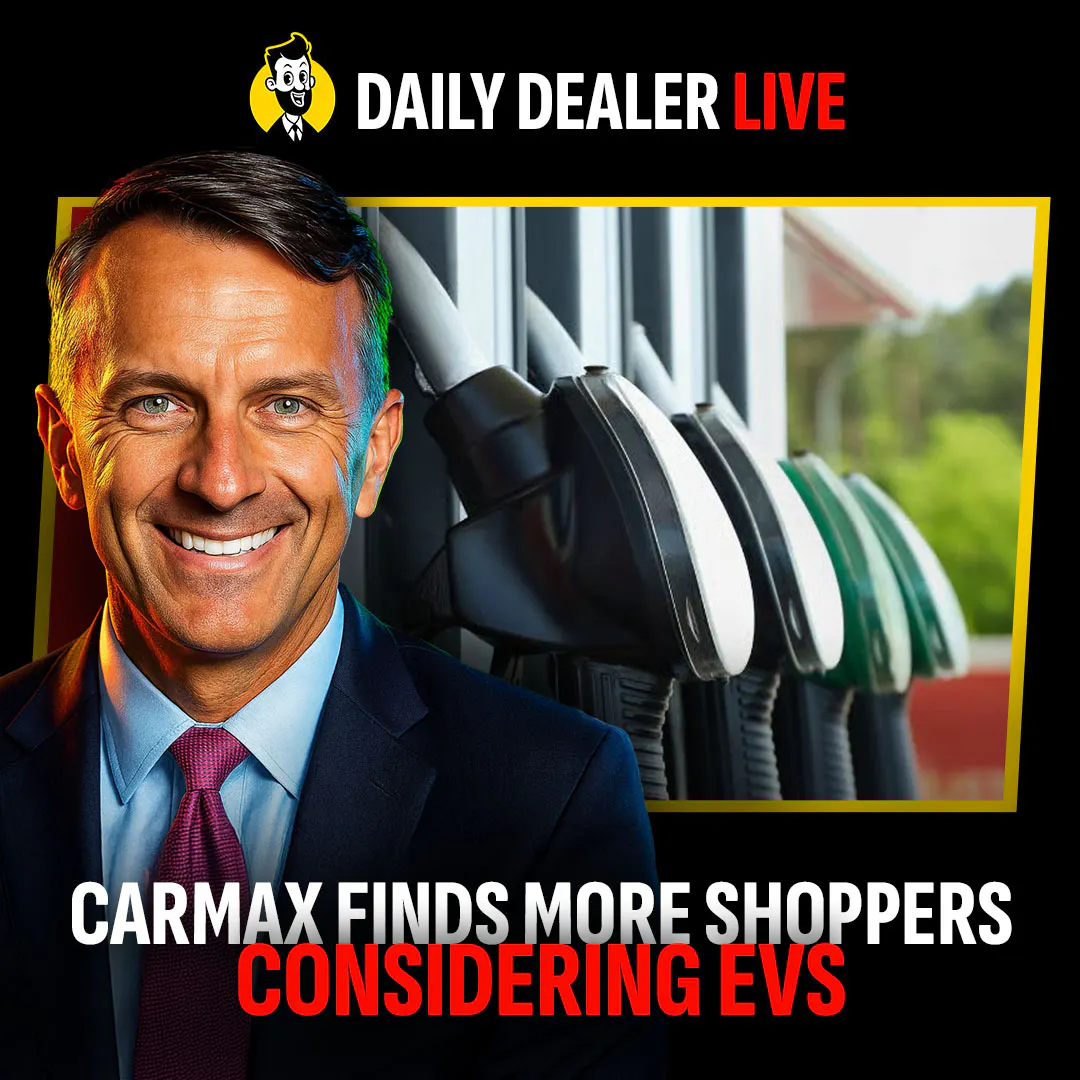
The Daily Dealer Live roundtable covers a mix of regulatory pressure and market shifts. It starts with FTC warning letters to 97 dealer groups over pricing/fee transparency and deceptive advertising, then breaks down how dealers should adjust websites, add-ons, rebates, and “in transit” listings to avoid enforcement. Legal experts Adam Crowell (KPA) and Barrett Beatty (Shrap and Weiss) debate federal vs state conflicts and the role of OEM incentives and third-party lead providers. Kelly Van Blommestein shares an Australian dealer view on Chinese brands, service retention, and compliance culture, while headlines include Honda/Sony EV pullbacks and an Alaska AG settlement against a dealer group.
Today's show features:
- Kelly Van Blommestein, Dealer Principal / Managing Director at Werribee and Western Auto Group
- Adam Crowell, Chief Legal & Strategy Officer at KPA
- Barrett (Charapp) Beaty, Partner at Charapp & Weiss, LLP
This episode is brought to you by:
Overfuel – Dealers: You’re torching $30 of every $100 in marketing spend when your site flunks Google’s basic performance test. Why keep using outdated website technology that's killing your profits? Overfuel is the new technical standard in automotive websites, proven to grow sales by 30%+. Whether you need more revenue or better support, they’ve got you covered. Go to https://overfuel.com/ and use code CDG500 in the comment box for $500 OFF.
KPA — the compliance platform built specifically for auto dealers, covering everything from EHS and HR to F&I and cybersecurity. Over 15,000 dealerships trust KPA to handle the regulatory complexity so they can focus on running their business — visit https://kpa.io/ to request a demo.
Check out Car Dealership Guy’s stuff:
CDG Circles ➤ https://cdgcircles.com/
CDG News ➤ https://news.dealershipguy.com/
CDG Jobs ➤ https://jobs.dealershipguy.com/
CDG Recruiting ➤ https://www.cdgrecruiting.com/
My Socials:
X ➤ https://www.twitter.com/GuyDealership
Instagram ➤ https://www.instagram.com/cardealershipguy/
TikTok ➤ https://www.tiktok.com/@guydealership
LinkedIn ➤ https://www.linkedin.com/company/cardealershipguy/
Threads ➤ https://www.threads.net/@cardealershipguy
Facebook ➤ https://www.facebook.com/profile.php?id=100077402857683
"So first up, used car demand is heating up again, the FTC as we know and have talked about here just worn 97 dealer groups on pricing and most stores still have compliance risks sitting on their own website right now, March of 26th."
The FTC is a government agency that watches for unfair or misleading advertising. In car sales, it cares a lot about how dealers show pricing online and in ads.
The FTC (Federal Trade Commission) is the U.S. agency that enforces consumer protection and advertising rules. In auto retail, it commonly focuses on pricing and advertising compliance—especially how dealers present “the price” to shoppers.
"...including what's really happening with those Chinese OEMs and what that means for US dealers."
OEMs are original equipment manufacturers, meaning the companies that build vehicles under their own brand. The speaker’s mention of Chinese OEMs signals competitive pressure on pricing, product mix, and dealer strategy—especially as Chinese brands expand.
"Sony Honda Mobility cited Honda's March 12th announcement pulling back on its EV strategy as the reason"
Honda is the automaker that changed direction on EVs. That decision is described as the reason the EV project discussed in this segment couldn’t continue.
Honda is mentioned as having announced it was pulling back on its EV strategy, which then affected the joint venture’s ability to proceed. The excerpt frames this as a key reason the Ithila vehicles have no viable path to launch as planned.
"...including financing options, home charging, and that total cost of ownership, including insurance."
Total cost of ownership (TCO) is the overall cost to own a vehicle over time, including things like fuel/energy, maintenance, insurance, and sometimes financing. The segment argues dealers should explain TCO to help shoppers justify higher upfront EV prices.
"So the brands you spoke about, so we do have Chinese vehicles and it's a little bit different to the US, but we've been a Chinese dealer for over 17 years."
The guest notes that Chinese vehicles are part of their dealer mix and that it’s “a little bit different” from the U.S. context. This is a meaningful topic because Chinese-brand distribution, pricing, and customer expectations can differ from traditional markets.
"...J-Coup as part of our group with Nissan, Honda, Mitsubishi, you name it, we've got it."
Nissan is one of the established mainstream brands the dealer group carries. The speaker later references being with Nissan for decades, making it a key part of her career story and dealership experience.
"...selling finance and aftermarket service advisory, learning our parts department as well."
The parts department is where the dealership gets replacement parts for repairs and maintenance. It helps keep the service shop running.
A dealership’s parts department supplies replacement components for service jobs and customer repairs. It’s especially important for multi-brand groups because parts availability and inventory planning vary by manufacturer.
"So a major metric, obviously we look at, units sold. How many cars do you sell a month from your stores?"
Dealers track how many cars they sell. It’s usually measured per month, and it helps compare how well different stores or brands are doing.
“Units sold” is a core dealership performance metric that tracks how many vehicles are sold over a set period (like monthly). It’s often used to compare store performance, brand performance, and sales team effectiveness.
"Yeah, so in Australia, we have Australia Consumer Law. So we're a little bit different to yourself."
Australia has consumer-protection rules for how businesses must treat customers. For car dealers, these rules can affect things like promises made in ads and what you can do if there’s a problem with a purchase.
Australia Consumer Law is the national consumer-protection framework that governs how businesses must treat customers. In dealership discussions, it often affects warranties, refunds/returns, advertising claims, and other obligations that shape sales practices.
"the way to go is hybrid here in Australia. It's the best of both worlds. It really suites our market."
A hybrid uses both a gas engine and an electric motor. The idea is to get better fuel economy without fully switching to an all-electric car.
A hybrid powertrain combines an internal-combustion engine with an electric motor/battery. The speaker frames hybrids as a “best of both worlds” approach for Australia’s market needs—balancing efficiency and practicality.
"like the models. Obviously, we all have our own KPIs. We all have, you know, things in place that you need to take, like with any manufacturer."
KPIs are the numbers a business tries to hit—like sales goals or service targets. The speaker is saying Chinese brands still work with dealers using normal business goals.
KPIs (Key Performance Indicators) are measurable targets businesses use to track performance. The speaker mentions that dealers and manufacturers all have KPIs they must hit, similar to any brand relationship.
"We was the service maintenance and reliability for GW and MG compared to Nissan, let's say."
Service and maintenance reliability refers to how dependable the cars are over time and how well the brand supports them with repairs, parts, and warranty work. The speaker frames this as a key concern when new brands enter a market.
"And that's fantastic. And that's what you need. You need them to have that support. Yeah. Now, in the news here in the US, there's been reported that BYD initially came into Australia, had franchise dealers..."
BYD is a car company (mostly known for electric cars). They’re being discussed here because they may have changed how they sell cars in Australia—moving away from dealer partners and trying to sell more directly to customers.
BYD is a major Chinese automaker known for electric vehicles and batteries. The discussion is about BYD’s go-to-market strategy in Australia—whether it used franchise dealers and then shifted to a direct-to-consumer model, potentially overriding existing dealer contracts.
"M4RSH411 says, can you use digital cryptocurrency to purchase or lease vehicles in Australia? ...we haven't gone the cryptocurrency for us personally. In our dealerships..."
Cryptocurrency refers to digital currencies (like Bitcoin) that can be used for payments. The question here is whether dealers in Australia can accept crypto for buying or leasing vehicles, and the guest says they haven’t adopted it in their dealerships.
"So for us, it's a simple touch point where we feel that the soft sell works."
A “soft sell” is a friendly, low-pressure way to sell. Instead of pushing hard, the salesperson tries to understand what you want and then helps you choose.
A “soft sell” is a sales approach that focuses on listening, understanding needs, and offering information rather than using aggressive pressure. In dealerships, it often means guiding the customer toward a decision more gently.
"Today's episode is brought to you by Overfuel. Most dealerships, no most dealership websites, well, they suck. They're slow, they're clunky, and hated by both shoppers and they're hated by Google."
Overfuel is a company that helps car dealers build and run their websites. They’re advertising faster, easier-to-find dealership sites that help bring in more shoppers.
Overfuel is a marketing/website provider for dealerships, positioning itself as an AI-driven solution for dealership websites. The sponsor message frames it as improving site speed and search visibility to attract and convert shoppers.
"under the FTC act to prosecute unfair and deceptive acts and practices, right? And there were four
[1663.1s] cases that were coming out of 2020"
This is the FTC’s standard for stopping companies from misleading customers. In car sales, it often comes up when ads or paperwork don’t clearly show the real price or key details.
This is the standard the FTC uses to determine whether conduct violates the FTC Act. In car dealership cases, it commonly covers misleading advertising, unclear pricing, and failure to disclose material terms or fees.
"they were trying to set what they were calling the offering price under that rule that
[1759.9s] was defeated."
Offering price is the “real” advertised number the dealer is supposed to show. The idea is to include the required dealer fees so you’re not surprised later at checkout.
“Offering price” here refers to a standardized price dealers would present that includes mandatory fees (with an exception for mandatory government fees like taxes). The goal is to make the advertised price more comparable across dealerships and states.
"[2285.3s] every once in a while, you'll see like on someone's website where they might have the vehicle in front [2289.3s] of a train. And you know, the question is just whether or not they're disclosing that, hey, [2293.2s] this is something that's like in transit or it's been on order. It's not here yet. You know, that [2297.5s] sort of thing."
“In transit” means the car hasn’t arrived at the dealership yet, but it’s coming. The key is whether the dealer clearly tells you that in the listing, instead of making it sound like it’s already available.
“In transit” means the vehicle is on the way (e.g., shipped or en route) and not physically on the lot yet. Regulators and consumers care about whether dealers clearly disclose this status and any expected arrival timing, so the ad doesn’t mislead shoppers.
"All right. So doc, doc fee, is it required as part of the full price, the advertised price on online on a website? So 26."
A “doc fee” is a dealer paperwork charge. The big issue is whether the dealer has to show it in the advertised price or can add it later.
A “doc fee” (documentation fee) is a charge dealers add to cover paperwork and administrative costs. In many places, regulators scrutinize whether it must be included in the advertised price and how it’s disclosed to consumers.
"[2891.4s] continue to cover this as we go. We've got a lot of comments online. And I'll bring those into the [2896.2s] roundtable, including from Patrick Block Ventures. I love this. Think of all the salespeople quote [2896.2s] advertising prices on social media. You know, is there some personal liability?"
Dealers (and salespeople) often post car prices on social media. The concern is that if the price or the fine print is wrong or incomplete, it can create legal trouble.
Posting “advertising prices” on social media is a common dealership marketing practice, but it can raise compliance questions if the posted price is misleading, lacks required disclosures, or doesn’t match the actual terms. This is why the segment connects it to personal liability and the regulatory environment.
"[2896.2s] advertising prices on social media. You know, is there some personal liability? And then Dan C. [2902.3s] saying Toyota dealers would be in a world of hurt if they couldn't advertise in transit vehicles."
Toyota is the car brand mentioned as an example. The speaker is saying that if certain advertising rules changed, Toyota dealers would be heavily affected.
Toyota is referenced as an example of a brand whose dealers rely on advertising channels. In dealership legal/regulatory discussions, brand examples help illustrate how broad rules can impact major manufacturers and their dealer networks.
"So first up, processing fees. They've historically been handled differently state by state. Now the FTC is saying federal law... How should dealers... reconcile those conflicts on their buyer's orders?"
Processing fees are dealer-added charges tied to preparing paperwork or handling the sale. The key issue discussed here is how they must be disclosed on the buyer’s order and whether they can be bundled into the advertised/sales price without creating a misleading presentation.
Term
$1,200 add-on
"That is the selling practice that is a problem because it's not in the advertised price. They come in and they say, oh, you want the advertised price? Well, unfortunately, you have this other $1,200 add-on."
They’re giving an example of a big extra charge added at the last minute. The point is that customers may think they’re getting one price, but then the dealer adds another cost.
The speaker cites a specific example of a dealer charging an additional $1,200 add-on on top of the advertised price. This illustrates the compliance problem: customers may be surprised by extra costs that weren’t part of the advertised deal.
"If you're doing a market adjustment, I'm shouting out to Lexus dealers right now with that GX that is whatever price and you're supposed to sell it on the website at MSRP. And then at the bottom, you said, market adjustment may occur upon entering the store."
The Lexus GX is a midsize luxury SUV, and it’s used in the episode as an example of how dealers may advertise a price at MSRP but then apply a market adjustment. The point is about disclosure and pricing consistency rather than the vehicle’s mechanical details.
"...especially if you put like a lift kit and everything else like that's on this vehicle. So, like, I think that that's like a situation where..."
A lift kit raises the car higher by changing the suspension. Since it’s usually added after the factory build, it should be clearly called out as an optional extra.
A lift kit is an aftermarket suspension modification that raises a vehicle’s ride height. Because it’s not factory-installed, it’s often treated as an optional add-on that must be disclosed properly under dealer advertising and disclosure rules.
"actually give benefit to the consumer. So, if you're selling things like nitrogen, filled tires, and it really isn't like pure nitrogen, instead it's like, you know, just regular atmosphere, like that's going to be a problem."
Some dealers sell a tire-inflation upgrade that claims to use nitrogen gas. If it’s not actually pure nitrogen, it may be more of a sales pitch than a real improvement.
The discussion is about selling “nitrogen” for tire inflation. In practice, many products marketed as nitrogen are not pure nitrogen and may just be air-like gas, which can affect whether the upsell is truly beneficial.
"listen to that NADA FTC webinar. Watch that webinar or watch yours."
NADA is a dealer organization that helps car dealers with rules and best practices. Here it’s being referenced for an FTC-related webinar dealers should watch.
NADA is the National Automobile Dealers Association, an industry group that provides guidance and training for dealers. In the segment, NADA is mentioned in connection with an FTC webinar, implying dealers should follow current compliance guidance.
Select text to request an explanation
Hey everybody, welcome back to another episode of The Daily Dealer Live!
I'm your host, Sam Dark and thanks for choosing to be here with us on the automotive community
on this Wednesday, March 25th.
So everybody, the auto selling market just gave us 5 signals and if we're not paying
attention we're about to give up margin, market share, and maybe run into some legal
trouble in the process.
So first up, used car demand is heating up again, the FTC as we know and have talked
about here just worn 97 dealer groups on pricing and most stores still have compliance risks
sitting on their own website right now, March of 26th.
Plus, we'll talk to a Canadian auto dealer who's competing against Chinese vehicles
in the marketplace.
Kelly Van Blumenstein joins 3am or so from Australia at the show today, including what's
really happening with those Chinese OEMs and what that means for US dealers.
Then Adam Crowell from KPA and Barrett Beatty from Cherup and Weiss go head to head on what
dealers must fix immediately to avoid FTC ire going back to that letter.
Today's show is not about theory.
Today's show is action worth executing on and worth executing on today.
And as a reminder, we are streaming live across all social media platforms.
We welcome your comments.
We'll bring them into today's show.
We've already got some comments out there, Schwatt Team LFG, we agree.
And then Patrick Block Ventures says, Happy International Waffle Day.
I had no idea, but celebration to everybody that loves waffles, apparently, on this Wednesday.
Let's head into today's auto industry headlines.
Kicking off today's news with some breaking news from Honda this morning, Sony Honda Mobility
announced today it's discontinuing the development and launch of the Ithila 1 and its second
plan model.
Sony Honda Mobility cited Honda's March 12th announcement pulling back on its EV strategy
as the reason, saying it can no longer access technologies and assets Honda originally committed
to the joint venture, leaving no viable path to bring the vehicles to market as planned.
Reservation holders in California, well, they'll receive full refunds of that $200 deposit.
And this news piece is notable because just two weeks ago, a California judge allowed
the C&CDAs lawsuit against American Honda and Sony Honda to move forward specifically
over concerns that the Ithila was being sold directly to consumers in violation of California
franchise law.
That case may now be effectively moot, but it's another data point, a broader story about
how quickly EV plans are unraveling across the industry.
And in other breaking news today, Alaska's Attorney General just settled a lawsuit against
Swickert, which operates dealerships in Anchorage and Palmer for $800,000 in civil penalties.
The complaint alleged the group advertised vehicles that weren't actually available.
They refused to honor advertised prices once customers arrived and required consumers to
purchase undisclosed add-ons like extended warranties, ceramic coating and dent protection.
The court also found that Swickert was buying used vehicles from consumers without obtaining
the signed condition statements by required by Alaska law, meaning buyers weren't getting
the accident and repair history they're entitled to, so says the state.
There's an additional $200,000 suspended penalty on the table of Swickert commits further violations
in the next three years.
We're going to be following up with both sides of this story, so be on the lookout for that
coverage in coming days.
Up next, we've got a follow-up on the Cox Automotive and VinQ story from last week.
Both companies have now responded to CDG news with statements.
And the picture that's emerging is a dispute over data governance rather than just a business
decision.
Cox said that when misuse of its data or platforms is identified, whether through unauthorized
credential access, API misuse, or use of data outside agreed terms, it acts.
VinQ's CEO pushed back, saying the company has always operated in good faith and in full
compliance with its agreements, and the door remains open for direct dialogue.
The broader conversation is this, it's sparking among dealers is worth flagging.
One industry CEO told us at CDG that most dealers think they control their data,
but they're actually operating inside vendor-defined walls.
And if data can't move freely, well, that data is not really yours.
Either way, with native MMR and KBB access on VinQ ending March 31st,
dealers will want to ensure their workflows are adjusted before that access goes away.
Also this week, CarMax is adding to the data pile on EV consideration.
Between March 2nd and March 22nd, searches for EVs and hybrids on CarMax,
it jumped 12.8% compared to the prior month,
tracking with the rise in gas prices we've been following since the Iran conflict began.
The more useful finding from CarMax is where shoppers are getting stuck,
confusion around HEV versus PHEV versus BEV, range and charging access concerns,
and higher upfront prices. That tells us the dealer's best position to capture this rising
interest aren't just the ones with the inventory, but they're the ones who can walk a shopper
through what EV ownership actually looks like day to day, including financing options, home
charging, and that total cost of ownership, including insurance. And that is a wrap on today's
auto industry headlines. Let's turn briefly to the comments that are flooding in on several
different stories. YogaCar says Cox protecting the auto simple, that's YogaCar's opinion.
Patrick Block Ventures comes into the chat and says, make sense for Cox to defend their data?
Why share it with your competitor? It's one of Cox's biggest value propositions.
So that those perspectives will continue to bring into today's show. But first,
we're going to turn to a CDG daily dealer live first ever, our first auto dealer interview
from Australia, where I believe right now it may be 3am or so. Welcome to the show Kelly Van
Blumenstein, dealer principle managing director at Werribee and Western Auto Group. Kelly,
welcome to the show. Thank you for having me. Kelly, this is a first. So we appreciate you
being here. It's three something in the morning, I think. So you woke up earlier, stayed up late,
which was it? I woke up early. Very good. As we start out, tell us how's business in Australia
and tell us about your auto group. Yeah, look, business is consistent. It's been good. It has,
it's no lie, it's been a little bit tough out there. But the brands that we have are flourishing.
So the brands you spoke about, so we do have Chinese vehicles and it's a little bit different
to the US, but we've been a Chinese dealer for over 17 years. So we have GWM, MG,
Emoto and J-Coup as part of our group with Nissan, Honda, Mitsubishi, you name it, we've
got it. So a couple of multi sites as well. So yeah, it keeps us busy. That's for sure.
How did you, Kelly, personally, how did you get into the business? How did you get into automotive?
Yeah, so I was actually 14 years old. So I worked as a part-time receptionist, just trying to earn
a dollar. My dad used to teach motor mechanics. So my love was always being around cars,
but I started in the admin and I worked myself up. So I started to, we opened up a dealership,
which was where I've been in Nissan 30 years ago. So I've been with that journey and still am,
and we love and breathe it. But going from receptionist to business manager role, selling
finance and aftermarket service advisory, learning our parts department as well.
In the millennium when we changed over to Microsoft, obviously I worked on making sure that
we were robust and put the systems in place. So yeah, I love the journey, become the company
accountant. And in 2004, I had an opportunity to buy in and I took it. And now we're up to
328 employees from 17. So it's been a journey and it still is. And yeah, I love every minute of it.
So a major metric, obviously we look at, units sold. How many cars do you sell a month from your
stores? Yeah, so obviously at some brands higher than others, but across the board,
we sell over 1500 units monthly. Yeah, so significant. What's one thing that most
U.S.-based auto dealers don't know about the Australian marketplace that you'd love to have
them know? You're one of the first voices from Australia many of us have heard in automotive.
Yeah, so in Australia, we have Australia Consumer Law. So we're a little bit different to
yourself. So we do have limitations, which restrict us in obviously having our own
insurance companies and so forth. So things we have to have really robust third-party suppliers
with us that we call, we have very long-standing partnerships. So we build on that. So we make
them accountable, they make us accountable. So setting targets with our people to ensure that
obviously we can set them and obviously further that as well. But Australian market,
you know, it's loyalty. It's really based on people knowing we're a privately owned business. So
one thing we pride ourselves is getting to know our loyal customers, ensuring that we're very
customer-focused in our business as well with our people. We have long-standing people that
worked with us for over 17 years. You know, that's not just, they've come from sales to then deal
with principles. So they're really invested with us as we are with them. And that comes along with
training. A lot of things we come over and see you guys as well. We're very heavily involved in the
double ADA and NADA. So learning some things from you guys too. Google as well is a huge thing for
us digitally, ensuring that we're up to date with the market. So in the news in US automotive and in
US politics is concern over Chinese vehicles. So you've got two brands, GW and MG. You don't have
concern in the United States much to do about nothing. When did you begin selling Chinese
vehicles and what does that relationship look like over the years? Yeah, so we've been selling
Chinese vehicles for 17 years. So we were one of the first dealers that had GWM. So we've been along
with the journey, with their technology. So going from, you know, just four by two UTS to now four
by four, now EV hybrid. It's huge. Their technology is there. They know their stuff. They support us.
They're very, you know, we work alongside with them. The partnership's strong. You know, 20% in the
Australian market is Chinese brands. That's strong. Yeah. Has that 20% penetration into a single market?
Has that displaced some other brands? And what, what is the Chinese brand strength from your
vantage point in product? So the strength is their product, is their technology. Obviously,
the way to go is hybrid here in Australia. It's the best of both worlds. It really suites our market.
The forefront and where we started with GWM to the limited amount of models to now where we're
going is just huge. MG, same thing. Where we started was a couple of models to now up to 10
models, you know, and what's coming as well. The MG has now got a huge where they never had before
and it's really hitting the market. So to have really the partnerships that we have with them,
it's extremely strong. What would you say to American dealers that are concerned about them
entering the American marketplace? Is it, is it, is it an unjustified concern or is it something
American dealers should be worried about? I don't think they should be worried about. I think
they adapt to obviously your business as well, like the models. Obviously, we all have our own
KPIs. We all have, you know, things in place that you need to take, like with any manufacturer.
So you need to ensure that you have your 45-day stock holding. You need to ensure you're setting
your targets. You're getting the targets. Yes, you do have to pick up certain vehicles,
but no different to you do now with Ford or anybody else. So honestly, the Chinese markets,
they are doing fantastic. We can't fault them. So we're going to go into the text comments. We
was the service maintenance and reliability for GW and MG compared to Nissan, let's say. You're a
Nissan dealer. Yeah. So I think that they've evolved really well from when we first started.
Obviously, 17 years ago to now, there's no comparison. So they've definitely got the
infrastructure now. So coming into the market, and it's a really good question. So thank you for
that. Our service department has evolved as well with them. So with the amount of units that we're
now selling, the infrastructure is there. The support is there. Obviously, they've got bigger
parts we're hassles to support us as well. And that's fantastic. And that's what you need.
You need them to have that support. Yeah. Now, in the news here in the US, there's been reported
that BYD initially came into Australia, had franchise dealers, respected the franchise
dealer network. And then in some cases, actually reversed course on that franchise network,
and said, hey, we're going to go direct to consumer here and basically negated those
contracts. Is there truth to that in your experience? Is there a backstory? Maybe America
doesn't totally get the story about? Yeah. As I said earlier, unfortunately, I'm not a BYD dealer,
so I'm not privy to that. So yeah, I can't share some. Okay. No worries. So you have a lot of
brands. You've got Nissan, you've got Mitsubishi, Honda, I see Suzuki, and you've got Leap Motors.
Which OEM in Australia is winning today from your current portfolio of brands? And why? What
makes those OEMs strong? The one that you say is winning the best?
I'd say that, look, we do have some brand, they're all quite strong. The one that's obviously hitting
the market just based on the different models that we have right now is GWM. So that's hitting
the market strong. You know, it's risen to number seven in Australia. The infrastructure's there,
like I said, the brand and models are there from SUVs all the way from midsize to large.
You've got your 4x4s as well, and you have your utilities, which is very big in Australia.
M4RSH411 says, can you use digital cryptocurrency to purchase or lease vehicles in Australia?
That's a great question. So we haven't gone the cryptocurrency for us personally.
In our dealerships. So we're just based on, we try and obviously sell a lot of finance here.
We have 55% penetration, which is big in Australia for our dealerships. So we have Australia, we've
got our own brokerage as well, where we obviously try and handle all vehicles. So crypto, unfortunately,
with us hasn't hit us. So we haven't yet done that yet. But that was a really interesting
question. So you've really honed in this year, according to your intake on training and development
and really getting your managers connected to process. When you did that, what's one KPI
in Australia, March of 26, that you're honed in on that every GM should be focused on daily?
Yeah, look, so back a year ago, we used to set the targets. And obviously, we're governed by
our OEMs. So like everybody else. And we normally then just cipher it down and say,
this is the amount that you need to get. And good luck. And we'll be here with that support.
Now we really get their buy in. So the way that we do that now is we sit them down,
we go through with them, we let them have the floor. So we let them own it,
we get them to set their own targets, what's achievable as well as what we need to achieve
with our OEM. So with that, we see, do we have the right stock, making them more accountable?
We stress test it together as well. We go through of how are they going to achieve
that target? Cipher it down by people, number of units. How many do you believe this said
person's going to sell down to your cadets? So it's not just a set and forget and a check-in,
it's actually what drives the margin, where the where the profit's going to win or lose,
how are they going to get there and get them to own it at the end of the day?
Because you can set a target, but how are they going to drive it to you and your business?
So as you're training and developing and you're getting ownership, one of the big
focuses in the US right now, probably in Australia as well as retention of service
customers, fixed operations is a big opportunity we're exploring. What are you doing to drive
customer experience in March of 2026 in Australia? And what could America learn from that on our side
of the pond? Yeah, so with our service customers, we actually have introduced our sales people
to be talking to ourselves because they actually check in the customers. So when they're coming in
with our valets, so they're going over the units, they've already spoken to them 24 hours before
to touch base on their needs, what car they'd like to drive for the day as well. And we asked them
for a simple feedback on the vehicle that they've been driving, because we want to know
are they interested in one month, three months, you know, or give us feedback on that vehicle
itself. And that's been a really soft sell for us, but it's really worked. Our customers are
liking it, they're getting to experience a new technology from what they've had before,
they've run through the differences with that vehicle, and they really focus on their needs.
So for us, it's a simple touch point where we feel that the soft sell works.
Yeah, to use video MPIs in the service department, technicians taking videos as part of the
feedback to the consumer. Yeah, correct. So oil filters and so forth set aside so they know what's
been worked on as well. And the customers are loving that. Awesome. In Australia, what's your
DMS provider? Do you share common software technologies with the US or are they different
because of regulation? So we do, we use Pentana Solutions, which is era power over here.
So very similar to yourselves, obviously, it's well known in Australia as well. So we've had them
for over, I think, 15 years. So consistently moving with the times with them as well. So from
DOS-based to now Microsoft, and the way that we incorporate with our contracts as well, digitally,
yeah. So I'm fascinated. You mentioned at the beginning, maybe this is our last couple of
questions here, a difference in business practices because of regulation. One area you mentioned was
reinsurance, right? A lot of dealers form their own reinsurance companies, they generate FNI profits
that way. What is the regulation that prevents that from Australia? And how do you solve for that?
Is FNI a profit center in Australia similar to the US? Or do you solve for that in other ways?
Yeah, so FNI is still a profit center for us. We just drive it a little bit differently.
Obviously, we need to build big third party arrangements to ensure that we're getting the
best return. So yeah, we do tender, we do go to market, we do speak to them, we have a look at
the robust system for Australia, what's covered, because it's quite big, where we are to ensure
that our customers are getting the right agreements and coverage. So it is governed a lot in the sense
of selling them with the finance as well. So we are capped to a certain extent. But what's happened
with the insurance company is it's now obviously offering more to the consumer, which is an easy
sell for us. So for us to having that agreements in place, our guys are really comfortable in
selling it even more today. Yeah, well, Kelly Van Blumenstein, dealer principal Manning director at
Werribee and Western Auto, we appreciate you joining the show today and giving everybody a
perspective on what it means to be a dealer in Australia. And your journey from basically the
front lines to the ownership is, I think it's inspiring to everybody. When you first got into
automotive, did you have a sense this is what I want to do? Like, at what point your progression
were you like, I could see myself having ownership? When did you realize I want to make this my
life's pursuit? I think after doing my bachelor business degree, obviously becoming a company
account and already learning a lot within the field. I felt like at that point I could offer
more. I felt like I had gone to the peak. So for me, I really wanted to invest and back my word
to show them that I could do it. And I think that journey's been really good. You know, I wouldn't
be, he's still a love and live and breathe it. So I get off every day and want to go to work. So
probably that's the difference. And, you know, I want my people to do that too.
Yeah, so you provide a path for others to eventually, how many people in your group have
ownership of one sort or another? Are there multiple owners? Is that Colin?
So it's myself, my business partner, Conroy Taylor. And we have a couple of others in our
partnership, Brad Hopkins, Joe Marvilla, Adam Hopkins. And then we have our brokerage as well
with Martin Bridges. So yeah, so it's quite limited with the amount of brands that normally it's
Conroy and I that obviously manage most of those. Yeah, yeah. Is that, is that, that's not unusual
in Australia to have ownerships in the way that you've gained it and achieved it, right? Or have
you kind of set a bar in that way? Yeah, I think it's quite unique now. There's a lot of public
listed companies now in Australia. So to be privately owned, I think it is quite unique.
And we do have a limited amount of partners. Well, congrats to you on your success and developing
this group. And thank you for sharing your perspectives on all things Chinese regulation
and how you're succeeding and winning an automotive today in Australia. Kelly Van Boomenstein,
dealer principal. Thank you so much for joining Daily Deal Alive today. Thank you for having me.
You know, insight on Chinese vehicles, I think is, is fascinating. Now, no BYD ownership there
or experience. And I noted Kelly didn't really want to get into it too much. But in the brands she
has, and that they have, it's a long standing relationship. I do wonder if there's difference
between the BYD and the newer brands and those existing that have been there for over 17 years,
but very helpful perspective for us here in the US to see what it means. So let's talk Overfuel.
Today's episode is brought to you by Overfuel. Most dealerships, no most dealership websites,
well, they suck. They're slow, they're clunky, and hated by both shoppers and they're hated by
Google. Well, Overfuel cracked the code, lightning fast AI powered sites built to attract, convert,
and dominate every search experience. Is it time for a new website? Go to Overfuel.com,
use the code CDG500 in the comment box and you'll get 500 bucks off. Thanks to Overfuel for
supporting today's content, including that glimpse into all things automotive in the country of
Australia and that Chinese conversation and some of the differences there, including some of the
regulation oversight as it relates to reinsurance, FNI and other things. So Overfuel, thanks for
supporting today's content. All right, let's keep today's show going. Next up today, Adam Crowell,
he's the chief legal and strategy officer at KPA and he's joining us to talk about this FTC
regulation that just came out. Adam, tell us a little bit about who you are and what you do at
KPA. Yeah, thank you very much, Sam. So I am chief legal and strategy officer at KPA, as you mentioned,
in charge of really trying to monitor everything that's going on, including these,
the FTC warning letter that went out to 97 auto groups across the country. I've been in
private practice in the past where I focused on working with auto dealers, so I've been outside
counsel, I've been inside counsel, and of course now I work in the auto industry as a vendor
partner with dealers to help them try to basically stay out of the regulatory and playing of attorneys
crosshairs. So Adam, first question up, were you surprised to see a letter like this from
the FTC going out to the auto industry in general at a time when there's so much going on, tariffs,
Trump administration in full command control of the government at the moment? Did it surprise
you the timing and what do you make of that? Yeah, it's really not surprising to me, Sam,
and the reason why it's not surprising is because we obviously saw the FTC already try to pass that
vehicle shopping rule or what they were referring to as the cars rule, right? It got defeated in court
because of procedural reasons, and the FTC with the change of administration did make that decision
that, hey, we're not going to try to repass this, but it's because of the fact that they have authority
under the FTC act to prosecute unfair and deceptive acts and practices, right? And there were four
cases that were coming out of 2020, basically out of 2024 going into 2025 when the administration
changed over, and they have continued to prosecute those cases in court. So the fact that they sent
out this letter to 97 auto groups across the country is not surprising whatsoever because
those four cases that are continued to prosecute deal with price and fee transparency and some
other advertising issues at the dealerships. So there are components of that CARS Act that are
listed in the letter that aren't necessarily codified law rules or regulations that are sort of a
warning shot out to the industry that were maybe not super clear in advance. What are those components
and how does the FTC have grounds to regulate for those if the bill was defeated previously?
Yeah, so Sam, I've kind of made this argument in the past that the FTC really did not need
the CARS rule or the vehicle shopping rule for the purposes of saying that these are things that
are illegal. As part of that rule, they listed 16 things that they said are unfair and deceptive
acts and practices. And when you look at those 16 things that were listed, you would read through
those and you'd say, yeah, that that's unfair and deceptive. So I mean, they were just codifying
things that they already considered to be unfair and deceptive acts and practices. The other aspect
of it is they were trying to set what they were calling the offering price under that rule that
was defeated. And under the offering price, it was basically, hey, you need to have way more
transparent like we're trying to set it so it's it's even across the entire industry.
We're looking to make sure that you have this offering price that is basically including all
mandatory fees with the exception of mandatory government fees. So like tax title registration,
right? So if there are any other fees that someone was required to pay, they wanted to have that
baked into the price. So depending upon which states that you're in and there's like there's a
regulatory patchwork across the United States, right? So there's many different things that are
required in each one of these states. But with things like, you know, things like dock fees that
might be allowed under under state law, like permissibly, right? And in some cases, they might
allow that to not be included in a price. And in some states, they might require it to be included
in the price. And in fact, I think in some states, they say you can't include it in a price.
I understand. And I'm not in any of those states. But what do you make of state law that says it
can't be included in federal that says it should be included in the bottom? Yeah, so so Sam, I do
think that there might be so there might be some arguments that are made in some specific states
where it's where it's saying like, hey, this is the price that you have to have. And this is how
it has to be calculated. And when it comes to like the these other fees, like dock fees,
they, they can be outside of that as long as you're disclosing that, right? But in many of the
states, you know, it's more allowable, right? Like it's, it's a loud like you're allowed to
have these other fees that are outside of the actual advertised price there. And so that's
more permissive. And in those cases, you know, it's going to be really hard for someone to argue
that, hey, because state law allows me to do this, well, now the FTC like you shouldn't be allowed
to let me do this. No, from a regulatory standpoint, it's like, who has the most stringent standards?
And that's what you have to apply to. Now, in some of those states where, in fact, it does have
those sorts of calculations, says this is how you have to do it. There could be some arguments
that are made there, but by and large, across the nation, I think it's going to be a really tough
road for, for many to argue this. And I mean, think about it from, from this standpoint, too.
This is, they're not just focusing on the automotive industry here. Like the,
the warning letters obviously going out to 97 auto groups, but they've been focusing on,
on things like housing, they've been focusing on short term rentals, they've been sure
focusing on concert tickets, food delivery services. And that's actually mentioned in the
letter, but they are, they are wanting people from the get go from the start to have a better
idea of what pricing is. And it doesn't take much to look at a lot of websites across dealerships.
And it can get very confusing really fast about like, Hey, what would I actually pay for that,
for that vehicle? Right? Because you might have a disclaimer. It's hard to find, it might be at
the bottom of the page, it might say all the things that may not say all the things. But really,
what they're trying to do there is, and I'm not trying to defend the FTC here, but what, what
they're trying to say that they're trying to do is they are trying to level the playing field.
And so they want it to be very transparent to a consumer, whether looking in this state versus
that state, like, what's the actual price that I'd be paying for it. And I will tell you that I
have had some conversations with some dealers and they're, they think like that part of it's great,
like they don't think that there's any problem with it. Now, here's, here's what I think the
biggest problem is Sam is it's kind of like who goes first, like if you're going to make these
sorts of changes, how is that going to impact like your digital retailing, right? So, you know,
just imagine you were using these third party listing sites and you're putting your vehicles
on there. And now all of a sudden, you're baking some of these other fees into your pricing,
and someone else isn't. Well, they're going to be showing up way higher in the rankings. They
might even be rated as like a great deal when you're not being rated the same way. And I think
there's an issue there. And what I'd really, you know, hope that maybe the more the focus would be
is how can these digital retailing tools maybe level the planning field a little bit better,
like, and have some of that other information in there so it can make it more visible and more
transparent to the consumers. So do you think this letter is enough to get compliance across
the industry and get everybody in line on the same set of rules? Or is there needed more
detailed specific rules that everybody's just required to live by, play by to, as you say,
level the playing field. So everybody, because, you know, you think about it, you mentioned
digital retailing platforms, you mentioned digital lead generating tools. I talked to many of those
tools where it is a race to the bottom. And you can see how bad actors that and don't fully disclose
gain an advantage in that race to the bottom on those tools, getting more leads, getting more
generate. Do you think the FTC needs to do more? Do you think this is enough to bring everybody in
the line? Well, Sam, I think with like those four cases that I was talking about that are pending
right now, like we could potentially see other enforcement actions. But with those four cases
that are pending right now, I think you're going to start seeing some results of those that are
going to come out and when when dealers see that they're going to start to recognize like, hey,
this is an issue. But you mentioned at the very beginning of the podcast, right, just yesterday,
the Alaska AG. Yeah, that was a big deal. Yeah, right. Yeah. So they announced an $800,000
settlement with a with an auto group over in Alaska, in Alaska. But you know,
Alaska has actually been pretty busy about this here lately. They've issued out like their own
warning letters to dealerships across the nation. But here's what's crazy about that case.
So I've been aware of this case for for a couple years now at this point. And with that case,
the thing that I think it actually started 23. But with that case, how it really started was
there was a investigator from the state that wasn't going to investigate the dealership,
they were actually going in to buy the vehicle. And they were trying to get it for a certain price,
which was what was advertised online. And the allegations are is that in that case,
they were basically told, well, to get that price, you actually have to add on some of these other
things to be able to get it. And so like that's what prompted it. And then that prompted basically
the investigators from the office to start looking and say, well, are other people complaining about
this? And they are. And once again, these are just allegations. I'm not saying that they were true.
But obviously, now there's been a pretty big settlement that's happened with that. And not
only is it $800,000, but if they're found to be in violation of the future for persistent
sort of actions over this, there's also another additional 200,000 that they have baked in there.
So it could potentially be a million dollars. But it's definitely a sample case for the auto
industry to look at and say, hey, you can't you can't do that. So walk us through from your
perspective having studied the ruling. What are what are maybe six pricing behaviors that
dealers are most likely still doing on their websites? You mentioned websites that regulators
would not like FTC regulators, maybe even state. Yeah. So the FTC called out like six specific
things in their letter. And the first one had to do with like the advertised price and making sure
like the advertised price is the price. There were other things that I would kind of like lumped
together. It was also about making it so it's not conditioned on other things like what we talked
about like adding in additional products or even doing financing with the dealership like that was
another one. Another one is and this was this was part of this Alaska case, by the way. And
just just to be clear about this, like over the past five years, we have seen over $57
million in settlements with the FTC sometimes in combination with AGs over all sorts of issues.
But the vast majority of those cases dealt with price and fee transparency. Plus we've also had
over that past five years over $50 million that have also come from the state. So it's
it's not just the FTC. The states are also taking enforcement action all across the country. It's not
just Alaska. There's a lot of others too. But one of the things that was mentioned in that letter
had to do with, you know, vehicles not being available. So the obligation was is that they were
advertising vehicles that aren't actually there just to draw people on the lot. Which is
crazy that that would still be happening in 2026. Like a loss leader in our digital age, the vehicle
is either there or it's not. That's that shocks me that that could still be happening. Yeah. Well,
every once in a while, you'll see like on someone's website where they might have the vehicle in front
of a train. And you know, the question is just whether or not they're disclosing that, hey,
this is something that's like in transit or it's been on order. It's not here yet. You know, that
sort of thing. Like there's ways to make that more transparent. But I think what what what what
how do they look at that vehicles that are in transit genuinely are in transit? Are they saying
you can't advertise vehicles that are that are coming in? Because that's a big part of automotive
today, especially with supply chain supply chain constraints. Yeah, so Sam, they did not elaborate
on that during the letter. The one thing that I will tell you though, and I think this is important
for a lot of listeners, the NADA in conjunction with the FTC, they are doing a webinar on April
the 6 where they are going to be discussing these things in more detail. And one of the
things that we are also doing and we're doing this in conjunction with 700 credits. So the very
next day, we are going to be doing a webinar with them to talk about all these issues. And we're
also NADA or who FTC or NADA? Well, we're going to be talking about all the issues with the FTC,
but we're also going to be talking about the key takeaways from that webinar that happened the day
before. So for anyone that's interested, please reach out to me. I'm on LinkedIn. If you want to
get registration or anything like that, or you can go to kpa.io, you can get a 700 credit. We're
going to be doing a webinar on that. But I think it's important, like if you can, listen to that
NADA webinar and FTC webinar. And if you can't tune in to ours, you should tune in anyway, because
we can talk about some of the solutions that are also available there. But tune in because
we're going to have a lot of great information that we're going to be able to provide. And
you know, we're going to show examples of, you know, some advertisements where specifically
with what they're talking about and what things that you shouldn't be doing. And then we're also
going to talk about the solutions that are going to be able to keep you on track and help you
auto identify a lot of these issues that are out there and actually fix things. So it's not
something that's going to be an ongoing problem. Props to Mike Stanton, I had a conversation with
him and his leadership in reaching out to FTC, you getting engaged and involved as well. There is
a gray in this in all of this. And the faster the gray becomes black and white and dealers are
able to just comply. The vehicle in transit is a great example. Like there is a big difference
between a vehicle that is coming in by train that you will have on your lot at some time that is
available for sale. And then that loss leader that sold a long time ago and is no longer available,
the latter is clearly, I think out of bounds. The former, is it allowable and permissible under
current FTC rule? So, so once again, this is this is not a rule. This is their interpretation of the
rule. And they did talk about, you know, not, you know, from an advertisement standpoint.
I personally think, you know, in looking at this, right, and looking at this from a legal
perspective, when it comes to those vehicles, if you have it clearly disclosed that, hey,
this is a vehicle that is on order, it's in transit, it's not here yet, it's, it may not be until
such and such a date. And you're actually accurate with that, then that's a different story. But
just like you, I'm looking forward to seeing what the FTC has to actually say about that come,
you know, April 6, because I know that NADA is going to grow up, grow them on it. They have
fantastic attorneys at NADA, and they are, they are going to be all over this, and they're going
to be providing some, some great guidance out of this too. The other big question I have is,
when you talk about rebates and incentives that need to be available to all in order to qualify,
OEMs have a role in this too, don't they, Adam? So OEMs create sometimes very complicated, complex
incentive structures. If, if there's an incentive or a rebate available in one state,
you're advertising in another, are you able to advertise that rebate even though it's zip code
and area driven? What's your take, Adam? Yeah, so I, so one of the things that was mentioned in
that letter had to do with rebates and discounts and those sorts of things. There, there are some
ways to do this the right way, and there's definitely some things to do it the wrong way,
right? So one of the things that, that we've seen in the past is where there might be an
automatic deduction from the price for all these different like rebates and discounts and things
like that, for things that people may not qualify for. And quite frankly, it might be a situation
where they couldn't possibly qualify for because it might be a new driver discount,
right, loyalty discount, like how are you going to get both of those? Like that's going to be
possible, right? Now, if, if it's listing all potential discounts that, that could be available
and having information like disclaiming or, you know, kind of describing like what it takes for
that, along with also mentioning that, hey, only one applies or maybe more applies depending upon
what the situation is, you know, it's, it's about the accuracy and, and trying to make this transparent
for consumers. So, you know, when it, whenever it comes to like any sort of disclosures or
disclaimers that are going along with this, like it, it should be like right in your face,
right there with, with the price. And in the case of rebates and discounts, right there with
the rebates and discounts, I have personally talked to FTC attorneys about this in the past.
And if you have to scroll down on that web page to be able to find, you know, these disclosure
prints, that's, yeah, they are not, that is not what they think is appropriate. They think that's
an unfair deceptive act of practice. Adam, once these conversations happen with the FTC and ADA,
some of the additional training happens, do you think OEMs will be required to pivot a little
bit as it relates to some of these rebates, disclosing the rebates, even stair step incentives
could potentially be troublesome as it relates to some of these pricing disclosures where,
you know, a dealer might be incentivized to sell a vehicle at an enormous loss as a one-time,
you know, ad, and then it's gone. Like OEMs through stair steps can create challenges.
Yeah. So the OEMs are going to have responsibilities out of this too, especially if they're pushing
on the dealers to do things that can potentially put them in the regulatory crosshairs. So there's
nothing that's actually stopping the FTC from going after other businesses like a vehicle
manufacturer. Like they could, they could easily go after one of the OEMs too, if they feel like
the OEMs are actually engaging in this sort of activity. And that's kind of like an important
part of this because with these four lawsuits that are pending with the FTC right now,
each one of those cases have personal liability that's attached to it. And what I mean by that,
they've sued individuals that are either part of those dealerships or part of those dealership
groups that are part of that. So, and the allegations are, hey, if you participated in this,
we can also go after you personally. And so with an OEM, you could potentially have that sort of
situation too. Wow. But those, I would assume in those cases are pretty egregious or is it,
that's also a shot over the bow intended to say, hey, those that are directing policy,
you're on notice, you've got to comply. Right. Yeah. And I think that's really what it comes
down to is like, hey, if you, if you were the one, whether, whether you were intending for this or
not, right? But if you're the one that's actually engaging in this sort of activity,
it's setting these sorts of policies, then you're potentially opening yourself up for personal
liability too. All right. So doc, doc fee, is it required as part of the full price,
advertised price on online on a website? So 26. I will put it this way. There are,
there are several states that are already requiring that. Okay. Yeah. So that's, that's
number one. There, there are some states that are obviously allowing it to, to not be included in
there. But if you want to stay out of the regulatory crosshairs, it better start being baked into the
advertised price. Now, as we mentioned before, where it's those states that have these specific
calculations about that, you know, once again, I think we have to look at that very, very closely.
There's not going to be a lot of states that are that way. I think that in looking at a lot of
these state laws, it's much more permissible to not include it in the price. And in those
situations, you're definitely going to want to do it. But with like, for example, you have the
California cars act that goes into effect on October 1st, and talks about like the total price.
And total price includes these things, but it does not include this, this, and you need to have the
total price. I've also heard out of Washington, but you know, there's, there's also, you know,
associations that are like, Hey, this, this is just the new normal. Let's, let's face it. And
they are being very active out there and say, Okay, even though it's not state laws requiring this,
dealers, you just need to change, right? Like you need to be more transparent here and provide
those and make those then. And some people are going to agree with that. And some people aren't.
But if you really want to stay off out of the regulatory crosshairs, then
you should be baking that in unless it's one of those states where you really need to look at it.
But, you know, the risks that you're going to run is being the test case, right?
But it is interesting. It is interesting in your answer, there is no clear direction, right? And
that is kind of the interesting crosshair where the industry sits today. Do the right thing is
obviously the motivating factor. And you know what, I believe automotive were better transparent,
were better consistently continually doing the right thing. And I think the consumer rewards
that, but there are plenty of bad actors, there are plenty of examples of those not doing it,
right? Where we find ourselves in this situation, right, wrong, or indifferent. Adam Krell, chief
legal and strategy officer at KPA, we want to have you back at the very end of the show with
our third guest, Barrett Beatty, partner at ShareUp and Weiss to participate in a quick roundtable.
So hang out with us. Don't go mute. Don't kill your video screen. Thanks for your perspectives on
the show today. All right. Thanks, Sam. Thank you. What a fascinating and fun topic. We're going to
continue to cover this as we go. We've got a lot of comments online. And I'll bring those into the
roundtable, including from Patrick Block Ventures. I love this. Think of all the salespeople quote
advertising prices on social media. You know, is there some personal liability? And then Dan C.
saying Toyota dealers would be in a world of hurt if they couldn't advertise in transit vehicles.
And I think that's again, some of the challenges of the regulatory environment we sit in today.
Next up, Barrett Beatty, Barrett Share, ShareUp Beatty, partner at ShareUp and Weiss LLP. Welcome
to the show. Barrett, did I slaughter the last name? I apologize. I get these last names.
It's Shrap and Weiss. Shrap. Shrap. And you know what? You are a very well-known law firm in
automotive. You work very closely with the Virginia Auto Dealers Association. And in fact,
the first question I'm going to give you today comes in from the chat. Dan C. says,
I'd love to hear if Don Hall supports the FTC letter or not. You may be the only person on the
show today qualified to answer that as counsel to the VADA, Barrett. Would you tell us who you are,
what you do, and then give Dan his answer on Don Hall's perspective on the letter?
Sure. I am a partner at Shrap and Weiss. I've been with the firm for a long time.
Since basically I was seven years old, my father had started it. I always say I learned from the
best. I do all things automotive service general counsel for dealers and dealer associations,
one of which is Virginia Auto Dealers. So I do know Don very well. I will not speak for him.
Oh, come on. Spoken like a true attorney. Spoken like a true attorney.
I can answer that a little bit. Don is very much, it's not per se saying that he's all
for what the FTC is doing, but it is the interpretation of what they're doing. And his
goal is to keep his dealers compliant and to give guidance to his dealers in Virginia.
And so with that, he has issued out guidance that we issued out guidance that provides guidance.
The dealer is not saying the FTC is doing the right thing, but it is the compliant regulatory
department of the federal government that does regular dealers. So with that, he has to go with
what he thinks will keep his dealers out of court cases. Yeah. Yeah. So walk us through some of the
guidance you've been providing. So first up, processing fees. They've historically been
handled differently state by state. Now the FTC is saying federal law, Trump's state law. We talked
about that a little bit with Adam. How should dealers in states like Virginia and Maryland
and others reconcile those conflicts on their buyer's orders? So that is one of the big things.
I heard Adam talking and the FTC did bring an action against a Virginia auto dealer.
And that was one of the four cases he was saying. And in the motion for summary judgment,
one thing that they cited against the dealer was deceptive practices and that the processing
fee was in the disclosure, which was permissible in the state of Virginia. But they had filed a
federal action against them for being deceptive under the FTC Act. So federal law applying.
And so with that being said, Virginia is not one of the three states that says you cannot
keep the processing fee out of the price. It just says how it has to be on the buyer's order.
So the guidance that we're giving dealers is put it in the price because you will be in compliance.
And then the advertised price technically wouldn't match the sales price on the buyer's order
because the buyer's order has to have the processing fee on a different line. So you have to have
subtracted out. However, the transparency of the FTC, they want the, what is the person walking in
with? What are they walking out with? When they walk in, what is the price of the vehicle? It
should be the same price as they're walking out on the buyer's order. So that's the key.
Is processing fee the same as dock fee? Virginia uses the term processing fee.
Maryland uses the term processing charge. So yes, it is the same.
And so you would say in advertising on websites and elsewhere,
dock fee needs to be part of that advertised price. Yes, I think that that is a big thing that the
FTC wants. But when they came out the cars rule, and like Adam said, I mean, essentially,
they're already saying that it was already part of the FTC Act. All they wanted in that cars rule
was monetary enforcement, monetary damages for lack of transparency to consumers versus the FTC
Act, which is very hard to get monetary damages. So for that reason, that's one of the, they're
just reading into their own rules, what they wanted originally. What do you make of them
attempting to make federal rules, because it's not law, federal rules and interpretation
trumping state in the United States of America? Is that a unique feature of this enforcement?
You're getting into the Chevron case. You're getting into the legal stuff. No, no, I'm just
fascinated by this because I grew up when I went through school. It's the whole states rights versus
federal. It's a fascinating, and I'm not referencing any case in particular, if there is one, tell us
about it. But I think it's a fascinating tension. And it does put dealers in a tricky spot, like until
someone comes out and says, this is the way it's got to be. And the FTC with this letter is probably
doing that. It is a little murky, fair. Fair. It's also a murky in that you have a regulatory agency
that's saying, this is how we have the right as a federal government to govern how they do,
what deceptive acts are, right? And then they're reading into their acts of interpretation. Does
it trump state law? It's an interpretation that they're reading into. So you're actually going to
have to have a federal, I'm going with you, you have to have a federal judge basically say their
interpretation can't trump the state law, but until you actually have a case that can do that.
And you might have jurisdictions in Texas that are going to be different than Virginia.
And so in getting a dealer group to do that is very expensive. And that means you're fighting
the FTC. It's a lot harder. It's harder said than done. And reputationally to these dealer groups,
the fact that the letters are sent, the fact that these types of actions become public,
the public challenges the bigger cost to any dealership or group, as opposed to fines and
penalties, fair? Absolutely. I mean, I've always said to dealers, the fines and penalties,
that's a one time fine, one time penalty. It's the consent order. I mean, your consent order is
for a number of years, it's sometimes forever. I mean, you don't want to be under a consent
order. That's the big, that's the worst thing that can happen with the FTC is the consent orders,
I believe, for however many years and fight, even a CID is extremely expensive.
What's a CID? It's when they send out an investigation into your dealership. So
when Adam said he wasn't shocked by the 97 letters, I was a little shocked that they
didn't send the CIDs because they don't, the fact that they didn't just send a CID, which is
actually beneficial to those dealership groups. That's a lot of CIDs. So that when you get a CID,
they're basically investigating you to set you up for a case in a consent order.
So do you think the letter precedes the CIDs or do you think the letter is a warning shot
and to dealers complying the CIDs don't come? I think it's a warning shot to those 97 and
definitely the industry. I don't think anyone, it is the people that didn't receive the letter
still need to be on the same, they need to look at things the same way as everyone else.
And so we're talking about advertised price. I think a lot of the letter also has to go
into selling practices, training the employees, things of that nature. The big thing that you
were talking about like add-ons, things of that nature. The dealership groups will have
policies and procedures. For example, the trackers on vehicles, right? Those will be preloaded on
the car and every dealer group is like, well, no, no, it's optional. You'll always have that sales
person that will say, oh, it's preloaded, you have to buy it. That is the selling practice
that is a problem because it's not in the advertised price. They come in and they say,
oh, you want the advertised price? Well, unfortunately, you have this other $1,200 add-on.
That's the rogue salespeople that I think that people really need to be careful on because
it's the advertised price plus the sales practice. Yeah, which clearly is something that, I mean,
you don't even need an FTC action to say that that shouldn't be happening. So talk to us about
freight. Freight's long been stripped out of advertised price. For dealers who've done that
for years, what compliance, what does compliance actually look like on freight?
So I think freight definitely needs to go back and it's a pass-through fee that's already technically
on the car. They stripped it out of advertising. It's a required fee. It's a pass-through. You're
paying that to the manufacturer. You want your money unless you're going to eat it. Like most
dealers don't want to eat it. So for that reason, put it in. I mean, for the most part, there's
certain manufacturers that it's a standard practice. I think CDJR and Nissan, a lot of those dealers
will do it. Some dealers won't at all. And some states, I mean, like the state of Virginia,
allowed it to come out. So I asked Adam this question, do you think that this is a shot
over the bow for OEMs as well? Because to your point, OEMs come into our world. There's zip code-based
OEM incentives. There's stair step programs. All of those things muddy the water as it comes to
advertising. 100%. There's one OEM that does a push through incentive down onto the dealer's price
that I've always had an issue with because I don't think it's disclosure. Who's that?
Like, ah! Come on! The GM customer cash. When they push that through, it's an automatic out of,
it's like $1,000 out, but the disclosure itself isn't great for the consumer. And so when they
walk into financing, right now when financing is 8% for a car, they're going to take the special
financing if they need it versus the $1,000 off, right? I mean, they're buying a suburban. I'm
taking the special financing. I'm now not getting that $1,000 off, which is then going to increase
the advertised price. I've always had an issue with this because the disclosure itself has always
been an issue. And so you have to click on it and the FTC has issues with that. So to me,
it should be and don't get me wrong, I understand no one wants to be the first,
but if it's all removed out of the pricing and not a push through, everyone's on the same playing
field. And by the way, it's that level of playing field that ends up equalizing all this. And that's
why I'm curious. I wonder if part of the intent with the FTC is to put that shot over the bow,
get dealers interested in creating one standard that's applied nationwide,
regardless of the state rules, and to OEMs and just get everybody working on one plate. I mean,
one thing I think about a lot, digital lead providers, they play the game of race to the
bottom cheapest price. And you see in a lot of the digital lead generating, you see challenges with
disclosures in a bid for that lowest price showing up highest in the rankings. Do you think they
have a role in this digital lead providers? 100%. Everyone has some type of role. And, you know,
let's take it, you'd get in CID. Well, guess who's giving you, giving them the data is the
lead providers. Oh, interesting. How so? Yeah, yeah. Okay. They'll subpoena them for the data.
Okay. So you may not have your advertised price at a certain time, but your lead providers do.
And then, you know, and then if your price is changing, those incentives are changing everything
else, the third party is could be your standard as to what that price was. And then they have a
buyer's order or something else that is a different price. That is an issue. So it all kind of,
I've counseled dealers that when you have the third parties, you need to make sure it all
equals what also your website says. Yeah. Yeah. All right. Last question. And then we're going to
bring Adam back in. I want to make sure we get some time in the last five, 10 minutes.
You make a point in the direction you gave the dealers that disclaimers can actually hurt dealers,
because you're saying disclaimers can actually serve as evidence of deceptive intent. Lock us
through how that plays out. Well, this is an FTC investigation. Okay. Okay. So this is a big thing
on the market. Okay. If you're doing a market adjustment, I'm shouting out to Lexus dealers
right now with that GX that is whatever price and you're supposed to sell it on the website at MSRP.
And then at the bottom, you said, market adjustment may occur upon entering the store.
That's just proving that you're not going to sell it at that price. So if there is a market
adjustment, put it into your price. You got to do it. So don't put it in the bottom of your
disclaimer that said, I'm not going to sell it at that price. So that's where the guidance
comes from, that one. Barabbini partner at Sheriff and Weiss LLP. I hope I got it right,
Sharap Sharap Sharap. You're a guy. You're a guy. Thank you so much for joining the show today,
providing your perspectives. We're going to actually bring Adam back in. We're going to
round out today's show with a little bit of a round table between our two legal experts,
and you actually know each other or you know of each other. Adam mentioned he knew your dad well,
and how cool is that that your dad passed along the legacy of being in not only automotive,
but the law side, Barrett. That's pretty cool. I was told I had to be, if I wanted to be in the
automotive space, I had to be a lawyer. So that was what I told dad. I love it. Her dad is a legend
in the automotive industry when it comes to legal. He's awesome. Thank you. Thank you. That's very
cool. We need Don Hall on as well at some point. We'll get you and Don Barrett on. Don is one of
the most cantankerous voices I think in all of automotive, and he's a great advocate for
dealers doing the things the right way. So Patrick Block Ventures comes in to the comments.
He says, does this make it more likely that dealers switch to one price, and they just do
away with a lot of these special incentives and pricing reductions and add-ons and deductions,
just to stay out of FTC crosshairs anyway. Barrett, start with you. Okay. I think it's,
I don't know if they'll move to one price because manufacturers themselves are giving those incentives
somewhat every month to move a product. It will make it even playing field for those dealers
to have certain things in the price and certain things out of the price. So I don't think it's
one price per se, but it will make it better in the sense of if everyone's doing the same thing
and is on the same regulatory, putting the processing in, in Virginia, the FTC shops
with the dealers that are in Virginia and Maryland. So having everything, all the fees in
and knowing what you're going to walk in and walk out with is probably going to be,
should be the norm. Transparency should be it. However, there will always be some,
I believe that OEMs will still have something every month coming up to move certain products.
They're going to have to. Yeah. Adam, a question from the comments here, and I'll just, I'll go
around Robin here as we go, unless one of you has a strong opinion. What's the best way to disclose
dealer installed equipment? This, according to Manuel Maldonado. Oh, great, great question. Well,
it also kind of depends on what state that you're in, right? There could be some very specific
requirements like California where I believe that he's from. There are specific requirements on the
window sticker and like what has to be disclosed from that standpoint. So, you know, it really
comes down to the state that you're in and how that has to be disclosed. With like the California
Carzac though, here's one thing that I think is really kind of crazy is that you might have some,
let's say you did upgrades to the vehicle and you're installing a bunch of other add-ons and
things like that. Well, part of that California Carzac says that when it comes, there has to
also be a disclosure that's being made to the consumer that if there's any, if there are any
add-ons, which are basically defined as anything that wasn't put on there by the manufacturer,
that like it has to be disclosed to them that this is completely optional. And that's kind of
problematic, especially if you put like a lift kit and everything else like that's on this vehicle.
So, like, I think that that's like a situation where, you know, it doesn't make any sense. We need
to get some more clarity around that, you know, from the state and maybe even have some other,
you know, amendments that are made to that because, you know, that could be a really big issue.
But I would say when it comes to, you know, disclosing these other add-ons and sometimes
you'll see this in the disclaimer on top of that. I mean, we were talking about the disclaimer earlier.
Sometimes you'll see like in there like, hey, this price may not include all the add-ons and that
sort of thing. So, when it comes to this new advertised price that the FTC is like basically
saying you're going to be in non-compliance if you don't do it this way, they want to have those
add-ons baked into the vehicle if they're like the pre-installed sort of things. But if it's like
voluntary protection products, right, and other things that they're going to be buying in the FNI
office, in those situations it's going to be someone has to go through an election process for it.
And there's already, you know, lots of arguments to be made of like, don't sell things that don't
actually give benefit to the consumer. So, if you're selling things like nitrogen,
filled tires, and it really isn't like pure nitrogen, instead it's like, you know, just regular
atmosphere, like that's going to be a problem. We're selling potentially gap, you know, product
to someone when there's already equity that's built into the vehicle. But nitrogen maybe got a
bad wrap back in the Arizona case a while back from dealers that were doing it and not installing
it correctly, potentially a product with value. You bring up a point that Barrett and I were just
talking about, state versus federal. Do we need a federal one rule and not have one set of rules
in California and another set of rules in Virginia just to make this FTC enforcement just simple?
And if I'm selling a car from Illinois, let's say, we have a Mercedes Benz store in the Chicago
land. I shipped that sucker to California. Am I now bound by the CARS Act as it relates to disclosure?
Oh, man, Sam, that's such a loaded question that you just asked me there because, you know,
some people are going to argue for state rights and that sort of thing. But from a clarity standpoint,
like, would it make it a little bit easier for people to really understand, okay, we're all
going to do it the same way, you know, if I'm comparing a vehicle from this state versus
the state where, you know, in one case you might have, you know, the dock fee might only be $85
or in this state where there's no cap, it could be over $1,000, right? And so when I'm actually
comparing these vehicles, you know, across state lines, you know, as a consumer, would that make
things more clear? Maybe. But I think that the one thing that we really have to keep in mind here
too is like, what is the standard for an unfair and deceptive act in practice? Like, the standard
is, is that a reasonable consumer would potentially be misled or being deceived, right? Like,
not that everyone would be, it's just what a reasonable consumer.
Barrett, should that be the standard?
It should be. FTC looks at it a little differently. I'm not sure they, they, they, they, um,
they consider the consumer to not be a reading human.
Yeah, it's not educated at all. I mean, they literally think that, you know, they're gonna
miss even links at this point. I mean, whereas everyone works on, you know, the internet nowadays
and can properly see links, but they really, they, they take the reasonable standards just as
notch down. I mean, I would totally, I would totally agree with you on that. One Barrett,
um, I would say from the court perspective, like that is what the, what the standard is. But when
given presentations in the past, what I've done is I've, I've taken images of like force comp and
I've like put that up there for dealership. This is how, this is how the regulators believe like
most consumers are. I mean, it's, it's, it's almost, uh, it's almost, uh, just like, uh,
not a great way for them to feel about. But, but, but in a competitive environment,
when a business is trying to deliver a competitive product and a great experience,
that's a tough standard to apply across the board. And don't you agree more clarity would
be better than more vagueness, right? Like, uh, sure. Right. Right. So what is winning here in
March of 2026 and automotive as it relates to this letter? What, what should we expect from
the FTC as it relates to clarity behind this? What do you hope to see from Mike Stanton and
his webinar, your webinar, the KPA? And then I would love to have Andrew come on the, uh,
the show here and talk to us, uh, on daily deal alive the head of the FTC. Uh, what's clarity
Barrett? Um, FTC is actually never really truly provided clarity or guidance. And so on the webinar,
I'm hoping they can get into some of the things, especially what Adam was talking about about the
in transit. You have to read in between the lines on that. And basically I believe it can,
as of right now, I believe it in transit can be on if you have a huge banner that says currently
not available, expect to date this, you know, so something of that nature. Um, just to give the
the bottom line is dealers want the consumer to have the best experience in their dealership.
And not having clarity and transparency is not going to give that consumer any the happiness,
the joyful of experience of buying a vehicle in that dealership. It leads to the AG
complaints. It leads to the FTC complaints. And it also is the argument that manufacturers have
been making for a long time about going direct. So this takes out that argument. It takes out the
argument, but then they advertise stair step and they create like they would buy, they would violate
the rules first and foremost. Would they not bear it? They're making it more of a challenge,
not solving it for us in automotive. 100%, 100%. Who knows what's really in freight? No, they,
they jack up and make whatever freight cost they want. That's, that's, that's a manufacturer cost.
But my point being is that is one of the arguments they make against dealers. This takes out that
argument. It would be the price. It is, you see it online. They walk in. They don't have to haggle.
It, you know, you walk in, you say, this is, I'm going to get the car for at least this.
I always say whatever's on your online price should be your ceiling, not your floor, right?
So it should be the ceiling. They know they can walk in and get either that price or lower. Okay.
That's what makes the consumer experience. And I think that is the goal for everyone,
all dealers, regulatory, regulatory bodies of any kind.
So it's interesting. We had the king of Staten Island. I forget the dealer's name, but he was
on here and he was talking just about this thing months ago and complaining that dealers around
him were engaged in practices that made it difficult for him to compete. Dealer says,
everyone in my market's doing it this way. So they're not including Dock fee and their
advertised price. Is that a valid defense or is that dangerous thinking at them?
I think it's, I think it's dangerous thinking with understanding like from the FTC and just
what their perspective is. And, you know, this is kind of a bipartisan issue. Like the car's rule
was started under the prior administration, now we're under this administration. So I think it is
very dangerous thought that, you know, to a point that Baradon also raised, you know, these investigations
and these enforcement actions that we're talking about in the pending months, like how did they
start? They started because of consumer complaints. People were complaining because they didn't think
that the price and fee transparency was there. And so that's what's driving it. So to that point,
like, can you make this not only take the wind out of the sales of the manufacturers for direct
sales, but also, you know, make it so the consumers are actually happier on top of that. But I will
say I looked at some Yelp reviews just yesterday and you had someone that was complaining that
the advertised price didn't include, it was like the pre-tax price of the vehicle. And that's a
whole different story. But well, and I think on the 100% of the people happy all the time.
I think on the heels of this, one of the things you are going to see is you're going to see a lot
of consumers' complaints matching a lot of the things in the letter. And it's a way to kind of
wedge the industry even a little bit more, which is a challenge. A direct communication with a
list of things to fix is, I would think, more helpful. So as we wrap up here from both of you,
rapid fire, I'm a dealer principle watching today. What's the one thing I should fix in the next
seven days or I'm exposed in this FTC environment? Barrett. I would say get your dock fee and your
freight back into that advertised price. It's an easy catch. They can go right on your website
after someone's complained. All right, Adam. I would say do the exact same thing. I mean,
that's got to be the top one. Take a look and how are you advertising? Now, with that said, if
your association is telling you that, hey, this is going to put you in violation of state law,
you might want to have further conversations about that. And of course, listen to that NADA
FTC webinar. Watch that webinar or watch yours. Dan C comes into the comments. It says,
I've seen Stilan's vehicles in transit for 180 plus days. Their dealers have no clue when they'll
arrive. So it would be difficult for them to disclose the ETA on their website. That's a fair
point. Hopefully that'll come up in the conversation with the FTC props to again, Mike Stanton and
NADA for their leadership on it. Also, Senator Bernie Moreno, I know is doing a lot of good things
to get clarity under this current administration on that. And to both of you for what you're doing,
Barrett, it would be a heck of a lot of fun at some point to do a round table of you, me and
Don Hall, because I always love the way Don Hall thinks about these things and about direct to
consumer, which we didn't even have time to hit. But thank you both today for being on
Daily Dealer Live and for contributing to this conversation on the FTC letter and what it means
to automotive. Thank you both. Thank you for having me. Yeah. Thank you very much, Sam. All right.
And Patrick Block Ventures comes in. I didn't even think dealers were reviewed on Yelp. So
I don't know. But a lot of comments as it relates to process and automotive. And I do hope that
I actually think I have a little more hopeful view on automotive. I think that this is going to
provide some clarity and level of playing field in a way that will be ultimately very good for
the auto industry. So we welcome this to you watching the Daily Dealer Live. Thanks for watching
today where we break down the biggest moves in the car business as they happen, including all
the comings and goings of this FTC letter direct to consumer sales. And even the perspective on
Chinese vehicles coming from Australia. Don't forget, we're here live every Monday, Wednesday,
Friday, including we'll be back Friday, 1 p.m. Eastern. So if this is your world,
hit like, hit subscribe, turn on those notifications so you never ever miss a beat.
And we'll see you next episode Friday. Thanks for being here, everybody.
Request an explanation for:
1 cars
1 cars featured
Request an Explanation
Heard something you'd like explained? We'll add it to this episode.
Sign in to request explanations for terms you heard.
Want to learn more?
Browse our glossary for plain-English explanations of automotive terms, jargon, and concepts.
See something that's not quite right? Our annotations are AI-generated and can sometimes miss the mark.
Click the flag icon on any annotation to suggest a correction.