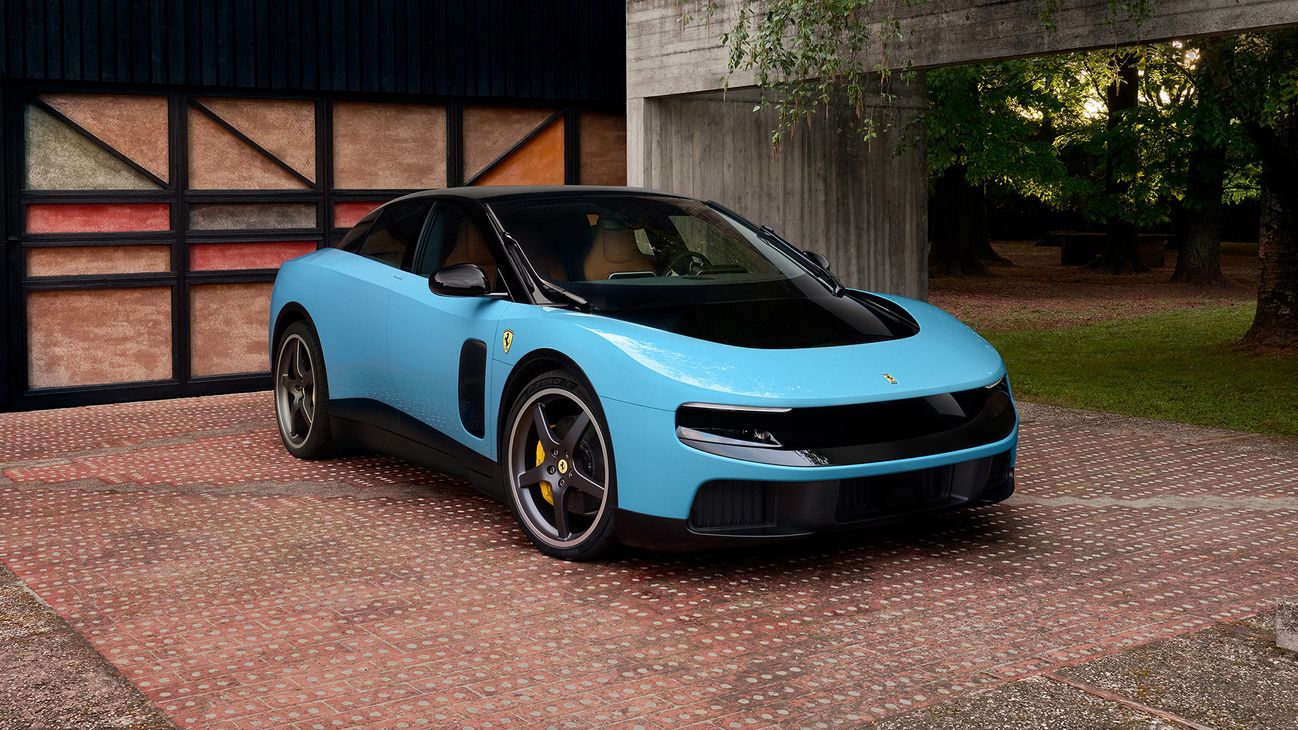
Ferrari Luce is a new Ferrari model that people either love or hate based on how it looks. The hosts also point out that Ferraris are often bought for their styling and character—especially how they sound—more than for being the best track cars.
“Opprobrium” just means people reacted with strong negativity—like widespread criticism or hate. Here, they’re describing how the new Ferrari Luce got a lot of backlash at first.
“On the limit” means the car is being driven as hard as it can before it starts to lose grip. It’s basically the point where handling becomes really challenging and you need the car to stay controllable.
They’re saying the car may use artificial sound to mimic what you’d normally hear from a bigger engine. Some people like it, but others feel it doesn’t sound as authentic as the real thing.
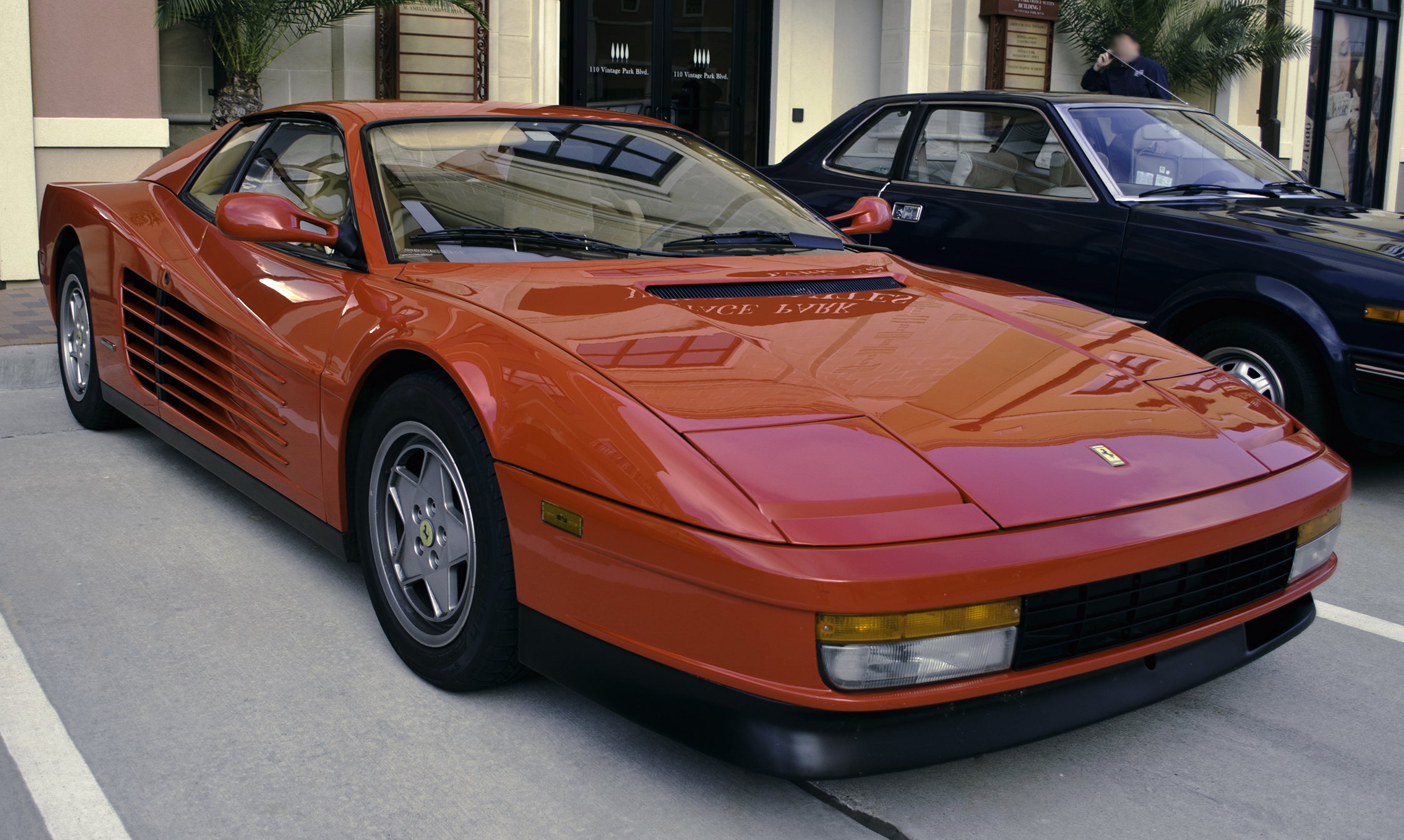
The Testarossa is a mid-engine sports car made by Ferrari. It’s known for being very recognizable and for having a big performance reputation. The podcast brings it up because people often talked about it when it first appeared.
The Ferrari 308 GT4 is an older Ferrari model. The host says its looks were controversial—meaning not everyone liked them.
Car
Ferrari Testarosa
The Ferrari Testarosa is a well-known classic Ferrari. The host says people thought it looked controversial when it first arrived, even though it later became iconic.
A combustion engine is the traditional kind of engine that burns fuel to make the car move. The hosts are saying some people don’t want a Ferrari that doesn’t use that kind of engine.
Design language means the recognizable style cues a brand uses across its cars. The hosts are saying magazines tried to make it look like “typical Ferrari style,” even though the final car might not follow that.
Johnny Ives is a designer/consultant credited with helping design the car. The hosts are saying that with the right design team, the car won’t necessarily look like the usual expectations.
Mark Neusen is a person involved in designing the car. The hosts are basically saying the designers’ approach would lead to a different look than what people expected.
Car
Ferrari's first EV
They’re discussing Ferrari’s first electric car. Ferrari usually makes gas-powered performance cars, so this is a big change for the brand.
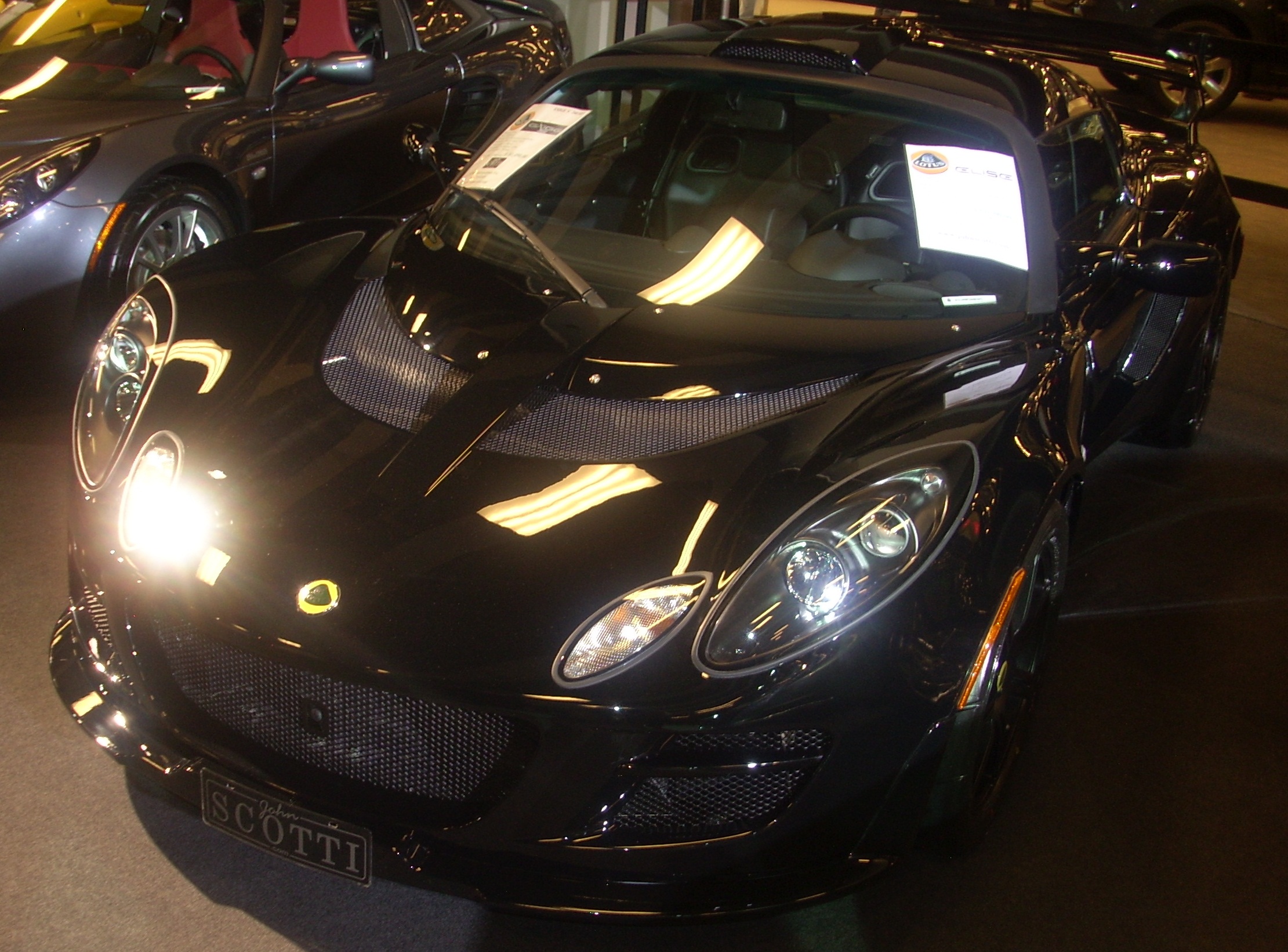
The Lotus Elise is a small two-seat sports car made to feel quick and nimble when you drive. It’s famous for being light and fun to handle. People talk about it because it’s a classic example of a driver’s car.
Power output is basically how much “push” the car’s engine or motors can make. The speaker is saying the EV’s power number isn’t as special as you might expect.
The Tesla Model Y is an all-electric SUV, meaning it runs on a battery instead of gasoline. It’s designed to be practical for everyday driving while still being quick. It comes up in conversations about electric-car performance and technology.
The Tesla Model S is a large electric car that uses batteries instead of a gas engine. It’s known for being very fast and for having good range. It’s mentioned because it has long been associated with high-power electric performance.
USP means the main reason someone would choose a product over alternatives. In this case, the speaker is saying the five-seat setup is Ferrari’s standout selling point.
“Tech bro” is slang for a certain type of tech-enthusiast buyer. The host is suggesting Ferrari is aiming at that kind of audience with its new EV strategy.
A bespoke platform is a custom “car foundation” designed specifically for that model. It costs more to develop, so the company has to sell enough of them to make the project worthwhile.
The Porsche Cayenne is Porsche’s first-generation SUV that debuted in the early 2000s, representing a major departure from Porsche’s traditional lineup. In this segment, the host uses it as precedent for how a radical new model can change a brand’s profitability and market position.
An electric car runs on electricity stored in a battery instead of using a gasoline engine. The host is saying this Ferrari EV is supposed to be a big deal because it’s aiming to do something that hasn’t been done before.
“Proportion” means how the different parts of the car relate in size—like how long the hood is compared to the cabin, and how the wheels and body look together.
“Tension” is about the feeling the design gives you—how the body lines and shapes make the car look like it’s moving or ready to move, even when it’s parked.
They’re talking about Ferrari’s underlying design “platform” used for the 296. The idea is to keep the basic car layout but remove the hybrid parts to make a simpler, lighter, more driver-oriented Ferrari.
“Hybrids” are cars that use both a gas engine and an electric motor. The host wants to remove the electric part so the car is simpler and more focused on the gas-engine driving feel.
“Manual” means you shift gears yourself using a clutch and a stick. The host is saying they’d want a Ferrari that feels more connected to the driver.
Concept
tonic
“Tonic” is used metaphorically to describe a remedy for brand anxiety—something that restores the emotional connection enthusiasts feel with what made the marque great. In this context, the host argues a stripped-down, driver-first Ferrari would reassure buyers.
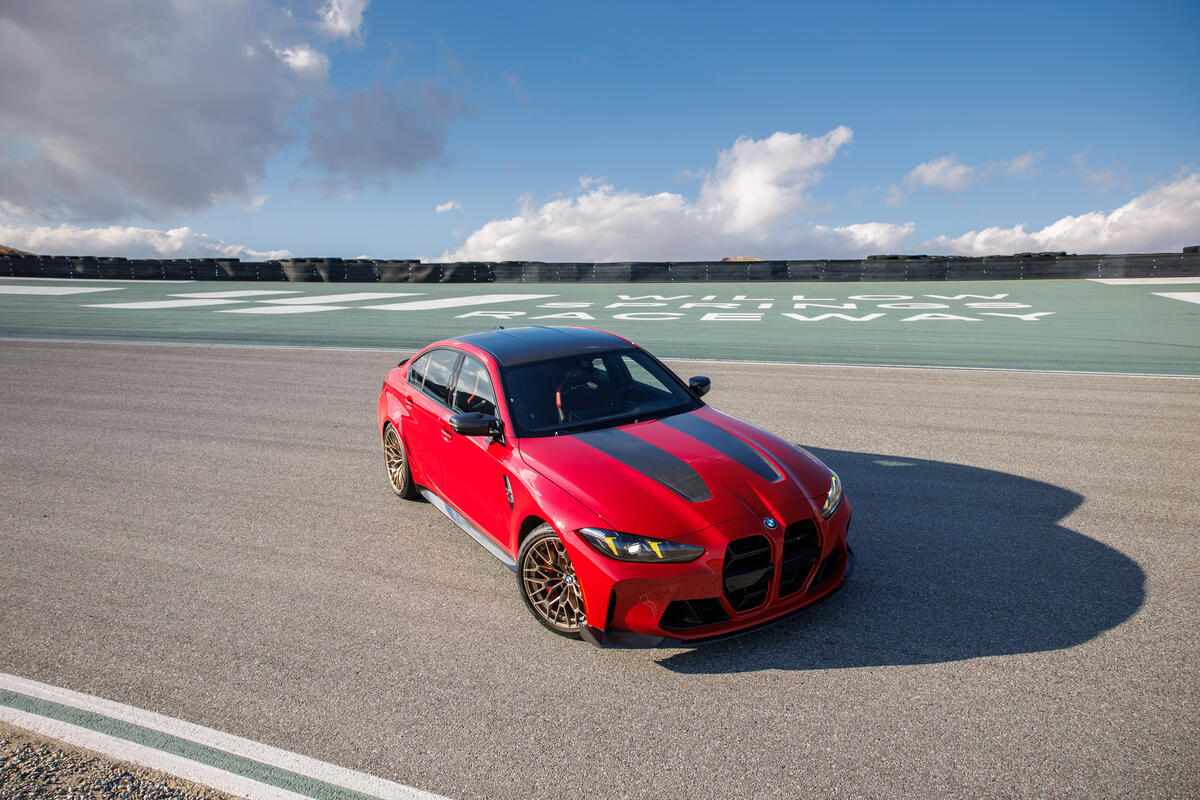
The BMW M3 is a performance-focused BMW, meaning it’s tuned to be faster and more exciting than a regular 3 Series. The F80 is one particular generation of the M3. People bring it up when talking about what makes a car feel truly sporty.
Car
Jaguar
Jaguar is a car brand. The hosts mention it because people got upset about Jaguar’s rebrand/advert, and they’re comparing that reaction to what’s happening with Ferrari here.
The Renault Twingo is a small car made for city driving. Here, it’s brought up as a cheaper, everyday option compared with very expensive electric cars.
The Renault 5 E-Tech Electric is a small electric car made by Renault. It uses a battery instead of gasoline and is meant to be practical for everyday driving. In the podcast, it’s discussed as a choice compared with other small EVs.
A compact car is a smaller, city-friendly size of car. The host is saying the Twingo is small enough that it’s great for commuting, but not ideal for lots of rear-seat passengers.
The Renault 4 CV is an older small car made by Renault. It’s the kind of vehicle people discuss when comparing how cars feel or how they were received at the time. In this context, the speaker is saying it didn’t fully impress them.
The Land Rover Range Rover is a luxury SUV designed to be comfortable for passengers and capable on different roads. It’s often used as a “big, premium” family car. In the podcast, it’s mentioned because of how the back seat area is laid out.
The BMW M5 CS is a special, more aggressive version of the BMW M5. It’s meant to feel sportier and more exciting to drive than a regular M5, and the host is talking about it as a car they’re spending time with.
The BMW 5 Series is a mid-size luxury car that BMW has made for many years. The podcast mentions several generations and specifically brings up the E34 as one that might be worth considering. People talk about it because each generation feels a bit different.
ADAS stands for driver-assist tech. It’s the safety and convenience electronics that can help you stay in your lane, keep distance from the car ahead, and warn you about hazards.
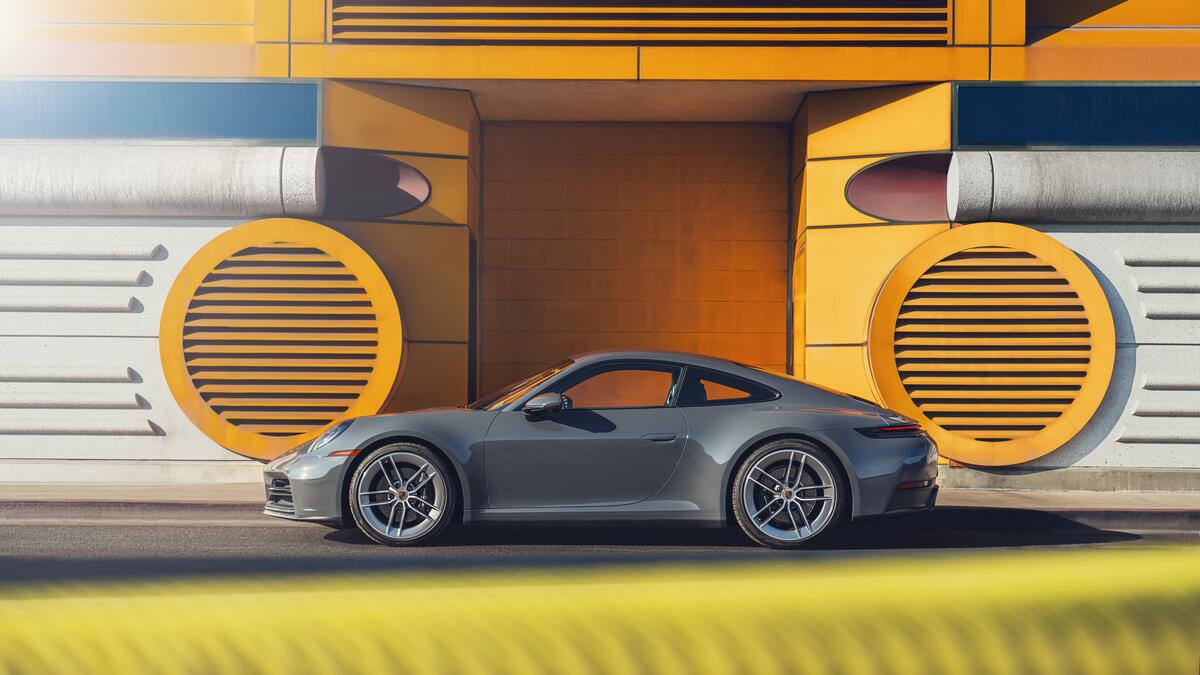
The Porsche 911 Turbo S is a super-quick, turbocharged 911. The hosts are basically saying it’s one of Porsche’s best and most expensive performance versions.
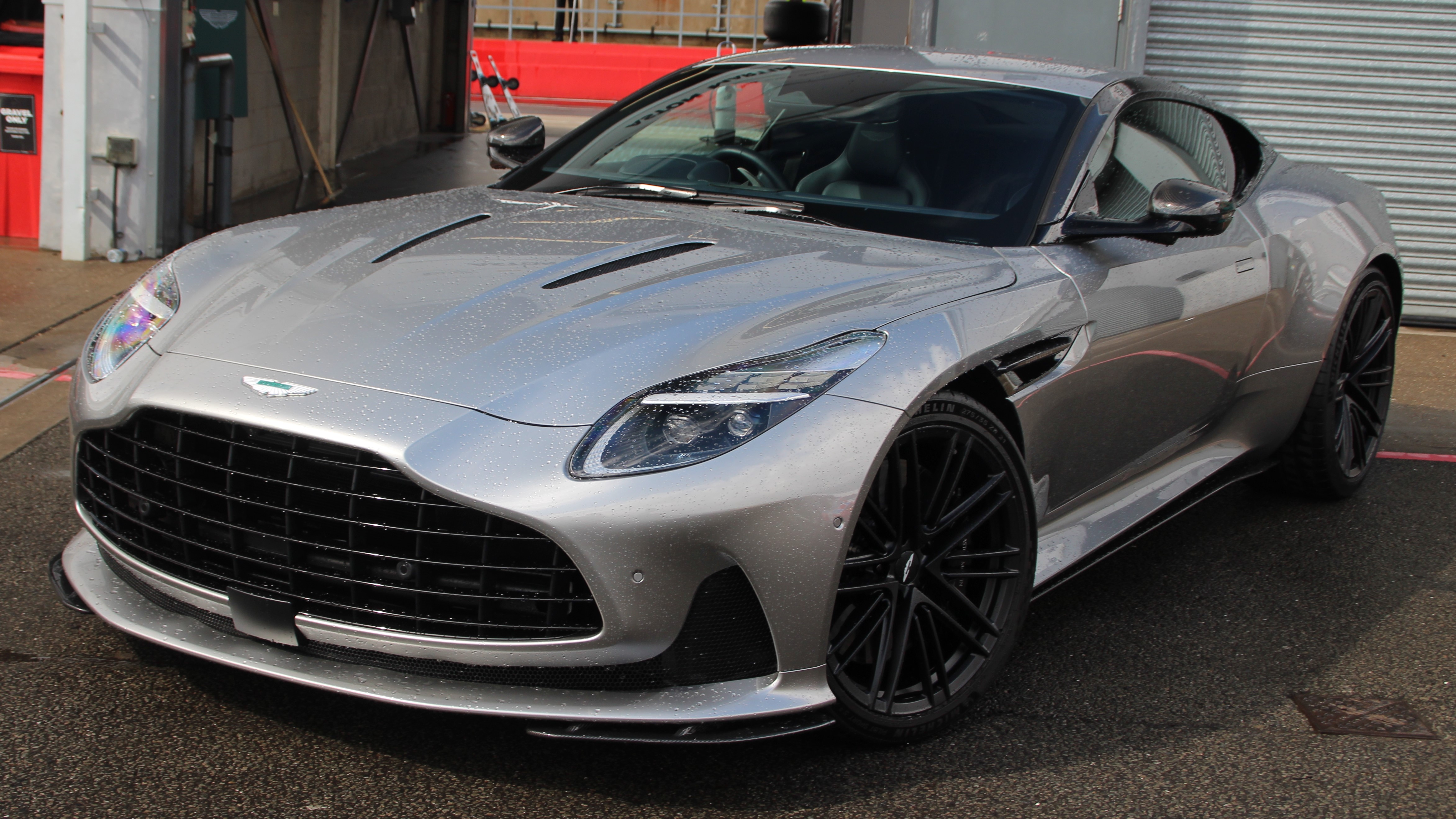
The Aston Martin Vantage S is a sportier version of the Vantage. The hosts are comparing it to the Porsche and saying both are so fast you can’t really use all of it on normal roads.
The Kia Picanto is a small, city-focused car used here as a contrast vehicle in the hosts’ previous road trip. Mentioning it alongside the Porsche 911 Turbo S and Aston Martin Vantage S highlights the huge performance gap between everyday cars and flagship sports cars.
“Locked up” means the car loses grip and the wheels can’t roll normally. The host is saying the Aston is so fast that you hit that limit quickly on public roads.
Term
60
“60” means how fast the car accelerates from a stop to 60 (mph or km/h). They’re saying the two cars are so quick that small differences in that number don’t matter much in real driving.
The Aston Martin DB12 is a newer Aston Martin model meant for comfortable, exciting long drives. In this discussion, the host says it’s their favorite Aston for the kind of driving they want to do.
A “twin test” is basically a head-to-head comparison format. The idea is to judge two cars side-by-side to see which one makes more sense as a single everyday choice.
The Rolls-Royce Silver Ghost is an old, classic luxury car made by Rolls-Royce. People value it because it’s known for being very smooth and comfortable. The podcast mentions it because driving one is a special experience.
The Rolls-Royce Silver Shadow is a classic luxury car from Rolls-Royce. In the podcast, it’s mentioned because the speaker is correcting which specific Rolls-Royce they drove. It’s essentially a way to name the exact model being discussed.
The Rolls-Royce Ghost is a very luxurious, comfort-focused car. The host says the newer Ghost shares its underlying engineering “platform” with the Phantom, which helps explain why it feels so refined.
The Rolls-Royce Phantom is a very expensive, top-level luxury car. It’s designed to feel smooth and comfortable, especially for long drives. The podcast also mentions advanced drivetrain and steering features that help it move more easily.
Four-wheel steering means not only the front wheels turn—so do the rear wheels too. This can make the car easier to steer at low speeds and steadier at higher speeds.
“Point-to-point” means timing a drive from one place to another along a route. It’s a more real-world way to compare cars than just testing them on a track.
The Audi Quattro is an older Audi that’s famous for its all-wheel drive. In this story, they use it as a reference from the 1980s to compare against newer cars on the same kind of road trip.
“Turbo” refers to a turbocharged engine, where a turbocharger forces more air into the cylinders to increase power. The hosts contrast turbo (more usable power for passing) with the Picanto’s limited power when traffic blocks your route.
LIVE
Welcome back to the intercooler podcast, everybody, the podcast powered by car finance specialist
JBR Capital. This is episode 316 with Dan Proser and Andrew Frankel. Andrew, we've got
so much stuff that we need to get through this week that we really ought to start rattling
through it right away. Yeah, it's going to be a monster, isn't it?
It is, it is. But we start with a little bit of news about us. Actually, it's not new news
because it was last month, Andrew, that we were, perhaps it was even back in April, you know,
that we were nominated for a couple of digital publishing awards. The intercooler, our magazine,
our online magazine was shortlisted for these two awards. They are best online consumer brand
and small digital publisher of the year. I mean, it's great just to be recognized in this way,
right, just to be nominated. The winners will be announced next week. But actually,
one of the real reasons that we were so delighted with these nominations is a couple of the other
publications that we're up against. So in the best online consumer brand category,
we're up against The Radio Times, The Sun and The Telegraph.
Yeah, that's reasonable company to be keeping, isn't it? It's not bad, is it, little old us?
Yeah. Yeah. Our little essentially two man band nominated for an award alongside those household
names. Yeah, so what would your recommendation be to people who are listening to this who don't
even know about our website and our app for which these awards have been nominated?
Yeah. Well, you just got to go check it out. I mean, we bang on about it quite a lot, don't we? But
this is why, to be recognized by these digital publishing awards, which is a big deal in our
industry, we've got to be doing something, right? And so if you've been a long time podcast listener
or if you're a new podcast listener, and you haven't yet taken the time to go and check out
our magazine, which is absolutely the thing that Andrew and I spend most of our time working on.
It's not this podcast, it's the magazine. Go and have a look. We've got what we are convinced is
the best team of automotive writers working anywhere in the world today. And every day of the
working week, we publish a new article, a full length magazine style article that will be written
by one of the world's best automotive writers. And as a podcast listener, you can actually get
a 20% discount on your subscription. Just head to the-intercooler.com, find the subscribe page,
and use coupon code POD20. And that brings the cost of your subscription, your monthly sub,
down to just £6.40 for the first year. And you also get full access to five years' worth of
archive. It's all waiting there for you, more than 2000000 words. And you also get to listen
to this podcast ad free and our subscriber only podcast, which is called Ask the Intercooler.
It goes out on a Thursday. It's pretty stuff, exponentially, that one. So many, many good
reasons to go and check out our magazine, which this time next week might just be an award winner
once again. We'll see. Wish us all luck. Not the first time it's happened. What I would say,
the only thing I'm going to add to that is these awards, these digital publishing awards,
these aren't the sort of awards that get dreamt up because people think they can get people to
pay for nominations. These are the blue ribboned events of awards of our industry.
And nobody's paid anything to get nominated. You get nominated on merit and merit alone.
That's it. So we are absolutely chuffed. I mean, frankly,
I think even to be up there amongst that lot, to be considered in that vein is really quite
something. So we're chuffed and we'll let you know what happens.
Yeah, indeed. So it's Father's Day coming up, late to this month, the 21st of June.
So that's less than three weeks. And if you haven't yet got your old man a gift for Father's Day,
you better get moving quickly. But we have the perfect solution for you. We've just told you
all the many reasons why you should subscribe to our magazine. If you are already, or whatever
reason not for you, perhaps it is for your old man, there'll be a link in the description in
the show notes. Or you can just head to the-intercooler.com forward slash gifts, because you can also
give a subscription to the intercooler as a gift. They start at just £45. But if you use
coupon code GIFT10, you'll get a 10% discount. We're sure your old man, if he likes cars,
we're sure he'll love this. So do go and check it out. And actually, on the theme of Father's Day,
Andrew, there are a couple of events coming up quite soon that might be perfect for a bit of
dad and son bonding. Yeah, there are a couple, aren't there? Yeah, there's a big one at Silverstone.
Yeah. This is the- how do you pronounce it? Is it Sunstead?
Sunstead, I don't know. Sunstead. This is, it's going to be the biggest gathering of porches
this country has seen, I'm guessing ever. It's over the weekend of the 21st and 22nd of June.
The 20th and 21st. I guess it's quite, it's going to be like sort of
Britain's answer to Rennesport. Rennesport is this extraordinary event that I've been lucky enough
to attend to. They only have it every few years because it's so big in California. And it's basically,
it's just a massive celebration of all things Porsche. And the Silverstone event has been organized
by Porsche Clubs Great Britain in association with the Porsche Club in the UK, which is massive
and brilliant, but also with a huge amount of involvement from the factory, bringing
over all sorts of cars. I think there are going to be some superstar Porsche drivers there.
And we'll certainly be there on one of the days. So definitely do go along, have a look. I think
that could be a really, really memorable event, unless you decide to go to the other one we're
going to talk about, which is a new event, isn't it? It is a new event. It's at Wilton House, which is
in Wiltshire near Salisbury. And there's a new event there over the same weekend from the 19th
to the 21st called Concours de Légende. Have you got that right? Yeah, I couldn't have done
any better. Concours de Légende, maybe? Something like that. And okay, so let me read the description
on the website. Wilton House is a new kind of classic car event combining the elegance of a
Concours with the intimacy of a cultural festival set within one of England's great historic houses.
It brings together exceptional cars and the people behind them revealing their stories
through curated displays, talks, workshops and storytelling. I mean, it's hard to know what
to expect of a brand new event, but we know the people behind it. We know the house. I'm pretty
certain it's going to be a very, very good event. You can find out more. There'll be a link in the
show notes in the description. Just click that and go find out much, much more about this new
event at Wilton House. Definitely. And let's get on then with the first main topic this week.
Is it what I think it is? It is. It's exactly what you think it is. We've all had a week,
haven't we? Not quite a week to digest the Ferrari Luce. And it's quite interesting design.
I mean, a week has plenty of time to sort of start to get your head around the car,
but what were your first impressions, Andrew, when you first saw the images?
Well, I mean, I think the first thing I actually want to say about this car is what has fascinated
me, I think even more than the car is the reaction to it. Yeah. Because there was this sort of storm
of opprobrium when it first kicked off. And then there was sort of pushback against that.
And there'd be some people saying, oh, you know, it's only been criticized by people who could
never afford one. It was great, wasn't it? Listening to how careful were the comments
of the journalists who were invited to the lodge, just to be clear, we were not invited to the lodge.
It was only a very, we understand, carefully selected group of journalists and influencers,
lots of influencers who got to go to the launch in Rome. And there are lots of comments like,
sort of say, well, here's the new Ferrari Luce, let us know what you think in the comments.
Or it's certainly challenging and it'll certainly provoke discussion and that sort of thing.
Okay, as far as when I first, I thought two very distinct things. I'm not going to pull my
punches here. When I saw it, I was shocked and not in a good way. I thought, one, with any badge
on it, this is not a great looking car. Two, I simply don't see that that car is a Ferrari.
I've, you know, I've always thought to myself, and particularly after I saw the interior,
which I know that was quite polarizing too, but I loved, and I've written about it,
I love the interior when they showed those shots of it. And I thought to myself, well,
if the exterior is as good as the interior, then, you know, maybe Ferrari will be onto something.
Because what we know about Ferraris is really, you know, you and I might talk about how they
handle on the limit, they don't really sell for that. They sell for their appearance,
and they sell for their sound. And we knew, obviously, the sound is going to go,
I think they are going to synthesize some kind of sounds out of it. But, you know,
this is not a V12 under there. And it's also extremely expensive. It's £400 and something
thousand pounds, £460,000, before you put any options on it, which mean that, you know,
Ferrari have that way, none will sell for less than half a million pounds. But then I saw it,
and I thought, oh my goodness, not only is it not going to fulfill the, if you like, the oral
requirement, the noise element, it's not great to look at either. And that made me kind of worry
about it. However, there is a second thing here. And I've said this so many times about so many
cars, so this isn't me trying to, you know, in any way mitigate it. You can't judge a car from a
photograph. I won't really judge cars when I see them in the flesh on a show stand. And I think
that the only way you can judge a car's true appearance is when you see it in its natural
environment, which means on a road moving. And so I can't see right now sat here how I'm
ever going to love it. And all these things that I've said are based purely on having seen
photographs of it. But it may well be that when I see it moving, get familiar with it,
and really have time to absorb what it looks like in real life. My views towards it, I can't
see them doing an about face, but they may, they may be moderated to some extent. I don't know.
But I can only tell you on the basis of what I've seen, and what I've seen as a car which has
strange proportions, not Ferrari proportions. And it's just fundamentally not a great looking car,
let alone a great looking Ferrari. And let us be honest about this.
Name another manufacturer that has produced more gorgeous cars over the years than Ferrari. There
isn't one. I'd defy anyone. I mean, Jaguar have done some incredible looking cars. Lamborghini
have done some fantastically striking cars. But for the last whatever it is, nearly 80 years,
nothing can touch Ferrari for the beauty and the consistency. I mean, I know that there have been
some Ferraris which have been less than gorgeous things like the Mondial, and the Mark 1 version
of the 330 GT, and the 308 GT4 was quite controversial. The Testarosa was controversial
when that first came out. So there have been some which have been challenging, but I've never seen
anything like this. I've never seen a reaction to a Ferrari's appearance like this. So we will see.
But it's just one person's opinion based on some photographs.
Well, I haven't seen it either. And I look forward to seeing it in the flesh myself.
Based on what I have seen, based on the pictures, I think it looks dreadful. And
but actually in large part, I think it looks dreadful because it's got Ferrari badges on it,
because it's supposed to be in what it is a Ferrari. I think if it had, you know, some
unfamiliar EV startup badge on it, you'd look at it once and not think too much too hard about it
again. But let's let's try and be a bit more sort of constructive about this.
What's Ferrari doing here? They said that they they estimate that 80% of Luce customers will be
new to Ferrari. So it's aimed at a different audience, isn't it? I mean, that's clear. That's
obvious. And I think this car is going to appeal to a very, very different audience, an audience
that is not steeped in the history of Ferrari like we are, and probably an audience that simply has
no interest in a combustion engine Ferrari. And I suspect a good number of these people will
quite like the fact that it's, it's so upset a lot of us die hard petrol heads, you know, that
become part of the appeal to them. I can see these things buzzing around San Francisco and Silicon
Valley and, you know, other other parts of the world like that where there are lots of tech
people around. But it's, it's a 0 miles away from what
the likes of you and I would expect of a Ferrari. Do you know what I sort of reflect on is,
you know, the big car magazines, whenever there's a new car coming, we know it's coming, but we
haven't seen anything of it. They create their own renders, don't they? They imagine what it might
look like. Yeah. And all of these big magazines did exactly what you'd expect. They applied
Ferrari's current design language to a four door car, mostly with a sort of sporty SUV-ish
kind of shape. But in hindsight, that is just not what you're going to get when you
engage love from Mark Neusen and Johnny Ives design consultancy to design a car. Of course,
they're going to do something totally different. And perhaps we should have all seen that coming,
actually. But can we try and understand why Andrew Ferrari did something that it's never done before,
is approach a company with basically zero background in car design to, to, to create
what's, Ferrari's first EV and a very, very important new Ferrari. Why did they do that?
Well, just before I address that, can I just, and I'm only going to say this now because I'll
forget it if I don't. You and I can have a chat about this. But if you want a really
interesting insight into the difference between car design and product design,
go on to the website and the app now. Julian Thompson, one of Britain's greatest ever car
designers, you know, the man who did the Land Rover, who set the design language for Land Rover.
The design language it still uses today, did the Lotus Elise. I mean, just an incredible talent
and one of our contributors. He's written about this and he's talked about all sorts of cars
that were designed by product designers and why more often than not, and I'm not saying this
is going to happen to the Ferrari at all, but more often than not, they don't, they end up not working.
It's a fascinating insight that only someone like Julian could provide. So, so please do go and check
that out. It's a really, really good piece. So why have Ferrari decided to do it? Well, I think it's
exactly what you say, Dan. I think it's the recognition that they need to find a new constituency
or customer for this car because it cannot communicate with the punter on anything like
the traditional levels that we've talked about. And I think it is an enormous test of the strength
of the brand. Because if you think about it, its range is nothing special. Its power output is
nothing special. It's not very light. In all these thoughts or ways, you know, 1000 horsepower,
well, that's what the new Jaguar is going to have. That's what a Tesla Model S plan has had for years.
1000 horsepower used to be, oh my goodness, now it's just another number. It's like all these
things are, it's two and a bit tons. It seats five people. Now, that's an interesting USP,
isn't it, for a Ferrari. It's the first Ferrari ever with five seats. I'm sure there are other
seating configurations you'll be able to get in the back. So it is trying to go after, I guess,
the term tech bro is coming in the direction of this conversation, isn't it? And that's what
people talk about. I just don't know. There are a few things that I don't know how many of those
sorts of people are out there. I don't know how many of those sorts of people are going to be
concerned about, I suppose a lot of it depends on how many Ferrari need to make, but it's on a
bespoke platform and you'd think they would need to sell them in a reasonable volume to recover
their investment, although that kind of money maybe not. But maybe they're going to be concerned
about its residual values, or maybe it's just going to be a bunch of people who just go,
you know, Sodom. It's almost the anti-Ferrari Ferrari, isn't it? It's the Ferrari that you buy
for none of the reasons that people have ever bought a Ferrari before. And what you're actually
doing, all you're doing in terms of the car is buying a brand. You're just buying a Ferrari.
It is, you know, and there is some precedent for this. What happened to Porsche in 2001?
Was it 2002 when it launched the Cayenne? That was a car unlike anything Porsche had ever done
before. You know, Porsche had always done, you know, two door, two plus two, or two seaters.
And then suddenly here's this giant, enormous hulking SUV, and I can remember writing,
however much I admired its capabilities, because it was a very capable car. I just
wish it had never been built. And you know, what that did for Porsche, it helped turn
into the most profitable car company they'd ever been. It's hard to see. It is hard to see, but
maybe, maybe. I mean, they are smart people. I'll tell you what I will say is that if Ferrari
makes a success out of this car, which will be, I think, the first car of its kind,
the first electric car of its kind to really fly, I really will believe it can defy gravity
in terms of, well, honestly, I really will, because it will be doing something which just
hasn't been done before. And I'm not saying for a moment that it can't do it.
Yeah, I think the Luce, given that it's so different to any other Ferrari, not just for
being an EV, but the way it looks, I think that sort of gives Ferrari permission to do a more
conventional looking, more conventionally configured, sporting EV at some point, because
then we'll all go, well, at least it's better than the Luce, and probably receive that car
better than we would have done without the Luce. But, you know, I think just to borrow one of
Julian Thompson's insights. So he says that product designers, they understand aesthetics,
they understand people and human psychology, they understand ergonomics, they understand how we use
products, how we interact with devices. Of course, they do, particularly these guys.
But do they understand things that are crucially important to car design, like stance and
proportion and tension? Perhaps they don't. And I think that's sort of borne out by the way the
Luce looks. And I think actually, Ferrari potentially has been quite smart here, or at least
quite bold, quite brave. And I think maybe it had to be because an EV for Ferrari is more problematic
for Ferrari than any other car maker on the planet, isn't it? Because Ferrari for decades has been
telling us all about the joys of characterful petrol engines. And now here it is building a car
without one for the first time. And so that that car perhaps had to be pitched in a very,
very different way. And so maybe it's actually quite a quite a clever strategic move. And it
keeps it a long, long way away from the sort of heartland Ferraris that you and I and most people
listening love. Do you know what I think Ferrari needs to do now? Yeah, I think it needs to balance
it. I think it needs to remind the world that it still remembers what a Ferrari is. I can tell
you what I'd do if I was there. I'd take the 296 platform, and I'd take the hybrids off it,
and produce a 600 horsepower V6 lightweight manual road rocket, a Ferrari purely for drivers,
and I would make it the most affordable Ferrari there has been in recent times. I don't mean
that it should suddenly start costing, you know, £100,000. It will probably still begin with the
two. But I think that that would balance the luce. I think it would reassure people that Ferrari
still remain. It's always a concern, isn't it? We've seen it happen so many times in history
when car manufacturers, I'm not saying Ferrari has done this, car manufacturers forget the reasons
that made it made them great in the first place. And I think a car like that, a stripped down,
lighter, simpler, more affordable, driver focused Ferrari would be the perfect tonic for all those
people who are going, what are they doing? That's what I do. Well, there is talk of the return of the
manual gearbox at Ferrari. Well, we know they've been, you know, investigating it. Yeah. So we'll
see. What they could do, what I suspect they'll do, well, maybe not because they have just on the F80,
but I mean, the temptation is going to be, is to do something that's very toppy. Do another
3000000 quid car with a manual gearbox, which everybody will look at and go, well,
that's amazing. If you're one of the eight people who's able to afford one, I'd do something more
mainstream. I don't think it would drag the brand down market. It doesn't have to worry about being
part of a hierarchy anymore. And I think it would just be the perfect way for Ferrari to say to the,
using largely existing componentry to say to the world, we still get it.
I think it'd be a very, very good play, a very good play and gets all of us talking excitedly
about Ferrari again. So the final point then that I want to make about the luce, I haven't seen an
uproar around a new car or around a car maker like this since Jaguar a couple of years ago now with
that bonkers advert and rebrand. And actually the uproar around Jaguar was to do with the advert,
not the, it wasn't to do with the car. No, it was the ad, which didn't have a car in it.
Yeah. And so in terms of cars only cars alone, I haven't seen an uproar like this perhaps ever.
But there is a sort of parallel between the Jaguar, Ferrari and this one. And so I just want to spend
a minute thinking about why, what does it tell us about enthusiasts that this new car or a new
rebrand is launched. And so many of us get so worked up. I think it says that we really are
deeply passionate about cars. We really care. I think it says that as a chance, as a group,
we do love the chance to attack a new EV in particular. I think, you know, if the Jaguar
and the luce were big VA or V12 cars, the reaction would be far milder. They probably suggest that
as a group, typically we don't like change and we let it be known. Because really, these are just
cars that we're talking about. And yet we react like it's something far, far greater than that.
And actually, I don't mean that as a criticism. I don't, yeah, I don't mean that as a criticism
because I like it. You know, I'm glad that people feel so strongly about cars, because we do. And
because that's, that's what we do for a living. We talk and write about them. So it's good for
us, isn't it when people get worked up like this? But, you know, you talk about a group,
and that's what it is. And that's the one thing that people like you and I must never forget.
We are living in our own little positively reinforced bubble. We are not representative of
the people that go out and buy these things. We're not even near it, not least because we
even begin to imagine being able to afford to do so. And so, you know, we are, it's like so many
minorities, isn't it? You know, we're a very noisy minority. Now, I'm not saying that other people
don't feel the same way, but what we can't do is, you know, look at the people that we
follow on social media and their posts and that sort of and all the stuff that gets fed to us,
because the platforms know what we like to look at and think that that is necessarily,
that is guaranteed, therefore, to be representative of the global view of these things and the view
of the people who actually matter, who are the people who actually go out and buy these things.
We can't in any way make that leap and it's an enormous leap. So I think we should just bear
that in mind that we are, you know, the people who listen to this, the people who read our website
and our cells and our contributors. We are dyed in the wool, passionate car enthusiasts.
And actually, I would say, I'm sure that the average Ferrari customer would describe themselves
as that too, but I wonder if they actually are. I wonder if they're not more interested in what
they think those cars say about them, the art of those cars, rather than the more, I guess,
hardcore traditional reasons that the likes of you and I like driving them maybe, but
I suspect we are not representative of the majority view of anything that it comes to cars like that.
Yeah, well said. Enough luce, I think. Let's just to demonstrate the breadth of the intercooler.
Let's switch from the most expensive EV on sale or one of the most expensive EVs on sale
to one of the cheapest. I think it's still parked outside your house, isn't it, Andrew?
Oh, yes. Listen to that enthusiasm. I love it. I've got a Twingo.
Renault Twingo. I've got a French left-hand drive Twingo. To me, it's what an EV should be.
Yeah. If I was shopping in that market
and I needed a car for local journeys, I'd have a Twingo, simple as. I actually wouldn't have a
Renault 5. I'd just save the money and get a Twingo. It's such a charming little thing to bomb
about it. It's not very far. The range isn't massive, but if you made it fast and gave it a
proper range, it would A, be massively heavier and less fun and also wildly more expensive.
It's a car that knows what it is for and how many times have I banged on about that for.
It's fantastic to look at. Everybody's happy when they see it.
The road, the world, certainly the towns are going to be completely taken over by Twingo soon.
It is, okay. I think it's, for what it is, for the job it is trying to do, I think it's even
better than a Renault 5. Is it? Yeah. I think so. Because actually, you lose so little. You
haven't got that independent rear suspension. It's not as good to drive. I'd say you lose.
But that is an urban commuter car. It doesn't really matter because you don't tend to get
great mountain roads in the middle of cities. It's a car for bimbling about town in, getting
some smiles off the pavement costing you almost nothing to run and just being something that
you wake up in the morning and look forward to getting into. I think it is, is an
absolutely terrific little car. Is it tight in the back? Is it tiny in the back? Yeah.
It's cozy. It's not tiny. No, and it's, and it's boots not tiny either. I mean, I managed to get,
what did I manage to get into it? I managed to get 60 kilos of sheet nuts and 20 kilos of dog food
in it in the boot of that car, which is, you know, which is not nothing. Yeah, it's, you know, it's
very much a compact car. You're not going to, I mean, it's only got two doors. You're not going to be,
you know, putting your grown up children in the back of it. But if you're just, if you just want
a car for getting to the station, getting you to work, getting about the, I mean, it's,
I think it's as, I would say it's as good as anything I've seen in that category. It's not
as better. I'd just rather have it. Is it? Yeah. Wow. That's praise. I mean, these guys, I mean,
I mean, we were slightly more lukewarm, weren't we on the Renault 4? Because it just seemed to be
like a rather less charming Renault 5 with a bit more room in it. But the 5 was an absolutely
outstanding effort. This is to, and this is, if anybody is interested in worried about, you know,
oh, you know, all this stuff about, oh, you know, the Chinese are taking over there. Well, if you're
worried about that, and you want to know what to do about that, you know, build cars like Twingoes,
make the, you know, just make a better car, make a more desirable, desirable, appealing car,
improve the product, and the customer will come. That car is going to fly.
Yeah, they're on a roll, aren't they? They're responding so well to this new threat from
all these Chinese startups. Yeah. I haven't had to go into a gear yet. I look forward to it. But
I'm keen to size up the back of that car. Only a two door is a problem.
If I need it, something like that. It wouldn't work for you. Yeah, okay. It wouldn't work for you.
Okay, there you go. You know, because you've got, yeah, but it's the
childhoods, isn't it? And the space they take up. Yeah, they're massive. You know, we couldn't,
you couldn't do it in the back of a Range Rover. Because of the telescreens. I don't think it would
work for you. And, you know, I have, you know, when my kids were young, I can remember, you know,
trying to pull them out the back of two door cars. And it's, it's just tough on your back. And it's,
it's not a pleasant experience. I don't think it would work for you. I'm afraid. But okay.
Yeah, I mean, but if you're a young couple, or you just need, as I say, a commuter car, I mean,
just pile in, I really would. And it's a sweet looking thing as well, isn't it? Really. Yeah,
it's lovely. Yeah, they're done a great job. You've had a very, very busy
driveway at home, just looking through some of these cars that you wanted to discuss.
You've got a BMW M5 CS knocking about at the moment, haven't you? Yeah, so this is the latest in my
regulars, or certainly people who are subscribers will know I'm doing this sort of series of cars
I live with for a month. So what have we done so far? I've done a 997 GT3 RS. I've done an Alpha
Quadra Foglio. I've done a Mercedes AMG GT55. And I've done a Bentley R-Nage. How could I forget
that? And now I've got this, and now I've got an M5 CS. So this is a 2021 BMW M5, the previous
generation M5, because obviously it's on the CS version of the current car. It's the car that
we named the greatest M5 when we got all five generations of them together.
Six generations. Six generations. I think the E34 is a candidate, but other than that, there's
nothing that I have experienced in the last couple of weeks that it's been here to make me
want to vary that opinion at all. It's fabulous. The thing about, I get in it and I drive it,
and because this thing's five years old, I'm just thinking to myself, when's going to come the moment
that it hasn't got something that it would have on it if it had been built today? Where's the bit
of technology that I'm going to miss? Where's the bit of chassis sophistication that I'm going to
miss? There's nothing. There's nothing on that. There's nothing that car doesn't have
that a modern one would. The only thing that a more modern version of that car would have,
which this car doesn't, is bings and bongs. It's 2021, so it's just pre-mandatory ADAS systems.
So you literally get in it and you plug your seatbelt in and you go.
Everything else. I'm a person who quite likes gadgets. I quite like charging pads for your
telephone and car play and all this. It's got it all. There's nothing on that car that that car
lacks. It's just such a beautifully judged car. It is so sensationally well-damped. I'm not a great
believer in cars feeling lighter than they are, but actually, if ever a car did this one would,
and it's, yeah, it's just, it's just for me. I get these cars for a reason because I'm not going
to live with a car for a month. I think I'm going to hate it. I wouldn't say I'm loving this car
more than I thought I was going to because it's still relatively new enough for me to remember
what it was like. Obviously, we have that one out. In fact, it's almost certainly the same car
when we did that huge test, but it is absolutely as good as I imagine it would be loving it.
It's a cracking car that I really love it. Fantastic to drive, but it's not hard work.
It's not uncomfortable. It doesn't beat you up. Super quick. It's what an M5 should be.
Yeah, it really is. And you're right. It would be, I would argue, a less enjoyable car if it was
built today largely because of the ADAS stuff, but who knows, maybe it would need to be hybrid.
Maybe it would inevitably be heavier and bigger. Look at the one that they replaced it with.
Yeah. Yeah. All two and a half tons of it. So that it comes from that. Perhaps it comes from
the end of peak car era, the very, very end. But you're right. You know, if a new version,
could it be as good? Bloody hell. I can't see it. Maybe BMW knows how.
What's next? 911 Turbo S and Aston Martin Vantage S because for whatever reason,
they both turned up on your driveway at once, didn't they?
Yes, which wasn't expected, but I was very happy that they were there. Well, okay,
the only thing I was sad about is that, you know, how I know this was going to happen,
we'd have arranged to go out and thrash around Wales together
with a photographer and we'd have done a lovely, beautiful story and we weren't able to do it.
But I mean, so a few thoughts, and I know we've got so much stuff to get through on this show.
Obviously, although they are, you know, similar in power and they're both obviously,
you know, highly desirable, very sporting coupes. They're actually coming from slightly
different directions insofar as the 911 is absolutely the pinnacle, not just of the 911,
but of Porsche's in terms of its performance and in terms of its price. Well, obviously,
the Aston Martin is where the Aston Martin range starts. So this is the Vantage S, which is essentially
now the Vantage because 95% of Vantage's will now be yeses when they are sold.
So that is, that's one thing to bear in mind. I don't know which is faster. They're both so
ridiculously fast. And I took them both out. Well, we have the Turbo S, didn't we, for a job that we
did last week before last, where we drove it with an Audi Quattro and a Kia Picanto across
a lot of, an awful lot of whales. And we know how fast that car is. But, you know, the same,
you get the same sense in the Aston that when you drive it, you can't use all that performance.
You'd be locked up. And rightly so. So it doesn't really matter, you know, which car will get to
60, a tenth of a second quicker than the other one. I couldn't care less. They are both faster
than, you know, unless you go to a race track, they're both, they're both faster than you can,
you can use. The Porsche is more expensive. Would you have thought that?
Is it really? Yeah, I think it is. I think the Porsche begins with a two now.
Yeah, yeah, it does just. I think the Aston is a late 180. I mean,
in that sort of area, I don't think people will be too bothered by the difference. But that was,
that was interesting to me. And really, the conclusion is, I don't think the conclusion
is very surprising. You know, as an everyday only car weapon, it's the Porsche all day long.
All day long, all night long. But as we've said before, the 911 Turbo S is not our
favorite 911. And in fact, actually, the Vantage isn't my favorite Aston Martin. I give that to
the DB12 all day long. But as a recreation, as a thing to go and enjoy, I enjoy driving the Aston
Martin more. It was more characterful. involving.
It sounded better. It delivered its performance in a more exciting way. Yeah, it was just a
nicer car to go and have a roof about it. But as an only car or something which had to do
everything, including sort of sit in traffic and sit on motorways, that sort of thing,
as a daily driver, have to be the Porsche. So that's the verdict of the twin test I never write.
Okay, last one then from you. Rolls Royce's. What have you been up to?
Okay, well, okay, so I haven't, I'm not going to say much about this, which given how little time
we have. But largely because I haven't written the story yet. In fact, I'm writing the story now.
But I don't know how this is going to go with the audience, because we know that really,
really early stuff isn't sort of heartland for TI subscribers. But I hope that they're going to make
an exception for this car, because it has been my inestimable privilege to have spent a day
driving the Silver Ghost. I don't mean a Rolls Royce Silver Ghost. I mean the Silver Ghost,
the only car in the world entitled to call itself that. This was the car that was built as a publicity
stunt in 1907. And it's by which stage Rolls Royce had been selling cars for barely more than two years.
And they needed something to put the manufacturer on the map. And so they built this extraordinary
Silver car and drove it from London to Glasgow about 27 times. This was in an era where if you
were lucky enough to have a car, you'd be quite pleased if it got you to the end of the street
without breaking down. I borrowed a new Ghost from Rolls Royce. New Ghost only came out last year.
Very different to the predecessor Ghost. This is now sits on the same platform as the Phantom.
Has four-wheel drive, four-wheel steering. And there's nothing of the sort of,
forgive me for saying this tarted up seven series about it. And there was sometimes you get that
there was just, it was just a bit too obvious that the previous Ghost at times was a BMW
derived car. This is now bespoke Rolls Royce essentially, as it should be. And I mean,
the brand is safe while they're continuing to make cars like that. I love the fact that it really
isn't very sporting at all, which doesn't mean it's not nice to drive. It's lovely to drive.
But the way that it glides, which all Rolls Royces should, I'm not going to talk too much about
this because I want people to go and read the story that I'm writing, is fantastic. The quality,
just the sense of occasion. And you sit in one of those things and there's a sort of quietness
and a calm and a serenity about being in a Rolls Royce that no other car you can buy at the moment
provides. So that was that. And then we then met up, met the old car at the brilliant Cotswold
Airport, where you can hire a 747. It stays on the ground, but it's a party space.
Is it? Yeah, for £850 an hour before you put your band in there and got your caterers in.
There's a jumbo jet and you can have a party for 200 people in there.
Sounds fun. And you can, yeah, you can get people get married in there, they do all sorts in there.
So that's the plug for Cotswold Airport, who were incredibly helpful to us on the day and provided
a chunk of space for us to go and drive this. I mean, the car is priceless. If ever a car were
priceless, it was a car that put Rolls Royce on the map. It is kind of the car that put British
Automotive Engineering on the map. Every single Rolls Royce since, I think, has been named after some
you know, spectral deity. That's, you know, the whole Ghost Phantom Spectre tradition started
with that car. Yeah, and it now lives in a private collection in the UK. And yeah, I got to drive it.
I'm not going to talk about what I'd like to drive because there's not enough time on this podcast,
but within the next couple of weeks, the story will be up. Please go and read it.
Well, I'm really enjoying writing it, so hopefully I'll have some fun reading it too.
Yeah, I'm looking forward to reading that one. That Silver Ghost is a very, very special car,
such a privilege to get to see it. It's the most important. If you're talking about an
individual car, an individual chassis, it is the most important British car there has ever been.
Wow. Blimey. Okay, last thing that we want to talk about this week before we run out of time,
and you've mentioned it, Andrew, is the story that we published a couple of weeks back,
written by Jez Medinger, called The Head, the Tortoise, and the Dinosaur. And this is the story
where we set off on a jaunt through Wales in the, yeah, the Picanto, the original Quattro,
and the Nine of the Turbo S. And maybe you can sort of summarize what the purpose of that story was.
We wanted to find out how much quicker point-to-point is the fastest point-to-point road car you can
buy versus the slowest. Now, people might argue that their cars we could have used instead of a
Turbo S and a Kia Picanto, but we thought that they were there or thereabouts. And, you know,
just to be absolutely clear, this didn't mean we were going to start driving as if, you know,
public roads like they were racetracks. We had a very, very clear view that these cars should be
driven as fast as was sensibly and safely possible, taking no risk whatsoever in the way that you
would hope any enthusiast would want to drive their enthusiast car. I know Kia Picanto is an
enthusiast car, but that was the sort of the ground rules. And obviously, and we just wanted,
in fact, it was Jess who had the idea and indeed brought along this 40, well, actually,
here's a late one, wasn't it? So it's a 35-year-old Audi Quattro, but a 45-year-old design,
just to see how much progress has been made in all that time, because the Quattro was pretty
much Britain's fastest point-to-point car when it came out in the 1980s. And it was a fascinating,
it was a fascinating exercise because, I mean, there were times, I can remember there was one time
we were coming down a mountain where you couldn't really use the power of the faster cars, where I
was in, I can't remember, I think I was in the Audi and Jess was in the 911 and you were in
the Picanto. We couldn't get rid of you. Every time I looked in the mirror, there was a little
Picanto clinging to my rear bumper. I had such a blast doing that, by the way. I think,
I'm not just saying this to seem interesting, but I think that was the most fun I had all day.
Absolutely hammering this little Picanto as quickly as I could down this brilliant hillside road,
keeping up with you two. It was great. Yeah, but then by the time we got to the following
destination, I think the 911 had put 20 minutes on you. Not quite 20, I think it was 12 or something.
Really? Okay. Over an hour. Yeah, so actually in the real world, when you're not hurtling downhill
down the side of the mountain, there are some very real differences. And actually,
the big one is just the ability to get past stuff, isn't it? It is. That's where cars like the 911
just, there's just no answer to them because their ability to, that's what slows you down. It's got
nothing to do really with how fast the car is. It's its ability to get past stuff that really,
really counts when it comes to point to point speed. Yeah, and if you go and read the story now
on the website or app, you can, you can learn what jazz is an hour conclusions, full conclusions
from that day were. But yeah, in large part, in a slow car like the Picanto, you can have a great
time. But the moment you come across other traffic, you just get stuck. You've got roughly one tenth
of the power of the Porsche. And you just don't have the power to safely get past other stuff.
So you get stuck. And that's where you just bleed time to anything with a bit more power.
But on the right road in the right circumstances, that Picanto was brilliant fun. And actually,
it just reminds you how enjoyable a good little light low powered car can be. And that Picanto
is full of feel because it's a little light car with narrow tires. It's actually really adjustable,
really lovely balance. So you can have a great time thrashing it along. But then you come up against,
you know, something slow, a big lorry or something with a handful of cars behind it. And that's it.
It's game over. You're just absolutely stuck. Whereas in the turbo or even the Quattro with
only a couple hundred horsepower, you have what you need to get lost safely. Yeah. Yeah. And that's
that makes all the difference. But yeah, we won't sort of ruin the story entirely here. You'll find
it on the website and app. It's a cracking read. And I think I think you'll enjoy it. All right,
we do need to wrap this one up now. But as a reminder, Father's Day is coming up in less than
three weeks. And if your dad loves cars, we're convinced he will love a gift subscription to
the intercooler. And if you use coupon code GIFT10, you'll get a 10% discount. A six month
subscription is just £45 before the discount. There'll be a link in the description or the
show notes of this episode. Just click that and go and get your dad something really worthwhile
this Father's Day. All right, we'll finish that one there. Thanks everyone for listening. If you
are listening via a podcast app, just follow the show. If you're watching on YouTube, just hit
subscribe. It really, really helps us. And in return, we'll be back with another podcast next week.
Look forward to seeing you then.
About this episode
Ferrari #316 takes center stage as the hosts question its authenticity, arguing “this is not a V12 under there” and that “I think they are going to synthesize some kind of sounds out of it.” They also call out the price—“£460,000, before you put any options on it”—and compare Ferrari’s usual design strengths with past controversial cars. The conversation broadens to Ferrari’s broader EV direction, including how enthusiasts react and what a “Ferrari purely for drivers” might look like.
Andrew Frankel and Dan Prosser give their unvarnished take on the new Ferrari Luce, and Andrew talks about the new Renault Twingo, Aston Martin Vantage S and Rolls Royce Silver Ghost that he's taken the wheel of recently.
Use coupon code pod20 at checkout to get 20% off an annual subscription to The Intercooler's online car magazine for the first year! Listen to this podcast ad-free, and enjoy a subscriber-only midweek podcast too. With a 30-day free trial, you can try it risk-free – https://www.the-intercooler.com/subscribe/