We need to talk about Ferrari #316
About this episode
Ferrari #316 takes center stage as the hosts question its authenticity, arguing “this is not a V12 under there” and that “I think they are going to synthesize some kind of sounds out of it.” They also call out the price—“£460,000, before you put any options on it”—and compare Ferrari’s usual design strengths with past controversial cars. The conversation broadens to Ferrari’s broader EV direction, including how enthusiasts react and what a “Ferrari purely for drivers” might look like.
Andrew Frankel and Dan Prosser give their unvarnished take on the new Ferrari Luce, and Andrew talks about the new Renault Twingo, Aston Martin Vantage S and Rolls Royce Silver Ghost that he's taken the wheel of recently.
Use coupon code pod20 at checkout to get 20% off an annual subscription to The Intercooler's online car magazine for the first year! Listen to this podcast ad-free, and enjoy a subscriber-only midweek podcast too. With a 30-day free trial, you can try it risk-free – https://www.the-intercooler.com/subscribe/
Find out more about JBR Capital here – https://www.jbrcapital.com
Use coupon code Ti10 to get 10% off your Supernatural Car Care order – https://supernaturalcarcare.com/
Hosted on Acast. See acast.com/privacy for more information.
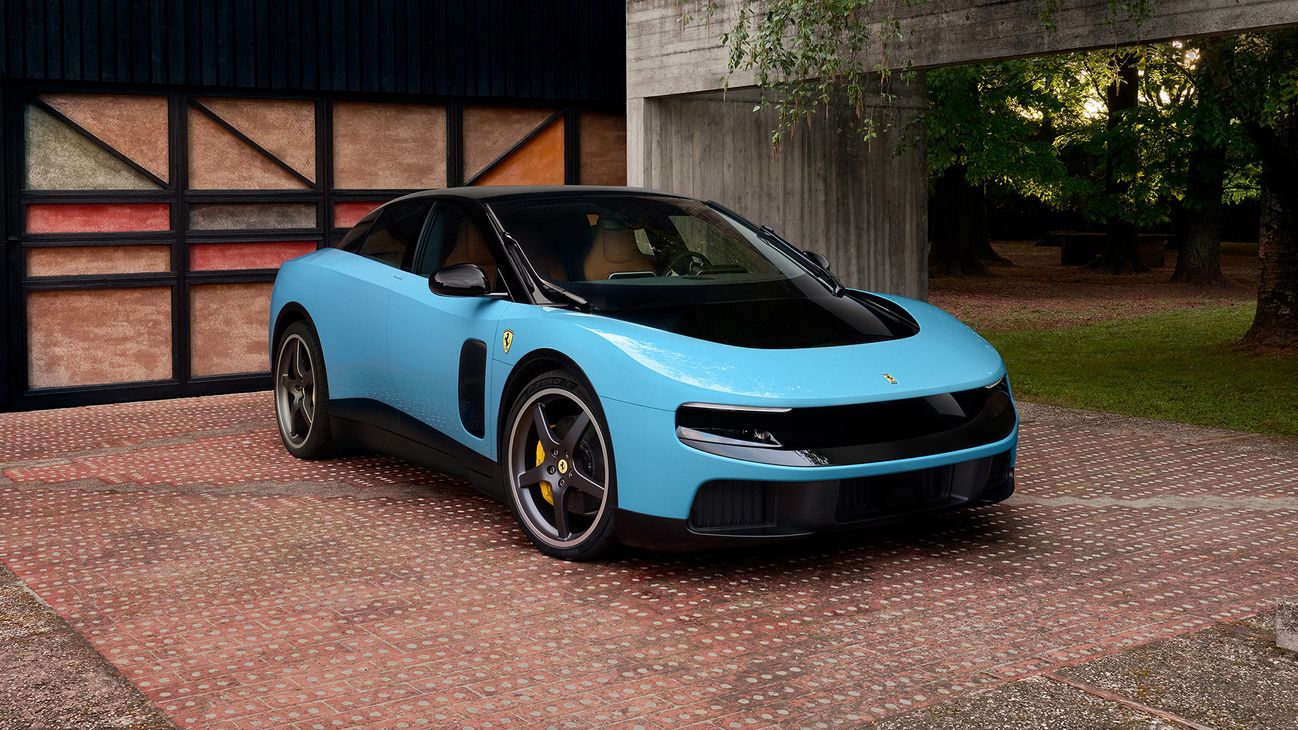
Ferrari Luce
"Not quite a week to digest the Ferrari Luce. And it's quite interesting design. ...When I saw it, I was shocked and not in a good way... I simply don't see that that car is a Ferrari."
Ferrari Luce is a new Ferrari model that people either love or hate based on how it looks. The hosts also point out that Ferraris are often bought for their styling and character—especially how they sound—more than for being the best track cars.
Ferrari Luce is a Ferrari model being discussed for its controversial, polarizing design. The hosts focus on how the car’s look and interior reception differed, and they connect that to what Ferrari traditionally sells: style and drama rather than just track performance.
opprobrium
"Because there was this sort of storm [502.7s] of opprobrium when it first kicked off. And then there was sort of pushback against that."
“Opprobrium” just means people reacted with strong negativity—like widespread criticism or hate. Here, they’re describing how the new Ferrari Luce got a lot of backlash at first.
“Opprobrium” means strong public disapproval or condemnation. In this context, the hosts are saying the Ferrari Luce initially drew heavy backlash and criticism.
on the limit
"Because what we know about Ferraris is really, you know, you and I might talk about how they handle on the limit, they don't really sell for that."
“On the limit” means the car is being driven as hard as it can before it starts to lose grip. It’s basically the point where handling becomes really challenging and you need the car to stay controllable.
“On the limit” describes the handling edge of a car—where grip is being used up and the vehicle is close to losing traction. When the hosts say Ferraris “handle on the limit,” they’re talking about how well the car stays controllable during aggressive driving.
synthesize some kind of sounds
"I think they are going to synthesize some kind of sounds out of it. But, you know, this is not a V12 under there."
They’re saying the car may use artificial sound to mimic what you’d normally hear from a bigger engine. Some people like it, but others feel it doesn’t sound as authentic as the real thing.
This refers to generating or enhancing engine noise artificially—often via speakers and sound processing—so the car still “sounds” like a higher-performance setup. Enthusiasts debate it because it can’t fully replicate the real acoustic character of a specific engine type.
V12
"this is not a V12 under there. And it's also extremely expensive. It's £400 and something thousand pounds, £460,000, before you put any options on it..."
A V12 is a type of engine with 12 cylinders arranged in two banks. People often expect a certain kind of Ferrari sound and feel from a V12.
A V12 is an engine configuration with 12 cylinders arranged in a “V” shape. It’s often associated with high-end Ferraris because it naturally produces a distinctive sound and smooth power delivery compared with smaller or different-cylinder layouts.

Ferrari Mondial
"I mean, I know that there have been some Ferraris which have been less than gorgeous things like the Mondial, and the Mark 1 version of the 330 GT..."
The Ferrari Mondial is one of Ferrari’s older models. The host mentions it as an example of a Ferrari that didn’t look as great as most others.
The Ferrari Mondial is a Ferrari model line known for being a more “compromise” choice compared with the brand’s more consistently celebrated designs. The host brings it up as an example of a Ferrari that was “less than gorgeous.”

Ferrari 330 GT
"some Ferraris which have been less than gorgeous things like the Mondial, and the Mark 1 version of the 330 GT, and the 308 GT4 was quite controversial."
The Ferrari 330 GT is an older Ferrari model. The host is using it as an example of a Ferrari that some people didn’t find especially good-looking.
The Ferrari 330 GT is a classic Ferrari grand tourer, and the host specifically references the “Mark 1” version. They cite it as an example of a Ferrari that was less than universally admired visually.
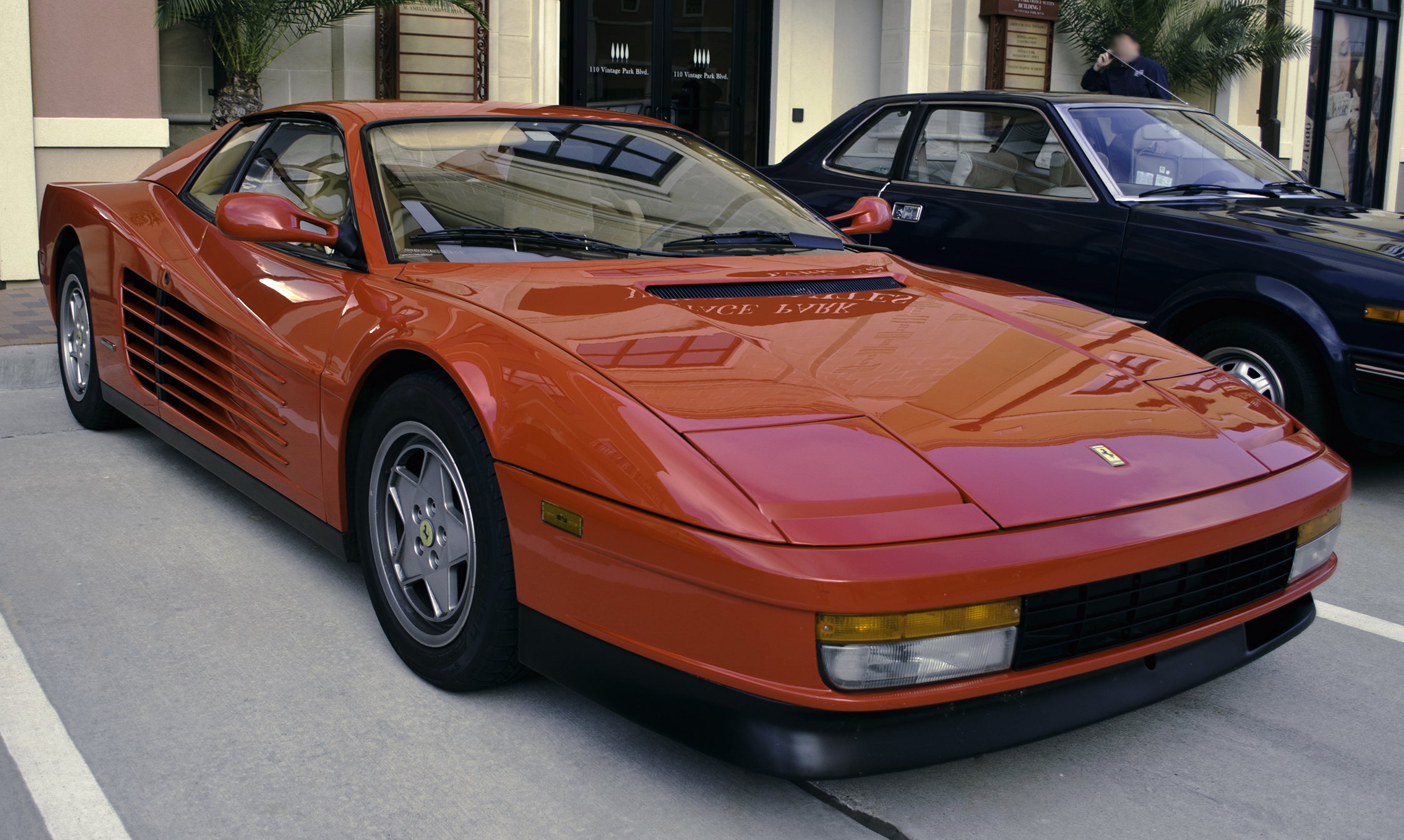
Testarossa Testarosa
"... GT, and the 308 GT4 was quite controversial. The Testarosa was controversial when that first came out. So th..."
The Testarossa is a mid-engine sports car made by Ferrari. It’s known for being very recognizable and for having a big performance reputation. The podcast brings it up because people often talked about it when it first appeared.
The Ferrari Testarossa is a famous mid-engine sports car known for its distinctive styling and strong performance reputation. It’s mentioned in the podcast alongside other controversial or debated sports cars, suggesting the Testarossa’s launch and design were widely discussed. That makes it a natural reference point when talking about how certain cars captured attention—sometimes for polarizing reasons.

Ferrari 308 GT4
"and the Mark 1 version of the 330 GT, and the 308 GT4 was quite controversial. The Testarosa was controversial when that first came out."
The Ferrari 308 GT4 is an older Ferrari model. The host says its looks were controversial—meaning not everyone liked them.
The Ferrari 308 GT4 is a 1970s-era Ferrari that’s often remembered for its distinctive styling. The host calls it “quite controversial,” implying its design divided opinions compared with Ferrari’s usual reputation.

Ferrari Testarosa
"The Testarosa was controversial when that first came out. So there have been some which have been challenging, but I've never seen"
The Ferrari Testarosa is a well-known classic Ferrari. The host says people thought it looked controversial when it first arrived, even though it later became iconic.
The Ferrari Testarosa is a famous classic Ferrari whose styling was initially polarizing. The host uses it as another example that even iconic Ferraris can look controversial at first, before opinions settle.
EV
"I think if it had, you know, some unfamiliar EV startup badge on it, you'd look at it once and not think too much too hard about it again. But let's let's try and be a bit more sort of constructive about this."
EV means electric vehicle. Instead of using gasoline like a typical car, it runs on electricity.
EV stands for electric vehicle, meaning the car is powered by electric motors rather than a gasoline internal-combustion engine. The hosts contrast an EV-style audience with people who want a combustion-engine Ferrari.
combustion engine
"an audience that is not steeped in the history of Ferrari like we are, and probably an audience that simply has no interest in a combustion engine Ferrari."
A combustion engine is the traditional kind of engine that burns fuel to make the car move. The hosts are saying some people don’t want a Ferrari that doesn’t use that kind of engine.
A combustion engine is an internal-combustion powertrain that burns fuel (like gasoline or diesel) to create power. The hosts use it to highlight that some Ferrari fans specifically want the traditional sound/feel of a fuel-burning Ferrari.
design language
"They applied Ferrari's current design language to a four door car, mostly with a sort of sporty SUV-ish kind of shape."
Design language means the recognizable style cues a brand uses across its cars. The hosts are saying magazines tried to make it look like “typical Ferrari style,” even though the final car might not follow that.
Design language is a set of recognizable styling cues a brand uses across models—like shapes, proportions, and signature details. The hosts argue that magazines applied Ferrari’s current design language to a four-door, SUV-ish concept rather than expecting a different approach.
Johnny Ives
"when you engage love from Mark Neusen and Johnny Ives design consultancy to design a car. Of course, they're going to do something totally different."
Johnny Ives is a designer/consultant credited with helping design the car. The hosts are saying that with the right design team, the car won’t necessarily look like the usual expectations.
Johnny Ives is referenced as part of a design consultancy involved in designing the car. The hosts imply that involving a specific design consultancy is why the final product could diverge from typical “expected” Ferrari styling.
Mark Neusen
"when you engage love from Mark Neusen and Johnny Ives design consultancy to design a car. Of course, they're going to do something totally different."
Mark Neusen is a person involved in designing the car. The hosts are basically saying the designers’ approach would lead to a different look than what people expected.
Mark Neusen is mentioned as part of the design team behind the car, credited alongside Johnny Ives. The hosts use this to suggest the resulting vehicle would look different from magazine renderings.
Ferrari's first EV
"is approach a company with basically zero background in car design to, to, to create what's, Ferrari's first EV and a very, very important new Ferrari. Why did they do that?"
They’re discussing Ferrari’s first electric car. Ferrari usually makes gas-powered performance cars, so this is a big change for the brand.
The host is talking about Ferrari’s first electric vehicle (EV). The key point is that Ferrari is known for combustion-engine supercars, so an EV is a major shift in how the brand delivers performance and identity.
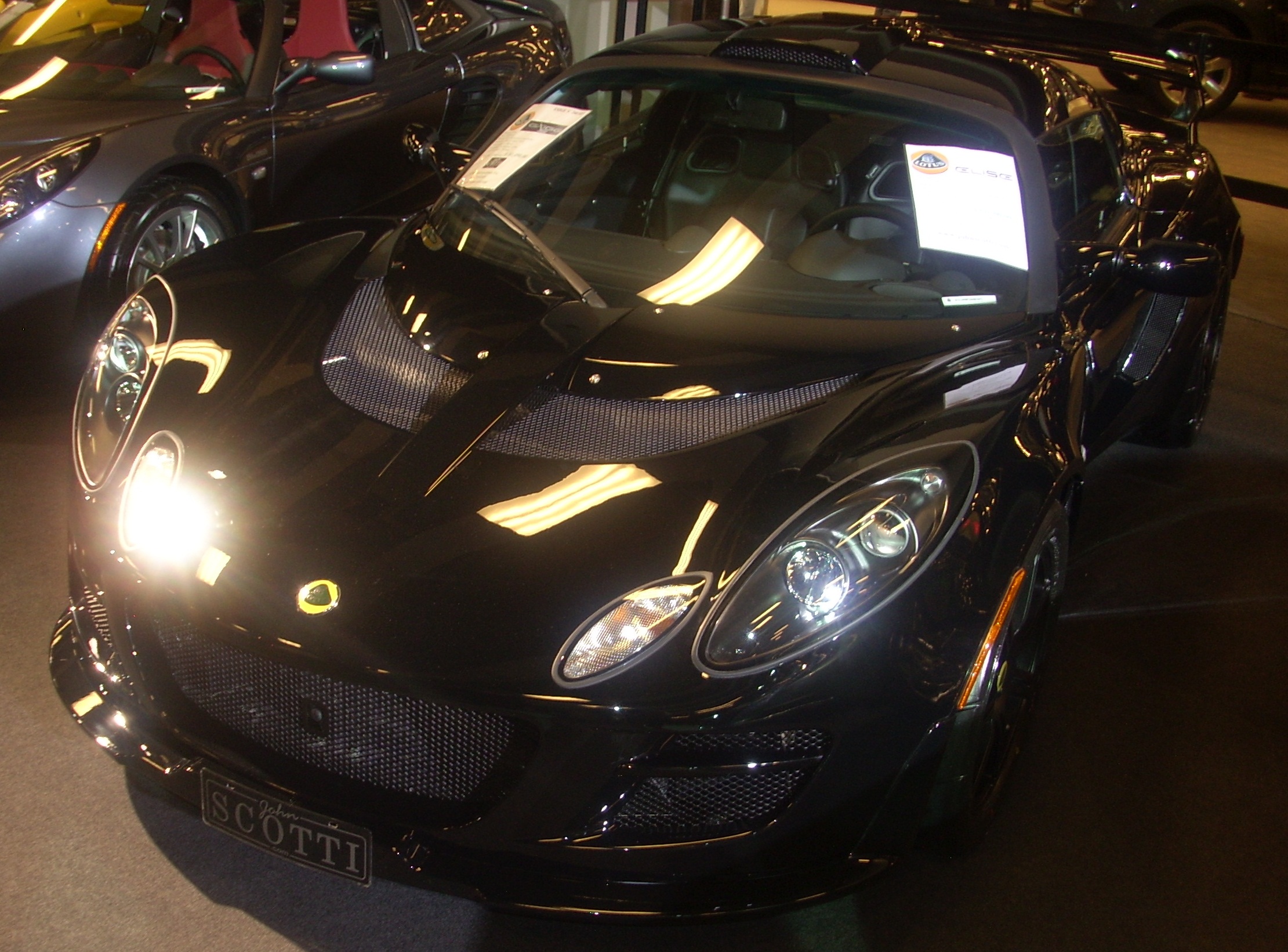
Lotus Elise
"...esign language it still uses today, did the Lotus Elise. I mean, just an incredible talent and one of our..."
The Lotus Elise is a small two-seat sports car made to feel quick and nimble when you drive. It’s famous for being light and fun to handle. People talk about it because it’s a classic example of a driver’s car.
The Lotus Elise is a lightweight, two-seat sports car known for its sharp handling and driver-focused feel. It’s often discussed because its design and performance philosophy helped define a modern “small, agile” sports-car approach. In a podcast, it may come up as an example of distinctive design language and engineering talent.
power output
"Because if you think about it, its range is nothing special. Its power output is nothing special."
Power output is basically how much “push” the car’s engine or motors can make. The speaker is saying the EV’s power number isn’t as special as you might expect.
Power output is the amount of power the engine or motors produce, typically measured in horsepower or kilowatts. The host is arguing that Ferrari’s EV’s headline power numbers aren’t especially unique compared with competitors.

Tesla Model
"...at the new Jaguar is going to have. That's what a Tesla Model S plan has had for years. 1000 horsepower used to..."
The Tesla Model Y is an all-electric SUV, meaning it runs on a battery instead of gasoline. It’s designed to be practical for everyday driving while still being quick. It comes up in conversations about electric-car performance and technology.
The Tesla Model Y is a compact electric SUV built around battery-electric power and software-driven features. It’s frequently mentioned in performance and technology discussions because Tesla’s lineup has emphasized fast acceleration and strong charging infrastructure. In this context, it’s referenced alongside other high-power EV plans and expectations.

Tesla Model S
"... new Jaguar is going to have. That's what a Tesla Model S plan has had for years. 1000 horsepower used to b..."
The Tesla Model S is a large electric car that uses batteries instead of a gas engine. It’s known for being very fast and for having good range. It’s mentioned because it has long been associated with high-power electric performance.
The Tesla Model S is a full-size electric sedan known for strong performance and long-distance capability. It’s significant because it helped popularize the idea of very high horsepower in a production EV. In the podcast context, it’s brought up in relation to ambitious power targets and how long that expectation has existed.
USP
"Now, that's an interesting USP, isn't it, for a Ferrari. It's the first Ferrari ever with five seats."
USP means the main reason someone would choose a product over alternatives. In this case, the speaker is saying the five-seat setup is Ferrari’s standout selling point.
USP means unique selling proposition—an attribute a product uses to stand out in the market. Here, the host frames Ferrari’s five-seat layout as the EV’s main “reason to buy” compared with typical Ferrari expectations.
tech bro
"So it is trying to go after, I guess, the term tech bro is coming in the direction of this conversation, isn't it? And that's what"
“Tech bro” is slang for a certain type of tech-enthusiast buyer. The host is suggesting Ferrari is aiming at that kind of audience with its new EV strategy.
“Tech bro” is a cultural term for a customer archetype associated with technology startups and gadget-focused consumer tastes. The host is using it to describe the kind of audience Ferrari is trying to attract with its EV approach.
bespoke platform
"a lot of it depends on how many Ferrari need to make, but it's on a bespoke platform and you'd think they would need to sell them in a reasonable volume to recover their investment"
A bespoke platform is a custom “car foundation” designed specifically for that model. It costs more to develop, so the company has to sell enough of them to make the project worthwhile.
A “bespoke platform” means the car is built on a custom-designed vehicle architecture rather than sharing a common platform with other models. That usually increases development cost, so the manufacturer needs enough sales volume (or high margins) to justify the investment.
residual values
"But maybe they're going to be concerned about its residual values, or maybe it's just going to be a bunch of people who just go, you know, Sodom."
Residual value is the expected resale value of the car later on. If it’s low, you may lose more money when you sell it.
Residual value is what a vehicle is expected to be worth in the future after depreciation. For expensive, low-volume cars—especially new technology cars—buyers may worry about residual values because that affects resale price and leasing/financing economics.

Porsche Cayenne
"What happened to Porsche in 2001? Was it 2002 when it launched the Cayenne? That was a car unlike anything Porsche had ever done before."
The Porsche Cayenne is Porsche’s first-generation SUV that debuted in the early 2000s, representing a major departure from Porsche’s traditional lineup. In this segment, the host uses it as precedent for how a radical new model can change a brand’s profitability and market position.
electric car
"if Ferrari makes a success out of this car... the first car of its kind, the first electric car of its kind to really fly"
An electric car runs on electricity stored in a battery instead of using a gasoline engine. The host is saying this Ferrari EV is supposed to be a big deal because it’s aiming to do something that hasn’t been done before.
An electric car (EV) is powered by electric motors and a battery pack rather than a combustion engine. The host emphasizes that this Ferrari is framed as the “first electric car of its kind” to deliver a particular kind of performance/impact, which is why it’s treated as a major milestone for the brand.
stance
"But do they understand things that are crucially important to car design, like stance and proportion and tension?"
“Stance” is how the car looks when it’s sitting still—how low it is and how the wheels and body proportions give it an aggressive or sporty look.
In car design, “stance” describes the car’s visual and physical attitude—how low it sits, how the wheels sit in the arches, and the overall proportions that make it look planted or aggressive. It’s a key part of how a car communicates performance and character at a glance.
proportion
"But do they understand things that are crucially important to car design, like stance and proportion and tension?"
“Proportion” means how the different parts of the car relate in size—like how long the hood is compared to the cabin, and how the wheels and body look together.
“Proportion” in automotive design refers to the relative sizing of the car’s key visual elements—wheelbase, overhangs, hood-to-cabin ratio, and how the body scales. Good proportions help a car look balanced and “right,” even before you consider performance details.
tension
"But do they understand things that are crucially important to car design, like stance and proportion and tension? Perhaps they don't."
“Tension” is about the feeling the design gives you—how the body lines and shapes make the car look like it’s moving or ready to move, even when it’s parked.
“Tension” here is a design-language term for the visual energy created by lines, surfaces, and how the bodywork “pulls” the eye across the car. In enthusiast discussions, it’s often shorthand for how dynamic or purposeful the styling feels.

296 platform
"I'd take the 296 platform, and I'd take the hybrids off it, and produce a 600 horsepower V6 lightweight manual road rocket, a Ferrari purely for drivers"
They’re talking about Ferrari’s underlying design “platform” used for the 296. The idea is to keep the basic car layout but remove the hybrid parts to make a simpler, lighter, more driver-oriented Ferrari.
The “296 platform” refers to Ferrari’s mid-engine architecture used by the Ferrari 296 line (a modern V6 hybrid setup). The host suggests taking that base and removing the hybrid components to create a lighter, more driver-focused, internal-combustion-only Ferrari.
hybrids
"I'd take the 296 platform, and I'd take the hybrids off it, and produce a 600 horsepower V6 lightweight manual road rocket"
“Hybrids” are cars that use both a gas engine and an electric motor. The host wants to remove the electric part so the car is simpler and more focused on the gas-engine driving feel.
“Hybrids” refers to powertrains that combine an internal-combustion engine with an electric motor and battery. The host’s suggestion is to remove the hybrid hardware from the 296 platform to return to a simpler, more traditional driver-focused setup.
manual
"and produce a 600 horsepower V6 lightweight manual road rocket, a Ferrari purely for drivers"
“Manual” means you shift gears yourself using a clutch and a stick. The host is saying they’d want a Ferrari that feels more connected to the driver.
A “manual” transmission is one where the driver selects gears directly using a clutch and gear lever. The host specifically wants a lightweight, driver-focused Ferrari with a manual to emphasize engagement rather than automated shifting.
tonic
"And I think a car like that, a stripped down, lighter, simpler, more affordable, driver focused Ferrari would be the perfect tonic for all those people who are going, what are they doing?"
“Tonic” is used metaphorically to describe a remedy for brand anxiety—something that restores the emotional connection enthusiasts feel with what made the marque great. In this context, the host argues a stripped-down, driver-first Ferrari would reassure buyers.
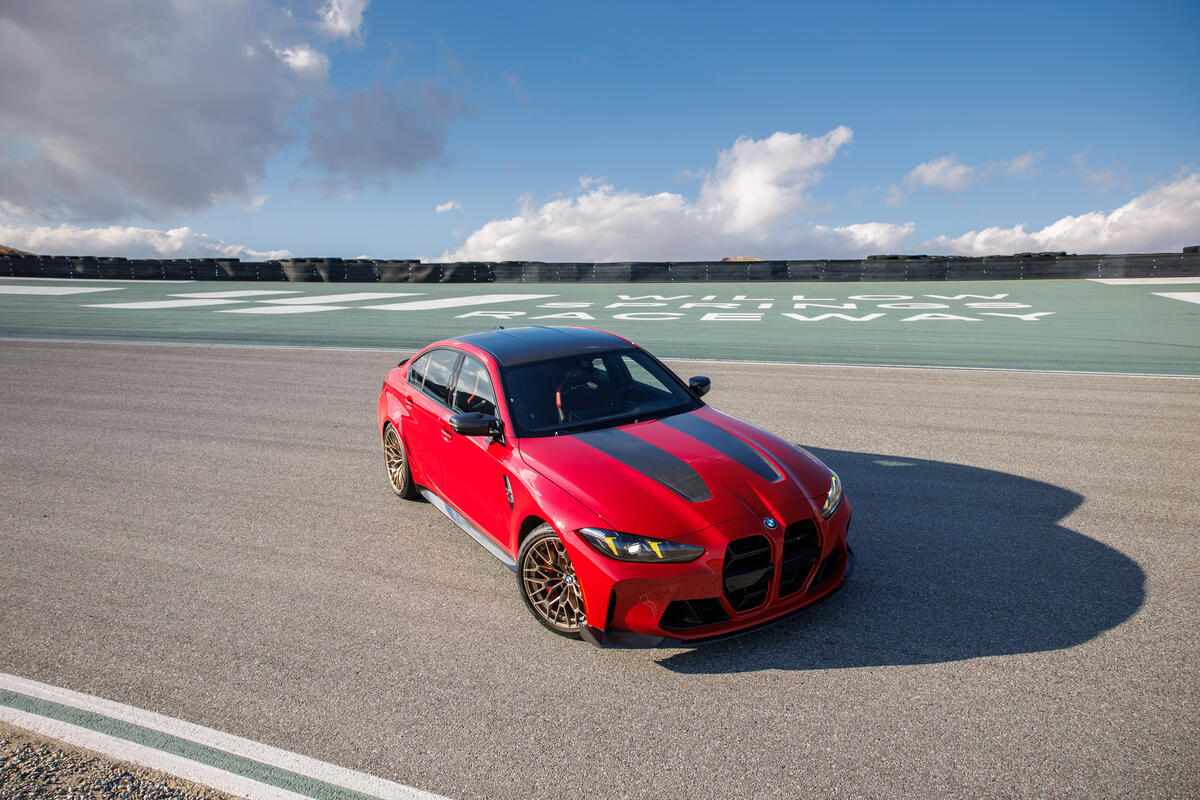
BMW M3
"...do, well, maybe not because they have just on the F80, but I mean, the temptation is going to be, is to..."
The BMW M3 is a performance-focused BMW, meaning it’s tuned to be faster and more exciting than a regular 3 Series. The F80 is one particular generation of the M3. People bring it up when talking about what makes a car feel truly sporty.
The BMW M3 is a high-performance version of the 3 Series, built for track-capable driving with a focus on power and steering feel. The podcast references the F80 generation specifically, which is known as a modern, turbocharged M3 era. It may be discussed as a benchmark for what “temptation” looks like when considering performance upgrades or alternatives.

Jaguar
"I haven't seen an uproar around a new car or around a car maker like this since Jaguar a couple of years ago now with"
Jaguar is a car brand. The hosts mention it because people got upset about Jaguar’s rebrand/advert, and they’re comparing that reaction to what’s happening with Ferrari here.
Jaguar is the British luxury car brand referenced as having caused a notable uproar with a rebrand and an advert. In this segment, it’s used as a comparison point for how people react when a new brand direction is announced.

Renault Twingo
"Oh, yes. Listen to that enthusiasm. I love it. I've got a Twingo. [1689.8s] Renault Twingo. I've got a French left-hand drive Twingo. To me, it's what an EV should be."
The Renault Twingo is a small car made for city driving. Here, it’s brought up as a cheaper, everyday option compared with very expensive electric cars.
The Renault Twingo is a small, city-focused hatchback from Renault, known for being compact and easy to maneuver. In this segment it’s mentioned as a budget-friendly alternative to expensive EVs, highlighting how different buyers prioritize size and practicality over prestige.

5 Renault 5
"...e a Twingo, simple as. I actually wouldn't have a Renault 5. I'd just save the money and get a Twingo. It's s..."
The Renault 5 E-Tech Electric is a small electric car made by Renault. It uses a battery instead of gasoline and is meant to be practical for everyday driving. In the podcast, it’s discussed as a choice compared with other small EVs.
The Renault 5 E-Tech Electric is an all-electric version of the Renault 5 concept, designed to be a small, modern EV with a retro-inspired look. In the podcast context, it’s part of a discussion about choosing between small electric cars and keeping costs sensible. It’s mentioned as an alternative to a simpler, cheaper option.
compact car
"it's, you know, it's very much a compact car. You're not going to, you know, putting your grown up children in the back of it."
A compact car is a smaller, city-friendly size of car. The host is saying the Twingo is small enough that it’s great for commuting, but not ideal for lots of rear-seat passengers.
A compact car is a smaller passenger car class, typically designed for easier city maneuvering and lower running costs than larger vehicles. The host uses it to frame the Twingo’s size and practicality, noting it’s only two doors and not meant for transporting adults in the back.

Renault 4
"...we were slightly more lukewarm, weren't we on the Renault 4? Because it just seemed to be like a rather less ..."
The Renault 4 CV is an older small car made by Renault. It’s the kind of vehicle people discuss when comparing how cars feel or how they were received at the time. In this context, the speaker is saying it didn’t fully impress them.
The Renault 4 CV is a small, early post-war French car that became an important part of Renault’s history. It’s discussed in the podcast as a point of comparison for how different cars feel or are received, with the speaker describing it as “lukewarm.” That kind of mention usually relates to its character, design, or overall impression rather than outright performance.

Land Rover Range Rover
"... we couldn't, you couldn't do it in the back of a Range Rover. Because of the telescreens. I don't think it wou..."
The Land Rover Range Rover is a luxury SUV designed to be comfortable for passengers and capable on different roads. It’s often used as a “big, premium” family car. In the podcast, it’s mentioned because of how the back seat area is laid out.
The Land Rover Range Rover is a luxury SUV known for comfort, off-road capability, and a high-end interior. It’s referenced in the context of whether certain features or screens could be used “in the back,” highlighting its role as a flagship family/driver-luxury vehicle. That makes it a common topic when discussing rear-seat experience and vehicle packaging.

BMW M5 CS
"You've got a BMW M5 CS knocking about at the moment, haven't you? Yeah, so this is the latest in my regulars..."
The BMW M5 CS is a special, more aggressive version of the BMW M5. It’s meant to feel sportier and more exciting to drive than a regular M5, and the host is talking about it as a car they’re spending time with.
The BMW M5 CS is a high-performance version of the BMW M5, tuned by BMW M for sharper driving dynamics and a more track-focused feel. In this segment, the host also frames it as part of a “live with it for a month” series, emphasizing it as a current-generation M5 variant (the “CS” version).

BMW E34
"...er. Six generations. Six generations. I think the E34 is a candidate, but other than that, there's noth..."
The BMW 5 Series is a mid-size luxury car that BMW has made for many years. The podcast mentions several generations and specifically brings up the E34 as one that might be worth considering. People talk about it because each generation feels a bit different.
The BMW 5 Series is a mid-size luxury sedan (and wagon in some markets) that has gone through many generations. The podcast references “six generations” and calls out the E34 as a possible candidate, implying a discussion about which era is most interesting or desirable. It’s commonly discussed because different generations have distinct driving characteristics and reputations.
ADAS
"It's 2021, so it's just pre-mandatory ADAS systems. So you literally get in it and you plug your seatbelt in and you go."
ADAS stands for driver-assist tech. It’s the safety and convenience electronics that can help you stay in your lane, keep distance from the car ahead, and warn you about hazards.
ADAS (Advanced Driver-Assistance Systems) are electronic features that help with driving tasks like lane keeping, adaptive cruise control, and collision warnings. The host notes the car is “pre-mandatory ADAS systems,” meaning it predates widespread legal requirements for these technologies.
car play
"I'm a person who quite likes gadgets. I quite like charging pads for your telephone and car play and all this. It's got it all."
CarPlay is a way to connect your iPhone to your car’s screen. It brings up things like maps, music, and calls so you can use your phone while driving.
CarPlay is Apple’s in-car interface that lets you use your iPhone through the vehicle’s infotainment screen. The host lists it among the “gadgets” the car includes, emphasizing that the car has modern connectivity even though it’s not brand-new.
charging pads
"I'm a person who quite likes gadgets. I quite like charging pads for your telephone and car play and all this. It's got it all."
A charging pad is a spot in the car where you can place your phone to charge it without plugging in a cable.
A charging pad in a car usually refers to a wireless charging surface for a smartphone. The host mentions it as part of the car’s modern convenience tech, alongside CarPlay and other infotainment features.
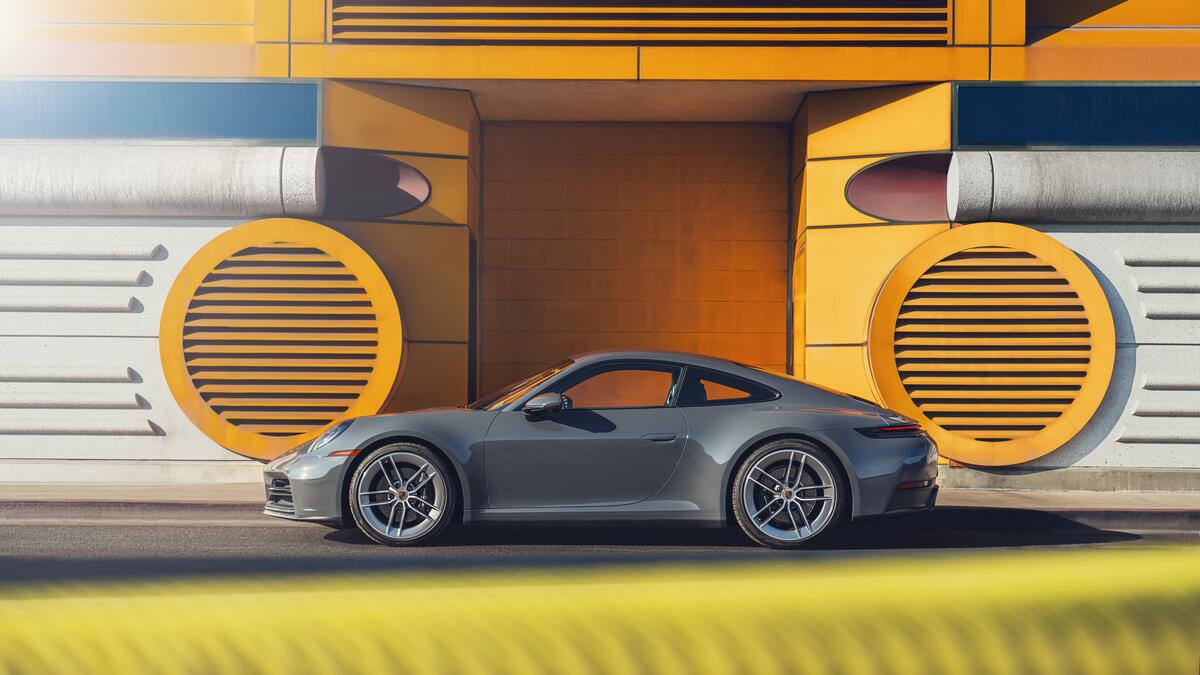
Porsche 911
"What's next? 911 Turbo S and Aston Martin Vantage S because for whatever reason, they both turned up on your driveway at once, didn't they?"
The Porsche 911 Turbo S is a super-quick, turbocharged 911. The hosts are basically saying it’s one of Porsche’s best and most expensive performance versions.
The Porsche 911 Turbo S is a high-performance version of the 911 line, built around a turbocharged flat-six and tuned for very high speed and strong acceleration. In this segment, it’s discussed as a top-tier, “pinnacle” performance car with pricing and capability that put it at the top of the Porsche performance ladder.

Aston Martin Vantage S
"What's next? 911 Turbo S and Aston Martin Vantage S because for whatever reason, they both turned up on your driveway at once, didn't they?"
The Aston Martin Vantage S is a sportier version of the Vantage. The hosts are comparing it to the Porsche and saying both are so fast you can’t really use all of it on normal roads.
The Aston Martin Vantage S is a performance-focused trim within Aston Martin’s Vantage lineup, positioned as the entry point to the brand’s more sporting range. Here, the hosts compare it to the Porsche 911 Turbo S and emphasize that, despite similar headline performance, real-world usability is limited by how quickly it gets you into “too fast” territory.

Kia Picanto
"Well, we have the Turbo S, didn't we, for a job that we did last week before last, where we drove it with an Audi Quattro and a Kia Picanto across a lot of, an awful lot of whales."
The Kia Picanto is a small, city-focused car used here as a contrast vehicle in the hosts’ previous road trip. Mentioning it alongside the Porsche 911 Turbo S and Aston Martin Vantage S highlights the huge performance gap between everyday cars and flagship sports cars.
locked up
"But, you know, the same, you get the same sense in the Aston that when you drive it, you can't use all that performance. You'd be locked up. And rightly so."
“Locked up” means the car loses grip and the wheels can’t roll normally. The host is saying the Aston is so fast that you hit that limit quickly on public roads.
“Locked up” here is describing a traction/braking control situation where the car can’t keep grip and the driver is effectively limited by stability and traction systems. The point is that the Aston Martin’s performance is so strong that on normal roads you quickly reach a point where you can’t safely use the full power.
60
"So it doesn't really matter, you know, which car will get to 60, a tenth of a second quicker than the other one."
“60” means how fast the car accelerates from a stop to 60 (mph or km/h). They’re saying the two cars are so quick that small differences in that number don’t matter much in real driving.
“60” is shorthand for 0–60 mph (or 0–60 km/h depending on region), a common benchmark for how quickly a car accelerates from a standstill. The hosts argue that even if one car is a tenth quicker, both are so fast that the difference won’t matter unless you’re on a race track.
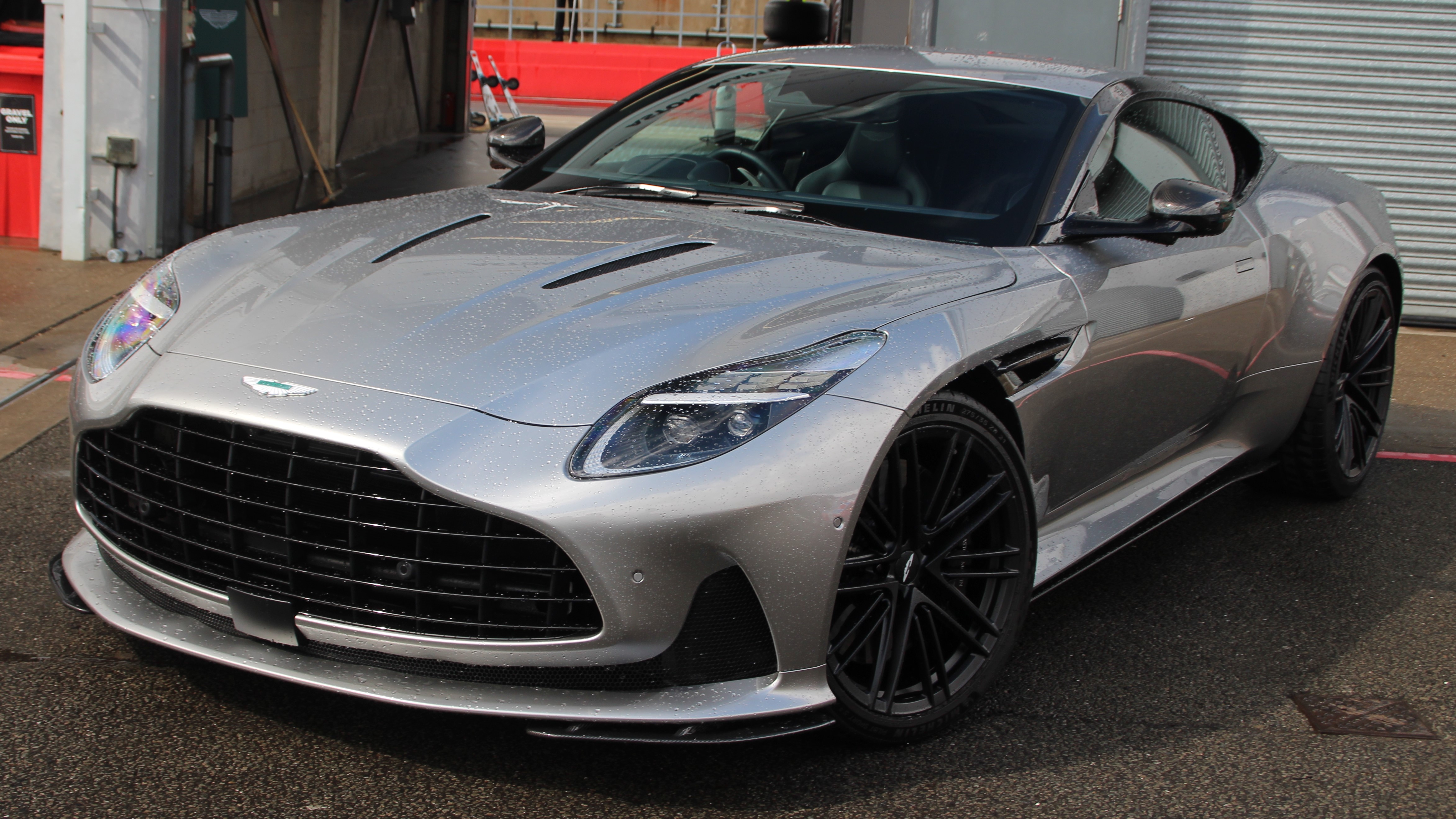
Aston Martin DB12
"And in fact, actually, the Vantage isn't my favorite Aston Martin. I give that to the DB12 all day long."
The Aston Martin DB12 is a newer Aston Martin model meant for comfortable, exciting long drives. In this discussion, the host says it’s their favorite Aston for the kind of driving they want to do.
The Aston Martin DB12 is a modern grand tourer from Aston Martin, positioned as a more characterful alternative to other Aston models. Here, the host contrasts it with the Vantage and then explains why the DB12 is their pick for “all day” enjoyment.
twin test
"So that's the verdict of the twin test I never write."
A “twin test” is basically a head-to-head comparison format. The idea is to judge two cars side-by-side to see which one makes more sense as a single everyday choice.
A “twin test” is a magazine/podcast-style format where two cars are evaluated in parallel to compare how they feel and fit different use cases. In this segment, it’s referenced as the framework behind the host’s verdict about which car makes the best “only car.”

Rolls-Royce Silver Ghost
"...timable privilege to have spent a day driving the Silver Ghost. I don't mean a Rolls Royce Silver Ghost. I mean ..."
The Rolls-Royce Silver Ghost is an old, classic luxury car made by Rolls-Royce. People value it because it’s known for being very smooth and comfortable. The podcast mentions it because driving one is a special experience.
The Rolls-Royce Silver Ghost is a classic early Rolls-Royce model known for its smoothness and long-distance comfort. The podcast mentions it as a “privilege” to drive, emphasizing its reputation and historical significance. It’s referenced to highlight the experience and prestige associated with this particular model.

Rolls-Royce Rolls Royce Silver
"...nt a day driving the Silver Ghost. I don't mean a Rolls Royce Silver Ghost. I mean the Silver Ghost, the only car in t..."
The Rolls-Royce Silver Shadow is a classic luxury car from Rolls-Royce. In the podcast, it’s mentioned because the speaker is correcting which specific Rolls-Royce they drove. It’s essentially a way to name the exact model being discussed.
The Rolls-Royce Silver Shadow is a later classic Rolls-Royce model associated with the brand’s modern-era luxury feel. In the podcast, it’s mentioned in the context of clarifying which Rolls-Royce model the speaker actually drove, contrasting it with the Silver Ghost. That makes it relevant as a reference point for different Rolls-Royce generations and their identities.

Ghost
"I borrowed a new Ghost from Rolls Royce. New Ghost only came out last year. Very different to the predecessor Ghost."
The Rolls-Royce Ghost is a very luxurious, comfort-focused car. The host says the newer Ghost shares its underlying engineering “platform” with the Phantom, which helps explain why it feels so refined.
The Rolls-Royce Ghost is the brand’s flagship luxury sedan, known for ultra-smooth ride quality and a very hushed cabin. In this segment, the host highlights that the newer Ghost is built on the same platform as the Rolls-Royce Phantom, which is a big deal for engineering and packaging.

Rolls-Royce Phantom
"...ost. This is now sits on the same platform as the Phantom. Has four-wheel drive, four-wheel steering. And t..."
The Rolls-Royce Phantom is a very expensive, top-level luxury car. It’s designed to feel smooth and comfortable, especially for long drives. The podcast also mentions advanced drivetrain and steering features that help it move more easily.
The Rolls-Royce Phantom is the brand’s flagship luxury sedan, built for maximum comfort and presence. The podcast mentions it in relation to a shared platform and highlights advanced features like four-wheel drive and four-wheel steering. It’s brought up because these engineering choices affect how the car drives and how it’s packaged as a top-tier luxury vehicle.
four-wheel steering
"This is now sits on the same platform as the Phantom. Has four-wheel drive, four-wheel steering. And there's nothing of the sort of,"
Four-wheel steering means not only the front wheels turn—so do the rear wheels too. This can make the car easier to steer at low speeds and steadier at higher speeds.
Four-wheel steering is a chassis system where the rear wheels can steer as well as the front wheels. That can improve low-speed maneuverability and high-speed stability, changing how the car feels through corners and during lane changes.
four-wheel drive
"This is now sits on the same platform as the Phantom. Has four-wheel drive, four-wheel steering. And there's nothing of the sort of,"
Four-wheel drive means power goes to all four wheels. That can help the car grip better, especially in rain or slippery conditions.
Four-wheel drive (4WD) sends power to all four wheels instead of just the front or rear axle. On a luxury sedan like the Ghost, it’s often used to improve traction and confidence in poor weather and during spirited driving.
Cotswold Airport
"So that was that. And then we then met up, met the old car at the brilliant Cotswold Airport, where you can hire a 747."
Cotswold Airport is a place in the UK where the host met up and drove the car. They also describe it as having space to hire a plane for events.
Cotswold Airport is a UK airport location the host uses as the setting for the driving event. The host mentions it as a place where you can hire a 747 and use the space for a party, which frames the episode’s “occasion” theme.
point-to-point
"We wanted to find out how much quicker point-to-point is the fastest point-to-point road car you can buy versus the slowest."
“Point-to-point” means timing a drive from one place to another along a route. It’s a more real-world way to compare cars than just testing them on a track.
“Point-to-point” refers to measuring how long it takes to travel between two locations along a route, rather than testing on a closed circuit. The hosts use it to compare the fastest and slowest road cars in terms of real travel time, not just track-style performance.

Audi Quattro
"it was Jess who had the idea and indeed brought along this 40, well, actually, here's a late one, wasn't it? So it's a 35-year-old Audi Quattro, but a 45-year-old design..."
The Audi Quattro is an older Audi that’s famous for its all-wheel drive. In this story, they use it as a reference from the 1980s to compare against newer cars on the same kind of road trip.
The Audi Quattro (often spelled “Quattro”) is a rally-bred performance car known for bringing Audi’s quattro all-wheel-drive system to the mainstream. Here, the hosts specifically call it a 35-year-old Audi Quattro, using it to measure how much point-to-point road-car performance has improved since the 1980s.
turbo
"Whereas in the turbo or even the Quattro with only a couple hundred horsepower, you have what you need to get lost safely."
“Turbo” refers to a turbocharged engine, where a turbocharger forces more air into the cylinders to increase power. The hosts contrast turbo (more usable power for passing) with the Picanto’s limited power when traffic blocks your route.
Request an Explanation
Heard something you'd like explained? We'll add it to this episode.
Sign in to request explanations for terms you heard.
Want to learn more?
Browse our glossary for plain-English explanations of automotive terms, jargon, and concepts.
Help improve this episode
See something that's not quite right? Our annotations are AI-generated and can sometimes miss the mark. Click the flag icon on any annotation to suggest a correction.
1 community members have helped improve this episode.