Car insurance works differently for different people. What you need depends on things like your car and how you drive, so one policy won’t fit everyone.
It’s a way to shop for car insurance by telling the company what price you want to pay. Then they show you insurance options that might match that budget.
CarEdge is a website/service that helps you shop for cars and negotiate with dealers. Here, they’re showing a map tool that helps you see which areas have cars sitting longer for sale.

The Mazda CX-30 is a small SUV. The hosts are using it to show that you can use online tools to figure out where CX-30s are selling faster or slower, which can affect how good a deal you might get.
“Days on market” means how many days a car has been listed for sale. If it’s been sitting there a long time, it may be easier to negotiate; if it sells quickly, there’s usually less room to bargain.
“High velocity” just means cars are selling fast in that area. If cars are moving quickly, dealers may be less willing to discount because demand is already strong.
“Negotiation power” means how likely you are to get a better price by negotiating. If a car has been sitting on the lot for a long time, the dealer may be more willing to lower the price. So the buyer usually has more leverage.
“Map View” refers to a tool that visualizes car listings or pricing/availability data by geography (states in this case). The hosts use it to compare where deals are strongest and where negotiation is weakest, based on inventory behavior like days on market. It’s essentially a market-by-region shopping aid.
“Car surge” appears to be a dashboard or section within their app/site that aggregates market data for specific makes and models. In this segment, it’s used as the entry point to “Map View” so users can explore regional deal strength and negotiability. The idea is to turn listing/inventory signals into actionable shopping guidance.
Auto loan originations are basically “new car loans being made.” If they jump a lot, it can mean lenders are approving more people—even some who may be less able to pay.
Delinquency rate is just a fancy way of saying “how many people are late paying their car loan.” If it’s at the highest level ever, it means more borrowers are falling behind, which can make car buying harder for everyone.
Subprime credit means the borrower’s credit isn’t great. Lenders may still approve them, but it’s riskier—so more people can end up having trouble paying the loan.
They’re talking about the risk lenders take when lots of people borrow more than the car is really worth. If those borrowers struggle, the lender can lose money.
It means you still owe the bank more money than your car could sell for right now. If you try to sell or trade it in, you’d likely have to pay extra to cover the difference.
Volkswagen is a car brand. The hosts are saying Wells Fargo aligned lending with Volkswagen, which matters because if a brand sells more slowly, it can affect how quickly cars hold value and how risky loans may be.
Brand
Alley
The transcript says “Alley,” but it’s not clear which car brand that refers to. Without the correct name, it’s hard to explain the specific brand’s relevance.
Audi is the other German brand referenced alongside Volkswagen as a beneficiary of easier auto-loan approvals. The hosts suggest Wells Fargo is positioning itself as a preferred lender for these brands, which can affect sales and the lender’s overall loan portfolio.
Wells Fargo is the bank making it easier for some people to get car loans. The concern is that if the loans are riskier, more borrowers could struggle to repay.
Loan-to-value is basically how much of the car’s price the bank is lending you. If the bank lends a bigger percentage of the car’s value, it’s riskier for them—so it can matter a lot for whether loans are easier to get.
Term
secondary subprime
Subprime means the borrower’s credit isn’t great. “Secondary subprime” is a lower credit tier, which generally makes it harder to repay reliably—so lenders taking on more of these loans can raise risk.
Auto loan performance is just how often people pay their car loans on time. If more people fall behind, it can signal that car payments are becoming too expensive for some households.
A default is when someone can’t keep up with their car payments. When defaults rise, it usually means more families are struggling financially and lenders take bigger losses.
The Ford Edge is a mid-size SUV that’s meant for regular driving, carrying people, and everyday errands. The podcast mentions it in the context of loans and affordability, meaning some buyers may need financing to fit the monthly cost. It’s a common kind of vehicle people consider when they want an SUV but still have a budget.
Loan term length affects monthly payments and total cost, and it can also worsen negative equity because the balance may stay high even as the car depreciates. Longer terms can keep borrowers “stuck” longer if the vehicle’s value falls faster than the loan is paid down.
A longer loan usually makes the monthly payment smaller. But it also means you’re paying for the car over more years, so it can take longer to own more of the car outright.
Equity is the portion of the car’s value that you actually own outright—roughly, the car’s market value minus what you still owe. The segment argues that when depreciation outpaces equity buildup (especially with longer loans), buyers can end up with negative equity at trade-in time.
Loan term length is how long you have to pay the loan. Longer terms can lower the monthly payment, but they often mean it takes longer to get out of debt and build ownership in the car.
APR is the interest rate on your loan, shown as a yearly number. A higher APR means you pay more money over time, even if the monthly payment looks manageable.
A 72-month note is just a car loan you pay back over about six years. It can make the payment feel smaller each month, but it usually means you’re stuck owing a lot for longer. That can affect whether you can trade the car in without being “upside down.”
They’re describing a cycle where you keep taking out new loans without fixing the underlying problem of owing more than the car is worth. Each time you roll the gap into the next deal, you can end up deeper in debt. The point is that the math can trap you for years.
Upside down means you owe more on the car than it’s worth. If you try to trade it in, you typically still owe the difference. The segment argues that this situation can get worse over time.
A trade-in is your current car being used as part of the deal for a new car. If you still owe more than the trade-in is worth, that extra amount can carry over into the new financing.
Q1 of 2024 refers to the first quarter of the year (January–March). The hosts use it to compare how the share of negative-equity trade-ins changes over time, which helps interpret whether the problem is worsening or improving.
Being “upside down on your trade” means your trade-in won’t cover what you still owe. So the dealer has to deal with the difference, which often makes the new payment much higher.
A Kia Carnival is a family minivan. The hosts are using it as an example of a situation where you still owe more on your loan than the car is worth, which makes trading it in very expensive.
The hosts describe a “matrix” that lets shoppers filter used vehicles by make/model and then see listing price alongside mileage. This helps you quickly narrow down what’s actually available in your target budget and mileage range.
Day supply is basically a way to measure how many cars are sitting around compared to how fast they’re selling. If there are lots of days of supply, dealers may be more willing to negotiate because cars aren’t moving as quickly.
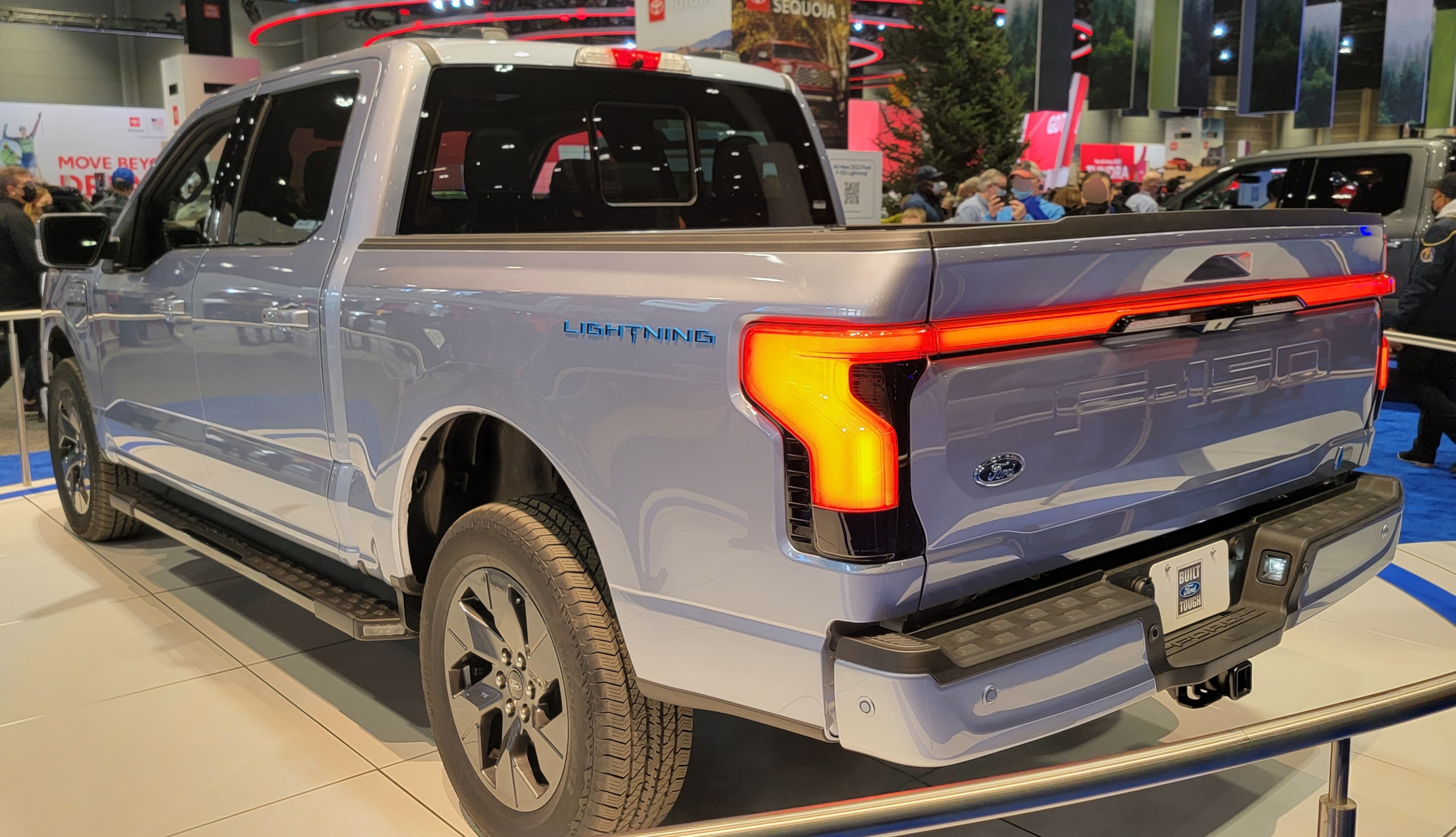
Ford is recalling certain 2015–2017 F-150 trucks because a sensor problem in the transmission can make the truck shift unexpectedly. That unexpected shift can make the rear wheels lose traction, which increases the risk of a crash.
This is the truck’s automatic gearbox with six different gear ratios. The recall is about a sensor signal that can confuse the transmission and cause it to shift when it shouldn’t.
A sensor is like a “messenger” that tells the car what’s happening. If that message is wrong, the car may shift at the wrong time, which is what the recall describes.
A downshift is when the car goes to a lower gear. “Unintended” means it happens unexpectedly, which can change how the truck pulls and slows down and can affect stability.
If the rear tires slip, they’re spinning or sliding instead of gripping the road. That can make the truck harder to control, especially in certain conditions.
NHTSA is the U.S. agency that keeps track of car safety problems. When a problem is serious enough, the manufacturer issues a recall, and NHTSA records it so people can see which brands are affected.
They’re looking at how many recalls each brand has. More recalls can be a sign that quality or engineering has slipped, but it’s not the same as saying every single vehicle is unsafe.
Toyota is shown as having more recalls than you’d expect based on its reputation. The hosts think it’s surprising, and they connect it to changes in how Toyota builds engines for fuel economy.
General Motors is included in the comparison of recall numbers across major brands. The takeaway is that this isn’t just one company—it’s showing up across several big players.
Chrysler is mentioned as one of the brands with recall numbers similar to Toyota and General Motors. It’s used to show the issue is widespread, not isolated.
They’re saying many people finance cars for 6 to 7 years. If the car starts having problems after the warranty ends, the owner could be paying for big repairs out of pocket during that long loan.
Concept
warranty period vs major repair timing
The segment implies that major repairs are likely to occur after the warranty period, which increases total cost of ownership. This ties recall/quality concerns to real-world financial risk for buyers.
The hosts discuss a powertrain shift: moving from larger V8s and inline six-cylinder engines to smaller turbocharged four-cylinder engines to improve fuel economy. This is a broader industry trend that can affect reliability, cooling, and long-term wear depending on design and calibration.
CAFE standards are rules that push car companies to make their overall lineup get better gas mileage. To do that, they may change engines and emissions systems, and if those changes are too aggressive, some cars can end up having more problems later.
EPA standards are government rules about how much pollution a car is allowed to produce. Automakers have to design engines and exhaust systems to meet those limits, and that can sometimes create extra complexity that affects long-term reliability.
During the pandemic, car production got disrupted—parts were harder to get and factories changed how they operated. The hosts are suggesting that those disruptions could contribute to more problems, but they also say it’s not the only reason.
The phrase “cooked the books” means cheating on the rules—here, by making emissions tests look better than real-world driving. The point is that if companies feel they can’t meet the standards honestly, they may try to game the system.
Unintended consequences are results of a rule that nobody expected. The hosts are saying emissions and fuel rules can force carmakers into changes that sometimes make cars less reliable than they should be.
“Negotiable” just means the price might be easier to bargain on. The hosts are using their map and listing info to point you toward cars that are more likely to have room for a better deal.
“Leverage” is how much power you have to negotiate the price. “Moderate leverage” means you might be able to get a decent deal, but it won’t be a slam dunk like in a super slow market.
LIVE
Insurance isn't one size fits all.
That's why drivers have enjoyed Progressive's Name Your Price tool for years now.
With the Name Your Price tool, you tell them what you want to pay,
and they'll show you options that fit your budget.
So whether you're picking out your first policy,
or just looking for something that works better for you and your family,
they make it easy to see your options.
Visit Progressive.com.
Find a rate that works for you with the Name Your Price tool.
Progressive Casualty Insurance Company and Affiliates
price and coverage match limited by state law.
Some days you want a little extra oomph to your usual look.
Whether that's lashes for days with the Viral Liquid Lash Extensions Mascara,
or awakening your eyes with a lasting lift and soft color with the Brilliant Eye Brightener.
Thrive Cosmetics is your go-to when you want to amplify your everyday look.
Whether you want a simple just got to get out of the door routine or full glam,
you'll always look and feel like the best version of yourself with Thrive Cosmetics.
Plus, every product is 100% vegan, cruelty-free,
and made with clean skin-loving ingredients that work with your skin.
Not against it.
And for every product purchased, Thrive Cosmetics donates to help communities thrive.
So every time you use your favorite Thrive Cosmetics product,
you're helping communities you care about too.
Amplify your everyday.
Go to ThriveCosmetics.com slash Shine26 for an exclusive offer of 20% off your first order.
That's Thrive Cosmetics.
C-A-U-S-E-M-E-T-I-C-S dot com slash Shine26.
Work moves fast.
Every email, report, and proposal counts.
That's where Grammarly comes in.
It's your one place to think, write, and finish.
Grammarly's AI agents help you find natural phrasing, fine-tuned tone,
and confidently write wherever you work.
It's the premier writing tool that 93% of users trust to get more work done.
In a world of generic AI, don't sound like everyone else.
With Grammarly, you never will.
Download Grammarly for free at Grammarly.com.
It's noon here in Veteran City, New Jersey and our nation's capital, Washington, D.C.
And this is Car Eng Live for Tuesday, April 21st, where we're on high alert.
Well, some kind of alert anyway.
We're always on alert.
And your hosts today, as usual, are me, Ray, here in my living room,
and Mentor and Zach, well, hanging out in Washington, D.C.
What's going on, handsome?
We are on high alert, Dad.
The combination of what's going on at Wells Fargo and the latest data from Edmunds,
it is mind-boggling.
We're going to jump right into it.
In just a second before we do folks, today's show is brought to you by caredge.com.
And Dad, don't worry, we've got an update to the home page coming tomorrow.
But folks, we offer car buying services where we'll contact dealers, negotiate for you,
remove those fees, and help you get the best deal.
Check it out back at caredge.com.
And a big deal this morning, Dad.
If you go under Shop Cars, Shop New or Used, I'm going to click on Shop New for a second here.
Give me a make-and-model, Dad.
Any make-and-model doesn't matter.
Mazda CX-30.
Okay. He wants Mazda, he says.
And then he wants CX-30, he says.
You ready for this, Dad?
No.
Brand new.
Yes.
Map view.
What I want you to do, folks, go check out caredge.com.
Don't all do it at once, but do it eventually.
Click on Map View.
You're then going to get this beautiful map.
The colors tell you, I'm going to zoom in on it down here, the days on market.
So you're actually able to see where there's high velocity of vehicles being sold and low
velocity of vehicles being sold.
The best state, Dad, to buy a Mazda CX-30 right now is Maryland.
The days on market is sky high.
I can zoom in here and I can actually find vehicles in the state of Maryland based on
days on market.
So I can see here, Dad, there are quite a few CX-30s that have been on this dealer's lot
for 200 plus days.
High negotiation power on this one.
So, Pops, we launched Map View today.
Congratulations to the team.
Check it out, folks, again.
Just go to the car surge.
I'll hit back a couple of times here.
Go to the car surge, type in a make, type in a model, click on Map View,
and then play around.
Figure out which states have the best deals or the best negotiability and the worst deals
and the worst negotiability.
Have some fun here and play around with the Map View.
That is cool.
I feel like I'm on real-order.com.
Yeah, pretty cool what we built right there.
All right, you ready for the show?
No, you and your team are just so damn amazing.
I mean, who dreams this stuff up?
Someone did and I'm glad that we're able to build it.
Thanks, everyone, for the kind contributions in the chat here.
We appreciate it.
We will continue to make it better.
Share your feedback, Dad.
The show, let's jump into it.
First things first, that's shocking and alerting.
Wells Fargo increased their auto loan originations by 111% year over year.
Okay, so just think about this for a second.
If you haven't been following our show for a while, you need to know
that auto loan delinquency rates are at all time highs.
The quality of those who are getting approved for auto loans
has declined significantly.
We have more subprime credit getting approved.
And ultimately, what we're seeing is negative equity,
which is what we're going to tap into in a second here,
is skyhide through the roof.
At the same time, thanks for making it easier to get approved
for auto loans than ever before.
Wells Fargo, Dad, increasing their loan originations by 111%.
Now, we touched on it a bit yesterday,
but the latest and greatest data over at Edmunds suggests
that those who have taken out auto loans in the past,
well, they're growing deeper underwater.
Look at this image that Edmunds-
What? What a great image.
I love that.
Oh, my God, that is so creative.
So creative.
Yeah.
Well, Edmunds found, Dad,
is that nearly a third of all Americans trading in their vehicles today
owe more on their auto loan than what it's worth.
So think about that for a second.
I'm going to shut up, I promise, in a moment.
My dad will riff.
But Wells Fargo is increasing at a 111% rate
how much they're willing to lend to people.
Then those people who get these auto loans,
a third of them are upside down,
meaning their car is worth less than what their auto loan is for.
And then those who are underwater are underwater by $7,200 pops.
I'm going to be quiet for a second here,
but yeah, I think the auto industry is on alert.
Well, I think one of the things you have to look at
when it comes to Wells Fargo
is they had backed off auto lending for a while.
And then they signed a deal with two of the slowest selling brands in America
to be their primary lender of choice.
That would be Volkswagen and Alley.
Imagine how much more the increase in year-over-year growth would have been
had they signed up to be the preferred lender of choice
with, I don't know, brands, people were actually buying.
But having said that, that is a pretty significant increase of 111%,
which would indicate to me that, well,
they're making it a little easier for the few people
who actually want to buy Volkswagen's and Alley's to get approved.
Because there was a certain point last year
where Wells Fargo said that they were going to increase loan-to-value ratios
for customers with significantly lower credit scores,
primarily secondary subprime.
And they were going to increase that to what was an 140% or 150% loan-to-value
for people that don't really qualify for it.
So, yeah, if you combine that with becoming the preferred lender of choice
for two major German brands, neither of which you're selling particularly well,
but they still are two major German brands,
you're going to see your portfolio grow in a group by $9.7 billion, which is pretty hefty.
It's humongous, Dad.
And so what do you make of this?
I mean, the thing that alarms me amidst it all is that we know
that auto loan performance in terms of people who took out auto loans
over the past few years are performing more poorly than historically average.
And at the same time, the data shows that when they're performing poorly,
what that means for our communities, people are not paying back their auto loans.
Well, those people that bought those cars don't have a ton of incentive to pay off those auto
loans because the cars weren't significantly less than it was when they took out the loan.
At the same time, they're increasing their availability of credit.
Wells Fargo is some of the tangible takeaways I think for our community would be,
if you're looking to get an auto loan right now, look at Wells Fargo.
If you're thinking about getting an auto loan, Wells Fargo is aggressively increasing
the number of auto loans that they have out there in the market.
That could be one of the takeaways from today.
If you're more looking at this from a macro standpoint,
maybe it makes you think, okay, maybe Wells Fargo is going to be screwed in a couple years
in three years when all these people are upside down on their car loans,
because that's the connection to the Edmunds data is the Edmunds data shows that all these
people that bought cars over the past three, four, five years, dad, they are significantly
upside down. There are a couple pieces to this that I think, I mean, it's no different than
what we typically talk about, but it just further reinforces what's going on in the car.
I think the big picture takeaway, at least for me, is as consumers, how stupid we can be.
And what I mean by that is people know that they're stretching to get into loans that
are going to be on the edge of affordable for them. And they're stretching to get into vehicles
that in many cases are beyond affordable for them. And they know that while they're doing it.
The sad reality to me is that we as a nation, as consumers, we don't seem to learn. We don't
seem to avail ourselves of the education that's out there. We can look at the data and the data
has been damning for four or five years now when it comes to the amount of negative equity there is,
when it comes to the length of car loans that people are agreeing to, we can look at all that.
We have shared all that information with consumers across America, yet they choose to ignore it
and put themselves in greater financial jeopardy and harm than they have in the past.
So it is like, it's like we have these conversations almost on a daily basis,
and either people don't want to hear it, or they just have this attitude, well,
you're not talking about me. When in reality, we're talking about you. I mean, we all have to
to step back. I'm not excluding myself. We all have to step back. We have to look in the mirror,
and we have to say, what can we live with as opposed to what do we want? Because what we can
live with is significantly less expensive than what we want. But we don't seem to, we just seem
to lack that ability to say, I don't care what other people think of me because I'm not driving
that $85,000 pickup truck. Now, one of the things that Edmunds found that I find fascinating,
that demonstrates a little bit of the antithesis of what you just described, AKA people just getting
stuff, figuring out how to pay for it, is this to add longer loan terms or leaving car buyers
further behind on their equity. So think again about what we're talking about. Wells Fargo
have increased year over year their auto lending by 111% at the same time. Edmunds has shown us
data that suggests that those who were in auto loans, who have auto loans that go to trade in
their vehicles have more negative equity, owe more on their car loan than what their vehicle's
worth at record levels. Or here you can see one of the key themes. The key factor behind these
joint trend lines is the growing mismatch between how quickly vehicles lose value and how slowly
borrowers build equity in their vehicles. Vehicles typically depreciate most rapidly in the early
years of ownership as loan term lengths increase on average, the pace at which consumers make
progress, paying down their balance slows. If consumers then trade in their vehicle too soon,
for any reason, they are increasingly left holding more loan debt. Listen to this step.
In Q1, 90.2% of new loans involving trade-ins with negative equity carried terms of at least 72
months and 43% extended to 84 months. The average term on these loans with a roll over
debt was 77.4 months compared to 70.3 months for all new vehicle loans. At the same time,
the average APR for these underwater borrowers was 7.9% in Q1 compared with 6.9% for the market
at large. These longer and more expensive loan terms can help keep monthly payments within reach,
but they also stretch out the time it takes the consumer to build equity in their vehicles.
Is that not proof positive of everything you just said is not what plays out in practice?
Demystify this. Help us understand what this actually means.
What it means is people keep rolling their negative equity into the next car.
They keep extending the loan term in order to make the payment seem affordable.
It takes, for instance, years ago when I was still active on the retail side of things,
six years ago, people would take out a 72-month note. They would roll some negative equity
from their trade-in into that 72-month note. In reality, they would have to pay probably
60 months or a little more, 60-62 months of payments before they might be at a break-even
or small equity position. They would have to make five of the six years' worth of payments
before they should even consider trading it back in. Today, we're extending it out to 84 months,
and we're going 84 months because people are rolling more negative equity into that current
loan. How many of those months are they going to have to pay before they might be at a break-even
or a slight equity position? My guess is it's going to be somewhere around 74-75 months.
Well, we looked at data yesterday that indicates that the people that put themselves
in the most extended-length terms for loans are the ones that are trying to trade out
of them in three and a half to four and a half years. Well, they have to stay in the damn things
for six or six and a half years before they never have any type of equity. We are making it easier
for people to commit financial suicide. The fact that they've committed that financial suicide,
they don't realize it until three and a half, four and a half years from now when they try to get
out of this current vehicle that they're way, way, way upside down on. I can assure you,
if we're looking at almost $7,200 of negative equity on trade-ins today,
three and a half to four and a half years from now, we're going to be talking about average
negative equity approaching $10,000 per trade-in. Think about how ridiculous that is,
and it's all because we can't or we decide not to control ourselves, to constrain ourselves,
to only purchase the things that we can actually afford. The banks are more than happy to help us
commit this financial suicide because they're making a fortune and they know if things ever
get so upside down that the federal government will just bring more money and bail them out.
Yeah, that's the other angle to this with the Wells Fargo originations being up 111%
year over year. Pop, I'm going to put you and everyone with us on the spot. What percentage
of trade-ins with negative equity have more than $10,000 and upside down in negative equity?
Just to be explicit here, someone comes in and writes, yeah, how many? What percentage,
so of all the negative equity or excuse me, of all the trade-ins that have negative equity,
what percentage is it? 1% out of every 100 trade-ins with negative equity has more than $10,000
in negative equity. Is it 50%? Half of those people that trade-in cars have more than $10,000
in negative equity. What do you think the percentage is? If I were to guess, I'm going to say 18%.
Okay, so we've got 18% from Pops. We've got 14% here from Stu, 27%, 23%, 69%, nice,
211% from Justice. We're going to have to have a conversation about that 35%, 40%, 25%, 20%.
And Dad, you said 18%. Yes, I said 18%. It's 26%. So 17% of all those vehicles that had negative
equity when they were traded in were between $10,000 and $15,000 upside down. They owed,
that borrower owed between $10,000 and $15,000 more than what the vehicle's worth on their loan.
9% of trade-ins were over $15,000 upside down, 26%. Out of 100 cars getting traded in at a local car
dealership, 26 of them, that borrower owed $10,000 more than what the vehicle's worth.
9% of them owed more than $15,000. And you can see the trend here, the distribution.
Back in Q1 of 2024, it was 21% owed more than $10,000 or up to 26%. Now, and you can see most
damning are that $5,000 or less, that light blue at the bottom. In Q1 2024, it was half,
51% of those who had negative equity. It was $5,000 or less, which sounds crazy. That's
and obviously it simply means that more people are showing up with $5,
10 and $15,000 in negative equity. This is the new Weight Watchers,
built for real life and real results, no matter what mode you're in.
Maddie went all in for her big day and lost 33 pounds. Emily lost 85 pounds and hit her goal
while still living her life. Weight Watchers gave me the tools and I feel amazing. Join the millions
of members and lose weight with the number one doctor recommended weight loss program.
Lose more at WeightWatchers.com. At six months, participants in the clinical trial of Weight
Watchers program lost an average of 12 pounds. Craving the coffee flavor you love,
but without the caffeine, Kachavas got you covered with their newest coffee flavor.
This all in one nutrition shake delivers bold, authentic flavor crafted from premium,
decaffeinated Brazilian beans with 25 grams of protein, six grams of fiber, greens and so much
more. Treat yourself to the flavor and nutrition your body craves. Go to Kachava.com and use code
fitness. New customers get 15% off their first order. That's KAC, HAVA.com, code fitness.
And yes, it's going to make it harder for those people to get another car and the unfortunate
reality at so many dealerships is that the people who do want to buy a car
have so much negative equity that they're not in a position to buy a car.
Okay. And so they're the ones, those are the customers that are going to fight you over a
payment that you could never get to because they are so far upside down in their trade.
I mean, if you're $15,000 upside down on your trade, that's adding what? $300 just for the
negative equity to your new payment, just to pay off the negative amount that you have on your
current car loan. These are ridiculous numbers. These are numbers, you know, I keep saying it,
they're not sustainable. And I guess at a certain point, I might actually be right for saying that
because the pool of people that will actually be able to afford a car is going to be so shallow
that everybody's going to realize, hmm, we need to do something a little bit different now.
Let's get some advice from you here, Dad, two things from Dylan. What's the end game with
all this negative equity? And we have here from Roadworthy, I'm working a deal for a friend who's
$16,000 upside down on a 2024 Kia Carnival. What's the end game? And what do you do if you're
someone who is $16,000 upside down? Again, your auto loan, what you're paying off is $16,000
more than what your vehicle is currently worth. What's your advice to those people, Deb?
Well, if you're $16,000 upside down on your Kia Carnival, you shouldn't be trading it in.
You need to find cash somewhere, somehow. It is that $16,000 is your responsibility.
So when you walk into a dealership knowing that you're $16,000 upside down, if you say to the
salesperson, I know I have negative equity and here is how I'm prepared to address it,
but most people aren't prepared to address it at all. You shouldn't be looking to trade
out of that vehicle unless you have a significant portion of cash to cover most, if not all of,
that $16,000. Pay the damn loan off. Now, my guess is that the person that's $16,000 flipped
is saying, well, the car is a piece of crap. It's breaking down. I have issues with it.
It's probably an older Carnival with higher miles and they feel like they're buried in it.
Well, they probably are, but you have to live with the situation that you're in.
You either at or find a beneficiary, a philanthropist that wants to give you the
money so that you can get out of it, a benefactor. Otherwise, we're just kidding ourselves.
Pops, we're going to switch gears here in just a second, but before we do,
I need to show everyone another new functionality over on the car edge.
Oh, let me see. Let me see.
This is specifically for used cars. So I appreciate everyone who's given us this feedback.
So again, go to Shop Cars, click on Shop Used Cars. Now, Dad, we've added and we select to
make and model this little matrix down here. What's cool about this matrix is it shows you
the listing price of vehicles and how many miles are on these vehicles. So you can see most Mazda
CX30s, let's see here, 2,259 of them are listed for $20,000 to $25,000 or $20,000 to $40,000
miles on them, but maybe you're minded to a little bit higher mileage and a little bit
more of a lower price. You can see here, you've got 186 vehicles that fall into that category.
If I keep the mileage the same, but I go back here, let's see here.
There we go. 20,000 to 40,000 miles, but $15,000 to $20,000, $96 vehicles.
The way this works, Dad, is I click right there on that, and then the listings over here will
update to show me what I just clicked on. Now, the other thing I want to mention here
is the map view also works with used cars. So now you're looking at the day's supply
of used Mazdas nationwide. So you can see used day supply, it's a tough market in Texas to find
yourself a used Mazda CX30. If you can go look in Wyoming, South Dakota, or West Virginia,
that's where the day's supply is significantly higher. And you can see many of these other
states, it's a little neutral. So really interesting here, Dad, this is the map for
used Mazda CX30 day supply, a lot of red on the screen. Let me come back over here and change it
to new, get rid of this, this, and then click to map view. You can see the new car Mazda CX30,
it's a lot of green, a little bit of red. North Dakota's red, Kansas is red. So it's much more
a buyer's market for the Mazda CX30 as a new car right now than it is as a used car, which I think
Pops corroborates with all the data that we've been talking about, about the new and used car
market. I am flabbergasted. I am so impressed in all seriousness. I carry on as everybody knows,
but in all seriousness, the functionalities and the new tools that you and your team dream up
to make customers' lives easier, it's just really fascinating to me. Because I don't know anybody
else that does this. So congrats, congrats to you and the team. My suspicion is it's going to make
a lot of customers' lives a lot easier when it comes to buying either a newer pre-owned car.
And I believe what we're going to turn to next is going to show that it's going to be even harder
to buy that pre-owned car. We're actually going to go a direction that I didn't think you would see
coming. Do you mind hitting me with an ad lip? Really? You got to be kidding me? Oh, wow.
For those of you that listened to the podcast instead of watching live, the headline,
Ford recalls 1.4 million F-150s as service pressure builds. For dealers, Dad, we've got 1.4
million 2015 to 2017 model year Ford F-150 trucks being recalled right now.
Well, as our Ford fanatics like to say, yeah, well, at least they're man enough to step up
and recall the vehicles that need to be recalled. So God bless them for that. But my God, you have
to work so hard to produce so many vehicles that end up needing recalls that it's just an absolute
shame as to the ultimate quality of what it is that you built. And I'm going to be nice and stop
there when it comes to my take on Ford at the moment. This recalls tied to the six-speed automatic
transmission's faulty sensor signal may trigger an unintended downshift in the second gear while
driving in certain conditions. The issue could cause the rear wheels to slip, increasing crash
risk. Ford is aware of one reported accident, two injuries, potentially linked. It's fascinating
because we track this from NHTSA all the time, this chart right here that shows you recalls by
manufacture. And there are two things I think right now that are especially interesting about
this chart. One is Ford is out with a big lead like they did last year in terms of total recalls.
They have 31. The next most interesting thing is Toyota, Dad, is in second place. I mean,
they're tied with General Motors and Chrysler, but they have 11 recalls. So, it's surprising to see
Toyota with so many recalls. And I will say it, it is surprising to see Ford with such a
commanding lead once again in terms of recalls plus 1.5th. And I think what it really says
is between Ford, Stalantis, General Motors, and Toyota for some of the largest automobile
manufacturers in the world, that they have so many recalls that the quality of the vehicles
that they have produced, have been producing has declined so dramatically over the last 10 or 12
years that it's really scary for people who are thinking about buying a new vehicle. And what
makes it scary in my mind is if the average loan length is somewhere between 72 and 84 months,
and we know the qualities of the vehicles are lower than they used to be,
how the hell are the vehicles going to make it through the loan length? And so that's, you know,
a major repair that's going to become necessary after a warranty period.
This makes it harder for everybody.
What do you make of Toyota being there, Deb? Because Toyota's reputation has always been
reliable, dependable, will be lasting forever. The fact that Toyota is in second place here
is really surprising to me. They, to be clear, were not in second place last year.
No.
And so it is, I mean, to me, surprising. I'm curious your take on seeing Toyota here,
women at least backing the recalls.
I think Toyota has struggled, as everybody struggled, trying to figure out ways to make
pickup trucks and big SUVs more economical, gas-wise, taking away V8s and six-cylinder engines
and replacing them with smaller turbocharged four-cylinder engines that prove over the
period of time that that's not a big enough engine for those type of vehicles. And that's
where most of the issues are coming from. Most of these brands, a lot of them are engine issues.
And they all struggled because they were trying to hit CAFE standards and EPA standards that
forced them to produce engines that wouldn't allow the vehicles to last as long as they
should have.
So you think a lot of this ties back to there were all sorts of required enhancements,
and in service of hitting those enhancements, more innovative tech, new innovative features,
let's test it maybe. And so that's why we're seeing so many recalls. I also wondered, Dad,
it's interesting this new Ford recalls 2015 to 2017. So many recalls, it seems,
were impacting those pandemic era new vehicles, the 2020, 2021, 2022, 2023 vehicles,
but this one 1.4 million F-150s, the 2015 is the 2017. So you can't really use that argument there.
No, but when you look at the overall, so much of it has been the newer stuff in this attempt
to be able to reach these unreachable standards. And let's face it, what did some of the German
manufacturers do to reach those unreachable standards? They cooked the books when it came to
EPA emissions in order to have the vehicles meet the standards that the government set up because
they knew they couldn't. They knew there was no way to get there. The only way to get there was to
cheat. So sometimes government standards have unintended consequences because sometimes the
government standards that are mandated are not reasonable and cannot be met. And it's like
nobody wants to admit that till after the fact. And so perhaps the cutback on cafe standards
by the current administration will allow these manufacturers to go back to more tried and tested
technologies and engines that worked and lasted longer without having to worry so much about
those cafe standards. We shall see if Ford has fewer recalls a decade from now. Tune in to CarEdge
Live on April 21, 2036. We'll still be here. A friendly reminder folks, today's show is brought
to you by caredge.com. If we can help you out with anything, please check out the new website.
Please continue to share your feedback. You can email me directly, Zach, zachekaredge.com.
If you have feedback, a couple of things I want to remind everyone first and foremost,
you can sort by days on market up here. Newest, oldest, every vehicle has the days on market
listed here as well. And the new functionality we just dropped today would be if you're in the
market for a Toyota. Wait for it. Forerunner, we now have a map view. So I encourage everyone to
check out the map view and shocker. Toyotas are pretty in demand. So there are many states that
are in the red here, meaning they're not going to be that negotiable. But interesting dad,
Louisiana stands out as the best state to go find yourself a Toyota forerunner. Now let me zoom in
here. It looks like we've got one 271 days on the market here, 269 days on the market, 243.82.
So you might want to go check out on these ones and see if they're real or not. I wonder if the
dealer is just having them listed for no reason, but 82 days, 71 days. Play around with the map
feature, y'all. Share your feedback. The intent, the goal here is to help y'all find the best,
most negotiable vehicles as quickly as possible and get yourself a good car deal moderate leverage
on this bad boy. Anyway, check out the website. Share your feedback with us. We appreciate it
very much. And dad, we're back for more CarEdge Live tomorrow, correct? Absolutely. It's a security
payday day tomorrow. So I'll be very excited to be here and perhaps share my bank account. No,
I'm not sure. But to share my government take, how much the government's gracious enough to give
me after all the money I gave them for all those years. We're back tomorrow, y'all. Dad,
enjoy the day. See you guys. See you, everybody. See you at noon tomorrow.
The new WeGoVee Pill is now available through Weight Watchers. Powerful GLP-1 results in a
simple pill at the lowest price available. And with Weight Watchers, you can get doctor support
and personalized nutrition programs. See if you qualify at WeightWatchers.com.
Add not reviewed or approved by Novo Nordisk. Craving the coffee flavor you love, but without
the caffeine, Cachavas got you covered with their newest coffee flavor. This all-in-one nutrition
Quality nutrition shouldn't be complicated. Just two scoops of Cachavas all-in-one nutrition shake
and you've got 25 grams of protein, 6 grams of fiber, greens, and so much more.
Whether you're craving that coffee taste to kickstart your morning ritual or as a nutrient
packed reward to round out your afternoon, Cachava keeps you fueled and satisfied wherever your day
takes you. Plus, it actually tastes delicious. No fillers, no nonsense. Just the good stuff your
body craves. And for the times you feel like switching it up, you've got seven flavors to
choose from. All with the highest quality ingredients. Treat yourself to the flavor and
nutrition your body craves. Go to Cachava.com and use code fitness. New customers get 15%
off their first order. That's KACHAVA.com code fitness. If you like the show,
please take a moment to rate, review, and subscribe. It really does help the show to grow.
Thank you for listening.
About this episode
Wells Fargo’s auto lending surge (+111% year over year) collides with Edmunds data showing drivers are getting deeper underwater: nearly a third of trade-ins owe more than the car is worth, averaging about $7,200 negative equity. The hosts argue longer loan terms (often 72–84 months) and rolling negative equity into new deals keep payments “affordable” while delaying equity and worsening outcomes. They also discuss Ford’s 1.4M F-150 recall and why recall trends and changing engine/standards pressures may be eroding reliability. The show also highlights CarEdge Live’s new map tools for spotting best deals by state and days on market.
Today on CarEdge Live, Ray and Zach discuss the scary latest data from Wells Fargo and Edmunds ... Tune in to learn more! Hosted by Simplecast, an AdsWizz company. See https://pcm.adswizz.com
for information about our collection and use of personal data for
advertising.