
Wells Fargo & Edmunds Just Put the Entire Auto Industry On ALERT | Episode 1055
About this episode
Wells Fargo’s auto lending surge (+111% year over year) collides with Edmunds data showing drivers are getting deeper underwater: nearly a third of trade-ins owe more than the car is worth, averaging about $7,200 negative equity. The hosts argue longer loan terms (often 72–84 months) and rolling negative equity into new deals keep payments “affordable” while delaying equity and worsening outcomes. They also discuss Ford’s 1.4M F-150 recall and why recall trends and changing engine/standards pressures may be eroding reliability. The show also highlights CarEdge Live’s new map tools for spotting best deals by state and days on market.
Insurance isn't one size fits all
"Insurance isn't one size fits all. That's why drivers have enjoyed Progressive's Name Your Price tool for years now."
Car insurance works differently for different people. What you need depends on things like your car and how you drive, so one policy won’t fit everyone.
The idea that insurance isn’t “one size fits all” highlights that coverage needs vary by driver, vehicle, and risk profile. In practice, different policy limits, deductibles, and add-ons can change both price and how well the policy protects you.
Progressive's Name Your Price tool
"That's why drivers have enjoyed Progressive's Name Your Price tool for years now. With the Name Your Price tool, you tell them what you want to pay, and they'll show you options that fit your budget."
It’s a way to shop for car insurance by telling the company what price you want to pay. Then they show you insurance options that might match that budget.
Progressive’s “Name Your Price” tool is an insurance shopping feature where you enter a target price, and the insurer shows policy options that can fit that budget. It’s essentially a budgeting-first way to compare coverage levels rather than starting from a preset policy.
caredge.com
"[168.7s] Check it out back at caredge.com. [170.6s] And a big deal this morning, Dad. [172.4s] If you go under Shop Cars, Shop New or Used, I'm going to click on Shop New for a second here. ... [198.6s] Click on Map View."
CarEdge is a website/service that helps you shop for cars and negotiate with dealers. Here, they’re showing a map tool that helps you see which areas have cars sitting longer for sale.
CarEdge (caredge.com) is being promoted as a service that helps shoppers find inventory and negotiate with dealers. In this segment, the hosts specifically reference using its “Map View” to visualize days on market by location.

Mazda Cx30
"[182.5s] Mazda CX-30. [184.8s] Okay. He wants Mazda, he says. [187.1s] And then he wants CX-30, he says. ... [213.4s] The best state, Dad, to buy a Mazda CX-30 right now is Maryland."
The Mazda CX-30 is a small SUV. The hosts are using it to show that you can use online tools to figure out where CX-30s are selling faster or slower, which can affect how good a deal you might get.
The Mazda CX-30 is a compact crossover SUV positioned between smaller subcompact crossovers and larger Mazda models. In this segment, the hosts use it as an example of how market data can guide where and when to shop for a specific vehicle.
days on market
"[202.2s] The colors tell you, I'm going to zoom in on it down here, the days on market. [206.9s] So you're actually able to see where there's high velocity of vehicles being sold and low [211.5s] velocity of vehicles being sold. ... [219.0s] The days on market is sky high."
“Days on market” means how many days a car has been listed for sale. If it’s been sitting there a long time, it may be easier to negotiate; if it sells quickly, there’s usually less room to bargain.
“Days on market” is how long a vehicle listing has been available for sale before it sells. Higher days-on-market often suggests weaker demand or pricing that isn’t moving quickly, while lower days-on-market can indicate stronger demand and faster sales.
high velocity of vehicles being sold
"[202.2s] The colors tell you, I'm going to zoom in on it down here, the days on market. [206.9s] So you're actually able to see where there's high velocity of vehicles being sold and low [211.5s] velocity of vehicles being sold."
“High velocity” just means cars are selling fast in that area. If cars are moving quickly, dealers may be less willing to discount because demand is already strong.
“High velocity” here means listings are selling quickly—dealers are moving inventory at a faster rate. That typically correlates with stronger local demand, which can reduce negotiating leverage compared with areas where cars sell slowly.
low velocity of vehicles being sold
"[206.9s] So you're actually able to see where there's high velocity of vehicles being sold and low [211.5s] velocity of vehicles being sold. [213.4s] The best state, Dad, to buy a Mazda CX-30 right now is Maryland."
“Low velocity” means cars aren’t selling as fast. If they’re sitting longer, you may have a better chance to negotiate a lower price.
“Low velocity” means vehicles are taking longer to sell, often reflecting softer demand or pricing that isn’t attracting buyers. In markets with low velocity, shoppers may find more negotiation room because inventory is lingering.
negotiation power
"So I can see here, Dad, there are quite a few CX-30s that have been on this dealer's lot for 200 plus days. High negotiation power on this one. ... Figure out which states have the best deals or the best negotiability and the worst deals and the worst negotiability."
“Negotiation power” means how likely you are to get a better price by negotiating. If a car has been sitting on the lot for a long time, the dealer may be more willing to lower the price. So the buyer usually has more leverage.
“Negotiation power” describes how much leverage a buyer has to negotiate price, often driven by supply and demand signals. In this segment, they tie it to inventory that’s been sitting for 200+ days, implying the dealer may need to move the car. It’s a practical way to translate market data into bargaining expectations.
Map View
"So, Pops, we launched Map View today. ... Go to the car surge, type in a make, type in a model, click on Map View, and then play around. Figure out which states have the best deals or the best negotiability and the worst deals and the worst negotiability."
“Map View” refers to a tool that visualizes car listings or pricing/availability data by geography (states in this case). The hosts use it to compare where deals are strongest and where negotiation is weakest, based on inventory behavior like days on market. It’s essentially a market-by-region shopping aid.
car surge
"Just go to the car surge. I'll hit back a couple of times here. Go to the car surge, type in a make, type in a model, click on Map View, and then play around."
“Car surge” appears to be a dashboard or section within their app/site that aggregates market data for specific makes and models. In this segment, it’s used as the entry point to “Map View” so users can explore regional deal strength and negotiability. The idea is to turn listing/inventory signals into actionable shopping guidance.
auto loan originations
"Wells Fargo increased their auto loan originations by 111% year over year. Okay, so just think about this for a second... At the same time, thanks for making it easier to get approved for auto loans than ever before."
Auto loan originations are basically “new car loans being made.” If they jump a lot, it can mean lenders are approving more people—even some who may be less able to pay.
“Auto loan originations” are the number (and/or total volume) of new auto loans that lenders create over a period. A big jump can indicate more aggressive lending or easier approval standards, which can increase risk if borrowers’ ability to repay is weakening.
auto loan delinquency rates at all time highs
"Okay, so just think about this for a second. If you haven't been following our show for a while, you need to know that auto loan delinquency rates are at all time highs."
Delinquency rate is just a fancy way of saying “how many people are late paying their car loan.” If it’s at the highest level ever, it means more borrowers are falling behind, which can make car buying harder for everyone.
“Auto loan delinquency rates” measure how many borrowers are past due on their car payments. When they hit “all time highs,” it signals more people are struggling to keep up, which can ripple into repossessions and tighter lending standards.
subprime credit
"We have more subprime credit getting approved. And ultimately, what we're seeing is negative equity, which is what we're going to tap into in a second here,"
Subprime credit means the borrower’s credit isn’t great. Lenders may still approve them, but it’s riskier—so more people can end up having trouble paying the loan.
“Subprime credit” refers to borrowers with weaker credit histories who typically pay higher interest rates and are more likely to miss payments. When more subprime borrowers are approved, overall loan risk rises.
Edmunds
"but the latest and greatest data over at Edmunds suggests that those who have taken out auto loans in the past, well, they're growing deeper underwater."
Edmunds is a car research website. They’re being used as a source for data about how hard it’s been for recent car buyers to stay financially afloat.
Edmunds is an automotive research and pricing site that tracks market data like loan and ownership trends. The hosts reference Edmunds data to support the claim that recent auto borrowers are becoming “deeper underwater.”
auto loan lending risk
"Well, Edmunds found, Dad, is that nearly a third of all Americans trading in their vehicles today owe more on their auto loan than what it's worth... but yeah, I think the auto industry is on alert."
They’re talking about the risk lenders take when lots of people borrow more than the car is really worth. If those borrowers struggle, the lender can lose money.
The segment is describing credit risk in auto finance: if many borrowers owe more than the car is worth, lenders face higher losses when borrowers can’t keep up payments. That’s why the hosts frame it as the auto industry being “on alert.”
upside down auto loan
"Then those people who get these auto loans, a third of them are upside down, meaning their car is worth less than what their auto loan is for."
It means you still owe the bank more money than your car could sell for right now. If you try to sell or trade it in, you’d likely have to pay extra to cover the difference.
An “upside down” auto loan means the borrower owes more on the loan than the car is worth today. This usually happens when the vehicle’s value drops faster than the loan balance is paid down, or when the loan is large relative to the car’s market value.
underwater by $7,200
"And then those who are underwater are underwater by $7,200 pops. I'm going to be quiet for a second here, but yeah, I think the auto industry is on alert."
Underwater means the car is worth less than what you owe on it. The $7,200 number is basically how big the money gap is.
“Underwater” is the same idea as being upside down: the loan balance exceeds the vehicle’s current value. Quoting a dollar figure (like $7,200) helps illustrate how large the gap can be, which matters for default risk and how painful a repossession or trade-in can be.
Volkswagen
"And then they signed a deal with two of the slowest selling brands in America to be their primary lender of choice. That would be Volkswagen and Alley."
Volkswagen is a car brand. The hosts are saying Wells Fargo aligned lending with Volkswagen, which matters because if a brand sells more slowly, it can affect how quickly cars hold value and how risky loans may be.
Volkswagen is mentioned as one of the brands Wells Fargo chose to lend to as a “primary lender of choice.” The implication is that lender partnerships with slower-selling brands can influence loan volumes and risk profiles.
Alley
"That would be Volkswagen and Alley. Imagine how much more the increase in year-over-year growth would have been had they signed up to be the preferred lender of choice..."
The transcript says “Alley,” but it’s not clear which car brand that refers to. Without the correct name, it’s hard to explain the specific brand’s relevance.
“Alley” appears to be a transcription error for an automaker name, but the transcript doesn’t provide enough context to confidently identify which brand is meant. Because of that ambiguity, it’s best treated as unclear rather than guessing.
Audi
"...the few people who actually want to buy Volkswagen's and Alley's to get approved."
Audi is the other German brand referenced alongside Volkswagen as a beneficiary of easier auto-loan approvals. The hosts suggest Wells Fargo is positioning itself as a preferred lender for these brands, which can affect sales and the lender’s overall loan portfolio.
Wells Fargo
"Because there was a certain point last year where Wells Fargo said that they were going to increase loan-to-value ratios... if you're looking to get an auto loan right now, look at Wells Fargo. If you're thinking about getting an auto loan, Wells Fargo is aggressively increasing"
Wells Fargo is the bank making it easier for some people to get car loans. The concern is that if the loans are riskier, more borrowers could struggle to repay.
Wells Fargo is the lender driving the underwriting shift discussed in the segment—raising loan-to-value targets and expanding credit availability. The hosts frame this as potentially risky given recent auto loan performance trends and the likelihood of weaker borrowers taking on larger loans.
loan-to-value ratios
"Because there was a certain point last year where Wells Fargo said that they were going to increase loan-to-value ratios for customers with significantly lower credit scores... to what was an 140% or 150% loan-to-value"
Loan-to-value is basically how much of the car’s price the bank is lending you. If the bank lends a bigger percentage of the car’s value, it’s riskier for them—so it can matter a lot for whether loans are easier to get.
Loan-to-value (LTV) is the size of the loan compared to the car’s value (usually the purchase price or appraised value). A higher LTV means the borrower is financing a larger share of the car, which increases risk for the lender and can make defaults more likely if credit quality is weaker.
secondary subprime
"...increase loan-to-value ratios for customers with significantly lower credit scores, primarily secondary subprime."
Subprime means the borrower’s credit isn’t great. “Secondary subprime” is a lower credit tier, which generally makes it harder to repay reliably—so lenders taking on more of these loans can raise risk.
“Subprime” refers to borrowers with weaker credit histories, and “secondary subprime” typically means an even lower tier within that risk band. In auto lending, this usually correlates with higher default rates and more aggressive underwriting changes when lenders expand approval criteria.
auto loan performance
"...the thing that alarms me amidst it all is that we know that auto loan performance in terms of people who took out auto loans over the past few years are performing more poorly than historically average."
Auto loan performance is just how often people pay their car loans on time. If more people fall behind, it can signal that car payments are becoming too expensive for some households.
Auto loan performance refers to how well borrowers repay—often tracked through delinquency and default rates. When performance worsens, it can indicate broader affordability stress and can affect communities through higher financial strain and vehicle repossessions.
auto loan defaults
"...the data shows that when they're performing poorly, what that means for our communities, people are not paying back their auto loans."
A default is when someone can’t keep up with their car payments. When defaults rise, it usually means more families are struggling financially and lenders take bigger losses.
Defaults happen when borrowers stop paying their auto loans, leading to delinquency, repossession risk, and losses for lenders. The transcript links weaker loan performance to people not paying back their auto loans, which can have ripple effects on communities and the broader credit market.
upside down on their car loans
"maybe Wells Fargo is going to be screwed in a couple years in three years when all these people are upside down on their car loans, because that's the connection to the Edmunds data is the Edmunds data shows that all these people that bought cars over the past three, four, five years..."
It means you owe the bank more money than your car is worth right now. If you try to sell or trade it, you’d still have to pay the difference.
“Upside down” means a borrower owes more on the loan than the car is worth today. When the car’s value drops or the loan balance stays high, negative equity makes it harder to sell or trade the vehicle without rolling debt into a new loan.

Ford Edge
"...ng to get into loans that are going to be on the edge of affordable for them. And they're stretching to..."
The Ford Edge is a mid-size SUV that’s meant for regular driving, carrying people, and everyday errands. The podcast mentions it in the context of loans and affordability, meaning some buyers may need financing to fit the monthly cost. It’s a common kind of vehicle people consider when they want an SUV but still have a budget.
The Ford Edge is a mid-size crossover SUV designed for family-friendly comfort and practical daily driving. In the podcast context, it’s being mentioned in relation to affordability and financing—how buyers may stretch budgets to make payments. That makes it a relevant topic when discussing what kinds of vehicles people can realistically afford.
length of car loans
"when it comes to the amount of negative equity there is, when it comes to the length of car loans that people are agreeing to, we can look at all that."
Loan term length affects monthly payments and total cost, and it can also worsen negative equity because the balance may stay high even as the car depreciates. Longer terms can keep borrowers “stuck” longer if the vehicle’s value falls faster than the loan is paid down.
longer loan terms
"is this to add longer loan terms or leaving car buyers further behind on their equity... Vehicles typically depreciate most rapidly in the early years of ownership as loan term lengths increase on average, the pace at which consumers make progress, paying down their balance slows."
A longer loan usually makes the monthly payment smaller. But it also means you’re paying for the car over more years, so it can take longer to own more of the car outright.
Longer loan terms extend the time you pay off the car, which can lower the monthly payment but increases the total interest paid. The transcript highlights how slower principal paydown means equity builds more slowly, especially when depreciation is faster early in ownership.
equity
"...leaving car buyers further behind on their equity... The key factor behind these joint trend lines is the growing mismatch between how quickly vehicles lose value and how slowly borrowers build equity in their vehicles."
Equity is the portion of the car’s value that you actually own outright—roughly, the car’s market value minus what you still owe. The segment argues that when depreciation outpaces equity buildup (especially with longer loans), buyers can end up with negative equity at trade-in time.
loan term length (72 months / 84 months)
"In Q1, 90.2% of new loans involving trade-ins with negative equity carried terms of at least 72 months and 43% extended to 84 months. The average term on these loans with a roll over debt was 77.4 months..."
Loan term length is how long you have to pay the loan. Longer terms can lower the monthly payment, but they often mean it takes longer to get out of debt and build ownership in the car.
Loan term length is how many months you have to pay off the auto loan (e.g., 72 or 84 months). The segment argues that as terms get longer, borrowers pay down principal more slowly, which can keep them in negative equity longer—especially when they trade early.
APR
"At the same time, the average APR for these underwater borrowers was 7.9% in Q1 compared with 6.9% for the market at large."
APR is the interest rate on your loan, shown as a yearly number. A higher APR means you pay more money over time, even if the monthly payment looks manageable.
APR (Annual Percentage Rate) is the yearly interest rate charged on a loan, expressed as a percentage. In the segment, higher APR for underwater borrowers makes the overall cost of financing larger, compounding the difficulty of getting out of negative equity.
72-month note
"six years ago, people would take out a 72-month note. They would roll some negative equity from their trade-in into that 72-month note."
A 72-month note is just a car loan you pay back over about six years. It can make the payment feel smaller each month, but it usually means you’re stuck owing a lot for longer. That can affect whether you can trade the car in without being “upside down.”
A “72-month note” is an auto loan structured to be repaid over 72 months (six years). Longer terms lower the monthly payment, but they also extend the time you’re paying interest and can delay reaching break-even equity. In the segment, it’s used to show how trade-in equity often doesn’t improve until many payments have been made.
financial suicide (rolling debt into new auto loans)
"We are making it easier for people to commit financial suicide... The fact that they've committed that financial suicide, they don't realize it until three and a half, four and a half years from now..."
They’re describing a cycle where you keep taking out new loans without fixing the underlying problem of owing more than the car is worth. Each time you roll the gap into the next deal, you can end up deeper in debt. The point is that the math can trap you for years.
The hosts use “financial suicide” as a blunt description of a pattern where borrowers keep refinancing or re-financing while carrying negative equity forward. The idea is that the borrower’s debt grows faster than the vehicle’s value declines, making it harder to ever get ahead. They argue the system incentivizes this behavior through loan structures and dealer/bank practices.
upside down on a car loan
"...they don't realize it until three and a half, four and a half years from now when they try to get out of this current vehicle that they're way, way, way upside down on."
Upside down means you owe more on the car than it’s worth. If you try to trade it in, you typically still owe the difference. The segment argues that this situation can get worse over time.
Being “upside down” means the loan balance exceeds the vehicle’s market value, so a trade-in won’t cover what you owe. The hosts connect this to rolling negative equity into new financing and to longer loan terms that delay reaching positive equity. They also discuss the risk of growing negative equity over multiple trade cycles.
trade-ins
"of all the trade-ins that have negative equity... Out of 100 cars getting traded in at a local car dealership, 26 of them, that borrower owed $10,000 more than what the vehicle's worth."
A trade-in is your current car being used as part of the deal for a new car. If you still owe more than the trade-in is worth, that extra amount can carry over into the new financing.
A trade-in is when you hand your current vehicle to the dealer and apply its value toward the purchase of another vehicle. If the trade-in has negative equity, the dealer may need to account for the loan payoff gap, affecting the new loan amount.
Q1 of 2024
"Back in Q1 of 2024, it was 21% owed more than $10,000 or up to 26%. Now, and you can see most damning are that $5,000 or less..."
Q1 of 2024 refers to the first quarter of the year (January–March). The hosts use it to compare how the share of negative-equity trade-ins changes over time, which helps interpret whether the problem is worsening or improving.
upside down on your trade
"...those are the customers that are going to fight you over a payment that you could never get to because they are so far upside down in their trade..."
Being “upside down on your trade” means your trade-in won’t cover what you still owe. So the dealer has to deal with the difference, which often makes the new payment much higher.
“Upside down on your trade” describes the same core issue as negative equity: the trade-in value is lower than the remaining loan balance. This is why dealers may struggle to structure payments that customers can actually afford—because the loan payoff amount is larger than the car’s current value.

Kia Carnival
"...I'm working a deal for a friend who's $16,000 upside down on a 2024 Kia Carnival. What's the end game? And what do you do if you're someone who is $16,000 upside down?"
A Kia Carnival is a family minivan. The hosts are using it as an example of a situation where you still owe more on your loan than the car is worth, which makes trading it in very expensive.
The Kia Carnival is a minivan model from Kia. In this segment, it’s used as an example of how negative equity can make trading in a newer vehicle financially painful because the trade value may not cover the remaining loan balance.
used-car shopping filters (make/model + price + mileage matrix)
"This is specifically for used cars... go to Shop Cars, click on Shop Used Cars... we've added and we select to make and model this little matrix down here. What's cool about this matrix is it shows you the listing price of vehicles and how many miles are on these vehicles."
The hosts describe a “matrix” that lets shoppers filter used vehicles by make/model and then see listing price alongside mileage. This helps you quickly narrow down what’s actually available in your target budget and mileage range.
listing price
"What's cool about this matrix is it shows you the listing price of vehicles and how many miles are on these vehicles."
Listing price is the price you see advertised for a car. It’s not necessarily the final price you’ll pay after taxes and dealer fees.
Listing price is the price a seller advertises the vehicle for online (before taxes, fees, and negotiation). The hosts use listing price in their matrix to help shoppers compare what different used vehicles cost at different mileage levels.
day supply
"Dad, this is the map for used Mazda CX30 day supply, a lot of red on the screen... You can see the new car Mazda CX30... it's a lot of green, a little bit of red."
Day supply is basically a way to measure how many cars are sitting around compared to how fast they’re selling. If there are lots of days of supply, dealers may be more willing to negotiate because cars aren’t moving as quickly.
“Day supply” is a market metric that estimates how long it would take to sell the current inventory at the current sales pace. More days of supply generally means more inventory sitting on lots, which can translate into stronger pricing leverage for buyers.
buyer's market
"So it's much more of a buyer's market for the Mazda CX30 as a new car right now than it is as a used car"
A buyer’s market means there are more cars available than people are rushing to buy them. That usually makes it easier to get a better deal.
A “buyer’s market” describes conditions where inventory is relatively high and demand is relatively lower, giving shoppers more negotiating power. In car pricing, this often shows up as more incentives, better discounts, or more room to negotiate out-the-door.
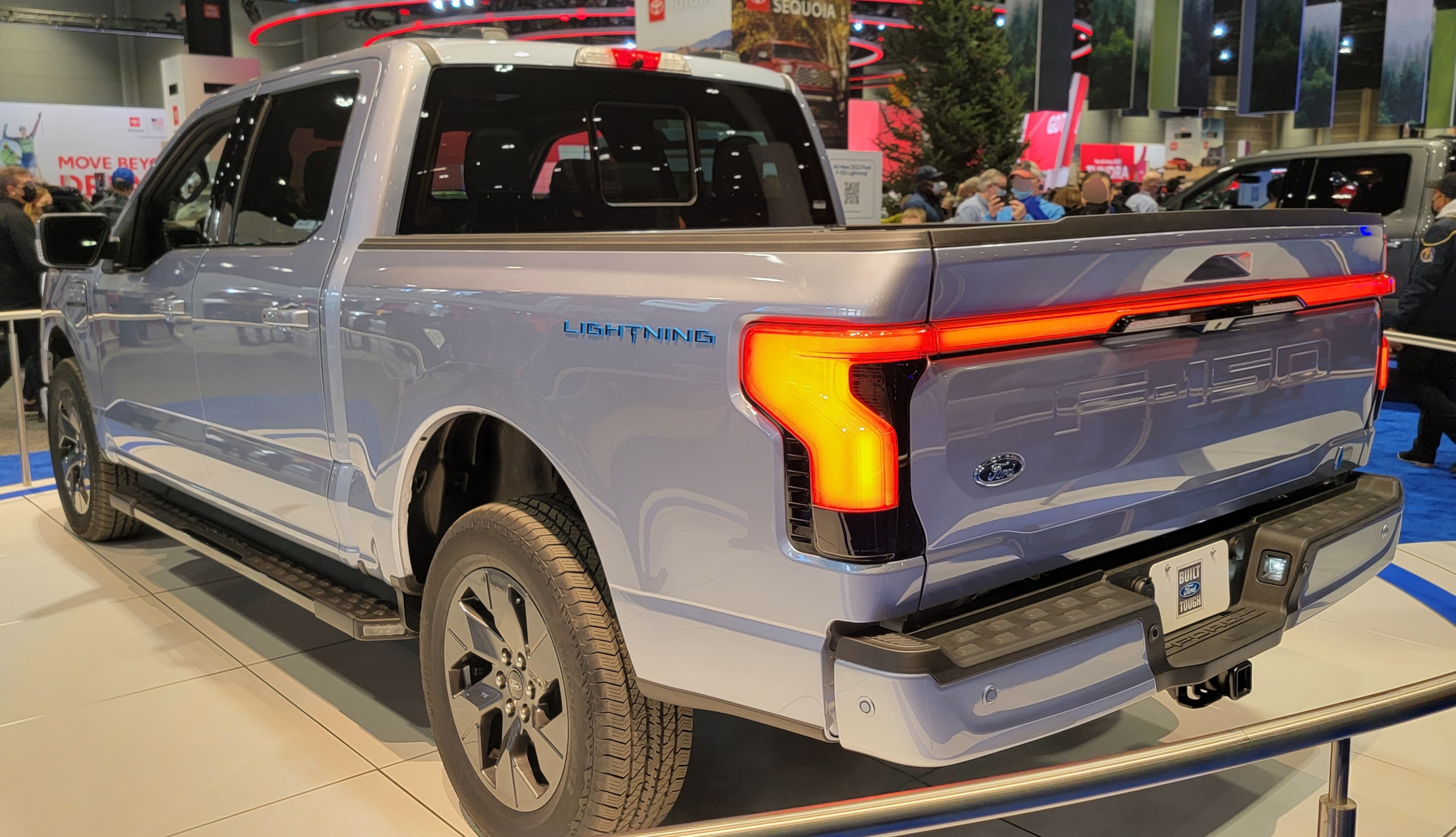
Ford F-150
"For dealers, Dad, we've got 1.4 million 2015 to 2017 model year Ford F-150 trucks being recalled right now."
Ford is recalling certain 2015–2017 F-150 trucks because a sensor problem in the transmission can make the truck shift unexpectedly. That unexpected shift can make the rear wheels lose traction, which increases the risk of a crash.
The Ford F-150 is being recalled for the 2015–2017 model years due to a transmission-related issue. The hosts connect the recall to a faulty sensor signal that can cause an unintended downshift, which can affect traction and raise crash risk.
six-speed automatic transmission
"This recalls tied to the six-speed automatic transmission's faulty sensor signal may trigger an unintended downshift in the second gear"
This is the truck’s automatic gearbox with six different gear ratios. The recall is about a sensor signal that can confuse the transmission and cause it to shift when it shouldn’t.
A six-speed automatic transmission is the gearbox that uses hydraulic/electronic control to automatically select one of six gear ratios. In this recall, the problem is tied to how the transmission control system interprets sensor input, which can lead to unintended shifting.
faulty sensor signal
"This recalls tied to the six-speed automatic transmission's faulty sensor signal may trigger an unintended downshift in the second gear while driving in certain conditions."
A sensor is like a “messenger” that tells the car what’s happening. If that message is wrong, the car may shift at the wrong time, which is what the recall describes.
A faulty sensor signal means the transmission control system is receiving incorrect data from a sensor. If the control unit acts on that wrong information, it can command the wrong gear—here, an unintended downshift.
unintended downshift
"may trigger an unintended downshift in the second gear while driving in certain conditions."
A downshift is when the car goes to a lower gear. “Unintended” means it happens unexpectedly, which can change how the truck pulls and slows down and can affect stability.
An unintended downshift is when the transmission changes to a lower gear without the driver requesting it. That can change engine braking and torque delivery suddenly, which may destabilize the vehicle in certain driving conditions.
rear wheels to slip
"The issue could cause the rear wheels to slip, increasing crash risk."
If the rear tires slip, they’re spinning or sliding instead of gripping the road. That can make the truck harder to control, especially in certain conditions.
When the rear wheels slip, traction is lost between the tires and the road surface. In the context of an unexpected gear change, that loss of traction can increase the likelihood of loss of control and raises crash risk.
NHTSA recalls tracking
"because we track this from NHTSA all the time, this chart right here that shows you recalls by manufacture."
NHTSA is the U.S. agency that keeps track of car safety problems. When a problem is serious enough, the manufacturer issues a recall, and NHTSA records it so people can see which brands are affected.
The segment references NHTSA, the U.S. National Highway Traffic Safety Administration, which collects and publishes vehicle safety recall information. “Recalls by manufacture” is a way to compare how often different automakers have safety issues that require corrective action.
vehicle recalls by manufacturer
"One is Ford is out with a big lead like they did last year in terms of total recalls. They have 31. The next most interesting thing is Toyota... they have 11 recalls."
They’re looking at how many recalls each brand has. More recalls can be a sign that quality or engineering has slipped, but it’s not the same as saying every single vehicle is unsafe.
The hosts discuss a chart that tallies recalls by automaker, using it as a signal of broader quality and reliability trends. While recall counts don’t directly equal “how bad” every car is, they do reflect how frequently manufacturers are forced to fix safety-related defects.
Toyota
"Toyota, Dad, is in second place... they have 11 recalls. So, it's surprising to see Toyota with so many recalls."
Toyota is shown as having more recalls than you’d expect based on its reputation. The hosts think it’s surprising, and they connect it to changes in how Toyota builds engines for fuel economy.
Toyota is highlighted as surprisingly high on the recall chart, despite its reputation for reliability. The discussion suggests that even traditionally dependable brands can struggle when redesigning powertrains and meeting efficiency goals.
General Motors
"they're tied with General Motors and Chrysler, but they have 11 recalls."
General Motors is included in the comparison of recall numbers across major brands. The takeaway is that this isn’t just one company—it’s showing up across several big players.
General Motors is mentioned as being tied with Toyota and Chrysler for recall counts in the chart. It’s used to support the broader point that multiple large automakers are seeing elevated recall activity.
Chrysler
"they're tied with General Motors and Chrysler, but they have 11 recalls."
Chrysler is mentioned as one of the brands with recall numbers similar to Toyota and General Motors. It’s used to show the issue is widespread, not isolated.
Chrysler is referenced as tied with Toyota and General Motors for recall counts in the chart. It’s part of the hosts’ argument that recall activity is elevated across multiple major manufacturers.
loan length (72 to 84 months)
"if the average loan length is somewhere between 72 and 84 months... how the hell are the vehicles going to make it through the loan length?"
They’re saying many people finance cars for 6 to 7 years. If the car starts having problems after the warranty ends, the owner could be paying for big repairs out of pocket during that long loan.
The hosts connect long auto loan terms—about 72 to 84 months—to the risk of needing major repairs after the warranty period. The idea is that if reliability is worsening, the ownership period where repairs are most expensive may extend beyond coverage.
warranty period vs major repair timing
"a major repair that's going to become necessary after a warranty period. This makes it harder for everybody."
The segment implies that major repairs are likely to occur after the warranty period, which increases total cost of ownership. This ties recall/quality concerns to real-world financial risk for buyers.
turbocharged four-cylinder engines replacing V8s and six-cylinder engines
"trying to figure out ways to make pickup trucks and big SUVs more economical, gas-wise, taking away V8s and six-cylinder engines and replacing them with smaller turbocharged four-cylinder engines"
The hosts discuss a powertrain shift: moving from larger V8s and inline six-cylinder engines to smaller turbocharged four-cylinder engines to improve fuel economy. This is a broader industry trend that can affect reliability, cooling, and long-term wear depending on design and calibration.
CAFE standards
"And they all struggled because they were trying to hit CAFE standards and EPA standards that forced them to produce engines that wouldn't allow the vehicles to last as long as they should have."
CAFE standards are rules that push car companies to make their overall lineup get better gas mileage. To do that, they may change engines and emissions systems, and if those changes are too aggressive, some cars can end up having more problems later.
CAFE (Corporate Average Fuel Economy) standards require automakers to meet fleet-wide fuel-economy targets. To comply, manufacturers often downsize engines, add turbocharging, and use more complex emissions controls, which can increase the chance of reliability problems if the technology is pushed hard or not fully matured.
EPA standards
"And they all struggled because they were trying to hit CAFE standards and EPA standards that forced them to produce engines that wouldn't allow the vehicles to last as long as they should have."
EPA standards are government rules about how much pollution a car is allowed to produce. Automakers have to design engines and exhaust systems to meet those limits, and that can sometimes create extra complexity that affects long-term reliability.
EPA standards are U.S. Environmental Protection Agency limits for vehicle emissions. Meeting them typically requires advanced engine calibration and emissions hardware, and the transcript suggests that pressure to comply can lead to reliability issues and, in some cases, improper compliance behavior.
pandemic era new vehicles
"...it seems were impacting those pandemic era new vehicles, the 2020, 2021, 2022, 2023 vehicles, but this one 1.4 million F-150s..."
During the pandemic, car production got disrupted—parts were harder to get and factories changed how they operated. The hosts are suggesting that those disruptions could contribute to more problems, but they also say it’s not the only reason.
“Pandemic era” vehicle production often coincided with supply-chain disruptions, staffing changes, and faster-than-usual engineering or sourcing decisions. The transcript frames recalls as potentially linked to those conditions, though they later argue the F-150 recall undermines that single-cause explanation.
cooked the books
"They cooked the books when it came to EPA emissions in order to have the vehicles meet the standards that the government set up because they knew they couldn't."
The phrase “cooked the books” means cheating on the rules—here, by making emissions tests look better than real-world driving. The point is that if companies feel they can’t meet the standards honestly, they may try to game the system.
“Cooked the books” is a colloquial way to describe cheating or manipulating emissions testing results to appear compliant. The hosts claim some German manufacturers did this to meet EPA emissions targets they allegedly couldn’t realistically achieve, highlighting how compliance pressure can lead to misconduct and long-term fallout.
unintended consequences
"So sometimes government standards have unintended consequences because sometimes the government standards that are mandated are not reasonable and cannot be met."
Unintended consequences are results of a rule that nobody expected. The hosts are saying emissions and fuel rules can force carmakers into changes that sometimes make cars less reliable than they should be.
Unintended consequences are side effects of a policy that weren’t fully anticipated when the policy was created. Here, the hosts argue that mandated emissions and fuel-economy rules can push manufacturers toward designs that increase complexity and reliability risk, even if the original goal was environmental improvement.
negotiable vehicles
"The intent, the goal here is to help y'all find the best, most negotiable vehicles as quickly as possible and get yourself a good car deal moderate leverage on this bad boy."
“Negotiable” just means the price might be easier to bargain on. The hosts are using their map and listing info to point you toward cars that are more likely to have room for a better deal.
“Negotiable” refers to how much room a buyer has to negotiate the price down from the listing. The segment ties negotiability to listing data like days on market and regional demand, implying that certain areas (more “in the red”) may have less pricing flexibility.
moderate leverage
"...get yourself a good car deal moderate leverage on this bad boy."
“Leverage” is how much power you have to negotiate the price. “Moderate leverage” means you might be able to get a decent deal, but it won’t be a slam dunk like in a super slow market.
“Leverage” in car buying means the buyer’s ability to negotiate based on market conditions and the seller’s urgency. “Moderate leverage” suggests the buyer has some bargaining power, but not as much as in markets where inventory sits longer or demand is weaker.
Request an Explanation
Heard something you'd like explained? We'll add it to this episode.
Sign in to request explanations for terms you heard.
Want to learn more?
Browse our glossary for plain-English explanations of automotive terms, jargon, and concepts.
Help improve this episode
See something that's not quite right? Our annotations are AI-generated and can sometimes miss the mark. Click the flag icon on any annotation to suggest a correction.