The episode is about companies that aren’t really car makers trying to make a car anyway. The hosts discuss why that can be exciting, but also why it often doesn’t go as well as people expect.
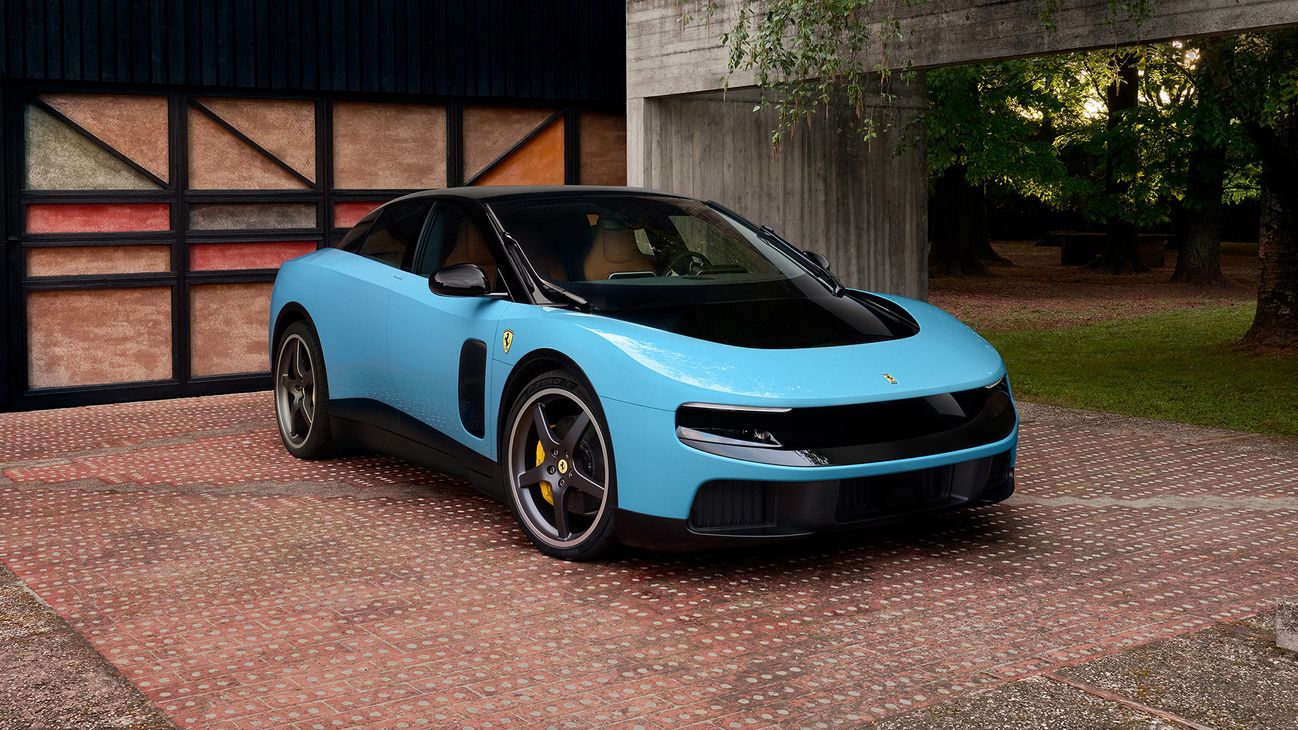
Ferrari Luce is a Ferrari car project that got a lot of attention. The hosts mention it because it was created with help from a design agency, which is a different kind of collaboration than you’d usually expect from a car company.
Love From is a design company/brand that works on creative projects. Here, the hosts mention it because it helped design the Ferrari Luce, which is part of why that car got so much attention.
Johnny Ive is a famous designer. The hosts bring him up because his design agency is connected to the Ferrari Luce, which is part of the story about outsiders trying to build cars.
Homologation is the paperwork-and-testing process that makes a car legal to sell in a country. It means the car has been checked to meet safety and emissions rules for that place.
Emissions legislation is the set of laws that control how much pollution a car is allowed to produce. Different countries have different rules, so a car has to be made and tested to match each one.
INEOS is the company mentioned as an example of how you can start a car business. In this story, they rely heavily on other companies to build and engineer parts of the car.
Magna is mentioned as a partner company that can help design and build a car. The host’s point is that a new car company can outsource the hard engineering and production work to specialists like Magna.
“Fully homologated” means the car has completed the required approval steps so it can be sold legally in the target markets. In practice, that usually implies the vehicle has been tested for safety and emissions compliance, not just engineered to work.
Crash testing is how engineers prove a car is safe in crashes by running it through standardized impact tests. “Fully crash tested” means it has passed the required safety tests for approval.
The Ineos Grenadier is a tough off-road SUV built like older trucks, with a strong frame underneath. It uses BMW engines and is meant to be more hands-on and rugged than most modern cars.
Body-on-chassis means the car has a separate heavy frame underneath, and the body bolts to it. It’s great for rough use, but it can feel less smooth than newer car designs.
When they say it has “BMW engines,” they mean the engine design comes from BMW. That can be a good sign because BMW engines are well-developed and parts/service are often easier to find.
Fuel consumption is just how thirsty the car is—how much gas it burns to drive a certain distance. The speaker is saying it uses a lot of fuel, especially with the petrol version.
A diesel engine works differently than a gas engine and often feels stronger at low speeds. Here, it’s mentioned as the alternative to the petrol version when talking about fuel use.
“Mobile white goods” is a put-down meaning “just like a household appliance, but on wheels.” The speaker is saying modern cars can feel boring and generic compared with older, more characterful ones.
This is about how, on actual trails, you usually hit your own limits before the car’s limits. So two capable off-road vehicles can feel similar in practice because the driver is the bottleneck.
This is about supply-chain problems. If an important company that provides parts stops working, the carmaker may have to pause building cars until it can source replacements.
Recaro makes car seats, and they’re used in a lot of vehicles. The point here is that if a supplier like Recaro runs into trouble, a brand trying to build cars can get stuck because it can’t get the seats it needs.
Range is how far an EV can go before it needs charging. A big number like 600 miles only matters if it’s measured in a way that matches how people actually drive.
Solid-state batteries are a newer kind of EV battery that uses a solid material instead of a liquid inside. The idea is that they could store more energy and be safer, but making them reliably and cheaply is very difficult.
The “150 kilowatt” number they mention is really about how much energy the battery can store. Bigger battery capacity usually helps with longer range, but it doesn’t guarantee it by itself.
“24-inch wheels” means the wheel diameter was planned to be very large. Wheel size can affect how the car rides and how the tires behave, and it can also influence how much room the designers can fit inside.
The Aston Martin DB9 is a luxury sports car made by Aston Martin. It’s designed for comfortable long-distance driving while still being fast, and it’s known for its strong V12 engine. It may be mentioned because it’s a well-known model from Aston Martin’s performance era.
The Aston Martin Vanquish is a fast, luxury sports car made by Aston Martin. It’s meant for spirited driving but still aims to be comfortable for longer trips. It comes up in conversations because it’s one of the brand’s more performance-oriented models.
It’s a car that runs on electricity and is designed to drive itself. Instead of you doing all the driving, the car uses cameras/sensors and computer software to handle driving tasks.
Project Titan is the name Apple used for its attempt to build a self-driving, electric car. It was a big multi-year engineering effort that eventually got shut down.
Mercedes is a major car brand. The episode mentions it as part of the group of companies Apple reportedly considered partnering with for autonomous-car work.
BYD is an electric-car company. The episode lists it as one of the companies Apple reportedly considered partnering with.
Term
Magneshtire
This sounds like a company connected to tires that the episode says Apple worked with briefly. Tires matter a lot for driving tech because they affect grip and vehicle control.
Chris Porritt is an engineer/executive who worked at Aston Martin and later Tesla. The episode says he may have been involved in Apple’s car project at some stage.
London is mentioned as an example of a city where self-driving cars have been tested in real traffic. The host uses it to show autonomy is easier in some places than others.
Waymo is a company that builds self-driving technology and has tested it with cars on real public roads. The host brings it up to show autonomy isn’t just a theory anymore.
The Jaguar I-Pace is an electric Jaguar SUV. The hosts are using it as an example of an EV that’s been used in real-world autonomous-driving experiments.
Instead of modifying an existing car, you build a self-driving car platform from the ground up. That’s usually much more expensive because everything has to be engineered for the tech.
Los Angeles is brought up as a big city where self-driving might be more workable. The host suggests it gets harder once you leave the city and its structured roads.
Person
Ferrucho Lamborghini
Ferruccio Lamborghini was the person who started Lamborghini. He owned a Ferrari but wasn’t happy with it, and that’s often credited as the reason he pushed to build his own sports cars.
Enzo Ferrari was the founder and driving force behind Ferrari. In this episode’s story, he’s the figure Ferruccio Lamborghini was allegedly angry at, which is framed as motivation for Lamborghini to build its own cars.
A V12 engine is an engine with 12 cylinders arranged in two rows that make a V shape. More cylinders usually means smoother power delivery, and it’s a classic layout for high-end performance cars.
The Lamborghini 350 GT is one of Lamborghini’s first real road cars. It’s a big-deal model because Lamborghini used its new V12 engine to prove it could build a proper sports/grand touring car, not just tractors.
Brand
vw
VW is Volkswagen. The hosts are talking about how Smart originally worked with VW, then split and needed a different partner.
Geely is another major automaker. The hosts mention it because it’s part of Smart’s ownership, which helps Smart keep producing cars.
Car
KTM crossbow
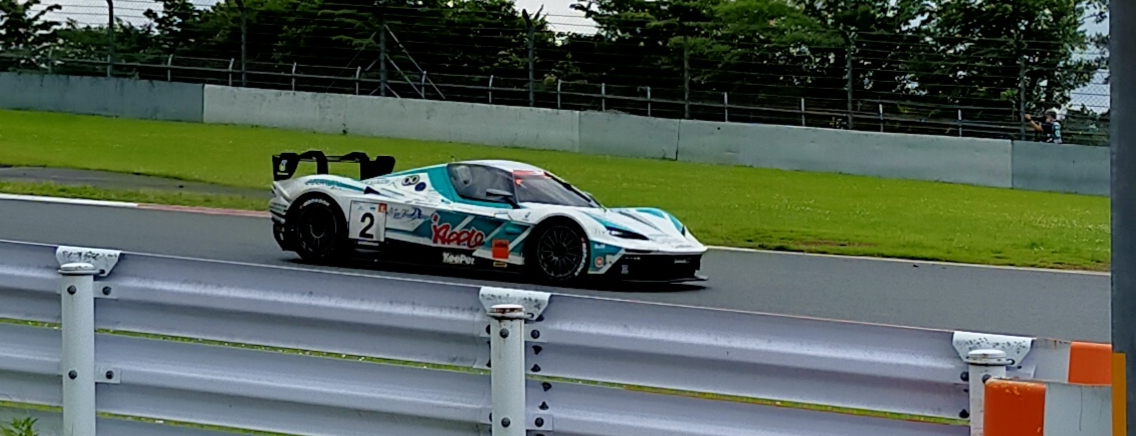
The KTM Crossbow is a weird, performance-focused car from KTM (a company famous for motorcycles). It’s built to feel like a track toy—lightweight and very driver-focused.
The KTM X-Bow is a small, lightweight sports car with two seats and an open design. It’s built to be fun to drive and to feel quick and responsive, mainly by keeping the car light. It may be brought up because it’s a different kind of performance car than the usual luxury grand tourers.
Unassisted steering means there’s little help from a power system. You have to use more strength to turn the wheel, especially when driving slowly or maneuvering.
A joint venture is when two companies work together on the same project. Even if both sides bring strengths, it can still fall apart if they can’t make the plan work in practice.
Car
Yamaha OX 99-11
The Yamaha OX 99-11 was a wild concept car meant to bring race-car tech from Formula 1 to regular roads. It used a V12 engine inspired by F1, had a lightweight carbon-fiber structure, and was designed like a two-seat race car.
A tandem two-seater places the driver and passenger one behind the other, like many race cars. This reduces frontal area and can improve aerodynamics compared with side-by-side seating.
Detuned means the engine is set up to make less peak power than the race version. The goal is usually to make it easier to drive and less stressed for everyday use.
A carbon fiber monocoque is a one-piece “shell” made from carbon fiber that holds the car together. It’s used because it’s very light but also very strong, which is great for performance cars.
The McLaren F1 is a famous supercar built with a lot of race-car thinking. In this discussion, it’s used as an example of a big, ambitious project that still faced tough real-world hurdles.
The Mercury Marauder is a performance car model from Mercury, which was part of Ford’s lineup historically. It was made to feel powerful and exciting to drive. It may be mentioned because it’s a recognizable example of older American performance cars.
LIVE
Welcome back to the intercooler podcast everybody episode 317 of the intercooler podcast. That's
the podcast powered by car finance specialist JBR capital Dan Proser and Andrew Frankel with
you here. Andrew before we get stuck in with this week's topic, we just want to remind you
all that Father's Day is just around the corner 21st of June. It's coming around fast but we
have the perfect gift idea for your old man. If he loves cars we think he will love a gift
subscription to the intercooler and better yet at checkout if you use coupon code GIFT10 you'll
get a 10% discount. Our gift subs start at £45 that's before the discount and hopefully it's
something that your dad will enjoy all year round. There'll be a link in the description or just
go to the-intercooler.com and find the GIFTS page and you can check out in seconds it's really
really easy and that gift subscription will give him full access to our multi-award winning
ad-free online car magazine. So if your dad likes cars please do go and check it out and see if
you think it will be for him. When outsiders create cars, right, that's the topic for this week's
podcast. Andrew, can you explain why we've chosen that topic this week? It may have something to do
with a topic we discussed on last week's podcast. The not entirely uncontroversial launch of the
Ferrari Luce which was famously designed in collaboration with, I don't think we can say it
was designed entirely by Love From which is Johnny Ives design agency but it was clearly a
collaboration between Ferrari and them and the results have certainly got people talking. I
have a look at those other attempts and they have largely been attempts rather than success but
not exclusively. There are examples where it has worked where companies not known and which never
started as car companies nevertheless decided to try to turn their hands to creating four-wheel
personal transport. Yeah if you want to know exactly what we think of the Luce we covered it
in great detail last week so spool back a week and you can hear what we think of the Luce that's
not what we're doing here. We are looking at those other industry outsiders who have turned their
hand to cars. It's quite striking there have been some enormous companies actually the world's biggest
and most profitable companies some of them have attempted at least or looked very hard and even
begun developing their own cars and it's rarely gone as planned but why is that and why do these
huge very capable and very profitable companies bother with cars at all? Do you think ultimately
Andrew it's that if you get it right it can be wonderfully profitable? But can it? I suppose it
can be if you're a Ferrari or someone like that but we all know that margins on cars are nothing
compared to the margin on you know most particularly luxury goods so why do they do it? I think there's
an element of hubris in there I think it's something that these it's like you know there was a time
when I think they're almost like sort of football teams or newspapers I think if you're a very very
wealthy company or individual back in the day that's the thing you know but back in the day in the
sort of 30s or whenever if you're really really rich one of the signs you always you owned a
newspaper yeah and then more recently it's been a football team hasn't it and I think that
it's somehow either they weren't told or they just didn't listen nobody told them how difficult it is
it is it is unimaginably hard from scratch not as a sort of you know a spin off from
some massive OEM who has huge amounts of technology and resource and experience and a
you know a ready to roll supply I mean it's just to think about what you have to do think about
what you have to do to start a new car company the very least the easy bit is
designing the car you decide what you want the car to be and you design you get it built too I mean
how many you know British startups have there been which have you know which have designed a ground
total of one car because what they discover is that designing a car and even producing the car
and showing the car is a walk in the park compared to actually producing it to the quality that the
market um insists upon and selling it at a price that's going to return you a profit a profit
that's the difficult that's the hard bit you know compared to that um you know actually
designing the cars fall off log easy so and I think that's where these um these these characters
tend to fall over I just don't think that they realize that once they get into things like
the supply chain you know how many components does a modern car have I don't know but it'll be
thousands um none of them will be made by the company whose name's on the front they'll all
come from somewhere else they'll all come from some suppliers um building the relationships with
these suppliers um persuading suppliers to give over capacity to your project when actually they've
probably got your rivals um banging down their door and their rivals may not be too happy with you
with you going off and flirting with some new car company um setting up you know understanding
that those suppliers themselves have suppliers dealer networks websites homologation oh my goodness
you know emissions legislation in every which is different anywhere in the world you try to go
there's a new set of rules which to comply um it is I cannot even begin to get my head around
how difficult it must be to start a new car company from scratch um the only way I think you can do it
and this is a company that we will talk about is the way that INEOS have done it where basically
they get everybody else to do it not just supply the engines and gearboxes which in their case is
being done but you get somebody else to build the car you get a Magna in Austria and just say um
develop it engineer it here's here's a here's a very large check develop me a car engineer the car
and bring ready for market a car that is fully homologated fully crash tested fully compliant
with emissions but legislation everything else because you know how to do it we haven't got a
clue it's the only way you can do it I think you know um and even then even even then it's not to say
that the results without this difficulties so yeah it's just it's impossibly difficult and the only
reason I have for why well I mean the list is reasonably long of organizations that have
decided to try to do it is because I think they can only not realize because if they
realized what they were taking on they simply wouldn't do it it's the thing is as you touched on it
must be hubris or naivety because why would you choose to do it it is so difficult it's so complicated
it's so expensive to do and then the margins on the products are really rubbish it's such
a tough business I don't I don't know why they would do it I remember um David Tuig one of our
contributors um told a brilliant story from his days at Nissan um and Carlos Gown the chief of
the Renault Nissan Alliance was giving a speech to the whole company and he was asked if they
should be worried about Apple entering the car market as was being rumored at the time
and Carlos Gown said something along the lines of why would they enter such a terrible industry
like ours where profit margins are in the single digit percentages while they're making 50 percent
or more margins mostly on software and he was right why would they do it why would they risk
their business getting into a much much tougher less profitable one it didn't stop them trying
it didn't stop them trying it didn't perhaps stop them bringing that car to market we will we will
come back to we will come back to Apple um because it's an interesting study here um but I think
there are a couple of British examples that we should kick off with Andrew you've mentioned
Ineos um should we cover that one off now I mean their their one model is the Grenadier
with a a couple of variants I've not driven a Grenadier you've driven a couple I mean how is
the car itself it's interesting um it's it's very flawed in in many ways they've gone for this
um body on chassis design um because it's traditional and it's very robust
they've got BMW engines um
the steering is an acquired taste I think that's fair to say you know luckily I come from a world
of very old Landrovers um and so I kind of understand I can get my head around it um
you know the ride and refinement is not good by modern standards the fuel consumption is fairly
terrible particularly if you get the petrol because you can buy them with a three liter petrol
or diesel engine um some of the ergonomics are a joke um but they do have a certain sort of
charm about them you know there's nothing there's nothing boring about Ineos um about a Grenadier
you get in it and there is even because you've got to manage it so much more than most cars
because you have to become more involved just to sort of conduct it smoothly um there is a
sort of frissal or something a sense of occasion um I quite look forward to driving them because
you know that you know we goodness knows we are sold we are served up so much tedious electric
stuff these days these sort of mean boys talk about them being you know mobile white goods
don't we it's it's it's the opposite of that what I can't really understand is who it's for
because it's not for farmers um because it's just too expensive um you know these are not
cheap cars and if you're going to go and buy if you want an authentic off-roader um that is really
good off-road the Ineos is all really good off-road um why would you not just go and buy a Defender
yeah yeah which has that brand that history that heritage behind it is a much better car to drive
on road um I haven't had an Ineos or a Defender off-road back to back but I can't imagine how
extreme the kind of off-roading you'd have to do before you could determine which one was actually
more capable than the other I mean in both cases it is almost certain that the nerve of the driver
will run out long before the ability of the car um so if they're as good as each other in the real
world off-road um so I just don't really understand who they're for but they have a certain character
to them and I have a certain sort of sneaking fondness for them as a result um but I cannot
say in my hand my heart compared to something like a Defender that they're that they are terribly
good cars because they're not so Ineos is um not a car maker it's a petrochemical giant founded by
Sir Jim Ratcliffe a multi-billionaire wildly profitable company Britain's richest man isn't he
oh I think he is yeah um but actually I think the Grenadier the car business has been difficult
for them commercially hasn't it so far I don't know how much you know about that well I mean I
haven't seen any any figures I mean anecdotally it's what you hear but I don't want to um you know
come out and say anything stupid like oh you know the Grenadier has been a disaster and it's been a
sales nightmare because I don't know that mean you don't see many around um and
people's you know people sort of say things but you know I'm not going to you know say anything
definitive about a car we haven't seen no data on it at all so um yeah no one's ever said to me
that it's flying and you say you kind of suspect that if it were they'd say so but I don't really
have any more empirical evidence um than that but I think it has been difficult they also didn't they
and this is another one of the nightmares of you know trying to start a car company you are so
vulnerable if one of your suppliers falls over yes um and they had this didn't they
with Recaro the German seat manufacturer um I think Recaro got into financial difficulty
and for a while Ineos had to stop production because they didn't own seats and you think how
many bits are on that car that if the supply suddenly stopped you couldn't sell the car
because without the bit the car doesn't work um now if you're a Volkswagen you will have a plan
B and a plan C and probably a plan D E and F too so if one supply falls over there's another one
waiting waiting in the wings too um to step in but yeah so I mean that's it's so you're vulnerable
on that score too um but yeah so I've I've forgotten what I was meant to say so on the sales side I
the only bit of data I have found is that Ineos reported a record quarter of sales last month
um so up 20% over the previous the same cause of the previous year so perhaps it's going in the
right direction but you're right if those things are really but they okay if they said that but
but they haven't said put any numbers on it no so that's right so we we don't know what they're 20
percent over it could be 20 percent over almost nothing well you know if they sold four cars and
then they've turned the turn into this old another car then it'd be five car w 20 percent it doesn't
you know it doesn't say um yeah without the numbers you know what do these figures mean
it means it was better than last year but that could be you know from really good to absolutely
terrific or from catastrophic to merely terrible who knows yeah and the the thing is where when car
companies sort of obfuscate the data it sort of suggests that it's not that strong when the sales
rules of motoring journalism sorry can I just say this is one of the first rules of motoring
journalism is read what they say by all means but think about what they're not saying because if it
was good news they'd say it and if they don't say that this car is best in class at this that of the
other that's because it's not um you always have to look for what's not being said because it is
almost invariably more instructive than what is sorry yeah all I was going to say was it may well
have been difficult for them the car may have its quirks to put it mildly but they brought a car to
market um which is more than most and as you said Andrew it's um it's perhaps largely because of the
way they've approached it so they they engage Magna Steyer in them in Austria not only to manufacture
the car but also to to engineer the thing um and Magna Steyer is a very very competent very credible
sort of contract manufacturing business um and so perhaps that is the way to do it if you are
an industry outsider like INEOS um maybe approaching a Magna Steyer or similar is
really the only way to make this sort of thing work and even then it can be extremely difficult
and this is not the approach taken by another British company which is Dyson um I'm sure we
remember a few years ago Dyson was very publicly building an EV um and I mean Dyson is a wildly
again a wildly successful and profitable and innovative company um known for vacuum cleaners
and hairdryers and all sorts of household goods but nothing quite as complex as a car um and this
this Dyson car was going to be a seven seat SUV a full EV um and it was a large car um it was
apparently going to have a 600 mile range although I mean it's easy to make those big claims without
having to back them up isn't it yeah but it had a 150 kilowatt battery I mean an absolutely enormous
battery yeah and also I don't know if you're going to talk about solid state but it was um
they were you know one of the big things about this so I don't think they would have had it at
launch but they planned to introduce solid state batteries and in fact I believe they actually
bought a solid state battery company um just to um understand this technology
and that would have brought everything down um if um if they managed to to do that but um
yeah it never happened did it I think solid state was probably the big bet that James Dyson
was making he was betting that by acquiring the company was called Sakti 3 um I think he was betting
that if you could acquire that company and bring solid state to market that its car would be
revolutionary and it might well have been in that case um I mean there was some sort of interesting
design choices otherwise big 24 inch wheels wheels pressed out to all four corners to make the
the interior really spacious and I think interior and seat comfort and space was
its big selling point other than um solid state had they been able to do that um and it's um
it was going to be a sort of £150,000 car so a very very premium very expensive car
and the reason that they canned it in the end was that they they realized um given the state of the
market given the what that car would have to cost it just wasn't commercially viable um
now I I have a little bit of insight into this because well Dyson one of the curious things
was that they they didn't employ any car designers they did the design in-house and I think learning
just how difficult that can be by doing so but they did employ a lot of um car engineers 400
engineers many of them from the car industry including Minards, Ian Minards was the design
the engineering chief there yeah very very credible guy, ex Aston Martin um you know very
credible guy um you know been with Aston Martin for years and years all the way through the sort
I think through the vanquish and the DB9 and the original vantage era was the sort of chief engineer
at Aston Martin they they they at least did that you know they weren't trying to engineer a car with
zero background zero experience they did bring in car engineers one of whom actually was my wife
um who was head hunted from yeah just head hunted from Aston Martin um to go and work on this car
and so I had a little bit of insight and I think it's a shame that the car never came to anything
in large part because Dyson did at least approach it differently and they they tried to rethink
everything about how to design an engineer a car and not just adopt the sort of industry norms
and so you know there might well have been some interesting little innovations interesting little
approaches to challenges that that might have been quite quite profound had the car come to
market but as we know it it just never did um Dyson actually they there's a full page on the
website all about this car so they're very open about it there are pictures of it you can go and
see it James Dyson is quoted talking about it um ultimately he sunk half a billion pounds into
this project um and he well he he says one thing perhaps he thinks another but he says that he
doesn't regret it and he says that the company learned a great deal um from this whole program
that will benefit many of its other products um but ultimately it it really that Dyson car
came to nothing oh it's interesting a half a billion pounds I mean that just sounds like an
unimaginable amount of money isn't doesn't it but actually in car company terms it's not that much
yeah I mean and you wonder how much more he would have had to have spent to actually
get it to market um yeah to manufacture fully fully manufactured productionized
proper distribution network dealerships or that sort of thing I mean I suspect half a million
um pounds would barely have scratched the side of that particular um effort and so you know I think
it's probably smart to recognize that it wasn't going to go um get to market be a success and get
out while well you're only um you know half a million quid in the whole um half a million
billion sorry and the rather than you know what could be you know a multitude of that multiple of
absolutely it could have been um all right let's do some of the biggies then let's do Apple and
Google um a couple of the world's biggest most profitable most innovative most capable companies
both of them have at some point turned their attention to the car industry to see if they
could get involved um let's do Apple so it was building um an electric autonomous car
codenamed project Titan um from 2014 to as recent as 2024 it was still looking at this
this program they never publicly discussed it uh but reportedly there were up to 5 000 people
working on this project at one point um and so you know with thousands of people working on a
project word gets out doesn't it and when you're employing lots and lots of car engineers it's
quite obvious what you're up to um and so they they got a few dozen prototypes built um and some
were running on the roads um the project was only canned in February 2024 according to reports it
was costing Apple a billion dollars per year um so you know billions sunk into this thing
ultimately it was scrapped um to focus on Apple's uh AI and driverless car technology instead so
rather than building a car building the the AI and the programs that that support this um
but it's Apple reportedly pursued partnerships with some industry some car industry heavyweights
Tesla VW Mercedes McLaren BMW Nissan Hyundai and BYD also briefly partnered with Magneshtire again
as we mentioned Ineos um and actually it goes back much further again according to reports
because Apple has never really discussed this so it's we have to take all of this with a bit
of a pinch of salt I suppose but Steve Jobs apparently had plans to build a car as early as 2008
um and I also read I was surprised by this I read that Chris Porritt who was the former
engineering chief at Aston Martin and later Tesla that he was working on the project at one
point as well um so I mean it's quite striking isn't it Apple everything that that company is
capable of its resources its people everything it has at its disposal billions sunk on this project
ultimately comes to nothing interesting isn't it I mean I wonder whether it fell over on the
or the prospect of it being a fully autonomous car you mean a fully autonomous car is a car
that's well does what it says you need no driver involvement of any kind at all
now we know don't we that there are fully autonomous cars you know out on the road
right now you know you could see him driving around London all over the place to Jaguar Waymo
Jaguar I-Paces running around London and um and you can in certainly in California in LA and I think
increasingly in other cities in the US um there are fully autonomous cars there but it's
it's one thing to an adapt an existing EV to make it fully autonomous to actually design your own
thing from scratch um with all the massive additional costs the unimaginably massive
additional costs that that involves and then you look at the volumes that you're talking about
I think it was going to be quite expensive wasn't it I say no I think they were talking about I've
got down on my notes here I've written down um 100000 dollars so wow um
how many people are going to buy that thing but I suspect that wasn't the
problem I suspect the problem was it was getting a car it's you know it's fairly straightforward
to make a car autonomous fairly straightforward he says blithely in a place like Los in a place
like Los Angeles but yeah when you get out and about and into the boonies um or in you know
into a city where things aren't quite straightforward there's not a grid system or whatever you know
for the idea of a fully autonomous car that will work on any road in the world is it's
still so far away and I wonder if ultimately with that realization which caused them to pull the plug
um or maybe um it may be you know you that was a long list of other manufacturers you read out
that they tried to get into bed with um and maybe they all just recognized the threat that apple
posed and just said not in your life I don't know what it was but we never saw the car
did we I mean I think there were renders of it and that sort of thing um and we know that things
got built but you know when they're not talking about it all we can do is just sort of sit here
and and speculate which is which is not ideal but we don't really have anything else to go on do we
no some people um took the Ferrari luce and they took the the Ferrari badges off and put
apple logos on and it sort of starts to make a bit more sense then no but there were all those
all those luce memes weren't there yeah oh yeah it was endless okay let's do google quickly
yeah um so google began its self-driving car program in January 2009 um and that project
became public knowledge after a new york times report in october 2010 by which point google had
seven vehicles testing on the road um and in december 2014 google unveiled the firefly prototype
a self-driving car again electric self-driving car um so google actually did build its own car and it
did announce this thing um yeah in autumn 2015 google conducted the very first entirely autonomous
trip on a public road that was in austin texas and the passenger was a blind man um and he was
not accompanied by a test driver or police escort the car had no steering wheel or pedals um by the
end of 2015 the project had covered more than a million miles but then it morphed in december 2016
it became wemo which you've mentioned already um and so clearly google decided rather than trying to
build its own car it would just build out the the autonomous tech um using other people's cars and
so today wemo keeps a fleet of 3000 um autonomous jaguar eyepaces operating in most of u k cities
but i think in london as well um and elsewhere um they also test cry under the moment okay they're
testing fine they also use chrysler's zikas and hyundais um but wemo has no plans to build its own
car now um no which is perhaps a sort of sensible approach isn't it build out the the autonomous
technology and the hardware uh and the software but don't bother with the car itself i think what
made them actually abandoning the car themselves was that wasn't there some legislation um in california
which said that i think it was in california which said that it was fine for the car to drive itself
but it required someone to be there monitoring operations at all times okay at which stage
you might probably be driving the car yourself um and i think i think that's why i fell over um
but these are big companies these are some of the biggest companies in the world aren't they
um yeah they are who came saw and didn't conquer you know had a good long look and ran away um so
we've rattled off quite a few there that have not worked i mean inios perhaps is unknown for now um
but should we do some of the ones that have worked some of the outsiders who have moved into the the
car space and made a go of it um i want to propose one which i think is the best example
of an industry outsider turning its attention to cars and making a success of it a lasting success
okay oh lamborghini yeah i should have let you guess i should have let you guess well
yeah no absolutely you are you are absolutely right um it was kind of it did know how to it was
already making things with engines and four wheels yeah similar yeah yeah yeah tractors
it's a good idea that was a very good shot what um the story is well known isn't it can you
off the top of your head can you sort of recount the the story of ferrucho lamborghini becoming so
enraged at enzo ferrari that he decided to build his own car well the other thing is
about eight different stories um i i mean they're all basically um on the theme of lamborghini
lamborghini being unimpressed with either ferrari or his ferrari and decided to go off and
do it instead but whether it was because um he was disappointed with the quality of the
ferrari that he had or whether because he felt he'd been snubbed by enzo or whether because
his ferrari had broken down or well i mean there are lots of different versions of the story but
i think what is generally held to be true is that ferrucho lamborghini tractor manufacturer
owned a ferrari became unhappy with it um and thought i can do better than that and did or tried
at least yeah and but the um and it's what we've touched on a couple of times already he didn't
just do it himself he didn't just get his tractor engineers to give up big heavy agricultural
equipment and go do a sports car instead or certainly not with it's sort of breakout car
suppose the mirror he he went to the best in the business didn't he he went to a bit serene yeah
yeah um and developed this incredible new v12 engine which made its debut in 1963
um and was still in the back of the how do you never know how you pronounce it mercy alego
um whenever that went out of production i mean it's one of the most long-lived amazing engines
that there's ever been um and they produced this 350 gt and then in 1966 the mirror the only thing
i would say about this is that you know lamborghini it was one of those companies we think of it now
we think of it being hugely successful that only really happened once adi came in um it did have
a fairly hand-to-mouth existence um for decades um all the way through the through the early years
the company was being bounced from owners to owners and you know ferruchio got out quite early
crizler had it for a bit and i think a bloke called patrick mimram had it for a bit and
yeah it was always living this very precarious existence until eventually you know adi came
in bought it resourced it properly put them in touch with their supply network and sorted the
business out and then you get what you get so although lamborghini survived um it was pretty
precarious for really quite a long time but yes it's undoubtedly an example of somebody who
didn't make cars decided to make cars and making a very good go of it albeit with the help of um
established engineers yeah so have you got any other examples that you want to run through yeah
i've got one particular one which really interests me because this is kind of still going i mean it
did evolve um but it is still going um years after it was originally conceived so the manufacturer
i'm thinking of is swatch yeah i hoped you would come up with swatch yeah it's a good tail
it's a great tail um you know it was he desired in 1990 he's made plans for this bloke
nicholas hyax started making plans for a small electric car it was first seen testing in 1993
planned to launch in 1997 um you had this idea that it would have removable paint films so you
could change the color of your car just by ripping film the different films off it or putting new
films onto it i guess it was like a sort of version of what they do um these days um and it was you
came with Volkswagen backing so it was you know it was quite a sensible thing and i mean i can
remember back in my auto car days you know very grainy scoops of this weird little sort of frog
like car um running around um and then in the end Mercedes Benz got involved and they said okay what
we need to do is throw away this idea of it being a little electric thing we'll put some we'll put an
internal combustion engine in it um we're going to create a brand new car company um and we will
take the s from uh swatch we'll take the m from Mercedes Benz and we'll put the word art on the
end of it to define the sort of the art of the automobile as it as they thought it then was
and we'll name this new company smart um and the first product of that relationship was the
little 42 town car which i always thought was much better than people tended to think it was at
the time and yeah they're still going all these years later with little EVs actually and some
bigger ones as well but little EV that perhaps was the original the original intention i mean the
the reason that um they broke with vw was um piet called it an elephant and a real estate
piet wasn't keen on it at all um and so vw sort of walked away and they needed somebody else to
come in and um and sort of that and they built this new factory at handback um cost a huge
amount of money in france um you know they had a proper series go at it so yeah and they're still
doing it yeah it's a good example that um but again that's by partnering with a huge established
car maker isn't it yeah and they're now part of like with not just Mercedes Benz but with geely
as well are they yes yeah yeah it's part owned by Mercedes part by geely they're not going anywhere
then um let's do one other um ktm um so the austrian motorcycle manufacturer and bicycles
actually um particularly known for its sort of off-road motorcycles and many other things
um but they they produced the crossbow um which is a sort of lightweight two-seat open top
extreme track day car so a sort of cross between an error left on the catering isn't it yeah it is
really um and i mean i actually don't know how successful from a commercial point of view that
car has been but there's plenty of them out there um i thought are they still manufacturing
i'm not sure i've driven a few yeah i think i haven't heard that they stopped
and they had that sort of gt4 race car didn't they yeah i've driven that thing with the canopy
it's not an open top car that one it's got this weird canopy thing um and i mean it's a very quick
very credible race car i found it's such hard work i i hated the seating position um i hated the
steering because it unassisted and just really heavy for my taste you know compared to what i'm
used to anyway i just found it really really difficult to drive but in the right hands i did
have a passenger ride actually with a pro driver and that was lightning fast with him at the wheel
so it's clearly not a bad car by any means i just couldn't get on with it um i want to
should we talk about the likes of Peugeot um well can i can i just do one more
go on um because it's another enormous company which tried very hard and then stopped you come
across the sony car the sony i did see it in my research yeah yeah um so it was a joint venture
with Honda they called the company athila and they were they revealed they revealed the athila
one in 2023 which was a sort of saloon type thing um and then they showed the production
version of that at the ccs in 2025 it had nearly 500 horsepower um there was an suv that was going
to come in 2028 um and it all seemed absolutely good to go until in march of this year the whole
thing got canned did it sony yeah only a few months ago oh yeah did they say why uh no well not
that i've seen not i was just sort of looking for examples of yeah big corporations
and even then in a joint venture with Honda they couldn't make it work wow that says it all
that's probably the best example of why it's very very difficult to make happen as an outsider
gosh um should we stick in japan yeah go on yamaha yamaha yeah oh that that little super car they
tried to do yeah o x 99 11 yeah um only 1990s and the aim of this car was to bring formula one
technology to the road how many times have we heard that um and is there any built three prototypes
in the end they can the project when uh well the the economy the global economy was not in a good
state then and i think ultimately that's why the project got canned which is a shame because
you can go and look it up oh it's 99 11 it's an amazing looking thing yeah it's a sort of tandem
two-seater with a version of the yamaha v12 formula one engine detuned to 400 horsepower
six-speed manual gearbox um amazing looking thing i mean it could have been there's a
carbon fiber monocoque so lightweight car gosh it could have been amazing um yeah this was this
this was the same it probably i suspect it got um clobbered by the same thing that clobbered
things like the xj2 20 and that's just yet a marauder and the mclaren f1 and it was just yeah
it was pretty it was conceived in the late 1980s when there was a sort of global bull market and
everybody had more money than you want to do with but then brought to market in the early 1990s or
should have been brought to market in the early 1990s when you know everything had fallen on
its ass and everybody had any money and the last thing that anybody wanted to be doing was spending
money buying um in practical supercars yeah yeah it's just bad timing yeah what could have been
what could have been um so i mentioned pergeot um and of course pergeot long before it built cars
it was building bicycles and pepper grinders and yes off top of your head what what else were they
doing it was all sorts wasn't it i'm trying to remember bicycles and pepper grinders because
they still make bicycles and pepper grinders that's why i remember those two um we we used to have some
pergeot pepper grinders um i don't know but they were making all sorts of different things weren't
they um and then yeah because i mean pergeot has been around since the early 90th century
yeah i mean i can't remember exactly when it was founded but it was sort of like 1810 or something
like that um yeah and you know it's only for the last hundred and something years of its existence
that it's actually been making cars yeah it was 1896 it turned to cars um so in a sense it's an
outsider coming into cars although you know everyone was an outsider into the car industry
then weren't they there really was no established car industry does it count if the reason you work
didn't start off making cars was that cars didn't exist at the time exactly exactly i mean pergeot
personally didn't didn't choose not to make cars in the 19th century they couldn't make cars because
there weren't any and they wouldn't have invented it yet no no but you know but they did well out
it didn't they but that i suppose the point i'm making is that many big established car makers
today had their origins elsewhere um many of them did BMW Toyota Honda um Saab okay it's defunct now
but the Saab didn't get started as a car maker did it no absolutely not uh it was an aircraft
manufacturer yeah and still going do you know as an aircraft manufacturer yes i believe it absolutely
is and so in in summer i saw something about it recently did you in in some of Saab's marketing
they they played on that connection didn't they and i think there were fighter jets in
some of the adverts or something or they tried to draw a connection between their cars and not
not just that they yes i mean so their most famous um military aircraft was something called the
Vigun yeah um and back in the day 30 something years ago you could buy a what did it mean a
9000 Vigun or something which was you know the Vigun was just the one with a bit more turbo boost
um properly quick things yeah just not fighter jets just yes not not fighter jets now so yes
they were always trying to draw those kind of parallels we are running out of time have you
got any others that you want to do before we wrap up well i thought i was going to go down the Harley
Davidson road but they made tricycles yeah i'm not so i'm not sure they really counted um so no
that's pretty much it from on on my list i mean there will be others there may be one enormously
gaping example that we completely missed out all together but um i think what we have shown haven't
way is that money isn't enough um yeah you have to have
so much resource so much know how and all the money in the world isn't going to guarantee
that you can make a profitable car and i suspect that that is why so almost all of these things
fell over it wasn't that they couldn't do it it wasn't that they suddenly looked at the at the
requirements of the obligations or the emissions or the the regulation and just thought oh that's
just too difficult i think they looked at all that and thought well that is all really difficult
um but we can do it but the problem is it's going to cost us so much money it's never going to be
financially viable and it doesn't matter how rich you are if the project that you're embarked upon
turns out not to be financially viable you know that these companies didn't get that rich by
continuing to back dead ducks um and so that's why they end up getting canned and
going away and you know and it's only how much more difficult is it going to get i mean maybe
with the with the evs it will become a little bit easier because you won't always be having to
develop your own power trains um and batteries and electric motors are quite cheap and plentiful
um but if the world continues down the route it's going on where there's ever more regulation
there's ever much more compliance and it becomes more and more different in every single market
around the world we're going to try and sell your car i mean the astonishing thing with these car
companies is not that they failed it's that they even tried to begin with that's what i find absolutely
amazing you know the fact they actually thought and they're not idiots they must have done some
research into it they must have talked to some people and at the end of it gone oh yeah that's
looks like a goer i mean that's what i find so incredible is that they even tried because if
you look at it and you and i we sit here we're journalists we're not um car industry experts
who spent an entire life working in factories and actually know for instance what it costs to
build a car and we're sitting here thinking we can't begin to imagine how they could possibly
have thought it was possible to do these things um in a way that would return them a profit so
you know goodness knows what people in the industry must have thought they must have just
thought they're completely bonkers yeah yeah it's amazing that anyone would try it really
is astonishing um all right we're running out of time let's wrap that one up there um thanks
everyone for listening if you are uh listening by our podcast app um please just hit the follow
button it really helps us if you're watching on youtube subscribe to this channel and a quick reminder
that Father's Day is just around the corner um and if your dad loves cars as much as we do
we think he will appreciate a gift subscription to the intercooler our multi-award winning
ad-free online car magazine there'll be a link in the description um or you just head to the-intercooler.com
find the gifts page and as an added bonus you can use coupon code GIFT10 to get 10% off
please do that and in return we'll be back with another podcast next week see you then
About this episode
Outsiders keep trying to build cars, but the episode argues the hard part isn’t the design—it’s everything after: suppliers, homologation, emissions compliance, crash testing, and getting to market profitably. The hosts use examples like the Ferrari Luce collaboration, Dyson’s solid-state-battery EV plan, and Apple’s Project Titan, plus the Ineos Grenadier’s traditional approach and its real-world tradeoffs. Even autonomous ambitions run into scaling costs and complexity.
Andrew Frankel and Dan Prosser discuss the challenges of massive brands who try to enter the world of car manufacturing. How many succeed? Dyson, Apple, and Google all invested hundreds of millions only to find it was rather harder than they expected.
Use coupon code pod20 at checkout to get 20% off an annual subscription to The Intercooler's online car magazine for the first year! Listen to this podcast ad-free, and enjoy a subscriber-only midweek podcast too. With a 30-day free trial, you can try it risk-free – https://www.the-intercooler.com/subscribe/