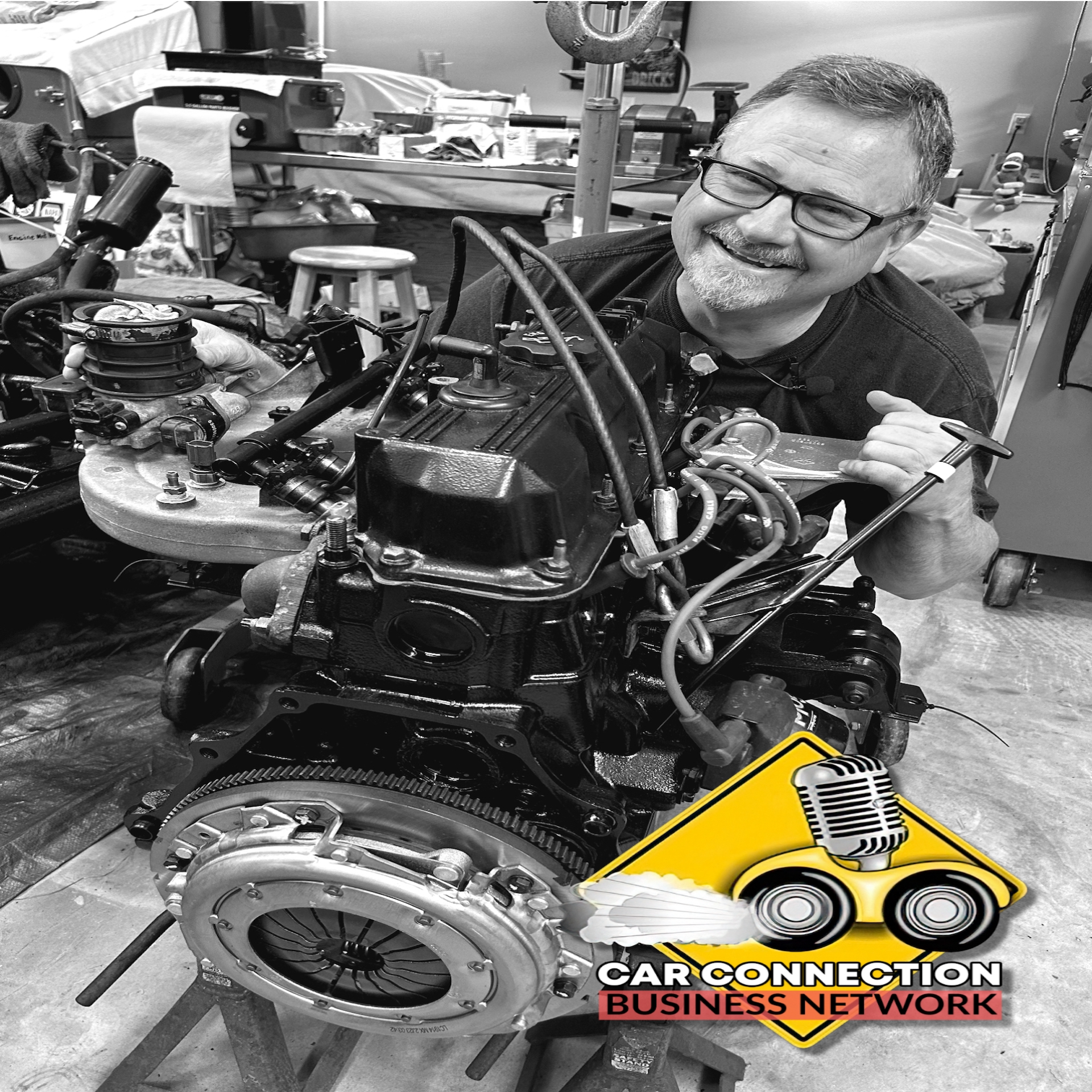
When Was The Last Time? 5 Questions Every Vehicle Owner Should Answer
About this episode
A quick, upbeat workshop-style episode frames long-term vehicle ownership around preventive maintenance and knowing your car’s service history. The host asks key questions like “when was the last time you spent any money on it,” then walks through a practical checklist: brake inspections, oil change timing, tire rotations, and front-end/steering checks before failures get catastrophic. They also highlight cooling system service, plus a summer tip to “check your belts before the beach.” The episode ties reliability to upkeep, not luck.
During my years owning an automotive repair shop, I asked customers the same simple question: When was the last time.....? That's usually when the room got quiet. Most costly repairs don't happen overnight-they're the result of maintenance that's been forgotten or delayed In this first episode of a new mini - series, we'll talk about the questions every vehicle owner should ask before small problems become expensive ones. You can own your vehicle in the know or in the unknown. The choice is yours.
#CarMaintenance #AutoRepair #VehicleCare
Support the Show: If you enjoy what we do, fuel the next episode with a coffee at 🍩☕️ buymeacoffee.com/motormouthnile We are truly grate full for any amount Thank You❤️
Motormouth Merch: Wear the Brand with pride-every purchase from our online merch store supports Total Freedom Addiction Campuses Canada & USA changing lives one at a time!
Join our crew helping those ready for that change get to TF Campus, you and I can make a difference.
Car Connection Maintenance Schedule: 🛑STOP guessing and start preventing breakdowns. Order our CC Maintenance Schedule today while supplies last, visit the review online ccbusnet.com fill out the order form and wahla, we'll send it out to you! 👍 enjoy Subscriber Only Savings💰💰 Mileage Doesn't Matter.....Maintenance Does ✅👍
Email Motormouth: Have a question, a repair story, or a podcast idea? we'd love to hear from you-send us an email anytime; [email protected] or [email protected]
ROAD TO 1,000 SUBSCRIBERS : Like, Share, Subscribe, and invite fellow car enthusiasts to join the Motormouth Community. Every New Subscriber get us closer to our first 1,000👍
HELP US GET TO 1,000 Subscriber by JULY30👍👍 Thank You Beyond Words Friends❤️💕
We'll see You in the Next one Friends👍
More episodes and....Project Details & Links are available at Car Connection Business Network.com (ccbusnet.com) you'll find everything you'll find everything on our home page if you'd like to follow the build & repair work & connect with our program partners click their logo to meet them, thank you for giving them your business, we need them and YOU TOO👍❤️
Happy Healthy Motoring Friends, Peace Patience NMJ 👍❤️🚘
engine transmission
"keeping that engine transmission running as long as you want in fact I was with a friend of mine"
The engine makes the car move by burning fuel, and the transmission decides how that power gets to the wheels. The point here is that if you keep both in good shape, the car can last a long time.
“Engine” and “transmission” are the two core drivetrain components that convert fuel into motion and manage how power is delivered to the wheels. The host is emphasizing that keeping both healthy is key to long-term ownership.

Toyota 4Runner
"yesterday we always swap stories he has a Toyota 4Runner an older one and he's over 600,000 k same engine same transmission same vehicle he's heading for 700,000"
The Toyota 4Runner is a rugged SUV that’s famous for lasting a long time. Here, they’re using it as an example of a car that can go hundreds of thousands of miles with the same main drivetrain.
The Toyota 4Runner is a body-on-frame SUV known for durability and long-term ownership. In this segment, it’s used as an example of a vehicle that can rack up extremely high mileage while keeping the same engine and transmission.
principal and interest
"not paying making payments and principal and interest payments on a car and keeping the one you have long term"
On a car loan, your payment usually has two pieces: principal (what you borrowed) and interest (what it costs to borrow). They’re saying you can avoid getting stuck in new payments by keeping your current car longer.
Principal and interest are the two parts of a car loan payment: principal is the amount you borrowed, while interest is the cost of borrowing money. The host contrasts making those payments with not paying them by keeping the same vehicle long term.

Chevrolet Corvette
"and a tool that I did not have to do a job and I actually got stuck behind two Lamborghinis [927.9s] and one of the newest mid-engine Corvettes and these guys were really making some noise"
A Corvette is a Chevrolet sports car. When they say “mid-engine,” they mean the engine sits closer to the middle of the car, which helps the car feel more balanced and handle better.
The Corvette is a Chevrolet sports car line, and the “mid-engine” version places the engine behind the driver but ahead of the rear axle. That layout helps balance weight and improves handling compared with the older front-engine Corvette designs.
full brake inspection
"number one and I want you to say this line before each item when was the last time you had a full brake inspection"
A full brake inspection means a mechanic checks the whole braking system, not just whether the brakes feel okay. They look for worn parts and problems that could cause poor stopping or uneven wear.
A full brake inspection is a systematic check of the entire braking system, not just a quick look at the pads. It typically includes checking pad and rotor condition, brake fluid condition, and whether any components are wearing unevenly or sticking.
oil change service
"number two when was the last time you did your oil change service on time or even did an oil change"
An oil change service is when you replace the engine oil (and usually the filter) on a schedule. Fresh oil helps the engine run smoothly and protects it from wear.
An oil change service is the scheduled replacement of engine oil (and often the oil filter) to keep lubrication and internal cleanliness within spec. Staying on schedule helps prevent accelerated wear and oil breakdown that can lead to expensive engine damage.
tire rotation
"number three when was the last time you had a tire rotation keep your tires wearing equally all the way around and getting maximum tire life out of all four"
Tire rotation means swapping your tires to different wheel positions. It helps them wear more evenly so you get longer life and more predictable grip.
Tire rotation is the practice of moving tires from one position to another (front-to-rear and/or side-to-side) to even out wear patterns. Because different positions experience different loads and slip angles, rotating helps maximize tread life and maintain consistent handling.
front wheel drive
"instead of just maybe two they're lazy at the back if it's a front wheel drive they're just along for the ride like a wheel barrel"
Front wheel drive means the front wheels do the pushing for the car. Since they also steer, they can wear tires differently than the rear wheels.
Front wheel drive (FWD) is a drivetrain layout where the engine’s power is sent to the front wheels to propel the car. Because the front wheels handle both steering and driving forces, tire wear patterns and inspection priorities can differ from rear-wheel-drive cars.
full front end and steering inspection
"they're lazy at the back if it's a front wheel drive they're just along for the ride like a wheel barrel when was the last time you had a full front end and steering inspection instead of waiting"
This is a check of the parts in the front of the car that help you steer and keep the wheels aligned. It looks for looseness or wear before it turns into a failure that could make the wheel move or fold.
A full front end and steering inspection checks the components that control steering and front suspension geometry. This includes parts like tie rods and ball joints, which can develop play or wear that affects alignment and can become dangerous if they fail.
outer tie rod
"till the outer tie rod breaks and then the wheel folds in or the ball joint let's go and the wheel folds in"
The outer tie rod is part of the steering system that helps connect the steering wheel to the front wheels. If it breaks, the wheel can shift in a way that makes the car unsafe to drive.
The outer tie rod is a steering linkage component that connects the steering rack to the steering knuckle. If the outer tie rod wears or breaks, it can cause loss of steering control and abnormal wheel movement.
ball joints
"till the outer tie rod breaks and then the wheel folds in or the ball joint let's go and the wheel folds in and breaks the transmission and the drive axle"
A ball joint is a key suspension joint that lets the wheel move up and down while staying connected. If it wears out, the wheel can become unstable and potentially collapse.
A ball joint is a pivoting joint that connects the control arm to the steering knuckle, allowing the suspension to move while keeping the wheel properly positioned. When a ball joint wears out, it can create play and, in severe cases, allow the wheel to collapse inward.
drive axle
"let's go and the wheel folds in and breaks the transmission and the drive axle just so that it costs you more money"
The drive axle is the part that sends power from the transmission to the wheels. If it gets damaged, the car may not be able to drive properly and repairs can be expensive.
A drive axle is the shaft that transmits power from the transmission to the wheels. If the front suspension or steering components fail and damage the axle, it can lead to loss of drive and major repair costs.
Request an Explanation
Heard something you'd like explained? We'll add it to this episode.
Sign in to request explanations for terms you heard.
Want to learn more?
Browse our glossary for plain-English explanations of automotive terms, jargon, and concepts.
Help improve this episode
See something that's not quite right? Our annotations are AI-generated and can sometimes miss the mark. Click the flag icon on any annotation to suggest a correction.