Lenny Lawson shares insights from his recent birthday trip to Greenville, South Carolina, emphasizing the joy of connecting with others through appreciation marketing. He recounts heartfelt interactions with strangers, highlighting the importance of engaging conversations and genuine connections. Drawing from personal experiences and his father's legacy, Lenny discusses how appreciation marketing can enhance both business relationships and personal enjoyment. The episode encourages listeners to foster connections and be present, ultimately making life more fulfilling.
"...I sold her and her husband. Well, I didn't, my dad did the first conversion van that we ever sold. You remember conversion vans?"
A conversion van is a regular cargo van that has been changed to make it more comfortable for people. It usually has extra seats, a raised roof, and sometimes even a TV.
Conversion vans are modified cargo vans that have been customized for passenger use, often featuring amenities like raised roofs, captain's chairs, couches, and entertainment systems. They are popular for family travel and recreational use.
"...they were just like regular cargo vans that had the top cut out of them and they had high tops and low tops."
High tops are taller roofs on vans that give you more space inside, while low tops are shorter roofs that make the van easier to park and drive.
High tops and low tops refer to the different roof heights available in conversion vans. High tops provide more interior space and headroom, while low tops maintain a more compact profile for easier parking and maneuverability.
"One of them that on the low end of the market was in Ocala, Florida called Mark 3. And they all looked the same, different colors of course."
Mark 3 was a brand that made special vans called conversion vans, which are regular vans modified for extra comfort or features. They were very popular for many years, especially in the 70s and 80s.
Mark 3 was a company known for producing conversion vans, particularly popular in the late 70s through the mid 90s. They were recognized as the number one seller of conversion vans during that period.
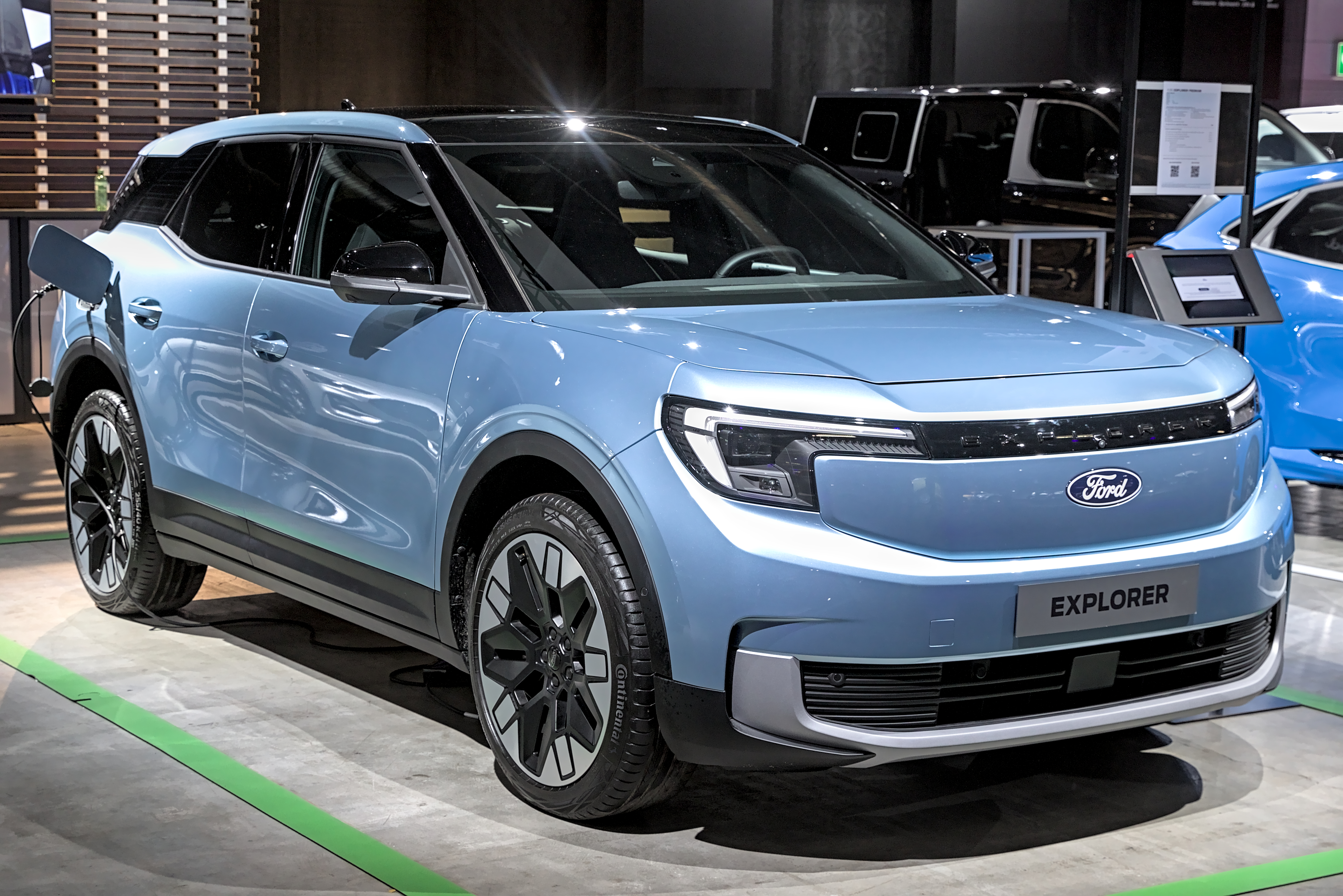
".... Now we had a lot of luck with a company called Explorer and they were out of Elkhart, Indiana. Big diffe..."
The Ford Explorer is a big car that can carry a lot of people and stuff, making it great for families or trips. It's been around for a long time and is known for being able to handle different types of roads, whether you're driving in the city or going off the beaten path.
The Ford Explorer is a mid-size SUV that has been a staple in the American automotive market since its introduction in 1990. Known for its spacious interior and versatility, the Explorer is often discussed for its family-friendly features and off-road capabilities, making it a popular choice for both urban and adventurous drivers.
"...some companies that are doing conversions to like Ford Transits and Mercedes. I think most of those are being tu..."
The Ford Transit Custom is a big van that businesses use to move things or people around. It's known for being useful and comfortable, making it a favorite for companies that need a reliable vehicle for work.
The Ford Transit Custom is a versatile van designed for commercial use, offering a blend of practicality and comfort. It is often used for transporting goods and people, making it a popular choice for businesses that require a reliable work vehicle.
"...most of those are being turned into like Class A Motorhomes, or not Class A, Class C Motorhomes. They, by the extended version..."
Class C Motorhomes are medium-sized RVs that have a sleeping area above the driver's seat. They are easier to drive than larger RVs but still have a lot of space for traveling.
Class C Motorhomes are smaller than Class A, typically built on a truck chassis, and characterized by a distinctive over-cab sleeping area. They offer a good balance of space and maneuverability.
"...most of those are being turned into like Class A Motorhomes, or not Class A, Class C Motorhomes. They, by the extended version..."
Class A Motorhomes are big RVs that look like buses. They have lots of space inside and are great for traveling long distances comfortably.
Class A Motorhomes are large, bus-like vehicles built on a truck chassis, designed for long-term travel and comfort. They typically offer more living space and amenities compared to smaller RVs.
"Now everything that's being sold right now, pretty much unless it's a hybrid and those people who don't mind paying full list price to get a little extra gas mileage."
A hybrid car uses both a regular gas engine and an electric motor to help save fuel and reduce pollution. It can switch between the two to be more efficient.
A hybrid vehicle combines an internal combustion engine with an electric motor to improve fuel efficiency and reduce emissions. They can operate on either the engine, the electric motor, or both simultaneously.
"...those people who don't mind paying full list price to get a little extra gas mileage."
List price is the price that the car manufacturer suggests you should pay for a car. It's often higher than what you might actually pay after negotiations.
List price, also known as the manufacturer's suggested retail price (MSRP), is the price recommended by the manufacturer for the sale of a vehicle. It serves as a starting point for negotiations and can vary based on market conditions.
"Everything else is being sold pretty much close to invoice, which is good for consumers."
Invoice price is what car dealers pay to get a car from the manufacturer. It's usually lower than the price you see in the showroom, and knowing it can help you negotiate a better deal.
Invoice price is the amount a dealer pays the manufacturer for a vehicle before any additional costs or markups. It serves as a baseline for negotiations between consumers and dealers.
"...something just flew up off of my grill and hit my windshield and then just went flying down the road."
The grill is the front part of a car that has openings to let air in. It helps keep the engine cool and protects parts behind it.
The grill is a part of a vehicle's front end that allows air to flow into the engine compartment for cooling. It also serves as a protective barrier for the radiator and other components behind it.
"...something just flew up off of my grill and hit my windshield and then just went flying down the road."
The windshield is the big glass window at the front of a car that helps you see out while driving. It's made to be strong and safe.
The windshield is the front window of a vehicle that provides visibility for the driver and passengers. It is typically made of laminated safety glass to prevent shattering upon impact.
"...It's that Nissan, Nissan van. I said, okay, well, they don't sell those anymore."
A Nissan van is a type of vehicle made by Nissan that is used for carrying people or goods. Some models of these vans are no longer available for sale.
The Nissan van refers to a type of vehicle produced by Nissan, which may include various models designed for passenger or cargo transport. Nissan has produced several vans over the years, but specific models may no longer be in production.
Select text to request an explanation
Hey folks, Lenny Lawson here, The Car Guru and when you're older today, yes, yesterday
was my 69th birthday.
Somebody says, or say it, you don't sound that old.
You know, I guess that's a compliment is, is it not 100% sure.
But yeah, we went to Greenville, South Carolina for my birthday.
So I took one of my daughters, Abby and her two.
And so we just had a ball.
You're been to Greenville, South Carolina.
I live in Greenville, Tennessee.
The Greenville, South Carolina is, well, Greenville, Tennessee has an extra E in it after the N.
It's named after Nathaniel Green, the revolutionary war hero.
See, aren't you glad you know that now?
So yes, we go to Greenville, South Carolina for entertainment.
Why?
Because it's just a cool place, folks.
Now I don't know about the rest of Greenville, South Carolina, but Main Street is awesome.
It's like a, it's like an innocent Las Vegas.
There's no casinos.
There's no high rises and there's no nastiness.
It is all clean, fun, beautiful street.
Main Street is tree lined, beautiful sidewalks, nice places for bicycles to park.
People let you cross the road without honking the horn at you.
It's just pleasant, full of shops, neat places to shop.
Not, not just, not your typical things.
A lot of ice cream stores and bars and breweries and antique stores.
It's just cool and it's fun because they have a river that runs right down the middle and has like a, I don't know how long it is,
but I think it's like 15 or 16 miles long, a trail, a bike trail, running trail, whatever.
It goes from, well, way beyond downtown up to Furman University, which is near a place called Traveler's Rest.
Doesn't that sound peaceful?
So that was my birthday celebration.
So now I'm back, back in action.
As soon as I get back, I walk into my office and sit down to do some recording and there's a business card for a welder.
I flip it over and it's a note from one of my best customers and she just wanted to share this guy's business card with me.
She's helped drumming up business for this fella and then I look up and there she is.
And I sold her and her husband.
Well, I didn't, my dad did the first conversion van that we ever sold.
You remember conversion vans?
You know, they were just like regular cargo vans that had the top cut out of them and they had high tops and low tops.
And they had four captain's chairs and a couch and a TV and lots of fancy wood.
And they're all different companies that did these conversion vans.
One of them that on the low end of the market was in Ocala, Florida called Mark 3.
And they all looked the same, different colors of course.
They had high tops and low tops, but they were, they were cheap.
They were not good.
We found that out real early.
Now they were the number one seller of conversion vans back in the, I would say, I'm going to say the late 70s through the mid 90s.
That was about the run that they had.
Now we had a lot of luck with a company called Explorer and they were out of Elkhart, Indiana.
Big difference in quality.
And there were some other companies.
Now the one that this particular couple bought from us was from a company called Contempo.
They didn't last very long, but it was a low top and it had a little sink in it, a little refrigerator and just a joke for a TV.
You know, back then there were no flat screens.
So you had to make a lot of room for the back of the TV back then because, you know, I know you young people don't know what I'm talking about.
You mean they made TVs that weren't flat?
Yeah, they did for a long time.
And at one point they were surrounded with furniture.
That's right.
Imagine a TV that is built into a big wooden cabinet and weighs a ton and you bought them at furniture stores.
You really didn't go to, you didn't go to someplace like Best Buy someplace like that because they didn't exist.
Nope, the world has changed a lot since then.
Conversion vans aren't a thing anymore.
Now there are some companies that are doing conversions to like Ford Transits and Mercedes.
I think most of those are being turned into like Class A Motorhomes, or not Class A, Class C Motorhomes.
They, by the extended version, as long as the factory will build it, and then as high a top as the factory will build,
because of the laws that we have now folks, you cannot cut the top out of a vehicle and replace it with a fiberglass cap.
They've determined that that's not safe in a rollover situation.
Imagine that.
But me and my little youngins, we traveled everywhere in a conversion van.
You may have as well.
That might have been your mode of transportation back in the 80s, but we had a lot full of them.
Now there were dealers all around.
Everybody was selling conversion vans at that point and they were very profitable because you had the margin in the chassis, the van itself,
and then you had margin in the conversion package.
And so it allowed you to really, I mean, you could discount the whiz out of it and still make a pretty good commission.
We just don't have that anymore.
Now everything that's being sold right now, pretty much unless it's a hybrid and those people who don't mind paying full list price to get a little extra gas mileage.
Everything else is being sold pretty much close to invoice, which is good for consumers.
Ford just came out with zero, zero, zero.
And what does that mean, Lenny?
Well, that means you can finance up to 60 months at 0% APR, which is a great interest rate.
Don't you agree?
And then you don't have to pay any money down so that's zero down and zero payments for 90 days.
What does that do for you?
Well, I guess it gets you through the holidays.
I mean, you have a payment, what is this?
You know, you'll have a payment due probably in February and that gets you past Christmas.
Maybe you get some money for Christmas and you can make your first payment.
But it is a great deal.
Can you imagine what the real estate market would do if the federal government and Trump, instead of doing 50 year mortgages, decided let's just do it all at zero.
That'll get things going.
Okay, I'll be back in just one minute.
Okay, I am back.
I tried an experiment this past week that I thought I wanted to share with you.
And I actually did it this weekend too.
And it's something my dad did that used to get on my nerves so badly.
I said, dad, can you not sit in a waiting room and not converse with everyone in there?
He said, no, I don't see any point in doing that.
I mean, that was just him.
He was a very outgoing person and he felt like it was his job to make other people feel comfortable.
You know, and now that he's gone, I've learned to appreciate that.
Matter of fact, I was reading a book called Appreciation Marketing.
How to achieve greatness through gratitude.
I just had to grab that book.
I just turned to one of the pages a few minutes ago.
What is an appreciator?
Well, one thing that an appreciator is, is that they lift other people up.
When somebody tells you a story during a conversation or especially if you're overhearing a conversation with somebody else,
just let them bask in their moment, their own glow.
Even if you can one up them, what's the point?
It won't make them or anyone else in the room think more positively of you.
They probably won't believe you anyway.
It's okay to let other people shine.
In fact, it's an art.
You know, and I believe my dad was an artist when it comes to that because he died in 2015.
And I still have people come up to me at least once a week and say, you know, I just loved your dad.
And that's quite the compliment, I think, you know, for somebody to be remembered that way as just being that kind of a person.
So I decided I was going to do an experiment.
It started when I went to have some of my cardiac tests.
I had to have some tests last week.
I was just, I mean, I was due and plus I was having a little bit of lightheadedness every now and then.
It happens apparently when you get, when you become 69 years old.
So my cardiologist said, let's just go ahead and shoot you up with some, some radioactive material so that we can scan your heart and look at it in several different ways.
So they did.
Everything was fine.
But my experiment started in the hospital because they stuck me in this little room with two other people and those two other people.
Well, one was just an older gentleman just sitting there just staring staring off into space.
He didn't have his cell phone out, which is unusual.
And then there was another guy sitting closer to me and he was just like all into that cell phone.
And so I just started talking, how are you guys doing today?
And they both looked over at me and said, good, how are you?
And we had the best conversation.
I found out what both of them did for a living.
We shared some common stories.
We talked about Christmas plans and where we like to go on vacation.
We were in there for a while.
But you know, that was so much better than just sitting there like a knot on a log, not saying anything.
I mean, that room couldn't have been, I would say, eight by maybe eight by 10.
And it was, it was not a great waiting room, but we turned it into a great waiting room just by talking to each other.
And that made it wonderful.
So it continued.
I wasn't around too many other strangers before I went to Greenville, South Carolina, but it kept on going there too.
Because my wife and my daughter were shopping in the Masked General Store.
And if you live anywhere in the South, you probably know what the Masked General Store is.
They just sell all kinds of outdoor equipment and all kinds of, you know, real casual clothing and hats and knives and fancy shoes and food and candy.
I mean, it's just a really cool general store.
And so I just really wasn't into shopping.
So I just stood there and this guy comes up to me and he just stood there.
I looked at him.
He looked at me and I said, waiting on your wife.
And he said, how'd you know?
I said, well, you just have that look.
You just look just about like me.
And we had the best conversation and enjoyed our company just talking about everything.
I can't even tell you what all we talked about, but we probably stood there and talked for 20 minutes.
And so that was fun.
And then I went down the street and ran into some people who were, there was a group of black people standing around this small billboard that had all kinds of information on it.
And they were sharing the gospel.
Now, I probably wouldn't just normally walk up to people, start up a conversation.
You know, it's not that I might be in preach to because, you know, I love, I love going to church.
I'm a Christian and that is, I'm comfortable there.
But, you know, with these people on the street, sometimes I don't feel that comfortable and I can't walk around them.
But I didn't this time.
Well, right into the middle of them said, what are you folks doing today?
Oh, and they were just so nice.
They even found out that I was a Nissan dealer and had a podcast called my car guru.
And she said, so I didn't know you were a celebrity.
I said, ma'am, I am not a celebrity.
I just have a little podcast, a little radio show and I'm a car dealer.
And so that's my mission is to help people make good decisions so forth and so on.
She said, would you come look at my car for me?
And I said, what's wrong with it?
I was going down the road and something just flew up off of my grill and hit my windshield and then just went flying down the road.
And I don't know what to do about it.
I said, well, where's your car?
She's just right over there.
It's that Nissan, Nissan van.
I said, okay, well, they don't sell those anymore.
Let's go look at it.
So we went and looked at her van and I gave her some my car guru advice about where she could get that part and maybe save money.
And I gave her my number, my card and all that information so she could contact me if she needed to.
You know, it was worth it.
Every encounter that I had with another human being this weekend was great.
Now, is it possible you're going to run into somebody that's a sourpus?
As my mom used to say, yeah, it's possible.
Anything's possible.
But what was I risking versus what was I gaining?
I think I was gaining a lot.
I mean, the typical waiting room is like a morgue.
It's just silence.
Nobody's talking.
Everybody's on their phone.
Occasionally you'll get that person who is on their phone and talk so loud.
It's almost like nobody else is there and everybody gets to hear their life story and what's going on at home and why she's mad at her husband.
And when are the grandkids going to start picking up their toys?
So we are either oblivious to those around us and don't care about them.
Or we are oblivious to those around us and pretend like they're not there.
I mean, it's just crazy.
So what is appreciation marketing?
Well, to me and to this author, appreciation marketing is doing the simple things that keep you connected to people who have done business with you in the past and doing things that make people want to do business with you in the future.
And a lot of it is about caring.
And much of this book is dedicated to how to connect with your customers and stay connected.
To me, that's important.
You know, if I wanted to run an ad on some TV station, which I do a lot, and wanted to run a special sale on them, let's say it's 0000.
Well, you know, the problem with that is that every other Ford dealer in the nation has the same program.
My competitors 30 miles that way and 30 miles that way, they have that same program.
It's not exclusive to me.
So why would a customer want to come see me instead of them?
Well, more than likely, the best customer for me is the person who's been a customer in the past.
I mean, that's the easy one.
I mean, I already have their phone number.
I know where they live.
I can contact them by email or with a letter or with a phone call.
And I see them on a regular basis in my service department.
What am I doing for those people?
My dad used to go out there and interact with the customer.
Even when he was on a walker, I had an office here for him.
And I could hear his little wheels squeaking as he walked across the showroom floor and I said, there he goes.
He's going to the customer lounge again.
And he would pull up and there'd be, if there's an empty seat, he would take his walker and just push it over to the side.
Then just sit down and start looking for, okay, whom am I going to talk to first?
What am I going to say first?
It's just like he was just waiting to attack in a good way.
And all the next thing you'd hear is a bunch of people laughing over there in the customer lounge.
Much people who weren't connected at all were all of a sudden very connected.
And they were just listening to this 85 year old guy just sit there and talk and welcome them and show appreciation for them.
I think appreciation is a whole lot simpler than a lot of people think.
I think it's service advisors looking customers in the eye and not being distracted by the phone, giving them 100% attention.
I think it's knowing people's names.
You know, when they come into the service driver in the showroom, if you do know them and you stay connected with them, you'll know their name.
Or you can go back and look it up.
But people like to hear their name.
And it's not a selfish thing.
It's just something where they know they're appreciated if they walk into your service drive and you say, hey Susan, how's it going?
And she's thinking, I'm very impressed.
That young man remembered my name from the last time.
Do people feel that when they walk into a business?
Can you tell whether you're appreciated or not?
I mean, I've got this dealership up the road I drive on a regular basis.
And if you look up their driveway in the corner of their showroom, you'll see about anywhere from three to eight salespeople all lined up right there.
Just waiting, waiting for somebody to drive up.
Isn't that intimidating?
I tell you what, if that was my dealership, there wouldn't be anybody standing out there.
You might see one because it's his time to just keep an eye on the lot.
We don't want to look like a bunch of buzzards up on a tree on a tree limb and just waiting for somebody to land on the lot so we can swoop down and get them.
When you look at things from the customer's perspective, that in and of itself is appreciation marketing.
Because every decision that you make when it comes to your product offerings, how you display things on your lot, how accessible your business is through the internet or through the telephone, how clean your bathrooms are.
All of that speaks loudly without saying a word.
And when people walk into my business, my car dealership in Greenville, Tennessee, I want them to feel good.
I don't want them to feel threatened, you know, to feel like somebody's swooping down on them.
And I want the words that come out of my salespeople's mouths to be words of comfort, welcoming, happy, informative, you know, that kind of stuff.
Not what your credit like, what kind of monthly payment you're looking for, how much you want for your trade in, you know, that kind of stuff.
It's going to come at some point.
We need that information, but it's got to be at the right time or it just feels wrong.
Okay, I'll be back in just one minute.
Okay, I am back.
You know, I appreciate you.
I appreciate the feedback that I get on this program, really from all over the country.
I haven't had my first foreign call yet, but I'm still hopeful.
I've had a lot of foreign listeners.
I mean, went over to over 100 different countries and over 2000 cities where the show has been downloaded.
And, you know, for somebody in Luxembourg or Singapore, I would just love to know why.
And I'd love to know if it's as applicable as I think it is wherever you live.
Just the basics of buying, selling, trading, servicing, you know, when you wreck, people wreck their cars all over the globe.
What do they do?
They have to rely on a business to solve that problem for them.
And there's always an opportunity for abuse.
And what I'm trying to do with this program is to head it off at the pass.
That's an old Western term.
John Wayne would be proud of that one.
If you need me for some reason, 423-552-2020 wherever you live.
And you can send me your email address and I'll send you a copy of the My Car Guru guidebook.
I did send one to Luxembourg.
It was in English, but that's the best I can do.
So reach out and touch someone in a, well, not literally, but verbally in a waiting room, in an elevator.
You know, while you're waiting for your wife at Mass General Store.
But could you be surprised what you'll learn?
This is what we need in this society.
We need people who are more open, more friendly, and less fixated on their cell phone.
It's not going to get any better unless we make it better in our little part of the world.
Well, thanks for listening and I'll see you next time.
Request an explanation for:
2 cars
2 cars featured
Request an Explanation
Heard something you'd like explained? We'll add it to this episode.
Sign in to request explanations for terms you heard.
Want to learn more?
Browse our glossary for plain-English explanations of automotive terms, jargon, and concepts.
See something that's not quite right? Our annotations are AI-generated and can sometimes miss the mark.
Click the flag icon on any annotation to suggest a correction.