MSRP is the price number the manufacturer puts on the car’s sticker. Dealers might sell for more or less than that number depending on demand and negotiations.
A buyer’s market means there are more cars available than people want right now. When that happens, buyers often have more negotiating power and dealers may need to cut prices.
A DMS system is the computer software dealerships use to track inventory and sales. Here it’s referenced to show how long a particular car has been sitting unsold.
The Lincoln Aviator is a luxury SUV from Lincoln. “Black label” is a nicer, more expensive trim level. The host is using it to show how long some new luxury SUVs can sit unsold at dealerships.
They’re talking about a tool that helps you search for cars that have been listed for a long time (at least a year). Cars that sit that long are often the ones where you can find better deals.
“Final pay” is a last payment the car maker gives to the dealer to help them sell a particular car. It can be big enough that the dealer can offer a much lower price than you’d expect from the sticker.
The Audi A8 is a big, expensive luxury car from Audi. The hosts mention it because the manufacturer can offer a large incentive payment to the dealer, which can effectively lower the price you pay.
The Dodge Challenger is a popular muscle car. The point in this segment is that the dealer/manufacturer incentives can be big enough to allow a very large discount from the sticker price.
Lincoln’s Black Label is a more upscale, more expensive version of a Lincoln. They’re saying the manufacturer/dealer incentive could be large, which can make the final deal look much cheaper than the original price.
Concept
overpriced the damn vehicle to begin with
The host is saying the car’s starting price was probably set too high. Then incentives and dealer payments make it look like you’re getting a big discount, even though the money was built into the deal from the start.
Carrying costs are the ongoing expenses of keeping a car unsold on the lot. Even if the dealer later makes up the money, holding the car can still cost them day-to-day.
Concept
pay me now or you pay me later
It’s basically saying: either you reduce the price now, or you end up paying for the problem later. The speaker is arguing dealers think they’ll get compensated later instead of cutting prices right away.
A dealer lot is where unsold cars are parked while they wait to be sold. If cars sit there too long, dealers often have to lower prices to get them moving.
Acura is Honda’s luxury brand, known for selling dealer-inventory vehicles in the U.S. The host references Acura because the pricing story is happening at an Acura dealership.
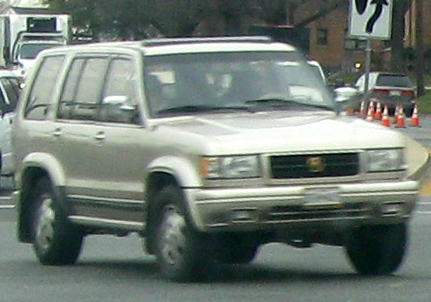
“Rebadged” means it’s basically the same car, but sold under a different brand name. The host is saying the Acura version was just a different badge on the same underlying SUV.
“Boat anchors” is slang for something that feels heavy and hard to deal with. The host is basically saying those SUVs weren’t selling well and weren’t very desirable.
The Acura SLX is a luxury car made by Acura. It’s the kind of vehicle people might talk about when they’re trying to buy or sell a specific car they think is valuable. The podcast mention sounds like someone was making an offer for one they wanted.
A dealership’s inventory is just the cars it has sitting on the lot to sell. If they sit too long, they can need extra work before they’re ready to sell.
Sometimes a dealer just leaves a car unsold for a while instead of discounting it right away. The hope is that the price/incentives will line up later so they can sell it without losing money.
CPO means the dealer certifies the used car after an inspection. It usually comes with extra coverage (like a warranty) so it feels safer than buying a regular used car.
An “aging policy” is basically a dealer’s rule for what happens when a car has been sitting too long. After a certain point, they may have to change the price or how they sell it.
Inventory management means how a dealer handles the cars they have on hand. It includes deciding when to lower prices or move cars that aren’t selling. Holding too many cars for too long can cost money and slow the business down.
Cash flow just means how much money a business has coming in versus going out. Dealers care a lot because they need cash to keep the business running and to buy/hold inventory. If they discount too much, they may not have enough money to operate smoothly.
It means a used car has been sitting unsold for more than a year. Dealers usually treat that as a problem because it costs money to keep the car around. The point here is that dealers need a strategy to get it sold.
They’re talking about a tax deduction—something that can reduce the taxes a business has to pay. The idea is that if the dealer takes a loss on a car, they might be able to reduce taxes because of it. The host is questioning whether that’s a good reason to keep discounting.
Topic
CarAgeCarSearch
CarAgeCarSearch sounds like a website or tool for looking up dealer inventory. Here, they use it to find cars that have been sitting a long time near Cleveland.
Cleveland, Ohio is just the location they’re searching in. They’re using it to look at what dealers in that area are charging for cars that have been sitting.
“Dealer slots” just means the cars a dealer has sitting on their lot. If a car sits there too long, the dealer usually has to lower the price to sell it.
The Honda HR-V is a small SUV-style car. “Sport” is a nicer, more optioned version. Here, they’re comparing how much cheaper the dealer’s price is compared to the manufacturer’s suggested price.
The Cadillac Escalade IQ is the electric version of the big Escalade SUV. “Luxury 1” is a higher trim level. They’re saying the dealer may have to cut the price a lot to get it sold.
The Hyundai Palisade is a big family SUV with three rows. “Calligraphy” is a higher trim with nicer features, and “Night Edition” usually means darker styling. They’re pointing to a specific listing to make a pricing/discounting argument.
Spitzer Auto World is the name of a car dealership they’re looking at. They’re using it as an example while checking what cars are listed and how they’re being described.
“Unsold leftover” means a car that’s been sitting at the dealership for a long time without selling. The hosts are saying these cars can end up with extra miles or special handling instead of getting a straightforward price cut right away.
A “service loaner fleet” is the dealership’s pool of cars they lend out when your car is in the shop. Those cars rack up miles from being used as loaners, even though they weren’t sold to a customer.
A retired service loaner is a car the dealership lent out to customers for repairs. When it’s sold later, it’s not truly “unused,” because it already has miles and has been driven.
If a car sits at a dealership for a long time, it can develop problems that you might not notice immediately. The segment’s takeaway is to treat it as something to check carefully—especially by driving it.
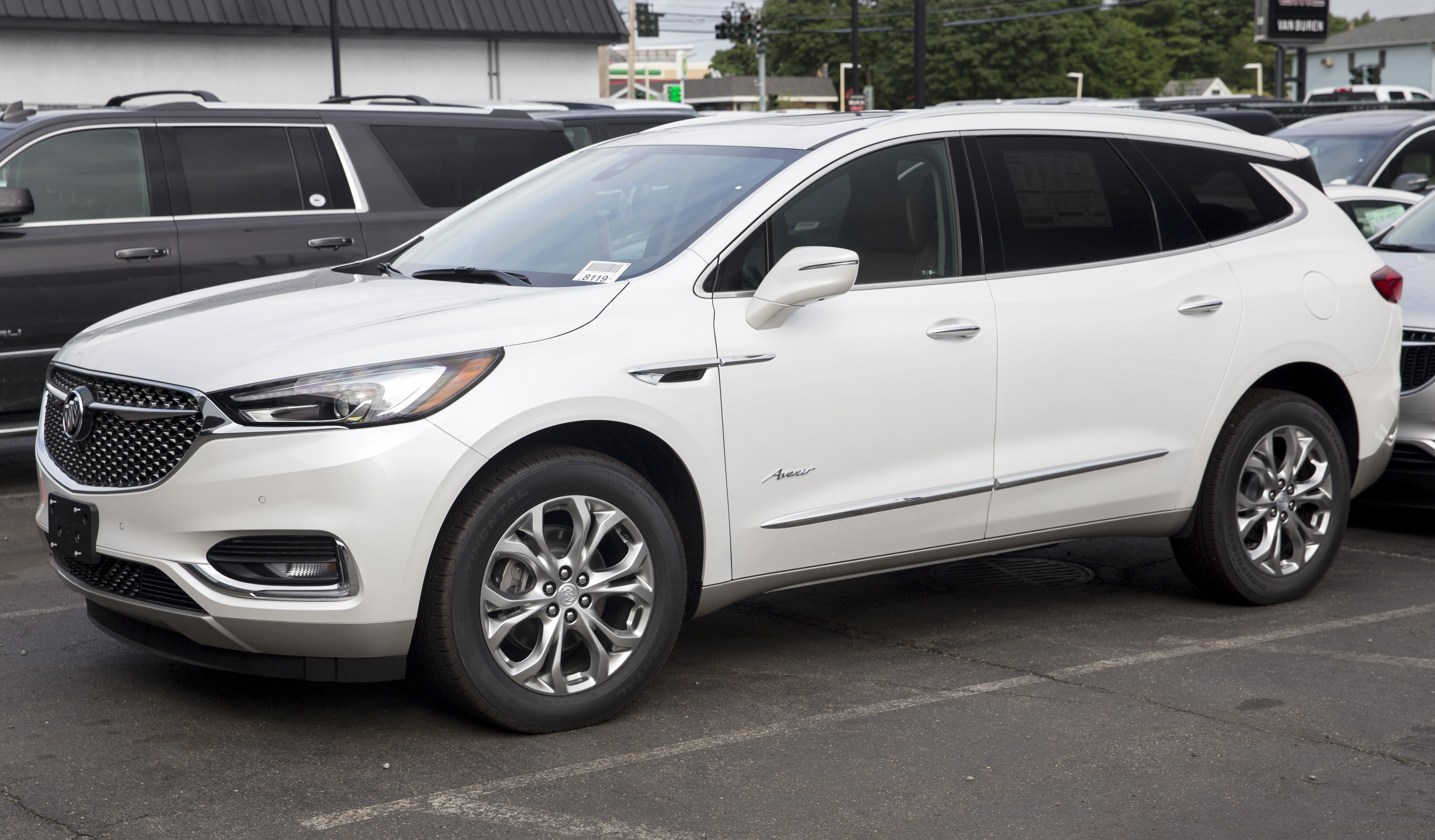
The Buick Enclave is a family SUV with three rows of seats. “Sport Touring” is a nicer trim level, and here it’s mentioned as an example of a car that’s been sitting at the dealership for a long time.
A test drive means you drive the car yourself before buying it. The point here is that you can’t rely only on the label—driving it helps you spot problems.
If a car sits for a long time, the tires can get squished in one spot. When you drive again, that squished area can make the ride feel bumpy or thumpy, and sometimes it never fully goes away.
A voltage readout is basically a battery check that tells you how much electrical energy is left. If the battery is too weak, a jump might not be enough and the battery may need replacing.
A pre-purchase inspection is when a mechanic checks a used car before you buy it. The goal is to find problems you might not notice right away so you don’t get stuck with expensive surprises.
“Leftover 2025” means cars from the 2025 model year that didn’t sell and are still sitting at the dealership. Dealers may discount them more to move them out.
BMW is the car brand being referenced. The speaker says BMW has a dealer rule to deal with batteries on cars that sit too long, so they’re less likely to be dead when you try to start them.
CDJR is a shorthand way of referring to Chrysler, Dodge, Jeep, and Ram. The speaker is saying their dealer practices may not be as strict about handling batteries on cars that sit.
A dead battery means the battery doesn’t have enough power to start the car. If a car sits unused for a long time, the battery can weaken and eventually won’t crank the engine.
A “392 Wrangler” is a Jeep Wrangler with a big V8 engine. In this story, the key point is that the specific car they called about wouldn’t start because the battery was too weak.
It’s basically a battery “charge level” check. The voltage tells you how much electricity is left, and the dealer keeps records to show what the battery was doing.
Warranty is the promise about repairs or replacements if something fails. Here, the speaker says BMW will cover the customer, but the dealer isn’t covered the same way.
The Ford Mustang Mach-E is an electric Ford. If one sits on a lot too long, the battery can get too low, so the car may not unlock or start when a buyer shows up.
LIVE
Imagine if today was the day your idea changed someone's life.
Imagine if you could help someone pay for college, help your community build a new playground,
or help a child make it to that dream competition.
With GoFundMe, it's all possible.
GoFundMe is the world's number one fundraising platform trusted by over 190 million people.
Every week, ordinary people meet their goals and do extraordinary things.
Your ideas matter. GoFundMe isn't just for emergencies.
Want to raise money for your kid's soccer team or raise funds for a small business,
a creative project, or event?
GoFundMe helps you turn ideas into reality and help adds up.
Fundraisers you start for someone else raise up to five times more.
So think right now, who could use your help?
Change rarely comes from waiting.
It comes from someone deciding, today I'll start.
Don't wait for someone else to bring change.
Today, start your fundraiser in just minutes at GoFundMe.com.
That's GoFundMe.com to start your fundraiser.
GoFundMe.com. This is a commercial message brought to you by GoFundMe.
It's noon here in Venture City, New Jersey and our nation's capital, Washington, DC.
And this is Carage Live for Tuesday, May 26th with your host, me,
Ray, hanging out in my living room wearing a brand new LL bean t-shirt today.
Yes, it'll have a bacon neck in about a week or so.
And Zach, hanging out in this new office in Washington, DC.
How are you today, handsome?
Doing fantastic pops.
Happy belated birthday.
It's a day after your birthday.
How does 75 feel on you, Dad?
You know, I celebrated yesterday and I placed an order at the White House,
and I drove down there, not the White House in Washington, DC,
the White House sub-shop in Atlantic City.
And I got myself a half a cheese steak for yesterday
and a half of an Italian for today.
So it doesn't get any better than that.
There you go, folks.
That's what 75 looks like.
Today's show brought to you by uscaredge.com.
For the past six years, since my dad was 69,
until today when he's 75,
we've been providing car buying services and help back at caredge.com.
Learn more about how we can support you.
And of course, click on car buying service, scroll down,
and start with a free consultation.
I cannot encourage you enough to chat with our team,
whether it be via live chat, scheduling a time to call,
or having us call you back.
Learn more back at caredge.com.
Dad, where I want to start today's show is over on X,
because I just posted some screenshots that were shared with me.
You know, one of our friends, Joe Lewis from JC Lewis,
and here's the post that I just put up.
Over the last few years, automakers got greedy
and dramatically increased MSRP,
some dealers added markups and egregious fees,
now dealers are texting me asking for help selling 100,000
Lincoln's that have been sitting on their lots for 533 days.
For many brands, it's a buyer's market,
do your research, excuse me, and negotiate wisely.
This screenshot that comes from a dealer's DMS system
showing this 2025 Lincoln Aviator Black label
sitting on the lot for 533 days.
The reason we're talking about this this morning,
because this $97,575 MSRP Lincoln just went on final pay.
This is the text message I got this morning.
Thank you, you can sell this for me.
Final pay is June 3rd, so I need it gone.
Going 82% of MSRP, which is almost $12,000 below invoice.
Dad, why are car dealerships, many of them,
not lowering prices enough right now to the point
where their vehicles are being put on final pay,
which I want you to explain that,
and one other tool for the car edge community today,
caredge.com slash old will take you to the car search
pre-filtered for the cars that are 365 days or older,
of which when I toggle this to nationwide, Dad.
Yes.
There are, wait, I'm even going to show you,
how many 365 day or older new cars
do you think there are in the United States right now?
You and the community, let's get some guesses
before everyone goes to that page.
First off, if you're going to have a thing
that says caredge.com slash old,
I would think my picture should show up.
I am just saying, okay, so please make that happen,
because damn it, I am old.
And if I were to guess, I don't know, 28,713.
All right, 28,713 is light.
We have 33,426 vehicles that are most likely
eligible for final pay,
meaning they've sat on dealer lots for over one year.
Dad, so much to unpack there.
I'm going to shut up, I'm going to drink some water.
What's your take on this situation?
Well, I assume you want me to explain final pay first.
And final pay is during the course of a model year,
the manufacturer supports the cars or helping to sell cars
in many different ways.
Different incentives during different months
can be specialized interest rates,
can be huge consumer rebates,
can be cashed to the dealer.
And final pay is where the manufacturer says,
we're done, we're going to give you one final payment
to help you to help underwrite the costs of selling this vehicle.
And final pay can be a big number sometimes.
I mean, I remember on the Audi A8,
it was a big number because, well,
every one of those hung around for a year.
How big, how big died back in your Audi?
And I'll just briefly mention,
we had Jared Glover from Jim Glover on,
what was it, 23 weeks ago?
And he had a Dodge Challenger that was final pay,
and he ended up being able to sell it at 48% off of MSRP.
Well, if I remember correctly,
I think there were times that the final pay amount on an A8
was like 20 grand, okay?
So you might have $138,000 A8, and you get your $20,000 incentive.
So now it's $118,000, and then whatever else you need to take off to move it.
And so I have no idea how much the final pay amount
will be on that black label Lincoln.
I would imagine it would be sizable if I were to guess.
I would guess probably around $10 grand, perhaps $7,500 to $10,000.
And what that really says is that we overpriced the damn vehicle to begin with.
And the only way we can sell it is to dramatically reduce the price of the vehicle.
So part of it's the manufacturers have fought for the suggested manufacturers retail selling price.
But then part of it is dealerships fought for not recognizing that it's entirely overpriced
and biting the bullet and taking whatever loss needs to be taken to get whatever it goes.
It's just been costing Joe money.
I mean, okay, I have a naive question, Dad.
Is it you either pay me now or you pay me later?
Like that's kind of the situation here.
These 32,000 new cars out there that have been sitting on dealer lots for over a year.
Again, caredge.com slash old.
They'll take you right to them in your area.
Why are those dealers not lowering the price?
Why are they refusing to do that?
Because they're going to just either pay me now or you pay me later.
Like these things are going to cost them money.
They're going to lose money.
Joe literally said he's currently advertising this at 82% MSRP,
which is what $11,000 or $12,000 below invoice.
Like it's costing him money.
But once he gets the final pay he's being made whole.
Like isn't there incentive for them to lower the prices sooner?
Like we hear from so many people in our community saying
the dealers aren't lowering the prices where I live,
but we see stuff like this.
Like help me make sense of it, Dad.
I can't, okay.
I mean, why dealers don't is beyond me.
I have shared this story with you before
and not everybody in the audience has heard this story,
so I'll share it with you again.
When I was the new car manager at Scottsdale Acura,
before we moved to the new location in North Scottsdale
and became Acura North Scottsdale,
we had an SUV that was made for Acura by Azuzu.
Oh yeah.
It was a rebadged Azuzu trooper.
They were boat anchors.
They did, I mean literally they did not.
So I mean because you can go buy the Azuzu trooper
for thousands upon thousands less,
then you could buy the Acura version of it.
I don't even remember what the hell they called it.
We sold so few of them.
And I remember we got one in one day
and one of our good customers.
A guy who bought a lot of cars from the group
drove Ferrari's Porsches, things of that nature,
the SLX, and he came in and he made an offer for this SLX
that we had just gotten.
I mean, I don't think it had been there three days.
And the offer was like a $5,000 loser, okay?
And the GM Jack got with the area vice president, John,
and they discussed it and they looked at the guy and said,
you just bought yourself an SLX, okay?
That's crazy.
Because the theory was between floor plan costs
and whatever it is, we would have to discount that vehicle
to sell it eventually in a year's time
would equate to more than a $5,000 loss at that moment.
When you say to me that there's 33,000 vehicles out there
that are a year or more older in dealers' inventories,
why they are sitting on them and refusing to take
whatever loss they need to take makes no sense to me
because these are not like a fine line.
These do not get better with age.
They end up costing you more money with age, flat-spotted tires,
dead batteries that have to be replaced.
The cost of just being able to bring the car up to a standard
to be able to sell it will be astronomical
for some of these vehicles.
So what is the new car manager doing?
And better yet, the general manager who is in charge
of overseeing everything in a dealership, what is he doing?
Why does he still have his job if he hasn't said
to the new car manager, just make it disappear?
I want to come here, Dad, to a comment from Ecore.
Not always, Zach, if there's a large final pay,
it's worth it to have a vehicle sit unsold
and then sell it as a pre-owned CPO later.
Is that part of the strategy right now from some of these dealers?
Was there a cutoff moment you think in their operation
where they're just like, you know, let's screw it.
We're going to ride this thing out to the end.
We'll have the last one in the country.
But you know what?
We'll put it as a used car if we can't sell it out
with the final pay and we'll be okay.
Like, hopefully from the dealer perspective,
they're going to sell it eventually.
You're the guy who went famous on YouTube for the viral video.
There's no such thing as an unsold new car.
I'm just trying to make sense of it, Dad,
because it really boggles my brain.
Listen, I worked for a dealer who subscribed to that theory.
There was no such thing as an old car to him.
Okay, he didn't care how long we had to take,
how long we had to keep it.
You know, we joked that every store for new cars and used cars
has an aging policy.
Once a vehicle reaches a certain age,
either send it to the sale or you discount it to such a degree
that you can finally find a retail customer for it.
And I remember sitting at a mini meeting
and I was the last one in the group when they went around
and they asked everybody,
what's the used car aging policy at your store?
And my factory rep was there.
And he laughed when I said what I said,
because he knew it was true.
And our aging policy at our store was,
our used cars are like fine wine,
they do get better with age, so we just sit on them.
And literally what you described where it became
the only one left in the United States,
and if somebody wanted it,
they were going to pay our price to get it.
So there are some dealers whose pockets are deep enough
that they can afford to do that.
There is, I can't think of a good reason
when we understand that the two most important things
for dealership is cash flow and inventory management,
why you would sit on vehicles that are in excess of a year.
Oh, just take whatever you can,
get your tax right off, take that loss,
turn that hunk of metal into cash,
and then go out and buy something you can make a profit on
when you sell it.
But to just continue to sit on it and take the attitude,
hey, you're either going to pay our price
or you're not going to buy it,
and have every customer that you say that to walk out and not buy it,
at a certain point you have to say to yourself,
I don't think my strategy is working the way it was intended.
We still have the zip code in the CarAgeCarSearch
set to the Cleveland area, Cleveland, Ohio,
and I want to take a peek at some of these vehicles
that have been sitting on dealer slots for over a year,
which means they're either at final pay
or they're on their way to final pay.
And you can see here, it's interesting,
the first one's a Honda, an HRV Sport.
The thing I want to look at that is the actual discount
that they're offering off of MSRP.
So the average price of this particular Honda
is $1284 below its original MSRP.
It's surprising to me that it hasn't sold.
When I scroll down, Dad, I look at things like,
this Escalade IQ Luxury 1, it's $130,000 electric Cadillac Escalade.
I think it's going to take more than $6,215 off of MSRP
to get it to sell.
You've got Hyundai Carachades.
Yes, I can guarantee it'll take more,
because it hasn't sold 419 days with a $6,200 discount.
So you already know it's going to take more.
This search is just so interesting,
because it doesn't discriminate.
Here's a Hyundai Palisade calligraphy night edition.
I wonder, Dad, do $60,000 Hyundai sell this one data point
would suggest not?
Well, maybe in Cleveland they don't.
I mean, I would be curious if you clicked on any of these cars
and see if any of them actually have any miles listed on them.
I'm noticing quite a few cars.
I'm noticing quite a few here, Dad,
at this Spitzer Auto World, this Hyundai dealership.
So let's go and let's do that.
Let's click into this one.
So we've got here, yeah, 2,681 miles on it.
So this is another thing that you're going to see
with some of these unsold leftover,
and this one's unsold and leftover,
but also just aged units.
They put it into service loaner fleet.
They put 2,681 miles on the car.
Well, maybe they put it in service loaner fleet.
Perhaps.
I still have it advertised as new back on their website.
Wow, this is why I hate dealer websites, by the way.
What is going on here?
I mean, when I worked for our Mini and our BMW stores,
retired service loaners were sold as retired service loaners.
They were not sold as new cars with 2,100 miles on them.
But they need to discount it more than 2,500 miles.
No kidding.
And of course, they need to discount it more.
I mean, what's the government allowance for miles today?
I mean, seriously, is it 50 cents a mile?
Yeah, like in the federal government,
if you're an employee and you drive and you get reimbursed,
is it how much they reimburse when you're per mile?
Are you even getting a discount comparable to that
for the 2,000 miles?
If it's 50 cents a mile and it's 2,200 miles,
there's 1,100 dollars right there.
Okay, if it's a lease, if you're on a lease card with Hyundai,
I'm guessing the over mileage charge is somewhere between 20 and 25 cents
for every mile over.
So there's got to be more of a discount
for a vehicle that has 2,200 miles on it.
And if it is a retired service loaner,
well, in most states, service loaners are physically titled vehicles
and registered vehicles.
So they have to be sold as used cars, not as new cars.
You can sell it as a used CPO comparable to that brand new car.
We see a lot of that.
We see a lot of these cars that have been sitting for over a year.
They get miles on them for whatever reason,
and they're sold as new cars.
We see it all the time.
I know, obviously, in your experience, it was different or it has been different,
but some of these manufacturer programs still allow them to be sold as new.
That actually, though, brings up this question,
which I want to dig into from Marilyn.
Is it safe to buy a car that's been sitting on a lot for over a year?
How long is too long for a car to have been on the lot?
How do you think about this, Dad?
Because if you just sit with me for a second here,
I come back, carh.com.com slash old.
This is a gold mark of opportunity for deal hunters.
But is it actually scary to think about buying any of these cars,
like this Buick Enclave Sport Touring that's been sitting at Crestmont Buick GMC for 550 days?
What do I need to know when I think about buying one of these old cars?
Well, what you need to know is you need to drive it.
You should always test drive a vehicle.
New, used, matters not.
They should all be test driven.
A vehicle that's been sitting for 550 days, a vehicle that's been sitting for 250 days,
absolutely needs to be test driven.
And the reason it needs to be test driven is typically those vehicles don't get moved a lot,
don't get driven a lot.
So they're sitting in one space or one spot for an extended period of time.
When you do that to a vehicle, you end up with what's known as flat spots in the tires
from where those tires have been compressed against the ground.
Sometimes if you drive it far enough and the tires heat up enough,
you can work the flat spots out.
Most times you cannot.
So you need to test drive it number one to find out if it has flat spotted tires.
And if you hear a thumping or a bouncing when you're driving, it's got flat spotted tires.
So you're going to need the dealership to replace the tires.
You need to get a voltage readout on the battery, find out how much strength the battery has left.
Because in many cases, because there's always a constant drain on batteries today
because of all the computers that are in cars, that ultimately they drain themselves out.
And so you can jump it, you can try and recharge it, but it might not hold enough of a charge.
So the dealership might have to replace the battery.
If the vehicle's been sitting for a year and hasn't really been driven, it should have an oil change.
Okay, all the cars that I drive, I don't drive a lot.
But I will tell you this, many BMW, whatever, they had an annual low mileage
oil change for people who didn't drive a lot.
So at least the oil would get changed every year.
So you should probably demand an oil change.
You need to find out if there's been any rodent infestation in the cars.
Because rodents love wiring and love, yeah, rodents over the hood, under the hood.
I mean, you know, I joked about it.
They look at these vehicles and they go, look, a whole new condominium community.
Let's move in.
And they do.
So that's another thing that you need to check for.
I mean, the list is long and it should be when you look at aged vehicles like that,
I hate to say this, but you should get a pre-purchase inspection done like a, what do I use car?
That was like three minutes straight of just nuance for buying a year old plus new vehicle.
So please recognize, you're going to get a big discount.
And speaking of discount, we're going to turn to this comment here from CrimeJester.
Not sure how I feel about that name, but asking is 20% off MSRP impossible for some of these left
over 2025?
No, it's not impossible.
I think in many cases it's a reasonable discount to be shooting for.
Again, we demonstrated on that Lincoln that just got final pay.
Joe is already at 18% off of MSRP.
I bet you when you picked up the phone and you call him right now and you offered him 20 or 22,
he's probably going to take it.
He's desperate to get rid of that thing.
So 20% is realistic, but there's a lot of the caveats.
You need to do all the things that you just described on some of these old vehicles.
Yeah, I mean, you know, at a certain point as a dealer,
it's like if you have somebody that is literally finally threatening to buy this vehicle
that has been there for a year and a half.
Well, I got to tell you is the dealer, you are not sitting there in a position of strength.
Okay, you are sitting there in a position to say, whatever the hell you ask for,
I'm giving you because I am not going to keep this car on my lot another day.
It is going to look so much better in your driveway than it does in my parking lot.
So if you're looking at one of those and a dealer lets you leave, a dealer is as dumb as they get
because there might not be another fool like you to walk in anytime soon.
And I don't mean to call you a fool for buying one of these older cars
if you do everything that I just suggested with the pre-purchase inspection
and getting all these things checked out and handled.
Because you know, let's face it, if nobody has threatened to buy that damn thing in 533 days
and somebody comes in and threatens and you turn them away,
what do you think the odds are that somebody else is going to come in and threaten if nobody
has from the first 533, you might have to wait another 533 days.
Especially because Dad, we already have 2027 model year vehicles on the ground.
There's pressure, there's real pressure on these unsold 25s with these vehicles
that have been sitting over a year, there's real, real pressure.
This is interesting from Jerry, good to see you here Jerry.
Good morning to you.
BMW requires dealers to replace batteries on vehicles that sit.
They don't over at CDJR, Dad.
This is from Tony.
I called a dealer about a 392 Wrangler, they couldn't start at dead battery.
I'm telling you, part of what BMW requires is that on a monthly basis,
you check the voltage in every battery on every new car.
And there has to be in the glove box when your service rep comes and he can go to any car
and open the glove box and see what the voltage reading was and what the date
was of that voltage reading.
Wow, you're required to do that on a monthly basis because BMW and many,
they're not covering those batteries under warranty for the dealer.
They will for the customer, okay, but they don't for the dealer.
So when the battery goes dead or the charge is too low, it's enough to start it,
but it's not at the right level to maintain it.
Well, you as the customer should be entitled to have a brand new battery in that vehicle.
You're buying what is described as a brand new car, okay?
So, yeah, it happens all the time where a customer finally comes in and looks at something that's
been sitting and a salesperson gets all excited and finds the keys if they haven't been lost or
something and finds the keys and then has that embarrassment of riches when they walk up to
the car and they push the button to unlock it and it doesn't because the battery is dead.
Okay, there is nothing that shoots down a deal quicker or a sale quicker than A,
the damn thing being absolutely filthy.
B, you can't even unlock the doors because the battery is dead and obviously,
C, once you do get into the car, you can't start it because the battery is dead.
Hey, but let me assure you, that car is in perfect condition.
Ah, crazy, man, absolutely crazy.
Couple stories from community members here.
From Keg, we've got, I've walked out of three dealerships the past few weeks trying to buy
a 2025 Mustang Mach-E that's been on their lots for over 400 days.
Crazy that a real, I like how you use the word threatening.
Fire comes in, you can't sell a car to them.
It is, your job as a sales manager, new car manager, general sales manager,
general manager is that when you have a customer come in and threaten to buy a car
and be serious when that threat, your job is to not figure out how to screw it up.
Okay, your job is to figure out how to make that come true for that customer.
So any of those managers in those three dealerships that allowed that to happen should be fired.
Okay, your job is to figure out how to make this stuff go away.
Not figure out how to keep it there longer.
Okay, I'm pretty, and I know, I know that you're thinking, well, I'm gonna have to take such a
loss, I'm gonna have to pay the dealer to work that day.
Hey, that's the breaks, buddy.
That's the way it works.
You get paid off a gross profit just like your salesperson does.
And some days that you get the bear and some days the bear gets you.
Explain that, that explain that.
Because I don't think a lot of people necessarily comprehend what you just said.
Well, as a sales manager, you get paid off of the gross profit of the deals.
It all accumulates during the course of the month.
Well, there are days that you take deals where you sell cars and you end up losing money that day.
So instead of growing the gross profit that day, you subtracted maybe $10,000 from the gross profit.
And you're 2% of that.
It cost you money to work there that day.
You paid the dealer to work there.
He didn't pay you because the basis of the bulk of your pay went down.
So in some cases, that's why managers don't want to take really poopy deals.
Because, well, it impacts their income.
Well, you know what should impact your income?
If you don't take that poopy deal, we fire you.
Okay, because you have to take the good and the bad.
Okay, your job is to make them all disappear.
You are supposed to be David Copperfield.
Okay, make every last one of them disappear, whether it's a good deal or a bad deal.
And ultimately, if you do your job right, there'll be enough at the end of the month
that you're still going to get paid handsomely.
Dad, we have a thoughtful contribution here from Scott.
Thank you, Scott.
Mr. Bide, Mr. Shevska, hope you spent it well.
Yes, yesterday was my dad's 75th birthday.
It was awesome to read all those comments of people wishing you a happy birthday.
Speaking of getting a good deal, folks, if we can help you out,
this is literally what we do professionally.
For the past six years, back at CarEdge.com, we've provided car buying services.
We have the car search.
So there's all sorts of information back there.
The car buying service under research, we have value rankings, depreciation information,
insurance costs, what's your car worth?
There's so much information back at CarEdge.com, as well as dealer reviews.
So if you're not using our dealer review platform, you should.
Insurance, warranty, and so much more back at CarEdge.com.
Dad, let's call it a show for today.
We're back tomorrow with more CarEdge life.
Everything's leading up to a Friday in-person side-by-side in your condo shows.
I'm very excited for that.
Indeed, and I can assure you that there won't be a YouTube plaque behind me
or my old mini sales manager car holder, or even a picture of Zach in a rocking chair,
as a wee little kid.
Don't worry, we've still got the life ring heard over there.
Yes, yes.
We're doing okay here, pops.
Yes, well, because you just never know when you might have to throw out that life ring.
It's been raining a lot here in DC.
It's pretty wet.
All right, folks, we're back tomorrow with more CarEdge live.
Dad, enjoy the afternoon.
Much love.
Much love to you.
Thank you, everybody, for being here.
We'll see you back here tomorrow at noon Eastern.
About this episode
Dealers don’t always cut prices quickly because they’re balancing “floor plan costs,” reconditioning expenses, and incentives tied to gross profit. Hosts explain how “final pay” incentives from manufacturers can let dealers wait, then re-sell long-lot inventory as CPO instead of dropping new-car pricing. They also walk through real listings and loaner-car mileage, arguing buyers should verify condition—checking for flat spots, battery health, and even rodent damage—before negotiating.
Today on CarEdge Live, Ray and Zach discuss the latest on new and used car sales. Tune in to learn more! Hosted by Simplecast, an AdsWizz company. See https://pcm.adswizz.com
for information about our collection and use of personal data for
advertising.