
Why Car Dealerships Refuse To LOWER PRICES (IT'S A HUGE MISTAKE) | Episode 1078
About this episode
Dealers don’t always cut prices quickly because they’re balancing “floor plan costs,” reconditioning expenses, and incentives tied to gross profit. Hosts explain how “final pay” incentives from manufacturers can let dealers wait, then re-sell long-lot inventory as CPO instead of dropping new-car pricing. They also walk through real listings and loaner-car mileage, arguing buyers should verify condition—checking for flat spots, battery health, and even rodent damage—before negotiating.
MSRP
"Over the last few years, automakers got greedy and dramatically increased MSRP, some dealers added markups and egregious fees,"
MSRP is the price number the manufacturer puts on the car’s sticker. Dealers might sell for more or less than that number depending on demand and negotiations.
MSRP (Manufacturer’s Suggested Retail Price) is the sticker price automakers publish for a vehicle. It’s often used as a reference point in dealer pricing discussions, even though the actual selling price can be higher due to markups or lower via discounts.
markups
"Over the last few years, automakers got greedy and dramatically increased MSRP, some dealers added markups and egregious fees,"
A markup is extra money a dealer adds on top of the car’s listed price. It means you pay more than you expected, even if the car isn’t selling well.
Dealer markups are added charges above the vehicle’s base price (often above MSRP) that increase what you pay. They’re a key reason some shoppers see “sticker shock” even when the car’s market value should be lower.
buyer's market
"For many brands, it's a buyer's market, do your research, excuse me, and negotiate wisely."
A buyer’s market means there are more cars available than people want right now. When that happens, buyers often have more negotiating power and dealers may need to cut prices.
A buyer’s market is when supply is high relative to demand, giving shoppers more leverage to negotiate. The host frames it as the current situation for many brands, implying dealers should lower prices to move inventory.
DMS system
"This screenshot that comes from a dealer's DMS system showing this 2025 Lincoln Aviator Black label sitting on the lot for 533 days."
A DMS system is the computer software dealerships use to track inventory and sales. Here it’s referenced to show how long a particular car has been sitting unsold.
A dealer management system (DMS) is the software dealers use to run sales and inventory operations. In this context, the DMS screenshot is being used to show how long a specific vehicle has been sitting on the lot.

Lincoln Aviator Black label
"This screenshot that comes from a dealer's DMS system showing this 2025 Lincoln Aviator Black label sitting on the lot for 533 days."
The Lincoln Aviator is a luxury SUV from Lincoln. “Black label” is a nicer, more expensive trim level. The host is using it to show how long some new luxury SUVs can sit unsold at dealerships.
The Lincoln Aviator is Lincoln’s midsize luxury SUV, and the “Black label” trim is a higher-content version aimed at buyers who want more premium interior and tech. In this segment, it’s used as a real example of a 2025 Lincoln sitting unsold for a long time on a dealer lot.

Lincoln Aviator
"...omes from a dealer's DMS system showing this 2025 Lincoln Aviator Black label sitting on the lot for 533 days."
car search pre-filtered for cars that are 365 days or older
"caredge.com slash old will take you to the car search pre-filtered for the cars that are 365 days or older,"
They’re talking about a tool that helps you search for cars that have been listed for a long time (at least a year). Cars that sit that long are often the ones where you can find better deals.
This segment promotes a search filter that targets vehicles sitting on lots for at least 365 days. The idea is that long-lot-time inventory is more likely to be discounted or subject to dealer “final pay” pressure.
final pay
"And final pay is where the manufacturer says, [322.3s] we're done, we're going to give you one final payment [331.6s] to help you to help underwrite the costs of selling this vehicle."
“Final pay” is a last payment the car maker gives to the dealer to help them sell a particular car. It can be big enough that the dealer can offer a much lower price than you’d expect from the sticker.
“Final pay” is a dealer incentive structure where the manufacturer provides one last payment to help underwrite (offset) the costs of selling a specific vehicle once certain conditions are met. In practice, it can be a large dollar amount that effectively reduces the net price the dealer can offer.

Audi A8
"I mean, I remember on the Audi A8, [346.7s] it was a big number because, well, [349.1s] every one of those hung around for a year. [351.4s] How big, how big died back in your Audi?"
The Audi A8 is a big, expensive luxury car from Audi. The hosts mention it because the manufacturer can offer a large incentive payment to the dealer, which can effectively lower the price you pay.
The Audi A8 is Audi’s full-size luxury sedan, known for its upscale interior and high-end pricing. In this segment, the hosts use the Audi A8 as an example of how large manufacturer incentives can be paid as a “final pay” amount to help dealers move inventory.

Dodge Challenger
"we had Jared Glover from Jim Glover on, [356.0s] what was it, 23 weeks ago? [357.2s] And he had a Dodge Challenger that was final pay, [359.6s] and he ended up being able to sell it at 48% off of MSRP."
The Dodge Challenger is a popular muscle car. The point in this segment is that the dealer/manufacturer incentives can be big enough to allow a very large discount from the sticker price.
The Dodge Challenger is a performance-focused muscle car from Dodge. Here it’s used as a real-world example of a “final pay” incentive that helped the seller move the car at a large discount versus MSRP.

Lincoln black label
"I have no idea how much the final pay amount [398.2s] will be on that black label Lincoln. [401.5s] I would imagine it would be sizable if I were to guess."
Lincoln’s Black Label is a more upscale, more expensive version of a Lincoln. They’re saying the manufacturer/dealer incentive could be large, which can make the final deal look much cheaper than the original price.
Lincoln’s Black Label is a luxury branding tier used on certain Lincoln models, typically implying higher-end trim and pricing. The hosts speculate that the “final pay” incentive on a Black Label Lincoln could be sizable, reinforcing their argument that the vehicle’s starting price was likely inflated to begin with.
overpriced the damn vehicle to begin with
"And what that really says is that we overpriced the damn vehicle to begin with."
The host is saying the car’s starting price was probably set too high. Then incentives and dealer payments make it look like you’re getting a big discount, even though the money was built into the deal from the start.
This is a pricing strategy claim: the host argues the vehicle’s initial listed price was set higher than it needed to be so that manufacturer incentives (like “final pay”) could later make the final transaction price look like a discount. The underlying idea is that the “discount” is partly funded by the manufacturer rather than purely dealer negotiation.
carrying costs
"and biting the bullet and taking whatever loss needs to be taken to get whatever it goes. It's just been costing Joe money."
Carrying costs are the ongoing expenses of keeping a car unsold on the lot. Even if the dealer later makes up the money, holding the car can still cost them day-to-day.
Carrying costs are the expenses a dealer keeps paying while a vehicle remains unsold—such as floorplan interest, storage, and administrative costs. Even if a dealer eventually recoups money through incentives, the unsold inventory can still cost them in the meantime.
pay me now or you pay me later
"Is it you either pay me now or you pay me later? Like that's kind of the situation here. Because they're going to just either pay me now or you pay me later."
It’s basically saying: either you reduce the price now, or you end up paying for the problem later. The speaker is arguing dealers think they’ll get compensated later instead of cutting prices right away.
This phrase describes a common dealer-incentive dynamic: dealers may believe they’ll be compensated later through manufacturer programs or deal structures rather than discounting immediately. The argument is that delaying price cuts can still be rational if the dealer expects to “make whole” later.
dealer lots
"These 32,000 new cars out there that have been sitting on dealer lots for over a year."
A dealer lot is where unsold cars are parked while they wait to be sold. If cars sit there too long, dealers often have to lower prices to get them moving.
“Dealer lots” are the physical inventory areas where unsold new cars sit while they wait to be sold. When cars sit for a long time, dealers may face ongoing carrying costs and pressure to discount to move inventory.
invoice
"Joe literally said he's currently advertising this at 82% MSRP, which is what $11,000 or $12,000 below invoice."
“Invoice” here means the price the dealer pays the manufacturer for the car. If the dealer sells for less than that, they’re losing money on the deal.
The dealer invoice price is what the dealer is billed by the manufacturer for the vehicle. It’s often used as a benchmark for whether a dealer is selling at a profit, breaking even, or taking a loss.
Acura
"When I was the new car manager at Scottsdale Acura, [514.1s] before we moved to the new location in North Scottsdale"
Acura is Honda’s luxury brand, known for selling dealer-inventory vehicles in the U.S. The host references Acura because the pricing story is happening at an Acura dealership.
rebadged
"It was a rebadged Azuzu trooper. [536.0s] They were boat anchors."
“Rebadged” means it’s basically the same car, but sold under a different brand name. The host is saying the Acura version was just a different badge on the same underlying SUV.
“Rebadged” means the same vehicle is sold under a different brand name, usually with different badges and minor cosmetic changes. The host uses it to explain why the Acura version of the SUV cost more than the original Azuzu model.
boat anchors
"It was a rebadged Azuzu trooper. [536.0s] They were boat anchors. [537.6s] They did, I mean literally they did not."
“Boat anchors” is slang for something that feels heavy and hard to deal with. The host is basically saying those SUVs weren’t selling well and weren’t very desirable.
“Boat anchors” is a slang term meaning something is heavy, slow, and not very useful. Here, the host is criticizing the SUV’s appeal and sales performance, implying it was difficult to move off the lot.
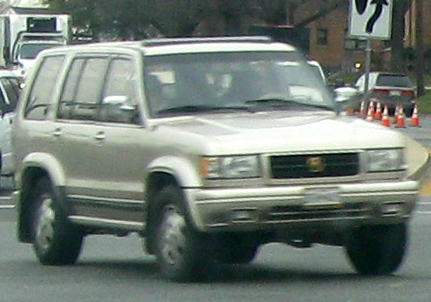
Acura SLX
"...ve Ferrari's Porsches, things of that nature, the SLX, and he came in and he made an offer for this SLX..."
The Acura SLX is a luxury car made by Acura. It’s the kind of vehicle people might talk about when they’re trying to buy or sell a specific car they think is valuable. The podcast mention sounds like someone was making an offer for one they wanted.
The Acura SLX is a luxury vehicle associated with Acura, positioned as a higher-end model that would attract attention in a discussion about desirable, high-status cars. It’s mentioned in the context of someone making an offer, which suggests it’s a notable or sought-after example rather than a mainstream daily driver. In a podcast, cars like this often come up when talking about buying, collecting, or evaluating specific listings.
floor plan costs
"Because the theory was between floor plan costs [614.0s] and whatever it is, we would have to discount that vehicle"
Dealers often borrow money to buy cars for their lot. “Floor plan costs” are the interest/fees for that borrowing while the cars sit there.
“Floor plan costs” are the interest and carrying charges a dealership pays to finance its inventory—basically the cost of having cars sitting on the lot. If a dealer discounts a vehicle, it can reduce how long that financing has to run, but the math can still be painful depending on how long the car has been held.
dealers' inventories
"When you say to me that there's 33,000 vehicles out there [634.2s] that are a year or more older in dealers' inventories,"
A dealership’s inventory is just the cars it has sitting on the lot to sell. If they sit too long, they can need extra work before they’re ready to sell.
“Dealers’ inventories” are the vehicles a dealership currently has on hand to sell. The longer cars sit in inventory, the more they can accrue reconditioning costs (like tires/batteries) and the harder it becomes to sell without taking a bigger price hit.
flat-spotted tires
"They end up costing you more money with age, flat-spotted tires, [661.4s] dead batteries that have to be replaced."
When a car sits too long, the tires can get a worn “flat spot.” That can make the ride worse and may mean the dealer has to replace the tires.
“Flat-spotted tires” are tires that develop a noticeable worn spot from sitting in one position for too long. Dealership inventory aging can cause this, and it may require tire replacement or additional work to make the car presentable and safe for sale.
dead batteries
"They end up costing you more money with age, flat-spotted tires, [661.4s] dead batteries that have to be replaced."
If a car sits for a long time, the battery can run down. Then the dealer may have to replace it before the car is sale-ready.
“Dead batteries” refers to batteries that have discharged while the car sat unused. In dealership inventory, long storage can lead to battery failure, which then adds direct replacement cost and can delay getting the car ready to sell.
vehicle sit unsold
"Not always, Zach, if there's a large final pay, it's worth it to have a vehicle sit unsold and then sell it as a pre-owned CPO later."
Sometimes a dealer just leaves a car unsold for a while instead of discounting it right away. The hope is that the price/incentives will line up later so they can sell it without losing money.
The idea here is letting a car remain on the lot without selling it immediately. Dealers may do this to time the sale with incentives, pricing changes, or to avoid taking a loss right away.
pre-owned CPO
"Not always, Zach, if there's a large final pay, it's worth it to have a vehicle sit unsold and then sell it as a pre-owned CPO later."
CPO means the dealer certifies the used car after an inspection. It usually comes with extra coverage (like a warranty) so it feels safer than buying a regular used car.
CPO stands for Certified Pre-Owned. It’s a dealer-backed program where a used car is inspected and certified to meet specific standards, often with added warranty coverage and perks compared with a regular used car.
aging policy
"You know, we joked that every store for new cars and used cars has an aging policy. Once a vehicle reaches a certain age,"
An “aging policy” is basically a dealer’s rule for what happens when a car has been sitting too long. After a certain point, they may have to change the price or how they sell it.
An “aging policy” is an internal dealer rule for how long a vehicle can sit on the lot before it must be repriced, reclassified, or otherwise handled. The transcript suggests dealers treat new and used inventory differently as it “ages,” which affects when they’re willing to discount.
inventory management
"because we understand that the two most important things [826.7s] for dealership is cash flow and inventory management, [830.6s] why you would sit on vehicles that are in excess of a year."
Inventory management means how a dealer handles the cars they have on hand. It includes deciding when to lower prices or move cars that aren’t selling. Holding too many cars for too long can cost money and slow the business down.
Inventory management is how a dealership controls its stock of cars—how many it holds, how long they sit, and when it changes pricing or sales strategy. The transcript connects it to avoiding vehicles that stay unsold for more than a year, because long-staying inventory ties up capital and increases holding costs. It’s presented as a core dealership priority alongside cash flow.
cash flow
"because we understand that the two most important things [826.7s] for dealership is cash flow and inventory management, [830.6s] why you would sit on vehicles that are in excess of a year."
Cash flow just means how much money a business has coming in versus going out. Dealers care a lot because they need cash to keep the business running and to buy/hold inventory. If they discount too much, they may not have enough money to operate smoothly.
Cash flow is how money moves in and out of the dealership day to day. In this context, it’s a key reason dealers don’t want to discount too aggressively: selling cars too cheaply can reduce the cash they need to keep inventory moving and pay operating costs. The hosts frame it as one of the two most important dealership priorities.
excess of a year
"why you would sit on vehicles that are in excess of a year. [837.1s] Oh, just take whatever you can,"
It means a used car has been sitting unsold for more than a year. Dealers usually treat that as a problem because it costs money to keep the car around. The point here is that dealers need a strategy to get it sold.
“Excess of a year” refers to used cars sitting on the lot for more than about 12 months. In dealership terms, that’s usually a sign the vehicle is aging in inventory and may require discounting or other actions to move. The transcript uses it to argue why dealers shouldn’t keep cars that long without a plan.
tax right off
"Oh, just take whatever you can, [842.1s] get your tax right off, take that loss, [845.5s] turn that hunk of metal into cash,"
They’re talking about a tax deduction—something that can reduce the taxes a business has to pay. The idea is that if the dealer takes a loss on a car, they might be able to reduce taxes because of it. The host is questioning whether that’s a good reason to keep discounting.
“Tax right off” is shorthand for taking a tax deduction or write-off to reduce taxable income. The transcript suggests some dealers accept a financial loss on an aged vehicle because they believe the tax impact softens the blow. It’s part of the argument about why discounting and losses are sometimes rationalized internally.
CarAgeCarSearch
"We still have the zip code in the CarAgeCarSearch set to the Cleveland area, Cleveland, Ohio, and I want to take a peek at some of these vehicles that have been sitting on dealer slots for over a year,"
CarAgeCarSearch sounds like a website or tool for looking up dealer inventory. Here, they use it to find cars that have been sitting a long time near Cleveland.
CarAgeCarSearch appears to be a tool or database used to filter dealer inventory by age and location. In this segment, it’s used to find vehicles sitting for over a year in the Cleveland, Ohio area.
Cleveland, Ohio
"We still have the zip code in the CarAgeCarSearch set to the Cleveland area, Cleveland, Ohio, and I want to take a peek at some of these vehicles"
Cleveland, Ohio is just the location they’re searching in. They’re using it to look at what dealers in that area are charging for cars that have been sitting.
Cleveland, Ohio is the geographic area the hosts are using to filter inventory. The point is to show how local dealer pricing and discounting behavior affects whether cars sell.
dealer slots
"and I want to take a peek at some of these vehicles that have been sitting on dealer slots for over a year, which means they're either at final pay or they're on their way to final pay."
“Dealer slots” just means the cars a dealer has sitting on their lot. If a car sits there too long, the dealer usually has to lower the price to sell it.
“Dealer slots” refers to the inventory space on a dealer’s lot—cars that are physically sitting for sale. The hosts use it to describe vehicles that have been sitting for a long time, which often pressures dealers to discount to clear inventory.

Honda HRV Sport
"And you can see here, it's interesting, the first one's a Honda, an HRV Sport. The thing I want to look at that is the actual discount that they're offering off of MSRP."
The Honda HR-V is a small SUV-style car. “Sport” is a nicer, more optioned version. Here, they’re comparing how much cheaper the dealer’s price is compared to the manufacturer’s suggested price.
The Honda HR-V is a subcompact crossover, and the “Sport” trim is the more equipment-focused version. In this segment, the hosts are using the HR-V Sport’s listing price versus MSRP to illustrate how much discount a dealer is (or isn’t) offering.

Cadillac Escalade IQ Luxury 1
"When I scroll down, Dad, I look at things like, this Escalade IQ Luxury 1, it's $130,000 electric Cadillac Escalade. I think it's going to take more than $6,215 off of MSRP to get it to sell."
The Cadillac Escalade IQ is the electric version of the big Escalade SUV. “Luxury 1” is a higher trim level. They’re saying the dealer may have to cut the price a lot to get it sold.
The Cadillac Escalade IQ is an all-electric version of Cadillac’s large Escalade SUV, and “Luxury 1” refers to a specific equipment/trim level. The hosts use it to discuss how dealers may need to discount more aggressively off MSRP to move slow inventory.

Hyundai Palisade calligraphy night edition
"Here's a Hyundai Palisade calligraphy night edition. I wonder, Dad, do $60,000 Hyundai sell this one data point would suggest not?"
The Hyundai Palisade is a big family SUV with three rows. “Calligraphy” is a higher trim with nicer features, and “Night Edition” usually means darker styling. They’re pointing to a specific listing to make a pricing/discounting argument.
The Hyundai Palisade is a three-row midsize SUV, and the “Calligraphy” trim is Hyundai’s top-of-the-line style/feature package. “Night Edition” typically adds darker exterior styling and appearance-focused upgrades. In this segment, they’re using the specific Palisade listing to discuss why dealers may resist lowering prices.
Spitzer Auto World
"I'm noticing quite a few here, Dad, at this Spitzer Auto World, this Hyundai dealership. So let's go and let's do that."
Spitzer Auto World is the name of a car dealership they’re looking at. They’re using it as an example while checking what cars are listed and how they’re being described.
Spitzer Auto World is a car dealership location mentioned as the source of the listings they’re clicking through. It’s relevant here because the hosts are using a specific dealer’s inventory to illustrate how pricing and discounting behavior can vary by store.
unsold leftover
"So this is another thing that you're going to see with some of these unsold leftover, and this one's unsold and leftover, but also just aged units."
“Unsold leftover” means a car that’s been sitting at the dealership for a long time without selling. The hosts are saying these cars can end up with extra miles or special handling instead of getting a straightforward price cut right away.
“Unsold leftover” refers to vehicles that remain in dealer inventory long after they were expected to sell, often because demand is weaker than anticipated or because the pricing hasn’t moved enough. In practice, these cars can become “aged units,” and dealers may use tactics like loaner use or selective discounting rather than immediately cutting price.
service loaner fleet
"They put it into service loaner fleet. They put 2,681 miles on the car. Well, maybe they put it in service loaner fleet."
A “service loaner fleet” is the dealership’s pool of cars they lend out when your car is in the shop. Those cars rack up miles from being used as loaners, even though they weren’t sold to a customer.
A “service loaner fleet” is a set of cars a dealership keeps to loan to customers while their own vehicle is being serviced. When a dealer uses loaners, the cars can accumulate miles without being “sold,” which can make inventory look older/used even though it’s still in the dealership’s sales pipeline.
retired service loaners
"retired service loaners were sold as retired service loaners. [1010.2s] They were not sold as new cars with 2,100 miles on them."
A retired service loaner is a car the dealership lent out to customers for repairs. When it’s sold later, it’s not truly “unused,” because it already has miles and has been driven.
A retired service loaner is a car a dealership used to loan customers while their vehicle was in for service, then later sold after it’s no longer needed. Even if it’s advertised as “new,” it has real usage (miles and wear), so pricing and discounting should reflect that.
over mileage charge
"if you're on a lease card with Hyundai, [1053.4s] I'm guessing the over mileage charge is somewhere between 20 and 25 cents [1058.6s] for every mile over."
When you lease a car, you’re given a mileage limit. If you go over that limit, the lease can charge you extra money per mile.
An over-mileage charge is a fee assessed when a leased car exceeds the mileage allowance in the lease contract. The host uses Hyundai lease terms as an example, noting that the per-mile penalty (e.g., 20–25 cents per mile) implies the dealer should discount a higher-mileage car more.
miles over
"I'm guessing the over mileage charge is somewhere between 20 and 25 cents [1058.6s] for every mile over. [1060.3s] So there's got to be more of a discount"
“Miles over” just means the car has more miles than the limit that was agreed to. In leases, going over that limit can trigger extra charges.
“Miles over” refers to how many miles a vehicle has exceeded its agreed-upon allowance—most commonly in a lease. In this segment, the host ties “miles over” to how much a dealer should discount a car that already has thousands of miles.
car that's been sitting on a lot for over a year
"We see a lot of these cars that have been sitting for over a year. [1095.9s] They get miles on them for whatever reason, [1097.7s] and they're sold as new cars."
If a car sits at a dealership for a long time, it can develop problems that you might not notice immediately. The segment’s takeaway is to treat it as something to check carefully—especially by driving it.
A car sitting on a dealer lot for a long time can develop issues that aren’t obvious at first glance, such as battery drain, tire flat-spotting, fluid degradation, and corrosion risks depending on storage conditions. The key point in the segment is that “time sitting” can matter, so buyers should evaluate the specific car rather than assuming it’s fine because it’s “new.”
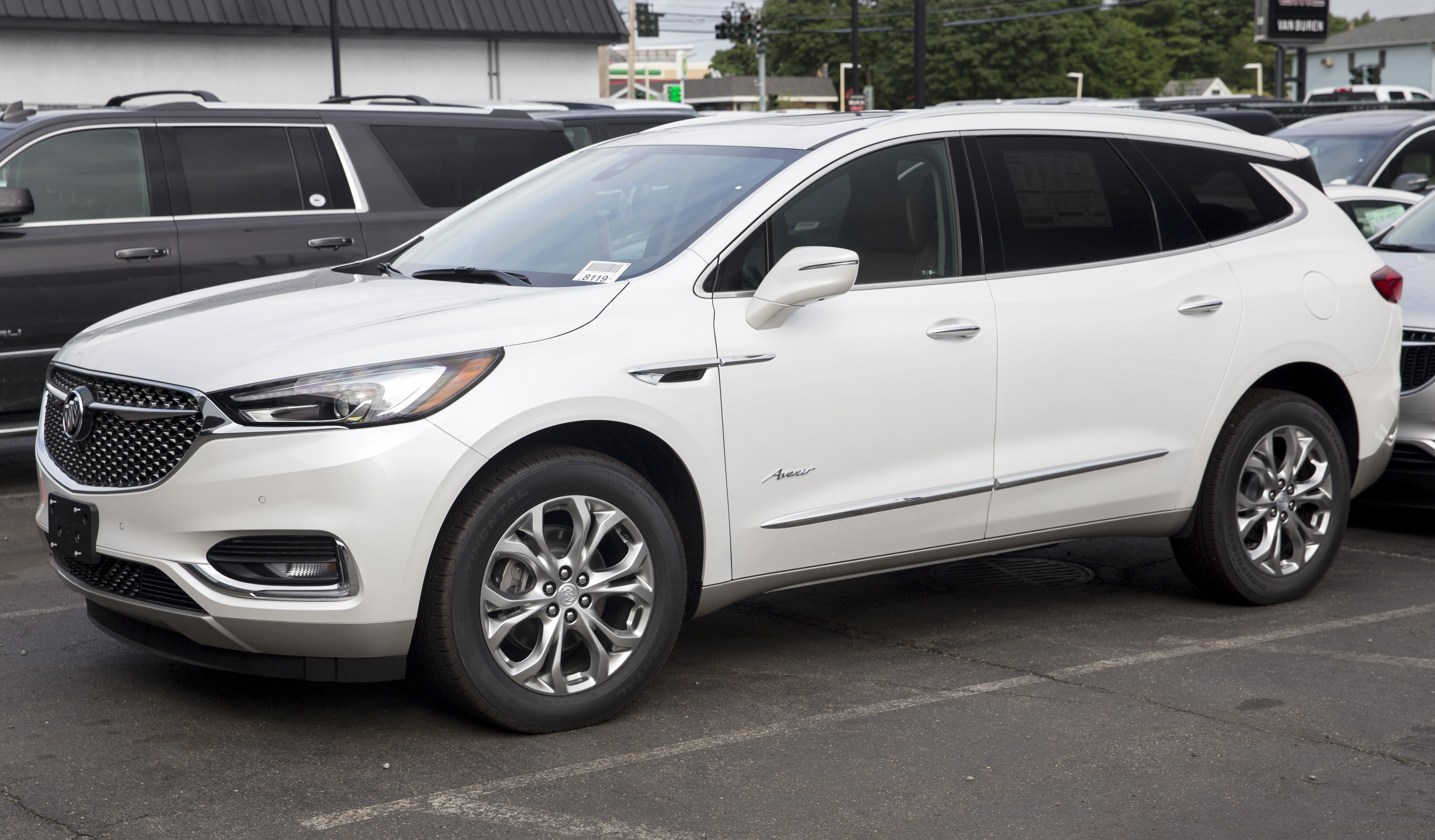
Buick Enclave Sport Touring
"But is it actually scary to think about buying any of these cars, [1133.3s] like this Buick Enclave Sport Touring that's been sitting at Crestmont Buick GMC for 550 days?"
The Buick Enclave is a family SUV with three rows of seats. “Sport Touring” is a nicer trim level, and here it’s mentioned as an example of a car that’s been sitting at the dealership for a long time.
The Buick Enclave is a three-row midsize SUV, and the “Sport Touring” trim is positioned as a more feature/appearance-focused version of the family hauler. In this segment, it’s used as an example of a vehicle that’s been sitting on a dealer lot for a long time before being sold.
test drive
"Well, what you need to know is you need to drive it. [1147.0s] You should always test drive a vehicle. [1152.0s] New, used, matters not."
A test drive means you drive the car yourself before buying it. The point here is that you can’t rely only on the label—driving it helps you spot problems.
A test drive is a hands-on evaluation where you verify how the car behaves under real driving conditions. In this segment, it’s emphasized as the best way to judge whether a long-lot car is actually in good shape, regardless of whether it’s labeled new or used.
flat spots
"When you do that to a vehicle, you end up with what's known as flat spots in the tires from where those tires have been compressed against the ground. Sometimes if you drive it far enough and the tires heat up enough, you can work the flat spots out."
If a car sits for a long time, the tires can get squished in one spot. When you drive again, that squished area can make the ride feel bumpy or thumpy, and sometimes it never fully goes away.
“Flat spots” are areas on a tire tread that get compressed while the car sits in one position for a long time. When you start driving, that deformed section can cause vibration, thumping, or bouncing until the tire heats up enough to reshape—often it won’t fully recover.
voltage readout
"You need to get a voltage readout on the battery, find out how much strength the battery has left. Because in many cases, because there's always a constant drain on batteries today because of all the computers that are in cars, that ultimately they drain themselves out."
A voltage readout is basically a battery check that tells you how much electrical energy is left. If the battery is too weak, a jump might not be enough and the battery may need replacing.
A “voltage readout” is a measurement of battery voltage used to estimate state of charge and health. On modern cars with many electronic modules, a battery can drain while parked, so checking voltage helps decide whether a jump or a replacement is needed.
constant drain
"Because in many cases, because there's always a constant drain on batteries today because of all the computers that are in cars, that ultimately they drain themselves out. And so you can jump it, you can try and recharge it, but it might not hold enough of a charge."
Even with the car turned off, some electronics keep using a little power. Over days or months, that small draw can drain the battery.
“Constant drain” refers to parasitic electrical draw from a car’s systems while it’s parked—like infotainment, security, and control modules. Even when the engine is off, these systems can slowly discharge the battery over time.
rodent infestation
"You need to find out if there's been any rodent infestation in the cars. Because rodents love wiring and love, yeah, rodents over the hood, under the hood."
Rodent infestation means animals got into the car. They can chew through wires, which can lead to weird electrical problems and costly repairs.
Rodent infestation refers to animals getting into a vehicle and damaging components. In cars, rodents are especially notorious for chewing wiring and insulation, which can cause electrical faults and even safety-related issues.
pre-purchase inspection
"I hate to say this, but you should get a pre-purchase inspection done like a, what do I use car? That was like three minutes straight of just nuance for buying a year old plus new vehicle."
A pre-purchase inspection is when a mechanic checks a used car before you buy it. The goal is to find problems you might not notice right away so you don’t get stuck with expensive surprises.
A pre-purchase inspection (PPI) is a professional inspection done before you buy a used car. It’s meant to uncover hidden problems—like mechanical issues or damage—that aren’t obvious during a quick look or test drive.
leftover 2025
"Not sure how I feel about that name, but asking is 20% off MSRP impossible for some of these left over 2025? No, it's not impossible."
“Leftover 2025” means cars from the 2025 model year that didn’t sell and are still sitting at the dealership. Dealers may discount them more to move them out.
“Leftover” vehicles are unsold inventory from a previous model year that dealers still have on their lots. These cars often become eligible for larger discounts because the dealer wants to clear space and reduce aging inventory.
BMW
"BMW requires dealers to replace batteries on vehicles that sit."
BMW is the car brand being referenced. The speaker says BMW has a dealer rule to deal with batteries on cars that sit too long, so they’re less likely to be dead when you try to start them.
BMW is mentioned here as a brand that requires dealers to replace batteries on vehicles that sit for a while. The point is that BMW has a policy to reduce dead-battery issues for inventory sitting on lots.
CDJR
"BMW requires dealers to replace batteries on vehicles that sit. They don't over at CDJR, Dad."
CDJR is a shorthand way of referring to Chrysler, Dodge, Jeep, and Ram. The speaker is saying their dealer practices may not be as strict about handling batteries on cars that sit.
CDJR is shorthand for Chrysler Dodge Jeep Ram, the dealer group/brand umbrella the speaker contrasts with BMW’s battery policy. The implication is that not all brands or dealer practices handle long-sitting inventory the same way.
dead battery
"I called a dealer about a 392 Wrangler, they couldn't start at dead battery."
A dead battery means the battery doesn’t have enough power to start the car. If a car sits unused for a long time, the battery can weaken and eventually won’t crank the engine.
A dead battery means the car’s battery voltage is too low to start the engine. On dealer lots, batteries can degrade faster if vehicles sit for long periods without being maintained or periodically charged.

Jeep Wrangler
"This is from Tony. I called a dealer about a 392 Wrangler, they couldn't start at dead battery."
A “392 Wrangler” is a Jeep Wrangler with a big V8 engine. In this story, the key point is that the specific car they called about wouldn’t start because the battery was too weak.
The Jeep Wrangler 392 refers to the Wrangler equipped with a 6.4-liter V8 (the “392” naming comes from the engine’s displacement). It’s a performance-focused Wrangler variant, so buyers often expect it to be ready to start and run reliably when they show up to buy.
voltage reading
"and open the glove box and see what the voltage reading was and what the date of that voltage reading."
It’s basically a battery “charge level” check. The voltage tells you how much electricity is left, and the dealer keeps records to show what the battery was doing.
A voltage reading is a measurement of the battery’s electrical charge level. In this context, the dealer is checking and documenting the battery’s voltage over time to prove whether the battery was kept in an acceptable state.
warranty
"Wow, you're required to do that on a monthly basis because BMW and many, they're not covering those batteries under warranty for the dealer."
Warranty is the promise about repairs or replacements if something fails. Here, the speaker says BMW will cover the customer, but the dealer isn’t covered the same way.
In this segment, “warranty” refers to who pays when a battery fails—BMW covers the customer, but not the dealer. That difference affects whether the dealer will replace a battery on an in-lot car or treat it as the customer’s problem.
battery goes dead
"So when the battery goes dead or the charge is too low, it's enough to start it, but it's not at the right level to maintain it."
It means the battery is so empty it can’t power the car. If it’s dead, you may not be able to unlock the doors or start the engine.
“Battery goes dead” means the car’s 12-volt battery has dropped to a level where it can’t power the vehicle’s electronics or start the engine. Even if the car is otherwise fine, a dead battery can prevent unlocking and starting, which kills the sale quickly.

Ford Mustang
"I've walked out of three dealerships the past few weeks trying to buy a 2025 Mustang Mach-E that's been on their lots for over 400 days."
The Ford Mustang Mach-E is an electric Ford. If one sits on a lot too long, the battery can get too low, so the car may not unlock or start when a buyer shows up.
The Ford Mustang Mach-E is an electric crossover built on Ford’s EV platform, and it relies on battery health for everyday functions like unlocking and starting. If a Mach-E sits on a dealer lot for a long time, the battery can degrade enough that the car won’t respond to the key fob or won’t be ready to drive, which directly hurts a sale.
Request an Explanation
Heard something you'd like explained? We'll add it to this episode.
Sign in to request explanations for terms you heard.
Want to learn more?
Browse our glossary for plain-English explanations of automotive terms, jargon, and concepts.
Help improve this episode
See something that's not quite right? Our annotations are AI-generated and can sometimes miss the mark. Click the flag icon on any annotation to suggest a correction.
1 community members have helped improve this episode.