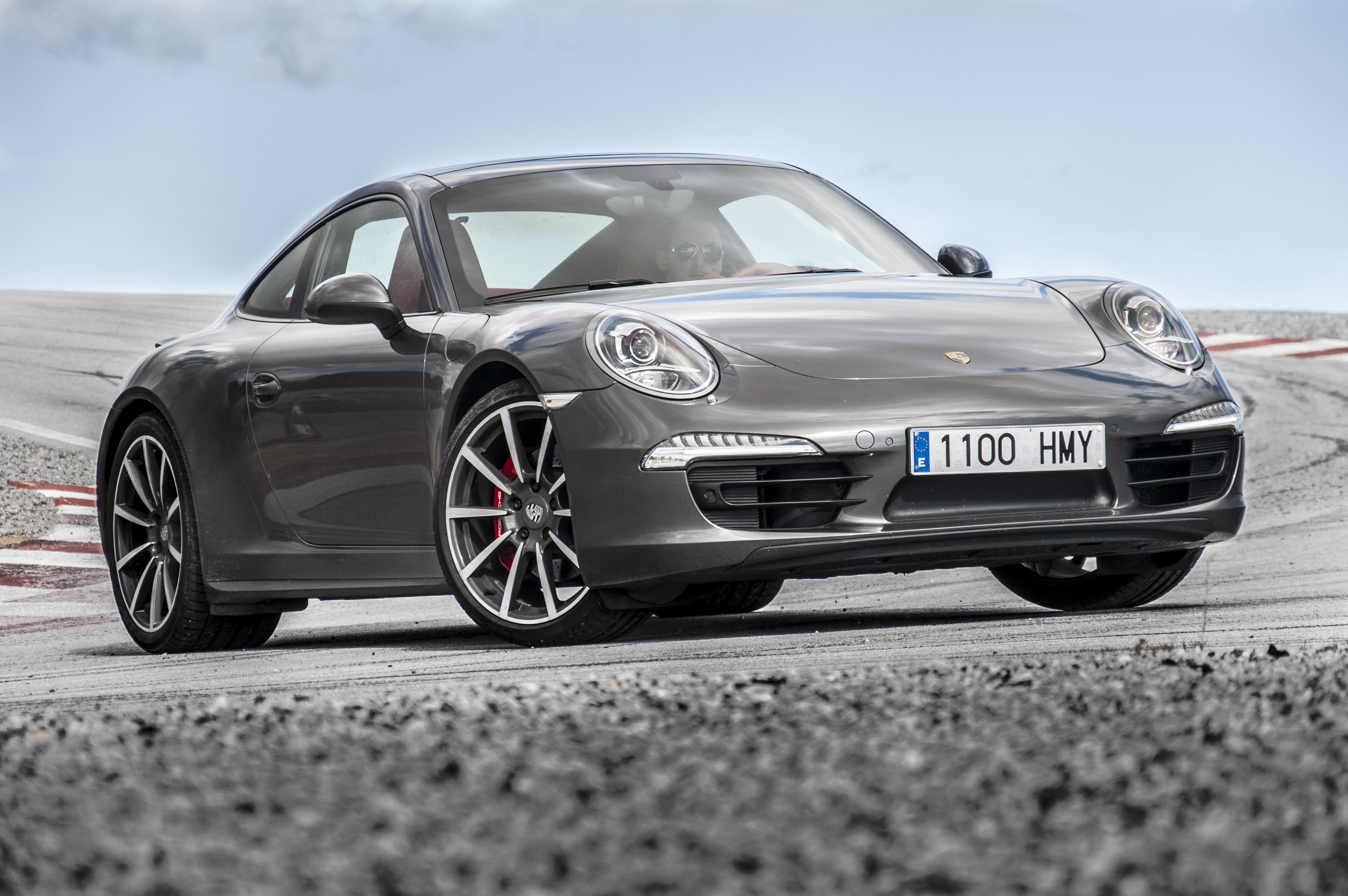
The Porsche 911 is a famous fast car that looks unique and is fun to drive. The 997.1 is a version made in the mid-2000s that many people like because it drives well and has some newer features. People talk about it because it's a cool and special car.
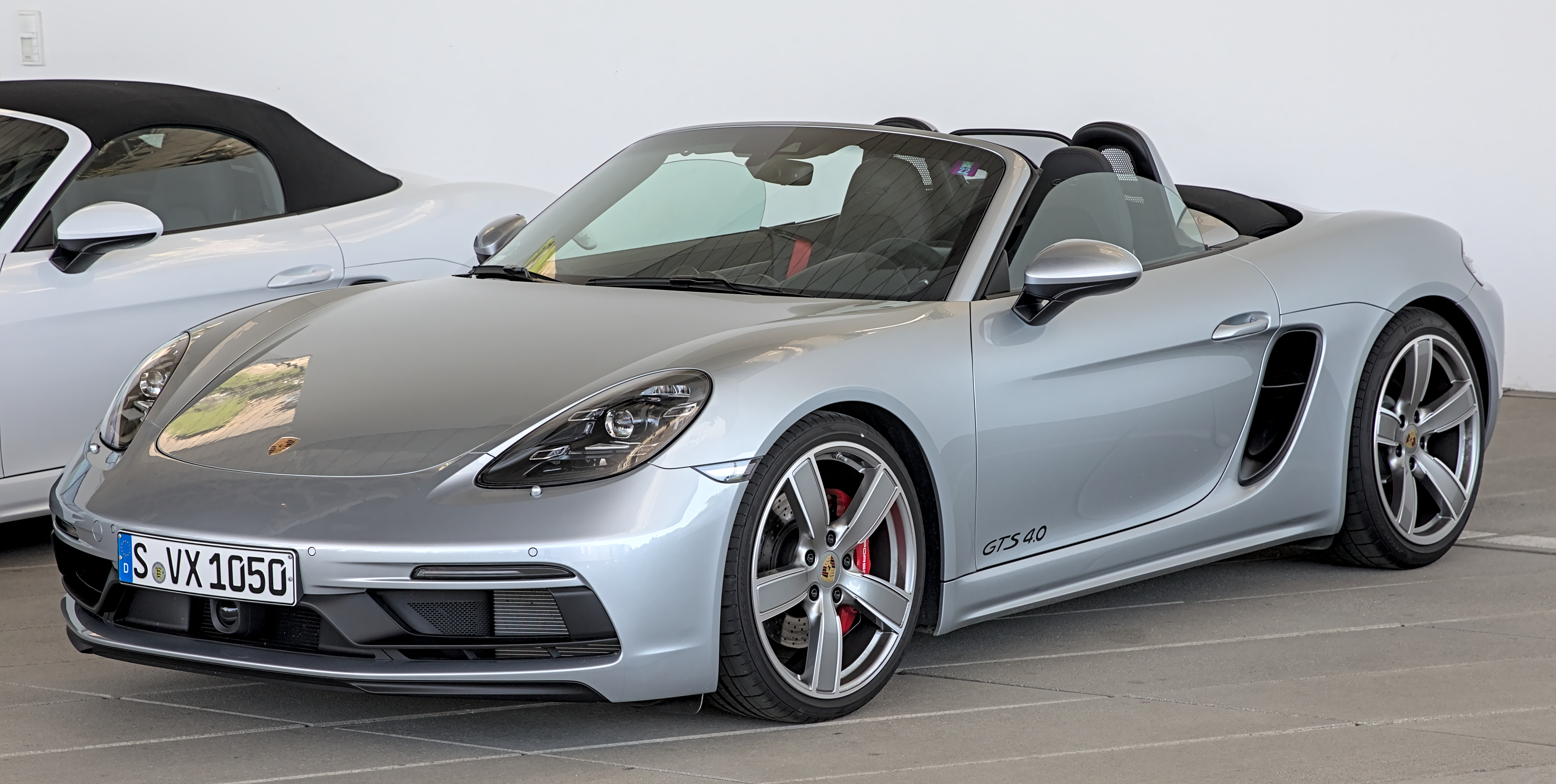
The Porsche Boxster is a small, sporty car with the engine placed in the middle, which helps it drive really well. It helped Porsche make money when the company was struggling. People like it because it's fun to drive and not too hard to handle.
The Porsche 911 Turbo (997) is a faster and more powerful version of the 911 made between 2004 and 2012. It has a turbocharger that helps it go quicker.
Car makers offer different paint colors for their cars. Sometimes, fewer colors are available because of money problems or because dealers choose safe colors like silver or black.
The global financial crisis was a big money problem around 2007-2008 that affected many businesses, including car makers. Because of it, fewer cars were made and dealers picked safer colors to sell.
A stock exhaust is the car's original pipe system that lets out engine gases. It's made to keep the car quiet and clean but can be changed for more sound or power.
A flat six engine is a type of engine where six cylinders lie flat and opposite each other. This helps the car handle better and makes a unique engine sound.
These are things people say about drivers who switch
their car insurance to Progressive and save hundreds.
Because Progressive offers discounts for paying in full,
owning a home, and more.
Plus, you can count on their great customer service
to help you when you need it,
so your dollar goes a long way.
Visit Progressive.com to see if you could save
on car insurance.
Progressive Casualty Insurance Company and Affiliates,
potential savings will vary,
not available in all states or situations.
Here at Blue Apron,
we've been thinking a lot about the whole cooking thing.
And we've decided you shouldn't have to cook.
Introducing dish by Blue Apron,
pre-made meals that are ready in five minutes or less.
At least 20 grams of protein, a good source of fiber,
and no artificial flavors or colors.
Shop dish by Blue Apron at Blueapron.com.
Get 50% off your first two orders with code APRON50.
Terms and conditions apply.
Visit blueapron.com slash terms for more.
With its two juicy beef patties,
three slices of melted cheese,
and tangy big arch sauce,
the big arch is what happens when you start making
a McDonald's burger and never stop.
The big arch, the most McDonald's McDonald's burger yet,
for a limited time.
Welcome to Renthusiast Radio,
the podcast where Will and Derek
navigate the winding roads of Porsche Obsession,
exploring the good and the bad of Porsche ownership.
Grab your favorite beverage, pull up a chair,
and join us, Renthusiast Radio,
because life's too short not to talk about Porsches.
Welcome to Renthusiast Radio.
I'm Will.
And I'm Derek.
And I am very excited about today's episode
because I have been able to spread my illness
of impulse buying Porsches
to my good friend and partner, Derek here.
So in today's episode,
we're gonna be talking about Derek's recently acquired
out of the blue 997.1 9-11.
And I'm personally interested in learning more
about this particular generation of 9-11.
I don't know a lot about it, to be honest with you.
And I do know that there's a lot of myths around it
relative to reliability.
And I also think it's a bit of a sleeper.
So I am excited to hear this, Derek.
So let me throw it over to you.
Yeah, it is sleeper, such a good word for it, Will.
The more I kind of look into this car,
the more I kind of think that it's this weird kind
of sandwich generation of 9-11s
where you have 996 for good or for bad
have such a following, right?
Whether you love the looks or you hate the looks,
you love the purity of the first water cool cars
or you think that it was just a first step
and it only got better.
It's really interesting because when people think
about the 997, they think about the .2s
because the 997.1s, the first generation of 997s
get lumped in with the problem motors
and all kinds of issues.
And so it's really interesting because,
well, you know what, let's do this, Will.
Let's just talk real, let's put it in context
because we already started this podcast
by throwing out all kinds of numbers.
Go ahead.
Yeah, no, I'm laughing, right?
So we always talk about these internal designations
and I am guilty, guilty, guilty of that.
So yeah, I think for our listeners slash viewers,
why don't you give your overview
of what years these cars span
and why are they called .1 versus .2 and so on and so forth.
So let's educate the casual enthusiast.
Let's educate from uneducated hosts.
Let's do our best.
And as always, people down in the comments
are always willing to tell us how wrong we are.
So please do that.
But essentially, you know, people think of Porsche
as air-cooled and water-cooled, right?
And the last of the air-cooled were the 993
and the last year that was 1998.
And then 1999, Porsche came out with the 996.
That was the first water-cooled rear engine Porsche 911.
And it was met with mixed emotions.
I mean, it was a huge departure in terms of looks,
in terms of engine architecture.
And in some ways, it was a huge departure
from manufacturing and from aesthetics from the interior too.
And so I think at the time, people didn't know what to think.
And this is Porsche, Porsche normally is so incremental,
right, in terms of how they evolved their cars.
And this really was a huge jump for them
in terms of, you know, any,
from a mechanical standpoint and aesthetic standpoint.
So 996 comes out, you know,
it really is on paper, just a big leap forward
in terms of performance.
I'm not gonna use the word reliability,
but certainly it brings Porsche into the present day
and the future in terms of what kind of car company they are,
production-wise and everything like that.
The 996 went to 2004 and it sold extremely well.
And it helped bring Porsche out of bankruptcy.
And along with the Cayenne and the Boxster
really made them very able to,
from a financial standpoint, made them solvent.
So the problem with the 996,
for those people that don't know out there
or are just starting to know their 911s,
is from the looks of the 996,
people had a really hard time with the fact
that the 911 and the Boxster shared the same front end.
And they both looked the same.
And also they moved away from kind of the oval headlights
that Porsche had been known for
for the previous 40 or 50 years.
997 in 2005 kind of was a return to form for Porsche.
They went back to the Coke bottle shape
where you had more, it wasn't quite so narrow,
it was much more kind of voluptuous
in terms of how it was designed.
And return of the oval headlights.
And it looked more like the Porsche
that people had been used to for many, many years.
Aesthetically, it was a big difference.
You know, I think they said like,
it was like 90% or 95 or 98% new.
I think the carryover was maybe the roof
in the back seats from the 996,
which was interesting because the motor architecture,
so the motor that Porsche had issues with
in the 996, you know, with the bore score
and intermediate shaft bearing issues,
rear main seal issues, that was carried over
more or less kind of for the base, the M96,
with definitely changes,
but still kind of from an architecture standpoint.
And then in the S, I think they got the M97,
which was a different motor,
but still in same architecture, same foibles, same issues.
So this is a lot of words to saying
it was like an aesthetic change.
Mechanically, it was 996-ish.
And then people had the 997.1 from 2005 to 2008.
And then Porsche did go for the DOT2 generation in 2009.
They went to a direct fuel injected motor.
It was a, they updated the cabin a fair amount,
but it's still very similar to the DOT1s.
But really it's the motor where they took away
a lot of the issues when it comes to the IMS.
They went to a different architecture entirely
and the IMS issues stopped being a problem.
So here's the thing, Will,
and I've been talking for like five minutes on this.
And people, when the 997 first came out,
were like, yes, Porsche is back.
Porsche is a return to form with their 911s,
like from an aesthetic standpoint.
But then as time went on,
and they kind of suffered some of the same issues
that the previous generation did,
they were like, well, we need something more reliable.
And that's the DOT2.
So now when you think 997, you think,
well, I have to get the DOT2.
2009 to 2012, those are the reliable cars.
Those are the faster cars.
The DOT1s have the same issues and are scary,
like the 996s.
And to some extent, that's true,
in that they are kind of the same architecture.
So they do share some of the same issues.
But what I really want to do, my thesis on this was,
I'm always looking for like a nice analog ride.
I want something that's modern, but feels kind of old.
And I had no experience with the 997.1.
And when I was kind of looking for what kind of car
should I get to add to my 72 911 into my 2014 Boxster,
I really kind of wanted like a Cayman or maybe a 996.
And 997.1s really weren't on my horizon
because frankly, Will, the prices have gone up quite a bit.
The 997.2s, go ahead.
No, that's where I wanted to start with the money, man,
but I don't want to cut you off
unless you can kind of wrap up your thoughts
and we can dig into maybe some Q&A.
Yeah, the 997.2s have gotten flipping expensive.
997s were always $30,000, $32,000,
maybe $35,000 cars for many years
coming up into COVID.
And the .2s may be in the high 30s, 40, for a long time.
And then unfortunately, what happened is like everything,
the .2s went up in price.
Now we've got a .2 for what, 70, 80 for an ass?
65 to 85, 65 to 85.
And in my search, I actually got hit with a couple cars
like people wanted low 90s.
Yeah, yeah.
Now these were assets with the manual transmission,
so you can get it cheaper.
You can.
I haven't seen a .2 for under 55 in quite some time.
And so the value vacuum, right, the .2s go up
and people say, well, those are expensive
and I can't afford those now.
So what is a predicate for that?
What can I have that is like that?
But I actually really think that they're still
probably the best value outside of a 996.
They're one of the best values going
because frankly, 911s are stupid expensive now.
Almost every generation is stupid expensive now.
So what can you get into for under 50K
that gives you a great 911 experience?
The choices are less and less.
And so when I was looking at Caymans or 996s,
I came across this 997 and I jumped at it
because it gave me that opportunity
to have the aesthetic value that I really like,
to have the experience of a car I've never owned before
and to be able to speak coherently about a generation
I really didn't know too much about and I'm still learning.
So that sets the table well.
There's a lot there.
You've done your homework as usual.
So why don't we start with somebody's out there
listening to us blather on about these cars
and maybe they're looking for their first 911
or maybe they're starting to like you very seasoned person
but they're starting to look around for something
that's still rather attainable price wise
to add to their collection.
What could somebody expect to pay for a 997.1?
Let's talk trims, let's talk transmissions.
Let's also talk mileage and condition, man.
So talk to me.
Yeah, that is a loaded question.
So it's split into the S in the base.
The GTS, I don't believe came out until the .2s.
So you have your choice of the S or the base
in the 997 or the turbo.
I don't have as much experience with the turbo.
Well, I'm gonna leave that in your camp
because that was one of your very first Porsches that you own.
So you can talk about that.
But essentially where the market is right now,
the Carrera S is probably 50, 55,000.
You know, kind of as a mean average,
you might get some higher mileage ones
in the mid to high 40s.
Lower mileage examples I've seen for the 60s.
Manual transmissions as always in those generations
when you compare against the Tiptronic,
which is what Porsche called the automatic.
The manuals always command a premium 10 to 20%
pretty much minimum from what I've seen.
The base models, which is what I got a 997.1,
I feel like I'm becoming the,
I feel like I'm becoming like the champion of the base will
and not the S and it wasn't my intention necessarily,
though we will get into perceived reliability
of the base versus the S in terms of issues.
But the base is probably high mileage base
starting in the mid 30s to a lower mileage in the mid 40s.
You know, some of the bases in really great shape
are topping 50 now.
So probably in that 40 to 45 range,
you could expect to find a decent 997.1 base.
The S is about 10 grand more.
And again, that same disparity
between the automatics and the manuals.
All right, so color, one of my favorite topics.
You look at the 997.2, man, the options are really,
really limited by virtue of like,
they weren't making a lot of cars
and the dealers that were spec in the cars
needed to go safe.
And so they were going with like your silvers
and potentially blacks.
Global financial crisis was driving a lot of that.
So, you know, is there a wider array of cool colors
available in the 997.1?
Or are we still in a world of arctic silver?
Tell me.
Yeah, you know, Porsche kind of went through this thing, right?
Like in the 70s, they were known as the Skittles colors.
They had these beautiful hues of greens and blues
and oranges and reds.
And they were just, they were really striking to the eye.
And of course, the colors only accentuated
the actual shapes of the cars.
Then in the 80s, you know, it became a little bit more,
you know, G-body corporate, you were in guards red,
you went white, and kind of that expression of,
maybe a more like solid buttoned up,
you know, feeling for Porsche.
And again, again, they were going through financial issues
in the late 80s, into the early 90s
where they almost went bankrupt.
So I don't know if that had any choice
when it came to what they could afford
to paint the different cars,
that could they only afford a certain color palette,
whatever, it kind of carried over to the 2000s, man.
I mean, the 996 is, you're really hard pressed
to find any wild colors.
I mean, I feel like greens were like a stretch for Porsche.
And again, I'm talking with really no authority
and having done any research outside of my anecdotal,
like what I've seen over the years.
997 is kind of the same way.
I mean, tons of blacks, tons of whites,
tons of Arctic Silver, the light gray.
My car is called Seal Gray,
so it's like that darker, more meatier gray,
it's kind of a moody color that looks great when it's clean,
kind of hides the dirt, okay, when it's dirty,
which it's been because New England is dirty right now.
And maybe you got your reds and your blues,
but to get something that's crazy,
like you don't see any oranges,
you don't see any greens outside
of maybe a couple dark greens,
very rare from what I can see.
And certainly a price premium if you wanna go outside that.
So yeah, not a lot to choose from.
I would have, unfortunately, in my list of priorities,
color definitely plays into it.
Like I'm not really a big white car fan,
though I do have a white Cayenne,
but you know, and black is for me, kind of whatever,
but condition, price, and with these cars,
like there's a lot of priorities
that are above color for me.
And so it's one of those things where
because they're not being sold on every corner anymore,
you just kind of take what you can get as far as color.
So I would have been happy with a lighter gray
or something like that, blues would have been great too.
I think steel's a great color.
And again, as a reformed color chaser, myself,
I mean, a really interesting color,
you're gonna pay up for it.
And if you're really firm on that,
you might compromise and buy something
that's not mechanically sound just to get that color.
And I think that might have been what you did with this car
because you and I of course talked offline about this,
but I think while you have a higher mileage example,
it's mechanically sound as hell
based on the maintenance history of the car.
So I'd like to move a little bit now
and talk about your specific example.
If you're open to telling us what you paid, that's cool.
If not, that's okay also, but let's get into your car now.
This is one of those things,
and I describe this a lot in the video I put up
on 11 After 9 where I talk about,
it's time to put my money where my mouth is, right?
Because you and I have been spouting for years now.
It's better to buy a higher mileage example
that's in great nick that has been maintenance the heck
out of over the course of its life
versus a lower mileage example where it's spotty records.
There's a lot of question marks.
I'm not even gonna say multiple owners,
but certainly car facts issues.
I would much rather take a car
with a binder full of receipts.
And so when I went searching for a 997.1,
the watch outs for me are the same watch outs
for most people, you want to make sure that if possible,
the IMS has been rectified.
In 2005 into 2006, you were still able to go in and replace it
and replace it with a aftermarket example.
And then after that, they went to a larger bearing
that is non-replaceable.
Those are in the later 997.1s.
So my car is a very early car.
It was actually built, I want to say in like July of 2004.
So it still has that replaceable bearing
and it had been replaced with an L in engineering bearing.
So in my mind, that's great, okay?
Put that aside, IMS taking care of great.
And then the other big issue that maybe is more perceived
now well after our podcast last week
with Joe from Blackstone Laboratories
is a worry about bore scoring.
And one of the things I absolutely wanted to do
was to get those bores scoped to make sure
that there weren't any big scratches
because what happens over time is
when the pistons go up and down,
they start to kind of tear off essentially
the lining of the cylinders.
And then you have oil and grass
and then you have to rebuild the motor.
And so that is a known issue.
And if you talk to some people
like we talked about last week, well, right?
Every single 996 and 997.1 is gonna have bore score.
That's what we've heard for years.
And so it has kept a lot of people away
from owning these cars.
And talking to Joe last week,
we find out that low and behold,
the incidents that they find when they do oil analysis
is what, 3%, 3.2, 3.8, something like that.
Yeah, dude.
So let's pause on that, let's pause on that
just cause I feel like that's a news flash.
Like that's worthy of just, yeah, we're talking 997.1
but I also just want to kind of reiterate that.
It was like shocking.
Cause what he said, obviously they have a huge database.
First of all, you know, thousands of cars,
thousands of oil samples on these cars
that are reportedly, you know,
prone to bore scoring, you're totally screwed.
If you buy one, just be prepared.
So 3% off a huge data, over a huge database of samples.
And he said too that it's regardless of climate
and potentially like how the cars are driven
and all that kind of stuff, it's only 3% of them.
And that's amazing.
It's crazy.
That's huge, that's huge.
This episode is brought to you by Progressive Insurance.
Do you ever think about switching your insurance companies
to see if you could save some cash?
Progressive makes it easy.
Just drop in some details about yourself
and see if you're eligible to save money
when you bundle your home and auto policies.
The process only takes minutes
and it could mean hundreds more in your pocket.
Visit progressive.com after this episode
to see if you could save.
Progressive Casualty Insurance Company and Affiliates.
Potential savings will vary, not available in all states.
With no fees or minimums on checking accounts,
it's no wonder the Capital One bank guy
is so passionate about banking with Capital One.
If he were here, he wouldn't just tell you
about no fees or minimums.
He'd also talk about how most Capital One cafes
are open seven days a week
to assist with your banking needs.
Yep, even on weekends,
it's pretty much all he talks about in a good way.
What's in your wallet?
Terms apply, ccapitalone.com slash bank,
Capital One NA member FDIC.
Sorry, so let's go back to the 997.1, man,
because like, but anyway, every time,
I've thought about it five or six times since then.
Dude, I've been thinking about it all week.
Driving the 997, I've been driving,
because I'm still warming it up the same way.
I'm still acting as if, right?
I'm still, I'm still 100% paranoid.
And so I still, very careful to warm it up
and do all the right processes
to get the motor to operating temperature.
And I describe all that in my video,
but I've been thinking about it a lot
because he did say something
that was a little bit of a caveat to that
that I do wanna make mention
is that he gave us what the rates were
and blew our hair back, like we couldn't believe it.
But he also said that the people that take the time
to draw the oil and send it in for analysis
are the people that are fastidious
with the care of their cars.
And so if you could poke holes in this,
it would be that, I mean, what's the percentage of owners?
I mean, even though they've done thousands of samples,
you know, there's tens of thousands of cars out there,
hundreds of thousands of cars,
if you go across generations,
what are the chances that you're getting the best of the best
in terms of care and you're making an assumption on that?
So like, you know, the guy who hops in his car
and puts it to 6,000 RPM within 10 seconds of starting it,
you know, maybe he's not sending his oil in
or changing his oil every three years
and every 30,000 miles.
Yeah, I mean, I'm not a statistician.
I don't understand, you know,
how he arrived with those numbers.
At the end of the day, I'm riding on 3%.
So I have a 997.2, a 2009, you know, DFI motor
and they're reportedly prone to boar scoring.
But ever since I heard,
I was sat down with them on that episode.
I've been less worried about my car.
I've been driving the hell out of it, so.
Good, I want you to sleep better at night, Will.
That's important.
I am, I am, and I love that car.
So that's, it's just like one more tick
in the box of why to keep it, you know?
Yeah, so anyways, getting back to my car,
you know, I really put it through its paces.
I did a PPI, I actually went into the PPI shop
and walked through the car with the guy.
And, you know, some of the interesting things I looked at,
you know, you always want a car that's been like,
you know, not out in winter and really taking care of.
So this example has 102,000 miles,
actually 102 and a half now because of me.
And there are definitely telltale signs of, you know,
that it's a higher mileage car, little things, little things,
like, you know, the buttons on the console
and the door handle is a little floppy.
I got to fix the spring, things like that.
Getting underneath it, there is, I mean,
it was actually in really, really great shape.
You could see that it had been driven,
there was no rust at all.
But you can see like from the oxidization, oxidation,
oxidation.
Oxidation, yeah.
Thank you.
In the, on the motor that, you know,
it probably had been taken out in dry winter days
or maybe early spring, you know?
And it wasn't like from the factory,
but it certainly was very, very nice shape.
And so I felt really good going through the car with them,
but it was interesting.
We looked at the rims are in great shape.
The tires were all brand new.
They were all replaced at the same time
with Michelin PS4 Ss.
So you know, someone who's going to do that
has been taking care of the car, right?
Like if they need two tires and they do four, et cetera.
But the lug nuts were like rusty.
They were like, the actual lug nuts themselves
were like not in great shape.
And so the guy was like, well, you know,
I don't think it was, it was out in the winter at all
because, you know, everything looks really good.
And I was like, well, I get, I get that.
And certainly lug nuts can hold moisture.
But what a lot of people do is you have to understand
if you have a second set of tires, like winter set,
you put those on and then you use the same lug nuts.
So the lug nuts really tell the story if you think about it,
because the lug nuts always stay with the car
and they're steel.
And so generally they're going to show
if the car was driven in inclement weather,
more than the tires or the rims, you know,
and things like that.
So I do think it was driven a little bit in the winter,
which honestly for me, 102,000 miles,
it's in great shape.
Well, that's a green light to me on dry winter days
to take it out here in New Hampshire.
Just make sure I hit the wash on the way back
to make sure I get the salt off it.
That's free for me.
That's freedom.
So anyways, all this, this is a lot of words to say,
high mileage example, I tested the heck out of it.
I did my due diligence, but I really want to see like,
what's up with this car, dude?
Like, is this car something that I can get behind and say,
what are you folks doing out there?
If you have 35, 40 grand in your pocket,
go out and check one of these out
as long as it's in good shape.
Okay.
So you're holding it close to the vest here.
You willing to tell us what you paid?
Oh, you're pushing me, 38 grand.
Okay.
I think that's helpful, man.
People want to know.
And it sounds like you got a good cleaning example.
You knew what you were getting into.
It wasn't all pluses.
It's got some cosmetic issues going on with it,
which by the way, I agree with you a hundred percent.
It frees you to use the car as intended.
You don't feel like you got this museum piece.
So, you know, $38,000, that's what they could,
they should plan on spending
on a good clean, high mileage example.
Well-maintained.
You can, there are definitely,
well, I was just about to say
that there are definitely some for less,
but not really anymore, to be honest with you.
I think I paid retail for it,
which is fine because the maintenance was there
and it was, the car was all there.
And I gotta tell you, early, early blush,
having driven it for maybe 150 miles, 200 miles.
So not a lot and not pushing it
on these cold roads up here.
It's a lot of car for 38 grand.
I mean, it's every bit of 9-11
and having owned almost every generation,
I can honestly say my early result on this car is,
damn it, this thing is awesome.
And it is, has character,
but it's modern enough that I get on the highway
and it just, it's a GT car,
but it's also small enough,
it's a sports car on the back roads.
And I've been really impressed.
So, I would expect 38 grand right now
is probably retail for a higher mileage example
and then lower mileage, you're probably 42.
By the time I'm done doing some of the doodads with the car,
I'll probably be there, but I'm okay with that.
Do you feel, in part of my,
I think about these things like this concept
of ownership satisfaction equation.
Some might say, hey, that freedom to drive it
whenever that's part of that formula.
Each of us has, it's kind of this,
our own unique way of enjoying the cars.
For me, a little bit of it is,
hey, I'm in this thing well financially,
even if I've got to throw some money at it to get it right.
Chances are because of the appreciation on these cars,
I'll get out at least all the money I have in it.
So, with 102, whatever it is, 1000 mile example,
I mean, do you anticipate the value going up at all
or do you feel like it's gonna hold
or do you feel like it's gonna depreciate
when you are ready to exit that car?
With no fees or minimums on checking accounts,
it's no wonder the Capital One bank guy
is so passionate about banking with Capital One.
If he were here,
he wouldn't just tell you about no fees or minimums.
He'd also talk about how most Capital One cafes
are open seven days a week
to assist with your banking needs.
Yep, even on weekends,
it's pretty much all he talks about in a good way.
What's in your wallet?
Terms apply, see capitalone.com slash bank,
Capital One NA member FDIC.
With its two juicy beef patties,
three slices of melted cheese and tangy big arch sauce,
the big arch is what happens
when you start making a McDonald's burger and never stop.
The big arch, the most McDonald's McDonald's burger yet
for a limited time.
I'm pausing because there's a lot of external factors nowadays
that are affecting the values of everything.
And so...
Well, first of all, hang on,
it's owned by a famous YouTuber now, Derek.
Famous YouTuber.
Yes. It's gotta add 10% right there.
Somebody wants to buy Derek's car.
The 10% Derek provenance for ownership, yeah.
I'm sure that's a 10% minus, most likely.
But I'm always gonna be honest with the audience
and I'm certainly always gonna be honest in my videos
on 11 after nine and I'm very open about the car
and it is what it is.
So I'm at a point where when I was younger,
I didn't have the financial wherewithal to be into cars
and like worry about the issues.
You know, we always talk about what?
Like stock away 20% for the what ifs.
I used to get over my skis and I used to buy cars
that maybe I didn't have any right owning.
But for 38 grand, if I have to put a couple thousand dollars
into it, I'm okay.
And if I lose a couple grand having owned it,
I mean, I'm having a blast with it.
And I used to turn cars over so quick will.
Every year I turn cars over, but I kind of feel like now,
like I'm starting to really be very picky
about the cars that I'm owning
and I'm really enjoying them more.
And I don't see an end of the runway for this.
I don't see an end of the runway for this right now
because I just want to consume it.
And I really think it's like a great kind of do everything car
for what it is.
So, you know, could I get out of it
for what I have into it?
I would hope so.
I don't think that I paid above market,
but I don't think I paid way below market
and stole it from somebody
because I kind of bought it retail.
And it is what it is.
I'm okay with that.
It's market correct.
You bought a good one, you know?
Yeah. Well, so far, we'll see.
So far and that's okay.
Let's not even jinx it.
Well, good.
Well, what else do you want somebody to know
about this particular generation, man?
So listen, I don't have a ton of time
behind the wheel of this car yet.
So I don't, there's going to be a lot more to come
on this podcast about me kind of talking about it
and giving little tidbits of why I think it's important.
But I have owned a 997.2 convertible.
It's a cab and it was also a base.
And so I feel like I can draw some conclusions early
about my experience on the two of them.
And I think probably what I would say is that
the motors in my mind are very different
in terms of how the car is.
And I know this might not be mind blowing to some people,
but everyone's like dot two, dot two, dot two.
And well, this is no offense to your car.
It's absolutely gorgeous.
I know where you're going.
I know exactly where you're going
because I would agree with you.
I think I know where you're going.
Yeah, the DFI motor is just a different beast.
It's powerful, but it doesn't have a lot of drama
and it felt much more, I don't know what the word is.
Like the word I want to use is stayed, S-T-A-I-D.
Like much more like even keeled,
very mechanical, very German,
not a lot of like excitement and or drama
compared to the 997.1 motor that I have,
which is plenty of torque, 325 horsepower,
270 something pound feet of torque,
zero to 16 under five seconds for the base, which I mean,
go 2005.
But it's definitely has character when you rev it out.
And that's with the stock exhaust before Darren
and I put something on there with a fister exhaust.
And so I think for me,
I think I want to just let people know
that this kind of gap generation, this bridge generation,
it really deserves some consideration
because in some cases you're talking about half the cost
of a 997.2 for the 997.1.
Base to S, I mean, it's a bit of a stretch,
but let's just say that maybe it's 66, 70% the cost
of a .2, that's a lot of car.
And I'd be hard pressed to buy a .2 over this car early on
because I was not impressed with my 997.2 cab.
And so far, maybe it's because it's a coupe
and the shape is a little bit more pleasing to me,
but the motor is a little bit more characterful.
And I'm leaning more towards the .1
just from a driving standpoint.
You know what it reminds me of, Will?
Honestly, before you ask your question,
when I got in and drove it,
it reminded me a lot more of my 993
than it did of my 991.
And so that's high praise.
So I have driven one 997.1.
I test drove it at my local Porsche dealer several years ago.
And clearly I've put a lot of miles in my 997.2.
The 997.2 is way faster.
It is shockingly fast for what it is.
I would say this.
The character, the feeling, the noise
that the 997.2 motor makes, it's smoother.
It sounds like a vacuum cleaner.
It's not as edgy as the .1.
The .1 is kind of that traditional like flat six,
got kind of a rough edge to it.
And the 997.2 does not.
And so I think it goes back to
the ownership enjoyment equation, right?
Do you want peace of mind?
Or you willing to take a small risk
and get something that has more character?
And that's up to the user.
But I think for you, I mean, God, dude, $38,000.
I mean, I know that's still a lot of money,
but in the world of Porsche, in the world of 911,
that's a lot of car, as you said, for $38,000.
It's a lot of car, man.
I mean, it's a straight up.
It's a 911, man.
It's a 911.
It's, I mean, the value of my 2014 base Boxster,
sitting next to my 997.1,
they're both relatively the same value.
I mean, talk about two different driving experiences,
number one, but also how much Porsche
you can get for under 40 grand?
I mean, if that's not a title of a podcast right there,
I don't know what it is because
there's still good deals out there
and people that are out there chasing these cars
that are in the high 80s or 120, 150,000,
you just have to start asking,
what are you looking to get out of your ownership?
Because both of these cars on back roads
are as capable, if not more,
than some of the more modern metal I've driven.
Well, Derek, let's close with the big congratulations.
And I'm excited to learn more
and I'm excited to watch you head down the path.
I know that you, I've been listening to you,
just offline as buddies talking text.
I know that you're really excited by it
and that's always fun to watch.
I find, I know you're like this too,
maybe this is just that Porsche's sickness,
but man, whether I go to a car show
and I see someone's car or I drive a car
from Porsche Nashua that I'm reviewing
or just a listener's car,
I find myself finding a reason to fall in love
with every Porsche I'm in.
I don't know what it is.
It's kind of like, you know, that old cartoon
of like the guy who's like walking
and one girl walks one way and he walks that way
and then another girl walks the other way
and then he turns around and walks that way.
Like, I do find a reason to love all of these cars
in their own way, but I do have to say,
and if anything comes out of this podcast, it's this,
like genuinely, and this is early days,
super impressed with the 997.1.
Super happy I bought it.
Super excited to share the journey
with everyone out there because it's a great car
and maybe outside of the 996s,
one of the most affordable ways
into 911 ownership that's worth it, you know?
And so if that's where I'm at at the moment,
subject to change, if something breaks,
maybe I'll be, you know, have my head in my hands,
but so far, so good.
All right, man.
Well, listen, thanks a lot for telling me about it
and I'm gonna look forward to seeing you next week
on the next episode we do.
Sounds good, man.
Thanks.
And that's a wrap for this episode of Renthousias Radio.
We hope you enjoyed diving deep
into the world of Porsches with us today.
And if you enjoyed today's show,
be sure to check out previous episodes
and subscribe to Renthousias Radio
wherever you get your podcasts.
And don't forget to leave us a review.
Your feedback helps us improve
and ensures we're delivering the Porsche content
you look forward to.
Catch you on the next episode of Renthousias Radio.
Terms apply.
See capitalone.com slash bank.
Capital One NA member FDIC.
With its two juicy beef patties,
three slices of melted cheese and tangy big arch sauce.
The big arch is what happens
when you start making a McDonald's burger
and never stop.
The big arch, the most McDonald's McDonald's burger yet
for a limited time.
Over 90 of the top 100 U.S. accounting firms
trust Bill to simplify and secure Bill pay.
That's proven financial infrastructure
built on over a trillion dollars of secure payments.
Visit bill.com slash proven for a special offer.
About this episode
Dive into the nuances of the Porsche 997.1, a generation often overshadowed by its successor, the 997.2. Hosts Will and Derek unpack the history, design evolution, and mechanical quirks of the 997.1, highlighting its status as a sleeper buy in today's market. They discuss the car's aesthetics, reliability myths, and how rising prices of newer models have made the 997.1 an attractive option for enthusiasts seeking a modern yet analog driving experience. The episode also covers pricing, trims, and the value proposition of manual versus automatic transmissions.
Why is the 2005-2008 Porsche 911 (997.1) so much cheaper than the 2009+ models? In a market where 911 prices are skyrocketing, Derek just picked up a high-mile 997.1 Carrera for the cost of a used Boxster.
In today’s episode of Rennthusiast Radio, Will and Derek break down why this generation is the ultimate sleeper. We look at the real ownership data, the apparent truth about Bore Score, and why the base 997.1 might be the best analog driving experience for the money.
What you will learn:
The real-world cost of a 100,000 mile 911.
Why the "unreliable" reputation is keeping prices low.
How to find a $38k 911 that won't ruin you.
Why Derek prefers the 997.1 engine over the newer 997.2 DFI.
The specific things to look for in a 997.1 PPI.
Subscribe to Rennthusiast Radio on YouTube. Check out Rennthusiast.com
Subscribe to ElevenAfterNine on YouTube. Check out ElevenAfterNine.com
Listen on Apple Podcasts and Spotify. New episodes weekly.
Leave a comment with your car, your year, and your biggest ownership surprise.
Timestamps:
00:00 Welcome to Rennthusiast Radio
01:58 The 996 vs 997: Watercooled evolution
05:30 Why 997.2 prices are out of control
09:52 Market Report: What a 997.1 costs in 2026
15:30 The 100k Mile PPI: What Derek found
18:00 The 3% Rule: Bore Scoring data from Blackstone Labs
23:21 The $38,000 reveal
28:30 Why the 997.1 is the better analog experience
Keywords: Porsche 997.1 buying guide, $38k Porsche 911, 997.1 vs 997.2 price, Porsche 911 reliability, 997.1 Carrera review, affordable 911, high mileage Porsche 911, bore scoring facts.