
Why the Ferrari Luce is Secretly GENIUS
About this episode
Ferrari Luce gets treated like a “secretly genius” status play: a $650,000 electric with a huge floating front wing, over 1,000 horsepower from independent motors, and a torque-control paddle. Hosts argue it won’t cannibalize Ferrari’s gas buyers, because some people want the badge for mystique and visibility—“this car is everywhere.” They also speculate on Ferrari’s strategy (including whether the upcoming “12 C” could get a manual) and wrap with EV luxury feature talk and a few racing/experience detours.
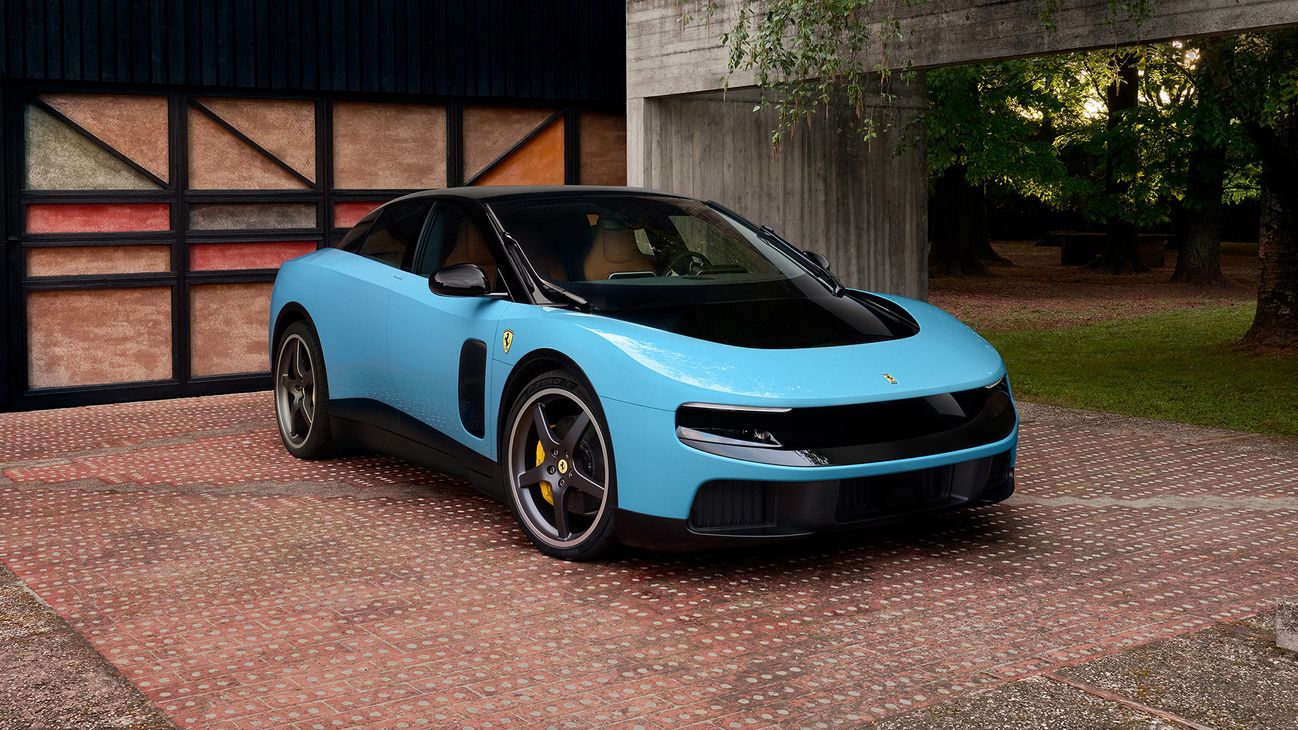
Ferrari Luce
"The Luce here is everything you need to know... It has a huge floating wing in front that boosts aerodynamics... Luce is also Ferrari's first five seat car ever... Packs over 1000 horsepower from all independent motors."
The Ferrari Luce is Ferrari’s first electric car. In this segment, they highlight its futuristic look, a big front wing to help it cut through the air, and a setup that uses multiple electric motors to make huge power.
The Ferrari Luce is presented as Ferrari’s first electric car, and the segment emphasizes its unusual design and tech-forward packaging. It’s described as having a large floating front wing for aerodynamics, a five-seat layout, and a multi-motor setup that can deliver over 1000 horsepower.
floating wing
"It has a huge floating wing in front that boosts aerodynamics."
A floating wing is a spoiler-like piece on the car that helps the air flow the way the designers want. The idea is to make the car more stable and efficient by shaping the airflow.
A floating wing is an aerodynamic appendage mounted so it appears to “float” rather than being fully integrated into the bodywork. On the Luce, the host says it boosts aerodynamics by helping manage airflow to improve efficiency and stability.
haptic buttons
"This is all the haptic buttons back."
Haptic buttons are controls that give you a physical “feel” when you press them, usually through vibration. It helps you use the screen or controls without looking as much.
Haptic buttons use vibration or touch feedback so you can feel that a control was pressed, even if the surface itself doesn’t move much. The host highlights them as part of the Luce’s interior experience, pairing tactile feedback with a more modern digital interface.
analog
"I like how it presents in a very analog way... It's a really refreshing combination of analog and digital elements."
Here, “analog” means real physical controls like switches and knobs, not just a touchscreen. The host is saying the car mixes those physical controls with digital tech.
In car interiors, “analog” usually refers to physical, non-screen controls—like switches and knobs—that you operate directly. The host contrasts this with digital elements, saying the Luce blends analog-style hardware with digital functionality.
independent motors
"There you go... Packs over 1000 horsepower from all independent motors."
Independent motors means the car has multiple electric motors that can be controlled separately. That can help the car deliver power in a more precise way, which is part of why they’re talking about very high output.
Independent motors means the car uses more than one electric motor that can be controlled separately, rather than one motor driving everything through a single drivetrain. The host claims the Luce uses “all independent motors” to generate over 1000 horsepower, implying a highly flexible power delivery strategy.
kilowatt hour battery
"A 100 and 22 kilowatt hour battery [143.4s] should give it close to 300 miles of EPA rain."
A kilowatt-hour battery is basically how much energy the EV can store. More stored energy usually helps the car go farther before it needs charging.
A kilowatt-hour (kWh) battery is a measure of how much electrical energy the EV’s battery pack can store. More kWh generally means more potential range, assuming the car’s efficiency is similar.
EPA
"A 100 and 22 kilowatt hour battery [143.4s] should give it close to 300 miles of EPA rain."
EPA is a standardized testing method used to estimate how far a car can go on a charge. It’s not exactly what you’ll get every day, but it’s a consistent comparison number.
EPA refers to the U.S. Environmental Protection Agency’s testing and rating process for vehicle range. When an EV’s range is quoted as “EPA,” it’s based on standardized test conditions rather than real-world driving.
paddle
"Plus, here's something I've never seen before. [148.5s] A paddle behind the steering wheel lets you dial up torque output on demand. [152.0s] The Luce goes on sale in Europe later this year"
This “paddle” is like a quick control you can pull to ask the car for more power. It’s meant to make acceleration feel more responsive when you want it.
In this context, a paddle behind the steering wheel is a driver control used to request different levels of electric motor output. The host specifically says it lets you “dial up torque output on demand,” meaning you can increase acceleration force without changing modes through the infotainment.
torque output
"A paddle behind the steering wheel lets you dial up torque output on demand. [152.0s] The Luce goes on sale in Europe later this year"
Torque output is the car’s pulling/accelerating force. In an electric car, it can be increased very quickly when you ask for more power.
Torque output is the twisting force the powertrain delivers to the wheels, and in an EV it can be adjusted quickly. “On demand” highlights that the car can ramp torque immediately based on driver input.
cannibalize
"[211.3s] I think it doesn't cannibalize any of the existing Ferrari sales. [216.1s] Correct. All of the people who love their internal combustion engine. [221.3s] Ferraris, yes, they're going to continue to buy all of those."
Cannibalize here means the new electric Ferrari might not pull customers away from the gas Ferraris. The host thinks it will attract a different kind of buyer.
To “cannibalize” sales means a new product takes buyers away from an existing product line within the same brand. The host argues the Ferrari Luce won’t steal customers from Ferrari’s internal-combustion models, instead targeting a different buyer group.
internal combustion engine
"[216.1s] Correct. All of the people who love their internal combustion engine. [221.3s] Ferraris, yes, they're going to continue to buy all of those. [224.7s] And then there's going to be this group of people that would have bought"
An internal combustion engine is the traditional gas/diesel engine that burns fuel to make power. The host is saying Ferrari’s gas-car fans will keep buying gas Ferraris.
An internal combustion engine (ICE) is a gasoline or diesel engine that creates power by burning fuel inside the engine cylinders. The host contrasts ICE buyers with the new EV audience, using it to explain why the Luce might not disrupt existing Ferrari demand.

Mercury Mystique
"...oyce SUV. And now they can be part of the Ferrari mystique and they can spend a lot of money for having the ..."
The Mercury Mystique is a car model from the Mercury brand. It’s not typically described as a supercar; it’s more of a regular car model name. In the podcast, it’s mentioned mainly because the name sounds like “mystique,” tying into a discussion about image and spending.
The Mercury Mystique is a model name used by Mercury, which is a brand that has historically offered mainstream vehicles rather than true supercars. In the podcast context, it’s brought up as part of a “mystique” wordplay tied to spending money and status, contrasting the idea of luxury branding with the actual vehicle being discussed. That’s why it appears alongside references to Ferrari “mystique” and high-dollar ownership talk.
no such thing as bad publicity
"The thousand dollar blueberries. And there's no such thing as bad publicity in this car is everywhere."
They’re talking about the idea that any attention—good or bad—can still help a brand. For cars, lots of people noticing a model can make it feel more special and get more people talking about it.
The phrase “no such thing as bad publicity” is being used as a marketing idea: even attention that’s critical or controversial can still create awareness. In the car world, that kind of attention can drive interest in a model, especially when it’s rare or high-status.
Monterey
"And you're telling me if we see one up in Monterey or we see one in at the odd drain, we're not going to stop and take a million pictures of it."
Monterey is a California area that’s famous for car events and car enthusiasts. The point is that if a rare Ferrari shows up there, people will notice it immediately.
Monterey refers to the Monterey area in California, which is closely associated with major automotive events and car culture. The hosts mention it as a place where a rare Ferrari would be spotted and photographed, reinforcing the car’s “special” status.
Benedetto Vigna
"That's Benedetto Vigna. He wears caps just like a regular guy."
Benedetto Vigna is the CEO of Ferrari. When he speaks publicly, it can hint at what Ferrari is planning next—especially for new cars and future technology.
Benedetto Vigna is Ferrari’s CEO, and the hosts use his name to anchor the discussion in current company leadership. In car-industry terms, the CEO’s public comments often signal product direction—like electrification plans and how Ferrari wants to position new models.

Chevrolet Corvette
"... supercars like Ferraris, Lamborghinis, Porsches, Corvettes and more on real racetracks. No experience necess..."
The Chevrolet Corvette is a sports car made by Chevrolet. It’s designed for fast driving and handling, and it’s commonly talked about by people who like taking cars to racetracks. It’s also known for being a serious performance car without being as rare or expensive as some supercars.
The Chevrolet Corvette is a long-running American sports car known for delivering high performance at a relatively accessible price compared with many exotic supercars. It’s often discussed in the context of real track driving because it’s built to be driven hard, not just admired. That’s why it shows up alongside brands like Ferrari, Lamborghini, and Porsche when people talk about supercars on racetracks.

1993 Alpina B10
"We have a 1993 Alpina B10 [1619.3s] by turbo B Turdball in Daytona Violet."
Alpina is a company that takes a BMW and tunes it to feel faster and more special. This one is a 1993 Alpina B10, and the hosts are talking about it because it’s a specific, recognizable version with a standout purple color.
The Alpina B10 is a BMW-based performance sedan/wagon line tuned by Alpina, a German coachbuilder known for making BMWs feel more like refined grand tourers. In this case, the 1993 Alpina B10 is notable because it’s a specific early-1990s era of Alpina’s “B10” model, and the discussion ties it to a distinctive color (Daytona Violet) and a particular car history.
turbo
"We have a 1993 Alpina B10 [1619.3s] by turbo B Turdball in Daytona Violet."
A turbo is a device that helps the engine make more power by pushing extra air into it. That usually makes the car feel stronger, especially when you accelerate.
A turbocharger (“turbo”) forces more air into the engine, allowing it to make more power than it would naturally aspirated. In performance-car context, “turbo” is a key specification because it changes how the engine produces torque and how it feels to drive.
Daytona Violet
"We have a 1993 Alpina B10 [1619.3s] by turbo B Turdball in Daytona Violet. [1623.6s] Daytona Violet."
Daytona Violet is the name of a specific purple paint color. Enthusiasts care because it’s a real, named factory color—not just “any purple.”
Daytona Violet is a named paint color used on certain BMW/Alpina-era cars. Named factory colors matter to enthusiasts because they’re tied to specific production palettes and can be a big part of a car’s “look” and desirability.

BMW M5
"And and when you look at it on paper, it didn't really strike me as very different from the E34 M5 that I have the red one"
The BMW E34 M5 is an older BMW performance sedan (from the E34 generation). The host is comparing it to an Alpina car to say they don’t drive or feel the same, even if they might look comparable at first glance.
The BMW E34 M5 is a performance sedan from the E34-generation 5 Series era, known for its high-revving character and M division engineering. Here, the host uses it as a comparison point to explain why the Alpina car feels different despite seeming similar on paper.
carburetors
"He started messing around with carburetors [1733.0s] and making a little 2000 twos or sixteen hundreds go faster."
Carburetors are an older way of mixing fuel with air for the engine. The segment is saying the company started by improving how the engine got its fuel.
Carburetors are fuel-delivery devices that mix air and fuel before it enters the engine. The host mentions “messing around with carburetors” as an early tuning step—before modern fuel injection became standard.

BMW E34
"they I think they really hit their stride with this E34. [1752.9s] And what they're doing is they are they are going to go fast [1757.4s] with a with a twin turbo setup."
The BMW E34 is a specific generation of the BMW 5 Series. The point here is that Alpina used this platform and turned it into a much faster, more special version.
The BMW E34 is the 5 Series generation from the 1980s to early 1990s, known for being a strong base for tuning. In this segment, the host says Alpina “hit their stride” with the E34 and that they aimed to make it go fast with a twin-turbo setup.
Buchlo
"They would do a bunch of stuff in Buchlo, I think is the name, [1781.0s] not far from where BMWs are made. [1782.8s] They would do some stuff to it there,"
Buchlo is the place where Alpina did work on the cars. The host is basically saying the modifications happened at Alpina’s facility, not just at BMW.
Buchlo is referenced as the location of Alpina’s work on the car, described as near where BMWs are made. The key point is that Alpina had a dedicated facility where they performed modifications before the car returned to BMW or was finished through their process.
boost knob
"you will see the boost knob. You see that little boost knob there? And that is the magic knob for the for the boost for the turbo boost."
That “boost knob” lets you choose how hard the turbo pushes. Turning it changes how much extra air pressure the engine gets, which affects how strong the car feels.
A “boost knob” is a user-adjustable control that changes how much boost the turbocharger produces. More boost generally means more engine airflow and, up to limits, more power—so the speaker frames it as a “magic knob” for dialing in turbo response.
low end torque
"where this car is really thrilling is how much low end torque it has. It is a torque monster."
Low-end torque is how much pulling power the engine has at low engine speeds. If it’s strong, the car feels quick and responsive even without revving high.
Low-end torque is the twisting force an engine makes at lower RPMs, which strongly affects how quickly the car accelerates from slow speeds. The speaker calls it a “torque monster,” emphasizing that the car’s early pull is what feels most thrilling.
lag
"because these are sequential twin turbos, there's zero lag. [1908.9s] And even when Porsche gets around to twin turbos in the 993 [1912.6s] and 9596 yeah, there is still some lag."
Lag is the hesitation you feel before the turbo “kicks in.” Less lag means the car feels instant when you step on the gas.
Turbo lag is the delay between pressing the accelerator and the turbocharger producing boost. The host contrasts “zero lag” on the Alpina with “still some lag” on later Porsche twin-turbo implementations, implying a responsiveness difference.
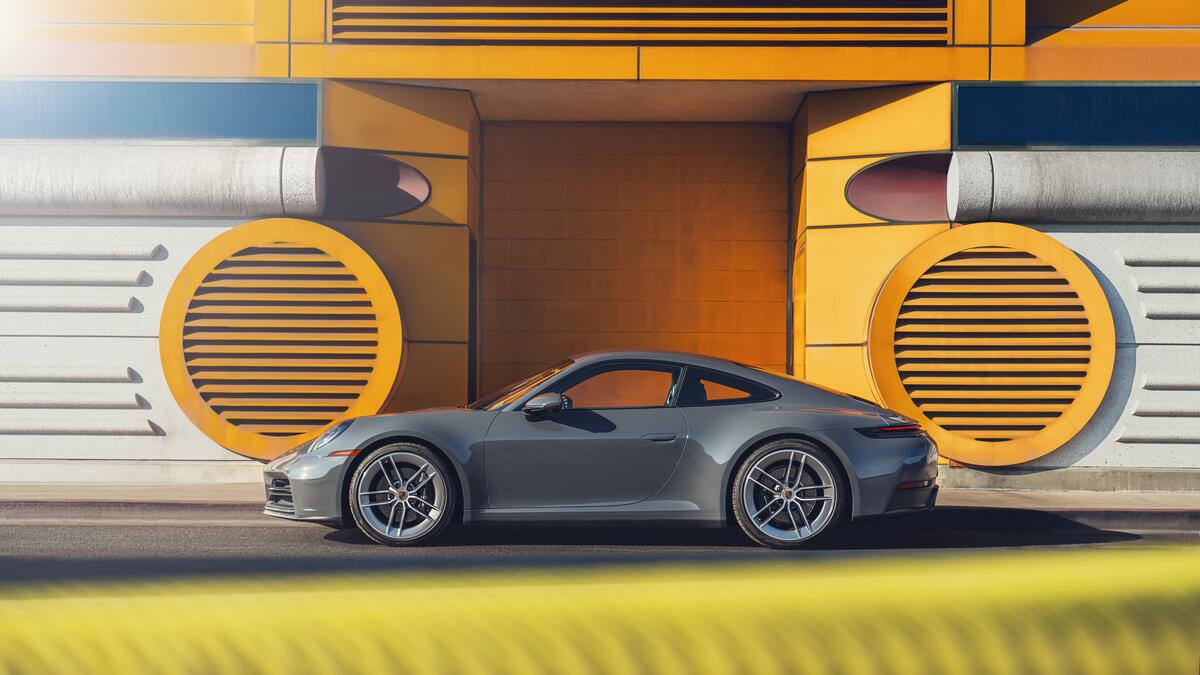
Porsche 993
"And even when Porsche gets around to twin turbos in the 993 [1912.6s] and 9596 yeah, there is still some lag."
“993” is the Porsche 911 generation from the 1990s. The host is saying Porsche’s twin-turbo approach on that era wasn’t as instant as the sequential system in the car they’re reviewing.
Porsche 993 refers to the 911 generation from the early-to-mid 1990s. The host brings it up because Porsche later adopted twin-turbo setups on the 993-era cars, but they’re claiming it still had more turbo lag than the sequential setup they’re discussing.
engine compartment
"And you'll see you'll see the beautiful work that they do in the engine compartment."
The engine compartment is the area under the hood. People who care about cars like to look in there because it shows how the car is put together.
The engine compartment is the space under the hood where the engine and many related components live. Enthusiasts often look for neat, well-finished details there because it can reveal how a car was built or modified.
engine porn freaks
"People will complain. There it is for you engine porn freaks. Wow, look at the purpley."
“Engine porn” is slang for people who really love looking at the engine bay. They’re impressed by how it looks and how it’s arranged.
“Engine porn” is enthusiast slang for admiring the engine bay as a visual detail—clean wiring, neat packaging, and distinctive components. It’s not a technical term, but it signals that the speaker is focusing on how the engine compartment looks.
shock tower
"And if you go around to the shock tower on the other side where they put the color tag, there's Cameron right there."
A shock tower is a strong part of the car’s body where the suspension shock/strut mounts. It’s in the engine bay area, so you may see labels or markings there.
A shock tower (often called a strut tower) is the structural mounting point in the engine bay where suspension struts/shocks attach. It’s a common place to find tags, markings, or build information because it’s part of the car’s chassis structure.
BMW Sonderluck
"It says BMW Sonderluck. Oh, OK. It just that just I think means special color."
That tag is basically a label for a special paint/color option. The host is saying it doesn’t mean anything like a specific shade quantity—just that it’s a special color.
“BMW Sonderluck” appears to be a factory option/label indicating a special paint color or special specification. The host immediately interprets it as meaning “special color,” tying the tag to how the car was ordered and finished.
individual throttle body
"And you'll see it's very different from the the non turbocharged engine in the M five, [2040.4s] which is an individual throttle body. [2043.4s] Yeah, beauty."
A throttle body controls how much air gets into the engine. “Individual throttle body” means there’s a separate one for different cylinders instead of just one shared unit. That can make the engine feel more immediate when you press the gas.
An individual throttle body means each cylinder (or cylinder pair) has its own throttle valve rather than sharing one throttle. This can improve throttle response and airflow control, which is why it’s common on performance and race-oriented engines. The host uses it to highlight how the BMW M5’s non-turbo setup differs from the Alpina approach.
beefed up the suspension
"I think the way that they beefed up the suspension [2055.8s] in the Alpina, [2061.4s] it drives like a somewhat heavier, more substantial carbateurs, but it's very tight."
“Beefed up suspension” means the car’s suspension parts are upgraded to handle driving harder. That can make the car feel more controlled and less bouncy. In this segment, it’s used to explain why one car feels tighter than the other.
“Beefed up the suspension” means the suspension components are upgraded or strengthened—often with stiffer springs, firmer dampers, thicker anti-roll bars, or revised geometry. The goal is usually to reduce body motion and improve control under acceleration, braking, and cornering. The host credits this with making the Alpina feel tighter and more substantial than the BMW M5.
high RPM engine
"The BMW feels the M five feels lighter [2068.5s] and the engine is more of a race tuned engine, high RPM engine. [2077.1s] The BMW collection is massive right now."
“High RPM” just means the engine is designed to spin faster. Performance engines are built so they can make power at those higher speeds instead of running out of breath. That’s why it can feel more “race-like” when you rev it out.
A high-RPM engine is tuned to operate efficiently at higher engine speeds (revolutions per minute). Performance engines often use cam profiles, intake/exhaust design, and internal strength to make power higher in the rev range. The host uses this to describe the BMW M5’s more race-tuned character versus the Alpina’s feel.
glass roof
"Massage seats, glass roof, retractable screen, front boot, back boot. It's got a glass roof where you can just move the visors to the left or to the right."
A glass roof is a see-through roof panel. It makes the cabin brighter, and most cars with this feature use shades or controls to block sun when you want.
A glass roof is a large transparent panel in the vehicle’s roof that lets in more light and can make the cabin feel more open. On luxury cars, it’s often paired with sunshades or movable visor systems to manage glare and heat.
retractable screen
"Massage seats, glass roof, retractable screen, front boot, back boot. They've got these."
A retractable screen is a TV-like display that slides out when you want it and tucks away when you don’t. It helps keep the interior looking uncluttered.
A retractable screen is a display that can move in and out of the dashboard or another housing. In luxury EVs and GT-style cars, it’s often used for infotainment or passenger entertainment while keeping the cabin looking clean when the screen is stowed.
back boot
"Massage seats, glass roof, retractable screen, front boot, back boot. They've got these."
A back boot is the normal trunk at the rear of the car. Mentioning it alongside a front boot usually means the car has extra storage overall.
A back boot refers to the rear trunk area (the conventional storage space at the back of the car). When paired with a front boot, it highlights a packaging advantage common in EVs: more total cargo volume.
front boot
"Massage seats, glass roof, retractable screen, front boot, back boot. They've got these."
A front boot is basically a trunk at the front of the car. EVs often have room there, so you get extra storage compared to a typical gas car.
A front boot is a trunk compartment located at the front of the car. Many EVs use the space where an engine would normally sit, so they can offer both a front and rear storage area.

Tesla Model S
"...d it's just gorgeous. But but way better than the Model S. Definitely viable. Wow."
The Tesla Model S is an all-electric car, meaning it runs on electricity instead of gasoline. It’s a larger, comfortable sedan with a lot of technology inside. People mention it because it’s one of Tesla’s main cars and is often used as a reference when talking about electric-car performance.
The Tesla Model S is a fully electric luxury sedan from Tesla, known for strong performance and a tech-focused interior. It’s often brought up when discussing how electric cars can be both practical and exciting to drive. In the podcast context, it’s referenced as a benchmark point for comparison and viability.
lease deals
"Definitely viable. Wow. Just a little expensive, you know, but the lease deals aren't so bad"
A lease deal is when you pay to drive a car for a fixed period instead of buying it outright. The host is saying the monthly cost can be less painful with the right lease offer.
Lease deals are financing offers where you pay to use the car for a set term, usually with mileage limits and an end-of-lease disposition. The host brings it up to argue the Ferrari Luce’s pricing feels more reasonable when structured as a lease.
grand touring
"You know, 121100 for this guy. This is the grand touring."
Grand touring (GT) means a car meant for comfortable long trips. It’s usually built to feel relaxing and easy to live with over distance.
Grand touring (GT) is a car category focused on comfortable long-distance driving, typically combining a refined ride, good ergonomics, and usable power. The host uses it to frame the Ferrari Luce’s intent as a luxury cruiser rather than a track-only machine.
Indy 500
"Also, there's an audio only podcast, Matt Ferrer, Spike Ferris, and 45 minutes on our trip at Indy 500."
The Indy 500 is a famous big race in the U.S. The host is mentioning they also recorded an audio segment tied to their trip there.
The Indy 500 is referenced as part of the hosts’ trip content. It’s a major American open-wheel racing event, so it signals the episode’s broader motorsport context beyond the car discussion.
Request an Explanation
Heard something you'd like explained? We'll add it to this episode.
Sign in to request explanations for terms you heard.
Want to learn more?
Browse our glossary for plain-English explanations of automotive terms, jargon, and concepts.
Help improve this episode
See something that's not quite right? Our annotations are AI-generated and can sometimes miss the mark. Click the flag icon on any annotation to suggest a correction.